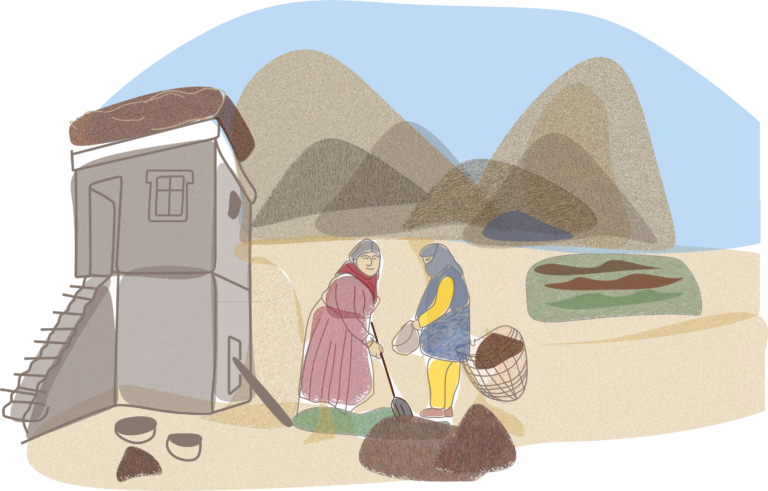
Mountains

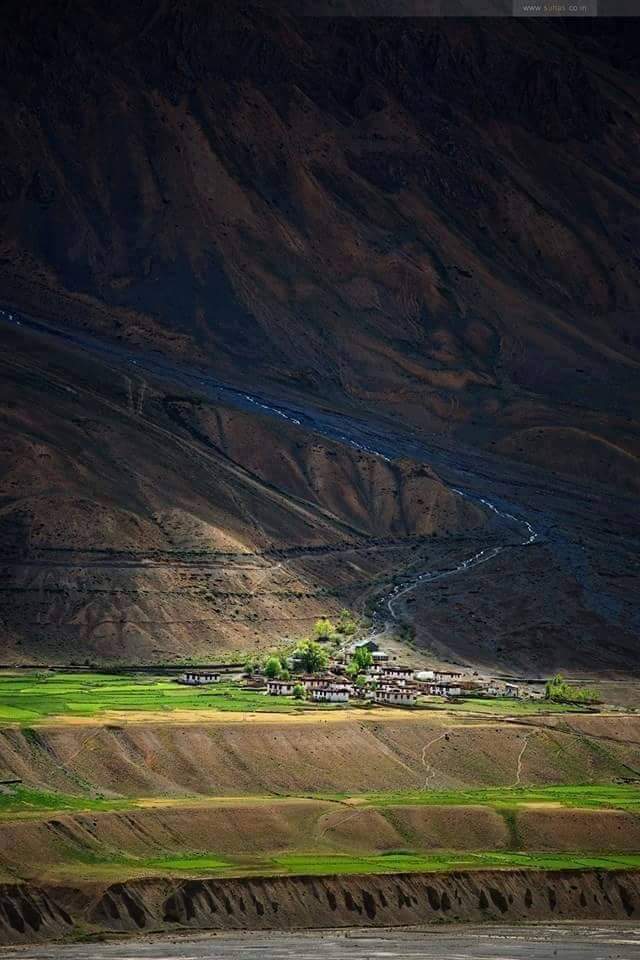
The sun returns home for the mother bird
Photo: Stanzin Dorjai (Gya)

The sun returns home for the mother bird

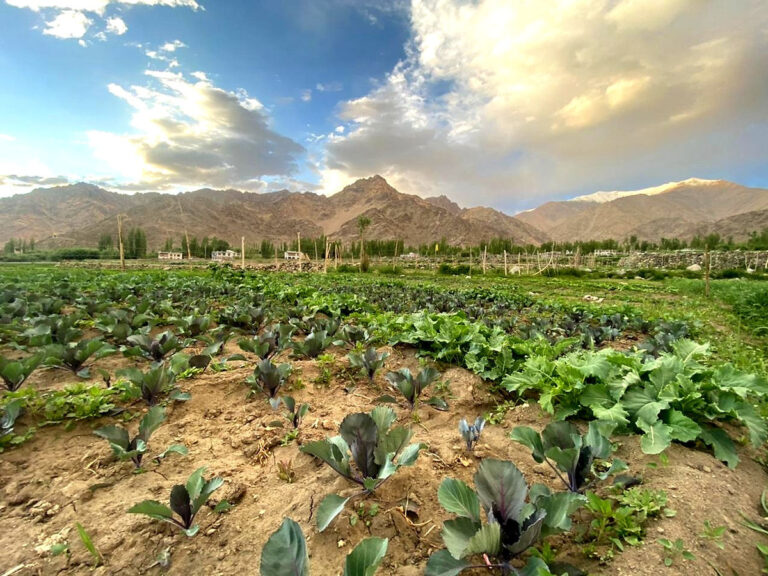
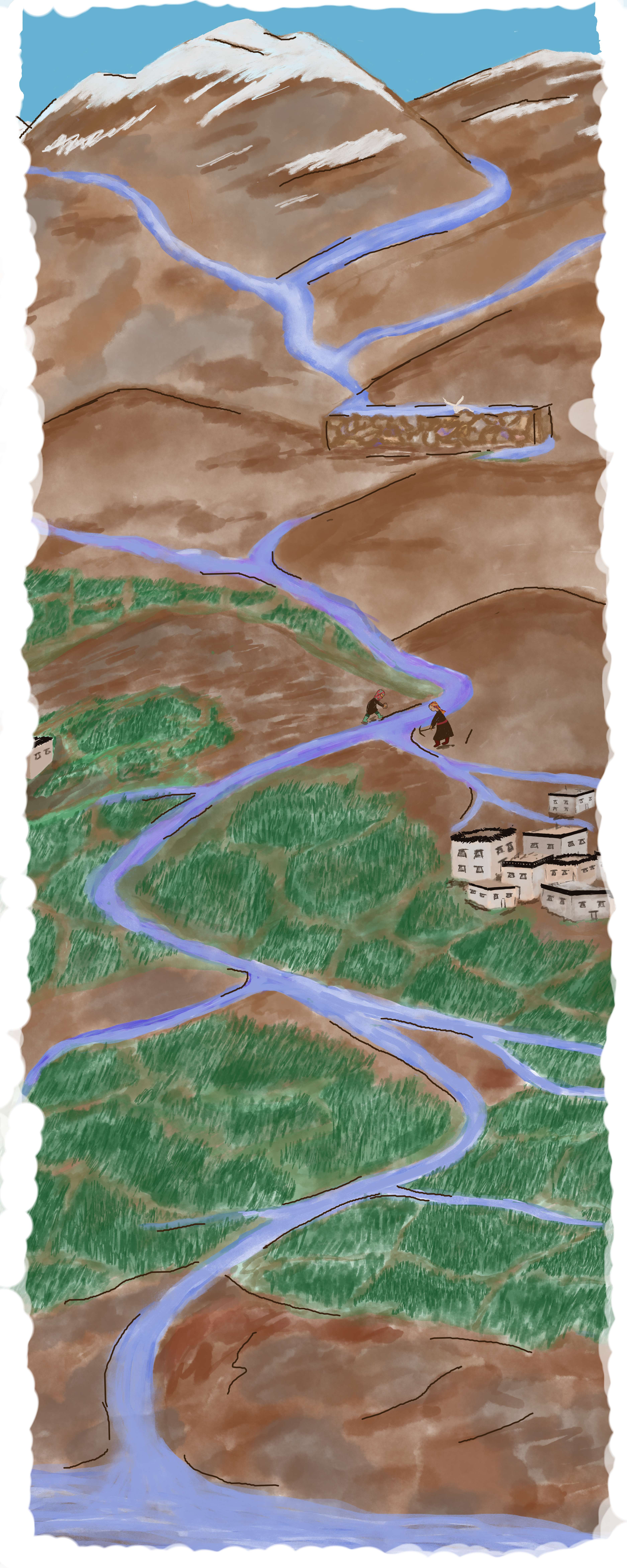
Spiti Valley has a remarkable ancient agricultural heritage that has sustained several thousand people in the remotest corner of high and arid Western Himalayas—one of the most inhospitable and climate-sensitive regions in the world—for more than a thousand years. The enduring sustainability of agriculture in Spiti Valley rests with its farming calendar.  The calendar uses stories, evocative names for months, and traditional knowledge to guide the timing of local farming activities according to the unique natural rhythms of “Spiti, the Valley of Gods” (Piti Lhayi Lungpa).

The natural rhythms of Spiti Valley are captured in Spiti’s calendar with unique timing and names of months, which are different even from neighbouring Tibetan Buddhist regions of Ladakh and Kinnaur.  In addition to local timing and names of months explained below, the calendar is used with other local and Indigenous practices of telling time. For example, Spiti farmers mark sunrise and sunset over stone cairn markers atop high mountains and note shadow lines on mountainsides to identify important days and times, such as the solstices and equinoxes. Farmers also use their observations of colours, sounds, and rhythms of local plants and animals to tell time, such as observations of brightness and colour of the sky when birds sing at dawn.

Winter Months 

For Spiti farmers, the year begins early in winter with rest and celebration after a hard year of work in the field.  The first month is called Losar or “New Year” and is celebrated three months before the Tibetan new year.  Losar is celebrated early in Spiti, usually around mid-November of the Gregorian calendar, because the valley, including the villages and pathways, will soon get covered under layers of snow for months.  The timing is ideal for Spiti farmers who have customarily completed all essential seasonal livelihood activities, and are now ready to turn their attention to the important family, communal, and religious gatherings of the Losar month.
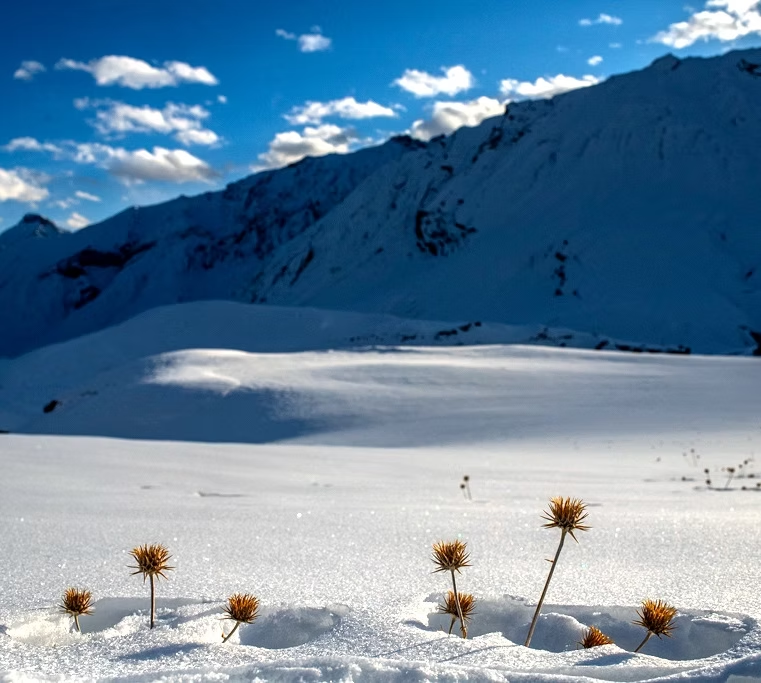
Photo: Prasenjeet Yadav

The second month is called Jhama or “Mother Bird.” The bird here is Gharog or raven.  Raven is a bird of augury and protection in ancient Spiti and Tibetan beliefs, like in many cultures around the world.  It is said that once upon a time the divine bird, Gharog (raven), was unable to hatch chicks from eggs despite its many attempts because its body was excessively warm for incubation.

Devastated by this failure, the raven prayed that it would be able to hatch chicks from golden eggs during the coldest winter months. That is the reason ravens prepare their nest on a mountain cliff during the second winter month and the month is named Jhama. There is a local saying that describes Spiti’s coldest winter months: “Jhama Jhama zerna Jirug a-chu-chu.”  This saying suggests one shouldn’t complain about Jhama’s cold weather because Jirug, the following month, is even colder.

The coldest winter month is called Jirug or “Baby Bird” because it is the time when ravens lay eggs and hatch their baby birds. References to divine birds are common in Tibetan calendars. For example, the 2008-09 farming almanac of the nearby region of Kinnaur notes the following during Spiti’s Jirug month: “the divine bird has completed 30 days, if this is followed by snowfall, the divine bird will lay golden eggs, and there will be bountiful agro-pastoralism in Tibet.” It is also important to note that Jhama and Jirug are named not only for mythological reasons but also, and more importantly, to categorize seasonal times based on timely behaviour of natural environment. Researchers, for example, have found that common raven egg-laying and brooding behaviour begins in February, which comes during Jirug month.

Spring Months

The first spring month is called Degya (‘de rgya), which means to “soak in the Sun’s energy” as days become warmer and longer with the spring equinox. As snow cover begins to melt and days become brighter, blue sheep and ibex nibble on dormant plants on distant mountains, often under the lurking eyes of hungry snow leopards.  The month is named after the Sun’s warming energy during this month because it is crucial for melting the snow from the fields so that farmers can start Spiti’s short growing season early next month.
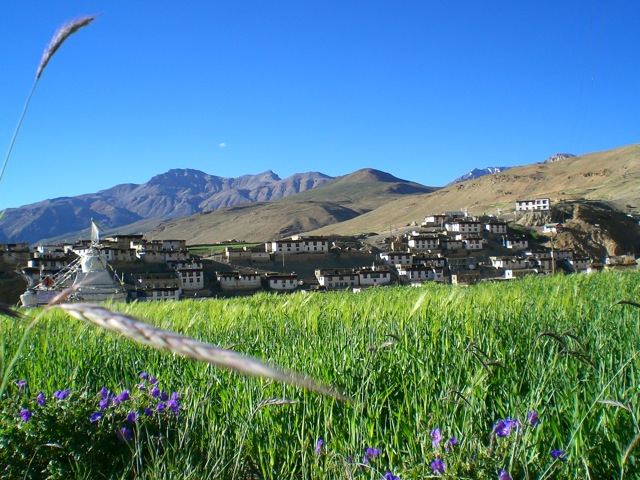
Photo: Dr. Tashi Tsering

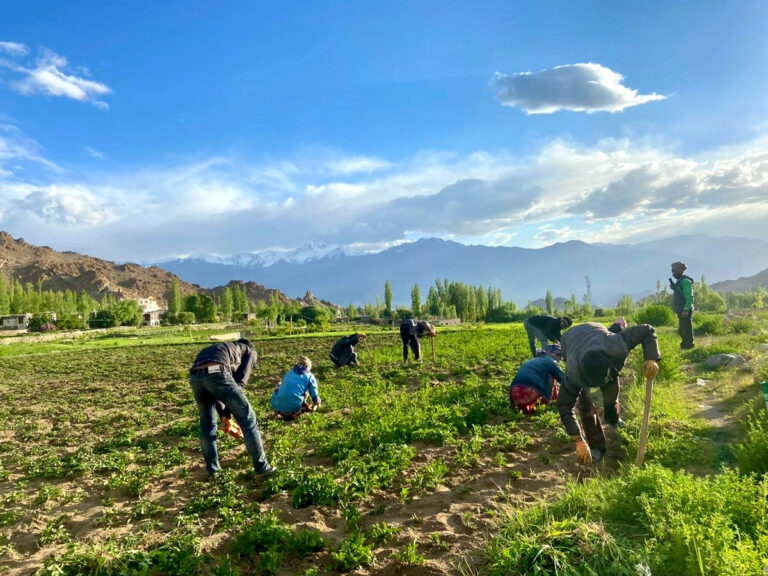
The second spring month is Shingdeo (zhing ‘debs) or “cultivate the fields.” On the chosen auspicious day of the month, the farmers gather a few loose rocks on their fields, between which they burn juniper leaves to make smoke offerings. This is followed by offerings of libation drink carefully wrapped in a white scarf and marked symbolically with a dab of butter called yar. Yar-butter is marked on the foreheads of people, on horns of the yaks, and on the ploughs. And all through the ploughing period, the ploughman sings songs and prayers which may guide the yaks to turn, stop, or continue ploughing, or pray for absolution of sins that may come from harming insects and bugs in the process of ploughing.
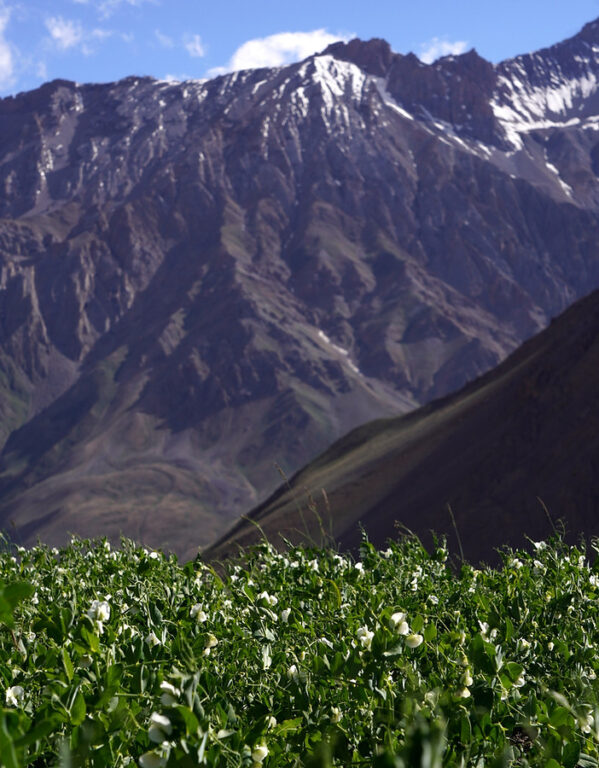
Photo: Deepshikha Sharma

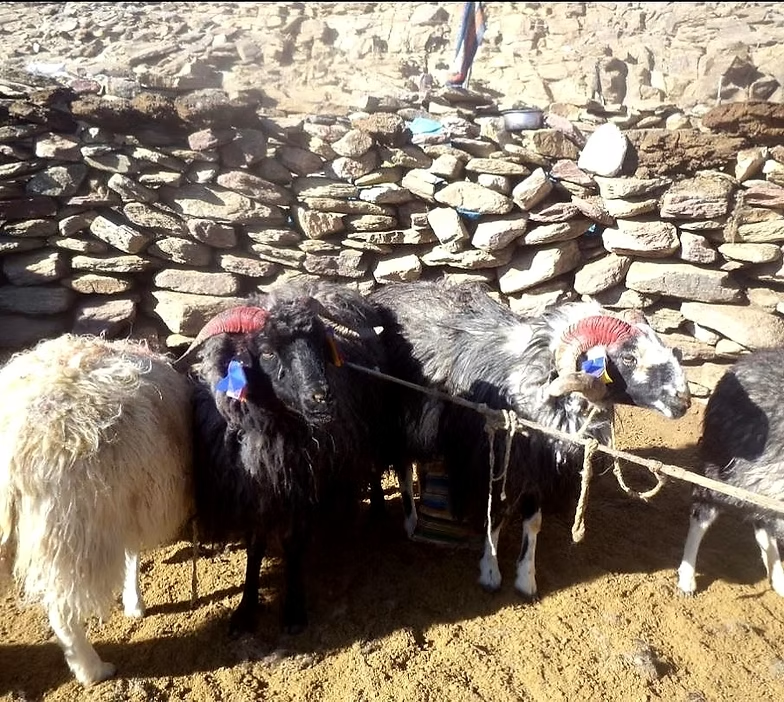
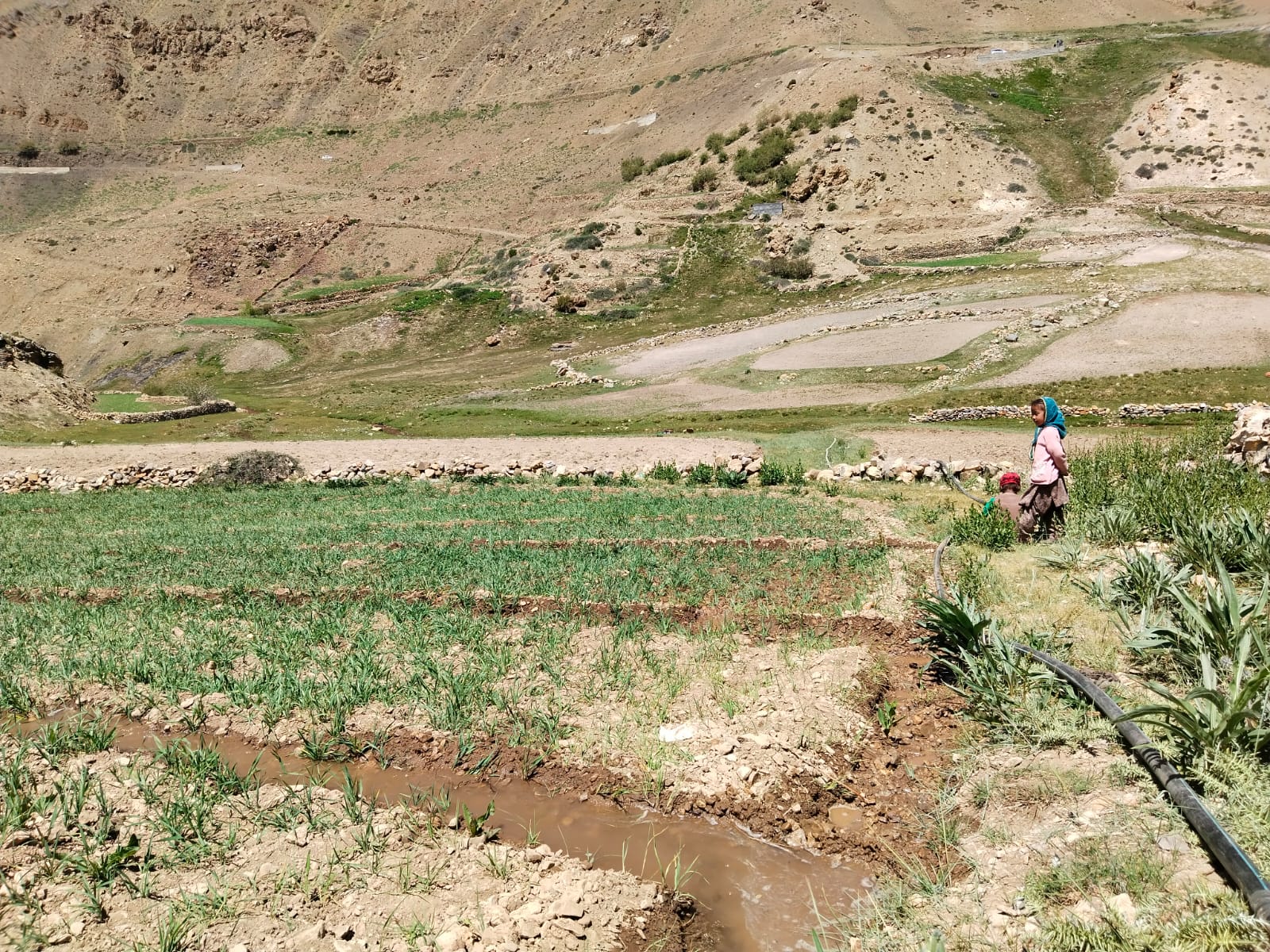
Spiti comes alive in bright colours during the final spring month of Na-ngon Sa-ngon, which means “blue skies blue earth.” This name invokes the beauty of lush green fields under bright blue skies.  Yaks graze freely on the mountains for the rest of the year until winter snowfall to produce the main source of energy for the village economy: dung for fuel and manure.  During this month, farmers count and wait forty days from seeding to first watering, guided by traditional knowledge, to ensure ideal conditions for seed germination in local soil, water, and weather conditions. Then expert women farmers do the first “mother watering” or Yurma, with Tirping, an irrigation tool made of blue sheep horns that ensures greener crops.

Summer Months

The young, irrigated crops begin to flower in early summer which is why the first summer month is called Metog or “flower”. Metog is indeed a flowering month as all kinds of flowers bloom throughout the valley during this time. The second watering called Rhakti or “watering the sun-burned” plants happens during this month. Farmers allow ten days to pass between the first and the second watering, making young crops dry and sun-burned. This practice teaches the young crops the value of the nourishing powers of scarce water, making them absorb more water in the future. These farming practices follow stringent customs based on the calendar, such as the yearly “ban on the use of sickle” or ban on cutting plants from summer solstice (June 21) until harvest season to ensure maximum plant biomass growth on Spiti’s arid landscape.

Photo: Prasenjeet Yadav

By mid-summer, the farmers’ labor bear fruit as grains begin to grow on the barley ears. This is the reason the mid-summer month is called Drebu or fruition of one’s labor. Farmers wait for the grains to become ripe for harvest next month. As tufts of bristles grow on barley ears, farmers irrigate the fields with a special technique called Kirchuyi. Now watering is done after carefully preparing irrigation channels and sluices in such a way that water will flow to all parts of the field by itself after it is released from the main sluice of the field. Another name for this convenient method is Minchu or seed-ripening water.

The last summer month is called Selda or “harvest month.” Unlike new commercial crops, traditional crops like barley are harvested methodically according to ancient customs. After the crops are cut, the sheaves are laid out in the field in neat rectangle-shaped patches to cover the barley ears from drying under direct sunlight. It is only when the crop sheaves are brought to the threshing ground that the ears are exposed to the sun for drying. The importance of observing this practice is told in the story of Jhojho Druguma.
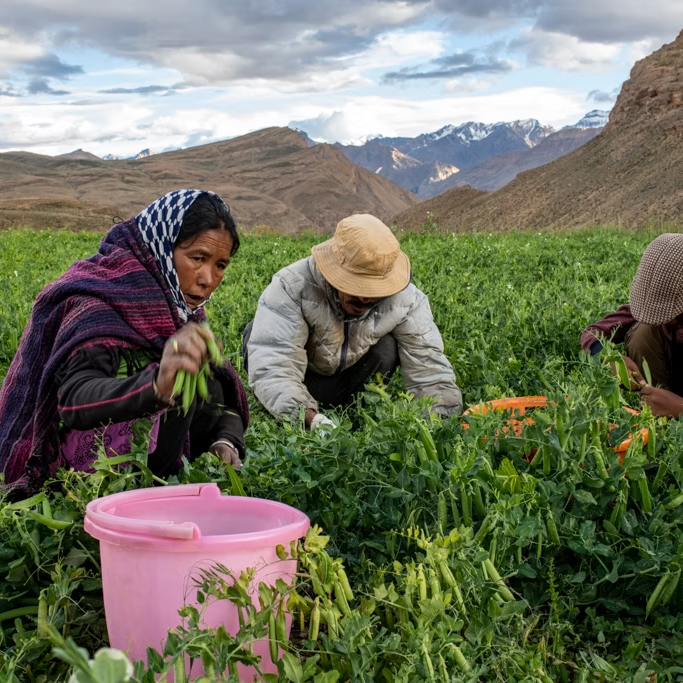
Photo: Prasenjeet Yadav

Jhojho Druguma was a rich woman who did not bother to dry her barley sheaves in the proper manner. As a result, the ears and grains became too dry, and they fell off when the sheaves were carried from the field to the threshing ground. That is why, to Spiti farmers, the stars of the Milky Way are spread out the way they are so spectacularly over Spiti’s night skies. The stars of the Milky Way are Jhojho Druguma’s grains that fell on her way to the threshing ground.

Autumn Months

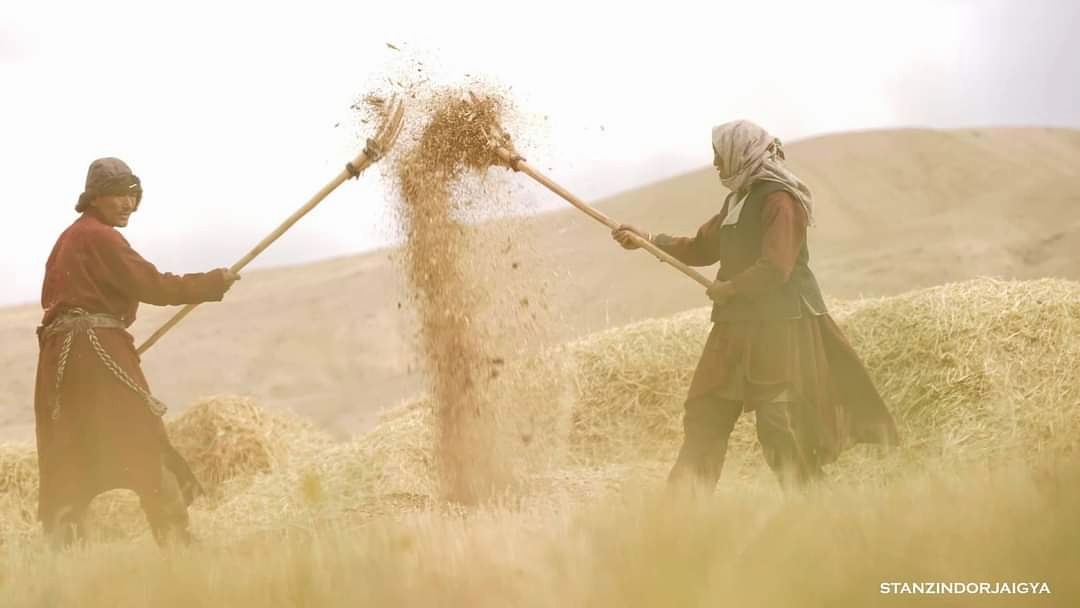
The first autumn month is named Khuyu. Khuyu is the Spiti word for circular threshing that is done to separate the grains from the husks. The process involves tethering yaks and other animals to a sturdy central pole and making the animals trample over harvested crops in a circular fashion. When the animals go round and round, tromping the husks and the grains, farmers use wooden pitchforks (zar) to mix, push or spread the husks so that the grains are properly separated. The whole process is blessed with Khuyu songs that can be heard from distant corners of villages.
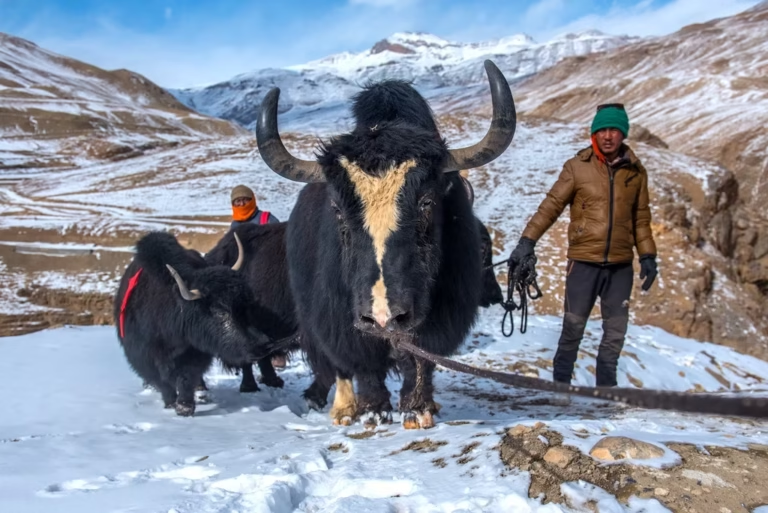
The penultimate month is called Nyirug. “Nyi” is a short for Nyima or the Sun. “Rug” means to gather, specifically to gather animals back home before sunset. As such, Nyirug is the month when sun sets early, and days become shorter when farmers gather their horses and yaks back from the mountains in preparation of the oncoming long and cold winters. Farmers also follow stringent customs to ensure that there is enough winter stock of barley flour, dung, and fodder in their households during this month.

The last month is called Nyikhyim, which refers to the twelve zodiac houses of the sun in Tibetan astrology. “Nyi” means sun and “khyim” means house or home. Nyikhyim here refers to the Sun’s return home after completion of its annual cycle. For Spiti farmers, however, the Sun returns home to fulfil the mother bird’s prayers. This is expressed in the local proverb, “nyima garlog, jhama yin”. The Sun returns home so it becomes cold enough for the mother bird to arrive and hatch chicks. As such, the story of mother bird comes to a full circle at the end of the year along with the sun’s annual return home, while in anticipation of “Spiti’s deep cold winters when even yak-horns crack into pieces.”

In sum, the farmers of Spiti Valley practice a calendar that integrates local economy and ecology into a cosmic unity filled with wonderful stories and ancient wisdom that is perhaps more relevant today than it ever was.
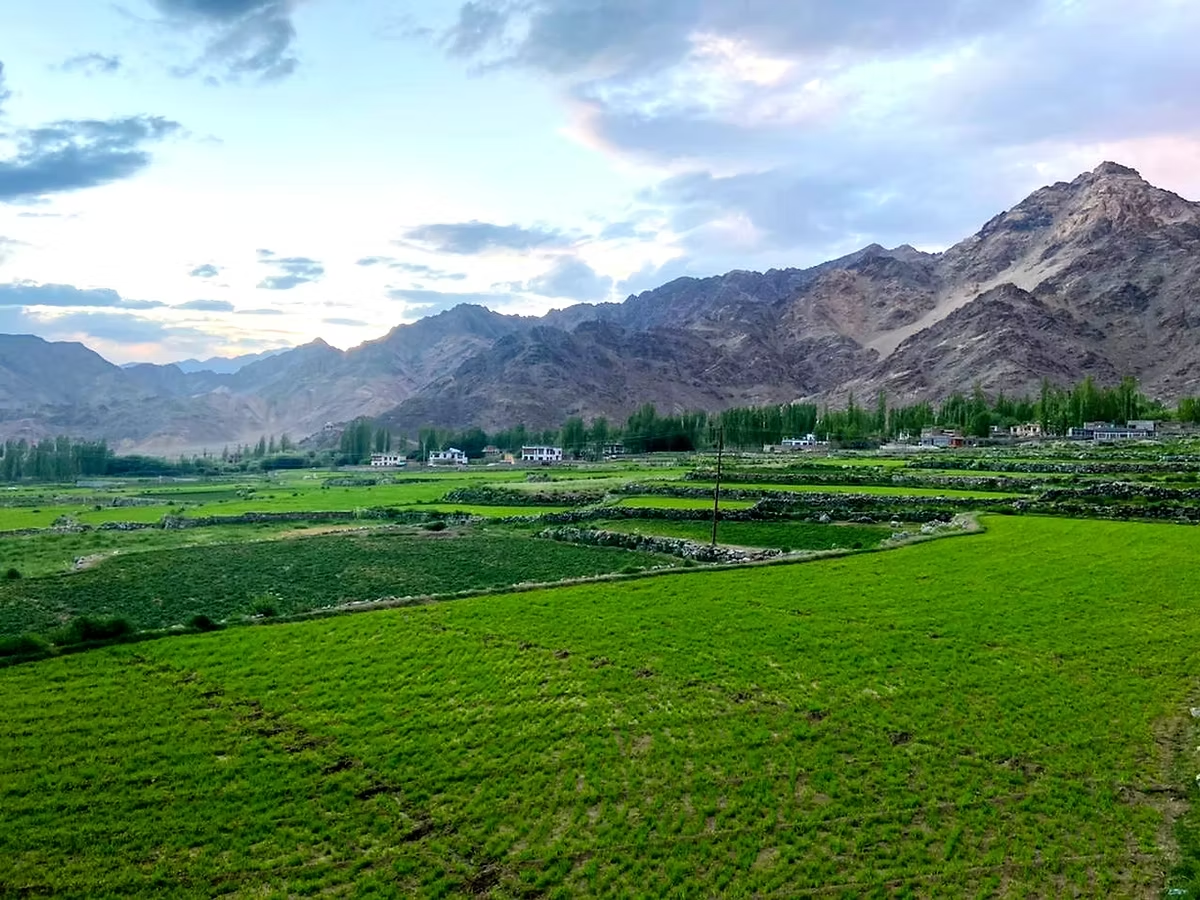
1080 608 Dr. Tashi Tsering
Celebration of Churs-pon
Saboo village | Photo: Dawa Dolma

Celebration of Churs-pon

I was a young girl when I first visited Saboo. It was a school picnic and the lush green beauty of Saboo mesmerised me. Having been born and brought up in Choglamsar – a suburb of Leh, filled with overcrowded concrete buildings with sparse vegetation, I assumed all villages in Ladakh to be dull, dusty and barren. So finding a green patch of land was unbelievable. My interest in Ladakh renewed in my early twenties when I first started exploring lesser known places and experiencing its unique socio-cultural practices that sustained life in the region.

Within a few kilometers outside of Leh, one can start to observe the changes in the land-use. Saboo (Sa-phuk in Tibetan), traditionally referring to an inner grassland near mountain foothills, has abundant water resources and greenery. There is relatively less influence of tourism and people still practice traditional agriculture solely dependent on Gang-chu (glacial water melt) and Chu-mig (natural springs). Due to its proximity to glacial water melt, the area supports healthy mountain grassland and diverse agricultural fields. But the main difference between Leh and Saboo is deeper than mere land use. The rural lands in Ladakh are governed by local traditional systems and customs which are truly rooted in the reality of people living there. These governance practices are highly visible in case of village resource management and are as effective as any other form of governance. Although the nearby town has grown multifold in the past few decades, nothing much has changed in Saboo, which is still a village of 500 households. One such fascinating tradition that has stood the test of time is a local custom of electing a water leader in their village. Water leader is the one who is responsible for governing water resources. In my curiosity to know more about water management, I spoke to a local farmer who shared with me the story of Churs-pon.

Photo: Dawa Dolma

Water is the most precious resource and the election of Churs-pon is an indispensable part of the traditional festival in this village. “Chu” means water and “pon” means leader. Churs-pon therefore is a unique water management system which ensures local governance, maintenance and distribution of water resources. Located at the high altitude, cold arid zone with a short cultivation period people have devised local systems that maximizes their resource usage with minimal conflict. Like any social institution, churs-pon enables farming communities in Saboo to judiciously use their land, water resources and enjoy greater prosperity. Churs-pon are annually appointed at the beginning of the agricultural season and Saboo being predominantly an agricultural society, the election of churs-pon is quite an important tradition in the region.

Historically, villagers unanimously elected a well respected man in the community who had rigorous knowledge of customary duties, rights and responsibilities around water management. Now, Churs-pon is appointed rotationally. The selection process differs in each village but in Saboo, the day is marked with auspicious ceremonies and prayers. Venerable lamas are consulted for an auspicious date and communal meetings are held. It is no less than any other cultural affair and locals host a festival called “sa-phak” which celebrates the selection process of churs-pon. Water being a crucial resource, there’s great excitement around it and at least one member of each family is present during the selection ceremony to ensure appointment of a competent leader. The two key Buddhist prayers “Tashi Tsekpa” and “Nangsa Nang-gey” are recited by monks to mark the auspicious start of farming work and bless the newly elected “churs-pon”for his work. The religious ceremony is particularly important for the rightful selection of the leader, who ethically follows all rules and regulations to ensure equitable distribution of water and harmony among farming communities. Communal prayers and holy tantric rituals like “tormas” (barley flour effigies) are offered to deities for agricultural productivity and to garner their spiritual support during the farming season.

Photo: Dawa Dolma

Traditionally, high-altitude communities have self-sufficient agricultural systems and religious ceremonies are done to invoke spiritual blessings of the local deities and to harmonize people’s relation with nature. “The tasks are overwhelming and challenging – a churs-pon has to monitor the water reservoir from five in the morning till eleven at night. Therefore, the right to churs-ponship is mostly given to male members”, says Tsering Dorjay (46) who was Saboo’s churs-pon a few years back. “Earlier we used to have 2 churs-pon but these days we have 4 as there are numerous agricultural lands and we need to ensure equitable distribution to all fields. The work has become more laborious” he concludes.

The agriculture in Ladakh is governed by a short growing season during which Gang-chu (glacial meltwater) is the most important resource. All Ladakhi villages have a community water reservoir called “zing” where glacial water melt is directly collected for irrigation. The zings are connected with water canals called “yura” which feeds water to all agricultural fields. The water is distributed based on requirements of the crops. Since food and cereal crops consume more water, it is first distributed to wheat fields, followed by green pea, barley and finally to fodder crops which are more resilient. A churs-pon is responsible for managing water distribution, irrigation turns, overseeing maintenance of zing, yura, resolving water disputes and ensuring equitable distribution of water among all families of the village without any personal bias and favoritism.

Churs-ponship of Saboo village is a classic example of how a community resource like water is effectively self-governed by villagers and is codified into distinct rules and regulations that everyone follows stringently. The lives of people are dependent on such traditional systems which are orally passed to the next generation, representing a unique community-led, self-governing system. The ethics of impartiality, equity, mutual cooperation and reciprocity are built inherently into the system. However, there’s considerable decline in the tradition of churs-pon due to alternative livelihood options like tourism and younger generations growing up without any knowledge and awareness about the local agricultural system. Mohammad Akbar, a 52 year-old churs-pon of Saboo village, painfully mulls over the loss of this beautiful tradition in his village, “it is doubtful whether the youth these days will continue with the tradition and do farming. It will be a huge loss if churs-pon becomes another lost tradition in the coming few years”. Entire agricultural practices of Saboo and other villages following this practice will fall apart if there is no churs-pon system. It is an indispensable part of people’s livelihood and forms crucial part of their identity.

1200 900 Dawa Dolma
Stone breaking ceremony and Buchen of Spiti
Picture taken in 1998 | Photo: Buchen Tsetan Dorjee

Stone breaking ceremony and Buchen of Spiti

Buchen “the great disciples”

The first time I witnessed a Buchen performance, I remember feeling eerily awed. I do not remember much details about the performance but their ghastly white face smeared with flour and the cheek piercing ritual has stayed distinctly with me. My mother used to scare me that if I ever behaved badly, I would be taken away by meme buchen at night. 

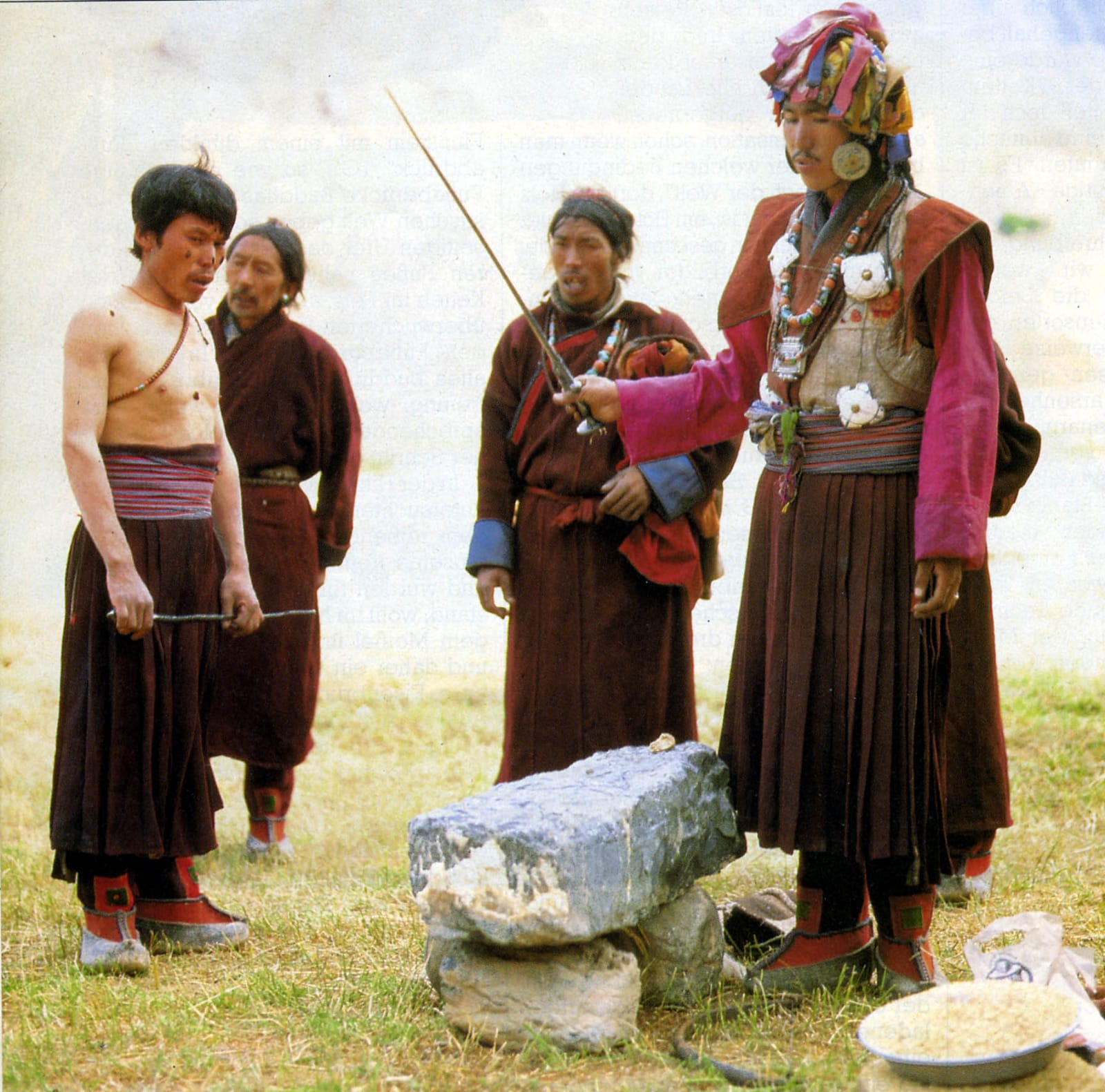
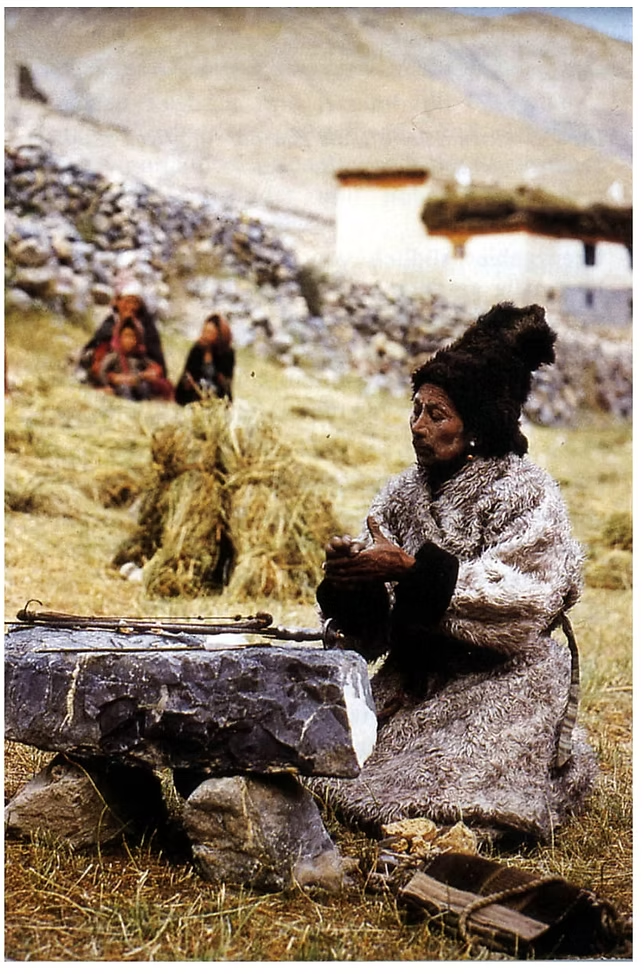
Buchen are a group of religious performers in Spiti who enact elaborate rituals and ceremonies to ward off evil spirits that bring misfortunes. They entrap the spirit in a stone and demolish it through a sacred stone breaking ceremony. The ritual is also associated with curing diseases and healing an ailing heart. Nowadays, it is most commonly commissioned to prevent agricultural mishaps, disease outbreak, disaster and water scarcity in a region. Buchen are well-known for performing folk lore, enacting stories of Buddhist saints, Lhamo (opera) and Namthar (biographies). Given their dynamic role in Spitian society, they are viewed differently as ritualistic performers, opera performers, healers, storytellers and messengers of Buddha’s teachings.

Photo: Pitt Rivers Museum, UK

The Buchen of Spiti trace their lineage to Thangtong Gyalpo, a 14th C religious practitioner in Tibet who was famously known as “Chak zampa” for making iron bridges and stupa in Tibet. It is said that the stone breaking ceremony was first performed by him to curb an epidemic in Tibet; the capital city Lhasa was plagued with 360 different types of deadly diseases – massively ravaging the lives of ordinary citizens. A demonic force is believed to have caused the disease outbreak and it was then Thangtong Gyalpo first performed the sacred stone breaking ceremony to tame the evil spirit. It is believed that he entrapped the demon in a stone, performed the ritual by breaking the stone, and successfully managed to stop the disease from spreading.

He performed it the second time when a demonic spirit was obstructing the monastery he was building. Whatever was made during the daytime was demolished by demons at night. He then performed the stone breaking ceremony where he subdued the evil spirit in a stone and annihilated it by performing the ritual. The monastery eventually came to completion after the demons were tamed. The practice then became widespread in other Himalayan regions and became an important tradition.

Photo: Tenzin Sonam

Thangtong Gyalpo was a versatile figure. He was a highly revered Buddhist tantric master, skilled in monument making, and nurtured a strong penchant for performative art forms like opera, theater, folk songs and writing. He was also the first priest to spread religious teachings through physical enactments of morality plays, allegorical folklore, song & dance and narratorial acting. He strongly felt that the core teachings on compassion, kindness, peace and impermanence should be taught in a way people can understand and implement in their real lives rather than just instructing from scriptures. He then founded the first theatre group in Tibet which goes to every village and performs religious teachings through morality plays and songs. Buchens of Pin valley in Spiti are disciples of this great master and they consider themselves as his sons “Bu-chen = great sons” who will follow the legacy of their master. Paying tribute to Thangtong Gyalpo is a huge part of Buchen’s performance; they put his statue on the altar, pray to him, sing odes and his teachings are orally passed through many generations.

Buchen as healers – relevance of the ceremony

I have seen several Buchen ceremonies during my growing up years and their performances are always invariably very striking. They are bold and impressionistic – one can remember the visuals long after the performance is over. Their repertoire, the enactments, narration and audience engagement are hugely appealing. It is like when they are performing – you are part of the stage, the play and the world they created for you. You might be a silent audience observing them from a distance but they will break the barrier by suddenly putting you in the spotlight – asking you questions, mimicking you and making you part of the play. As such, the distance between the performer and the audience is fluid. You are part of their stage, their world and they derive inspiration, anecdotes from you, your life and the larger community.

The Buchen’s performances are highly centered on religious precepts but with time, it has evolved to incorporate social realities of local communities. The practice is no longer restricted to impart religious teachings but it’s also done to avert serious social and ecological crises like drought, disasters, plague, agricultural loss and to bring harmony among communities. Locals appeal Buchens to perform ceremonies before agricultural season, during particularly low snowfall year, for recovery of physical ailments, while building houses, before starting any new venture in life or to bless a pregnant woman for health and happiness. Meme Buchens play a critical role as healers in Buddhist societies in Himalayan region and their blessings are sought during times of insurmountable distress as well as to bring peace and prosperity. Last year, when the world was gripped with novel coronavirus and there was panic everywhere, remote communities from Spiti sought solace in the healing powers of Buchen, to protect and safeguard them.

Photo: Buchen Gatuk Sonam

Stone breaking ceremonies were performed in many villages like Kaza, Demul, Khurik, Ki and Pin valley. They were also invited to many parts of Ladakh, Zanskar, Lahaul and Kinnaur to help communities deal with crop failure and drought. They were once invited to Patlikuhl, a small village near Kullu/Manali where an annual flood was causing huge devastation. Similarly, in 2018 when His Holiness the 14th Dalai Lama fell gravely ill after an eye surgery, meme Buchen of Pin performed a stone breaking ceremony in his “sim-chung” (private residence) for quick recovery. Individuals, villagers, institutions and monasteries consult them for healing, to dispel hindrances and for an auspicious beginning deed.

Sword dance and the stone breaking ceremony

Buchen form groups of 4 or 5 people. The troupe is led by the head Buchen (Lo chen), an actor who plays the role of Lukzi (shepherd) or Onpa (hunter) followed by two other actors who assist them in various tasks. The Lo-chen performs all key ceremonies and religious narratives while Lukzi grips the audience through his skillful narration, storytelling and repertoire. He is the most captivating character – his deliveries are a blend of social commentaries, mimicries, moral teachings and comic interludes.

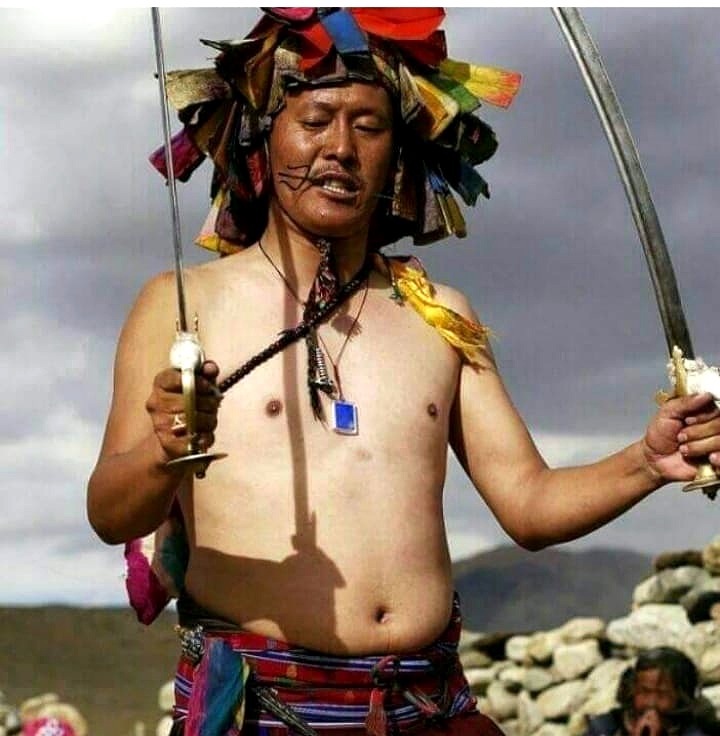
The Buchen head opens the ceremony with prayers, places the statue of Thangtong Gyalpo on the altar, pays him homage and narrates Namthar (biographies). The other team prepares the stage by placing a large boulder near the altar, drawing a human figure on it symbolizing the evil spirit/ demon that is to be demolished and burning incense. There will be brief prayer in between and after that, followed by a dance led by the head Lama rhythmically swinging the sword in slow dance movements.

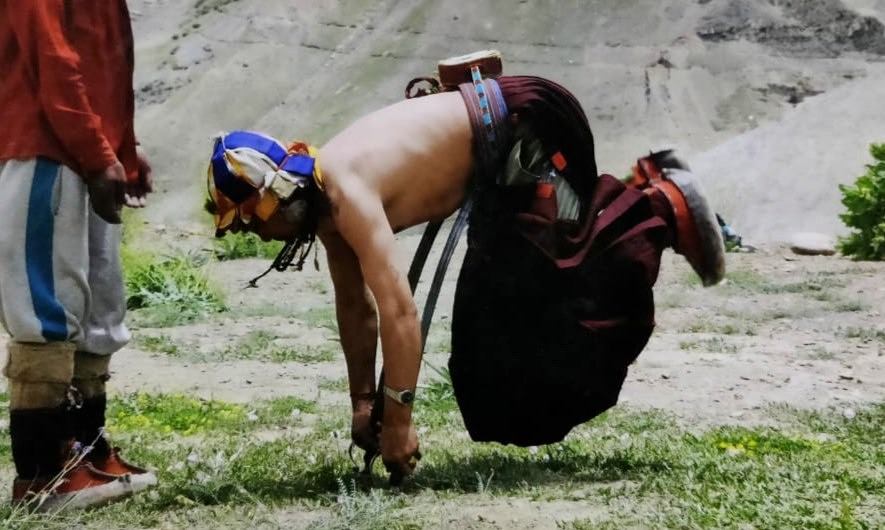
Then comes Lukzi’s turn, who enters the stage wearing a sheep skin and face smeared with white barley flour. He takes over the performance, engaging with the audience – making them crack into loud laughter and burst into tears while the head Buchen prepares for sword dance. He strips the upper part of his body naked, then slowly pierces his cheeks with a large pin and there’s considerable excitement, fear and thrill among the audience who watch him do this. It is a slow careful action and is done to dispel ill omens – the piercing of cheeks symbolizes purity of speech. He then proceeds to point the tip of the sword on his belly and slowly jumps to put all his body weight on it – repeating the act by drawing a sword in his armpits. The whole ritual of body piercing symbolizes the mutual existence of the mortal human body and lha (spiritual deity) that resides in each one of us. The sword dancing and body piercing symbolizes purity of body, mind and speech.

At the culminating act, while Lochen prepares himself for the sacred stone breaking ceremony, the dancer on whose body the stone is to be broken, lies down. A thin cloth and a heavy stone is placed on his body while the other actors look for a second stone. Lo-chen enters the scene, lifts the second boulder and smashes it on the stone placed on the dancer’s belly. The stone breaks with loud thudding noise signaling annihilation of the demon whose spirit was entrapped in the stone. Meme Buchens undergo intense tantric training, yoga, meditation and scripture learning in retreat to acquire such high feat. They acquire immunity towards fatal injuries and mishaps while performing ceremonies after decades of stringent training and disciplining of body and mind. They acquire mastery over their being before they perform healing treatments on others.

Photo: Buchen Tsetan Dorjee

They travel extensively within Spiti and outside to perform stone breaking ceremonies among various communities in Himalayan region like Ladakh, Kinnaur, Kullu/Manali, Riwalsar (Tso Pema), Sikkim and Nepal.  Every year they make a journey in small groups carrying the traveling altar, a trunk comprising their costumes, props and other material used for performance and leave from Pin for months at stretch. Sometimes they are out of their homes for as long as six months and come back only during harvest season for the farm work. They recite Namthars, folksongs and perform ceremonies in settlements where they reside and also make trade deals with the locals. They also sell horses and in turn receive Khullu (Yak wool), hand spun blankets,  Lena (Pashmina) and apricots. The Buchen tradition has seen huge decline in Ladakh and the meme Buchens of Pin valley often get invited to perform ceremonies to revive crop failure, crop damage and to appease local deities for abundant snowfall. They travel all over Ladakh; Demchok, Korrzok, Tsokar in Changthang to Choglamsar, Parang valley and even in Zanskar. Alternatively, in Kinnaur they visit Chango, Nako, Malling, Leo, Hangrang and even go as far as Rampur where the biggest trade fair in Himachal happens. Wherever they go, they are treated with utmost respect and their sword dancing and stone breaking ceremonies are considered equivalent to the Jintsak ceremony performed by highly incarnated Rinpoches (religious leader) to dispel ill omen and bring prosperity in the region.

Buchen tradition has undergone a tremendous change over the years. It used to be a widespread practice in many Himalayan communities but now it is actively pursued only in Spiti and that too minimally – there are only 10 remaining Buchen households in the region. “.. people no longer value our skills” laments Meme Buchen Tsetan (76) who is one of the oldest Buchen in Spiti. “Earlier people would bow down in front of Buchen to show their reverence but there’s considerable change in people’s attitude.” They also confide that with the influx of tourists, photographers and filmmakers, the practice has been reduced to a bare minimum where they are generally not interested in listening to prayers and Namthar (biographies) and rush them to perform sword dance and stone breaking which has more element of spectacle.

1600 1581 Chemi Lhamo
Losar : Animal’s Day

Losar : Animal’s Day

I think I am in fact the least excited and most boring person at any form of festival. Much of it could be due to my introverted genes that wouldn’t fancy gatherings, dancing, fireworks or any other things which involve interacting with strangers, but part of it must be because of my upbringing. I am not sure of both though. But my heart just cannot seem to invite festivity as much as my friends and family do.

I hail from a small nomadic village in Ladakh where the livelihood of everyone is dependent on livestock. Almost every household owns some goats, sheep, horses and yak. These animals aren’t merely our source of income, but are used for obtaining food, fetching water, traveling, and most importantly seeking comforts and friendship. Since our life revolves around rearing these animals and more importantly enduring the harsh reality of having no access to electricity, water and worse not even a single shop in the vicinity throughout the year, we have little time for festivity. Or, many of us are even oblivious of its existence, except for Losar– the Tibetan new year and Thrungkar Duechen – His Holiness The Dalai Lama’s birthday. Hence, every single person in the village looks forward to these two days like a child, although for different reasons.

Photo: Namgyal Lhamo

My fondest memories of Losar and Thrungkar were significantly boring compared to my cousins. But these days, no matter how many festivals I witness as I travel through urban life, there is nothing more meaningful and beautiful than this idea of celebration I got to see early in my life. It was on one of the third days of Losar. My father came to me, patted my head gently and said with a smile “Life of your polled lamb will be set free”. I was elated beyond words and this memory has remained in my heart so vividly. In my village, on the third day of Losar or Thrungkar, fathers of the households are the busiest. They get up early in the morning to appease the Land God and other deities who are believed to be the true owners of our land according to their ancestors. This is followed by their brief journey to the animal shed where they would choose some animals randomly and set their life free. By that, we are not allowed to send them to slaughter houses, milk them and are expected to watch them with unconditional love and care which every animal receives anyway, until they die. It was my most awaited moment of the festival. My siblings and I would always hug our father with utter joy after he would come out of the shed. This act is mostly done to honor and thank the sacrifices of animals for our livelihoods while it is also performed for the health and long life of His Holiness and carry his message of love, kindness and compassion towards animals.

We eventually shifted to a town nearby, leaving the whole nomadic life behind due to the inability of my family to see the animals suffer for our survival. But, as I look back, I realised that it was this place where I gave birth to my love for animals. Today, even if we live a totally different life, my parents make sure to celebrate these two days by setting at least one animal’s life free. There is nothing more rewarding at a festival for me than this act of genuine kindness. Somehow I think of these two days as a festival of animals and I hope to carry this tradition forward in my own life too.

792 706 Namgyal Lhamo
Reyun Tache
Remu Painting | Jugmat Norboo (Urgos)

Reyun Tache

Reyun Tache is a festival celebrated two days before Losar in many parts of Lahaul. In my village-Urgos, the festival is marked by each household painting Remu paintings on their walls for inviting good omen and warding off evil. Paintings are made with almost a competitive spirit, with each house trying to do better than others. All the members of the house take part in this celebratory moment and contribute to the painting. Each element of the painting signifies a deeper religious sentiment, and connectedness and harmony of indigenous communities with nature. Thus, it is important for each house to ensure all elements are present on their painting.

The next day is when the fun begins. Everyone visits the homes of the others to appreciate their efforts and ensure that they have included all the necessary elements in their painting. If not, then they have to pay a fine to the village committee and carry shukpa (incense sticks) throughout the day as a penalty.

1471 1811 Jigmat Nurboo
Dartse: The Archery Festival
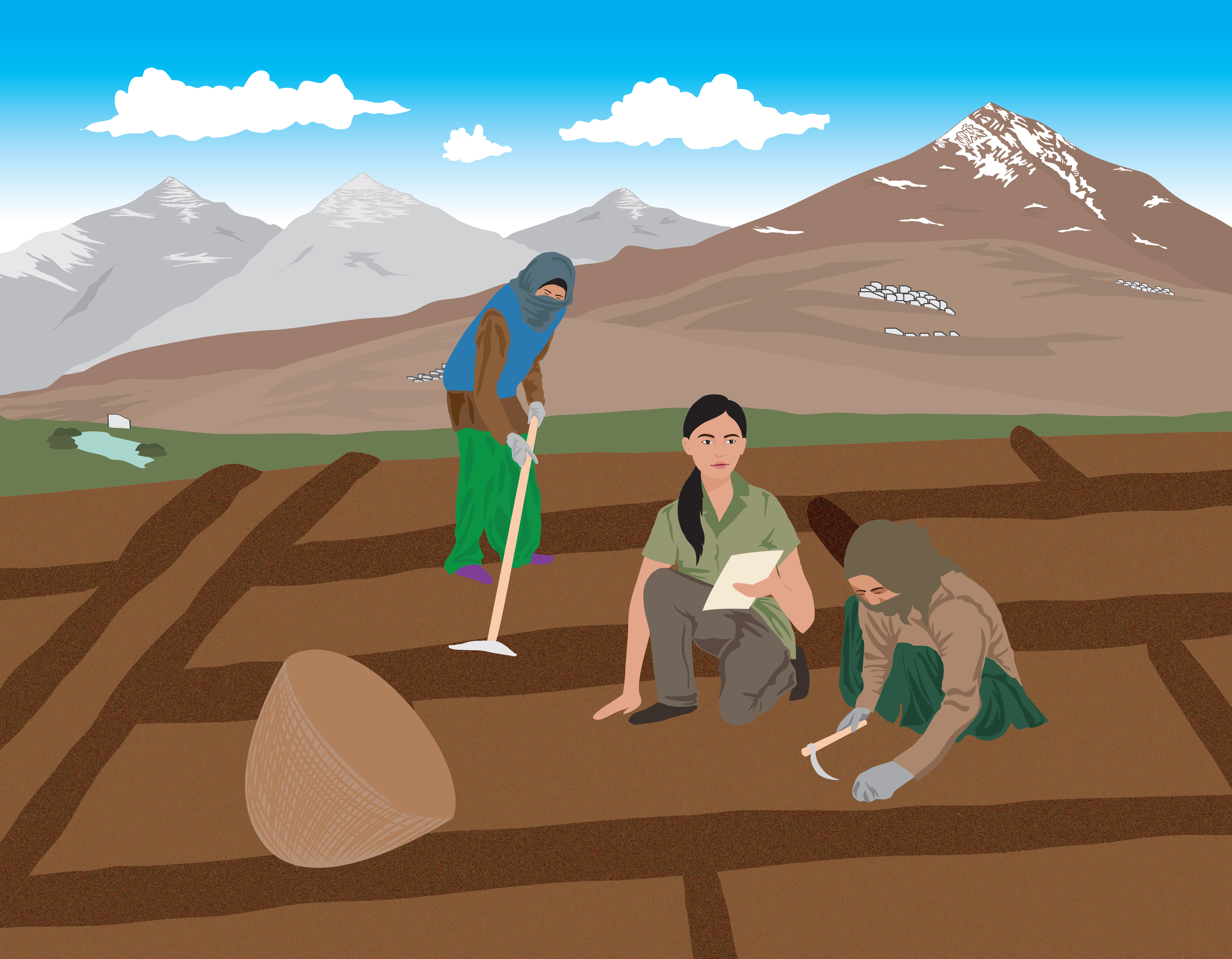
Illustration: Nawang Tankhe

Dartse: The Archery Festival

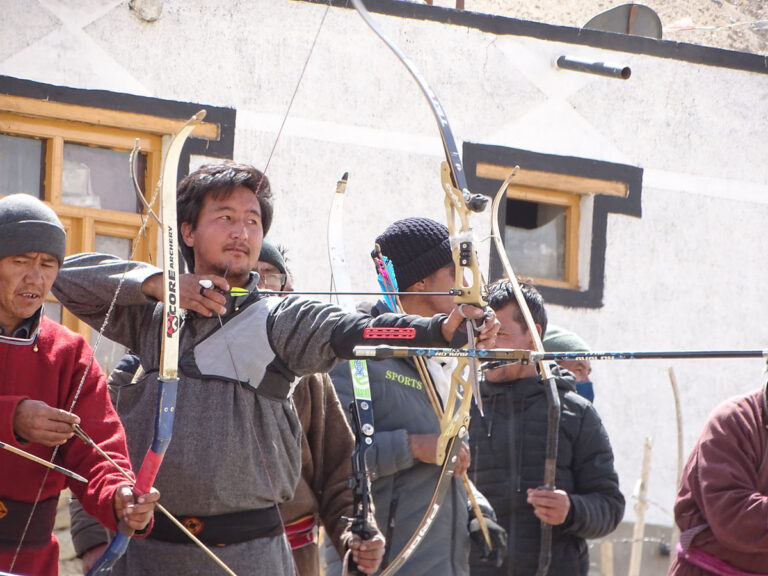
Archery has been a vibrant part of Ladakhi culture for generations. It has its origin in traditional hunting. In the prehistoric times, it was practiced during warfare and for livelihood but gradually with change in socio-cultural positions, use of archery in people’s daily practice have dwindled. It, however, continues to hold an important part in Ladakhi culture and local customs. Playing archery using traditional bows and arrows is perhaps one of the very few visible cultural remnants of the past and symbolizes rich socio-cultural heritage.

Many Ladakhi folklore, proverbs, literature and rock-art have references to archery, unraveling fascinating insights into traditional way of living. The oral folklore – The Epic of King Gesar (Kesar-e-zGrums) narrates heroic stories of the warrior king Ling Gesar who was a skilled archer and horse rider. The epic saga also has a detailed account of the art of weapon and armor making.

Archery festival in Gya | Photo: Abhijit Dutta

The Epic of King Gesar is the most celebrated oral narrative of the central Asian region and has a particularly huge influence in highland pastoral areas of Tibetan plateau and Ladakh. Phrases like “fast like Ling” – evoking magnanimous strength and speed of Ling Gesar Gyalpo is a common part of local speech. The allusion to natural elements and imagery of nature is also quite frequent. The oral narrative explores the theme of harmony in nature, balance between human and nature, battle between good and evil (deities v/s demons) and disruption of natural order in great depth. In today’s times, much of these oral traditions and cultures are going out of practice and what remains is a watered down version of the rich cultural heritage our ancestors have passed on.

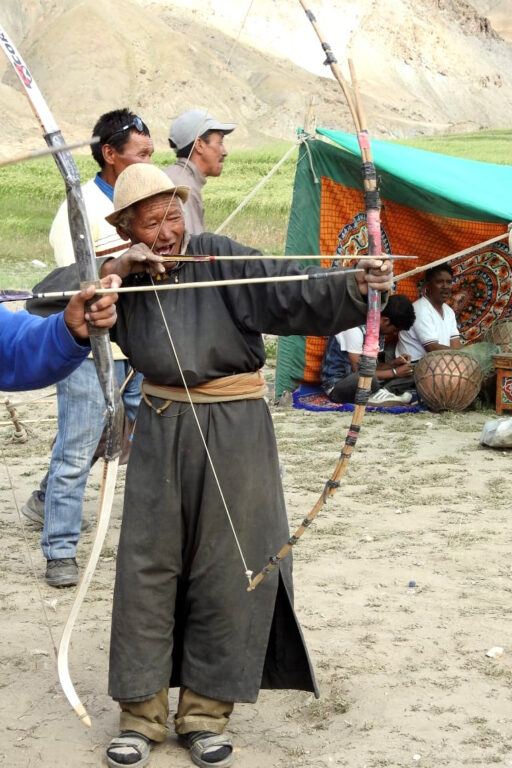
Photo: Karma Sonam

Archery, one of the few remaining traditions, is the most celebrated local festival in Ladakh and is very popular in my village Gya too. Gya, one of the oldest settlements in Ladakh, was historically the abode of chieftain ruler Gya-pa Chow. Today, there are around 150 households in the village dependent on agro-pastoralism. Dah- Fang or Dartse (Archery) is celebrated for good harvest, harmony and happiness in the village. Traditional song and dance, feasts, archery competitions, rituals- all are part of the festivity and prayers.

Dartse is celebrated twice in a year; sPitda is celebrated in early spring after dormancy of winter days and Yarda is a mid-summer celebration. The Spring archery festival marks the beginning of harvesting season and is celebrated right before watering the fields when farmers are getting ready for the cultivation. The Goba (village heads) of all neighboring hamlets collectively consult Rongtsen (oracle) for an auspicious date for cultivation and subsequently coordination for archery celebration is carried out. Once the date for ploughing is finalized, the Goba will announce the date of festival and gather barley, grains and ra-luk (sheep-goat) for the feast.

Women and young girls participate in preparing food for the whole village while men and adolescent boys take part in archery competitions. Drinking traditional wine is a huge part of the celebration and a group of women known as Changma (wine incharge) are solely responsible for brewing Chaang (barley wine) and Aarak (local alcohol) and serving it to archers during the festival.

Gya has 3 main hamlets and Dartse is celebrated collectively in all these villages. It goes on, uninterrupted for 6 days and each village takes turns hosting it in their village. In Hemya (my mother’s village) religious ceremonies for good harvest and prayers for peace and harmony among villagers are done by holy lamas (monks) and the grain sheaf called “Phut”(first offering to god) is offered in monasteries as a gesture of gratitude.

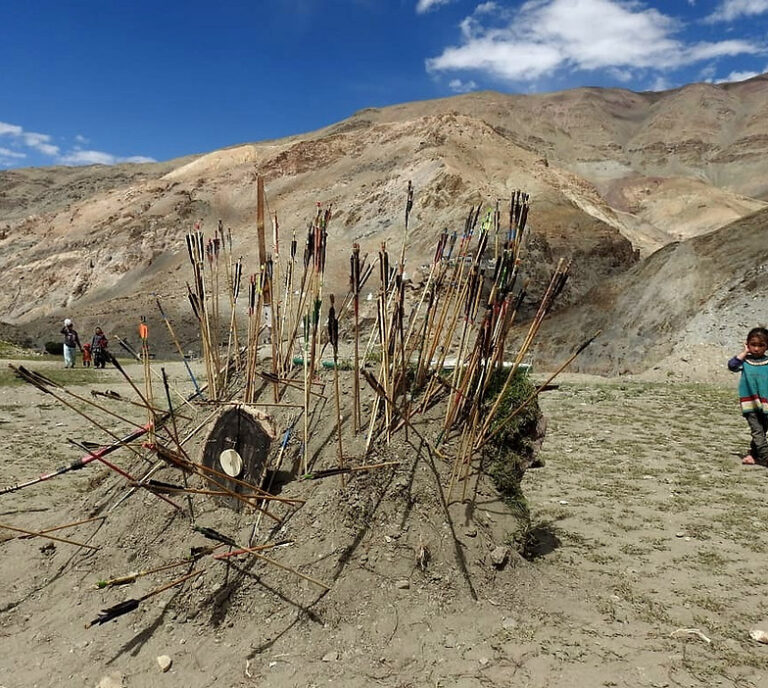
The archery competition is one of the most awaited events of the festivals and a lot of men and young boys take part in the competition. The archers are divided in two teams known as Ma-Bhu (Ma – mother, bhu-son) with one team headed byGoba (village leader) and another team led by Nyerpa (a monk representative). Earlier, bows and arrows were made of ibex horns by skilled artisans but these days we use the ones made of willow and bamboo. The target area is made on a heap of mud to ensure the arrows don’t break, and the target (bull’s eye) known as Tsage is either made of zama (earthen clay) or a wooden plank. The archery competition starts with rdaman pa (traditional musicians) playing songs and when an archer hits Tsege (bull’s eye target) people breakout in loud songs and dance cheering the team. Whichever team hits the target maximum number of times, wins the competition. The winning team has to pay some amount to Rdaman pa as a gesture of gratitude for their services and circumambulate Tsege (target area) in loud celebratory cry Rzang solo!!

Photo: Karma Sonam

Archery is not merely a sports tournament but is an integral part of our communal identity and cultural ethos. It is a reflection of the rich Ladakhi cultural heritage and carries strong socio-cultural sentiments of the people. The festival brings together communities and is important for maintaining cohesion and peace within society. Ladakh being primarily an agro-pastoralist society, the festival is in a way also a celebration of crops that are grown on land and cherish the efforts of the farmers.

But such traditional practices are slowly fading away and many aspects of the festival and traditional customs are altered to suit modernity. Wearing traditional clothes like Goncha (woolen robe), eating paba (barley delicacy) and using bows and arrows handmade by local artisans were significant aspects of the archery festival but are slowly eroding. These days, modern sports gear are used for archery and the spirit of harmony between people, between communities is slowly being replaced by competitiveness of the game. I have personally witnessed these traditional practices (whether farming or archery) undergo drastic change in the past few years and I feel an overwhelming sense of loss. Our land and our practices make up for who we are and I feel it is important to preserve these traditional practices.

1724 588 Karma Sonam
The Water Managers in Kibber
Illustration: Tenzin Metok

The Water Managers in Kibber

In the distance, the early morning sunlight chased the shadows on the mountain peaks. I gazed longingly at the golden patches, wondering how long before I could feel the warmth of the rays. Lobzang saw me and laughed, “Are you cold? Come help, it will warm you up!”

Lobzang was building kyaari in her field. These are embankments built in the fields that help guide the flow of water. They are carefully built based on the natural slope of the land. In the neighboring field, I see Thinley ploughing his land using two yaks. I was in Kibber village, in Spiti valley, and the agricultural season had just begun. The day of ploughing had been decided a few days ago at the village meeting.

“How did you learn how to do this?” I asked Lobzang, fascinated at the skill and speed she was constructing the kyaari. “I’ve been doing this for years. When I was a little girl, I used to help my mother and I learnt from her. This year, it has snowed well, the water will be good.”

In Kibber, I’ve learnt that the irrigation system is considered the domain of the women. The water comes from the snow melt from Kanamo, a holy peak in Spiti. The water from the peak is directed to the Kibber fields using khuls. This irrigation system was initially built for barley and black pea, but has been modified for irrigating green pea. Lobzang tells me that the women were responsible for fine-tuning the watering for green pea. They learnt through trial and error, but now have perfected the quantity of water needed and when it is needed for a bountiful harvest.

“If you water them too much, or too early, the plants get thirsty, and will need more water. You have to water at the right time, with the right amount”, she tells me.

The crops are irrigated in cycles and in each cycle a fixed order is followed. Yurma, the first round of irrigation, happens 40 days after the ploughing. Just before yurma, women remove the weeds from the field and scatter them with dried yalo (Aconogonum sp). This prevents soil run-off and increases water retention. Irrigation on the first day of yurma is reserved for the fields of amchi and the devta. Women from all households participate in irrigation on the first day. The second day is reserved for families who have faced a serious illness or death the previous year or have pregnant women who are unable to work in the fields. The third day, tiping langzet, is reserved for families who have participated in the maintenance of water channels. After the third day, the remaining fields are irrigated.
This order is followed for the first three irrigation cycles, after which all the fields receive fixed turns. It is the women who decide the time of the second and third irrigation. The women also manage the daily distribution of water. Every year, two women are chosen to be the khul managers. They are in charge of managing the khuls, making sure the fields receive their quota of water, and managing small arguments that might arise related to the distribution of water. This system of women managing irrigation, is similar to systems in other parts of Nepal and South-East Asia. However, across the world, it is uncommon to come across natural resources that are managed by women. Men manage most natural resources, especially those that are shared. This makes the irrigation system in Kibber, and likely other parts of Spiti, special.

The irrigation system in Kibber has been in existence for centuries. Lobzang tells me it has remained unchanged as far back as she or her grandmother can remember. The knowledge of irrigation is passed on from mother to daughter, from the time little girls start helping in the fields.

As the sunrays finally reached the spot we were in, and started warming me up, I felt more motivated to help Lobzang make the kyaari. “Show me”, I said. I was eager to learn a skill that has been passed down from woman to woman for generations. Are irrigation systems in your villages similar to the one in Kibber? Do write-in and tell us about them.

4623 3600 Dr. Ranjini Murali
Himalayan Agriculture
Photo: Thapasu

Himalayan Agriculture

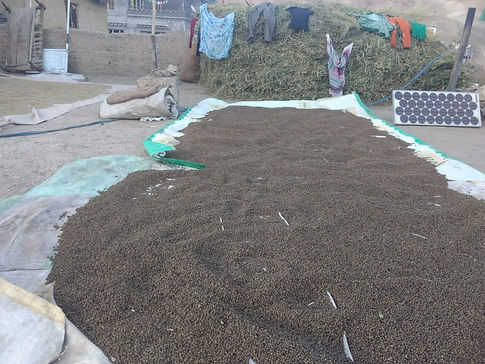
At 14,200 ft above sea-level, surrounded by the trans Himalayan range, I was looking forward to seeing the yak, for which I had travelled from Mysore to Kibber village in Spiti during the summer of 2016. The walk from the village to the pasture was an arduous one, but I had two girls from the village Lobzang & Tenzin who were accompanying me on my quest. On our way, we crossed many agricultural fields where the villagers were growing green peas. It was unusual to see a cash-crop in such a harsh and remote region. They explained how agriculture had taken shape in the last few decades and opening up of roads and tourism brought many possibilities to these remote places. “For our own consumption, we still grow barley. Green peas are only for the outside market” they exclaimed. Barley, a cereal grain, which has been a staple in upper Himachal has been the source of nutrition especially during the long winter months when supply of any food produce is infrequent and unpredictable. However, due to lack of marketing opportunities, there is hardly any demand for it outside of Spiti. Discussion with these young girls led me to develop the idea of ‘Thapasu’.

Photo: Thapasu

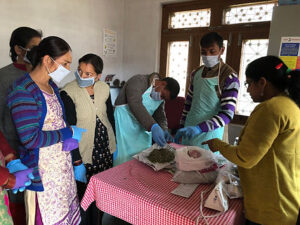
Thapasu is a for-profit impact company that closely works with farmers and other collaborations at multiple levels to make agriculture nutrition-rich and accessible to all. We hope to do this by working at ground level in protecting and preserving the agriculture knowledge and the biodiversity surrounding it. Our work began in early 2016 when, with the help of a few researchers and the Government of India, we were able to start this initiative alongside two farmers – Deepak and Poonam from Kullu valley. We began by cultivating and marketing Jattoo variety of red rice. It was a huge success. Since then, Thapasu has been working with tribal farmers to produce, add-value and market various native, heirloom and wild products promoting natural and organic form of agriculture. Some of these include Barley, Seabuckthorn – a wild berry, Black-peas, Rhododendron, Rose Hips and Tartary Buckwheat. Today, approximately 3200 farmers have joined us from three districts in Himachal Pradesh (Lahaul & Spiti, Kullu, Mandi) and two districts in Karnataka (Mandya & Hassan) along with few regions in Leh, Ladakh.

Thapasu works with a ‘Farm to Store’ Model by marketing these heirloom species with the help of institutional partnerships and Government schemes. Through institutional collaboration, Thapasu also engages in building newer technologies which are then transferred to the farmers and self-help groups in converting the produce to the final product. 10% of our profit goes back into the community through various agricultural services we provide for farmers such as soil testing, land mapping, semi processing subsidies from government, skill training and new technology introductions. We are a team of eight resourceful people who bring various skills to enable this work in the Himalayas.

Photo: Thapasu

Food habits have changed drastically over the last 5-6 decades, however, the importance of saving local food systems is only becoming apparent to us in the recent past. Biodiversity is the key indicator of the health of an ecosystem. But the extinction of wild, native and heirloom food grain species may have unforeseen impacts, sometimes snowballing into the destruction of entire ecosystems. Ancient products still continue to grow in certain parts of the country specifically where climatic conditions are harsh and rough because they are able to withstand drought, fix nitrogen and survive in the harsh climatic condition. Introduced crop needs external inputs to do the same. But we are experiencing this shift where traditional crop patterns are being replaced by newer varieties of produce even in the remotest regions of the country. The best way to save the little that remains is by unlearning modern agricultural practices, re-adopting the traditional practices and building a circular system that benefits the farmer, consumer and the environment.

Why Thapasu?
Farmers growing ancient heirloom products do so mostly for self-consumption. For livelihood, however, they have to depend on introduced crops for which they may be using chemical based fertilizers and pesticides. This is harmful to the soil quality and health of the community in the long run. Thapasu ensures a market for the organically grown heirloom products and fills gaps which are prevalent in the conventional agro-marketing infrastructure.

How Thapasu works?
Any farmer/s who grows ancient heirloom products, organically, can reach out to us to help them sell their produce to the outside market. Once the quality and nutritional value of produce is assessed, we begin marketing and selling the produce as a Thapasu product. We buy a set quantity from the farmer which is mostly stored with the farmer and when we receive an order from our website (www.thapasu.com) we request the farmer to send the package to the address via India post. Bigger orders are managed by us directly.

How are farmers paid?
Farmers are paid when we buy the product from them. All the transfers are made directly to the bank account of the farmer. If the farmer does not have a bank account then the payments are made through our local champion who pays them in cash.

How much share does a farmer earn?
Of the total profits earned, up to 50% goes to the farmer as part of direct income and/or services provided by us.

Are there any other services provided by Thapasu?
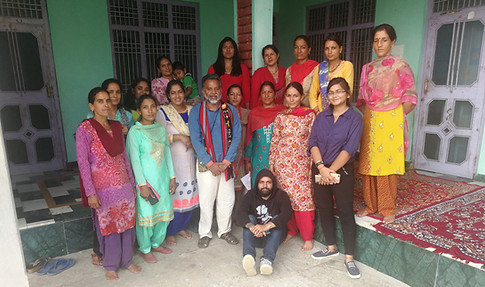
Organic farmers or farmers looking to change to organic agriculture, can reach out to us for any grievances or consultation with regards to their fields or produce. In collaboration with other institutions, we also conduct regular workshops for farmers for transitioning to organic farming and skill building. We also do soil-testing, land mapping and support farmers to avail government subsidies.

How can farmers reach out to you?
You can give a call or leave a message with your name on +91 973 140 8844. You can also send an email at amshu@thapasu.com or visit our office in Manali: THAPASU Centre, #83/7, Siyal Village, Post Office Manali 175131, Kullu Dist., H.P, India.

427 320 Amshu CR
Who owns the Water?
Photo: Chhering Angchuk

Who owns the Water?

“Lungpa Bhu Med La Bhu, Ta Med La Teu, Chu Med La Chu”
Piti Da-Chang Monlam

“May the ones deprived of a son be blessed with one, the ones deprived of horse be blessed with a mare and the ones deprived of the water be blessed with this resource”
Spitian prayer verse during Da-Chang festival.

In Spiti we define wealth and prosperity in terms of water -“Chu Sang-na, Yul Sang” the expression aptly translates as  “abundant water results in prosperous villages”. Being a cold desert in high Himalaya, It is difficult to think of a resource more essential to the well being of people and their economies than water, yet managing water resources is a complex and challenging task and sometimes unfortunately results in many conflicts: between villages, households and within families. Sgrungs – Spitian oral stories are full of such narratives and show entangled relations between people and their water bodies. This one concerns two neighboring villages – a tale is known to many.

Every year, before agricultural season when the Spiti Valley gets engaged for the upcoming farming season; uncovering the tools, sharpening sickles, putting ashes to their fields and waiting for the glacial water-melt to fill their water canals, the villagers of Rangrik and Sumling, two neighbouring villages, have additional conundrum to resolve – that of the fate of “Shang-ma” – the precious mountain top water source. The dilemma of deciding who the water belongs to, which village gets to use water, channel it to irrigate their field and ultimately who are the custodians of this glacial melt water source. When disagreement arises, quite often a story is narrated that is believed to have happened a few decades ago.

Photo: Chhering Angchuk

Once a girl from Sumling village was married off to Rangrik village. Upon seeing the dry, parched fields of Rangrik, the girl’s family was distressed and decided to give her the most precious treasure they owned – the glacial water source. Back then wealth was measured in terms of one’s fields, cattle, agrarian assets and one’s access or ownership to land and water resources. With Sumling’s prime water source as a gift from her maiden family, the bride happily settled in Rangrik and many believe that Rangrik’s expansion, prosperity in present day and harvest abundance is attributed to the bride’s “Dak-ja” (parting gifts for brides). However, stories like these are often loaded with contentions and depending on who is telling the story and from what perspective, the details, the bold claims, the story arcs change dramatically.

Photo: Chhering Angchuk

While the story attributes Sumling-pa as the custodian of the precious glacial melt water which is located at the mountain range above their village, however the coin flips its side when Rangrik villagers elucidate the situation. They trace their ownership to the waterbody in accordance with traditional land and water rights that have been bestowed to them. In terms of settlement in Spiti, Rangrik came into existence much earlier than its neighboring villages and the locals believe that the vast stretch of land, pastures, waterbodies from Rangrik till Sumling covering Khurik, another villager in-between, historically comes under the territory of Rangrik and thereby belongs to them. They further elaborate that they have been maintaining the waterbody since the olden days. If there’s steady flow of water in canals of Rangrik and Sumling village, it is because villagers of Rangrik have traditionally been preserving it. In the olden days, one member from each household of Rangrik accompanied by their horses and donkeys would make a day’s trip till Shang-ma – located at the mountain top of Sumling to directly channel glacial melt into their canals.

Photo: Chhering Angchuk

The crucial portion of the Kul (canal) head is at the glacier top, which is to be tapped. It is to be kept free of debris and so the Kul is lined with stone to prevent clogging and seepage. Water is, then, collected through the night and released into the exit channel in the morning. The Kul which stretches for over 7 km from Sumling runs through steep mountain slopes and crosses numerous crevices to reach Rangrik. The water flowing in the Kul is the only viable way to sustain vast agricultural lands in Rangrik and to feed their cattle. Villagers go on to describe that at night when the canal is dry, they even let their horses take shelter inside it to protect the livestock from cold. “In the olden days, our Kuls are that deep and water that abundant” muses munshi Chhering Angchuk – a teacher at government school in Rangrik who has been patiently corresponding with me over phone and explaining the details. Rangrik’s Gyetpo (village headman) is responsible for overseeing the maintenance of water, governing its distribution among farming households and mediating if there’s any conflict around for water distribution from Kuls can cause tensions when there’s shortage.

The glacial water source, although located at Sumling village, is primarily maintained by Rangrik village and therefore enjoys greater access to it. However, the rules around water are not straightforward and take on complicated turns as the meandering stream from the hills. In order to ensure there’s parity and less discrepancies, a consultation was made to village deities and the communities from two villages agreed upon several traditionally governed rules to be followed henceforth. While these rules are not hardbound or codified legally, it works purely on faith. Communal integrity and fidelity to verbal commitment is a virtue everyone strives to adhere to hence, going against one’s word or breaking a promise made in front of village deity and village elders is considered a grave offense.

Sumling village | Photo: Chhering Angchuk

The rules governing usage of water and access to it is as follows:

  • while villagers of Rangrik can tap the glacial water from its source, they cannot completely divert it to their side or block the Kul’s head with mud, reinforce it with cement, grass or cloth to prevent downstream Sumling village from using it.
  • The water seeped out from the crevices, naturally caused chasm and narrow openings can be used by villagers of Sumling. The oozed-out water “Dsag-ti” is then subsequently diverted to the fields of Sumling and are fed to their cattle.

Water being a precious resource, there are meticulous rules even for using “dripped out” water (Dsag-chu) which would be otherwise viewed as an “extra flow” or “excess water” and left unregulated.

Is the contention then completely resolved?

Disagreements, tensions between two communities occur even now and in fact women from both these villages are stereotyped as ‘quarrelsome’ for they are primarily responsible for irrigating the fields and unfortunately sometimes end up in heated arguments. Knowing fully the onus of such conflict and subsequently a scandal that follows majorly lies on them, upon asking, many of them ruefully answers “chui thupa zinna mekak” – “our water conflict can never be fully resolved”. The story of bride being gifted water or the claims made by respective communities remains an enigma that transcends monolithic binaries of right or wrong but the story lives on and so do the many contentions around water that continues to discord people’s lives. Across the globe, access to water has always been a source of tension and it continues to be a conflict among stakeholders.

Despite the contention, many native Spitian lores, verses and religious incantations dwell on the divine, metamorphic concept of water. Referring to it as “life giving” “life line” – evoking mutual interdependence of people and water. It is culturally revered, venerated, celebrated and the guiding philosophy underlying diverse forms of water usage is respect for water considering it as an inherent, living part of nature. As such there are plenty of religious verses, hymns, odes dedicated to rivers, streams, ponds, spring waters, mountain top glaciers and rivulets to prevent it from drying and seeking its abundance in nature. In Spiti, during one of harvest festival Da-chang, villagers recite sacred verses (aforementioned) where they collectively pray protective deities to bestow “water, son and a horse” – three essential resources to sustain agrarian life in mountain desert.

1156 521 Chhering Angchuk
Ecological Importance of Dry Toilets
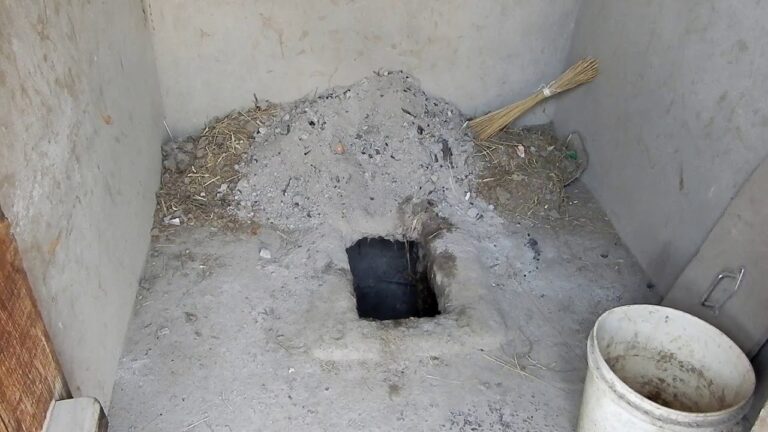
Photo taken from an online source

Ecological Importance of Dry Toilets

Spiti Valley is a rural and dry mountain region located in the Indian Himalayas in Himachal Pradesh. Being a cold desert valley, it receives very less rainfall in the summers which is not enough for the crops to thrive. Dependence on water is therefore exclusively centered around glaciers whose water collect in streams traditionally called ‘tokpos’ and rivulets called ‘yuras.’ Local communities thrive next to the tokpos from where water is diverted into the fields through yuras. The unfortunate dual existence of agriculture and scanty rainfall compels the farmers to engage in a tedious task of irrigating the fields using glacial water. Additionally, Spiti also faces water shortage in winters, due to which people depend on pipelines (most of the villages lack it) and hand pumps to extract water for daily use. The hand pumps also have predictable chances of freezing and becoming unusable due to sub-zero temperatures. The problem of water-scarcity is however eased by the existence of dry toilets which do not need input of water like modern pour flush toilets, also producing natural manure for the fields

Photo taken from an online source

A deeper look into the traditional agricultural practices of Spiti shows how the local knowledge pertaining personal sphere of sanitation holds symbolic power to question not only the design of modern sanitation systems but also the paradox of development and modernity that cities are clothed with. What is progress if whatever new infrastructural advancements we are coming up with are detached from the ecology of the area it is being used in? Is it even progress if it’s happening at the cost of the deterioration of nature’s resources? We have been using dry toilets for generations in these cold Himalayas. It is also called composting toilets and are the ancient versions of modern eco-san toilets. It has two levels, a toilet on the top and a composting unit underneath. After using the toilet, we shovel a bit of dirt (mostly ashes, hay or dry dung) into the composting unit, through a hole to facilitate decomposition by microorganisms. The dirt also covers the waste and blocks the foul smell. Furthermore, these toilets do not need water.

At the end of every year, we clean the composting unit of every household with the help of our neighbours, friends and relatives. It is a communal affair and the waste that has decomposed is usually dry. The naturally formed manure is put to use in the fields before the ploughing season. In Spiti, therefore, there is no concept of ‘waste.’ The symbiotic relationship between the toilet design systems in Spiti and the fragile ecosystem facilitates growth of healthy crops and reduces the brunt of water crisis in the region. The use of dry toilets is therefore an eco-sensitive wisdom born out of the geographical realities of this cold desert and is especially useful in the winters when water freezes. However, an influx of tourists and the effect of modernity is not only hierarchizing sanitation design systems but is also disrupting indigenous knowledge and the temporal existence of infrastructure when it comes to construction of toilets.

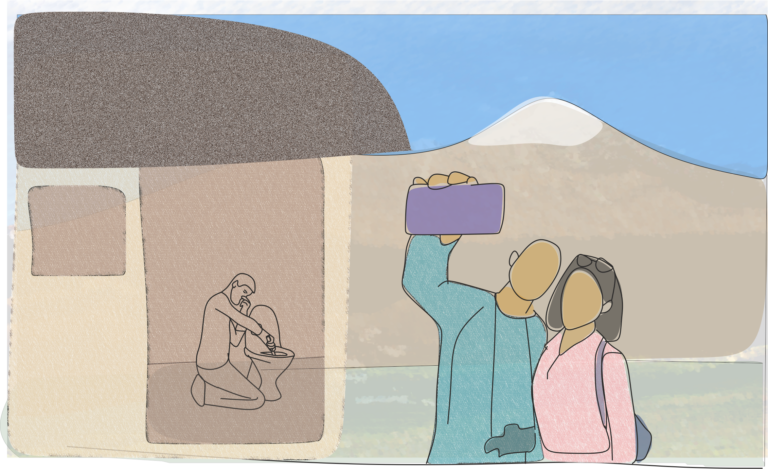
Modern toilets invisibilise waste | Illustration: Malvika

Symbolism of Toilet Design

Sanitation, although a very personal matter, is also very political. It is impacted by class, caste and geographical privileges that one is born with. Living in a society marked by caste, class and gender differences, our everyday objects and infrastructures are filled with symbolic meanings which have political connotations. Most of the semiotics revolving around these infrastructures are shaped by the overarching burden of development that we’re all expected to carry.

User & cleaner is the same person | Illustration: Malvika

The brunt of modernity is borne heavily by the marginalized communities who are socially, intellectually and financially less privileged. In the dry toilets of Spiti, there is an understanding of where one’s waste is going; one sees the waste and later when decomposed to form manure, materially engages with it. The ‘user’ and the ‘cleaner’ is the same person here. With modernity however, progress of sanitation design systems is measured by how well you can invisibilize the waste. There is no awareness of what trajectory one’s waste takes. In pour flush toilets, waste is flushed, it goes into sewers and ceases to exist visibly for those using it. The waste is left in the sewers and septic tanks to be manually engaged by those who are forced by their caste status to do so. Intentionally or unintentionally, modern toilets and sanitation design systems work efficiently only to strengthen the existing inequalities in society and stigmatize dirt, caste status and sanitation work. For the outsiders, these dry toilets are symbolic of the ‘backwardness’ of the region.

These toilets are looked down upon and therefore become an indicator of the scale of development one has afforded to reach. When I took one of my friends to visit Spiti to meet my family, the first thing my parents said on the phone was, “We don’t have a good toilet. Will she be able to manage with our traditional toilet”? With the oppressive discourse of so-called ‘development’ and the hierarchization of toilet design systems, the traditional toilets immediately become instruments that trigger shame and remind Spitians of their class and their ‘backwardness.’ It compels Spitians to be apologetic that they cannot keep pace with the race of modernity.

Tourism and Its Impact On Toilet Design

In recent years, Spiti has become a famous tourist hotspot. To service the influx of tourists, towns like Kaza have built many restaurants and hotels that are attached with modern pour-flush toilets and bathrooms. To cater to the preference of modernity and of the tourists, owners have constructed borewells to extract groundwater. With scarce rainfall, recharging the groundwater seems like a phenomenon that will take forever. Exhaustion of groundwater worsens the problem of water scarcity during the winters when tourists cease to visit. With tourists visiting and the influence of modern infrastructures, Spitians in the towns have moved away from their eco-sensitive traditional knowledge regarding construction of toilets. The indigenous knowledge is losing value in the face of the larger discourse around development and a drive to ‘modernize.’

In this era where development is seen as a linear phenomenon, rather than context-dependent, the dry toilets of Spiti symbolize how ‘backward’ or ‘developed’ one is. The toilets, therefore, become symbolic of one’s class and the scale of development one has reached in terms of sanitation. The visibility of the waste through the hole of the dry toilet is considered unclean. Dry toilets of Spiti are therefore, not only symbolic of how the ‘personal’ is linked to and influenced by the larger political discourse around development but also how infrastructures or sanitation design systems come to acquire and be trapped within social values of power, shame and backwardness.

1000 404 Sonam Yangzom