About us
Stories, people and places
Himkatha is a journal of stories, people and places from the Himalaya. We bring together writing, photography, illustration, film, audio and other forms of storytelling to document the region in all its complexity — its landscapes and communities, histories and cultures, everyday lives and changing realities.
The Himalaya is often described through its peaks, forests and rivers. But the region is also shaped by the people who live here, the knowledge they carry, the places they call home and the ways these are changing. HimKatha exists to make space for those stories and perspectives, and to make them accessible beyond the places where they originate.
How we tell these stories
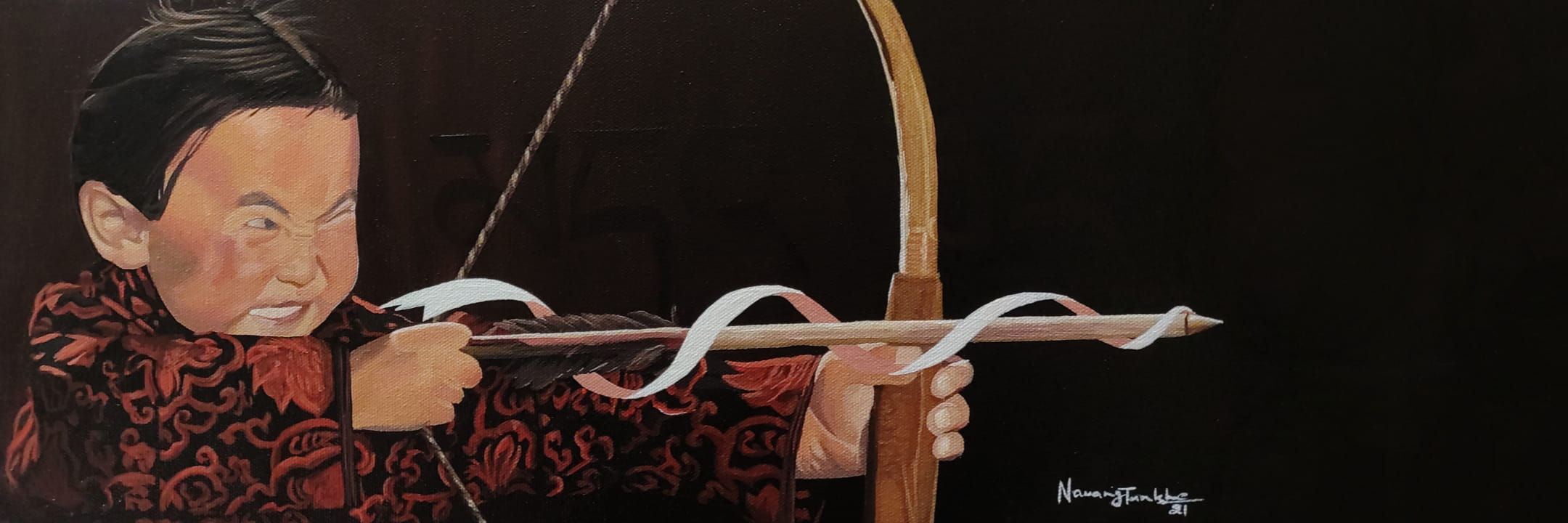
Himkatha works with writers, photographers, artists, researchers, conservationists and community members to bring stories from across the Himalaya to a wider audience.
We publish work in many forms, from personal accounts and conversations to photo essays, illustrated stories, films and research. We are interested in stories that are rooted in place and lived experience, and in the knowledge and perspectives that can easily be overlooked by more conventional accounts of the region.
We work with contributors to shape each story while respecting the voice, context and knowledge behind it.
Our Contributors

Sherab Lobzang is from Kumdok village of Leh District in Ladakh. While growing up the wildlife found around her village got her fascinated about nature. Her favorite pastime is listening to traditional stories from the elders of the village. For the last 5 years, she has been working with children in Ladakh to explore nature and be the young voice to conserve it.
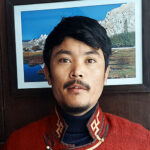
Stanzin is a self-explored architect who walked out of the conventional school system at a very young age and explored alternative education in SECMOL, Ladakh. His travels through India helped him gain practical knowledge of sustainable architecture which led him to co-found Earth Building. He is also very interested in photography and passionate about trekking. Every summer, he goes back to his village in Nubra valley (Ladakh) and helps his family in farming.

Kunzang is a community organiser supporting young farmers, mindful tourism, and cultural vitality in Ladakh, India. In 2017, she left a job in Delhi and started Infinity Ladakh with a vision to encourage spiritual and physical well-being by promoting yoga, meditation and nature expeditions. Since 2020, she has been coordinating Local Futures’ Ladakh Project, developing an ever-deeper commitment to protecting land-based wisdom and traditional skills in the face of globalising forces. She has become a leader of the localization movement in Ladakh.
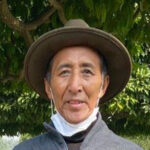
Namgial Lhundup is from Poh village in Spiti and he is 69 years old. He nurtures deep love and appreciation for nature and grew up keenly observing, and learning from his natural surroundings. He studied at Tabo monastery - one of the oldest centers of learning for Buddhism in Western Himalaya. He grew up marvelling the beautiful earthen structures, wall murals, sculptures of the Tabo monastery and attributes his fascination for natural building to it. He is a skilled horse rider and won many trophies during local celebrations including one from annual Ladarcha celebration in Spiti. He loves collecting coins, other items of antiquities and finds joy in it’s beauty. We are grateful to Tsering Lhundup (his son) in helping us bring out his story.
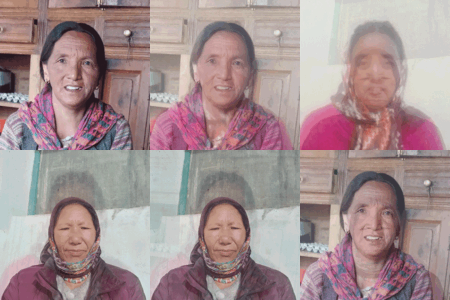
This article is a result of generous discussion and insights from Mrs. Dolma Zangmo, Chhering Zangmo & Tanzin Ankit. They are from Kibber village in Spiti (H.P) - a place popularly known for its thriving habitat for Snow Leopards. They are farmers and work in agricultural fields known for their harsh conditions where they cultivate barley, green peas, and other crops. All of them are active participants in the conservation initiative Shen (Snow Leopard Enterprise) where they contribute to greater environmental protection in their village and also promote the production and sale of handicraft products

Phuntsog Dolma works as Flock Supervisor in the Sheep Husbandry Department, Leh. A plant lover at heart, she is co-author of Plants of Ladakh: A Photographic Guide to the common plants of the region that was published in 2021. Phuntsog is also a recipient of the Mud of Boots award in 2021 by Sanctuary Asia that supports a network of on-ground conservationists across India


Kalzang Dolma is from Rangrik village and she currently teaches at govt. senior secondary school in her village. She narrated the folklore related to Chandertal lake and her household Choe-khang (prayer room) still preserves the relics of the diety which is much venerated among locals.

Tenzin Ganden is a software engineer from Dhankar village in Spiti. He studied at the MLSM College Sundernagar and is keen to learn and write about Spitian culture and tradition. He is currently preparing for competitive exams.
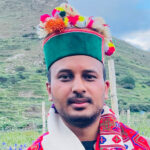
Sunder Negi is from Khadra village. An engineer by education, he is currently involved in horticulture and agricultural activities in his village. He is very passionate about environmental action and justice and believes climate change is directly affecting the life of mountain human and non-human communities.
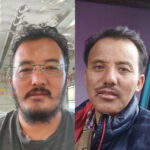
Angdui Phuntsok is a self-taught wood crafter, carpenter and traditional mudhouse builder from Spiti’s Kibber village. He is passionate about wooden handicrafts and has spent close to three decades working on building traditional mudhouses in his village. Over the years, tremendous changes occurred in Spiti valley due to development and he is keen on preserving traditional architectural heritage and finding balanced approaches to it. Rinchen Tobge works with NCF’s high altitude programme and assists in various research and conservation initiatives.

Padma Dolker is from Samad Rockchen region of Changthang in Ladakh. She has done her graduation with a Bachelor of Science and a year-long entrepreneurial leadership program at Naropa fellowship. She is currently a fellow at the Ladakh Pashmina fellowship by NCF and is in process of setting up her start-up around Pashmina wool with nomads in Changthang. She serves as a Panch of Samad Rockchen under Rupsho Panchyat Halqa and works with Himmothan Society (Tata Trusts) as a cluster coordinator.
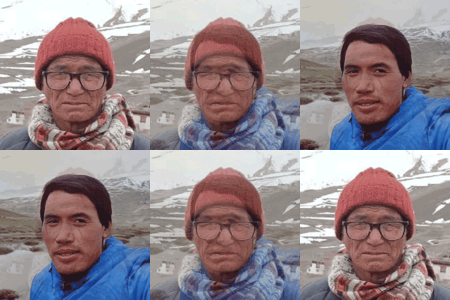
Lobsang Choephel also lovingly known as Lama Thamo is a self-taught natural builder from Spiti’s Chicham village. He first started building when he was 15 years old and helped renovate and rebuild many structures of Kee monastery apart from helping build residential mud houses in Spiti. He devoted his life to working on traditional construction and worked till the age of 73. He is now retired and has ceased actively building but still engages with everyone who seeks his wisdom, and lifetime experience in traditional building and consults younger mud house artisans in Spiti. We are grateful to his son Mr. Chhering Phuntsok for helping us capture his story and experiences and to many others who contributed to the story.

Dikit Lamo is from Chicham village and has been farming for over 20 years. Listen to the recorded interview in Spitian language.

Thinles Chondol hails from the Nubra region of Ladakh and is a PhD researcher at the Institute of Botany, Czech Academy of Sciences and University of South Bohemia, Czechia, specializing in alpine plants functional ecology. She holds a Master’s degree in Environmental Studies and Resource Management. She has previously worked at the National Institute of Disaster Management (Ministry of Home Affairs), and the Wildlife department, Leh. Thinles enjoys nature, hiking, and drawing.

The founder, Amshu CR has worked for the past 5 years in building a lean-sustainable agri-hybrid model for the tribal villages of Himachal Pradesh. She comes from a global marketing background with an MBA from Cardiff Business School. You can find out more about her work with the farmer groups at www.thapasu.com.
Tanzin Thinley is a farmer and a herder from Kibber. He developed a keen interest in wildlife as a young boy. For nearly 20 years now he has been actively involved in wildlife conservation in Spiti valley. He has worked with many villages to ensure that their wildlife-related losses can be prevented as well as mitigated.

Biju Negi is a writer, editor, translator and activist, with a wide range of interests and involvements, but more focussed on Gandhain thought and small farmer/farming issues and concerns, and also the socio-cultural aspects of our lives. A founding member of Beej Bachao Andolan, a non-formal collective and philosophical concept and practice, in existence for close to four decades. He is also founder of Hind Swaraj Manch, inspired by Gandhiji's book "Hind Swaraj" defining his prophetic developmental concern and understanding.

Rinchen Angmo and Chhering Gaaji are natives of Gumrang village in Lahaul (H.P). Agriculture and livestock rearing is their primary vocation and they have been farming for over thirty years. Apart from the vast agricultural fields, they also sow wide varieties of fresh vegetables in their kitchen garden. Rinchen Angmo started working in the fields when she was very young and continued it till now. She likes knitting and is a skilled weaver. Chhering Gaaji also learned to weave and makes handcrafted woolen quilts and carpets during winter.
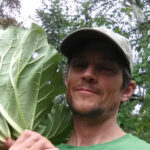
Alex Jensen is a Researcher and Project Coordinator at Local Futures. He has worked in the US and India, where he co-ordinates Local Futures' Ladakh Project. He represents Local Futures on the core group of the Vikalp Sangam/Alternatives India initiative. He has worked with cultural affirmation and agro-biodiversity projects in campesino communities in a number of countries, and is active in environmental health/anti-toxics work.

Chhering Gaaji is from Gumrang village in Lahaul and has been farming for over 17 years. He grows green peas, potatoes and barley in his field. He is very passionate about traditional farming systems and continue to practice them on this fields.

Sheetansh is a Himachali who enjoys capturing cultural traditions and stories. He is enthusiastic about working in the development and cultural sectors and is currently pursuing a Masters of Design at NIFT Delhi. He has been involved in several community development projects in Spiti valley for many years. He loves how warm and welcoming the cold desert is, which brings him back to Spiti regularly.
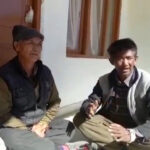
This story is collectively narrated by Karam Singh Negi, Chhering Lonbo, Tashi Dorjee and Inder Kumar Gyalpo to Kesang Chunnit. They are passionate cultivators from Shalkhar village in Kinnaur and grow organic apples in their orchard. They hope to inspire other apple growers in Kinnaur to adopt organic farming through their story.
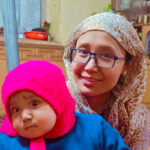
Tanzin Palkit Negi is from Nako village and has now settled in Chango iIn Kinnaur. She finished her studies with a Bachelor of commerce from St.Bede’s College Shimla. She is currently preparing for various government civil services exams and is keen on socio-political and civic issues in her state. Apart from reading and scholarly interest in current affairs, she nurtures a deep passion for local Kinnauri culture.

Tenzin Sonam is from Lari village in Spiti and he is currently pursuing his doctorate studies in Buddhist studies from University of Delhi.

Chunnit Chhering is from Gue village. He finished his postgraduate studies in Sociology from Himachal Pradesh University in Shimla. He is a civil service aspirant and nurtures passion for reading, writing and youth activism to bring social change in Spiti.

Tashi Angroop is agri-entrepreneur from Tinno village in Lahual. He cultivates organic exotic vegetables in his farm and is interested in sharing his knowledge to youth in himalayan villages. His experience ranges from developing nurseries to cultivating wide varieties of vegetables to marketing it in big metropolitan cities.

Himanshu Khagta is an Indian photographer based in Shimla and he is known for documenting life in mountainous areas of Indian Himalayas. His work often revolves around the events and ordinary lives of the people that live in the region around his hometown. His two long term projects, Life in Spiti and Life in Shimla chronicle his experiences living in the city of Shimla and the Spiti valley. His photographs have been featured in many publications including: The New York Times, The International Herald Tribune, BBC Travel. Conde Nast Traveller and Outlook traveller. Checkout his book Life in Spiti on Amazon: Life in Spiti
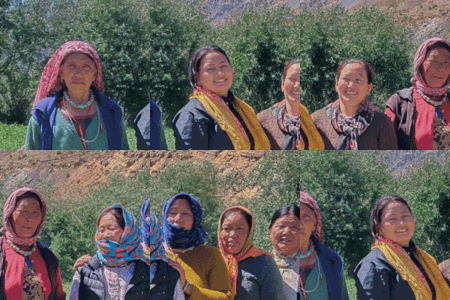
This story is based on the lives of women in Shushuna, a village of ten households in Spiti. They are part of a conservation initiative where they pledge to contribute to greater environmental protection in their village, prevent any poaching/hunting attempts, and ensure greater ecological harmony in their vicinity. Additionally they are an active part of a conservation focused enterprise called Shen that promotes production and sale of handicraft products.

Chemi Lhamo is from Kowang- a village in Spiti with just five households. She is a post-graduate and studied Literature from University of Delhi. She has worked in Indian Development Sector for over 2 years as a communication professional and has recently joined NCF’s High Altitude Program to work on conservation outreach in high himalayan landscapes in India.

Dr Rakshak Kumar is an environmental microbiologist at CSIR-Institute of Himalayan Bioresource Technology. His research group aptly termed as “High Altitude Microbiology Laboratory (HAM-Lab)” focuses on exploring the microbial community from extreme environments of the Himalaya for bioprospection. Lately, one of his major research areas has been the acceleration of organic waste degradation in alpine regions. HAM-Lab has been working on the improvisation of the dry toilets in the high Himalaya with microbiological interventions since 2017.

Kimberly is a founder & facilitator of Indi Architecture - a social business with an aim to raise awareness and appreciation for indigenous architecture. The firm works closely with local artisans from Spiti, Rajasthan, Ahmedabad, Punjab, and Kerela on various aspects of traditional architecture. Kim grew up in Australia but left in her mid-20s to travel the world and has since cycled across seventy-plus countries and has plans to visit many more. Her learnings from across the world have inspired a commitment to promoting sustainable living while conserving culture & traditional skills through the lens of vernacular architecture. She first visited Spiti in 2015 and fell in love with the landscape, its people, and the natural beauty and found her calling in doing her bit to preserve it. She plans to host an earthen architecture restoration workshop in Spiti this year (June, 2023). Check www.indiarchitecture.com/ for more details.

Vikram Singh Katoch is from Garang village in Lahaul. He is passionate about wildlife and likes exploring the beautiful landscape of his hometown. He has worked for 6 years in the maintenance department of Atal tunnel project in Rohtang -the longest highway tunnel in Leh-Manali road.

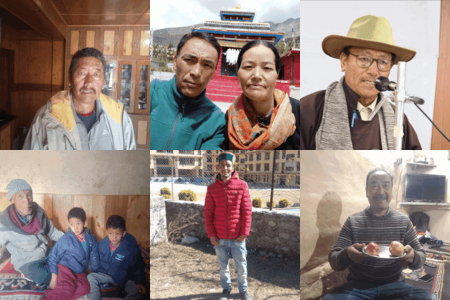
Angail from Chango
Chhering Gaaji and Angmo Gaaji from Gumrang
Dawa Buthit and Gela Phuntsog from Kee
Dorjay Changez from Kibber
Dorjay Zangpo and Padma Angchuk of Sagnam in Pin valley
Dorje Chhering from Gumrang
Pema Gyatso and Chhering from Hango
Tomdan from Kee

Vicky is from Mooling village in Lahaul. He studied geography from Govt. college Sanjauli (Shimla, HP). He likes exploring mountainous valleys and trekking. He believes every mountain is unique and has its own stories.

Karma Sonam hails from the remote village of Rumptse in the Eastern part of Ladakh. Born into a humble agro-pastoral family, he remembers growing up around livestock and taking on the responsibility to graze them in the pastures around his village. He has a passion for the natural world and loves birding. He has been working with NCF for the past 15 years and is helping mobilize community-based conservation efforts across the Rong and Changthang regions for Eastern Ladakh.
Deepshikha Sharma heads Conservation at the High Altitude Programme of the Nature Conservation Foundation. She enjoys working with communities and traveling to new places.
Gopal Negi is from Chuling village in Hangrang valley in Kinnaur. His family belongs to a small nomadic household and has now shifted to apple cultivation. He is an engineer with a deep passion for natural farming, natural building techniques, and issues of ecological sustainability. Additionally, he nurtures curiosity for alternative forms of medicine and nature-based healing. His farm Sahjivan Eco Farms - offers experiential learning opportunities on natural farming and sustainable living in Himachal Pradesh. He consults individuals and institutions across India on sustainable architecture and spreads the message of sustainable living by practicing it in his daily life.

Lobzang Tandup is born and brought up in Spiti’s Kibber village. He finished his graduate degree in Physics and Electronic studies from Punjab University, Chandigarh. He is currently self-studying for an entrance examination. He likes playing cricket, football and is gradually becoming more enchanted with trekking and snow skiing.

Jigmat Nurboo hails from a remote village - Urgos in Miyar Valley, Lahaul, HP. He is a professional artist who has completed 8 years of training from Boddhi Thangka Art Institute in Patlikuhl. He specializes in Thangka Style of painting. He has worked on several art projects for Buddhist temples and ceremonies.

Dr. Ranjini Murali worked as a conservation scientist at the Snow Leopard Trust where she supported conservation and research efforts across the Snow Leopard range countries like India, Kyrgyzstan and Mongolia. She is particularly interested in local institutions of governance. She now works as Junior Professor at Humboldt University.

Tinkle Bhatt has been associated with the Territorial Wing of the Forest Department in Lahaul. She is the third generation serving the Forest Department of Himachal Pradesh in her family. She has a passion for nature and strives towards human-wildlife co-existence in the valley

Sonam Yangzom hails from Pin valley in Spiti. She majored in Sociology and Anthropology and minored in Environmental Studies from Ashoka University. She loves writing and making videos about people and places she loves.

Mahesh Negi, belongs to Kinnaur’s Kannaura tribe. He is a farmer and an Earth Educator. He advocates sustainability through the platform called Aum in Kinnaur, and runs Kyang, a community place where that raises awareness of social and climatic issues. You can follow his work on Instagram @aum_kinnaur and @kyang.himalaya

Ajay Bijoor works with Nature Conservation Foundation’s High-Altitude Programme and engages closely with local communities and government agencies to plan and implement conservation action in the high altitudes of Ladakh and Himachal Pradesh.

Dr. Tashi Tsering is a Lecturer at Mount Royal University in Calgary, Canada. He is grateful to the people of Spiti Valley, particularly the elders and farmers, for their kindness and for sharing their stories. He hopes that the younger generation of Spiti people will cherish and uphold their rich culture, particularly their language and agricultural heritage.

Nonie is born in Kaza - the main town in Spiti. She spent her early childhood and did her schooling in her hometown before moving out of town to pursue higher education elsewhere. She finished her further studies at the School of Planning and Architecture in New Delhi. Upon completing her degree, she became a registered architect certified under the Council of Architecture (Government Agency, Delhi). Her work primarily focuses on areas around Manali and Spiti in Himachal Pradesh where she applies and hones her skills as an architect. With a keen interest in fashion and curiosity to understand aesthetic designs, she possesses natural design instincts that come in handy in her profession. Her interest and avid passion fuel her creative pursuits and her love for her profession.

Kalzang Ladey is a mushroom cultivator from Spiti’s Chicham village. He has gained Mushroom cultivation training from Nauni University (Solan) and Centre of Mushroom Research in Palampur. He has been actively cultivating mushrooms since 2015 and produces 300 bags of Mushrooms throughout the year supplying it to local homestays, households and hotels. With the support of the Horticulture Department in Spiti, he is able to train other farmers and spread awareness about it in remote villages. Collectively they have trained around 500 people in Spiti for the same.

Chhering Angchuk is from Sumling village in Spiti. He teaches at a government school in Rangrik. He is passionate about Spitian culture and particularly oral literature that is slowly dwindling from everyday experiences of people’s lives. He likes interacting with Spitian elders and documenting peras (proverbs) which has rich insights of traditional ways of living.
Tanzin dawa is from Chicham village and she initiated the conversation about water scarcity in her village with other women revealing bleak reality in Spiti this year.
Panma Gyatso is a farmer in Hango who wants to contribute to society. He also plays a very active role in wildlife conservation. At the time of conflict, he has helped many families claim forest department compensation.
Anuradha Miyan is from Labrang village in Kinnaur (Himachal Pradesh) and she is passionate about indigenous Kinnauri arts and crafts and traditional crops. After finishing her MBA from Punjab University in Chandigarh, she started working with artisans in her village and gave life to The Sheep Of Himalayas - a clothing brand dedicated to local fiber and artisanship. She is also a Pradhan of Labrang panchayat and aspires to encourage local women in her village to earn their own livelihood. SoH products can be availed by simply writing to her at anuradha.rathour92@gmail.com (089686 09107) or via their social media channels: ThesheepofHimalayas
Padma Norzom is from Chicham village. Listen to the recorded interview in Spitian language.
Dr. Mayank Kohli studies plant systems and is an INSPIRE Fellow at Tata Institute of Fundamental Research.
Dawa Dolma is a freelance journalist based in Leh. She is a climate enthusiast and loves writing about culture, nature and travels. She is spreading the love of reading among children in Ladakh through a voluntary initiative called “Shatsa” with close group of friends. She likes devoting her time to Shatsa and envisions to build it better with her friends.

Chhuldim Pempa is from Demul village in Spiti and he is a master artisan skilled in rammed earth building and stone masonry. He has been in traditional construction work for about 30 years and helped build many mud houses in different villages of Spiti. He devotes his time to farming, building traditional houses, and babysitting his granddaughter Tsomo. We are grateful to his entire family members for supporting us in telling his story.

Chunit Kesang hails from Kibber village in Spiti and he currently works with NCF’s High Altitude Program. He is passionate about wildlife and photography. He travels frequently within Lahaul, Spiti and Kinnaur areas to help build conservation champions and bring out stories from these remote villages.

Stanzin is assistant professor of Sociology at the EJM College in Leh. He hails from Tharuk from the Changthang region in eastern Ladakh. He was amongst the first individuals of his community to pursue doctoral research. Stanzin takes special interest in understanding and preserving the human-nature relations in his community.

Prithvi Singh is a farmer from Hango village. He is currently the headman of the village (numberdar). He has shared information for this article with his grandson Panma via whatsapp voice notes.

Namgyal Lhamo is currently based in Dharamshala in Himachal Pradesh. She is a Tibetan refugee born in a small nomadic village in Ladakh where she works as a Tibetan physician. She enjoys reading, writing, listening to music and just being in nature’s embrace.

Akshata Anand completed her masters from Bharati Vidyapeeth Institute of Environment Education and Research, Pune and investigated the enduring impact of climate change on traditional and cash crops in the Spiti Valley, Himachal Pradesh. She now works with the Nature Conservation Foundation in Himachal Pradesh, focusing on community-based conservation.

Virendra Mathur is pursuing his PhD from University of Toronto in Evolutionary Anthropology. He is a primatologist by training and is interested in studying spatial cognition and movement strategies of Himalayan Langurs for his doctoral work. As part of his fieldwork in Kugti Wildlife Sanctuary, he has been interacting with the Gaddis in Kugti village in Bharmour and learning about their herding experiences. Virendra is also keen on understanding human-nature relationships and inculcating community participation to build bottom-up frameworks for habitat conservation in Himalayan landscape.

Dr. Konchok Dorjey is a botanist, a mycologist and a teacher, presently working as Assistant Professor of Botany at Eliezer Joldan Memorial College Leh, University of Ladakh. He has over 13 research papers and 7 articles to his credit. He is co-author of Plants of Ladakh: A Photographic Guide which was published in 2021.

What matters to us

Local Voices
Stories should make room for people who know these places because they live there and carry their stories and knowledge.

Place & Context
The Himalaya is not a single landscape or culture. We tell stories with care for the places, histories, and communities.

Living Knowledge
Knowledge lives in research and archives, but also in memory, practice, observation, craft and everyday lived experience.

Open Access
Himkatha is freely accessible because stories and knowledge should be shared widely, without barriers or a paywall today.