Mountains

Conversation with a Gyangon-da
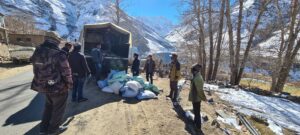
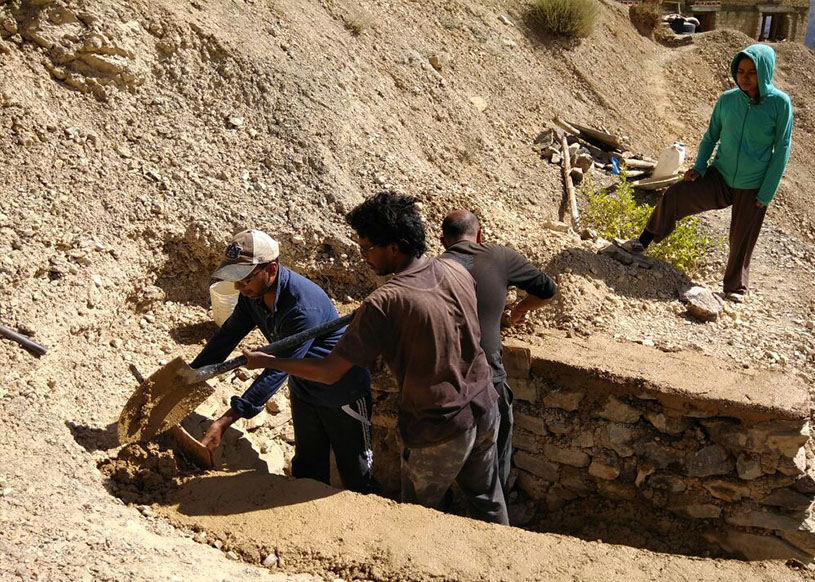
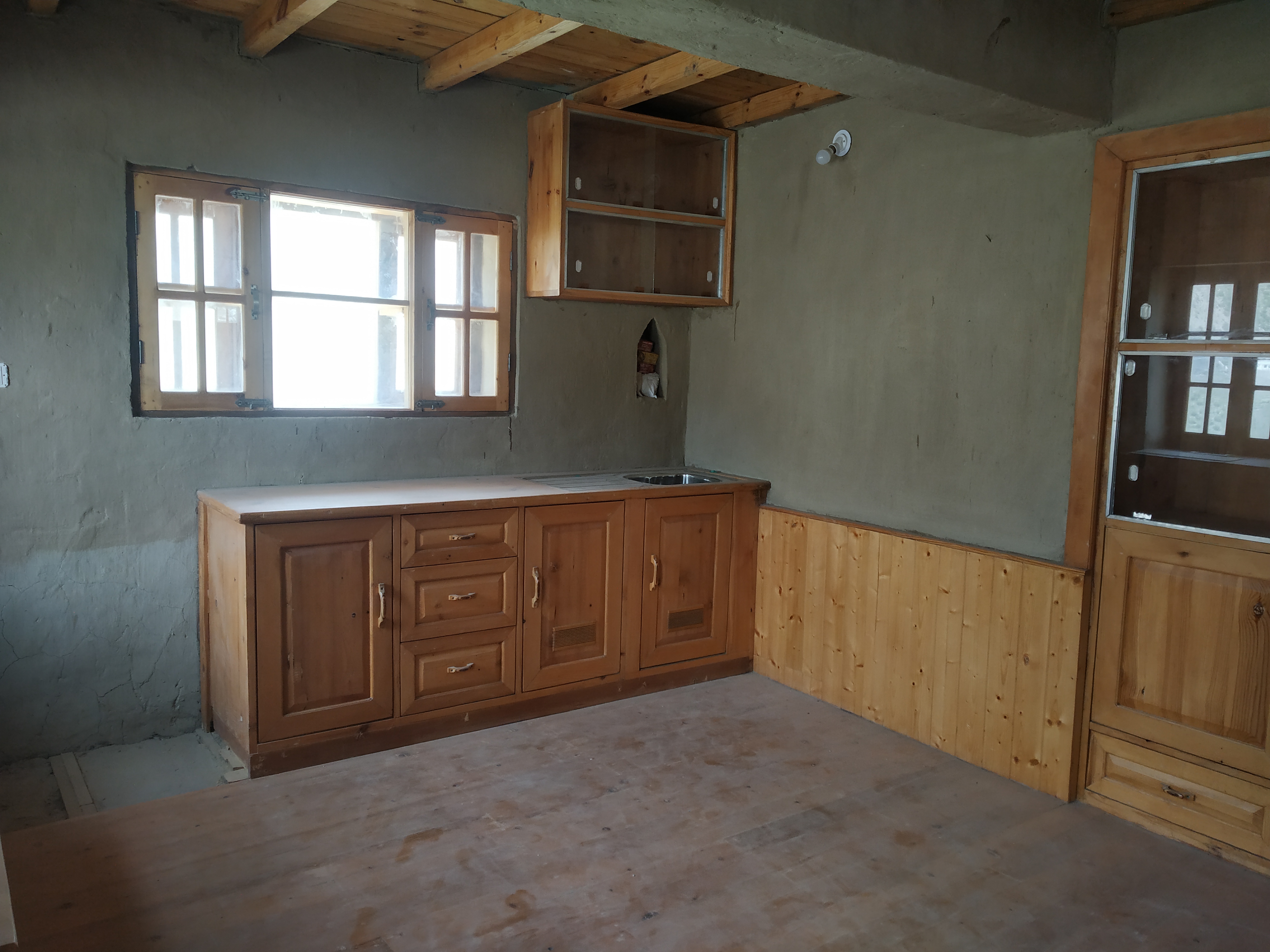
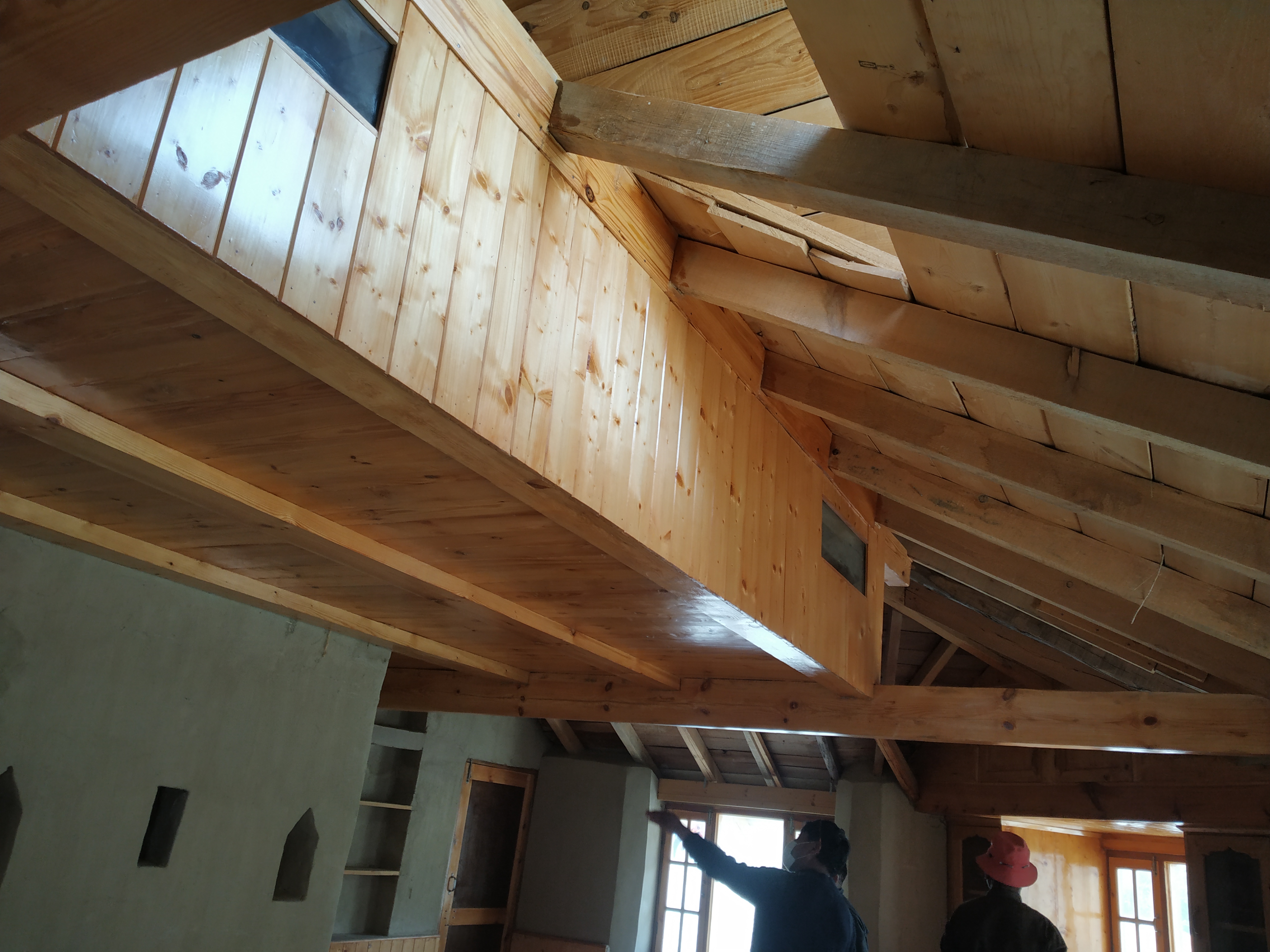
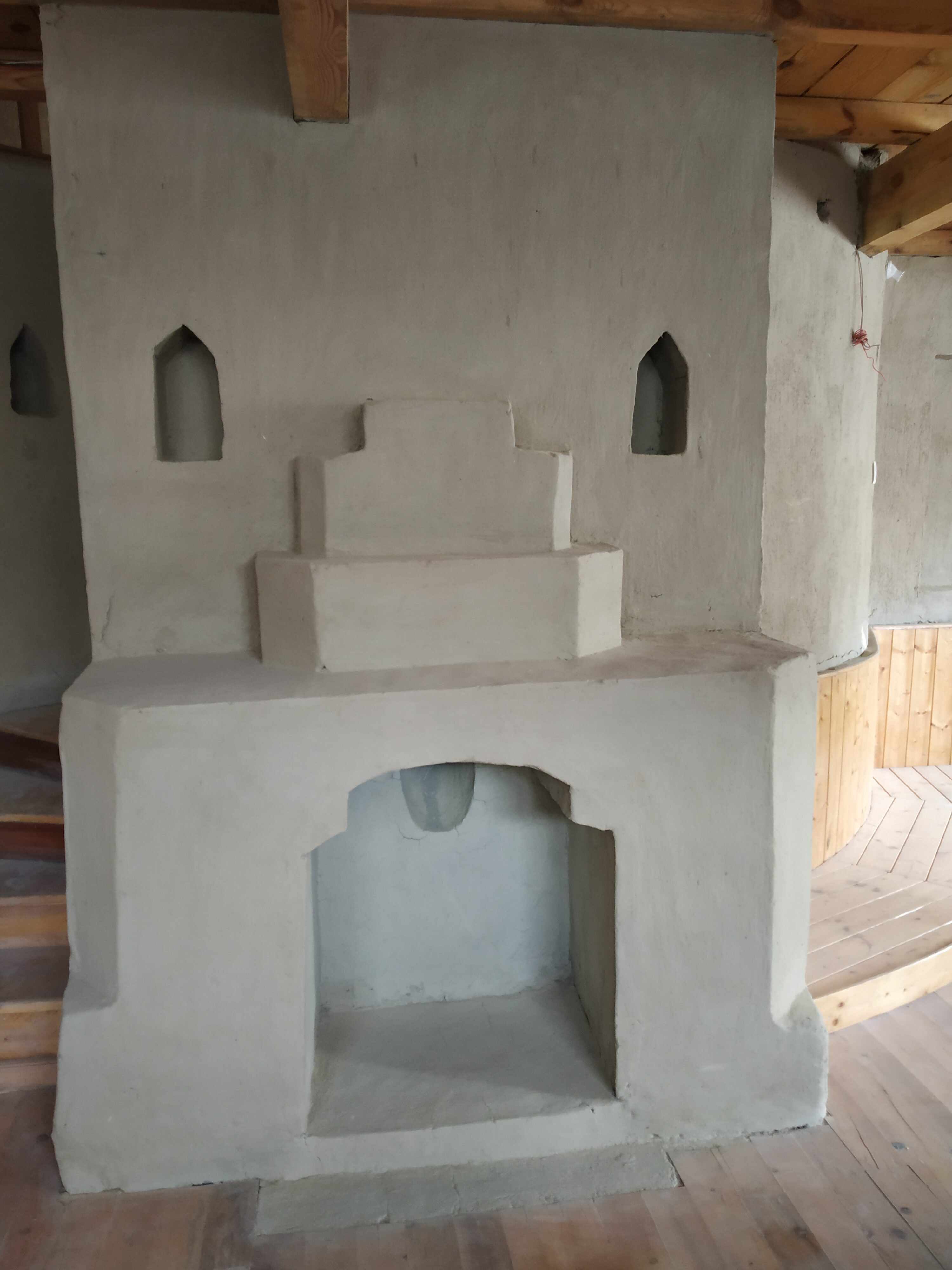
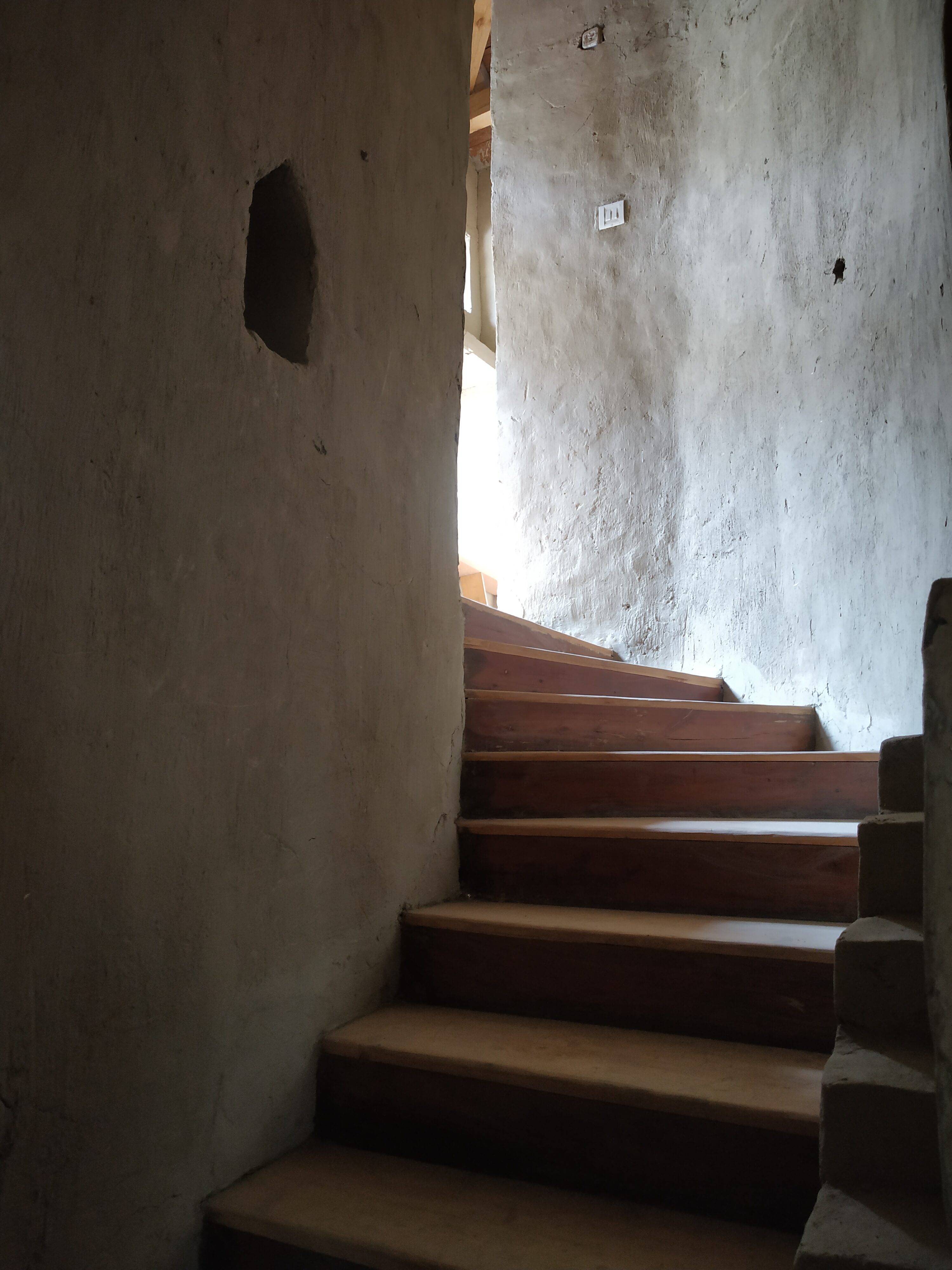
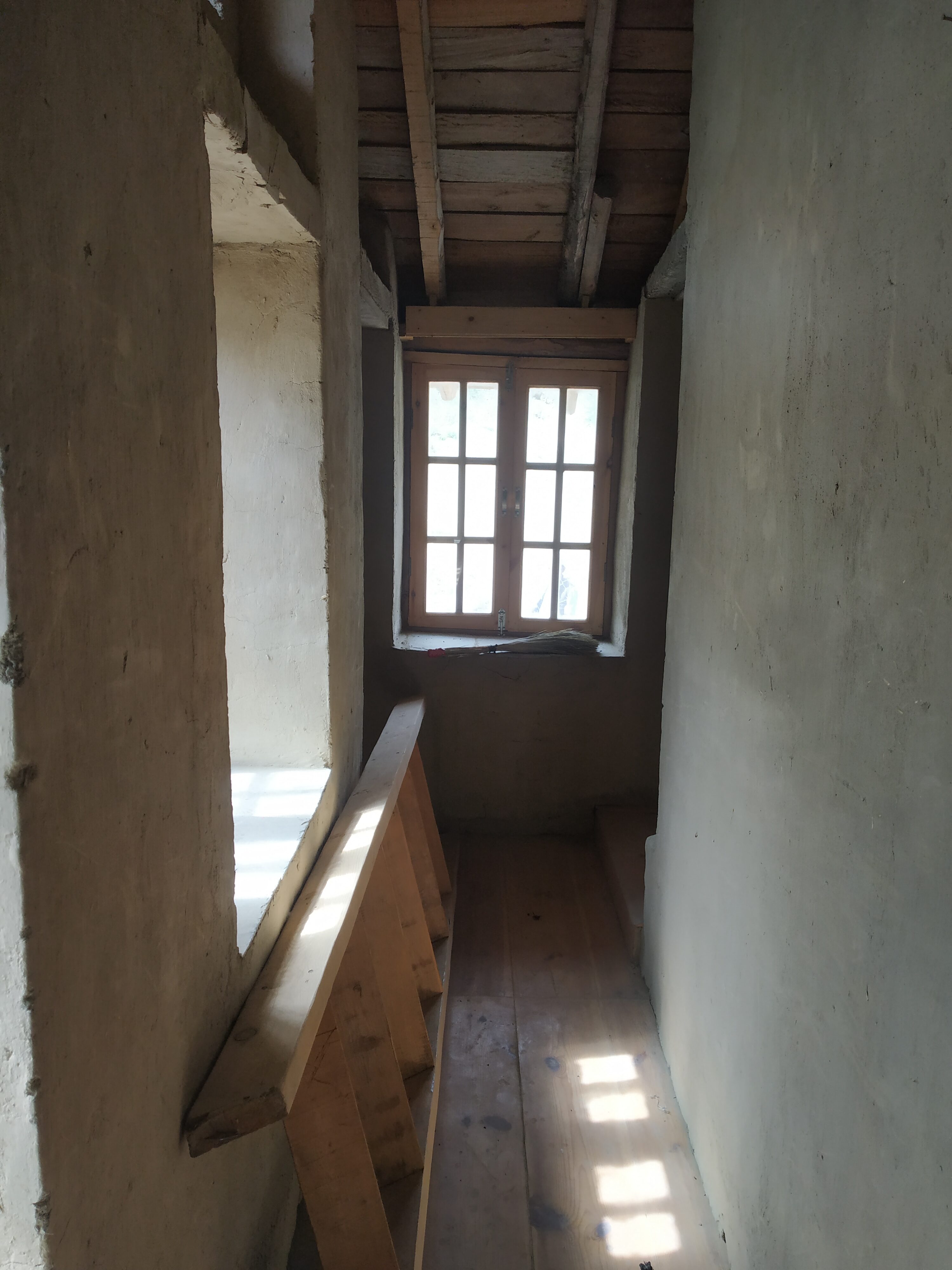
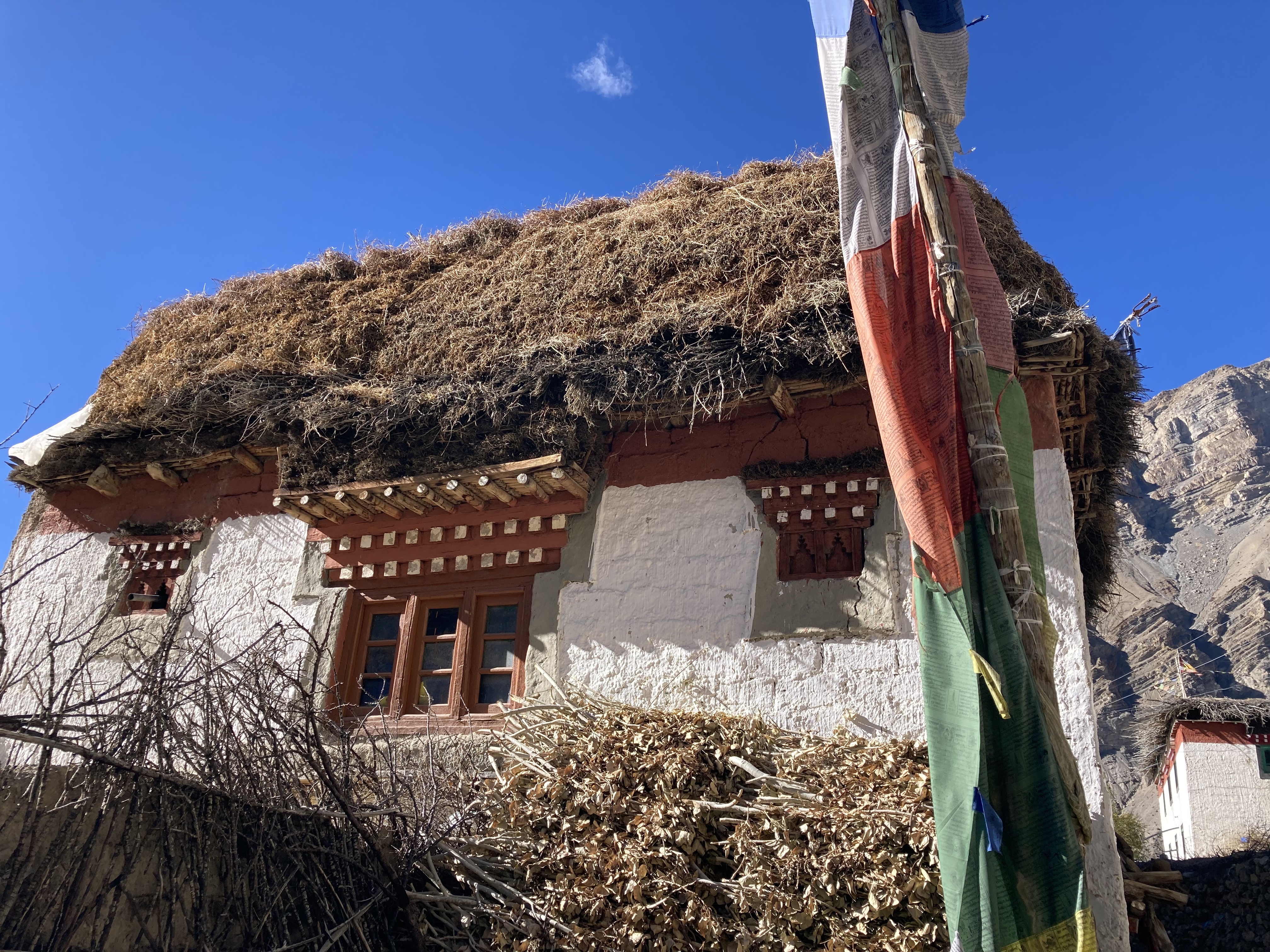
Glimpse of mud house construction in Spiti  | Photo: Tanvi Dutta

Conversation with a Gyangon-da

Demul is a remote high-altitude village in Spiti known for its beautiful meadows and pastures. The villagers are agro-pastoralists and still actively practice their traditional ways of agriculture, livestock rearing, and herding. This village is also home to many Spitian artisans skilled in building traditional mud houses, Dor-si (stone mason), Shingso-wa (carpenter), and Gyanghon-da (earthen wall builder). We spoke to Mr. Chhuldim Pempa from Demul who has been in the trade for decades and is a master craftsman skilled in stone masonry and rammed earth building.

HimKatha: Julley and Tashi Delek. Chhuldim ji, we heard you have spent many years building traditional mud houses in Spiti and are an expert Dor-si (stone mason). Can you tell us more about yourself and how you started?

Chhuldim Pempa: Yes. I have been working in traditional construction for over 30 years in Spiti and my primary work is building houses using mud and stones. I started in the early 90s when I was around 18-20 years old. I stumbled upon it quite unexpectedly – I grew up herding and working in my family field but once there was an opportunity to work as a construction helper to a house mistri (chief mason) in my village. The work seemed pretty doable, it included working under a master craftsman and helping him in manual works like carrying stones, digging works, making mud mixtures, and doing all the preparatory works before the chief mason started laying the stone foundation for a house. It was paying a minimal amount for the labor work, so I took it up along with a few friends. Back then, there wasn’t much to do, so I continued as a labor helper in traditional constructions for a few years before I began focusing exclusively on stone masonry and rammed earth-building techniques. Looking back, I realize, my apprenticeship days were difficult but it’s there amid the mud, stones, and under the guidance of a skilled mason that I learned the most and picked up the skills of the trade before I started practicing it independently in my village.
HK: What changes have you seen in natural building techniques over the years?

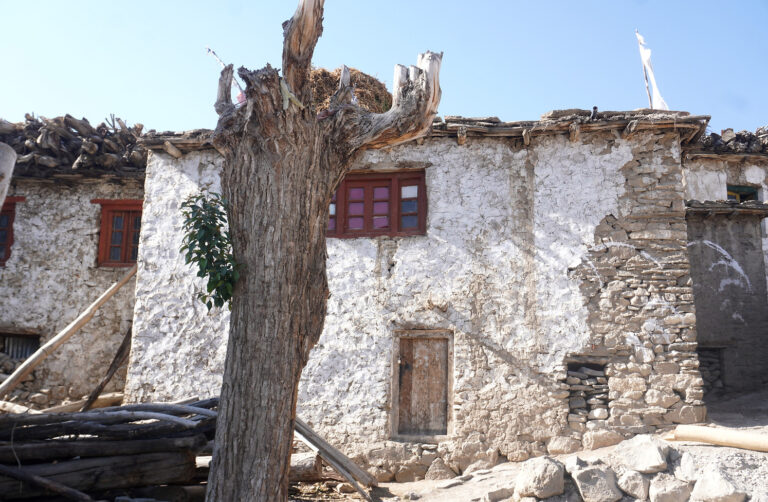
CP: In Spiti, rammed earth building has traditionally been practiced for centuries, it is used for building residential houses and monasteries – most of the old mud buildings in Spiti like Tabo Gonpa (built-in 10th C) and the old Tengyud Gonpa are built in that form. To a large extent, it is still preferred in higher Spitian villages like Demul, Komic, Chicham, and Kibber for its durability and inherent thermal capabilities. Architectural changes are definitely taking place in Spiti and with that, there is a stark shift in natural building techniques, resource usage, and general treatment of vernacular design systems.

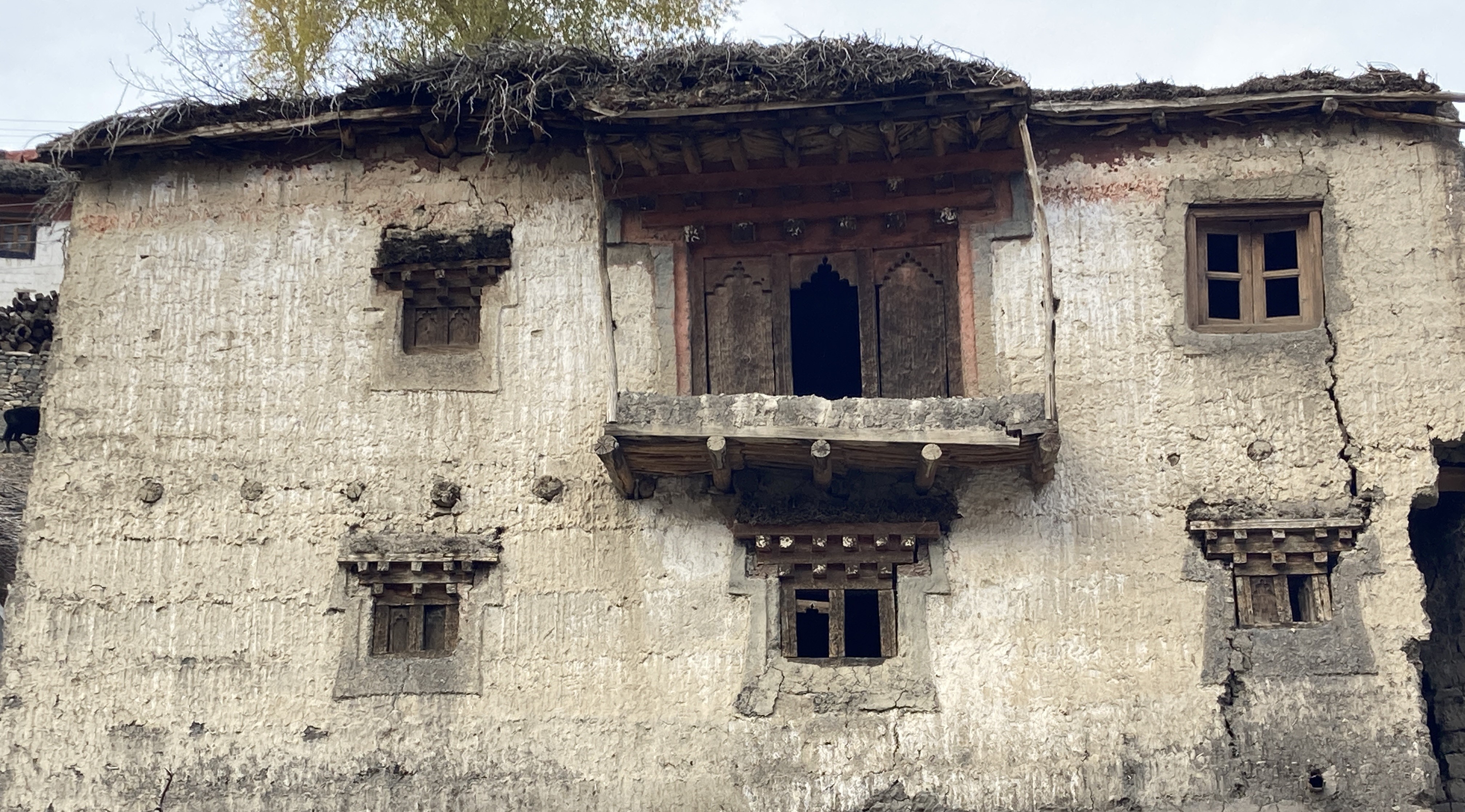
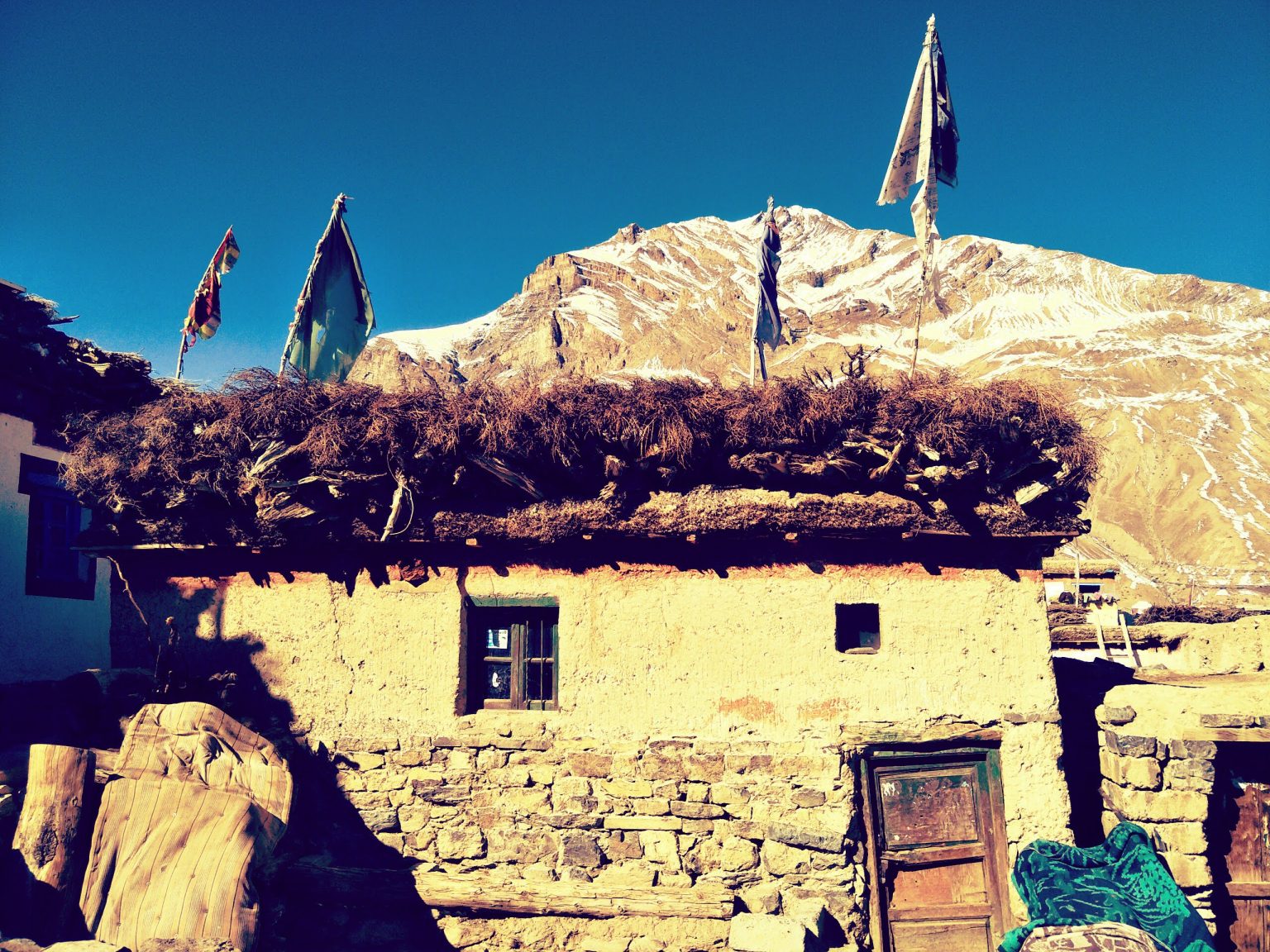
There’s an increased usage of industrial materials like cement, metals, ready-mix concretes, glass, plywood, plastics, and artificial stones which were not accessible in earlier times. Earlier houses were built with a lot of care and even the smallest details were incorporated with a lot of structural integrity. For eg, all mud houses have “Kyorma” on the upper roof which is a protective boundary made of wild shrubs, it looks aesthetic as well as does a great job of protecting the mud walls from sun and rain. The use of such designs is declining.

Walls are built with Gyang-sa – a specific soil type carefully selected by the master mason, it is mixed with grass chaffs, straw, or small wood chips, and the mixture is then kneaded with water two days before building a wall. It is done to allow better water absorption in the mixture and adding grass chaffs provides warmth once it is built. Thick double walls of about 18 inches are built using a cross-joint technique where one wall is built from right to left and another from left to right.

The structure is then plastered with the same mud mix or tied on the two sides with wooden planks (ghing-shing) on the two sides of the walls and the mud mix is filled in. Once filled, it is slowly pushed in by walking on it which makes the wall structures more cohesive. Such designs are crack resistant and have better resilience towards earthquakes as compared to straight cement pillars that are adopted in new houses these days. Thoughtful building methods like this are slowly fading and I am afraid soon people won’t require artisans like us.
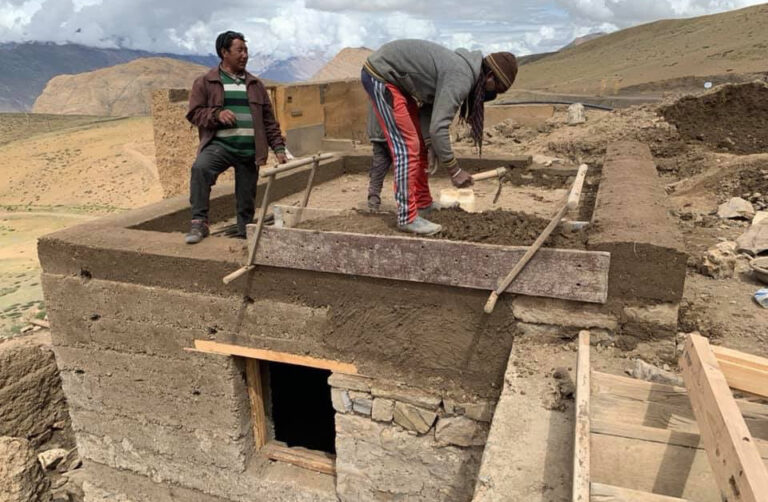
 Mudhouse construction in Kaza | Photo: Mr. Janhwij Sharma, Additional DG, ASI

HK: What tools are used to build houses in the olden days?

CP: We used very minimal tools as there was no access to any resources. Most tools were handmade by Spitian blacksmith artisans from the Dzo community who were experts in making agricultural and field tools used for construction. We used only 2-3 tools like Tokse, Teo, and basal used for digging mud, pulling stones, handling mortar, and other wooden tools for building walls. Since houses were built communally among villagers, tools were also shared locally among people. For measurements, we relied heavily on the ancient technique of using the body as a tool – fingers, elbows, and arms were used liberally to measure walls and base construction. For eg: “Thu” is a measuring length from the middle finger to the elbow while “Dhompa” is the length from one’s right hand to the left once we spread it widely and apparently one Dhompa equals five feet. Such measurements are used for building smaller structures in the house like Chaksa (dry toilets) and Raah (Sheep house).

HK: Are there any community practices and traditional rituals around building houses?

CP: Yes. In Spiti, building houses is a community activity. Everyone pools in the resources and volunteers to help during various phases of construction. It is quite common for 3-4 households to get together and help each other and it is colloquially called the “Bhey” system where the community forms an internal support structure and relies on each other for resources and labor. In a place like Spiti where resources are scarce and sustenance difficult, it proves more feasible and affordable. Many auspicious rituals are performed to bring good luck and prosperity to the host family. The one, in particular, I remember is called “Saney-Doney” where the host family consults Rinpoche (venerable lamas) and he places a pot containing soil and pebbles from Buddhist pilgrimage sites like Varanasi and Nepal in the four directions of the foundation

to ward off evil energies on the land and to bring prosperity for the host family. Another ritual is called Jinshak ceremony which is done on empty barren land to check the suitability of the land for construction. Apart from that, there are local belief systems that imbibe respect for human-nature relations and value natural surroundings. For e.g. stones are never excavated from Chumik – the spring water areas for construction as it causes ecological disturbance in the area.

HK: Thank you for sharing your experience with us.

CP: Zang-song! (Thank you)
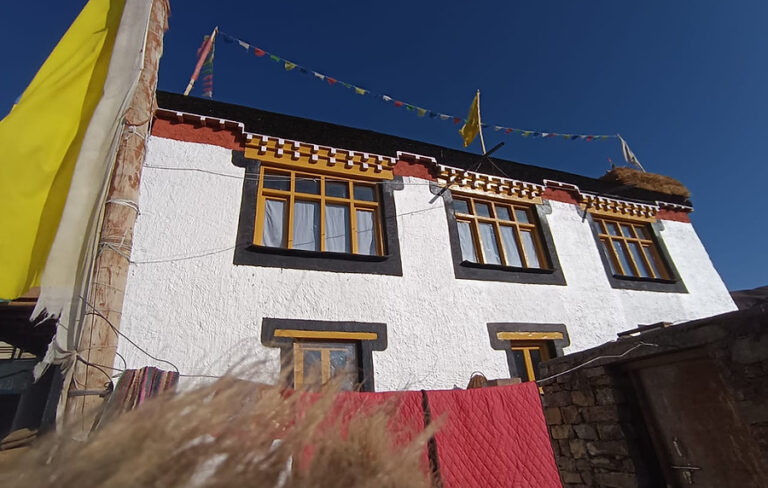
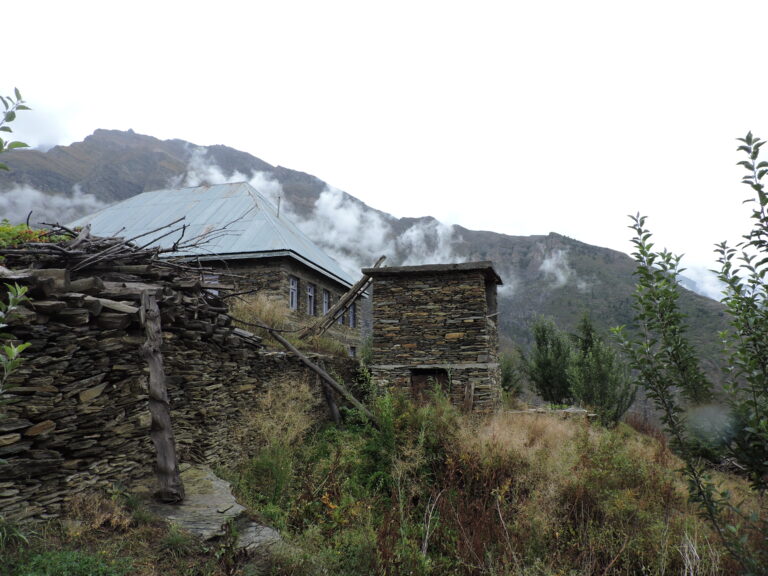
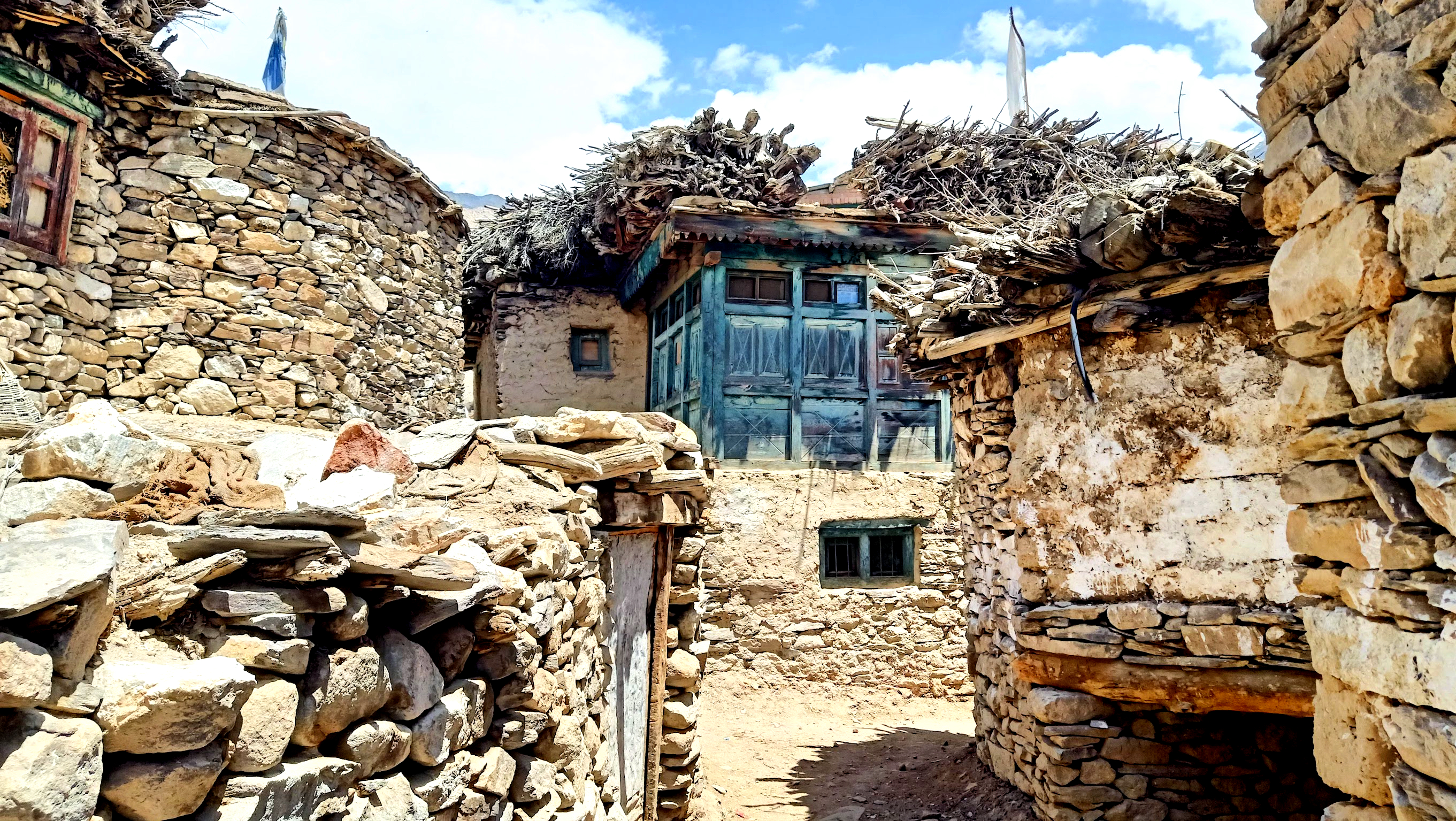
Traditional house contructed by Gyangon-da Pempa in Demul village
1770 1000 Chhuldim Pempa
Microbial intervention in Himalayan Dry Toilets
Distribution of Compost Booster in Lahaul

Microbial intervention in Himalayan Dry Toilets

As we meandered through the narrow streets of Ribling, Tandi, Sumnam and Ghoshal villages in Himachal Pradesh’s Lahaul district, we saw the indelible change of modernisation that had reached even the remotest corners of India. The cemented pavement had replaced the old mountain roads and the concrete houses were replacing the traditional wood and mud houses. In this new emerging transformation, small two-storey mud-houses outside people’s houses stood as a mysterious testament to the old ways.

In 2017, we stayed at the Center for High Altitude Biology (CeHAB)’s research centre at Ribling in Lahaul and it was during those field expeditions to the cold deserts in the Western Himalayas that I first came across the concept of ‘dry toilets’.  Just as we were getting increasingly inquisitive about these small mud structures, we ran into Mr. Jagdeep Katoch, one of the residents and a former school principal in the village. He patiently explained to us that these structures are called ‘ghop’ – traditional dry toilets used  by communities in the cold arid zones like Lahaul, Spiti and Ladakh  to uniquely manage human waste in the region.

Traditional Ghop in Lahaul

These two-tiered structures have an upper section, which is attached to the living room of the house; and the lower section where night soils are collected. After every use, a dry mixture of wood chips and ash locally called ‘fot’ is used to cover the faeces. The heap of the night soil is manually taken out every 6 months and left in the fields to mature. Thus, the compost is rich in nutrients and is a very useful input for agriculture in the region.

These regions also receive very less precipitation throughout the year making water availability extremely difficult and that’s why it was intriguing to observe how people in these remote villages sustainably manage human-waste that’s beneficial for their agro-ecosystem. In the Himalayan cold desert, these dry toilets (ghop) help conserve water during freezing winter and sustain organic farming with manure supply. When winter sets in, people increasingly depend on dry toilets, and later in the year, this decomposed night soil is used as manure for farms.
For generations, locals have relied on naturally-occurring bacteria to degrade the wastes. However, the practice comes with several disadvantages as due to extreme cold weather conditions, there are very few microbes that can function at such low temperatures.  As a result, the quality of the compost is not as good as one would expect.

Additionally, the influx of tourism and introduction of modern septic systems has brought change in the regional sanitation practices with more people resorting to pour-flush toilets. This has not only brought tremendous change in age-old practice of using dry toilets, night soil composting, but has also put the availability of water under severe stress in already resource strained places. Dr. Sanjay Kumar,  (Director, CSIR-IHBT, Palampur ) Chief Scientist and an ardent advocate of bio resource has always inspired us to ground our work, research around social issues and due to his guidance and support , we found the best opportunity to address the issue of solid waste management in high Himalayan regions by scientifically intervening and facilitating faster degradation of the night soil through Compost Booster- a microbial formulation for rapid degradation of night soil to manage human waste in cold desert areas.

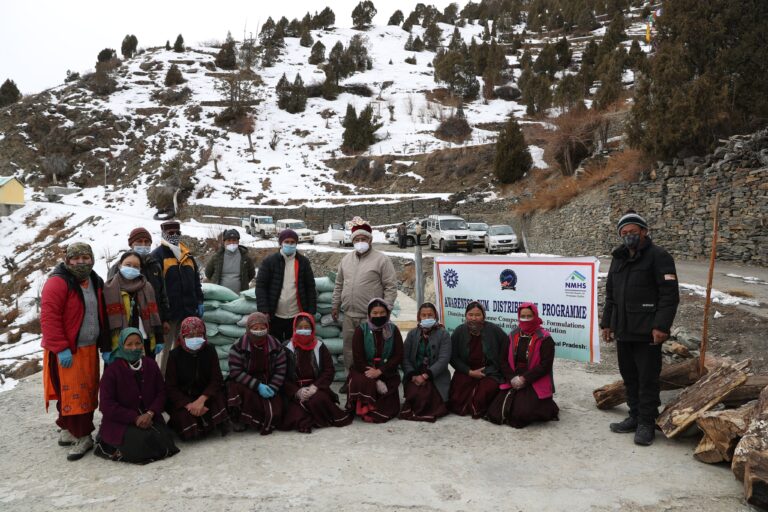
Distribution of Compost Booster in Lahaul

The decomposition of any organic biomass is dependent on its microbial population.In Lahaul-Spiti, due to prolonged winters with sub-zero temperatures the decomposition of night soil is often slow as the first phase of composting- the mesophilic bacteria phase- crucial for decaying the organic material are inactive in this temperature range. At CSIR-IHBT, Palampur, our team at High Altitude Microbiology lab, Department of Biotechnology, formulated an indigenous bacterial consortium from the night soil compost’s different maturity phases. These cold- tolerant bacterial populations remain active even at such low temperatures up to four degree Celsius and produce enzymes that speed up the process of biomass degradation. The bacteria used for this purpose also have plant growth promoting attributes so that the end product is enriched compost high in nutrients and possess plant growth promoting bacteria.The financial aid from National Mission on Himalayan Studies (NMHS) by the Ministry of Environment, Forest & Climate Change (MoEF&CC) were crucial to enable key research on ground.

The sample of compost boosters were distributed among a few households in Lahaul for trial in 2018. We asked the villagers to use a handful of the sample in place of fot and the feedback was quite motivating. They observed that the mixture helped degrade the night soil better and reduces the odour as well. Mr. Devi Singh of Mooling village keenly shares that  earlier he used to collect 20 “Kiltas” (baskets)  to collect the degraded night soil compost but after the using the Compost Booster, the biomass was degraded so well that he collected only 10 Kiltas which is of much better compost quality and there’s reduction in foul smell too.

With increased demand and product popularity, we conducted awareness drives, interaction sessions and training programmes across five gram-panchayats  in Lahaul and Compost boosters were distributed to approximately 160 households in December 2020 and January 2021. In future, we endeavour to reach out to communities across the high himalayan landscape including Spiti and Ladakh for similar intervention.

Contact for queries:
Rakshak Kumar
Scientist & Asst. Professor (AcSIR),
High Altitude Microbiology Laboratory (HAM-LAB), Department of Biotechnology, CSIR-Institute of Himalayan Bioresource Technology, Palampur-176061 (HP)
Tel: +91 1894 233339, ext. 441
Mobile: +91 98829 86355
E mail: rakshak@ihbt.res.in/ rakshakacharya@gmail.com 

2560 1153 Dr. Rakshak Kumar
Blending Traditional Values with Contemporary Design
Traditional mud houses in Hangrang valley, Kinnaur  | Photo: Chemi Lhamo

Blending Traditional Values with Contemporary Design

Houses are intrinsically tied to the cultural landscape of the region and in the olden times in Kinnaur, great value is placed on the following traditional uniformity in house designs. A stark resemblance between houses built in the valley and the overall architectural homogeneity creates a strong sense of belonging among community members. Kinnaur district in Himachal is known for its woodworking heritage and detailed ornamentation of traditional homes. Usage of Himalayan cedar tree is popular for building homes due to its termite resistant properties and it’s ability to accept meticulous carvings on the surface but very few of these structures exist today. In the lower Kinnaur villages like Kalpa, Sanghla, Pooh, and Baba Nagar, the Kath-Kuni technique that uses a combination of wood and stone is traditionally practiced while in the upper Kinnaur side covering Hangrang valley, building with mud – adobe, and rammed earth is more prominent.

Construction Phase | Photo: Gopal Negi

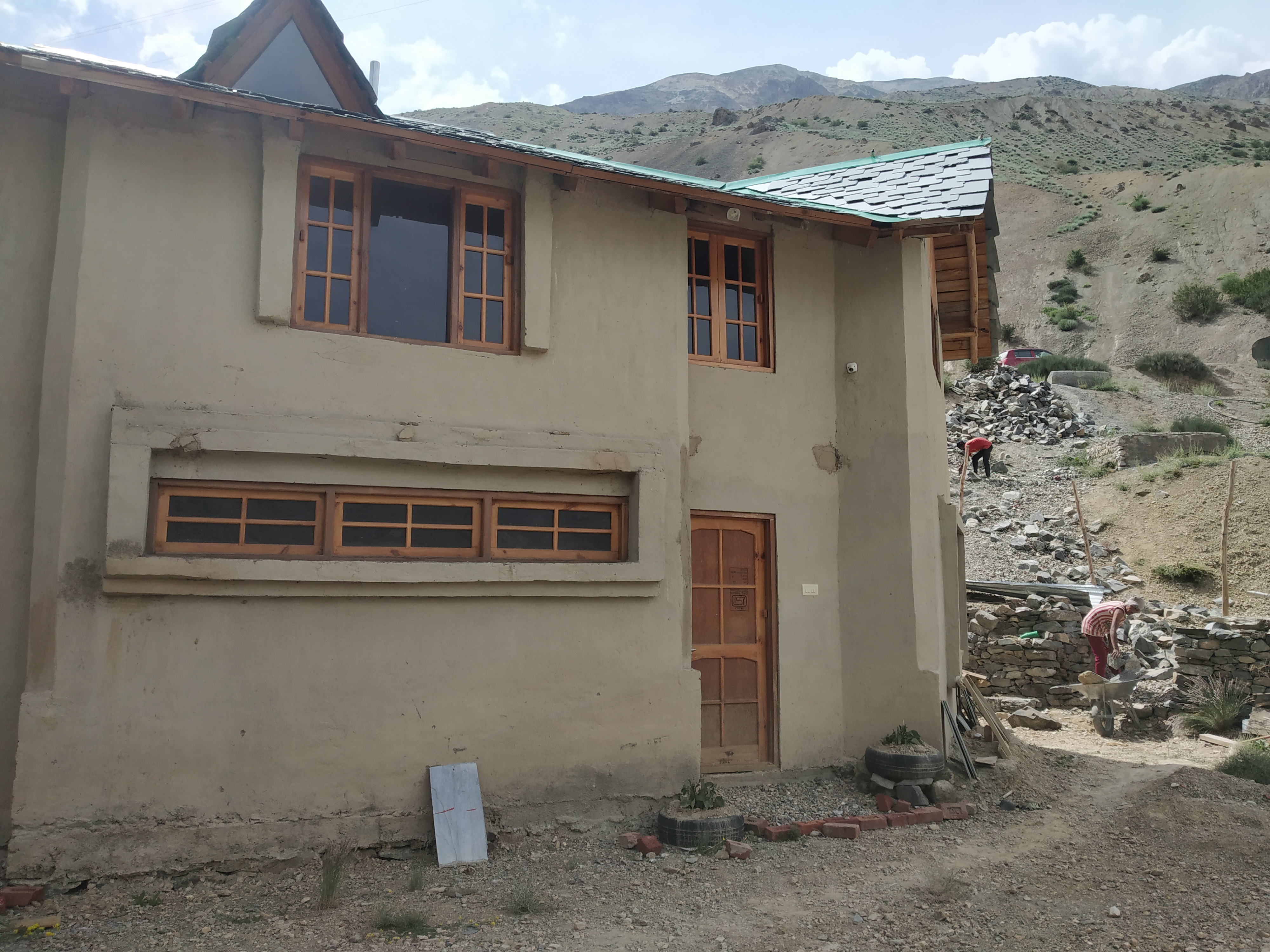
Many changes are taking place in Kinnaur and growing access to the market, connectivity is certainly impacting how we build houses these days and RCC-based buildings are becoming more wide-spread. When I decided to build my house in Hango a few years back, I was very conscious of building it in a way that amalgamates traditional wisdom, and vernacular designing techniques with a modern sensibility. The traditional construction methods are easy, economical, ecologically sensitive, provides cultural utility and thermal functionality and I was determined to preserve that essence. Any changes in these designs should aim for aesthetic needs, comfort, and suitability to modern-day needs at the lowest possible ecological cost.

The primary material used for the construction was stone, adobe bricks, and wood, and special focus was placed on the building structure given the hilly terrain of the village to ensure it takes into consideration the geographical peculiarities and is climate-responsive. Building with adobe is an ancient, low-cost technique that mixes clay, and sand with organic materials like husk, and sawdust. Adobe bricks are mud bricks that are sun-dried and take about a month to dry and are more durable than kiln-fired mud bricks. The advantages of these bricks are that they are fireproof, biodegradable, and also are great at insulation, which is an important factor when building in a place like Hango. These bricks are allowed to shrink beforehand which also ensures a strong structure. Building with adobe is easier and faster than the rammed earth technique, once sufficient stock of adobe bricks is made, wall construction progresses quickly.

Gopal ji's mud house | Photo: Deepshikha Sharma

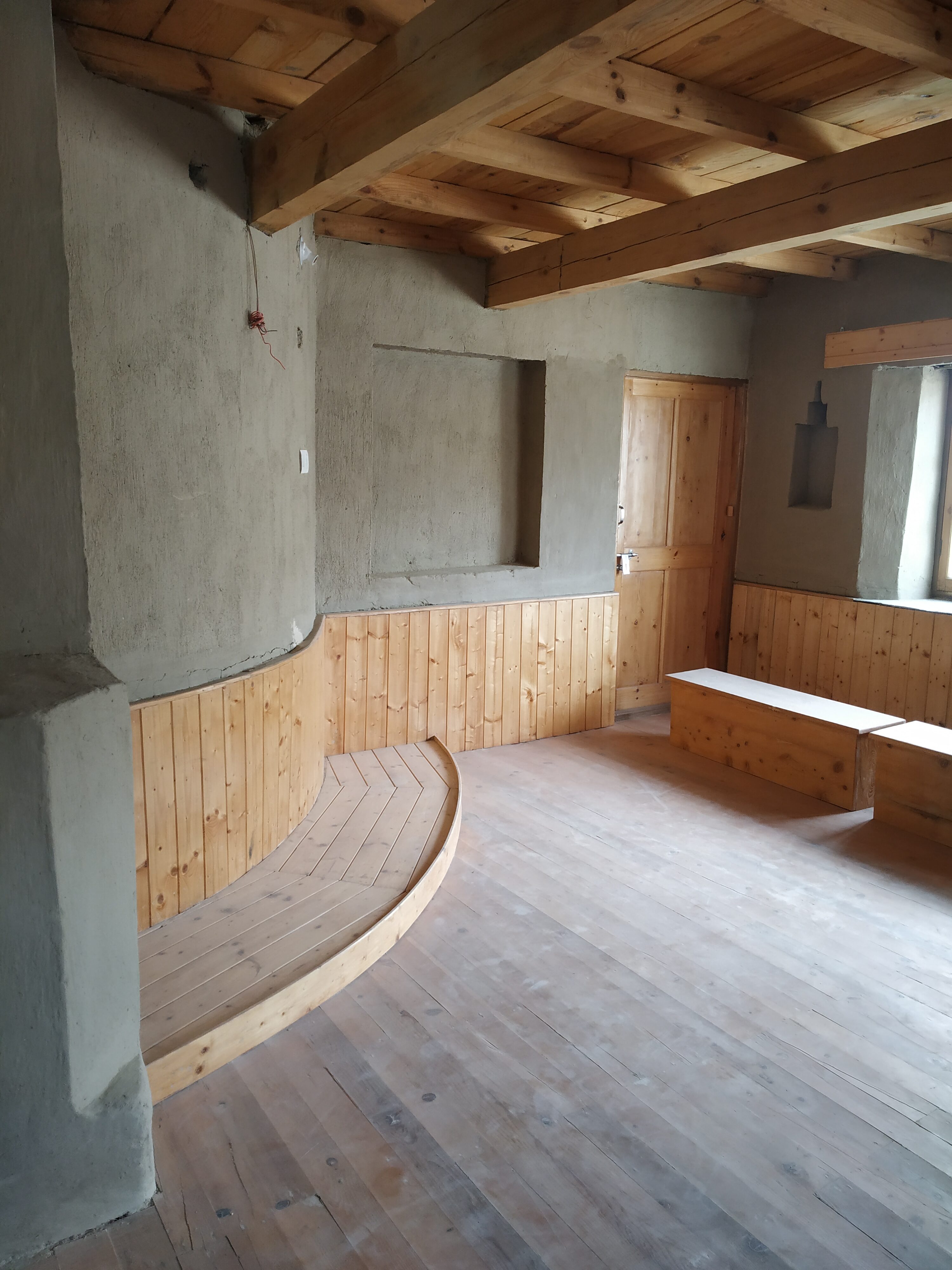
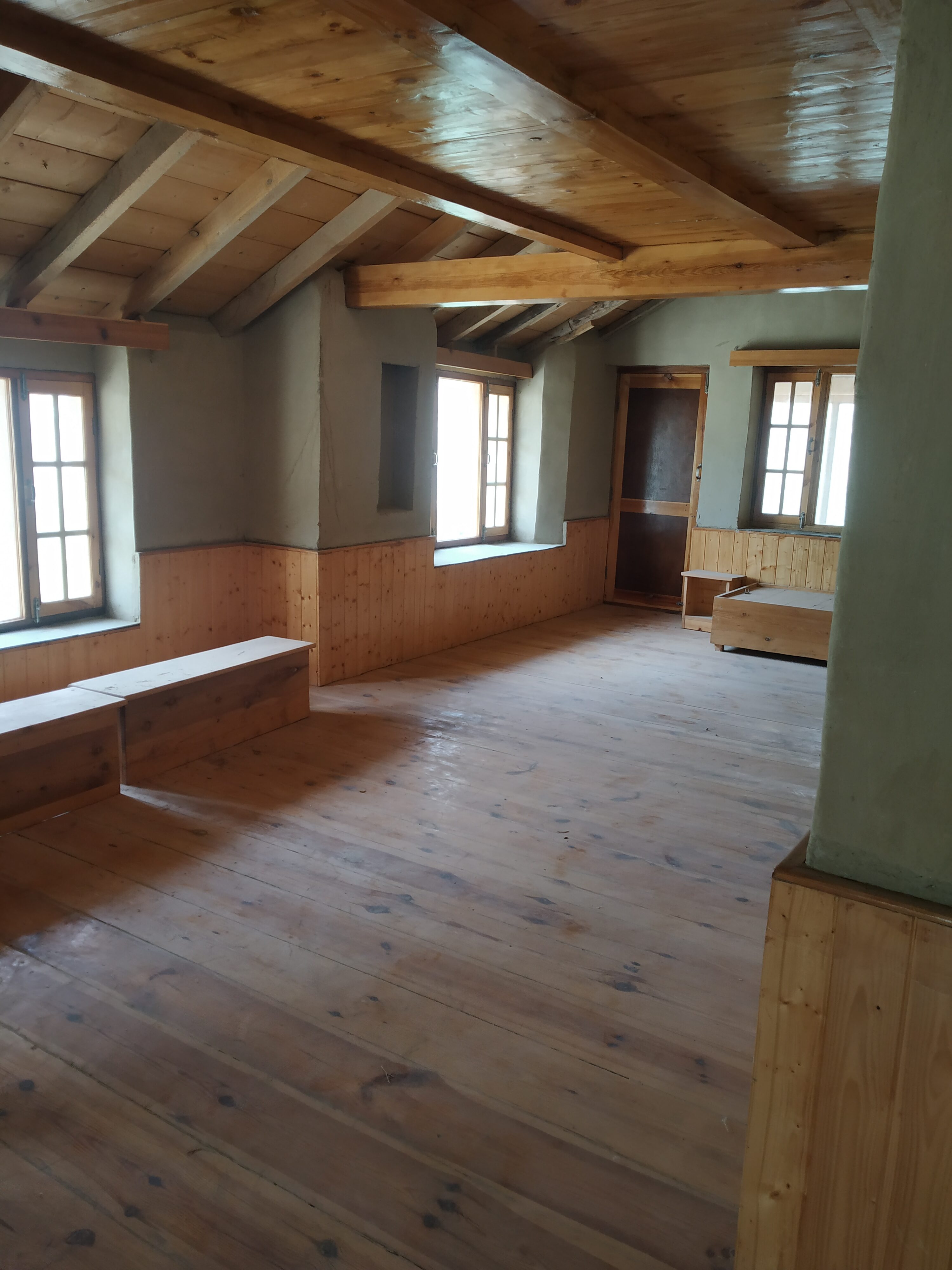
Stone layering is done for the foundation as it is moisture-resistant and helps preserve the structure from deteriorating over time. Adobe walls are load-bearing and thick hence there was no need for load-bearing beams. For the flooring, pine woods were brought from Solan and Chandigarh as the availability of local woods has shrunk and pine was a more cost-friendly option as compared to deodar. I was determined to ensure maximum usage of natural materials and hence the use of cement, iron, plywood, or other popular industrial materials was avoided. The house is built in the traditional Kinnauri style with multiple spaces to store fodder and firewood. Big, well-framed windows are installed to allow maximum sunlight, and double doors to retain the heat inside. The kitchen and living room are on the ground floor and are structurally joined like the traditional mud houses in Kinnaur.

Co-designing spaces like this is a popular practice in most high Himalayan villages as it is warmer and I have given a slight tweak to the traditional heating system to make it aesthetically pleasing and more energy efficient. Hand-built mud fireplace with mud chimneys was made to suit the structure of the house and the walls draw heat from the mud-burning structure. The overall living room layout is in such a way that the family can have the space for cooking as well as a common space to sit, and have conversations and everyone can comfortably utilize the space. Unlike the traditional mud house designs in Kinnaur, the roof has a slanted design with stone slate layering which eases the burden of shoveling snow from the roof during winter as the slanting helps glide snow. A smaller structure of a dry toilet is also made outside the house which doesn’t require water.

It took about one and a half years to complete the double-story mud building and once it was completed, I was happy to receive many inquiries regarding the earthen building – the process, techniques, materials, and many other aspects that garnered curiosity from both locals and outsiders alike. I wanted to demonstrate that durable, aesthetic, eco-friendly houses can be built from natural materials and create a dialogue around a sustainable buildings practices. With every keen look and every curious engagement, I feel I am one step closer to my goal.

4080 3060 Gopal Negi
Spiti Valley Architecture
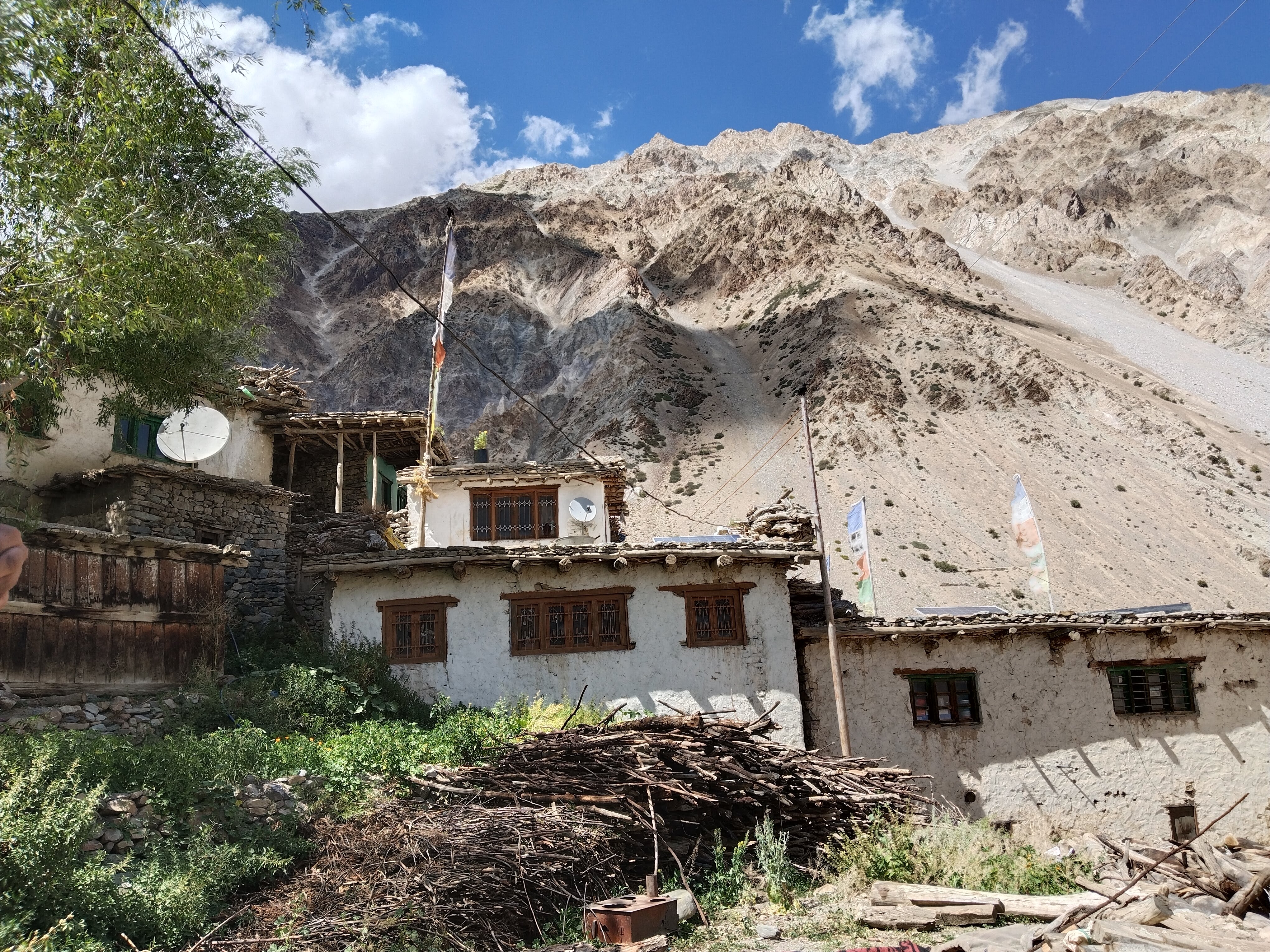
Antique home in Mane village, Spiti | Photo: Kimberly Moyle

Spiti Valley Architecture

Spiti valley’s villages are home to a relatively intact vernacular architectural tradition. Rammed earth Tibetan-style architecture dots the awe-inspiring landscape through a series of scattered settlements. The intelligent bio-climatic design has enabled the local people to inhabit this harsh landscape for thousands of years. Surrounded by snow capped peaks on all sides with the Spiti river meandering along the wide river valley, the region has gained a reputation for stunning scenery and is now a popular tourist destination. The influx of tourism however is bringing rapid changes both economically and culturally. Economic development is welcomed, however, the loss of precious cultural heritage through the destruction of traditional architecture is of concern.

The traditional architecture of the region evolved to make use of abundantly available resources for construction along with an in-depth understanding of their thermal properties. Materials were combined with intelligent design to ensure the creation of living spaces that provided optimum thermal comfort to residents throughout the changing seasons. All of which required a thorough understanding of the natural world around them. The shift towards modern industrial systems of construction can be seen as a rupturing of that direct connection with nature. Construction materials are now purchased from stores and sourced from distant lands. The knowledge on how to use them is sought from architects and engineers. The traditional wisdom of elder Master Artisans is on the brink of being lost as people transition to the industrial system. Now is the time to reflect and consider whether it is the right path.

Architecture is an expression of culture and in Spiti Valley, it reflects Spitian culture whilst identifying their inclusion in a much larger Tibetan ethnic community scattered across the Trans Himalayas in the region now known as India and Tibet. Historically, however, for almost 900 years they were connected as part of the great Tibetan Kingdom of Guge.

Materials & Construction Methods

Spiti Valley is classified as a hyper-arid desert wherein precipitation is predominantly received as snowfall in the winter. Trees are scarce and as a consequence timber is used sparingly in construction. Stone and soil are found in varying abundance and are employed using different construction techniques according to their prevalence in a specific location. In the lower Spiti Valley, in Nako village, stones are prolific, and timber is more accessible from the forests of nearby Kinnaur. Here homes are typically made of stone masonry with mud mortar and often incorporate ornate timber balconies or sunrooms. In the villages of the upper regions of the valley such as those in and around Kaza rammed earth is dominant and the use of timber is much more frugal. Pin Valley experiences higher levels of snowfall and as such their homes feature dry stone masonry on the ground level. To prevent damage to the home from snow melt. The arid desert climate in combination with scarce timber availability has resulted in the use of flat mud roofs across the entire region. Rammed earth as a construction method requires very little water compared to other earthen construction techniques such as adobe or cob, It is no coincidence that this is the favored technique in this desert region. The use of adobe for the building fabric can also be seen, though infrequent as it is recognized as being more labor-intensive.

View of a narrow alley in Nako, Kinnaur | Photo by Kimberly Moyle

Seasonal Migration Indoors

Typically homes are large and spread over multiple levels. Seasonal migration within the home occurs as an adaptation to the extreme climatic variation experienced between summer (+30°C) and winter (-30°C). In the summer months, families inhabit the upstairs portion of their homes. Larger windows on this level allow for the penetration of the bright summer sun and views of the fields outside. A large room known as a Makang (summer room) is the summer socializing space where cooking and entertaining take place side by side.  Ceilings are typically higher and families may have separate rooms for sleeping.

In the winter the entire family migrates downstairs to one room known as the Yokang (winter room). For the entire winter period, the family will sleep, socialize, cook, and eat together in this one room. Cooking and heating occur simultaneously on a Tandoor that takes center place in the room.  Efficient use of scarce timber resources for heating is essential and this practice has evolved in response. Cohousing with animals in adjacent rooms is another design aspect that takes advantage of the natural warmth produced by the animals, generating warmth inside the house whilst at the same time providing shelter and protection for the animals from the extreme climate outdoors.

Bio-Climatic Design

The need to survive the harsh winters in this remote location has seen the evolution of a highly intelligent system of bio-climatic design. Traditional homes have been constructed with a deep understanding of the regional climate as well as the specific site conditions. Certain design elements can be seen replicated in homes throughout the entire valley. Where possible homes are located on hillsides with a south-to-southwest facing orientation in order to take advantage of passive solar gains. Winter rooms have lower ceilings to ensure the precious heat generated remains close to the inhabitants. In the oldest of homes, winter rooms do not have any windows, instead, they would have a single ventilation point in the ceiling through which both light and smoke would enter and exit respectively. In more modern homes small windows are common. The northern aspect generally receives cold winds, as such openings on this wall are avoided. Wall thickness is generally between 18 and 24 inches. The thick thermal mass provides a thermal lag preventing the extreme cold from being transmitted inside the home.

Case Study of a 150-year-old Home in Kwang Village, Spiti

Located in Kwang village on the southern bank of the Spiti river directly opposite the main town of Kaza Sonam Tashi’s ancestral home provides an excellent example of intelligent bio-climatic design. The following case study will be used to demonstrate key elements incorporated to ensure the highest level of thermal comfort for the occupants.

The Yokang is located in the center of the ground floor and is insulated from the extreme cold outdoors on all four sides by a series of rooms. On the northern side is the Thaah, a cavity of a few meters occupying the full height of the home. This is utilized as storage for fodder such as dry grass and crop residue. Serving the dual purpose of feeding the livestock through the winter whilst also providing excellent insulation to the Yokang. The western side of the house was used for housing livestock during the winter. Strategically chosen according to the westerly sun trajectory, providing warmth for the animals, in turn, the warmth generated by the animals provides yet another layer of insulation to the inner Yokang.

The main entrance and stairwell to the first floor are housed on the southern side as is the Chak-sa the traditional dry toilet system, with the catchment on the ground floor in a sealed room accessible only from the exterior of the house. The eastern side incorporates a small room for making aarak – the local alcohol made from barley, next to which is a granary room accessed only from a hole in the first floor above, it is utilized for storing barley grains. To the south of that lies another small room used as a nursery for young livestock. Being surrounded on all sides the central Yokang does not have any windows to the outside. The only ventilation comes from a single hole in the center of the

ceiling used for both daylighting and ventilation for the tandoor. Before the introduction of modern time keeping devices, the beam of light projected through the ventilation shaft was also used to tell the time. Limited ventilation to the exterior ensures the least amount of heat loss.

The first floor is home to the Makang and the Zot (store room).  Both of these rooms are located on the western side. The zot on the northwestern corner is traditionally used for storage and the Makang on the southwestern side as a summer living room and kitchen. The area directly outside the southwest room was also used as a kitchen with a cavity for storing dried animal manure, a precious fuel source for cooking and heating along with timber. The dry toilet room is located on the southeast corner of the house. On the eastern side running between the fodder storage and the Chak- sa (dry toilet) is the Kanmo, a covered sitting area with the western side fully open to the uncovered central courtyard. This space was often used for recreation, to enjoy the warm summer sun, for drying grains, and for sleeping outdoors on warm summer nights.

Development & Change

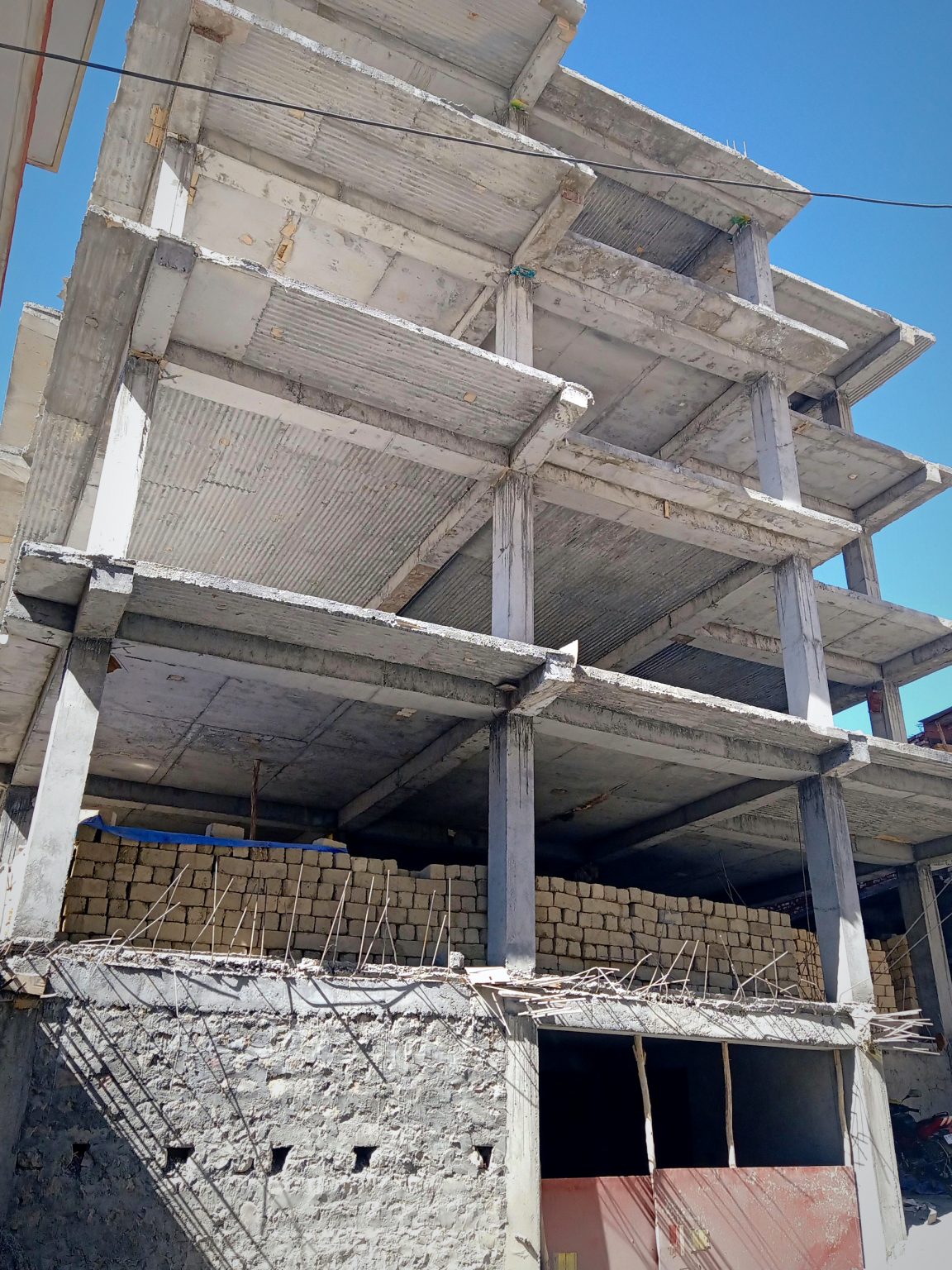
Despite having such a sophisticated and rich architectural heritage there is currently a mad rush for modernity that is taking place in Kaza the main town in Spiti. A reinforced cement concrete (RCC) home is viewed as a sign of social mobility, and cement plasters are a fashion trend. The last five years have seen significant change throughout the valley. The tourism sector is booming. So is the construction industry as people race to take advantage of the short but hectic summer season that at its peak struggles to cater to all of the tourists passing through. In Kaza the main town, traditional earthen homes are being torn down and replaced with multistoried RCC buildings. Pride in traditional architecture is being lost as some desire to show their success and social mobility through their capacity to build a modern ‘Pukka’ Ghar or Hotel just like those in the cities.

Most people are all too aware of the unsuitability of RCC structures to the extreme cold. This has led many to a hybrid system with an RCC frame and mud block infill. However, the durability of RCC under extreme climate is questionable. Already cracking and powdering of cement are visible on areas exposed to freeze and thaw cycles of snowmelt. This leads to the question: what if this grand experiment with cement fails? Where will all of that waste material go in this pristine, yet fragile mountain landscape? One of the most astounding aspects of traditional architecture in Spiti is its recyclable and biodegradable nature. It is normal for an old house to be torn down only for all of the materials to be reused once again in the new house. Rammed earth is considered to be even stronger the second time around. In the dry climate of Spiti even Tillu  (timber beams ) and Thap, the shrubs used in the flat mud roofs remain in good condition even after 60+ years of use, and may be reused in the new build. Even if they can’t be they offer a good source of fuel for the fire. Nothing is wasted.

Sustainable construction with a low ecological footprint was mastered by the people of Spiti centuries ago. The world has a lot to learn from them. Sadly, as the younger generation moves towards industrial materials and hybrid systems the traditional wisdom honed over centuries and handed down over generations is at risk of being lost. Now is the time to learn from the experienced elders and ensure this precious intangible cultural heritage remains alive and not just a pretty picture captured in vintage photos of a time long ago.

RCC based construction in Spiti | Photo by Kimberly Moyle

References
Auer, C.E., 2017. Measure for measure: Researching and documenting early Buddhist architecture in Spiti. Revue d’Etudes Tibétaines, 41, pp.181-201.
Joshi, P., Phartiyal, B., & Joshi, M. (2021). Hydro-climatic variability during last five thousand years and its impact on human colonization and cultural transition in Ladakh sector, India. Quaternary International, 599, 45–54. https://doi.org/10.1016/j.quaint.2020.09.053.
Sharief, A. et al. (2022) “Landscape use and co-occurrence pattern of snow leopard (Pantherauncia) and its prey species in the fragile ecosystem of Spiti Valley, Himachal Pradesh,” PLOS ONE, 17(7). Available at: https://doi.org/10.1371/journal.pone.027155

4032 2235 Kimberly Moyle
Kinzin Racho

Kinzin Racho

Watch a 200-year old ritual performed in Rangrik village on the third day of Spiti Losar (Spitian New Year) remembering the village deity who appeared as a magnificent ibex. Kinzin Racho Halema meaning, the splendid horns of the ibex, is the song sung across Spiti valley in the first week of the Spitian New Year.

स्पीति लोसर (स्पिटियन नव वर्ष) के तीसरे दिन रंग्रिक गांव में एक शानदार आइबेक्स के रूप में प्रकट हुए गांव के देवता की याद में मनाया जाने वाला 200 साल पुराना उत्सव देखें। किंज़िन राचो हलेमा जिसका अर्थ है, आइबेक्स के शानदार सींग, स्पिटियन लोसर के पहले सप्ताह में गाया जाने वाला गीत है।

Singer: Yangchen Dolma
Additional footage: Tanzin Thinley and Kesang Chunit
गायक: यांगचेन डोल्मा
अतिरिक्त फ़ुटेज: तंज़िन थिनले और केसांग चुनिट

1200 702 Himkatha
Counting Spots in the Snow

Counting Spots in the Snow

International Snow Leopard Day is celebrated on 23 Oct. India is expected to announce the results of it’s first snow leopard census based on an extensive 4-year exercise undertaken in the Himalayan regions of the country. This mammoth exercise could not have been accomplished without the support and participation of local people living in the remote high altitude regions of the country.

1200 670 Himkatha
Changthang – An Oasis of Himalayan Fiber
Photo: Sherab Lobzang

Changthang – An Oasis of Himalayan Fiber

Nestled amid the lofty Trans-himalayan mountains, Changthang is a unique terrain where climate and topography play a crucial role in the sustenance of local communities. The region consists of wide wetlands and giant mountains which offer indispensable ecosystem services and safeguard our water and food security. Many wetlands in Changthang are located at a higher altitude and are fed by glaciers and snow from the surrounding mountains. The high-altitude wetlands in my region contribute significantly to the downstream landscape productivity and form a unique ecosystem for floral and faunal diversity.

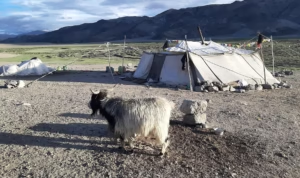
The nomadic pastoral communities composed of distinct groups located at Rupsho, Kharnak and Korzokh rear a variety of livestock such as goat (rama), sheep (luk), horses (ta), yaks, and donkeys (bhungpa) which supports them in all aspects of their lives. The Changpa shepherds are skillful in tending their herds; navigating steppe grasslands, accessing fertile pastures, breeding resilient animals, caring for livestock, and preventing diseases. When there’s less grass in the pastures or the livestock are not able to graze due to excessive snowfall, they provide the cattle with fodder they have stocked months before to avoid weakness and starvation. It is precisely the efforts of the local herders and the nutritious resources in the cold arid land that the livestock we breed gives the finest fiber.

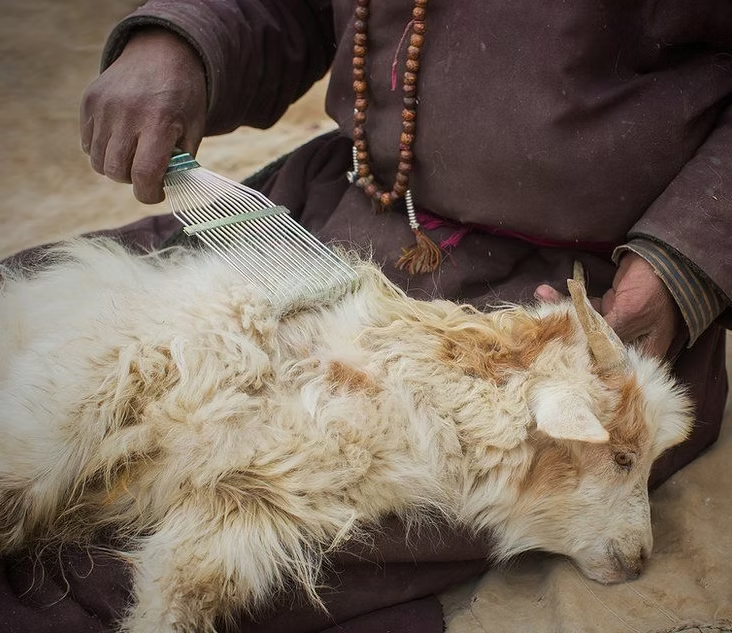
Pashmina Combing | Photo: Andrew Newey (cnn.com)

Ladakh has a highly diverse textile tradition that reflects its physical, socio-cultural, and environmental features. The herd provides different kinds of fiber: Khullu or Sitpa from Yak wool, Ral from Goat hair or Sheep wool, and Lena (Pashmina) from the underbelly of Changthangi goat. The wool is sheared from the livestock around early Spring or before lambing season using a wooden/metallic comb. It takes about 2-3 hours to shear wool from a single sheep and since it requires physical strength to hold a sheep, goat or yak to shear, it is usually men who do the work while women clean and sort the wool to remove any impurities. Once the wool is collected, it is laid on the sheet and beaten with a wooden stick to remove dust, dry grasses, and other impurities. It is then washed, dried, and then hand spun with a traditional spindle called “Phang” – thin yarns are made for weaving while slightly thicker and knottier yarns can be used for knitting. From elaborately patterned garments for the nobility to simple home-spun garments from local fibers, a range of garments are processed and procured in Changthang. The local fibers found in Changthang are used for various purposes; Yak wool and goat/sheep wool are primarily used for self-consumption while Pashmina (Lena) is often traded. The high altitude and the intense cold of Changthang serve a good purpose for the growth of the fine luxury fiber Pashmina. Due to its softness, elegance, and warmth, it is one of the most coveted fibers and fetches the highest price.

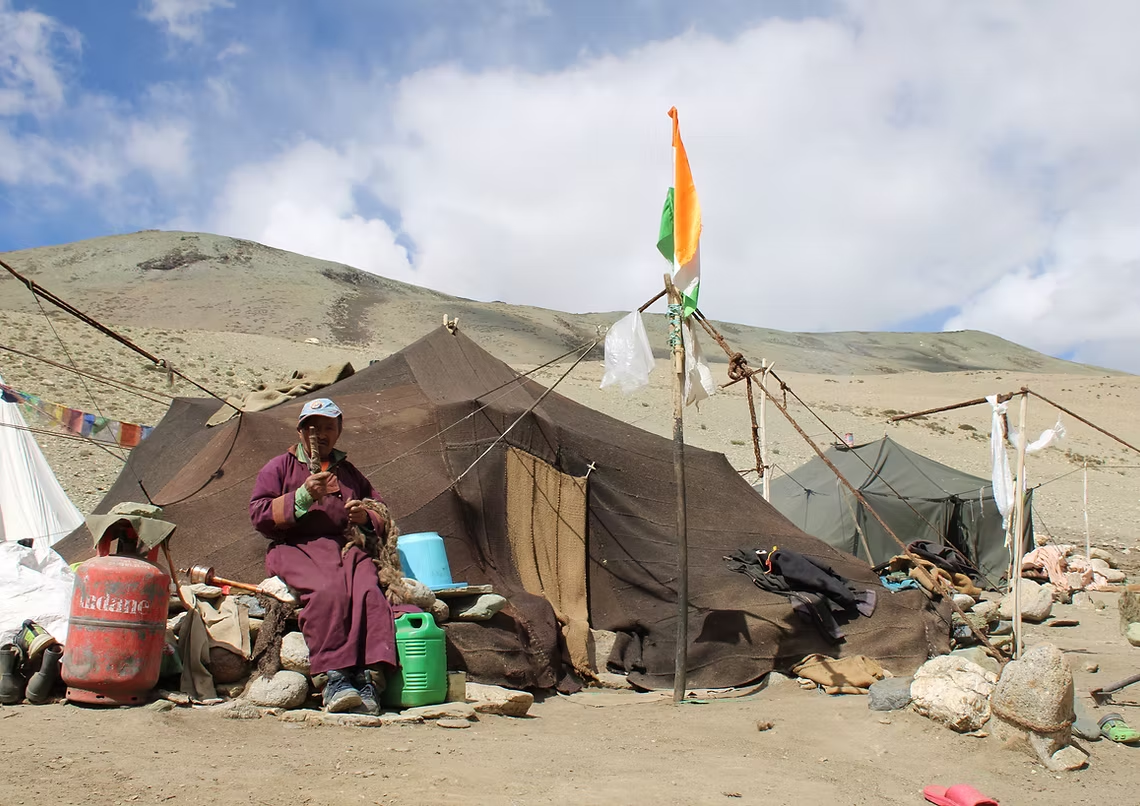
Rebo and landscape of Changthang

Weaving is an ancient craft and Changpas are reminiscent of the time when our ancestors wore clothes made up of animal skin. Due to freezing weather, animal skins are still used for various garments, quilts, and mattresses. The rich tradition of textiles came into being when our ancestors learned how to spin, make yarn, and weave. Wool and fiber are an integral part of the nomadic culture as Changpas reside in the traditional tents called Rebo made of Sitpa (Yak wool). Rebos are very functional and aptly suited for the nomadic lifestyle – as the nomads migrate in search of better pastures for their herd, the use of Rebo comes in handy for them.

“Rebos are very functional and aptly suited for the nomadic lifestyle – as the nomads migrate in search of better pastures for their herd, the use of Rebo comes in handy for them.”

Making Rebos are extremely labor-intensive as it is handspun and handwoven and a group of nomads makes it collectively. Rebos are also precious family assets and are passed down from one generation to another but these days the use of canvas tents is also becoming popular. Handcrafting has great significance in Changpa tradition, it is a skill that everyone inherits and proves useful in resource-starved land like ours. Weaving and knitting are so economical and wholly self-sufficient – we knit sweaters, socks, hats, and mufflers, and weave mattresses, quilts, saddles, and even containers for foodstuffs. Imagine having to buy all these!

Traditional weaving in Changthang

Even the traditional clothes we wear Gos made up of fabric called Snambus. All of which are handwoven from scratch! When I think about the olden tradition of Changpas – whether it is sustainable grazing of the livestock, food habits, lifestyle, or the practices of spinning, and weaving I realize how self-sufficient and environment-friendly the whole system is. However, the practices around local fiber and cloth making are undergoing changes. Machine-made fabrics and ready-made clothes are easily procurable from the markets and one doesn’t necessarily have to make everything from scratch like in olden times. Although a great variety of wool and fibers are found in Changthang, there’s relatively little expertise when it comes to processing these fibers and adding value to them. Kashmiri artisans are way more known for their skills in handicrafts and if this gap can be fulfilled locally, the fiber value chain will be complete in Changthang itself.

1770 1048 Padma Dolker
Tepang – the Pride of Kinnaur
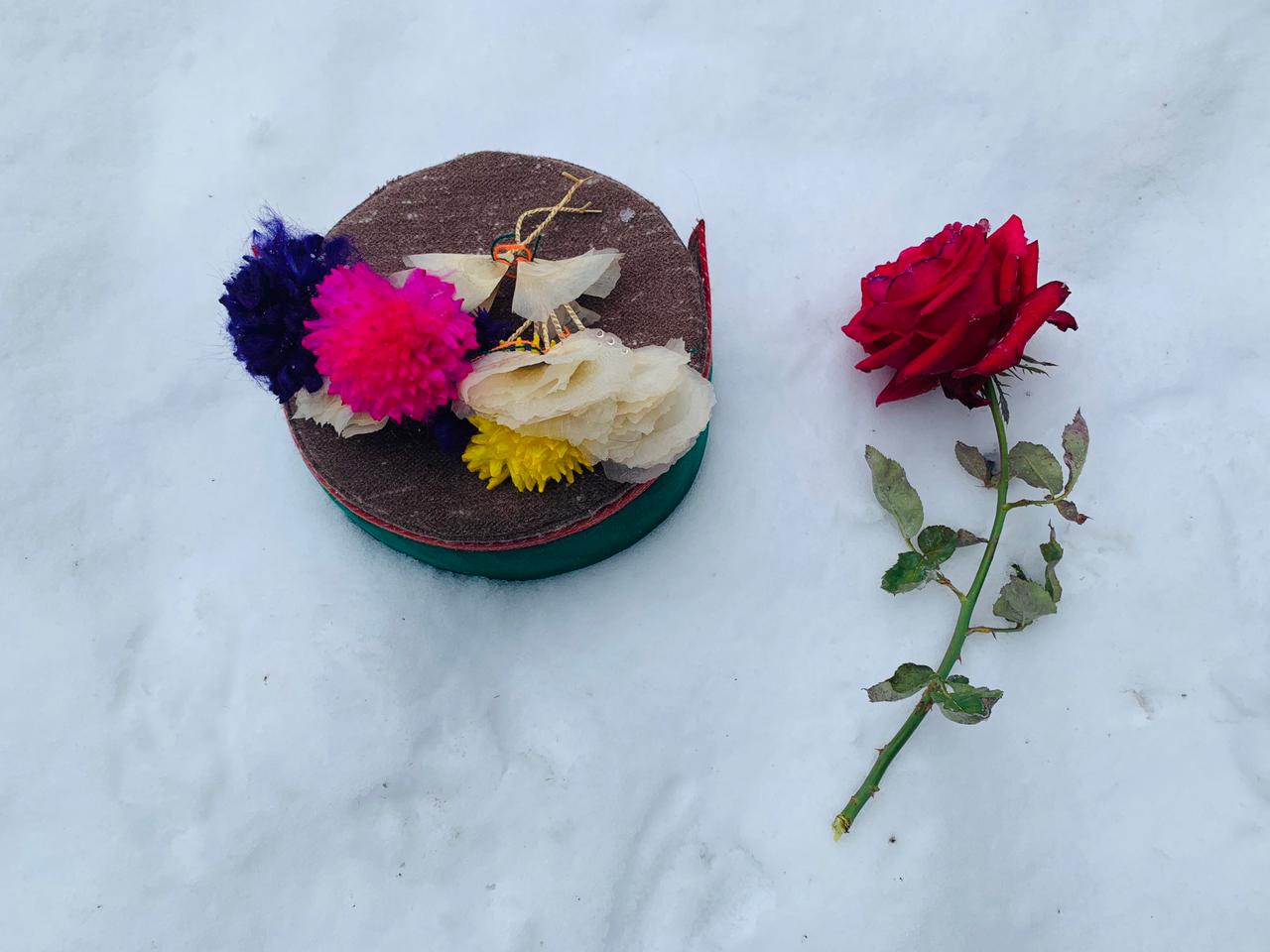
Kinnauri Tepang | Photo: Anuradha Miyan

Tepang – the Pride of Kinnaur

Nestled amid beautiful gigantic mountain ranges, Kinnaur is one of the most picturesque districts of Himachal Pradesh. Owing to its geographical proximity to Spiti and having been historically part of Rampur Bushahr, Kinnaur inhibits the unique cultural amalgamation of Buddhists and Hindus. One of the defining features of people living in Kinnaur is their vibrant traditional dress and the unmistakable headwear Kinnauri Topi which forms an integral part of the whole attire. The headwear is colloquially called “Tepang” or “Khunnu Tiwi” and is different from the Himachali Topis of Shimla, Kangra, Kullu, and Chamba. The design variations and the aesthetics of this headwear represent different parts of Himachal where it is worn. The Bushehri (Rampur region) cap is plain maroon in color with the same design as the Kinnauri topi, the Kulluvi (Kullu-Manali) topis have vibrant multicolored stripes, and the Kinnauri Topi has unique green velvet color and the ones worn in Kangra is a deep saffron color.

Made up of local wool yarn with velvet green stripe, it is adorned with beautiful wildflowers among which the bright white colored flower seed called “Chamakha” ( oroxyllum Indicum) is preferred among locals. The flower is not indigenous to the region and is mostly found in the lower Himachal region like Mandi, Palampur, Bilaspur, Nalagarh, etc. The usage of Chamakha flower seeds became popular in Kinnaur because of the flower’s resilient qualities – once plucked from its pod, the flower seeds don’t get spoiled and can last for years without getting dried.

Kinnauri Tepang

The Chamakha seeds are split open from their’s pod and a bundle of seeds called “Dalang” is strung together on a green, and red thread and is fixed on the Tepang. Apart from that, the cap is also accessorized with peacock feathers, marigold flowers, or the dried petals of the rare Himalayan Brahma Kamal (Lotus). However, the use of Chamakha flower seeds as well as the Brahma Kamal is decreasing as these flowers are endangered.

Kinnauri Tepang forms an integral part of their identity |  Photo: Tanzin Palkit

In the olden days, the Tepangs were domestically made at home by all households but the weaving tradition has become less popular nowadays and it is woven only in a few cluster villages like Leo, other parts of Hangrang valley, Pooh and Reckong Peo. Unlike Kinnauri Shawl and other traditional dresses, the handweaving tradition of Tephang disappeared among general people and is now kept alive among a handful of skilled artisans and weavers. In recent years, machine-made Topis are also getting more popular in Looms and handicraft centers in Lower Himachal. However, the difference between handwoven and machine-made topis is so stark.

There’s a huge difference in terms of material, quality, technique, appeal,  garment feel, and usability. The handwoven Topis, although takes a long time to make and is more labor intensive, the overall usage and desirability isare higher due to warmth and durability. A topi once woven can last for years till its natural wear and tear, while the usage of machine-made topis is more popular among non-locals and tourists for it is also treated as a souvenir. The native Kinnauri people always prefer the handwoven ones for it has far more value than their materiality.

The use of Tepang is ubiquitous across all villages of Kinnaur and locals people take great pride in wearing it. The local communities lovingly refer to it as their crown, symbolizing communal pride and prestige, and they believe it upholds their indigenous cultural values. It is worn both by men and women on a daily basis and during festivals, ceremonies and occasions, people heap it with all kinds of floral adornments. There’s also a tradition of gifting Tepangs to one’s special guest and during weddings as ceremonial gifts. The use of Tepang has percolated so deeply in the collective consciousness of Kinnauris that it not only holds significant cultural value but is also seen as a defining part of their identity.

“One of the defining features of people living in Kinnaur is their vibrant traditional dress and the unmistakable headwear Kinnauri Topi which forms an integral part of the whole attire.”

1280 960 Tanzin Palkit Negi
Spiti’s Handwoven Traditional Clothes

Spiti’s Handwoven Traditional Clothes

Clothes and identity are closely related: traditional clothes of a region reveal a lot about its geography, physical environment, climatic conditions, and cultural practices. The high altitude and cold weather conditions in Spiti have led to distinct clothing attributes of its people. Since most of the families are agro-pastoralists, the livestock people breed gives different kinds of wool like yak wool, sheep wool, and goat and that forms the natural source for most of the attire worn by the people. In the olden times, people wove handcrafted attires and ornaments from scratch but with increasing access to market and trade, wide varieties of fabrics and garments are available and the clothes designs are adapted with time. Let us share about some of the traditional clothes of the region:


Spitian Ghoey | Photo: Rabhi Kunga

1. Reygoi or Ghoey
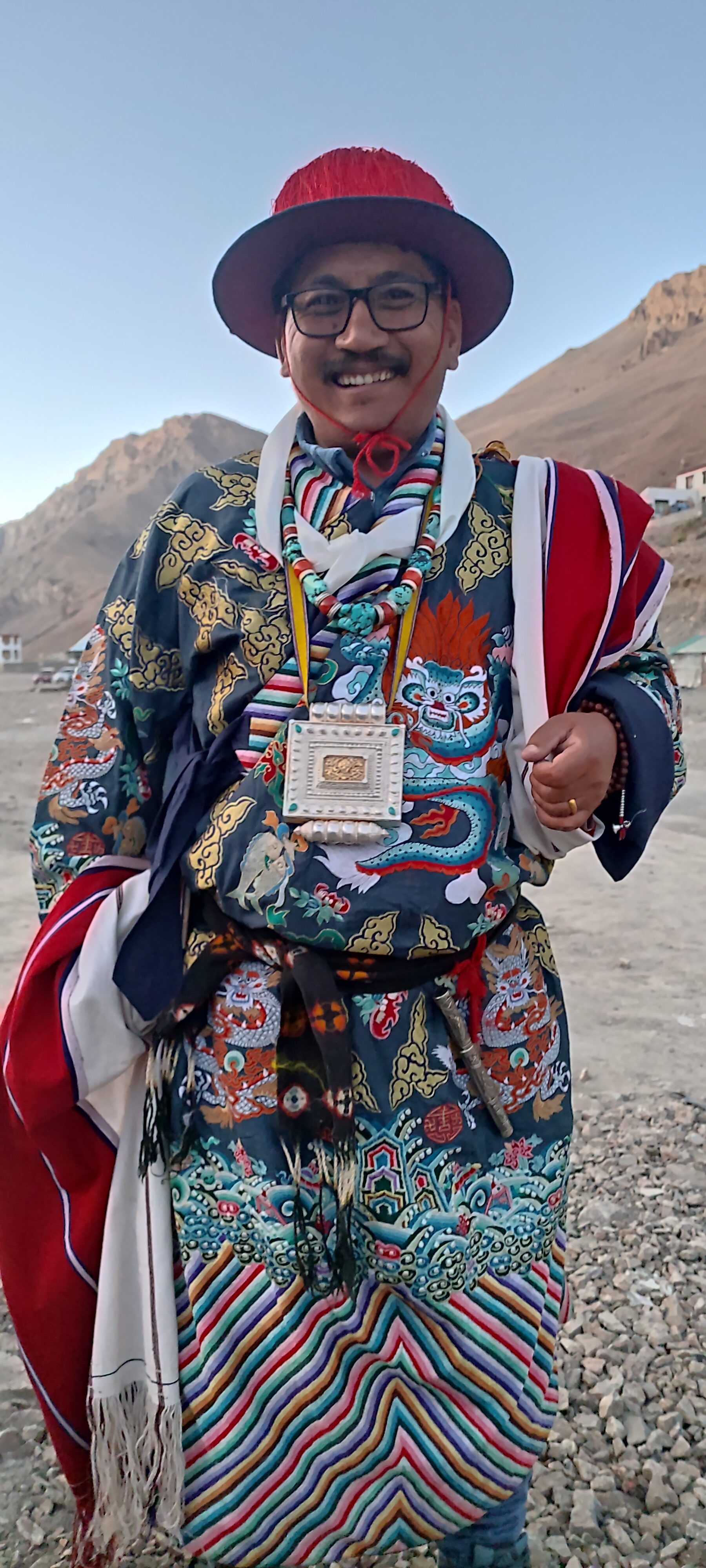
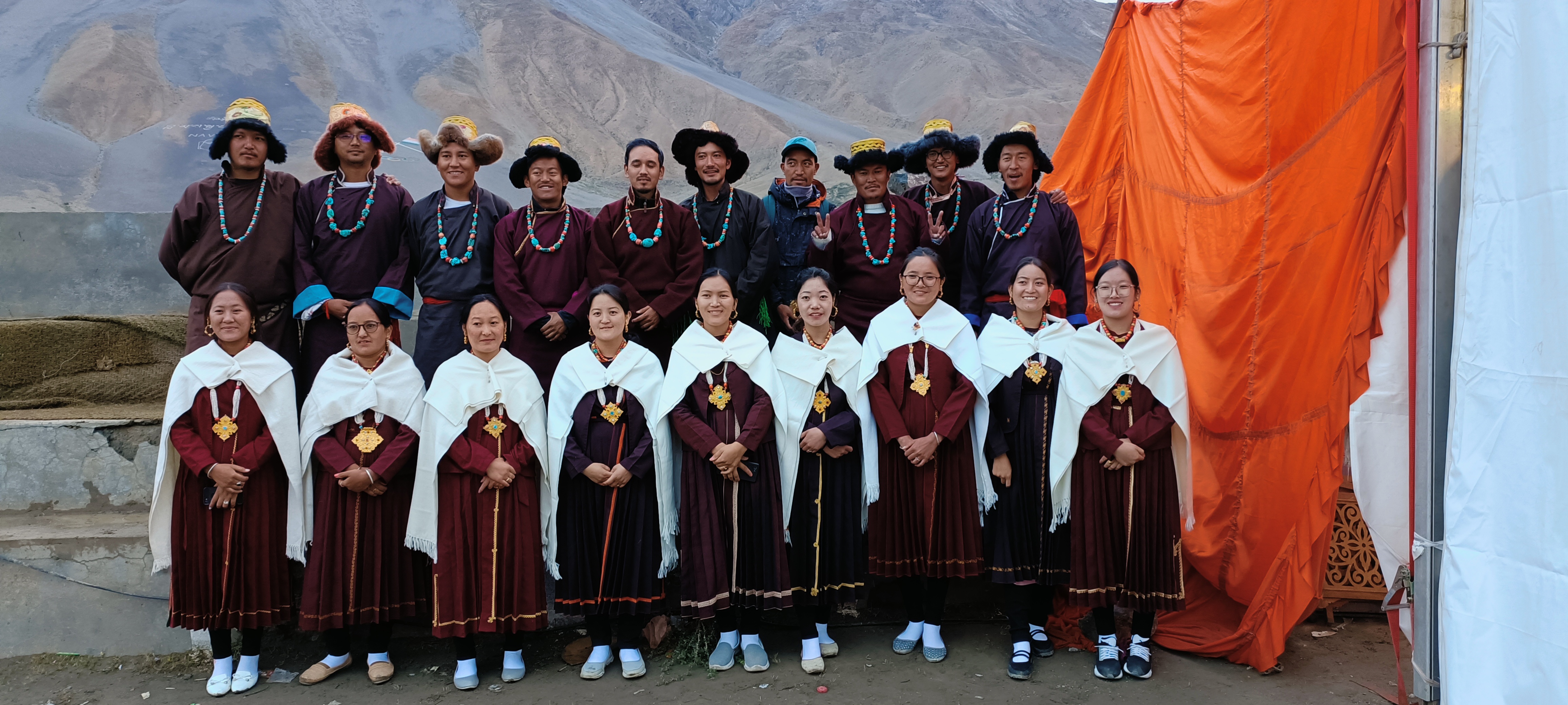
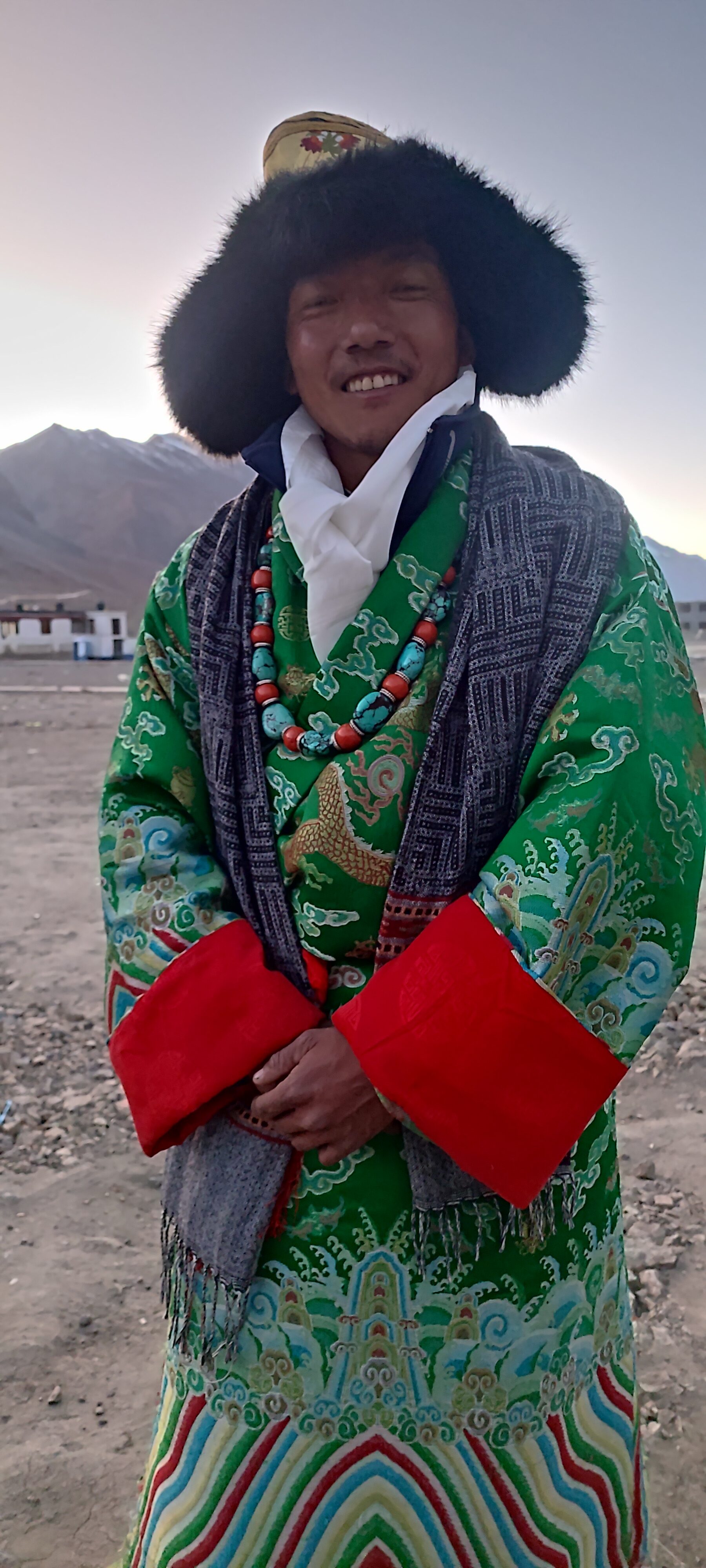
Ghoey is a thick full-length robe worn by Spitian men. In the olden days, men would wear Ghoey made up of woolen material but with time, robes of thin fabric like cotton also became popular which is called Rey (thin cloth) ghoey (to be worn). The style of the robe resembles the Mongolian robe which overlaps on the right side and is buttoned from the left shoulder. Men usually wear a thin shirt or plain trousers to pair with it and the robe is finally secured by a wide belt around the waist made up of woven threads called Keera. These robes come in neutral shades of brown, maroon, dark blue, and black. With changing times, access to fabrics like silk and velvet has increased so a Ghoey can also be made up of silk, velvet, and other multicolored synthetic fabrics.

Spitian traditional dress: Sulma, Tsadar and Reygoi | Photo: Radbhi Kunga

2. Sulma
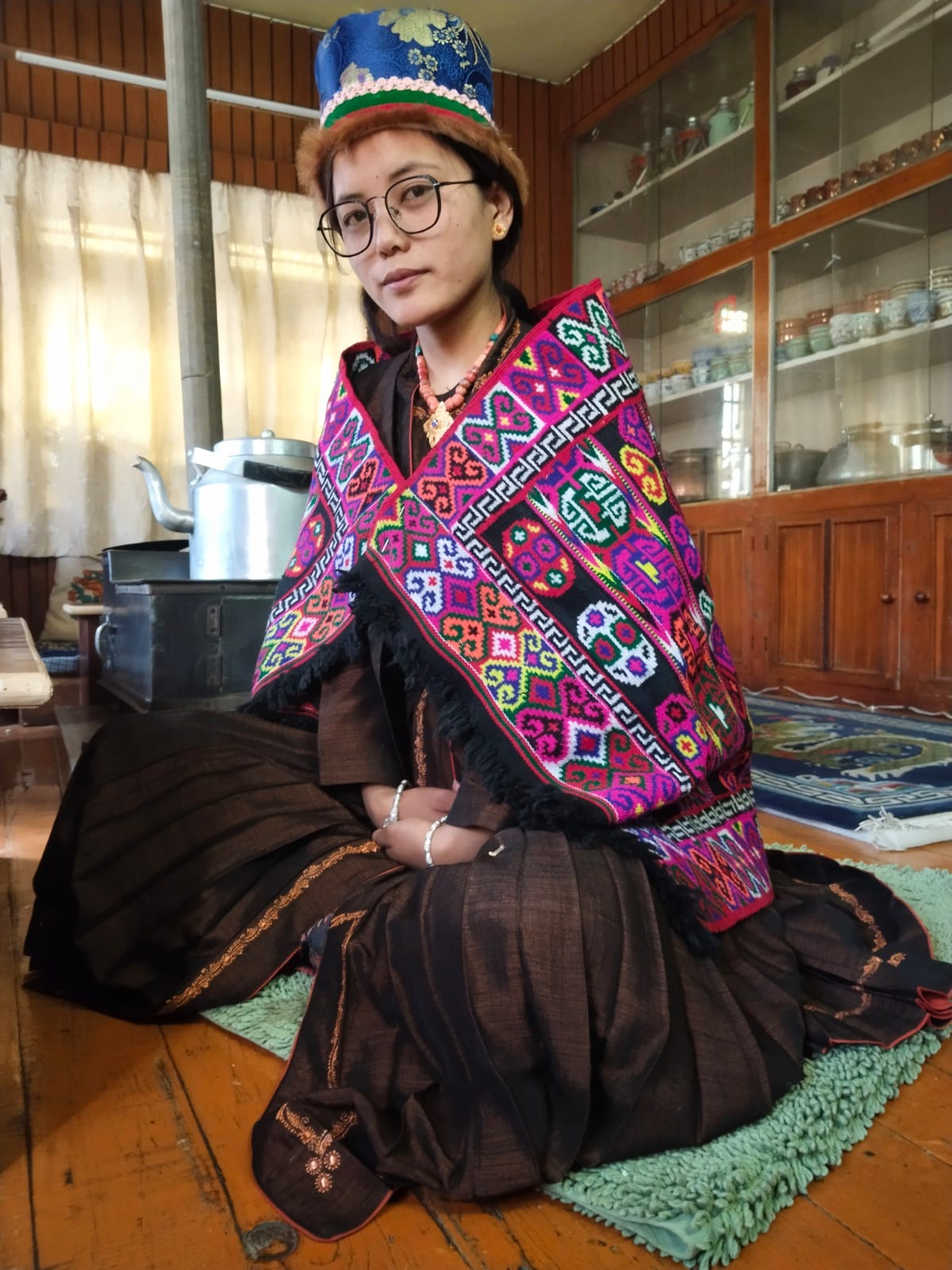
Sulma is a long voluminous traditional gown worn by Spitian women. It has a round neck and long sleeves. The dress flares downwards with multiple pleats which is why it is called Sulma which means; to gather, to fold, to fold into pleats. A thin undershirt is worn underneath and the Sulma is tied with a waist belt called Keera. The dress is fairly wide around the leg, making it comfortable for walking or working in the fields.

Spitian men wearing Reygoi. Photo: Rabhi Kunga

3. Bhal Sutan
Sutan is woolen or cotton trousers worn both by men and women in Spiti. It is made up of thick woolen fabric called “Nimpu” procured from the local sheep hair. The fabric is woven on a backstrap loom or foot loom, which can then be stitched into trousers of the desired style. Nimpu Sutan or bhal Sutan (woolen pants) is primarily worn under Sulma by women and under Reygoi by men. With changing times, Spitian women popularly wear it with a matching Salwaar or Suit.

4. Lokpa
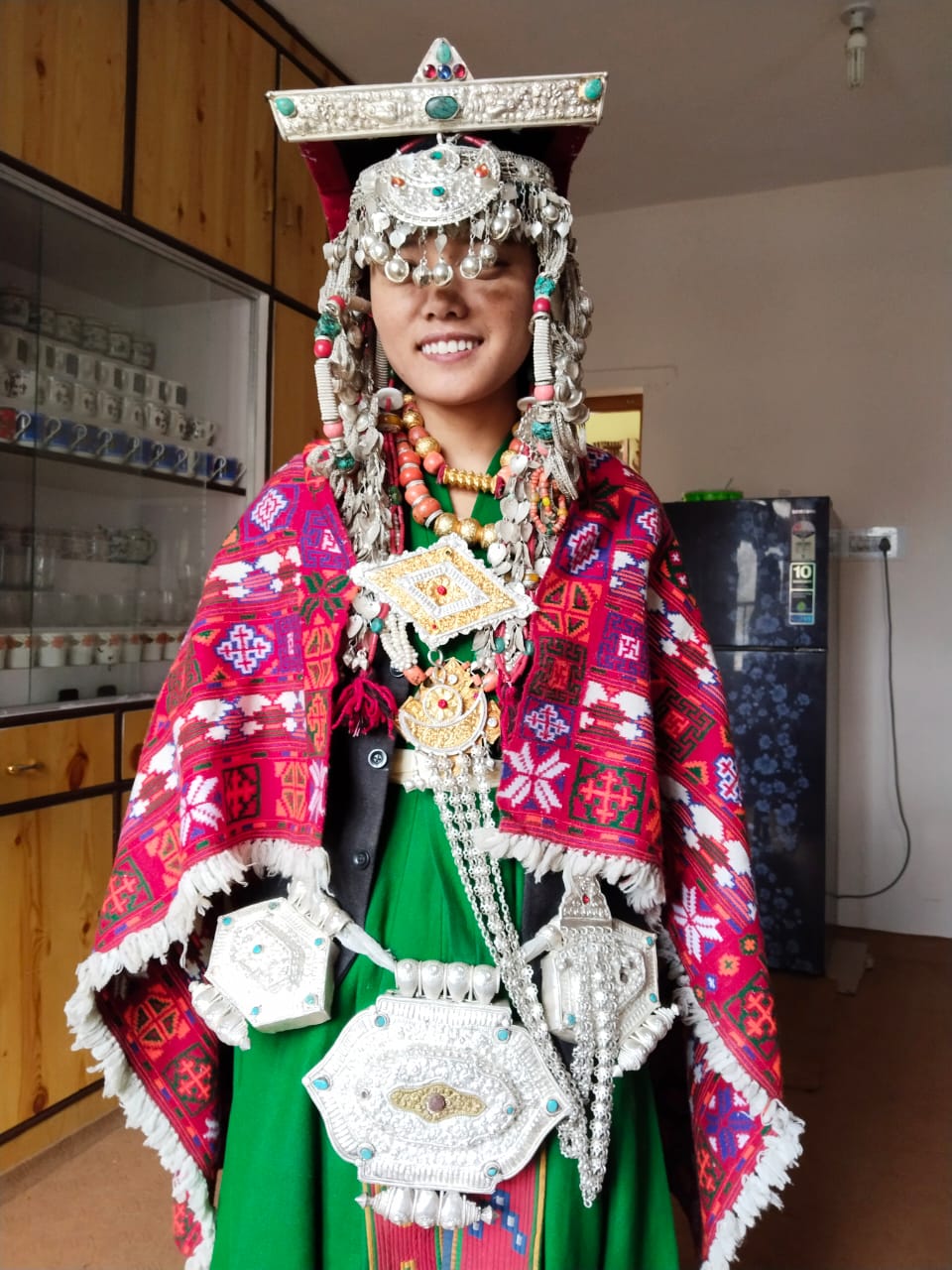
Lokpa is a thick cloak-like garment worn by women. It is hand-strewn with sheep skin turned upside down with elaborate woven designs on the front. The local name Lokpa (meaning: to turn over) is reflective of the intricate process with which a seamstress makes it. It is extremely warm and is perfect for harsh weather conditions. The thickness of the garment also cushions the wearer’s back while carrying a heavy load on the back like firewood or fodder for livestock. Sometimes, newborn babies or even lamb kids are wrapped in the garment to provide warmth and comfort.

5. Lingzey
Lingzey is a traditional handwoven shawl worn by women on the back. It is one of the most vibrant and elegantly designed shawls woven by women on the loom and comes in a wide variety of colors and patterns. The base color can be red, white, or black where elaborate symbolic geometrical designs are handwoven. Motifs inspired by nature are common like local flora or fauna or religious motifs like stupa and swastika (to protect the wearer from evil spirits) or motifs of precious stones. Lingzey is worn during special occasions like marriage, ceremonies, festivals, rituals, or while visiting Rinpoches.

6. Tsadar
Tsadar is a plain woolen shawl worn by women on a daily basis. It is thin, light weighted compared to Lokpa, and is woven on a handloom called Khaddi. It is made up of goat or sheep wool and is usually found in toned neutral colors like beige, grey, off -white and black. It is the most functional piece of clothing and can be worn over Sulma or even drape babies in it. In the olden days, it was said that women were not allowed to go out bareback, wearing a Tsadar symbolizes one’s respect for the person you are visiting.

Lingzey - the multicolored shawl with traditional designs

“Since most of the families are agro-pastoralists, the livestock people breed gives different kinds of wool like yak wool, sheep wool, and goat and that forms the natural source for most of the attire worn by the people.”

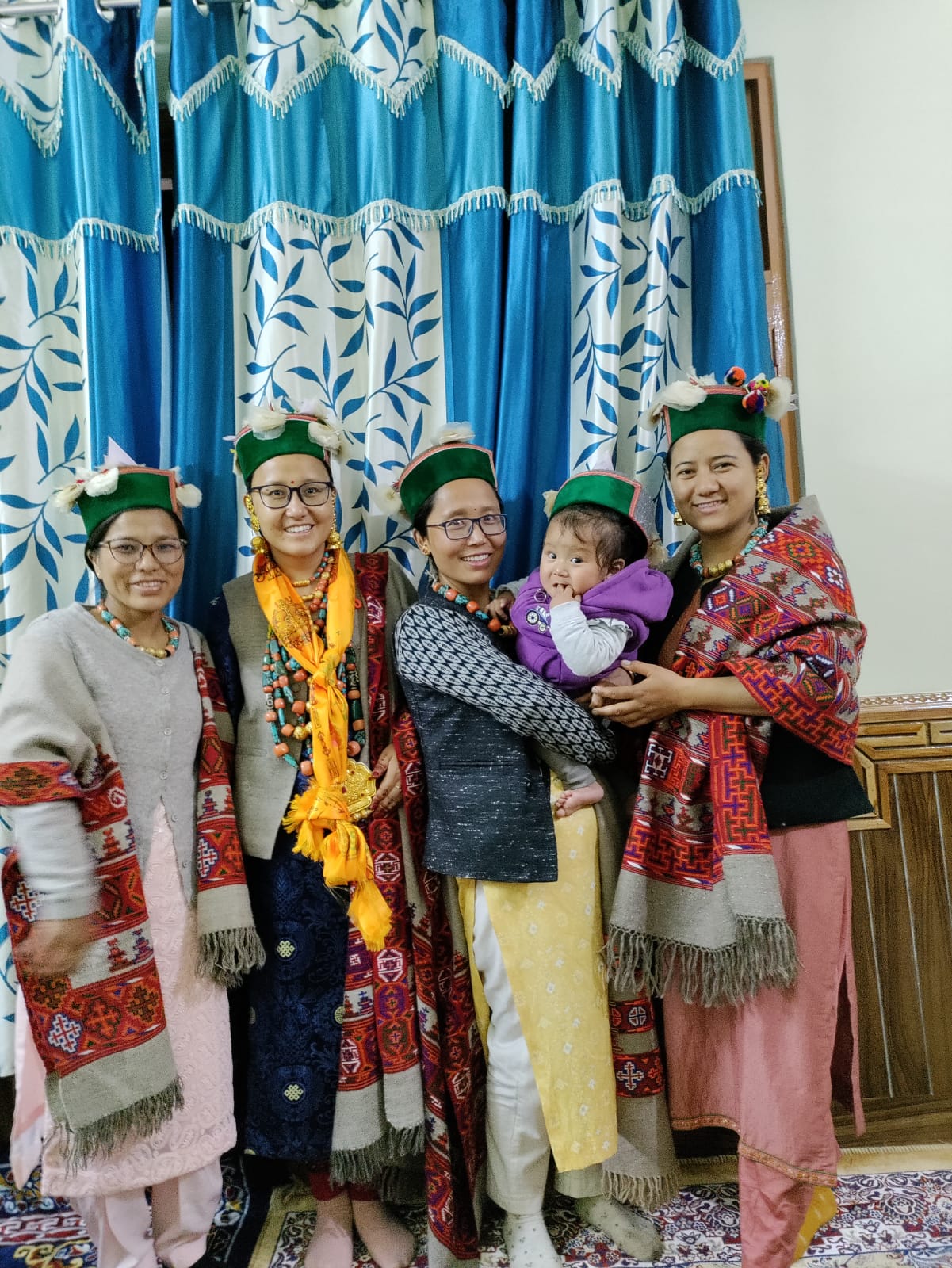
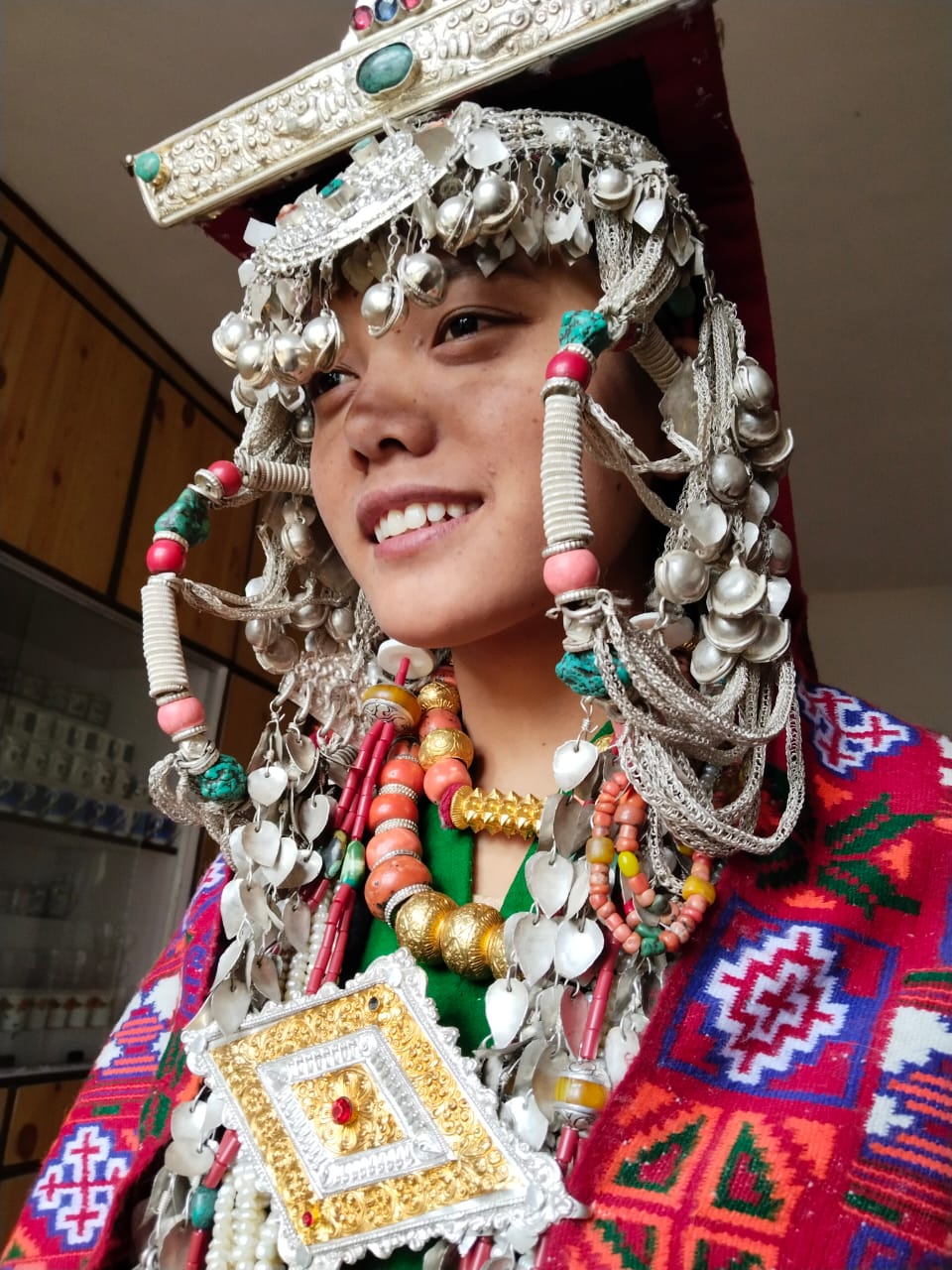
Spitian bride wearing Lingzey (multi colored shawl) Lokpa (thick hand strewn green cloak) Sulma (brown gown ) and Tiwi (hat)

7. Tiwi
Tiwi is worn both by men and women. Traditionally, Nambu (yak wool) is the base fabric with which it is made and has goat or sheep skin lined underneath. Cotton or wool fabric is sewn inside for warmth with matching silk brocade. Golden or silver zari designs or threadwork can be supplemented depending on the need.

8. Lham
Lham refers to footwear worn by people in the high Himalayan region or more suitably to the boots worn in the nomadic region. Originally it was made up of yak hides but with time, it is adapted to canvas, jute, or cloth material. Lhams are decorated with rich embroidery and exquisite designs of dragons or snakeheads. The material, color, and fabrics used to make Lham showcase the craftsmanship of the creator. Men’s Lham is knee length and comes in handy while treading snowy mountains. It is worn with Ghoey-shan (Silk robe) by men and women wear a slightly smaller frame with Sulma. The usage of Lham has gone out of daily use and is now worn only during festivals or special occasions.

The garment and material used to make the traditional attire of Spiti symbolize the optimum use of local resources and fibers available regionally. During festivals and special occasions, this is adorned with elaborate pieces of jewelry like the vibrant turquoise Perak, the pearl-made Uldik, the Silver Docha, Dhikra (brooch), Khinyur, and Pitsup. Our traditional dress represents close cultural affinity with the Western part of Tibet and forms a big part of our cultural heritage.

960 1280 Dolma Zangmo, Chhering Zangmo and Tanzin Ankit
The Art of Weaving in Lahaul’s Upper Valleys
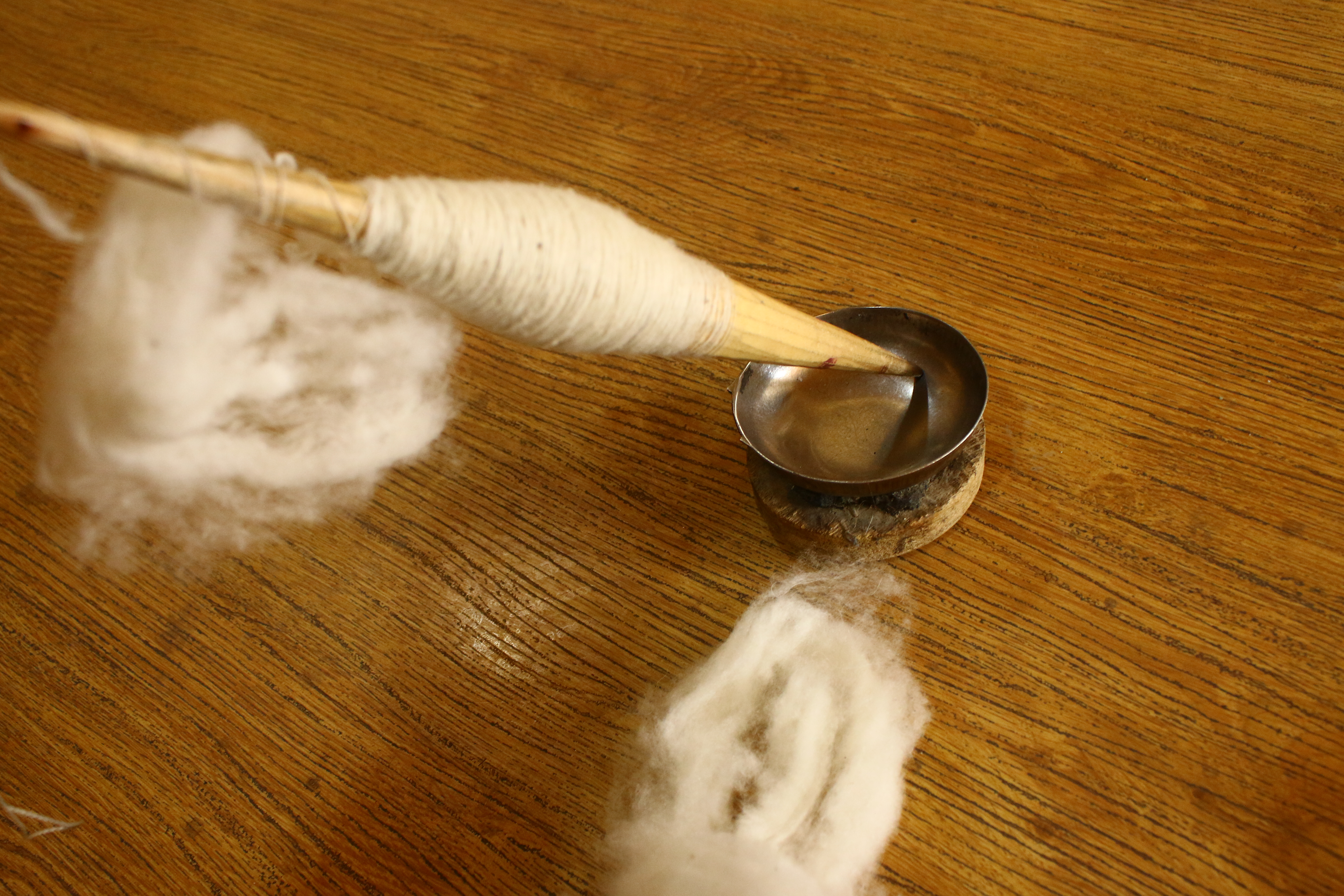
"Phang" - Traditional spindle | Photo: Rigzin Dorjee

The Art of Weaving in Lahaul’s Upper Valleys

In the higher Himalayan region, weaving is an ancient craft and forms an integral part of people’s lives. In Lahaul, weaving signifies a retreat into slower, simpler times amid icy cold weather when the farming works are at its lowest. There’s a saying in local folklore attributing weaving as visual art that reflects stories about people, their communities, and their place in the universe. It symbolizes the value of creation, interconnectedness, and rejuvenation. Weaving requires profound discipline and dexterity to untie complexities; it involves crossing two threads the warp and the weft, one vertical, and one horizontal, one stretched tight, the other intertwining the first. To produce a textile, the two threads need to be bound together otherwise, the weaving work will remain fragile. Hence in ancient Buddhist belief, a weaver is akin to a problem solver, someone who is adept at bridging silos and bringing greater connectedness.

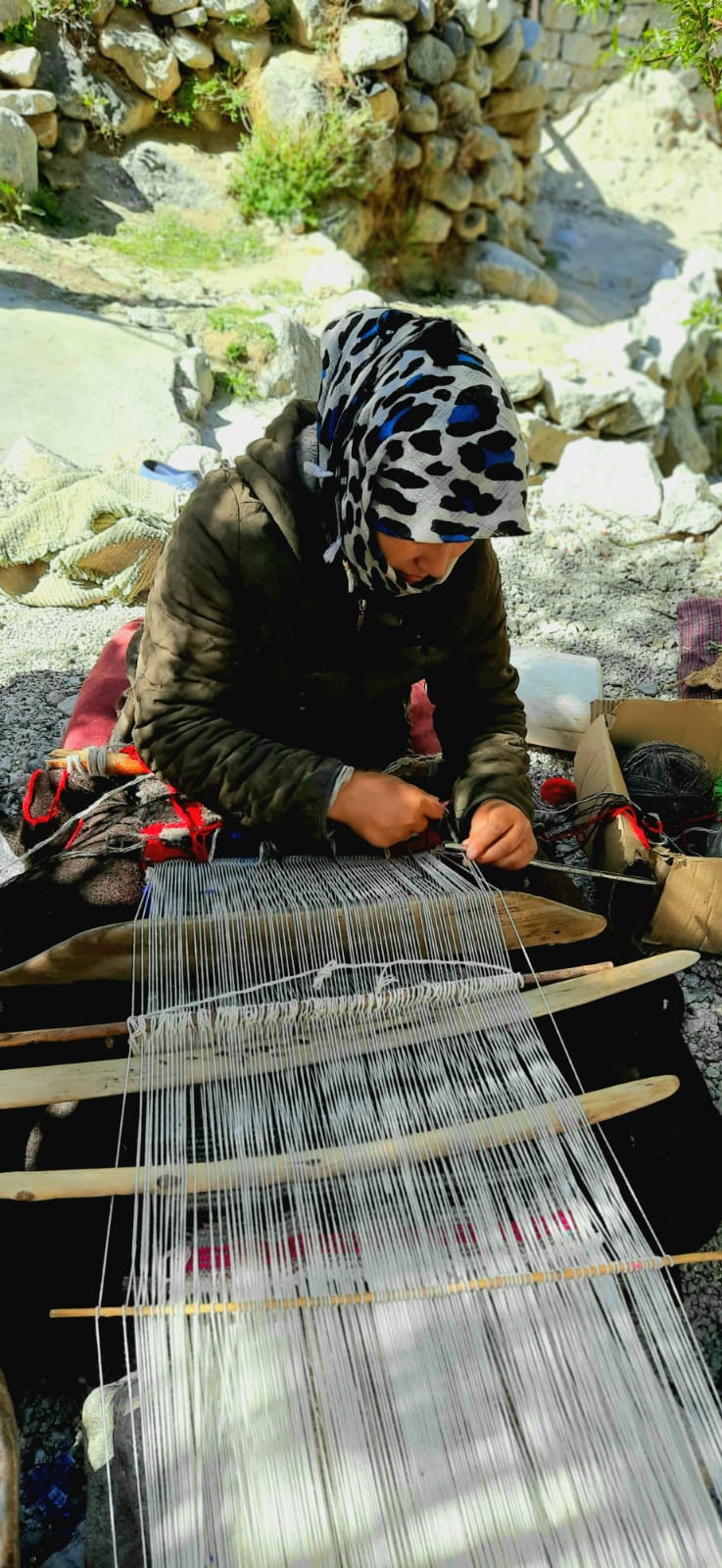
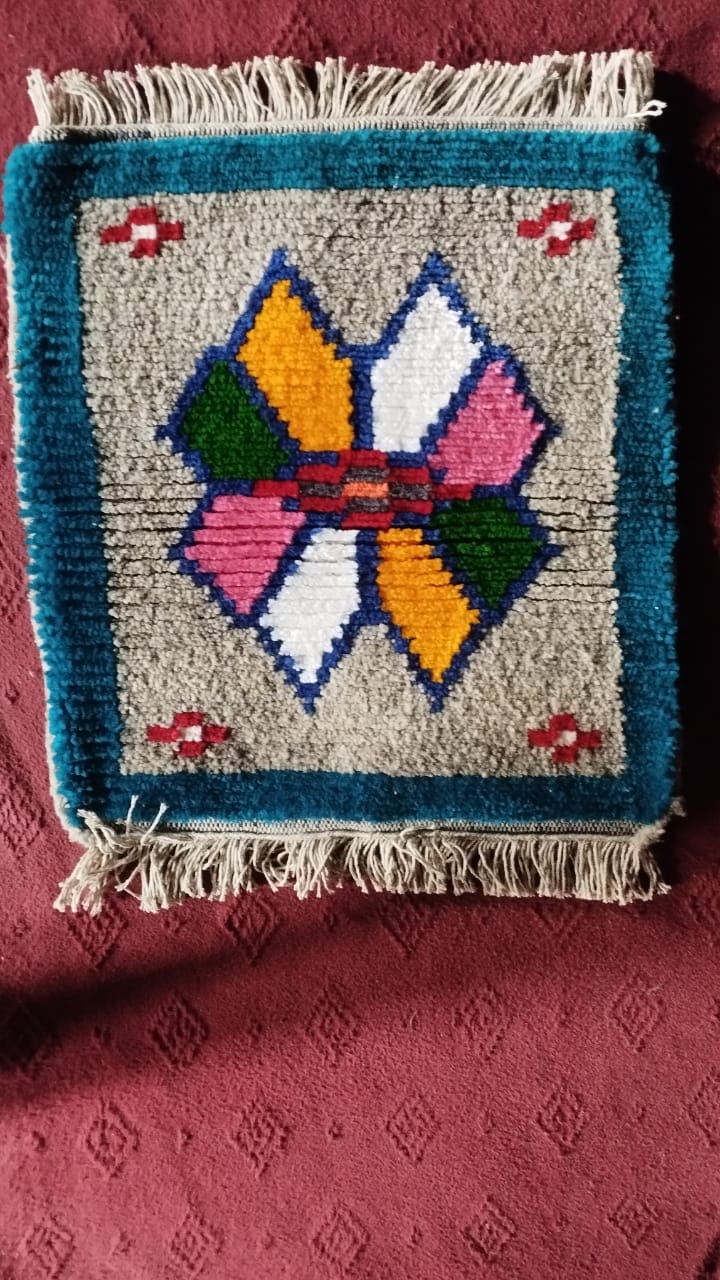
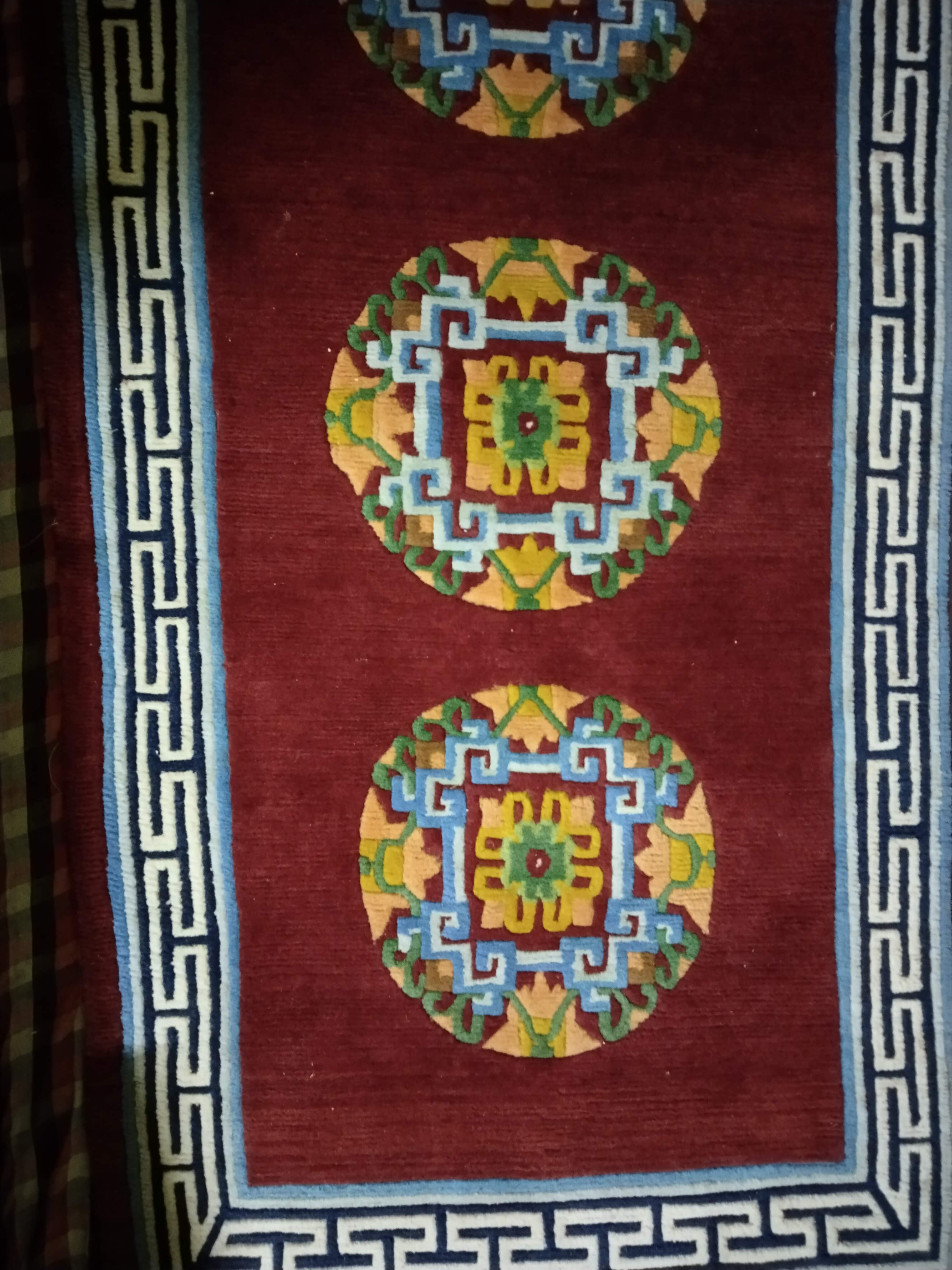
Weaving is a traditional skill that’s passed down through generations and is practiced with great vigor in our village. Of the many products that are woven, Tsug-den (Tibetan rug) weaving remains the most popular with its elegant design and high pile, plush feel. In our village, the handwoven woollen carpets are called Tsug-thu or Tuk-tuk in villages around the Darcha side in Lahaul. Tsug-dens are unique handwoven carpets, that are woven on a backstrap loom called “Khaddi”. It is an extremely slow, time-consuming process, that involves a lot of hard work as each bit of the work is done manually – from livestock herding to wool shearing to cleaning, carding, spinning, and yarn making and finally weaving, the process can stretch up to a year.

Photo: Sherab Lobzang

Most families still keep livestock and the wool is shorn around March or April month. Wool from a single sheep is sufficient to make one pair of Tsug-den. It is then sorted and cleaned to remove any impurities, and further processing of wool is done in Shamshi in Kullu valley in Himachal. We take wool gunny bags in bulk and get them carded and de-haired before we bring them back for spinning and yarn making.

Spinning is done mostly during winter and much like agriculture, it is collaborative work involving a group of women. Wood-made traditional spindles called “Phang’‘ are used for spinning and great care is taken to get consistent, smooth yarn. The base of the weaving is done with cotton threads on a metallic or wooden loom Khaddi. The handspun woollen yarns are weaved in a knotting system where one thread is interwoven with the other on a loom. Once a row of knots is complete, a rod is hammered against it to tighten the row below. A weaver uses the blueprint of a woven carpet to weave complex designs and to ensure accurate shape, size, and alignment of the carpet. Black, white and beige sheep wool is used for tsug-den while the rare white yak hair is used for Challi (woolen quilt).

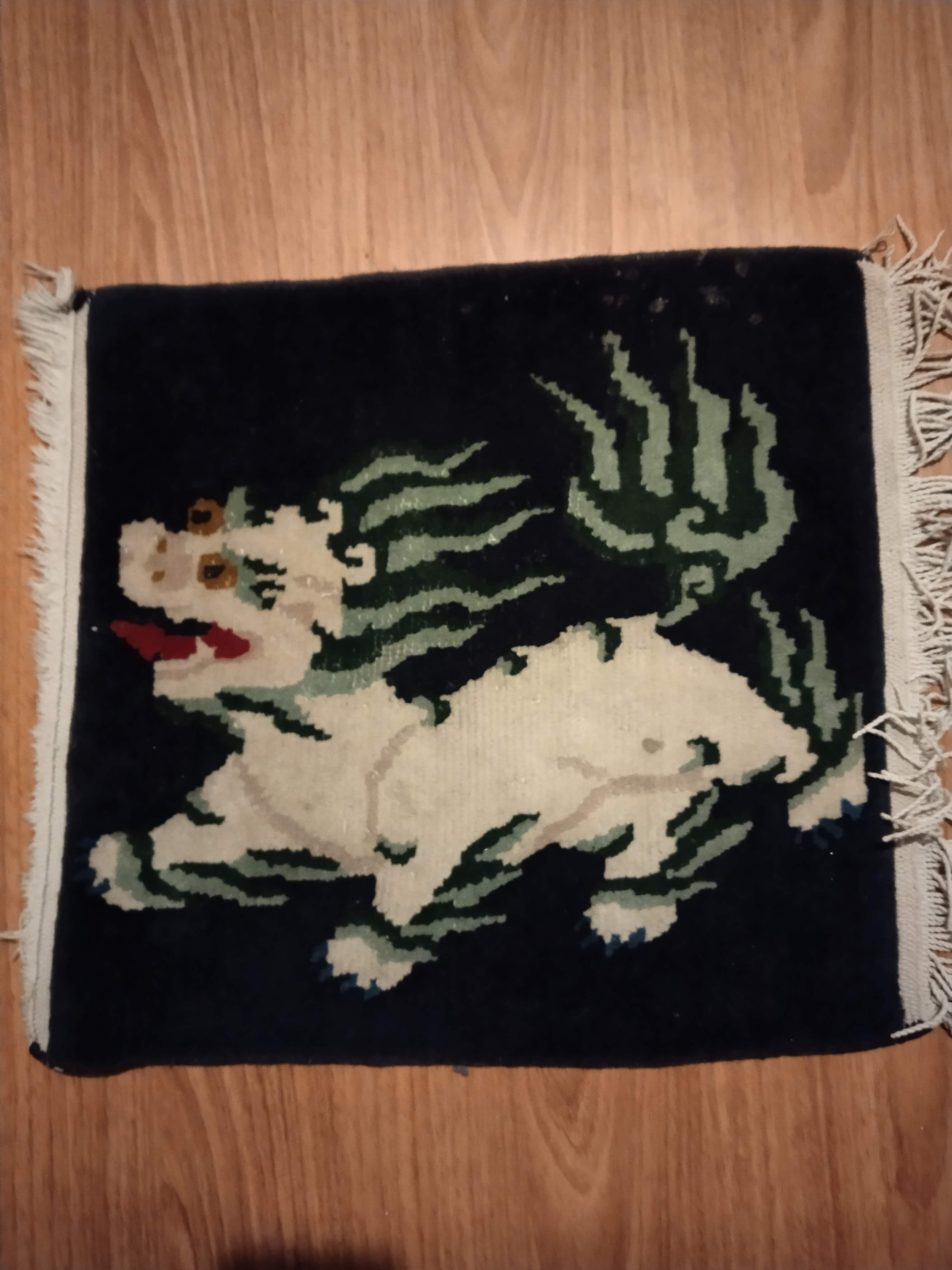
The elaborate designs and motifs on the carpet are inspired by lives in the higher mountains of Tibet and often nostalgically evoke themes of nature and the environment. Motifs of birds, flowers, and mythical animals are quite common- dandelions, native birds, Druk (sky dragon), tiger, ibex, leopards, snow lions, and yaks can be seen beautifully woven on the carpets along with motifs that have special religious, cultural significance like the mandala, four elements of nature (earth, fire, water, space), the Buddha’s vajra, Swastika and depiction of the precious stones Dzi and Gau (amulet). The motifs on the carpet are not mere designs but have larger symbolic meanings to it for eg: the depiction of the crane motif on Tsug-den symbolizes good luck, Yak motifs are reminiscent of nomadic life, dandelions, birds, and clouds depict one’s closeness to nature, the vajra is symbolic of Buddha’s enlightenment, tiger stripes symbolizes one’s prestige and wealth, while snow lion and sky dragons represent mythical creature from traditional folklore and phoenix is a sign of auspiciousness.

 “There’s a saying in local folklore attributing weaving as visual art that reflects stories about people, their communities, and their place in the universe. It symbolizes the value of creation, interconnectedness, and rejuvenation.”

Most families in Lahaul and other higher Himalayan regions own simple domestically produced Tsug-dens and it remains one of the most functional pieces of the item which comes in really handy during harsh winters. The usage of natural fiber and natural vegetable dyes also enhances the overall aesthetics of Tsug-den and it is one of the practical pieces of a garment whose luster, and sheen increases over the years with usage. One of the most appealing characteristics of the Tsug-den-making process is that it is the result of resource utilization in the most natural way. The entire carpet is handspun, hand-carded, naturally dyed, and handwoven where nothing goes waste and the final product lasts for decades, some even passed down to generations. One of the greatest wealth a woman can inherit from her parents is the traditional handwoven carpets, rugs, and quilts along with handwoven shawls. Weaving is not just a craft, it holds ample of material, and cultural value and the artwork on woven Tsug-den is symbolic of values, beliefs, and mysticism beyond our comprehension.

5472 3648 Rinchen Angmo and Chhering Gaaji