Local Communities

Food of the mountains: Stinging nettle (Zatsod)

Food of the mountains: Stinging nettle (Zatsod)

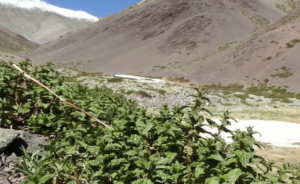
People of the high mountains have traditionally gathered plants and herbs from the wild, which would then be carefully stored and consumed in winter. Most of this collection is for personal use and never for commercial purposes. In this story, Karma Sonam of Gya village of Ladakh tells us about the traditional technique for collection and storage of zatsod or stinging nettle. He also shares a recipe of zatsod thukpa.

ऊंचे पहाड़ों के समुदाय पारंपरिक रूप से जंगली पौधों और जड़ी-बूटियों की तलाश करते हैं, जिन्हें बाद में सावधानीपूर्वक संग्रहीत किया जाता है और सर्दियों में खाया जाता है। इस संग्रह का अधिकांश भाग व्यक्तिगत उपयोग के लिए था, न कि व्यावसायिक उद्देश्यों के लिए। इस कहानी में, लद्दाख के ग्या गाँव से कर्मा सोनम हमें बिच्छू बूटी के संग्रह की तकनीक के बारे में बताते हैं। वह स्थानीय सामग्रियों का उपयोग करके बनाई गई थुकपा की एक पारंपरिक रेसिपी भी साझा करते हैं।

This story was narrated, shot and edited by Karma Sonam.

यह कहानी कर्मा सोनम द्वारा सुनाई, शूट और संपादित की गई है।
1718 1052 Himkatha
भारत में पहली बार हिम तेंदुए की जनगणना कैसे की गई?

भारत में पहली बार हिम तेंदुए की जनगणना कैसे की गई?

अंतर्राष्ट्रीय हिम तेंदुआ दिवस 23 अक्टूबर को मनाया जाता है। भारत इस साल अपनी पहली हिम तेंदुए की जनगणना के नतीजे घोषित करेगा। यह परिणाम देश के हिमालयी क्षेत्रों में किए गए 4 साल के व्यापक अभ्यास पर आधारित है। यह विशाल अभ्यास देश के सुदूर ऊंचाई वाले क्षेत्रों में रहने वाले स्थानीय लोगों के समर्थन और भागीदारी के बिना पूरा नहीं किया जा सकता था।

वीडियो: समर्थ ज्योति
कथन: अक्षिता अशोकन
अनुवाद: सीमा बजाज
कैमरा ट्रैप छवियां: हिमाचल प्रदेश वन विभाग, नेचर कंजर्वेशन फाउंडेशन और स्नो लेपर्ड ट्रस्ट
फुटेज: तेंज़िन थुक्तान, मुनीब खन्यारी और अजय बिजूर
छवियाँ: हाई एल्टीट्यूड प्रोग्राम और प्रसेनजीत यादव
अतिरिक्त फ़ुटेज: ओपन प्लैनेट

2444 1360 Himkatha
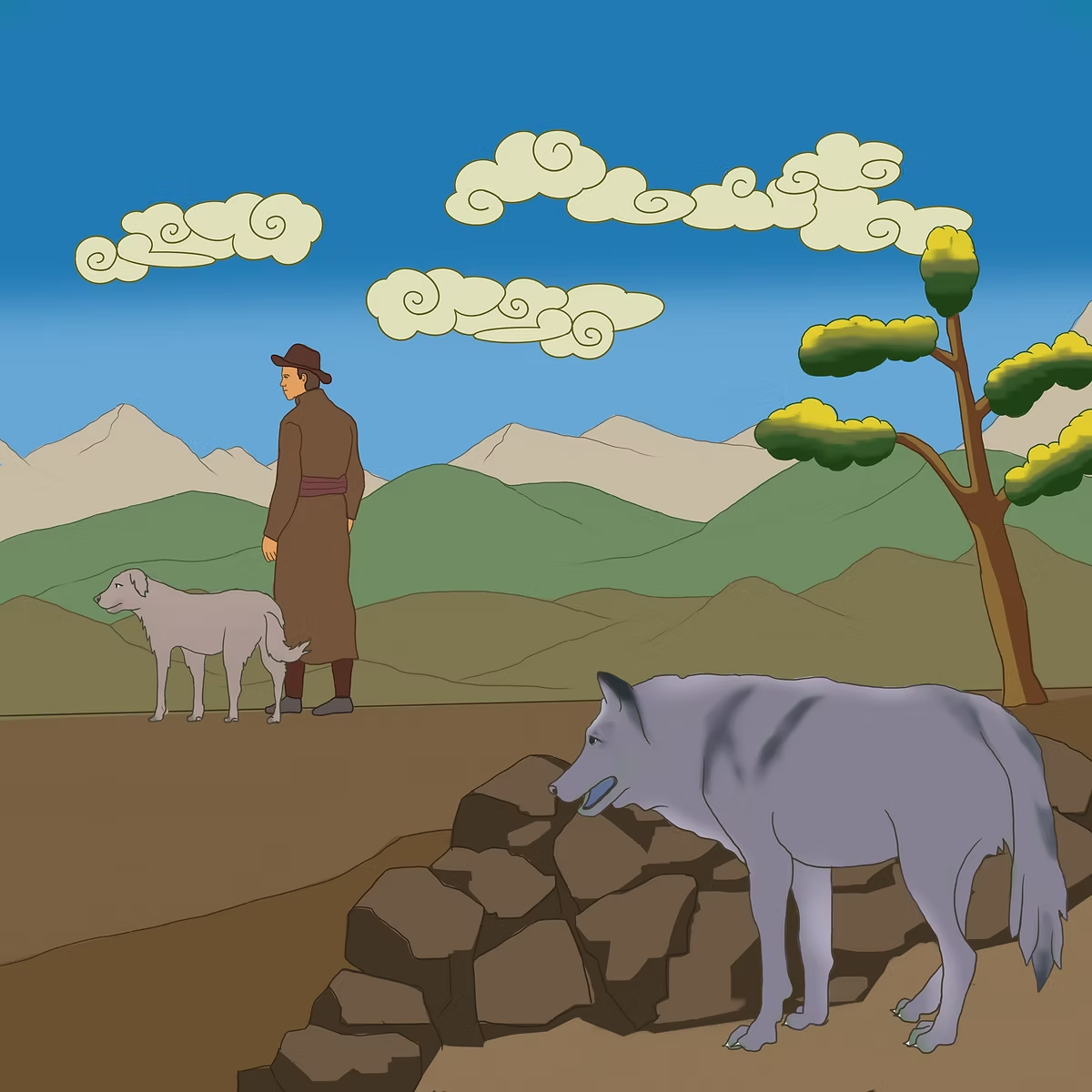
The dog and the wolf
Illustration: Nawang Tankhe

The dog and the wolf

The dog and the wolf are brothers. For long they had lived happily until one day jealousy got the better of them. Ask any herder, and they will tell you how it happened.

The dog and the wolf possessed qualities that helped them survive in the wild. The wolf was a stealthy runner who could run great distances, while the dog was gifted with the power of smell. Together, they complemented each other perfectly. The dog would sniff prey from a distance, while the wolf would then hunt down the prey by outrunning them. They would share the spoils from the hunt and barely did they go without food.  However, one question bothered them – how would they survive alone if the other was missing for some reason? So, both the dog and the wolf made a pact: to help each acquire the skill possessed by the other.

It was the wolf’s turn first. He was a very patient teacher. He taught the dog every trick he knew which had helped him run long and fast. With time the dog followed the wolf’s lessons and became a good runner. It was now the dog’s turn to teach the wolf the art of sniffing. The dog was slow in training the wolf, who was a good learner. Soon the wolf learnt to sniff out prey that were at short distances. The dog promised to teach the wolf the final tricks soon. But it was all a farce. When the wolf woke up the next morning, he was shattered to see that his brother had actually run away and made friends with a new companion. The dog had fled and made friends with the man, just so he wouldn’t have to share his prized skill with his brother.

Ever since, herders who rear livestock have kept guard dogs to protect them from being lifted. But wolves often manage to lift livestock, which herders believe, is an attempt to square off a deal that the dog left incomplete.

Illustration: Nawang Tankhe
1200 1200 Ajay Bijoor
Kinzin Racho

Kinzin Racho

Watch a 200-year old ritual performed in Rangrik village on the third day of Spiti Losar (Spitian New Year) remembering the village deity who appeared as a magnificent ibex. Kinzin Racho Halema meaning, the splendid horns of the ibex, is the song sung across Spiti valley in the first week of the Spitian New Year.

स्पीति लोसर (स्पिटियन नव वर्ष) के तीसरे दिन रंग्रिक गांव में एक शानदार आइबेक्स के रूप में प्रकट हुए गांव के देवता की याद में मनाया जाने वाला 200 साल पुराना उत्सव देखें। किंज़िन राचो हलेमा जिसका अर्थ है, आइबेक्स के शानदार सींग, स्पिटियन लोसर के पहले सप्ताह में गाया जाने वाला गीत है।

Singer: Yangchen Dolma
Additional footage: Tanzin Thinley and Kesang Chunit
गायक: यांगचेन डोल्मा
अतिरिक्त फ़ुटेज: तंज़िन थिनले और केसांग चुनिट

1200 702 Himkatha
Counting Spots in the Snow

Counting Spots in the Snow

International Snow Leopard Day is celebrated on 23 Oct. India is expected to announce the results of it’s first snow leopard census based on an extensive 4-year exercise undertaken in the Himalayan regions of the country. This mammoth exercise could not have been accomplished without the support and participation of local people living in the remote high altitude regions of the country.

1200 670 Himkatha
Unpredictable Lifelines
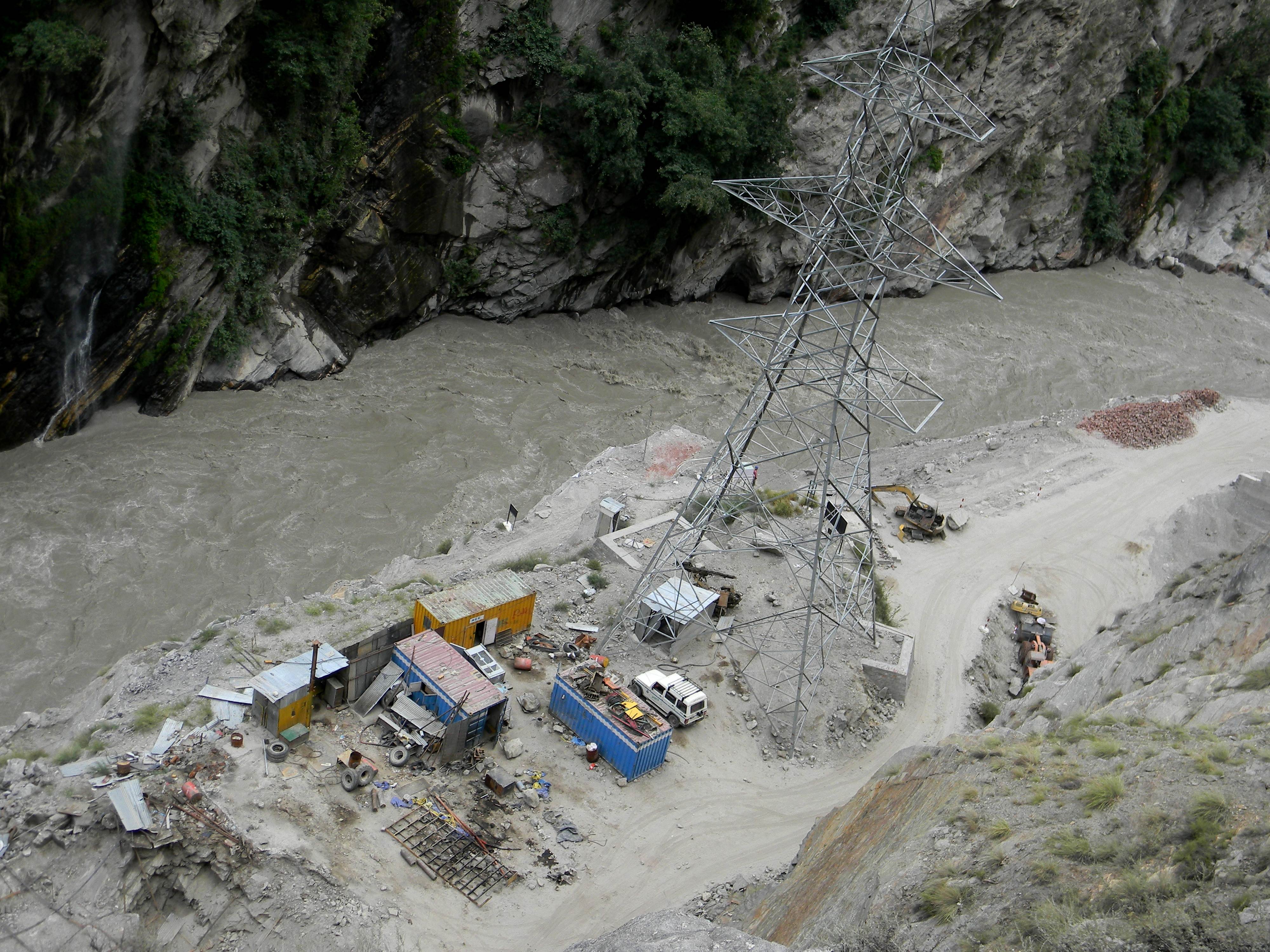
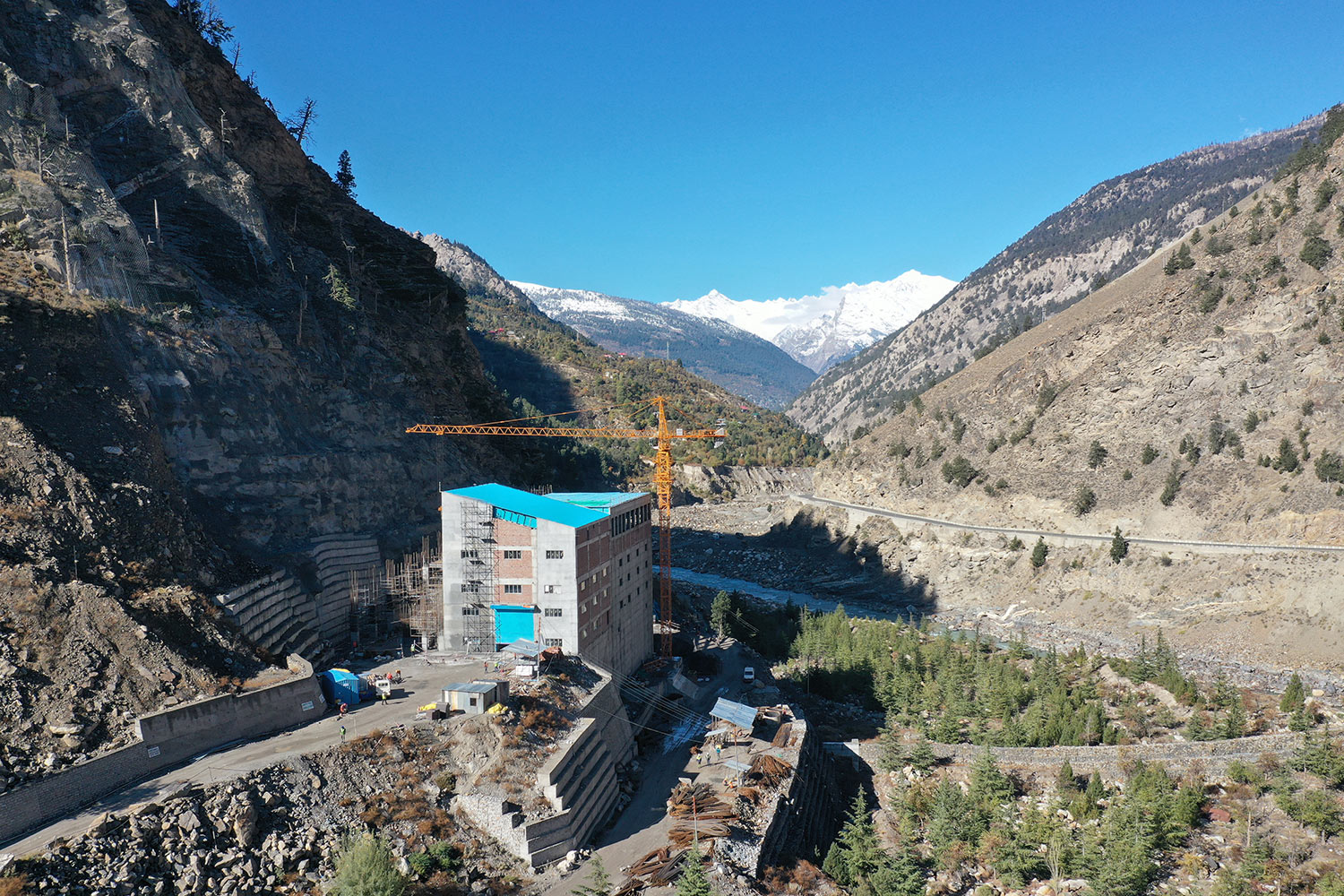
Integrated Kashang Hydroelectricity Project, HP, India| Photo: ejatlas.org

Unpredictable Lifelines

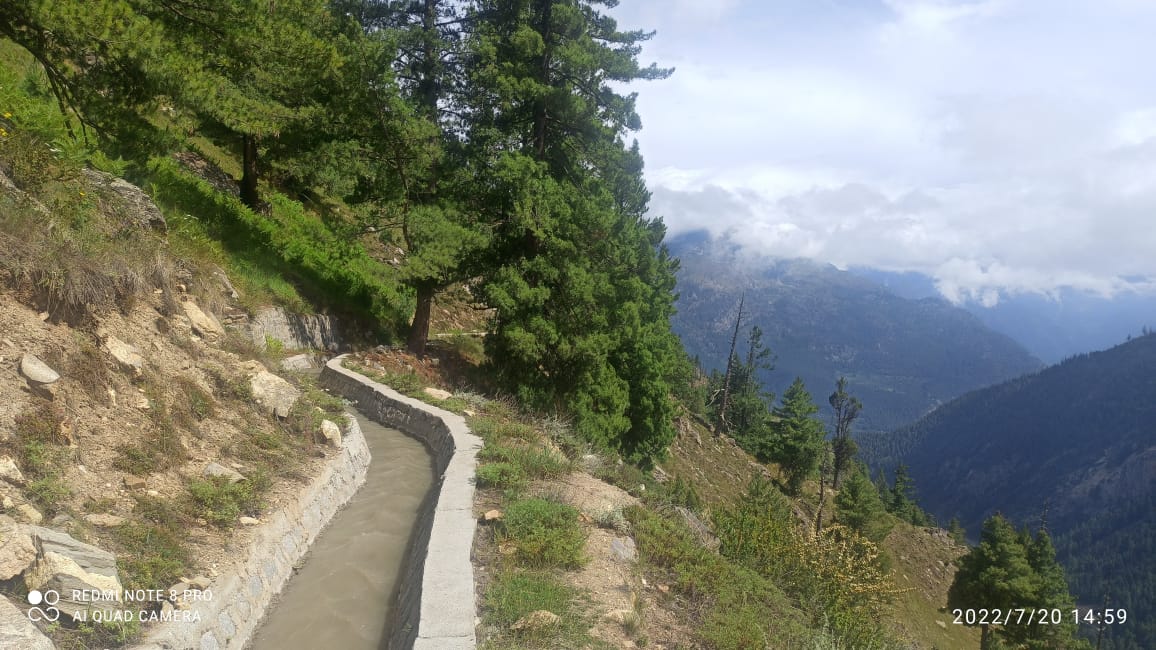
Verses of prayers reverberate throughout the valley as men sing and climb mountains to ensure their village has water in the summer. People from Khadra, Akpa and Rarang village trek for 27 km to reach Pangi top and clear the path of the artificial stream – Kashang nahar to let the water flow freely towards their villages. Generations ago many streams flowed towards the foothills but now only a few remain and Kashang Nahar is the only reliable source. Completed in 2005 this canal is helping the local villages meet their demand for water.

Kashang nahar | Photo: Yowan Negi, (Village Rarang)

Khadra, Akpa and Rarang, villages at 8000ft of Moorang tehsil, fall in the semi-arid region of Kinnaur district in Himachal Pradesh and rely mainly on glacial melt for their water needs. Though over the past few decades things are changing. As the climate is getting warmer, precipitation (rains and snowfall) is getting erratic. With each passing winter the glacier is unable to recover due to reducing snowfall trends. This is not only reducing the water availability during summers to the villages dependent on them but also leading to glacial instability. This phenomenon is already bringing grave consequences to the communities living in the mountains as was observed in Chamoli district of Uttarakhand. A glacier collapsed and released a ton of water and energy which destroyed everything that was in its path.

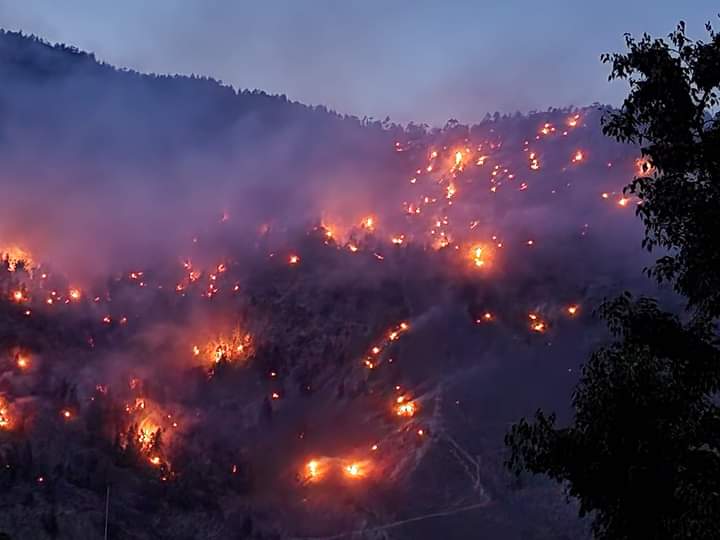
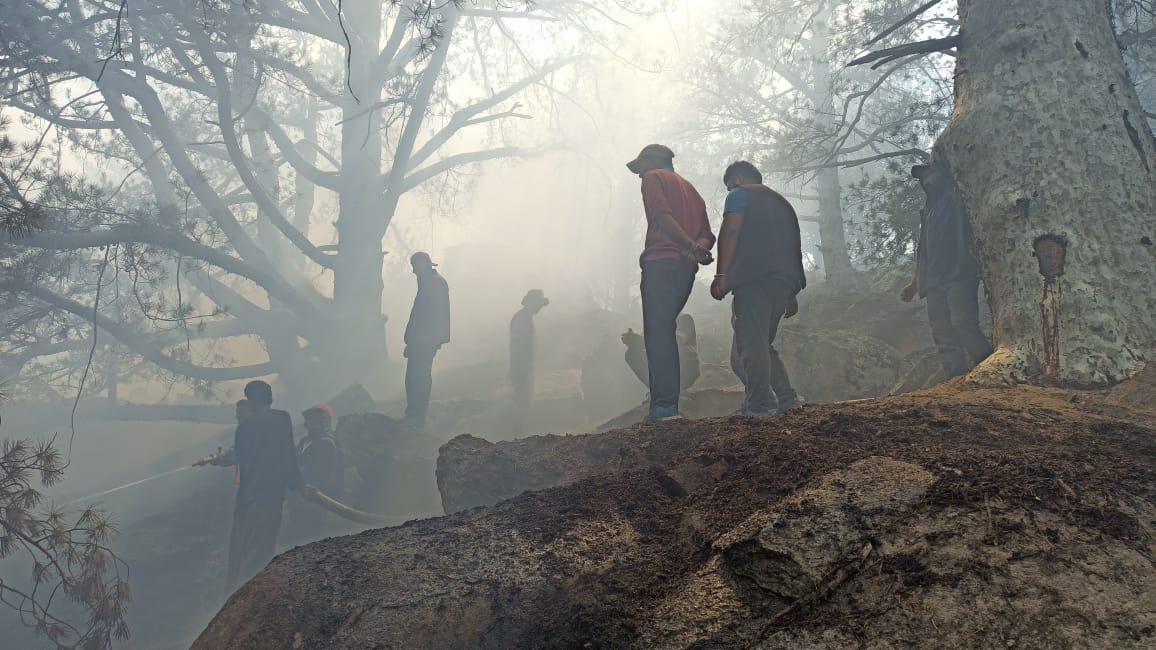
During monsoons, flash floods and landslides are increasing and becoming more frequent by each passing year, adding to the woes of the communities. A few years back, in my village of Khadra and the nearby villages of Akpa and Rarang, a major landslide washed away many agricultural fields leading to loss of acres of productive land. This year we faced a severe heat wave which led to fires in our forests. As Deodar and Chilgoza trees around us burned and fell and the wild species fled, we felt so helpless as the water in Kashang nahar fell short. Some of us collected the water at the base of the nahar and managed to save a few trees. But a lot of the damage had already been done. Each year we are caught up in a dichotomy of drought and heavy devastating rains and we don’t know what we should prepare for.

Forest fires in Akpa & Jangi forest | Photo: Heer Chander (Village Jangi)
Aftermath | Photo: Sunder Negi

Development based on destruction

Himachal Pradesh, being a mountainous and river rich state, is known for its potential to generate hydro power. However that is coming at a cost to the communities. Villages and community forests are sanctioned under different projects to either be submerged or cleared off for the development. Around our village we have two hydro power plants – Tidong (150 MW) & Kashang Integrated (243MW) under construction and one mega project – Jangi Thopan of 804 MW is proposed. Kashang integrated project has plans to divert the Kashang nahar to meet its production needs. These projects are hindering the flow of our already distressed rivers and causing long term implications towards the health of the ecosystems and communities dependent on them. We have always opposed such mega developments and will continue to oppose them.

Photo: statkraft.in

Science and spirituality

To our communities, water means much more than a resource. Our ancestors have revered and protected the resource not just for themselves but for the generations to come. And today we continue to reap the benefits. Even today elders in the village guide us with ways to protect the water and thank the spiritual beings for their benevolence.  Every time we go to the source of a natural spring, we recite Naaga Chhonme, an ode to nature thanking her for the abundance of resources. It is deep rooted in our basic nature to feel connected to the forests, streams, rivers, mountains and we treat them as living being.

As much as spirituality is important to help us stay grounded and connected to our land and water we are also focusing on taking informed decisions to monitor and manage our resources based on scientific tools at our disposal. In early June this year, the youth of the 7 village clubs- Spillow, Kanam, Moorang, Jangi, Akpa, Rarang and Khadra, organised and attended a workshop conducted by Himdhara and People Science Institute on long-term monitoring of the health of the streams around our village. It was a 3-day workshop and we explored various themes around water including topics of development, climate change and its impact on our hydro and ecosystems. With the help of the Open Foris Collect, a mobile application, the youth have already started recording their readings of our streams.

River monitoring workshop | Photo: Sunder Negi

Climate change is a problem that we cannot solve at our village level. In the coming few years, the negative impact of climate change will only worsen and all we can do is prepare for the challenges we are to face. What we can do as a community is to raise awareness, write about the issues and continue to engage people in action towards climate change.

4000 3000 Sunder Negi
Mushroom Cultivation in Spiti
Photo: Kalzang Ladey

Mushroom Cultivation in Spiti

Majority of Indians stay in rural areas with agriculture as their primary source of livelihood making India, largely, an agricultural country. Farming varies greatly across different regions given its geographical conditions and access to resources. It is increasingly becoming difficult due to growing effects of climate change across the country. Melting of glaciers, extreme weather patterns and excessive drought and rain have further increased our vulnerability. Farmers who are completely dependent on agriculture for their livelihood will face the brunt of changing phenomena and it is important to diversify our cultivation patterns. To aptly complement existing agricultural patterns, these alternatives need to be time-saving, less laborious and should also offer decent economic returns for the cultivator.

Photo: Kalzang Ladey

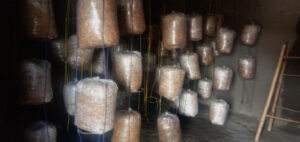
Given Spiti’s mono cultural practises, I realised that mushroom cultivation in Spiti will provide a viable option for the locals. Growing mushrooms is fairly easy and anyone can replicate the process once they are a bit familiar with it. One can easily cultivate mushrooms 2-3 times a year without any mechanical equipment. Moreover, there are no constraints on the scale of cultivation. It can be considered as a viable option by both small and big farmers alike. All they need is a small space in their houses. It roughly takes one month to cultivate mushrooms from scratch. In addition to usual agricultural crops, mushrooms can be added delicacy to your meals. Mushrooms are one the cheapest crops to cultivate if done with proper care -thus, with limited space and time, one can obtain a good yield. Mushrooms are extremely delicious and nutritious. It is a great way to build a diet full of protein, fibre and minerals. It contains a lot of vitamins, especially vitamin D. The nutrients available in mushrooms are helpful for people suffering from diabetes and other ailments. It is not surprising, then, that its presence in global as well as Indian diets is increasing. This is all the more reason for farmers to take up mushroom cultivation.

Photo: Kalzang Ladey

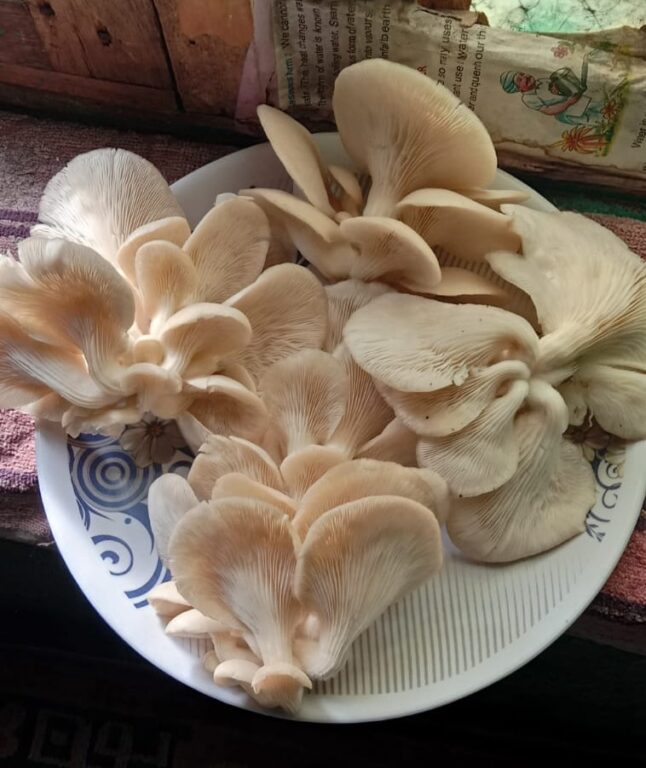
Many types of mushrooms are in demand, but specifically in Spiti, we cultivate oyster mushrooms. Both fresh and dry varieties of these mushrooms are sold in the market. The mushroom soup you get is made from these oyster mushrooms. We have experimented with the cultivation of White oyster mushrooms (Pleurotus florida), Pink Oyster mushroom (Pleurotus Djamor), King Oyster mushroom (Pleurotus Eryngii/Kabuli Dhingri), Gray oyster mushroom (Pleurotus Sajor Caju) and Tree Oyster mushroom (Pleurotus Ostreatus). Oyster mushrooms are the best varieties to cultivate if you are trying it for the first time. These are very nutritious and require much less space and environmental conditions for a beginner. Mushrooms can be grown either through spawns or substrate. Spawns are referred to any carrier material which has mycelial growth to propagate mushroom. It can be considered like a seed in mushroom farming and comes in various forms like sawdust spawn, grain spawn (most popular for home grown mushroom cultivation process), woodchip spawn and straw spawn. Substrate is a soil-like material that provides mushrooms with the nutrients, moisture and energy. It is high in organic matter making it desirable for cultivation. Different species of mushroom have different preferences of substrate hence it is important to match those requirements. A good substrate is dense woody fibrous material full of carbon.

I will briefly explain the cultivation process for those who are interested. There are two methods of mushroom cultivation:

  1. Organic sterilisation method
  2. Chemical sterilisation method but I will recommend people to follow the organic cultivation method.

In the organic sterilisation method, fill a large sized utensil with ⅓ of water and keep it to boil. When the water starts boiling, add straw which will play the role of substrate. In Spiti, we add dry grass chips called Phungma. Keep the mixture on boil for about 2 hours (depending upon the quantity). Drain the excess water, lay the straw on a clean mat to dry it (overnight). When it is completely dry, you will need strong poly bags (14X18 or 16X24 inches) to transfer the material. As for spawning, for 80 Kgs of straw, we require 1 Kg of spawn (mushroom seeds). The spawn can be sprinkled on the straw and can be mixed. Then comes layering where first we put some spawn in the polybag, then apply the first layer (2 inch straw), followed by another layer of spawn and finally topping it with the final layer of straw till we fill the poly bags to the brim. When this is done, close the bags in a way that it’s air-tight and there’s no room for moisture to enter. Once the bag is closed, make around 10-15 holes in each bag. Place these bags in a dark empty room or closet at 25 degrees Celsius for 15-20 days until the entire bag turns white. If there is any other colour formation, you’ll have to dispose of the bag and start over.

It is important to keep the bags in a clean room with good humidity. Keep checking the mushroom bags every other day and start sprinkling the floor with water to increase the humidity in the room. Once it starts sprouting, softly twist individual mushrooms and pluck them for consumption. For the chemical sterilisation process, add 125ml of formalin and 10 gm of bovesteen (fungicide) in 100 litres of water. Washed and damp straw is then soaked in this water for 12 hours. Following that, the excess water is drained and straw is dried out and then transferred to polybags. The polybags are then tightly closed with a string and left for cultivation. Once the bags start becoming white, you can make a few more holes in it. Roughly, at every 3 inches, there should be one hole in the bag. This will help you get a better yield. These holes should be made by only those cultivators who are unable to maintain 90% humidity in the room.If the room temperature is between 20-22 degree celsius, then it is considered to be the most ideal for incubation.

Once it sprouts, same bag of mushrooms should be harvested together otherwise, it would take longer to prepare for the second flash. Second flash can be carried out roughly 7-8 days after the previous harvest. In this way, each bag can take 3-4 flashes easily. After 3-4 flashes of harvesting, remove the poly bags and prepare for the second batch using different bags. If this is done with proper care, the mushrooms will be ready in 25-30 days. If you are planning to cultivate pink oysters (Pleurotus Djamor), then a slightly higher temperature is required in the room. Thus, you can cultivate these mushrooms in the month of June or July in Spiti. Other mushrooms can be cultivated between the months of April to September.

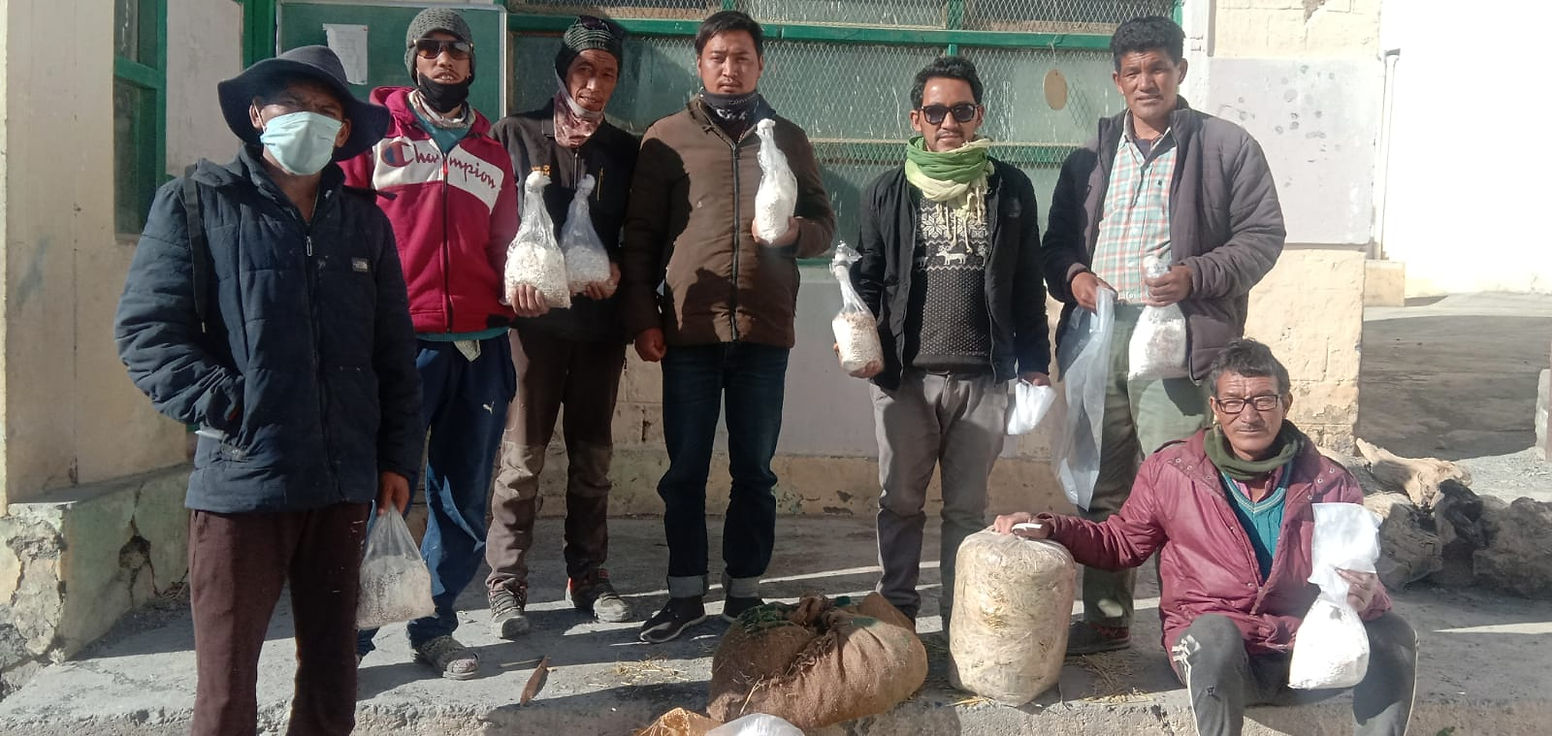
The Department of Horticulture in Spiti and honourable Agricultural Minister Shri. Ramlal Markanda helped me immensely in my journey of cultivating mushrooms. They helped me procure seeds, gain training and greater awareness about mushroom cultivation and subsequently helped me popularise it among local farmers. Along with the Department of Horticulture in Spiti, I have visited multiple villages to spread awareness and conduct training about spawn. We visited Losar Panchayat, Pangmo, Kibber Panchayat, Pin Valley, Kewling, Langza, Komic and trained about 500 people on mushroom cultivation. Men, women, young and elders all showed great interest and several of them started cultivating at household level. Along with awareness, we would also distribute free Spawns to encourage them.

We have been cultivating Oyster mushrooms till now, we can certainly try button mushrooms if we get the seeds. Institutions like ICR-DMR (Directorate of Mushroom Research), Centre for Mushroom Research and Training in Palampur and Dr. Y. S. Parmar University of Horticulture and Forestry, in Nauni (Solan) has been carrying out extensive research and training for mushroom cultivation. We should gain firsthand insights and attend their workshop. Their hands-on training is extremely beneficial. I am very thankful to the department and its officials. I will continue to work for mushroom development in Spiti and I hope that we are able to bear the fruits of this venture in future. My request to all farmers is to adopt mushroom cultivation actively and in case of any hurdles, please do not hesitate to reach out to me for any queries.

1036 492 Kalzang Ladey
Stone breaking ceremony and Buchen of Spiti
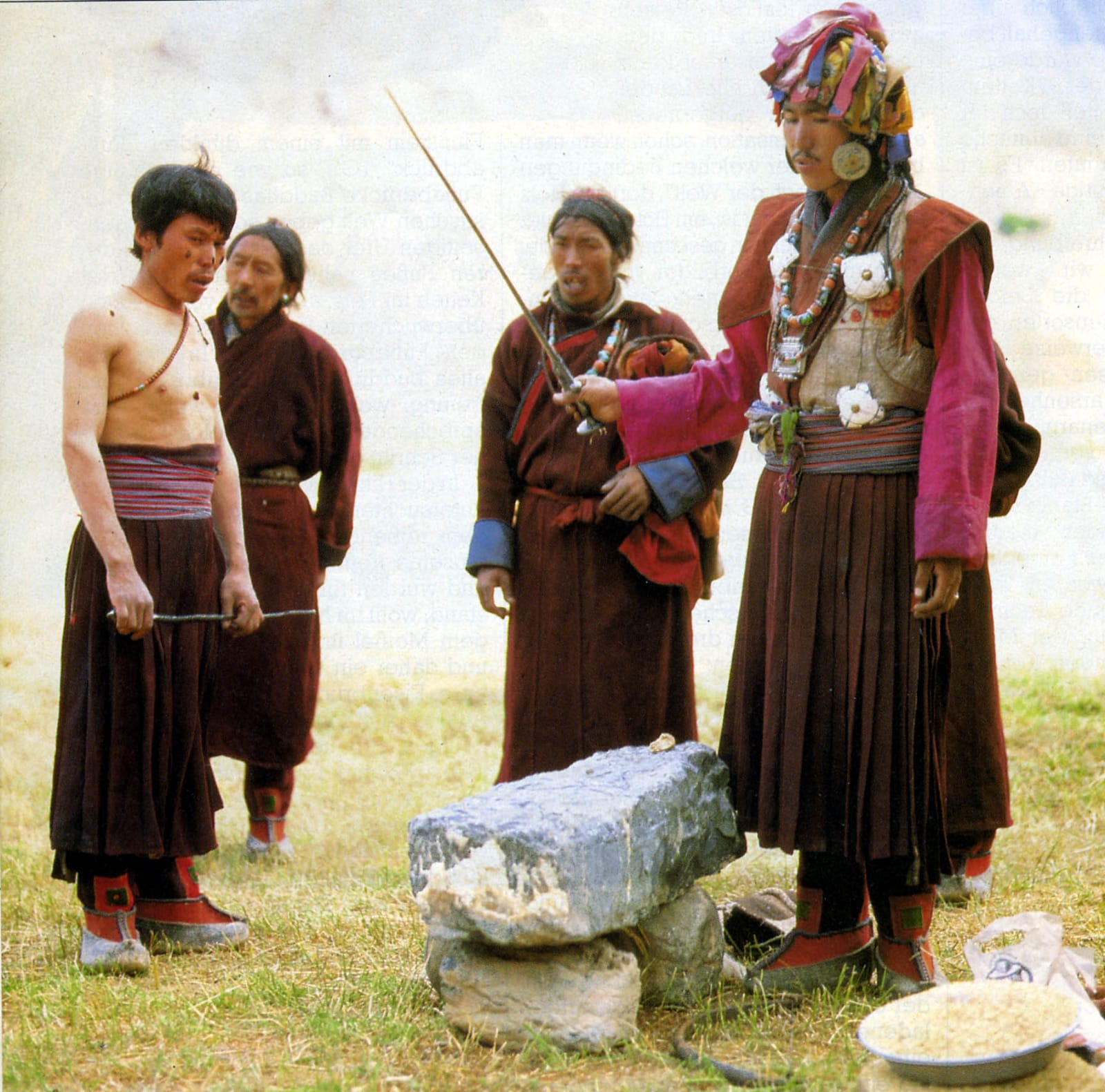
Picture taken in 1998 | Photo: Buchen Tsetan Dorjee

Stone breaking ceremony and Buchen of Spiti

Buchen “the great disciples”

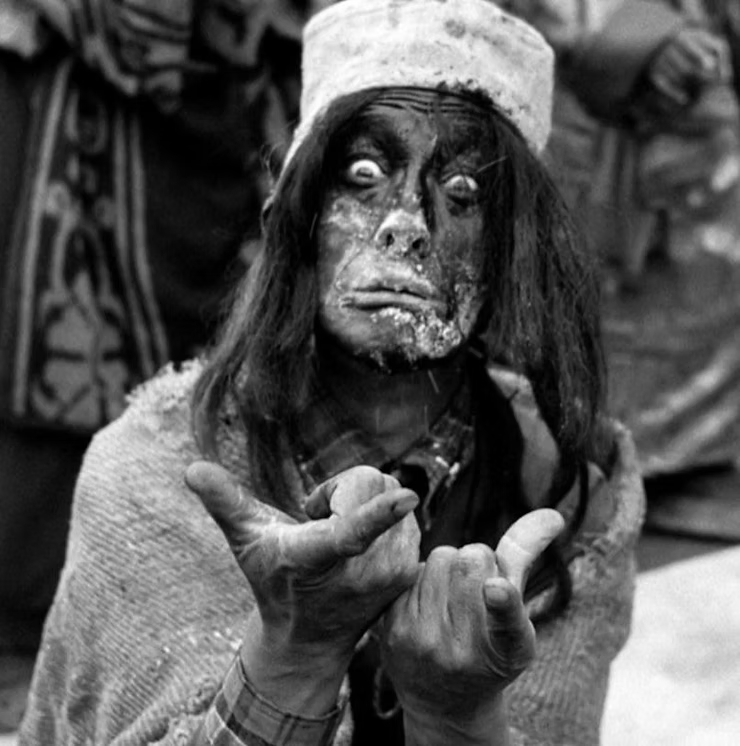
The first time I witnessed a Buchen performance, I remember feeling eerily awed. I do not remember much details about the performance but their ghastly white face smeared with flour and the cheek piercing ritual has stayed distinctly with me. My mother used to scare me that if I ever behaved badly, I would be taken away by meme buchen at night. 

Buchen are a group of religious performers in Spiti who enact elaborate rituals and ceremonies to ward off evil spirits that bring misfortunes. They entrap the spirit in a stone and demolish it through a sacred stone breaking ceremony. The ritual is also associated with curing diseases and healing an ailing heart. Nowadays, it is most commonly commissioned to prevent agricultural mishaps, disease outbreak, disaster and water scarcity in a region. Buchen are well-known for performing folk lore, enacting stories of Buddhist saints, Lhamo (opera) and Namthar (biographies). Given their dynamic role in Spitian society, they are viewed differently as ritualistic performers, opera performers, healers, storytellers and messengers of Buddha’s teachings.

Photo: Pitt Rivers Museum, UK

The Buchen of Spiti trace their lineage to Thangtong Gyalpo, a 14th C religious practitioner in Tibet who was famously known as “Chak zampa” for making iron bridges and stupa in Tibet. It is said that the stone breaking ceremony was first performed by him to curb an epidemic in Tibet; the capital city Lhasa was plagued with 360 different types of deadly diseases – massively ravaging the lives of ordinary citizens. A demonic force is believed to have caused the disease outbreak and it was then Thangtong Gyalpo first performed the sacred stone breaking ceremony to tame the evil spirit. It is believed that he entrapped the demon in a stone, performed the ritual by breaking the stone, and successfully managed to stop the disease from spreading.

He performed it the second time when a demonic spirit was obstructing the monastery he was building. Whatever was made during the daytime was demolished by demons at night. He then performed the stone breaking ceremony where he subdued the evil spirit in a stone and annihilated it by performing the ritual. The monastery eventually came to completion after the demons were tamed. The practice then became widespread in other Himalayan regions and became an important tradition.

Photo: Tenzin Sonam

Thangtong Gyalpo was a versatile figure. He was a highly revered Buddhist tantric master, skilled in monument making, and nurtured a strong penchant for performative art forms like opera, theater, folk songs and writing. He was also the first priest to spread religious teachings through physical enactments of morality plays, allegorical folklore, song & dance and narratorial acting. He strongly felt that the core teachings on compassion, kindness, peace and impermanence should be taught in a way people can understand and implement in their real lives rather than just instructing from scriptures. He then founded the first theatre group in Tibet which goes to every village and performs religious teachings through morality plays and songs. Buchens of Pin valley in Spiti are disciples of this great master and they consider themselves as his sons “Bu-chen = great sons” who will follow the legacy of their master. Paying tribute to Thangtong Gyalpo is a huge part of Buchen’s performance; they put his statue on the altar, pray to him, sing odes and his teachings are orally passed through many generations.

Buchen as healers – relevance of the ceremony

I have seen several Buchen ceremonies during my growing up years and their performances are always invariably very striking. They are bold and impressionistic – one can remember the visuals long after the performance is over. Their repertoire, the enactments, narration and audience engagement are hugely appealing. It is like when they are performing – you are part of the stage, the play and the world they created for you. You might be a silent audience observing them from a distance but they will break the barrier by suddenly putting you in the spotlight – asking you questions, mimicking you and making you part of the play. As such, the distance between the performer and the audience is fluid. You are part of their stage, their world and they derive inspiration, anecdotes from you, your life and the larger community.

The Buchen’s performances are highly centered on religious precepts but with time, it has evolved to incorporate social realities of local communities. The practice is no longer restricted to impart religious teachings but it’s also done to avert serious social and ecological crises like drought, disasters, plague, agricultural loss and to bring harmony among communities. Locals appeal Buchens to perform ceremonies before agricultural season, during particularly low snowfall year, for recovery of physical ailments, while building houses, before starting any new venture in life or to bless a pregnant woman for health and happiness. Meme Buchens play a critical role as healers in Buddhist societies in Himalayan region and their blessings are sought during times of insurmountable distress as well as to bring peace and prosperity. Last year, when the world was gripped with novel coronavirus and there was panic everywhere, remote communities from Spiti sought solace in the healing powers of Buchen, to protect and safeguard them.

Photo: Buchen Gatuk Sonam

Stone breaking ceremonies were performed in many villages like Kaza, Demul, Khurik, Ki and Pin valley. They were also invited to many parts of Ladakh, Zanskar, Lahaul and Kinnaur to help communities deal with crop failure and drought. They were once invited to Patlikuhl, a small village near Kullu/Manali where an annual flood was causing huge devastation. Similarly, in 2018 when His Holiness the 14th Dalai Lama fell gravely ill after an eye surgery, meme Buchen of Pin performed a stone breaking ceremony in his “sim-chung” (private residence) for quick recovery. Individuals, villagers, institutions and monasteries consult them for healing, to dispel hindrances and for an auspicious beginning deed.

Sword dance and the stone breaking ceremony

Buchen form groups of 4 or 5 people. The troupe is led by the head Buchen (Lo chen), an actor who plays the role of Lukzi (shepherd) or Onpa (hunter) followed by two other actors who assist them in various tasks. The Lo-chen performs all key ceremonies and religious narratives while Lukzi grips the audience through his skillful narration, storytelling and repertoire. He is the most captivating character – his deliveries are a blend of social commentaries, mimicries, moral teachings and comic interludes.

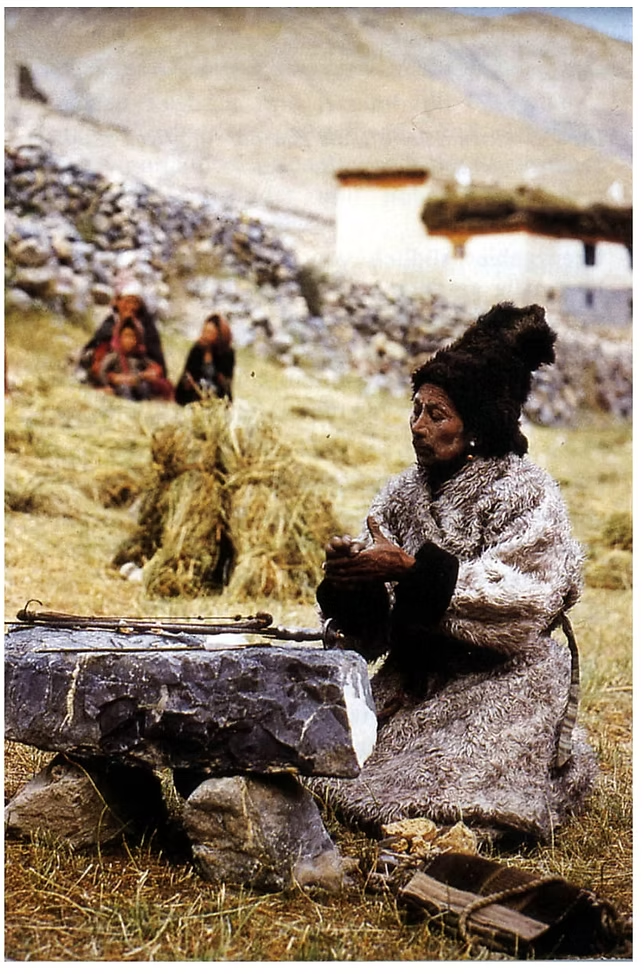
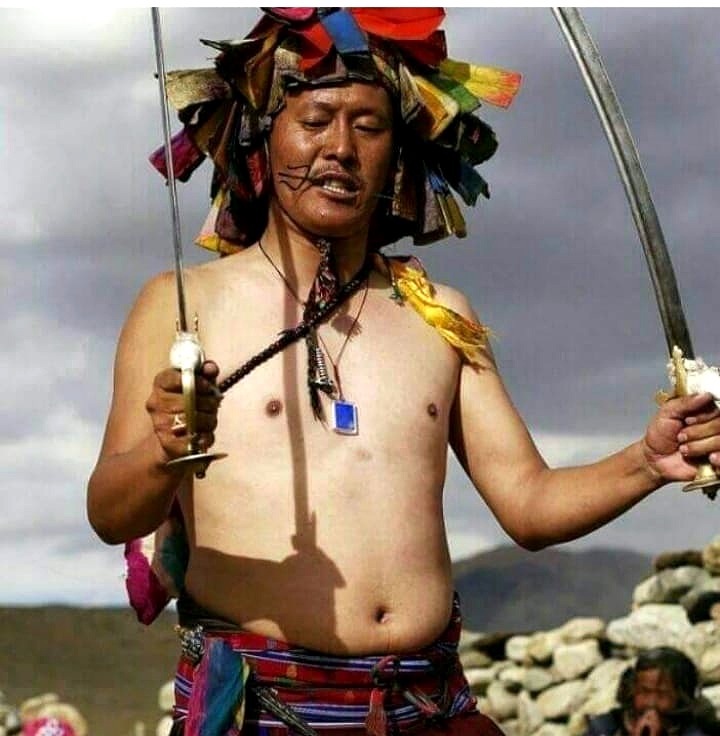
The Buchen head opens the ceremony with prayers, places the statue of Thangtong Gyalpo on the altar, pays him homage and narrates Namthar (biographies). The other team prepares the stage by placing a large boulder near the altar, drawing a human figure on it symbolizing the evil spirit/ demon that is to be demolished and burning incense. There will be brief prayer in between and after that, followed by a dance led by the head Lama rhythmically swinging the sword in slow dance movements.

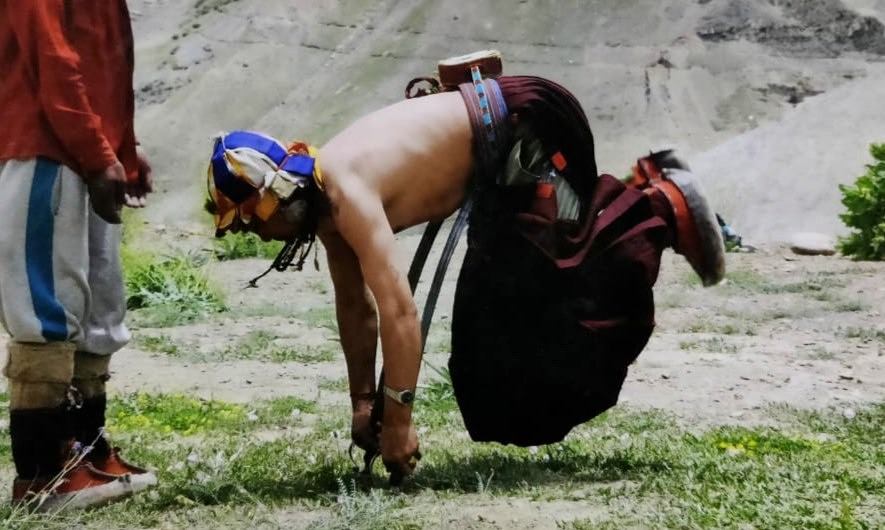
Then comes Lukzi’s turn, who enters the stage wearing a sheep skin and face smeared with white barley flour. He takes over the performance, engaging with the audience – making them crack into loud laughter and burst into tears while the head Buchen prepares for sword dance. He strips the upper part of his body naked, then slowly pierces his cheeks with a large pin and there’s considerable excitement, fear and thrill among the audience who watch him do this. It is a slow careful action and is done to dispel ill omens – the piercing of cheeks symbolizes purity of speech. He then proceeds to point the tip of the sword on his belly and slowly jumps to put all his body weight on it – repeating the act by drawing a sword in his armpits. The whole ritual of body piercing symbolizes the mutual existence of the mortal human body and lha (spiritual deity) that resides in each one of us. The sword dancing and body piercing symbolizes purity of body, mind and speech.

At the culminating act, while Lochen prepares himself for the sacred stone breaking ceremony, the dancer on whose body the stone is to be broken, lies down. A thin cloth and a heavy stone is placed on his body while the other actors look for a second stone. Lo-chen enters the scene, lifts the second boulder and smashes it on the stone placed on the dancer’s belly. The stone breaks with loud thudding noise signaling annihilation of the demon whose spirit was entrapped in the stone. Meme Buchens undergo intense tantric training, yoga, meditation and scripture learning in retreat to acquire such high feat. They acquire immunity towards fatal injuries and mishaps while performing ceremonies after decades of stringent training and disciplining of body and mind. They acquire mastery over their being before they perform healing treatments on others.

Photo: Buchen Tsetan Dorjee

They travel extensively within Spiti and outside to perform stone breaking ceremonies among various communities in Himalayan region like Ladakh, Kinnaur, Kullu/Manali, Riwalsar (Tso Pema), Sikkim and Nepal.  Every year they make a journey in small groups carrying the traveling altar, a trunk comprising their costumes, props and other material used for performance and leave from Pin for months at stretch. Sometimes they are out of their homes for as long as six months and come back only during harvest season for the farm work. They recite Namthars, folksongs and perform ceremonies in settlements where they reside and also make trade deals with the locals. They also sell horses and in turn receive Khullu (Yak wool), hand spun blankets,  Lena (Pashmina) and apricots. The Buchen tradition has seen huge decline in Ladakh and the meme Buchens of Pin valley often get invited to perform ceremonies to revive crop failure, crop damage and to appease local deities for abundant snowfall. They travel all over Ladakh; Demchok, Korrzok, Tsokar in Changthang to Choglamsar, Parang valley and even in Zanskar. Alternatively, in Kinnaur they visit Chango, Nako, Malling, Leo, Hangrang and even go as far as Rampur where the biggest trade fair in Himachal happens. Wherever they go, they are treated with utmost respect and their sword dancing and stone breaking ceremonies are considered equivalent to the Jintsak ceremony performed by highly incarnated Rinpoches (religious leader) to dispel ill omen and bring prosperity in the region.

Buchen tradition has undergone a tremendous change over the years. It used to be a widespread practice in many Himalayan communities but now it is actively pursued only in Spiti and that too minimally – there are only 10 remaining Buchen households in the region. “.. people no longer value our skills” laments Meme Buchen Tsetan (76) who is one of the oldest Buchen in Spiti. “Earlier people would bow down in front of Buchen to show their reverence but there’s considerable change in people’s attitude.” They also confide that with the influx of tourists, photographers and filmmakers, the practice has been reduced to a bare minimum where they are generally not interested in listening to prayers and Namthar (biographies) and rush them to perform sword dance and stone breaking which has more element of spectacle.

1600 1581 Chemi Lhamo
Losar : Animal’s Day

Losar : Animal’s Day

I think I am in fact the least excited and most boring person at any form of festival. Much of it could be due to my introverted genes that wouldn’t fancy gatherings, dancing, fireworks or any other things which involve interacting with strangers, but part of it must be because of my upbringing. I am not sure of both though. But my heart just cannot seem to invite festivity as much as my friends and family do.

I hail from a small nomadic village in Ladakh where the livelihood of everyone is dependent on livestock. Almost every household owns some goats, sheep, horses and yak. These animals aren’t merely our source of income, but are used for obtaining food, fetching water, traveling, and most importantly seeking comforts and friendship. Since our life revolves around rearing these animals and more importantly enduring the harsh reality of having no access to electricity, water and worse not even a single shop in the vicinity throughout the year, we have little time for festivity. Or, many of us are even oblivious of its existence, except for Losar– the Tibetan new year and Thrungkar Duechen – His Holiness The Dalai Lama’s birthday. Hence, every single person in the village looks forward to these two days like a child, although for different reasons.

Photo: Namgyal Lhamo

My fondest memories of Losar and Thrungkar were significantly boring compared to my cousins. But these days, no matter how many festivals I witness as I travel through urban life, there is nothing more meaningful and beautiful than this idea of celebration I got to see early in my life. It was on one of the third days of Losar. My father came to me, patted my head gently and said with a smile “Life of your polled lamb will be set free”. I was elated beyond words and this memory has remained in my heart so vividly. In my village, on the third day of Losar or Thrungkar, fathers of the households are the busiest. They get up early in the morning to appease the Land God and other deities who are believed to be the true owners of our land according to their ancestors. This is followed by their brief journey to the animal shed where they would choose some animals randomly and set their life free. By that, we are not allowed to send them to slaughter houses, milk them and are expected to watch them with unconditional love and care which every animal receives anyway, until they die. It was my most awaited moment of the festival. My siblings and I would always hug our father with utter joy after he would come out of the shed. This act is mostly done to honor and thank the sacrifices of animals for our livelihoods while it is also performed for the health and long life of His Holiness and carry his message of love, kindness and compassion towards animals.

We eventually shifted to a town nearby, leaving the whole nomadic life behind due to the inability of my family to see the animals suffer for our survival. But, as I look back, I realised that it was this place where I gave birth to my love for animals. Today, even if we live a totally different life, my parents make sure to celebrate these two days by setting at least one animal’s life free. There is nothing more rewarding at a festival for me than this act of genuine kindness. Somehow I think of these two days as a festival of animals and I hope to carry this tradition forward in my own life too.

792 706 Namgyal Lhamo
The Water Managers in Kibber
Illustration: Tenzin Metok

The Water Managers in Kibber

In the distance, the early morning sunlight chased the shadows on the mountain peaks. I gazed longingly at the golden patches, wondering how long before I could feel the warmth of the rays. Lobzang saw me and laughed, “Are you cold? Come help, it will warm you up!”

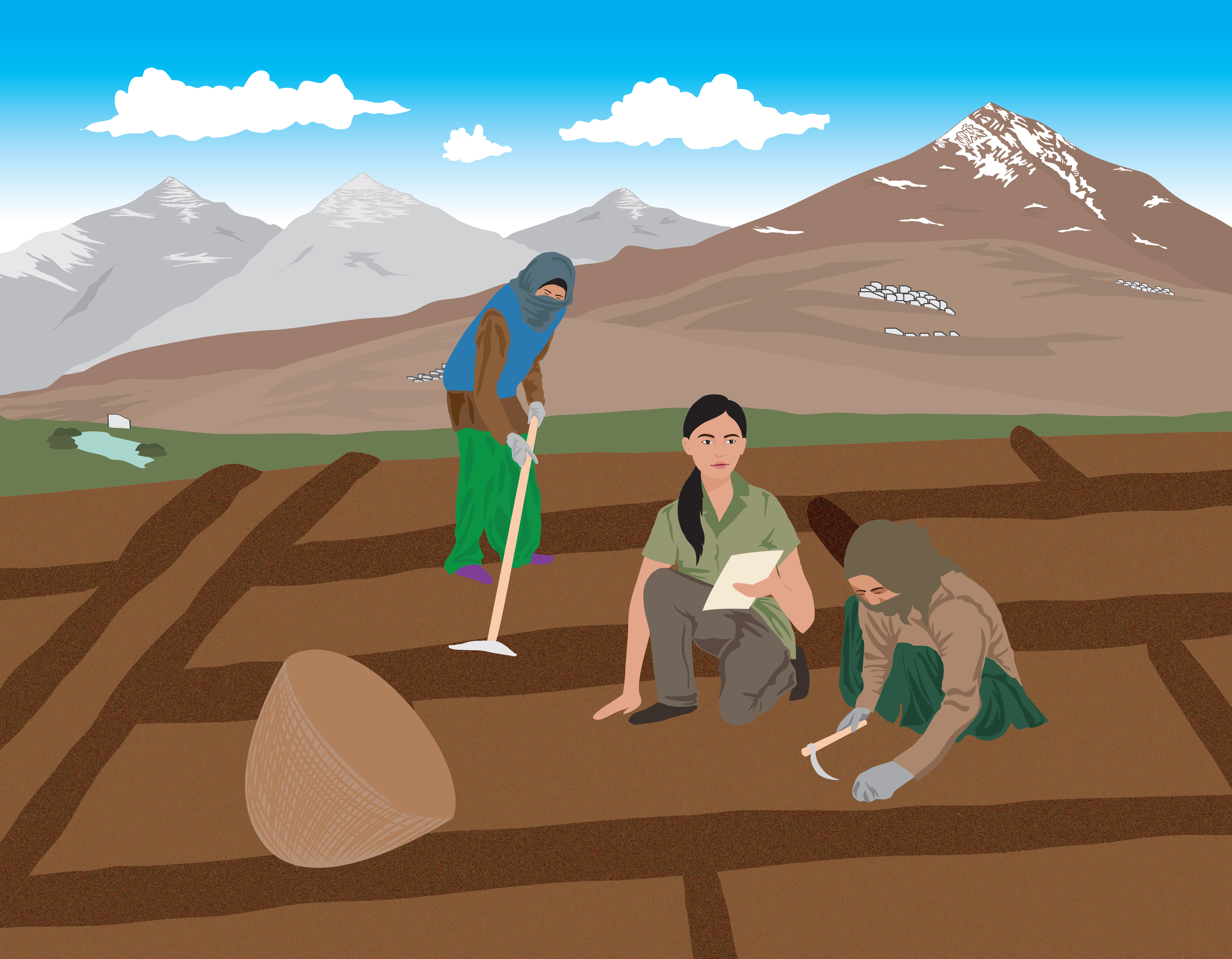
Lobzang was building kyaari in her field. These are embankments built in the fields that help guide the flow of water. They are carefully built based on the natural slope of the land. In the neighboring field, I see Thinley ploughing his land using two yaks. I was in Kibber village, in Spiti valley, and the agricultural season had just begun. The day of ploughing had been decided a few days ago at the village meeting.

“How did you learn how to do this?” I asked Lobzang, fascinated at the skill and speed she was constructing the kyaari. “I’ve been doing this for years. When I was a little girl, I used to help my mother and I learnt from her. This year, it has snowed well, the water will be good.”

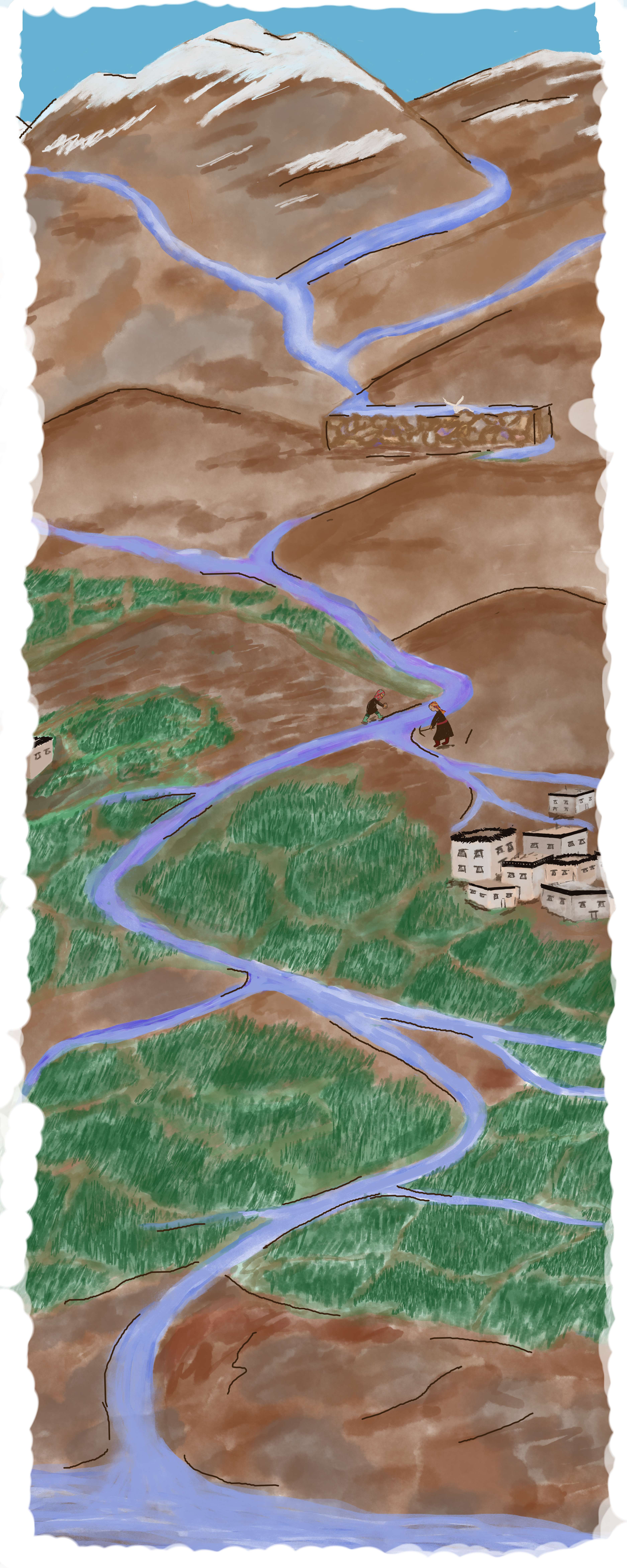
In Kibber, I’ve learnt that the irrigation system is considered the domain of the women. The water comes from the snow melt from Kanamo, a holy peak in Spiti. The water from the peak is directed to the Kibber fields using khuls. This irrigation system was initially built for barley and black pea, but has been modified for irrigating green pea. Lobzang tells me that the women were responsible for fine-tuning the watering for green pea. They learnt through trial and error, but now have perfected the quantity of water needed and when it is needed for a bountiful harvest.

“If you water them too much, or too early, the plants get thirsty, and will need more water. You have to water at the right time, with the right amount”, she tells me.

The crops are irrigated in cycles and in each cycle a fixed order is followed. Yurma, the first round of irrigation, happens 40 days after the ploughing. Just before yurma, women remove the weeds from the field and scatter them with dried yalo (Aconogonum sp). This prevents soil run-off and increases water retention. Irrigation on the first day of yurma is reserved for the fields of amchi and the devta. Women from all households participate in irrigation on the first day. The second day is reserved for families who have faced a serious illness or death the previous year or have pregnant women who are unable to work in the fields. The third day, tiping langzet, is reserved for families who have participated in the maintenance of water channels. After the third day, the remaining fields are irrigated.
This order is followed for the first three irrigation cycles, after which all the fields receive fixed turns. It is the women who decide the time of the second and third irrigation. The women also manage the daily distribution of water. Every year, two women are chosen to be the khul managers. They are in charge of managing the khuls, making sure the fields receive their quota of water, and managing small arguments that might arise related to the distribution of water. This system of women managing irrigation, is similar to systems in other parts of Nepal and South-East Asia. However, across the world, it is uncommon to come across natural resources that are managed by women. Men manage most natural resources, especially those that are shared. This makes the irrigation system in Kibber, and likely other parts of Spiti, special.

The irrigation system in Kibber has been in existence for centuries. Lobzang tells me it has remained unchanged as far back as she or her grandmother can remember. The knowledge of irrigation is passed on from mother to daughter, from the time little girls start helping in the fields.

As the sunrays finally reached the spot we were in, and started warming me up, I felt more motivated to help Lobzang make the kyaari. “Show me”, I said. I was eager to learn a skill that has been passed down from woman to woman for generations. Are irrigation systems in your villages similar to the one in Kibber? Do write-in and tell us about them.

4623 3600 Dr. Ranjini Murali