Local Communities

Mushroom Cultivation in Spiti
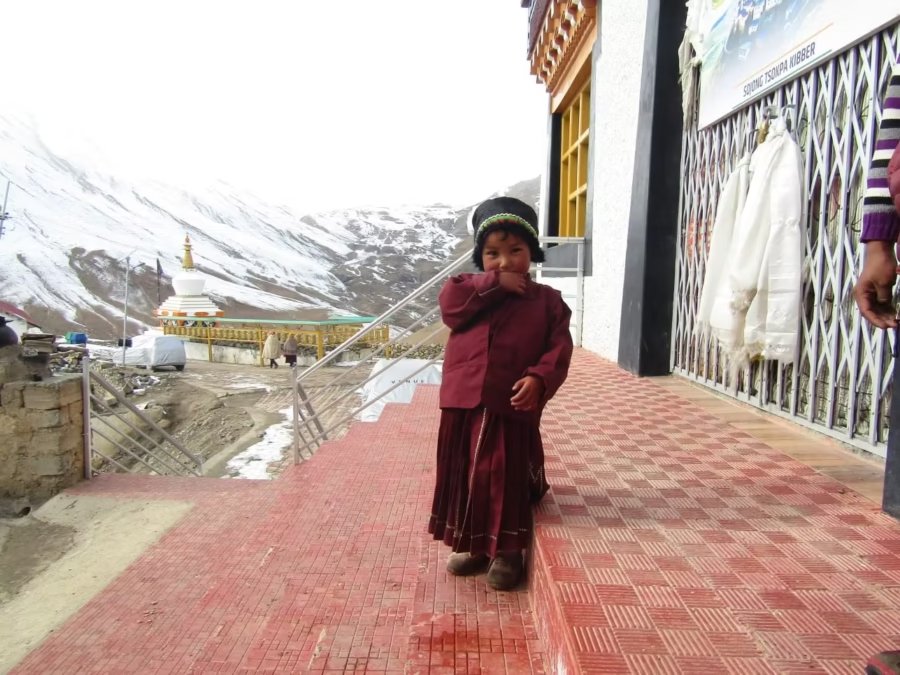
Photo: Kalzang Ladey

Mushroom Cultivation in Spiti

Majority of Indians stay in rural areas with agriculture as their primary source of livelihood making India, largely, an agricultural country. Farming varies greatly across different regions given its geographical conditions and access to resources. It is increasingly becoming difficult due to growing effects of climate change across the country. Melting of glaciers, extreme weather patterns and excessive drought and rain have further increased our vulnerability. Farmers who are completely dependent on agriculture for their livelihood will face the brunt of changing phenomena and it is important to diversify our cultivation patterns. To aptly complement existing agricultural patterns, these alternatives need to be time-saving, less laborious and should also offer decent economic returns for the cultivator.
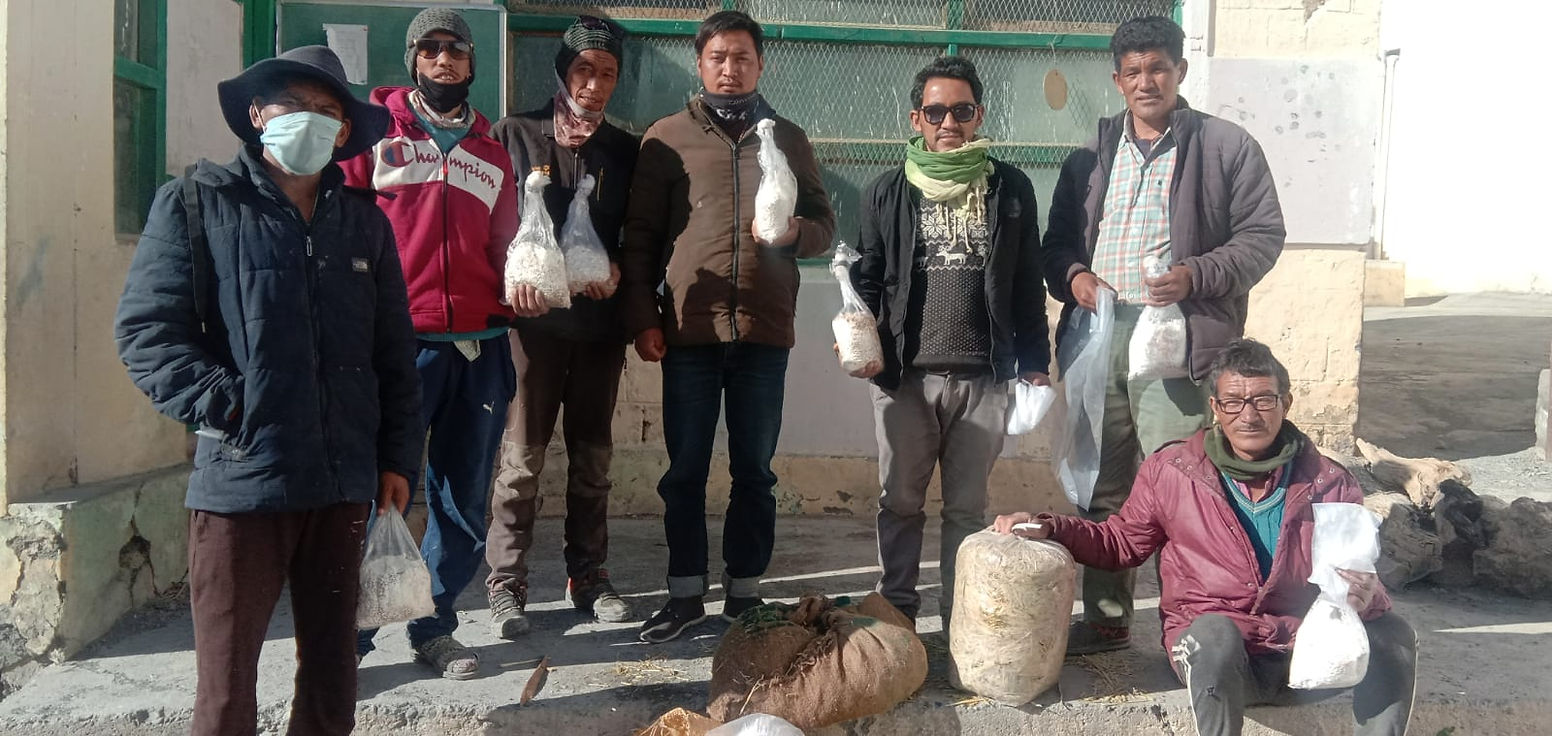
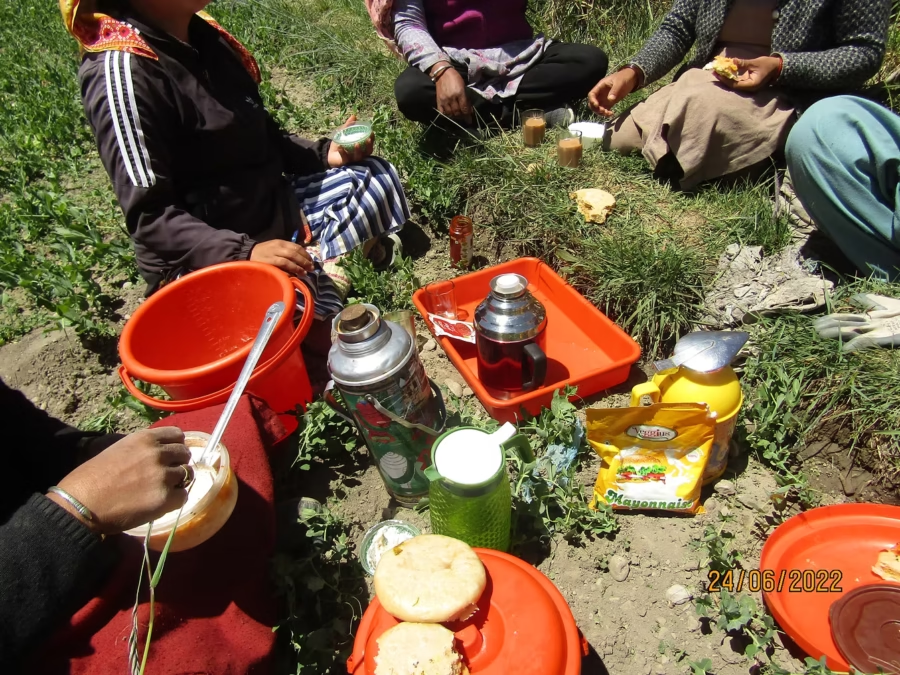
Photo: Kalzang Ladey

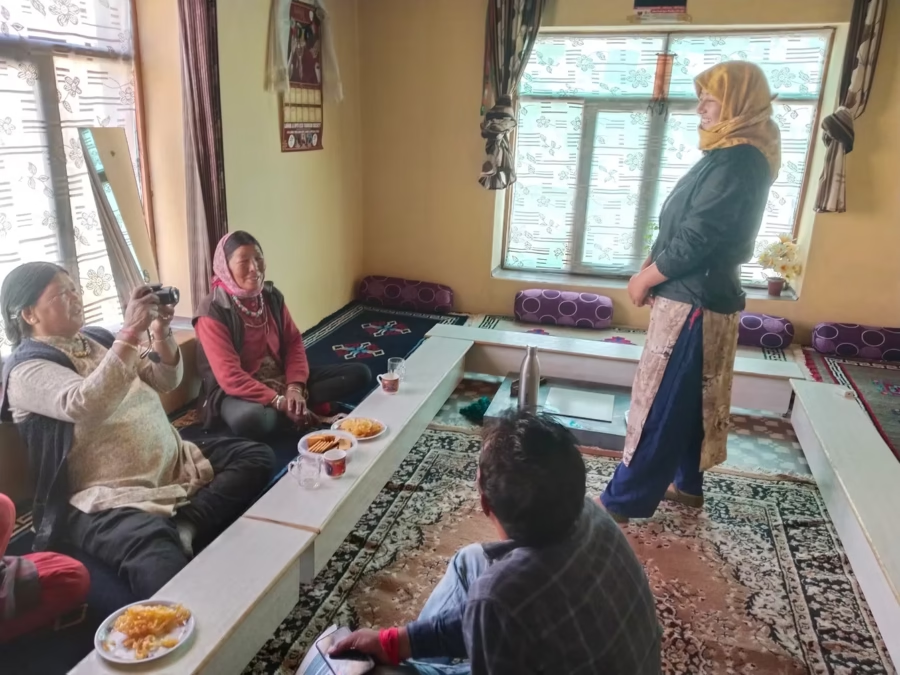
Given Spiti’s mono cultural practises, I realised that mushroom cultivation in Spiti will provide a viable option for the locals. Growing mushrooms is fairly easy and anyone can replicate the process once they are a bit familiar with it. One can easily cultivate mushrooms 2-3 times a year without any mechanical equipment. Moreover, there are no constraints on the scale of cultivation. It can be considered as a viable option by both small and big farmers alike. All they need is a small space in their houses. It roughly takes one month to cultivate mushrooms from scratch. In addition to usual agricultural crops, mushrooms can be added delicacy to your meals. Mushrooms are one the cheapest crops to cultivate if done with proper care -thus, with limited space and time, one can obtain a good yield. Mushrooms are extremely delicious and nutritious. It is a great way to build a diet full of protein, fibre and minerals. It contains a lot of vitamins, especially vitamin D. The nutrients available in mushrooms are helpful for people suffering from diabetes and other ailments. It is not surprising, then, that its presence in global as well as Indian diets is increasing. This is all the more reason for farmers to take up mushroom cultivation.
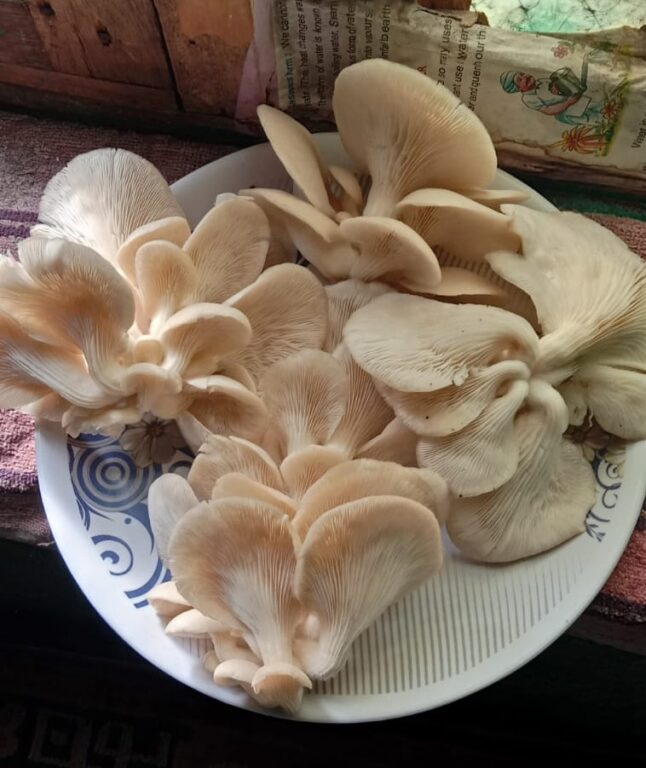
Photo: Kalzang Ladey

Many types of mushrooms are in demand, but specifically in Spiti, we cultivate oyster mushrooms. Both fresh and dry varieties of these mushrooms are sold in the market. The mushroom soup you get is made from these oyster mushrooms. We have experimented with the cultivation of White oyster mushrooms (Pleurotus florida), Pink Oyster mushroom (Pleurotus Djamor), King Oyster mushroom (Pleurotus Eryngii/Kabuli Dhingri), Gray oyster mushroom (Pleurotus Sajor Caju) and Tree Oyster mushroom (Pleurotus Ostreatus). Oyster mushrooms are the best varieties to cultivate if you are trying it for the first time. These are very nutritious and require much less space and environmental conditions for a beginner. Mushrooms can be grown either through spawns or substrate. Spawns are referred to any carrier material which has mycelial growth to propagate mushroom. It can be considered like a seed in mushroom farming and comes in various forms like sawdust spawn, grain spawn (most popular for home grown mushroom cultivation process), woodchip spawn and straw spawn. Substrate is a soil-like material that provides mushrooms with the nutrients, moisture and energy. It is high in organic matter making it desirable for cultivation. Different species of mushroom have different preferences of substrate hence it is important to match those requirements. A good substrate is dense woody fibrous material full of carbon.

I will briefly explain the cultivation process for those who are interested. There are two methods of mushroom cultivation:

  1. Organic sterilisation method
  2. Chemical sterilisation method but I will recommend people to follow the organic cultivation method.

In the organic sterilisation method, fill a large sized utensil with ⅓ of water and keep it to boil. When the water starts boiling, add straw which will play the role of substrate. In Spiti, we add dry grass chips called Phungma. Keep the mixture on boil for about 2 hours (depending upon the quantity). Drain the excess water, lay the straw on a clean mat to dry it (overnight). When it is completely dry, you will need strong poly bags (14X18 or 16X24 inches) to transfer the material. As for spawning, for 80 Kgs of straw, we require 1 Kg of spawn (mushroom seeds). The spawn can be sprinkled on the straw and can be mixed. Then comes layering where first we put some spawn in the polybag, then apply the first layer (2 inch straw), followed by another layer of spawn and finally topping it with the final layer of straw till we fill the poly bags to the brim. When this is done, close the bags in a way that it’s air-tight and there’s no room for moisture to enter. Once the bag is closed, make around 10-15 holes in each bag. Place these bags in a dark empty room or closet at 25 degrees Celsius for 15-20 days until the entire bag turns white. If there is any other colour formation, you’ll have to dispose of the bag and start over.

It is important to keep the bags in a clean room with good humidity. Keep checking the mushroom bags every other day and start sprinkling the floor with water to increase the humidity in the room. Once it starts sprouting, softly twist individual mushrooms and pluck them for consumption. For the chemical sterilisation process, add 125ml of formalin and 10 gm of bovesteen (fungicide) in 100 litres of water. Washed and damp straw is then soaked in this water for 12 hours. Following that, the excess water is drained and straw is dried out and then transferred to polybags. The polybags are then tightly closed with a string and left for cultivation. Once the bags start becoming white, you can make a few more holes in it. Roughly, at every 3 inches, there should be one hole in the bag. This will help you get a better yield. These holes should be made by only those cultivators who are unable to maintain 90% humidity in the room.If the room temperature is between 20-22 degree celsius, then it is considered to be the most ideal for incubation.
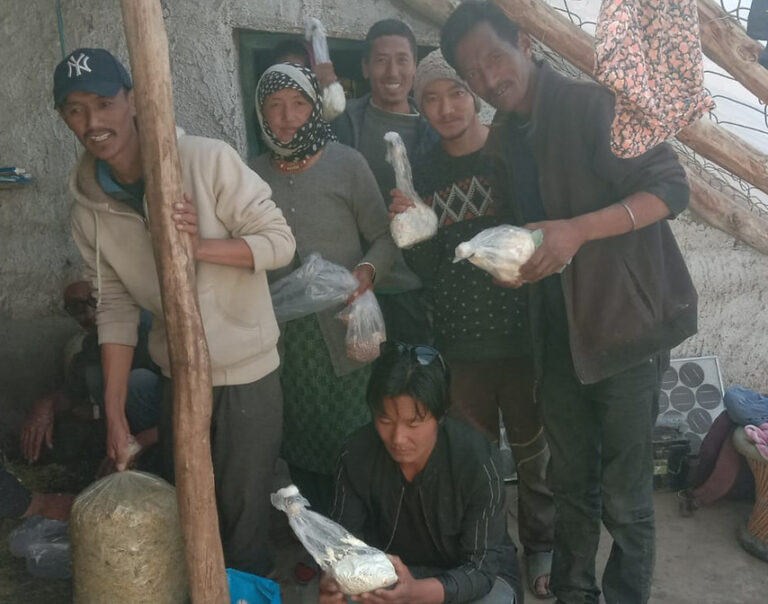
Once it sprouts, same bag of mushrooms should be harvested together otherwise, it would take longer to prepare for the second flash. Second flash can be carried out roughly 7-8 days after the previous harvest. In this way, each bag can take 3-4 flashes easily. After 3-4 flashes of harvesting, remove the poly bags and prepare for the second batch using different bags. If this is done with proper care, the mushrooms will be ready in 25-30 days. If you are planning to cultivate pink oysters (Pleurotus Djamor), then a slightly higher temperature is required in the room. Thus, you can cultivate these mushrooms in the month of June or July in Spiti. Other mushrooms can be cultivated between the months of April to September.

The Department of Horticulture in Spiti and honourable Agricultural Minister Shri. Ramlal Markanda helped me immensely in my journey of cultivating mushrooms. They helped me procure seeds, gain training and greater awareness about mushroom cultivation and subsequently helped me popularise it among local farmers. Along with the Department of Horticulture in Spiti, I have visited multiple villages to spread awareness and conduct training about spawn. We visited Losar Panchayat, Pangmo, Kibber Panchayat, Pin Valley, Kewling, Langza, Komic and trained about 500 people on mushroom cultivation. Men, women, young and elders all showed great interest and several of them started cultivating at household level. Along with awareness, we would also distribute free Spawns to encourage them.

We have been cultivating Oyster mushrooms till now, we can certainly try button mushrooms if we get the seeds. Institutions like ICR-DMR (Directorate of Mushroom Research), Centre for Mushroom Research and Training in Palampur and Dr. Y. S. Parmar University of Horticulture and Forestry, in Nauni (Solan) has been carrying out extensive research and training for mushroom cultivation. We should gain firsthand insights and attend their workshop. Their hands-on training is extremely beneficial. I am very thankful to the department and its officials. I will continue to work for mushroom development in Spiti and I hope that we are able to bear the fruits of this venture in future. My request to all farmers is to adopt mushroom cultivation actively and in case of any hurdles, please do not hesitate to reach out to me for any queries.

1036 492 Kalzang Ladey
Stone breaking ceremony and Buchen of Spiti
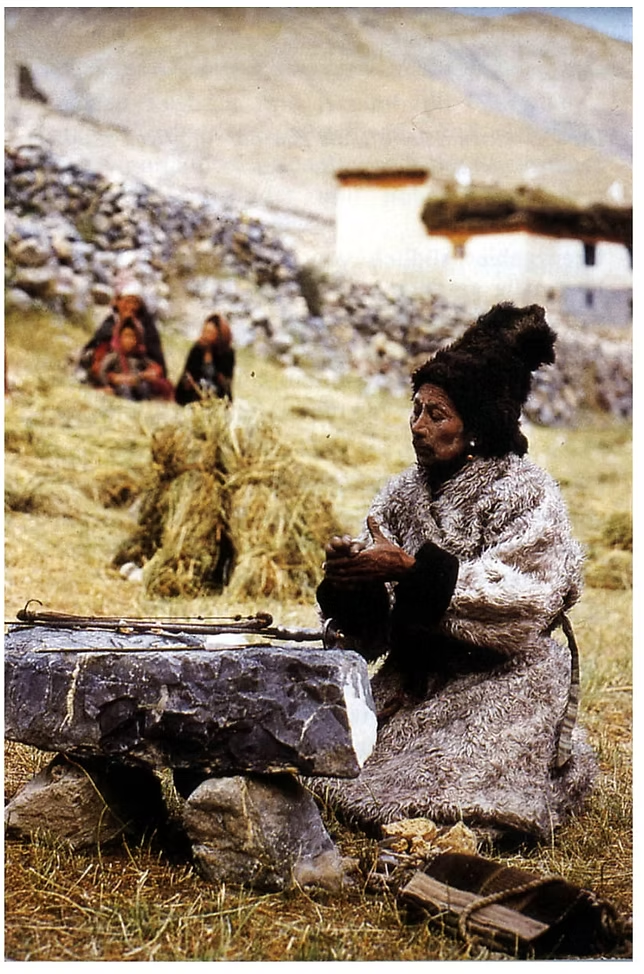
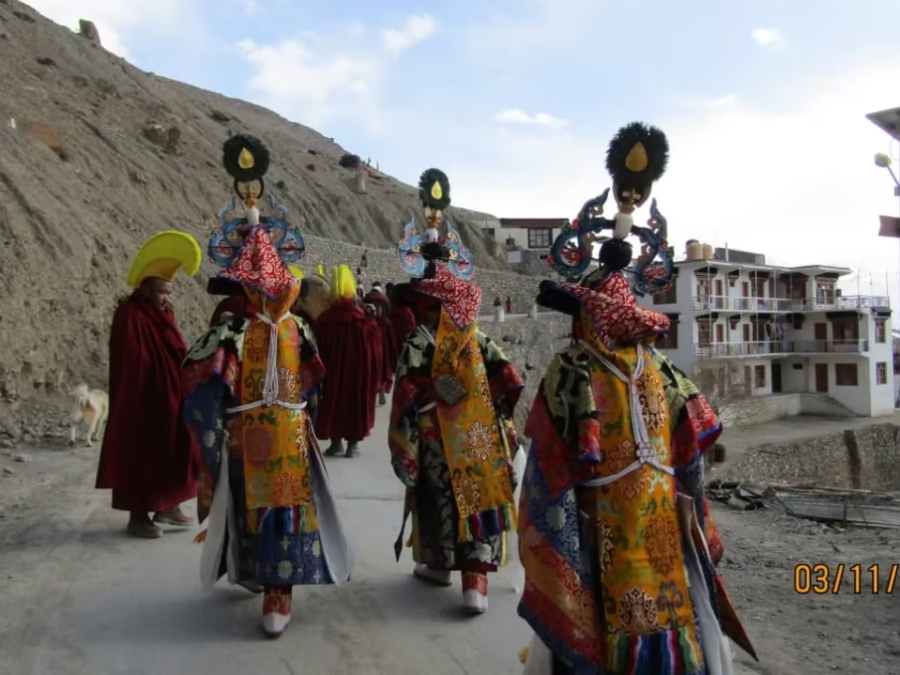
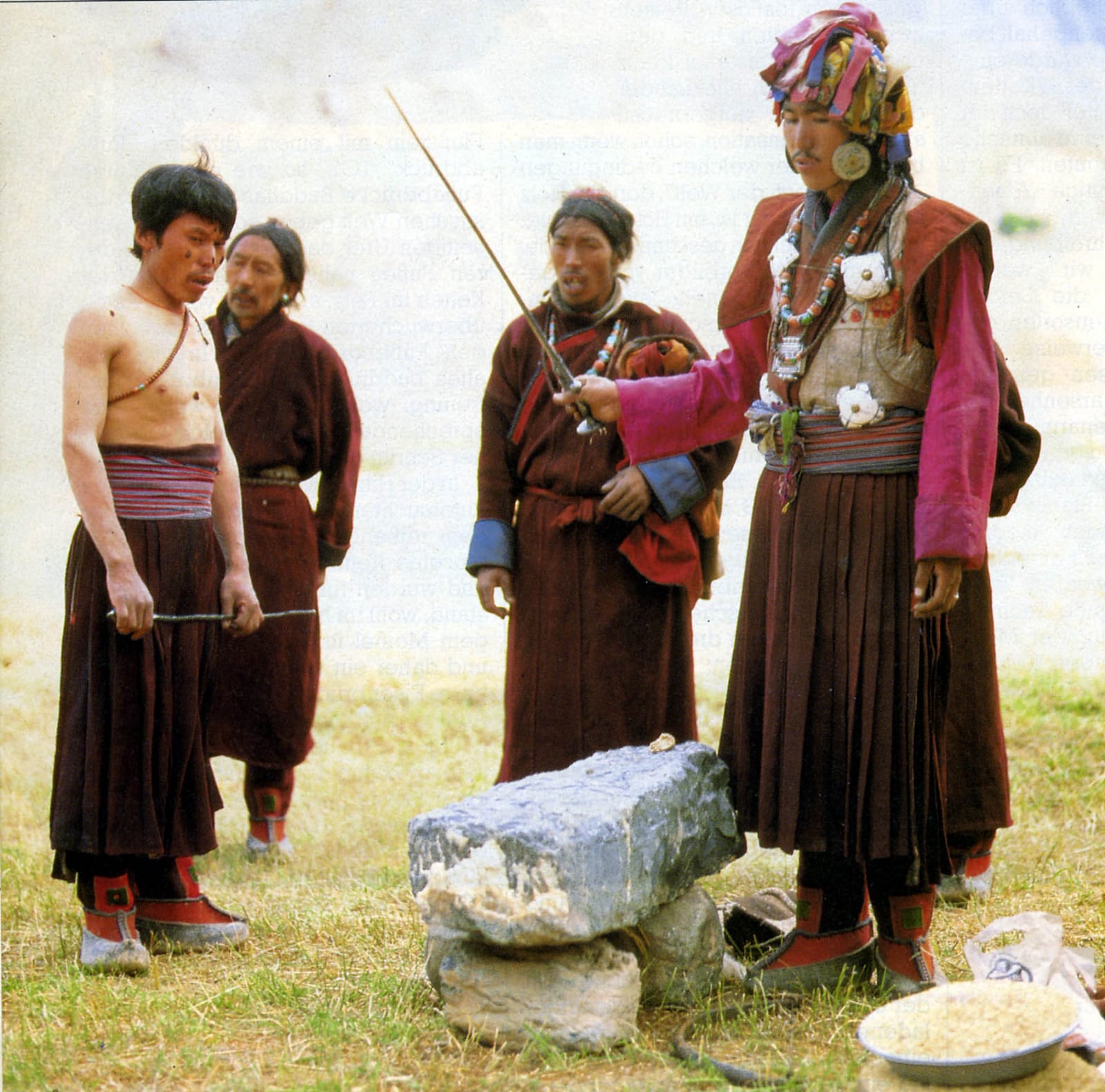
Picture taken in 1998 | Photo: Buchen Tsetan Dorjee

Stone breaking ceremony and Buchen of Spiti

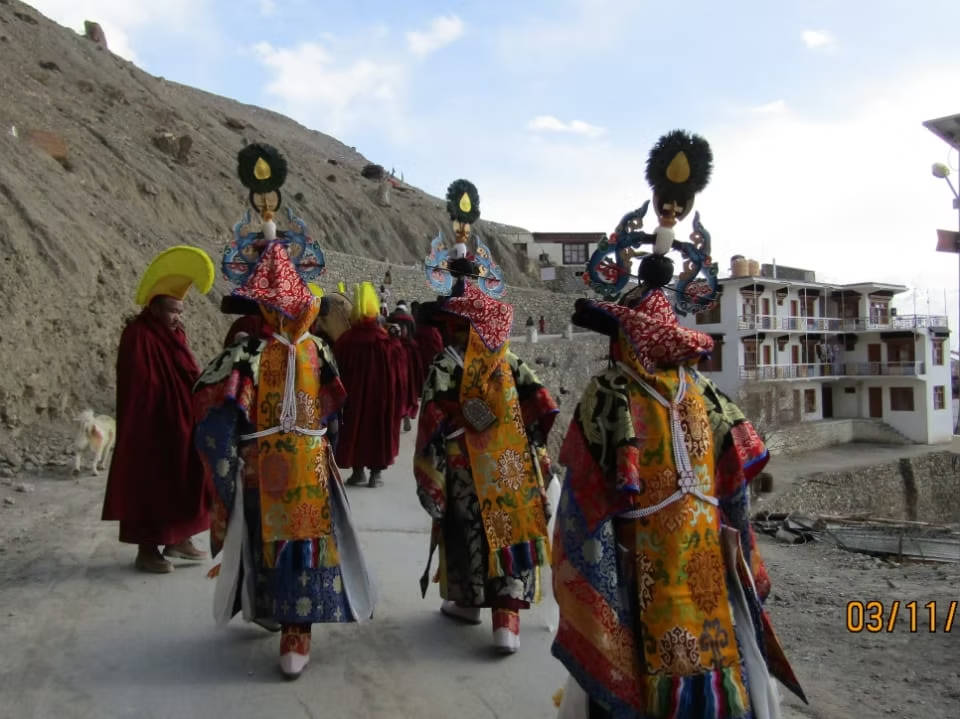
Buchen “the great disciples”

The first time I witnessed a Buchen performance, I remember feeling eerily awed. I do not remember much details about the performance but their ghastly white face smeared with flour and the cheek piercing ritual has stayed distinctly with me. My mother used to scare me that if I ever behaved badly, I would be taken away by meme buchen at night. 

Buchen are a group of religious performers in Spiti who enact elaborate rituals and ceremonies to ward off evil spirits that bring misfortunes. They entrap the spirit in a stone and demolish it through a sacred stone breaking ceremony. The ritual is also associated with curing diseases and healing an ailing heart. Nowadays, it is most commonly commissioned to prevent agricultural mishaps, disease outbreak, disaster and water scarcity in a region. Buchen are well-known for performing folk lore, enacting stories of Buddhist saints, Lhamo (opera) and Namthar (biographies). Given their dynamic role in Spitian society, they are viewed differently as ritualistic performers, opera performers, healers, storytellers and messengers of Buddha’s teachings.

Photo: Pitt Rivers Museum, UK

The Buchen of Spiti trace their lineage to Thangtong Gyalpo, a 14th C religious practitioner in Tibet who was famously known as “Chak zampa” for making iron bridges and stupa in Tibet. It is said that the stone breaking ceremony was first performed by him to curb an epidemic in Tibet; the capital city Lhasa was plagued with 360 different types of deadly diseases – massively ravaging the lives of ordinary citizens. A demonic force is believed to have caused the disease outbreak and it was then Thangtong Gyalpo first performed the sacred stone breaking ceremony to tame the evil spirit. It is believed that he entrapped the demon in a stone, performed the ritual by breaking the stone, and successfully managed to stop the disease from spreading.

He performed it the second time when a demonic spirit was obstructing the monastery he was building. Whatever was made during the daytime was demolished by demons at night. He then performed the stone breaking ceremony where he subdued the evil spirit in a stone and annihilated it by performing the ritual. The monastery eventually came to completion after the demons were tamed. The practice then became widespread in other Himalayan regions and became an important tradition.

Photo: Tenzin Sonam

Thangtong Gyalpo was a versatile figure. He was a highly revered Buddhist tantric master, skilled in monument making, and nurtured a strong penchant for performative art forms like opera, theater, folk songs and writing. He was also the first priest to spread religious teachings through physical enactments of morality plays, allegorical folklore, song & dance and narratorial acting. He strongly felt that the core teachings on compassion, kindness, peace and impermanence should be taught in a way people can understand and implement in their real lives rather than just instructing from scriptures. He then founded the first theatre group in Tibet which goes to every village and performs religious teachings through morality plays and songs. Buchens of Pin valley in Spiti are disciples of this great master and they consider themselves as his sons “Bu-chen = great sons” who will follow the legacy of their master. Paying tribute to Thangtong Gyalpo is a huge part of Buchen’s performance; they put his statue on the altar, pray to him, sing odes and his teachings are orally passed through many generations.

Buchen as healers – relevance of the ceremony

I have seen several Buchen ceremonies during my growing up years and their performances are always invariably very striking. They are bold and impressionistic – one can remember the visuals long after the performance is over. Their repertoire, the enactments, narration and audience engagement are hugely appealing. It is like when they are performing – you are part of the stage, the play and the world they created for you. You might be a silent audience observing them from a distance but they will break the barrier by suddenly putting you in the spotlight – asking you questions, mimicking you and making you part of the play. As such, the distance between the performer and the audience is fluid. You are part of their stage, their world and they derive inspiration, anecdotes from you, your life and the larger community.

The Buchen’s performances are highly centered on religious precepts but with time, it has evolved to incorporate social realities of local communities. The practice is no longer restricted to impart religious teachings but it’s also done to avert serious social and ecological crises like drought, disasters, plague, agricultural loss and to bring harmony among communities. Locals appeal Buchens to perform ceremonies before agricultural season, during particularly low snowfall year, for recovery of physical ailments, while building houses, before starting any new venture in life or to bless a pregnant woman for health and happiness. Meme Buchens play a critical role as healers in Buddhist societies in Himalayan region and their blessings are sought during times of insurmountable distress as well as to bring peace and prosperity. Last year, when the world was gripped with novel coronavirus and there was panic everywhere, remote communities from Spiti sought solace in the healing powers of Buchen, to protect and safeguard them.

Photo: Buchen Gatuk Sonam

Stone breaking ceremonies were performed in many villages like Kaza, Demul, Khurik, Ki and Pin valley. They were also invited to many parts of Ladakh, Zanskar, Lahaul and Kinnaur to help communities deal with crop failure and drought. They were once invited to Patlikuhl, a small village near Kullu/Manali where an annual flood was causing huge devastation. Similarly, in 2018 when His Holiness the 14th Dalai Lama fell gravely ill after an eye surgery, meme Buchen of Pin performed a stone breaking ceremony in his “sim-chung” (private residence) for quick recovery. Individuals, villagers, institutions and monasteries consult them for healing, to dispel hindrances and for an auspicious beginning deed.

Sword dance and the stone breaking ceremony

Buchen form groups of 4 or 5 people. The troupe is led by the head Buchen (Lo chen), an actor who plays the role of Lukzi (shepherd) or Onpa (hunter) followed by two other actors who assist them in various tasks. The Lo-chen performs all key ceremonies and religious narratives while Lukzi grips the audience through his skillful narration, storytelling and repertoire. He is the most captivating character – his deliveries are a blend of social commentaries, mimicries, moral teachings and comic interludes.

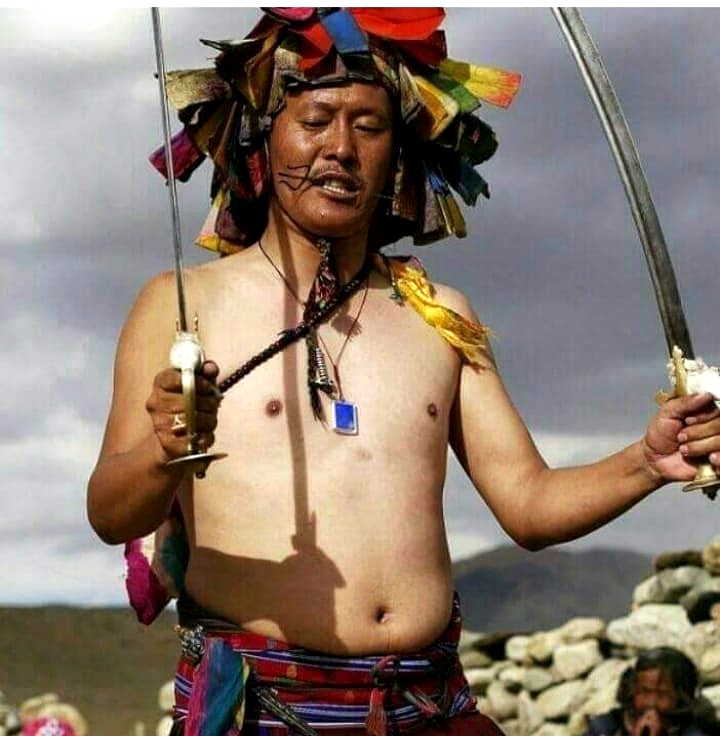
The Buchen head opens the ceremony with prayers, places the statue of Thangtong Gyalpo on the altar, pays him homage and narrates Namthar (biographies). The other team prepares the stage by placing a large boulder near the altar, drawing a human figure on it symbolizing the evil spirit/ demon that is to be demolished and burning incense. There will be brief prayer in between and after that, followed by a dance led by the head Lama rhythmically swinging the sword in slow dance movements.

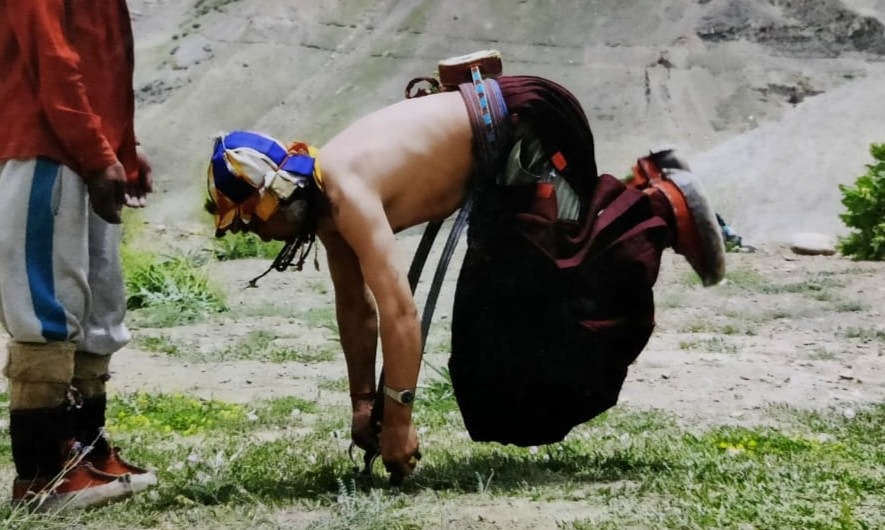
Then comes Lukzi’s turn, who enters the stage wearing a sheep skin and face smeared with white barley flour. He takes over the performance, engaging with the audience – making them crack into loud laughter and burst into tears while the head Buchen prepares for sword dance. He strips the upper part of his body naked, then slowly pierces his cheeks with a large pin and there’s considerable excitement, fear and thrill among the audience who watch him do this. It is a slow careful action and is done to dispel ill omens – the piercing of cheeks symbolizes purity of speech. He then proceeds to point the tip of the sword on his belly and slowly jumps to put all his body weight on it – repeating the act by drawing a sword in his armpits. The whole ritual of body piercing symbolizes the mutual existence of the mortal human body and lha (spiritual deity) that resides in each one of us. The sword dancing and body piercing symbolizes purity of body, mind and speech.

At the culminating act, while Lochen prepares himself for the sacred stone breaking ceremony, the dancer on whose body the stone is to be broken, lies down. A thin cloth and a heavy stone is placed on his body while the other actors look for a second stone. Lo-chen enters the scene, lifts the second boulder and smashes it on the stone placed on the dancer’s belly. The stone breaks with loud thudding noise signaling annihilation of the demon whose spirit was entrapped in the stone. Meme Buchens undergo intense tantric training, yoga, meditation and scripture learning in retreat to acquire such high feat. They acquire immunity towards fatal injuries and mishaps while performing ceremonies after decades of stringent training and disciplining of body and mind. They acquire mastery over their being before they perform healing treatments on others.

Photo: Buchen Tsetan Dorjee

They travel extensively within Spiti and outside to perform stone breaking ceremonies among various communities in Himalayan region like Ladakh, Kinnaur, Kullu/Manali, Riwalsar (Tso Pema), Sikkim and Nepal.  Every year they make a journey in small groups carrying the traveling altar, a trunk comprising their costumes, props and other material used for performance and leave from Pin for months at stretch. Sometimes they are out of their homes for as long as six months and come back only during harvest season for the farm work. They recite Namthars, folksongs and perform ceremonies in settlements where they reside and also make trade deals with the locals. They also sell horses and in turn receive Khullu (Yak wool), hand spun blankets,  Lena (Pashmina) and apricots. The Buchen tradition has seen huge decline in Ladakh and the meme Buchens of Pin valley often get invited to perform ceremonies to revive crop failure, crop damage and to appease local deities for abundant snowfall. They travel all over Ladakh; Demchok, Korrzok, Tsokar in Changthang to Choglamsar, Parang valley and even in Zanskar. Alternatively, in Kinnaur they visit Chango, Nako, Malling, Leo, Hangrang and even go as far as Rampur where the biggest trade fair in Himachal happens. Wherever they go, they are treated with utmost respect and their sword dancing and stone breaking ceremonies are considered equivalent to the Jintsak ceremony performed by highly incarnated Rinpoches (religious leader) to dispel ill omen and bring prosperity in the region.

Buchen tradition has undergone a tremendous change over the years. It used to be a widespread practice in many Himalayan communities but now it is actively pursued only in Spiti and that too minimally – there are only 10 remaining Buchen households in the region. “.. people no longer value our skills” laments Meme Buchen Tsetan (76) who is one of the oldest Buchen in Spiti. “Earlier people would bow down in front of Buchen to show their reverence but there’s considerable change in people’s attitude.” They also confide that with the influx of tourists, photographers and filmmakers, the practice has been reduced to a bare minimum where they are generally not interested in listening to prayers and Namthar (biographies) and rush them to perform sword dance and stone breaking which has more element of spectacle.

1600 1581 Chemi Lhamo
Losar : Animal’s Day

Losar : Animal’s Day

I think I am in fact the least excited and most boring person at any form of festival. Much of it could be due to my introverted genes that wouldn’t fancy gatherings, dancing, fireworks or any other things which involve interacting with strangers, but part of it must be because of my upbringing. I am not sure of both though. But my heart just cannot seem to invite festivity as much as my friends and family do.

I hail from a small nomadic village in Ladakh where the livelihood of everyone is dependent on livestock. Almost every household owns some goats, sheep, horses and yak. These animals aren’t merely our source of income, but are used for obtaining food, fetching water, traveling, and most importantly seeking comforts and friendship. Since our life revolves around rearing these animals and more importantly enduring the harsh reality of having no access to electricity, water and worse not even a single shop in the vicinity throughout the year, we have little time for festivity. Or, many of us are even oblivious of its existence, except for Losar– the Tibetan new year and Thrungkar Duechen – His Holiness The Dalai Lama’s birthday. Hence, every single person in the village looks forward to these two days like a child, although for different reasons.

Photo: Namgyal Lhamo

My fondest memories of Losar and Thrungkar were significantly boring compared to my cousins. But these days, no matter how many festivals I witness as I travel through urban life, there is nothing more meaningful and beautiful than this idea of celebration I got to see early in my life. It was on one of the third days of Losar. My father came to me, patted my head gently and said with a smile “Life of your polled lamb will be set free”. I was elated beyond words and this memory has remained in my heart so vividly. In my village, on the third day of Losar or Thrungkar, fathers of the households are the busiest. They get up early in the morning to appease the Land God and other deities who are believed to be the true owners of our land according to their ancestors. This is followed by their brief journey to the animal shed where they would choose some animals randomly and set their life free. By that, we are not allowed to send them to slaughter houses, milk them and are expected to watch them with unconditional love and care which every animal receives anyway, until they die. It was my most awaited moment of the festival. My siblings and I would always hug our father with utter joy after he would come out of the shed. This act is mostly done to honor and thank the sacrifices of animals for our livelihoods while it is also performed for the health and long life of His Holiness and carry his message of love, kindness and compassion towards animals.

We eventually shifted to a town nearby, leaving the whole nomadic life behind due to the inability of my family to see the animals suffer for our survival. But, as I look back, I realised that it was this place where I gave birth to my love for animals. Today, even if we live a totally different life, my parents make sure to celebrate these two days by setting at least one animal’s life free. There is nothing more rewarding at a festival for me than this act of genuine kindness. Somehow I think of these two days as a festival of animals and I hope to carry this tradition forward in my own life too.

792 706 Namgyal Lhamo
The Water Managers in Kibber
Illustration: Tenzin Metok

The Water Managers in Kibber

In the distance, the early morning sunlight chased the shadows on the mountain peaks. I gazed longingly at the golden patches, wondering how long before I could feel the warmth of the rays. Lobzang saw me and laughed, “Are you cold? Come help, it will warm you up!”

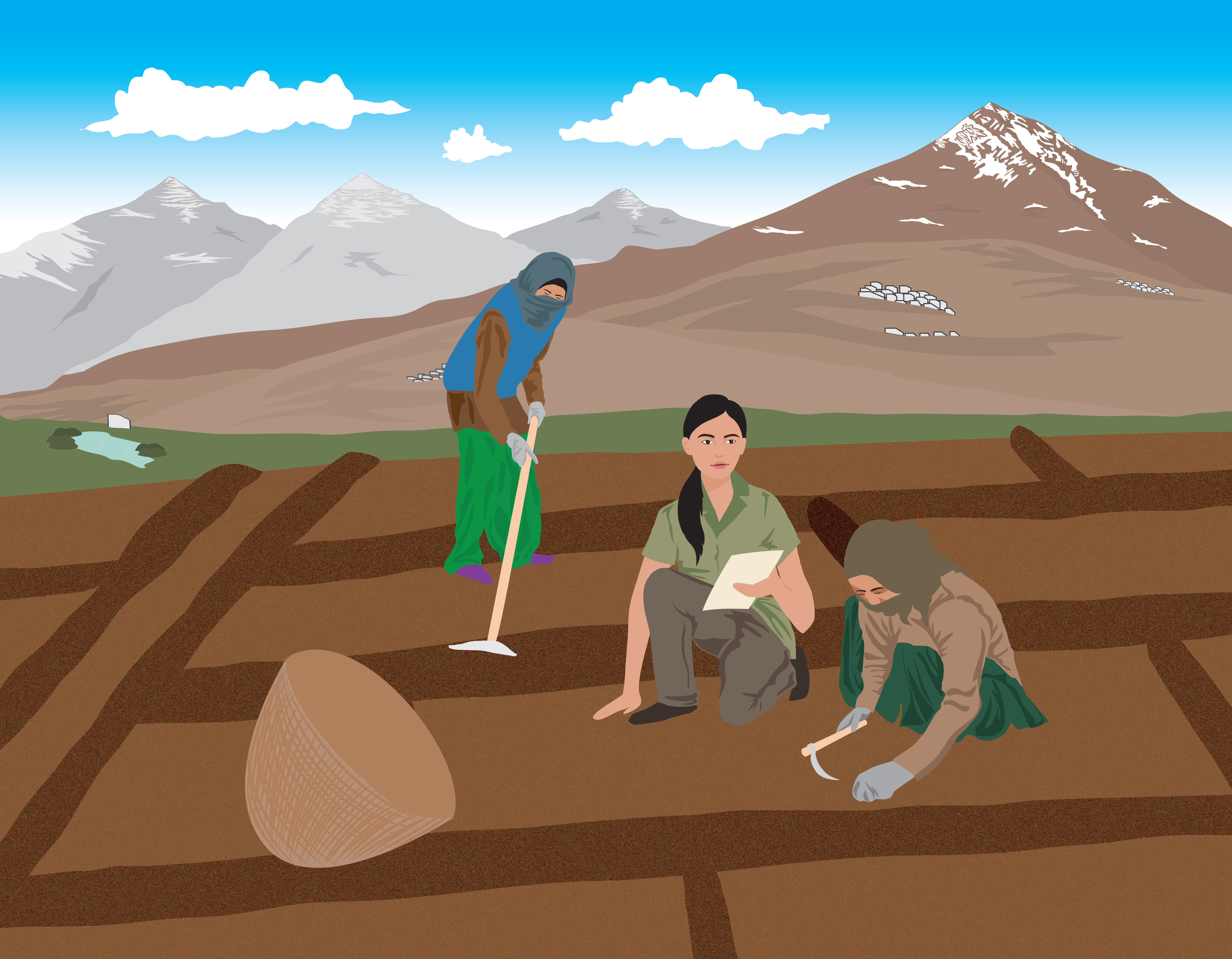
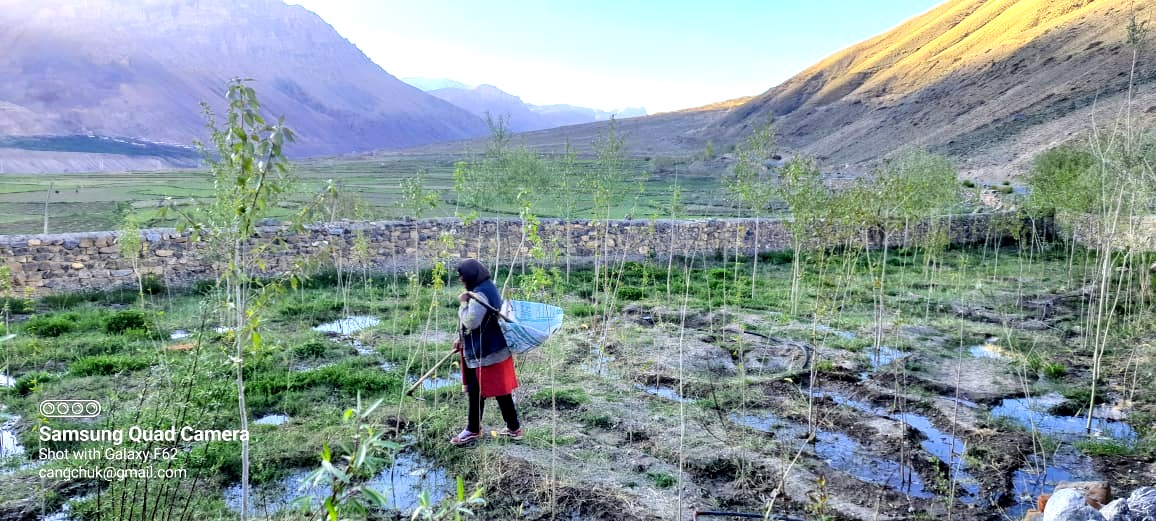
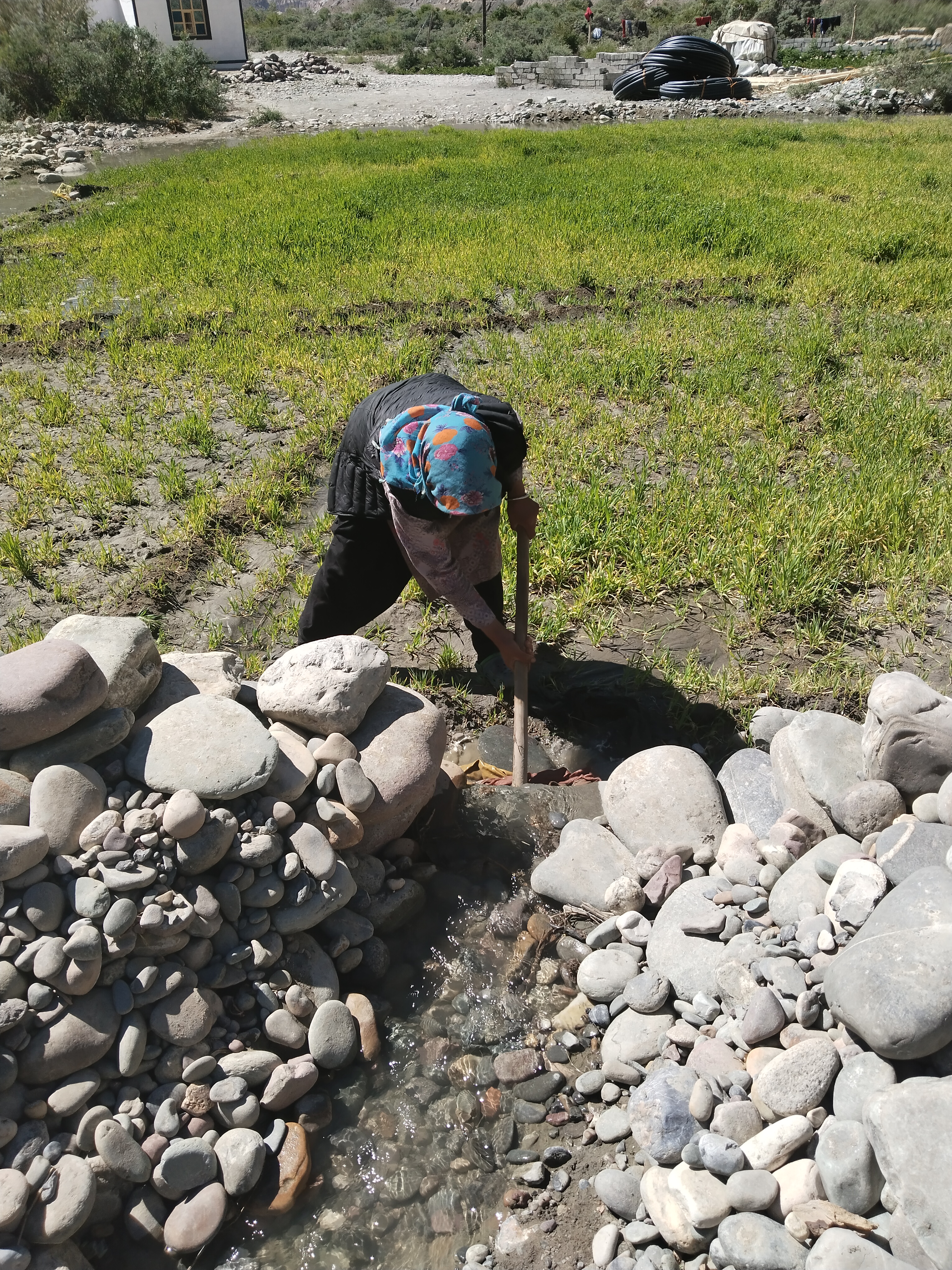
Lobzang was building kyaari in her field. These are embankments built in the fields that help guide the flow of water. They are carefully built based on the natural slope of the land. In the neighboring field, I see Thinley ploughing his land using two yaks. I was in Kibber village, in Spiti valley, and the agricultural season had just begun. The day of ploughing had been decided a few days ago at the village meeting.

“How did you learn how to do this?” I asked Lobzang, fascinated at the skill and speed she was constructing the kyaari. “I’ve been doing this for years. When I was a little girl, I used to help my mother and I learnt from her. This year, it has snowed well, the water will be good.”

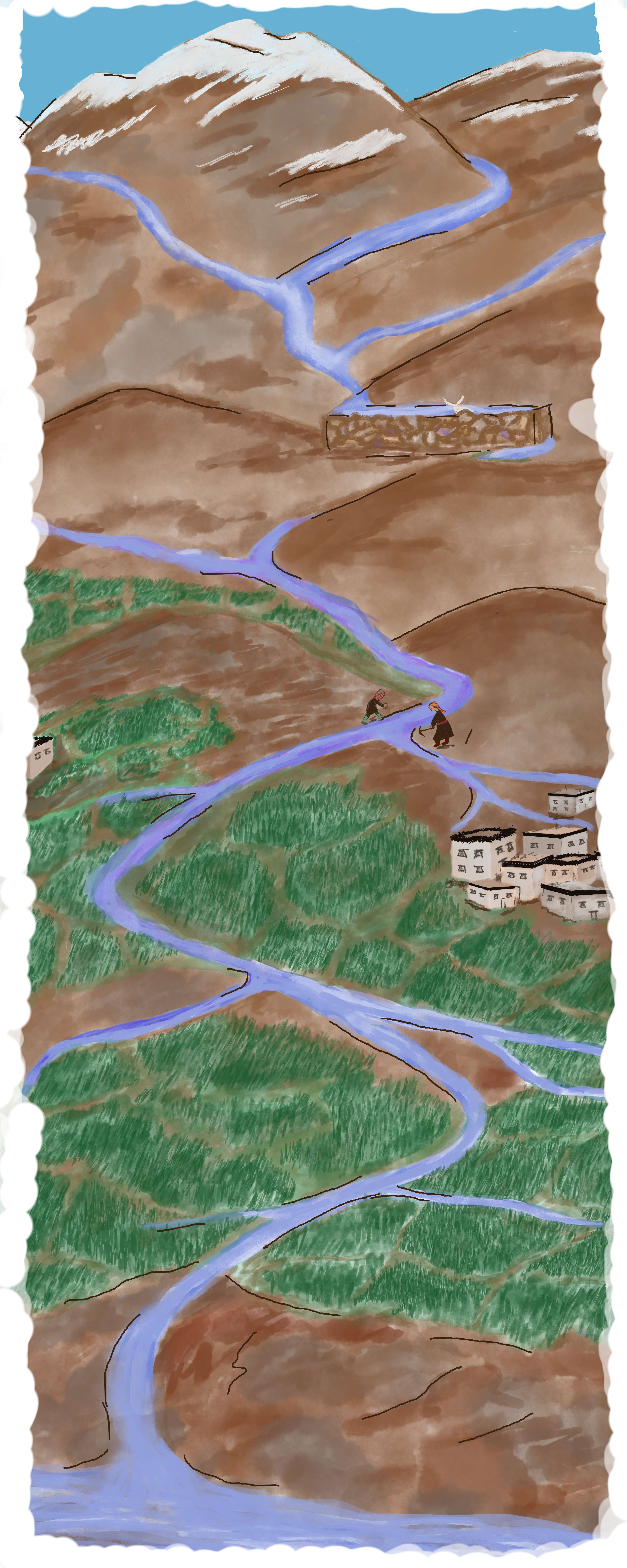
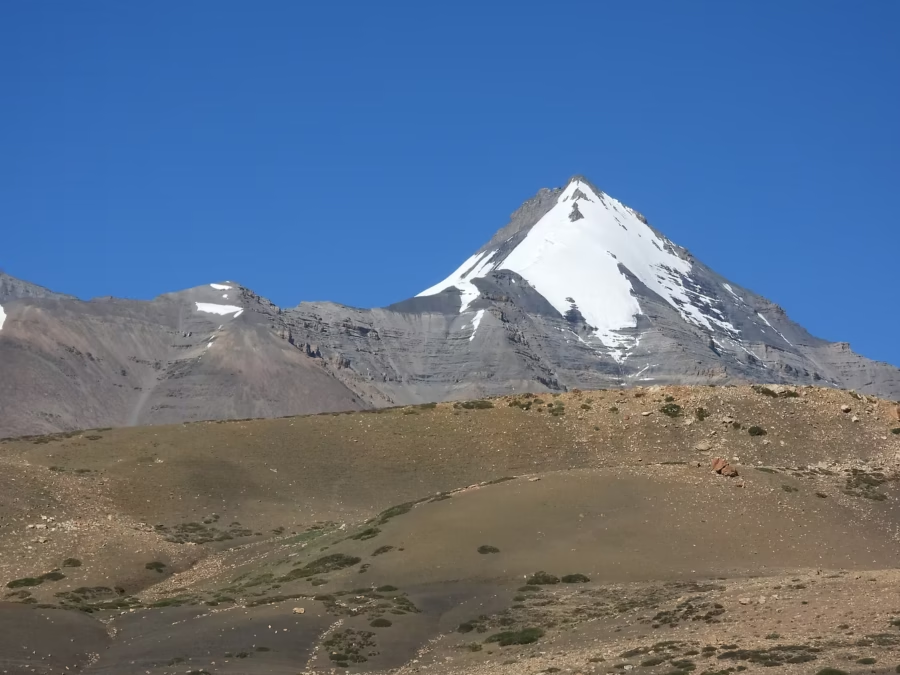
In Kibber, I’ve learnt that the irrigation system is considered the domain of the women. The water comes from the snow melt from Kanamo, a holy peak in Spiti. The water from the peak is directed to the Kibber fields using khuls. This irrigation system was initially built for barley and black pea, but has been modified for irrigating green pea. Lobzang tells me that the women were responsible for fine-tuning the watering for green pea. They learnt through trial and error, but now have perfected the quantity of water needed and when it is needed for a bountiful harvest.

“If you water them too much, or too early, the plants get thirsty, and will need more water. You have to water at the right time, with the right amount”, she tells me.

The crops are irrigated in cycles and in each cycle a fixed order is followed. Yurma, the first round of irrigation, happens 40 days after the ploughing. Just before yurma, women remove the weeds from the field and scatter them with dried yalo (Aconogonum sp). This prevents soil run-off and increases water retention. Irrigation on the first day of yurma is reserved for the fields of amchi and the devta. Women from all households participate in irrigation on the first day. The second day is reserved for families who have faced a serious illness or death the previous year or have pregnant women who are unable to work in the fields. The third day, tiping langzet, is reserved for families who have participated in the maintenance of water channels. After the third day, the remaining fields are irrigated.
This order is followed for the first three irrigation cycles, after which all the fields receive fixed turns. It is the women who decide the time of the second and third irrigation. The women also manage the daily distribution of water. Every year, two women are chosen to be the khul managers. They are in charge of managing the khuls, making sure the fields receive their quota of water, and managing small arguments that might arise related to the distribution of water. This system of women managing irrigation, is similar to systems in other parts of Nepal and South-East Asia. However, across the world, it is uncommon to come across natural resources that are managed by women. Men manage most natural resources, especially those that are shared. This makes the irrigation system in Kibber, and likely other parts of Spiti, special.

The irrigation system in Kibber has been in existence for centuries. Lobzang tells me it has remained unchanged as far back as she or her grandmother can remember. The knowledge of irrigation is passed on from mother to daughter, from the time little girls start helping in the fields.
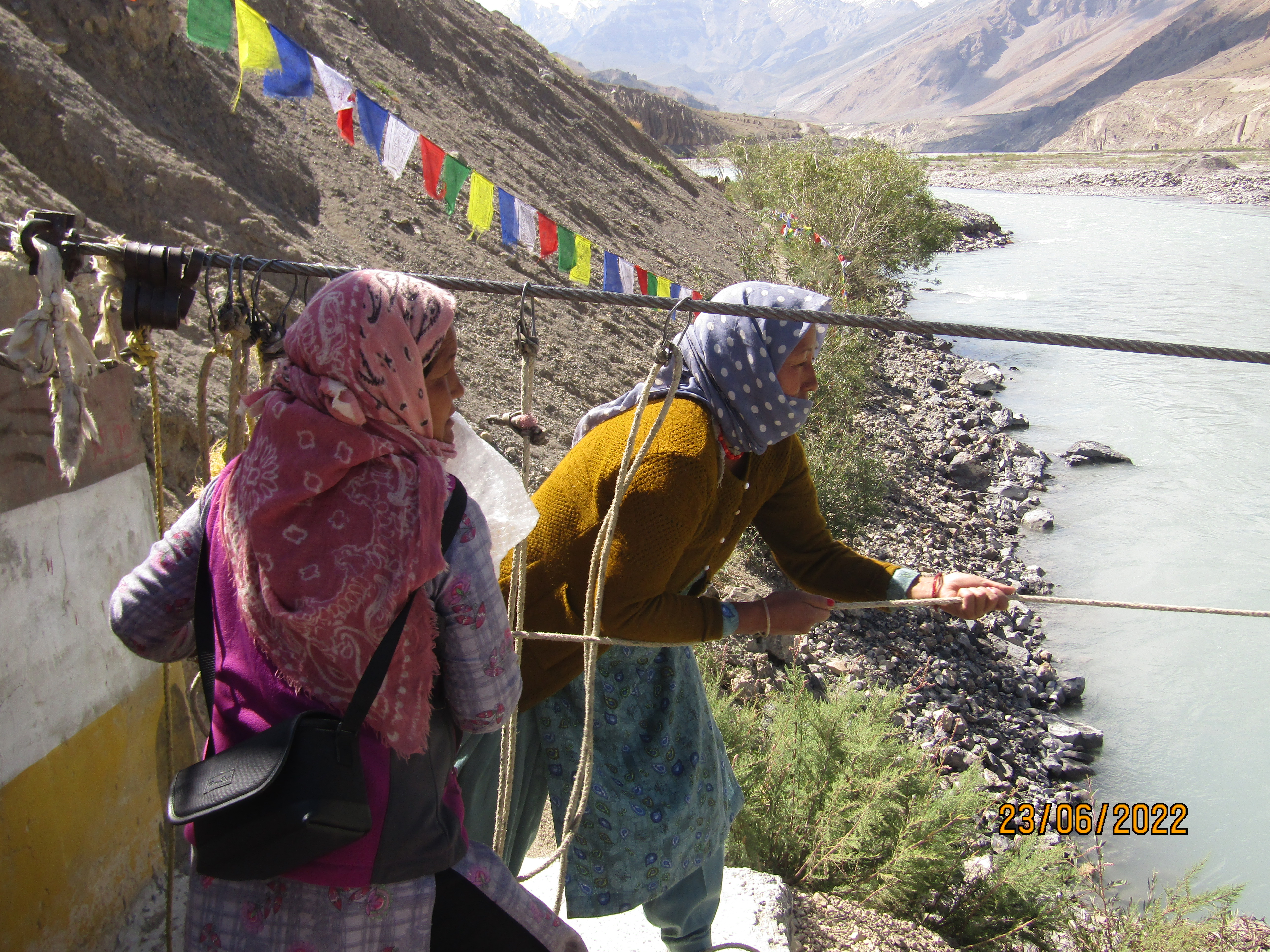
As the sunrays finally reached the spot we were in, and started warming me up, I felt more motivated to help Lobzang make the kyaari. “Show me”, I said. I was eager to learn a skill that has been passed down from woman to woman for generations. Are irrigation systems in your villages similar to the one in Kibber? Do write-in and tell us about them.

4623 3600 Dr. Ranjini Murali
Who owns the Water?
Photo: Chhering Angchuk

Who owns the Water?

“Lungpa Bhu Med La Bhu, Ta Med La Teu, Chu Med La Chu”
Piti Da-Chang Monlam

“May the ones deprived of a son be blessed with one, the ones deprived of horse be blessed with a mare and the ones deprived of the water be blessed with this resource”
Spitian prayer verse during Da-Chang festival.

In Spiti we define wealth and prosperity in terms of water -“Chu Sang-na, Yul Sang” the expression aptly translates as  “abundant water results in prosperous villages”. Being a cold desert in high Himalaya, It is difficult to think of a resource more essential to the well being of people and their economies than water, yet managing water resources is a complex and challenging task and sometimes unfortunately results in many conflicts: between villages, households and within families. Sgrungs – Spitian oral stories are full of such narratives and show entangled relations between people and their water bodies. This one concerns two neighboring villages – a tale is known to many.
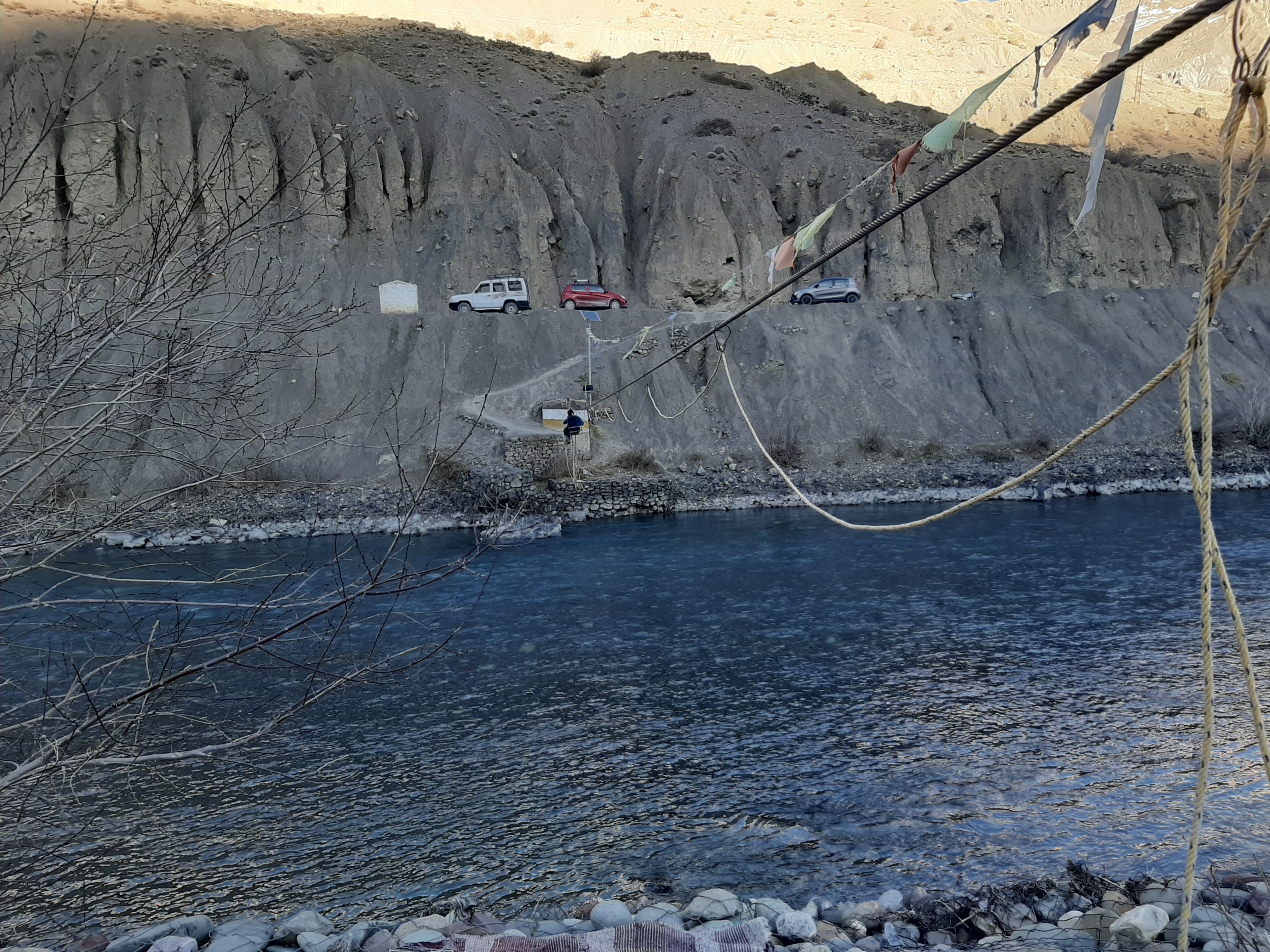
Every year, before agricultural season when the Spiti Valley gets engaged for the upcoming farming season; uncovering the tools, sharpening sickles, putting ashes to their fields and waiting for the glacial water-melt to fill their water canals, the villagers of Rangrik and Sumling, two neighbouring villages, have additional conundrum to resolve – that of the fate of “Shang-ma” – the precious mountain top water source. The dilemma of deciding who the water belongs to, which village gets to use water, channel it to irrigate their field and ultimately who are the custodians of this glacial melt water source. When disagreement arises, quite often a story is narrated that is believed to have happened a few decades ago.

Photo: Chhering Angchuk

Once a girl from Sumling village was married off to Rangrik village. Upon seeing the dry, parched fields of Rangrik, the girl’s family was distressed and decided to give her the most precious treasure they owned – the glacial water source. Back then wealth was measured in terms of one’s fields, cattle, agrarian assets and one’s access or ownership to land and water resources. With Sumling’s prime water source as a gift from her maiden family, the bride happily settled in Rangrik and many believe that Rangrik’s expansion, prosperity in present day and harvest abundance is attributed to the bride’s “Dak-ja” (parting gifts for brides). However, stories like these are often loaded with contentions and depending on who is telling the story and from what perspective, the details, the bold claims, the story arcs change dramatically.
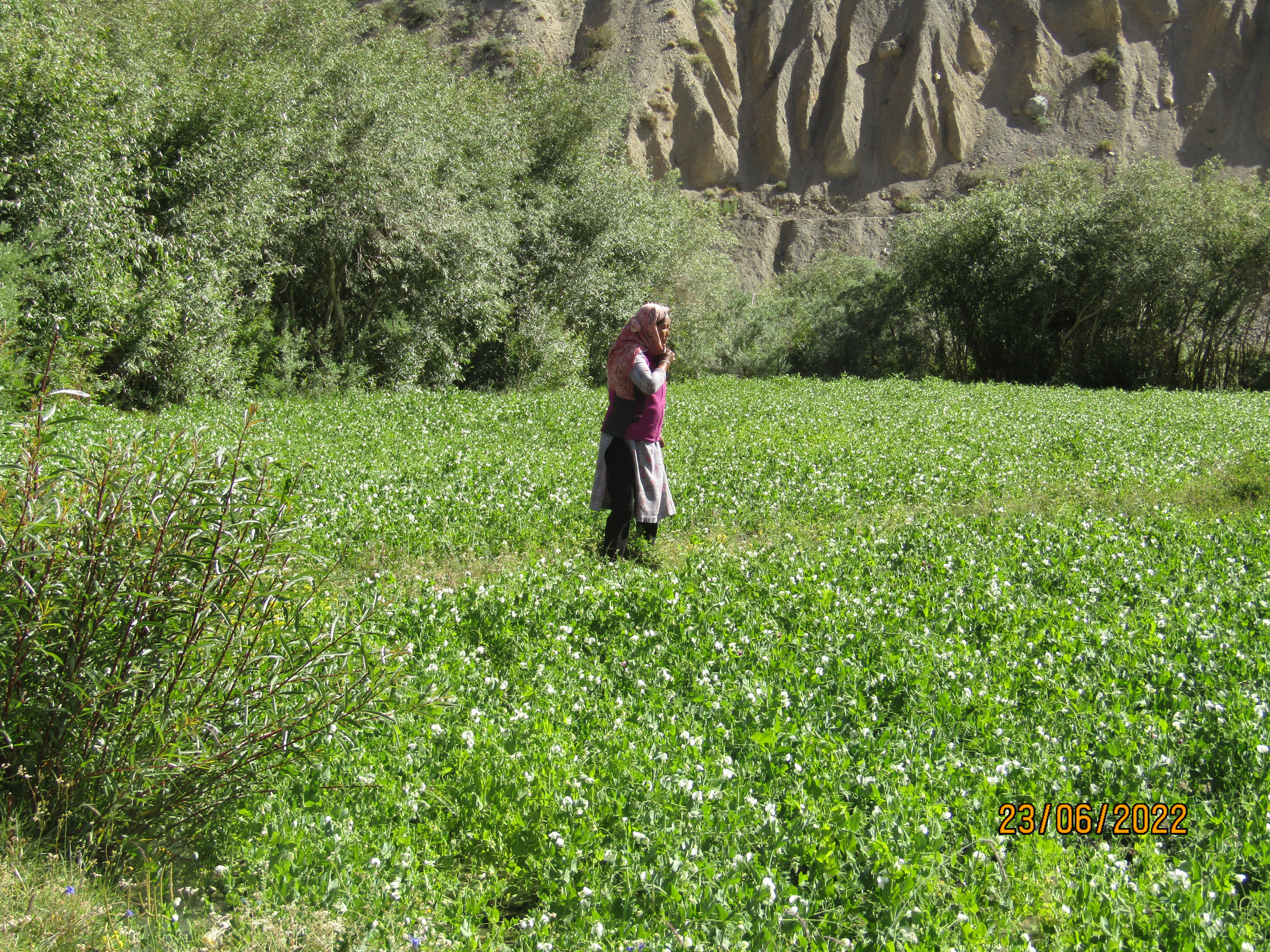
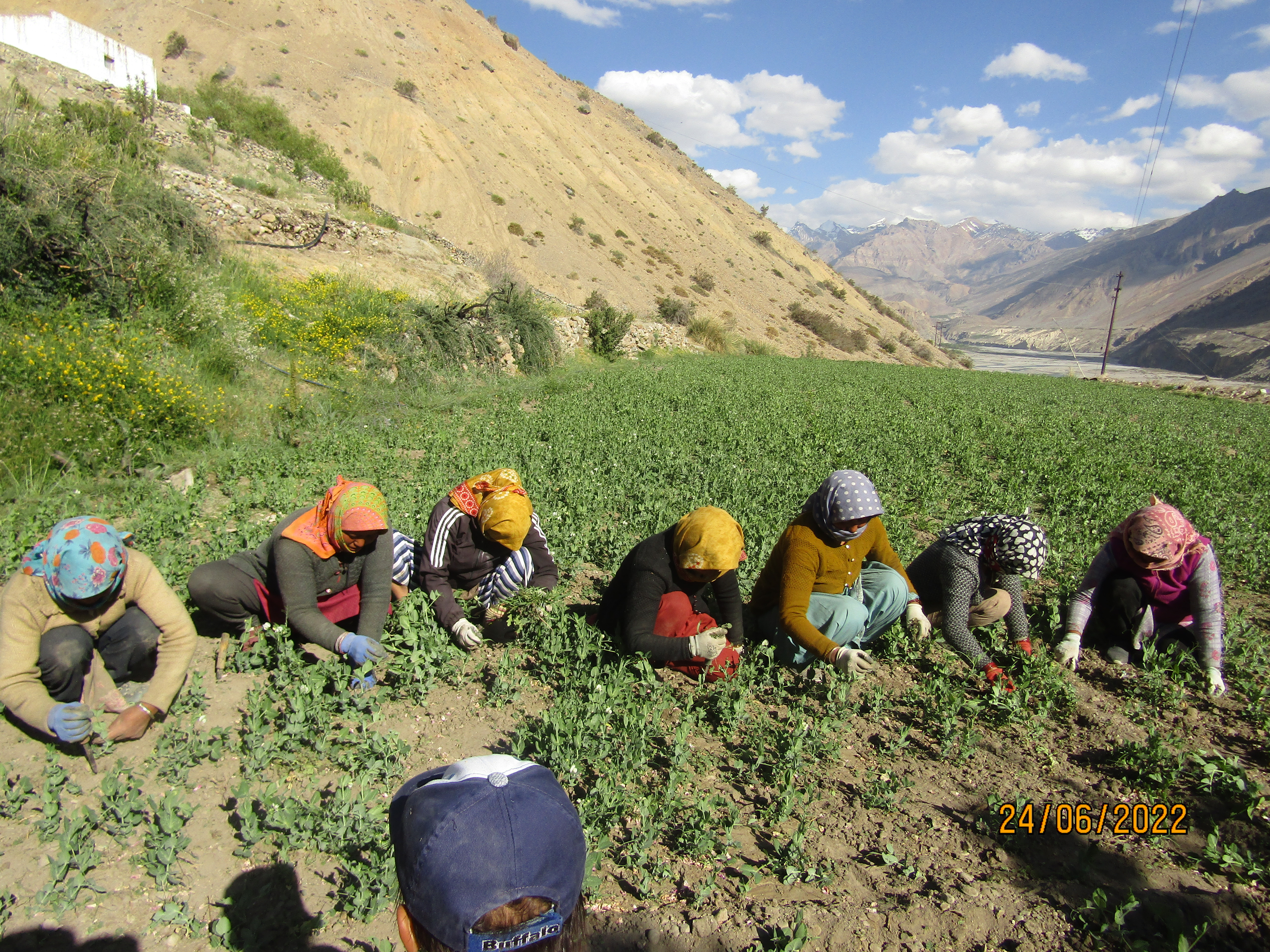
Photo: Chhering Angchuk

While the story attributes Sumling-pa as the custodian of the precious glacial melt water which is located at the mountain range above their village, however the coin flips its side when Rangrik villagers elucidate the situation. They trace their ownership to the waterbody in accordance with traditional land and water rights that have been bestowed to them. In terms of settlement in Spiti, Rangrik came into existence much earlier than its neighboring villages and the locals believe that the vast stretch of land, pastures, waterbodies from Rangrik till Sumling covering Khurik, another villager in-between, historically comes under the territory of Rangrik and thereby belongs to them. They further elaborate that they have been maintaining the waterbody since the olden days. If there’s steady flow of water in canals of Rangrik and Sumling village, it is because villagers of Rangrik have traditionally been preserving it. In the olden days, one member from each household of Rangrik accompanied by their horses and donkeys would make a day’s trip till Shang-ma – located at the mountain top of Sumling to directly channel glacial melt into their canals.

Photo: Chhering Angchuk

The crucial portion of the Kul (canal) head is at the glacier top, which is to be tapped. It is to be kept free of debris and so the Kul is lined with stone to prevent clogging and seepage. Water is, then, collected through the night and released into the exit channel in the morning. The Kul which stretches for over 7 km from Sumling runs through steep mountain slopes and crosses numerous crevices to reach Rangrik. The water flowing in the Kul is the only viable way to sustain vast agricultural lands in Rangrik and to feed their cattle. Villagers go on to describe that at night when the canal is dry, they even let their horses take shelter inside it to protect the livestock from cold. “In the olden days, our Kuls are that deep and water that abundant” muses munshi Chhering Angchuk – a teacher at government school in Rangrik who has been patiently corresponding with me over phone and explaining the details. Rangrik’s Gyetpo (village headman) is responsible for overseeing the maintenance of water, governing its distribution among farming households and mediating if there’s any conflict around for water distribution from Kuls can cause tensions when there’s shortage.

The glacial water source, although located at Sumling village, is primarily maintained by Rangrik village and therefore enjoys greater access to it. However, the rules around water are not straightforward and take on complicated turns as the meandering stream from the hills. In order to ensure there’s parity and less discrepancies, a consultation was made to village deities and the communities from two villages agreed upon several traditionally governed rules to be followed henceforth. While these rules are not hardbound or codified legally, it works purely on faith. Communal integrity and fidelity to verbal commitment is a virtue everyone strives to adhere to hence, going against one’s word or breaking a promise made in front of village deity and village elders is considered a grave offense.

Sumling village | Photo: Chhering Angchuk

The rules governing usage of water and access to it is as follows:

  • while villagers of Rangrik can tap the glacial water from its source, they cannot completely divert it to their side or block the Kul’s head with mud, reinforce it with cement, grass or cloth to prevent downstream Sumling village from using it.
  • The water seeped out from the crevices, naturally caused chasm and narrow openings can be used by villagers of Sumling. The oozed-out water “Dsag-ti” is then subsequently diverted to the fields of Sumling and are fed to their cattle.

Water being a precious resource, there are meticulous rules even for using “dripped out” water (Dsag-chu) which would be otherwise viewed as an “extra flow” or “excess water” and left unregulated.

Is the contention then completely resolved?

Disagreements, tensions between two communities occur even now and in fact women from both these villages are stereotyped as ‘quarrelsome’ for they are primarily responsible for irrigating the fields and unfortunately sometimes end up in heated arguments. Knowing fully the onus of such conflict and subsequently a scandal that follows majorly lies on them, upon asking, many of them ruefully answers “chui thupa zinna mekak” – “our water conflict can never be fully resolved”. The story of bride being gifted water or the claims made by respective communities remains an enigma that transcends monolithic binaries of right or wrong but the story lives on and so do the many contentions around water that continues to discord people’s lives. Across the globe, access to water has always been a source of tension and it continues to be a conflict among stakeholders.

Despite the contention, many native Spitian lores, verses and religious incantations dwell on the divine, metamorphic concept of water. Referring to it as “life giving” “life line” – evoking mutual interdependence of people and water. It is culturally revered, venerated, celebrated and the guiding philosophy underlying diverse forms of water usage is respect for water considering it as an inherent, living part of nature. As such there are plenty of religious verses, hymns, odes dedicated to rivers, streams, ponds, spring waters, mountain top glaciers and rivulets to prevent it from drying and seeking its abundance in nature. In Spiti, during one of harvest festival Da-chang, villagers recite sacred verses (aforementioned) where they collectively pray protective deities to bestow “water, son and a horse” – three essential resources to sustain agrarian life in mountain desert.

1156 521 Chhering Angchuk
Women and water: a Photostory

Women and water: a Photostory

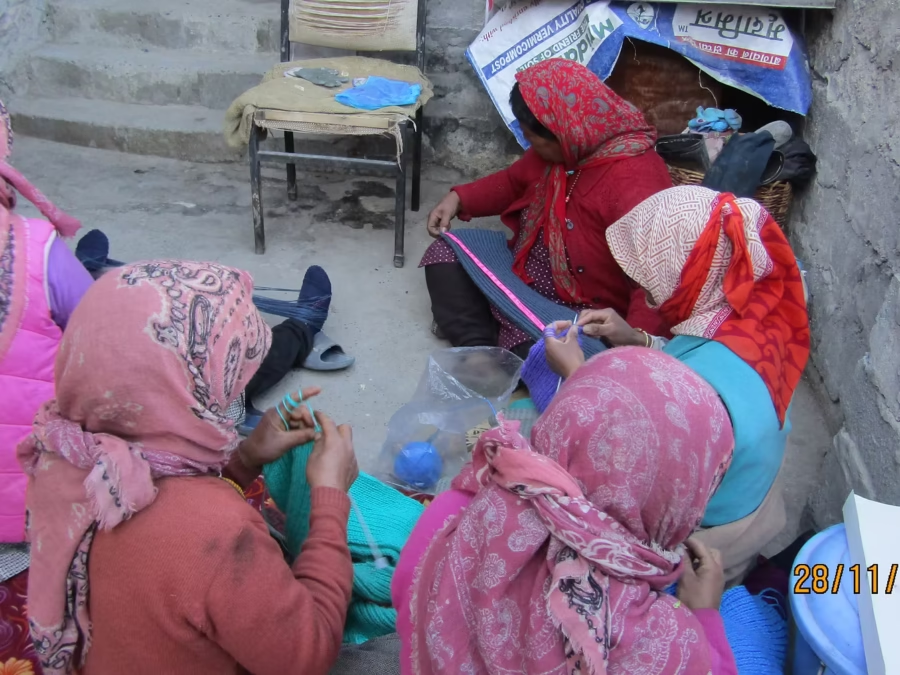
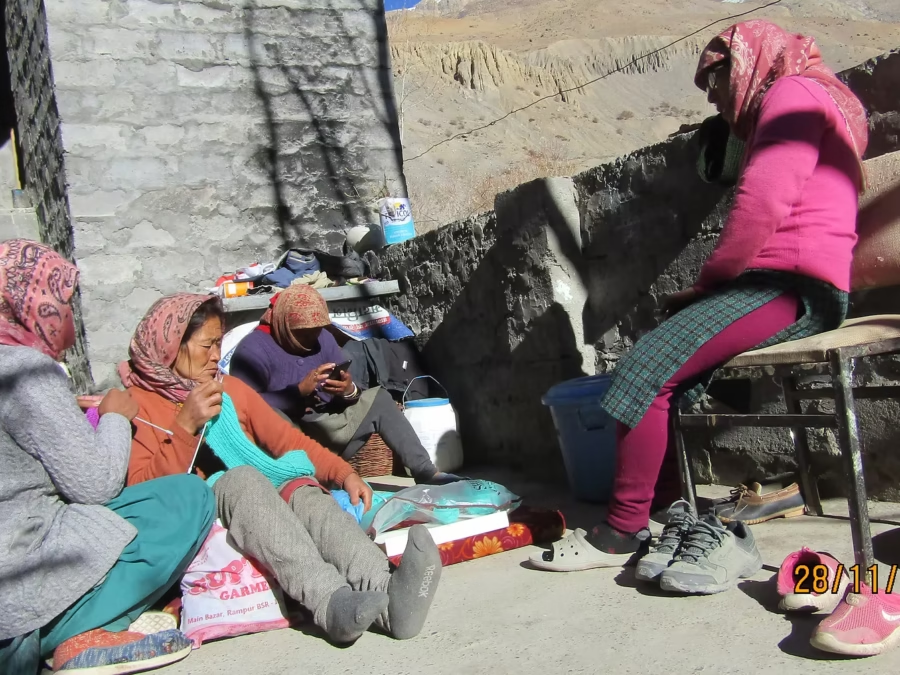
Last year, we did a photography workshop with women’s group in Shushuna village, Spiti Valley, who are primary caretakers and farmers in their households. After the session, we left them a camera and asked them to document their village life in addition to nurturing their photography skills. We returned a year later and they enthralled us with amazing pictures and great stories! Enjoy reading this one!

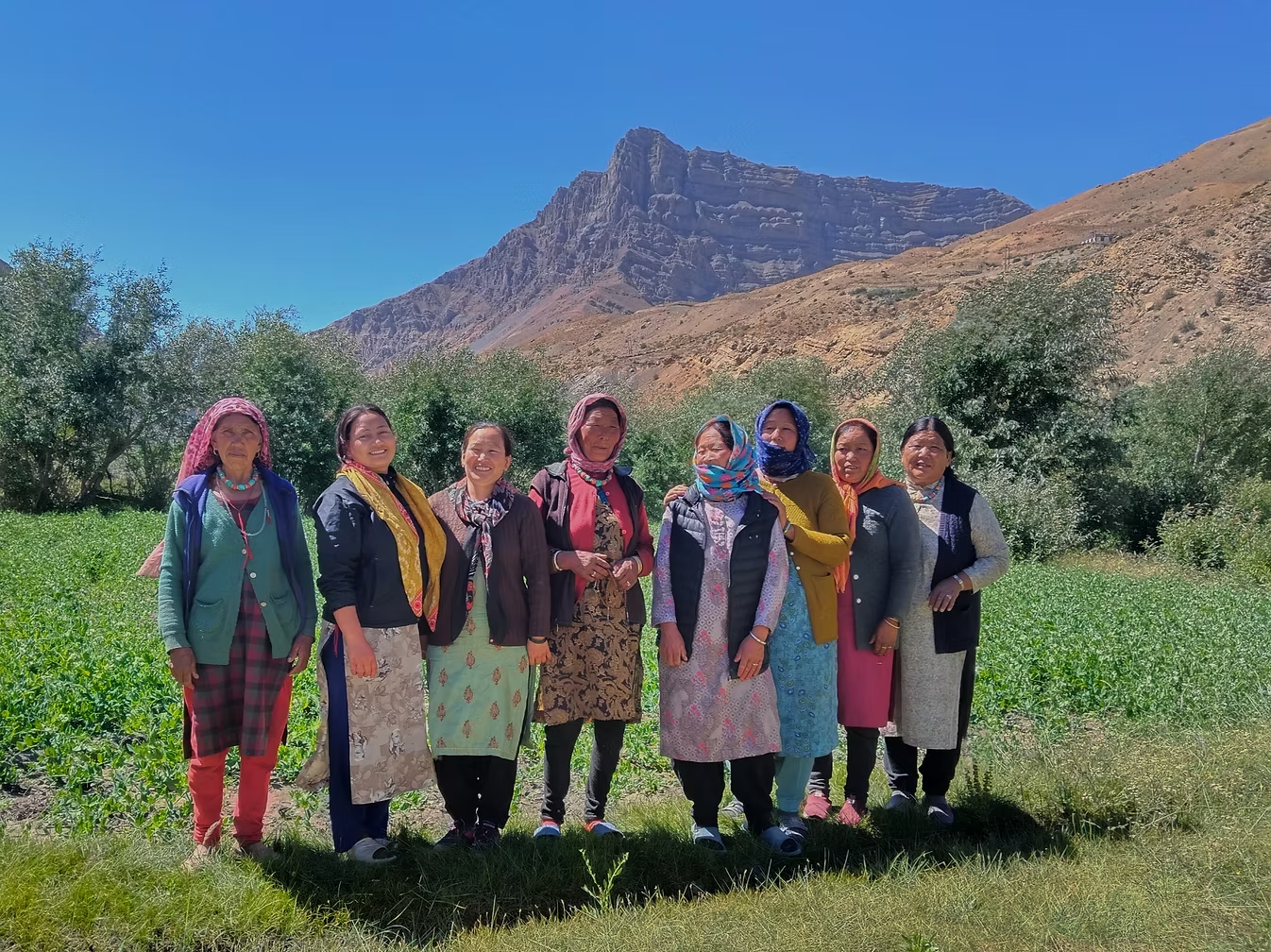
Kesang Dolker, Yangchen Dolma, Rigzen Youdon, Migmar   Dolma, Panama Dikit, Tsering Yangzom, Prabha Devi, Choddon, Dikit Dolma, Yangchen

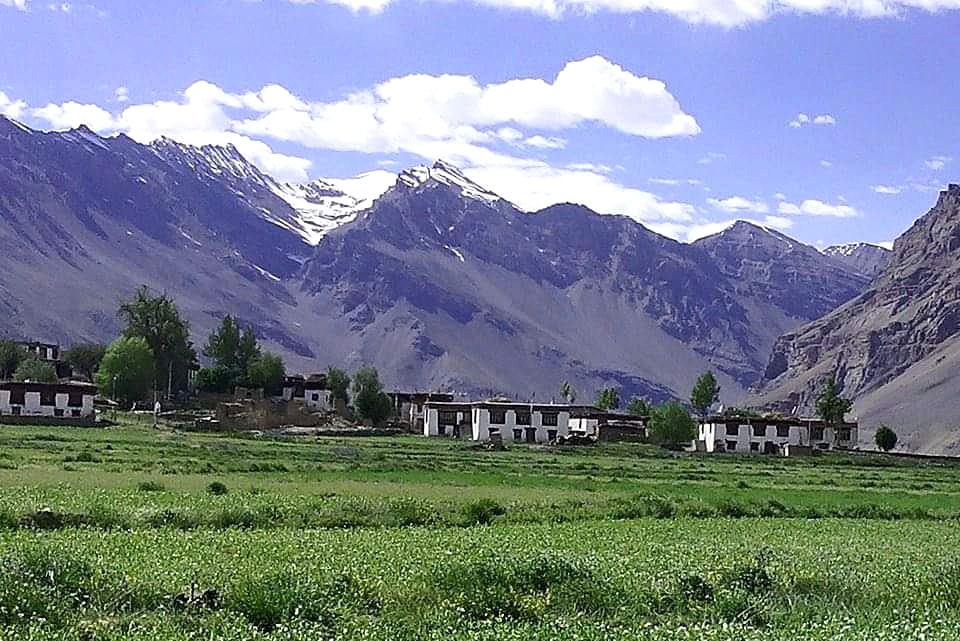
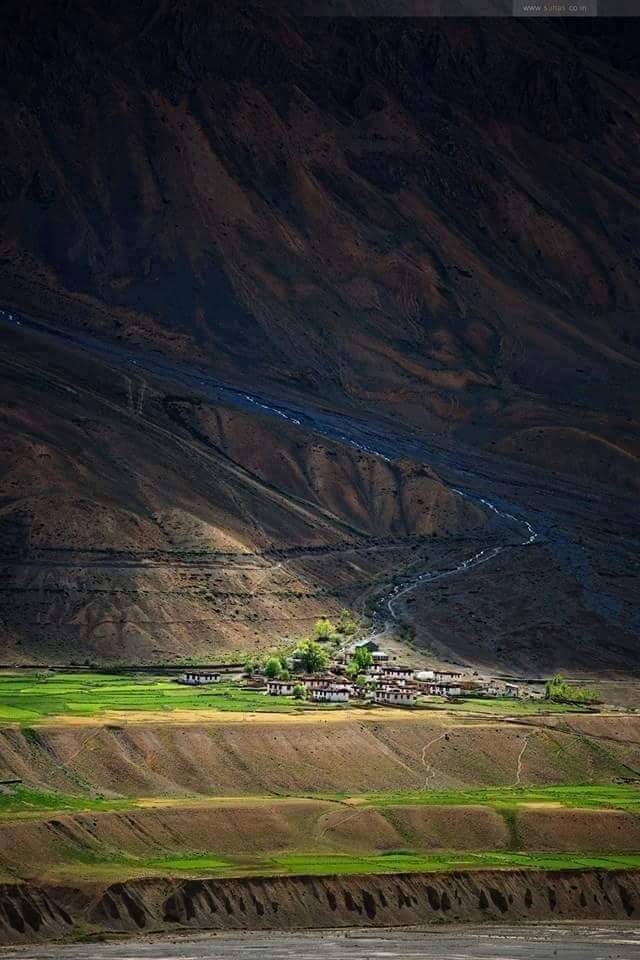
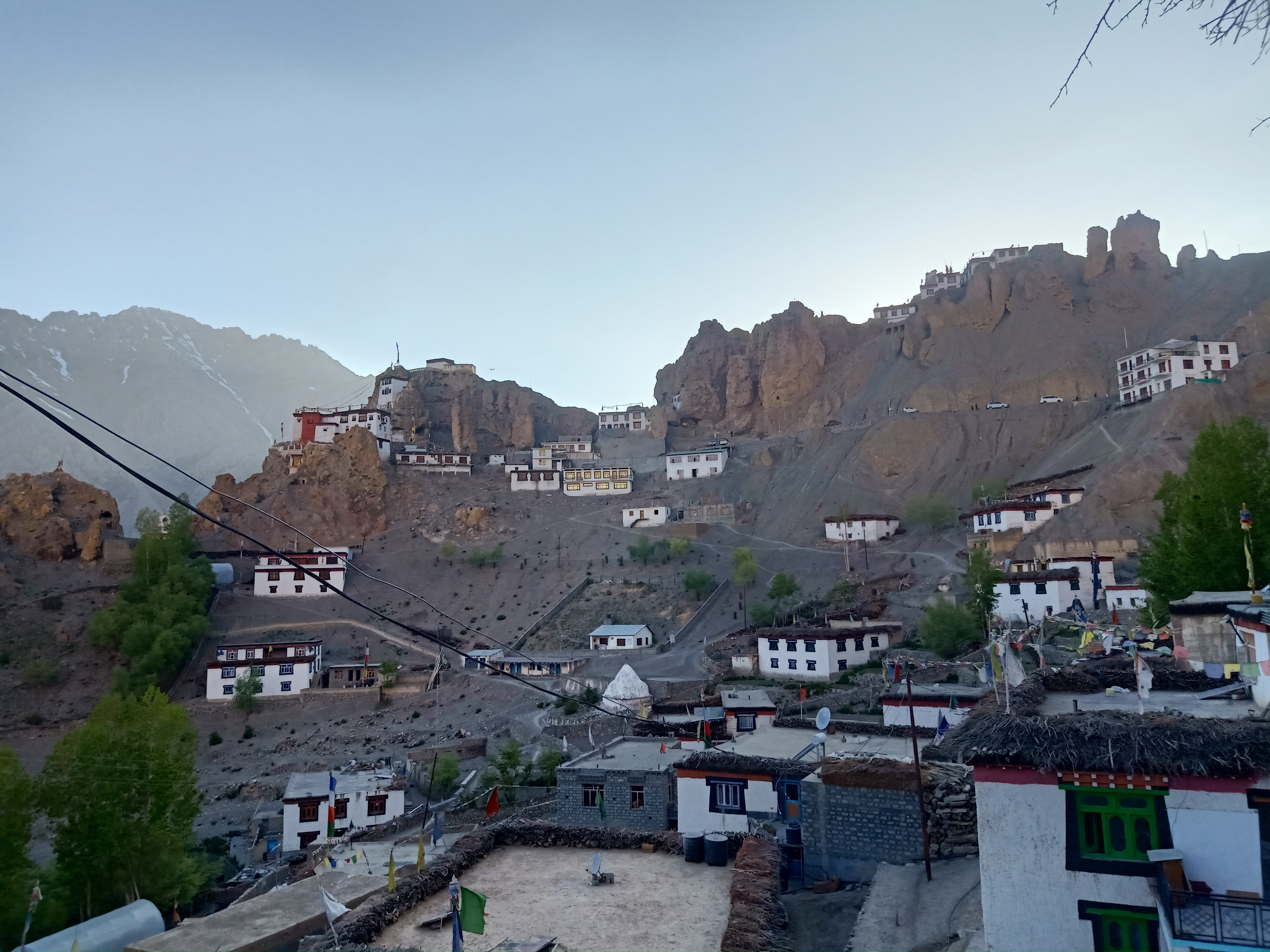
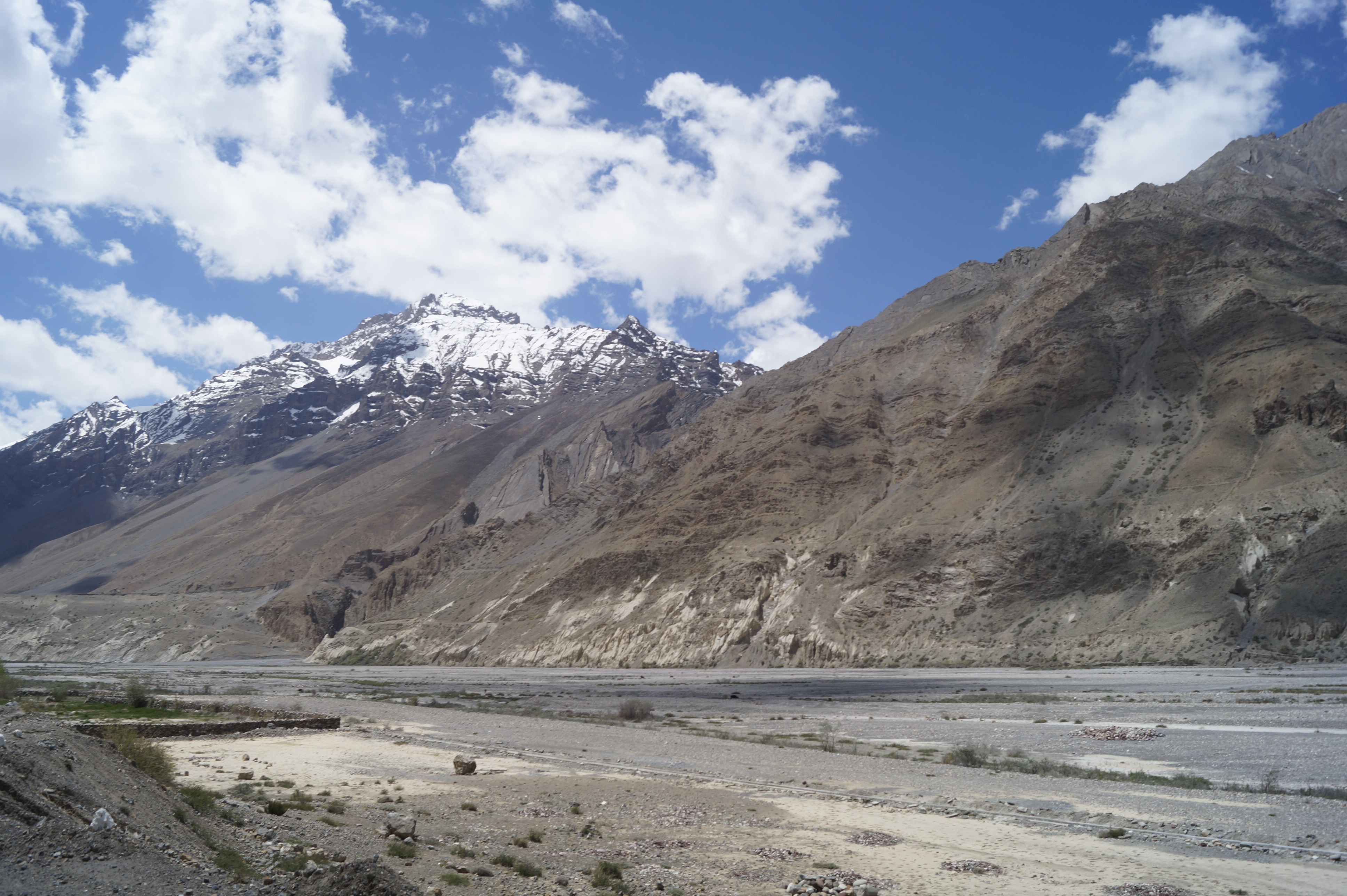
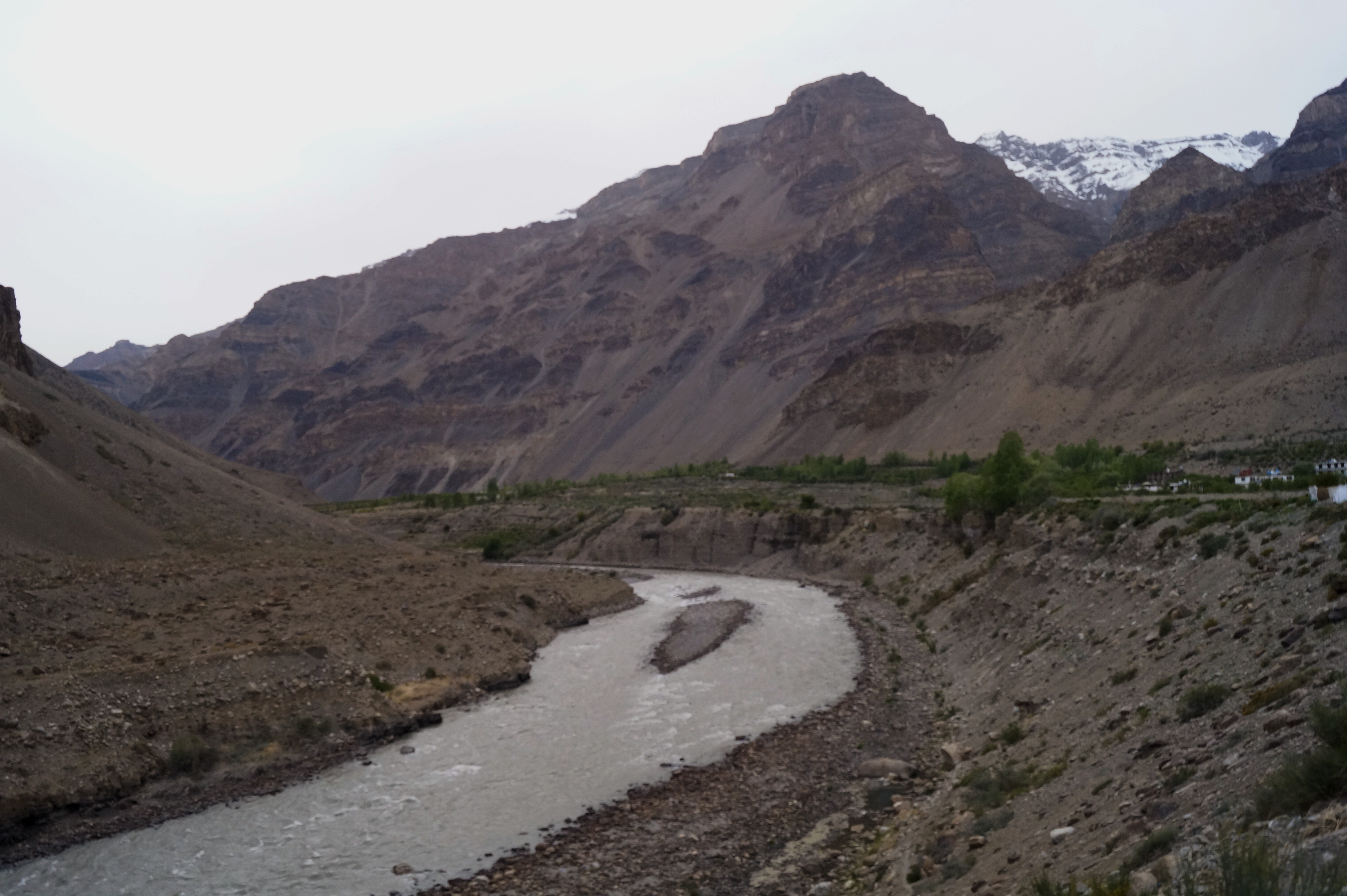
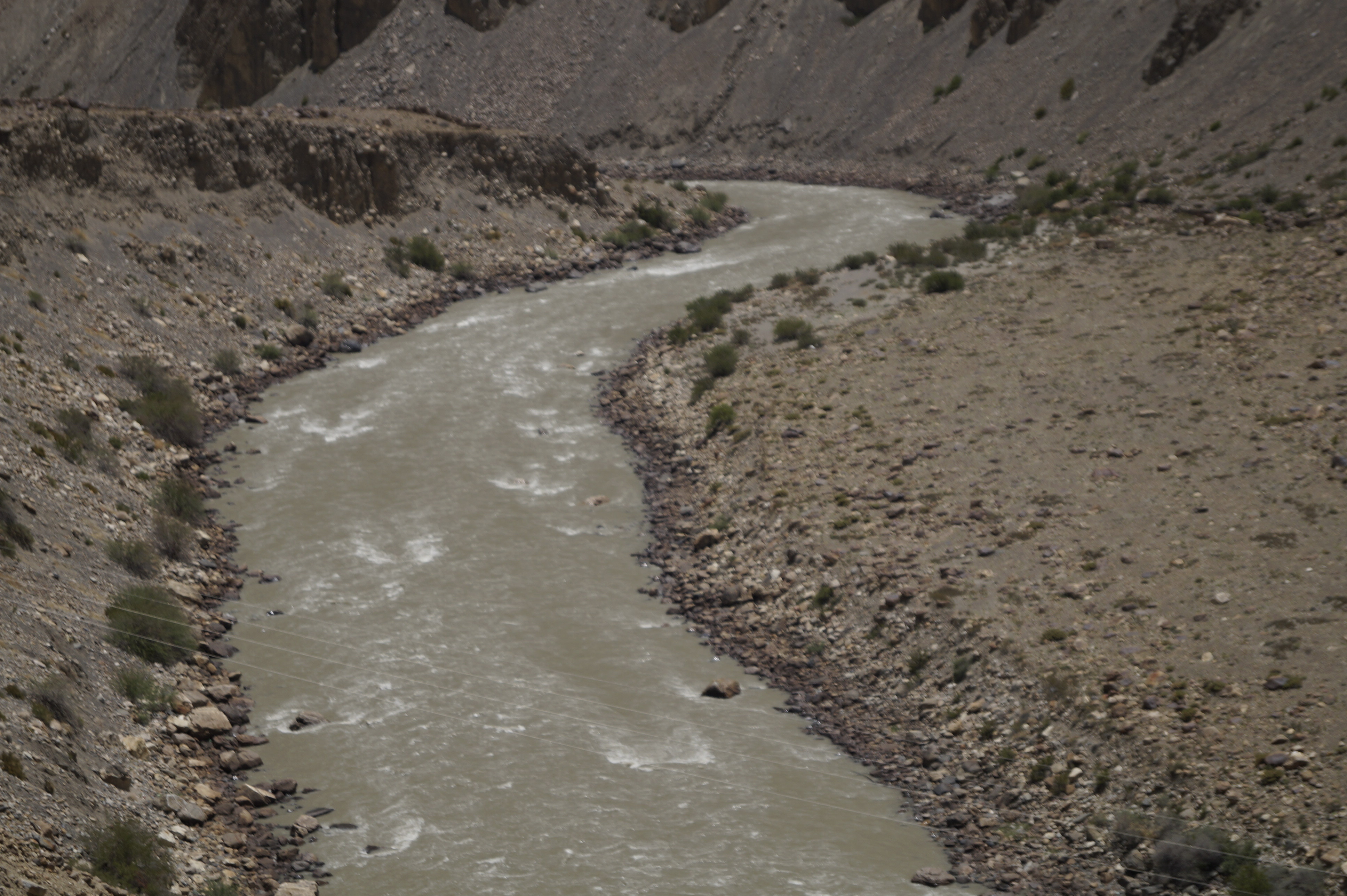
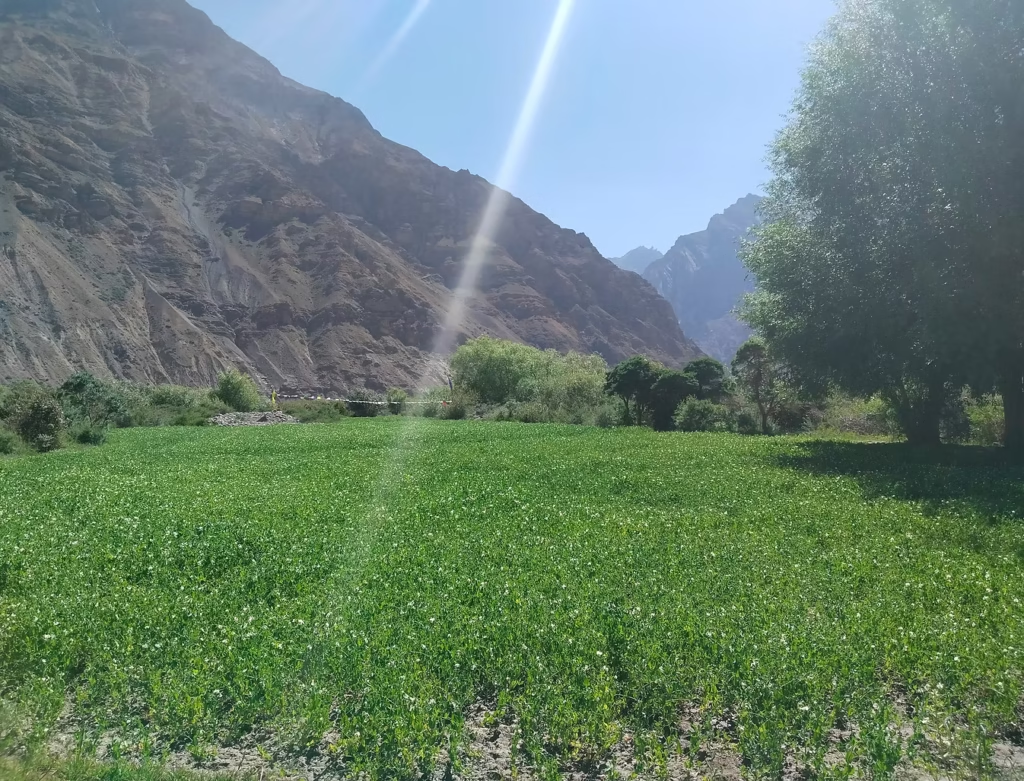
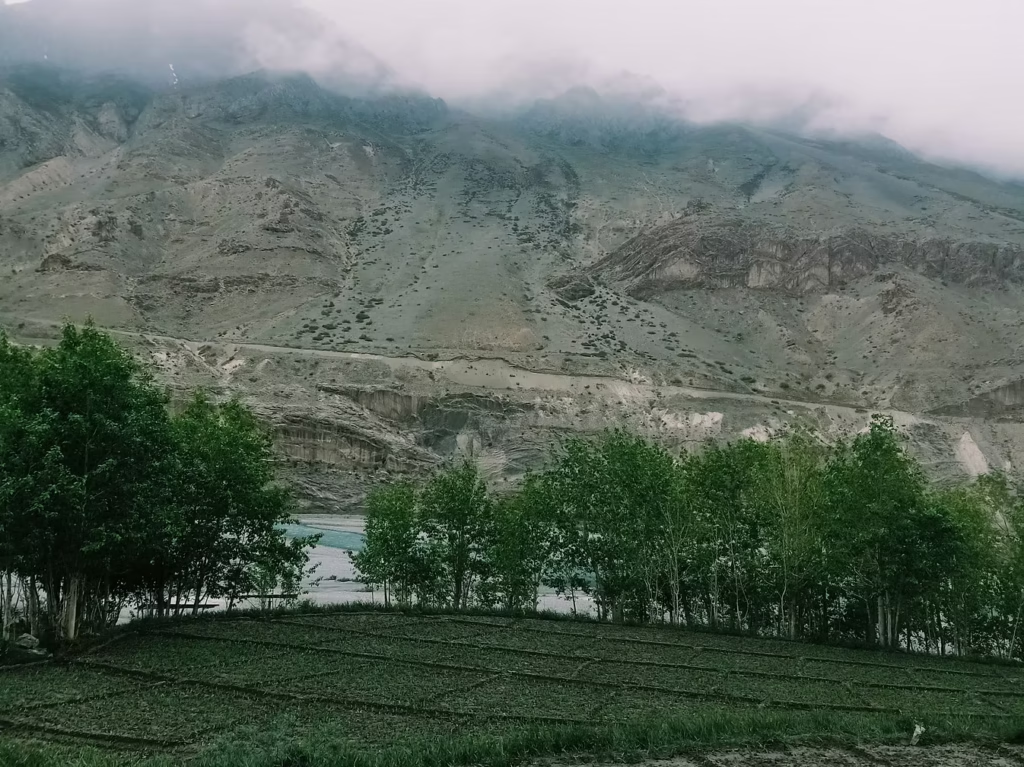
Shushuna is a quaint little hamlet in Spiti. Surrounded by high mountains, lush green fields and gushing rivulet that changes its hue from turquoise green to shades of grey.

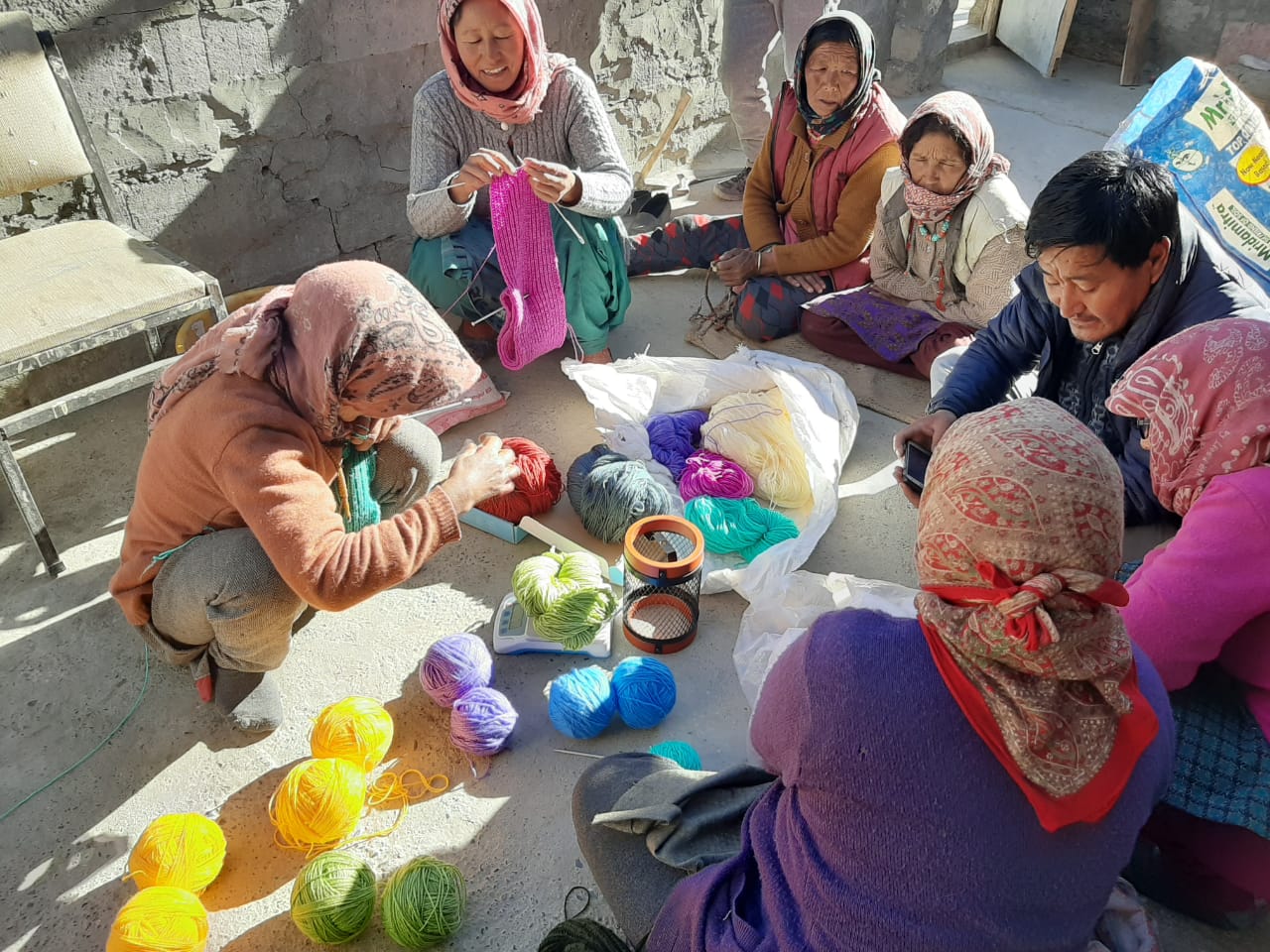
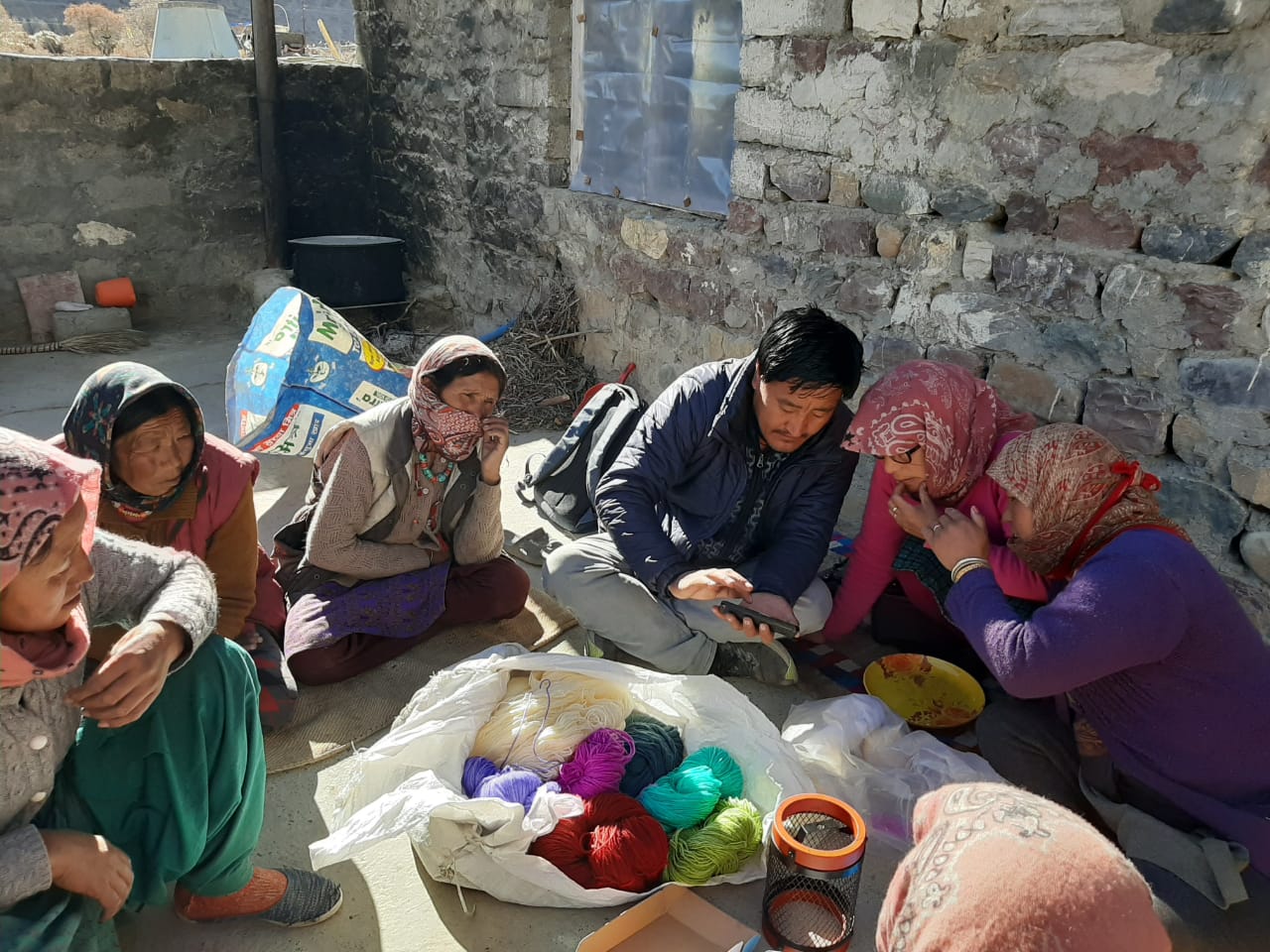
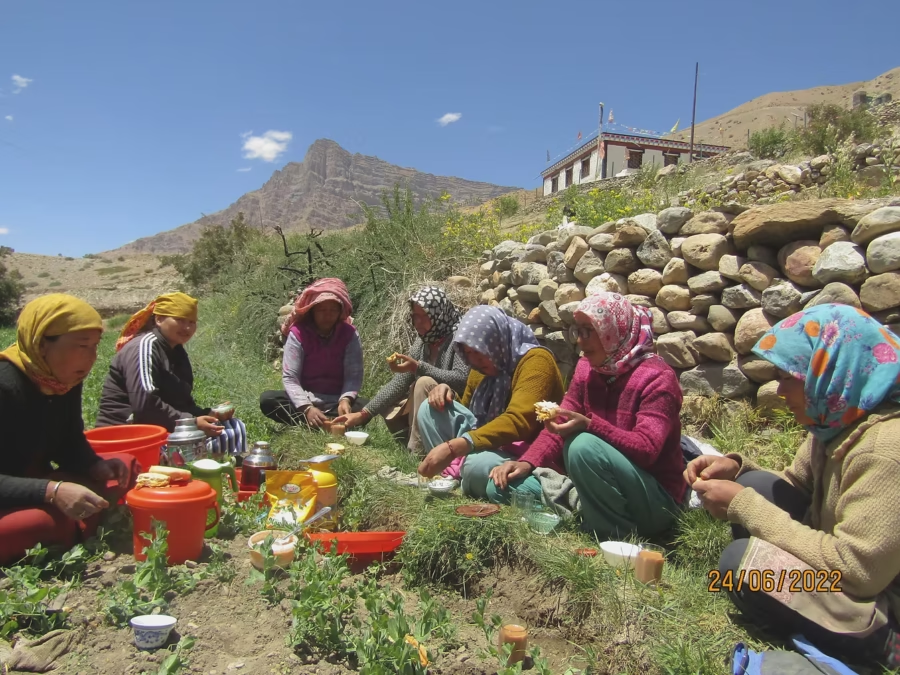
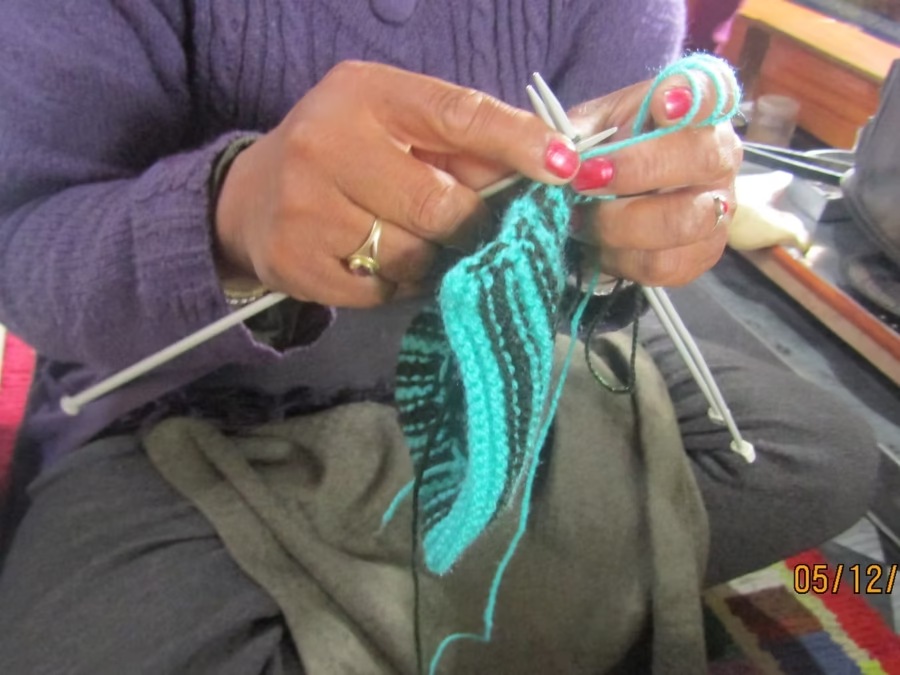
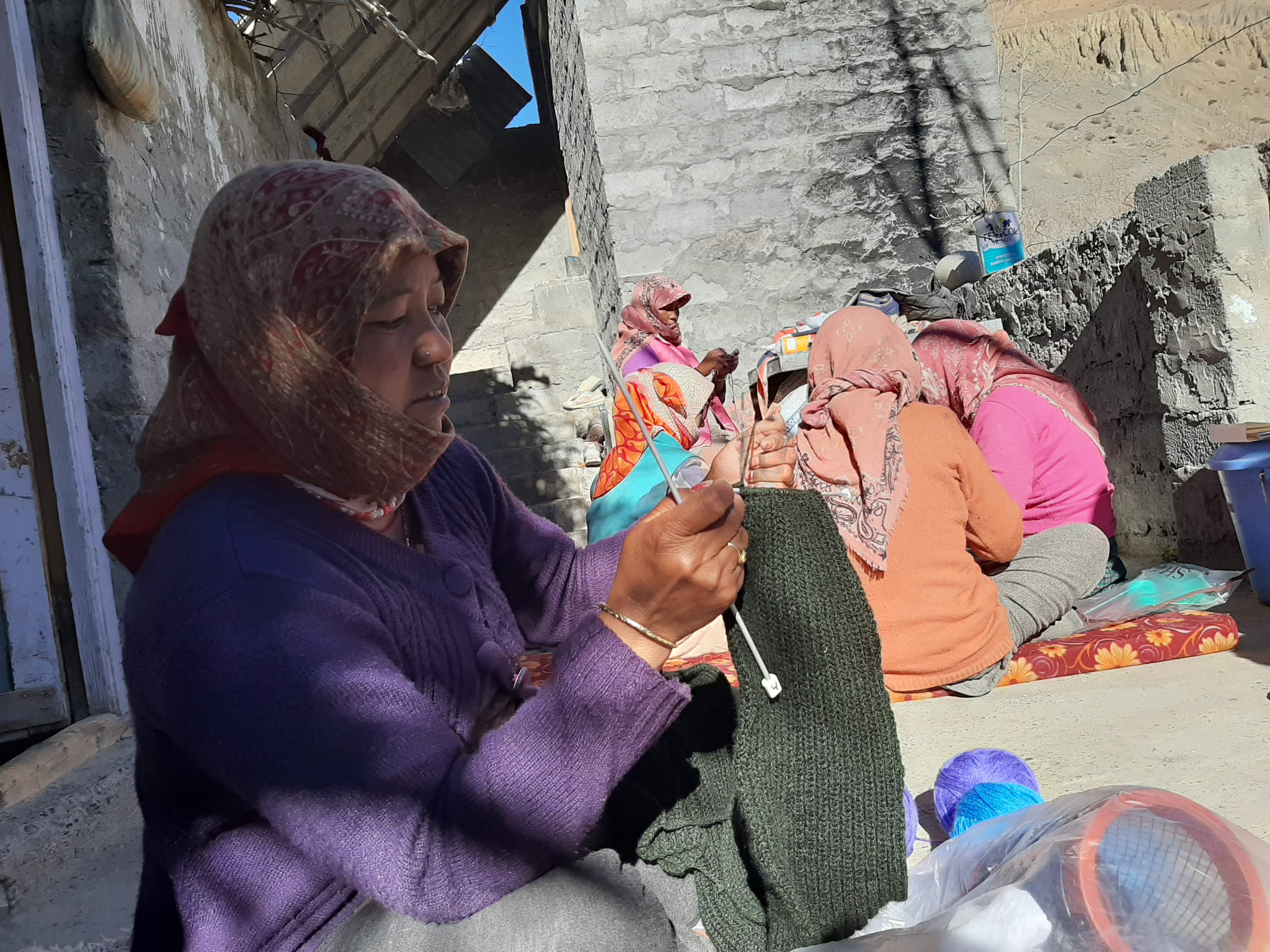
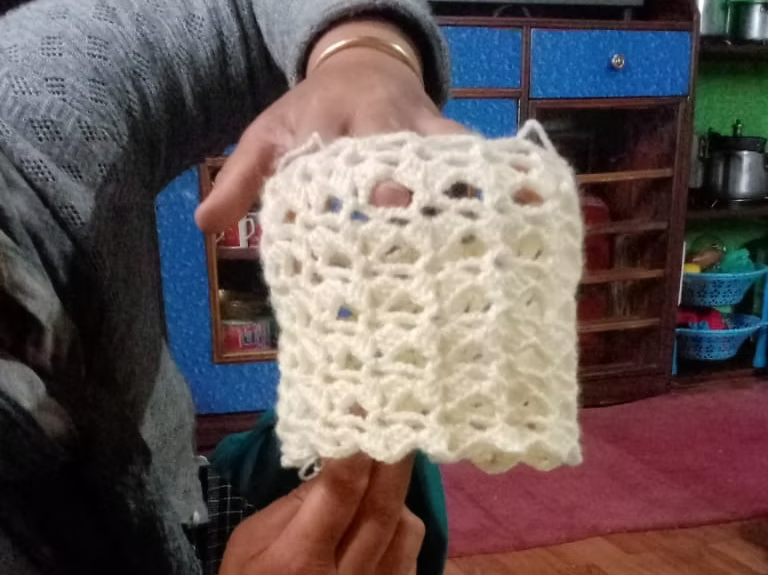
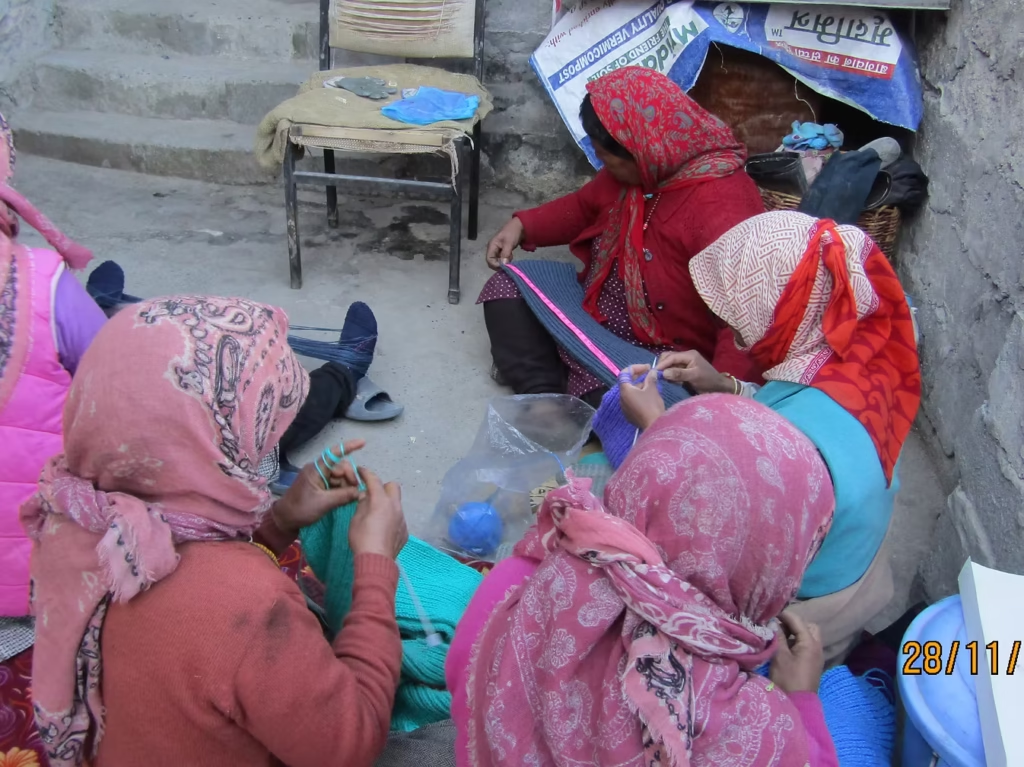
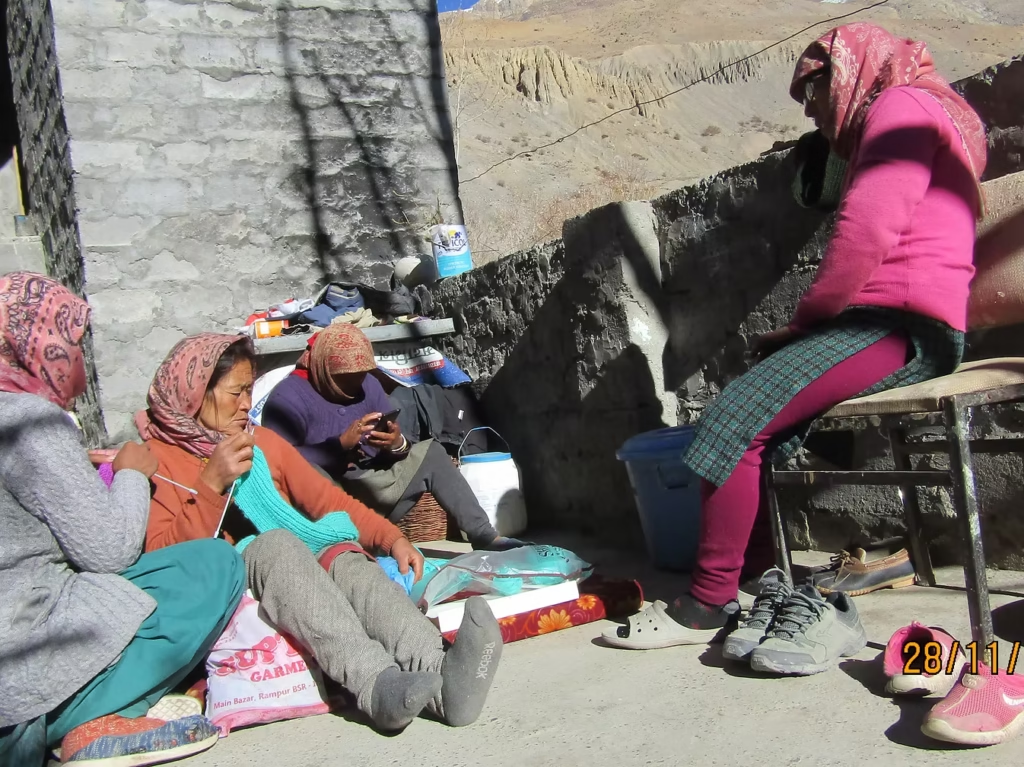
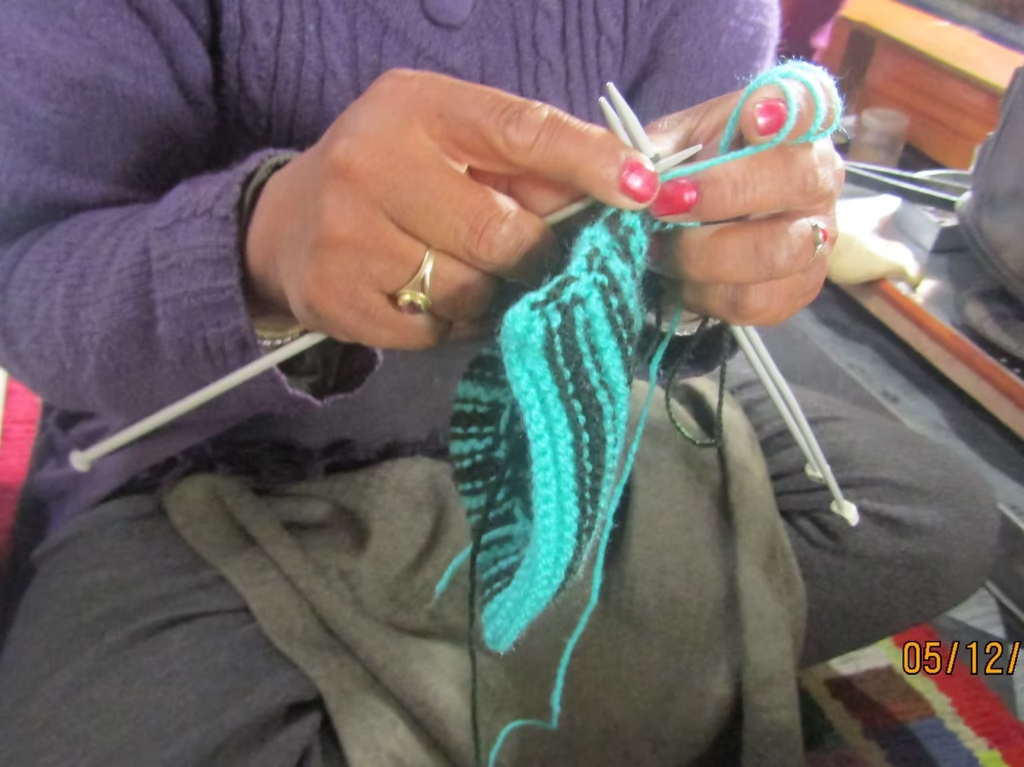
It is a bright sunny day in June and a group of women can be leisurely seen knitting sweaters, mufflers and socks for winter… an unusual sight during peak farming season in Spiti.

Spiti is a high Himalayan mountain desert with scanty rainfall and glacial melt water as the prime source for most villages. As such, water is sparse, the agricultural season and vegetation short, and lives vulnerable.

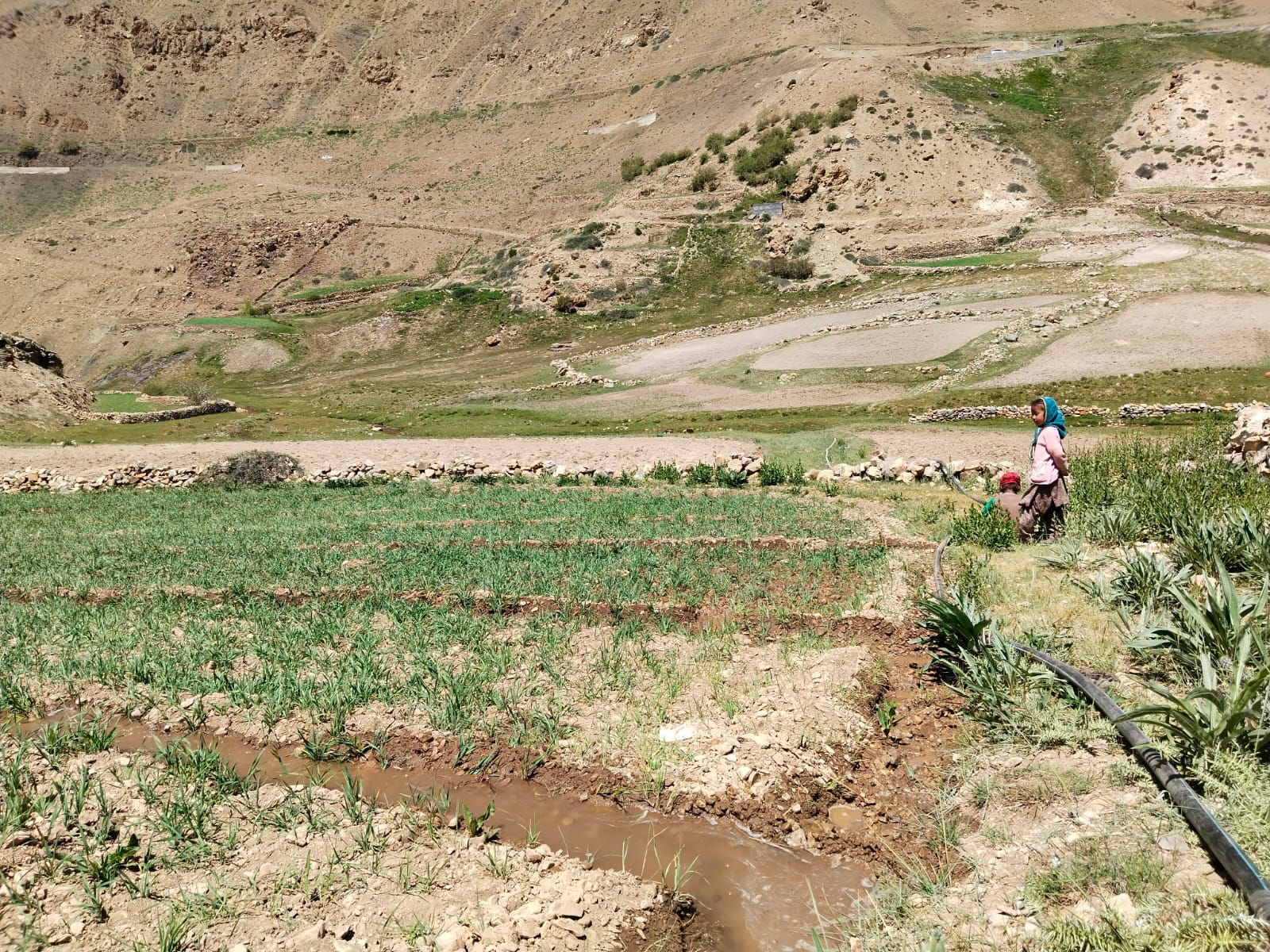
When most Spitian villages are drying up, fields unyielding, brimming Kuls of Shushuna signals benign possibilities.

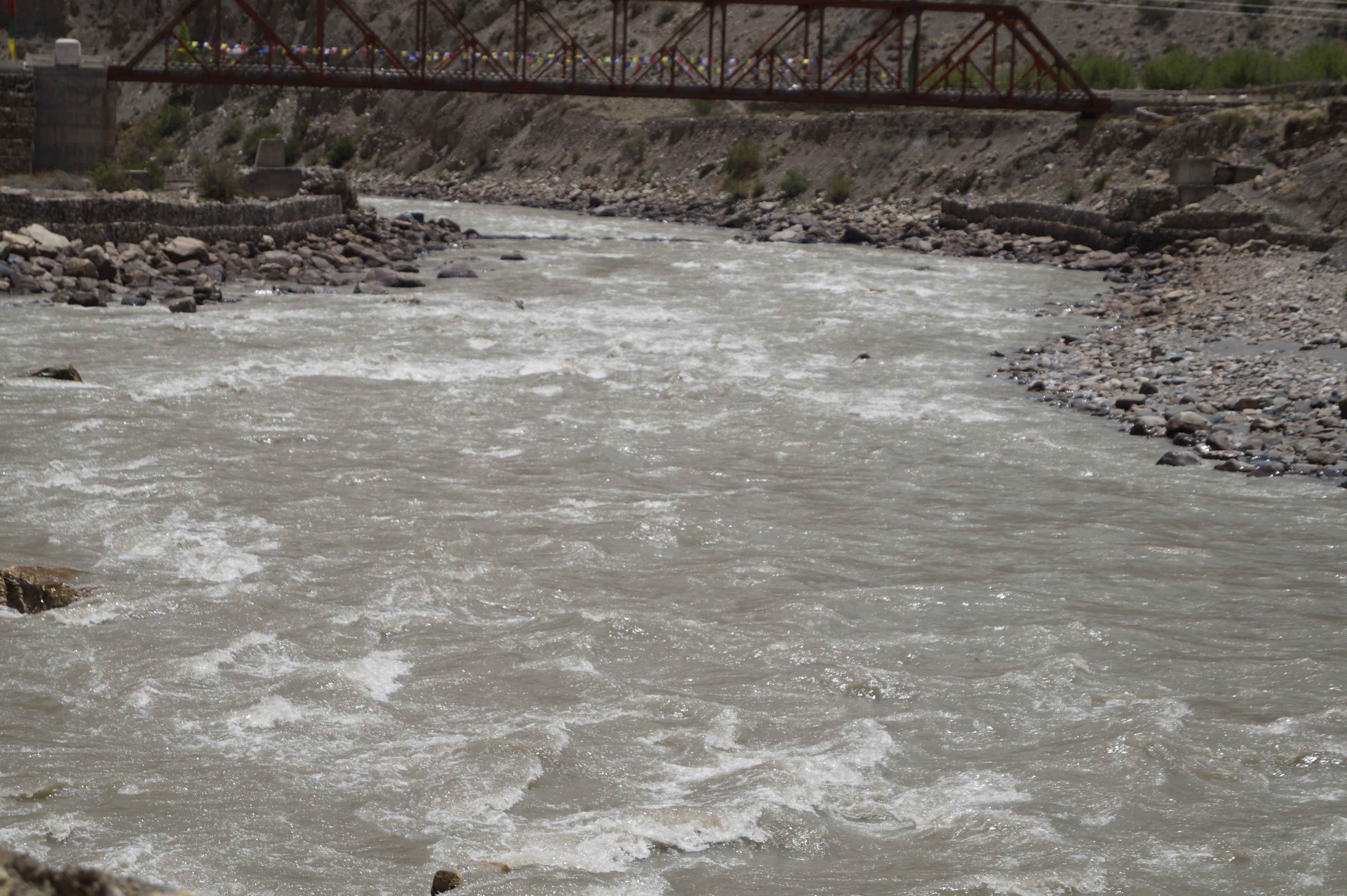
Situated along the river basin, the village owes its blessings to the mighty Spiti river and its tributaries from Pin valley which forms an essential lifeline to the resident farming community.

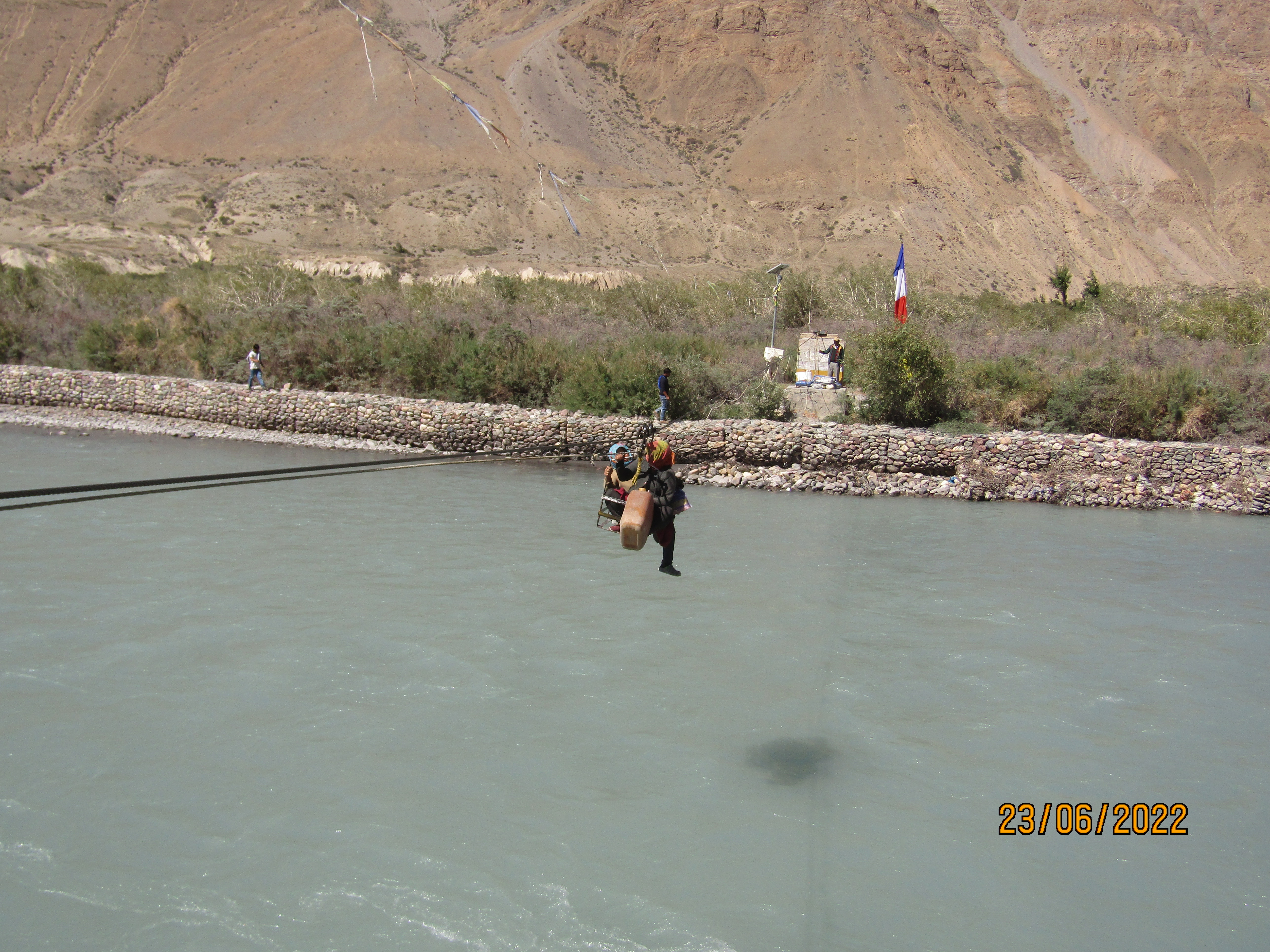
However, to reach the village, one has to take a suspended rope bridge. A dangerous feat villagers have to undertake every day! Women often pair up and cross it together. Holding essentials and looking out for each other – lest it can prove fatal!

Water which is located at a significant distance in most Himalayan villages, can be found in one’s backyard here – easing huge strain on villagers.

When your fields are at a reachable distance, and when you don’t spend hours fetching water, there’s so much more one can do including spending time with family and more time to self!

…exploring additional sources of income resulting in greater agency.

The photography group

When water is accessible, it leads to happier, healthier communities.

1346 1008 Women of Shushuna
The Many Tales Around Water
Photo: Kalzang Dolma

The Many Tales Around Water

Insights from Ane Butith Zangmo, Kalzang Dolma  with complimentary reading from Tobtan’s book “Spiti: A socio-cultural traditions”

Spiti’s oral literature has extensive reference to water. Many ancient verses, odes, hymns, folk songs, old lore allude to water with sheer reverence, refer it as a treasure and embody ancestral affiliation within physical, ecological, social-cultural and spiritual contexts. Each narrative is deeply embedded in local space – intimately bound up with natal soil, water bodies and their complex manifestation in local geography. Each village has a complex set of rules, systems governing their natural resources and finds its reflection in local peras (proverbs), wise sayings and old chants. These oral tales deviate in their form, structure and might not offer linearity of usual stories but are nevertheless recounted for generations for wisdom. Many of these tales are deemed to be true, many filled with mythical, fantastical elements showing deeper values of interconnection and indigenous stewardship.

Many scholars studying Spitian literary tradition find an association of water with the name Spiti (Spyi Ti/Pi ti) itself. Sir Alexander Cunningham has explained that many terms in Western Himalaya, especially the names of rivers are added with the suffix “ti” with this significance. The word “ti” is also found in some dialects of Kinnaur and Lahual which means “water”. In Spiti, the word “ti” is interchangeably used for “chhu” which means water colloquially. This is aptly reflected in the traditional irrigation system and as recounted by many female farmers in Spiti. Owing to scanty rainfall, Spitians primarily relied on glaciers for irrigation and there are careful rules around water distribution within farming households. There are different watering stages during agricultural season, each binding their own values to the farm life: Yurma, Srak-ti, Gsum-ti, Dsag-ti, Minchu. The first watering occurs after the first month of seeding which is called Yurma – the most important watering work as during this time saplings are young and it needs careful tending. The second watering implies a more urgent need for water as the days are hot and fields parched. During second watering Srak-ti, the saplings are sun-burnt (Srak pa – burnt in spitian) and therefore in greater need of water. Gsum-ti refers to the third cycle of watering and Men-chu means watering cycle to ripen the seeds. This way, Spitian literary and cultural tradition signifies usage of “ti” (water) in layered manner and embodies rich tradition around it.

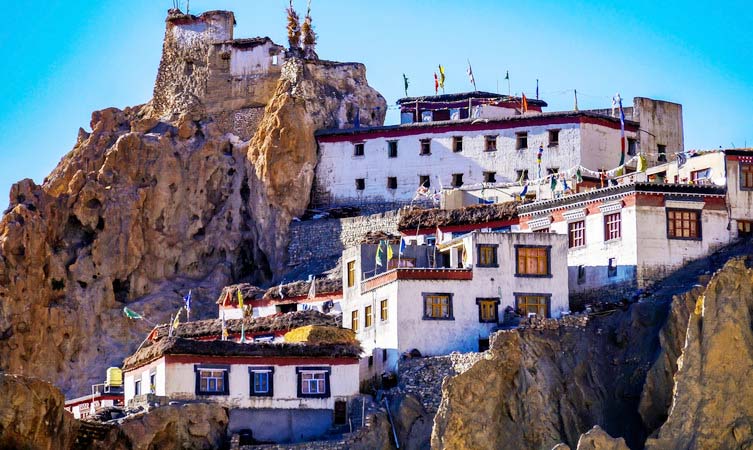
Another tale related to water that’s recounted relates to Dhankar village. It is a high elevation village in Spiti and used to be capital of Spiti before it was shifted to Kaza. The village landscape comprises flat tracts of land on high mountains, steep cliffs and sloped hills. These high settlements are located more than half a kilometer above the river bed and therefore access to river water is very difficult, the villagers mostly relied on glacier water for all their primary needs and once a local shepherd beautifully expressed his experiences of local topography in a form of Pera (local saying).

Many villagers recite it orally during farming work to find solace and humor in hardwork.

“Nyi-ma shar-she snga la skyod-che phyi-ya. Lug-zi sdug-po’i gnas yin…
Brang-mkhar chhang-sa ma-ba la do-ya ma-ba. Ra ro-ba sdug-po’i gnas yin…
Brang-mkhar gyen-yur ma-ba la chhun sna ma-ba. Chhun-pa sdug-po’i gnas yin….”

It can be roughly translated as:
The sun rises here at Dhankhar early, but sets late, which makes the day longer and is cause of concern for the shepherds who have to graze the cattle and sheep at high pastures for a longer time.

In Dhankhar, there are plenty of chhang (local alcohol) but also the place is too hilly and there is too much up and down, which is the cause of great worry for drunkards.

In Dhankhar, the irrigation channels are located at the places too high and the sources too far, which is a great difficulty for the women who have to draw water for irrigation from the upper Kuls and much time is wasted in walking up and down between two distant places.

Similarly, there is a saying in Spitian tradition about a group of three villages Lari, Tabo and Poh

“Gong mtso rdol song na, chog-la yul gsum lhag”

which means “if the lake above bursts, the three villages of chog-la will be destroyed”. The lake here refers to Mane lake near Tabo.

Photo: Kalzang Dolma

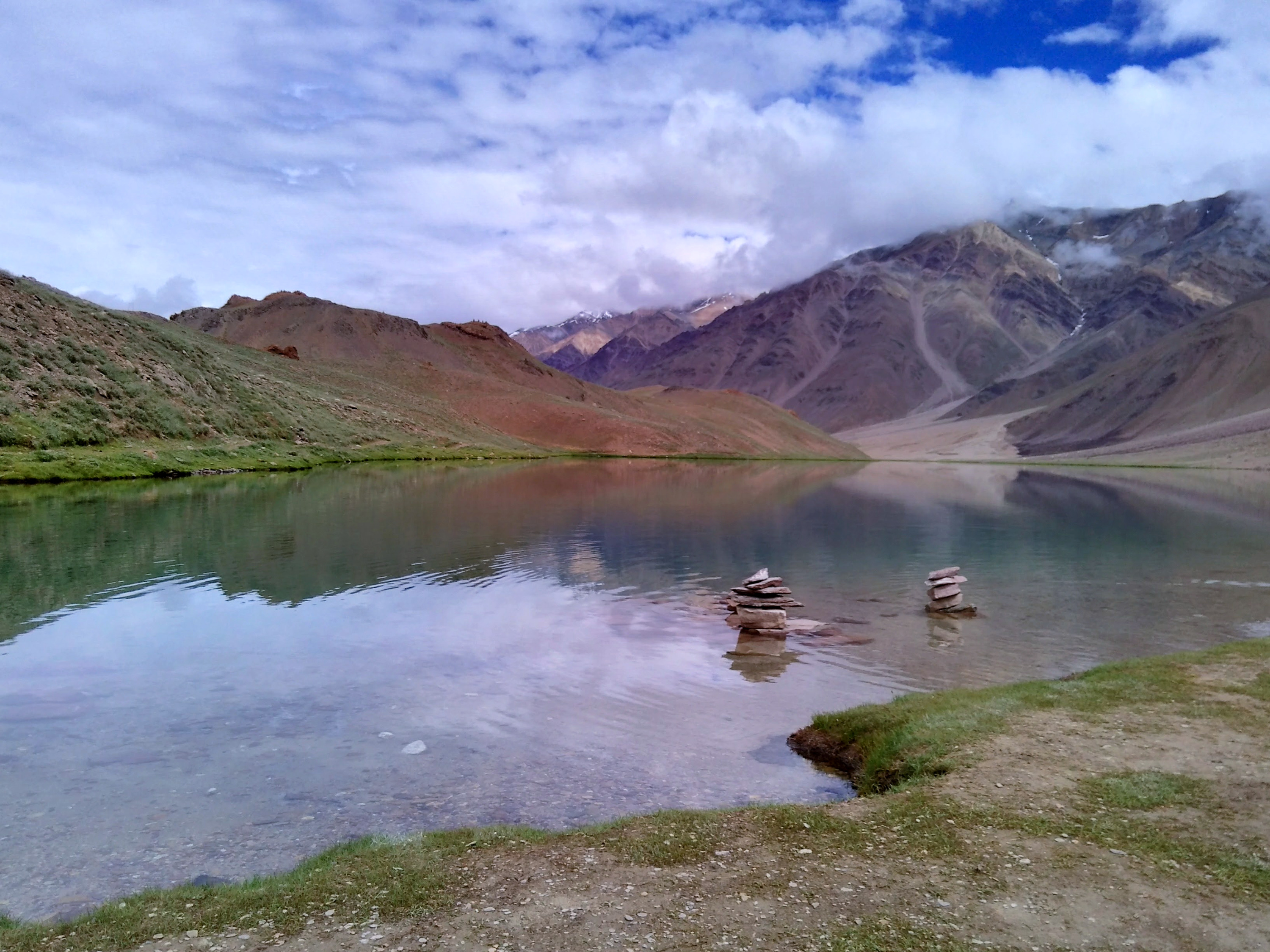
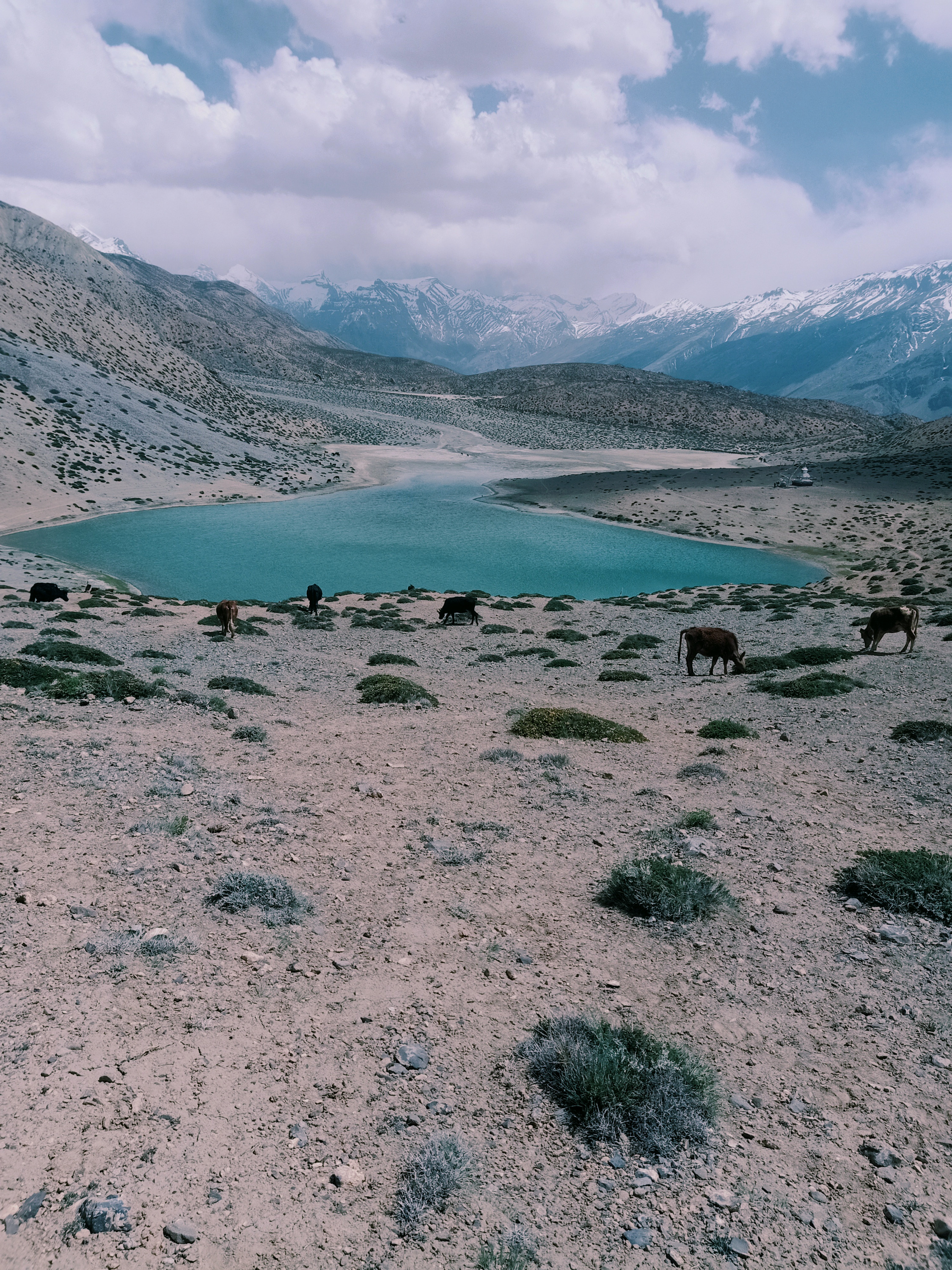
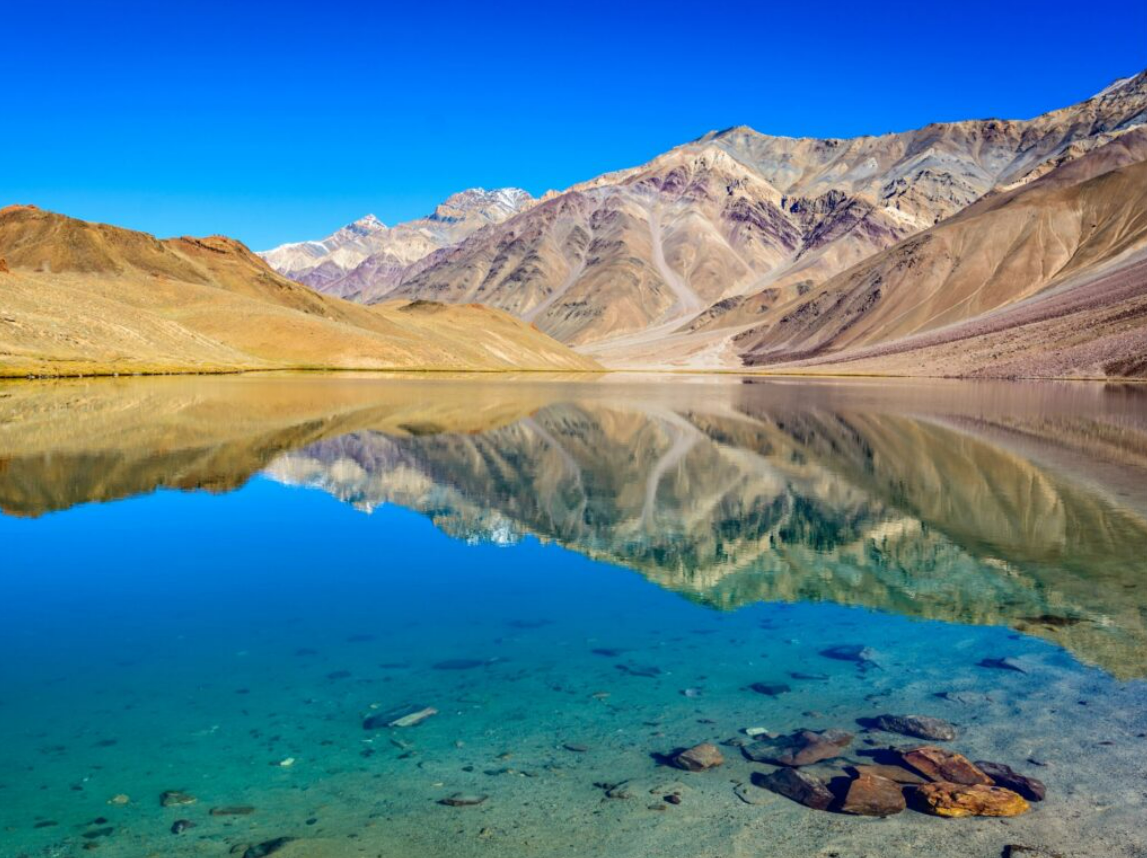
There is then another interesting folk story related to Chandertal lake in Spiti. It is told that there was once a shepherd from Rangrik village who used to take the flock of his sheep for grazing in the meadows near the lake of Chandertal. The shepherd was skillful in playing flute and he enjoyed playing many melodious songs on the shore of the clear Moon-lake. In the lake there lived a Khandoma, a water goddess. The Khandoma could not resist the attraction of the enchanting melody of the flute echoing over the calm surface of the ethereal lake. She became a regular visitor to the lake to listen to the music.

One day as the shepherd was playing the flute the Khandoma appeared before him and spoke to him about her love for his melodies. They met regularly and soon they had a handsome boy out of the union. The Khandoma had asked him to keep their relationship a secret as the union between earthly beings and water dwellers like her from different realms are prohibited. The shepherd vowed to keep this a life long secret. But the shepherd was already married and had a wife back in his village Rangrik. One day he had an argument with his wife and in fit of rage he blurted out that he has a spouse – a Khandoma living in Chandertal and before her she was insignificant.  The wife challenged him to bring her home. The shepherd accepting the challenge went to the lake and started playing the flute as usual. The Khandoma appeared with the child who then was infected with a severe skin disease and was disfigured. She handed over the child to the shepherd and disappeared in the lake never to be seen again. The shepherd searched for her everywhere and tried calling her back through a series of melodies – he even tied a long rope on a wooden log and threw it in the lake to gauge the depth of water so that he could go look for her underneath. His rope fell short but it couldn’t measure the depth of the lake.  And thus, the heavenly relationship of love came to an end.

It is said that the descendants of the deceased child still live in Rangrik and his relics are preserved in their Cho-Khang (prayer room) and revered. Villagers still believe that she resides in her abode in the water body and routinely offers prayers, does rituals, purifies it, cleans it and maintains it as a holy site.

It is a curious tale open to different kinds of interpretations but according to local mythology, this folklore urges for the need to protect, conserve and value water. The story also portrays the community’s reverence to local deities which are associated with multiple features of local geography like land (Sa- dak: protective land deity) and water (Klu: serpent deity in water). The Spitian belief system reveals complex relations between people, environment and various spirits. Land and many other natural entities are imbued with the notion of personhood and agency. It inquires deeper meaning of landscape and environment and projects how religious ethics and ecology are related.

3000 2250 Kalzang Dolma
Trekking the Forests of Himachal
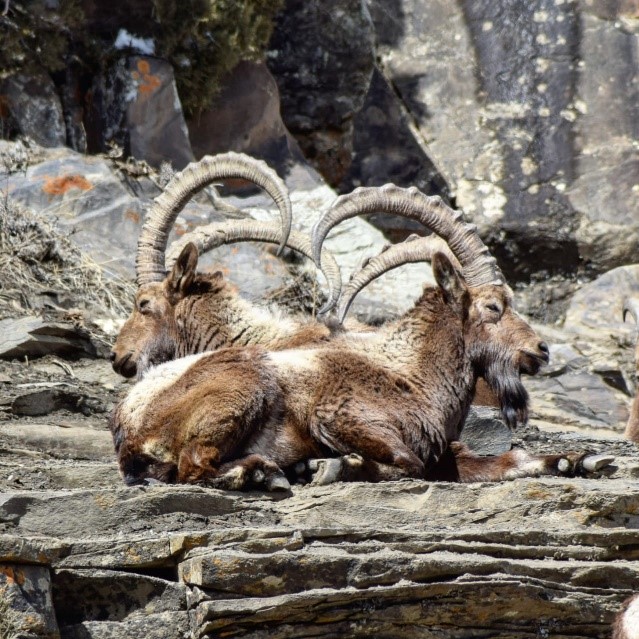
Two male ibexes resting | Photo: Tinkle Bhatt

Trekking the Forests of Himachal

To be a forest guard in Himachal Pradesh means trekking in some of the harshest terrains to document and protect the most vulnerable wildlife. But to me, that is what brings the thrill to my work. A few months back while I was patrolling the forest near Yangla village alone, as I mostly do, I came to learn that a black bear was also roaming the same areas that I had covered. The thought of encountering a bear is a scary one, and I was glad that I didn’t cross paths with the animal. At the same time, I was a little disappointed as I did not get the chance to see it.

Two male ibexes resting | Photo: Tinkle Bhatt

Being a forest guard takes you to new places, you get to meet new people and experience their culture and history and observe their relationship with wildlife. Lahaul offers a lot of opportunities in this regard with its rich culture and heritage. People here really respect forests and nature and it makes my work more enjoyable.

Since I get to travel a lot, I like to document it all through photographs and wildlife photography, although challenging, it is something that I enjoy a lot. This photograph of two male ibex resting on a rock was taken by me on March 17, 2020, at Stingari. I was trekking with a senior who told me that if we stay calm and respectful, the ibex will not run away and they will also take interest in us.

639 639 Tinkle Bhatt