Conservation

Kinnaur Bird Festival 2026 | Documentaries by Locals

Kinnaur Bird Festival 2026 | Documentaries by Locals

The first Kinnaur Bird Festival was held from 8-10 May, 2026. It was organised by Aum.kinnaur a collective of local youth with support from the District Administration of Kinnaur. But what went into putting together this successful event? Watch our story to find out and relive the joy.

A film by Varun Chauva.


पहला किन्नौर बर्ड फेस्टिवल 8-10 मई, 2026 को आयोजित किया गया। इसका आयोजन स्थानीय युवाओं के एक समूह द्वारा, किन्नौर के ज़िला प्रशासन के सहयोग से किया गया। लेकिन इस सफल आयोजन को साकार करने में क्या-क्या लगा? यह जानने और उस खुशी को फिर से जीने के लिए हमारी कहानी देखें।
1200 655 Varun Chauva
Fairies of Kibber | Documentaries by Locals

Fairies of Kibber | Documentaries by Locals

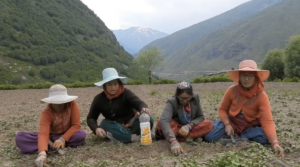
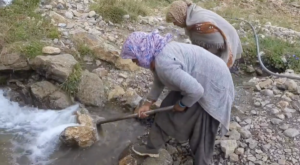
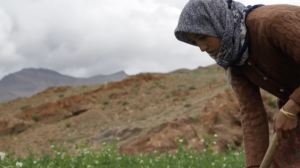
Women in the high altitude village of Kibber carry the weight of water, faith and the future. Fairies of Kibber follows the extraordinary story of women who have become guardians of water in a climate-challenged world.

A film by Varun Chauva.

Music via. Pixabay:
gm6-fmaj7-bbm6-jazz-improvisation-215332.mp3 by drebddronefish
jazz-background-music-349165.mp3 by BackgroundMusicForVideos
loose-and-lazy-blues-110453.mp3 by ShidenBeatsMusic
sleigh-ride-snowflake-swing-10951.mp3 by JuliusH


किब्बर के पहाड़ी गांव में रहने वाली महिलाएं जल, आस्था और भविष्य का भार अपने कंधों पर उठाती हैं। ‘फेयरीज ऑफ किब्बर’ जलवायु परिवर्तन से जूझ रही दुनिया में जल की संरक्षक बनी महिलाओं की असाधारण कहानी बयां करती है।

1200 670 Varun Chauva
Concrete over the forest | Documentaries by Locals
Temp

Concrete over the forest | Documentaries by Locals

2025 was the wettest monsoon in Himachal Pradesh after 29 years. The State has been witnessing a rise in extreme weather events that cause widespead damage and loss of life. Is this a new pattern? Are our mountains hurting? Concrete over the forest follows one such event witnessed in September 2025.

A film by Varun Chauva.


हिमाचल प्रदेश में 29 वर्षों में 2025 का मानसून सबसे अधिक वर्षा वाला रहा। राज्य में चरम मौसम संबंधी घटनाओं में वृद्धि देखी जा रही है, जिनसे व्यापक क्षति और जानमाल का नुकसान हो रहा है। क्या यह एक नया चलन है? क्या हमारे पहाड़ पीड़ा झेल रहे हैं? इस कहानी में सितंबर 2025 में घटी ऐसी ही एक घटना का वर्णन है। वरुण चौवा द्वारा निर्देशित फिल्म।

Sources:
Weather reports
https://mausam.imd.gov.in/shimla/mcda…
https://sandrp.in/2025/10/01/sw-monso…

Global forestry watch report for Shimla https://www.globalforestwatch.org/das…

Relevant news articles
https://timesofindia.indiatimes.com/c…
https://www.news18.com/news/india/ami…
https://timesofindia.indiatimes.com/c…

Music via. Pixabay: Balanced calm-457663 by Edmand Edroff (https://pixabay.com/users/emand_edrof…) Atmospheric soundscape-152493

1200 668 Varun Chauva
The Praja system of Pangi valley

The Praja system of Pangi valley

The Pangi region in Himachal Pradesh is among the farthest valleys of this Himalayan State. Pangi Valley is prominent for its dense Birch forests that are home to a treasure of medicinal plants and some rare wildlife.

For generations, the people of Pangi have managed these forest commons through their ‘Praja system’. The Praja is a village-level body comprising of a member from every family in the village that sets rules for the management of village commons and the overall welfare of the village. It ensures regular monitoring and imposition of fines on offenders. It also has in place mechanisms for support and conflict resolution. The Praja forms one-axis for managing village commons, in a group of polycentric institutions that include the local Women’s council, the village Monastery and other formal government bodies.

We thank Shri. Biru Bodh (of Sural Bhatori Camp), Smt. Savita and Smt. Kavita (from Sural Tai), Shri. Wangchuk (from Hudan Bhatori) and Shri. Sonam Dorje (from Hillu Tuan) for speaking with us.

Thanks also to Ms. Ritika (IAS) who served as the Resident Collector in Pangi and made us aware of Pangi’s unique Praja system.

HimKatha Team: Akshata Anand, Shri. Kesang Chunit and Amar Singh of Gumrang.


हिमाचल प्रदेश का पांगी क्षेत्र इस हिमालयी राज्य की सबसे दूरस्थ घाटियों में से एक है। पांगी घाटी अपने समृद्ध बर्च वनों के लिए प्रसिद्ध है, जो औषधीय पौधों और कुछ दुर्लभ वन्यजीवों का घर हैं।
पीढ़ियों से, पांगी के लोग अपनी ‘प्रजा व्यवस्था’ के माध्यम से इन वन भूमि का प्रबंधन करते आ रहे हैं। प्रजा एक ग्राम-स्तरीय निकाय है जिसमें गाँव के प्रत्येक परिवार का एक सदस्य शामिल होता है जो गाँव की भूमि के प्रबंधन और गाँव के समग्र कल्याण के लिए नियम निर्धारित करता है। यह नियमित निगरानी सुनिश्चित करता है और उल्लंघन करने वालों पर जुर्माना लगाता है। इसमें सहायता और संघर्ष समाधान के लिए तंत्र भी मौजूद हैं। प्रजा, गाँव की भूमि के प्रबंधन के लिए एक धुरी का निर्माण करती है, जो बहुकेंद्रीय संस्थाओं के एक समूह में शामिल है, जिसमें स्थानीय महिला परिषद, गाँव का मठ और अन्य औपचारिक सरकारी निकाय शामिल हैं।

हम श्री बीरू बोध (सुराल भटोरी कैंप), श्रीमती सविता और श्रीमती कविता (सुराल ताई), श्री वांगचुक (हुडन भटोरी) और श्री सोनम दोरजे (हिल्लू तुआन) को हमारे साथ बातचीत करने के लिए धन्यवाद देते हैं।

सुश्री रितिका (आई.ए.एस) का भी धन्यवाद, जिन्होंने पांगी में रेजिडेंट कलेक्टर के रूप में कार्य किया और हमें पांगी की प्रजा व्यवस्था से अवगत कराया।

हिमकथा टीम: अक्षता आनंद, श्री. केसांग चुनित और गुमरंग के अमर सिंह जी।

1200 668 Ajay Bijoor
Sincerity of Saryan | Documentaries by Locals

Sincerity of Saryan | Documentaries by Locals

Sincerity of Saryan peeks into the world of Preeti Saryan, a young ecologist from Mebar village in Kinnaur. Always fascinated by the forests she grew around, Preeti formally studied plant ecology and evolution, and holds a doctoral degree from IISER Bhopal. Having studied the western ghats and travelled around north-east India, she is now back in her village. This story explores Preeti’s world and her dreams for the Saryan Vigyan Foundation which she set up and through which she hopes take the joys of experiencing nature to the next generation of Kinnauras.

A film by Varun Chauva.

For more on Saryan Vigyan Foundation visit https://www.saryanfoundation.org/

Music:
Going to bed by Noru via. Pixabay,
Whiskey weather by Realmusic via. Pixabay.


‘सिंसियरिटी ऑफ सरयान’ किन्नौर के मेबर गांव की युवा इकोलॉजिस्ट प्रीति सरयान की दुनिया की झलक दिखाती है। अपने आसपास के जंगलों से हमेशा मोहित रहने वाली प्रीति ने औपचारिक रूप से प्लांट इकोलॉजी (पादप पारिस्थितिकी) का अध्ययन किया और आई.आई.एस.ई.आर भोपाल से डॉक्टरेट की उपाधि प्राप्त की। पश्चिमी घाट का अध्ययन और उत्तर-पूर्वी भारत की यात्रा करने के बाद, अब वह अपने गांव लौट आई हैं। प्रीति ने अब सरयान विज्ञान फाउंडेशन की स्थापना की है। इस फाउंडेशन के माध्यम से वह किन्नौर की आने वाली पीढ़ियों को प्रकृति के आनंद से रूबरू कराना चाहती हैं।

वरुण चौवा द्वारा निर्देशित फिल्म।

सरयान विज्ञान फाउंडेशन के बारे में अधिक जानकारी के लिए: https://www.saryanfoundation.org/

1200 664 Varun Chauva
Automated Ice Reservoirs: A new technique to combat climate change

Automated Ice Reservoirs: A new technique to combat climate change

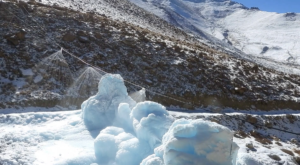
The first-ever World Day for Glaciers, coinciding with World Water Day, is being celebrated on March 21, 2025. Glaciers are vital to the health of rivers that emerge from the high Himalayan range. These rivers account for close to a fifth of the Earth’s fresh water stock. However, there have been concerns over the shrinking of glaciers attributed largely to human-induced climate change. The impact of shrinking glaciers is felt most acutely by farmers in the Himalaya as water from glacial melts needed for their first irrigation arrives late. This pushes the farming window further away, risking damage to their standing crop which has to be harvested on time. People of Ladakh have been carrying out novel experiments to build ice structures that can counter this challenge. Such initiatives began in the 1990s in the form of artificial glaciers designed by Chewang Norphel, and later in 2013 with the construction of vertical ice stupas was conceived by Sonam Wangchuk.

Acres of Ice (AoI), a newly set up Ladakhi company, is now trying to couple the design philosophy of both these ideas while also introducing automation, to build larger ice reservoirs while easing the process of building such structures. In this story, we speak with Dr. Surya, the co-founder of AoI, and Karuna Sah of AoI about their work.

Credits: We thank Dr. Surya and Karuna Sah from Acres of Ice for speaking with us and taking us to one of their sites in Igoo.
Image credits: Leh Nutrition Project, The Ice Stupa Project, Sonam Wangchuk/Rolex Awards and Acres of Ice.
Cover image: Nawang Tankhe
Background music: Glaciers by Roie Shpigler from Artlist via. Canva Teams
Kya Baat by Guy Buttery from Artlist via. Canva Teams
Stock Footage from Pixabay (https://pixabay.com/)


विश्व जल दिवस के साथ ही पहला विश्व ग्लेशियर दिवस 21 मार्च, 2025 को मनाया जा रहा है। ग्लेशियर उच्च हिमालयी श्रृंखला से निकलने वाली नदियों के स्वास्थ्य के लिए महत्वपूर्ण हैं। ये नदियाँ पृथ्वी के ताजे पानी के भंडार का लगभग पाँचवाँ हिस्सा हैं। हालाँकि, ग्लेशियरों के सिकुड़ने को लेकर चिंताएँ हैं, जिसका मुख्य कारण मानव-प्रेरित जलवायु परिवर्तन है। ग्लेशियरों के सिकुड़ने का प्रभाव हिमालय के किसानों पर सबसे ज़्यादा पड़ता है, क्योंकि पहली सिंचाई के लिए ज़रूरी ग्लेशियरों के पिघलने से पानी देर से आता है। इससे खेती के लिए समय कम हो जाता है, जिससे उनकी खड़ी फसल को नुकसान पहुँचने का जोखिम रहता है, जिसे समय पर काटा जाना चाहिए। लद्दाख के लोग बर्फ की संरचनाएँ बनाने के लिए नए प्रयोग कर रहे हैं, जो इस चुनौती का सामना करने में मदद कर सकते हैं, जैसे कि चेवांग नोरफेल द्वारा डिज़ाइन किए गए कृत्रिम ग्लेशियर और सोनम वांगचुक द्वारा पेश किए गए ऊर्ध्वाधर बर्फ स्तूप। लद्दाख की एक नई कंपनी एकर्स ऑफ आइस (एओआई) इन दोनों विचारों के डिजाइन दर्शन को स्वचालन के साथ जोड़ने की कोशिश कर रही है, ताकि ग्लेशियर निर्माण की प्रक्रिया को आसान बनाते हुए बड़े ग्लेशियर बनाए जा सकें। इस कहानी में, हम एओआई के सह-संस्थापक डॉ. सूर्या और एओआई की करुणा साह से उनके काम के बारे में बात करते हैं।

1200 661 Ajay Bijoor
How women manage Himalayan river sources

How women manage Himalayan river sources

Rivers emerging from the Himalayan region support fresh water needs of over a billion people. But do you know how the source of these rivers are preserved, and of the special role women play in their management? This story shows you not just how the headwaters of Himalayan rivers support agriculture, but also of the broader role they play in the life of the people – especially the women.

Acknowledgements:
Thanks to the women of Kibber and especially to Kalzang Dolkit, Chhering Lanzom, Rigzen Lamo, Ane Sonam Dolma, Ane Rinchen Dolma and Kesang Paldon. A special thanks to our young friends Tanzin Saldon, Chhering Lanzom, Tanzin Chhoying, Tanzin Palmo, and Tanzin Chhoesang for letting us film their impromptu dance at the river source.

Also, thanks to Shri. Rakesh Kumar Chadda aka Bablu, for sharing his insights on the production of green peas in Spiti and Hangrang valleys.

This story is based on an article by Dr. Ranjini Murali: Link which was based on her original research titled Gender and the Commons: Water Management in Trans-Himalayan Spiti Valley, India (Link)

Additional footage: Lama Tanzin Chhewang and Kalzang Gurmet
Additional support: Kesang Chunit
Stock footage: Canva elements
Music: Inspirational Asia by Lexin Music via. PixaBay

जल जीवन है। हिमालय क्षेत्र से निकलने वाली नदियाँ एक अरब से अधिक लोगों की ताज़ा पानी की ज़रूरतों को पूरा करती हैं। लेकिन क्या आप जानते हैं कि इन नदियों के स्रोत को कैसे संरक्षित किया जाता है और इनके प्रबंधन में महिलाओं की विशेष भूमिका कैसे होती है? यह कहानी आपको न केवल यह दिखाती है कि हिमालयी नदियों का प्रवाह किस प्रकार कृषि को बढ़ावा देता है, बल्कि यह भी दिखाता है कि वे लोगों – विशेषकर महिलाओं – के जीवन में कितनी व्यापक भूमिका निभाते हैं।

यह कहानी डॉ. रंजिनी मुरली के एक लेख पर आधारित है: Link

स्वीकृतियाँ:
किब्बर की महिलाओं और विशेष रूप से कलजंग डोलकिट, चेरिंग लानज़ोम, रिग्ज़ेन लामो, अने सोनम डोलमा, अने रिनचेन डोलमा और केसांग पाल्डन को धन्यवाद। किब्बर की युवा महिलाओं को विशेष धन्यवाद: तेंज़िन सैलडन, चेरिंग लानज़ोम, तेंज़िन छोयिंग, तेंज़िन पाल्मो, और तेंज़िन छोएसांग को नदी के स्रोत पर उनके अचानक नृत्य के लिए।
साथ ही श्री को भी धन्यवाद. राकेश कुमार चड्डा उर्फ ​​बब्लू को स्पीति और हंगरंग घाटियों में हरी मटर के उत्पादन पर अपनी अंतर्दृष्टि साझा करने के लिए।

अतिरिक्त फ़ुटेज: लामा तंजिन छेवांग और कलज़ंग गुरमेत
अतिरिक्त सहायता: केसांग चुनित
स्टॉक फ़ुटेज: कैनवा
संगीत: लेक्सिन म्यूज़िक द्वारा इंस्पिरेशनल एशिया। पिक्साबे

1200 659 Ajay Bijoor
How Shalkar village went fully organic

How Shalkar village went fully organic

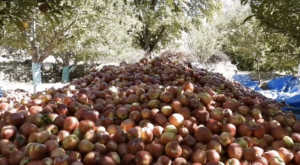
The Indian State of Himachal Pradesh produces apples worth INR 5000 Crores (USD 600 million) annually. Himachali apples are popular across India. The high mountain district of Kinnaur in Himachal Pradesh is known to produce the best quality of apples. Shalkar, one of the remotest villages in Kinnaur, decided to go fully organic few years back. But why did they decide to do so, and did they succeed or fail? Watch this story to find out.

Story credits:
Bahadur Singh from Shalkar
Special thanks to Guru Sant Ram of Shalkar and Accho Padma of Shalkar
Illustration: Nawang Tankhe
Data sources: Statistical Abstract of Himachal Pradesh 2020-21 (Dept. of Economic and Statistics, Govt. of HP); DownToEarth (https://shorturl.at/ahnrV)
Voice-over: https://www.desivocal.com/
Background score: Dreams of India meditation, NaturesEye (pixabay)
Additional support: Tanzin Thinley


हिमाचल प्रदेश में सालाना 5000 करोड़ रुपये (600 मिलियन अमेरिकी डॉलर) मूल्य के सेब का उत्पादन होता है।
हिमाचली सेब पूरे भारत में लोकप्रिय हैं। हिमाचल प्रदेश का उच्च पर्वतीय जिला किन्नौर सर्वोत्तम गुणवत्ता वाले सेब के उत्पादन के लिए जाना जाता है। किन्नौर के सबसे दूरदराज के गांवों में से एक शालकर ने कुछ साल पहले पूरी तरह से जैविक खेती करने का फैसला किया। लेकिन उन्होंने ऐसा क्यों किया और क्या वे सफल हुए या असफल? जानने के लिए यह कहानी देखें।

कहानी का श्रेय:
शालकर गांव के बहादुर सिंह
शलकर के गुरु संत राम और अचो पद्मा को विशेष धन्यवाद
चित्रण: नवांग तन्खे
वॉयस-ओवर: https://www.desivocal.com/
अतिरिक्त सहायता: तंज़िन थिनले

1200 661 Ajay Bijoor
भारत में पहली बार हिम तेंदुए की जनगणना कैसे की गई?

भारत में पहली बार हिम तेंदुए की जनगणना कैसे की गई?

अंतर्राष्ट्रीय हिम तेंदुआ दिवस 23 अक्टूबर को मनाया जाता है। भारत इस साल अपनी पहली हिम तेंदुए की जनगणना के नतीजे घोषित करेगा। यह परिणाम देश के हिमालयी क्षेत्रों में किए गए 4 साल के व्यापक अभ्यास पर आधारित है। यह विशाल अभ्यास देश के सुदूर ऊंचाई वाले क्षेत्रों में रहने वाले स्थानीय लोगों के समर्थन और भागीदारी के बिना पूरा नहीं किया जा सकता था।

वीडियो: समर्थ ज्योति
कथन: अक्षिता अशोकन
अनुवाद: सीमा बजाज
कैमरा ट्रैप छवियां: हिमाचल प्रदेश वन विभाग, नेचर कंजर्वेशन फाउंडेशन और स्नो लेपर्ड ट्रस्ट
फुटेज: तेंज़िन थुक्तान, मुनीब खन्यारी और अजय बिजूर
छवियाँ: हाई एल्टीट्यूड प्रोग्राम और प्रसेनजीत यादव
अतिरिक्त फ़ुटेज: ओपन प्लैनेट

2444 1360 Akash Jyoti
The Lonely Tree
Illustration: Peeyush S

The Lonely Tree

Young Bishen Singh’s dreams were finally coming true. He had just passed his college exams and landed a government job as a school teacher. He had always wished for it. There was only one challenge though, his first posting was in Kaza. Spiti was still part of the State of Punjab then, and Kaza only found an occasional mention in government reports. There were a lot of myths surrounding Spiti mostly because so few people had heard of the place, let alone visit it. In those days the bus only went up to Manali after which one had to walk across the Rohtang La, then walk the long stretch from Gramphu to Batal and finally cross the Kunzum La. A very, very long walk of over 100 km.  And after all this walking, you only reached Losar. Kaza was another 60 km away. The travel took over a week.

Bishen was partly sad about leaving his family back in Punjab. But he was also terribly excited for the new adventure he was about to set out on. He had always wanted to explore the mountains and this was his chance. He had packed all his stuff, including a lot of woolens, in a single sturdy cloth bag. He also had one bag just for food that could see him through his long walk to Spiti. Bishen left 10 days before his joining date hoping to reach Kaza a few days before his first day at school.

The walk from Gramphu was a pleasant one. He crossed a patch of birch forest at Dorney nalla. He couldn’t recollect seeing so many birch trees in a single place before. There were so many waterfalls to admire that one hardly noticed the distance. His pace dropped every few kilometers as he was in awe of the landscape. It was also early summer and Gaddi herders were setting up camp. Gaddis are always glad to receive an unexpected guest who brings them news from new places. The first few evenings were spent at different Gaddi camps, where the routine was somewhat fixed. Bishen would be welcomed with a piping hot cup of tea followed by rotis drowned in ghee and roti-khadi – all made from goat milk. Bishen had enjoyed his walk from Gramphu to Batal. But the walk from here on was going to be a lonely one since Gaddis only camped up to this point and did not enter Spiti. It took Bishen two full days to summit Kunzum La and then climb down to Losar, the first village in Spiti.

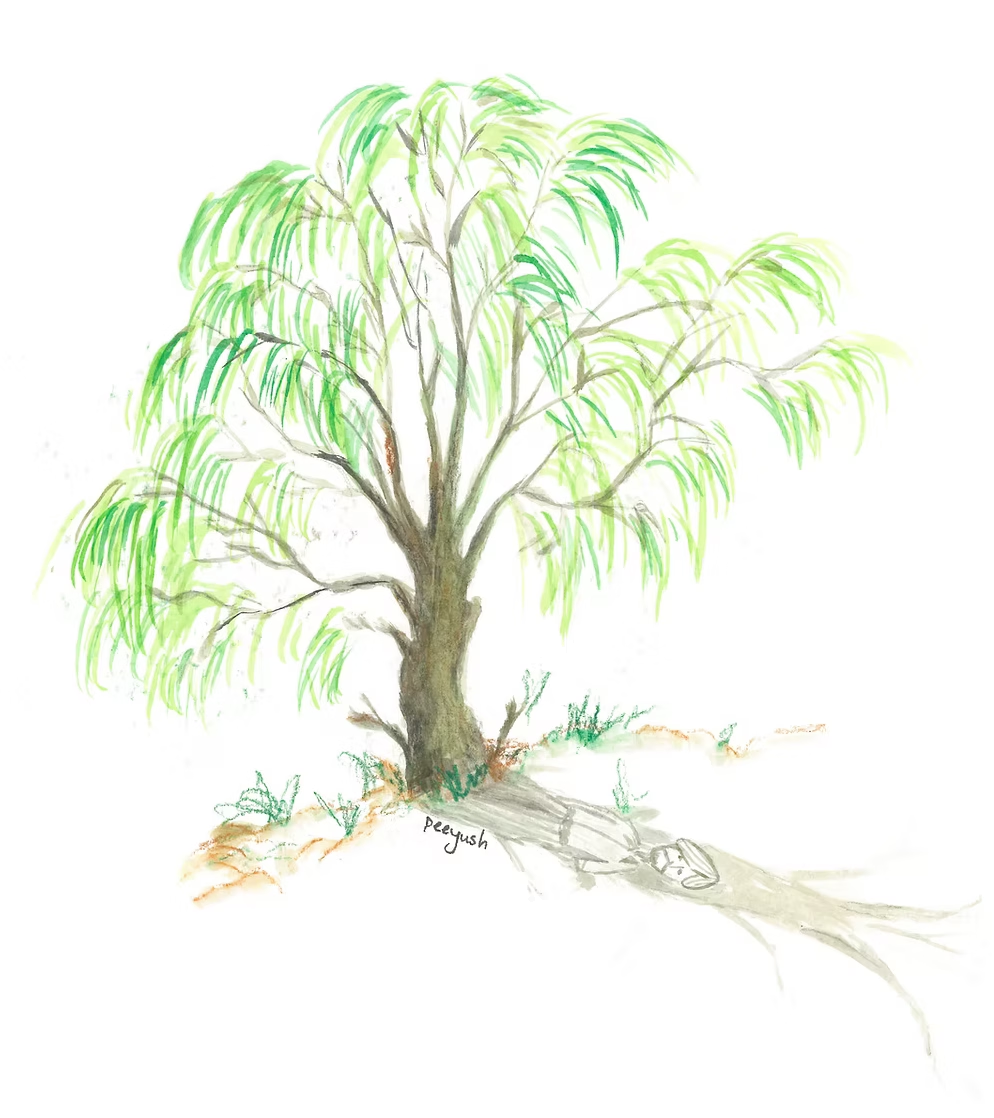
The first thing Bishen noticed when he started descending Kunzum La was how bare the landscape was. The waterfalls were all gone and even the trees began to disappear. By the time he reached Losar, he was struggling to spot a single tree. Bishen suddenly felt as if he had set foot on a different planet. His pace dropped again, but this time in shock. He was struggling to wrap his head around why these massive mountains were without any greenery. Had someone robbed them of it? He couldn’t imagine living in a place like this, that too so far from home. He suddenly felt like he was stuck without anywhere to escape. As he reached the village of Sumling just 15 km from his final destination Kaza, his eyes fell on a lonely willow tree.

Illustration: Peeyush S

This full-grown tree stood in all its majesty almost in defiance with the otherwise treeless landscape. Bishen felt like he had met a long-lost friend. His eyes welled up and he couldn’t hold himself back. He dropped all his luggage and ran towards the tree. He hugged the tree tightly and sobbed loudly, ‘My friend I have been forced to come this far just so I can keep the hearth burning back home, but what ill luck has fallen upon you? Who cursed you to come to this place?’

Hearing Bishen’s loud sobs, several curious villagers gathered around to see what was happening. But none had the heart to disturb the conversation between two long-lost friends.

  • Kaza is the main town of Spiti and the headquarters of Spiti sub-division.
  • Gramphu and Batal are locations on the road from Manali to Kaza.
  • Birch is a thin-leaved deciduous hardwood tree. The bark usually peels horizontally in thin sheets, especially on young trees. These sheets were traditionally used as paper in many high mountain regions. Several holy scriptures have been preserved by writing on such sheets.
  • Dorney nalla is a patch where one can still find a lot of birch trees on the way from Manali to Kaza.
  • Sumling is a beautiful village on the right bank of the Spiti river.
  • Willow is a tree with long thin branches and often grows near water.
994 1118 Ajay Bijoor