Water

Fairies of Kibber | Documentaries by Locals

Fairies of Kibber | Documentaries by Locals

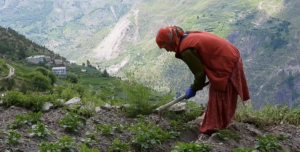
Women in the high altitude village of Kibber carry the weight of water, faith and the future. Fairies of Kibber follows the extraordinary story of women who have become guardians of water in a climate-challenged world.

A film by Varun Chauva.

Music via. Pixabay:
gm6-fmaj7-bbm6-jazz-improvisation-215332.mp3 by drebddronefish
jazz-background-music-349165.mp3 by BackgroundMusicForVideos
loose-and-lazy-blues-110453.mp3 by ShidenBeatsMusic
sleigh-ride-snowflake-swing-10951.mp3 by JuliusH


किब्बर के पहाड़ी गांव में रहने वाली महिलाएं जल, आस्था और भविष्य का भार अपने कंधों पर उठाती हैं। ‘फेयरीज ऑफ किब्बर’ जलवायु परिवर्तन से जूझ रही दुनिया में जल की संरक्षक बनी महिलाओं की असाधारण कहानी बयां करती है।

1200 670 Varun Chauva
Automated Ice Reservoirs: A new technique to combat climate change

Automated Ice Reservoirs: A new technique to combat climate change

The first-ever World Day for Glaciers, coinciding with World Water Day, is being celebrated on March 21, 2025. Glaciers are vital to the health of rivers that emerge from the high Himalayan range. These rivers account for close to a fifth of the Earth’s fresh water stock. However, there have been concerns over the shrinking of glaciers attributed largely to human-induced climate change. The impact of shrinking glaciers is felt most acutely by farmers in the Himalaya as water from glacial melts needed for their first irrigation arrives late. This pushes the farming window further away, risking damage to their standing crop which has to be harvested on time. People of Ladakh have been carrying out novel experiments to build ice structures that can counter this challenge. Such initiatives began in the 1990s in the form of artificial glaciers designed by Chewang Norphel, and later in 2013 with the construction of vertical ice stupas was conceived by Sonam Wangchuk.

Acres of Ice (AoI), a newly set up Ladakhi company, is now trying to couple the design philosophy of both these ideas while also introducing automation, to build larger ice reservoirs while easing the process of building such structures. In this story, we speak with Dr. Surya, the co-founder of AoI, and Karuna Sah of AoI about their work.

Credits: We thank Dr. Surya and Karuna Sah from Acres of Ice for speaking with us and taking us to one of their sites in Igoo.
Image credits: Leh Nutrition Project, The Ice Stupa Project, Sonam Wangchuk/Rolex Awards and Acres of Ice.
Cover image: Nawang Tankhe
Background music: Glaciers by Roie Shpigler from Artlist via. Canva Teams
Kya Baat by Guy Buttery from Artlist via. Canva Teams
Stock Footage from Pixabay (https://pixabay.com/)


विश्व जल दिवस के साथ ही पहला विश्व ग्लेशियर दिवस 21 मार्च, 2025 को मनाया जा रहा है। ग्लेशियर उच्च हिमालयी श्रृंखला से निकलने वाली नदियों के स्वास्थ्य के लिए महत्वपूर्ण हैं। ये नदियाँ पृथ्वी के ताजे पानी के भंडार का लगभग पाँचवाँ हिस्सा हैं। हालाँकि, ग्लेशियरों के सिकुड़ने को लेकर चिंताएँ हैं, जिसका मुख्य कारण मानव-प्रेरित जलवायु परिवर्तन है। ग्लेशियरों के सिकुड़ने का प्रभाव हिमालय के किसानों पर सबसे ज़्यादा पड़ता है, क्योंकि पहली सिंचाई के लिए ज़रूरी ग्लेशियरों के पिघलने से पानी देर से आता है। इससे खेती के लिए समय कम हो जाता है, जिससे उनकी खड़ी फसल को नुकसान पहुँचने का जोखिम रहता है, जिसे समय पर काटा जाना चाहिए। लद्दाख के लोग बर्फ की संरचनाएँ बनाने के लिए नए प्रयोग कर रहे हैं, जो इस चुनौती का सामना करने में मदद कर सकते हैं, जैसे कि चेवांग नोरफेल द्वारा डिज़ाइन किए गए कृत्रिम ग्लेशियर और सोनम वांगचुक द्वारा पेश किए गए ऊर्ध्वाधर बर्फ स्तूप। लद्दाख की एक नई कंपनी एकर्स ऑफ आइस (एओआई) इन दोनों विचारों के डिजाइन दर्शन को स्वचालन के साथ जोड़ने की कोशिश कर रही है, ताकि ग्लेशियर निर्माण की प्रक्रिया को आसान बनाते हुए बड़े ग्लेशियर बनाए जा सकें। इस कहानी में, हम एओआई के सह-संस्थापक डॉ. सूर्या और एओआई की करुणा साह से उनके काम के बारे में बात करते हैं।

1200 661 Ajay Bijoor
Lapsol – Prayer to the mountain spirits

Lapsol – Prayer to the mountain spirits

Several communities follow traditional belief systems. Many mountain communities have faith in mystical entities like mountain spirits and deities, who they believe control the elements. In the high Himalaya, water is a critical and often limiting resource. Many communities believe the source of these water bodies to be sacred, which are controlled by individual spirits or deities. In this video-story, we visit Spiti to look at the annual celebration of Lapsol. Lapsol is celebrated to gratify mountain spirits, in the hope that the region receives bountiful snow. It is a solemn prayer made by the villagers for another year peace and tranquility.

Special thanks to Chhering Tashi, Padma Dimdul, Paljor Lundup and Champa Dorje of Kibber village.
Music: Abode of Snow SPmusic by via. Pixabay
Asian Cinematic by @AlekseyChistilin (Lexin_Music) via. Pixabay
Additional Footage: Kalzang Gurmet
Audio: DesiVocal (https://www.desivocal.com/en)
Cover Illustration: Nawang Tankhe


कई पहाड़ी समुदाय, पहाड़ी ल्हा और ल्हामो (देवी-देवताओं) जैसी रहस्यमय स्थाओं में विश्वास और श्रद्धा रखते हैं। उनका मानना ​​है कि पहाड़ी देवी-देवता तत्वों को नियंत्रित रखते हैं। हिमालय के ऊँचे क्षेत्र में, पानी एक महत्वपूर्ण और अक्सर सीमित संसाधन है। कई समुदाय इन जल निकायों के स्रोत को पवित्र मानते हैं, जिसे स्थानीय देवी-देवता नियंत्रित करते हैं। इस वीडियो-कहानी में, हम लाप्सोल के वार्षिक उत्सव को देखने के लिए स्पीति का दौरा करते हैं। लाप्सोल स्थानीय देवी-देवताओं को संतुष्ट करने के लिए मनाया जाता है, इस उम्मीद में कि आने वाला वर्ष समृद्ध और किसी भी मुश्किलों से मुक्त हो।

किब्बर गांव के छेरिंग ताशी, पद्मा डिमडुल, पलजोर लुंडुप और चंपा दोरजे को विशेष धन्यवाद।
संगीत: एबोड ऑफ स्नो SPmusic के माध्यम से (पिक्साबे)
एशियन सिनेमैटिक @AlekseyChistilin द्वारा (पिक्साबे)
अतिरिक्त फ़ुटेज: कलज़ंग गुरमेत
ऑडियो: देसीवोकल
कवर चित्रण: नवांग तन्खे

1200 675 Ajay Bijoor
How women manage Himalayan river sources

How women manage Himalayan river sources

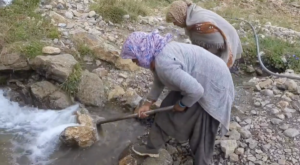
Rivers emerging from the Himalayan region support fresh water needs of over a billion people. But do you know how the source of these rivers are preserved, and of the special role women play in their management? This story shows you not just how the headwaters of Himalayan rivers support agriculture, but also of the broader role they play in the life of the people – especially the women.

Acknowledgements:
Thanks to the women of Kibber and especially to Kalzang Dolkit, Chhering Lanzom, Rigzen Lamo, Ane Sonam Dolma, Ane Rinchen Dolma and Kesang Paldon. A special thanks to our young friends Tanzin Saldon, Chhering Lanzom, Tanzin Chhoying, Tanzin Palmo, and Tanzin Chhoesang for letting us film their impromptu dance at the river source.

Also, thanks to Shri. Rakesh Kumar Chadda aka Bablu, for sharing his insights on the production of green peas in Spiti and Hangrang valleys.

This story is based on an article by Dr. Ranjini Murali: Link which was based on her original research titled Gender and the Commons: Water Management in Trans-Himalayan Spiti Valley, India (Link)

Additional footage: Lama Tanzin Chhewang and Kalzang Gurmet
Additional support: Kesang Chunit
Stock footage: Canva elements
Music: Inspirational Asia by Lexin Music via. PixaBay

जल जीवन है। हिमालय क्षेत्र से निकलने वाली नदियाँ एक अरब से अधिक लोगों की ताज़ा पानी की ज़रूरतों को पूरा करती हैं। लेकिन क्या आप जानते हैं कि इन नदियों के स्रोत को कैसे संरक्षित किया जाता है और इनके प्रबंधन में महिलाओं की विशेष भूमिका कैसे होती है? यह कहानी आपको न केवल यह दिखाती है कि हिमालयी नदियों का प्रवाह किस प्रकार कृषि को बढ़ावा देता है, बल्कि यह भी दिखाता है कि वे लोगों – विशेषकर महिलाओं – के जीवन में कितनी व्यापक भूमिका निभाते हैं।

यह कहानी डॉ. रंजिनी मुरली के एक लेख पर आधारित है: Link

स्वीकृतियाँ:
किब्बर की महिलाओं और विशेष रूप से कलजंग डोलकिट, चेरिंग लानज़ोम, रिग्ज़ेन लामो, अने सोनम डोलमा, अने रिनचेन डोलमा और केसांग पाल्डन को धन्यवाद। किब्बर की युवा महिलाओं को विशेष धन्यवाद: तेंज़िन सैलडन, चेरिंग लानज़ोम, तेंज़िन छोयिंग, तेंज़िन पाल्मो, और तेंज़िन छोएसांग को नदी के स्रोत पर उनके अचानक नृत्य के लिए।
साथ ही श्री को भी धन्यवाद. राकेश कुमार चड्डा उर्फ ​​बब्लू को स्पीति और हंगरंग घाटियों में हरी मटर के उत्पादन पर अपनी अंतर्दृष्टि साझा करने के लिए।

अतिरिक्त फ़ुटेज: लामा तंजिन छेवांग और कलज़ंग गुरमेत
अतिरिक्त सहायता: केसांग चुनित
स्टॉक फ़ुटेज: कैनवा
संगीत: लेक्सिन म्यूज़िक द्वारा इंस्पिरेशनल एशिया। पिक्साबे

1200 659 Ajay Bijoor
How innovation is helping Lahauli farmers

How innovation is helping Lahauli farmers

Water management by women in Spiti has brought rich economic rewards to the locals. We now take you to Lahaul valley, which is adjacent to Spiti, to see how the introduction of a small change has benefitted locals. This story highlights the value in combining traditional knowledge with locally-relevant innovations.

Credits:
We thank Angmo Gaaji and Chhering Gaaji of Grimass village in Lahaul for speaking with us.
Cover illustration by Nawang Tankhe.
Background score via. Pixabay
In the presence of mountains by micgreens
Sparkling water by Alfred Grupstra
Stock footage via. Canva Pro
Voice-over using DesiVocal.


स्पीति में महिलाओं द्वारा जल प्रबंधन ने स्थानीय लोगों को समृद्ध आर्थिक लाभ दिलाया है। अब हम आपको स्पीति से सटी लाहौल घाटी में ले चलते हैं, यह देखने के लिए कि एक छोटे से बदलाव की शुरूआत से स्थानीय लोगों को कैसे फायदा हुआ है। यह कहानी स्थानीय-प्रासंगिक नवाचारों के साथ पारंपरिक ज्ञान के संयोजन के महत्व पर प्रकाश डालती है।

क्रेडिट:
हमसे बात करने के लिए हम लाहौल के ग्रिमास गांव के अंगमो गाजी और छेरिंग गाजी को धन्यवाद देते हैं।
नवांग तन्खे द्वारा कवर चित्रण।
संगीत: पिक्साबे
DesiVocal का उपयोग करके वॉयस-ओवर।

1200 607 Ajay Bijoor
Navigating the challenges of climate change in the Himalaya
Illustration: Nawang Tankhe

Navigating the challenges of climate change in the Himalaya

The heart of the mighty Himalaya is witnessing a profound transformation shaped by the relentless force of climate change. With Himalaya playing a crucial role in shaping the weather patterns across India, climate change is disrupting these patterns. And the Western Himalaya Region comprising of Jammu & Kashmir, Ladakh, Himachal Pradesh and Uttarakhand characterised by complex geography with various local warm and cold zones is affected differently from one location to another.

Climate change refers to long-term shifts in weather patterns that affect local, regional, and global climates on earth. Most of us are familiar with greenhouses that are commonly used to grow vegetables in winter, because the temperature inside these enclosures stays warmer than outside. A greenhouse keeps the enclosure warm by letting in as much light as possible and then trapping it as thermal energy. Now imagine what might happen if our planet acted similarly? In fact, it is because the earth works like a large greenhouse, that our planet can support such a wide variety of life. This phenomenon is called the greenhouse effect. However, a rapid rise in burning of fossil fuels over the last 150 years has significantly increased the level of carbon dioxide in our atmosphere leading to increased warming and a rise in unforeseen weather events.

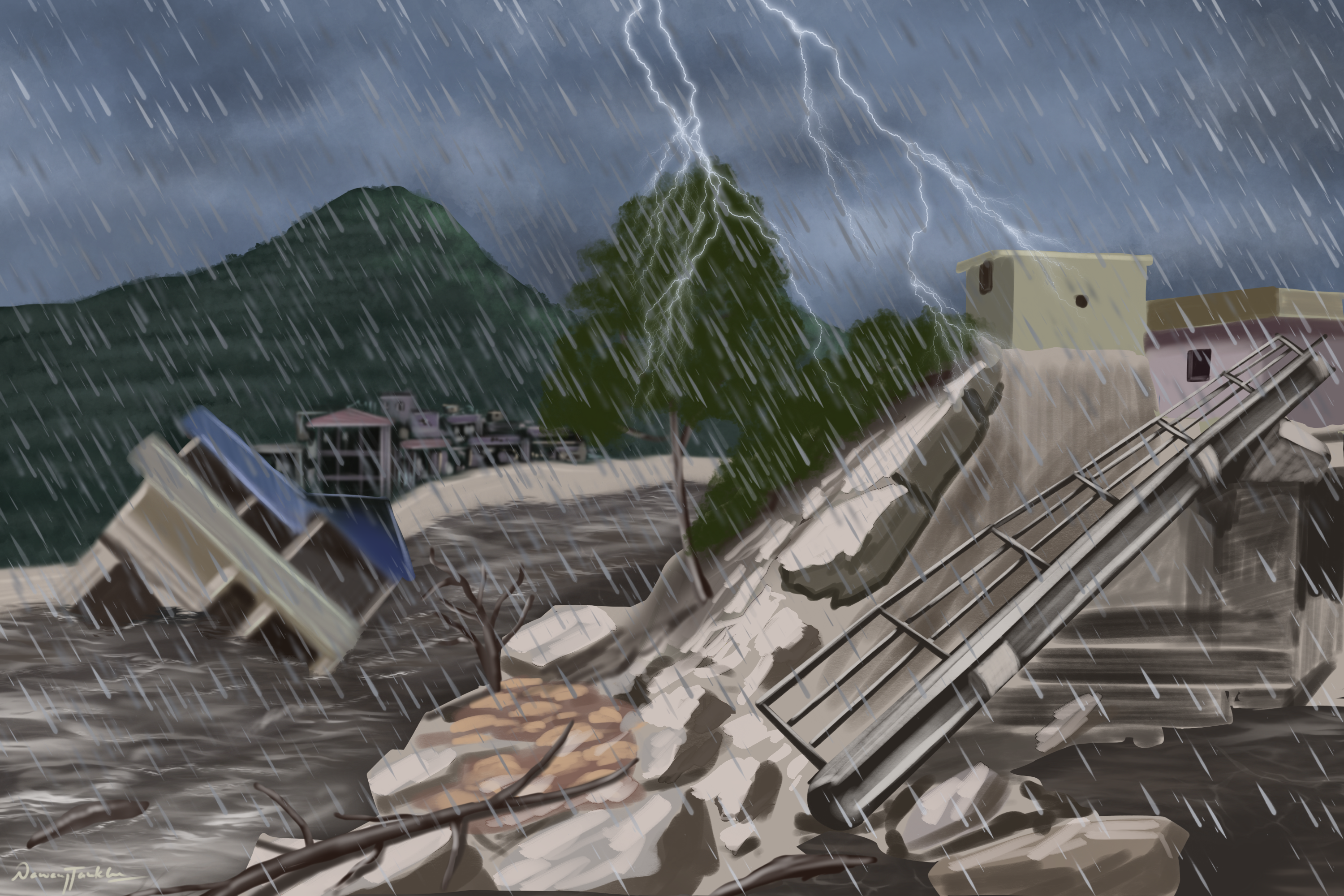
Research findings paint a stark picture of the Himalaya’s changing climate. Over the years the region has witnessed a noticeable rise in both seasonal maximum and minimum temperatures. The difference between daytime and night-time temperatures is also getting larger, indicating a warming trend. Snowfall events have shown variability in terms of intensity and timing. Scientists note a decrease in early snowfall during December and January, accompanied by an extension into February and March. While rainfall intensity remains relatively unchanged, there is a notable shift in its timings. Monsoon rains, once confined up to mid-August, now linger beyond their traditional timeframe, accompanied by a rise in cloudburst events. This shift, intertwined with delayed snowfall, alters the distribution of rainfall and cloud cover across the region.

The impact of this climatic transformation is not an abstract concept but a harsh reality affecting various sectors. Agriculture, the lifeline of many in the region, is particularly vulnerable. In the Kullu valley of Himachal Pradesh, delayed snowfall has cast its icy shadow on apple orchards. The blossoming, bearing, and overall yield of apples have suffered due to altered chilling conditions. Orchards, once thriving in lower elevations, now seek refuge in higher altitudes, affecting not just the geographical landscape but the very quality of the produce.

In Ladakh’s western regions, horticulture crops like apricots and walnuts are facing severe challenges. Spring seasons are turning cooler, delaying the fruiting process and impacting the quality of the produce. Barley, a locally grown crop, is witnessing a substantial reduction in yield, echoing the broader struggle against a changing climate.

Villagers in Spiti tell a poignant tale of declining green pea production, a crucial revenue-generating crop. This decline, attributed to persistent water scarcity, reached its peak in 2022 when Langza village faced complete crop loss due to the unavailability of water. The transformation is not confined to the fields; it seeps into the very identity of these regions.

Agriculture in Uttarakhand, highly vulnerable to climate change, experiences shift in production dynamics, causing changes in crop yield, reduced diversity, and a surge in pest invasions. In districts like Pithoragarh, Chamoli, and Uttarkashi, climate change is altering the traditional collection period of non-timber forest products, impacting livelihoods.

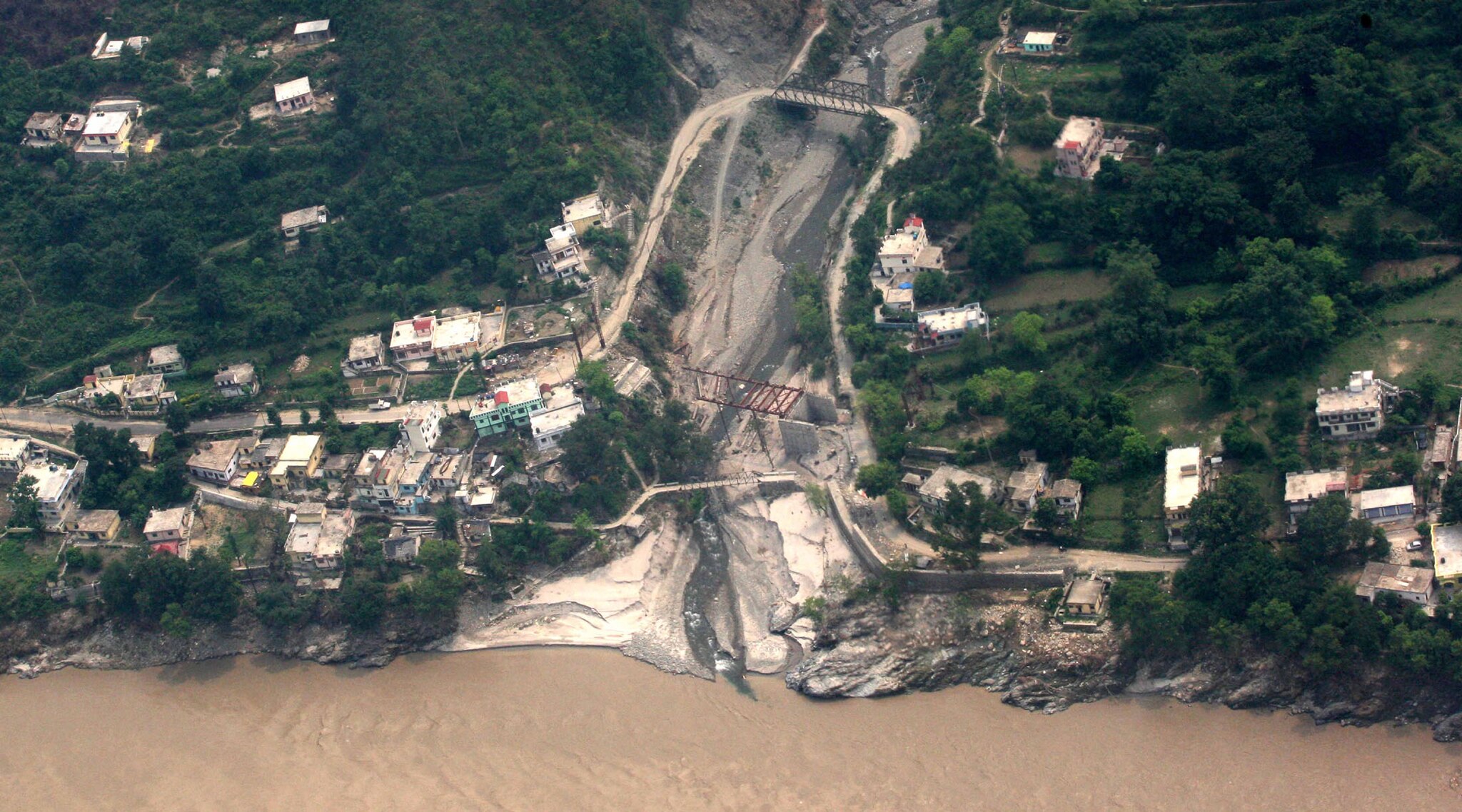
An aerial view of flood-ravaged Rudraprayag, in Uttarakhand | Photo: Wikimedia Commons

The farmers, the custodians of the land, echo this change.

Earlier, we could not see stars in the sky for the whole of July and August. Continuous rains for days during the monsoon season in old times was good for the soil and the crops. But now, sudden and untimely torrential rains are spoiling the soil as well as the crops. The rains have completely disappointed us.

by a farmer from Uttarakhand

Summers are more intense and drier now because of which the crops ripen at an early stage without proper grain development.

by an elderly farmer from Uttarakhand

Earlier the snow was about a foot high and it used to stay for weeks but now if ever there is snowfall it is less than 5 inches and melts within a day.

by a farmer from Himachal Pradesh

Every year, we travelled from Zanskar to Kishtwar by crossing the glacier. Over the years, this glacier has been reducing. The new snowfall is not sufficient for settling, posing challenges to our traditional migration routes.

by a pastoralist from Ladakh

This replacement about 50-60 years ago, which turned agri-culture on its head did not come with the Green Revolution (more appropriately called Greed Revolution) then but was the consequence of what had emerged as the industrial revolution two-three hundred years ago. And it started with de-legitimising traditional society’s existence, identity and knowledge by naming it ‘backward’ and following it up by seeking to shame people’s knowledge systems and their seeds. It was crucial and strategic that this society begin to have an inferiority complex about oneself. This was the first essential stage of the conspiracy. Once this was achieved, it was followed by a systematic replacement of the principles, methods, seeds with the means that it had created. As a result, a creative, productive and self-reliant society has today become a dependent slave farmer society.

3000 2000 Ajay Bijoor
Dhankar: From ancient towards modernity
Dhankar, the village on the cliff | Photo: Wikimedia Commons

Dhankar: From ancient towards modernity

Dhankar is a historical village of Spiti which used to be its capital in ancient times. Where the Namgyal dynasty of Ladakh ruled for centuries. Due to the great distance between Ladakh and Spiti, feudal lords were appointed in Spiti and given the title of Nono. The Nono managed administration of Spiti by appointing people to collect taxes and manage other village-level works. Dhankar witnessed many attacks and looting by external forces.  Even today, one can see signs of these attacks on the walls and pillars of the old palace. After independence, Spiti was first administered by the Punjab government and was subsequently merged into the new State of Himachal Pradesh when it was created.

Farming is the chief source of income in Dhankar. The importance of farming can be seen clearly in many of our festivals and rituals. Namkan is a festival celebrated in the seventh and eighth month of the year in which villagers pray for a good harvest. On that day, people ride horses and throw stones at a fake sheep made of ghee and the winner is given a prize. The crop is harvested a few days after this festival. In our village, agriculture depends on water from the lake above the village. However, the lack of snowfall in winter is affecting our water supply from the lake. The water level has fallen by nearly 50% in the past 20-25 years because of which villagers face a lot of problems with farming. While yak and churu (a yak-cow hybrid) were used to plough fields, they have mostly been replaced by various farm equipment. Power tillers are used to plough the fields, while machines are used to chop crop residue. Earlier the local crops included wheat, barley and mustard. Today’s crops include pulses, peas, cauliflower, and potato. Horticulture is also being adopted widely as it is helping increase farm incomes. In addition to this, people have multiple options to earn a livelihood. One can earn a respectable amount running homestays and hotels, driving a taxi or working as tourist guides. But despite all these changes, farming remains the primary source of income for the people of Dhankar. And the future of farming depends on our sources of water, which are fast disappearing.

6000 3083 Tenzin Ganden
Memories, Nostalgia, and a Forgotten Practice
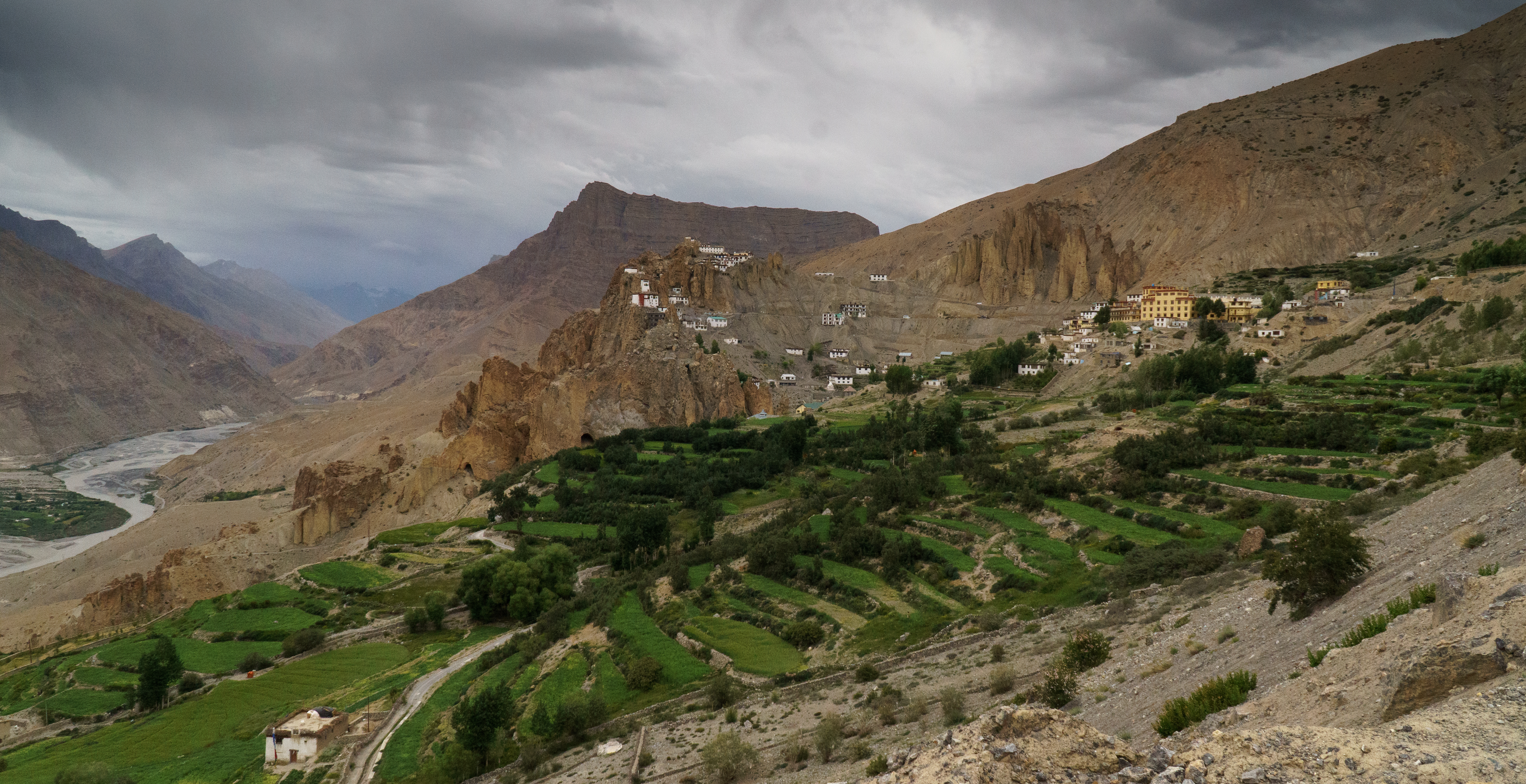
Kibber Village, Spiti | Photo: Nonie Rawat

Memories, Nostalgia, and a Forgotten Practice

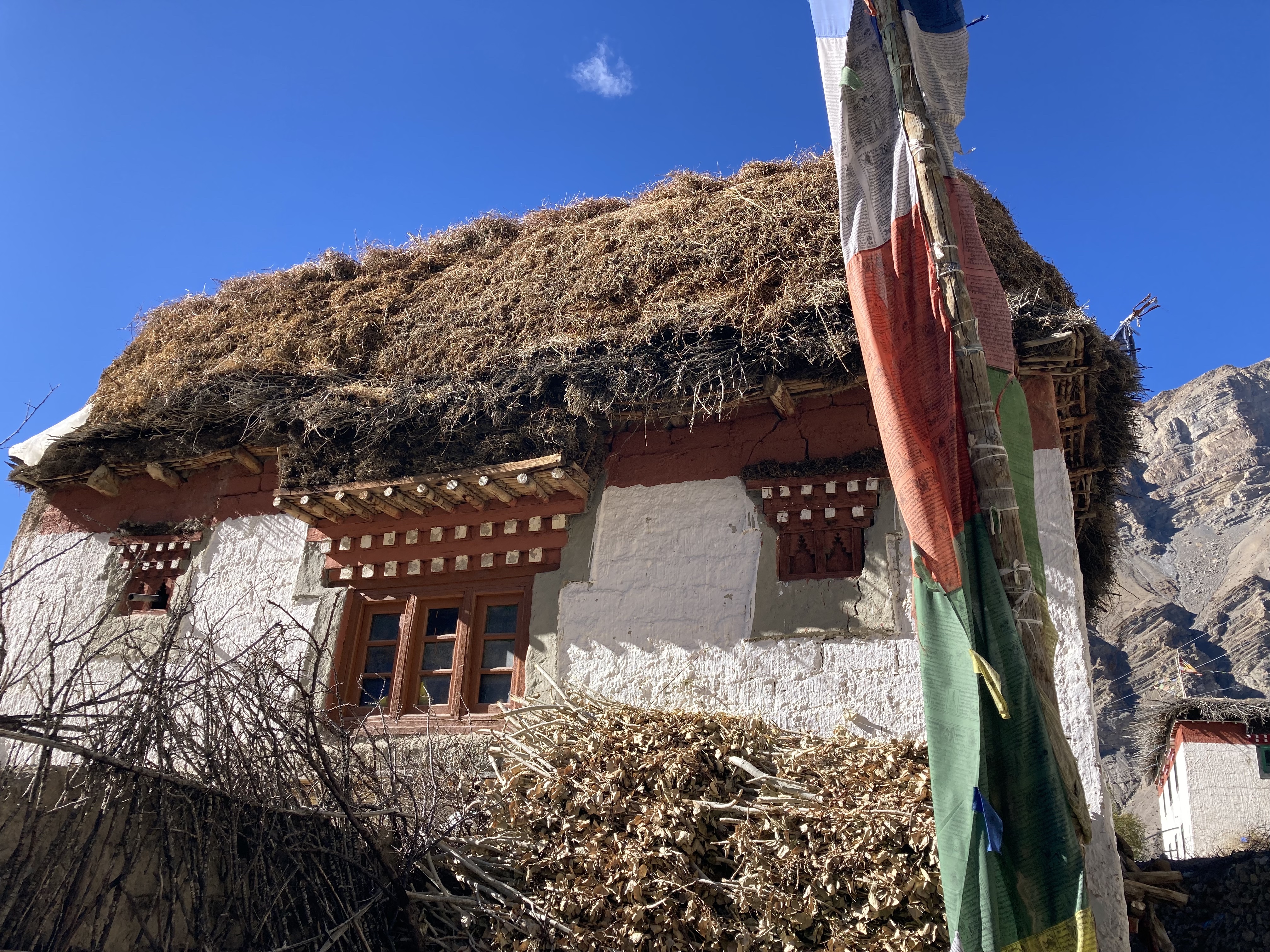
Growing up in Spiti, a place so beautiful and serene was a heavenly experience with valleys and rivers that enchants anyone witnessing its beauty. It attracts visitors from all over the world, some first-timers, and some seasonal regulars, and leaves them with the same impressions. When one tries to capture its beauty – the mountain villages clustered with white-washed mud houses in the serrated landscape appear like a flock of sheep grazing on the fields.

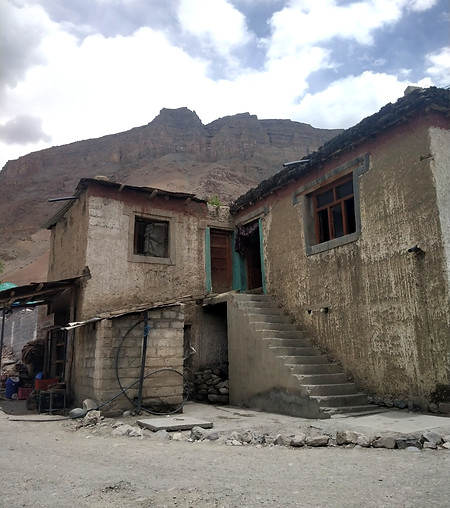
A mud house in middle of Kaza market, Spiti | Photo: Nonie Rawat

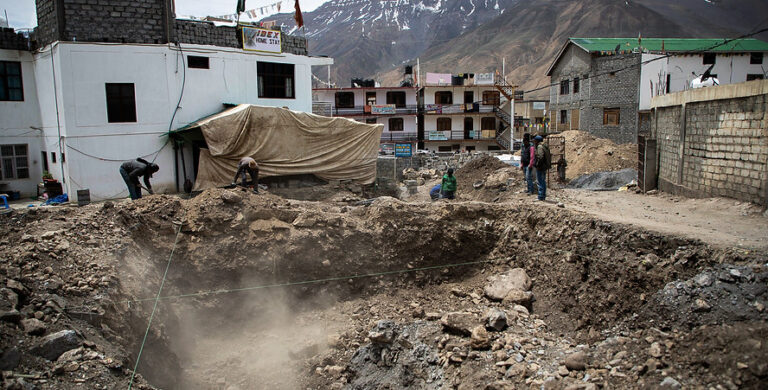
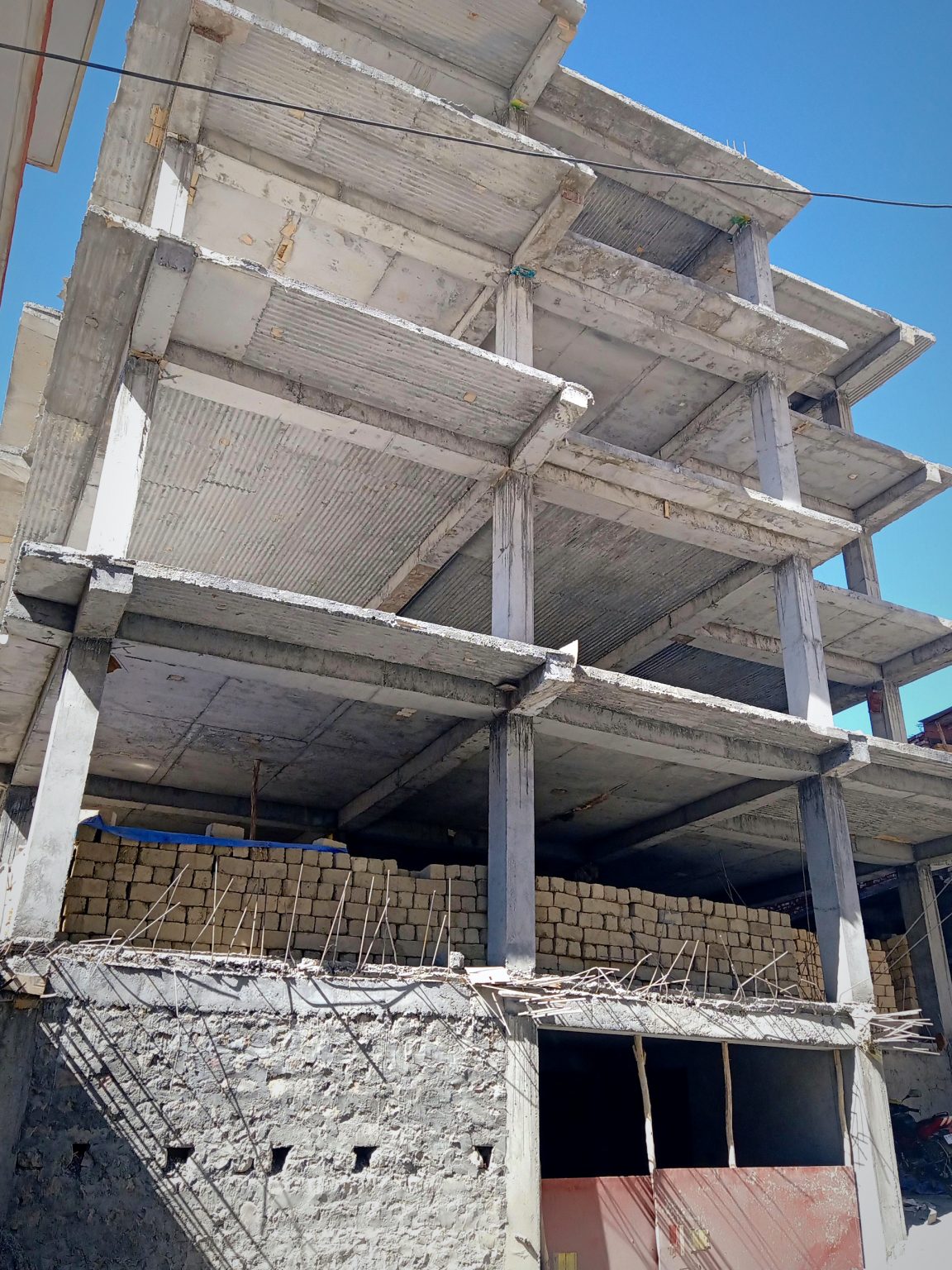
The traditional architecture and the socio-cultural practices are the outcomes of the prevailing topography and climatic conditions giving Spiti its unique persona & originality. In the past couple of years, the wave of RCC-based structures has dominated several villages and have taken its malicious grip. It is due to the recent abrupt rise of tourism in the region and considering these changes, the place is likely to lose its essence and everything that’s worth treasuring. The massive plague of concrete structures has devastated the vernacular house designs with the built, form, size, and material totally devoid of its regional context.

The picturesque villages dotted with traditional mudhouses are slowly turning into a jungle of massive concrete structures. It’s mostly hotels, guesthouses, and other commercial buildings. One of the reasons for this shift is to accommodate the heavy-flowing tourists with modern facilities in a cold desert. Spiti being a rural area doesn’t have the preparation required to handle this heavy flux of tourism and the burden is too sudden and heavy for the locals  to administer. The unregulated flow of heavy tourists can have many adverse effects on the local ecology and architecture. It will influence changes in the land use, will cause urbanization, large-scale construction of tourist facilities, illegal constructions, changes in the vernacular design orientation, increased waste pollution, and degradation of local aesthetics which are attuned to its natural surroundings. We need to realize collectively that it’s the architectural authenticity and unique cultural practices of the place that leaves mark on people visiting the place.

Many aspects of modernization are creeping up in the valley – some truly meaningful like building bridges that connect remote villages but others monstrous like encroachment of animal habitat and village pastureland. The abandonment of dry toilets (chaksa) to adopt

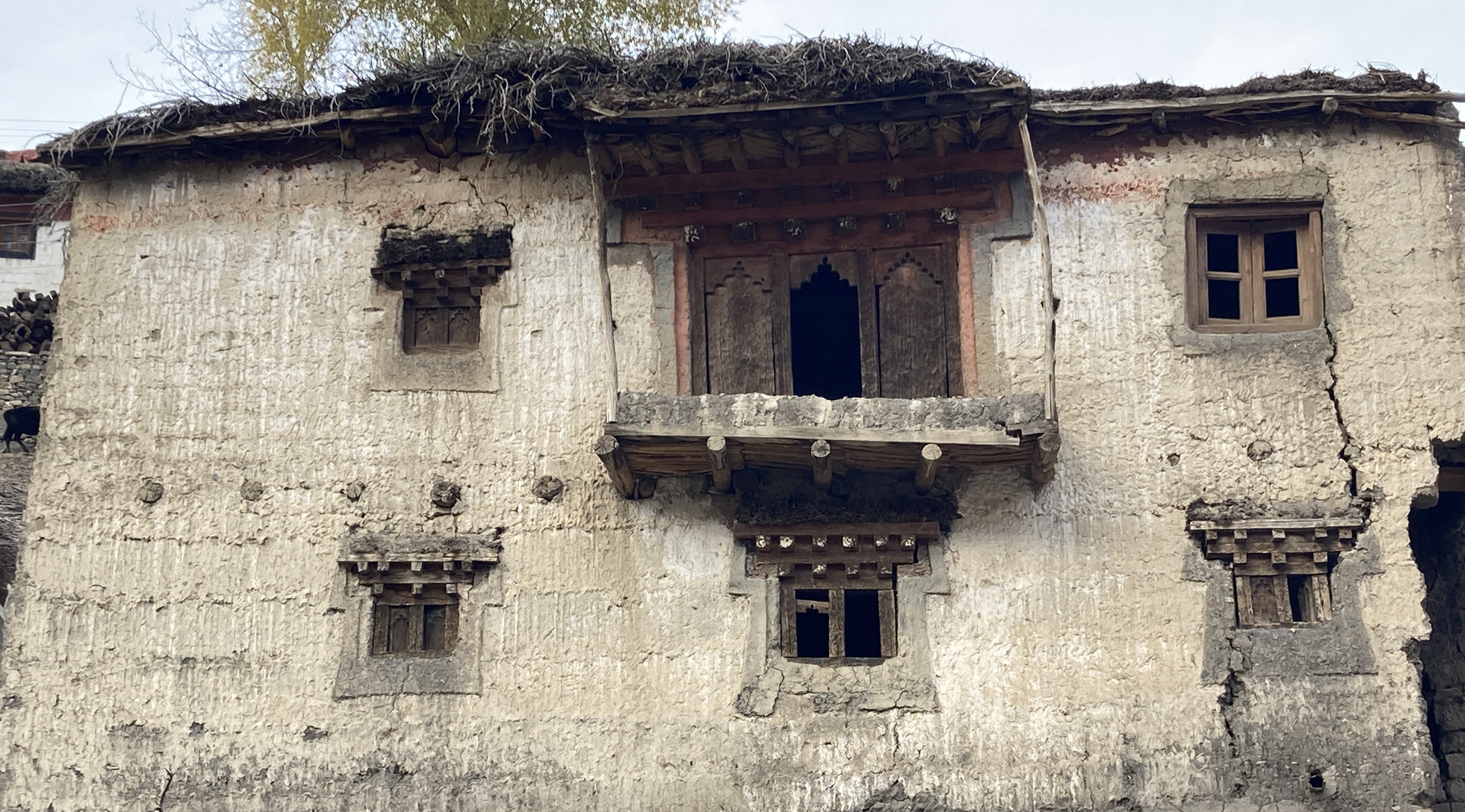
modern flush toilets in a water-scarce place like Spiti.  The dry toilet not only saves water but also produces manure for the crops. Whereas the western toilet system is not the most conducive design intervention in the valley as it remains out of order for about 6 months, and the water pipes freeze during winter. In this wave of development, Spiti is losing its authenticity. The constructions are now spreading to agricultural lands as more families find it easier to earn a livelihood from tourism than farming. The old houses have thoughtful architectural designs like having low ceilings of about 100mm, which helps conserve heat. The ground floor and the first floor both have rooms for seasonal activities. The ground floor is specifically built keeping the freezing winters in mind. The floor is divided into spaces for both livestock and the family. There are additional rooms to store grains, fodders, and a Chingbuk – a celler for storing Chang and Aarak (barley based alcoholic beverages).  There’s also a tiny opening for ventilation and heat obtained from the animals, and the grain and grass storing places work as insulators that keep the house warm and cozy during winters. During summer the first floor is preferable due to proper lighting and ventilation. This floor is breezier and has more room to attend to the summer guests. These rooms will be properly ventilated and have big wide windows, with the peripheral frames painted black, absorbing and allowing maximum sun.

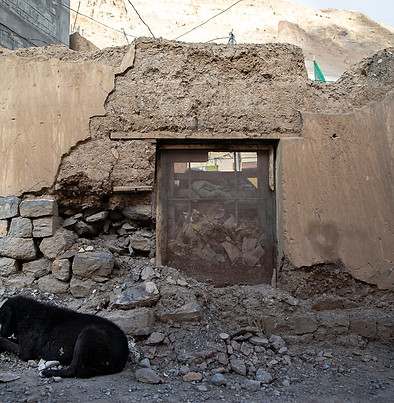
New constructions in Kaza | Photo: Tanvi Dutt

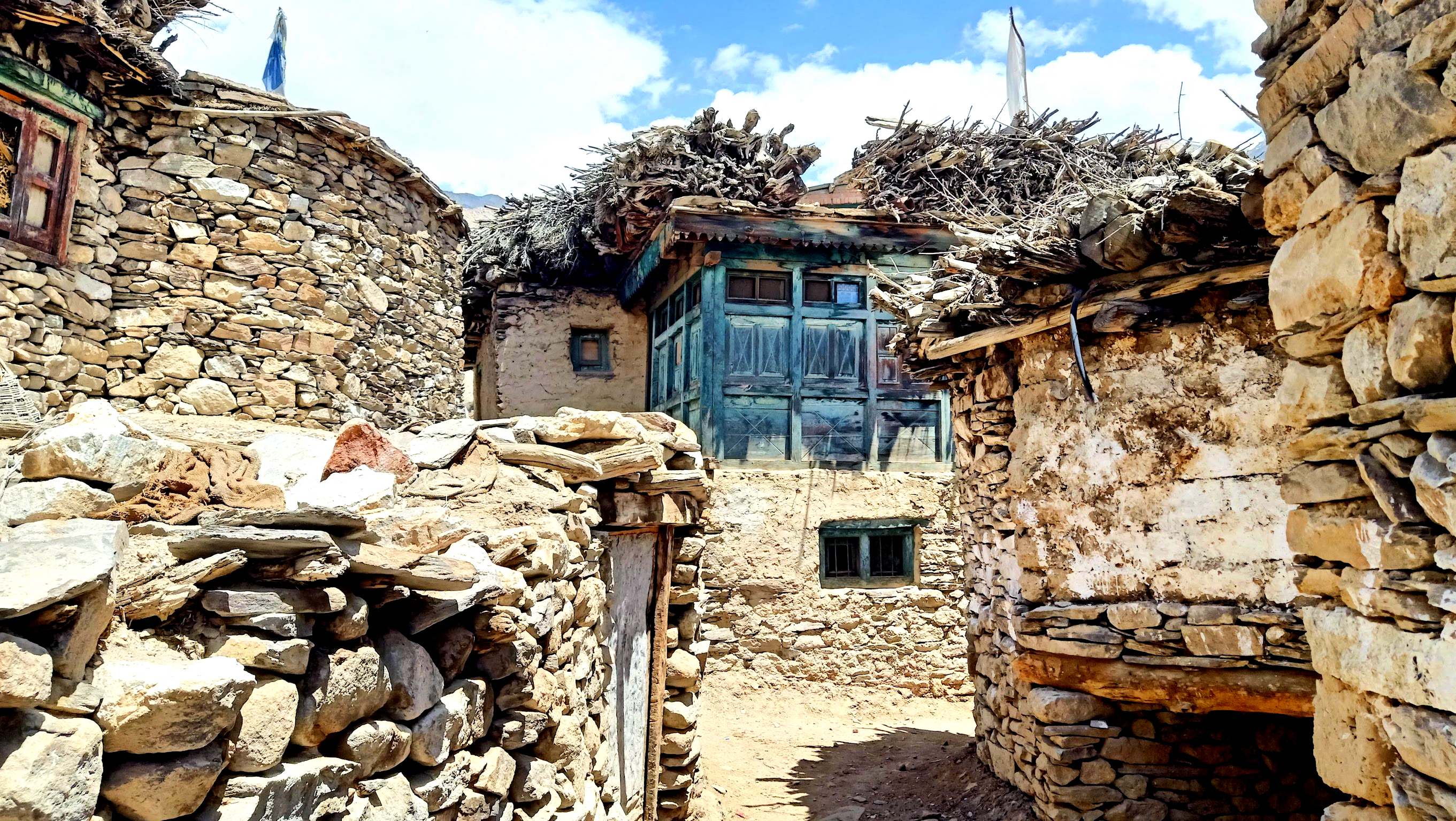
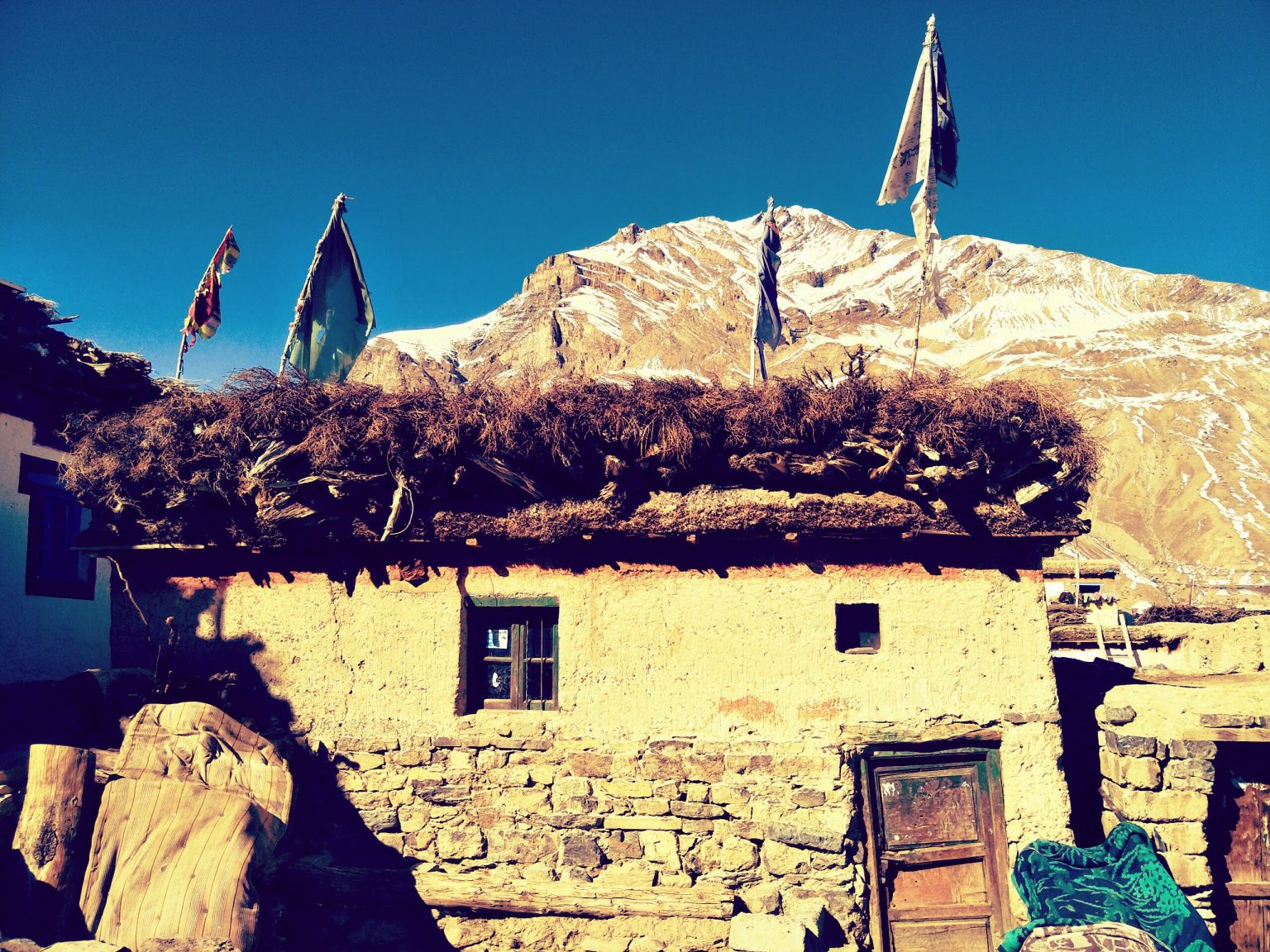
A typical traditional mud house in Spiti has a basic stone foundation running all along with the boundary wall. The locals use wooden planks as mould which supports the foot and a mixture of hay and mud to make the walls. The process is continued and the wall is built layer by layer at a time, leaving voids as per the requirements. The insulated roof starts with placing the main girder mugdungh, which is often supported using a wooden column kaa, this column, in the center of the room, also serves as the aesthetic feature of the room. Then the secondary girder, phurdungh, is placed on top of which, tightly knitted willow sticks, dhilu, are laid. The flat roof is finished with laying a thick layer of mud. To protect the edges of the mud structure from rain and snow some houses have bundled-up bushes stacked at the periphery of the roof along thorny bushes, dhama. The natives used to build with what was available to them and best suited the regional climate. This is what shelter means, building something suitable for you according to the climate and availability of the resource, hence the vernacular architecture of a place merges with the context, the landscape.

A dilapidated building in Kaza | Photo: Tanvi Dutt

The traditional method of construction is not practiced these days therefore the skill is endangered. The thousand years old monasteries in the villages of Spiti were made of mud block-forming walls up to a meter thick. All these monasteries are still surviving and functional, they are likely to survive another 10-20 decades, even more, if maintained professionally. The maintenance of historical monuments like our monasteries for cultural preservation, further building a repository of local knowledge, and sustaining the innate quality of the historic buildings is necessary. The neglect in restoration work in these historic monasteries is washing down the structure. The walls are likely to survive the next few decades but might lose the other characteristic it holds now. The negligence may not feel like a massive part of this problem right now because it’s at a stage where it goes unnoticed, and is invisible but eventually, over years it will start showing up. We should evolve and use the modern facilities, resources, and knowledge we now have access to.

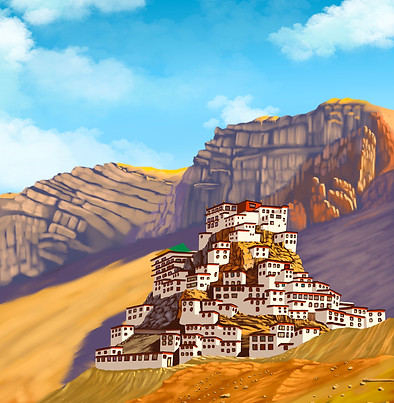
Iconic structure of Kee Gonpa, Spiti | Illustration: Nawang Tankhe

The state of development and accessibility has made us avail many new resources. The traditional houses in Spiti evolved from shutting the tiny window using a good-sized rock to wooden windows to big windows with glass which allows maximum sunlight to enter and keep the house warm. This is one example of how to use the resources available to enhance the traditional structure. But now we are evolving in the wrong direction. Adapting materials that do not comply with the context and then we spend time and energy to fix the problem we created. In a cold desert like Spiti during winter mud houses work as insulated buildings. For the piercing cold winters, people don’t need RCC houses which do not retain heat, freeze everything inside them, and cause a lot of health problems after prolonged usage. Humans have always started with natural resources and mud is the oldest of all the natural resources used in construction. It is found in abundance, and unlike cement, it goes back to nature without polluting the landscape. From the earth to the earth. It’s high time for Spitians to bring back its forgotten practice.

885 389 Nonie Rawat
Microbial intervention in Himalayan Dry Toilets
Distribution of Compost Booster in Lahaul

Microbial intervention in Himalayan Dry Toilets

As we meandered through the narrow streets of Ribling, Tandi, Sumnam and Ghoshal villages in Himachal Pradesh’s Lahaul district, we saw the indelible change of modernisation that had reached even the remotest corners of India. The cemented pavement had replaced the old mountain roads and the concrete houses were replacing the traditional wood and mud houses. In this new emerging transformation, small two-storey mud-houses outside people’s houses stood as a mysterious testament to the old ways.

In 2017, we stayed at the Center for High Altitude Biology (CeHAB)’s research centre at Ribling in Lahaul and it was during those field expeditions to the cold deserts in the Western Himalayas that I first came across the concept of ‘dry toilets’.  Just as we were getting increasingly inquisitive about these small mud structures, we ran into Mr. Jagdeep Katoch, one of the residents and a former school principal in the village. He patiently explained to us that these structures are called ‘ghop’ – traditional dry toilets used  by communities in the cold arid zones like Lahaul, Spiti and Ladakh  to uniquely manage human waste in the region.

Traditional Ghop in Lahaul

These two-tiered structures have an upper section, which is attached to the living room of the house; and the lower section where night soils are collected. After every use, a dry mixture of wood chips and ash locally called ‘fot’ is used to cover the faeces. The heap of the night soil is manually taken out every 6 months and left in the fields to mature. Thus, the compost is rich in nutrients and is a very useful input for agriculture in the region.

These regions also receive very less precipitation throughout the year making water availability extremely difficult and that’s why it was intriguing to observe how people in these remote villages sustainably manage human-waste that’s beneficial for their agro-ecosystem. In the Himalayan cold desert, these dry toilets (ghop) help conserve water during freezing winter and sustain organic farming with manure supply. When winter sets in, people increasingly depend on dry toilets, and later in the year, this decomposed night soil is used as manure for farms.

For generations, locals have relied on naturally-occurring bacteria to degrade the wastes. However, the practice comes with several disadvantages as due to extreme cold weather conditions, there are very few microbes that can function at such low temperatures.  As a result, the quality of the compost is not as good as one would expect.

Additionally, the influx of tourism and introduction of modern septic systems has brought change in the regional sanitation practices with more people resorting to pour-flush toilets. This has not only brought tremendous change in age-old practice of using dry toilets, night soil composting, but has also put the availability of water under severe stress in already resource strained places. Dr. Sanjay Kumar,  (Director, CSIR-IHBT, Palampur ) Chief Scientist and an ardent advocate of bio resource has always inspired us to ground our work, research around social issues and due to his guidance and support , we found the best opportunity to address the issue of solid waste management in high Himalayan regions by scientifically intervening and facilitating faster degradation of the night soil through Compost Booster- a microbial formulation for rapid degradation of night soil to manage human waste in cold desert areas.

Distribution of Compost Booster in Lahaul

The decomposition of any organic biomass is dependent on its microbial population.In Lahaul-Spiti, due to prolonged winters with sub-zero temperatures the decomposition of night soil is often slow as the first phase of composting- the mesophilic bacteria phase- crucial for decaying the organic material are inactive in this temperature range. At CSIR-IHBT, Palampur, our team at High Altitude Microbiology lab, Department of Biotechnology, formulated an indigenous bacterial consortium from the night soil compost’s different maturity phases. These cold- tolerant bacterial populations remain active even at such low temperatures up to four degree Celsius and produce enzymes that speed up the process of biomass degradation. The bacteria used for this purpose also have plant growth promoting attributes so that the end product is enriched compost high in nutrients and possess plant growth promoting bacteria.The financial aid from National Mission on Himalayan Studies (NMHS) by the Ministry of Environment, Forest & Climate Change (MoEF&CC) were crucial to enable key research on ground.

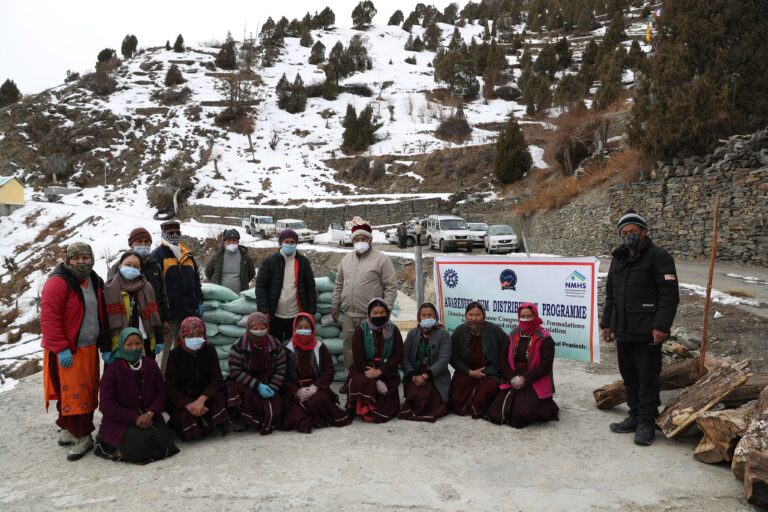
The sample of compost boosters were distributed among a few households in Lahaul for trial in 2018. We asked the villagers to use a handful of the sample in place of fot and the feedback was quite motivating. They observed that the mixture helped degrade the night soil better and reduces the odour as well. Mr. Devi Singh of Mooling village keenly shares that  earlier he used to collect 20 “Kiltas” (baskets)  to collect the degraded night soil compost but after the using the Compost Booster, the biomass was degraded so well that he collected only 10 Kiltas which is of much better compost quality and there’s reduction in foul smell too.

With increased demand and product popularity, we conducted awareness drives, interaction sessions and training programmes across five gram-panchayats  in Lahaul and Compost boosters were distributed to approximately 160 households in December 2020 and January 2021. In future, we endeavour to reach out to communities across the high himalayan landscape including Spiti and Ladakh for similar intervention.

Contact for queries:
Rakshak Kumar
Scientist & Asst. Professor (AcSIR),
High Altitude Microbiology Laboratory (HAM-LAB), Department of Biotechnology, CSIR-Institute of Himalayan Bioresource Technology, Palampur-176061 (HP)
Tel: +91 1894 233339, ext. 441
Mobile: +91 98829 86355
E mail: rakshak@ihbt.res.in/ rakshakacharya@gmail.com 

2560 1153 Dr. Rakshak Kumar
Spiti Valley Architecture
Antique home in Mane village, Spiti | Photo: Kimberly Moyle

Spiti Valley Architecture

Spiti valley’s villages are home to a relatively intact vernacular architectural tradition. Rammed earth Tibetan-style architecture dots the awe-inspiring landscape through a series of scattered settlements. The intelligent bio-climatic design has enabled the local people to inhabit this harsh landscape for thousands of years. Surrounded by snow capped peaks on all sides with the Spiti river meandering along the wide river valley, the region has gained a reputation for stunning scenery and is now a popular tourist destination. The influx of tourism however is bringing rapid changes both economically and culturally. Economic development is welcomed, however, the loss of precious cultural heritage through the destruction of traditional architecture is of concern.

The traditional architecture of the region evolved to make use of abundantly available resources for construction along with an in-depth understanding of their thermal properties. Materials were combined with intelligent design to ensure the creation of living spaces that provided optimum thermal comfort to residents throughout the changing seasons. All of which required a thorough understanding of the natural world around them. The shift towards modern industrial systems of construction can be seen as a rupturing of that direct connection with nature. Construction materials are now purchased from stores and sourced from distant lands. The knowledge on how to use them is sought from architects and engineers. The traditional wisdom of elder Master Artisans is on the brink of being lost as people transition to the industrial system. Now is the time to reflect and consider whether it is the right path.

Architecture is an expression of culture and in Spiti Valley, it reflects Spitian culture whilst identifying their inclusion in a much larger Tibetan ethnic community scattered across the Trans Himalayas in the region now known as India and Tibet. Historically, however, for almost 900 years they were connected as part of the great Tibetan Kingdom of Guge.

Materials & Construction Methods

Spiti Valley is classified as a hyper-arid desert wherein precipitation is predominantly received as snowfall in the winter. Trees are scarce and as a consequence timber is used sparingly in construction. Stone and soil are found in varying abundance and are employed using different construction techniques according to their prevalence in a specific location. In the lower Spiti Valley, in Nako village, stones are prolific, and timber is more accessible from the forests of nearby Kinnaur. Here homes are typically made of stone masonry with mud mortar and often incorporate ornate timber balconies or sunrooms. In the villages of the upper regions of the valley such as those in and around Kaza rammed earth is dominant and the use of timber is much more frugal. Pin Valley experiences higher levels of snowfall and as such their homes feature dry stone masonry on the ground level. To prevent damage to the home from snow melt. The arid desert climate in combination with scarce timber availability has resulted in the use of flat mud roofs across the entire region. Rammed earth as a construction method requires very little water compared to other earthen construction techniques such as adobe or cob, It is no coincidence that this is the favored technique in this desert region. The use of adobe for the building fabric can also be seen, though infrequent as it is recognized as being more labor-intensive.

View of a narrow alley in Nako, Kinnaur | Photo by Kimberly Moyle

Seasonal Migration Indoors

Typically homes are large and spread over multiple levels. Seasonal migration within the home occurs as an adaptation to the extreme climatic variation experienced between summer (+30°C) and winter (-30°C). In the summer months, families inhabit the upstairs portion of their homes. Larger windows on this level allow for the penetration of the bright summer sun and views of the fields outside. A large room known as a Makang (summer room) is the summer socializing space where cooking and entertaining take place side by side.  Ceilings are typically higher and families may have separate rooms for sleeping.

In the winter the entire family migrates downstairs to one room known as the Yokang (winter room). For the entire winter period, the family will sleep, socialize, cook, and eat together in this one room. Cooking and heating occur simultaneously on a Tandoor that takes center place in the room.  Efficient use of scarce timber resources for heating is essential and this practice has evolved in response. Cohousing with animals in adjacent rooms is another design aspect that takes advantage of the natural warmth produced by the animals, generating warmth inside the house whilst at the same time providing shelter and protection for the animals from the extreme climate outdoors.

Bio-Climatic Design

The need to survive the harsh winters in this remote location has seen the evolution of a highly intelligent system of bio-climatic design. Traditional homes have been constructed with a deep understanding of the regional climate as well as the specific site conditions. Certain design elements can be seen replicated in homes throughout the entire valley. Where possible homes are located on hillsides with a south-to-southwest facing orientation in order to take advantage of passive solar gains. Winter rooms have lower ceilings to ensure the precious heat generated remains close to the inhabitants. In the oldest of homes, winter rooms do not have any windows, instead, they would have a single ventilation point in the ceiling through which both light and smoke would enter and exit respectively. In more modern homes small windows are common. The northern aspect generally receives cold winds, as such openings on this wall are avoided. Wall thickness is generally between 18 and 24 inches. The thick thermal mass provides a thermal lag preventing the extreme cold from being transmitted inside the home.

Case Study of a 150-year-old Home in Kwang Village, Spiti

Located in Kwang village on the southern bank of the Spiti river directly opposite the main town of Kaza Sonam Tashi’s ancestral home provides an excellent example of intelligent bio-climatic design. The following case study will be used to demonstrate key elements incorporated to ensure the highest level of thermal comfort for the occupants.

The Yokang is located in the center of the ground floor and is insulated from the extreme cold outdoors on all four sides by a series of rooms. On the northern side is the Thaah, a cavity of a few meters occupying the full height of the home. This is utilized as storage for fodder such as dry grass and crop residue. Serving the dual purpose of feeding the livestock through the winter whilst also providing excellent insulation to the Yokang. The western side of the house was used for housing livestock during the winter. Strategically chosen according to the westerly sun trajectory, providing warmth for the animals, in turn, the warmth generated by the animals provides yet another layer of insulation to the inner Yokang.

The main entrance and stairwell to the first floor are housed on the southern side as is the Chak-sa the traditional dry toilet system, with the catchment on the ground floor in a sealed room accessible only from the exterior of the house. The eastern side incorporates a small room for making aarak – the local alcohol made from barley, next to which is a granary room accessed only from a hole in the first floor above, it is utilized for storing barley grains. To the south of that lies another small room used as a nursery for young livestock. Being surrounded on all sides the central Yokang does not have any windows to the outside. The only ventilation comes from a single hole in the center of the

ceiling used for both daylighting and ventilation for the tandoor. Before the introduction of modern time keeping devices, the beam of light projected through the ventilation shaft was also used to tell the time. Limited ventilation to the exterior ensures the least amount of heat loss.

The first floor is home to the Makang and the Zot (store room).  Both of these rooms are located on the western side. The zot on the northwestern corner is traditionally used for storage and the Makang on the southwestern side as a summer living room and kitchen. The area directly outside the southwest room was also used as a kitchen with a cavity for storing dried animal manure, a precious fuel source for cooking and heating along with timber. The dry toilet room is located on the southeast corner of the house. On the eastern side running between the fodder storage and the Chak- sa (dry toilet) is the Kanmo, a covered sitting area with the western side fully open to the uncovered central courtyard. This space was often used for recreation, to enjoy the warm summer sun, for drying grains, and for sleeping outdoors on warm summer nights.

Development & Change

Despite having such a sophisticated and rich architectural heritage there is currently a mad rush for modernity that is taking place in Kaza the main town in Spiti. A reinforced cement concrete (RCC) home is viewed as a sign of social mobility, and cement plasters are a fashion trend. The last five years have seen significant change throughout the valley. The tourism sector is booming. So is the construction industry as people race to take advantage of the short but hectic summer season that at its peak struggles to cater to all of the tourists passing through. In Kaza the main town, traditional earthen homes are being torn down and replaced with multistoried RCC buildings. Pride in traditional architecture is being lost as some desire to show their success and social mobility through their capacity to build a modern ‘Pukka’ Ghar or Hotel just like those in the cities.

Most people are all too aware of the unsuitability of RCC structures to the extreme cold. This has led many to a hybrid system with an RCC frame and mud block infill. However, the durability of RCC under extreme climate is questionable. Already cracking and powdering of cement are visible on areas exposed to freeze and thaw cycles of snowmelt. This leads to the question: what if this grand experiment with cement fails? Where will all of that waste material go in this pristine, yet fragile mountain landscape? One of the most astounding aspects of traditional architecture in Spiti is its recyclable and biodegradable nature. It is normal for an old house to be torn down only for all of the materials to be reused once again in the new house. Rammed earth is considered to be even stronger the second time around. In the dry climate of Spiti even Tillu  (timber beams ) and Thap, the shrubs used in the flat mud roofs remain in good condition even after 60+ years of use, and may be reused in the new build. Even if they can’t be they offer a good source of fuel for the fire. Nothing is wasted.

Sustainable construction with a low ecological footprint was mastered by the people of Spiti centuries ago. The world has a lot to learn from them. Sadly, as the younger generation moves towards industrial materials and hybrid systems the traditional wisdom honed over centuries and handed down over generations is at risk of being lost. Now is the time to learn from the experienced elders and ensure this precious intangible cultural heritage remains alive and not just a pretty picture captured in vintage photos of a time long ago.

RCC based construction in Spiti | Photo by Kimberly Moyle

References
Auer, C.E., 2017. Measure for measure: Researching and documenting early Buddhist architecture in Spiti. Revue d’Etudes Tibétaines, 41, pp.181-201.
Joshi, P., Phartiyal, B., & Joshi, M. (2021). Hydro-climatic variability during last five thousand years and its impact on human colonization and cultural transition in Ladakh sector, India. Quaternary International, 599, 45–54. https://doi.org/10.1016/j.quaint.2020.09.053.
Sharief, A. et al. (2022) “Landscape use and co-occurrence pattern of snow leopard (Pantherauncia) and its prey species in the fragile ecosystem of Spiti Valley, Himachal Pradesh,” PLOS ONE, 17(7). Available at: https://doi.org/10.1371/journal.pone.027155

4032 2235 Kimberly Moyle