Water

Women and water: a Photostory

Women and water: a Photostory

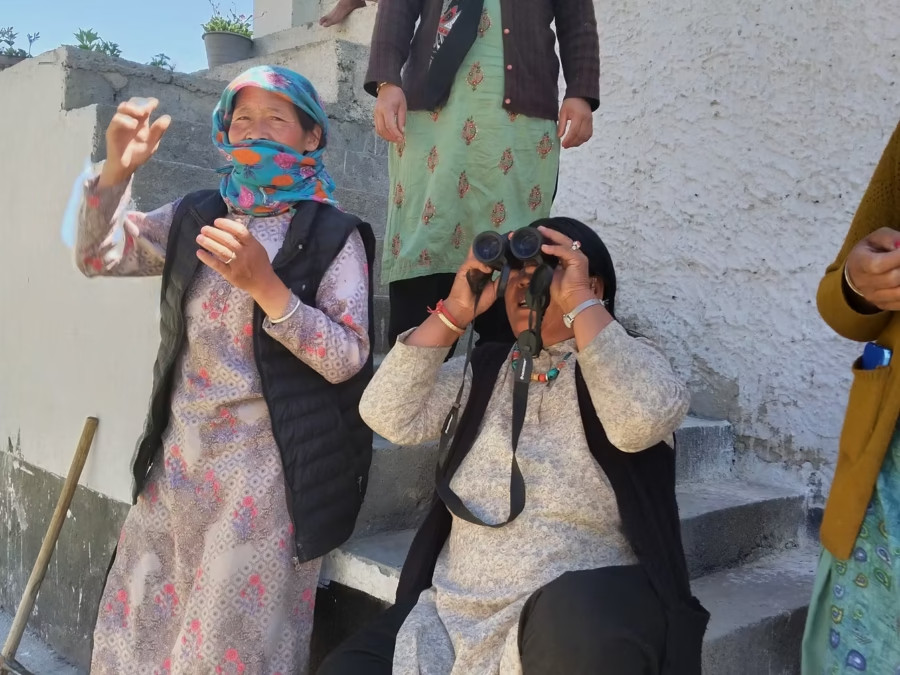
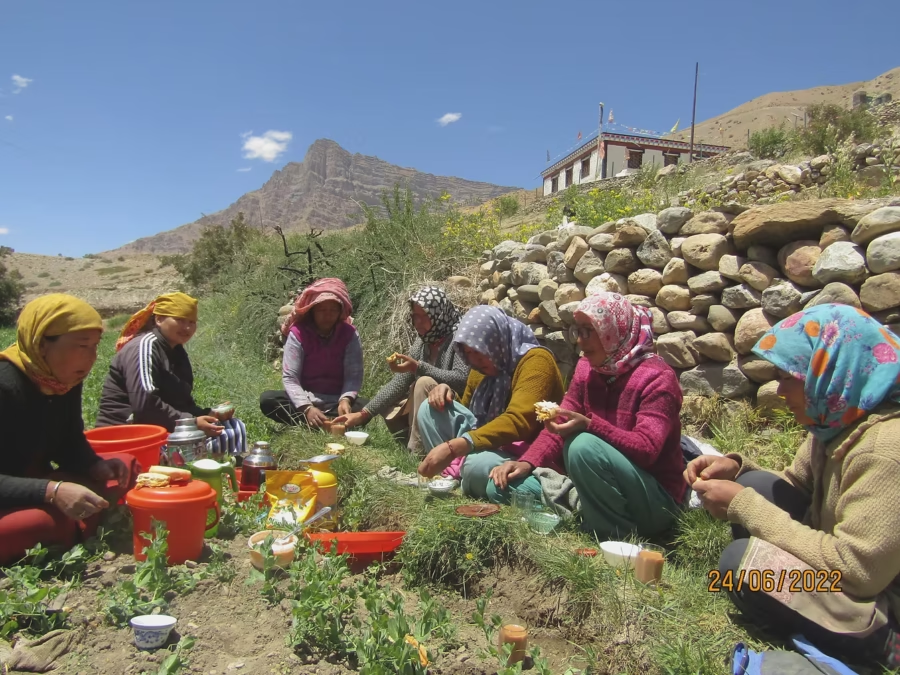
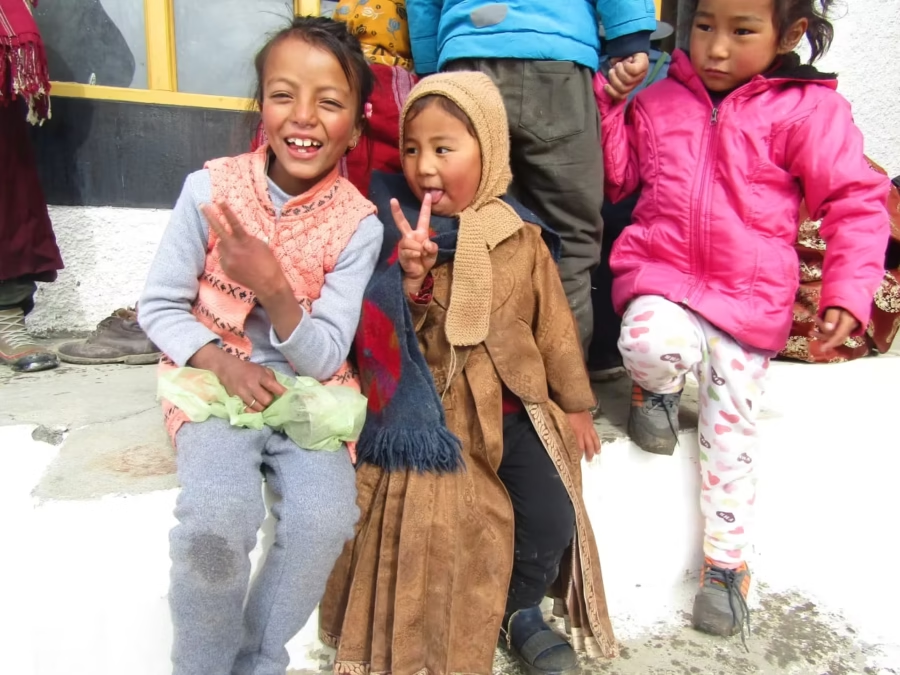
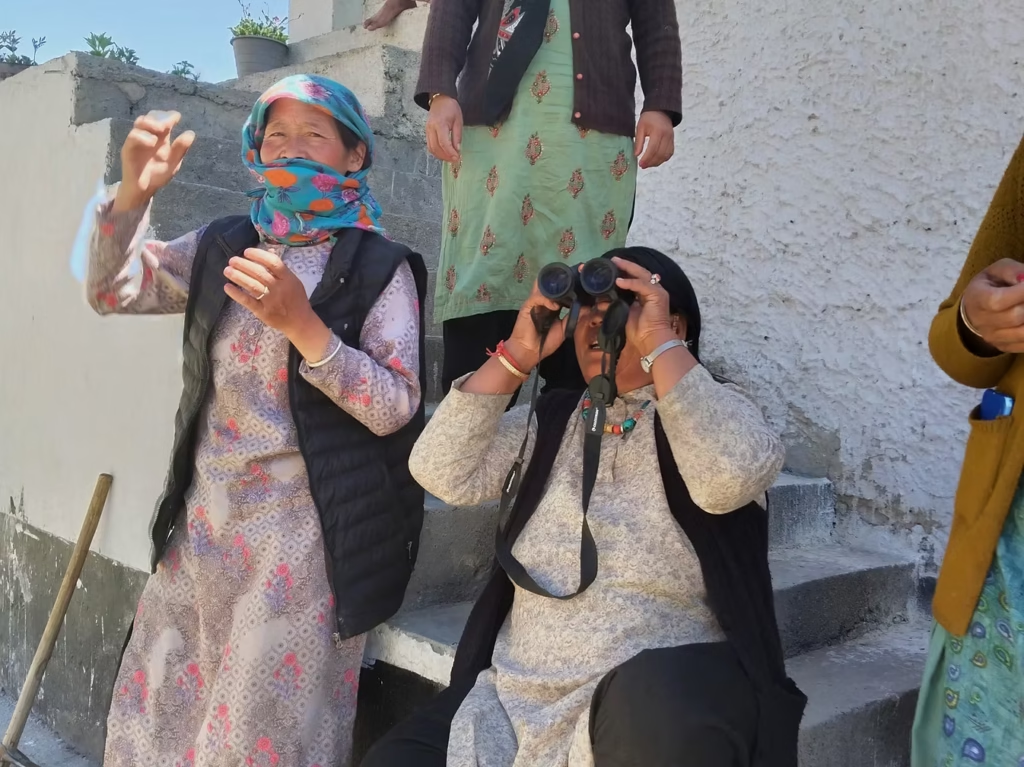
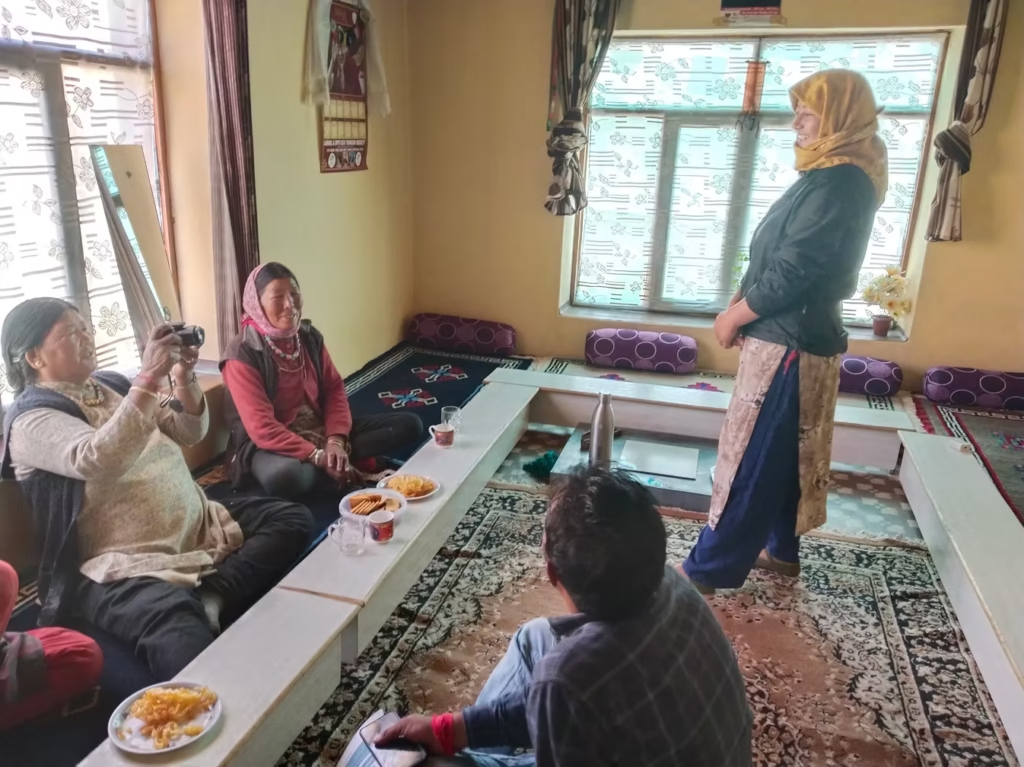
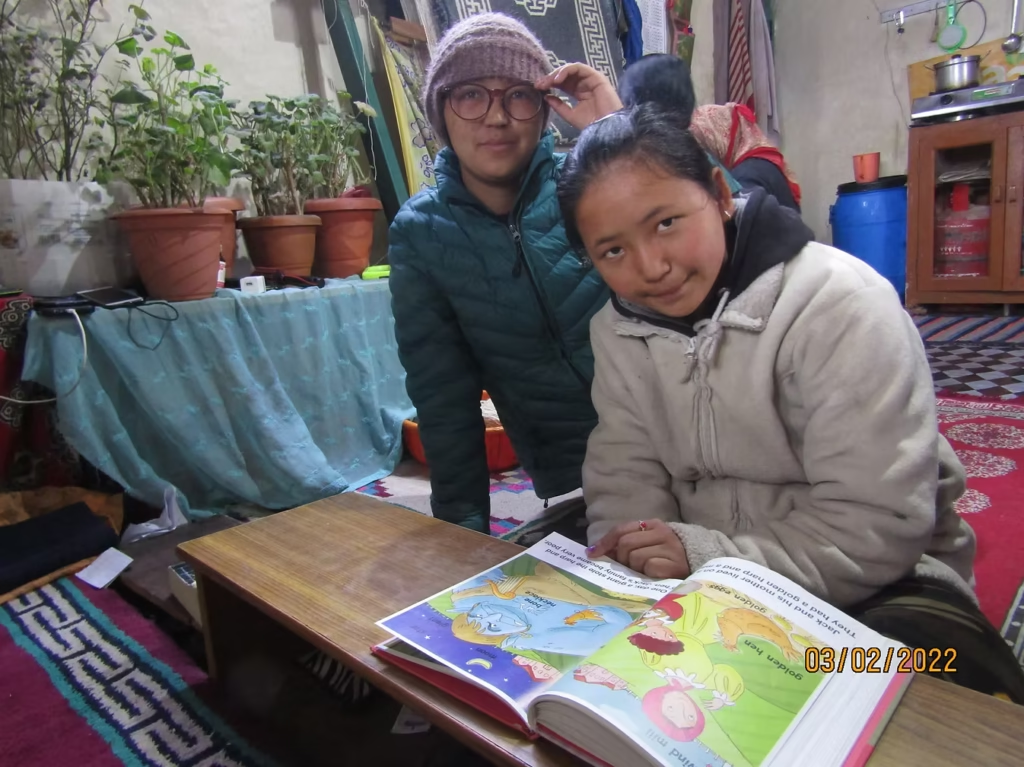
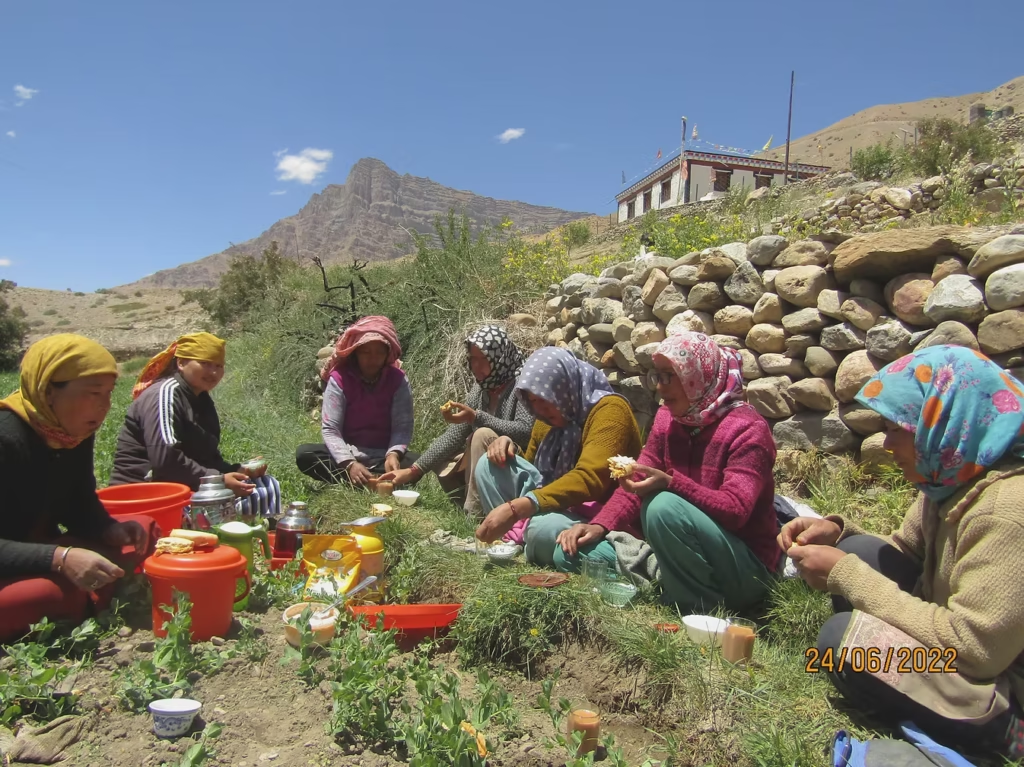
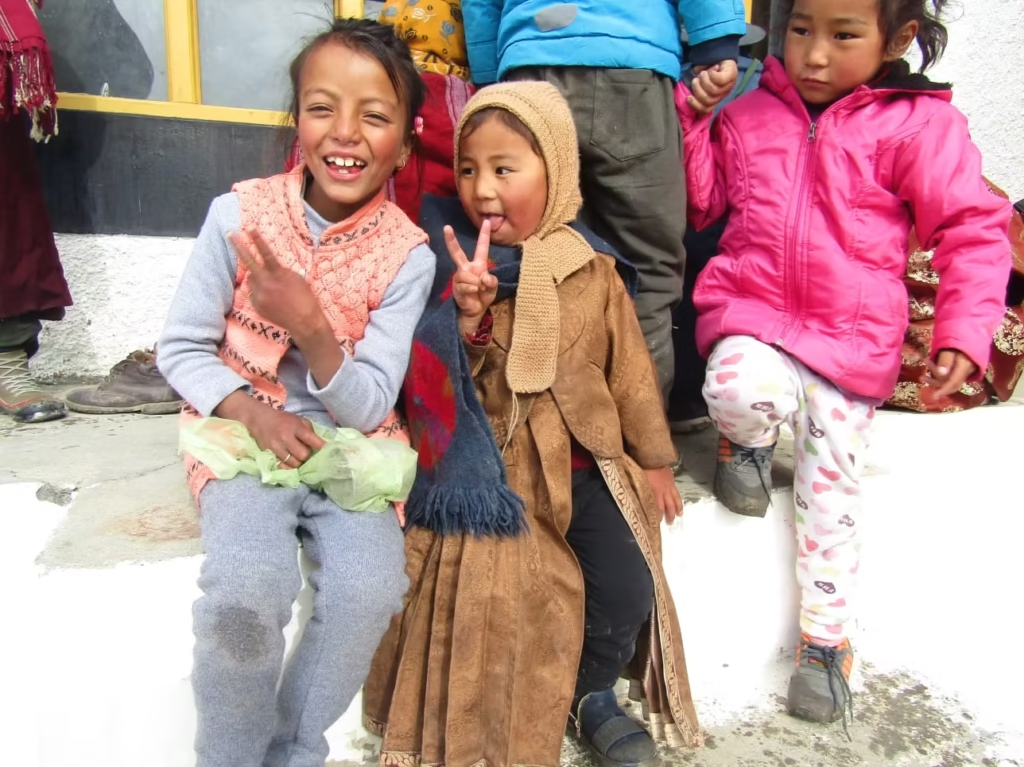
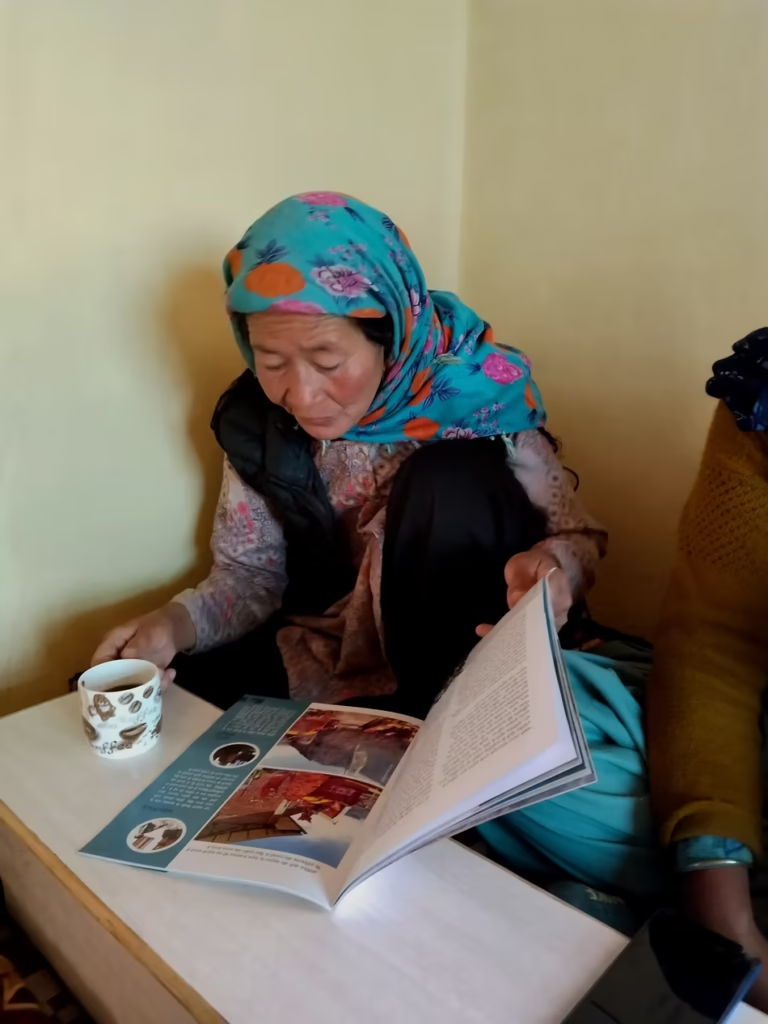
Last year, we did a photography workshop with women’s group in Shushuna village, Spiti Valley, who are primary caretakers and farmers in their households. After the session, we left them a camera and asked them to document their village life in addition to nurturing their photography skills. We returned a year later and they enthralled us with amazing pictures and great stories! Enjoy reading this one!

Kesang Dolker, Yangchen Dolma, Rigzen Youdon, Migmar   Dolma, Panama Dikit, Tsering Yangzom, Prabha Devi, Choddon, Dikit Dolma, Yangchen
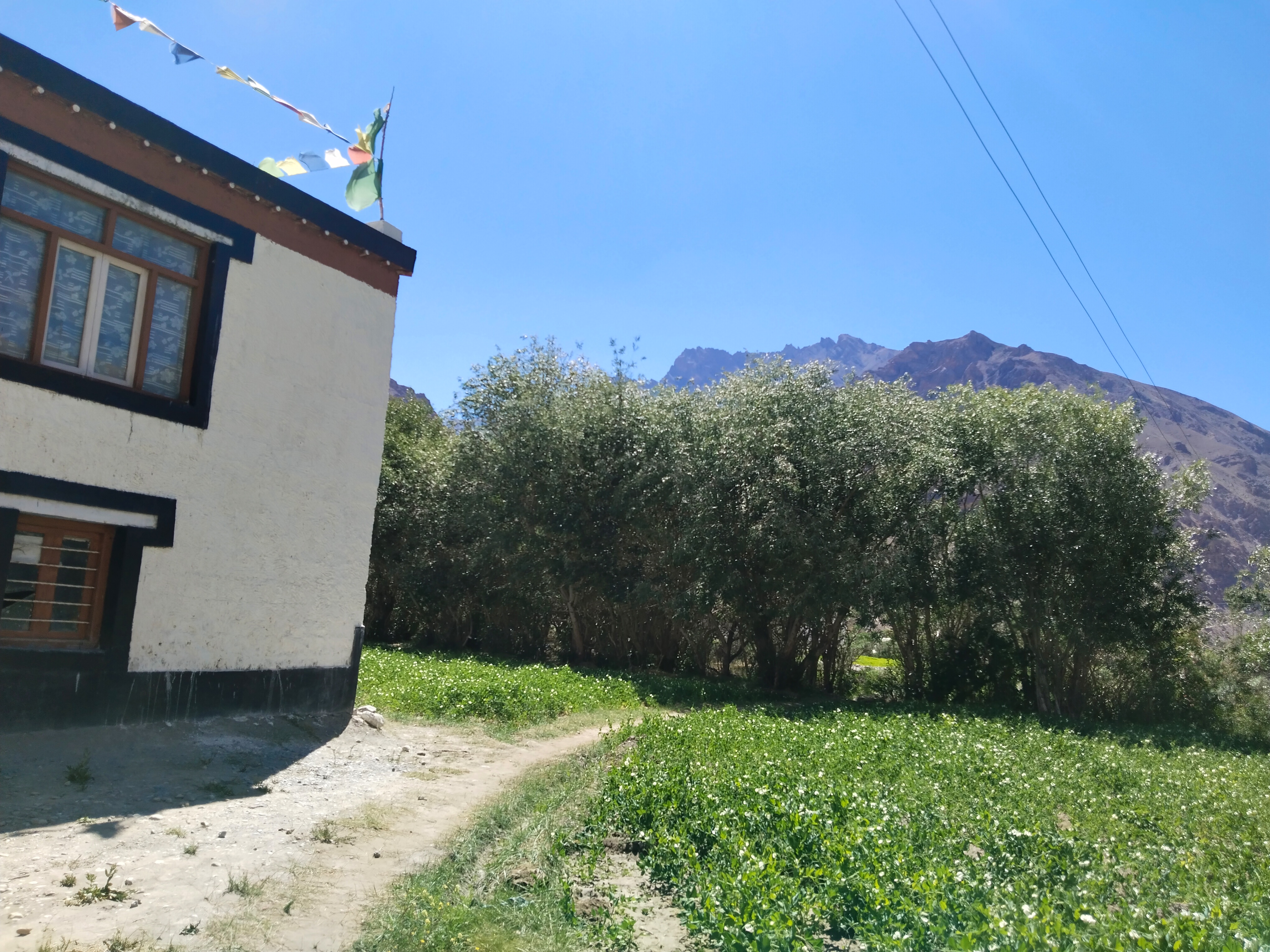
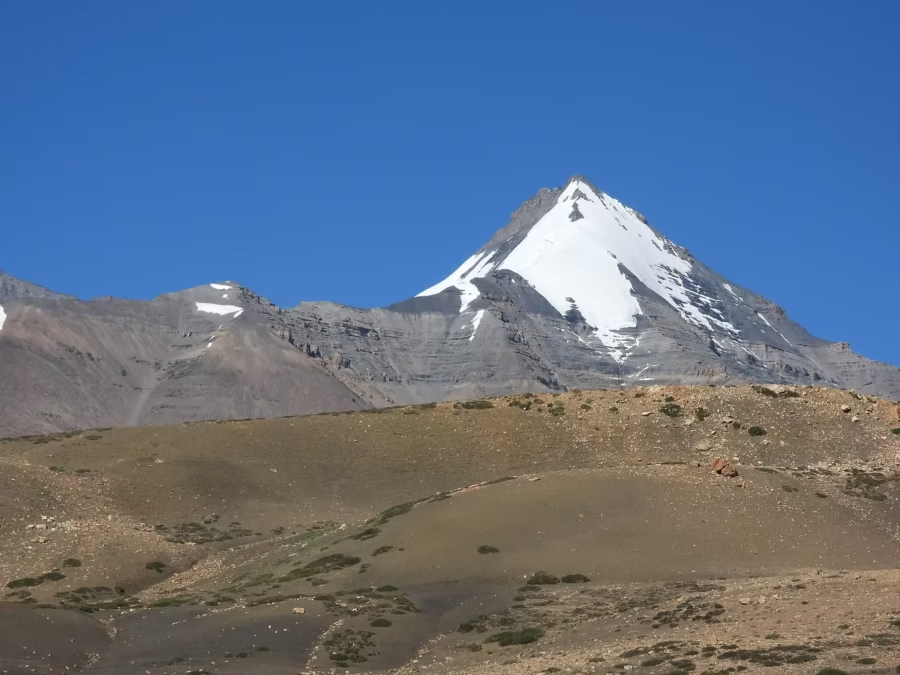
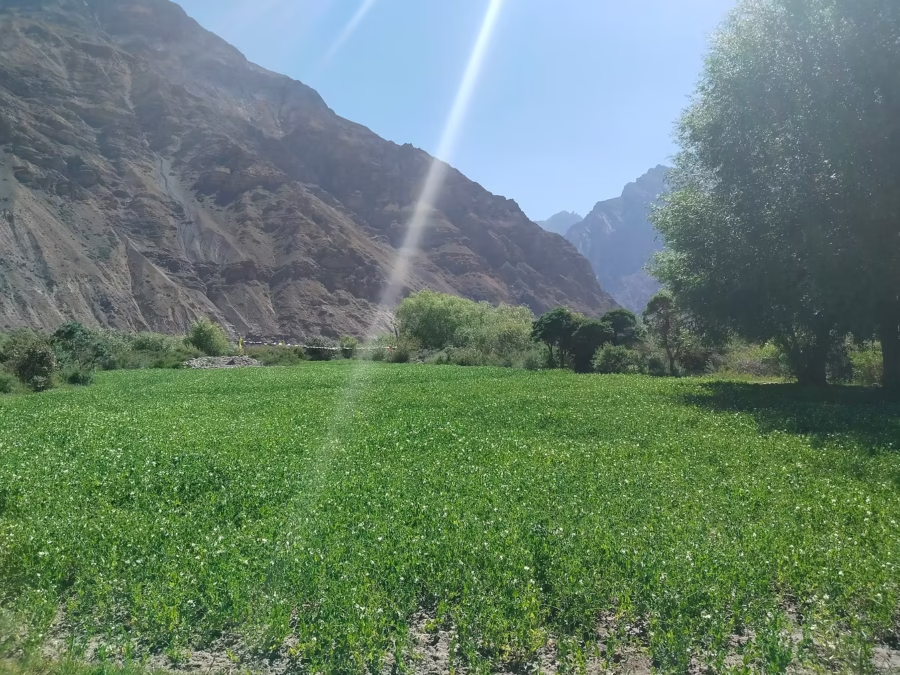
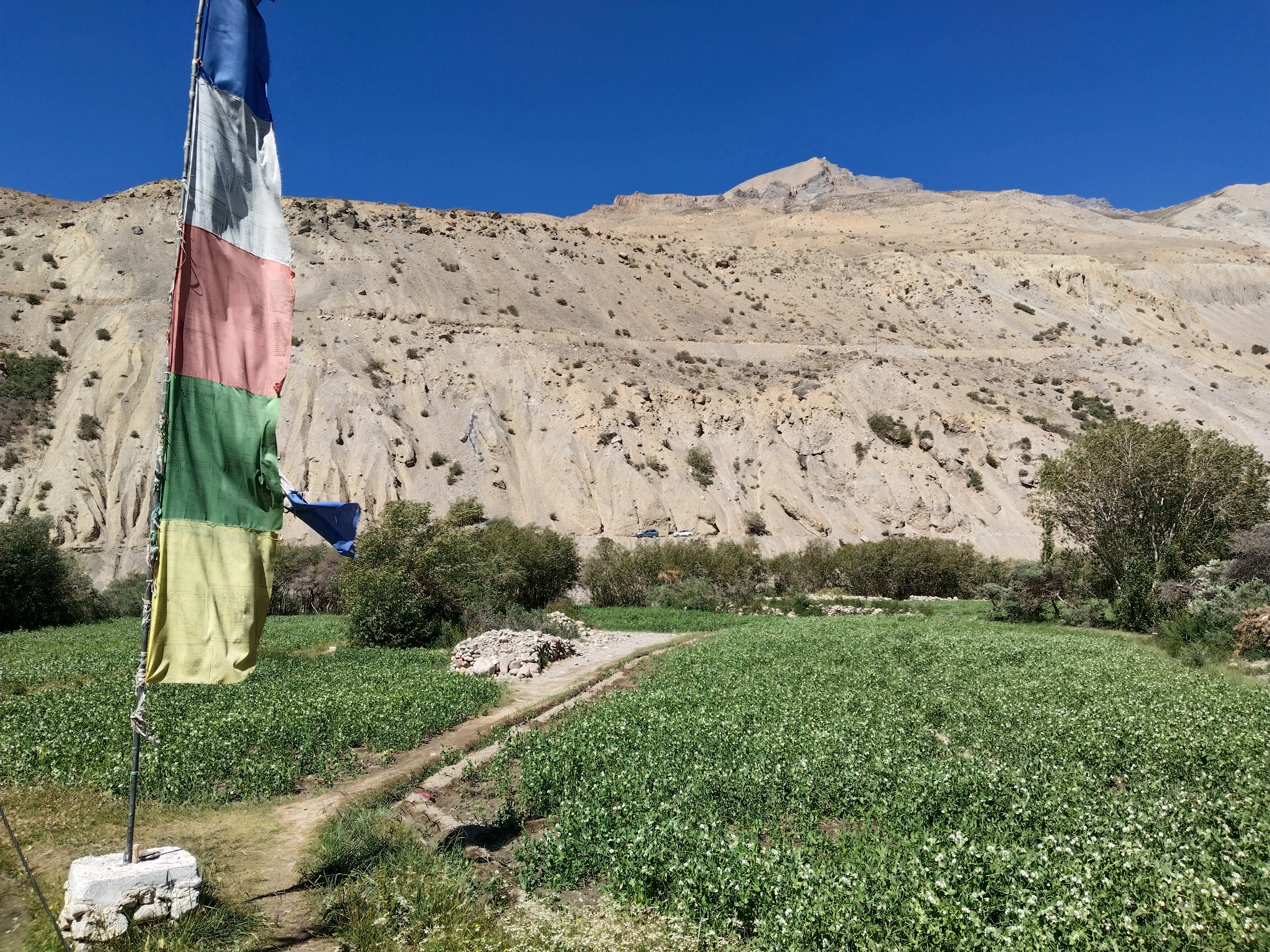
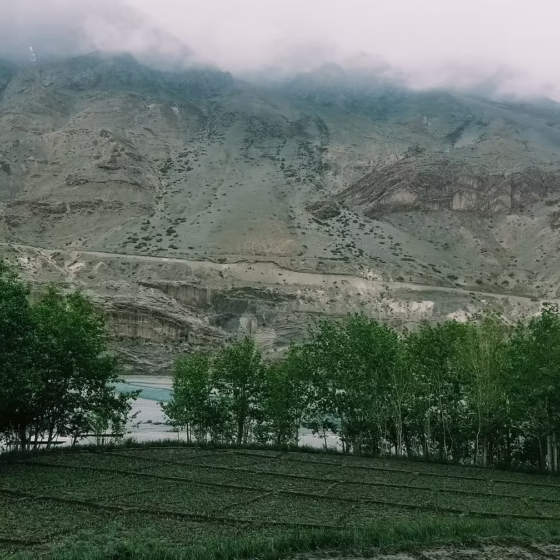
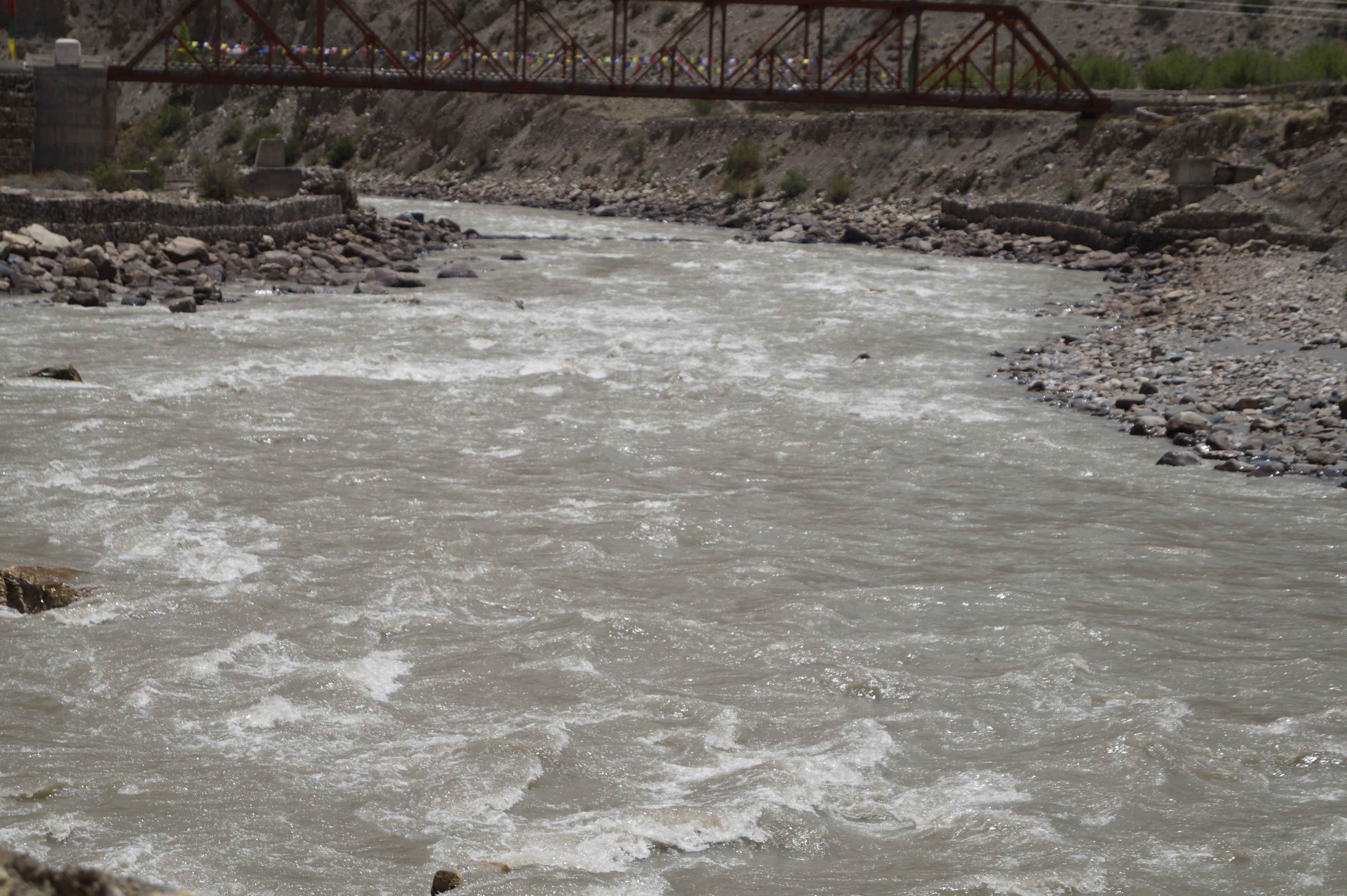
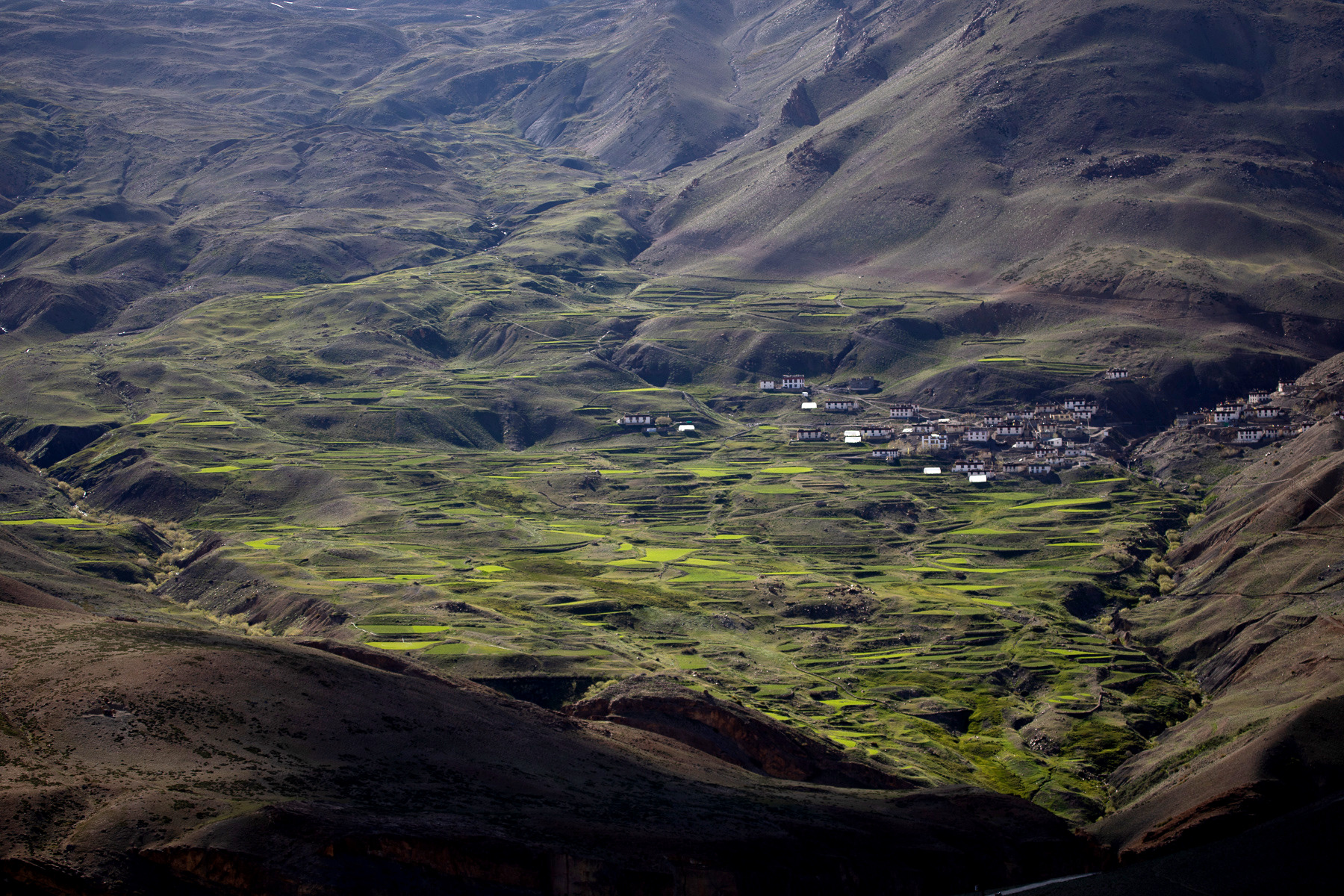
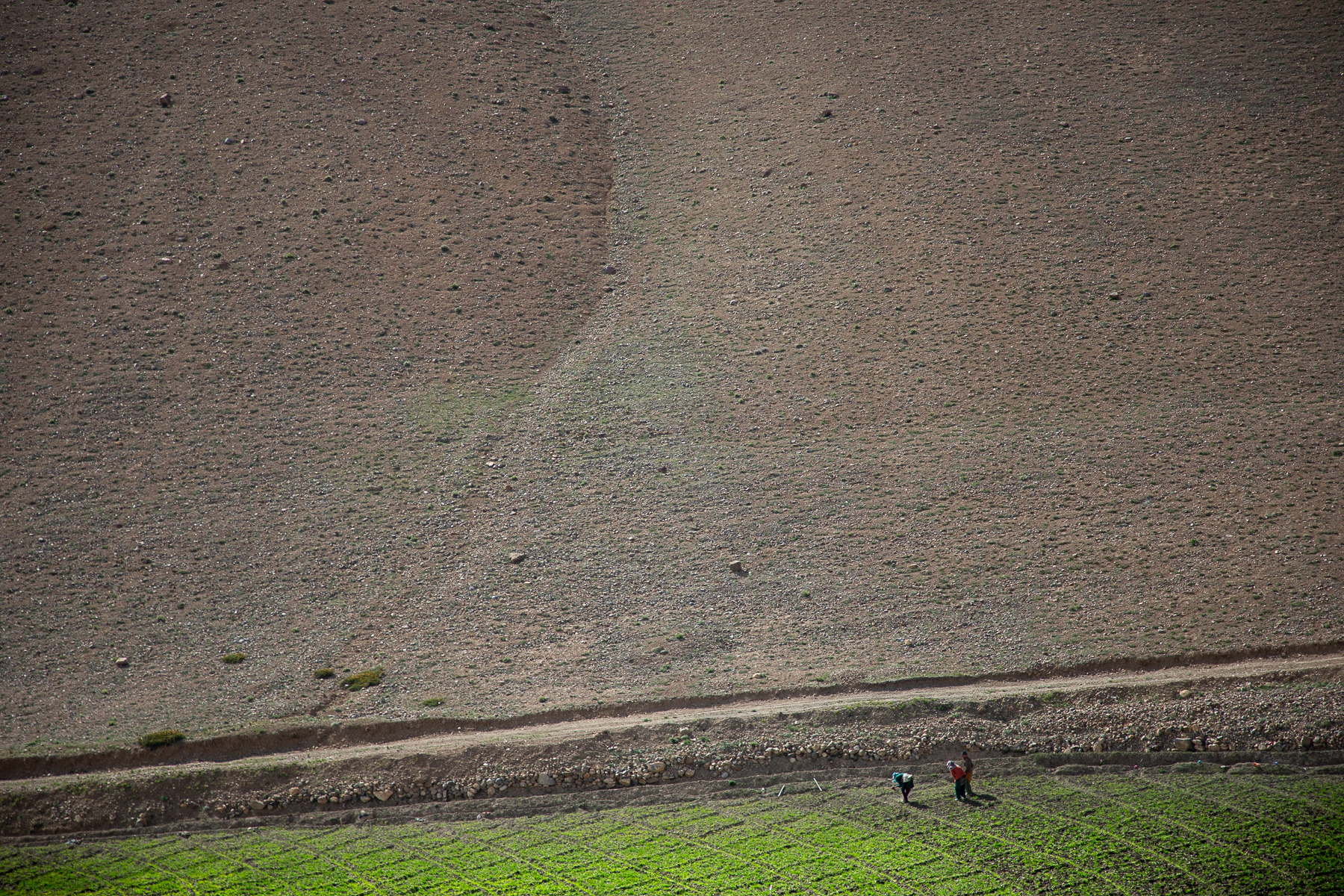
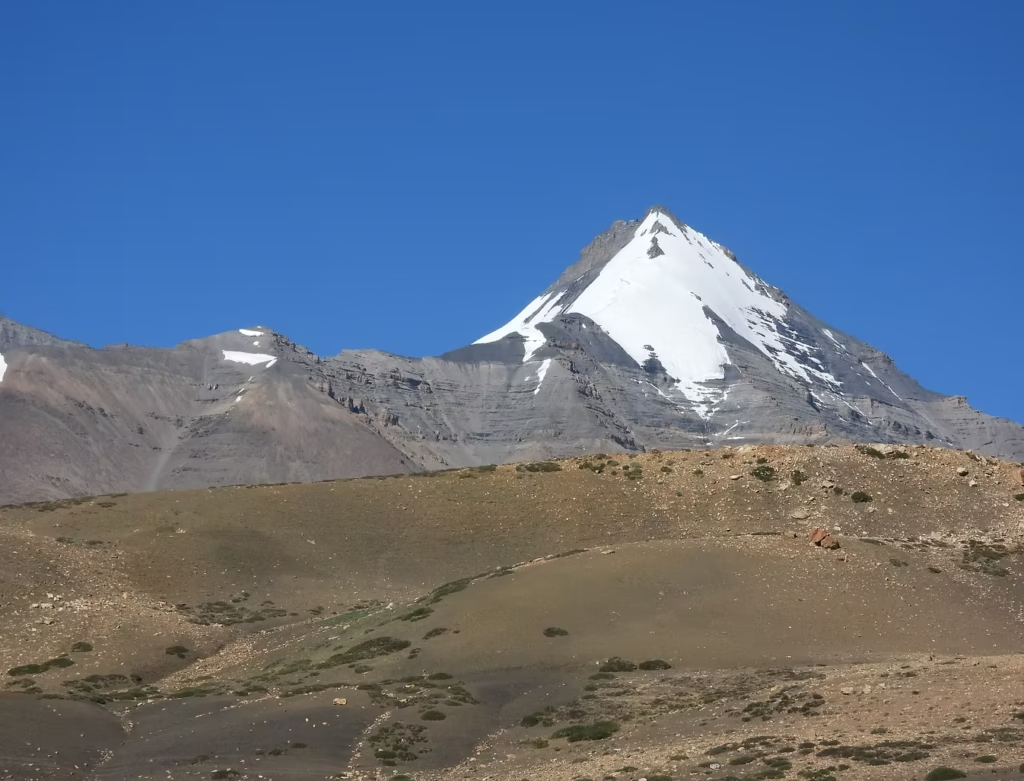
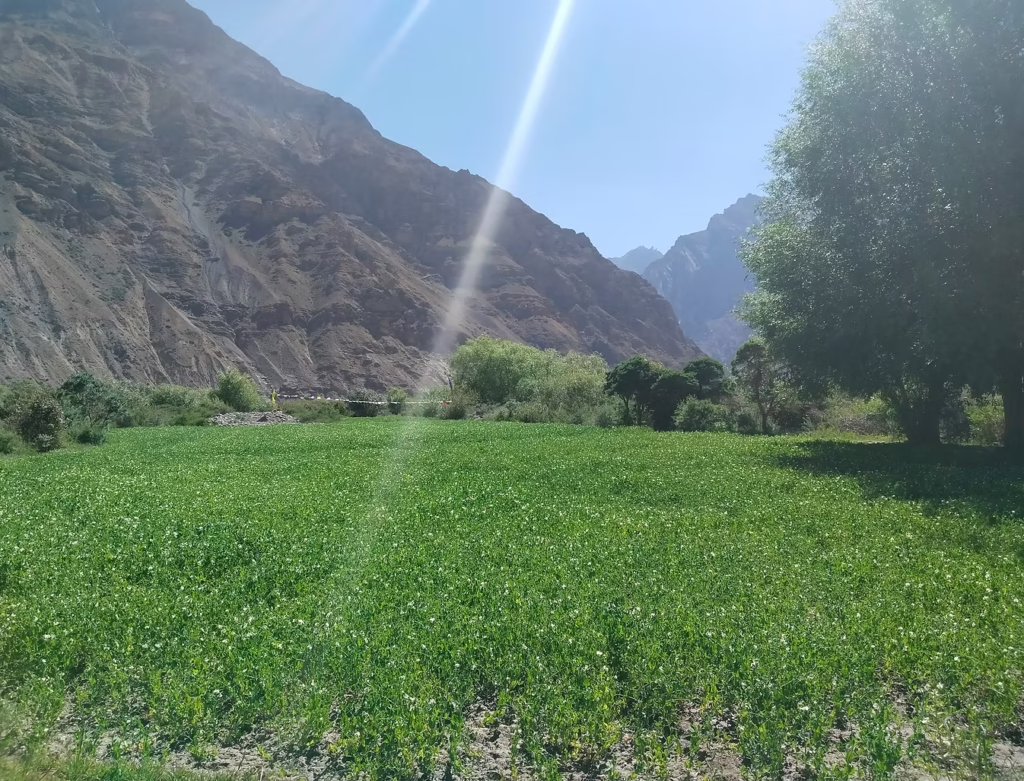
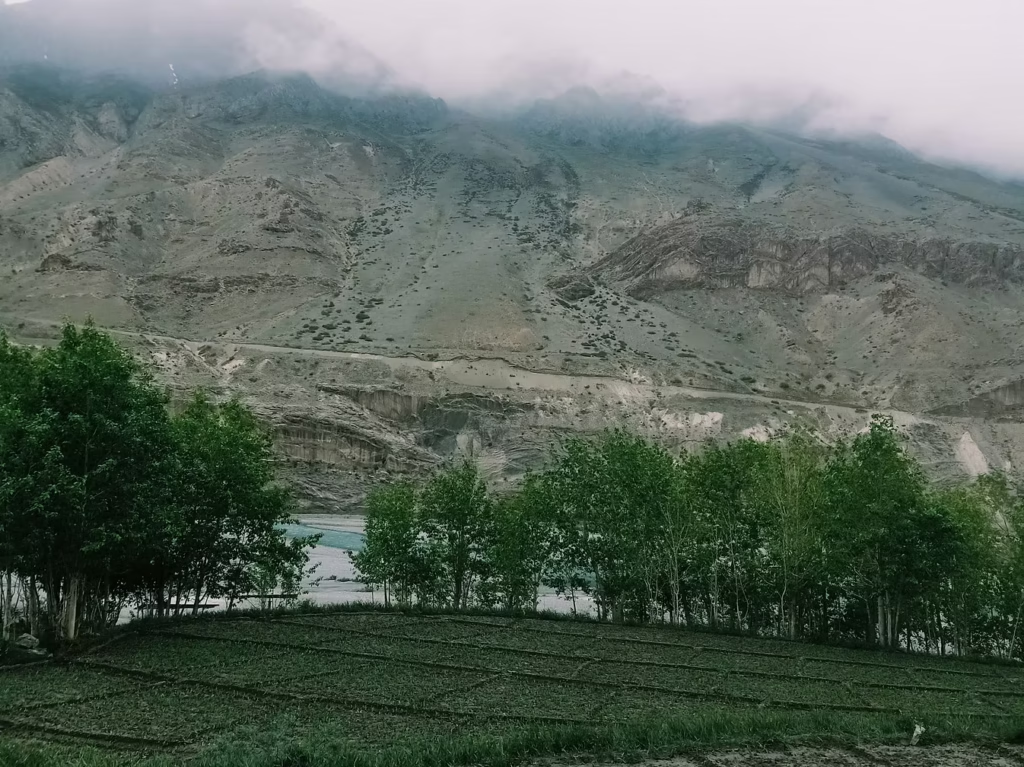
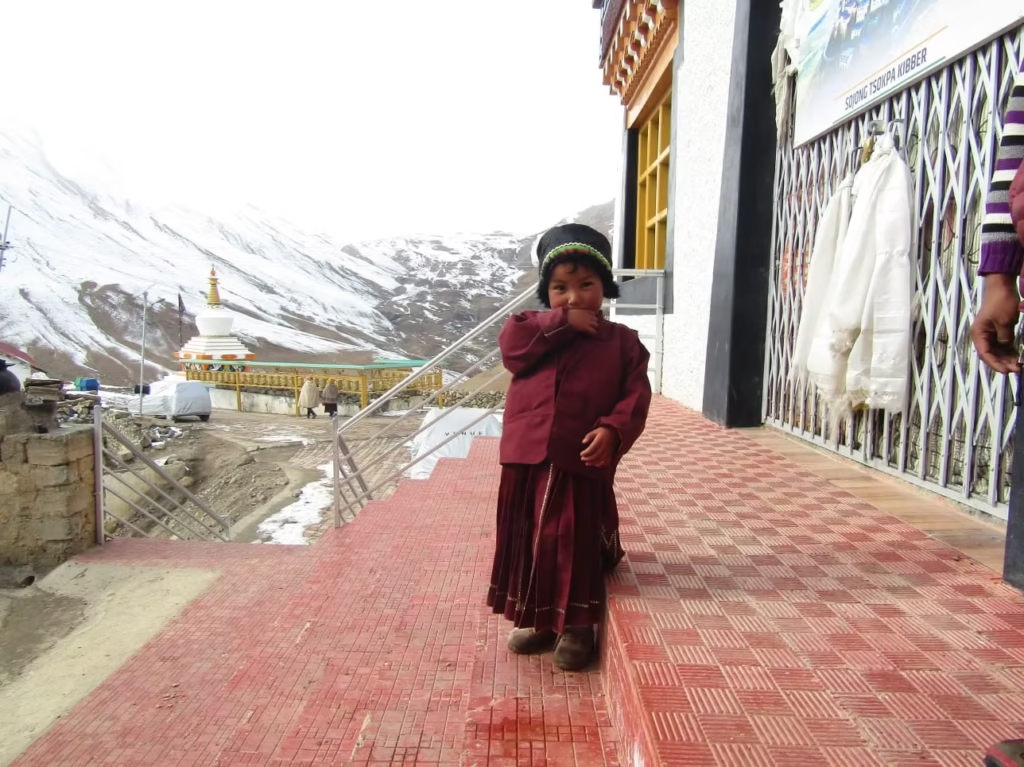
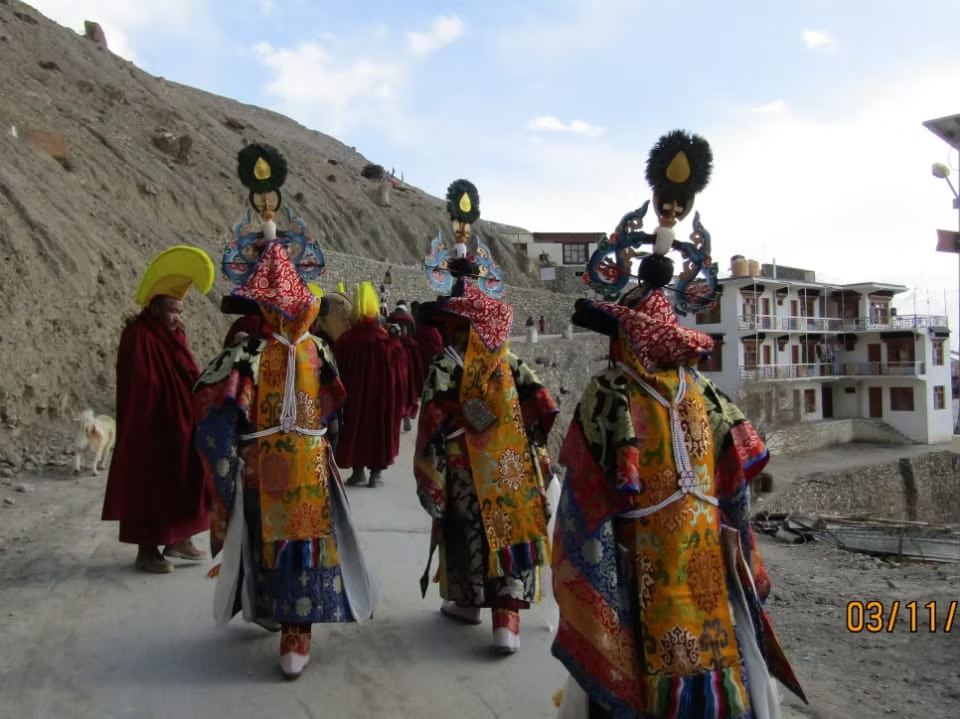
Shushuna is a quaint little hamlet in Spiti. Surrounded by high mountains, lush green fields and gushing rivulet that changes its hue from turquoise green to shades of grey.
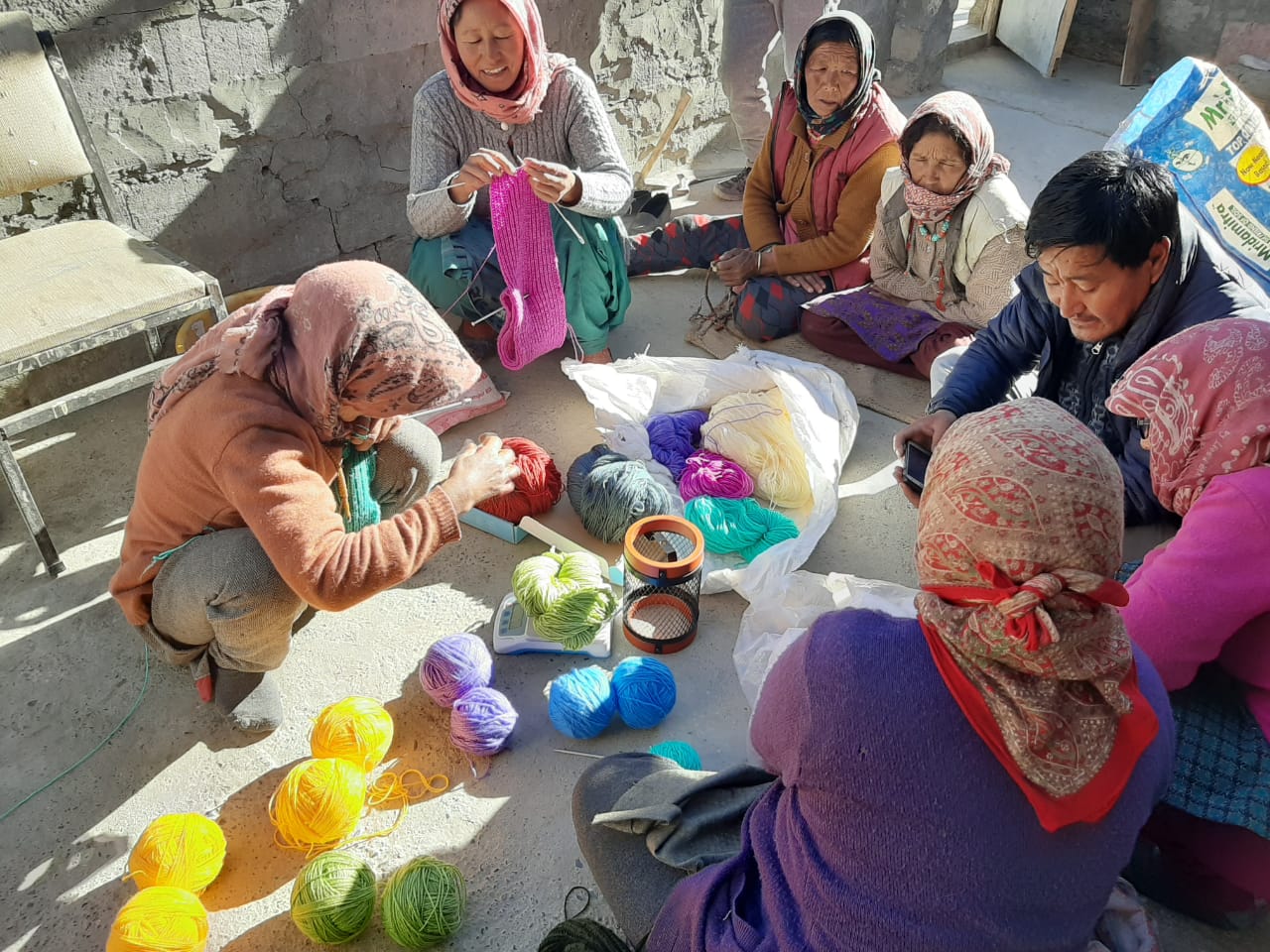
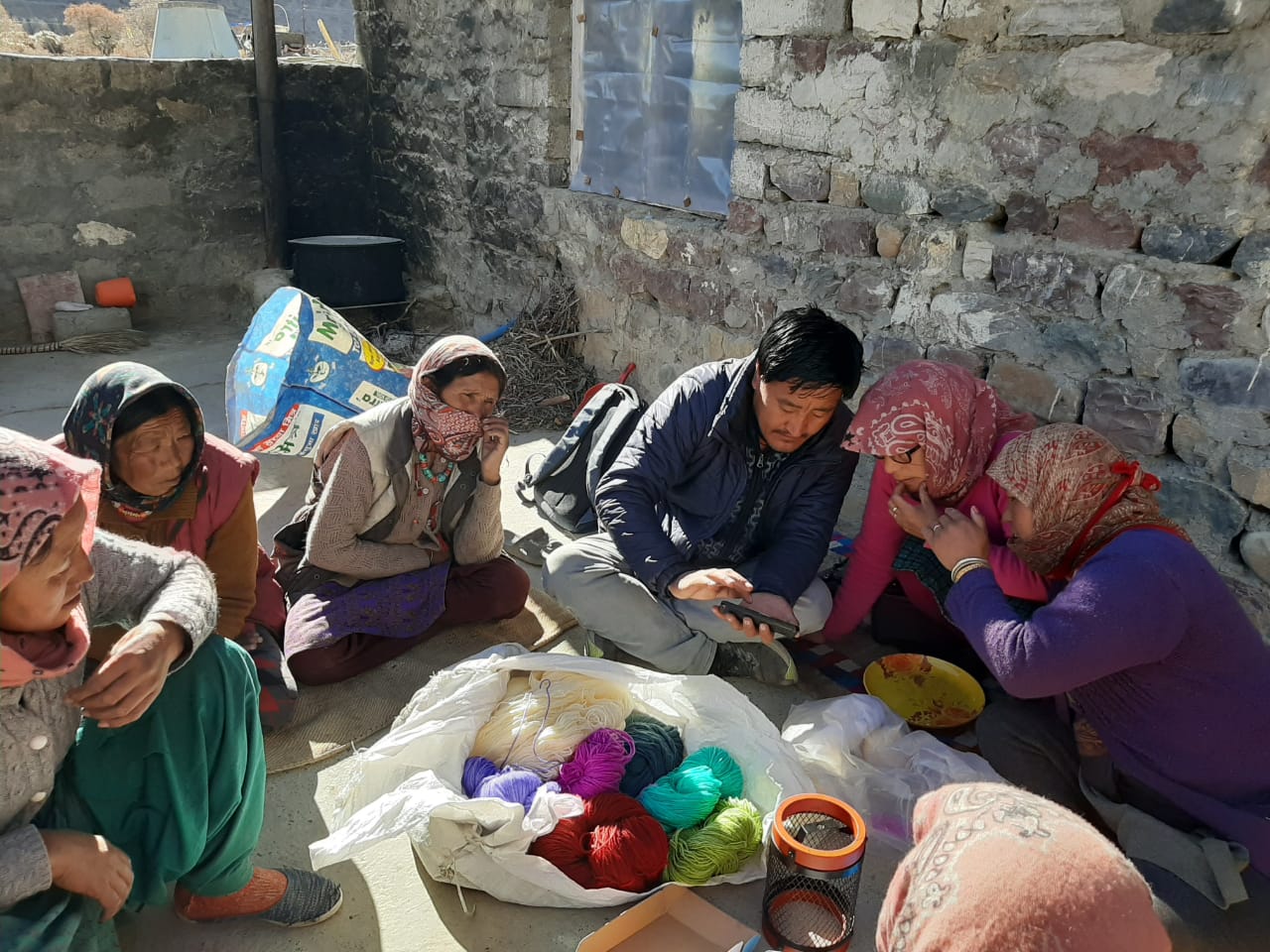
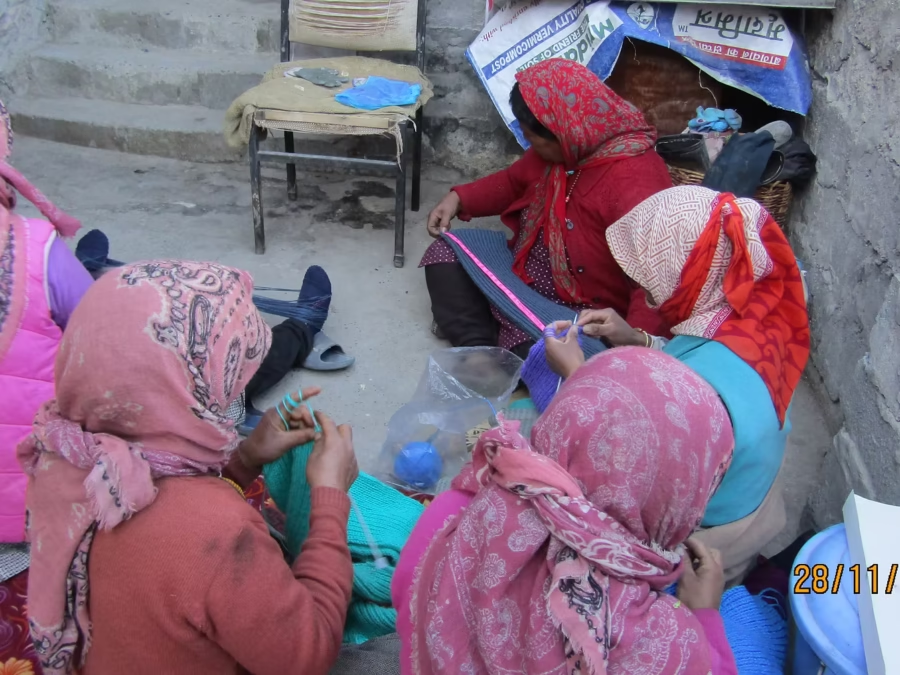
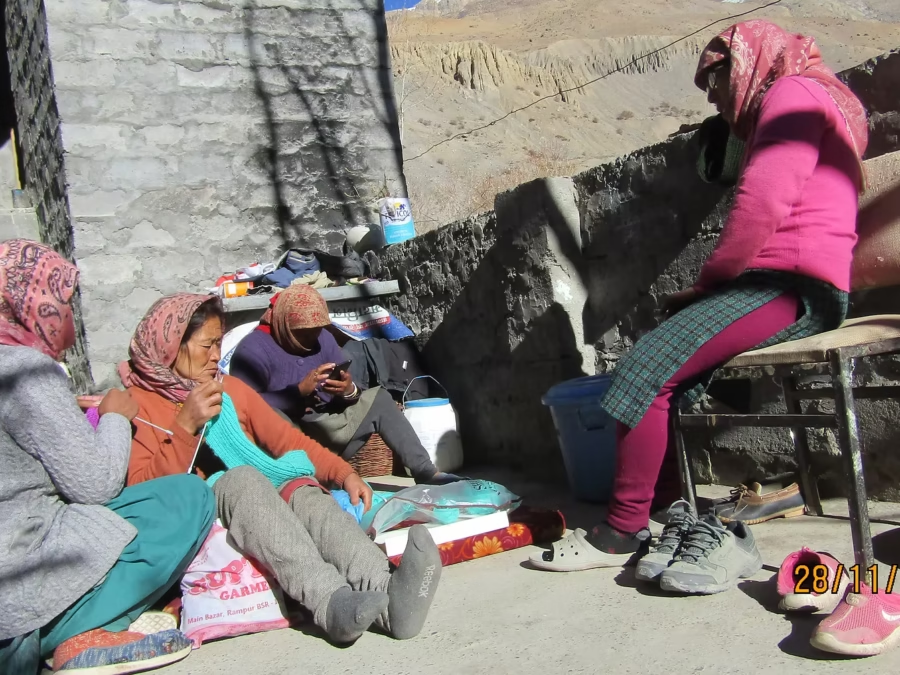
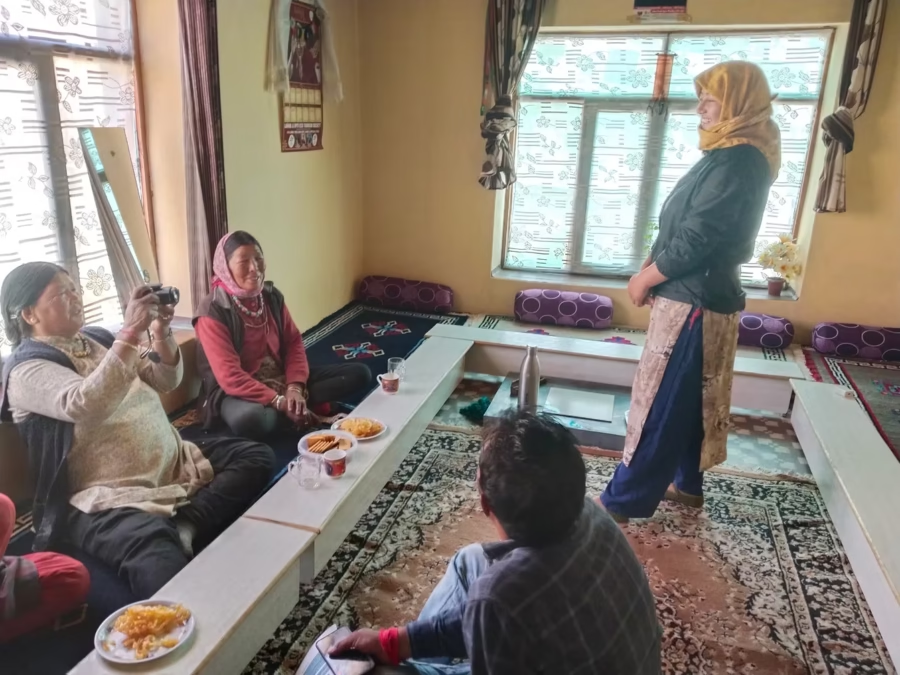
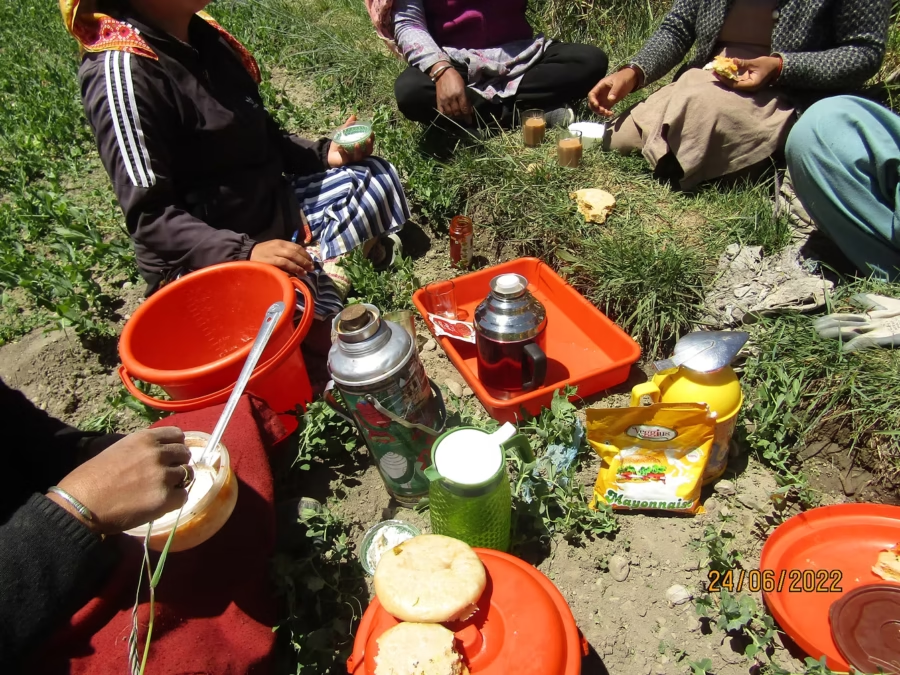
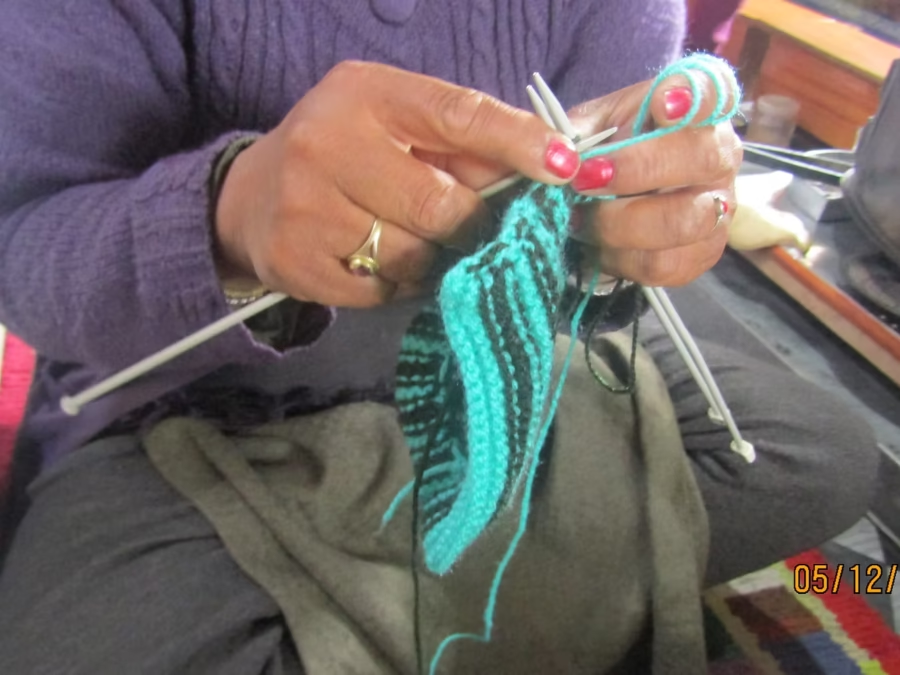
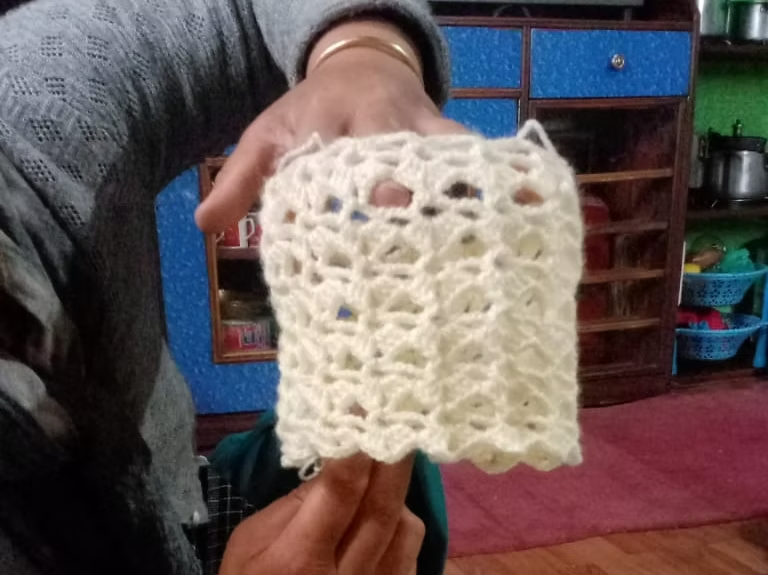
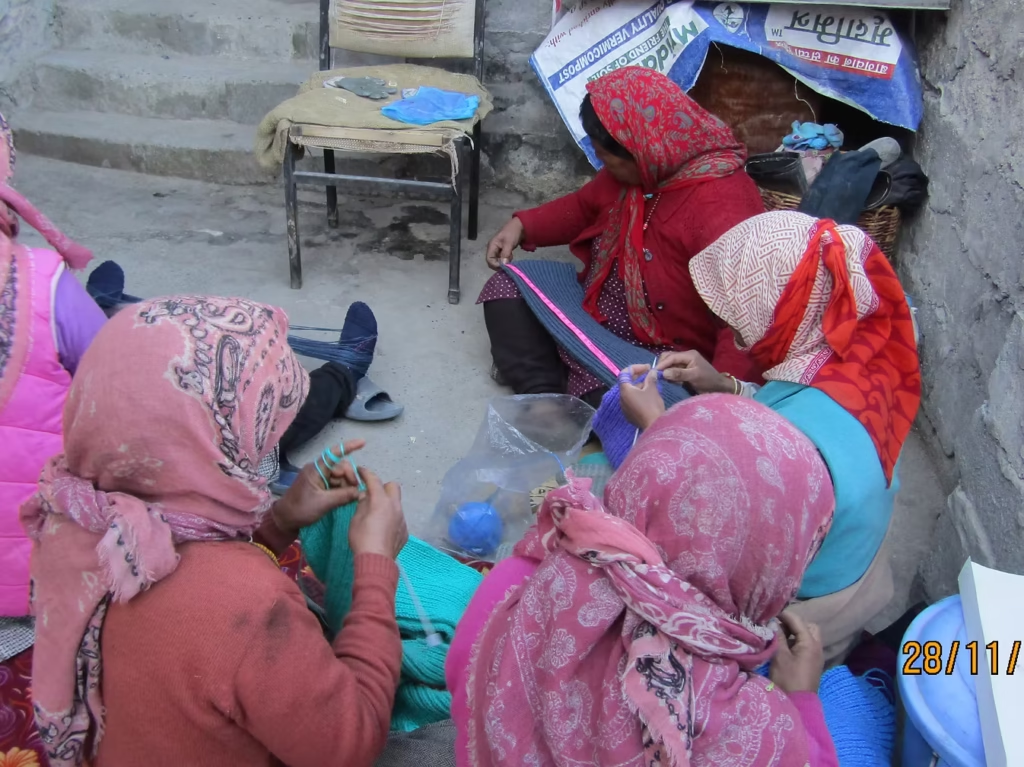
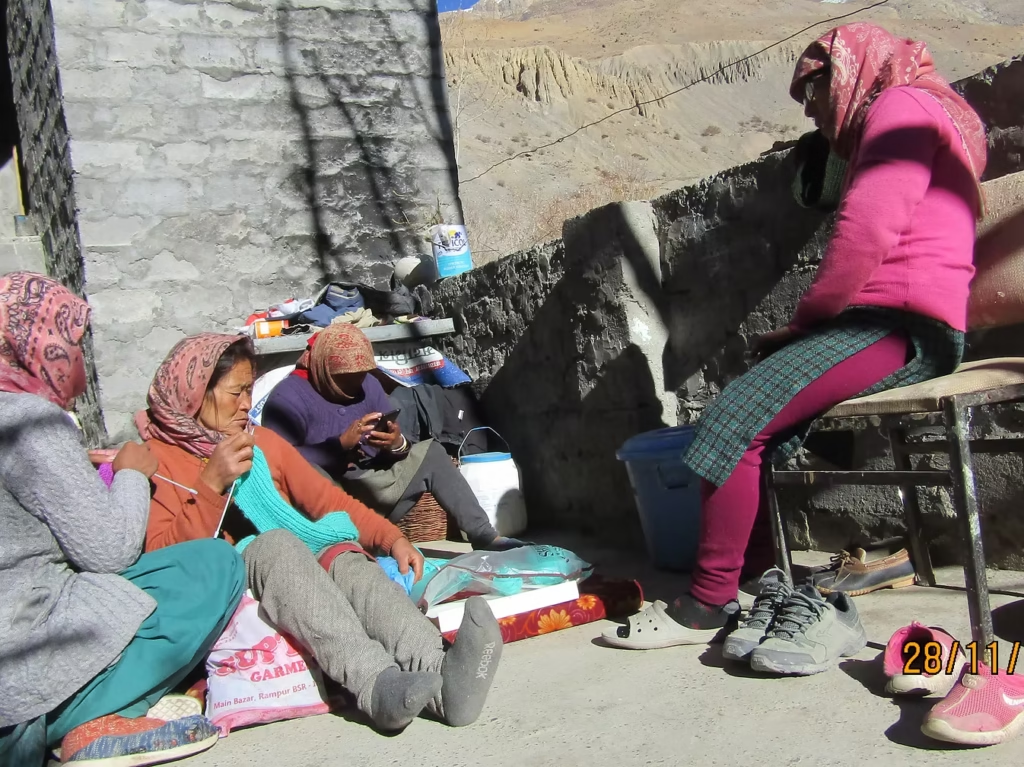
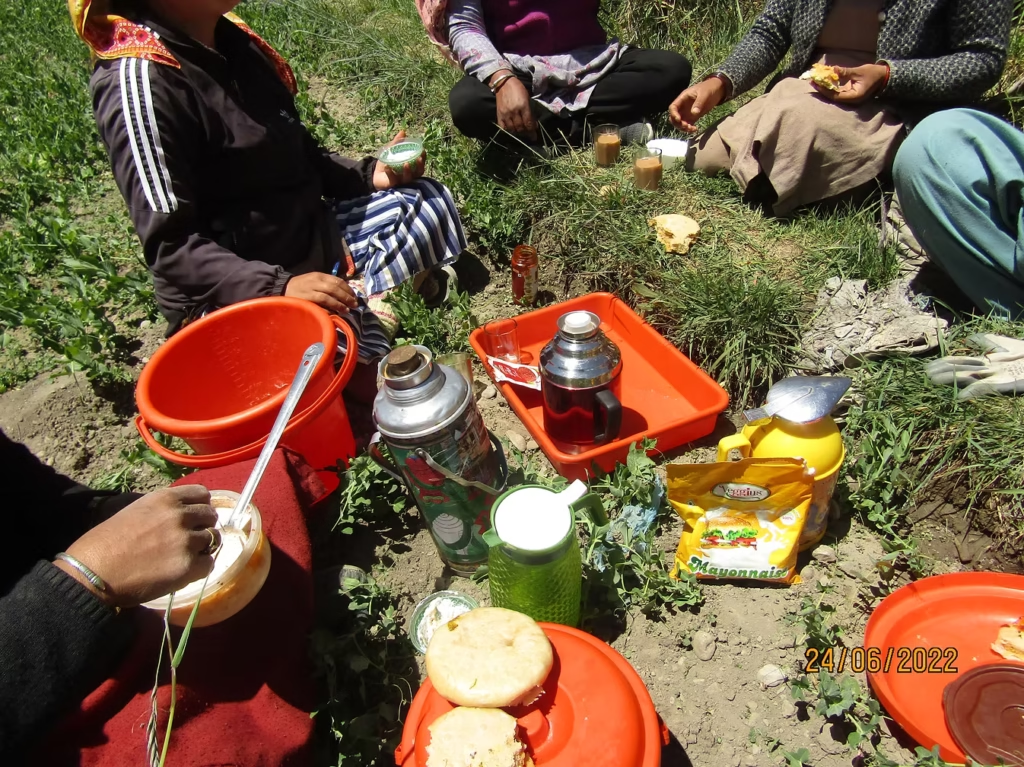
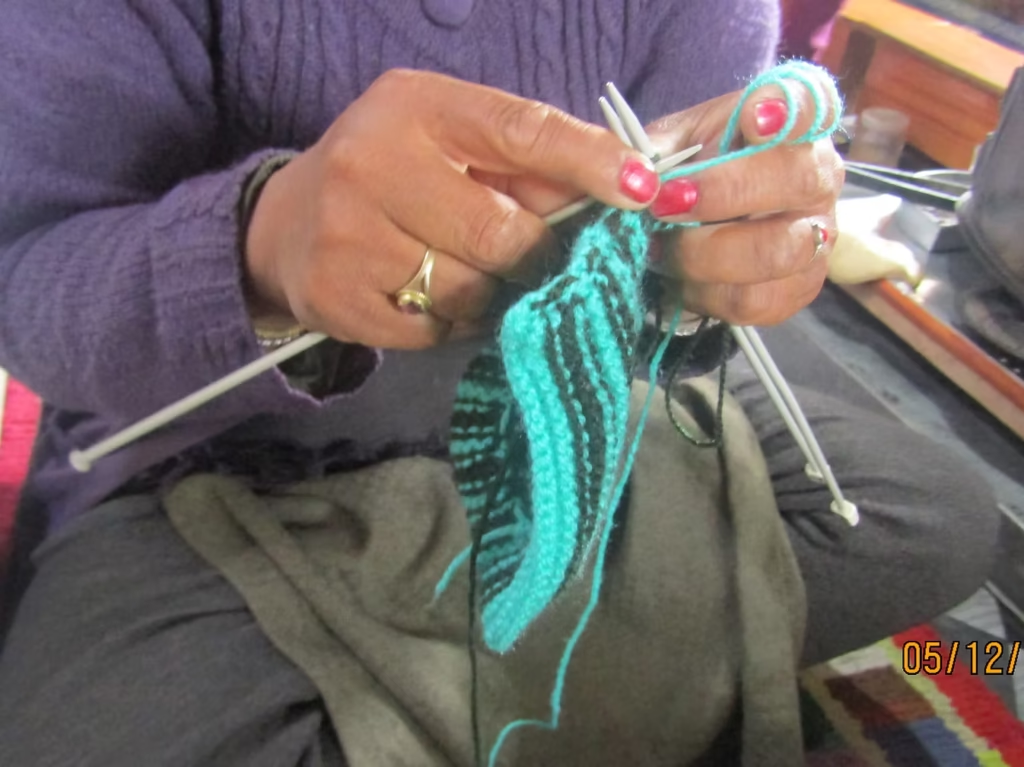
It is a bright sunny day in June and a group of women can be leisurely seen knitting sweaters, mufflers and socks for winter… an unusual sight during peak farming season in Spiti.
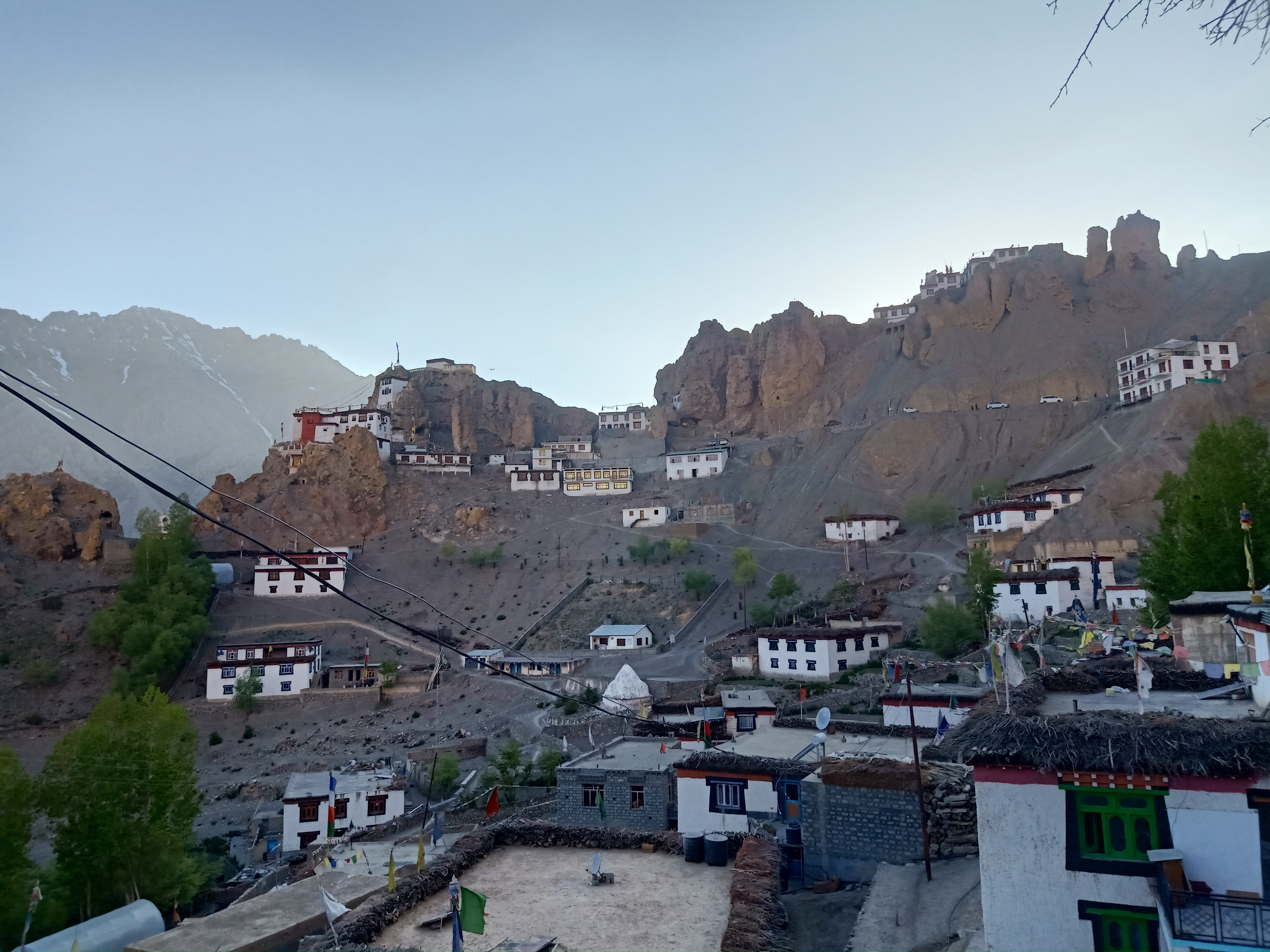
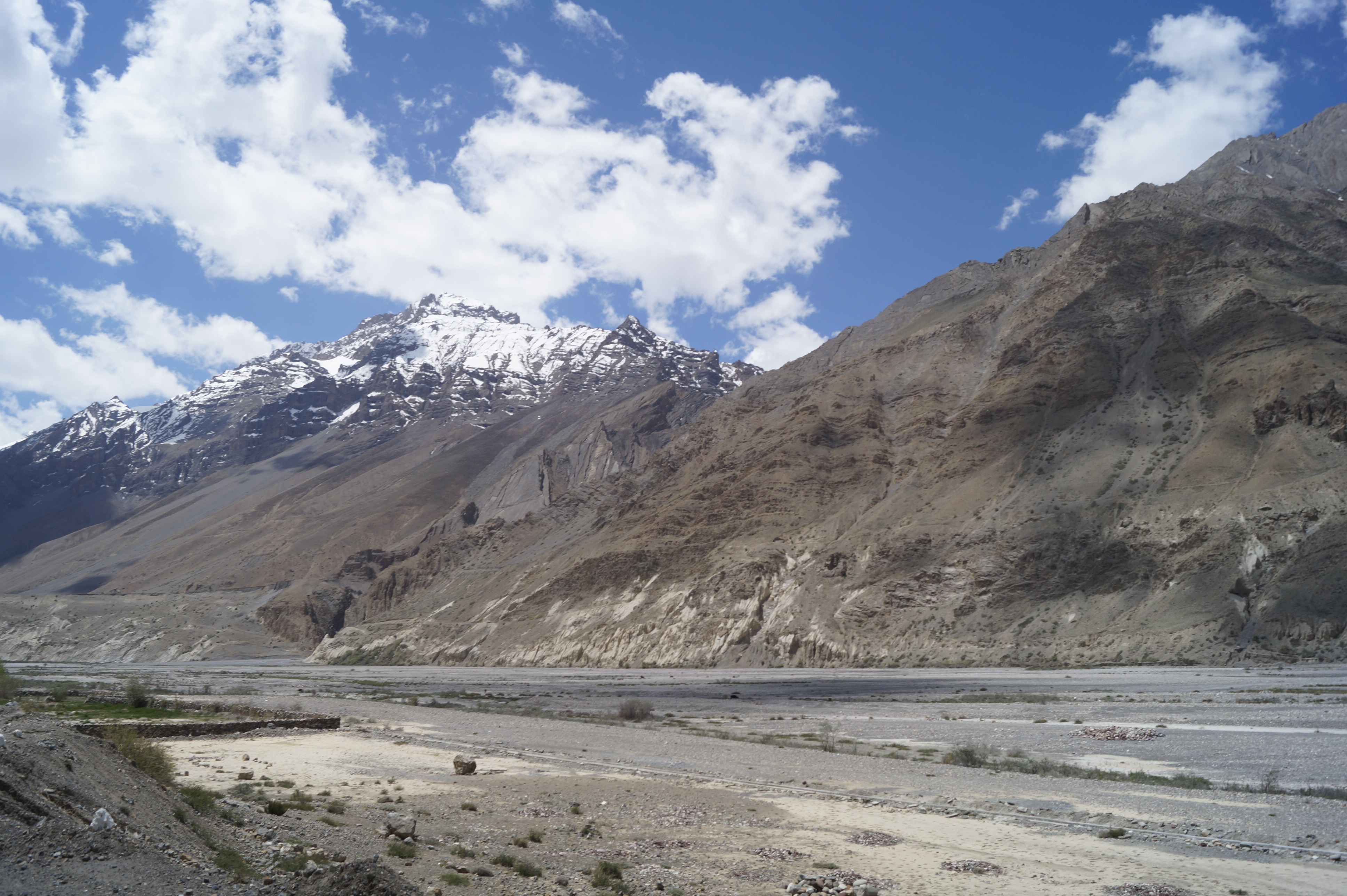
Spiti is a high Himalayan mountain desert with scanty rainfall and glacial melt water as the prime source for most villages. As such, water is sparse, the agricultural season and vegetation short, and lives vulnerable.
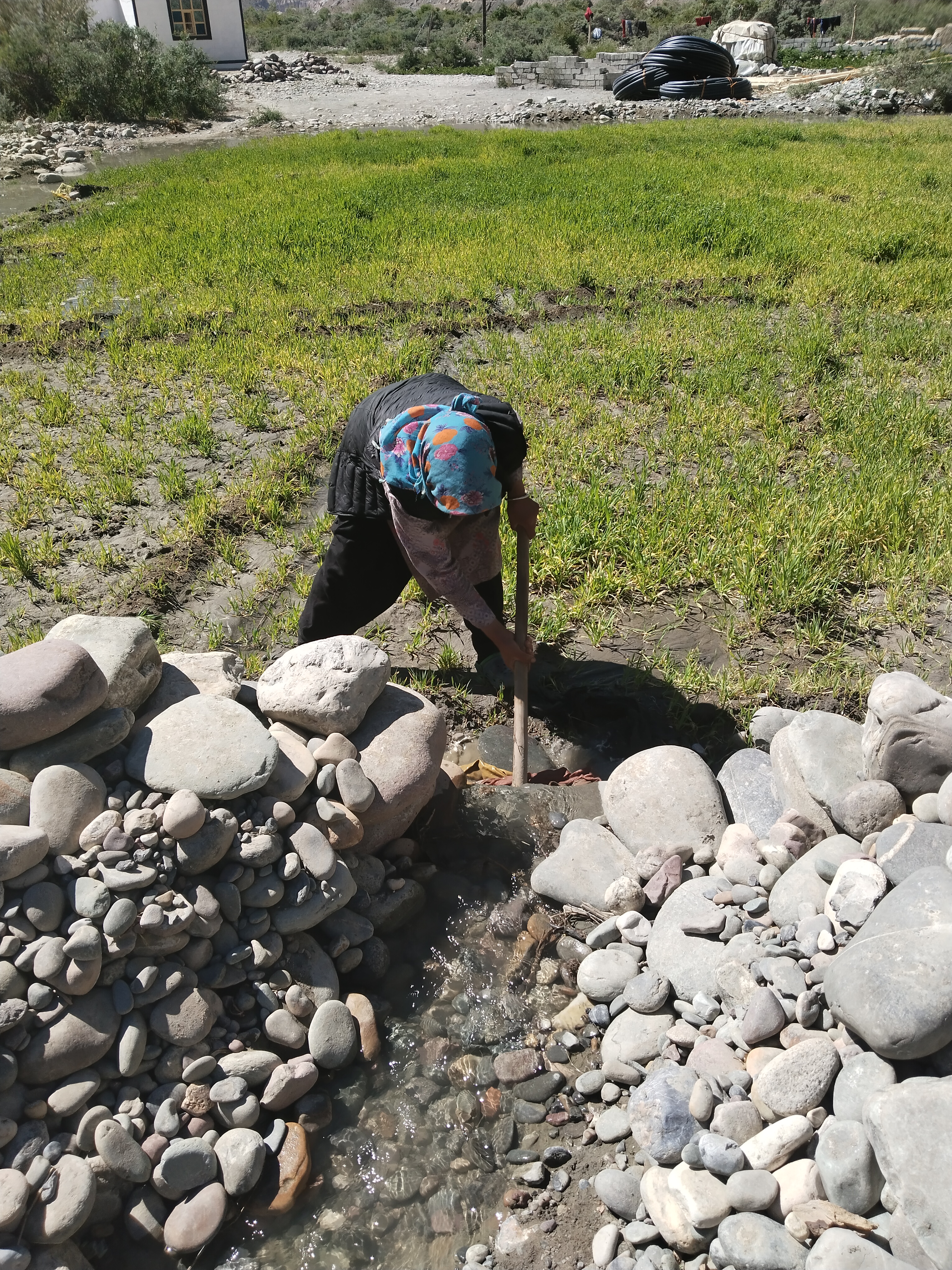
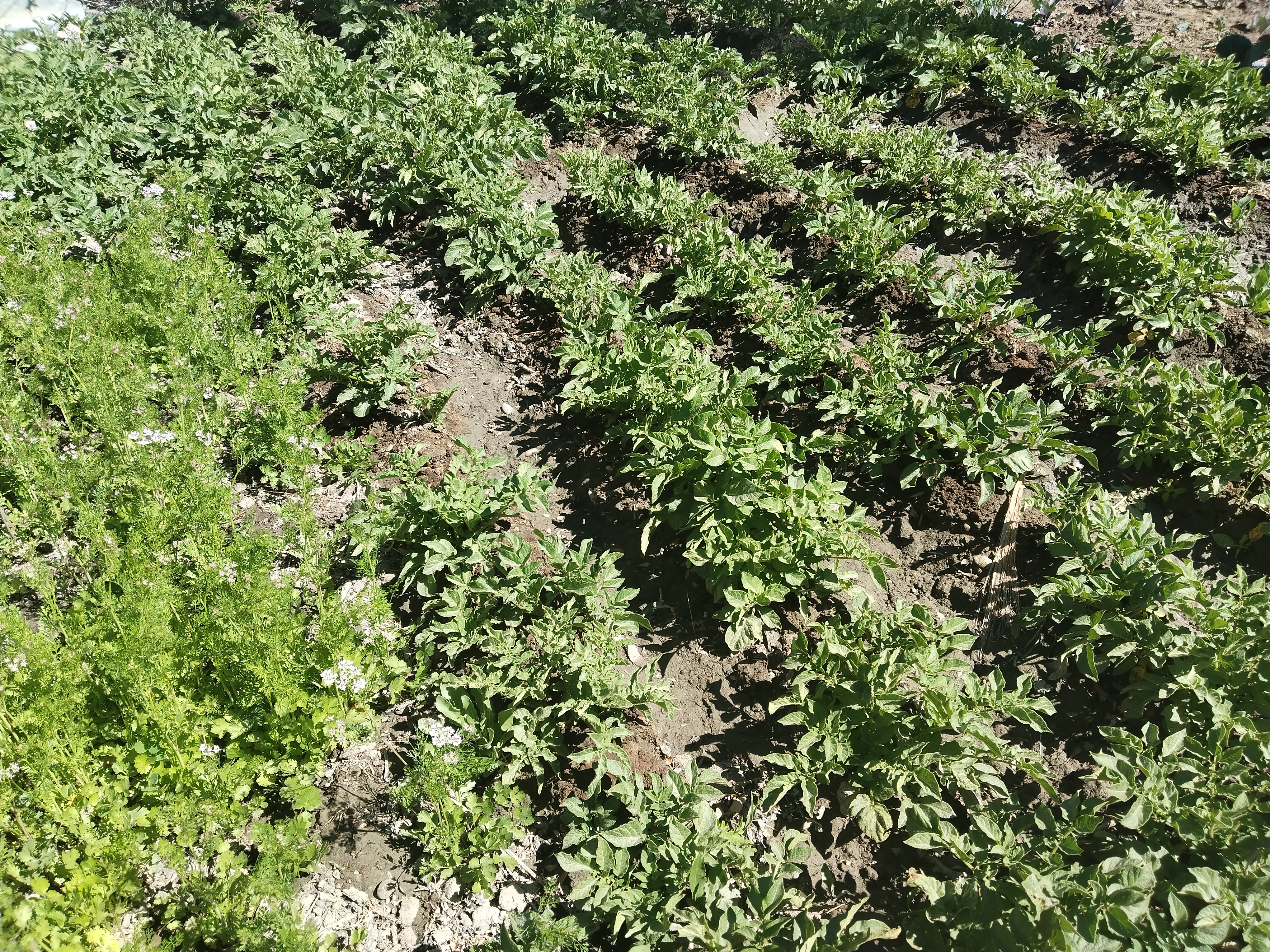
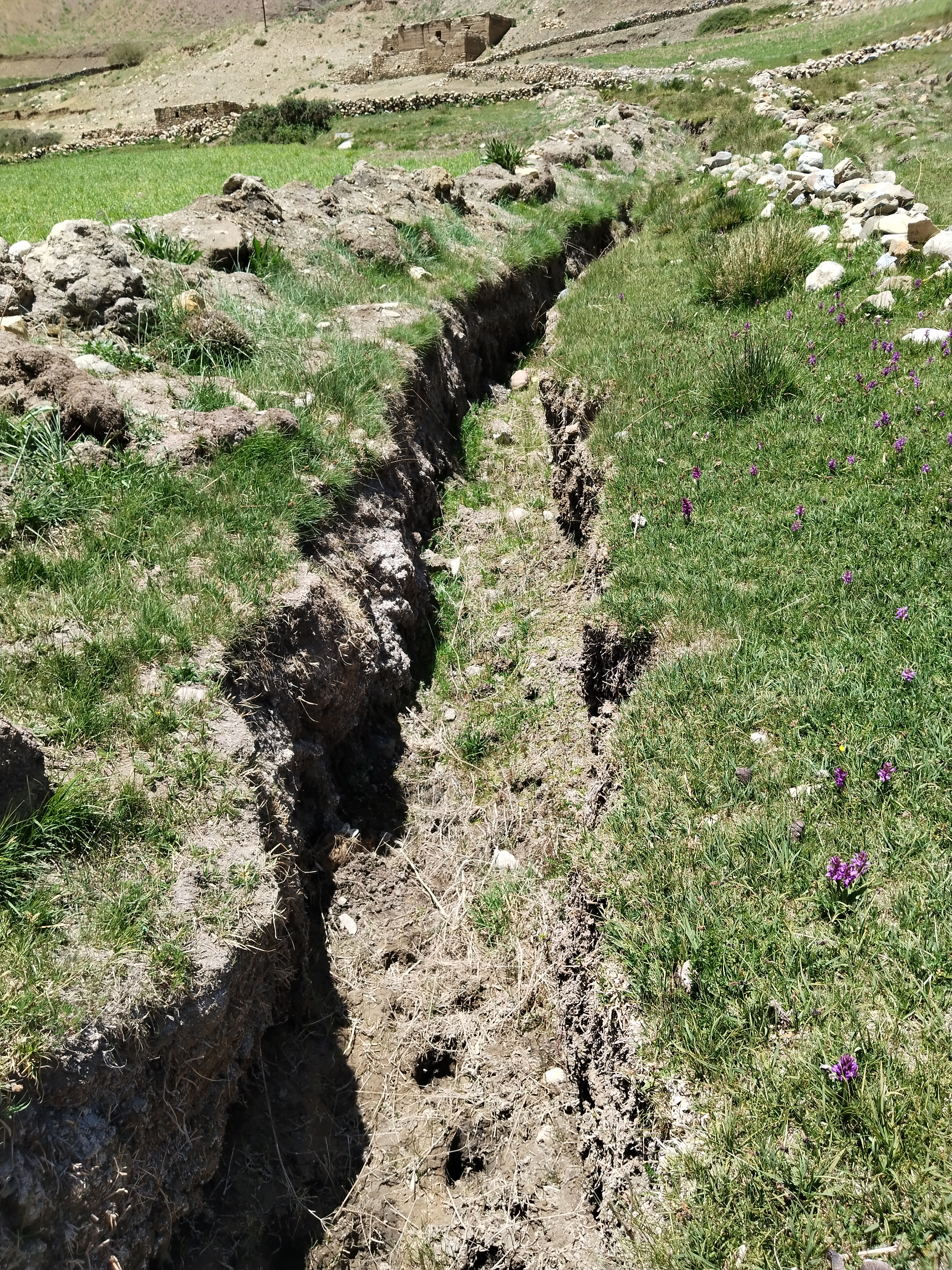
When most Spitian villages are drying up, fields unyielding, brimming Kuls of Shushuna signals benign possibilities.
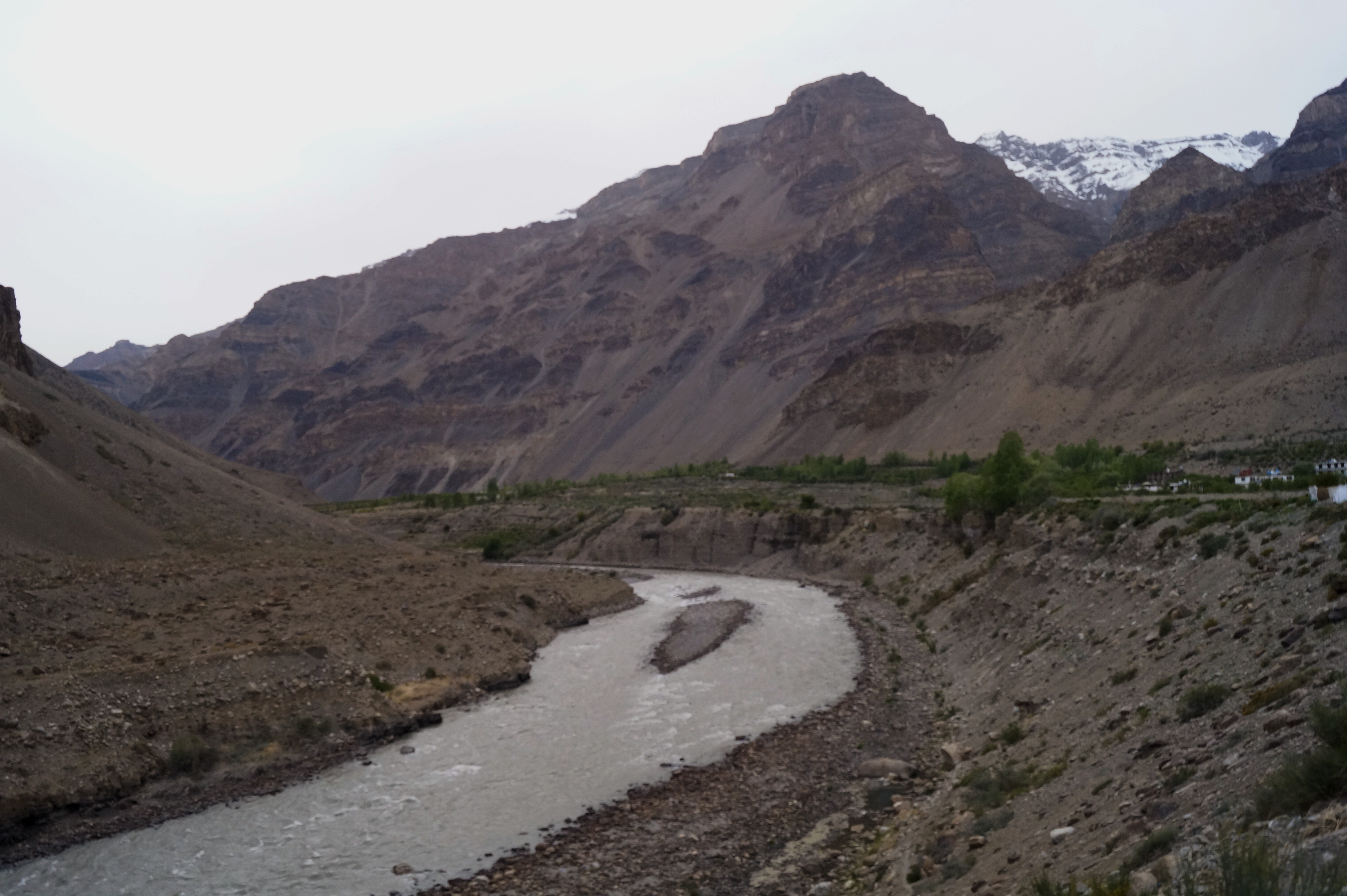
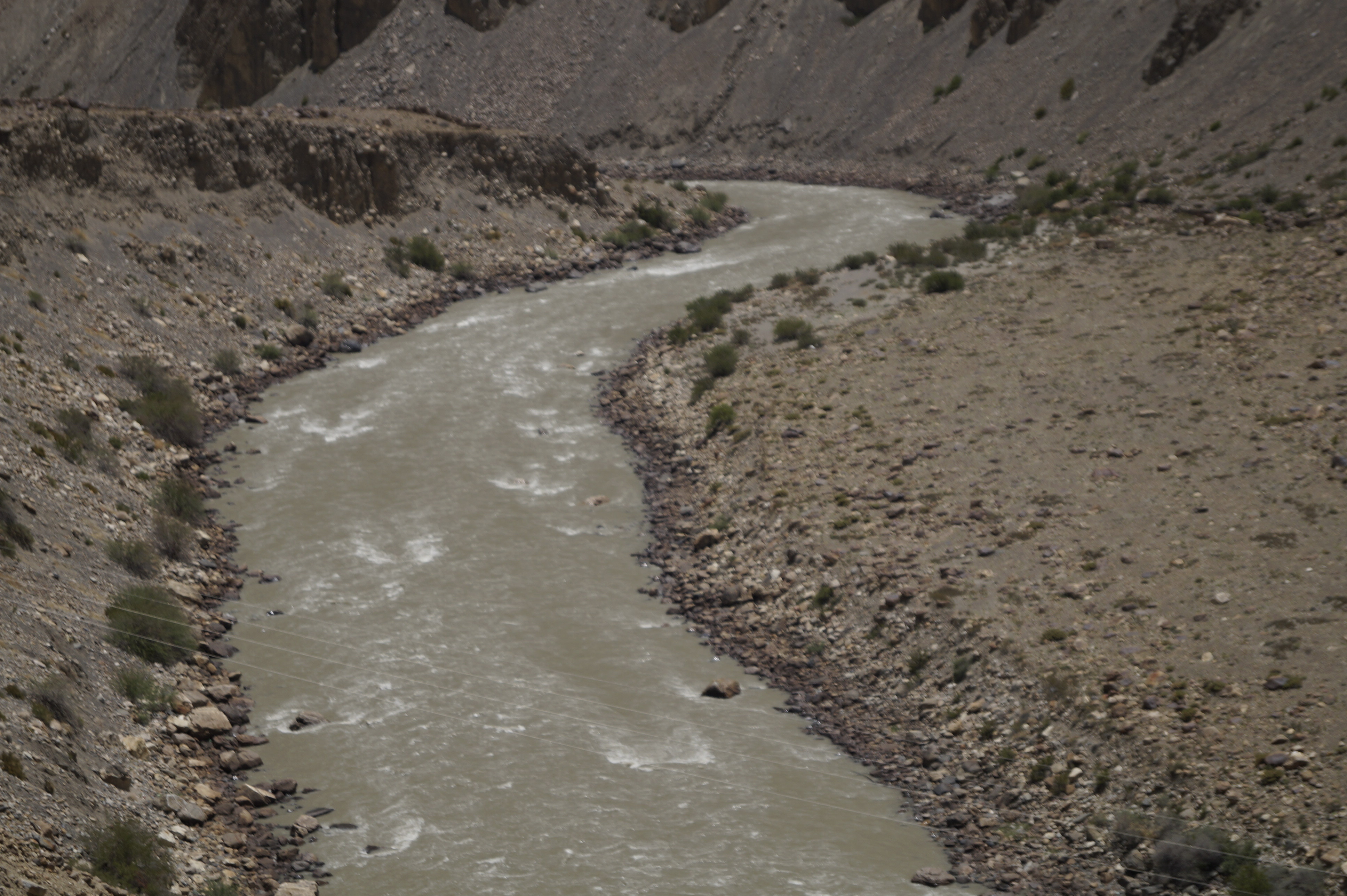
Situated along the river basin, the village owes its blessings to the mighty Spiti river and its tributaries from Pin valley which forms an essential lifeline to the resident farming community.
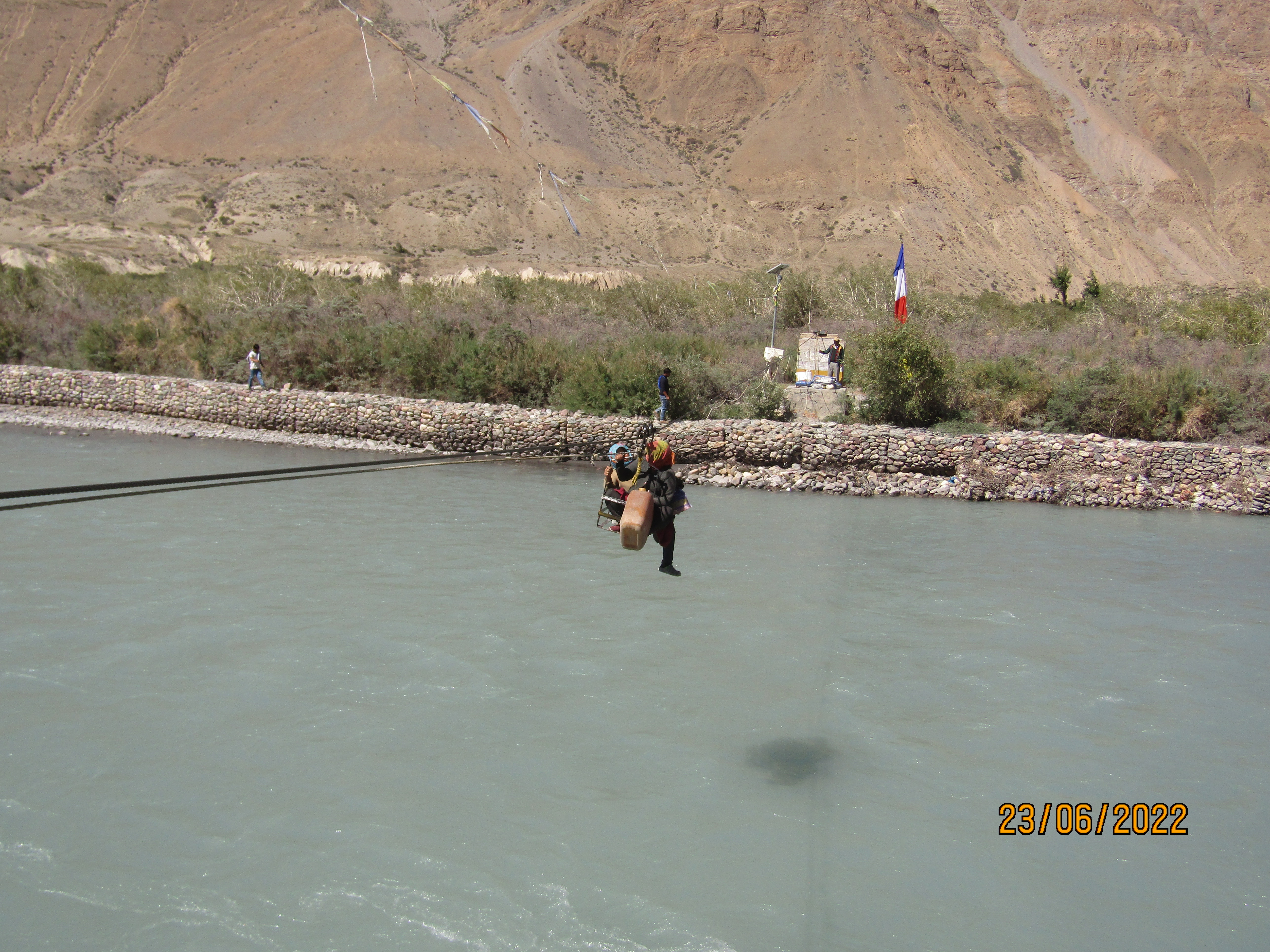
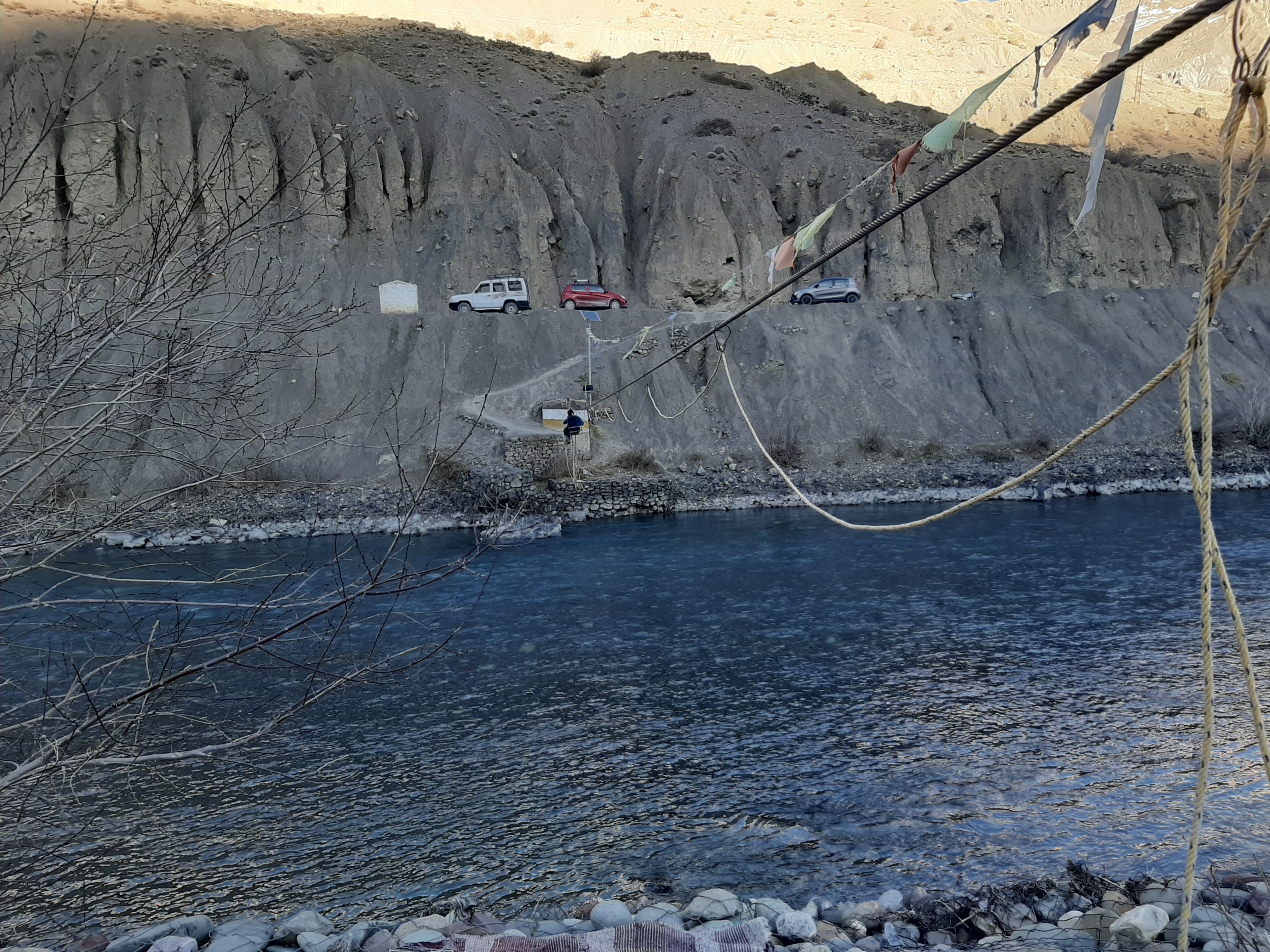
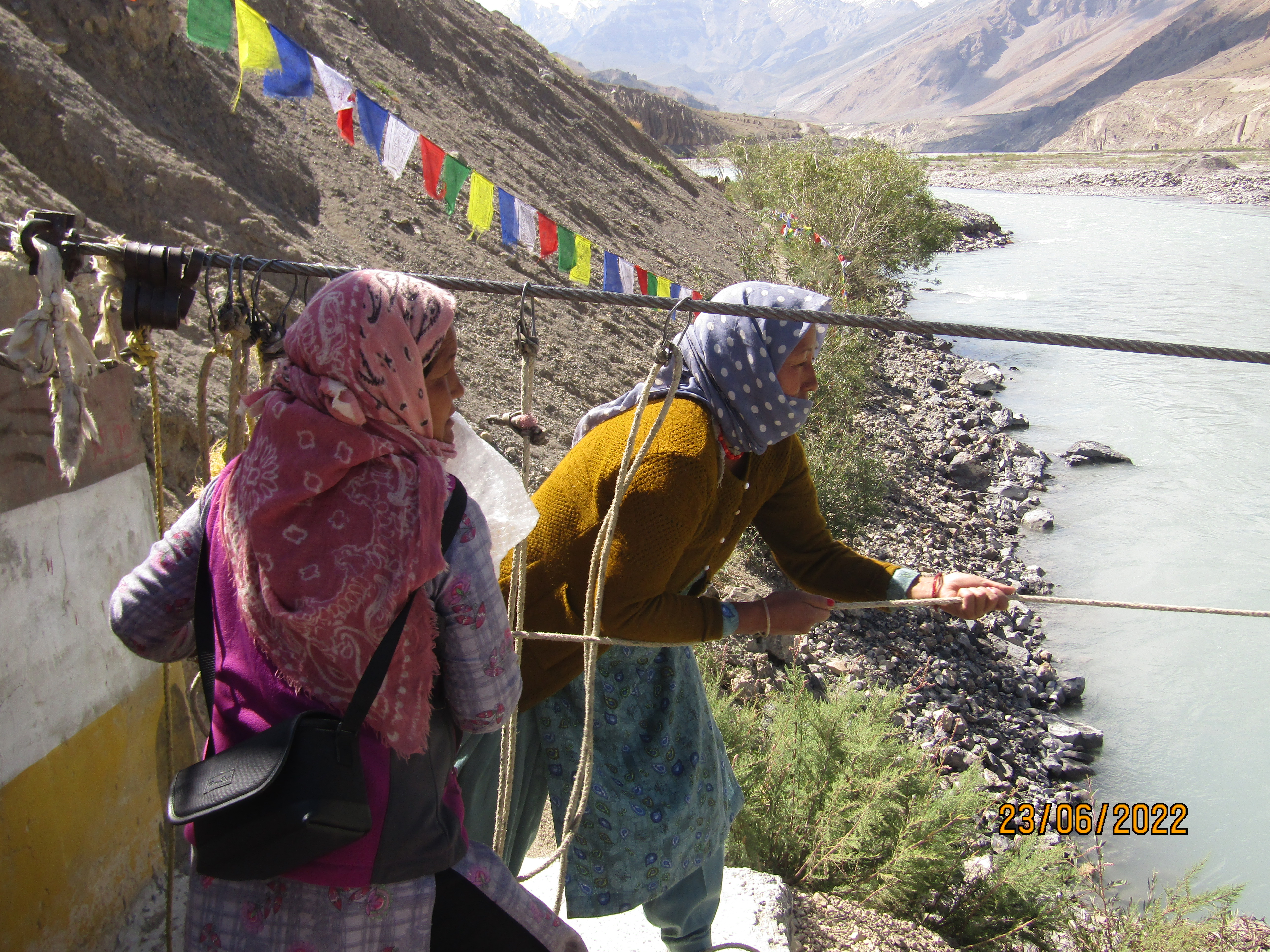
However, to reach the village, one has to take a suspended rope bridge. A dangerous feat villagers have to undertake every day! Women often pair up and cross it together. Holding essentials and looking out for each other – lest it can prove fatal!
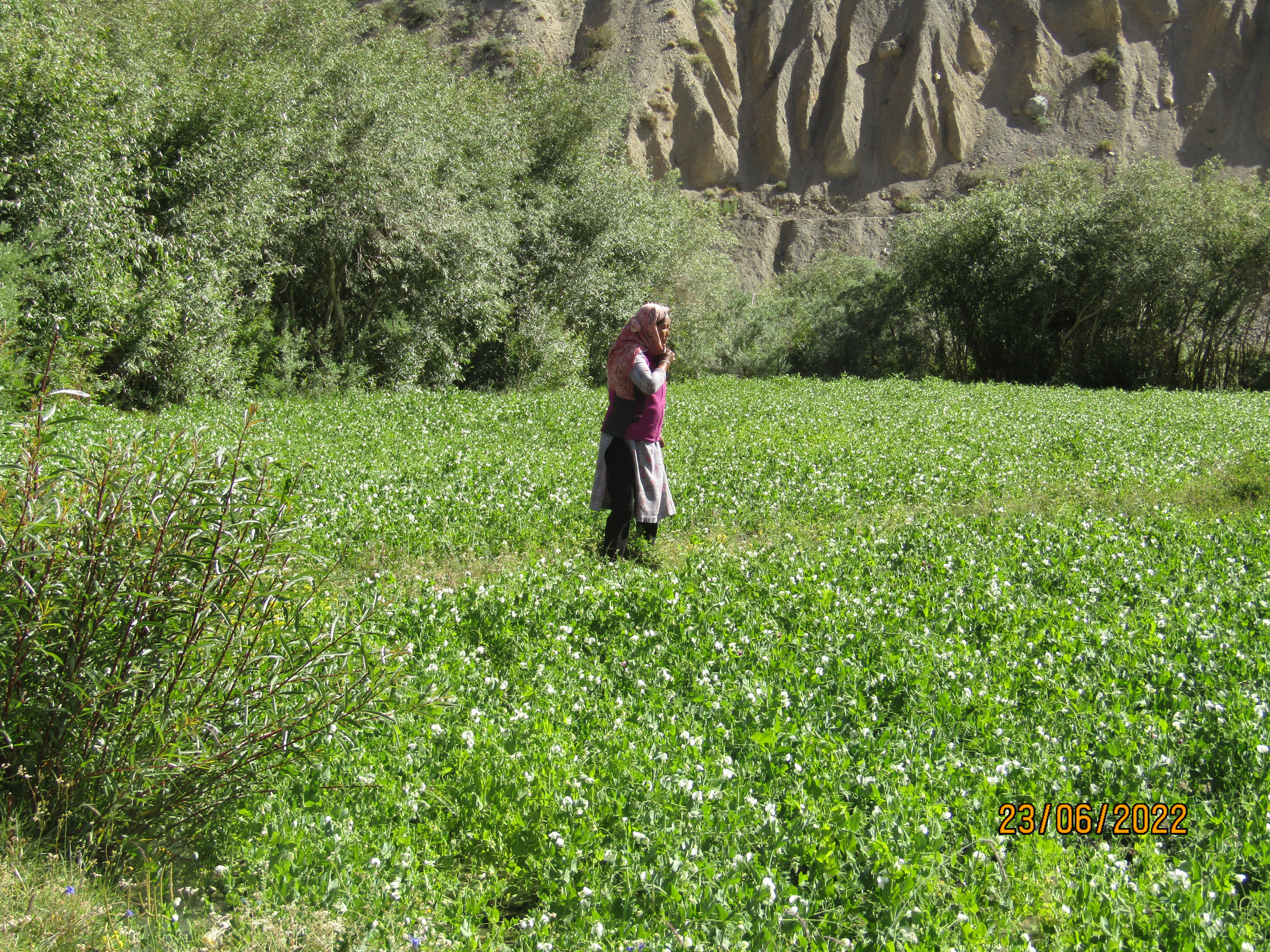
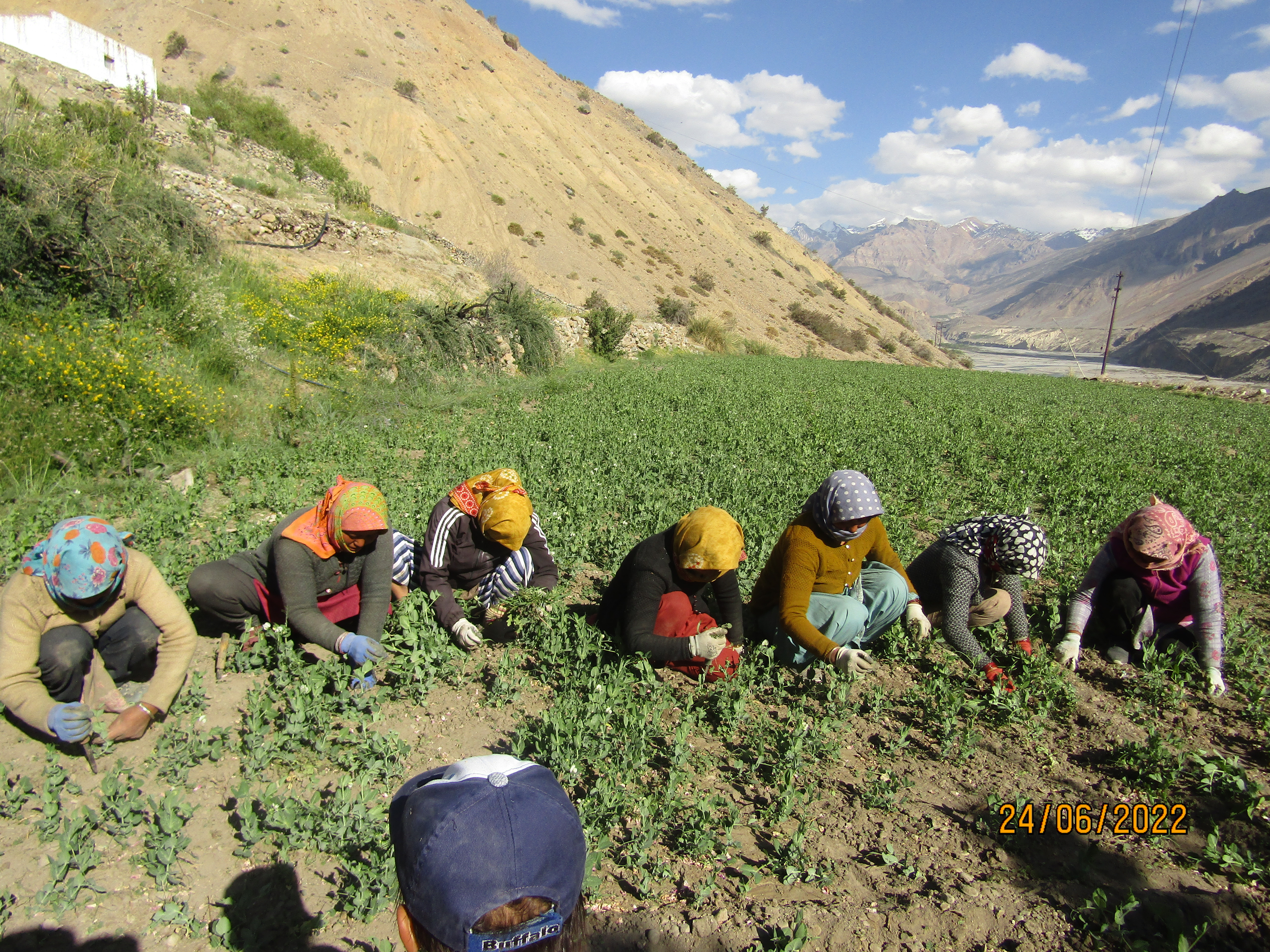
Water which is located at a significant distance in most Himalayan villages, can be found in one’s backyard here – easing huge strain on villagers.

When your fields are at a reachable distance, and when you don’t spend hours fetching water, there’s so much more one can do including spending time with family and more time to self!
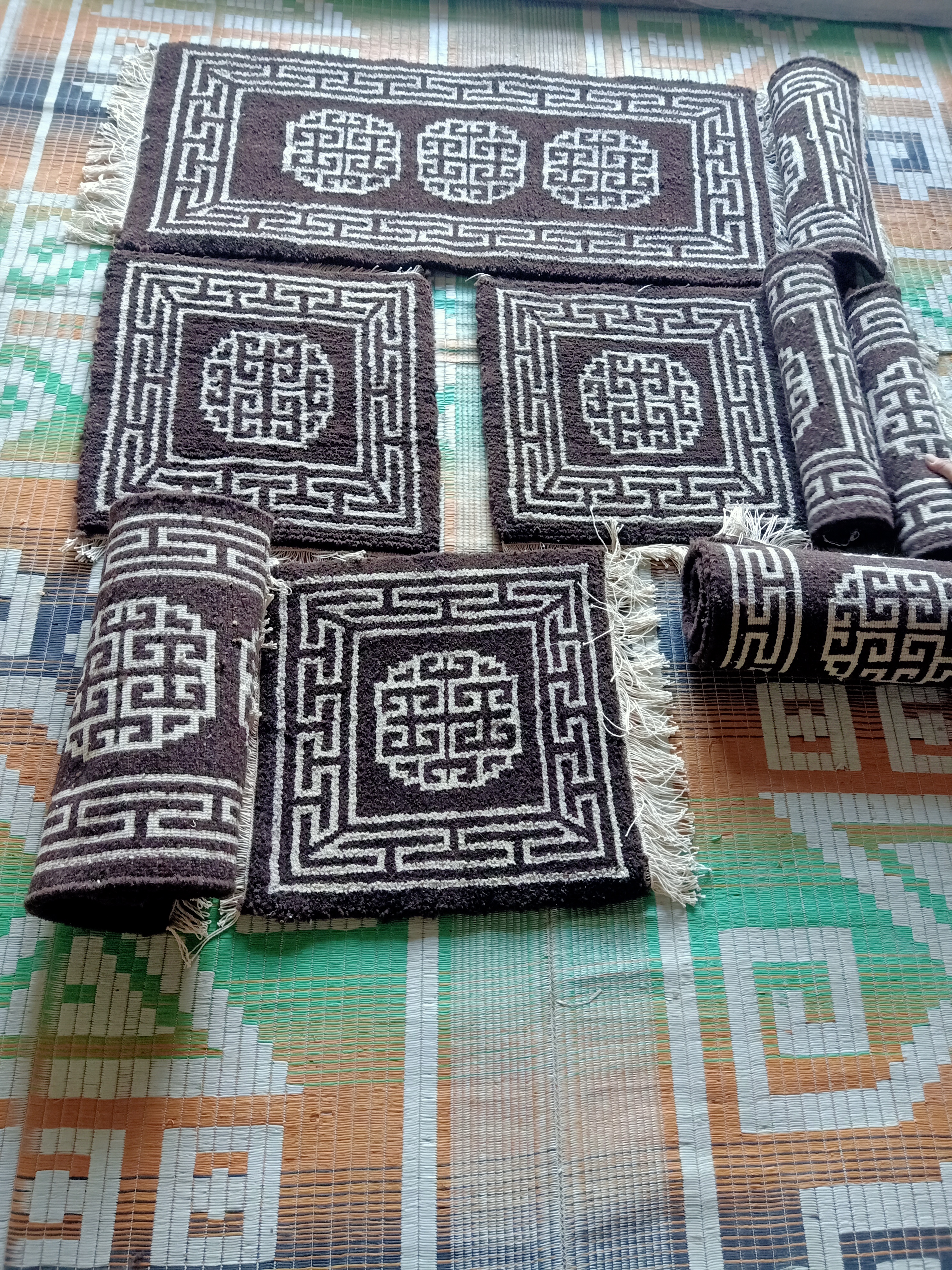
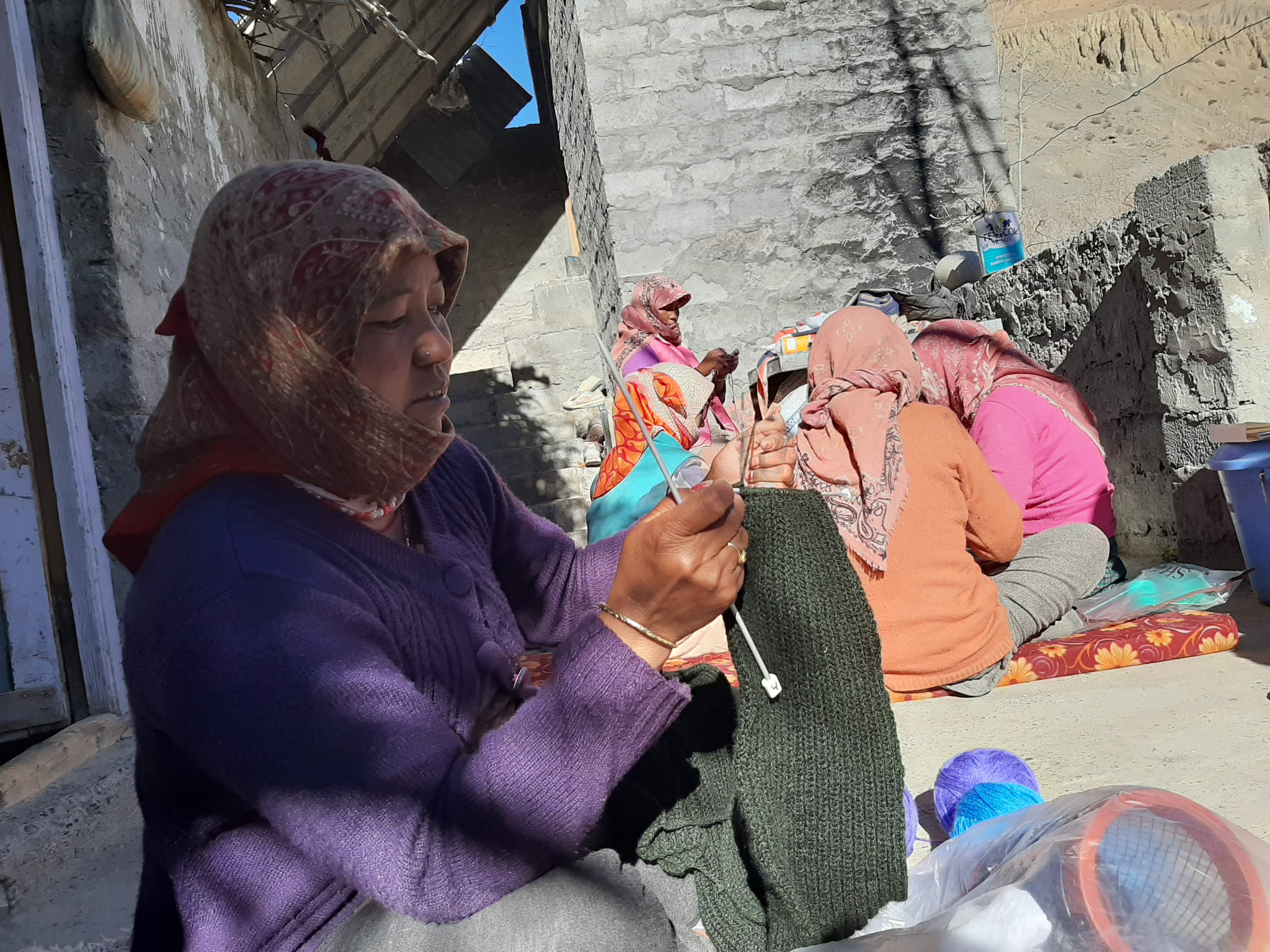
…exploring additional sources of income resulting in greater agency.
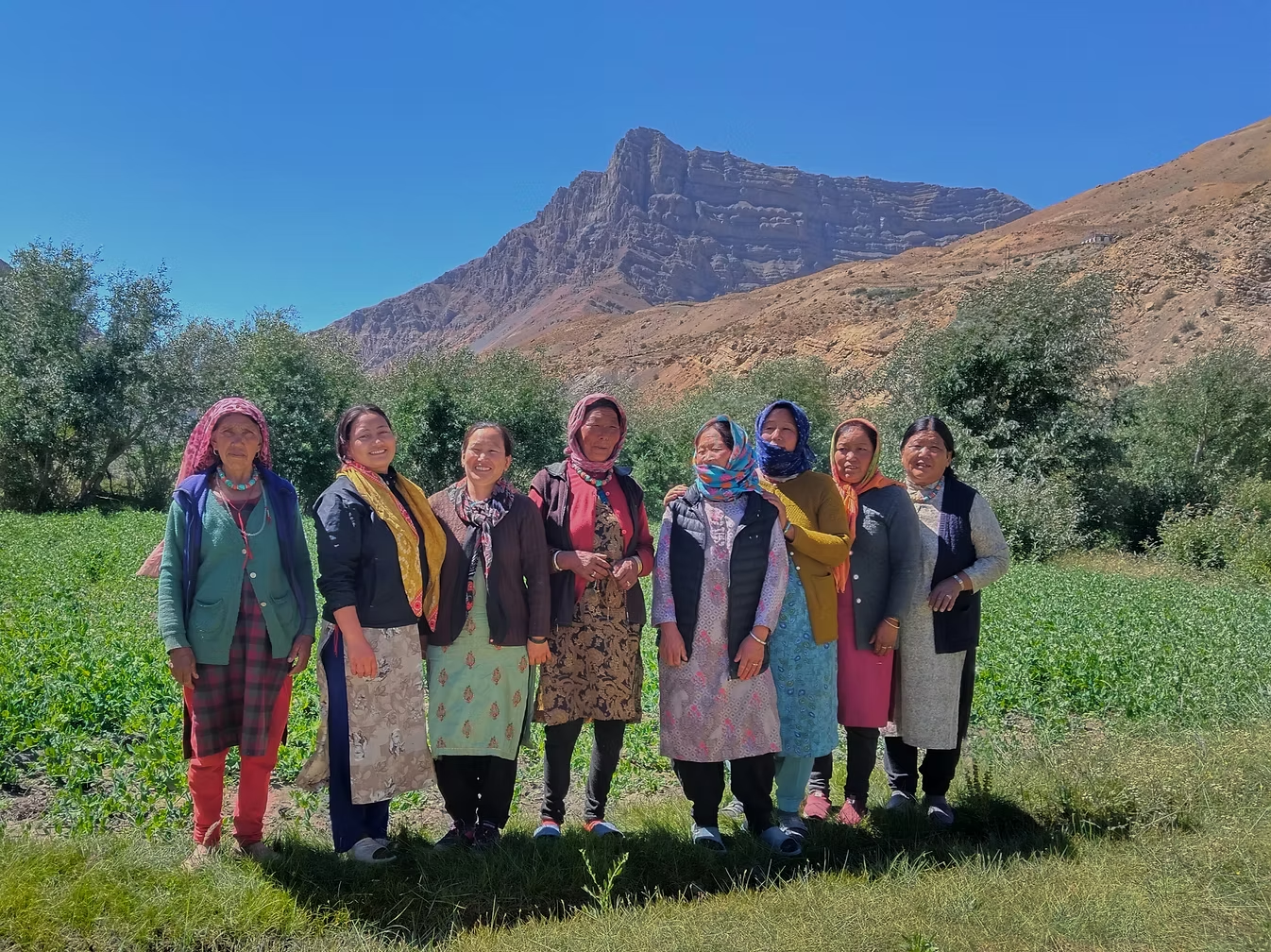
The photography group

When water is accessible, it leads to happier, healthier communities.
1346 1008 Women of Shushuna
The Many Tales Around Water
Photo: Kalzang Dolma

The Many Tales Around Water

Insights from Ane Butith Zangmo, Kalzang Dolma  with complimentary reading from Tobtan’s book “Spiti: A socio-cultural traditions”

Spiti’s oral literature has extensive reference to water. Many ancient verses, odes, hymns, folk songs, old lore allude to water with sheer reverence, refer it as a treasure and embody ancestral affiliation within physical, ecological, social-cultural and spiritual contexts. Each narrative is deeply embedded in local space – intimately bound up with natal soil, water bodies and their complex manifestation in local geography. Each village has a complex set of rules, systems governing their natural resources and finds its reflection in local peras (proverbs), wise sayings and old chants. These oral tales deviate in their form, structure and might not offer linearity of usual stories but are nevertheless recounted for generations for wisdom. Many of these tales are deemed to be true, many filled with mythical, fantastical elements showing deeper values of interconnection and indigenous stewardship.

Many scholars studying Spitian literary tradition find an association of water with the name Spiti (Spyi Ti/Pi ti) itself. Sir Alexander Cunningham has explained that many terms in Western Himalaya, especially the names of rivers are added with the suffix “ti” with this significance. The word “ti” is also found in some dialects of Kinnaur and Lahual which means “water”. In Spiti, the word “ti” is interchangeably used for “chhu” which means water colloquially. This is aptly reflected in the traditional irrigation system and as recounted by many female farmers in Spiti. Owing to scanty rainfall, Spitians primarily relied on glaciers for irrigation and there are careful rules around water distribution within farming households. There are different watering stages during agricultural season, each binding their own values to the farm life: Yurma, Srak-ti, Gsum-ti, Dsag-ti, Minchu. The first watering occurs after the first month of seeding which is called Yurma – the most important watering work as during this time saplings are young and it needs careful tending. The second watering implies a more urgent need for water as the days are hot and fields parched. During second watering Srak-ti, the saplings are sun-burnt (Srak pa – burnt in spitian) and therefore in greater need of water. Gsum-ti refers to the third cycle of watering and Men-chu means watering cycle to ripen the seeds. This way, Spitian literary and cultural tradition signifies usage of “ti” (water) in layered manner and embodies rich tradition around it.

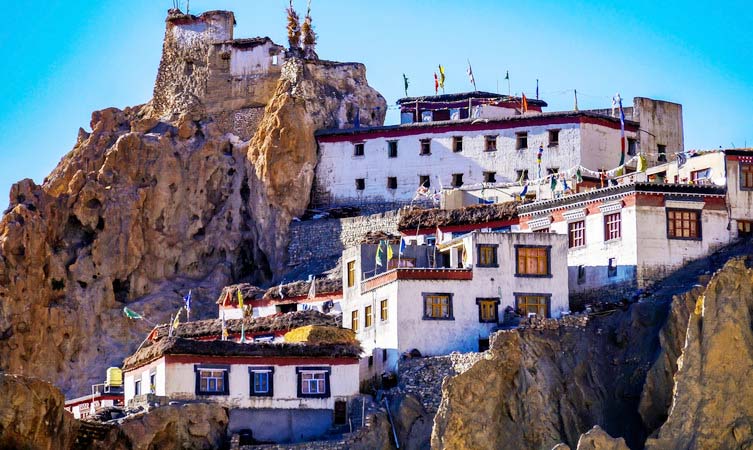
Another tale related to water that’s recounted relates to Dhankar village. It is a high elevation village in Spiti and used to be capital of Spiti before it was shifted to Kaza. The village landscape comprises flat tracts of land on high mountains, steep cliffs and sloped hills. These high settlements are located more than half a kilometer above the river bed and therefore access to river water is very difficult, the villagers mostly relied on glacier water for all their primary needs and once a local shepherd beautifully expressed his experiences of local topography in a form of Pera (local saying).

Many villagers recite it orally during farming work to find solace and humor in hardwork.

“Nyi-ma shar-she snga la skyod-che phyi-ya. Lug-zi sdug-po’i gnas yin…
Brang-mkhar chhang-sa ma-ba la do-ya ma-ba. Ra ro-ba sdug-po’i gnas yin…
Brang-mkhar gyen-yur ma-ba la chhun sna ma-ba. Chhun-pa sdug-po’i gnas yin….”

It can be roughly translated as:
The sun rises here at Dhankhar early, but sets late, which makes the day longer and is cause of concern for the shepherds who have to graze the cattle and sheep at high pastures for a longer time.

In Dhankhar, there are plenty of chhang (local alcohol) but also the place is too hilly and there is too much up and down, which is the cause of great worry for drunkards.

In Dhankhar, the irrigation channels are located at the places too high and the sources too far, which is a great difficulty for the women who have to draw water for irrigation from the upper Kuls and much time is wasted in walking up and down between two distant places.

Similarly, there is a saying in Spitian tradition about a group of three villages Lari, Tabo and Poh

“Gong mtso rdol song na, chog-la yul gsum lhag”

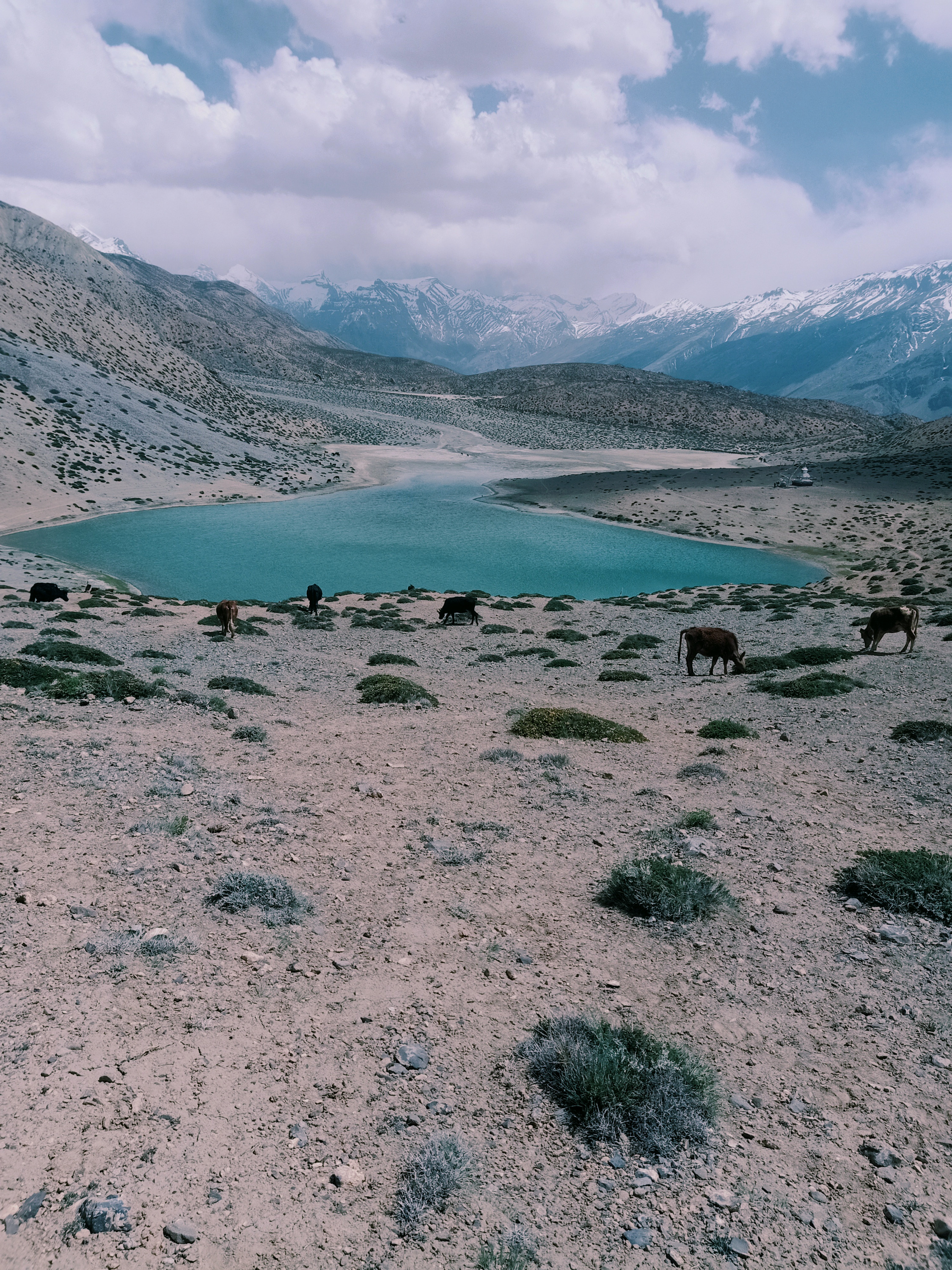
which means “if the lake above bursts, the three villages of chog-la will be destroyed”. The lake here refers to Mane lake near Tabo.

Photo: Kalzang Dolma

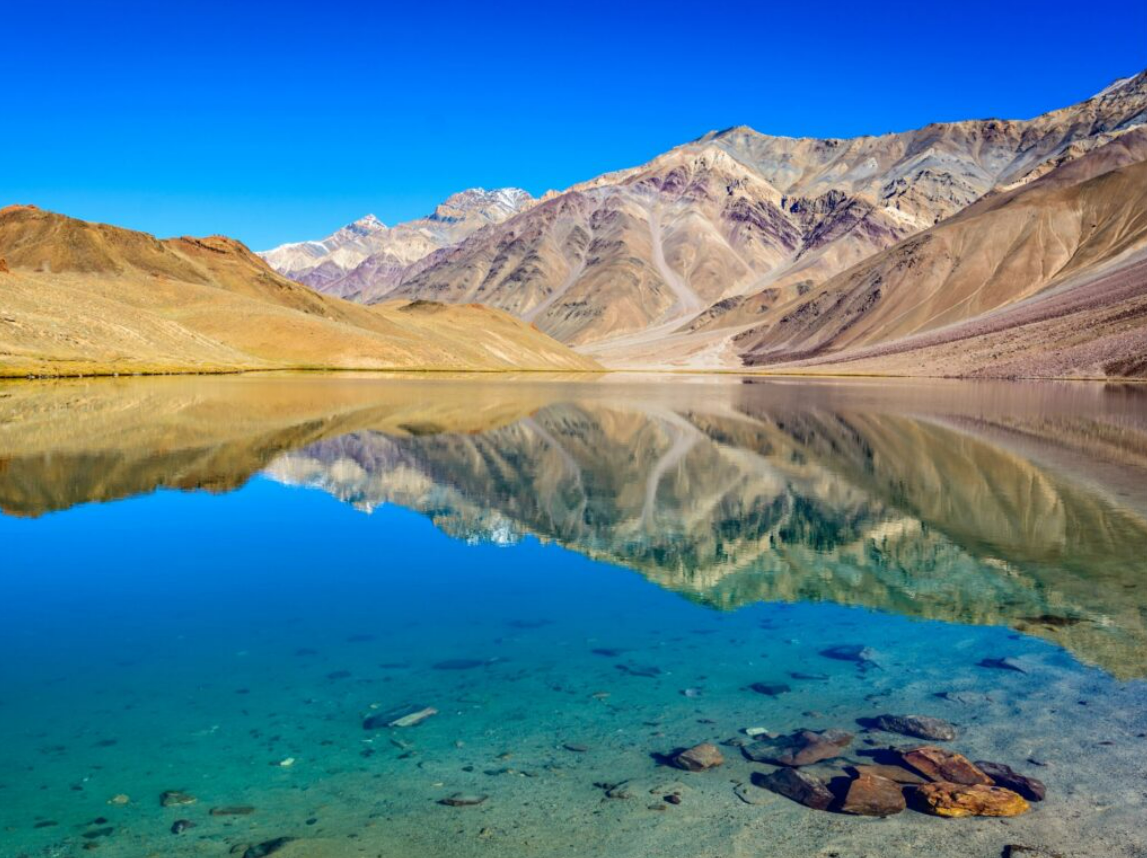
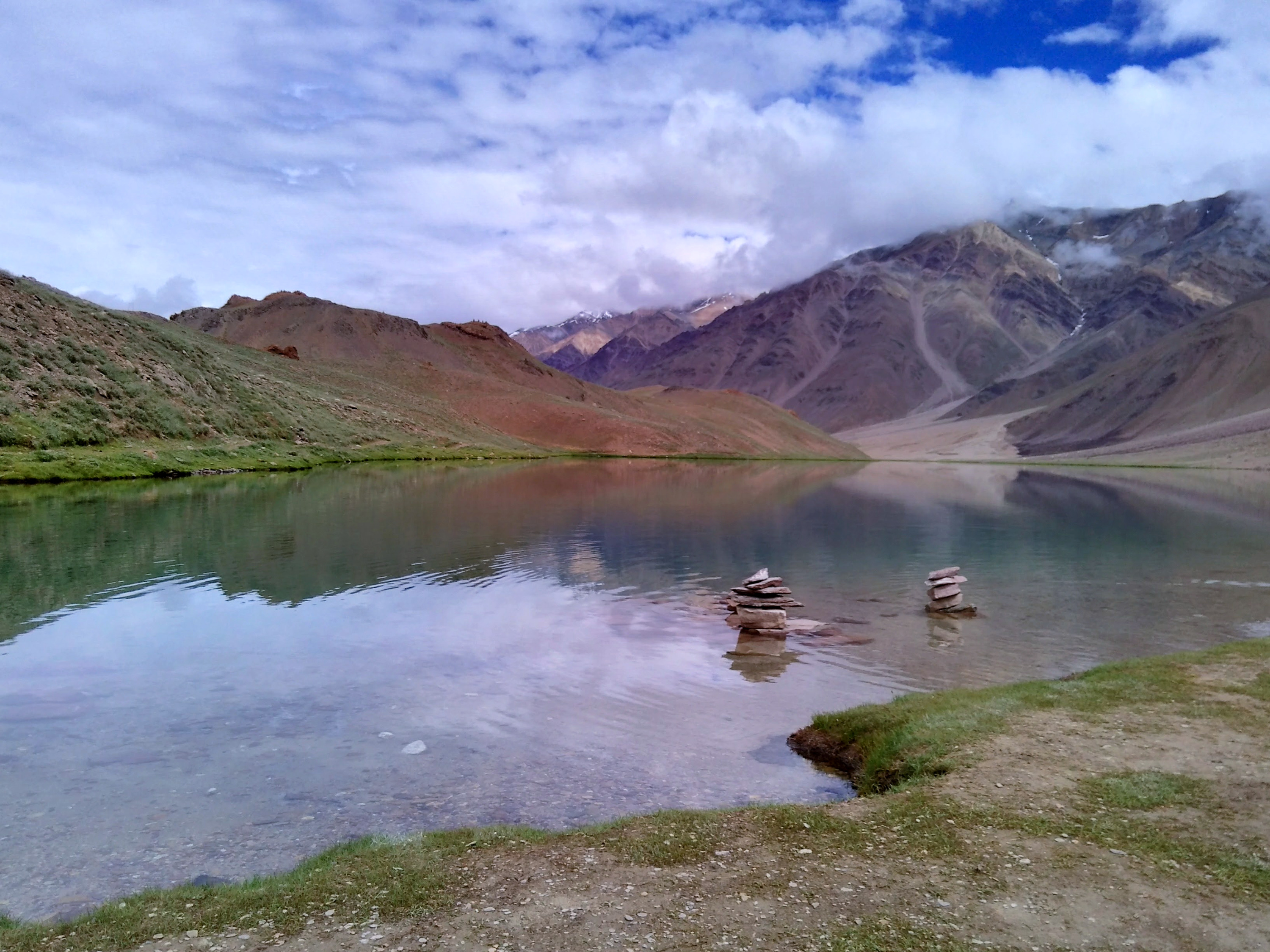
There is then another interesting folk story related to Chandertal lake in Spiti. It is told that there was once a shepherd from Rangrik village who used to take the flock of his sheep for grazing in the meadows near the lake of Chandertal. The shepherd was skillful in playing flute and he enjoyed playing many melodious songs on the shore of the clear Moon-lake. In the lake there lived a Khandoma, a water goddess. The Khandoma could not resist the attraction of the enchanting melody of the flute echoing over the calm surface of the ethereal lake. She became a regular visitor to the lake to listen to the music.

One day as the shepherd was playing the flute the Khandoma appeared before him and spoke to him about her love for his melodies. They met regularly and soon they had a handsome boy out of the union. The Khandoma had asked him to keep their relationship a secret as the union between earthly beings and water dwellers like her from different realms are prohibited. The shepherd vowed to keep this a life long secret. But the shepherd was already married and had a wife back in his village Rangrik. One day he had an argument with his wife and in fit of rage he blurted out that he has a spouse – a Khandoma living in Chandertal and before her she was insignificant.  The wife challenged him to bring her home. The shepherd accepting the challenge went to the lake and started playing the flute as usual. The Khandoma appeared with the child who then was infected with a severe skin disease and was disfigured. She handed over the child to the shepherd and disappeared in the lake never to be seen again. The shepherd searched for her everywhere and tried calling her back through a series of melodies – he even tied a long rope on a wooden log and threw it in the lake to gauge the depth of water so that he could go look for her underneath. His rope fell short but it couldn’t measure the depth of the lake.  And thus, the heavenly relationship of love came to an end.

It is said that the descendants of the deceased child still live in Rangrik and his relics are preserved in their Cho-Khang (prayer room) and revered. Villagers still believe that she resides in her abode in the water body and routinely offers prayers, does rituals, purifies it, cleans it and maintains it as a holy site.

It is a curious tale open to different kinds of interpretations but according to local mythology, this folklore urges for the need to protect, conserve and value water. The story also portrays the community’s reverence to local deities which are associated with multiple features of local geography like land (Sa- dak: protective land deity) and water (Klu: serpent deity in water). The Spitian belief system reveals complex relations between people, environment and various spirits. Land and many other natural entities are imbued with the notion of personhood and agency. It inquires deeper meaning of landscape and environment and projects how religious ethics and ecology are related.

3000 2250 Kalzang Dolma
In Conversation with Women of Chicham
Chicham Village | Photo: Tanvi Dutta

In Conversation with Women of Chicham

Tanzin Dawa: How has it changed?

Dikit Lamo: We have been experiencing extremely erratic weather conditions these days. I am 40 now and from my experience, I think it is due to changing weather patterns. We used to have snowfall that levelled our houses and had to clear it with the help of our neighbours! Such was time. There’s lushful greenery in our barley fields and our harvests were abundant. In our village, Chu-mik (spring water) gushed with fresh water – we got to choose from myriad streams flowing around – cold, sweet water to drink while farming. From the past 10 years, there’s been a considerable decrease in precipitation. We used to look up at the sky in hope for rain but to no avail. This year was particularly unexpected. There was very little snowfall during winter and we were even unsure whether we would even get to till our land when summer arrives. We, somehow, adjusted to the difficult situation by either carrying a water tanker to our fields and initiating the seeding work. It worsened as months passed by, we had to leave many of our fields half irrigated or completely fallow. There’s no hope for crops this year.

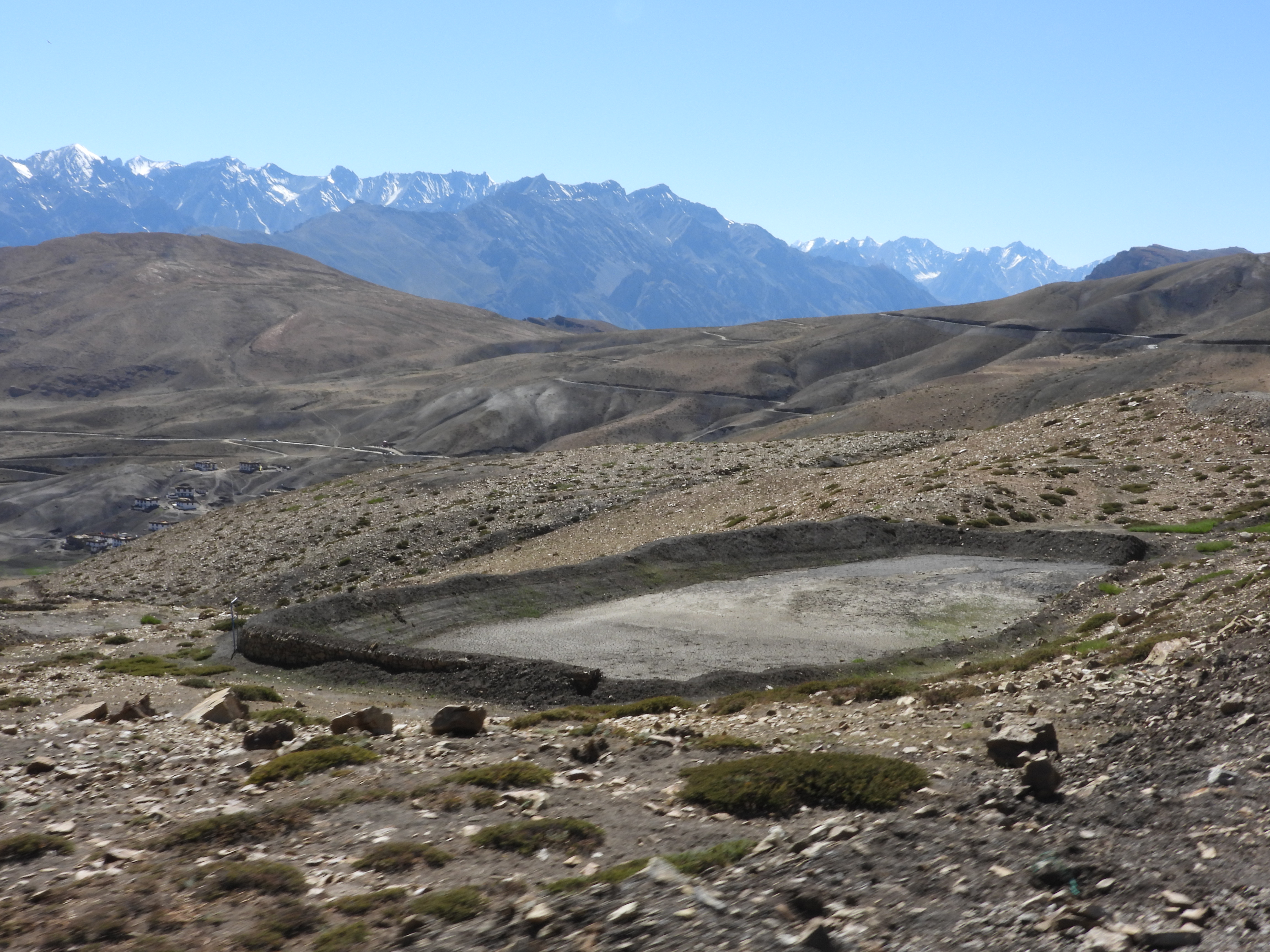
Barren fields and dried reservoir | Photo: Chhunit Kesang
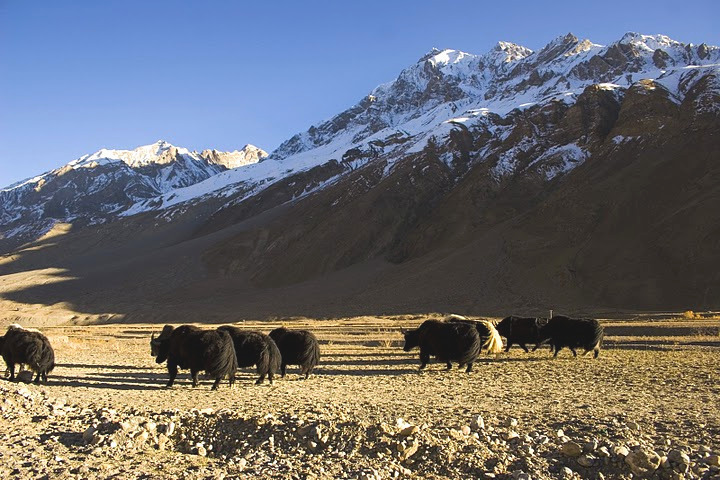
Domesticated Yaks

TD: What do you think is the cause for such changes?

DL: I think it is due to changing weather patterns. They say it is called global warming in English and has to do with plastic usage. I am not sure how it is interrelated and how it impacts our fields here in Spiti but I do believe it. I think about it a lot and think of avoiding plastic usage on my level. But will it make a difference on a larger level? I think collective action is needed. To ensure timely snowfall, we have to revive our traditional ways of living. Rituals are performed according to an astrologically and agriculturally influenced calendar and we have to bring back those traditions and belief systems. We also think about our children’s generation and preserve our natural resources. Tourism has also impacted the way we channel our resources. It is getting extremely rampant nowadays. We have to devise an internal resource and waste management system to reduce impact on nature. I think plantations will be beneficial in desert areas like ours. I hope that will reduce the effect of global warming and our fields begin to blossom again and our kuls brimming fresh snow water.

Padma Norzom: Water situation? It is scarce everywhere this year. In Chicham, even drinking water is getting difficult for us. Our barley and green peas field are all drying up before harvest season due to receding water in our kuls. There was just no water for irrigation and we are forced to abandon our fields. Because of declining water sources, our land, soil, pasture is all drying up and forage availability and grazing system is also impacted.

TD: Was it the same last year?

PN: It used to be enough to sustain our farm work and to feed our cattle but this year has been unfortunate. There was no snowfall during winter and all our spring waters dried up. My jersey cow also looks very weak and without adequate water to drink, milk production has become very less. I stopped selling milk this year. Livestock feeding and water intake behaviours are also negatively impacted and when sent out in the wild for grazing, they gallop towards greener pastures!

TD: How do we resolve this? Is there a way we can utilise water from the Spiti river?

PN: Yes, river water can certainly be channelled but it will be a bit strenuous and resource intensive as it is located far from the village area. If the government can help us, it will be a huge blessing. Some farmers have tried irrigating their green pea fields with generators. But the diesel operated generators turned out very expensive and it was simply not feasible for small farmers like us who also spent a lot of money buying green pea seeds. The cost will come in lakhs – all for nothing without water.

1800 1200 Tanzin Dawa