Traditional Knowledge

Weaving Memory: Tsugden and the Passing of Tradition

Weaving Memory: Tsugden and the Passing of Tradition

1 May 2026

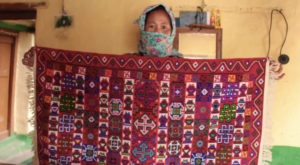
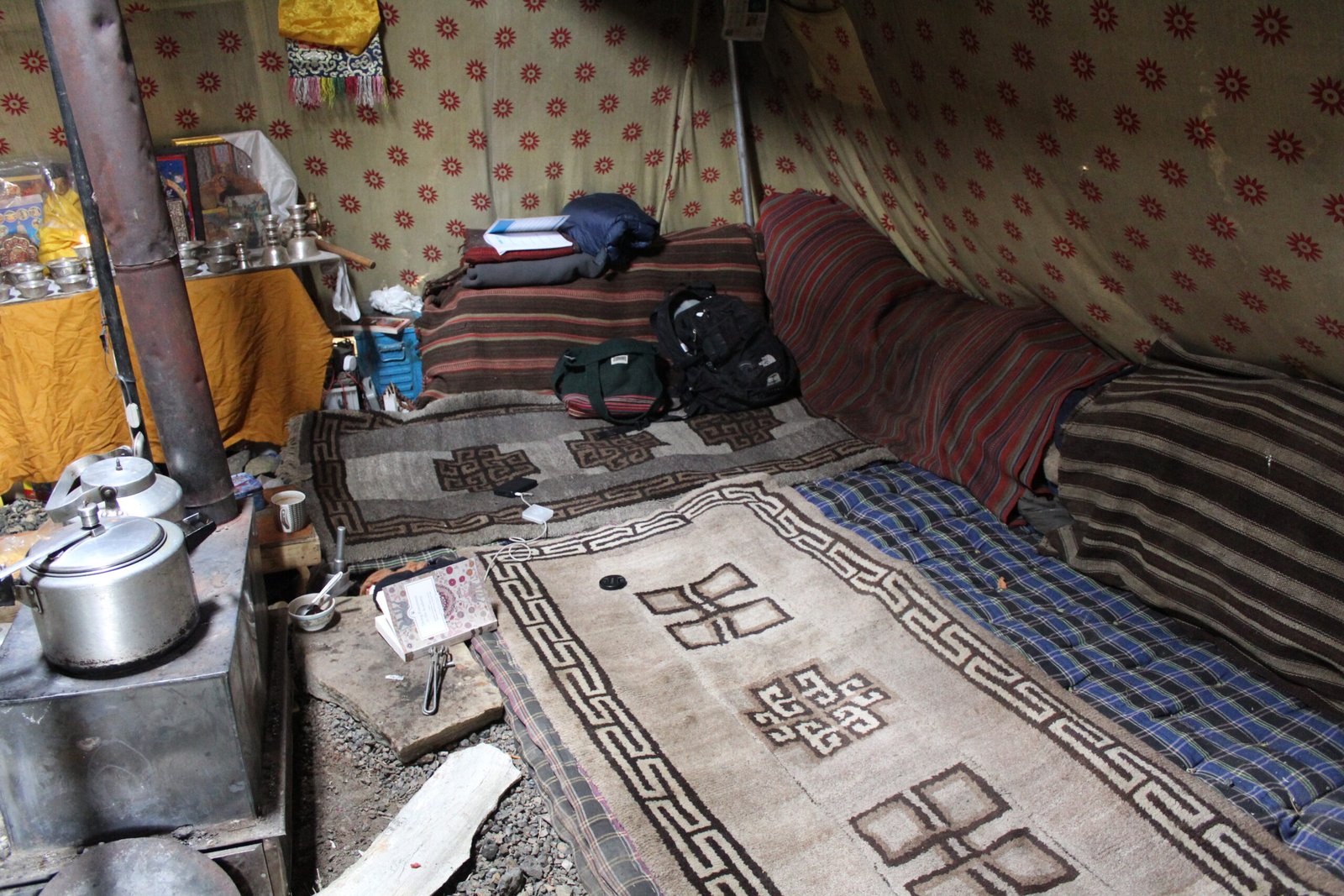
‘This tsugden “གཙུག་གདན” design is beautiful’, I told her. ‘I do not know if it’s beautiful, but it is really warm – enough to keep your bum safe from the cold!’ came the prompt retort as she sat weaving a new set of tsugden, a traditional rug, taking one thread to the next.

She woke up early, around 4:30 A.M., and prepared the fire, then brewed tea, and set breakfast up. Going on to do the daily chukjey, or livestock-related chores, my machung, or aunt, busied herself making sure the mother goats feed their baby goats. It is an intimate, laborious process that unfolds in minus-degree temperatures over the course of close to two hours. Her and Aku, my uncle, have to first let the mamos (mother sheep) and ramas (mother goats) out of the pen and then match each mother to her kid. Machung takes the job seriously. I asked her why. She poses a question of her own to me in return, ‘what would you feel if you didn’t get to feed your own children?’

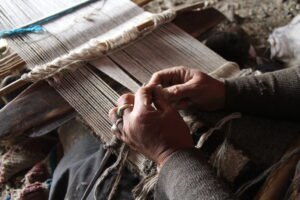
They both know each baby’s mother and have a specific way of describing the animals so they can identify the right one from the sea of livestock. Once they match each pair, and as the kids feed gleefully, they keep checking whether it is satiated by gently pressing on its belly. If it feels full after a while, they start parting mother and child. Only once the animals were fed to their satisfaction, did we sit down for our own breakfast. Machung offered me fresh milk and bread, eggs remained off the menu; it was, after all, the auspicious 15th day on the Tibetan calendar.  She put on some prayers on her mobile phone, the download option on Youtube is put to good use in Changthang! Upon completion, including offering water to the altar, she says she will go to the other tent to work on her thak, the backstrap loom. ‘I have not gotten to work on my thak for a while’, she tells me, ‘I had planned to work on it yesterday but had to go to Ngorchen to collect yak dung’. Ngorchen is one of the 11 locations they move around to as pastoralists in Changthang; here, the collection of dung becomes an essential task, without it the family would not have enough fuel for the fire to keep warm through the cold nights. ‘It has taken me almost a month to work on this piece, I do not get to weave as much as I would like to’, she shares with me. I ask her why she weaves, ‘because I can’, she replies, ‘as I age, I worry I will not be able to anymore’. Carpet weaving is a time-honoured tradition and an act of love Tibetan pastoralist mothers perform for their children. Weaving is how they declare their care, the yarn painstakingly intertwined fibre by fibre as a labour of love and an expression of ancestral tradition. ‘Who taught you to weave?’, I ask. ‘My mother, your eve (grandmother)’, she tells me, ‘I was interested in it when I was young and used to watch her weave, sometimes she would let me join in, that is how I learnt.’
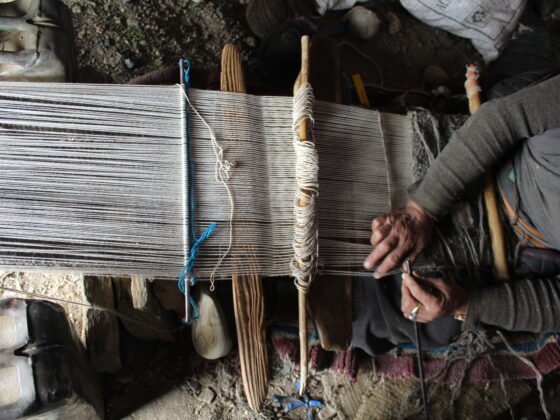
Machung weaving Tsugden in Changthang

The act of weaving itself is only a part of the whole process. It is preceded by many months of gathering material itself.  The first step is shearing the sheep for wool, followed by cleaning to remove grease and dirt, then carding to improve the quality, and finally spinning the wool into yarn. The yarn she is using at the moment was processed last year. Shearing, today, is an exercise of the collective. This time, about fourteen families came together in May to shear one family’s sheep, taking turns one by one to complete the task across almost ten days. They usually start as early as 4 A.M. and finish shearing by 12 P.M., with short breaks in between. When shearing duties fall on a family, they must prepare all the food, refreshments, and more. The affair is equal parts work, equal parts celebration. In my ashang, or uncle’s case, even my cousins who have moved to Leh came back for two days to help. Once the sheep are sheared, machung then keeps some wool for her own use. In the past, she used to do the carding herself, but she now prefers using the machine because it does not require as much work. When she goes to Leh, she takes the material along with her where they card it at a shop using a machine to align the fibers and remove debris to make it smooth and consistent. Once this is done, she finally spins it into thread, all this while managing every other responsibility pastoralist women are responsible for.

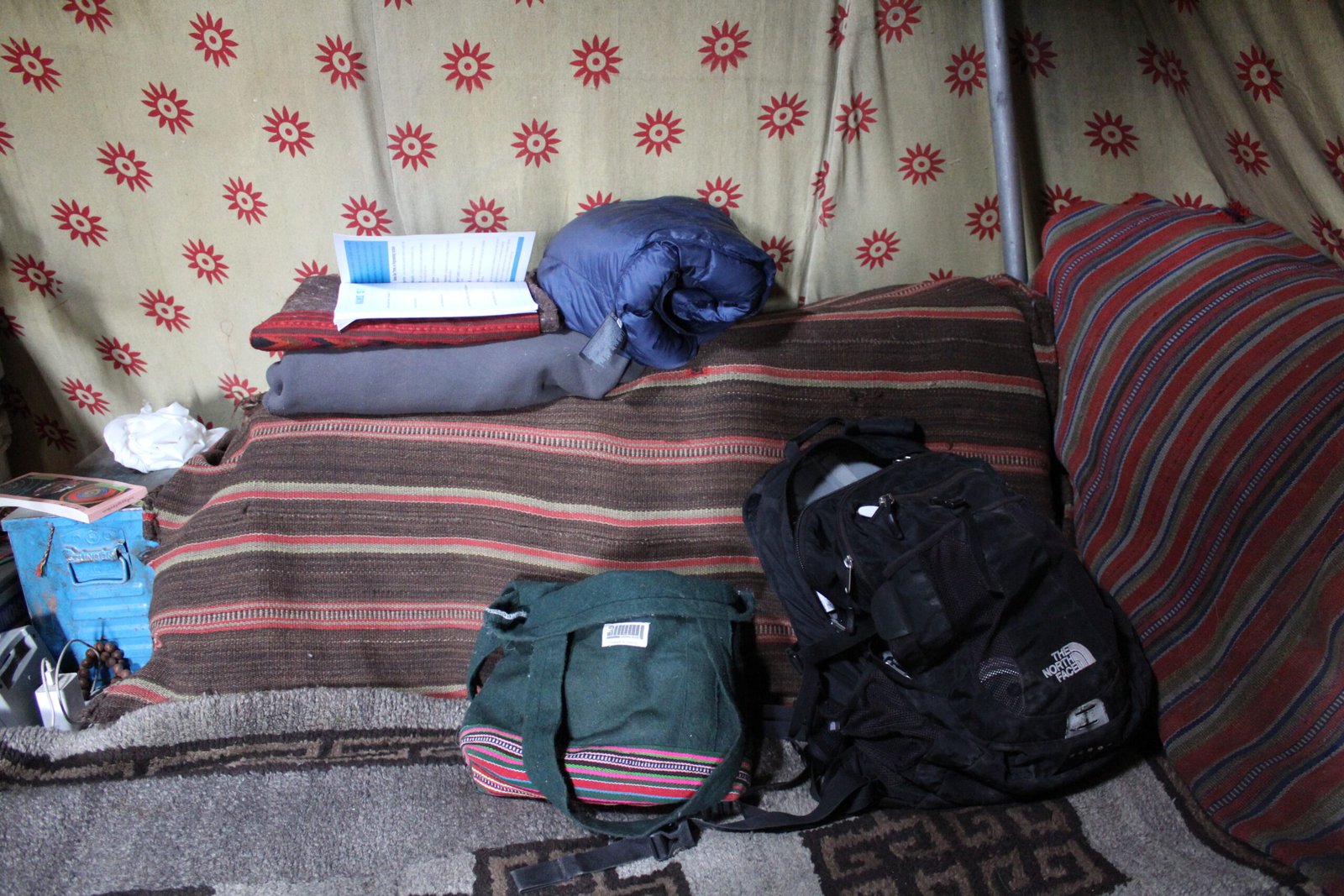
She sat and wove for two hours while I remained in the main tent processing my research interviews. With her lokpa, or a sheep-skin back cape, firmly draped across her back and her feet wrapped in several layers of warmth, she was well prepared to beat the cold. I, on the other hand, despite my best efforts to keep warm, was not doing too well in that regard. The day was particularly gloomy and just some time later it began to snow. As the weather continued to worsen, she asked me to put the baby goats and sheep in the pen, the one that is dug into the ground in preparation for these cold days. The pen both keeps them warm, as well as safe from any wild animals that might want to feed on them.  In the morning, the little goats are let out, it is such a joy to see them frolic and run around. Instead of keeping them cooped up, machung intentionally always lets them out on the ground so they can play. While I gathered the baby goats and put them into the underground pen, machung collected firewood and went to the main tent to start a warm, cozy fire as the whole valley transformed and the tall mountains surrounding us disappeared from view.
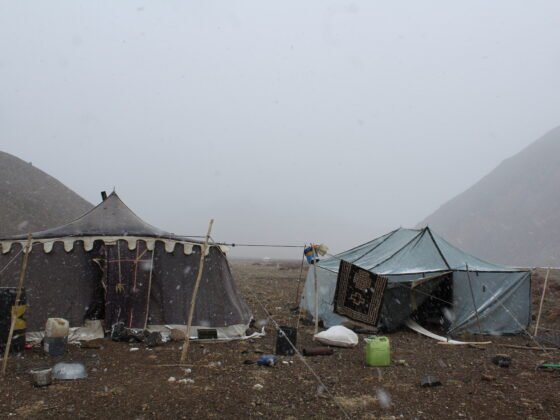
The weather worsened

I think to myself about how different the reality of Changthang today is. In the span of a mere generation, much has changed in the lives of pastoralists living in the Indo-Tibetan borderlands. Intergenerational learning spaces, such as what machung described with the weaving, are slowly vanishing. Most young people are taken away from the plateau in search of education or employment, both necessities to survive the turbulence of modern life.  Education for Tibetan refugee pastoralists is more than just a tool to adapt, it is also a key pillar of resistance we continue our political struggle against the Chinese colonial occupation of our homeland, Tibet.

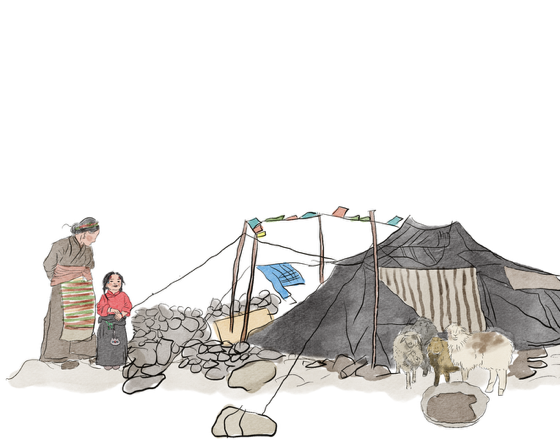
Yet, in these pursuits, one most certainly feels a loss. In particular, that of the art of weaving, which is more than just the inert act of producing a commodity. Weaving perfectly captures the interconnected nature of women’s labor, human-animal relations, and relations with the land. In the past, everything was woven, even the clothes that pastoralists wore were made by themselves. Bags used for travel were woven, as were chalis, tsugdrug and the tsipa-gur, or tent, itself. So much of the culture was created out of necessity, to meet everyday needs. Unlike the interconnected global capitalist world, we live in today, where you can buy everything ready-made at the market, such an option did not exist back then.

While many weaving traditions, such as chalis, nambu and tsugdrug are slowly declining, tsugden is one enduring artifact still being woven today, owing mostly to its practical use in our homes – both in Leh and Changthang to beat the cold, and to adorn our family homes. The growing tourism industry that consumes nomadic culture also creates demand for such production today. Tsugden weaving, and its labour process, offers us something beyond the extractive nature of commodity production that is so pervasive today, a way of being and making that is attuned to the land. It is a slow production of textiles that does not support large-scale extraction and, in that, offers an alternative to consumer culture. These tsugdens are not used and thrown away immediately, unlike most products of fast-fashion which are purchased only to be discarded in pursuit of the next-best-thing. These modes of production, and ways of living have so much to teach us about what kinds of world we can build and inhabit when there are wars, economic crises, and genocide unfolding across the world.

The question then remains: how do we continue to preserve our traditions, knowledge systems, and relations when there is immense pressure to stay away from our lands, sever our land relations, and prioritize other relations, including getting further enrolled into the broader capitalist relations? Women pastoralists like my Machung continue the crafts my eve, grandmother passed down. But what about our generation – yes – you, dear reader, who has a pastoral heritage? The question for us is what do we value and what do we treasure? What kind of systems should we put in place so our tsugdens continue to be woven, passing down intergenerational knowledge? The future lie in our hands.
Footnotes:

Chalis are decorative pieces that also works as extra clothing for sleeping while Tsugdrug are thick wool-woven blankets. Nambu refers to wool-woven textile that is used to make different kinds of clothing.

All photographs are by the author.

The story was copy edited by Ateen Das
2560 1707 Tenzin Yangkey
What the Land Teaches Us

What the Land Teaches Us

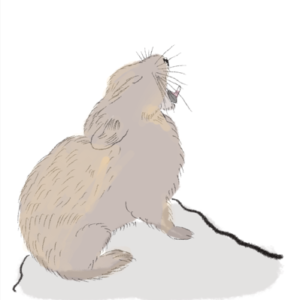
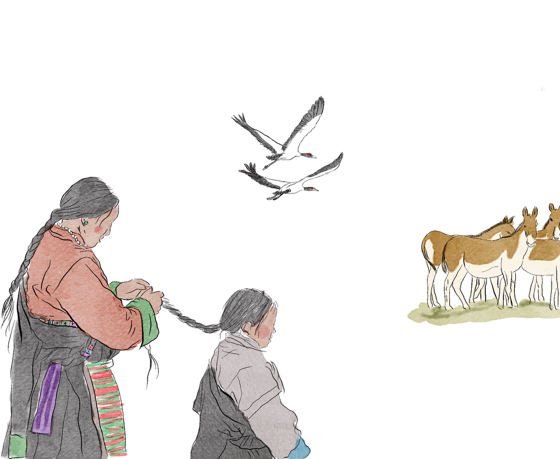
Some of my earliest childhood memories are of running across the grasslands, chasing pikas, and catching Rufous-necked Snow Finches in Tibet. Growing up, we were told that the two were companions: the pika offered shelter within its burrows, while the snow finch warned of danger and helped keep the burrow clean. Whether this was science or folklore mattered little to us. What mattered was the lesson it carried. On the plateau, life endured through relationships. Animals, like people, survived not in isolation but through connection, dependence, and coexistence.

The pika became my lifelong companion. It is woven into my earliest memories of home. Later, the curiosity I felt as a child watching pikas disappear into their burrows followed me into adulthood, through science, research, and a lifelong desire to understand the natural world. In many ways, the questions that shaped my career grew from the wonder I first felt as a child back home in Tibet. But more than a scientific curiosity, the pika remains a memory of home, carrying a sense of belonging that distance and time cannot erase.

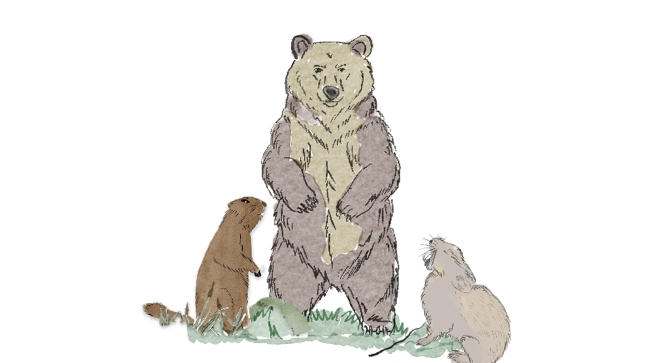
Some of my most cherished memories are of winter. Outside, the land lay silent beneath deep snow and bitter cold. Inside, our home glowed with warmth, laughter, and the comforting scent of butter tea. We gathered around my grandmother as she shared stories passed down through generations. Among them, my favourite was the story of the Tibetan brown bear, the marmot, and the pika. All three animals promised to sleep through the long winter without eating until spring arrived. The bear and the marmot kept their promise. The pika did not. It quietly nibbled from the food it had carefully stored during summer. As punishment, the pika was condemned to spend every short summer working tirelessly, gathering food while the other animals enjoyed spring’s fresh buffet. On the Tibetan Plateau, ecology was woven into stories, memory, and everyday life. Through such tales, people explained animal behaviour, seasonal change, and the realities of survival in a landscape shaped by long winters and brief summers.

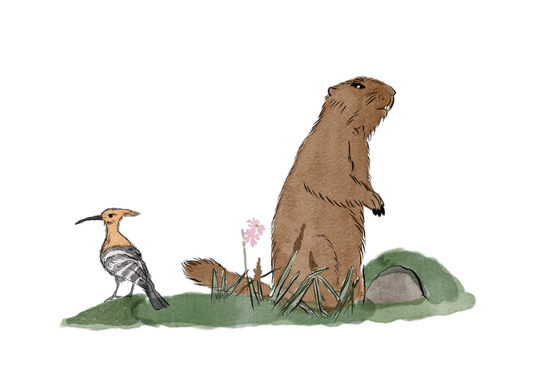
As the western extension of the Tibetan Plateau, Changthang shares its distinctive geography and interconnected social-ecological systems, where ecological knowledge remains deeply woven into everyday pastoral life. Time is not abstract but relational. They are experienced through events: Spring began with the first melodious call of the Pied Wheatear, known locally as the “little shepherd bird.” A sign that says, winter was loosening its grip. The long, harsh season was coming to an end, and soon the pastures would begin to green. As the snow retreated and the soil slowly warmed, marmots emerged from their burrows, and the frozen lakes began to thaw. Migratory birds returned to the wetlands, following the same seasonal rhythms that had brought them here for generations. As the Hoopoe arrives, the milking season begins. In Changthang, people call the Hoopoe a tax collector. Its return in spring is believed to bring its service in the form of abundance, the birth of yearlings and the return of milk to the herds. Carrying families through the lean days of early spring.

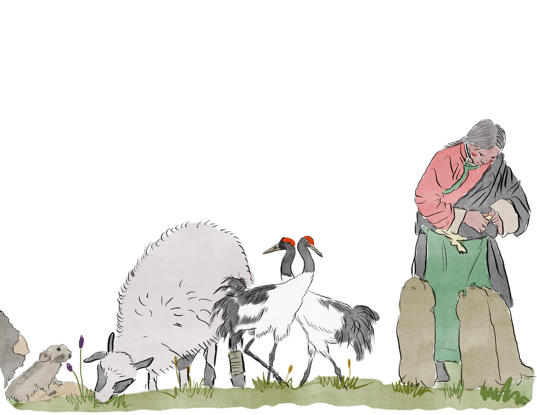
After the hasty spring, summer returns, the most vibrant season of life on the plateau. The earth has regained its biological pulse. The valleys glow green, and every living thing moves with urgency. Summer is brief here, but it is full of life and labour. Where to move livestock, when to leave a pasture, where water will be available, and how long a pasture can support grazing are all decisions embedded in ecological knowledge. Movement is therefore not simply a way of making a living. It is a way of living with the landscape. The boundaries between “nature” and “human life” become difficult to draw. Birds return to their nests, searching for mates; the black-necked crane remains the most unforgettable. A bird that pairs for life, it performs its elegant dances and echoing calls across the open marshes. Together, the pair build their nest and raise their young; marmots and bears, those who once promised to sleep through the long winter, greet the brief abundance and feast on the generosity of the land, as if teaching us that sometimes the greatest wisdom is simply to live fully in the moment given. Others prepare more carefully. The pika, tireless and watchful, begins its labour. Day after day it gathers forage, laying grass in careful layers beneath the sun, drying it patiently so it may last through the winter months. Tunnel by tunnel, it strengthens its home now that the earth has loosened itself. For the pika lives under constant watch, a small creature always on the menu of the plateau’s many predators. Predators too follow the rhythm of abundance. They move across the open land where prey is plentiful, and life is most concentrated. Summer offers choices, and with those choices come movement, hunger, and survival. Summer is generous, but fleeting, and all life on the plateau moves with the same unspoken wisdom: to gather strength from the moment before the cold returns again.

Slowly and steadily, autumn arrives, with shrubs and sedges that linger longer before senescence claims them. As the growing season closes, the landscape slowly shifts from abundance to endurance, reminding every creature that winter is near. The animals taste what remains of the season. Sometimes they graze on locoweed and wander back unsteadily and get drunk and confused. At other times they feast on wild chives, and when they return their breath carries the sharp scent of the chives, an aroma that lingers in the wool of goats and sheep. By now the delicate flavours of summer are gone. What remains is eaten not for delight, but for survival. The sedges are coarse and not as sweet, but they fill the belly, and that is enough.

The air sharpens day by day. Frost begins to settle on the meadow, and the rhythm of migration unfolds across the sky. Birds follow ecological pathways, leaving the high plateau for warmer valleys and distant wetlands. The brief alpine summer passes, and when the season turns, they return along the same timeless route. Slowly the pasture grows quieter. The grasses fade from green to gold, the winds grow colder, and the land settles into stillness. Life withdraws into burrows, nests, and human homes alike. And when the first snow begins to fall across the valley, we gather once more around the fire, carrying forward what the land has taught us through stories, metaphors, and songs. People often speak about strength as an individuality, to be strong enough to withstand hardship alone. But in Changthang, Survival is deeply relational. People depend on livestock; livestock depend on pasture and water; wildlife depends on the same landscape; and the health of the landscape depends on the timing and intensity of use.

But Changthang is changing faster than we can measure. The most visible transformations are climatic. Temperatures are rising, snowfall patterns are shifting, rainfall has become more unpredictable, and the timing of seasons no longer follows familiar rhythms. These changes are evident across the landscape. But the most profound change is a change in the relationship between people and the land. For generations, survival in Changthang depended on an intimate understanding of the natural world. Water, pasture, snowfall, animal health, and seasonal cycles were not separate environmental concerns. They were part of a single living system that governed movement, livelihoods, and everyday life. Today, the ideas of progress, comfort, and a “better life” are increasingly shaped by urban lifestyles, markets, technology, and modern patterns of consumption. Comfort is often understood as freedom from cold, physical labour, uncertainty, and dependence on natural cycles. Yet these aspirations are not emerging in isolation. They are part of a broader worldview that increasingly portrays dependence on nature as a limitation to be overcome rather than a relationship to be maintained.

The life of a pastoralist is frequently reduced to uncertainty, livestock ownership, physical labour, or the slaughter of animals. Such interpretations overlook the far deeper relationships that sustain pastoral societies. Livestock is not simply a commodity or a source of meat. It forms part of an intimate web built through care, responsibility, and mutual dependence. Animals provide milk, fibre, wool, transport, income, nutrition, and security. Herders protect them during harsh winters, move with them across space and time, care for them through illness, defend them from predators, and organise their lives around their well-being. When pastoralism is viewed only through narrow external moral frameworks, much of what matters most becomes invisible. The care, knowledge, labour, reciprocity, and ecological understanding embedded within pastoral life disappear from view. What is at stake in Changthang is not merely the loss of a livelihood or a collection of ecological observations. What may be disappearing is an entire way of understanding the natural world. A way of life in which survival depended on attentiveness rather than extraction, adaptation rather than control, relationship rather than separation.

For the people of Changthang, living with the land has historically required limits. You cannot make grass grow faster simply because you need more. You cannot force winter to end. You cannot ask a frozen lake to provide water before it thaws. You move when the pasture changes. You store when abundance allows. You endure when the landscape becomes harsh. This creates a form of ecological intelligence that is easy to overlook because it is not always written down. It lives in memory. It lives in stories about pikas storing hay. It lives in knowing which bird signals the beginning of spring. It lives in recognising when the grass has dried enough to indicate that winter is approaching. It lives in knowing where animals will find shelter, when to move livestock, when milk will return, and when it will disappear again. This knowledge is not static. It changes with the landscape because the people who hold it are constantly observing and responding to change.

Perhaps this is what the land had been teaching me all along. As a child, that species, habitats, and people are bound together through relationships that sustain life on the plateau. The snow finch and the pika, livestock and pasture, people and animals are not isolated parts of a landscape, but participants in an interconnected ecological system. Survival here has never been simply about controlling nature, but about understanding its variability and learning to live within its rhythms. Yet development and conservation often reduce landscapes to resources, ecosystems to services, and ecological complexity to problems to be managed. In Changthang, the land is more than a resource; it is livelihood, memory, and home. The arrival of migratory birds, the condition of pastures, and the timing of snowfall are interconnected signals through which pastoralists interpret environmental change and guide their decisions. This knowledge emerges not from observing the land at a distance, but from generations of living within it.

For Changthang’s social–ecological systems to endure, local and pastoral knowledge must be recognized as more than cultural heritage. It is a dynamic knowledge system, grounded in long-term observation, collective memory, and adaptation to environmental variability. Bringing it into dialogue with scientific approaches is essential to understanding ecological change beyond what can be captured through measurements alone. Our schools, universities, and conservation institutions must teach not only how to study ecosystems, but also how to recognize the knowledge cultivated by those who live within them. As climate and social change reshape the natural world, what is at stake is not only the future of pastoralism, but also a way of understanding our place in the living world. The land continues to speak through returning birds, shifting seasons, animal behaviour, and stories passed between generations. The question is whether we will continue to listen. Perhaps the most enduring lesson of Changthang is that resilience is built through relationships, and that we cannot truly care for a landscape without recognizing that we are part of the ecological processes that sustain it.


Illustrations by Sonam Palmo

659 301 Sonam Palmo
Spirits of the mountains: Barley Beer (Chaang)

Spirits of the mountains: Barley Beer (Chaang)

Often referred to as the beer of the high mountains, Chaang is a fermented, alcoholic beverage. In Spiti and Ladakh, it is primarily made using locally-grown, organic barley. More recently, people have started using rice and wheat to make Chaang. Barley, once a staple in the high mountains, is slowly losing out to cash crops despite cash crops being more vulnerable to the risks presented by changing weather patterns. The lack of a market for locally grown barley is leading to its decline.

With special thanks to Tanzin Kunzang


छांग एक किण्वित पेय है जो आमतौर पर ऊंचे पहाड़ों में बनाया जाता है। स्पीति और लद्दाख में, यह मुख्य रूप से स्थानीय रूप से उगाए गए, जैविक जौ का उपयोग करके बनाया जाता है। हाल ही में, लोग छांग बनाने के लिए चावल और गेहूं का भी उपयोग करते हैं। जौ, जो कभी इन भागों का प्रमुख भोजन था, धीरे-धीरे नकदी फसलों की तुलना में कम होता जा रहा है, बावजूद इसके कि नकदी फसलें मौसम के बदलते मिजाज के कारण पैदा होने वाले जोखिमों के प्रति अधिक संवेदनशील हैं।

तंजिन कुंजांग को विशेष धन्यवाद 

1200 663 Ajay Bijoor
Fairies of Kibber | Documentaries by Locals

Fairies of Kibber | Documentaries by Locals

Women in the high altitude village of Kibber carry the weight of water, faith and the future. Fairies of Kibber follows the extraordinary story of women who have become guardians of water in a climate-challenged world.

A film by Varun Chauva.

Music via. Pixabay:
gm6-fmaj7-bbm6-jazz-improvisation-215332.mp3 by drebddronefish
jazz-background-music-349165.mp3 by BackgroundMusicForVideos
loose-and-lazy-blues-110453.mp3 by ShidenBeatsMusic
sleigh-ride-snowflake-swing-10951.mp3 by JuliusH


किब्बर के पहाड़ी गांव में रहने वाली महिलाएं जल, आस्था और भविष्य का भार अपने कंधों पर उठाती हैं। ‘फेयरीज ऑफ किब्बर’ जलवायु परिवर्तन से जूझ रही दुनिया में जल की संरक्षक बनी महिलाओं की असाधारण कहानी बयां करती है।

1200 670 Varun Chauva
Yak Vs Machines

Yak Vs Machines

Who will survive? | कौन बचेगा?

Music: Eye of the Tiger (Instrumental) via. https://mp3.pm/
Based on the original “Eye Of The Tiger” by Survivor.

1200 663 Ajay Bijoor
Winter, Wool and Women

Winter, Wool and Women

Winters are a time when most women in the mountains work with wool. Knitting and weaving woollens for family and loved ones. Some even earn a modest income from it. These skills have developed over years, thanks to several schemes run by successive governments offering skill training, equipment, and a stipend at times.

This was a way to keep busy in the long, cold winter months. But these winter rituals are on a decline due to several reasons. A key one among them is the change in livestock rearing patterns. Most families no longer keep sheep and goat as they are difficult to herd and become easy prey for dogs. The lack of systematic garbage management clubbed with rising tourism, throws unique challenges for these regions in the form of a rising dog population. Dogs kill more livestock than snow leopards and wolves combined. Such changes reiterate human-nature relations in high mountain regions in the Himalaya.

We thank Dolma Butith, Chhering Youdon and Phuchok Dolma for speaking with us.

Cover image: Nawang Tankhe
Additional footage: Kesang Chunit

Music:
Slow currents by Lama House from Epidemic Music via. Canva
A matter of trust by Gavin Luke from Epidemic Music via. Canva
Cinematic Cello Arpeggio by GregorQuendel via. Pixabay
Sound effects via. Pixabay

Picture of Lahauli socks: https://101reporters.com/article/soci…

सर्दियाँ वह समय होता है जब पहाड़ों में ज्यादातर महिलाएँ ऊन का काम करती हैं। परिवार और प्रियजनों के लिए ऊनी कपड़े बुनना और बुनना। कुछ लोग ऐसे प्रयासों से मामूली आय भी अर्जित कर लेते हैं। ये कौशल कई दशकों में विकसित हुए हैं, जिसका श्रेय सरकारों द्वारा समय-समय पर कौशल प्रशिक्षण, उपकरण और वजीफा प्रदान करने वाली कई योजनाओं को जाता है।
यह लंबे, ठंडे सर्दियों के महीनों में व्यस्त रहने का एक तरीका था। लेकिन कई कारकों के कारण इन शीतकालीन अनुष्ठानों में गिरावट आ रही है। उनमें से एक प्रमुख पशुधन पालन पैटर्न में बदलाव है। अधिकांश परिवार अब भेड़ और बकरी नहीं पालते क्योंकि उन्हें चराना मुश्किल होता है और वे कुत्तों के लिए आसान शिकार बन जाते हैं। बढ़ते पर्यटन के साथ व्यवस्थित कचरा प्रबंधन की कमी, कुत्तों की बढ़ती आबादी के रूप में इन क्षेत्रों के लिए अनोखी चुनौतियाँ पेश करती है। अब यह ज्ञात है कि कुत्ते हिम तेंदुओं और भेड़ियों की तुलना में अधिक पशुओं को मारते हैं। इस तरह के बदलाव हिमालय के ऊंचे पर्वतीय क्षेत्रों में मानव-प्रकृति के नाजुक संबंधों को दोहराते हैं।

हमारे साथ बात करने के लिए हम डोल्मा बुटिथ, चेरिंग यूडॉन और फुचोक डोल्मा को धन्यवाद देते हैं।
कवर छवि: नवांग तन्खे
अतिरिक्त फ़ुटेज: केसांग चुनित

1200 652 Ajay Bijoor
The Praja system of Pangi valley

The Praja system of Pangi valley

The Pangi region in Himachal Pradesh is among the farthest valleys of this Himalayan State. Pangi Valley is prominent for its dense Birch forests that are home to a treasure of medicinal plants and some rare wildlife.

For generations, the people of Pangi have managed these forest commons through their ‘Praja system’. The Praja is a village-level body comprising of a member from every family in the village that sets rules for the management of village commons and the overall welfare of the village. It ensures regular monitoring and imposition of fines on offenders. It also has in place mechanisms for support and conflict resolution. The Praja forms one-axis for managing village commons, in a group of polycentric institutions that include the local Women’s council, the village Monastery and other formal government bodies.

We thank Shri. Biru Bodh (of Sural Bhatori Camp), Smt. Savita and Smt. Kavita (from Sural Tai), Shri. Wangchuk (from Hudan Bhatori) and Shri. Sonam Dorje (from Hillu Tuan) for speaking with us.

Thanks also to Ms. Ritika (IAS) who served as the Resident Collector in Pangi and made us aware of Pangi’s unique Praja system.

HimKatha Team: Akshata Anand, Shri. Kesang Chunit and Amar Singh of Gumrang.


हिमाचल प्रदेश का पांगी क्षेत्र इस हिमालयी राज्य की सबसे दूरस्थ घाटियों में से एक है। पांगी घाटी अपने समृद्ध बर्च वनों के लिए प्रसिद्ध है, जो औषधीय पौधों और कुछ दुर्लभ वन्यजीवों का घर हैं।
पीढ़ियों से, पांगी के लोग अपनी ‘प्रजा व्यवस्था’ के माध्यम से इन वन भूमि का प्रबंधन करते आ रहे हैं। प्रजा एक ग्राम-स्तरीय निकाय है जिसमें गाँव के प्रत्येक परिवार का एक सदस्य शामिल होता है जो गाँव की भूमि के प्रबंधन और गाँव के समग्र कल्याण के लिए नियम निर्धारित करता है। यह नियमित निगरानी सुनिश्चित करता है और उल्लंघन करने वालों पर जुर्माना लगाता है। इसमें सहायता और संघर्ष समाधान के लिए तंत्र भी मौजूद हैं। प्रजा, गाँव की भूमि के प्रबंधन के लिए एक धुरी का निर्माण करती है, जो बहुकेंद्रीय संस्थाओं के एक समूह में शामिल है, जिसमें स्थानीय महिला परिषद, गाँव का मठ और अन्य औपचारिक सरकारी निकाय शामिल हैं।

हम श्री बीरू बोध (सुराल भटोरी कैंप), श्रीमती सविता और श्रीमती कविता (सुराल ताई), श्री वांगचुक (हुडन भटोरी) और श्री सोनम दोरजे (हिल्लू तुआन) को हमारे साथ बातचीत करने के लिए धन्यवाद देते हैं।

सुश्री रितिका (आई.ए.एस) का भी धन्यवाद, जिन्होंने पांगी में रेजिडेंट कलेक्टर के रूप में कार्य किया और हमें पांगी की प्रजा व्यवस्था से अवगत कराया।

हिमकथा टीम: अक्षता आनंद, श्री. केसांग चुनित और गुमरंग के अमर सिंह जी।

1200 668 Ajay Bijoor
Sincerity of Saryan | Documentaries by Locals

Sincerity of Saryan | Documentaries by Locals

Sincerity of Saryan peeks into the world of Preeti Saryan, a young ecologist from Mebar village in Kinnaur. Always fascinated by the forests she grew around, Preeti formally studied plant ecology and evolution, and holds a doctoral degree from IISER Bhopal. Having studied the western ghats and travelled around north-east India, she is now back in her village. This story explores Preeti’s world and her dreams for the Saryan Vigyan Foundation which she set up and through which she hopes take the joys of experiencing nature to the next generation of Kinnauras.

A film by Varun Chauva.

For more on Saryan Vigyan Foundation visit https://www.saryanfoundation.org/

Music:
Going to bed by Noru via. Pixabay,
Whiskey weather by Realmusic via. Pixabay.


‘सिंसियरिटी ऑफ सरयान’ किन्नौर के मेबर गांव की युवा इकोलॉजिस्ट प्रीति सरयान की दुनिया की झलक दिखाती है। अपने आसपास के जंगलों से हमेशा मोहित रहने वाली प्रीति ने औपचारिक रूप से प्लांट इकोलॉजी (पादप पारिस्थितिकी) का अध्ययन किया और आई.आई.एस.ई.आर भोपाल से डॉक्टरेट की उपाधि प्राप्त की। पश्चिमी घाट का अध्ययन और उत्तर-पूर्वी भारत की यात्रा करने के बाद, अब वह अपने गांव लौट आई हैं। प्रीति ने अब सरयान विज्ञान फाउंडेशन की स्थापना की है। इस फाउंडेशन के माध्यम से वह किन्नौर की आने वाली पीढ़ियों को प्रकृति के आनंद से रूबरू कराना चाहती हैं।

वरुण चौवा द्वारा निर्देशित फिल्म।

सरयान विज्ञान फाउंडेशन के बारे में अधिक जानकारी के लिए: https://www.saryanfoundation.org/

1200 664 Varun Chauva
Shawls of Spiti: Lingze

Shawls of Spiti: Lingze

A shawl is every Spitian woman’s true friend. Most shawls are made locally and have evolved over the years. Traditionally made from animal skins (shawls called Yongma), they evolved to be made out of wool that were dyed naturally (called Ramzey Lingze). The current favorite is made using threads and in only woven by women in one village: Demul. It is known as the Demul Linzge.

The Lingze is a cultural essential. Every new bride receives a Lingze at her wedding. The number of Lingze gifted to a new bride, by her family, was a mark of affluence. While this may no longer be the case, the Lingze continues to evolve and remains one of the most important cultural symbols among Spitian women.

We thank the women of Demul who explained the details of the Demul Lingze and let us film them at work. They include Sonam Chukit, Padma Chodon, Sonam Chodon and Panma Youdon. Also, our thanks to Padma Chodon, Kunzang Thinley, Phuchok Dolma and Angrup Chhomo for displaying the Lingze they have inherited.

Cover image: Nawang Tankhe
Additional footage: Kalzang Gurmet

Music:
Strolling in Style by Raymond Grouse for Epidemic sound
Keep Me in Your Sight by JOYSPRING for Epidemic sound


शॉल प्रत्येक स्पिटियन महिला की सच्ची दोस्त है। अधिकांश शॉल स्थानीय स्तर पर बनाए जाते हैं। परंपरागत रूप से जानवरों की खाल (शॉल जिन्हें योंगमो कहा जाता है) से बनाया जाता था, वे ऊन से बनने के लिए विकसित हुए जिन्हें प्राकृतिक रूप से रंगा जाता था (जिन्हें रैमजे लिंग्ज़ कहा जाता है)। वर्तमान पसंदीदा धागों से बना है और केवल एक गांव की महिलाओं द्वारा बुना जाता है: डेमुल। इसे डेमुल लिंज़गे के नाम से जाना जाने लगा है।

लिंग्ज़ एक सांस्कृतिक अनिवार्यता थी, हर नई दुल्हन को अपनी शादी में लिंग्ज़ मिलता था। एक नई दुल्हन को उसके परिवार द्वारा उपहार में दी गई लिंग्ज़ की संख्या समृद्धि का प्रतीक थी। लिंग्ज़ का विकास जारी है और स्पिटियन महिलाओं के लिए सबसे महत्वपूर्ण फैशन सहायक उपकरण में से एक बना हुआ है।

हम डेमुल की कई महिलाओं को धन्यवाद देते हैं जिन्होंने हमें डेमुल लिंग्ज़ के विवरण दिखाए और समझाए और काम करते समय हमें उन्हें फिल्माने दिया। उनमें शामिल हैं: सोनम चूकित, पद्मा चोदोन, सोनम चोदोन और पनमा यूडन। इसके अलावा, कुंजांग थिनले, फुचोक डोल्मा और अंगरूप छोमो को हमारा धन्यवाद।

1200 658 Ajay Bijoor
Ladakhi Losar – New Year celebrations in Ladakh

Ladakhi Losar – New Year celebrations in Ladakh

Ladakh Losar marks the Ladakhi New Year, which coincided with the Gregorian new year this year. Traditional celebrations persist in a few areas, like the village of Gya.

Losar is a time when everyone returns to their village to be with the family and old friends. In Gya, the celebrations go on for days and include praying to the local deities, meeting with old friends and a lot of song and dance. There is also a special day of celebration to remember Gyapacho, a chieftan ruler who administered this region around the 10th century.

Watch how the villagers put on a show to celebrate Losar!

Credits:
Jigmet Gyatso (Singer), Tsering Palden, Rigzen Dorjey, Tundup Lardak, Namgail Tsering, Meme Tsetan Phunchok and Tanzin Norgyal. Our thanks to all the villagers of Gya, Miru, Sasoma, Lato and Rumptse.

A special thanks to Rigzen Mingyur, Kaga Karma Sonam and his entire family in Rumptse for hosting us and making us part of this special experience.

Cover image: Sartaj Ghuman

Music: New Heights by alanajordan via. Pixabay


लद्दाख लोसर लद्दाखी नव वर्ष का प्रतीक है। पारंपरिक लोसर उत्सव केवल कुछ ही क्षेत्रों में जारी है, जैसे ग्या गांव में।

लोसर ऐसा समय है जब हर कोई परिवार और पुराने दोस्तों के साथ रहने के लिए गांव में अपने पैतृक घरों में लौटता है। ग्या में, उत्सव कई दिनों तक चलते हैं और इसमें स्थानीय देवताओं से प्रार्थना करना, पुराने दोस्तों से मिलना और ढेर सारा गाना और नृत्य शामिल होता है। 10वीं शताब्दी के आसपास इस क्षेत्र पर शासन करने वाले सरदार शासक ग्यापाचो को याद करने के लिए उत्सव का एक विशेष दिन भी है।

देखिये कैसे ग्रामीणों ने लोसर मनाने के लिए एक कार्यक्रम का आयोजन किया!

श्रेय:
जिग्मेट ग्यात्सो (गायक), त्सेरिंग पाल्डेन, रिग्जेन दोरजे, टुंडुप लार्डक, नामगेल त्सेरिंग, मेमे त्सेतन फुंचोक और तंजिन नॉर्ग्याल। ग्या, मिरू, ससोमा, लाटो और रुम्पत्से के सभी ग्रामीणों को हमारा धन्यवाद।

हमारी मेजबानी करने और हमें इस विशेष अनुभव का हिस्सा बनाने के लिए रिग्ज़ेन मिंग्यूर, कागा कर्मा सोनम और रम्पत्से में उनके पूरे परिवार को विशेष धन्यवाद।

कवर छवि: सरताज घुमन

संगीत: एलनजॉर्डन द्वारा न्यू हाइट्स। पिक्साबे

1200 654 Ajay Bijoor