Ecology

Agri-Culture and Agriculture
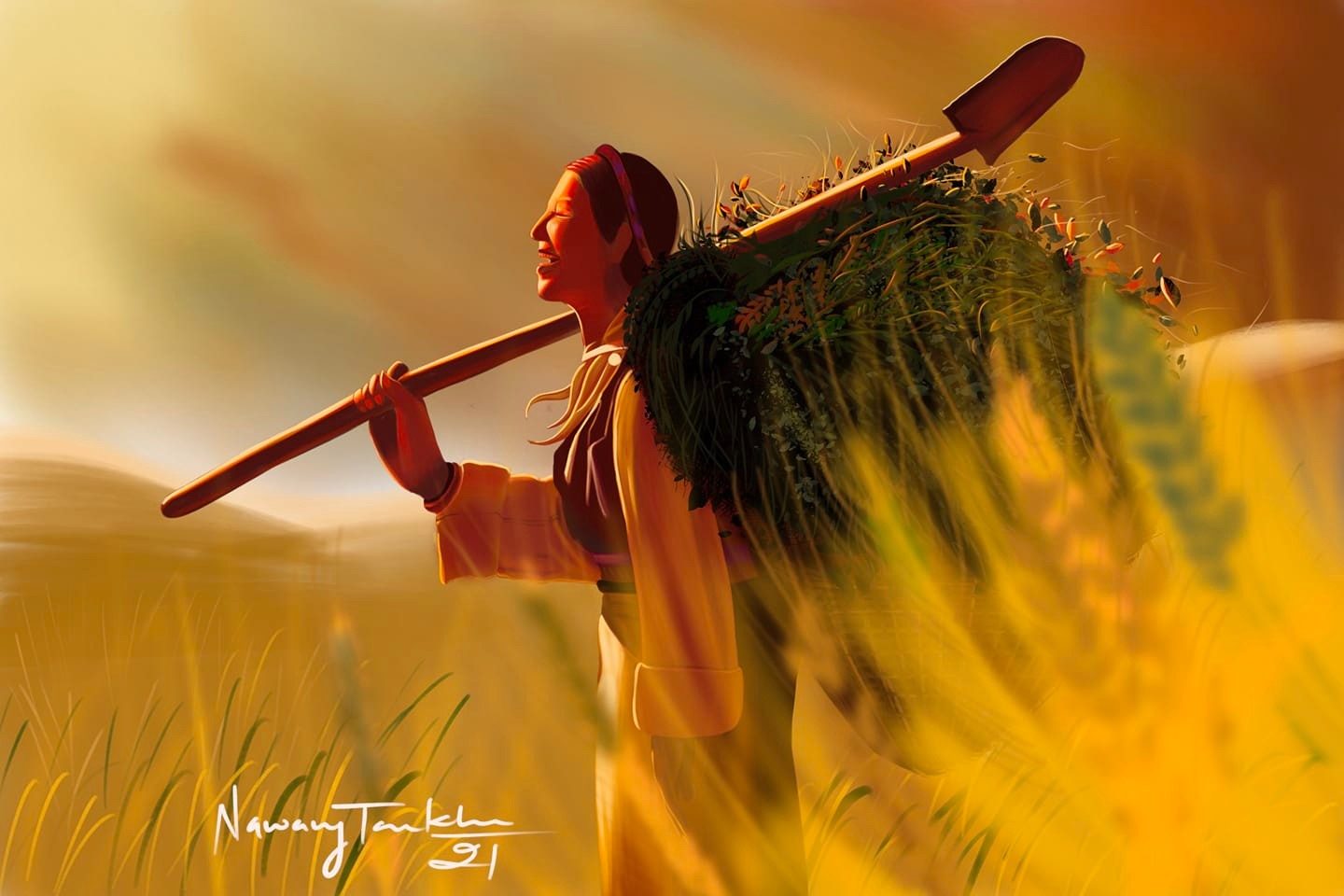
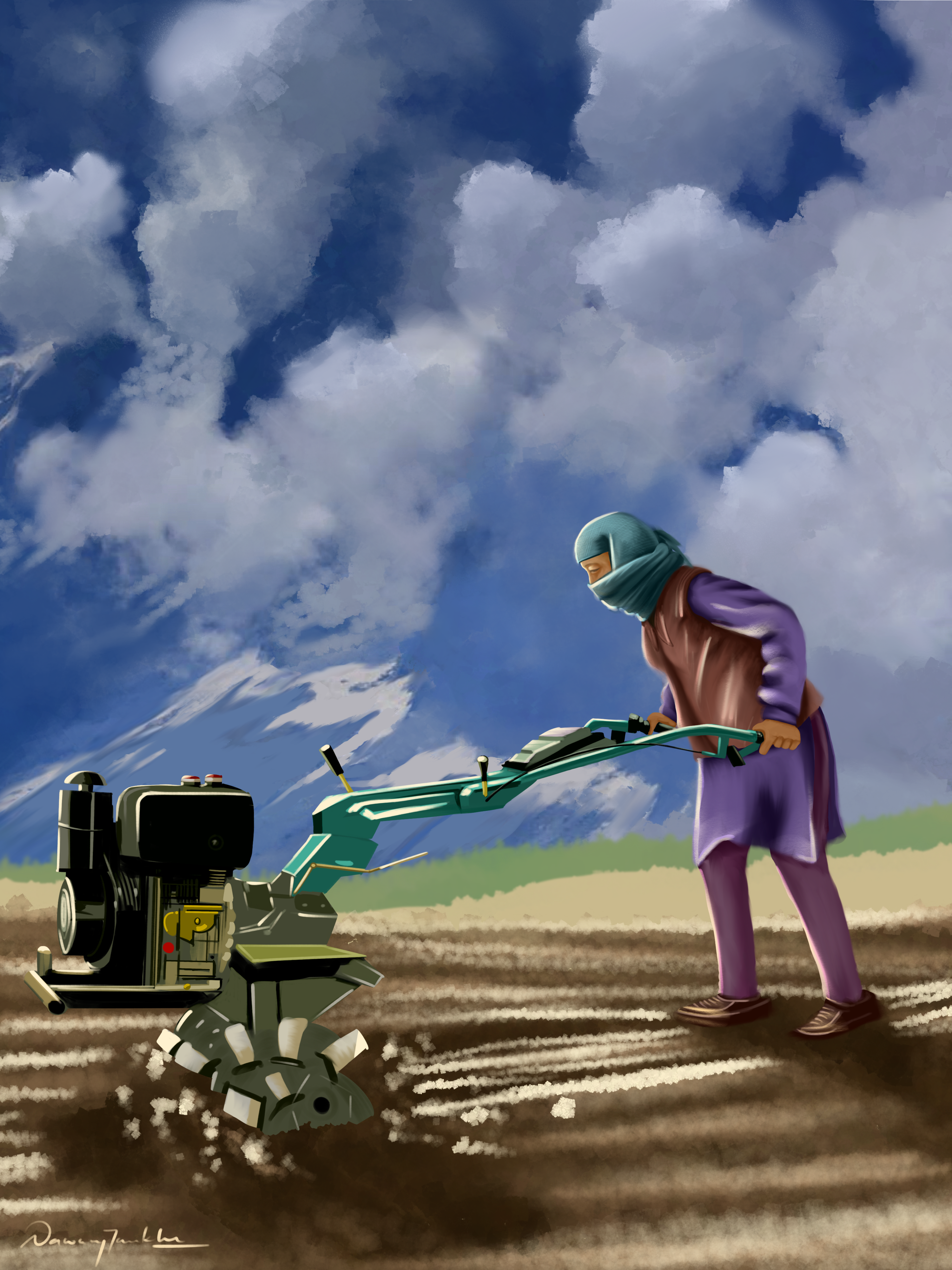
Illustration: Nawang Tankhe

Agri-Culture and Agriculture

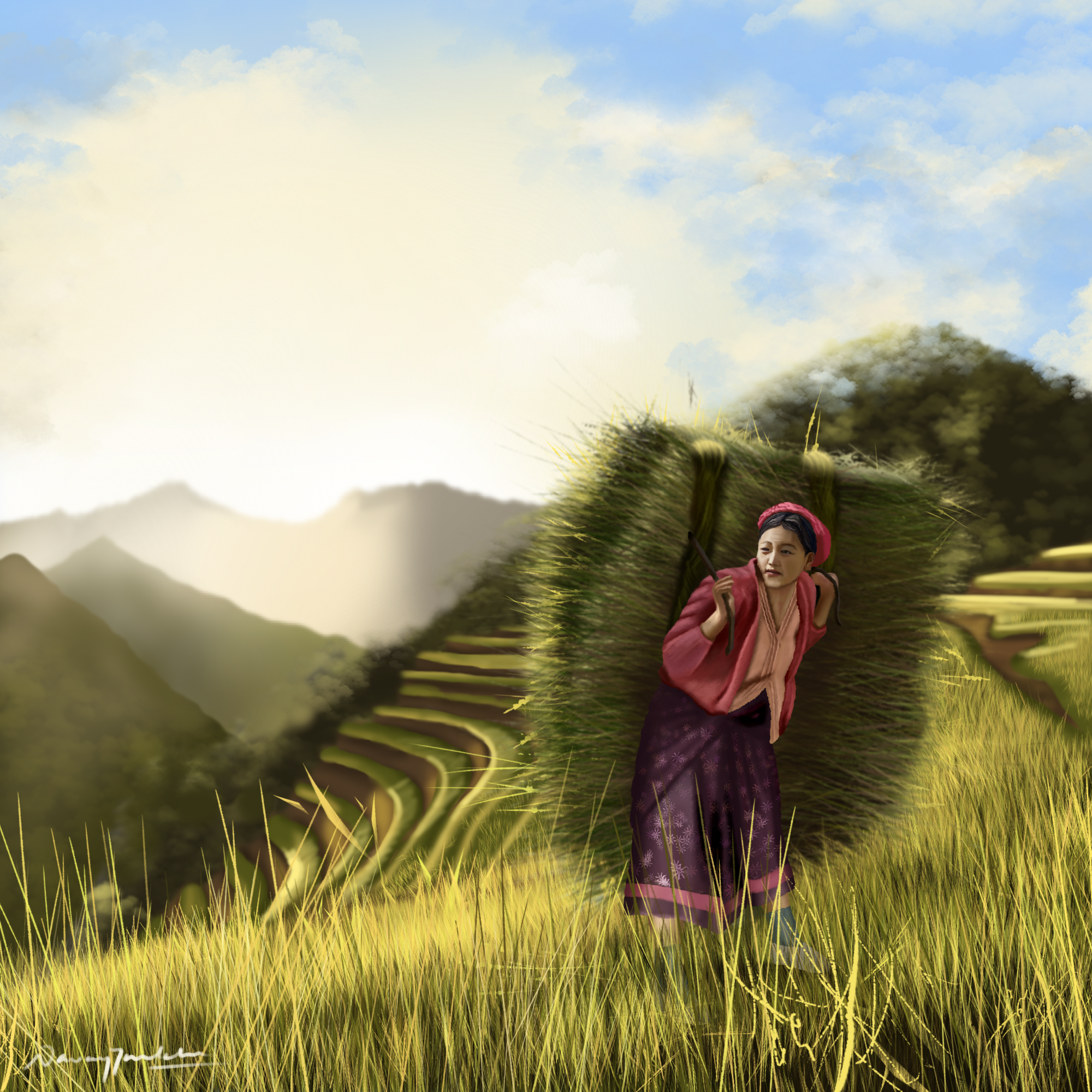
Agriculture on the earth is about 10,000-12,000 years old and it appeared in India about 8000-9000 years ago. From hunting and gathering in the forests, how humans came to produce grains and how the entire process must have grown and spread across migrants, communities, regions and countries – is a fascinating history by itself. But have we ever paused to wonder or ask, what was it about agriculture that so many millennia later, it continues to be the principal foundation of our lives, relevance and survival and the main yardstick of our life’s fertility and continuous existence?

The primary significance of agriculture lies in its role as the provider of our food, sustaining our physical well-being and activity. However, its significance extends beyond mere sustenance. For instance, let me ask you, the food that we eat, does that affect us only physically? The straight answer to that is – No! Besides producing food for our physical body, the entire process of agriculture nurtures our minds and souls, transforming us into individuals capable of thoughtful contemplation with wisdom. This, in turn, has given birth to or impacted all aspects of our lives, be these physical, mental or spiritual, and social, economic and cultural. Just take a look around yourself and you will realize that there is no aspect of our society and lives – be it our meditations on the forests or the water, or our livelihood resources or artistic endeavours – which has not emanated or developed as a result of our agricultural pursuits. In different times and space, struggling through various passages and milestones, agriculture has nurtured human and social survival and our civilizations; and the society too, by making it a major part of one’s daily life, thought and sociability. Thus, it has given birth to and developed various aspects of social life and allowed itself to remain relevant.

Here, we are trying to look at the changes that have occurred in agriculture throughout its journey. For this, there are two aspects of agriculture that we need to look at a little closely – (1) Agriculture as the physical aspect or task of growing food crops; and (2) Going beyond the physical act of growing food and assimilating agriculture into the very nature of one’s social life, i.e. turning the entire process into agri-culture. For want of appropriate terminology let us call these as Agriculture and Agri-culture (Agri as Culture). Can you see the difference between the two – difference between the act of growing food and making the act as part of one’s culture? When we look from such a perspective, we can see that, if agriculture had remained just the physical act of growing food, then it would have become a mere profession but by developing it into agri-culture it has become a vocation and occupation that is at the very centre of our entire life. By turning it into agri-culture, an interactive bond developed between it and the society, leading to both learning and feeding from and giving to each other. This is why, no society ever, defined agriculture as a profession or trade nor treated it as such, but turned it into a life-style, which did not allow agriculture to remain stagnant and rooted but imbued it with the trait of “renewability”, enabling it across time and space, down to the needs and traits of every local community, in accordance with local experience, wisdom and sensibilities that enable it to remain relevant, alive and forever in step with the times. The trait of renewability developed into a natural trait which gave society the “vardaan” of the everlasting – and which we call development.

By harping on this difference, and seeking to use the two terms “change” and “renewability” with two different meanings, I wish to see and analyse the changes that we are seeking to understand. It might be appropriate that we analyse the dimensions and meanings of these two terms, for a clearer understanding of the change that we are discussing.

Are the terms “change” and “renewability”, synonyms?

I think not, and this is what I am seeking to understand and explain. Further, if we can see “agriculture and agri-culture” and “change and renewability” in the context of each other then we may be able to grasp better the essence of change in this sector in the last fifty odd years. For this, we may need to compare these in two distinct time eras.

The changes that have happened in agri-culture in the last 50 or so years are actually the consequence of changes in society that began with the advent of industrial revolution in Europe about two-three hundred years ago. That period provides a distinct dividing line across which we can clearly see an overall difference in the basic nature, belief, concept, action and result between agriculture and agri-culture. We can then clearly understand the cause and the impact of the changes that we have been witnessing in the last four-five decades.

The pre-industrial revolution 10-12 thousand years saw countless small and big changes. However, those changes happened in different times, in different places and amidst different communities and in accordance with retaining the balance of and in cooperation with the five elements. The genesis of those changes happened at specific local levels and no change was sudden but happened slowly as a result of close observation and experience over a long period. In other words, those changes had elements of deep reflection and experiment, wherein some experiments may have been fruitful and some not successful, immediately or over time, on the basis of which the society would have accepted, rejected, corrected or improved upon those. And such a process continued constantly. In fact, this entire process of doing, seeing, improving, adding on was what gave agriculture the trait that we are naming and explaining as “renewability” – wherein something new did not happen suddenly but grew on the foundation of the old and which sought to carry the old a few steps ahead.
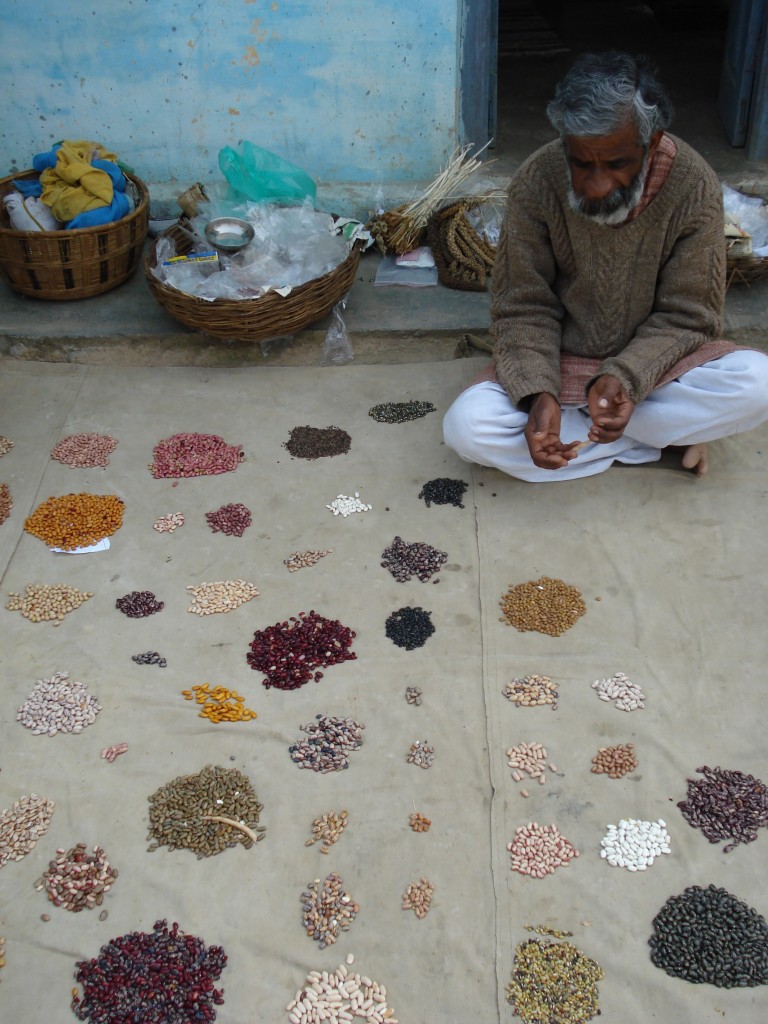
Barahnaja, a traditional system of taking 12 crops in a year; Beej Bachao Andolan

What was special or specific about any such change or development was that it was based entirely on the experience and wisdom of the local farming community. As a result, there was a development of a repository of traditional knowledge which was not limited to grains and crops but assimilated understanding and knowledge of all natural resources. This encouraged at the local geographical level, diversity of crops growing in the field and the food being cooked in the kitchens. Not just that, its impact was seen and felt beyond local agriculture practice, on the development of native languages and proverbs, diverse folk arts and culture, and gave birth to the technology of making wood or metal implements and utensils. This is where, agriculture went beyond growing crops and adopted the wide character of what I have termed as agri-culture to become an intrinsic and inherent part of life, to become its lifestyle. It will not be an exaggeration to claim that it was this agri-culture which developed in the humans, observation based scientific temper and process which further developed among the humans, an understanding of climate and weather, botany and zoology, etc. Try to look at basic knowledge in any discipline and you will find that its seeds germinated as a result of and in the general environment created by agri-culture. Indeed, despite its very local nature and characteristics, agri-culture proved to assimilate within itself the vast and global natural vision. It became a close reflection of nature’s godly vision, and played a critical role in the existence and continued well-being of this earth.

If we take this entire spectrum together and borrow from the definition of democracy, we can say that the renewability in agri-culture is of the people, for the people, by the people. From concept to planning and execution, the entire responsibility and control remained with the local community.

Agri-culture which was life’s philosophy, a lifestyle is today a mere profession and mode of employment. In fact, it is no longer agri-culture and has reverted to being plain agriculture. Today, it is no longer a medium to enhance life but just to stay alive and afloat, to remain economically alive. The agriculture which is being encouraged and propagated today is no longer social but industrial, or in other words, the society no longer owns it but has rapidly been given to or taken over by the industrial and corporate companies. It is not based on the knowledge invented or developed by the farmers on the field, but the entire thought, observation, research and implementation is developed in the laboratory of some institution or company and then served as a package to the farmers. This is not part of agri-culture’s renewability emerging from the existing practice and from within the society and indeed, it is not even a change but an intentionally planned campaign (even, a conspiracy), a replacement deliberately imposed from the above and outside, to completely uproot this most important function in society. The cardinal characteristics of agri-culture were then steadily marginalized and erased.

This replacement about 50-60 years ago, which turned agri-culture on its head did not come with the Green Revolution (more appropriately called Greed Revolution) then but was the consequence of what had emerged as the industrial revolution two-three hundred years ago. And it started with de-legitimising traditional society’s existence, identity and knowledge by naming it ‘backward’ and following it up by seeking to shame people’s knowledge systems and their seeds. It was crucial and strategic that this society begin to have an inferiority complex about oneself. This was the first essential stage of the conspiracy. Once this was achieved, it was followed by a systematic replacement of the principles, methods, seeds with the means that it had created. As a result, a creative, productive and self-reliant society has today become a dependent slave farmer society.
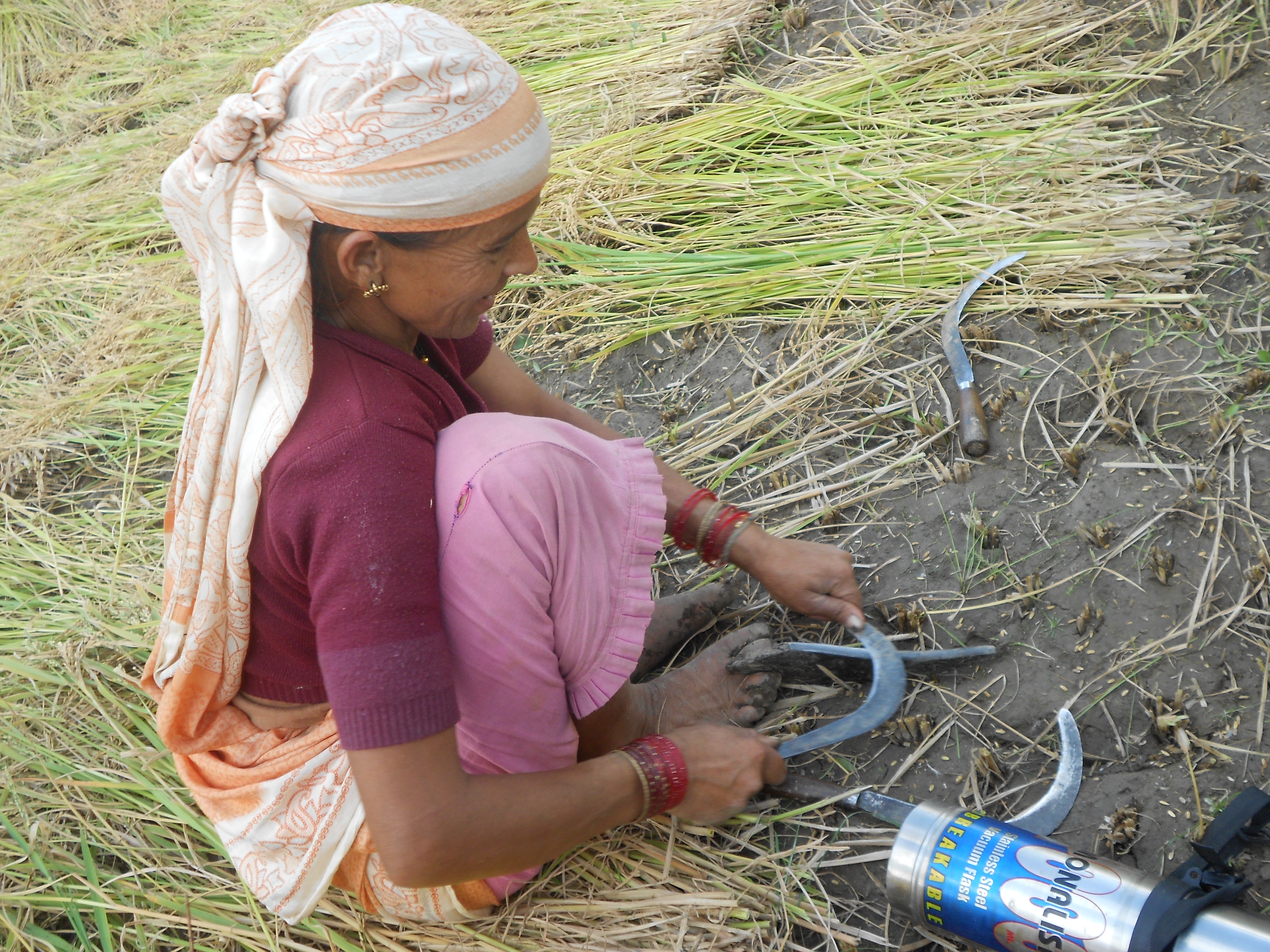
Photo: Wikimedia Commons

An important aspect of this change in India was the establishment of the institution of the Zamindari system, wherein the society itself saw its division into two distinct classes. This system, the “divide and rule” confiscated from farmers their independence and creativity and turned them into slaves at the village level itself. So, there is an entire stretch of an exploitative pattern, which later developed into the introduction and dominance of Green Revolution. In the course of the industrial revolution starting from Europe, all aspects of agri-culture were side-lined one by one. This started with terming the entire identity of character of a local society as backward. It was important, in fact, essential for new agriculture to establish itself by downgrading and marginalizing traditional knowledge systems and particularly, its local seeds, and for the people to feel ashamed of their own rich traditions. Once this was done, it was followed by introducing and establishing its own means and resources. The net result of this was that a productive farming society has today become an enslaved, dependent society.

Let us try to understand this through an example or two.

Earlier, seeds of any grain or produce came from the farmers themselves and whose ownership was theirs, collectively. Any seed needed, in the first instance, came from their own homes, or neighbours, or village, or neighbouring villages. Those were seeds which bred and prospered in the soil and water of the respective village, were acclimatized to the local geographical conditions and situations, and which were also the reasons that resulted in their tremendous diversity.  Consequently, this diversity enabled the seeds or crops to develop characteristics to suit every season, every taste, every health point of view and which provided them with tremendous disease resistance and ensured the society remarkable prosperity.

This led people to develop their own exchange traditions and practices – seeds travelled from one farmer to another, one community to another, one village to another, one society to another. For instance, a borrower did not have to pay the lender but only later, post-harvest returned to the lender double the amount (or whatever measure the community practiced) they had taken. A typical exchange practice also had a humanitarian aspect to it – for reasons of flood or drought or any other, if the crop failed, the borrower did not feel forced to return the lent amount to the lender – it was an unwritten understanding within the society. What this ultimately meant is that there was regular availability of seeds in the community.

Today, the system has been turned on its head. The control over seeds has been usurped from the farmers’ hands to the company’s control – and the farmers from the producer and master has become a mere customer bound by the company’s many conditions of restriction, rising cost and despair – all that farmers today understand clearly and suffer, but are not in a position to do anything about it.

Let us look at another example on this. Today, as the harvest begins to fall rapidly after a year or more, farmers need to change the seeds – and actually, purchase new ones. This considerably enhances the farmers’ input costs. The fall in production, is a basic failing of any crop or seed, which farmers were well aware of. However, earlier, farmers did not need to change their seeds as frequently or rapidly as they do now. And even then, farming communities had developed their own mechanisms of seed-change. At the first level, they would merely change the field (avoid growing a crop in the same field every year), and change seeds only after considerable number of years. The entire system of seed change, from concept to practice was in the farmers’ or community control, and so it continued to remain even after seed exchange. But today, with what guile and cleverness, this community practice has been taken away from their hands and turned into a practice of excessive profit of the companies.
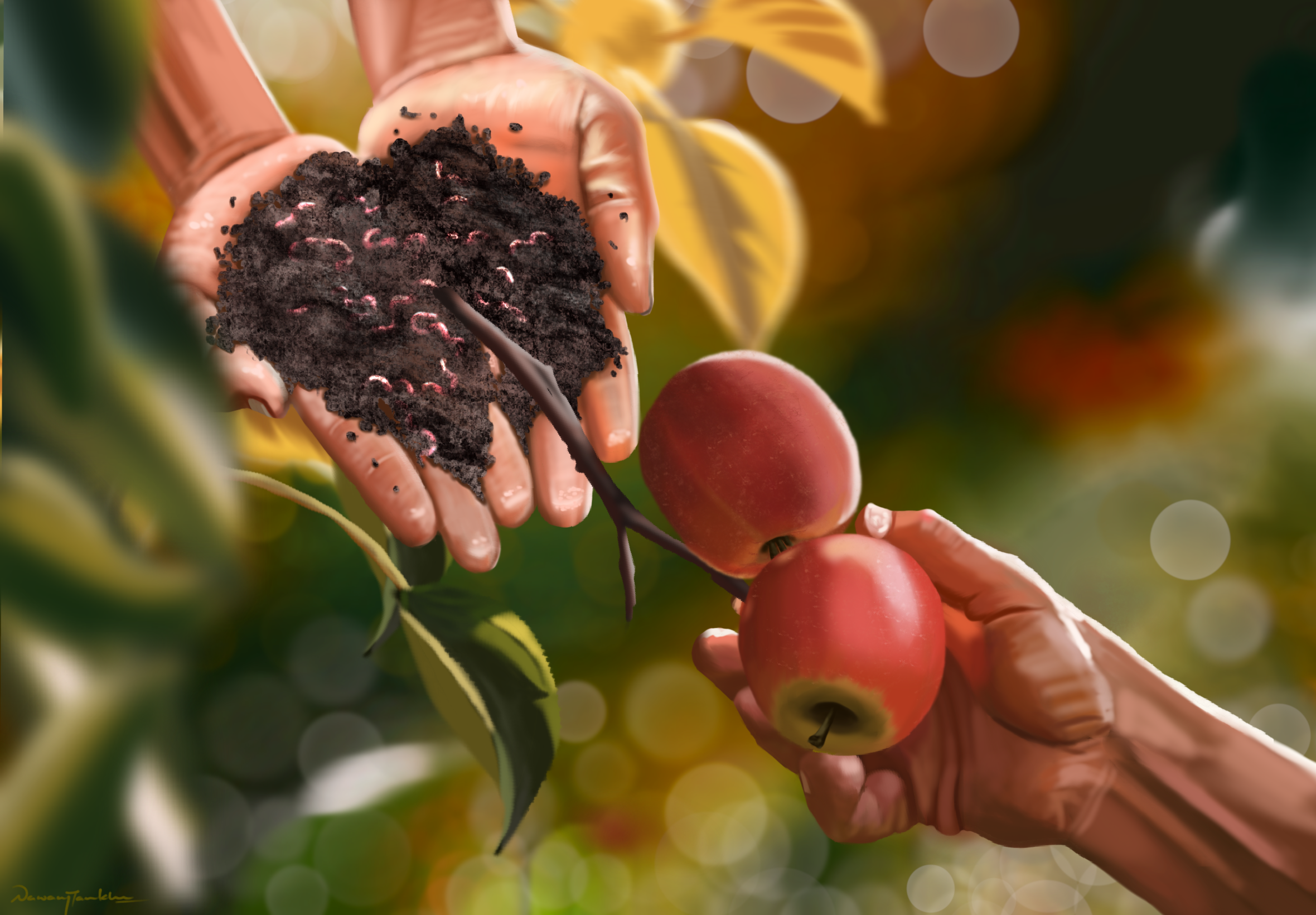
Illustration: Nawang Tankhe

Likewise, comparing old agri-culture and new agriculture, we can see how a farmer in their practice has gone from being a self-reliant producer to becoming a mere consumer, from being a master to becoming an employee, service provider or servant. And agri-culture which was critical or foundational to maintain the ecological balance of the earth, has through consumption and exploitation become a trade and profession. Our food crops are no longer a gift of nature but are a market product. Farmers who had a god-like status of being providers of food have today become mere service providers to large companies.

Don’t you find it strange or doesn’t it trouble you that farmers are possibly the only producers who do not determine the price of their produce, unlike manufacturing companies that fix the price of their own manufactured material, and consumers readily pay that price. Not just determine the price but also raise or lower that to suit their convenience, for profit or even as a nefarious act. We normally do not pay attention to this or choose to ignore it.

Many institutions and organisations are trying to address these issues. Of late, the growing acceptance of organic food crops have increased the demand for mountain produce – which, in any case, are organic by default, and which have allowed more and more organisations to work with farmers. For a while it appeared that, at last, we will be able to look up to the farmers and regard them for the honour that is rightfully theirs. But, in reality, has it helped?  When you look at the wider picture, you realise that this is yet another scenario of the initiative being trapped in the grips of the market and companies. Instead of re-establishing the ecological and natural values of agri-culture, organic is rapidly being assimilated into the market system. What the organisations are doing are ultimately only fighting the market within the existing market concept, instead of looking for their own markets.  It is an unequal battle where the rules are laid down by and controlled by the market. How can you battle the market in the latter’s arena?

As such, earlier the farmers cultivated for their families and communities, today they are essentially cultivating for the market. And a good test can be, to find out how many of such successful farmers wish their children to go in to farming.

If we can grasp the essence of the basic differences between agriculture and agri-culture, we will be able to see more clearly the location of local and global changes happening in farming. Hopefully, that would enable us to determine our future course of action better.
2000 2000 Biju Negi
People and their land
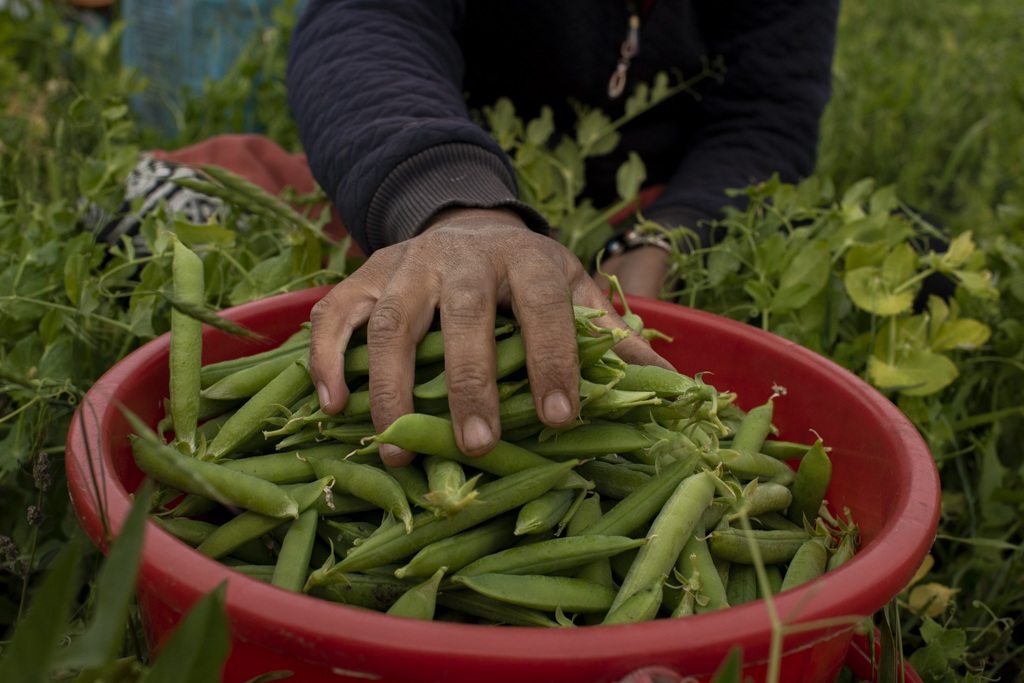
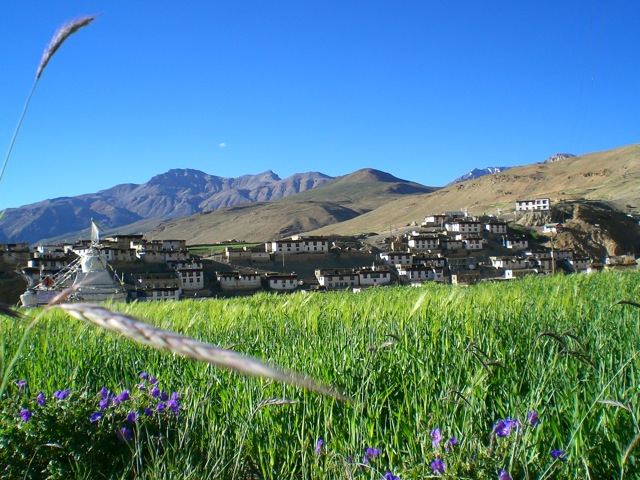
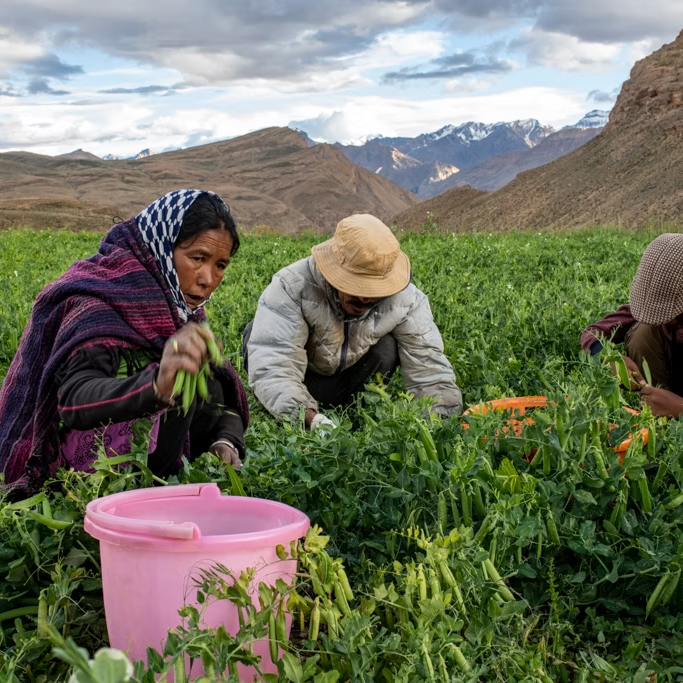
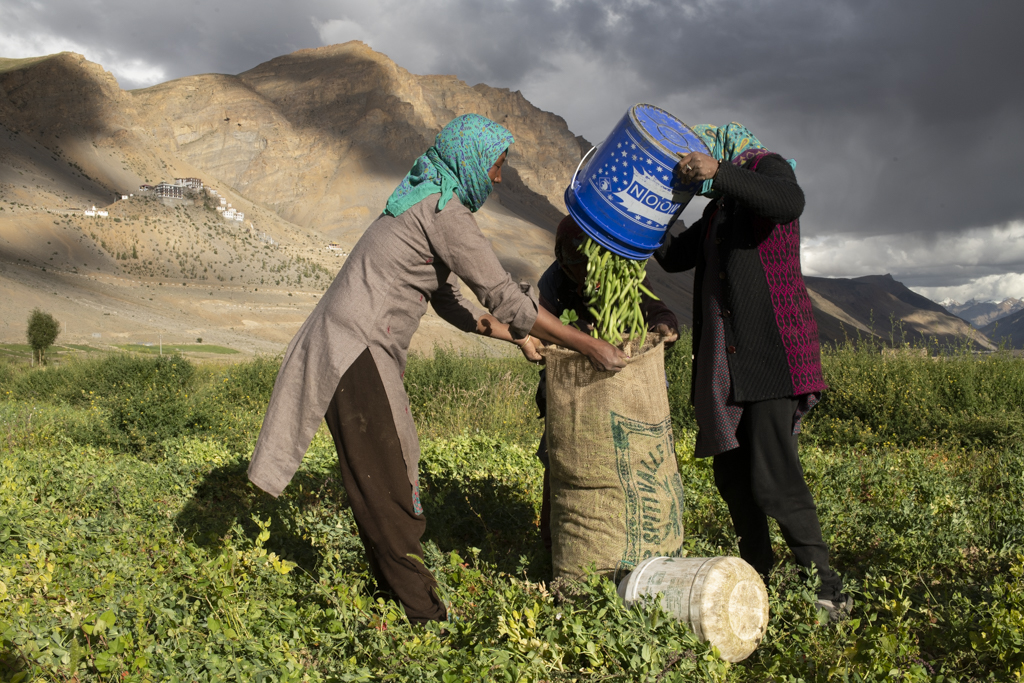
Pea harvest in Kee village | Photo: Prasenjeet Yadav

People and their land

Parts of Lahaul-Spiti and Kinnaur that fall above an elevation of 2500m are home to traditionally agro-pastoral societies. People who have combined farming and horticulture with rearing livestock as a dual source of living. Success at growing barley, a crop that can tolerate cold temperatures, allowed people to farm and hence inhabit high-altitude areas about 3,600 years ago. Agricultural land was historically held through semi-feudal arrangements – by the appointment officials who were given powers to collect taxes. Over centuries the traditional crops ranged from varieties of barley (at least four varieties that were locally known as kneu, soa, nenak, and eumo), to buckwheat (known locally as ogla and phafda or kaathu), and black peas. Horticultural produce included varieties of apricots and apples, especially in Kinnaur. In addition to helping plough farms, livestock were a source of many essentials: protein, dairy, wool and manure. The region’s remoteness and sparse population made cooperation in farming essential. Clear rules to manage water, pastures and other essential village common resources have been practiced for centuries. Farming enabled subsistence with surpluses being traded.  Such trade involved barter that was largely regional. Annual trade fairs held at Ladarcha (Spiti), Kullu and Lavi (Rampur-Bushahr) provided occasions for such exchange.

Agriculture began to transform soon after India’s independence in 1947. Himachal Pradesh witnessed land reforms in the form of four separate acts that were enacted between 1953 and 1968. In addition to a ceiling on the amount of land that could be owned individually, ownership rights of land were granted to those who had traditionally cultivated them under old semi-feudal arrangements. Land for farming was allotted to landless individuals, a landmark reform referred to as nautor. Even though there were discrepancies in land holdings and allotments, the laws ensured that almost every household owned land for agriculture. Another key factor that went on to influence farming was the setting up of cooperative societies with the aim of preventing outsiders exploiting local people because of their isolation.

Illustration: Nawang Tankhe

Lahaul

Set to the north-east of Manali across Rohtang La, Lahaul was the most remote part of this region remaining cut-off during winter. Enterprising Lahaulis set up an informal Muleteers  society in Manali in the 1950s, where they used to come in the winters to rent mules or to work as labour. This arrangement let them fix rates they would charge and prevent any exploitation. This ran successfully without any formal support or intervention until the road over the Rohtang La was built in 1967. A Kuth Cooperative Marketing Society, established in 1959, was the first registered cooperative set up by Lahaulis in Manali in order to stabilise kuth prices and explore new markets. The roots of the kuth plant, introduced in Lahaul around 1925 from Jammu and Kashmir, has medicinal values and is a non-perishable item. Kuth cultivation was a success and probably brought local Lahauli farmers their first substantial financial gain by planting 10–15% of their fields with kuth. Though kuth prices started to decline in the 1960s, this success marked the start of the region’s experiments with commercial crops which continues to this day.
Potato was first introduced into Lahaul in 1860 by Moravian missionaries. Local climatic conditions offered an advantage as it enabled Lahualis to produce off-season vegetables. In 1965, as kuth prices began to fall, a meeting was held in Keylong where a few leading farmers of Lahaul held discussions with scientists and potato growers of Punjab. Some potato growers from Jallandhar assured the purchase of their entire first crop at rates that would give farmers higher returns than kuth. All preparation for potato cultivation were completed months before the closing of the Rohtang pass in winter. In 1966 the first batch of disease-free seed potato was exported from Lahaul. This led to the formation of the Lahaul Potato Cooperative Marketing Society (or simply, Lahaul Potato Society) in 1966 with just 20 farmers. Farmers had soon realised that potato cultivation would not be financially viable without collective action to influence the market to which all the farmers were vulnerable. The Lahaul Potato Society thus set out to procure, store and market agricultural and horticultural produce of the region. It worked closely with the Central Potato Research Institute that had come up in Shimla in 1956.  These collaborations brought in knowledge of contemporary farming techniques and access to fertilisers. By the mid-1970s potato became the most prominent produce of Lahaul, with very small portions remaining under barley and buckwheat. Seed potatoes were being marketed to Gujarat, West Bengal and Maharashtra with small amounts going as far as Pakistan, Bangladesh and Sri Lanka. By 1975 the Society was not only financially viable but it also started gathering assets and venturing into other services. At its peak, the Lahaul Potato Society was India’s second largest cooperative after Amul.
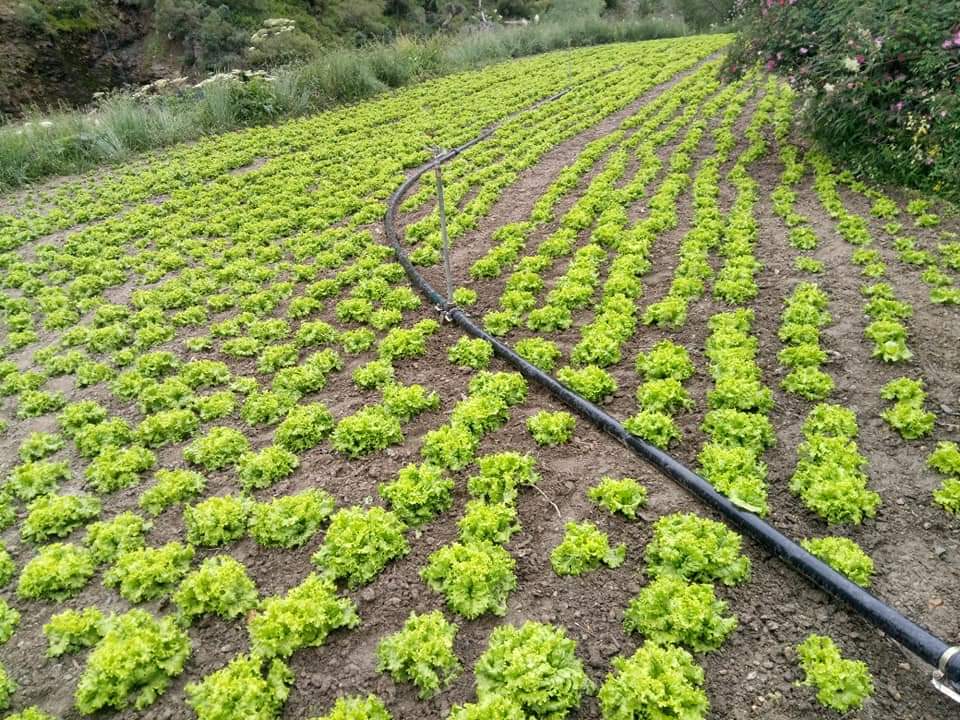
When prices of potatoes fell in 1979-80 and again in 1984-85, the Society lobbied with the State government to ensure a support price for their produce. The Society supported diversification through the promotion of hops cultivation in 1973-74, and later with the introduction of green peas in 1984. Cultivation of green peas picked up in the following decade, with farmers switching from potato to peas. Since green peas was perishable, the Society’s role in its marketing remained limited to offering a support price in the case of a crisis. Farmers initially sold their produce in markets directly by taking heavy risks. In time, private buyers emerged who bought green peas directly from the farms at attractive prices. This led to the expansion of green peas cultivation across Lahaul, and to surrounding areas. Currently, Lahaulis grow newer off-season vegetables like cauliflower, purple cabbage and iceberg (lettuce) which are more profitable than green peas and are also procured by private buyers. Potatoes are still cultivated, but its acreage remains marginal. The Lahaul Potato Society remains active in the region and continues to work on the principle of pooling prices, costs and risks. In its nearly 60 years of running, the Society managed to prevent political influence in its administration with its management focusing on the broader collective benefit of Lahaulis. Over the years, farming in Lahaul transformed from being a subsistence-based livelihood to a lucrative cash-crop based occupation.

Organically grown iceberg lettuce in Lahaul | Photo: Tashi Angroop

Kinnaur

Within Kinnaur we especially focus on the Hangrang valley that falls in upper Kinnaur at elevations above 2500 m. Set around the confluence of the Spiti river and Sutlej, farming in this region faced multiple challenges due to its remoteness even though it remained accessible in winter. Subsistence based farming and livestock rearing were the mainstay in the region, alongside active trade with Tibet via the Shipki La. The Indo-China war of 1962 led to the development of infrastructure along the border, but affected trade ties that the locals traditionally had with Tibet.
Apple was first introduced in Himachal Pradesh around 1916 and soon these parts were identified for horticultural development. Kinnauras were encouraged to grow temperate fruits such as apples, cherries, apricots, pears, almonds and walnuts. Kinnaur did grow potatoes, also registering a Society in 1962 and one in 1981 for upper Kinnaur, but its cultivation almost always remained marginal. Upper Kinnaur switched to green peas as a cash crop and by the late 1980s, its production was picking up. Kinnaur’s economic switch to a cash-crop based economy, thus began to take shape from the late 1980s.

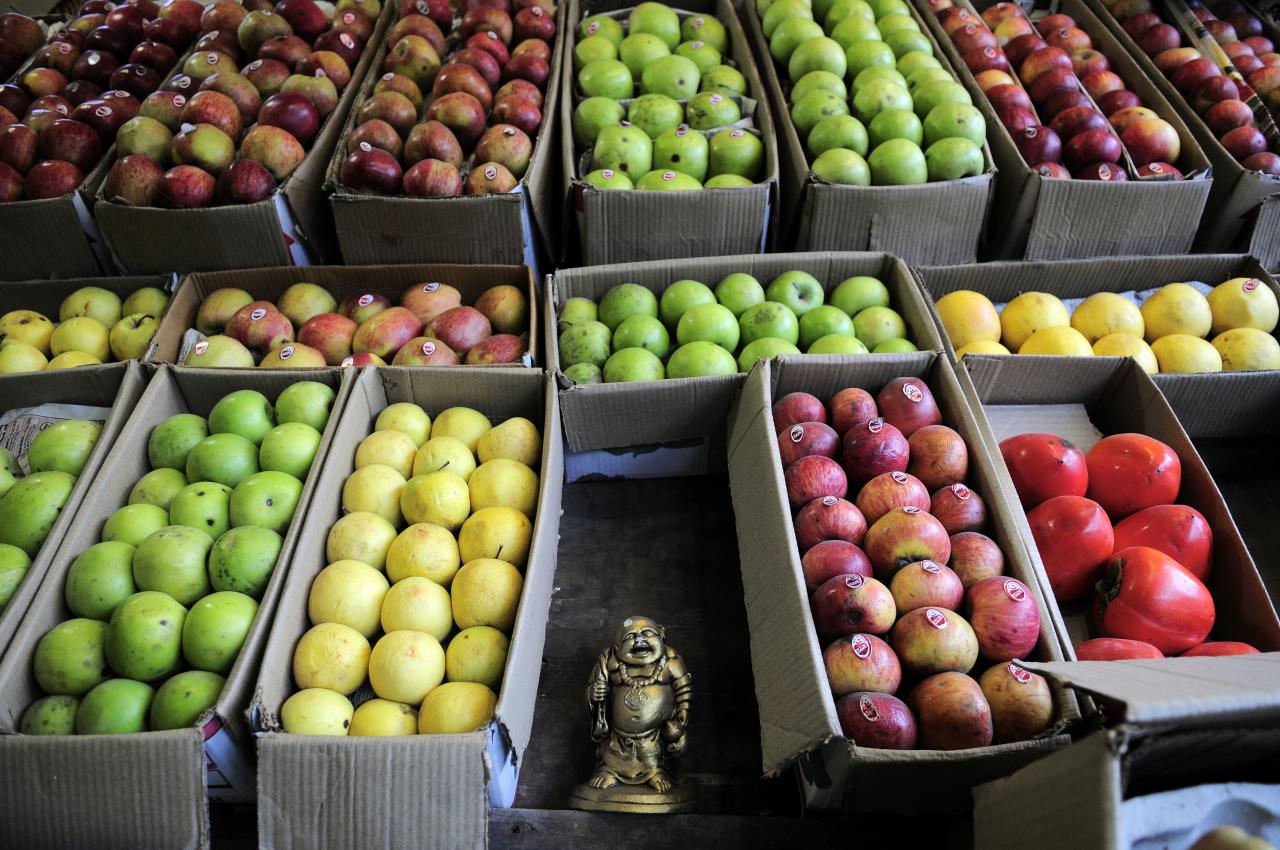
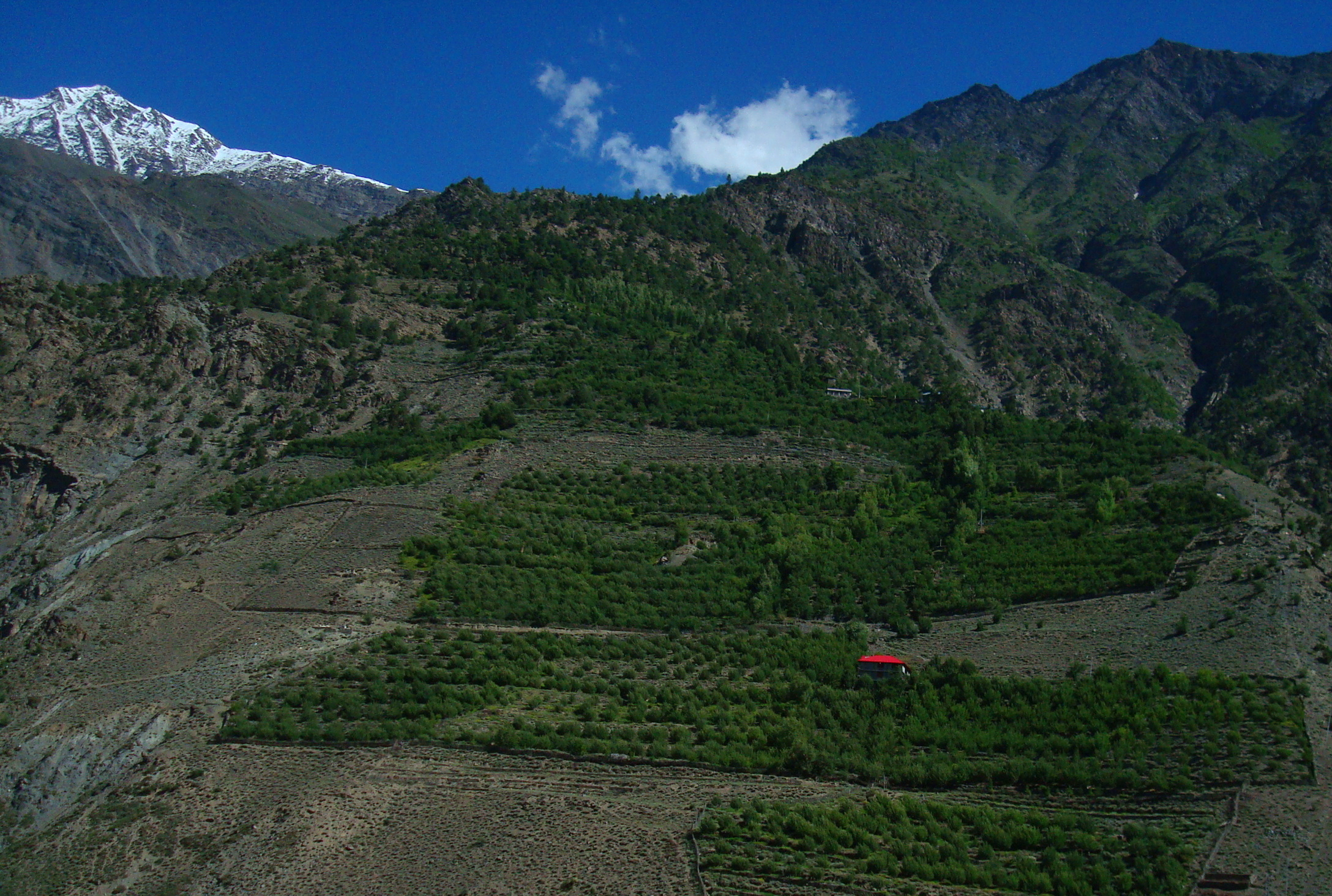
In 1988, about 70% of cultivable land in Kinnaur was still under traditional crops such as buckwheat and barley, with green peas providing cash. Hill slopes had begun to be occupied by apple, which took up to 15 years to bear marketable fruits. By the mid-1990s, apple became a prominent source of livelihood. With the adoption of apple, came newer techniques of orchard management and the introduction of synthetic fertilisers and pesticides. Today, green peas cultivation remains restricted in pockets as apple plantations are fast replacing them. Farming in upper Kinnaur has almost completely switched to horticultural produce, with a rising demand for land that can be brought under apple production. This boom in apple production has become possible because of the warming of temperatures due to which the apple belt appears to have migrated higher to this cold and dry mountain zone. It is a rare example of how changing climate may have created opportunities for the community, while also creating several vulnerabilities.

Apples of Himachal Pradesh | Photo: Wikimedia Commons

Spiti

Set between Lahaul to one side and Kinnaur to the other, Spiti is probably the highest and coldest part of this region. Though technically Spiti remains accessible in winter, it was the region farthest from any large town of prominence. This reflects in the fact that while Spiti too is moving from subsistence crops to cash crops, its transition is the most gradual.

The two prominent crops of this valley were barley and black peas. Spiti too experimented with potato and set up a Society in 1977, but potato production did not pick up as did in Lahaul. Many Spitian farmers felt that this was likely because the harvest of potatoes overlapped with that of barley, which was a more essential crop for subsistence. Spiti eventually began to experiment with green peas, and in the 1990s Spitian farmers traveled to Delhi for the sale of their produce. The production of green peas picked up significantly from the 2000s, when private buyers started to purchase their produce from their farms. Around 1990, barley was sown on 55% of the arable land, while peas occupied around 30%. By 2009 barley had fallen to 43% while green peas had risen to 51%, mainly by reducing cultivation of other marginal crops like black peas, wheat, masur dal, rajma and mustard that were cultivated for personal consumption. Today green peas are being cultivated in more than 75% of the fields, and most locals’ cultivating barley occasionally in a few years to fulfil household demand. The success of apple in the villages closer to Kinnaur has excited farmers to also start experimenting with apple plantation in the hope that apple orchards may eventually move even higher than Kinnaur. In 2023, a few farmers from Kee village succeeded in growing sample apples at an elevation of nearly 4000m, which has further increased hopes.

While Spiti is following a similar trajectory to Lahaul and Kinnaur in switching to cash crops, there is one aspect in which it still remains traditional. While Lahaul and Kinnaur have adopted the use of synthetic fertilisers and pesticides, Spiti has largely resisted this switch. While a decreasing interest in livestock rearing may have led farmers of Lahaul and Kinnaur with little choice, livestock rearing persists in Spiti and most farmers are skeptical of introducing synthetic supplements. Farmers buy organic livestock manure from as far as Changthang in Ladakh and are also buying poultry manure from the plains.

Apple orchards on the hill slopes of Kinnaur | Photo: Wikimedia Commons

Agriculture – a story of constant change

Agriculture in the high mountains of Himachal Pradesh has evolved continuously. Improving access and connectivity made it possible for farmers to take their produce to markets. With connectivity improving over the years, farmers have taken risks with growing perishable cash crops. Sometimes these risks also bring major losses, as they did in 2023 when unforeseen weather events caused widescale damage to infrastructure affecting transportation. However, in regular years the financial returns can be attractive. The advent of technology has further led to the adoption of locally relevant technical solutions. Farmers have diversified cropping and have been open to experiments, which have brought them financial rewards. They have balanced between selling their produce to cooperatives and private buyers. Rising incomes have let them broaden their aspirations, with younger generation getting opportunities for better education and greater exposure. Access to cash has also allowed farmers to hire labour, which was previously not possible. Many parts of Lahaul are now experimenting with various forms of contract farming where the profits are shared between the landowners and the labour who manage them. Remoteness may have brought out the dynamism of the farmers of Lahaul-Spiti and Kinnaur. The success of early experiments with cash crops by a handful of farmers paved the way for the entire region. Locals were aware of the risks they were exposed to on account of their remoteness, and they countered this challenge by setting up institutions and arrangements that distributed both the risks and rewards. In the process, cultivation of traditional crops has declined and is now limited to very small pockets.

Unlike several other Himalayan regions where farming is in severe decline, farming retains its significance in the region. With nearly all households of the region involved in agriculture, it forms a key source of income. And with almost all households owning land parcels on account of land reforms, almost every family has benefited financially, even though the benefits may vary with the size of land holding. This reflects in the fact that the districts of Kinnaur and Lahaul-Spiti rank second and third in terms of per capita incomes among the districts of Himachal Pradesh, and are well above the average per capita income of the country. There is a continuous demand for land to be brought under cultivation through the extension of nautor rules. A lot of this commercial success has also been possible because of the local climate, which has allowed these regions to supply off-season produce that fetch a premium. But with rising uncertainty in weather patterns, farmers and farming stand increasingly exposed to greater risks even as people’s relation with their land remains strong.

1024 683 Multiple Authors
Changes in Agriculture (Ladakh)
Illustration: Nawang Tankhe

Changes in Agriculture (Ladakh)

The rapid shift away from agriculture to other economic activities is a common trend in many agrarian economies globally, often driven by factors such as urbanization, changing lifestyles, and economic opportunities outside the agricultural sector. Agriculture in Ladakh is no exception.

In the traditional Ladakhi farming and food system, the sun provided the primary energy, enabling plant growth, muscle-based labour power and fast-flowing water for milling and irrigating. The fertility of the soil and crops came from recycling of manure and compost (lut, chulut, and the like) into the fields and from minerals in the glacial melt-water. ‘Packaging’ – if any – was in the form of hand-made woolen sacks, wooden and clay vessels, willow baskets, and masonry granaries, all of which could be safely returned to the soil after they wore out. Transportation of the crops was done with muscle power, and cooking done with local renewable fuels like dung cakes or wood sticks. Care was taken to conserve pasturelands through rotational grazing, and farmers tried to minimise harm done even to insects in the fields. The ecological footprint – meaning total ecological impacts including energy and water consumption, waste generation, etc. – was very low. In current terms, we could say that the traditional Ladakhi farming and food system was solar-powered, zero-external input, zero-waste, regenerative, closed-loop, and sustainable!

Today, while much of the traditional farming and food system continues to exist, it is steadily being eroded by a number of profound socio-economic changes. The environmental impacts of these changes are increasing year by year.

One of the important changes has been the decline of villages due to various reasons and the decline in farming-pastoralism systems that sustained them for centuries. The growth of tourism, the army, and competitive education have combined to drain young people, and young men in particular, out of the villages and into Leh, or even further away. As a result, there is less total labour available, and more farming work has fallen on village women and paid labour. Many fields that were once lush and green in the summers today lie fallow for lack of people to work them. With fewer people, livestock herds have decreased significantly, and in the case of goats and sheep nearly disappeared from many villages. While this change may have benefitted wild herbivores to some extent by reducing competition for forage, it has also reduced the amount of rich, organic local manure available for soil and crop nutrition. To make up for this, many farmers turn to the use of synthetic fertilisers which pollute both water and air, and are very energy-intensive to manufacture from fossil fuels.

Crops & Water

The decline of agriculture is also seen in the reduction of diversity in crops including pulses, cereals and pseudo cereals like buckwheat (although efforts are slowly being made to bring back buckwheat). Fewer local pulses like the traditional black bean in Ladakhi fields and kitchens diminishes the health of the local diet as well as local soils. Pulses naturally fix atmospheric nitrogen into the soil, so when they are planted there is no need for nitrogen fertilisers. Without them, however, an important source of natural fertility is lost. In terms of oilseeds, whereas Ladakhis formerly cultivated local mustard more extensively and produced much of their own edible oil, today mustard farming is also declining. Commercial edible oils, packaged in plastic bottles and trucked in from the Indian plains are now widely used in Ladakhi kitchens.

In the 14,000-foot village of Gya, farmers used to cultivate different varieties of barley because the area’s climate was conducive to their growth. Because of the region’s low temperatures, wheat is rarely grown in Ladakh’s eastern region. The people in that same region are currently cultivating over thirty-six to thirty-seven different kinds of grains and vegetables. Acho Urgain, from Gya village, says that this may be because he has access to a wider range of plants these days. He is cultivating new crops like quinoa, and Tse Tse (Foxtail millet), which are native Ladakh millets that are rarely grown these days. Since 2014, green peas have been grown extensively throughout Ladakh because of factors including climate change that favours such crops, but more importantly because of increasing commercialisation of agriculture, as green peas have high market demand inside and outside Ladakh. A variety of relatively novel vegetables are today grown, such as cauliflower, cabbage, beetroot, and various turnip varieties.

One of the many changes in agriculture that people in the mountains are facing is a lack of water, especially during times of great need.  It is imperative that water be given to the fields by the end of March or the start of April. Variable weather patterns cause glaciers to hold onto water by not melting during the seeding season. June 21st marks the change of the days, so in July there will still be a water shortage. Another impact of climate change on agriculture is from increasing likelihood and severity of glacial lake outburst floods, which have had catastrophic impacts on downstream villages, such as in Gya village in 2007, 2009, and 2014.

Land use

The perspective of agri-entrepreneur Rinchen Yutol from Reetsot in Ladakh highlights the rapid changes in the past decade, which may present both challenges and opportunities.

The conversion of agricultural lands into concrete structures poses a significant challenge, and reversing this process is often impractical. This irreplaceable loss reduces self-reliance in food and increases dependency on imported foods. Such dependency increases vulnerability in the case of any disruptions (like fuel shortages, or road closures) in the transportation network across the Himalaya. Additionally, the fragmentation of agricultural lands due to nuclear families can further reduce the overall agricultural land use.

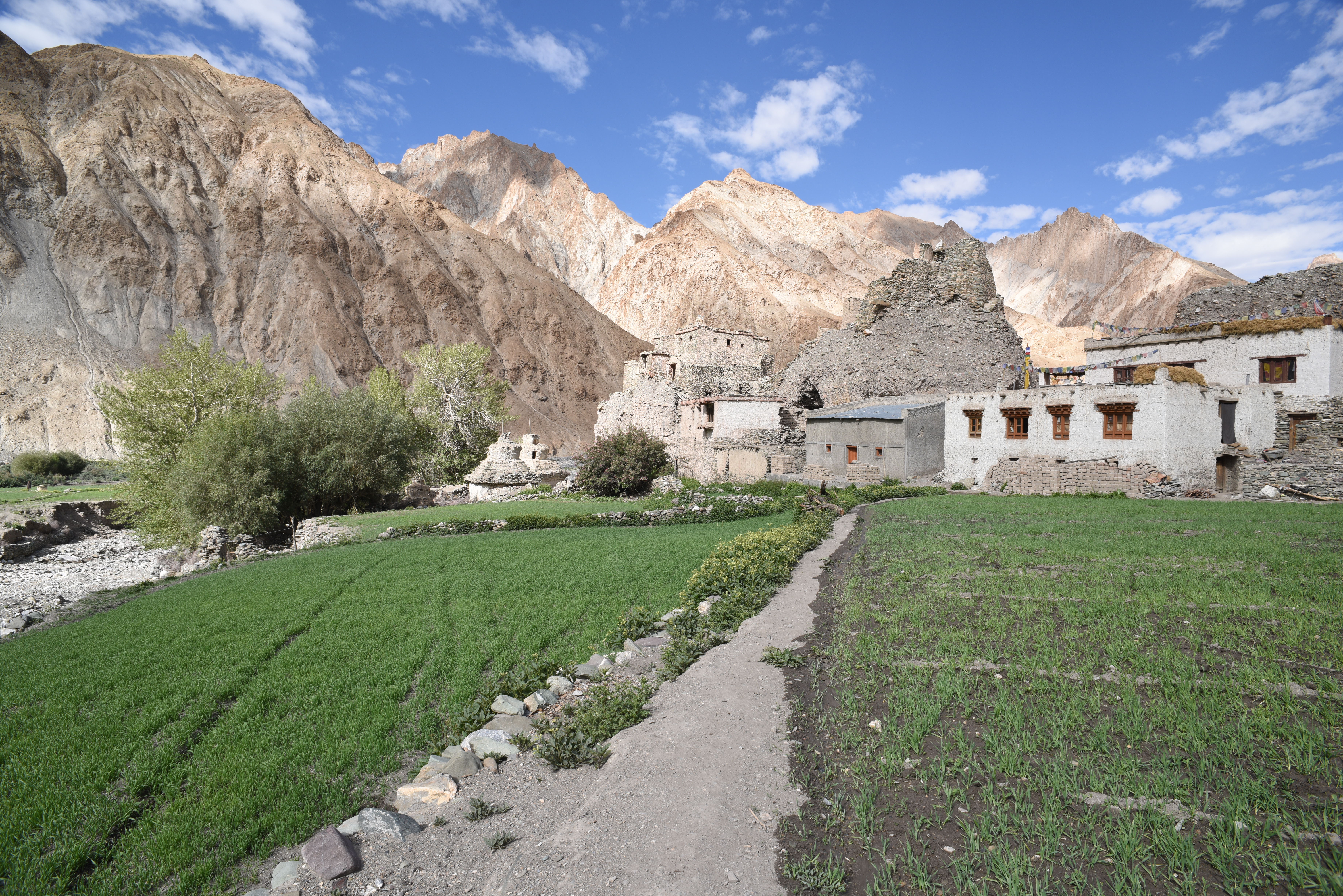
Chortens and fields of Markha | Photo: Wikimedia Commons

Fertilisers

Synthetic fertilisers have been used in Ladakh since about the late 1970s, supplied by the government at highly subsidised rates. Three main synthetic fertilisers are used: urea, DAP (diammonium phosphate), and MOP (Muriate of Potash/potassium chloride). Data from the Agriculture Department and Mission Organic Development Initiative of Ladakh show that in general, quantities of synthetic fertiliser use are decreasing in Ladakh. This trend is reflective of the Hill Council’s new vision to make Leh District fully organic within 10 years. This is very encouraging, since the more fertilisers are used, the more they disrupt the availability of natural nitrogen in the soil, which requires more fertilisers – a chemical addiction!

Besides the loss of livestock manure, the shift to flush toilets and septic tanks accompanying tourism – especially but not only in Leh – is also depriving the soil of rich human manure from traditional compost toilets.

To supplement local supplies, there are new initiatives to bring animal manure from Changthang for use in villages in the farming districts of Ladakh, and the government is also importing organic manure from Punjab. While this is certainly a welcome change from chemical fertilisers, transporting manure and compost also carries an environmental cost in terms of fuel consumption and diesel smoke exhaust. A future challenge will therefore be to generate organic manure and compost closer to where it is to be used, to reduce transport costs and pollution, and to keep valuable local nutrients recycling through local soils. Aggressive promotion of compost toilets, restaurant and residential food scrap collection and composting, and other initiatives could play a role in regenerating the local compost economy.

Seeds

One of the most crucial factors to consider when examining the changes in any region’s agriculture is the seed. The availability of native or local seeds is impacted by the decline in production of native or older crops. The majority of seeds for vegetables that are currently offered by the government or in the market are or hybrid seeds, which have the potential to alter the agricultural landscape of Ladakh, and have implications for the food sovereignty of the region and the economic independence of its farmers.

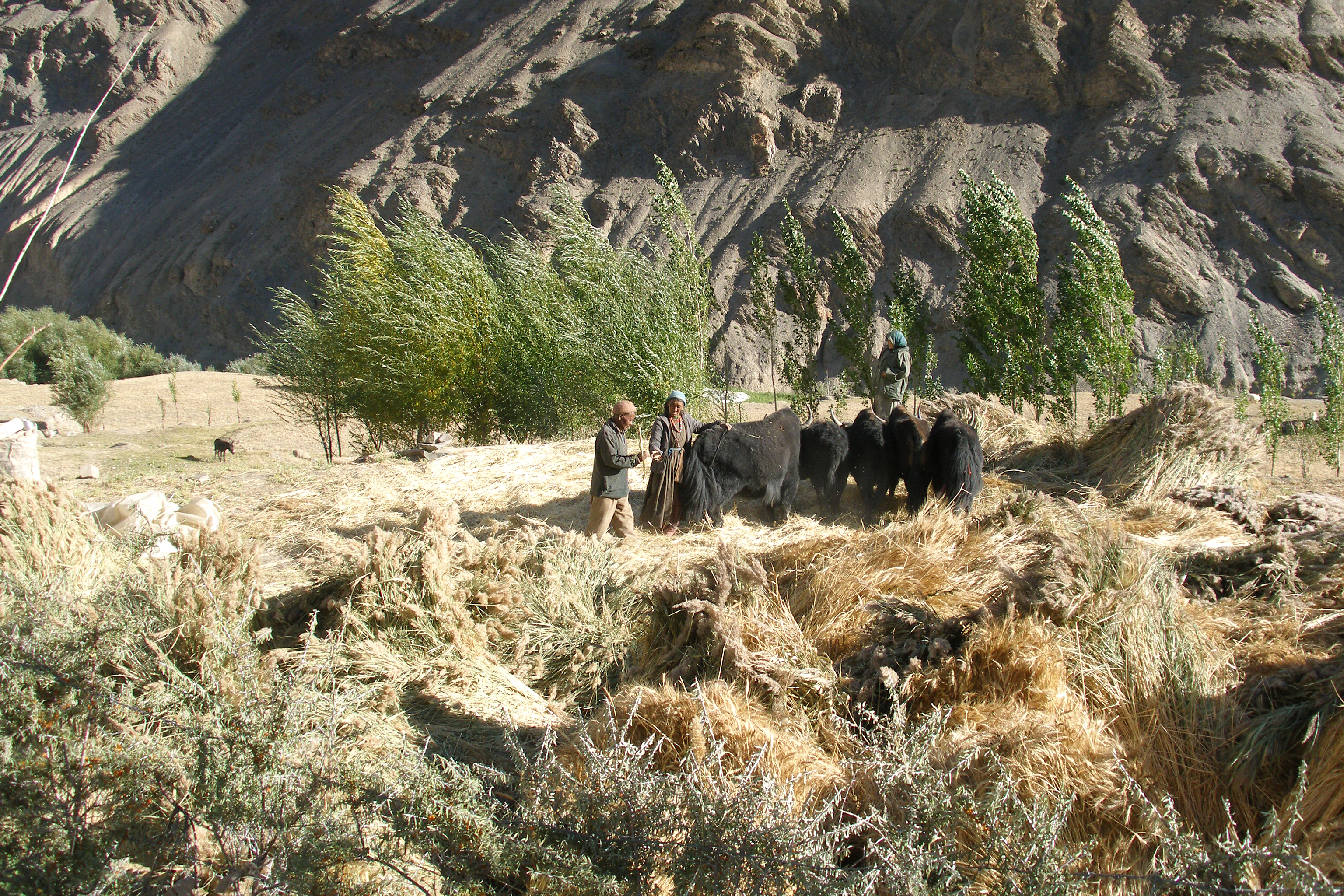
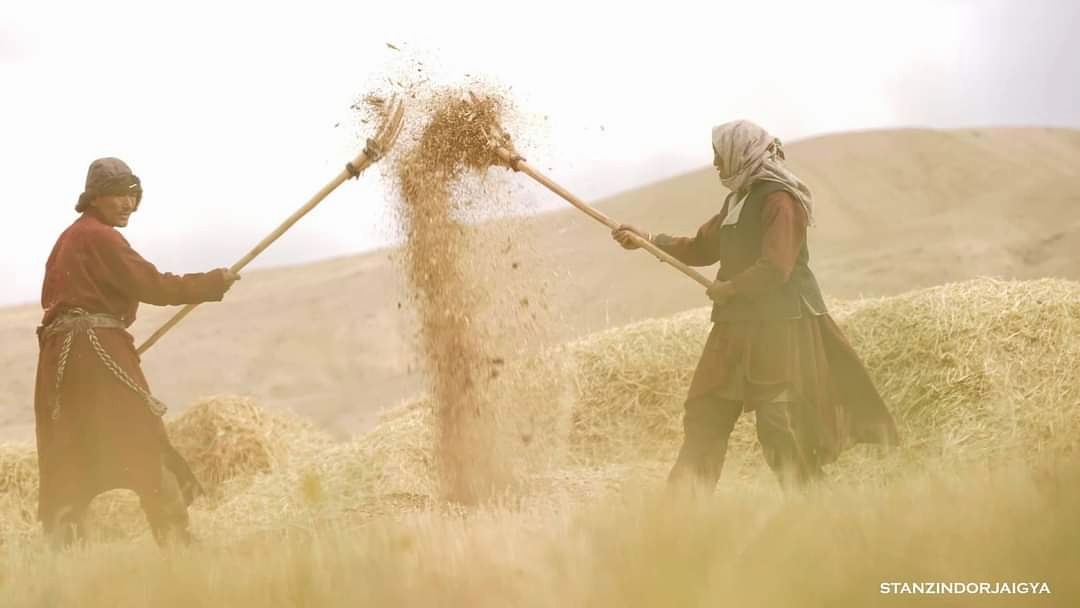
Traditional threshing of harvest in Lamayuru | Photo:Wikimedia Commons

Mechanisation

Dependence on fossil fuel energy has also been increasing in agriculture and pastoralism, as traditional tools, draught animals and techniques are replaced by mechanical, gas-powered threshing machines, mills, ploughs, tractors, etc. In Changthang, pick-up trucks and jeeps are steadily replacing draught animals, which impact the topsoil of the rangelands. This transition also increases dependency on the money economy and outside jobs to pay for hiring or buying the machines and the fuel to power them.

Conclusion

The shift away from the traditional farming and food system in Ladakh, combined with forces like tourism, is clearly having very undesirable environmental impacts. If both public health and the environment are being degraded by this shift, then maybe it is time to rethink, change direction and regenerate the local food economy. How could this happen? The Hill Council’s commitment to making Ladakh an organic farming region is a very encouraging first step. Additionally, the optimism and enthusiasm shown by individuals like Acho Urgain and Rinchen Youtol are encouraging. Their deep understanding of the importance of agriculture in the current era, both economically and beyond, suggests a potential for positive change. Initiatives that focus on sustainable and innovative agricultural practices, coupled with educational programs to raise awareness about the significance of agriculture, can contribute to the revival and retention of this essential sector. In what other ways can the government and local people support such a change, discouraging packaged junk food while encouraging a return to traditional crops, restoration of livestock herds, village renewal, and so on? How can arable land be protected in perpetuity for farming? Can modern farm machines be powered by local, renewable energy? How can young people addicted to junk food rediscover and revalue healthy local foods? What role can tourists play in supporting local, organic food and farming? These and many other questions will need to be urgently answered.

1440 960 Alex Jensen
Living at the Edge: Plants of High Himalayas
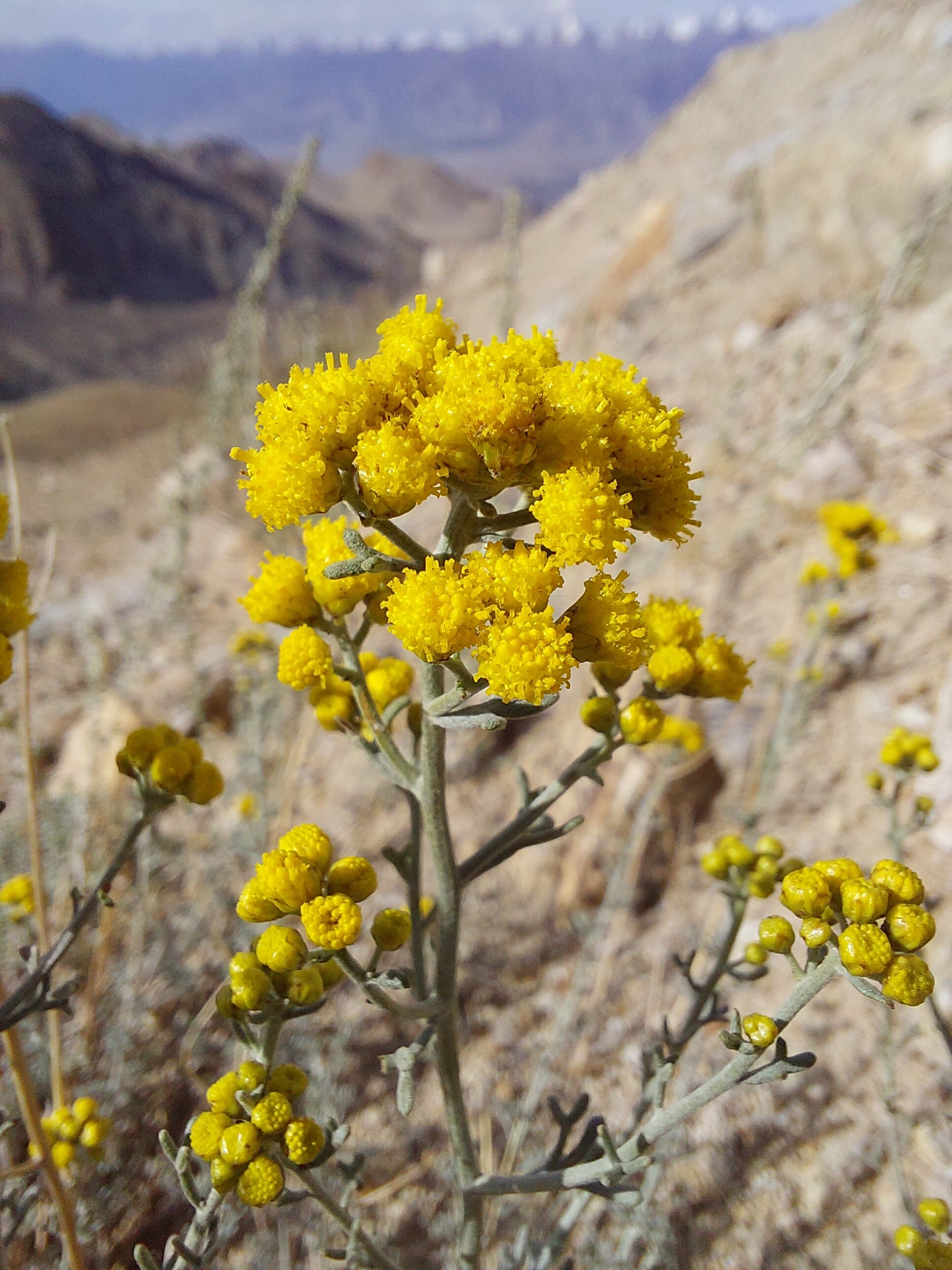
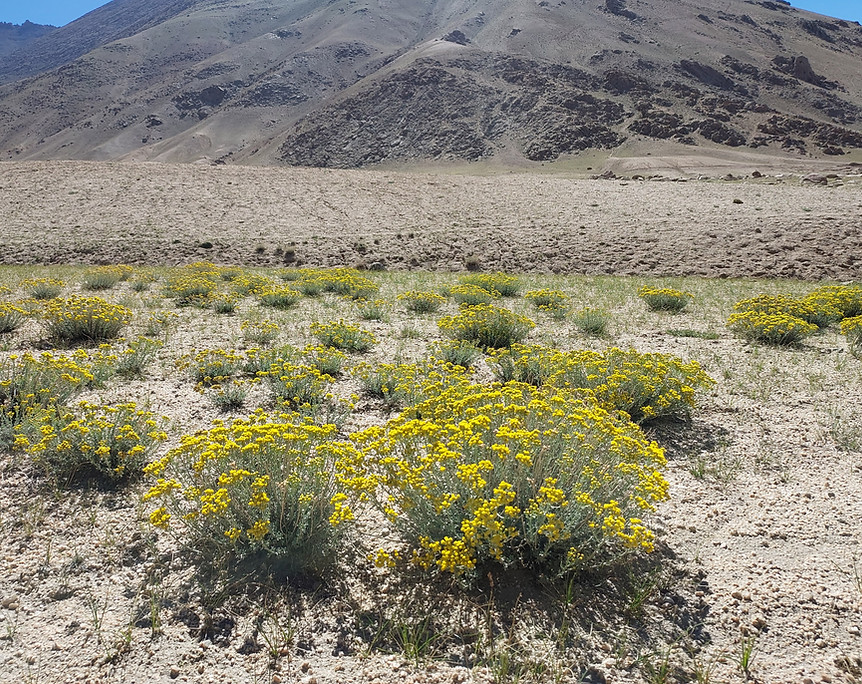
Ajania fruticulosa | Photo: Thinles Chondol

Living at the Edge: Plants of High Himalayas

Ajania fruticulosa | Photo: Thinles Chondol

Whenever we say Himalayas, we instantly picture majestic snow-covered peaks, rugged slopes, extreme weather conditions which are characterised by strong winds and a dry landscape. An old proverb says, ‘The land is so barren and passes so high that only the best of friends and fiercest of enemies would want to visit us.’ It is hard to imagine how such an environment can harbour any plant life. However, these mountains support a stunning array of plants adapted to survive at high altitudes and in harsh climates. These landscapes are marked by vast temperature differences, strong winds, high ultraviolet rays, a short-growing season, and rugged terrain of the high Himalayas.

One such high Himalayan region is Ladakh, situated in the western Himalayas, and is the crown of the Indian sub-continent. Relatively untouched and unexplored, Ladakh is a paradise for botanical exploration. Numerous researchers have attempted to study and record the diversity of plant species of this region. A staggering 1,250 varieties of vascular plants have been identified so far.

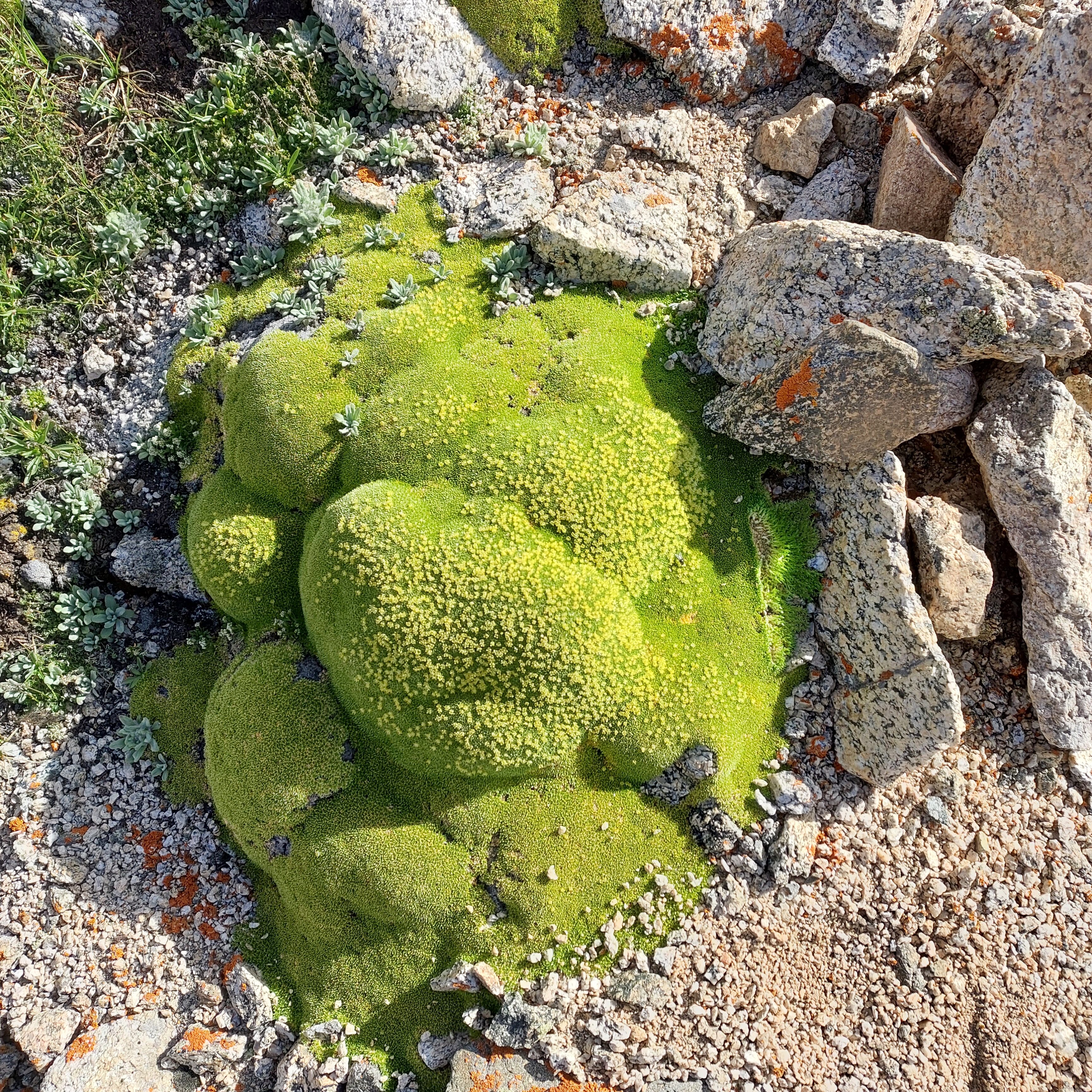
Acontholimon lycopodiodes | Photo: Thinles Chondol

Just as we humans have a circulation system that delivers oxygen to our cells and takes away waste, several plants have a highly developed built-in transport system for nutrients and water. Such plants are called vascular plants. Vascular plants in the high Himalayas have evolved specialised mechanisms that let them survive in extreme weather conditions.

Plants grow in a variety of habitats in the high Himalayas: arid steppe, severely dry semi-desert and desert, alpine grasslands and screes, riverbanks, and subnival, and wetlands.

Steppes are characterised by hot and arid conditions. Plants growing in steppes are adapted to survive frequent droughts.

Alpine habitats are characterised by colder and moist conditions, comprising of grasslands and scree.

Subnival habitats occur just below the permanent snowline, and they are characterised by extreme cold and moist conditions. Temperature in such habitats may drop to sub-zero even during the summer months.

Semi-desert and desert are severely hot and dry habitats that comprise of sparse vegetation.

Riverbanks are patches adjoining streams and rivers composed of silts and sand that are held together by the plant growth.

Wetlands are characterised by the presence of excess water resulting from snowfall, melted glaciers or natural springs and lakes, that support plant growth.

Steppe and desert plants face frequent heat and drought stress due to low precipitation and dry conditions. Studies show that such plants have adapted to this stress by behaving like a drought escaper. They grow near streams where water is sufficient or develop drought enduring characteristics such as growing long and deep roots to absorb water.

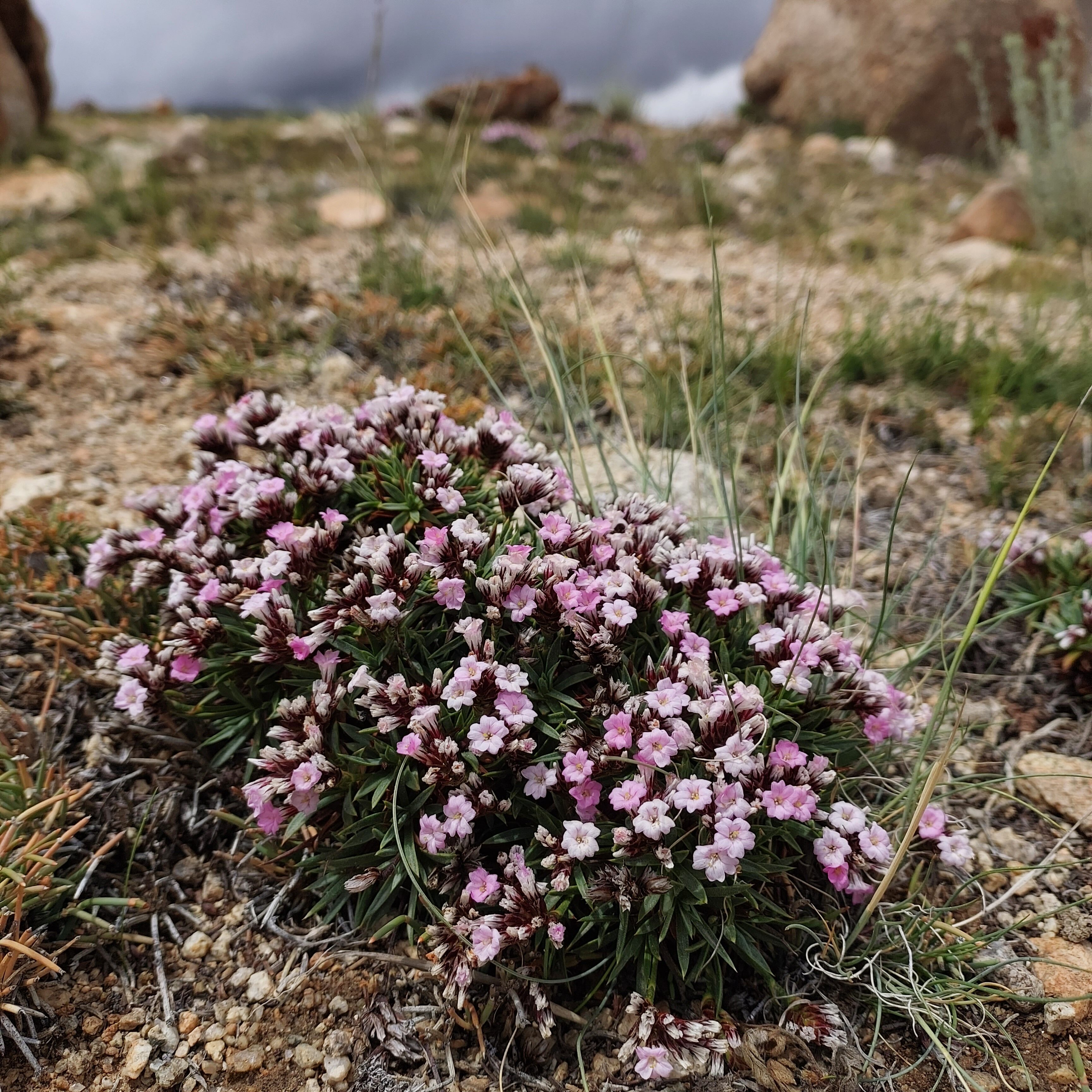
Plants of the alpine and subnival zones face extreme cold stress which limits their ability to grow, restricting their growing period to a short span (usually 3-4 months). Plants in these zones adapt, remaining dwarfed or growing in cushion or mat-form. They grow close to the surface of the ground, where the temperature is relatively warmer.

Plants in high Himalayas are highly specialized and have remarkable adaptations to endure extreme conditions. They tend to have a massive belowground root system that stores the photosynthetic product (carbohydrates) for the prolonged winter months when they are devoid of the photosynthetic organs (leaves). Most of the plants in highest elevations do not grow high, as the temperature near the ground is warmer, and protect them from strong winds. Some also have a hairy-body (with trichomes), which protects them from the strong UV radiation, and act as extreme heat protectant.

Some examples of typical plants from different habitats of Ladakh

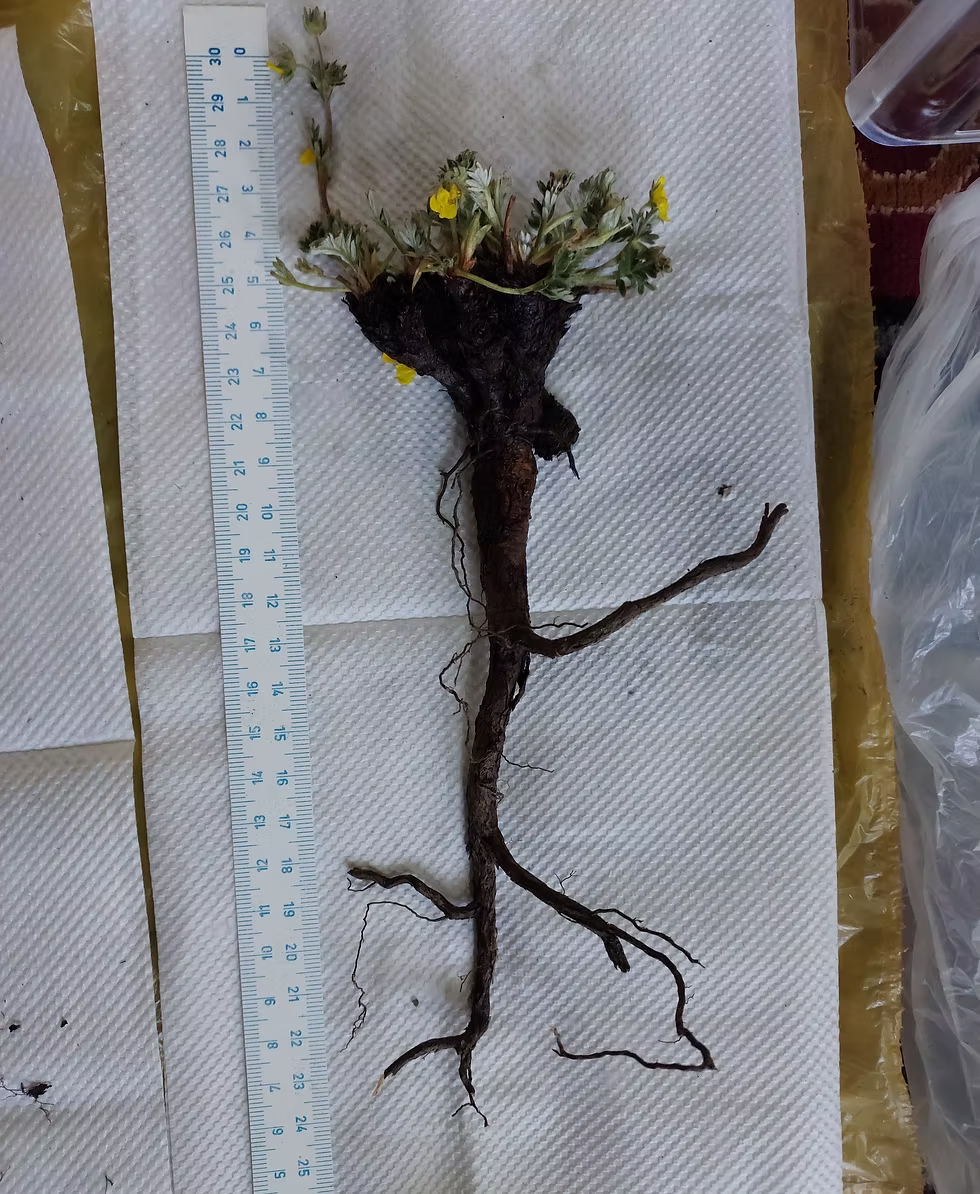
Plants have a very small part of their structure – the stems, leaves, and flowers – exposed above ground. The relatively larger structures – mainly roots and root hairs grow below the ground.  Some plants have rhizomes: a rootlike, thick and usually horizontal underground that produces shoots above and roots below. The deep root system protects them from wind stress by providing anchorage, food storage, and water absorption.

These plants have a specialised architecture with a well-developed belowground system, where they store carbohydrates that help them survive long winters until the next growing season. The small aboveground shoot system helps them tolerate extreme cold. They even develop unique freeze tolerance by moving the water in their cells to the intercellular spaces. These plants tend to replace their organs in extreme conditions and keep their meristematic tissue, which is responsible for plant growth, near the soil surface so that growth can begin when the conditions become favourable again. This is because growing season at these high elevations usually span for only a few months, in which these plants must complete various annual processes such as growth, flowering, reproduction, and so on.

Root cross-section (30 microns) of Penstemon venustus | Photo: Wikimedia commons

Annual secondary growth rings in roots help study growth and determine the age of herbaceous plants. In years with unfavourable conditions this growth is affected leading to narrow rings, while in a growing season with favourable conditions rings growth is wider. This field of study is called herbchronology.

Due to the short growth season, they have slow metabolism, hence most plants here live for more than 2 years. They are very resource efficient and invest less energy in reproductive growth but more in vegetative growth. Many of these plants reproduce clonally, rather than investing in flowering and seed production.

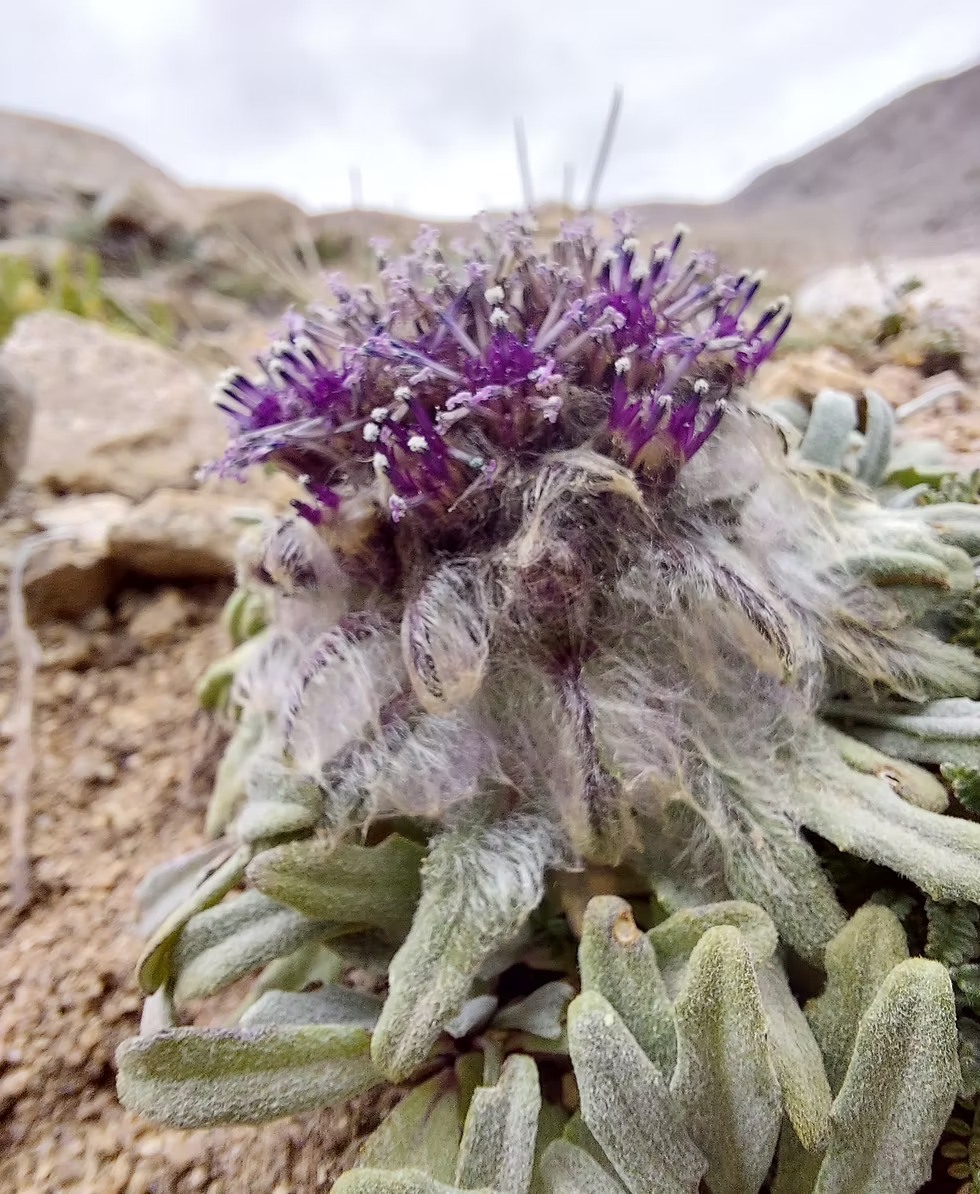
Moreover, there are various other characteristics particular to the alpine plants that help them survive in harsh climatic conditions. These include variable photosynthesis rate, which is usually lowest in the early growing season and highest in the mid growing season. Plants in alpine zones also are hairy, usually with flowers surrounded with bracts. These hairs appear silver-grey or white appearance on the plant (Saussurea gnaphalodes – Common name: Cudweed Saw-Wort; Local name: Yuliang as shown in Box 4), that helps in reflecting the solar radiation, thus reducing the impact of hard sun rays and thermal security.

The Himalayan ecosystem is dynamic and the impact of climatic fluctuations due to global and local change is visible. These are being seen in terms of rising unpredictability in summer and winter precipitation, as well as changing minimum and maximum temperatures. Changes in the natural system impacts plants as their habitats shift or shrink. The growth rate of alpine plants is also impacted by climate fluctuations, which is seen in the form of annual secondary growth rings in their root collar, like we see rings in the woody species.

High Himalayan plants stand as awe-inspiring testaments to the resilience and adaptability of life in some of the most extreme environments on Earth. These unique floras have evolved over millennia to thrive in harsh alpine conditions, conquering freezing temperatures, thin air, and intense sunlight.

1932 2576 Thinles Chondol
Blending Traditional Values with Contemporary Design
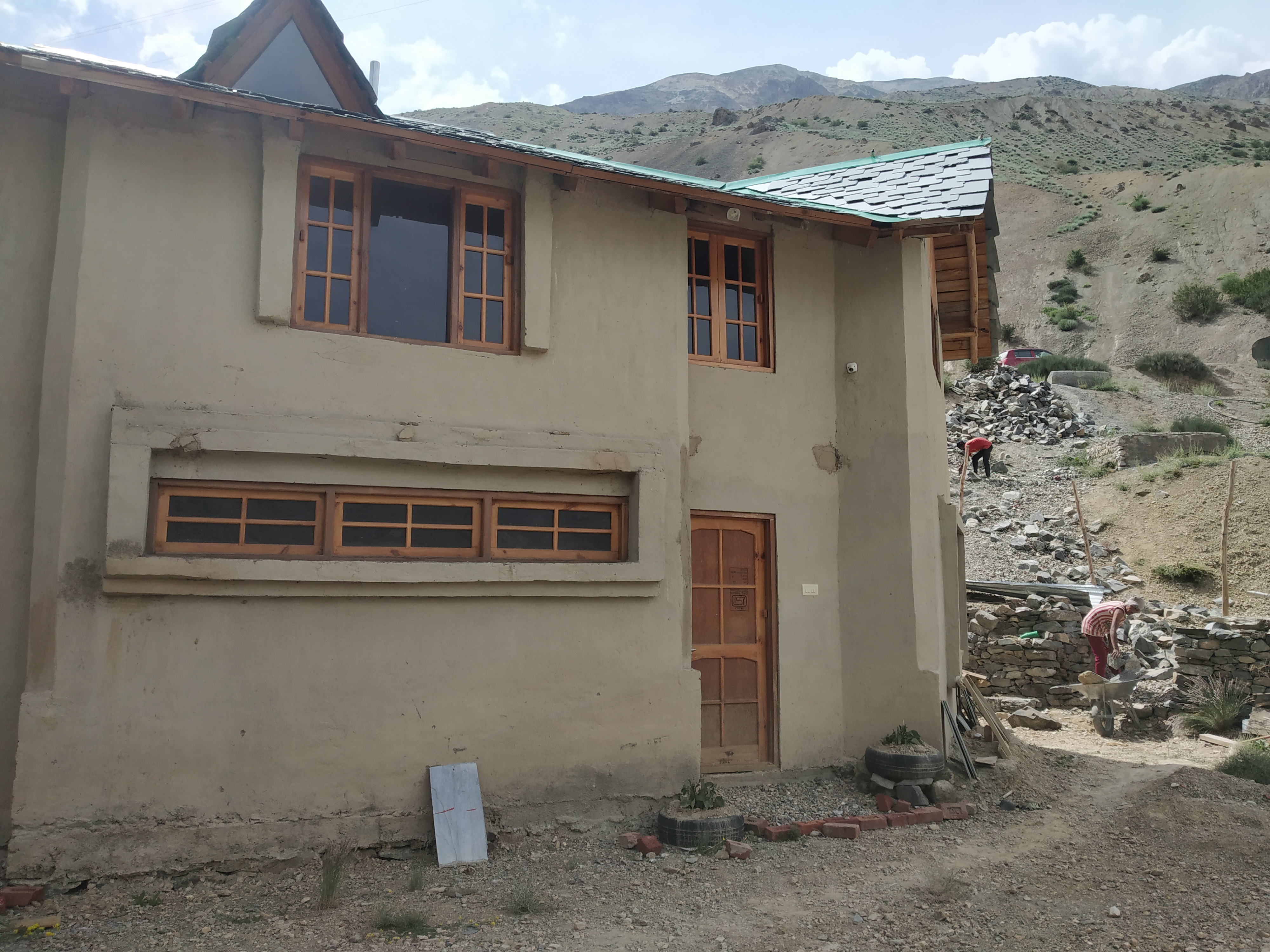
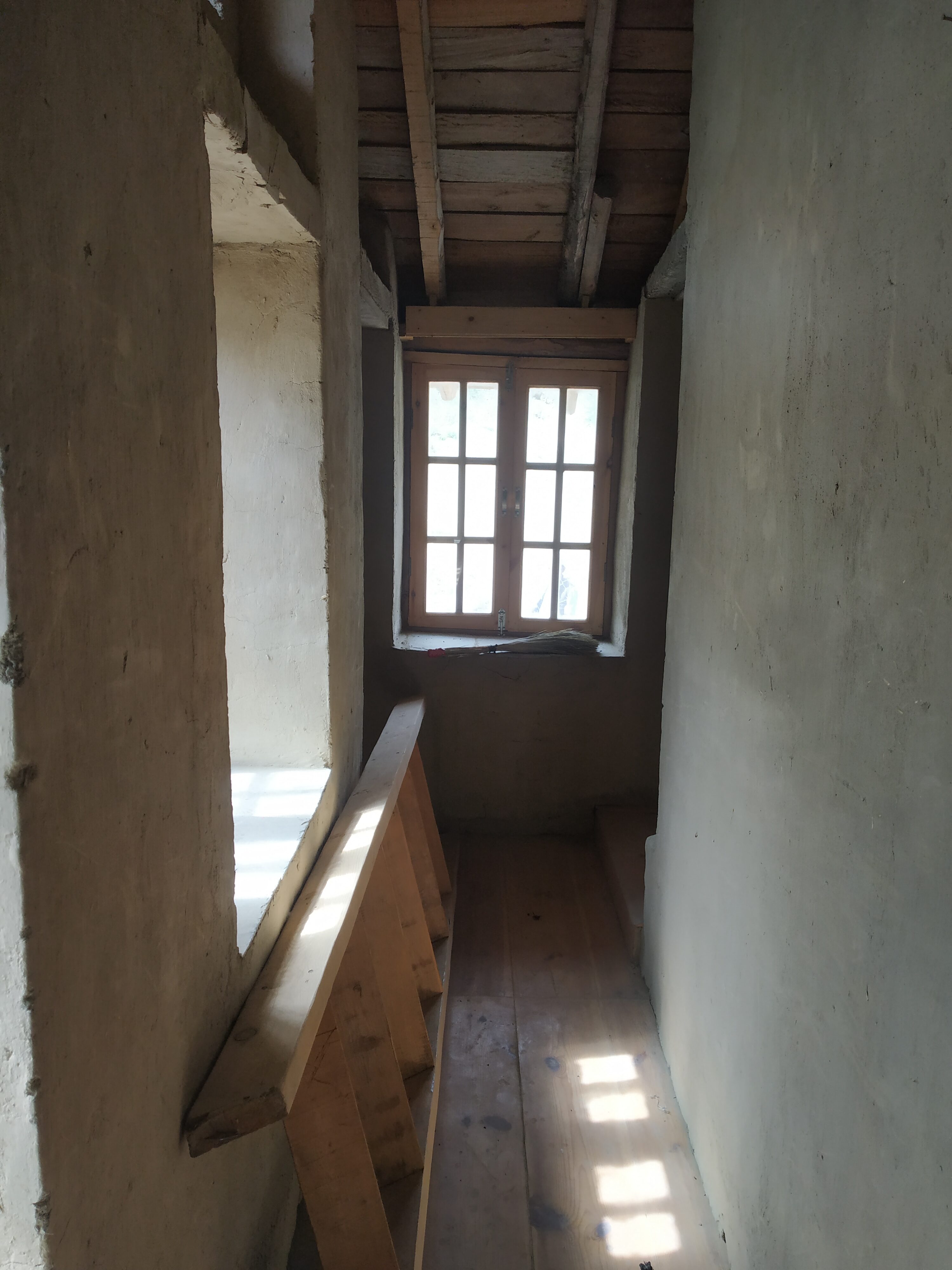
Traditional mud houses in Hangrang valley, Kinnaur  | Photo: Chemi Lhamo

Blending Traditional Values with Contemporary Design

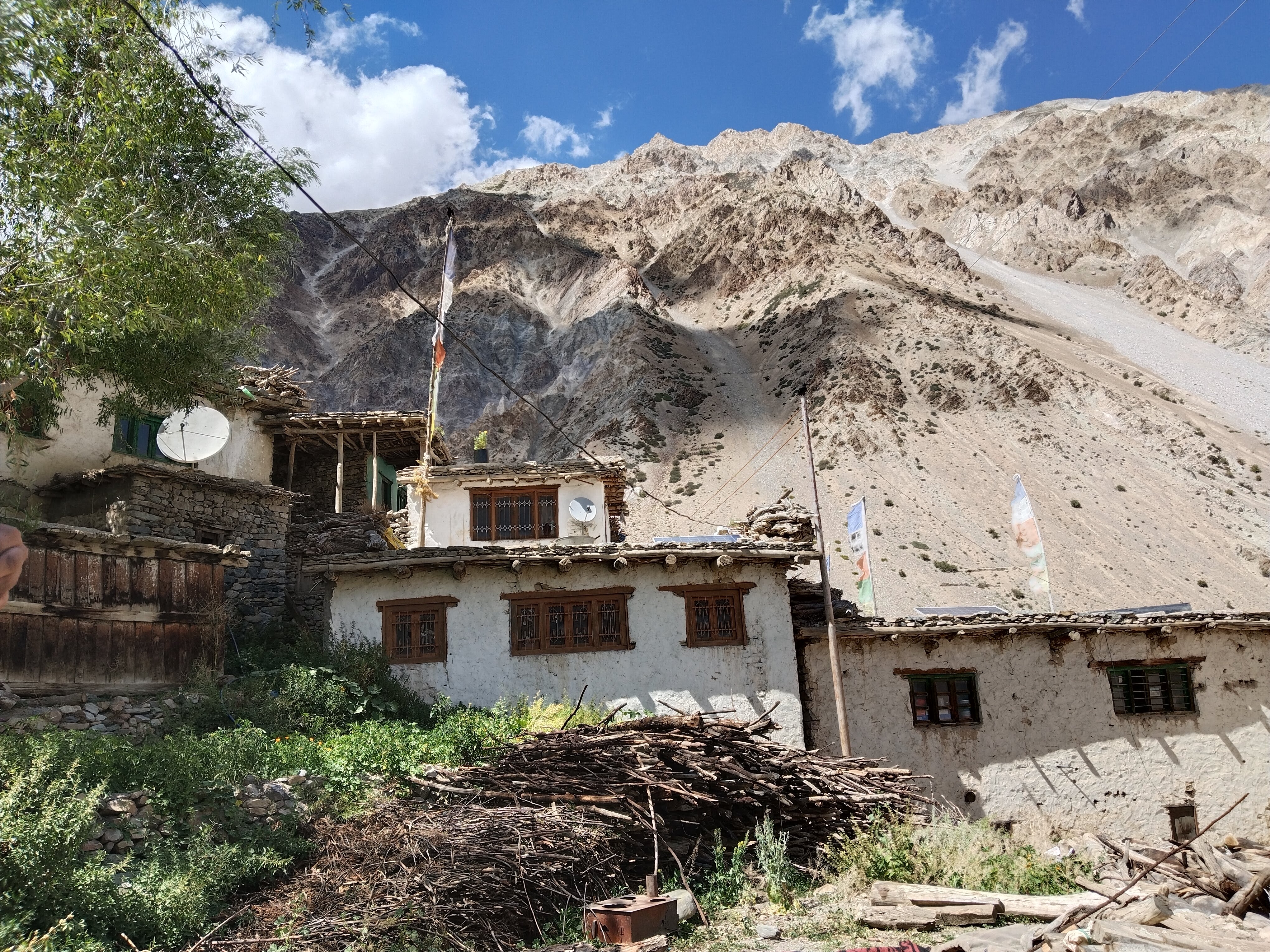
Houses are intrinsically tied to the cultural landscape of the region and in the olden times in Kinnaur, great value is placed on the following traditional uniformity in house designs. A stark resemblance between houses built in the valley and the overall architectural homogeneity creates a strong sense of belonging among community members. Kinnaur district in Himachal is known for its woodworking heritage and detailed ornamentation of traditional homes. Usage of Himalayan cedar tree is popular for building homes due to its termite resistant properties and it’s ability to accept meticulous carvings on the surface but very few of these structures exist today. In the lower Kinnaur villages like Kalpa, Sanghla, Pooh, and Baba Nagar, the Kath-Kuni technique that uses a combination of wood and stone is traditionally practiced while in the upper Kinnaur side covering Hangrang valley, building with mud – adobe, and rammed earth is more prominent.

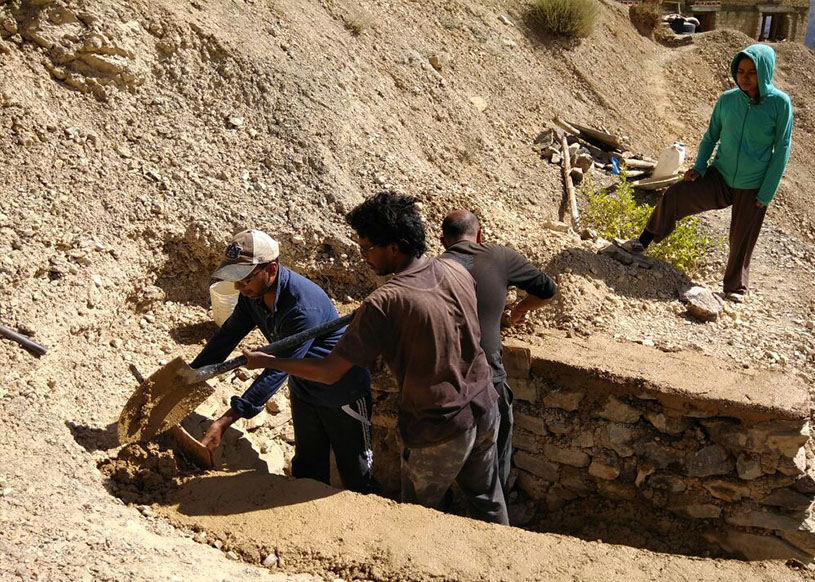
Construction Phase | Photo: Gopal Negi

Many changes are taking place in Kinnaur and growing access to the market, connectivity is certainly impacting how we build houses these days and RCC-based buildings are becoming more wide-spread. When I decided to build my house in Hango a few years back, I was very conscious of building it in a way that amalgamates traditional wisdom, and vernacular designing techniques with a modern sensibility. The traditional construction methods are easy, economical, ecologically sensitive, provides cultural utility and thermal functionality and I was determined to preserve that essence. Any changes in these designs should aim for aesthetic needs, comfort, and suitability to modern-day needs at the lowest possible ecological cost.

The primary material used for the construction was stone, adobe bricks, and wood, and special focus was placed on the building structure given the hilly terrain of the village to ensure it takes into consideration the geographical peculiarities and is climate-responsive. Building with adobe is an ancient, low-cost technique that mixes clay, and sand with organic materials like husk, and sawdust. Adobe bricks are mud bricks that are sun-dried and take about a month to dry and are more durable than kiln-fired mud bricks. The advantages of these bricks are that they are fireproof, biodegradable, and also are great at insulation, which is an important factor when building in a place like Hango. These bricks are allowed to shrink beforehand which also ensures a strong structure. Building with adobe is easier and faster than the rammed earth technique, once sufficient stock of adobe bricks is made, wall construction progresses quickly.

Gopal ji's mud house | Photo: Deepshikha Sharma

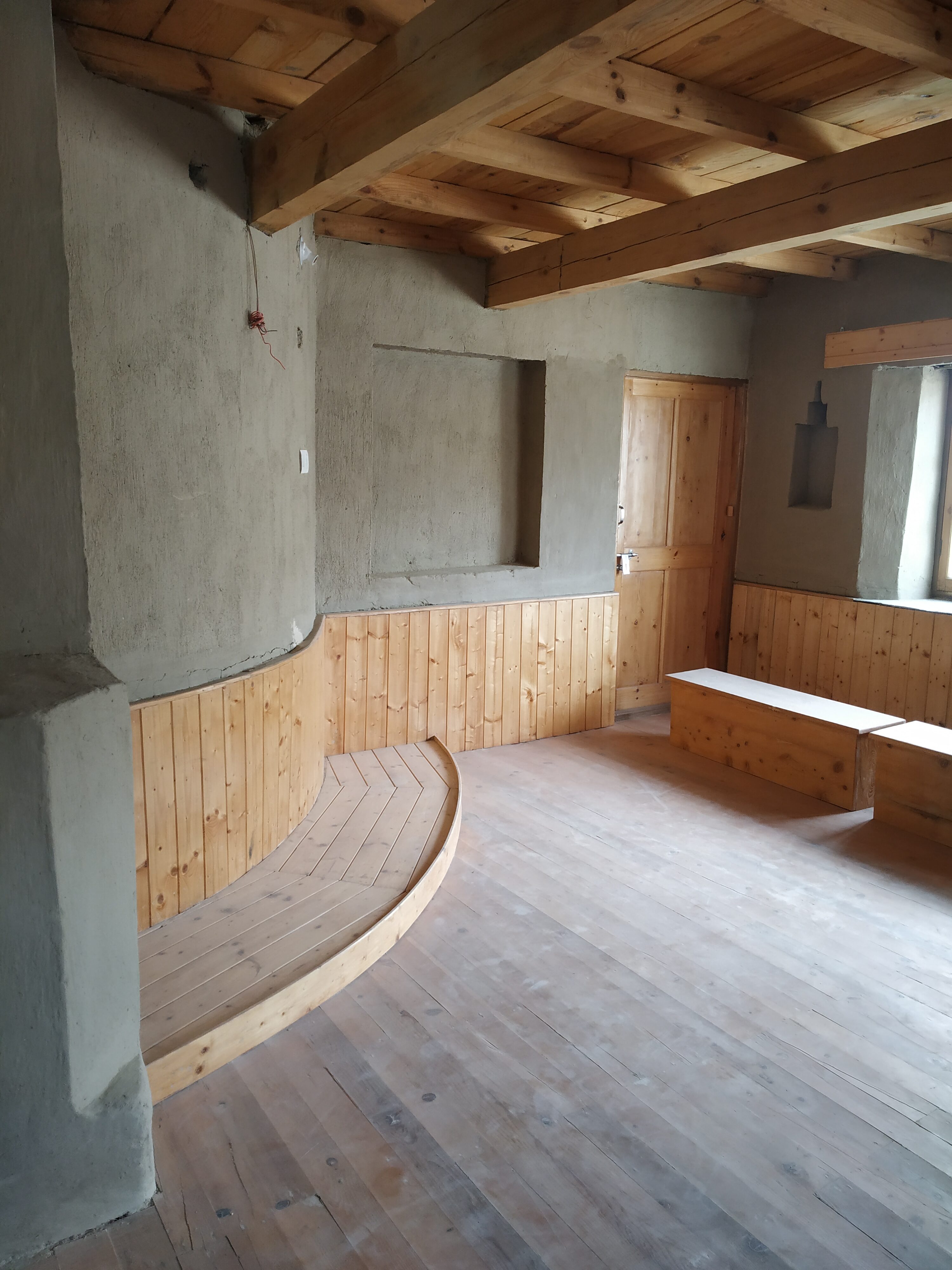
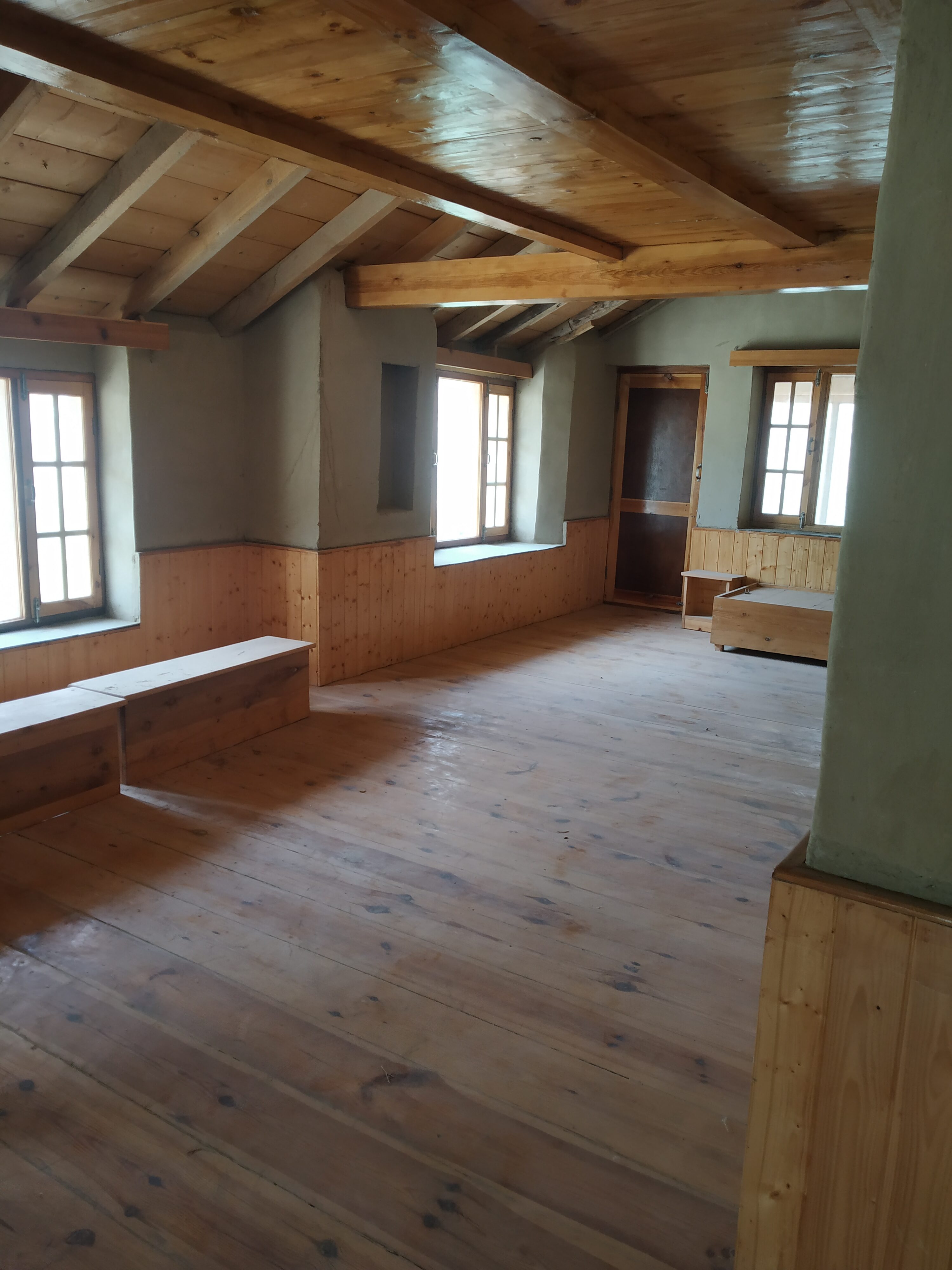
Stone layering is done for the foundation as it is moisture-resistant and helps preserve the structure from deteriorating over time. Adobe walls are load-bearing and thick hence there was no need for load-bearing beams. For the flooring, pine woods were brought from Solan and Chandigarh as the availability of local woods has shrunk and pine was a more cost-friendly option as compared to deodar. I was determined to ensure maximum usage of natural materials and hence the use of cement, iron, plywood, or other popular industrial materials was avoided. The house is built in the traditional Kinnauri style with multiple spaces to store fodder and firewood. Big, well-framed windows are installed to allow maximum sunlight, and double doors to retain the heat inside. The kitchen and living room are on the ground floor and are structurally joined like the traditional mud houses in Kinnaur.

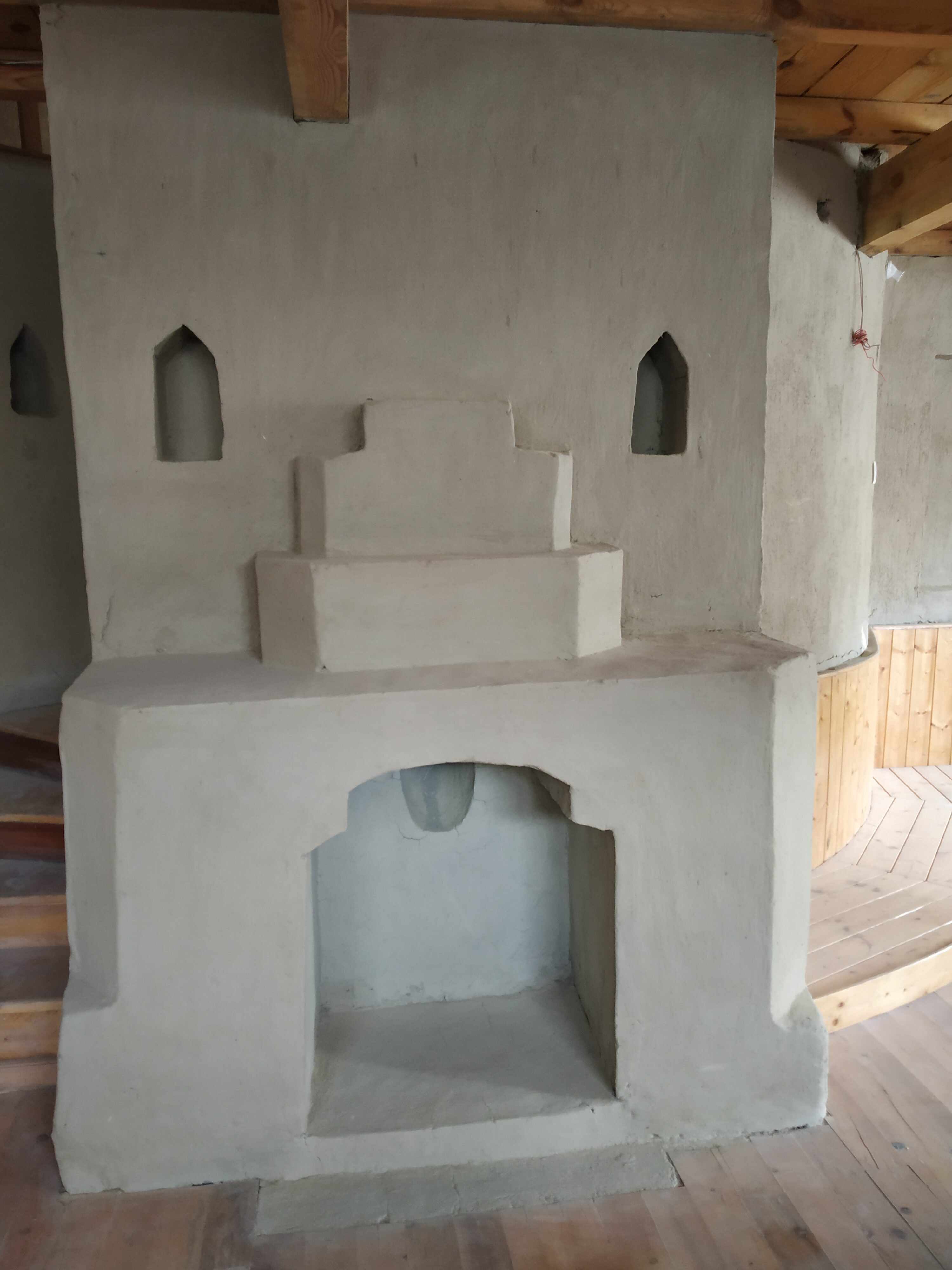
Co-designing spaces like this is a popular practice in most high Himalayan villages as it is warmer and I have given a slight tweak to the traditional heating system to make it aesthetically pleasing and more energy efficient. Hand-built mud fireplace with mud chimneys was made to suit the structure of the house and the walls draw heat from the mud-burning structure. The overall living room layout is in such a way that the family can have the space for cooking as well as a common space to sit, and have conversations and everyone can comfortably utilize the space. Unlike the traditional mud house designs in Kinnaur, the roof has a slanted design with stone slate layering which eases the burden of shoveling snow from the roof during winter as the slanting helps glide snow. A smaller structure of a dry toilet is also made outside the house which doesn’t require water.

It took about one and a half years to complete the double-story mud building and once it was completed, I was happy to receive many inquiries regarding the earthen building – the process, techniques, materials, and many other aspects that garnered curiosity from both locals and outsiders alike. I wanted to demonstrate that durable, aesthetic, eco-friendly houses can be built from natural materials and create a dialogue around a sustainable buildings practices. With every keen look and every curious engagement, I feel I am one step closer to my goal.

4080 3060 Gopal Negi
Changthang – An Oasis of Himalayan Fiber
Photo: Sherab Lobzang

Changthang – An Oasis of Himalayan Fiber

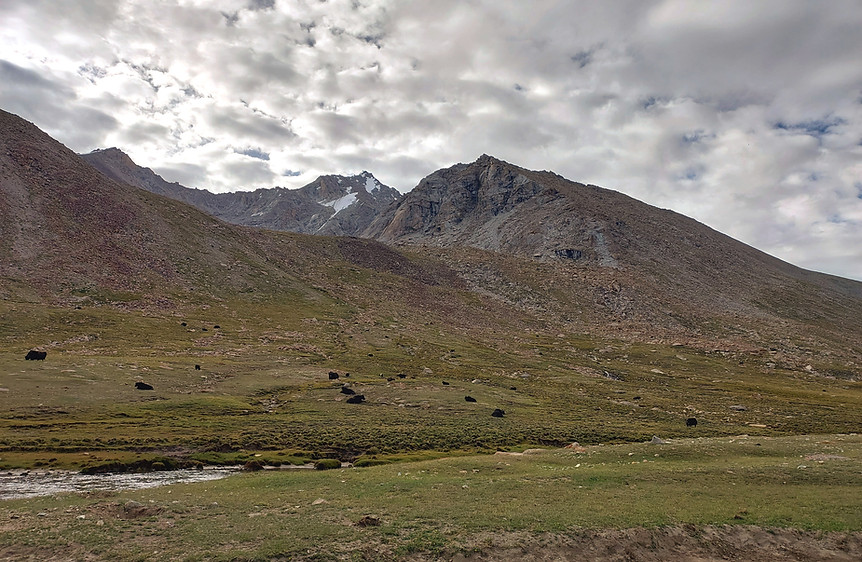
Nestled amid the lofty Trans-himalayan mountains, Changthang is a unique terrain where climate and topography play a crucial role in the sustenance of local communities. The region consists of wide wetlands and giant mountains which offer indispensable ecosystem services and safeguard our water and food security. Many wetlands in Changthang are located at a higher altitude and are fed by glaciers and snow from the surrounding mountains. The high-altitude wetlands in my region contribute significantly to the downstream landscape productivity and form a unique ecosystem for floral and faunal diversity.

The nomadic pastoral communities composed of distinct groups located at Rupsho, Kharnak and Korzokh rear a variety of livestock such as goat (rama), sheep (luk), horses (ta), yaks, and donkeys (bhungpa) which supports them in all aspects of their lives. The Changpa shepherds are skillful in tending their herds; navigating steppe grasslands, accessing fertile pastures, breeding resilient animals, caring for livestock, and preventing diseases. When there’s less grass in the pastures or the livestock are not able to graze due to excessive snowfall, they provide the cattle with fodder they have stocked months before to avoid weakness and starvation. It is precisely the efforts of the local herders and the nutritious resources in the cold arid land that the livestock we breed gives the finest fiber.

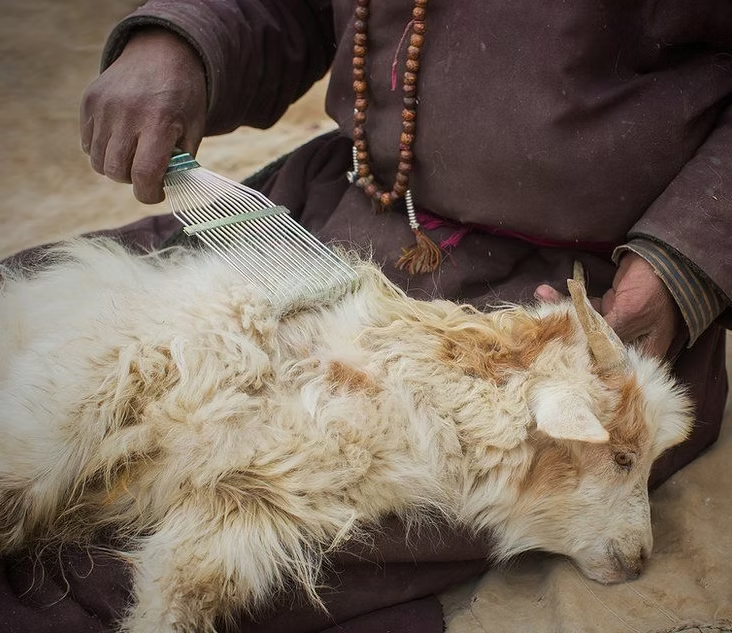
Pashmina Combing | Photo: Andrew Newey (cnn.com)

Ladakh has a highly diverse textile tradition that reflects its physical, socio-cultural, and environmental features. The herd provides different kinds of fiber: Khullu or Sitpa from Yak wool, Ral from Goat hair or Sheep wool, and Lena (Pashmina) from the underbelly of Changthangi goat. The wool is sheared from the livestock around early Spring or before lambing season using a wooden/metallic comb. It takes about 2-3 hours to shear wool from a single sheep and since it requires physical strength to hold a sheep, goat or yak to shear, it is usually men who do the work while women clean and sort the wool to remove any impurities. Once the wool is collected, it is laid on the sheet and beaten with a wooden stick to remove dust, dry grasses, and other impurities. It is then washed, dried, and then hand spun with a traditional spindle called “Phang” – thin yarns are made for weaving while slightly thicker and knottier yarns can be used for knitting. From elaborately patterned garments for the nobility to simple home-spun garments from local fibers, a range of garments are processed and procured in Changthang. The local fibers found in Changthang are used for various purposes; Yak wool and goat/sheep wool are primarily used for self-consumption while Pashmina (Lena) is often traded. The high altitude and the intense cold of Changthang serve a good purpose for the growth of the fine luxury fiber Pashmina. Due to its softness, elegance, and warmth, it is one of the most coveted fibers and fetches the highest price.

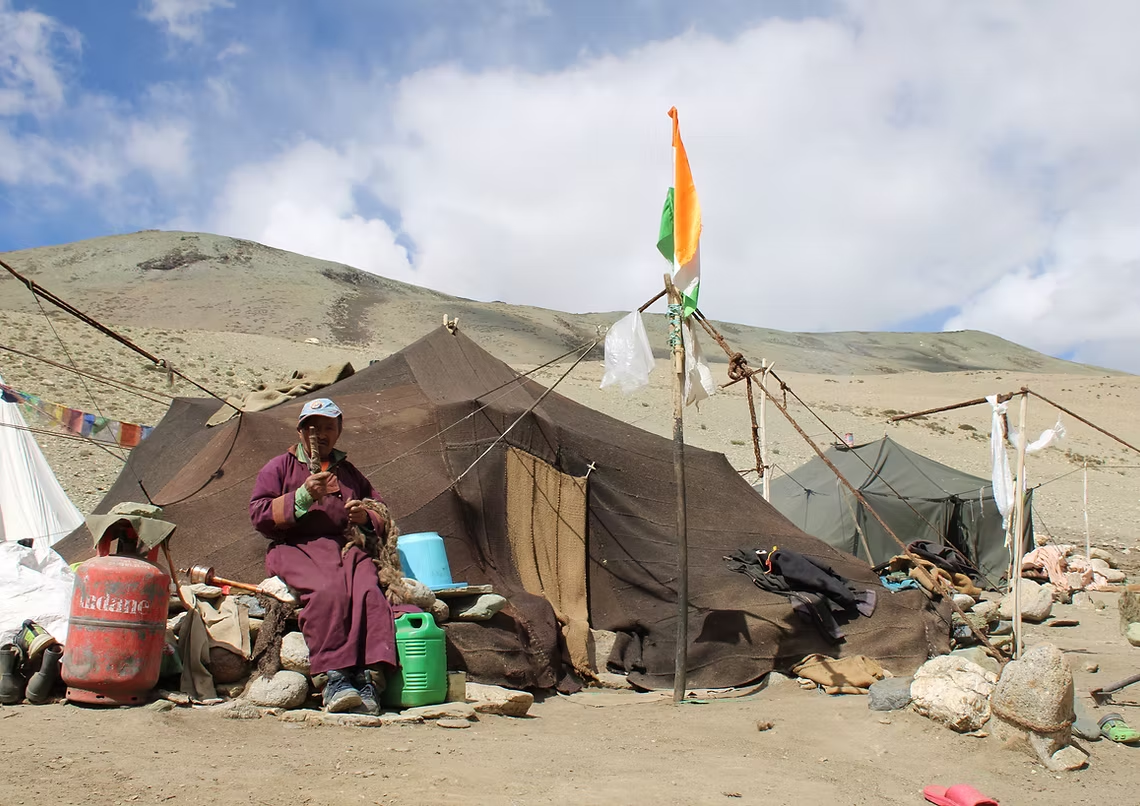
Rebo and landscape of Changthang

Weaving is an ancient craft and Changpas are reminiscent of the time when our ancestors wore clothes made up of animal skin. Due to freezing weather, animal skins are still used for various garments, quilts, and mattresses. The rich tradition of textiles came into being when our ancestors learned how to spin, make yarn, and weave. Wool and fiber are an integral part of the nomadic culture as Changpas reside in the traditional tents called Rebo made of Sitpa (Yak wool). Rebos are very functional and aptly suited for the nomadic lifestyle – as the nomads migrate in search of better pastures for their herd, the use of Rebo comes in handy for them.

“Rebos are very functional and aptly suited for the nomadic lifestyle – as the nomads migrate in search of better pastures for their herd, the use of Rebo comes in handy for them.”

Making Rebos are extremely labor-intensive as it is handspun and handwoven and a group of nomads makes it collectively. Rebos are also precious family assets and are passed down from one generation to another but these days the use of canvas tents is also becoming popular. Handcrafting has great significance in Changpa tradition, it is a skill that everyone inherits and proves useful in resource-starved land like ours. Weaving and knitting are so economical and wholly self-sufficient – we knit sweaters, socks, hats, and mufflers, and weave mattresses, quilts, saddles, and even containers for foodstuffs. Imagine having to buy all these!

Traditional weaving in Changthang

Even the traditional clothes we wear Gos made up of fabric called Snambus. All of which are handwoven from scratch! When I think about the olden tradition of Changpas – whether it is sustainable grazing of the livestock, food habits, lifestyle, or the practices of spinning, and weaving I realize how self-sufficient and environment-friendly the whole system is. However, the practices around local fiber and cloth making are undergoing changes. Machine-made fabrics and ready-made clothes are easily procurable from the markets and one doesn’t necessarily have to make everything from scratch like in olden times. Although a great variety of wool and fibers are found in Changthang, there’s relatively little expertise when it comes to processing these fibers and adding value to them. Kashmiri artisans are way more known for their skills in handicrafts and if this gap can be fulfilled locally, the fiber value chain will be complete in Changthang itself.

1770 1048 Padma Dolker
Traditional Farming in Spiti

Traditional Farming in Spiti

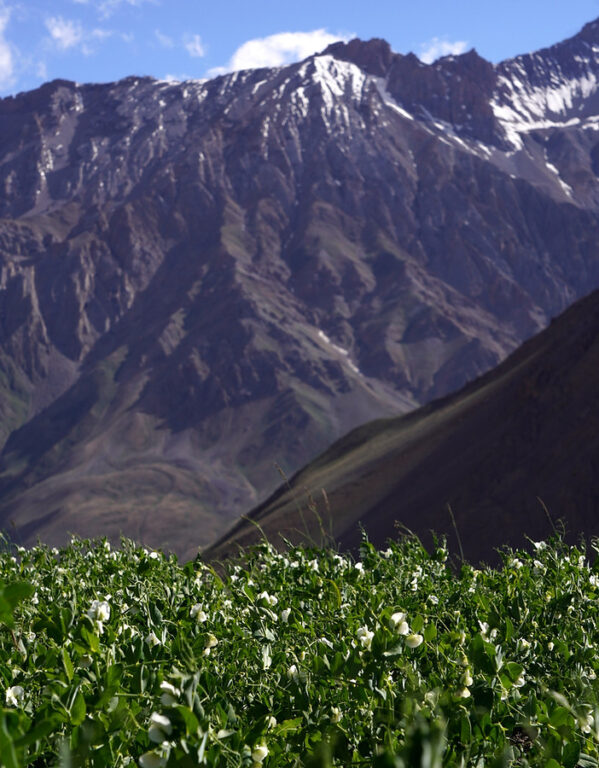
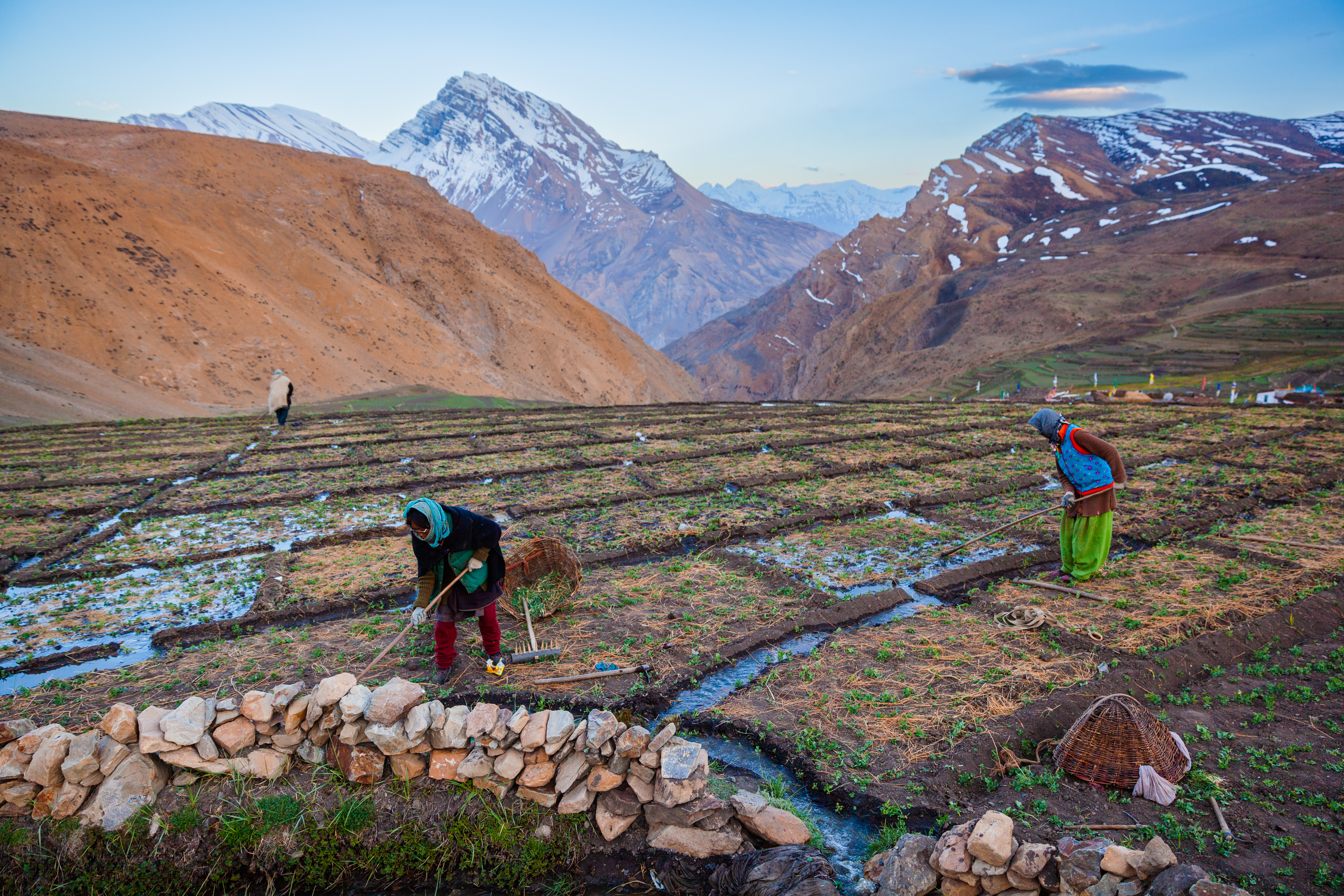
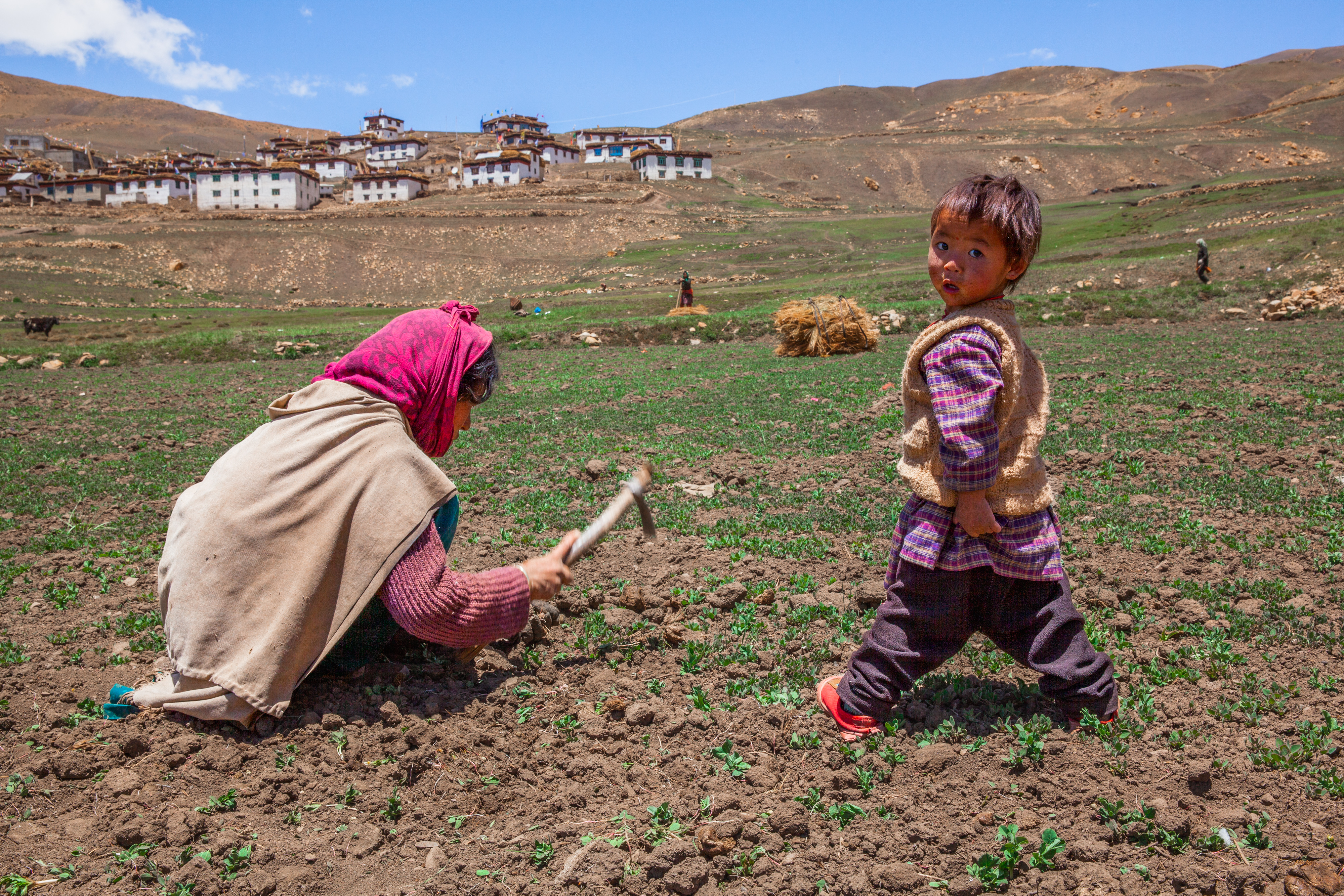
After the snow melts on the high peaks around the villages of Spiti, the hard working people start their annual summer works - livestock are taken to the grasslands for grazing and people get busy preparing for agriculture season. Barley, potatoes and green peas are cultivated in the month of May and the crop is harvested at the end of August. It is then the valley gets a shade of green on its barren brown mountains.
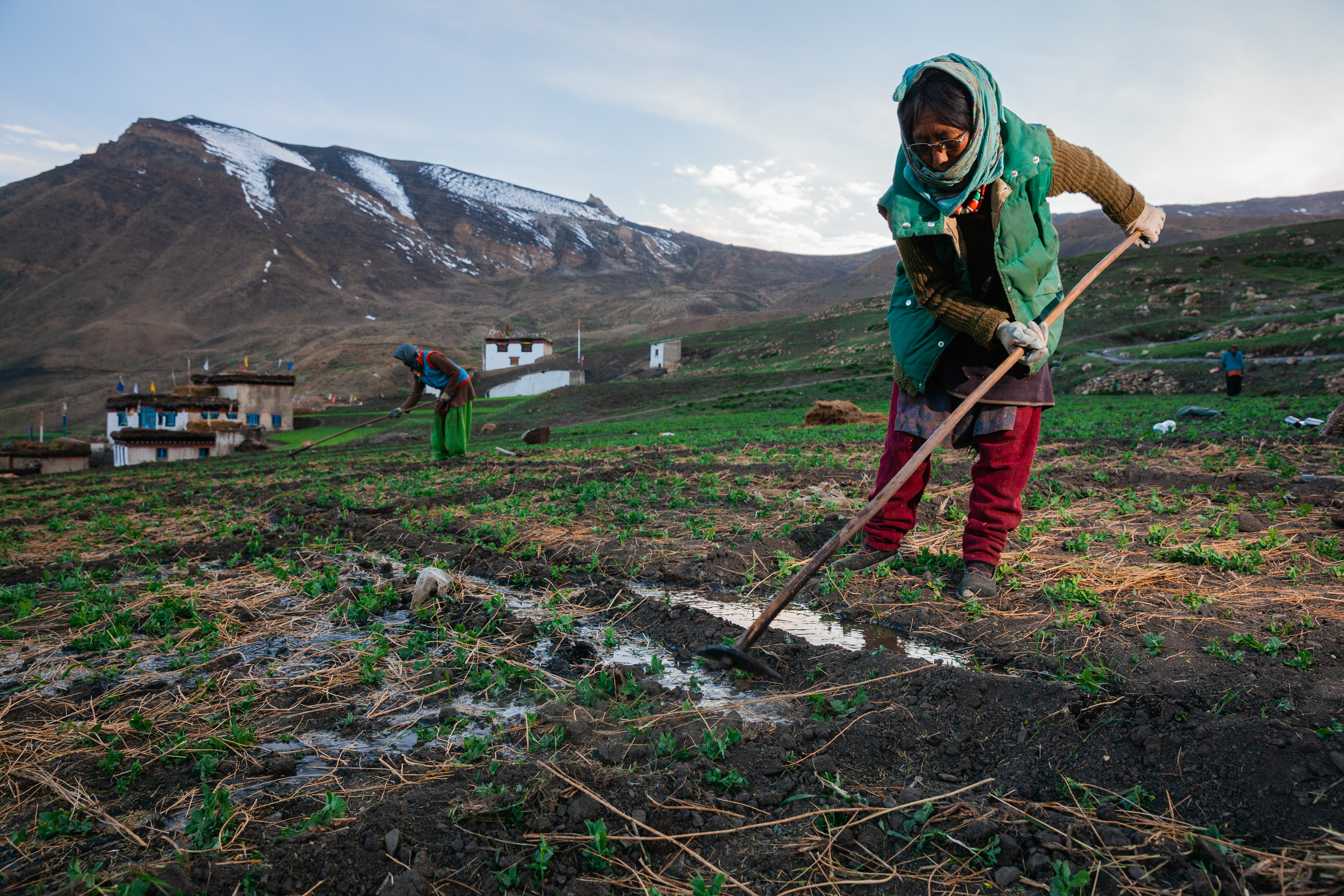
Spiti receives very less average rainfall. The locals can not depend on rain for irrigation. The solution for this was found centuries ago and is still in practice. The melted snow water from the glaciers flows down in the valley and is directed through kulhs (water channels) to the fields.

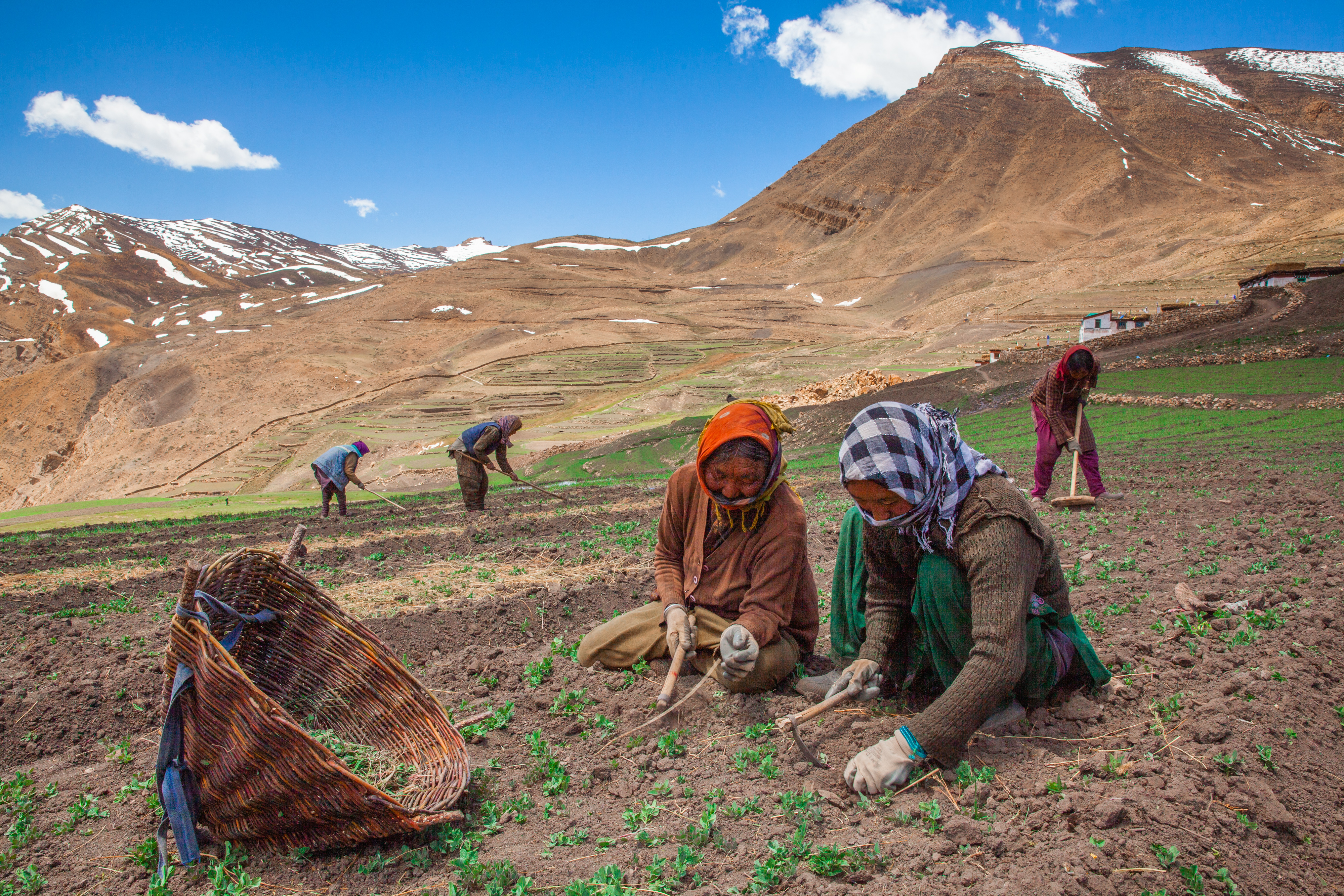
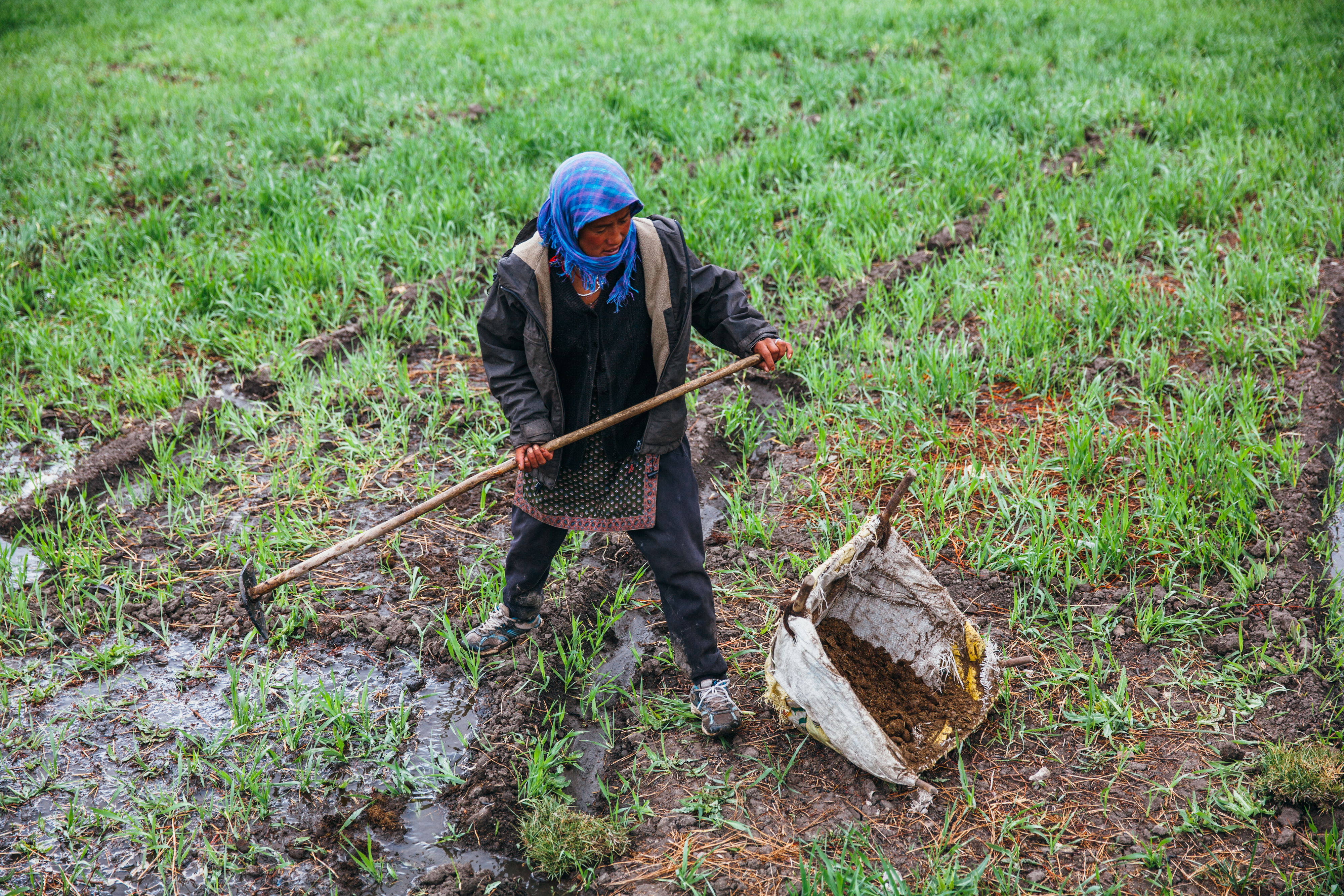
This process takes hours of hard work. The villagers, mostly women, start curing the fields in the month of June when the small stems of green pea plants can be seen in the fields.

In old days, people cultivated only barley and black peas for self- consumption, but around 1960s, the H.P govt. started promoting the cultivation of green peas, potatoes and other cash crops. In recent years, the region is gaining keen interest on cultivation of sea-buckthorn; the wonder berries rich in vitamin C.
The concept of organic farming, which has become well known in the last decade, is not new to Spiti. Crops like black pea and barley still remain free from any chemicals. So the next time you have Sampa (local Spitian barley flour), you can be certain of its purity!
The green peas of Spiti are sold at a premium when they reach the market but people face the problem of connectivity. There is a major delay for the crop to reach the markets.
Despite many problems, the people of Spiti live with happiness and pride. They will be more than happy to have you as their guest. When my friend and I were trekking through distant villages, we tried to offer them money as a token of our gratitude for their amazing hospitality. No one accepted it and yet they asked us to come back again. We soon found a way to thank them. After saying bye to them, we would put the money in their pockets and run away!
4000 2667 Himanshu Khagta
Agricultural Practices in Spiti Valley
Photo: Prasenjeet Yadav

Agricultural Practices in Spiti Valley

“Ney yotna chukpo sam, nor yotna mak”
“Those who have barley are rich, not the ones with money”
Spitian Proverb, Anonymous

Ever since my childhood days, I was very curious to know about the agricultural practices of Spiti valley – traditional crops we grow and how farming happens in a cold Himalayan desert. Like any Spitian youngster growing up I used to help my family with agricultural works whenever I am at home for holidays or during the peak harvesting season but I never got the opportunity to help them for the whole season. But last year, due to an ongoing pandemic, when I came home, I realized it was a good opportunity for me to understand agricultural practices first hand. I helped my family through whole process right from scattering ashes in the snow covered fields to prepare the field for ploughing to cleaning dried-up water canals before harvest season to helping during peak season of ploughing and harvesting. I also wanted to learn about the history of agriculture in Spiti valley and the elders in my family shared some interesting insights with me.

Photo: Lobzang Tandup

Traditionally, the people living in this valley grew barley and black peas for sustenance. They used barley grains to make Sampa (flour) or Arak (traditional alcohol). They also used barley and black peas to barter it with traders from Changthang who in turn would give Lena (Pashmina) and Khullu (Yak wool) in the 1960s however, things started to change in the valley. People started growing cash crops like green peas and potatoes as access to outside markets improved due to development of key roadways. Now, barley and black peas are grown only for self-consumption and are only a small share of the total agricultural production.

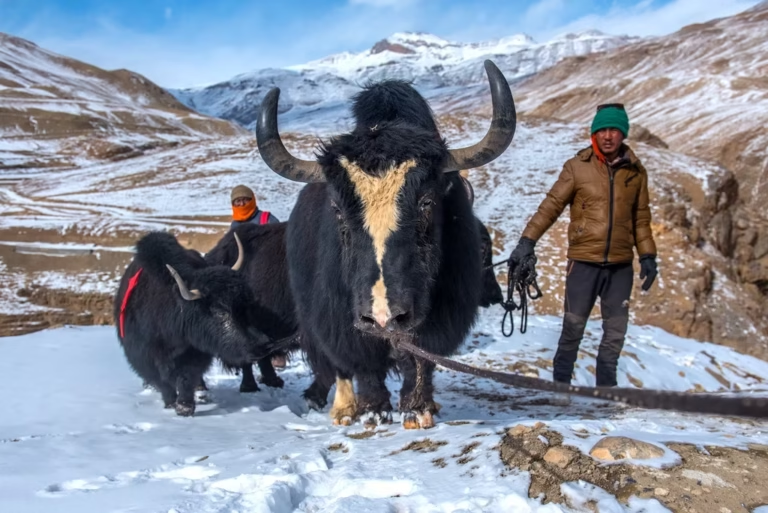
Agriculture in Spiti lasts only for six months. It’s the most crucial time for all the farmers. Although the sowing season starts only in April, the preparations start months before. The seeds are either procured or developed and stored safely during the winters. When the snow first melts around mid-April, the farmers plough their fields with the best resource they have – Yak or a pair of Dzo and seeds are scattered by hand, but these days people use tractors, ploughing machines and even tillers are used. Ploughing the field is a two person job, but sometimes the whole family can be seen in the fields helping out the parents. In Spiti, one’s family, relatives and friends are one’s greatest resources. Farming is very communal in nature. Everyone helps each other and sometimes even 3-4 families work collectively.

The system of communal farming helps ease the burden of marginal farmers who do not own Yak – they collaborate with Khangchen households (Zamindar family), borrow Yak for ploughing the field and in turn repay through their labour. Yaks are an effective but an expensive farming asset and not everyone can afford to buy and maintain them. The system works because it is based on a reciprocal relationship between Khang-chen (Big Zamindar) and Khang-chung (Small farmers) households and resource and labour are shared communally. Sometimes, the members of the Khang-chen household lend a piece of land for a few years to the Khang-chung household for farming. They do not have to necessarily repay through capital but the Khang-chung family can repay the benevolence through their labour works in the Khang-chen family – for instance, they can help the Khang-chen family during ploughing and harvesting season. This system is called “Shey” in Spitian.

The relationship between people, wildlife and nature go beyond utilitarian aspects. It is heavily influenced by cultural values and local practices around it. For instance, many Spitian households have unique names for their agricultural land which is a helpful marker of identification of one’s land and also carries meaningful ecological symbolism: “Chup- ja” (water-bird) is named for agricultural lands that resemble the shape of long-necked water cranes. “Ti-rik” is named for lands that resembles local barley-flour delicacy, “Dorgya-ma” is named for agricultural lands which is full of stones or pebbles owing to its hilly terrain, “Yur-yok” is referred to lands located beneath a water canal and “Phe-kak” (meaning half in Spitian) is often given to agricultural lands of “Khang-chung” families (small farmers) who gain their land after ancestral subdivision from Khang-chen family (big zamindari household).

There are a lot of farming songs and prayers that people hum while toiling in their fields. Farmers sing particular songs at every step. The songs have rich meanings related to farm works, weather conditions and comprises of odes and incantations towards local deities pleading for bountiful harvest. “Om Mani Padme Hung” – the holy Buddhist mantra is chanted while ploughing which symbolises farmer’s gratitude and compassion for Yaks and Dzos who toil so hard in our fields. “Laso- ho” is chanted in merriment to ease the stress and fatigue of animals when they plough in harsh weather.

As soon as the ploughing is done, the farmers wait for the first crop or sapling to grow a little before the cycle of irrigation begins (Yurma). This period is usually after 40 days from the day of sowing. Water is a scarce resource and there are local systems of water distribution and management called “Chu-rey” (water turns) entirely handled by women of the village. A group of women is appointed to take charge for the season to ensure timely, equitable distribution of water to each household. The Khang-chen (big zamindar) households have more access to water resources – they have frequent water-turns (chu-rey) and more water is allotted in their canals for irrigation. They also have more authority in decision-making as they are the original tax-payers of the land and have earned that right historically. Owing to scanty precipitation, irrigation becomes a daunting task – women get busy with watering works (Yurma) for over 2 months till the crops are fully ripe.

Photo: Lobzang Tandup

The green pea crop gets ready around June in low-lying villages (Kaza, Tabo, Rangrik, Pin) and August in villages in elevated regions (Demul, Komic, Langza, Hikkim, Kibber and Chicham) . These crops are then transported and sold in Delhi and other nearby states. The produce from Spiti is considered of highest quality as the farmers do not use any insecticide, pesticide or weedicide in their fields. Instead they only rely on animal and human waste as manure. The sweet taste of green peas from Spiti valley is the result of unique farming techniques and hard-work of the people who do not give up despite harsh conditions and scarce resources.

The cropping patterns of green peas and barley are different. Green pea, although is the primary source of livelihood for the farmers, requires much more work and tends to consume more water. Barley is a traditional crop of Spiti that is favoured more by farmers due to its low input requirements, better adaptability to harsh conditions and is considered drought/disease resilient. Barley crops and black peas (kala matar) can be harvested later around August-September when the work around green-peas is done. The remaining grass residues are collected to use for fodder or as a livestock feed for animals during winter.

Most Spitian households own a flat ground near their agricultural field called “Ul-tak” where separation of straw and barley (Khu-yuk) are done, cut grasses are brought and flours are grinded. The grains are finally stored in village. A group of women is appointed to take charge for the season to ensure timely, equitable distribution of water to each household. The Khang-chen households have more access to water resources – they have frequent water-turns (chu-rey) and more water is allotted in their canals for irrigation. They also have more authority in decision-making as they are the original tax-payers of the land and have traditional go-downs/storage called “Bhang” for better preservation.

Agriculture is the lifeline of Spitians and it is not just a livelihood means for us, but a way of life. Our tradition, cultural values and regional ethos revolve around agrarian practices. Many local Spitian proverbs (pera) are reflective of that knowledge. I am sharing few as recounted by elders:

Nyima dot la mata, Dotpa chung la mata
Do not rely on the sun’s warmth nor your appetite. This proverb talks about the importance of being alert, active and prepared when one is undertaking any agricultural work. When one leaves home in the morning for the field, a farmer has to be ready for any unpredictability – nor the pleasant heat of sun or one’s appetite at that point can be relied on.

Soye me phung, nyal phung
There will be agricultural loss not when you eat but when you sleep/laze around.

Ley betna, sey nyong
If you work hard, there will be a bountiful harvest.

Ney yotna chukpo sam, nor yotna mak

Those who have barley are rich, not the ones with money.

I am not an expert in farming or possess rich knowledge but I would like to share some suggestions, the ecosystem in the trans-Himalayan region is very fragile. Excessive focus on cash crops like green peas won’t be sustainable for the long run. We need to incorporate traditional crops like barley as well as black peas which are more suitable to local conditions. We should think about long term ecological sustenance and food security for the entire community. Cooperative societies, local management should work in a collaborative manner to fetch fair prices to our farmers. Youngsters should realize that although modern farming and technology are easier and more convenient, nothing beats natural farming technique and indigenous knowledge of the people.

1024 683 Lobzang Tandup
Changes in Agriculture (Lahaul)
Photos: Prasenjeet Yadav

Changes in Agriculture (Lahaul)

I hail from Gumrang – a small rugged village in Lahaul (Himachal Pradesh). There are about 22 households and we are majorly dependent on agriculture. Farming along with livestock husbandry and agro-pastoralism has been traditional livelihood for locals here but there has been significant changes in since last decade. I have been farming for over the last 17 years, I have seen how much has changed in the valley in terms of food sustenance, practices around agriculture and resource usage.

I remember, when I was young, we used Yak and bulls to plough our fields. Traditional methods of ploughing like this required at-least two men and yaks to complete the task but we have gradually shifted to machinery to get the work done single handedly. About 30-40 years ago, we would cultivate Kaatu/Kathu (buckwheat), Jo (barley), Kala matar (black peas) in Lahaul which is enough for our sustenance. These traditional crops are full of nutrients and are suitable for people living in high altitude landscapes. In the current economy, even with introduced cash crops like green peas, potatoes and apples, it is sometimes hard to make ends meet. One cannot fully rely on cultivation anymore, we are less resilient towards changes in weather and crop disease.

Many villages in Lahaul are dependent on snow fed glaciers and springs for water resources. People wait for glaciers to melt and collect in water reservoirs before it is channelled for various purposes. In older days when the water was abundant, we could make water channels by our hands and get the water to the fields. Irrigation was done through hand-made Kuls (canals) and the water was distributed among different households on a rotational basis. However, due to change in weather patterns and growing need, the glacial water melt is a scarce resource and sometimes there is also a need to pump it up from the river. The general access for water and irrigation has become more convenient with the use of drip and sprinklers in the fields but at the same time, many of the natural water sources like springs are drying up and there’s less water in our Kuls now. Sprinklers and drip irrigation seem to consume less water but I realized our crops require frequent watering (2-3 times a week) as the water is not able to penetrate deeply in soil.

Years ago, each household had 40-60 livestock which was a good source of manure to the fields. Many families now have sold their livestock and now it’s hard to find any cattle in the villages. Due to this, the access to manure also reduced and the fields produced less. Cash crops like green peas, cabbages and the cultivation of exotic vegetables like broccoli which is increasingly becoming more dominant in the valley require more tending. The families then opted to supplement their field with urea fertiliser which caused damage. Excessive usage can deteriorate the soil quality and can lead to more pest attacks. In many cases, it also impacts the field of neighboring families who might be using organic fertilizers for the crops. I hope we, as a community, become more sensitive to these changes and be mindful of long term sustainability of our land and resources.

880 587 Chhering Gaaji
The sun returns home for the mother bird
Photo: Stanzin Dorjai (Gya)

The sun returns home for the mother bird

Spiti Valley has a remarkable ancient agricultural heritage that has sustained several thousand people in the remotest corner of high and arid Western Himalayas—one of the most inhospitable and climate-sensitive regions in the world—for more than a thousand years. The enduring sustainability of agriculture in Spiti Valley rests with its farming calendar.  The calendar uses stories, evocative names for months, and traditional knowledge to guide the timing of local farming activities according to the unique natural rhythms of “Spiti, the Valley of Gods” (Piti Lhayi Lungpa).

The natural rhythms of Spiti Valley are captured in Spiti’s calendar with unique timing and names of months, which are different even from neighbouring Tibetan Buddhist regions of Ladakh and Kinnaur.  In addition to local timing and names of months explained below, the calendar is used with other local and Indigenous practices of telling time. For example, Spiti farmers mark sunrise and sunset over stone cairn markers atop high mountains and note shadow lines on mountainsides to identify important days and times, such as the solstices and equinoxes. Farmers also use their observations of colours, sounds, and rhythms of local plants and animals to tell time, such as observations of brightness and colour of the sky when birds sing at dawn.

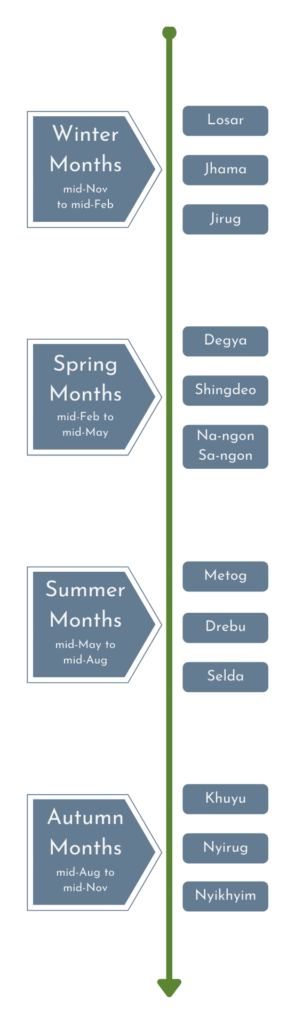
Winter Months 

For Spiti farmers, the year begins early in winter with rest and celebration after a hard year of work in the field.  The first month is called Losar or “New Year” and is celebrated three months before the Tibetan new year.  Losar is celebrated early in Spiti, usually around mid-November of the Gregorian calendar, because the valley, including the villages and pathways, will soon get covered under layers of snow for months.  The timing is ideal for Spiti farmers who have customarily completed all essential seasonal livelihood activities, and are now ready to turn their attention to the important family, communal, and religious gatherings of the Losar month.

Photo: Prasenjeet Yadav

The second month is called Jhama or “Mother Bird.” The bird here is Gharog or raven.  Raven is a bird of augury and protection in ancient Spiti and Tibetan beliefs, like in many cultures around the world.  It is said that once upon a time the divine bird, Gharog (raven), was unable to hatch chicks from eggs despite its many attempts because its body was excessively warm for incubation.

Devastated by this failure, the raven prayed that it would be able to hatch chicks from golden eggs during the coldest winter months. That is the reason ravens prepare their nest on a mountain cliff during the second winter month and the month is named Jhama. There is a local saying that describes Spiti’s coldest winter months: “Jhama Jhama zerna Jirug a-chu-chu.”  This saying suggests one shouldn’t complain about Jhama’s cold weather because Jirug, the following month, is even colder.

The coldest winter month is called Jirug or “Baby Bird” because it is the time when ravens lay eggs and hatch their baby birds. References to divine birds are common in Tibetan calendars. For example, the 2008-09 farming almanac of the nearby region of Kinnaur notes the following during Spiti’s Jirug month: “the divine bird has completed 30 days, if this is followed by snowfall, the divine bird will lay golden eggs, and there will be bountiful agro-pastoralism in Tibet.” It is also important to note that Jhama and Jirug are named not only for mythological reasons but also, and more importantly, to categorize seasonal times based on timely behaviour of natural environment. Researchers, for example, have found that common raven egg-laying and brooding behaviour begins in February, which comes during Jirug month.

Spring Months

The first spring month is called Degya (‘de rgya), which means to “soak in the Sun’s energy” as days become warmer and longer with the spring equinox. As snow cover begins to melt and days become brighter, blue sheep and ibex nibble on dormant plants on distant mountains, often under the lurking eyes of hungry snow leopards.  The month is named after the Sun’s warming energy during this month because it is crucial for melting the snow from the fields so that farmers can start Spiti’s short growing season early next month.

Photo: Dr. Tashi Tsering

The second spring month is Shingdeo (zhing ‘debs) or “cultivate the fields.” On the chosen auspicious day of the month, the farmers gather a few loose rocks on their fields, between which they burn juniper leaves to make smoke offerings. This is followed by offerings of libation drink carefully wrapped in a white scarf and marked symbolically with a dab of butter called yar. Yar-butter is marked on the foreheads of people, on horns of the yaks, and on the ploughs. And all through the ploughing period, the ploughman sings songs and prayers which may guide the yaks to turn, stop, or continue ploughing, or pray for absolution of sins that may come from harming insects and bugs in the process of ploughing.

Photo: Deepshikha Sharma

Spiti comes alive in bright colours during the final spring month of Na-ngon Sa-ngon, which means “blue skies blue earth.” This name invokes the beauty of lush green fields under bright blue skies.  Yaks graze freely on the mountains for the rest of the year until winter snowfall to produce the main source of energy for the village economy: dung for fuel and manure.  During this month, farmers count and wait forty days from seeding to first watering, guided by traditional knowledge, to ensure ideal conditions for seed germination in local soil, water, and weather conditions. Then expert women farmers do the first “mother watering” or Yurma, with Tirping, an irrigation tool made of blue sheep horns that ensures greener crops.

Summer Months

The young, irrigated crops begin to flower in early summer which is why the first summer month is called Metog or “flower”. Metog is indeed a flowering month as all kinds of flowers bloom throughout the valley during this time. The second watering called Rhakti or “watering the sun-burned” plants happens during this month. Farmers allow ten days to pass between the first and the second watering, making young crops dry and sun-burned. This practice teaches the young crops the value of the nourishing powers of scarce water, making them absorb more water in the future. These farming practices follow stringent customs based on the calendar, such as the yearly “ban on the use of sickle” or ban on cutting plants from summer solstice (June 21) until harvest season to ensure maximum plant biomass growth on Spiti’s arid landscape.

Photo: Prasenjeet Yadav

By mid-summer, the farmers’ labor bear fruit as grains begin to grow on the barley ears. This is the reason the mid-summer month is called Drebu or fruition of one’s labor. Farmers wait for the grains to become ripe for harvest next month. As tufts of bristles grow on barley ears, farmers irrigate the fields with a special technique called Kirchuyi. Now watering is done after carefully preparing irrigation channels and sluices in such a way that water will flow to all parts of the field by itself after it is released from the main sluice of the field. Another name for this convenient method is Minchu or seed-ripening water.

The last summer month is called Selda or “harvest month.” Unlike new commercial crops, traditional crops like barley are harvested methodically according to ancient customs. After the crops are cut, the sheaves are laid out in the field in neat rectangle-shaped patches to cover the barley ears from drying under direct sunlight. It is only when the crop sheaves are brought to the threshing ground that the ears are exposed to the sun for drying. The importance of observing this practice is told in the story of Jhojho Druguma.

Photo: Prasenjeet Yadav

Jhojho Druguma was a rich woman who did not bother to dry her barley sheaves in the proper manner. As a result, the ears and grains became too dry, and they fell off when the sheaves were carried from the field to the threshing ground. That is why, to Spiti farmers, the stars of the Milky Way are spread out the way they are so spectacularly over Spiti’s night skies. The stars of the Milky Way are Jhojho Druguma’s grains that fell on her way to the threshing ground.

Autumn Months

The first autumn month is named Khuyu. Khuyu is the Spiti word for circular threshing that is done to separate the grains from the husks. The process involves tethering yaks and other animals to a sturdy central pole and making the animals trample over harvested crops in a circular fashion. When the animals go round and round, tromping the husks and the grains, farmers use wooden pitchforks (zar) to mix, push or spread the husks so that the grains are properly separated. The whole process is blessed with Khuyu songs that can be heard from distant corners of villages.

The penultimate month is called Nyirug. “Nyi” is a short for Nyima or the Sun. “Rug” means to gather, specifically to gather animals back home before sunset. As such, Nyirug is the month when sun sets early, and days become shorter when farmers gather their horses and yaks back from the mountains in preparation of the oncoming long and cold winters. Farmers also follow stringent customs to ensure that there is enough winter stock of barley flour, dung, and fodder in their households during this month.

The last month is called Nyikhyim, which refers to the twelve zodiac houses of the sun in Tibetan astrology. “Nyi” means sun and “khyim” means house or home. Nyikhyim here refers to the Sun’s return home after completion of its annual cycle. For Spiti farmers, however, the Sun returns home to fulfil the mother bird’s prayers. This is expressed in the local proverb, “nyima garlog, jhama yin”. The Sun returns home so it becomes cold enough for the mother bird to arrive and hatch chicks. As such, the story of mother bird comes to a full circle at the end of the year along with the sun’s annual return home, while in anticipation of “Spiti’s deep cold winters when even yak-horns crack into pieces.”

In sum, the farmers of Spiti Valley practice a calendar that integrates local economy and ecology into a cosmic unity filled with wonderful stories and ancient wisdom that is perhaps more relevant today than it ever was.

1080 608 Dr. Tashi Tsering