Valleys

Meat momos for everyone
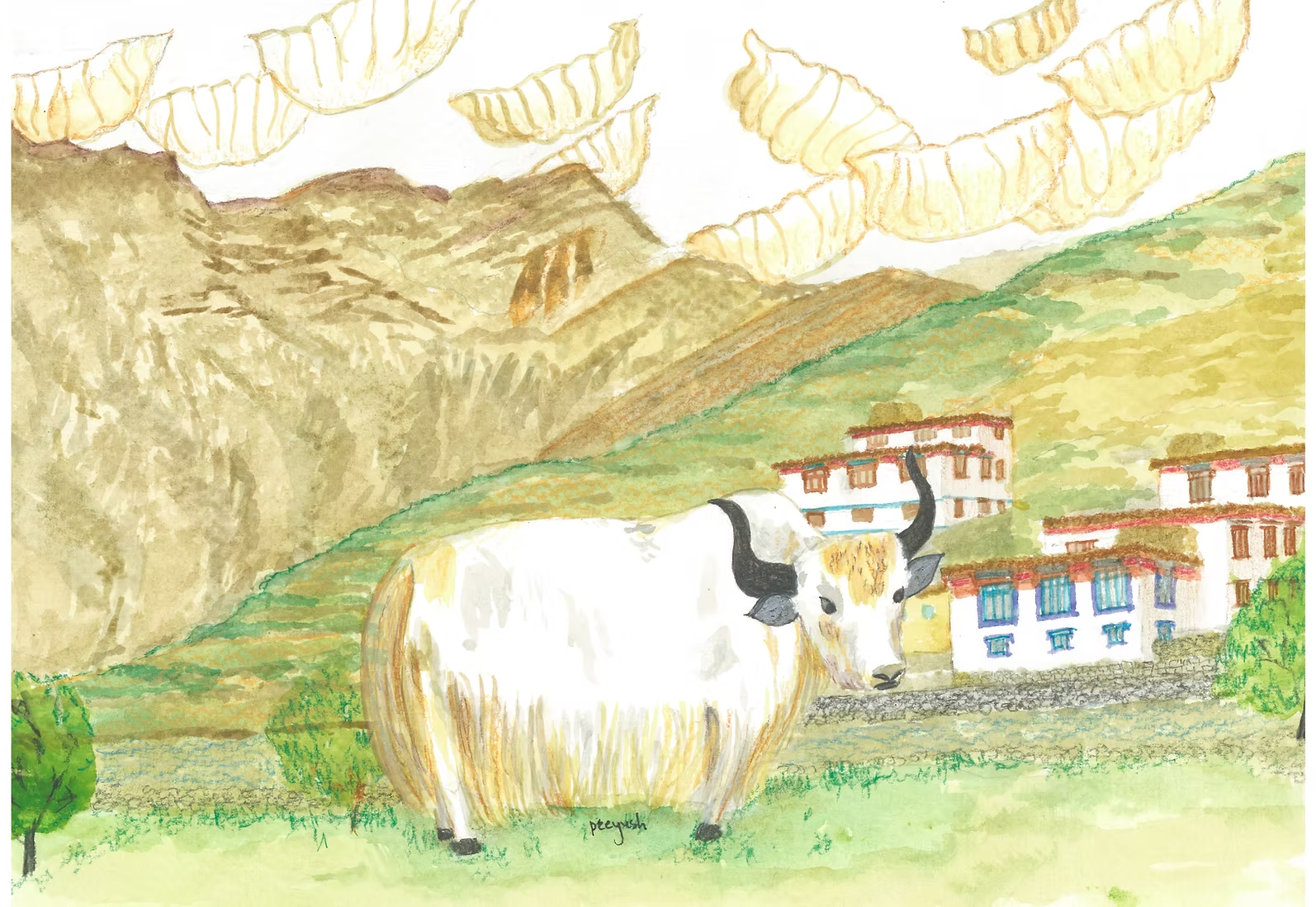
Illustration: Peeyush S

Meat momos for everyone

Illustration: Peeyush S

Unlike most days, folks in Lalung were jostling around with a sense of great urgency that morning. Life in this little village, high up in the Himalaya, is generally slow. But not today. It was hard to tell what the cause of this commotion was. I asked Sonam Chhering, my neighbor, what was going on.

‘The villagers are going to herd the yak from the pasture. The herd was last seen at Kibri, a large pasture at some distance from the village, by the ‘yakzi’, the yak herder. He came home running last evening and reported that one of the yaks had gone crazy!’, said Sonam as he rolled in laughter. People in these villages reared sheep, goat, donkeys, horses, and cows. But the most important animal was the yak, and that for several reasons. The sturdy yak is an excellent assistant in the fields, during farming. Yak wool and yak dung was a precious source of warmth in the extreme winter months. And a yak’s tail can fetch over ten thousand rupees in the local market, if it is spotless white! Takpa—another of our neighbors—had recently purchased a yak from a trader in Manali. This old yak had spent all his life posing for photographs with tourists. He was used to a life of being fed by his master; a far cry from a yak’s life in Spiti. Here, yaks are left free to wander the pastures for most of the year. This means that they roam in a herd searching for green grasses to feast on. Not used to such a hard life, this old fellow spent most days basking in the sun, even if he had to go hungry. He soon developed a nasty temper and would chase down any soul who dared cross his path. Yesterday, it was the yakzi’s turn: he literally had to make a run for his life. So, the men from the village were preparing to catch this old yak. It took the men of the village an entire day to catch the old yak. This old fellow was brought back to the village and tied inside a corral so that he doesn’t play any more mischief. From that day on, I could see this old fellow from my window. He would stare back at me and grind his teeth, as if in warning. In some days I grew used to hearing that ominous sound at practically any hour of the day or night.

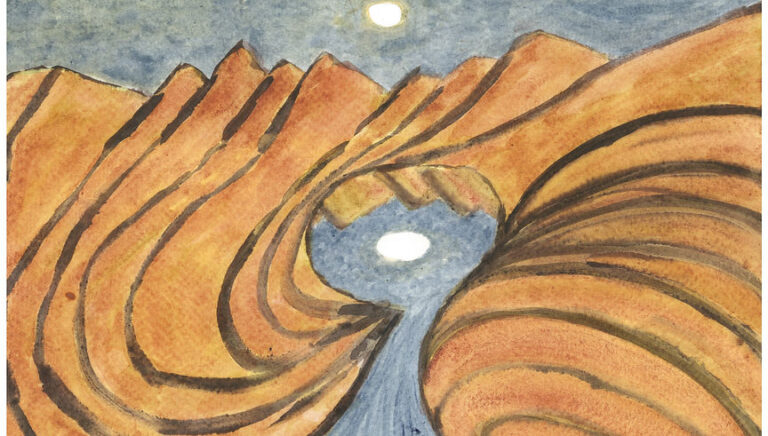
One evening, as I reached the village I found everyone beaming with joy. ‘There’s a party today. Meat momos!’, exclaimed Sonam Chhering. Momos—steamed dumplings—are the most favorite dish in Spiti and are prepared only on special occasions. That evening the entire village gathered to feast on meat momos eaten along with spicy tomato chutney. Full to our hearts’ content we walked back to our homes, that moonlit night. As we reached our respective homes, I realised something was missing. ‘Where’s the old yak?’ I asked. ‘He was the meat in our momos!’ Sonam had a wicked smile. My stomach gave a little lurch. It felt as if the old fellow was grinding his teeth inside my belly.

  • ​Lalung is a village inside the Lingti valley in Spiti and falls on the left bank of the Spiti river.
  • Kibri is a tiny hamlet deep inside Lingti valley and can only be accessed by foot.
  • Corral is a small enclosure made to keep domestic animals. Usually a corral is built just outside one’s house.
  • Momos are a type of steamed, stuffed dumplings. This is a very popular dish in the Himalayan region and usually made on special occasions.
​

1594 1098 Ajay Bijoor
Spiti’s Richest Village

Spiti’s Richest Village

Morang was a hamlet of just five homes, but it was known far and wide not just in Spiti valley but even beyond. Thanks to Meme Chukpo. Meme Chukpo was the smartest trader of the region. He was also the richest man in the valley. He could sniff out an opportunity to make money where most others saw none. He sold yaks to the Changpas and the best Chumurti horses at the Lavi mela in Rampur Bushahr. He had traveled far and wide to trade. But Meme Chukpo had one festering fear. He was weary of people who came to his door seeking financial aid. Over time, he had devised an ingenious way to deal with such requests.

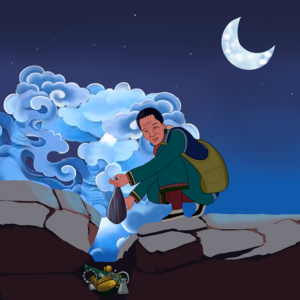
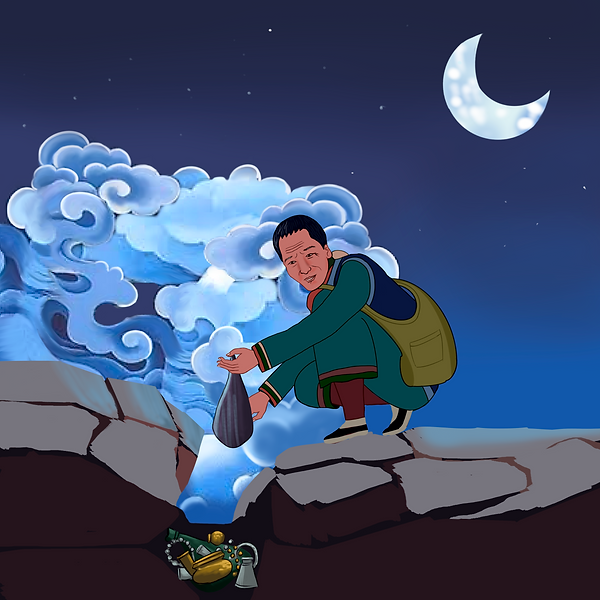
Each time he returned from a trip, he would look up to the sky. Now, if you have ever been to Spiti the first thing you might notice is how few clouds there are on most sunny days. There is barely a cloud or two in the bright blue sky. Meme Chukpo made it a habit to look for such lonely clouds. He would keep some money for domestic use and then dig a hole in the ground under the cloud and hide the rest of his money there. Surely this was the safest place to hide his treasures, and the easiest place to find it if he ever needed it. So busy had he been toiling away making money that he’d hardly ever noticed the magnificence of the rising sun, or the song of a whistling thrush, of flowers that flushed the valley in spring, or that of the slow movement of clouds in the sky.

Each time someone walked up to him seeking financial aid, Meme Chukpo would smile and say ‘I would have helped had there been some money in the house. I’m sorry, but I have none.’ He felt glad that he wasn’t lying after all. All his treasures were buried away under the cloud.

Meme Chukpo went through life working hard. Fortunately, he never faced a time when he had to fall back on the money he had buried under the cloud. But many years after he passed away some children accidentally found a pot of money in a pit under the ground. It was probably one of many pits that Meme Chukpo had dug around Morang.​

Some people still dig the soil around Morang hoping that they might find one of Meme Chukpo’s treasures that he’d buried under a cloud.

  • Meme is a title used by everyone to refer to their grandpa or an elderly man in Spiti.
  • Changpa is a term used to refer to the residents of Changthang – a region in the northern part of Tibet and the eastern part of Ladakh. Changpa are a nomadic community known to rear goats that produce the famous pashmina. They have had ancient trade links with people of Spiti.
  • Chumurti horse is a local breed of horse from Spiti. It is known to be a very sturdy variety, especially adapted for high altitudes.
  • Lavi mela is an annual trade fair that has been held in Rampur-Bushahr for many centuries. Trade fairs were and still are very popular across Himachal Pradesh.
600 600 Ajay Bijoor
The Lonely Tree
Illustration: Peeyush S

The Lonely Tree

Young Bishen Singh’s dreams were finally coming true. He had just passed his college exams and landed a government job as a school teacher. He had always wished for it. There was only one challenge though, his first posting was in Kaza. Spiti was still part of the State of Punjab then, and Kaza only found an occasional mention in government reports. There were a lot of myths surrounding Spiti mostly because so few people had heard of the place, let alone visit it. In those days the bus only went up to Manali after which one had to walk across the Rohtang La, then walk the long stretch from Gramphu to Batal and finally cross the Kunzum La. A very, very long walk of over 100 km.  And after all this walking, you only reached Losar. Kaza was another 60 km away. The travel took over a week.

Bishen was partly sad about leaving his family back in Punjab. But he was also terribly excited for the new adventure he was about to set out on. He had always wanted to explore the mountains and this was his chance. He had packed all his stuff, including a lot of woolens, in a single sturdy cloth bag. He also had one bag just for food that could see him through his long walk to Spiti. Bishen left 10 days before his joining date hoping to reach Kaza a few days before his first day at school.

The walk from Gramphu was a pleasant one. He crossed a patch of birch forest at Dorney nalla. He couldn’t recollect seeing so many birch trees in a single place before. There were so many waterfalls to admire that one hardly noticed the distance. His pace dropped every few kilometers as he was in awe of the landscape. It was also early summer and Gaddi herders were setting up camp. Gaddis are always glad to receive an unexpected guest who brings them news from new places. The first few evenings were spent at different Gaddi camps, where the routine was somewhat fixed. Bishen would be welcomed with a piping hot cup of tea followed by rotis drowned in ghee and roti-khadi – all made from goat milk. Bishen had enjoyed his walk from Gramphu to Batal. But the walk from here on was going to be a lonely one since Gaddis only camped up to this point and did not enter Spiti. It took Bishen two full days to summit Kunzum La and then climb down to Losar, the first village in Spiti.

The first thing Bishen noticed when he started descending Kunzum La was how bare the landscape was. The waterfalls were all gone and even the trees began to disappear. By the time he reached Losar, he was struggling to spot a single tree. Bishen suddenly felt as if he had set foot on a different planet. His pace dropped again, but this time in shock. He was struggling to wrap his head around why these massive mountains were without any greenery. Had someone robbed them of it? He couldn’t imagine living in a place like this, that too so far from home. He suddenly felt like he was stuck without anywhere to escape. As he reached the village of Sumling just 15 km from his final destination Kaza, his eyes fell on a lonely willow tree.

Illustration: Peeyush S

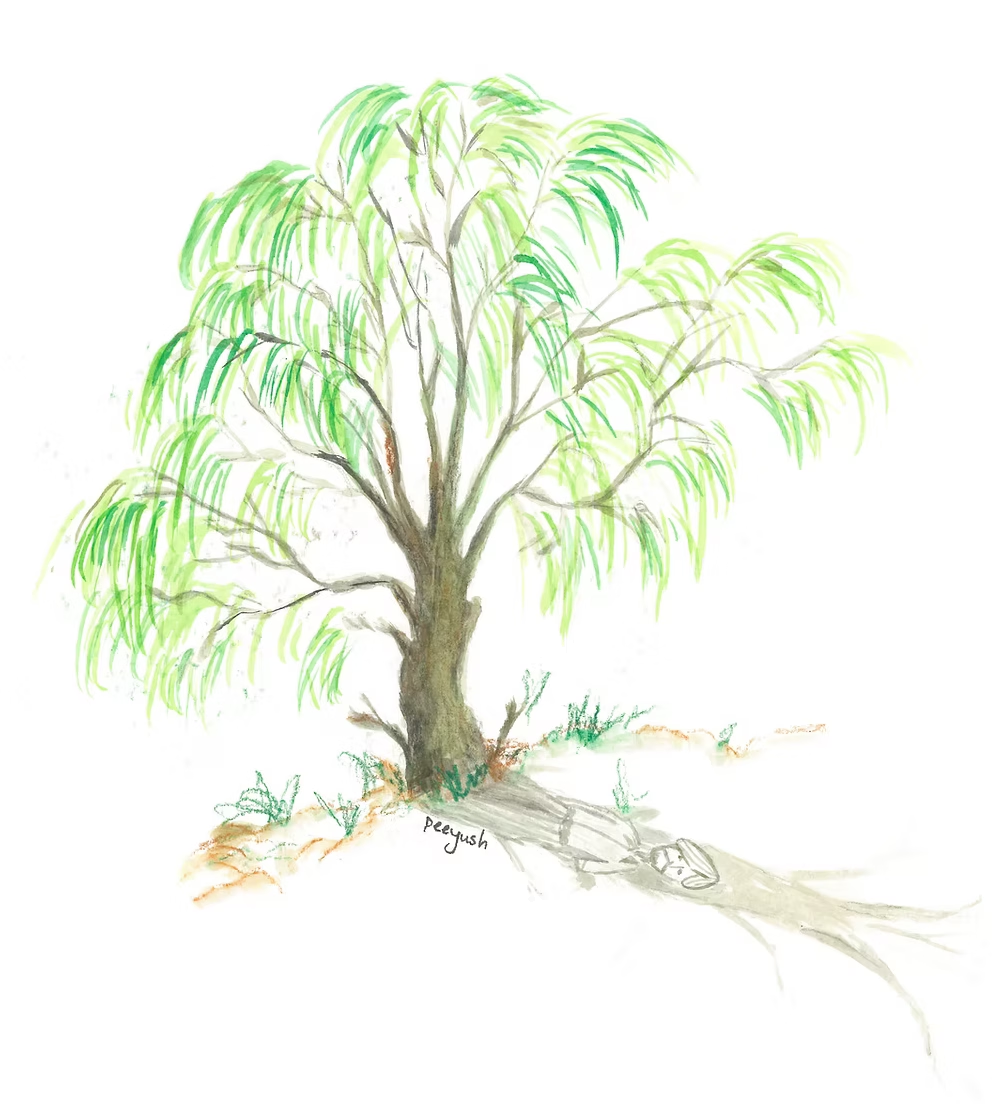
This full-grown tree stood in all its majesty almost in defiance with the otherwise treeless landscape. Bishen felt like he had met a long-lost friend. His eyes welled up and he couldn’t hold himself back. He dropped all his luggage and ran towards the tree. He hugged the tree tightly and sobbed loudly, ‘My friend I have been forced to come this far just so I can keep the hearth burning back home, but what ill luck has fallen upon you? Who cursed you to come to this place?’

Hearing Bishen’s loud sobs, several curious villagers gathered around to see what was happening. But none had the heart to disturb the conversation between two long-lost friends.

  • Kaza is the main town of Spiti and the headquarters of Spiti sub-division.
  • Gramphu and Batal are locations on the road from Manali to Kaza.
  • Birch is a thin-leaved deciduous hardwood tree. The bark usually peels horizontally in thin sheets, especially on young trees. These sheets were traditionally used as paper in many high mountain regions. Several holy scriptures have been preserved by writing on such sheets.
  • Dorney nalla is a patch where one can still find a lot of birch trees on the way from Manali to Kaza.
  • Sumling is a beautiful village on the right bank of the Spiti river.
  • Willow is a tree with long thin branches and often grows near water.
994 1118 Ajay Bijoor
The Red Fox and the Yak

The Red Fox and the Yak

Once upon a time in the scenic valleys of Spiti, there lived a clever red fox and a gentle yak. The fox had heaps of fresh, green grass, while the yak had heaps of smelly waste. One day, as they roamed the forest, they accidentally bumped into each other.

“Oh, sorry!” said the fox.

“No problem!” replied the yak.​

As they chatted, they realized how useless their possessions were to them. But then, they had a bright idea.

“Why don’t we trade?” suggested the fox. “Your waste is perfect for my garden, and my grass is perfect for your tummy!”

The yak agreed, and they made the swap. This simple exchange made them best friends.

One day, as their friendship blossomed, the fox promised the yak, “If you ever need help, just call me, and I’ll be there in a flash!”

The yak, feeling mischievous, decided to test the fox’s promise. While grazing, he called out, “Fox, help me!”

The fox rushed to the yak, only to find him laughing. “You got me this time, yak!” the fox chuckled but was a bit annoyed.

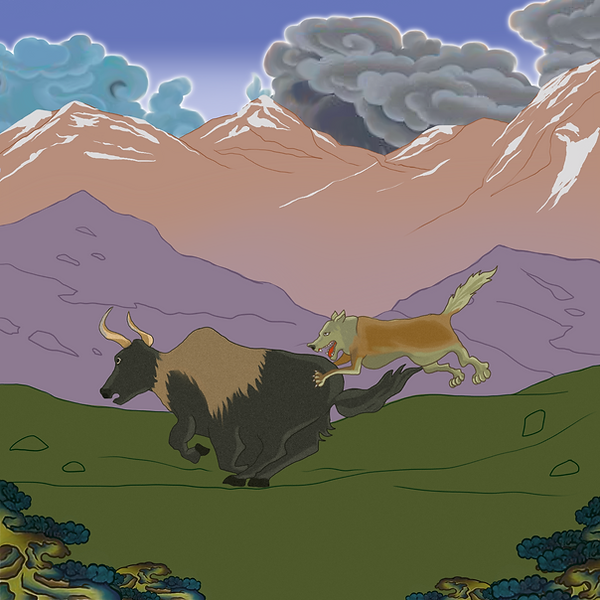
The very next morning, while grazing again, the yak was suddenly attacked by a fierce wolf! Terrified, he called out, “Fox, help me!”

But the fox, thinking it was another prank, ignored the cries. Sadly, the wolf killed the yak.

The following day, the fox went to check on his friend. When he saw the yak’s lifeless body, he felt a pang of guilt. He vowed to take revenge on the wicked wolf.

The fox’s first plan was sneaky. He smeared oil on his tail and started beating it against the icy snow. The same wolf, curious, approached him and asked, “What are you doing, fox?”

“This makes your tail strong and beautiful,” the fox lied.

The wolf, eager to have a strong tail, begged to try. The fox pretended to hesitate but finally agreed. When the wolf’s tail stuck to the snow, the fox ran away laughing. The wolf struggled to free his tail, losing all its hair in the process.​

Next, the fox made a sticky potion. When the bald-tailed wolf saw him, he asked, “What are you making now, fox?”

“This potion makes your eyes cool and soothing,” the fox fibbed.

The wolf insisted on trying it. Once applied, the potion made the wolf’s eyes burn! He scratched them furiously, making it worse. The fox, giggling, ran away again, leaving the wolf half-blind and in pain.

Days later, the furious wolf found the fox and wanted to kill him. The quick-witted fox lied again, “Oh, I’m not that fox! I come from another forest and got lost.”

The wolf, now confused, believed him. “What are you doing here?”

“I’m making a basket to carry on my back. It’s great for building strength,” the fox said.

The wolf, wanting to be strong, begged the fox to make a basket for him. The fox filled it with heavy stones and placed it on the wolf’s back. The wolf groaned in pain as the fox ran away, laughing.

The fox’s final plan was the trickiest. He made a sack and waited for the wolf. When the wolf arrived, he asked, “What are you doing now, fox?”

“I’m making a fun sack to play with my friends,” the fox said.

The wolf wanted to join. The fox asked him to get into the sack and pushed him down a hill. Miraculously, the wolf survived, and the fox grew even more frustrated. He knew the villagers disliked the wolf, so he concocted his ultimate plan.

One day, the fox was measuring sand when the wolf, now with memory loss, came by. “What are you doing, fox?”

“I’m measuring sand to make my friend powerful,” the fox lied.

The wolf, eager to be powerful again, begged the fox to put the sand on his back. The fox agreed, piled the sand on the wolf, and climbed on top. They headed toward the village.

Upon reaching the village, the fox yelled, “Help! A wolf is here!”

The villagers, armed with weapons, surrounded the wolf. Shocked and unable to run due to the heavy sand, the wolf asked the fox, “What’s happening?”

The fox replied, “I’m avenging my friend, the yak, whom you killed.”

The villagers, angered by the wolf’s presence, killed him. The fox felt a bittersweet satisfaction, having avenged his friend. The forest animals learned the importance of trust and lived peacefully, always remembering the clever fox and the unfortunate wolf.

  • Red fox is a common fox with a reddish coat. It is one of the most widely distributed species in the world.
  • Yak an animal of the cow family, with long horns and long hair. It is reared in villages in the Himalayan region
600 600 Aryan Gadgil
Birth of the Chandra river

Birth of the Chandra river

It is fairly well known that Gaddi herders from Kangra spend summer in the rich pastures of Lahaul. This is an annual migratory route that the Gaddi community have accessed for generations. They camp in the high mountain pastures. From a distance their life may seem idyllic – spending the day in the shadow of snow-clad peaks, breathing the crisp mountain air, basking in the soft summer sun. Unfortunately, the Gaddi’s dammed flock does not harbor such taste for a serene life in the mountains. All they care for is food! Each morning they bleat to be taken to a new slope where they can get their fill of fresh summer grass. And the poor Gaddi herder has to run behind them to make sure the flock remains safe, for a pesky wolf waiting to feast on the flock is almost never very far. Summer days are very long. But as dusk sets in, the Gaddi gets some rest.

It had only been a few years since Noopalal started accompanying his aged uncle and their flock. Their settlement was at the farthest end of Lahaul valley. It was so far that most herders had only heard of it. It was famous for a beautiful lake that had turquoise-blue water.

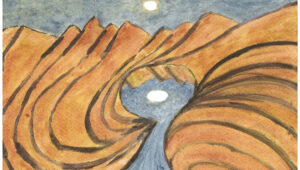
Noopalal was in-charge of the flock, while his old uncle stayed back and cooked for them. Every evening Noopalal would herd the flock and sit outside their thaach, which overlooked the lake. He would slowly pull out his flute and play it softly while his uncle smoked a pipe. Even though there was no one but his animals to listen, he played the flute because it gave him joy. On most days it would get dark by the time he finished. He would then crawl into the thaach, eat his meal, and retire for the day. This was the ritual he followed on most days until it all changed one night. The moon was full and when Noopalal finished playing his flute he looked mesmerized. As if he were possessed, as if someone had cast a spell on him. When he looked at the lake he saw a reflection of the full moon in its turquoise-blue water. He stood up in shock. “The moon has fallen in the lake”, he whispered. “The moon is drowning. Help!” He yelled as he ran towards the lake. His old uncle barely registered anything, and by the time he did Noopalal had jumped into the icy cold water. His poor uncle ran behind him. But he could only watch helplessly. He remembered Noopalal shouting frantically that the moon is cracking, looking at the ripples on the surface of the water. By morning, both Noopalal and the moon were gone.

Did Noopalal sink with the moon that night? Maybe not. But many believe that the moon did, indeed, drown that night and the water that spilled over gave birth to the Chandra river. And the lake, Chandra tal, remains beautiful as ever. Especially on full moon nights. If you ever have the good fortune of spending a full moon’s night by Chandra tal, you might even hear Noopalal’s flute.

  • Gaddi herders are a semi-pastoral tribe that rear sheep and goat. Some of the sturdiest men and women, the Gaddis travel for 10-11 months with their livestock covering a vast distance across the Himalaya and her lower plains.
  • Kangra is a Himalayan region from where the Gaddi herders hail. It is also a district in the State of Himachal Pradesh.
  • Lahaul is another remote Himalayan valley that can be reached after crossing the Rohtang pass. Lahaul valley is adjacent to Spiti valley and together Lahaul-Spiti forms the biggest district of Himachal Pradesh.
  • Thaach is a stone hut that gaddi herders live inside in places where they camp. These stone huts are old and beautifully built by stacking stones. They protect the herders from rough weather.
  • Chandra river rises from the snow lying at the base of the main Himalayan range in the Lahaul and Spiti district. The beautiful Chandra Tal has formed at its source.
  • Chandra tal is a beautiful high-altitude lake known for its beauty. It is also a very beautiful site to watch water birds. It is a mythologically important site.
864 491 Ajay Bijoor
The First Bus to Spiti

The First Bus to Spiti

Losar is the first village of Spiti valley which is located in the high Himalaya. You have to cross two high mountain passes to reach Losar. Getting here in winter is impossible because heavy snowfall blocks the roads across the passes. People only traveled in and out of Losar in summer. Heavy winter snowfall kept Losar, and the rest of Spiti, isolated for many months in a year. Winters were usually long and uneventful. But that year was different. Everyone had spent winter in anticipation. Everyone was excited for the new bus service that was going to start from Manali to Spiti in summer. Until then, only a few men had traveled outside the valley for trade. Horses were the preferred mode of travel and almost no one had seen a motor vehicle.

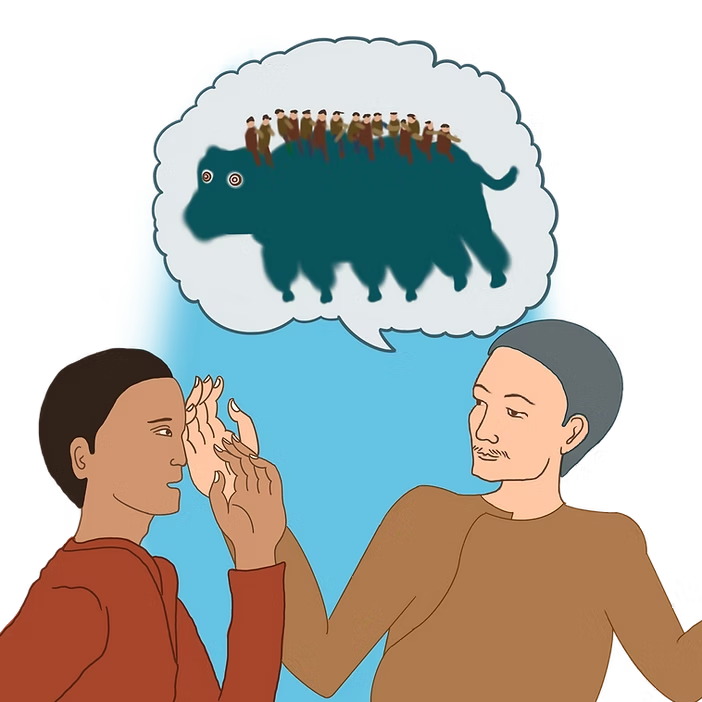
Everyone was talking about the bus. That it would cover the steep climb up and down the mountain passes in a matter of hours, carrying 42 adults! What sort of a beast could carry such a heavy load and run so fast? This had remained a topic of discussion across Spiti, and especially Losar. Someone suggested that this beast had six legs and galloped faster than the fastest horse, while another said that it had the strength of 10 mules. And its eyes light up the mountain like the moon on a full moon night, said one of the better-traveled locals. The entire valley was wrapped in curiosity.

The long wait came to an end when the sun changed its direction marking the start of summer. It took several weeks to clear the snow over the passes. Word finally came that the bus service would start in two days. Losar would have the distinction of welcoming the first bus to Spiti. The entire village got busy. The men were decorating the village gate – an honor otherwise reserved to welcome a respected Rinpoche. The women took a break from the agricultural fields to prepare a feast to mark the historic day. Even the school was called off, so that children could take part in the celebrations.

Illustration: Nawang

People lined up to welcome the first bus with an Aashi in their hands. Everyone heard the bus before they saw it. The resounding humm of the diesel engine was met with loud cheers. And then, the bus came into sight. It chugged along the bumpy road. Everyone stood hypnotized seeing this enormous beast. No one moved. The bus came to a grinding halt after crossing the decorated village gate. Everyone moved forward skeptically to examine the bus. Some touched the body of the bus, others were fascinated by the windows and doors, a few observed from a distance lest the bus land a kick like some irritated horses do. The driver and conductor got off and were given a hero’s welcome. As the excitement gradually faded, people began to move towards the area where the food was being served.

As soon as the crowd vanished, Eve Ning Gemo lumbered out of her house. This kind, old lady was carrying a load of fodder in her hands. She walked up to the bus and laid out the fodder before the bus. Then, looking up lovingly she patted the bus and said, “You must be very tired. These youngsters have no heart. They all cheered as you strode in and then left to eat without even feeding you anything. But don’t you worry, I am here. I have brought you fresh fodder. Eat as much as you wish.”

Eve continued to pat the bus tenderly, waiting patiently for the bus to start eating the fodder she had laid before it.

  • Spiti Valley is a high-altitude region of the Himalaya, located in the north-eastern part of the northern Indian state of Himachal Pradesh. It is one of the most remote areas of India.
  • Rinpoche is a title in Tibetan Buddhism to address a respected and highly trained spiritual teacher or master.
  • Aashi (also referred to as Khata or Khatag) is a white scarf offered as a mark of respect in the Himalayan region. It is usually offered to revered monks and very special guests.
  • Eve is a title used by everyone to refer to their grandma or an elderly lady in Spiti.
1536 850 Ajay Bijoor
Balu Thukangbu

Balu Thukangbu

Balu Thukangbu is a little man who lives in the Himalayas. In the Spiti region, you will hear stories of him from Kaza to Kibber, from Chicham to Tashigang, from Kee to Bur, from Demul to Sagnam.​

No-one is quite sure where Balu lives. In Pin Valley, they say that Balu comes from biyul, a hidden land that only holy people can enter. In Kibber Valley, they say that Balu comes from a place just above Gete village, but no-one has seen him for a long time.

Balu is said to be one foot tall. He wears a one-foot-tall hat and carries a one-foot-tall stick. He can grant wishes, but first you must overpower him and take his stick and his hat.

This, however, is no easy task, because Balu has the strength of a bear.

He is also very hard to see. Some people say they once glimpsed something from the corner of their eye and wondered if it could have been Balu. Others say that only holy people or those with a fearful spirit can see him.

This does not stop people from trying, though. People love the idea of having their wishes granted. Some people even try to catch Balu and keep him as a servant.

Balu dislikes such treatment. If he is caught, Balu will try to escape and punish those who held him captive.​

In early times, Balu used to play in Key pond, but some of the villagers tried to catch him. After that, he was afraid and did not want to come back.

This did not stop people from trying, all over Spiti. People love wishes.

One of the villagers did manage to get hold of him one day and put the stick and the hat in a place too high for him to reach. They made Balu live in the kitchen as a servant. At ploughing time, Balu was sent to help in the fields.

Ploughing is hard work and requires help from everyone. The villagers made sure that Balu was always on hand. He was charged with the task of maintaining the equipment and mending anything that got broken.

One day, the stick from the plough was broken, so a boy was sent back to the village to get a new stick. The boy was in a rush. He saw a stick on one of the high shelves in the kitchen and grabbed it. He ran back to the field and gave it to Balu so he could mend the plough.

As you have probably guessed, the boy had taken Balu’s stick by mistake. He handed the stick to the little man. With his stick returned to him, Balu was able to escape.

Balu was still angry at the way he was treated and cursed the village. From Kaza to Kibber, from Chicham to Tashigang, from Kee to Bur, from Demul to Sagnam, people talk about the fate of the village cursed by Balu. They agree that Balu is very formidable, despite his size.​

Of course, that doesn’t put people off trying to catch him. People love wishes. Some people still try to catch a glimpse of him, and discuss whether they would try to catch him themselves if they saw him. What would you do?​

  • Chicham, Tashigang, Kee, Demul and Gete are villages in the Spiti valley and fall on the left bank of the Spiti river.
  • Pin valley is a small valley inside Spiti which is known for its scenic beauty and very hospitable people, much like the rest of Spiti.
  • Bur and Sagnam are villages in Pin valley.
  • Key pond is a lovely pond near the Kee village.
472 625 Dr. Jane Orton
Shangdong to Stupa
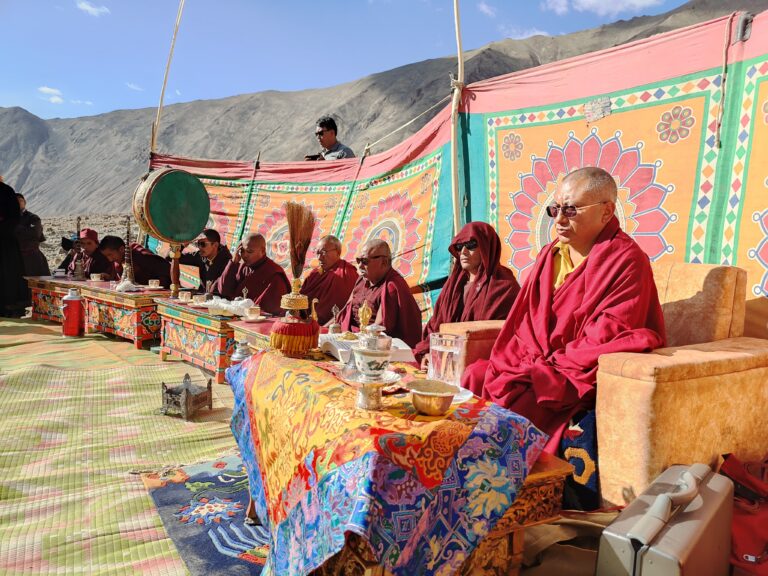
Consecration ceremony of the newly constructed Stupa at Tharuk, July 2024

Shangdong to Stupa

Two years ago, during a winter vacation, I took my four-year-old daughter, Gyanzin Yeeyong Wangmo, to a Shangdong, an ancient wolf trap. I wanted to share the stories of my childhood and the experiences of our village, where people once relied heavily
on livestock for their livelihood. The Shangdong was a method used to control the wolf population and protect domestic animals from these predators. I vividly remember a day when, on my way to school, I heard a commotion—dogs barking and
people shouting. Drawn by curiosity, I arrived at the scene to find a wolf trapped and being stoned by the villagers. The reactions were mixed: some were relieved, while others, particularly the elderly, chanted “OM MANI PADME HUM,” praying for the
wolf’s soul. This ritual reflected a deep-seated ambivalence—people felt compelled to kill the wolf, but not without sorrow.

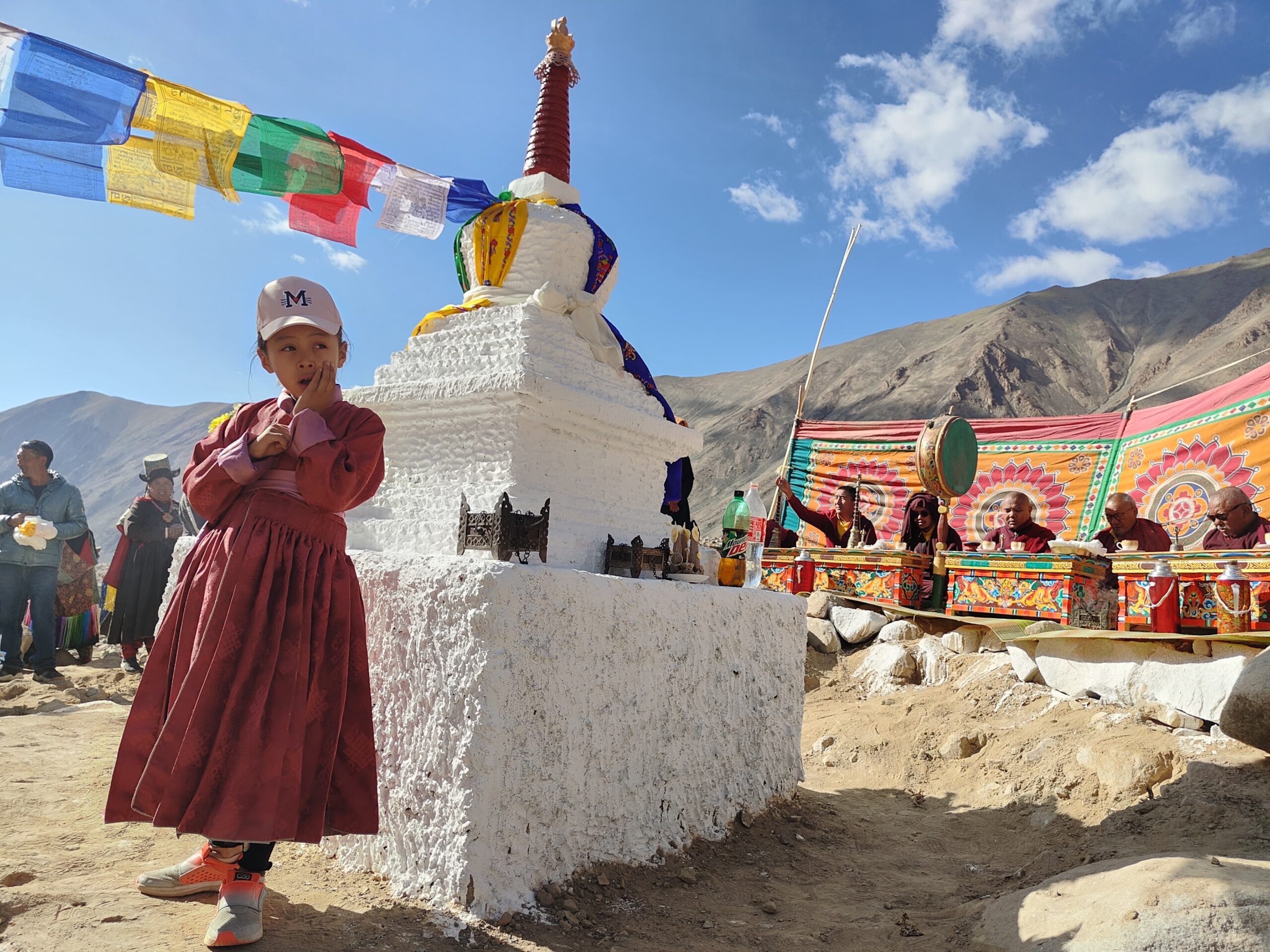
​Sharing these stories with Gyanzin made me reflect on the complex relationship between our community and wildlife. It also reminded me of the “Shangdong to Stupa” project initiated by the Nature Conservation Foundation (NCF) in 2016. The project aimed to replace these wolf traps with stupas, symbolizing a shift from harm to healing and from fear to coexistence. The first stupa was built in Chushul, and since then, six more have been constructed across Ladakh.​

​The site I visited with Gyanzin seemed a fitting location for another stupa. I reached out to Karma Sonam, the field coordinator at NCF, to discuss the possibility of incorporating this site into the project. Despite recent incidents of wolves preying on livestock in the valley, including losses within our own family, we believed that fostering a more positive attitude toward wildlife was crucial.

Consecration ceremony of the newly constructed Stupa at Tharuk, July 2024

Consecration ceremony of the newly constructed Stupa at Tharuk, July 2024

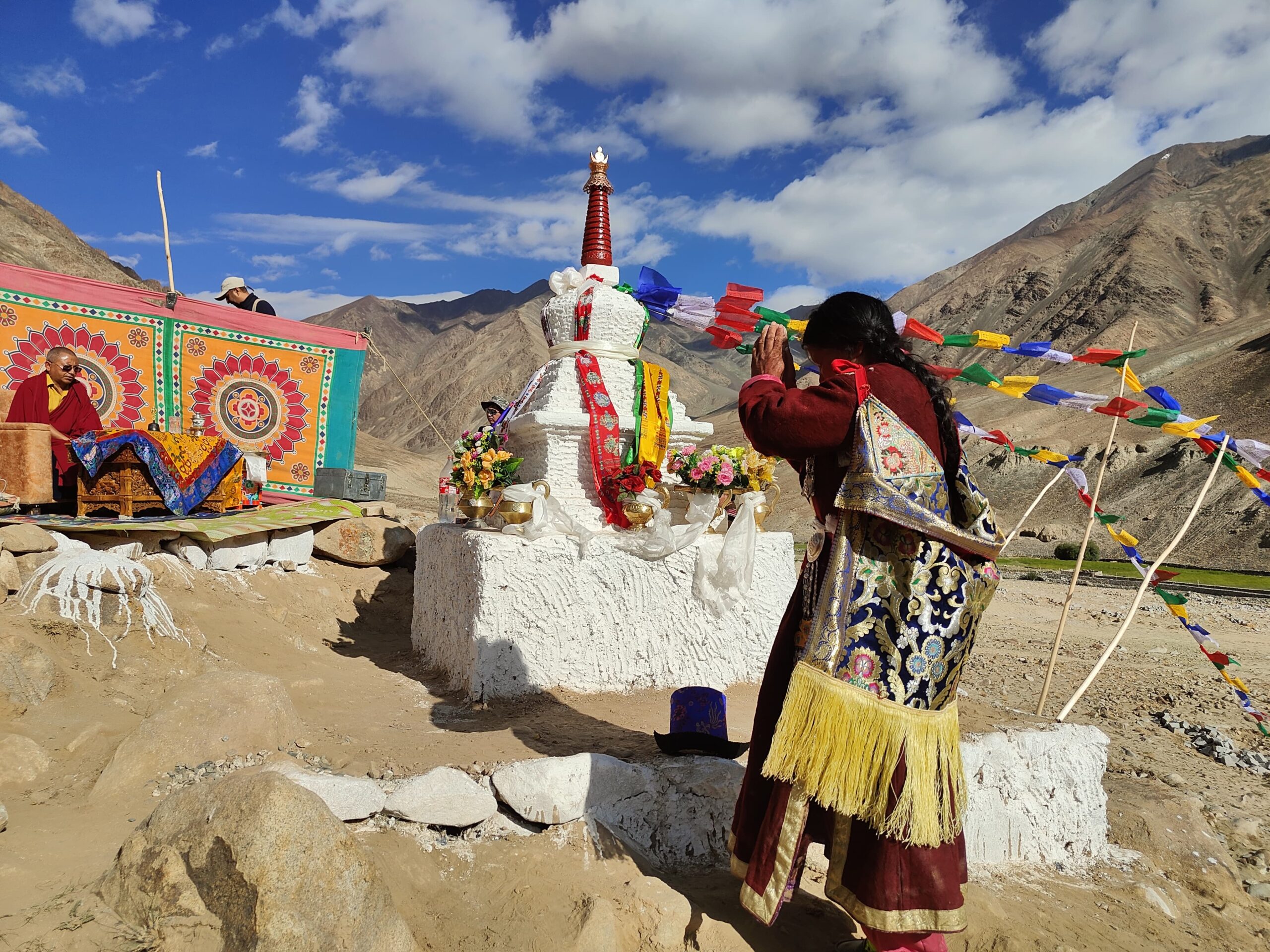
On July 20, 2024, with the collective efforts of the NCF and the villagers of Tharuk, the seventh stupa was completed near a traditional Shangdong in the Serkungchan valley. This effort, part of the “Shangdong to Stupa” project, represents a significant move towards wildlife conservation and a renewed respect for nature. The construction began on July 14, 2024, with the support of Karma Sonam, the NCF team, skilled stupa makers from Nubra, and the Tharuk villagers. The stupa was completed on July 19 and consecrated on July 20 by His Eminence Bakula Rangdol Nima Rinpoche, Khenpo Shedrup, and monks from Shachukul Monastery.

His Eminence Bakula Rangdol Nima Rinpoche, who had blessed the first stupa at Chushul in 2018, encouraged the community to live in harmony with wildlife and to cherish their natural surroundings . He commended the efforts of NCF and the Tharuk villagers, emphasizing the importance of this project as a model for other regions in Ladakh and the Himalayas, where similar traditional practices still persist.

The transformation from Shangdong to Stupa symbolizes a journey of forgiveness and a commitment to conservation. It reflects a growing awareness and respect for the delicate balance of our ecosystem, where both humans and wildlife can coexist peacefully. Through this initiative, we hope to inspire other communities to embrace compassionate and sustainable practices, ensuring a harmonious future for all beings.

2560 1920 Dr. Stanzin Namgial
Unveiling an Enigmatic Jewel: Sea Buckthorn

Unveiling an Enigmatic Jewel: Sea Buckthorn

Nestled high amidst the majestic peaks of the Himalayas lies a hidden treasure, a rare and mystical berry known as sea buckthorn. Revered for its extraordinary nutritional profile and therapeutic properties, this vibrant orange jewel has captivated the hearts and taste buds of travellers and locals alike. Join me on a journey of discovery as we delve into the intriguing world of sea buckthorn, unearthing its rich history, cultural significance, and the myriad ways in which it contributes to sustainable living and a holistic lifestyle.

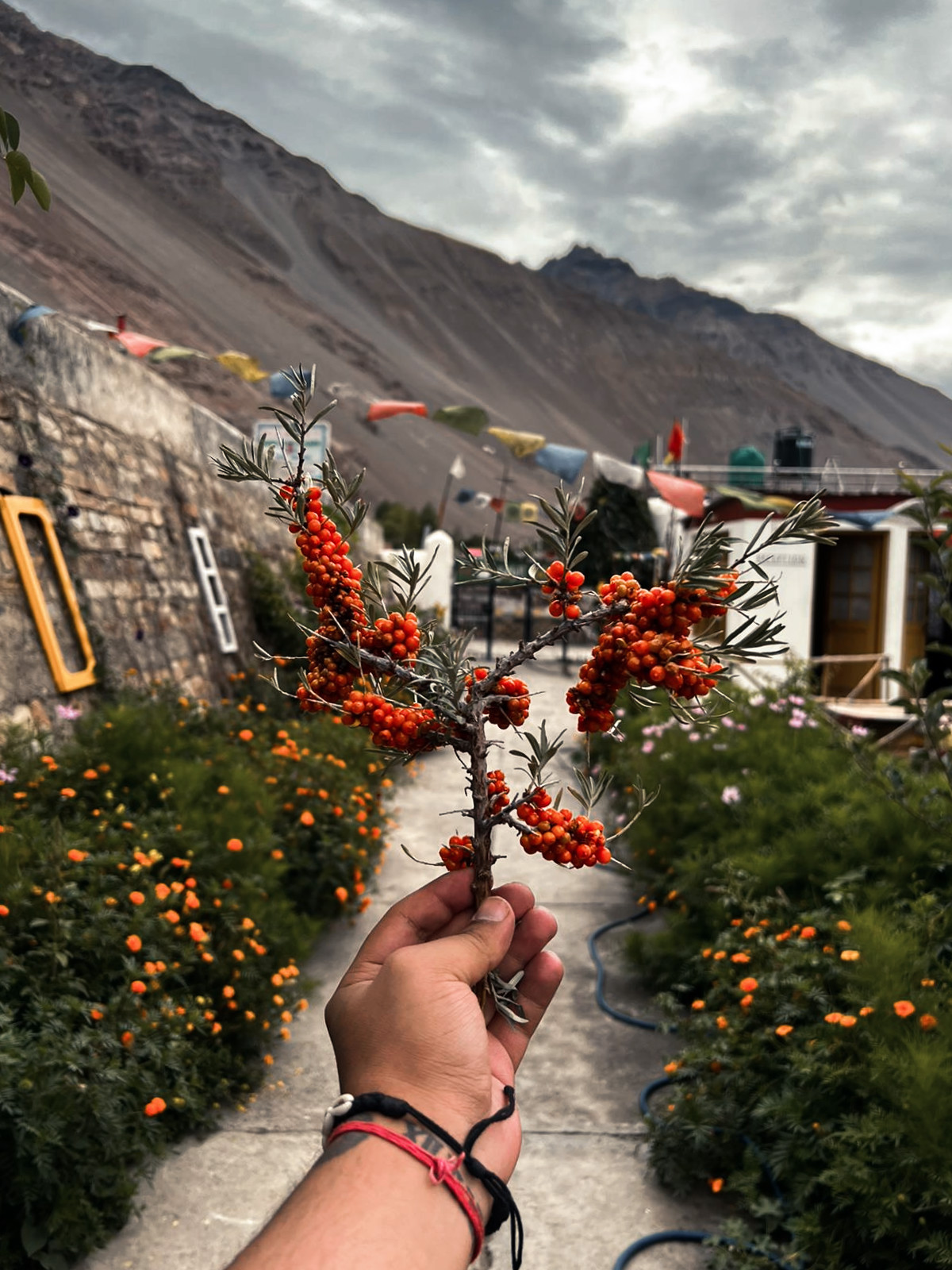
I came across the sea buckthorn berry around three years ago, when my friend and I were searching for a picnic spot in the hidden valleys of Spiti, Himachal Pradesh. We had heard about a beautiful flowing freshwater stream where we could bathe and cook food on woodfire. Our plan was to find this spot. My friend, Yangzom, and I ended up hiking for about 1.5-2 hours and on the way stumbled across thorny shrubs that kept pricking our legs and lower body. We got extremely annoyed and cursed the shrubs since they were growing along the entire stretch. When we looked closely, we saw that they had small orange-yellow berries. At first, we were hesitant to try them, but when we did, they tasted tangy (a citrusy burst of flavour). We plucked many for our way back home. It was very difficult to even try plucking them due to the thorny branches. We managed to bring some back and when we inquired about them with a local, we learnt that these were sea buckthorn berries and they had superfood properties. This was the same berry being sold at the Himalayan cafes and homestays in the form of teas, juices and jams.

Illustration: Nawang Tankhe

The human consumption of sea buckthorn (Hippophae rhamnoides) dates back thousands of years. Revered in traditional Tibetan and ayurvedic medicine, it has been treasured for its remarkable healing properties. Growing abundantly in the Himalayan region, sea buckthorn is an integral part of the local culture, where it is known by various names such as tirhuk and lehtar. The berry is known to be a nutritional powerhouse.  They are a potent source of vitamins, including vitamin C, E, and beta-carotene, which support a robust immune system and promote healthy skin. Rich in essential fatty acids, such as omega-3, -6, -7, and -9, sea buckthorn nourishes the body from within, benefiting cardiovascular health and aiding in the management of cholesterol levels.

In traditional medicine, sea buckthorn has been revered as a natural remedy for various ailments. Its oil, extracted from the berries, is highly sought-after for its potent antioxidant and anti-inflammatory properties. This golden elixir is used topically to heal wounds, soothe sunburns, and combat the signs of aging. When ingested, sea buckthorn oil aids in digestion, reduces inflammation, and promotes healthy liver function.

Beyond its remarkable health benefits, sea buckthorn plays a crucial role in sustainable travel and environmental conservation. This hardy shrub thrives in high altitudes, growing in the harsh and barren landscape, and helping to prevent soil erosion. Its roots anchor the soil, while its branches create natural windbreaks, protecting delicate ecosystems. Harvesting sea buckthorn berries provides a supplementary income to local communities, encouraging the preservation of traditional Himalayan farming practices.

The tangy and slightly astringent flavour of sea buckthorn has found its way into the culinary world, captivating chefs and food enthusiasts alike. The berries are used to create delightful jams, syrups, and sauces, lending a burst of vibrant colour and a refreshing acidity to dishes. Sea buckthorn tea is cherished for its invigorating taste, while innovative mixologists are crafting enticing cocktails featuring this Himalayan gem.

Immerse yourself in the awe-inspiring beauty of the Himalayas as you embark on a journey to discover sea buckthorn in its natural habitat. Trek through breath-taking landscapes, where the shimmering orange berries cling to branches, contrasting against the snowy peaks. Engage with local communities and witness their time-honoured techniques of harvesting and processing sea buckthorn, gaining a deeper appreciation for their sustainable way of life. You don’t have to travel to the Himalayas to incorporate the benefits of sea buckthorn into your everyday life. Seek out products infused with sea buckthorn oil, such as skincare items and supplements, to harness its rejuvenating and immune-boosting properties. Experiment with sea buckthorn-infused recipes and drinks to add a nutritious twist to your culinary repertoire.

The enigmatic sea buckthorn, with its vibrant colour, remarkable health benefits, and deep cultural roots, is a true embodiment of sustainable travel and holistic lifestyle. Its presence in the Himalayas enriches the local communities and provides an opportunity for travellers to experience the wonders of this ancient berry. Let the allure of sea buckthorn ignite your curiosity and inspire you to explore the world, one sustainable and wellness-infused adventure at a time.

1545 2000 Sheetansh
Juniper: The Sacred Conifer
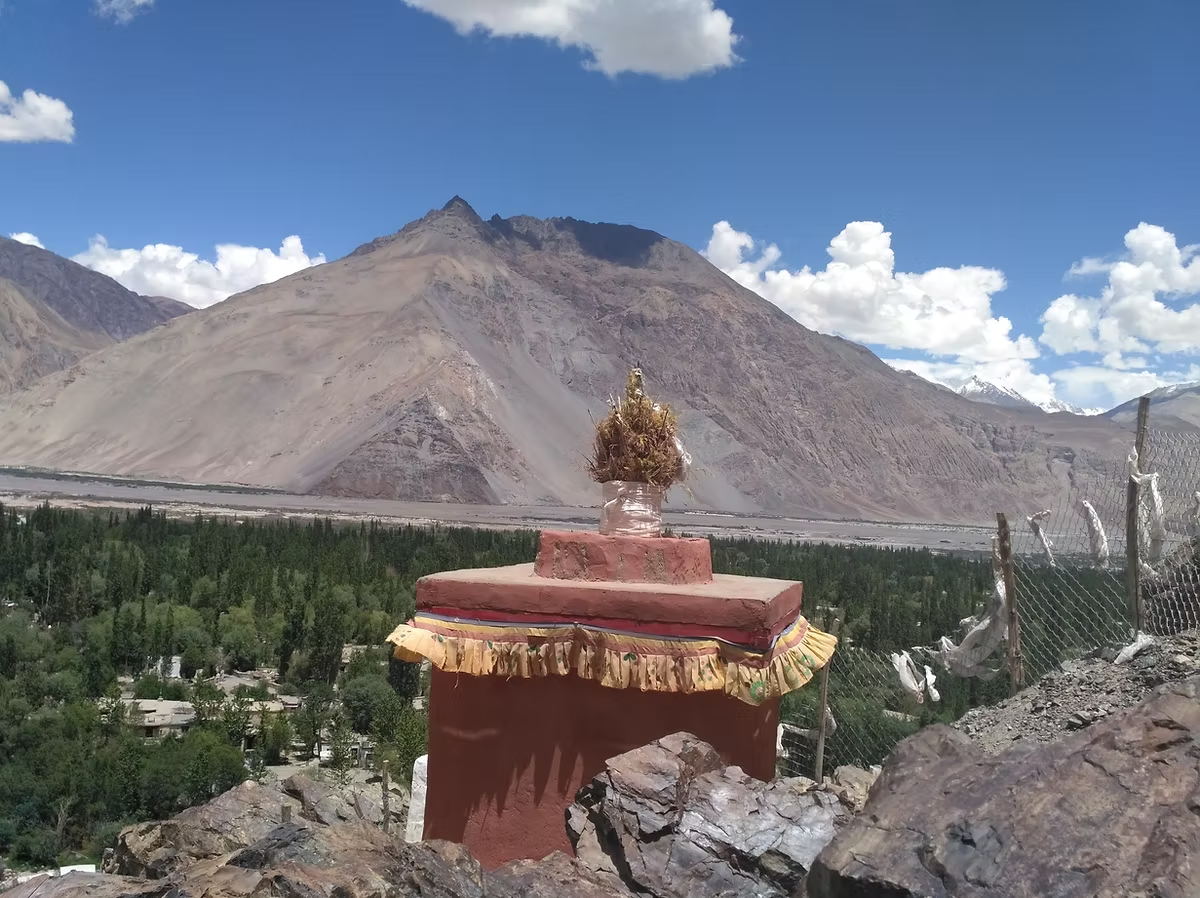
A sacred Lha-to in Nubra Valley | Photo: Konchok Dorjay

Juniper: The Sacred Conifer

Shukpa or Juniper (Juniperus spp.)  is a distinct evergreen tree, sometimes a shrubby tree, that belongs to the conifer group of gymnosperms. Known to grow at the highest elevations on earth, juniper is well distributed all over the Northern Hemisphere from Arctic to the tropics, and most abundantly in the temperate regions of Europe, North America and Himalayan ranges in Asia.

Ecologically, juniper is an important species in the fragile cold desert ecosystem. It survives freezing temperatures and grows luxuriantly in the cold arid climate, on rugged high-altitude slopes of Ladakh. Juniper plays a significant role in supporting different life-forms of the cold desert ecosystem including crawling insects, chirping birds and busy rodents. Juniper berries and leaves are food for many. It acts as soil binding agent preventing soil erosion. The blooming juniper growing along jagged terrain of the Himalaya gives an enchanting green hue to the stark cold desert landscape, otherwise barren and snow covered for most part of the year.

Ladakh is bestowed with three species of the genus Juniperus i.e. J. polycarpos (Himalayan Pencil Cedar), J. recurva (Weeping Blue Juniper) and J. communis (Common Juniper). Juniper species have a sparse distribution in Ladakh. Among the three species, Himalayan Pencil Cedar is characterised by its 2 to 5 seeded, bluish-black cone and is restricted to high mountain valleys of Sham and Nubra region in Leh district at an altitude of 7,000-14,000 ft. The Common Juniper having 3 seeded blue-black cones is found abundantly along Zojila and Batalik hills (5,400-14,000ft.), while the Weeping Blue Juniper, which is popular for its one seeded brown-purple cone, is found along the alpine slopes of Kargil at 7,500-12,500 feet.

Ladakh is one of the few places in India to find junipers. All three species are locally known as Shukpa among the Buddhist communities and Chilgi among the Brokpa tribes of Ladakh. Of the three flourishing junipers, the Himalayan Pencil Cedar has immense socio-cultural and religious significance for the people of Ladakh and is considered a sacred tree among the Buddhists. The rich culture, tradition and festivals, especially Losar – traditional New Year in Ladakh witnesses use of the fragrant juniper.

Some important uses of juniper, particularly the Himalayan Pencil Cedar in Ladakh include:

Juniper for decorating Lha-thos

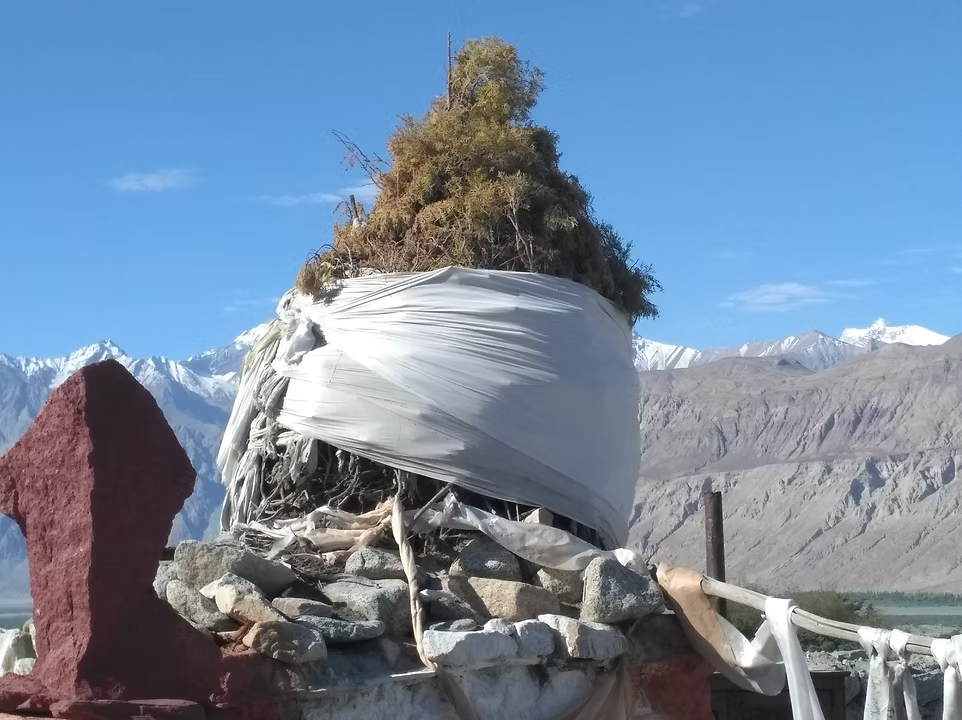
People of Ladakh and Tibet used green twigs of junipers to decorate Lha-thos, a typical structure comprising of a bunch of juniper twigs – Lha-shuk fixed in between the rock edges or in a small square wall made of clay, bricks or/and stone, at the elevated top of a hill or roof.

The term Lha-thos is derived from the words Lha that stands for a divine spirit or deity and thos meaning a square wall. As per Buddhist mythology, people consider Lha-thos to be a shrine of divine beings that reside there and protect people from evil spirits and undesired incidents. Lha-thos are decorated annually during Losar that usually falls in the month of December. During this event, it is customary to replace old juniper twigs at Lha-thos with fresh bunches. The Lha-thos and Lha-shings are subsequently worshiped by offering phoks – juniper incense and kalcholr – a sacred barley drink and the illumination of earthen lamps containing apricot oil.

People are prohibited from any sort of unhygienic or unlawful activity around these structures. It is commonly believed that Lha-thos and its surrounding areas must be kept clean, as infuriating a Lha could bring bad luck on the polluter. In the event of a defilement, local people rush to call the local priests – Lamas, who then perform exceptional prayers known as Lhabsangs to purify the guilty from their sins and to sanitize the area.

Juniper as incense

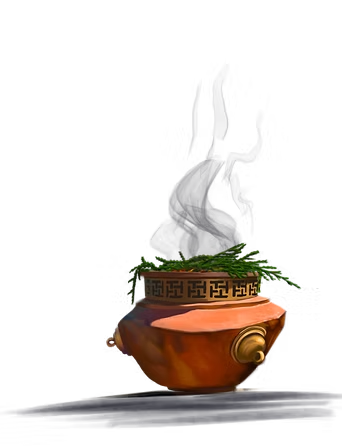
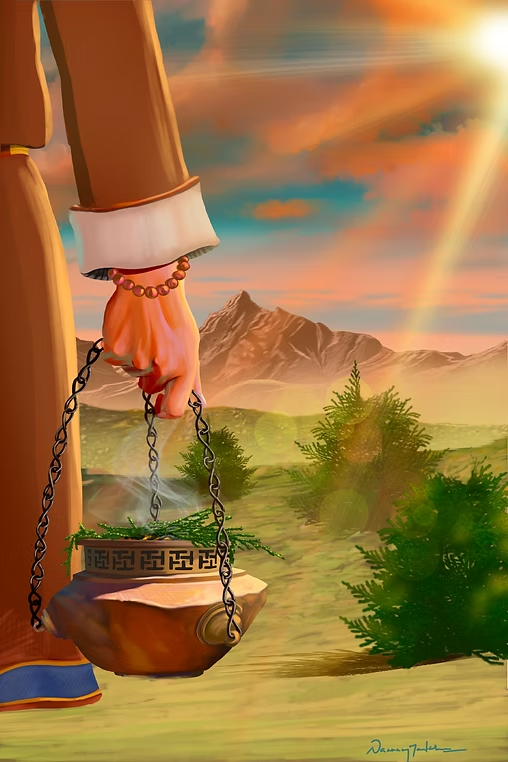
Owing to the pleasant aroma of juniper twigs, they are commonly used as an incense. Raw coal or dried dung cakes are placed in an earthen bowl locally called as phokspor specially designed for this purpose. Dried, crushed leaves and twigs of shukpa are put over the burning coal which produces a distinct smell. It is now known that this aromatic fragrance is due to presence of essential oils, terpenoids, diterpenoids and some phenolic compounds. People mix shukpa with several other plant products such as khampa (Tanacetum sp.), palu (Waldheimia glabra) and siyah mentok (flowers of Rosa foetida and R. webbiana) to use as an incense.

Owing to the pleasant aroma of juniper twigs, they are commonly used as an incense. Raw coal or dried dung cakes are placed in an earthen bowl locally called as phokspor specially designed for this purpose. Dried, crushed leaves and twigs of shukpa are put over the burning coal which produces a distinct smell. It is now known that this aromatic fragrance is due to presence of essential oils, terpenoids, diterpenoids and some phenolic compounds. People mix shukpa with several other plant products such as khampa (Tanacetum sp.), palu (Waldheimia glabra) and siyah mentok (flowers of Rosa foetida and R. webbiana) to use as an incense.

Cultural Heritage

Cultural heritage and sacredness of Juniper is depicted in several ladakhi folk songs that describe its value. For instance a stanza from a popular folk song goes:

Ladakhi

Ka langtakh yahgi ni tsamsteh ruhh
Pa lalu rulugsteh ruh chehnn
Ka langtakh yahgi ni tsamsteh ruhh
Yah lalu rulugsteh ruh chehnn
​
Pa lalu Yalu tahng majalahh
La lashing shkpa tangh jaal
La lashing shukpa weh tuludpa woh
Stang chhogi Layul lang jung
​
La lashing shukpa weh tuludpa woh
Yog djugs ki luyul lang jung
La lashing shukpa weh tuludpa woh
Par choggs ki charms yul lanh jung

English

Along the foothills of huge mountains
Went in search of Palu (aromatic plant)
Along the foothills of huge mountains
Went in search of Yalu (a plant)
​
Palu and Yalu could not be found
The tree of Juniper appeared
The fragrant smoke of trees, Juniper
Spread to the upper world (heaven) of god
​
The fragrant smoke of trees, Juniper
Spread to the god of under-earth
The fragrant smoke of trees, Juniper
Spread to the middle world (earth)

Photo: Konchok Dorjay

Juniper in Buddhist Monasteries

The sun dried and finely powdered twigs and leaves of juniper along with other material including some precious stones locally known as yuh, churu and motig are used to fill the inner hollow space of Buddhist statues or idols made from special local clay called markalaga. This amalgam is known as zungs.

Medicinal use of juniper

Local healers use juniper in the traditional Amchi system of medicine. The whole plant is used in treatment of nervous disorders, heart related diseases and kidney disorders. The plant is also used as an antibiotic for animals and for repelling flies.

Juniper in Buddhist Monasteries

The sun dried and finely powdered twigs and leaves of juniper along with other material including some precious stones locally known as yuh, churu and motig are used to fill the inner hollow space of Buddhist statues or idols made from special local clay called markalaga. This amalgam is known as zungs.

Medicinal use of juniper

Local healers use juniper in the traditional Amchi system of medicine. The whole plant is used in treatment of nervous disorders, heart related diseases and kidney disorders. The plant is also used as an antibiotic for animals and for repelling flies.

Juniper as timber

Juniper wood is carved out for making Lak-shing, a wooden plate for covering Buddhist manuscripts. The Lak-shing is usually rectangular with an average length of 30-60 and 12-20 cm width. These are varnished or painted and/or decorated with some sacred paintings. Since juniper wood is believed to be strong, durable and highly resistant, large wooden logs of shukpa were historically used in erecting pillars, making door and window frames in monasteries.

Juniper in making of household articles

Twigs of juniper are used for making nose-ring locally called sNachu for yaks. Similarly, its wood is carved out to make a multi-purpose container, locally called zem used for storing barley wine, curd and wheat flour.

Threats and conservation status

It is unfortunate that despite its significance the sacred juniper is under threat. Multiple uses of juniper have led to a continuous demand in cultural, traditional and religious rituals. The Himalayan Pencil Cedar is placed under the Least Concerned (LC) category for conservation but was reported as declining in its natural habitat with severely fragmented populations in 2011.

One of the most potent threats is, perhaps, the use of juniper leaves and twigs in religious and cultural rituals. The extensive use of juniper as an aromatic incense is common with collection peaking on the eve of Losar for decoration of Lha-thos. Other biotic pressures include damage to young seedlings from livestock grazing, especially during winter when plants enter senescence. This pressure is compounded by the fact that juniper shows very poor regeneration, extremely low seed viability and long seed dormancy. These factors are barriers in its propagation and growth.

There is scope for better planning and management if we wish to improve the status of juniper population in Ladakh. While everyone expresses concern over the conservation, propagation and management of juniper, there is little action backing this concern. Irresponsible collection of wild junipers is rampant as Losar approaches each year. There is hardly any effort to monitor collection or any legal action taken against those in violation of wildlife protection laws. A combination of anthropogenic pressures, abiotic factors arising from changing climate, and the local socio-cultural significance of juniper, makes it necessary to prioritise the conservation of juniper patches across Ladakh. Junipers share a deep link with Ladakh’s indigenous culture, religion and ecology. There is an urgent need to better understand the status of local populations of juniper, degree of anthropogenic pressure, and future prospects and propagation techniques if we are to protect this cultural keystone.

How can we conserve our junipers?

  1. Design and enforce strict communal laws to monitor and prevent irresponsible collection and sale of juniper twigs, especially during Losar.
  2. Organise workshops, conferences and campaigns in both rural and urban areas to educate and create awareness among people.
  3. Increase research to improve our understanding of seed germination and juniper propagation techniques.
  4. Develop and implement an effective management plan backed with adequate support for propagation of juniper trees.

As individuals we must,

  1. Limit merciless cutting and selling of juniper twigs and encourage others for the same
  2. Remain careful when our livestock grazes in juniper forest and surrounding areas
  3. Educate and aware our friends, relatives, neighbours and villagers about the importance of juniper in our religion, culture and its role in fragile ecology. Discuss the values of juniper in Ladakhi society among the youth, especially in schools.
1200 898 Dr. Konchok Dorjey