Valleys

Narkasang: Kinnaur’s Sacred Blooms

Illustration: Nawang Tankhe

Narkasang: Kinnaur’s Sacred Blooms

Illustration: Nawang Tankhe

Kinnaur, a district in Himachal Pradesh, is a paradise characterized by its lofty mountains and lush valleys where flowers of all kind bloom. It’s unique climate, with moderate summers and cold winters, creates an ideal habitat for a plethora of floral wonders. Spring is marked by captivating blooms that grace its landscapes, flowers that are a part of local culture and ecosystem.

Narkasang (Narcissus tazetta or daffodils), a sacred flower, holds a special place in my heart. During my early years, I vividly remember the first time I saw the Narkasang flower in our Chokesten, our place of worship. I found it to be very beautiful and I asked my grandmother from where she got them. She showed me the wild flowers growing on our farm, saying that they grew on their own. She used to collect these flowers from the wild and keep them in the Chokesten. In Kinnaur, where people follow a mix of Buddhism and Shu culture, Narkasang flowers are offered to the local deity during festive celebrations.

Narkasang has always caught my attention because of its aesthetic appeal, with its simple colour combination of white and yellow. During festivals we often found them in the hands of the Kinnaura people. They also wore them on their traditional Kinnauri caps during festive celebrations, which clearly showed the significance of Narkasang for the community.

For years, Narkasang flowers have been an integral part of Kinnaura culture. Its medicinal properties, where the roots are crushed and used as an antiseptic lotion, have always fascinated me. Applying the extracted paste on boils or pimples on the body helps in their recovery. The discovery of this medicinal use might be lost in history, but this knowledge has been actively passed down through generations.

Kinnauri Topi (hat) with Narkasang Flowers | Illustration: Nawang Tankhe

Narkasang not only holds its value as a flower or medicine but is also mentioned in local songs:

Ladakhi

Seela Chu Nathpa nagas santango
Kinnauri-Nagasu santangcho thang kochang khyama.
Thang kochang khyalima oo bagicho kumo’
oo bagicho kulimo nish dalang Fula.
Nish dalang Fulula narkasang Fula

English

Behind the temple,
there is a garden full of flowers
In that garden full of flowers,
there are two branches of flowers
And the two branches of flowers are that of Narkasang flowers

With time, will our traditional knowledge fade away, presenting a challenge to keep such knowledge alive? Narkasang flowers are hardly seen growing on their own in the wild nowadays.

Documentation and conservation of such knowledge is crucial in Kinnaur. We are working with schools to run programs that provide basic information to students about the importance of nature conservation.
1545 2000 Mahesh Negi
The beautiful Siyah mentok
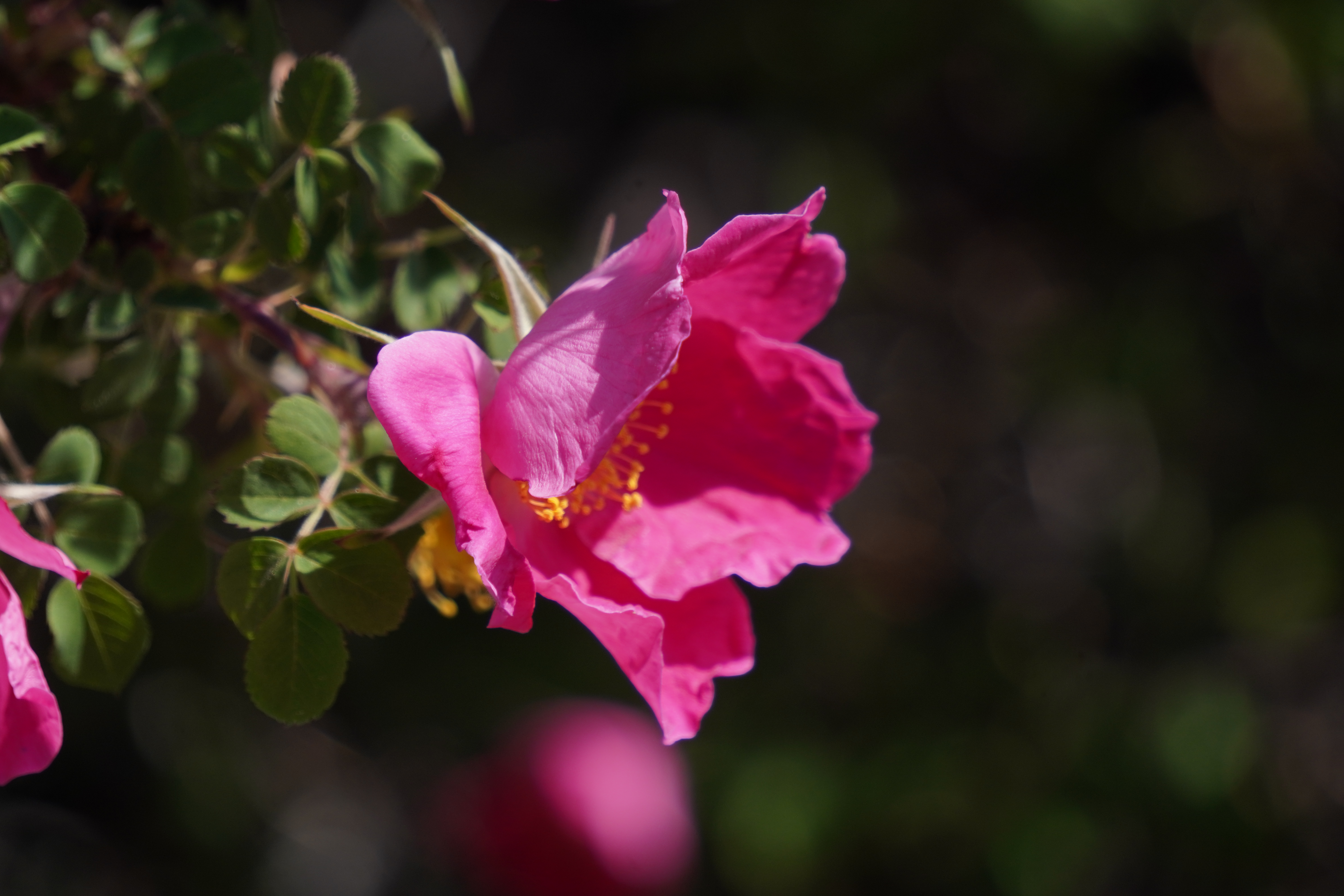
Flower of Rosa Webbiana | Photo: Deepshikha Sharma

The beautiful Siyah mentok

What is home, what is belongingness? For me, it is the uninhibiting mountains, the barren landscape, the deep gorges, and the high peaks of my homeland Spiti Valley in Himachal Pradesh. Also, it is the vast grazing ground, the piercing cold thin air, the green summer meadows, the ripe barley field, the meandering water canal and the delicate pink bloom of Siyah mentok.

Rosa Webbiana | Photo: Deepshikha Sharma

While growing up, I used to visit my grandmother and stay with her for months. She lived in a small hamlet in Spiti called Gowang which was home to just 5 households and had less than forty residents. My grandmother spent most of her day working in the barley field. Later in the evenings, before darkness of the night seeped in, we would both go out into the pastures to gather wild firewood. During one such visit to the pastures, right at the foothills of giant snow-capped mountains, I first witnessed the beauty of vibrant wildflowers and wild shrubs in an otherwise dry cold desert.

Spiti is a high-elevated region with an extremely arid landscape; characterized by equally sparse vegetation mainly comprising annual perennial herbs, shrubs, and very few varieties of trees (willow, poplars). Despite harsh ecological conditions, the landscape nurtures an incredible diversity of plant species – each unique and resilient in their own way. Pastures and hills are full of wildflowers and have rich repositories of aromatic, medicinal, and edible plants. There is the sour-tasting tirhuk (sea buckthorn) and lichu, the deep ruddy khamet (Ratan jot, Lal jari), the hardy thama (caragana), the healing chukku-gongma (rheum), the delicious kotsey, gyaman (wild herbs, seasonings) and the auspicious shukpa (juniper).

My grandmother would patiently show me how to pluck wild thorns, wild shrubs for firewood without pricking myself. I learnt how to gather tserma (dry caragana) and bursey (white dry woodchips) by observing her. At home, she would skilfully light a fire in our traditional heater (chak-thap) using dry twigs and cow dung and tenderly kindle the firewood to get a good hold before placing more wood logs on top of it. Having lived in a remote mountain village and spent so much time with my grandmother, I learnt to appreciate the wild plants around my home.

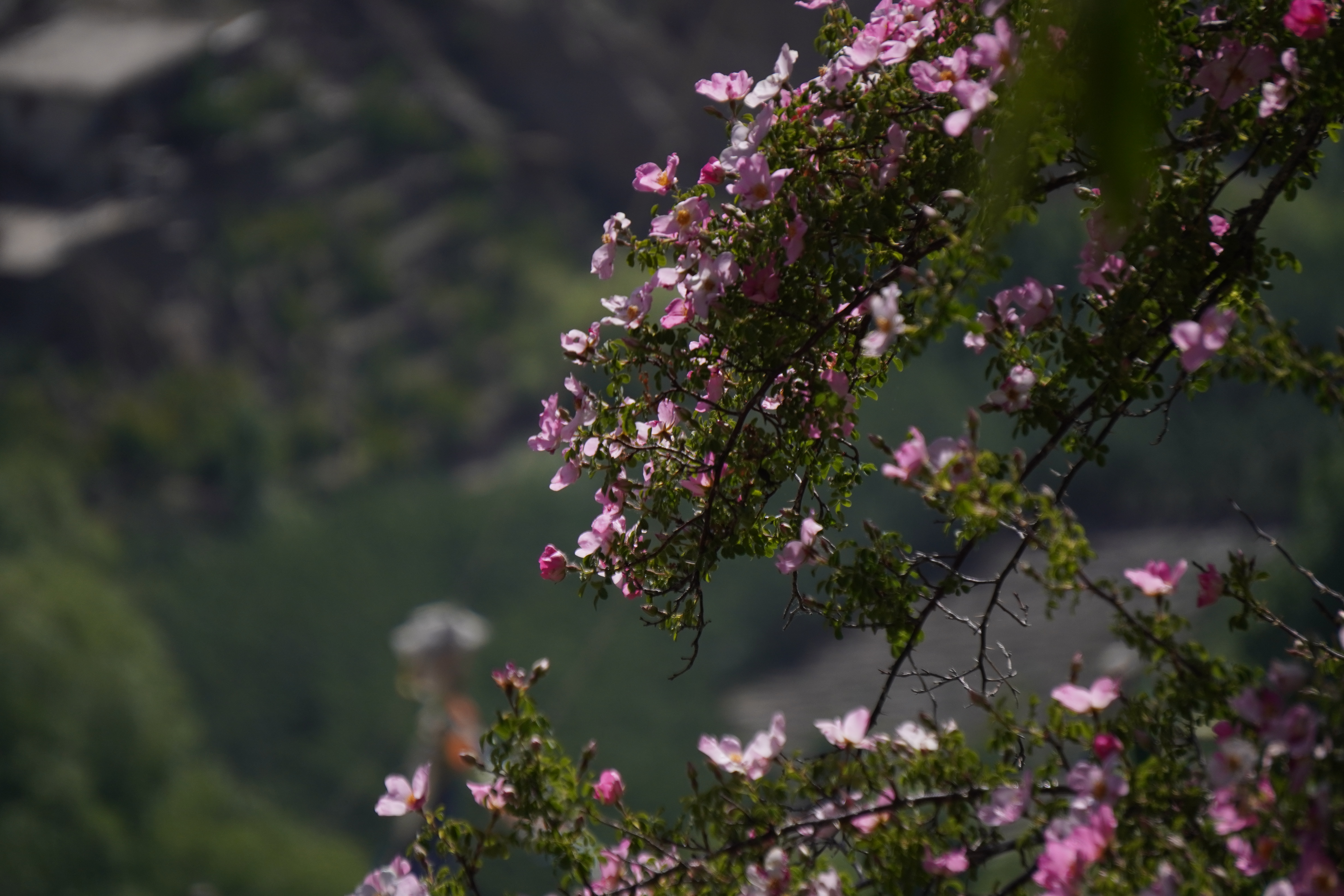
Siyah mentok truly deepens my connection to my homeland. Siyah (Rosa Webbiana/Webb’s Rose) is a beautiful variety of wild roses that grows in many Himalayan regions in extremely dry and harsh conditions. It is pink in colour with a mild sweet scent and tender petals that fall in your hands when you touch it. What I like about Siyah is that it is an extremely resilient plant that grows in the harshest conditions and can thrive without water for a long time. Siyah typically starts blooming in late spring or early summer, flowering for a short period of time. But during its brief blooming period, it illuminates the entire surrounding with its striking colour and radiant beauty. It is commonly found at lower elevations of Spiti and all the way up to above 4000m. It can be seen growing on the riverside, rocky slopes, mountainside, in the garden, and in the fields.

My grandmother’s illustration made by a close friend Apurva Pandhi

The blooming of Siyah is seen as the arrival of summer in Spiti. It is the epitome of beauty and serenity. It is particularly dear to me as under the bushy, dense canopy of this wild rose plant, my grandmother used to rest and take naps during hot summer days of the peak agricultural season. It is the same flower that she alludes to while describing the beauty of Tibetan queens in ancient folk stories and it is the sweetness of Siyah mentok and Serchen mentok (Himalayan golden flower) that she refers to while telling me about sweet melodies sung by nomads herding in the high mountains. It is difficult not to think about my childhood and my grandmother when I think about Siyah.

In many Himalayan communities, Siyah is highly valued for its ornamental qualities and it also features in old traditional songs, stories, proverbs, wise sayings, and other forms of oral cultural expressions. It is often associated with themes of love, romance, and beauty and is also referred to as a symbol of sacred devotion. I remember my grandmother telling me that during her early years in Spiti, if a man likens a women’s beauty to Siyah mentok or Serchen mentok through songs, it is considered a subtle declaration of love and the girl is to immediately discuss the matter with her family! The usage of Siyah in daily household has become quite popular especially, Siyah-cha (Siyah-tea) in higher, more remote villages like Hull, Hansa, Kibber, Demul and Lalung.  It is used ubiquitously by Spitian Amchis (traditional doctors) for its antibacterial, anti-inflammatory, and antiseptic properties. Medicinal plants are used by traditional doctors and healers for ages, particularly for curing skin ailments like boils, blisters, itching, and skin eruptions. For me, Siyah mentok is a symbol of beauty and resilience, reminding me that even in the harshest conditions, beauty and life can flourish.

6000 4000 Chemi Lhamo
Wild Edible Plants of Ladakh
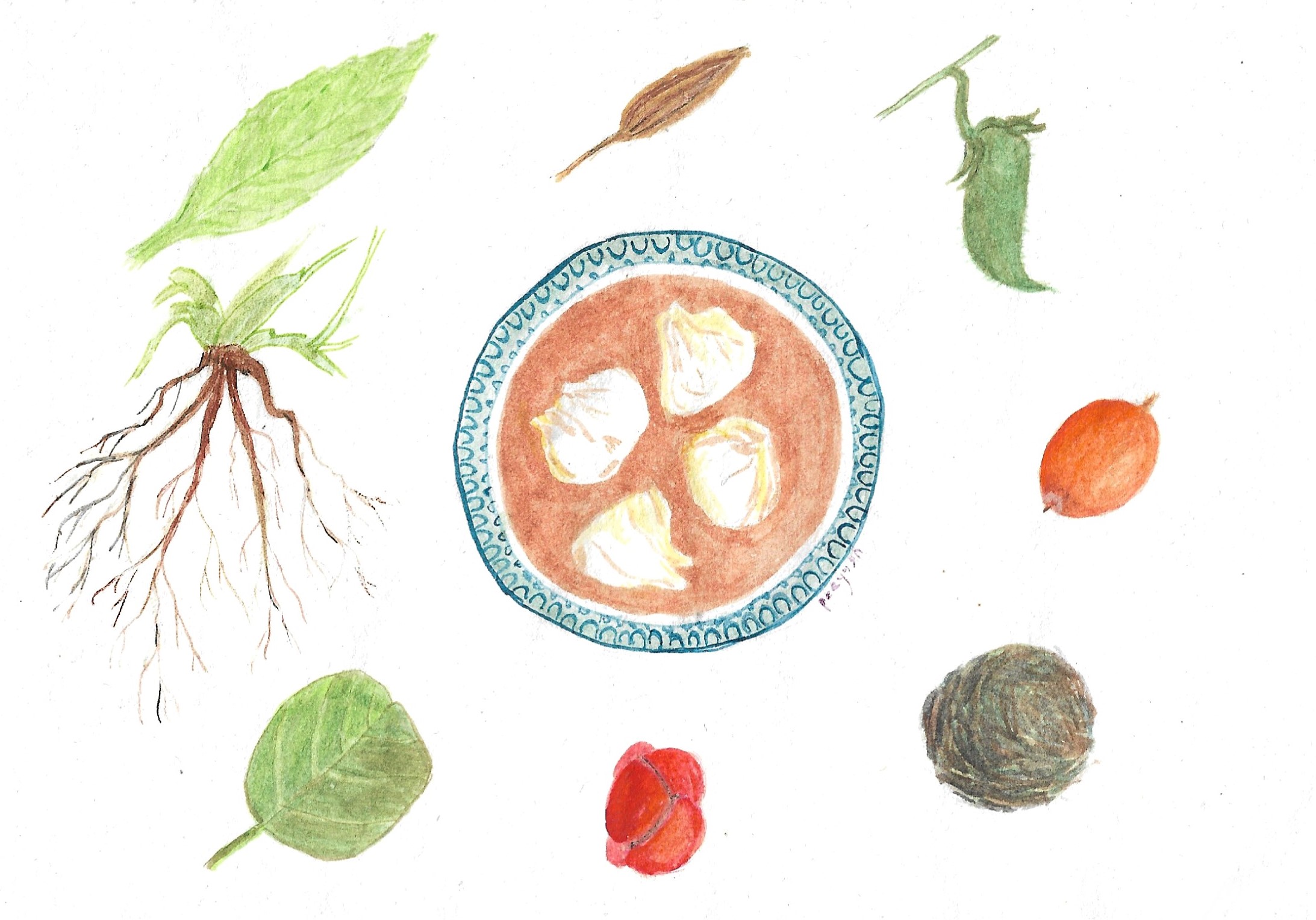
Illustration: Peeyush Sheksaria

Wild Edible Plants of Ladakh

Geographically, Ladakh is in the rain shadow region of the mighty Himalayas. A high-altitude area with an extreme climatic cycle, the trans-Himalayan region of Ladakh is a unique cold desert. It is home to diverse lifeforms.

Over millennia, the region has also been home to a relatively isolated and self-reliant human society with its own distinctive culture and agro-pastoral way of living. Local people have rich knowledge of plants, especially of wild edible varieties, that have been consumed since time immemorial. These plants display unique adaptations to survive in the high elevations of Ladakh and its extreme climate. They have played a crucial role in shaping people’s lives and the traditional strategies adopted by them in overcoming challenges to living in Ladakh.

It is not surprising then that Ladakh is home to various traditional made using wild plants. In the past, communities prepared dishes on auspicious occasions. Various different wild plants are used in these traditional preparations. Some of the most commonly consumed wild edible plants include zatsot (Urtica hyperborea), kabra (Capparis spinosa), shalmasgok (Nepeta floccosa), Hans/Khi-khol-ma (Taraxacum officinalis), shangsho (Lepidium latifolium), snue (Chenopodium album), Azhangkabra (Christolea crassifolia), tsotse (Allium carolinianum), lachu (Rheum spiciforme), shrolo-marpo (Rhodiola tibetica), shrolo-serpo (Rhodiola imbricate), kumbuk/kosnyot (Carum carvi), zera-nakpo (Buniumper sicum), phololing (Mentha longifolia), toma (Potentilla anserine), sari (Cicermicro phyllum), demok (Arnibiaeu chroma), tsepad (Ephedra gerardiana), tsestalulu (Hippophae rhamnoides), siyahmarpo (Rosa webbiana), chuli (Prunus armeniaca) and starga (Juglans regia).

The consumption of wild edible plants has immense health and economic benefits. Firstly, unlike their cultivated cousins, wild plants are natural and self-nurtured without any harmful chemical fertiliser, pesticides and weedicides. Secondly, wild plants adapted to high-altitude cold desert conditions are known to have developed diverse secondary metabolites to protect themselves from extreme conditions, insects and microorganisms. These secondary metabolites are of immense medicinal value and provide health benefits.

There is considerable variation in the way these plants are used for cooking. Skotse, rasgokpa and luksgokpa (Allium carolinianum, A. prezewalskinam) and kosnyot are prominent aromatic species used as a spice condiment in different dishes. Tender shoots of Allium species are collected, ground into a paste, dried and used as a flavouring agent in local dishes like tangthur, tsonkitig, bagthuk and in local pickles. Similarly, seeds of kosnyot and zera-nakpo are used as a condiment in a traditional recipe called ten-ten. Leaves of shangsho form an important constituent of tsonkitig, a local preparation made using mixed vegetable and sattu (roasted barley flour). The young leaves and tender shoots of kabra are consumed after frying them, called kabra-tsotma in Sham region in western Ladakh. The leaves of phololing are used to prepare chutneys and occasionally mixed with curd as a flavouring component, while the leaves of shalmasgok are mixed with curd or lassi to prepare tangthur.

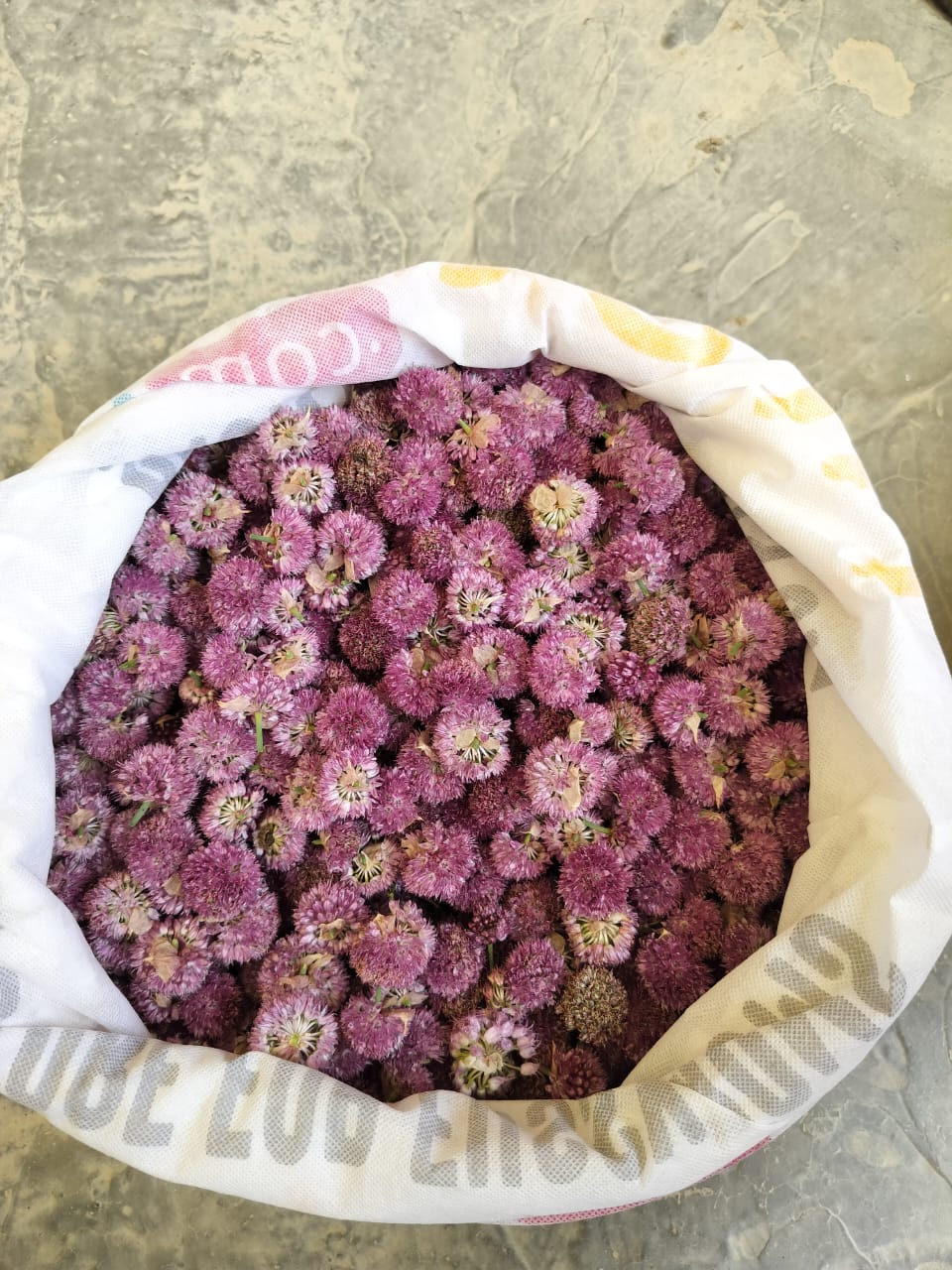
Freshly harvested Gyaman - flowers of Alluim sp | Photo: Chemi Lhamo

The tender shoots of shrolo-marpo and shrolo-serpo can be rinsed in running water and mixed with curd to prepare shrolo-tangthur. The green leaves of zatsot (stinging nettle) are collected and used to prepare zatsot-thukpa, while the young leaves of khi-khol-ma are used in thukpa. In the past, the edible berries of tsestalulu were collected, dried and powdered. It was then mixed with sattu and consumed. Similarly, seeds of sari were dried and ground into flour. The ripe berries of tsepad, roots of toma and green shoots of lachu are edible and can be eaten raw.

Declining use of edible plants

Ladakh has witnessed dramatic changes over the last few decades. There was a time when Ladakhi people were heavily dependent on wild plants to fulfil their dietary requirements. People would eagerly await spring-summer seasons when the collection of wild edible plants would peak. However, this collection was always for personal consumption and never for commercial purposes. There was a common practice of children going into the mountains or the fields after school to collect wild edible plants like kabra, shalmasgok, shrolo, zatsot, khi-khol-ma, kumbuk, shangsho etc. Nowadays, very few people know the art of collecting these wild resources. It is an aspect of our traditional knowledge that is eroding fast and will soon be lost forever.

There are multiple reasons for this unfamiliarity, and aversion to ethnic plant-based foods. The growth of the tourism industry in Ladakh and the introduction of horticulture-based vegetables are two major factors. In the last decade, Ladakh has witnessed a dramatic rise in horticulture, forestry and agriculture with the introduction of numerous cultivated plants. In addition to this, the influx of tourists has facilitated the introduction of western cuisine, which has devalued the cultural and economic importance of wild edible plants. This has also eroded Ladakh’s traditional knowledge

and use of wild plants as locals now favour western recipes over local ones. It is unfortunate that our younger generation is not troubled by this rapid loss of knowledge of edible wild plants and their ethnic preparations. Instead, most of them are eager to learn more about non-local cuisines and ingredients.

The need to preserve ethnic knowledge

There is an urgent need to preserve indigenous knowledge of wild plants and their preparation. Plant folklore, wild plant resources, and the usage of plants including cultural and religious taboos constitute an important aspect of our traditional knowledge. Reviving these traditions and the conventional use of plants will provide insight into Ladakh’s unique folklore and heritage. Furthermore, consumption of indigenous wild edible plants is healthier than cultivated vegetables. In comparison to cultivated varieties, wild plants are more nutritious, naturally resistant to pests, and most significantly, least contaminated and thus purely organic. In contrast, cultivated vegetables tend to be contaminated with toxic chemicals from fertilizers and insecticides that are known to cause deadly diseases such as cancer.

If we are to preserve local knowledge of wild plant consumption, community members and elders in each household must encourage youth to consume such plants and explore this knowledge system. At the same time, local households, hotels, restaurants, and retailers must also offer traditional preparations and dishes. Our local government must encourage people to explore this facet of our heritage and organise awareness programmes to conserve this knowledge. Wild edible plant consumption and preservation of this unique heritage may provide an alternative food resource for Ladakh’s nutrient deficiency. Plant collection and the consumption of traditional plant-based organic foods can also generate entrepreneurial opportunities for youth, while also enhancing the income of local farmers. However, we also need to make serious efforts to conserve wild biological diversity by ensuring that collection is sustainable and managed responsibly.

2185 1528 Phuntsog Dolma
The Predicament of a Herder

The Predicament of a Herder

Winters in Spiti valley are filled with celebrations of a fruitful year and prayers for a bountiful year ahead. Most of the time is spent within the villages as travel is usually difficult especially when heavy snowfall causes roadblocks. The year 2018 was also not much different. In the month of November, as we were readying ourselves for the coming winter months in Kibber, I received an urgent message from a colleague in Mysore in Karnataka.

“A herder has lost much livestock in Chango, possibly killed by a wild animal” the message said.

These were the only details along with a WhatsApp video that was being circulated. Understanding that the matter could be grave and the weather was still permitting travel, I decided to leave immediately for Chango which is in Kinnaur. I requested Tanzin Thuktan, my colleague, to join me. Chango is about 110 km away from Kibber.

We did not have any details about the owner or where exactly the incident had happened. Upon reaching Chango we were clueless, but the good thing about small towns and villages is that everyone knows each other very well. So, when we enquired about the case with local shopkeepers, they were well aware of it and they told us that Thuktan Tender was the owner of the livestock and showed us the way to his house. Thuktanji is an apple farmer in Chango and has a settlement at Liti Dogri. When we arrived at his house, he was confused about why we had traveled from so far to talk about his loss. With a little hesitation, he narrated the whole incidence to us.

On 16th November 2018, Raju, the caretaker of the corral, had returned to the village to gather supplies for the Dogri. He decided to stay back in the village for the night. The next day when he went back and opened the door of the corral, the animals rushed out in panic. Usually, he would have had to take a lot of effort into getting the animals out of the corral. He knew  something was wrong. It was  strange behavior.

Broken Door | Photo: Mikey Dabro

Standing by the door he carefully scanned the inside of the corral and to his surprise, he saw a set of shining eyes staring back at him in the dark. He immediately knew what it was and slammed the door shut. He called Thuktan and narrated the incident. Within a few hours, the news had reached every household in Chango and nearby villages.

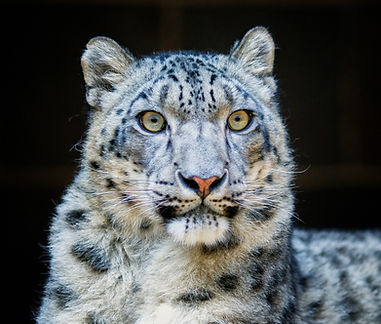
Snow Leopard | Photo: Adriaan Greyling

A snow leopard, which had entered the corral in the dark of the night, had somehow got trapped inside. It garnered a lot of attention from local leaders and the forest department to school teachers. Everyone had reached the Dogri to enquire about the incident and see the snow leopard. Upon many assurances of receiving relief for the loss, Thuktan released the snow leopard. He also made a video of the release as a record that the animal had been released unharmed. When they inspected the corral from inside, they saw 19 animals that had been killed and 11 critically injured. Within 2-3 days even they succumbed to their injuries. However, after the release, all the hype around the case vanished. So, when I met with Thuktanji, a few weeks later, he was understandably angry and had lost hope of receiving any financial help. I asked him if I could visit the Dogri, to which he agreed.

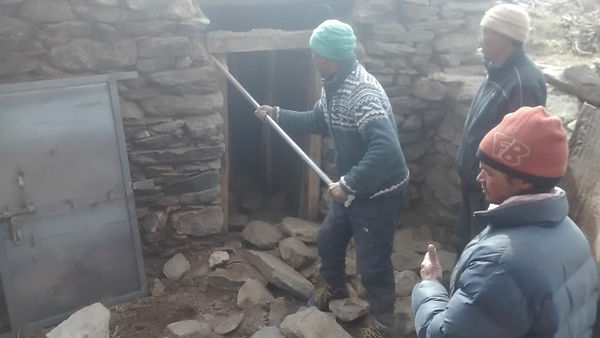
Liti Dogri is about 15 km away from Chango. It has three big corrals which houses small-bodied animals like goats and sheep of several livestock owners of the village. Thuktan ji’s corral at any time has 200-250 animals. Upon inspection of the corral, we noticed that the door of the corral was old and did not shut completely. We gathered that the snow leopard must have entered through the door and had gotten trapped inside. To prevent further loss, we decided that we would replace the door with a new sturdy one. The next few days were filled with hurdles. The closest material shop and welder was 130 km away in Reckong Peo. Getting the material on time was crucial to avoid further losses. The three of us drove to Peo in Thuktan ji’s car and bought doors for the corral. The villagers came to help us fix the door. The compensation process as well as the relief amount was also not very clear.

Repairing broken door of Thuktanji | Photo: Nature Conservation Foundation

We decided to speak to the local Forest Guards and Range Officers. They informed us that the compensation file had been sent to the DFO’s office in Reckong Peo. We then met with the DFO who was very sympathetic and assured us that Thuktanji would receive the claim as per the new notification rates. Within few weeks Thuktanji received the claim from the department. Compared to the actual loss suffered and other collateral costs incurred, the financial relief offered by the Forest Department was often considered too little. Fortunately, the department has revised these rates since August 2018 to ensure that the herders can cope with these situations better than before.

As a herder myself, I believe that we must try to ensure that such events are avoided in the first place. Wild animals have always lived around us and will continue to do so. We have always taken precautions to keep our livestock safe from them, and we have to continue doing so. With access to better resources in our remote areas, we may be able to plan this more effectively and upgrade our corrals to make them predator-proof. This way we may be able to prevent any future losses that might occur.

1014 676 Tanzin Thinley