Pastures

Traversing Climate Change
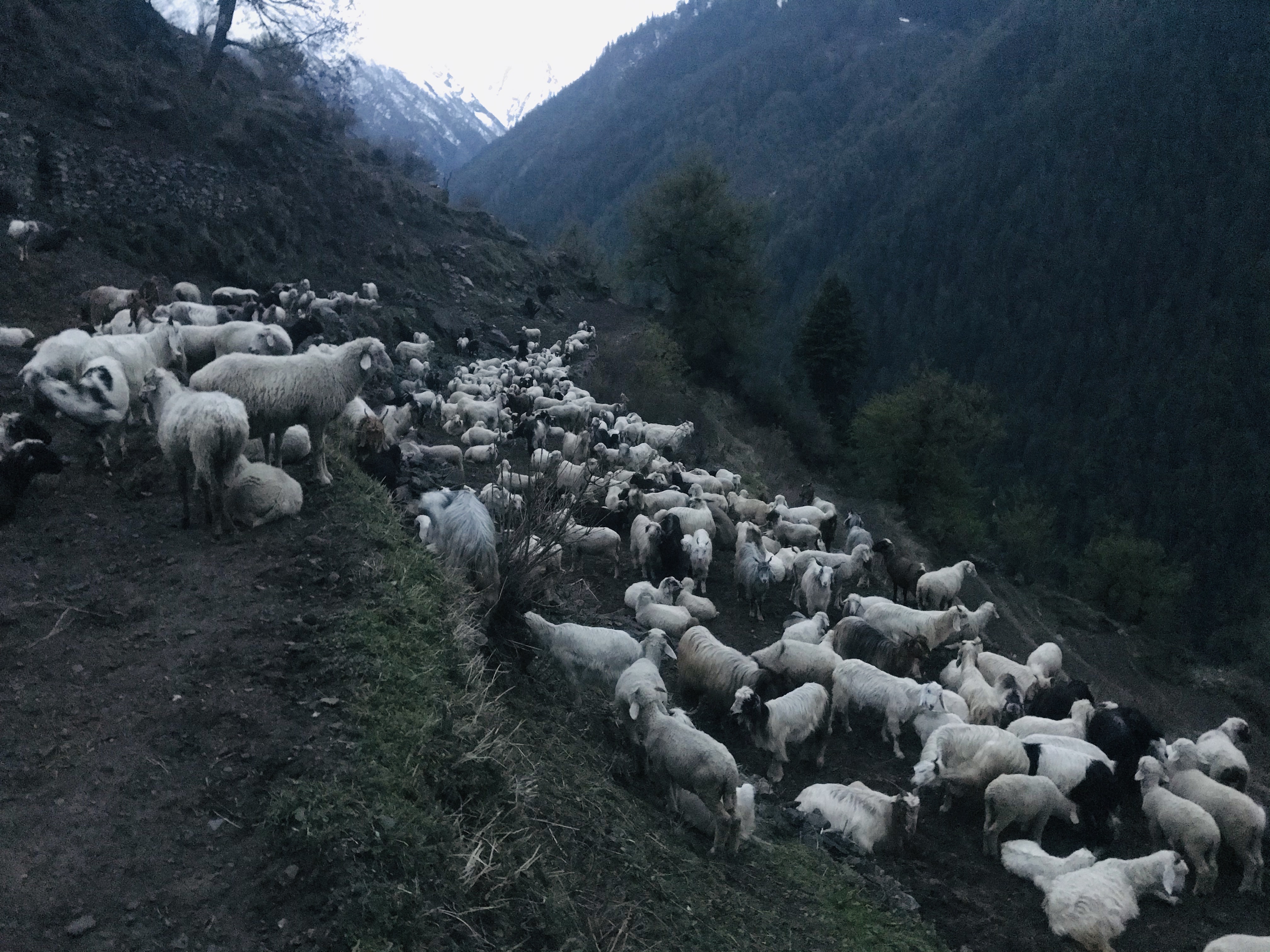
Herds of sheeps and goats return after grazing in the Dhar on the North-east of Kungti village | Photo: Virendra Mathur

Traversing Climate Change

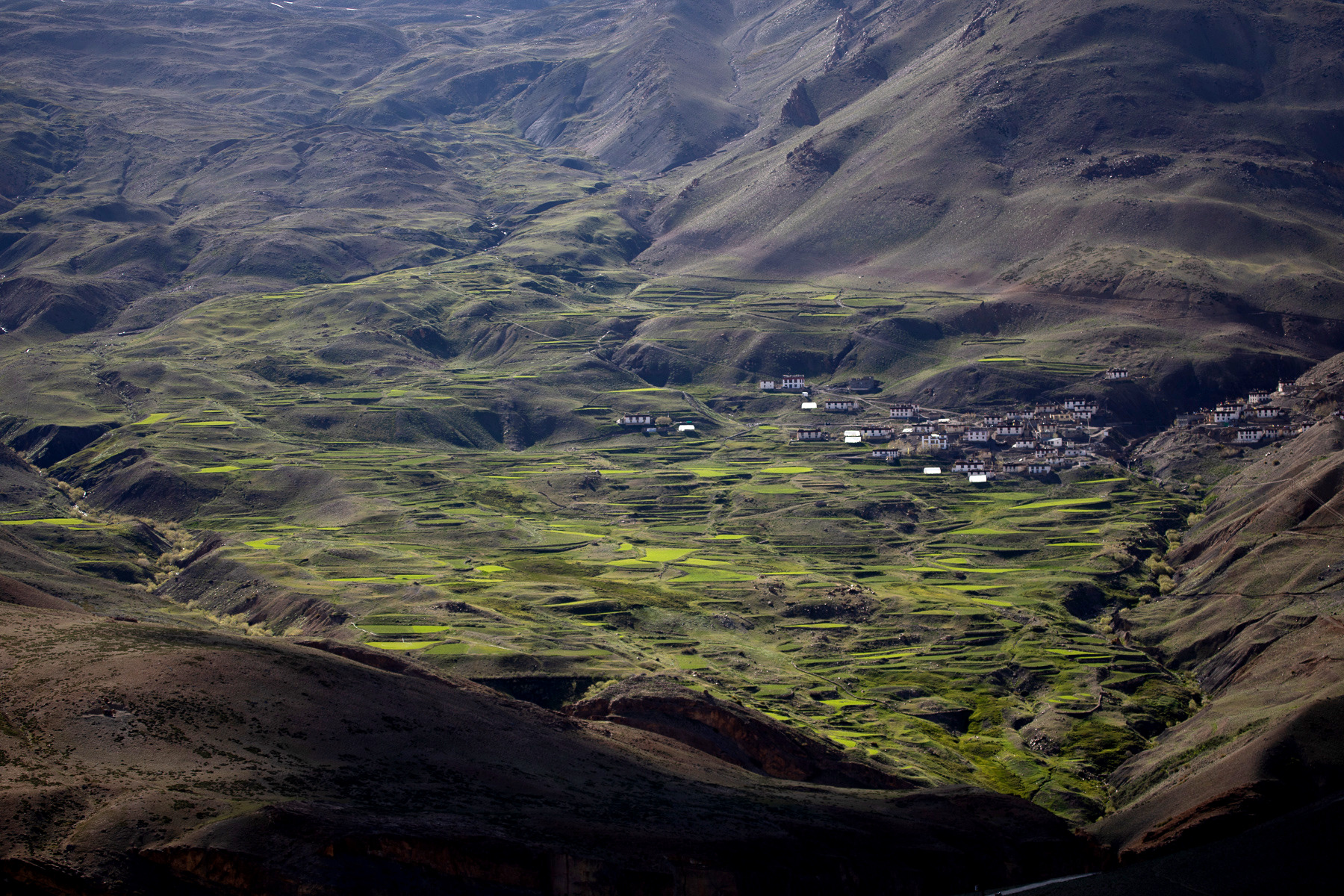
In the mystical lands of Bharmour and Lahaul, located in the north-western part of Himachal Pradesh, India, a seasonal event takes place every year that is an elegant harmony between local culture and nature. Here in the traditional seat of Gaddi shepherds, the community is described variably as semi-nomadic, transhumant pastoralists, or agro-pastoralists. The Gaddis, usually men of the family, start on a migratory event in early April, gathering their goat and sheep herd and taking them to the high-altitude summer foraging grounds. These unbridled pastures, known as alpine meadows are called dhars. This seasonal movement is ingenious at various levels – it sustains the economy of a Gaddi household without being too reliant on agriculture. Further, Gaddi herds provide rich manure to the tilled lands across various agricultural landscapes they pass through and in return receive food and a place to camp; a barter system still in place. And this practice helps avoid low productivity foraging grounds without putting undue pressure on alpine pastures.

The shepherds pass through various towns and villages, as they start their journey from the low-lying areas of Kangra valley and plains of Pathankot, crossing the Dhauladhar mountain range towards Chamba district and travelling north towards the alpine pastures in the inner Himalaya. With them, on this arduous journey, are of course the livestock that they address as “Dhan” which also translates to money and wealth in Hindi. The sheep and goat herd constitute a flexible and continuous source of economic return for this community, especially when small land holdings do not allow for huge returns from agriculture. The flocks serve as a source of meat, milk, fleece and wool. The wool produced by Gaddi sheep is primarily used to make warm clothes, and is considered to be fine quality wool in a market where the quality dictates the price of the wool.
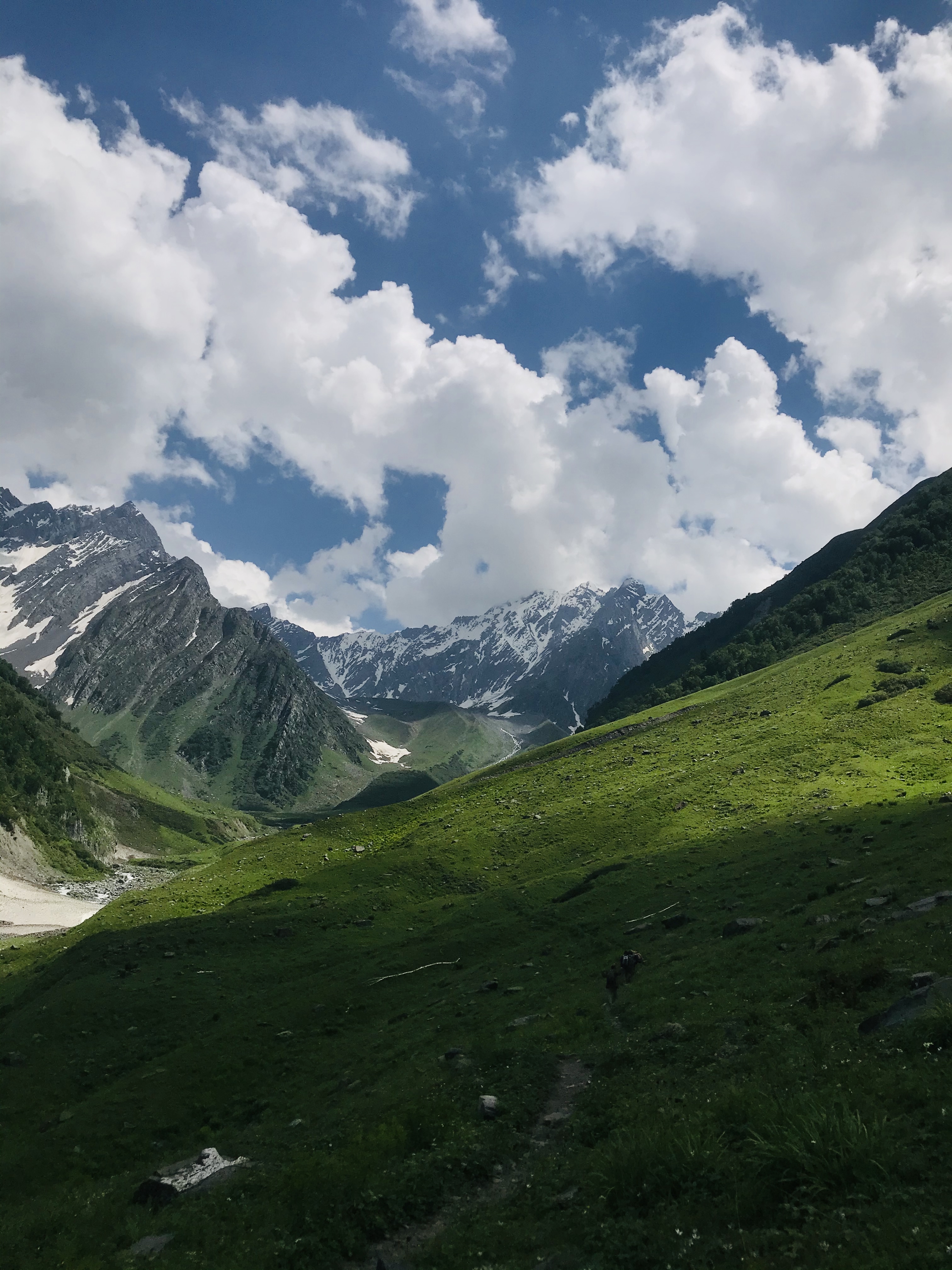
Himachal Pradesh State Wool Federation website displays the minimum support price (MSP) offered by the government for the sheared wool. Based on per kilogram price, the prices are lowest for the wool sheared in winter in the month of January-February, whereas the highest price is set for the wool that is sheared in autumn (in September or October), after the flocks have come down from the alpine pastures. The Gaddi shepherds I interviewed called this an ‘A’ grade wool. In their opinion, the nutritional forage available in the alpine pastures, which consists of medicinal herbs, shrubs, and vital grasses, contributes towards development of such fine and gregarious Gaddi wool.

Even more difficult than the journey to these pastures is living there. When I asked a Gaddi about the most important skill to survive in the alpine pastures, he simply stated that “You have to become an animal to live with an animal.” indicating the laborious life in alpine pastures. The arrival of Gaddi in the alpine pastures is met by receding snow, and below it lays the abundant grass to forage for the livestock/goat and sheep herd. These alpine pastures stretch till the horizon, vast carpets slowly turning green. Guiding herds in these alpine pastures is the least of their worry, the real challenge is to protect the herd from the harsh surroundings. The relationship of herd and the shepherd arises from mutual dependency, and for Gaddi men who remain away from their families, their herd is their family. The relationship of care is intertwined around wool – it transcends the material value and takes up emotional significance. It is the wool that earns shepherds the money, and it is this wool that comes back on the journey – laden on the back of a shepherd in the form of a blanket or a shawl.
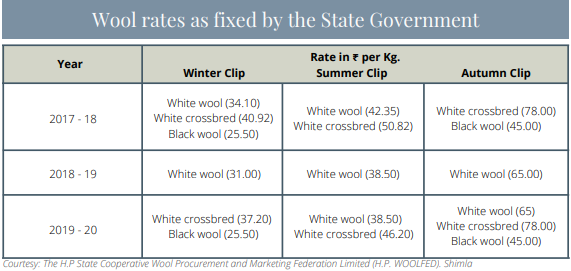
They keep a portion of the sheared wool for themselves, and use it to manufacture clothing – their traditional attire, shawls and blankets, which keeps them warm and protected. When a lamb is born, it is wrapped around in this blanket and kept inside their camp, and on the long treks in alpine pastures, lambs and goat kids are carried wrapped inside the blankets. Each head counts in this family, and shepherds sometimes risk their lives for their flock. On two separate instances, a group of shepherds, at night, rescued their stranded goats from potential attack of a black bear, and on another day, Thaapu, a young apprentice jumped into a glacial stream, shattering the thick sheet of ice to rescue a sheep and a goat kid that fell while crossing the glacier. He said that a shepherd has to protect every head he is responsible for, as this proves his credibility to his employer. While the shepherds have adapted to the vagaries of nature, will their resilience fare them through impacts of climate change in the inner Himalaya?

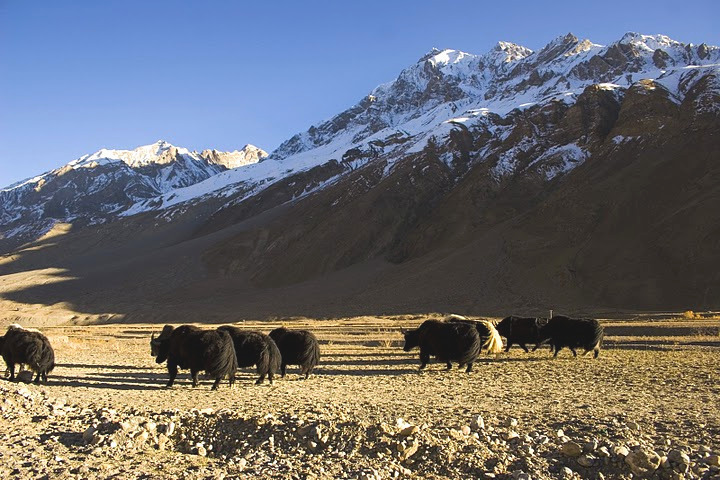
In many ways, the life of a Gaddi shepherd and that of their flocks is interlaced with the seasonal changes in Himalayan pasture lands. Without knowing the term, the shepherds understand that their summer home is undergoing changes. Rainfall patterns have become erratic and it can impact the livelihood of Gaddi communities negatively. Abundant rain could lead to livestock mortality as the sheep contract various diseases in wet environments while less rainfall can delay the growth of grass and herbs in alpine pasture, as was the case this year. This is further worsened by foraging competition from large mountain ungulates; they informed me that a lot of problems has been caused by chur, commonly known as dZo across Himalaya (a magnificent cross between a yak and a cow). These large herbivores are domesticated by the villagers in high-altitude Himalayan communities for agriculture. These massive animals also graze in the alpine pastures, along with other ungulates like Himalayan Ibex and Himalayan Tahr, mules and horses. Large herbivores consume hefty amounts of fresh grown grass leaving only small patches for the sheep and goat herds, creating scarcity for Gaddi livestock. Similarly, the duration of grazing in the alpine pastures can also be cut short by erratic weather patterns, affecting growth of fresh grass and the productivity of alpine pastures in the long-term. A decrease in nutritional quality will in turn impact the quality of the wool produced by the sheep.
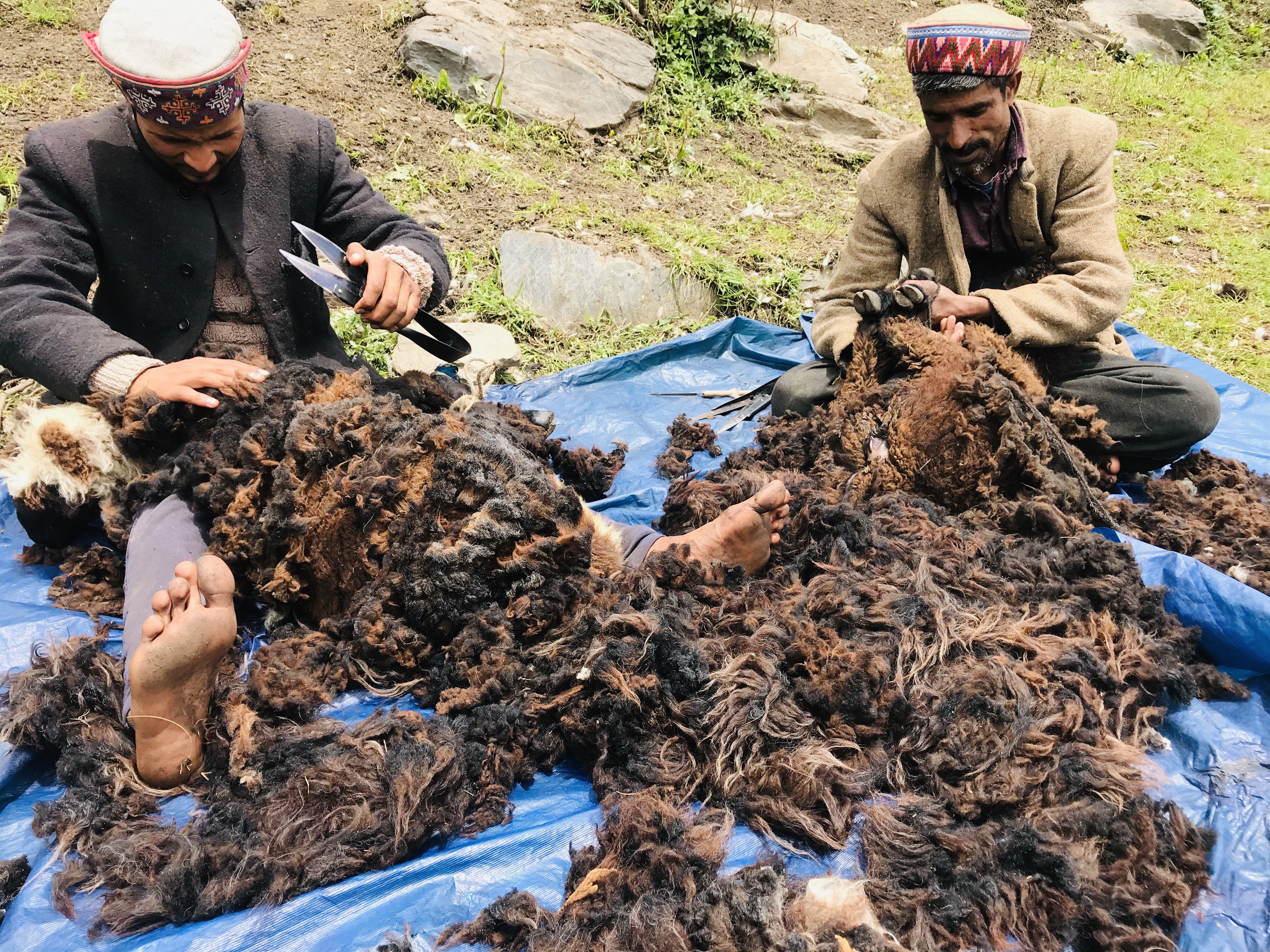
Subhash Bhai and Sonu Bhai shear wool from the sheeps in their herd. Shearing happens thrice in a one- year season, and while some herders use scissors , others use wool-trimmers for shearing the wool | Photo: Virendra Mathur

Today, the market for natural wool is facing increased competition from synthetic wool supplies which has made market accessibility difficult for these shepherds. While the traditional usage of wool is facing a decline, partly due to absence of knowledge transfer across generation, partly due to the lucrative nature of cosmopolitan living, traders and craftsmen now tend to prefer using imported wool. In the face of emerging changes, proper management mechanisms can help survive traditional agro-pastoralism in high Himalaya. Gaddi shepherds who are in this vocation constitute a dynamic medium of cultural exchange and fulfill economic needs of various farming communities through their resource exchange. Thus, the gradual loss of transhumance in Himalaya interacts with the loss of natural cycles of nutrient cycling in high-altitude communities and might possibly have downstream effects.

Acknowledgments:
Virendra would like to thank Wildlife Conservation Trust for funding this fieldwork at Kugti as a part of their Small Grants program. He owes all his gratitude to the humble and loving Gaddi community who make him feel at home through their generous, helping, and cheerful nature.
4032 3024 Virendra Mathur
In Conversation with Women of Chicham
Chicham Village | Photo: Tanvi Dutta

In Conversation with Women of Chicham

Tanzin Dawa: How has it changed?

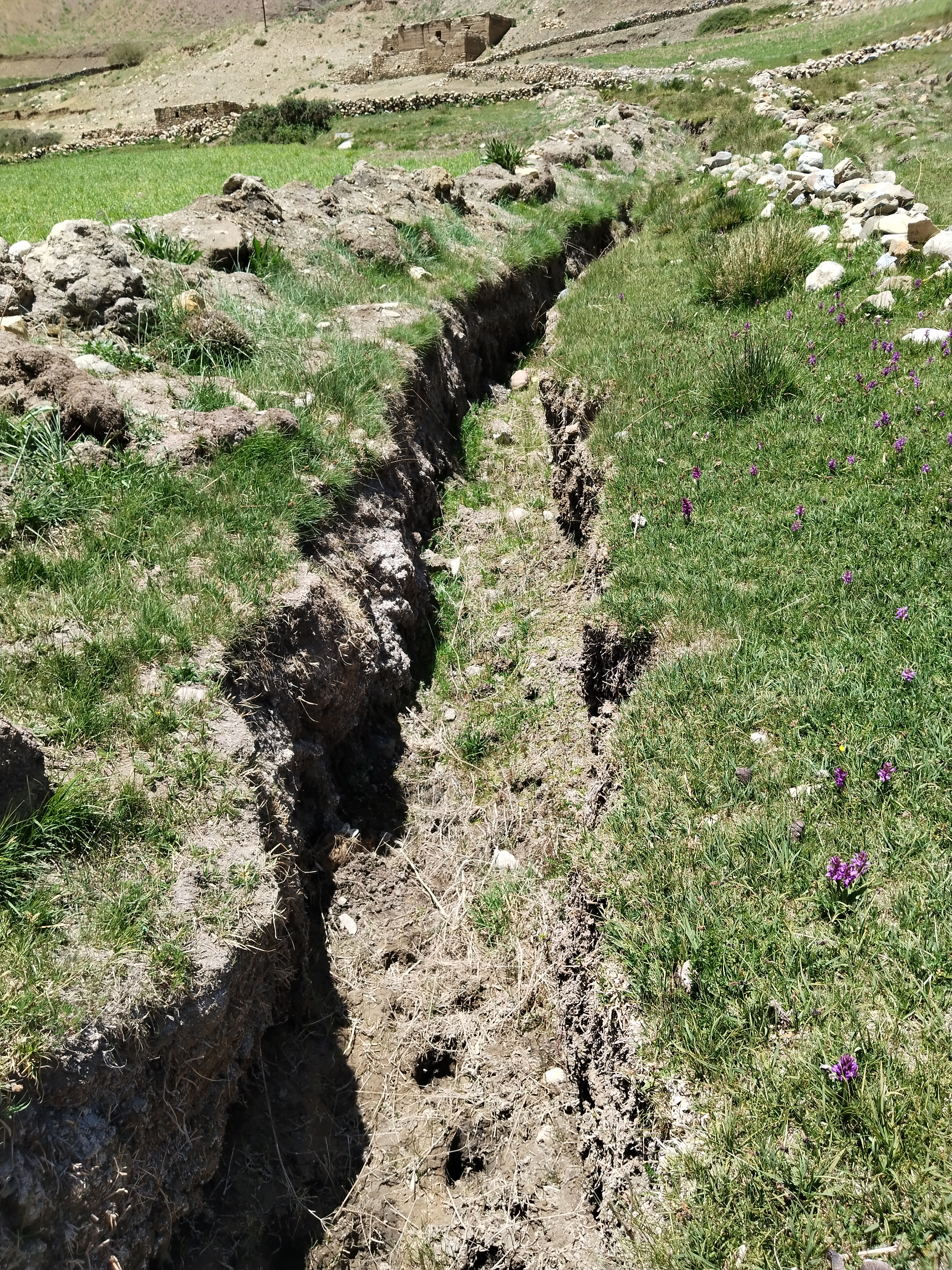
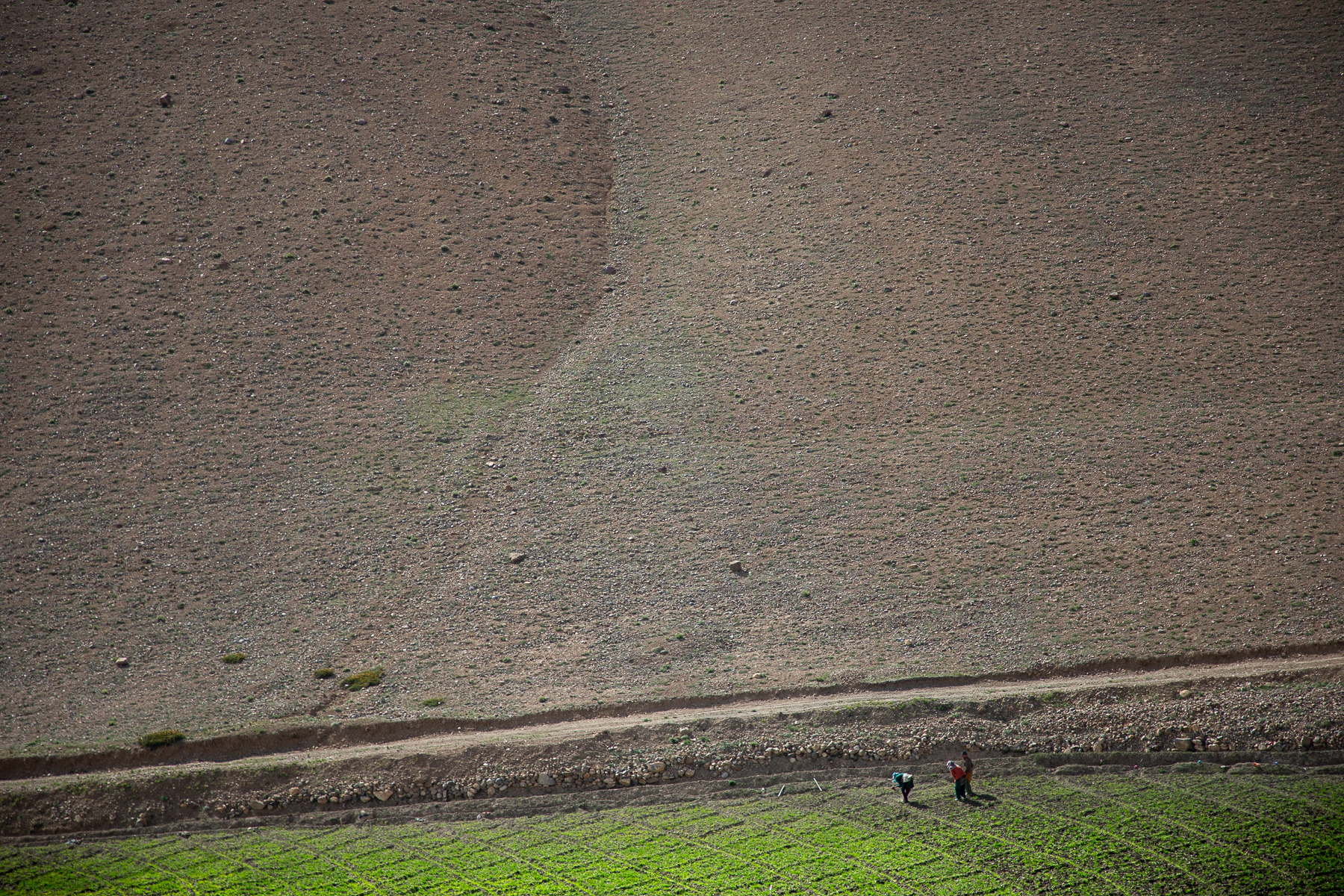
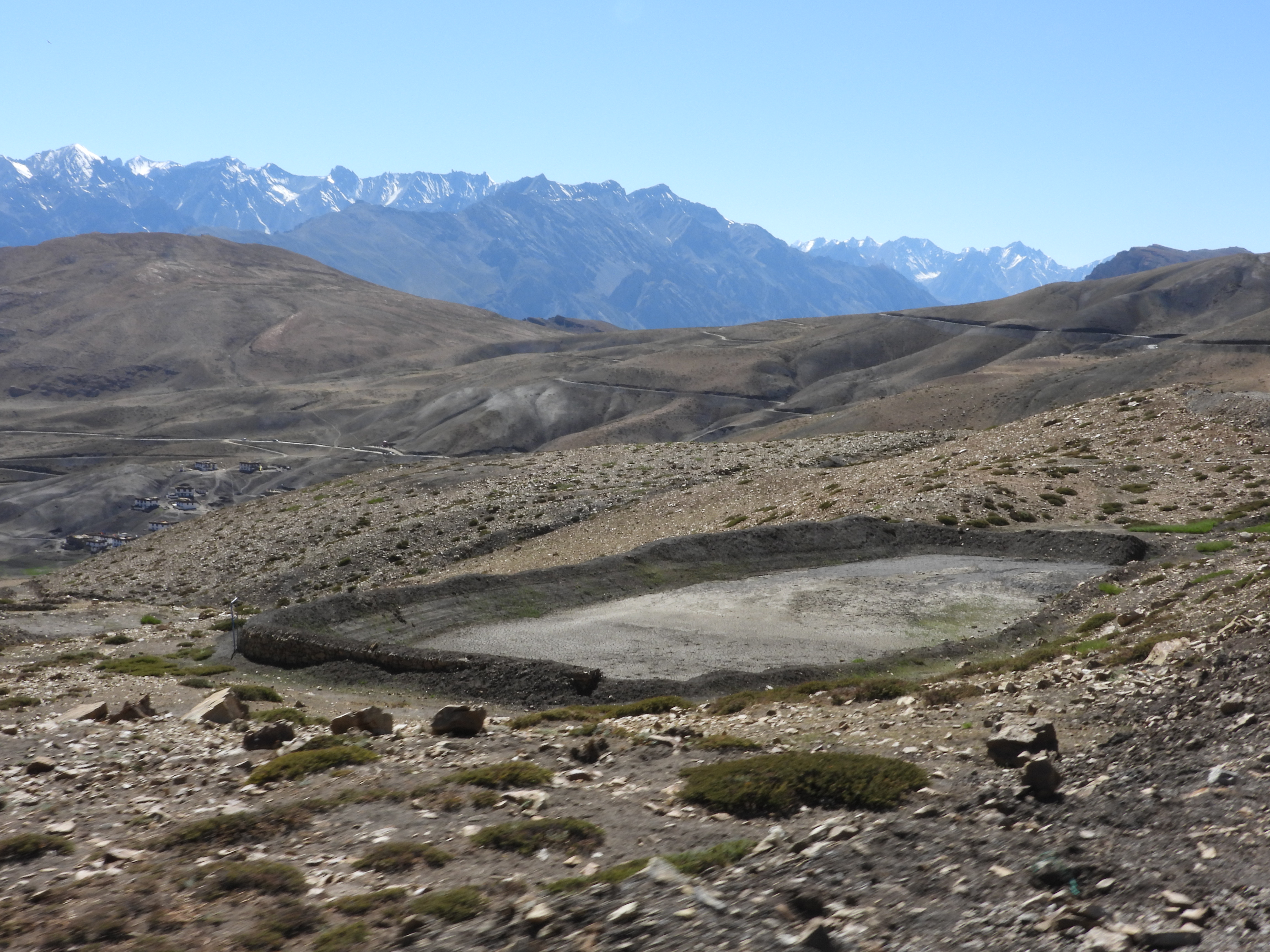
Dikit Lamo: We have been experiencing extremely erratic weather conditions these days. I am 40 now and from my experience, I think it is due to changing weather patterns. We used to have snowfall that levelled our houses and had to clear it with the help of our neighbours! Such was time. There’s lushful greenery in our barley fields and our harvests were abundant. In our village, Chu-mik (spring water) gushed with fresh water – we got to choose from myriad streams flowing around – cold, sweet water to drink while farming. From the past 10 years, there’s been a considerable decrease in precipitation. We used to look up at the sky in hope for rain but to no avail. This year was particularly unexpected. There was very little snowfall during winter and we were even unsure whether we would even get to till our land when summer arrives. We, somehow, adjusted to the difficult situation by either carrying a water tanker to our fields and initiating the seeding work. It worsened as months passed by, we had to leave many of our fields half irrigated or completely fallow. There’s no hope for crops this year.

Barren fields and dried reservoir | Photo: Chhunit Kesang
Domesticated Yaks

TD: What do you think is the cause for such changes?

DL: I think it is due to changing weather patterns. They say it is called global warming in English and has to do with plastic usage. I am not sure how it is interrelated and how it impacts our fields here in Spiti but I do believe it. I think about it a lot and think of avoiding plastic usage on my level. But will it make a difference on a larger level? I think collective action is needed. To ensure timely snowfall, we have to revive our traditional ways of living. Rituals are performed according to an astrologically and agriculturally influenced calendar and we have to bring back those traditions and belief systems. We also think about our children’s generation and preserve our natural resources. Tourism has also impacted the way we channel our resources. It is getting extremely rampant nowadays. We have to devise an internal resource and waste management system to reduce impact on nature. I think plantations will be beneficial in desert areas like ours. I hope that will reduce the effect of global warming and our fields begin to blossom again and our kuls brimming fresh snow water.

Padma Norzom: Water situation? It is scarce everywhere this year. In Chicham, even drinking water is getting difficult for us. Our barley and green peas field are all drying up before harvest season due to receding water in our kuls. There was just no water for irrigation and we are forced to abandon our fields. Because of declining water sources, our land, soil, pasture is all drying up and forage availability and grazing system is also impacted.

TD: Was it the same last year?

PN: It used to be enough to sustain our farm work and to feed our cattle but this year has been unfortunate. There was no snowfall during winter and all our spring waters dried up. My jersey cow also looks very weak and without adequate water to drink, milk production has become very less. I stopped selling milk this year. Livestock feeding and water intake behaviours are also negatively impacted and when sent out in the wild for grazing, they gallop towards greener pastures!

TD: How do we resolve this? Is there a way we can utilise water from the Spiti river?

PN: Yes, river water can certainly be channelled but it will be a bit strenuous and resource intensive as it is located far from the village area. If the government can help us, it will be a huge blessing. Some farmers have tried irrigating their green pea fields with generators. But the diesel operated generators turned out very expensive and it was simply not feasible for small farmers like us who also spent a lot of money buying green pea seeds. The cost will come in lakhs – all for nothing without water.

1800 1200 Tanzin Dawa
Art From Our Valleys
"Huntsman" rock-art, Gya-Miru | Photo: Sherab Lobzang

Art From Our Valleys

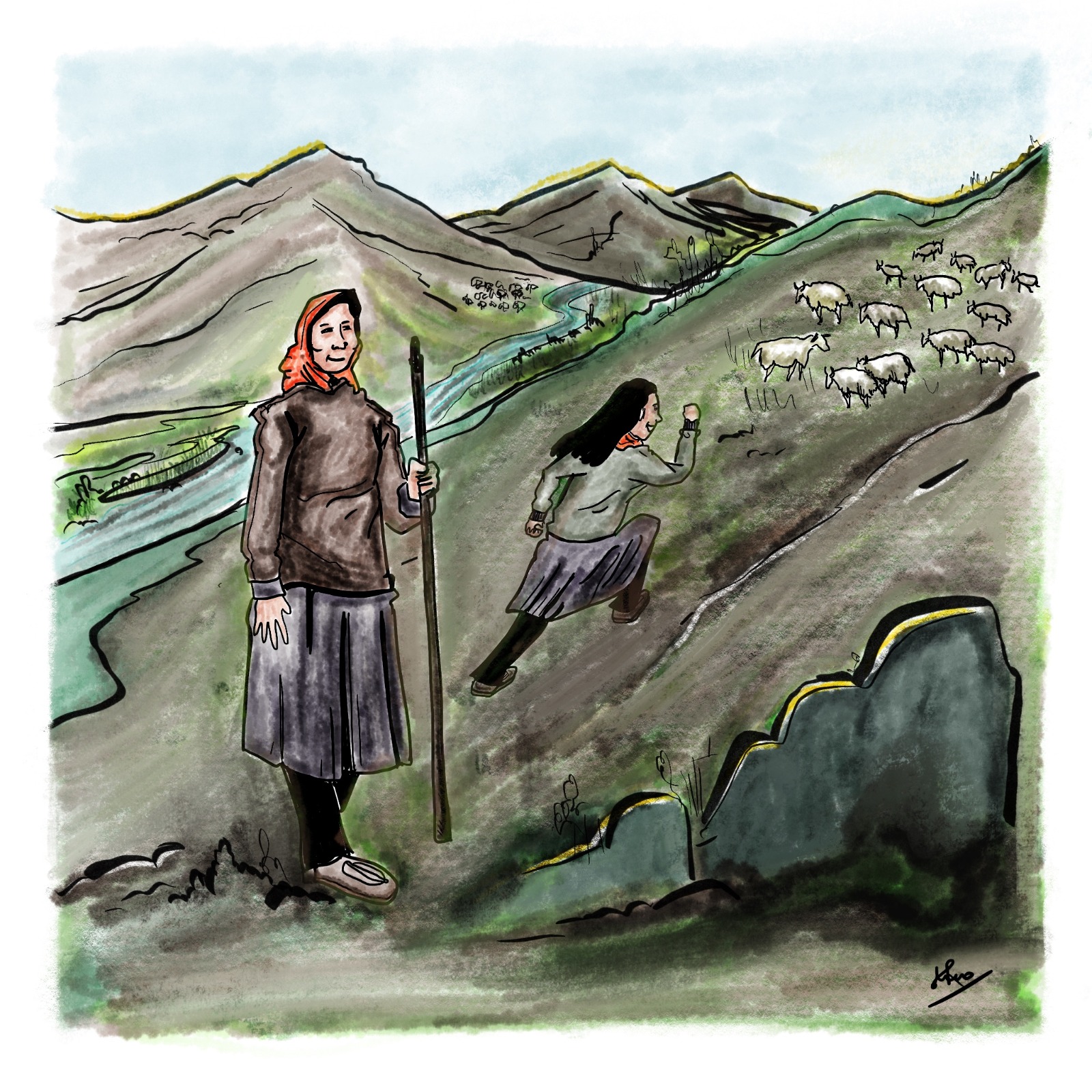
Life in the mountains is tough. In addition to physical fitness, it demands a great deal of mental fortitude. This is particularly true among our elders, especially when you hear them speak about their younger days. Stories of how they managed to survive the long winter months tending to their livestock are hard to believe for our generation. Animals reserve a special place in our lives, and they too are often as spirited as hardy mountain people. Growing up in Ladakh, animals were an integral part of my life too: sheep, goat, donkey, horses, and yak. And then there are the wild animals that were seen rarely, but often encountered when they preyed on livestock. Growing up in the village of Kumdok close to the Changthang region of Ladakh, I enjoyed exploring the mountains as a young kid. I still remember joining my mother to graze the village livestock in the pastures around our village. Each family took turns to fulfill this task. During that time my mother would show me wild animals that were seen in the pastures around our village. We had to keep our livestock safe from hungry carnivores.

Illustration: Rohit Rao

I was fascinated by the outdoors and I still cherish those times spent exploring the pastures. I particularly remember the day I first encountered some very interesting art on some of the rocks in these pastures. As a 13-year old then, I wondered who had drawn them. I asked my mother and she told me that these were made many, many years ago. Probably even before our great, great grandparent’s time. This was from a time when there were no notebooks, pencils, and even schools which is why they may have etched them on the rock.

A few years later, I left the village for higher studies. Returning home each year, I noticed that the number of livestock in my village was reducing. Some years back everyone gave up herding sheep and goat. After completing my education, I began to work in wildlife conservation. My work took me to many places across Ladakh. I interacted with locals of every generation. I also worked closely with researchers who were trying to study nature and the relation that we Ladakhi share with them. That often took me back to rock art that my mother had shown me. Our ancestors may have shared a special relation with nature and animals, as was depicted in the art. This got me even more interested in rock art which is both rare and special. In the last few years, I have encountered rock art in the most unlikely places. I make sure to take a picture, each time I find new art. I often find myself thinking about what our forefathers were trying to tell us through the art. I would like to share some of these pictures and my thoughts with you.

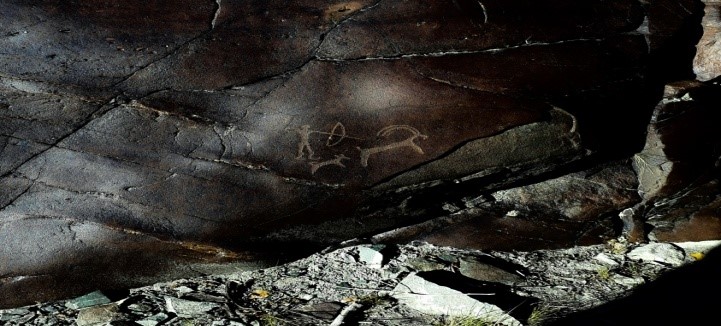
"Hunter" rock-art, Ulley | Photo: Sherab Lobzang

Ulley Tokpo is a village in the western part of Ladakh. Walking along the banks of the Indus River, I stumbled upon this curious rock art. The image shows a hunter pointing a bow at an animal with long curved horns, while a guard dog watches on. Did our forefathers hunt for food? Maybe they did not rear animals like sheep and goat then. Why else would they hunt? When did they start rearing livestock and when did we stop hunting? Thanks to livestock rearing we could stop hunting. But while hunting has stopped, archery remains a very popular sport and a cultural event that we participate in every winter. This is a common practice across many mountain communities in the Himalayas.

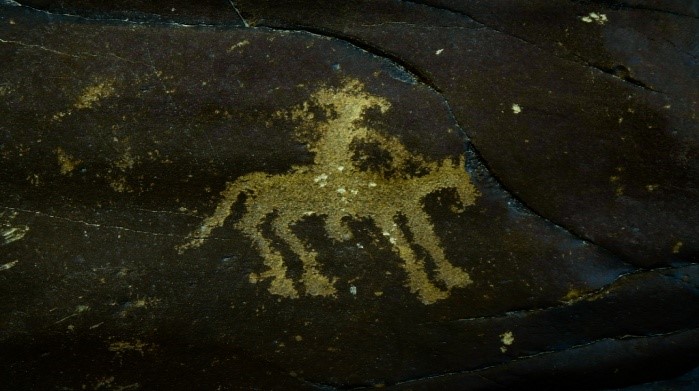
I recorded this rock art image of a horseman between the villages of Miru and Gya on the highway that connects Leh to Manali. One of my senior colleagues had shown me this image. If you drive past this area today, you will not find this horseman anymore. Unfortunately, a large part of the rock formation that carried this rock art was destroyed during road construction. But this image is a reminder of the role that horses might have played in the lives of our forefathers.

Horses were the most efficient form of transport, be that for hunting or even later for trade and exchange of produce through barter. The significance of horses has diminished with the arrival of vehicles. However, they still reserve an important cultural role in our communities. Horse racing is active in some parts during Losar, the New Year celebrated on the first day of the lunisolar Tibetan calendar. Another sport that was played earlier was Ta Polo, Ta meaning horse, and Polo meaning ball. Could this have been a primitive form of the sport of polo? I often wonder where our forefathers might have learned it from.

"Horseman and Yak" rock-art | Photo: Sherab Lobzang

I once encountered this fascinating image of what looked like horsemen pursuing a large animal. I wondered if these were yak. When I spoke with some elders in my village, they mentioned that indeed they were: they were wild yak! Dong, as they are referred to locally, haven’t been seen in a very long time. The domestic yak is believed to have been reared from the wild yak. Our elders explained that dong is much larger than the domestic ones we rear. Today, it is reported from a small part in Changchenmo which is largely unexplored. I wonder if there are other animals like the dong that once occupied these rangelands.

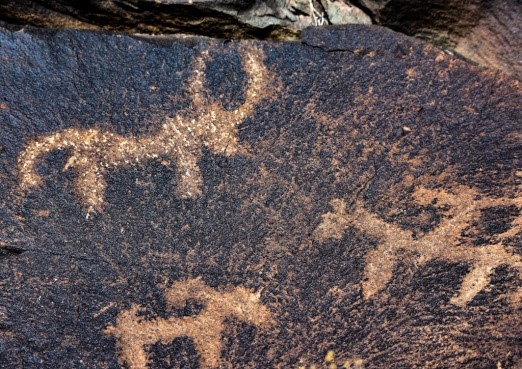
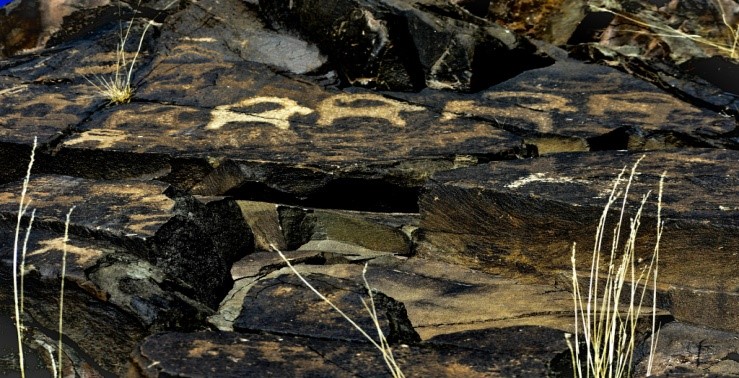
At the mouth of Phuyul valley near the village of Miru, I observed some very interesting rock art while carrying out surveys. This included images of wild animals, stupas which are religious structures in Buddhism, and script which was hard to identify. Some of these etchings look like ibex based on the longhorns they display. I find that particularly interesting because ibex was not found in these areas during our surveys in the past three years. Could the rock art be suggesting that these valleys were home to ibex in prehistoric times? It is hard to say. These are just a few of the images I have found so far. Many more remain undiscovered and I hope to keep finding them and sharing their stories, as I do now. While I have been fortunate to stumble upon these ancient relics that are part of our heritage, I am concerned about the number of these relics we may be losing out of ignorance. Rock art, which may date back several thousand years, are messages to us from our ancestors. They deserve attention and care. If we were to lose them, we might lose an important part of our past heritage.

"Ibex" rock-art | Photo: Sherab Lobzang

This holds true not just for Ladakh, but for all areas where rock art of this kind tells a story of the past. It is up to us to rediscover them and celebrate the wonderful stories they tell. These stories told by our ancestors.

699 391 Sherab Lobzang
Living With The Wild
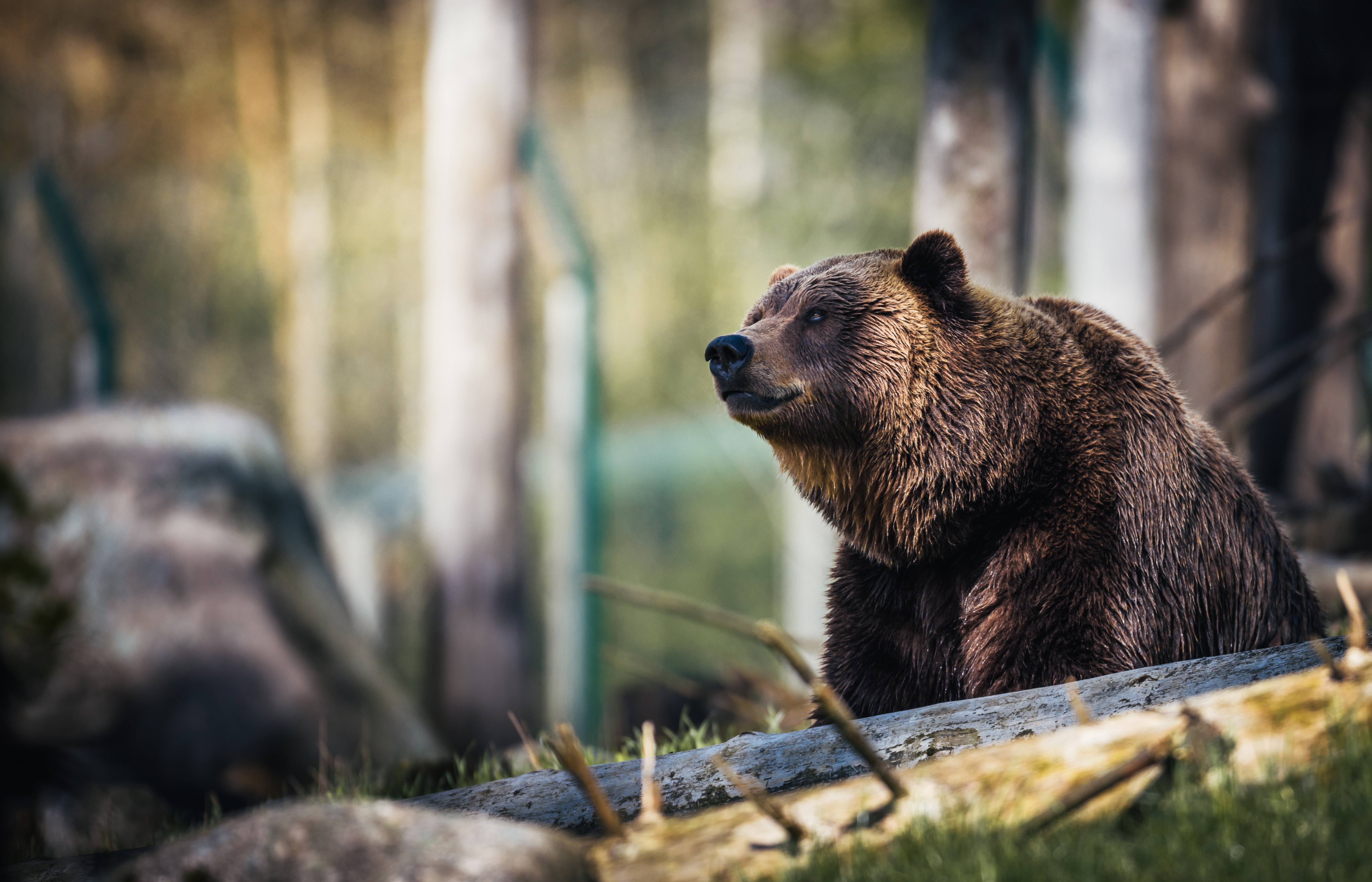
Brown Bear | Photo: Janko Ferlic (Pexels)

Living With The Wild

The 19th day of November 2018 was like any other day for Vikram of Pangi, Chamba district. He was walking his cattle in the nearby village pasture by the banks of the Chenab river. Little did he know that his life was about to change. While walking through thick shrubs and vegetation, he didn’t realize that he had accidentally come too close to a brown bear. The sudden realization of the proximity threatened the animal, and out of fear, it attacked Vikram. Vikram caught off guard, did his best to reduce the impact of the attack. He managed to save his life but suffered multiple grievous injuries all over his body and partial loss of eyesight. He immediately went to the nearest hospital to get medical help. He later filed for compensation with the Range Office in Pangi.

In another part of Himachal, a snow leopard, in the dark of the night, entered the corral of a herder and killed 20 animals. The herder, overnight, lost most of his livestock, and being in one of the remote areas, he had no clear idea of what had to be done and how he could get some economic relief from the forest department.

Such cases are not new to these herding communities who often come in close quarters with the wildlife around their villages and pastures. Some of these instances lead to a lot of emotional stress and in some scenarios may also impact the individuals’ personal relationships. It is a very heavy price one pays for living around wildlife. We must ensure that anyone who suffers such a loss is not neglected and helped throughout the process.

Although this problem has been a part of herder’s life for many generations, there are new-age solutions to prevent and mitigate some of these economic losses.

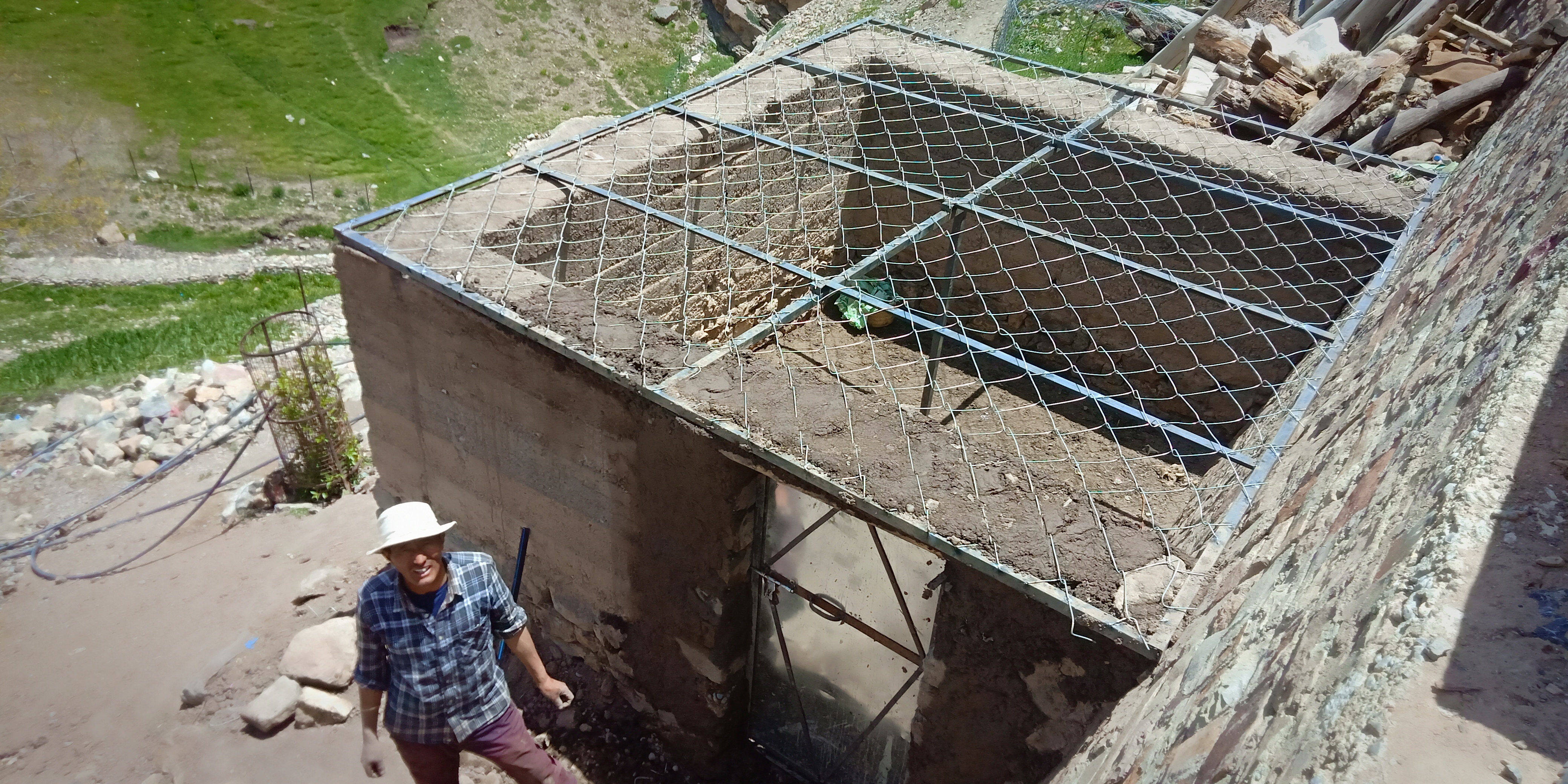
Reinforcing the roofs of the corral to make them predator-proof | Photo: Nature Conservation Foundation

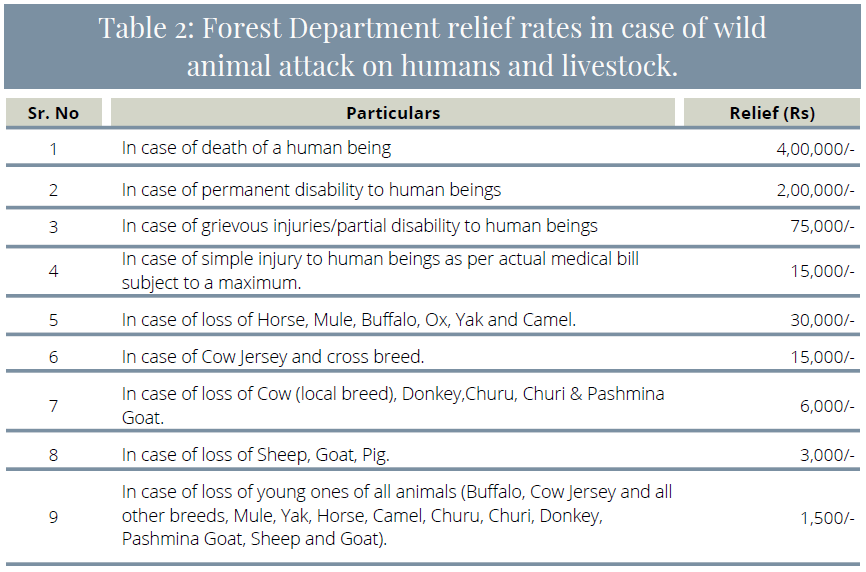
One thing that every individual can do beforehand is to economically safeguard themselves and their family, in case of a medical emergency, by opting for accidental death and disability insurance offered by the central government under Pradhan Mantri Suraksha Bima Yojana (PMSBY) scheme. Although there are eligibility criteria, some degree of financial coverage can be availed from Ayushman Bharat as well. Himachal Pradesh Government offers Ayushman Bharat through its Himachal Pradesh Swasthya Bima Yojna Society (HPSBY). If one does not have any life insurance or pension plan, they should also consider getting one from Pradhan Mantri Jeevan Jyoti Bima Yojana (PMJJBY) and Atal Pension Yojana (APY). For more details on these insurances refer to Table 1. The Forest department also has provisions for providing relief in case one is attacked by wildlife. For details on relief rates offered by Forest Department refer to Table 2.

For livestock, one could take steps to prevent such an incident by repairing and reinforcing corrals to ensure no gaps in walls/doors remain. The roofs can be reinforced with metal mesh to close off all possibilities of attack in the corral. Regular and timely maintenance is of utmost importance. However, the livestock is prone to attack in the pastures and forests as well. Village-level measures, like the insurance program, can help reduce the losses suffered due to such attacks. When the collective losses of the village are high, then insurance of livestock can be planned where the premium and compensation are decided by the villagers and a village committee manages the insurance fund. In case of a loss suffered by a family, compensation is paid out from such a fund. However, the community must be careful and set clear rules and guidelines when starting a village-level insurance program. Currently, there are three villages in Spiti valley where are the community runs the insurance program.

The forest department also provides compensation to the herders in case the livestock is killed by wildlife. However, despite all good intentions, there can be genuine difficulties in timely administering such claims by the forest department and one must be patient but persistent. For details on relief rates offered by Forest Department refer to Table 2.

There are also some traditional solutions to the problem of livestock depredation. For example, in Gue village of Lahaul & Spiti district, there were multiple cases of surplus killing this year. Whoever lost their livestock were helped out by the entire community by each household contributing an animal to the owners. This practice not only takes the stress of losing livestock away but also does not let herder suffer economically. Such practices are reported in other parts of Himachal as well. I am sure that there will be many other local solutions that I have not talked about. I would love to hear about them. Do write about the practices adopted to prevent and mitigate losses from wildlife in your village. Also, if you want to take up this issue in your own village or start an insurance program and need further assistance, do reach out to me or my team. Our details are available on the last page of the newsletter.

In the end, I would like to mention that there is no one, sure shot solution to such complex problems, but Himachalis have continuously been adapting to these challenges, a characteristic of life in the hills, and putting up with the adversities they face.

5824 3744 Deepshikha Sharma