Ladakh

Spirits of the mountains: Barley Beer (Chaang)

Spirits of the mountains: Barley Beer (Chaang)

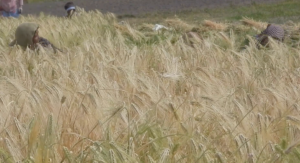
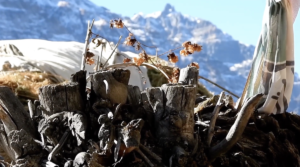
Often referred to as the beer of the high mountains, Chaang is a fermented, alcoholic beverage. In Spiti and Ladakh, it is primarily made using locally-grown, organic barley. More recently, people have started using rice and wheat to make Chaang. Barley, once a staple in the high mountains, is slowly losing out to cash crops despite cash crops being more vulnerable to the risks presented by changing weather patterns. The lack of a market for locally grown barley is leading to its decline.

With special thanks to Tanzin Kunzang


छांग एक किण्वित पेय है जो आमतौर पर ऊंचे पहाड़ों में बनाया जाता है। स्पीति और लद्दाख में, यह मुख्य रूप से स्थानीय रूप से उगाए गए, जैविक जौ का उपयोग करके बनाया जाता है। हाल ही में, लोग छांग बनाने के लिए चावल और गेहूं का भी उपयोग करते हैं। जौ, जो कभी इन भागों का प्रमुख भोजन था, धीरे-धीरे नकदी फसलों की तुलना में कम होता जा रहा है, बावजूद इसके कि नकदी फसलें मौसम के बदलते मिजाज के कारण पैदा होने वाले जोखिमों के प्रति अधिक संवेदनशील हैं।

तंजिन कुंजांग को विशेष धन्यवाद 

1200 663 Ajay Bijoor
Ladakhi Losar – New Year celebrations in Ladakh

Ladakhi Losar – New Year celebrations in Ladakh

Ladakh Losar marks the Ladakhi New Year, which coincided with the Gregorian new year this year. Traditional celebrations persist in a few areas, like the village of Gya.

Losar is a time when everyone returns to their village to be with the family and old friends. In Gya, the celebrations go on for days and include praying to the local deities, meeting with old friends and a lot of song and dance. There is also a special day of celebration to remember Gyapacho, a chieftan ruler who administered this region around the 10th century.

Watch how the villagers put on a show to celebrate Losar!

Credits:
Jigmet Gyatso (Singer), Tsering Palden, Rigzen Dorjey, Tundup Lardak, Namgail Tsering, Meme Tsetan Phunchok and Tanzin Norgyal. Our thanks to all the villagers of Gya, Miru, Sasoma, Lato and Rumptse.

A special thanks to Rigzen Mingyur, Kaga Karma Sonam and his entire family in Rumptse for hosting us and making us part of this special experience.

Cover image: Sartaj Ghuman

Music: New Heights by alanajordan via. Pixabay


लद्दाख लोसर लद्दाखी नव वर्ष का प्रतीक है। पारंपरिक लोसर उत्सव केवल कुछ ही क्षेत्रों में जारी है, जैसे ग्या गांव में।

लोसर ऐसा समय है जब हर कोई परिवार और पुराने दोस्तों के साथ रहने के लिए गांव में अपने पैतृक घरों में लौटता है। ग्या में, उत्सव कई दिनों तक चलते हैं और इसमें स्थानीय देवताओं से प्रार्थना करना, पुराने दोस्तों से मिलना और ढेर सारा गाना और नृत्य शामिल होता है। 10वीं शताब्दी के आसपास इस क्षेत्र पर शासन करने वाले सरदार शासक ग्यापाचो को याद करने के लिए उत्सव का एक विशेष दिन भी है।

देखिये कैसे ग्रामीणों ने लोसर मनाने के लिए एक कार्यक्रम का आयोजन किया!

श्रेय:
जिग्मेट ग्यात्सो (गायक), त्सेरिंग पाल्डेन, रिग्जेन दोरजे, टुंडुप लार्डक, नामगेल त्सेरिंग, मेमे त्सेतन फुंचोक और तंजिन नॉर्ग्याल। ग्या, मिरू, ससोमा, लाटो और रुम्पत्से के सभी ग्रामीणों को हमारा धन्यवाद।

हमारी मेजबानी करने और हमें इस विशेष अनुभव का हिस्सा बनाने के लिए रिग्ज़ेन मिंग्यूर, कागा कर्मा सोनम और रम्पत्से में उनके पूरे परिवार को विशेष धन्यवाद।

कवर छवि: सरताज घुमन

संगीत: एलनजॉर्डन द्वारा न्यू हाइट्स। पिक्साबे

1200 654 Ajay Bijoor
Is pastoralism economically viable?
To add caption add it to "Alt Text"

Is pastoralism economically viable?

Pastoralism is a way of life for a very large section of society in India. But is pastoralism receding? We look at an example of the Changpa pastoral herders of eastern Ladakh, famous for producing pashmina, and see if their practice is economically viable.
This exploration is based on a study led by Chamba Tsetan from the Centre for Pastoralism and was carried out with the support of the World Wildlife Fund for Nature (WWF), India as part of a project funded by the Darwin Initiative.
The study makes an interesting distinction to show how pastoralism as a social activity may be undergoing a transformation, even while pastoralism as an economic activity remains lucrative. So, while the nature of pastoralism is changing, this practice is likely to remain active.

Acknowledgement:
We thank Chamba Tsetan for giving us time to explain this work.

Photo credits:
Pashmina: Aaditya Kitroo via. Wikimedia Commons
Bakarwal: Muzamil Bhat for PARI: https://ruralindiaonline.org/en/artic…
Changpa: Prasenjeet Yadav for Nature Conservation Foundation.
Gaddi: Ajay Bijoor for Nature Conservation Foundation.
Van Gujjar: Traditional Cultures Project, https://www.himalayanmigration.com/start

Map of eastern Ladakh is used for representational purposes only and is credited to UNDP Secure Himalaya (https://securehimalaya.org/ladakh/).

Map of pastoralists in Himalaya is credited to Singh, Bhati and Kerven (2023), https://pastres.org/2023/08/25/pastor…

News articles:
BBC https://www.bbc.com/news/world-asia-i…
Frontline: https://frontline.thehindu.com/enviro…
Mint: https://www.livemint.com/news/india/c…
The Asian Age: https://www.asianage.com/india/all-in…
The Economist: https://www.economist.com/asia/2021/1…

Cover image: Nawang Tankhe

Additional footage via. Pixabay (https://pixabay.com/) and Open Planet (https://openplanet.org/)
Music: Nomads by Edward Earl Hanson from Epidemic Sound via. Canva.

Location: Greenland Guest House, Leh

1200 667 Ajay Bijoor
Automated Ice Reservoirs: A new technique to combat climate change

Automated Ice Reservoirs: A new technique to combat climate change

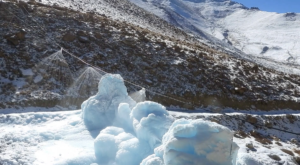
The first-ever World Day for Glaciers, coinciding with World Water Day, is being celebrated on March 21, 2025. Glaciers are vital to the health of rivers that emerge from the high Himalayan range. These rivers account for close to a fifth of the Earth’s fresh water stock. However, there have been concerns over the shrinking of glaciers attributed largely to human-induced climate change. The impact of shrinking glaciers is felt most acutely by farmers in the Himalaya as water from glacial melts needed for their first irrigation arrives late. This pushes the farming window further away, risking damage to their standing crop which has to be harvested on time. People of Ladakh have been carrying out novel experiments to build ice structures that can counter this challenge. Such initiatives began in the 1990s in the form of artificial glaciers designed by Chewang Norphel, and later in 2013 with the construction of vertical ice stupas was conceived by Sonam Wangchuk.

Acres of Ice (AoI), a newly set up Ladakhi company, is now trying to couple the design philosophy of both these ideas while also introducing automation, to build larger ice reservoirs while easing the process of building such structures. In this story, we speak with Dr. Surya, the co-founder of AoI, and Karuna Sah of AoI about their work.

Credits: We thank Dr. Surya and Karuna Sah from Acres of Ice for speaking with us and taking us to one of their sites in Igoo.
Image credits: Leh Nutrition Project, The Ice Stupa Project, Sonam Wangchuk/Rolex Awards and Acres of Ice.
Cover image: Nawang Tankhe
Background music: Glaciers by Roie Shpigler from Artlist via. Canva Teams
Kya Baat by Guy Buttery from Artlist via. Canva Teams
Stock Footage from Pixabay (https://pixabay.com/)


विश्व जल दिवस के साथ ही पहला विश्व ग्लेशियर दिवस 21 मार्च, 2025 को मनाया जा रहा है। ग्लेशियर उच्च हिमालयी श्रृंखला से निकलने वाली नदियों के स्वास्थ्य के लिए महत्वपूर्ण हैं। ये नदियाँ पृथ्वी के ताजे पानी के भंडार का लगभग पाँचवाँ हिस्सा हैं। हालाँकि, ग्लेशियरों के सिकुड़ने को लेकर चिंताएँ हैं, जिसका मुख्य कारण मानव-प्रेरित जलवायु परिवर्तन है। ग्लेशियरों के सिकुड़ने का प्रभाव हिमालय के किसानों पर सबसे ज़्यादा पड़ता है, क्योंकि पहली सिंचाई के लिए ज़रूरी ग्लेशियरों के पिघलने से पानी देर से आता है। इससे खेती के लिए समय कम हो जाता है, जिससे उनकी खड़ी फसल को नुकसान पहुँचने का जोखिम रहता है, जिसे समय पर काटा जाना चाहिए। लद्दाख के लोग बर्फ की संरचनाएँ बनाने के लिए नए प्रयोग कर रहे हैं, जो इस चुनौती का सामना करने में मदद कर सकते हैं, जैसे कि चेवांग नोरफेल द्वारा डिज़ाइन किए गए कृत्रिम ग्लेशियर और सोनम वांगचुक द्वारा पेश किए गए ऊर्ध्वाधर बर्फ स्तूप। लद्दाख की एक नई कंपनी एकर्स ऑफ आइस (एओआई) इन दोनों विचारों के डिजाइन दर्शन को स्वचालन के साथ जोड़ने की कोशिश कर रही है, ताकि ग्लेशियर निर्माण की प्रक्रिया को आसान बनाते हुए बड़े ग्लेशियर बनाए जा सकें। इस कहानी में, हम एओआई के सह-संस्थापक डॉ. सूर्या और एओआई की करुणा साह से उनके काम के बारे में बात करते हैं।

1200 661 Ajay Bijoor
The uncertain future of Himalayan Barley

The uncertain future of Himalayan Barley

Barley grown organically has been a staple produce in the high altitude regions of Spiti, Lahaul and Ladakh. In the 1980s, the cold summer weather allowed farmers to move towards growing more lucrative cash crops. However, the same weather is now becoming the biggest risk. In this story, Tanzin Thinley, a farmer from Kibber in Spiti talks about this change and the challenges facing farmers like him.

Credits:
Thanks to Tanzin Thinley
Also, thanks to Dikit Lamo of Chicham
Additional footage: Lama Tanzin Chhewang
Stock Footage from Pixabay (https://pixabay.com/)
Music: The Old Farmer by Dream-Protocol via. Pixabay


जैविक तरीके से उगाई गई जौ स्पीति, लाहौल और लद्दाख के क्षेत्रों में एक प्रमुख उपज रही है। 1980 के दशक में, ठंडी गर्मी के मौसम के कारण, किसानों को अधिक लाभदायक नकदी फसलें उगाने की ओर बढ़ने का मौका मिला। हालांकि, यही मौसम अब सबसे बड़ा खतरा भी बनता जा रहा है। इस कहानी में, स्पीति के किब्बर के एक किसान तंजिन थिनले इस बदलाव और उनके जैसे किसानों के सामने आने वाली चुनौतियों के बारे में बात करते हैं।

फिल्मांकन क्रेडिट:
तंजिन थिनले को धन्यवाद
इसके अलावा, चिचम के डिकिट लामो को भी धन्यवाद
अतिरिक्त फुटेज: लामा तंजिन छेवांग
पिक्साबे से स्टॉक फुटेज (https://pixabay.com/)

1200 650 Ajay Bijoor
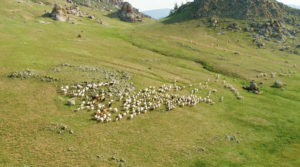
How to care for livestock in harsh Himalayan winters

How to care for livestock in harsh Himalayan winters

Recent research highlights that viral loads in livestock rise in summer and affect animal health just before the onset of winter. Winters being the harshest season in the high Himalaya, a weak start to the season may mean a higher risk of losing weak animals. We explain some findings from this latest research which was led by Dr. Munib Khanyari and list some easy steps that could help reduce livestock damages from poor health in winter.

You can read the full research here: https://www.frontiersin.org/journals/…
Stock Footage from Pixabay (https://pixabay.com/)


हाल के शोध से पता चला है कि गर्मियों में पशुओं में वायरल लोड बढ़ जाता है और सर्दियों की शुरुआत से ठीक पहले पशु स्वास्थ्य को प्रभावित करता है। उच्च हिमालय में सर्दियाँ सबसे कठोर मौसम होती हैं, मौसम की कमजोर शुरुआत का मतलब कमजोर जानवरों के खोने का अधिक जोखिम हो सकता है। हम इस नवीनतम शोध से कुछ निष्कर्षों की व्याख्या करते हैं जिसका नेतृत्व डॉ. मुनीब खन्यारी ने किया था और कुछ आसान कदम सूचीबद्ध किए हैं जो सर्दियों में खराब स्वास्थ्य से पशुधन के नुकसान को कम करने में मदद कर सकते हैं।

आप पूरा शोध यहां पढ़ सकते हैं: https://www.frontiersin.org/journals/…
पिक्साबे से स्टॉक फुटेज (https://pixabay.com/)

1200 680 Ajay Bijoor
Food of the mountains: Stinging nettle (Zatsod)

Food of the mountains: Stinging nettle (Zatsod)

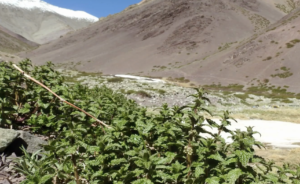
People of the high mountains have traditionally gathered plants and herbs from the wild, which would then be carefully stored and consumed in winter. Most of this collection is for personal use and never for commercial purposes. In this story, Karma Sonam of Gya village of Ladakh tells us about the traditional technique for collection and storage of zatsod or stinging nettle. He also shares a recipe of zatsod thukpa.

ऊंचे पहाड़ों के समुदाय पारंपरिक रूप से जंगली पौधों और जड़ी-बूटियों की तलाश करते हैं, जिन्हें बाद में सावधानीपूर्वक संग्रहीत किया जाता है और सर्दियों में खाया जाता है। इस संग्रह का अधिकांश भाग व्यक्तिगत उपयोग के लिए था, न कि व्यावसायिक उद्देश्यों के लिए। इस कहानी में, लद्दाख के ग्या गाँव से कर्मा सोनम हमें बिच्छू बूटी के संग्रह की तकनीक के बारे में बताते हैं। वह स्थानीय सामग्रियों का उपयोग करके बनाई गई थुकपा की एक पारंपरिक रेसिपी भी साझा करते हैं।

This story was narrated, shot and edited by Karma Sonam.

यह कहानी कर्मा सोनम द्वारा सुनाई, शूट और संपादित की गई है।

1718 1052 Karma Sonam
The Sowa-Rigpa medicine system

The Sowa-Rigpa medicine system

In this episode of Himkatha Charcha, we spoke with Amchi Chhering Tashi of Hansa village in Spiti about the Sowa Rigpa medicine system which is being practiced in his family for at least four generations. We tried to center our conversation on the origin of this system and the deep knowledge it preserves about local plants. Amchi Chhering Tashi was interviewed by Dr. Mayank Kohli and Tanzin Thinley. Additional footage via. Open Planet (https://openplanet.org/)

हिमकथा चर्चा के इस एपिसोड में हमने स्पीति के हंसा गांव के अमची छेरिंग ताशी से सोवा रिग्पा चिकित्सा प्रणाली के बारे में बात की, जो उनके परिवार में कम से कम चार पीढ़ियों से चली आ रही है। हमने अपनी बातचीत को इस प्रणाली की उत्पत्ति और स्थानीय पौधों के बारे में इसके द्वारा संरक्षित गहन ज्ञान पर केंद्रित करने का प्रयास किया। अमची छेरिंग ताशी का इंटरव्यू डॉ. मयंक कोहली और तंजिन थिनले ने लिया। अतिरिक्त फुटेज ओपन प्लैनेट (https://openplanet.org/) के माध्यम से।

1200 668 Dr. Mayank Kohli
The Sowa-Rigpa medical tradition
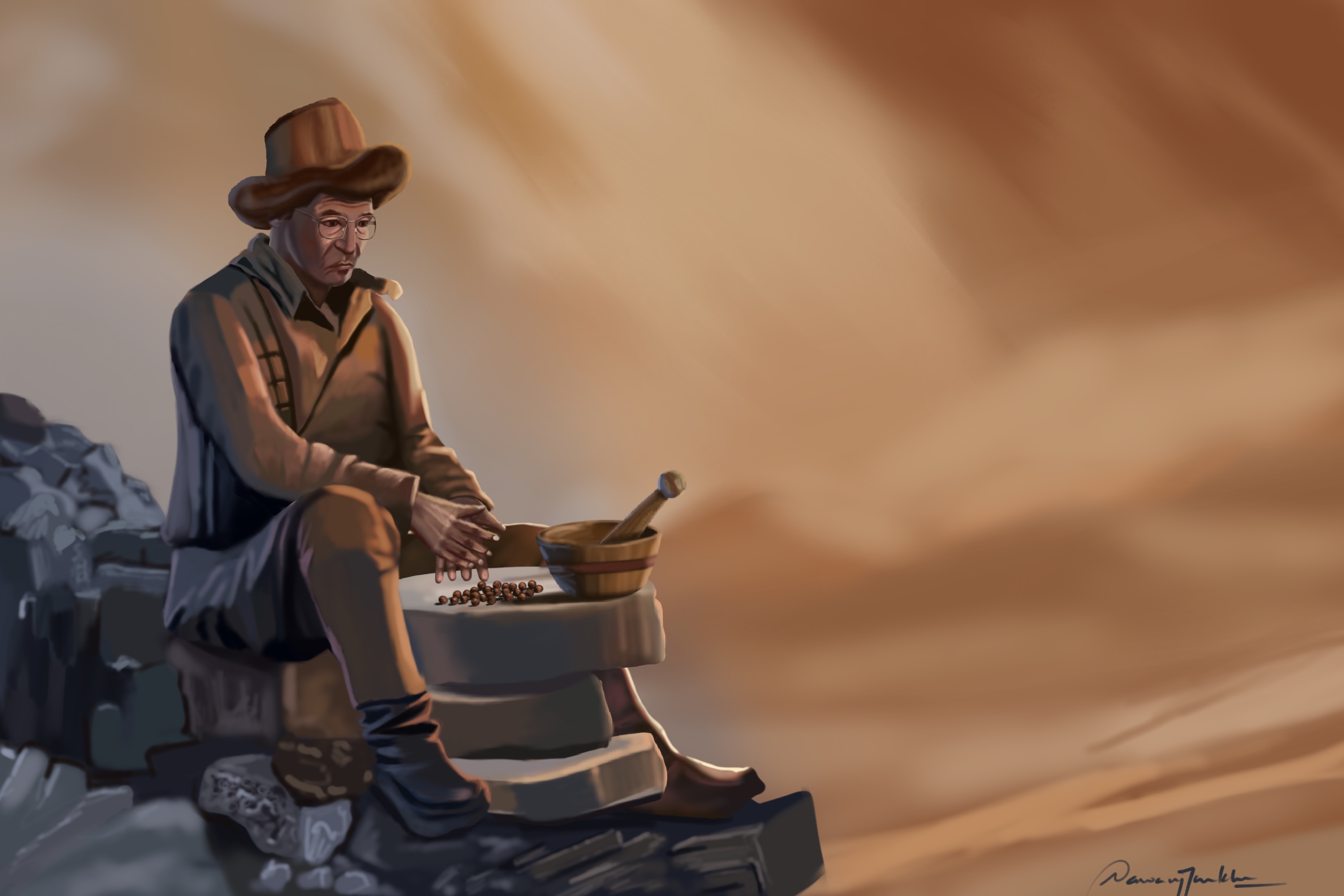
Illustration: Peeyush Sekhsaria

The Sowa-Rigpa medical tradition

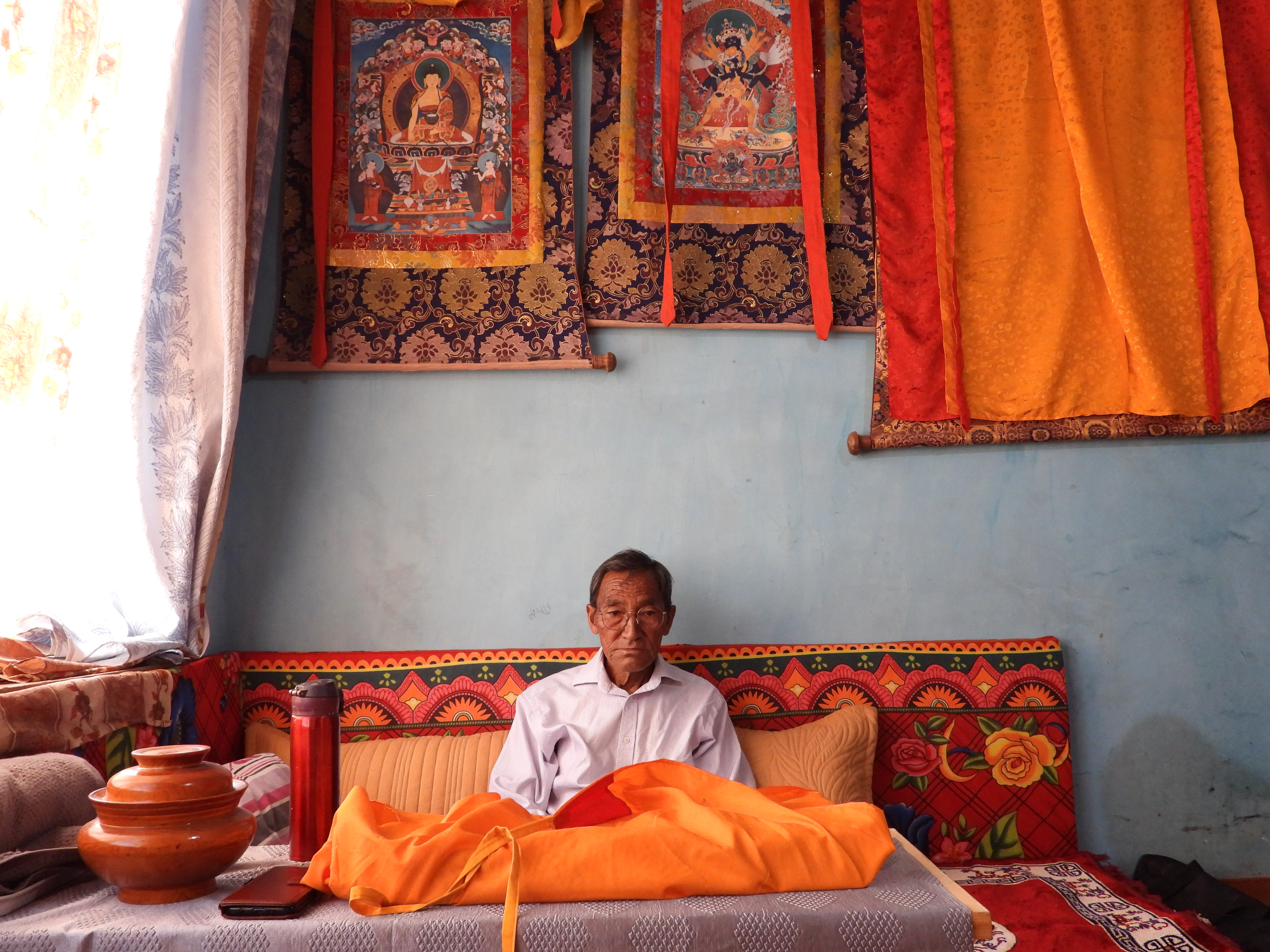
Sowa-Rigpa, also known as the Amchi system of medicine, is practiced in the high Himalayan region. It is also referred to as the Tibetan medicine system and is among the oldest existing knowledge systems in the world that relies on knowledge of ecology, especially plants. In an hour-long conversation with 71-year-old Amchi Chhering Tashi of Hansa village in Spiti we speak about the Sowa-Rigpa tradition. Here is a short excerpt of this interview.

Can you speak about the origins of the Sowa-Rigpa medical tradition?

Contrary to popular belief, Sowa-Rigpa is an ancient Indian knowledge system, not Tibetan. It is believed that when the Buddha gave his sermon on ending suffering at Vaishali in present day Bihar, there were many in attendance. The audience included many learned people including spiritual and celestial beings from different realms. Buddha delivered the discourse in Pali, but all those in attendance heard his message in their respective languages. Since everyone heard it differently, it got recorded and disseminated in different ways – as Ayurveda across the Indian subcontinent, Sowa-Rigpa across the Himalayas and Tibet, and Yunani in Central Asia. That is how this knowledge spread across different cultures. It was later translated into Sanskrit at Nalanda. A part of this knowledge system was at risk of being lost due to the predominance of Ayurveda, but was preserved by the Tibetans. So, while Sowa-Rigpa originated in India, it was preserved and nurtured in Tibet. Lotsawa Rinchen Zangpo – the Great Translator of Buddhism – translated these works to the local Bhoti dialect in his sixth incarnation.

Since when has this system been practiced in your family? 

Every village in Spiti – from Losar to Lari – has at least one family that practices this system. Villagers help with the collection of medicinal plants and in preparing medicines. Historically, each village had an Amchi because connectivity between villages was poor and this was an essential service that all villagers needed. No fees are charged by the Amchi; it is offered as a public service to anyone seeking medical attention.

About our family, my father was a very learned man. He knew exactly what treatment is described on which page in the handbook (pointing to the old medical scriptures placed before him). I never met my grandfather, but he might have passed on this knowledge to my father. While I don’t know how and when my forefathers began practicing, I have with me several old scribbled notes that belonged to them. My grandfather, in the 1930s, also received a letter from the then Governor of Punjab which I preserve to this day. Our family has been in this practice for at least a few hundred years.

Amchi's collecting parts of plant for medicinal purpose | Photo: Mayank Kohli

How did you get inducted into becoming an Amchi?

My father started training me since I was in sixth grade. I had to attend school, manage a lot of the house work and focus on this too. I was the only male child and my sisters were already married by then. I had little interest

in learning about plants and reading the handbook. But my father was very persistent. He taught me patiently. Maybe that is how I learnt whatever little I did. Had I taken interest from the beginning, I might have become a better Amchi.

One can learn everything about the practice in six years. But my father taught me daily and he inculcated in me a habit of reading these scriptures every day, even if it is only for just five minutes. These scriptures that I possess, are nearly 600-years old. Reading them daily has been very helpful.

What is the process of diagnosis and prescribing medication?

There are four fundamental books that form the basis of this practice, which need to be learnt by heart by any Amchi. Further there are four books explaining these fundamental principles in detail. Lastly, there are these scriptures (pointing to the old medical scripts placed before him) which are like a handbook. They explain the symptoms of every illness and contain details of its treatment and medication. We match the symptoms of every patient with the explanations in this handbook and follow its recommendation for prescribing treatment.

When a patient approaches me, I first check their pulse and sometimes their urine. I then match the description of the symptoms with those in the handbook. The handbook gives details of all the local plants and their medicinal values. It also suggests the proportion in which they should be mixed for a particular treatment. I always make all the medicines and test them on myself before I distribute them.

Any illness has two causes: first from accumulation of bad karma earned in one’s past lives, and second from an imbalance in what we consume (food, water, air etc.) from our general surroundings. An Amchi can cure illnesses caused by the latter; the former cannot be cured by medicine. While modern medicine addresses the symptoms of an illness, Sowa-Rigpa tries to address the root cause of it.

Amchi Chhering Tashi from Hansa village in Spiti | Photo: Tanzin Thinley

How and when are plants collected?

There is no fixed time for collection. We use different parts of a plant for treatment, and hence collection happens across seasons. We use the flowers of some plants, while we need seeds of some and roots of others. Generally, roots of a plant grow deep into the soil before autumn and that is when we collect roots, we will not collect them in any other season. Flowers will only be collected in spring once they have blossomed. There are clear rules on when and how different parts can be collected. A separate book describes locations of where plants can be found. For example, Aconitum spp. (Bhoan karpo) are mostly found on north-facing slopes and that is where we scout for them. Delphinium spp. (Lader mentok) is another invaluable plant that grows commonly in our landscape. Rhodiola spp. (Shrolo) is also found on north-facing slopes – there are three varieties found in Spiti: one with white flowers, one with red flowers, and one that grows tall. These details help us in collection.

The handbook also carries details of the medicinal values of these plants. For example, Rhodiola spp. cure lung infections while Aconitum spp. cure multiple ailments: flowers improve eyesight, their roots help our bones, the branches are good for our hands and legs while the stem of the plant is good for our skin. Meconopsis spp. (Landre mentok), Saussurea spp. (Kasturi kamal or Yuliang) and Trillium spp. (Nag chhatri) are mixed to make a very effective painkiller, even better than diclofenac sodium that is administered commonly. We are aware of all the medicinal qualities of many local plant species and we make use of them judiciously.

Is a change in climate patterns affecting the availability of medicinal plants? 

There was a time when collection of wild plants for commercial use was common. We had then spoken with the local administration to limit irresponsible collection. They acted swiftly and we are glad that the situation was handled effectively. We believe that Spiti produces sufficient plants to fulfil local needs. No matter how much medicine the people of Spiti consume, this land will produce plants and they will never exhaust. However, if we start exporting plants outside Spiti for commercial use, then we invite the risk of depleting this valuable resource. There is a finely balanced cycle of production and consumption, which we should not disturb. Variations in snowfall may marginally affect plant growth, but not so much as to disrupt this system.

What do you think about the sustenance of this practice in future?  

The practice is offered as a public service by the Amchi in each village. There is no financial benefit in the practice. In fact, we often incur expenses in the collection of plants and preparation of medicines. Our homes are always open to any patient seeking medical help.

Illustration: Nawang Tankhe

Sometimes I wonder that one must be stupid to offer such a service free-of-cost at a time when everyone runs after money. But then, I also remember that when I die, I will leave everything behind: land, family, even my own body. I will only be remembered for my integrity. That is what keeps me going. However, the local administration should consider providing basic financial support to practitioners so that they continue practicing this tradition.

This is a short excerpt and you can watch the full interview on our YouTube channel.

2241 1524 Dr. Mayank Kohli
Ladakh Pashmina

Ladakh Pashmina

The story of Ladakh Pashmina: The authentic, sustainable cashmere. A film by Munmun Dhalaria. (Language: English and Ladakhi with English subtitles)

2292 1072 Munmun Dhalaria