
Climate Change

Spirits of the mountains: Barley Beer (Chaang)

Spirits of the mountains: Barley Beer (Chaang)

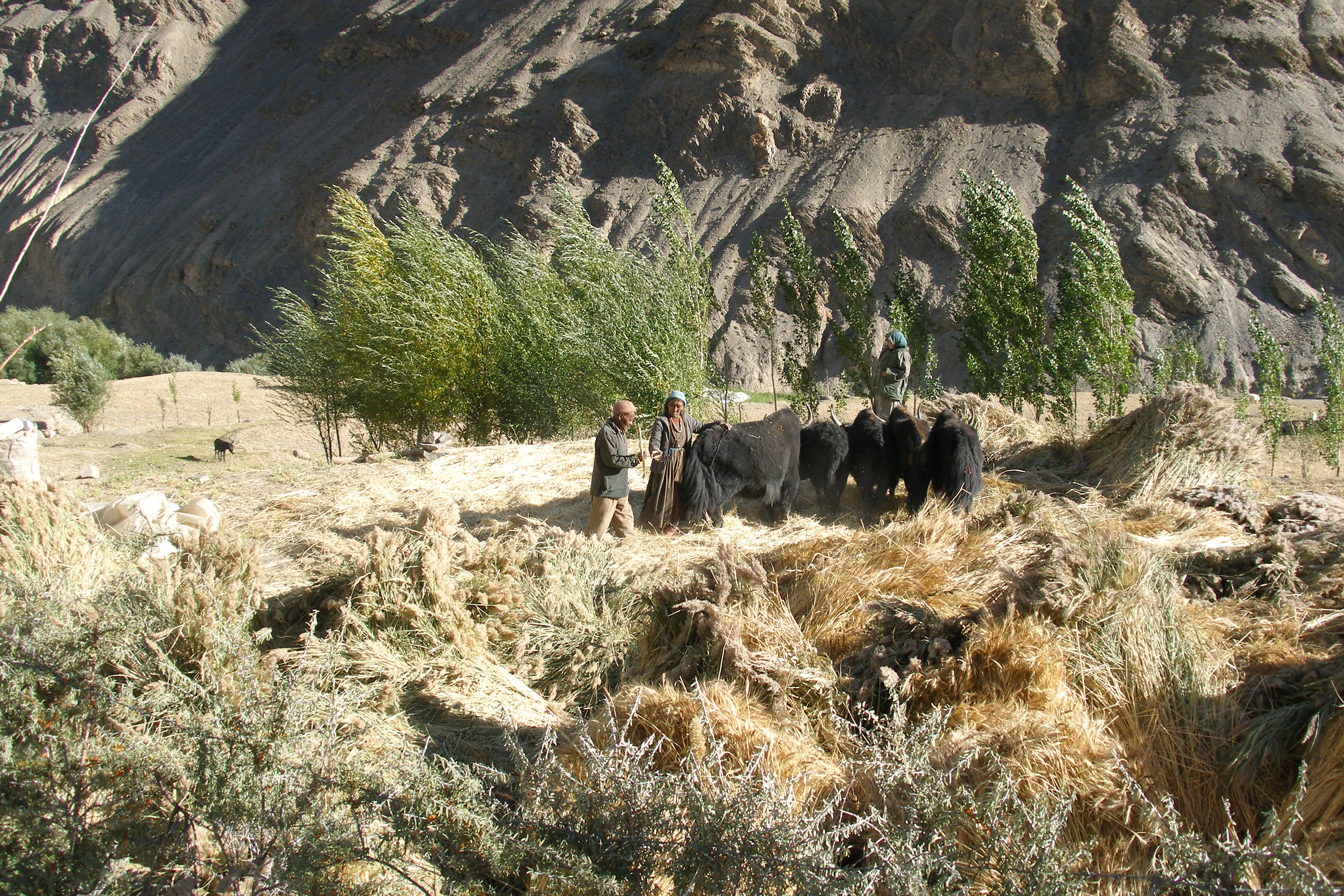
Often referred to as the beer of the high mountains, Chaang is a fermented, alcoholic beverage. In Spiti and Ladakh, it is primarily made using locally-grown, organic barley. More recently, people have started using rice and wheat to make Chaang. Barley, once a staple in the high mountains, is slowly losing out to cash crops despite cash crops being more vulnerable to the risks presented by changing weather patterns. The lack of a market for locally grown barley is leading to its decline.

With special thanks to Tanzin Kunzang


छांग एक किण्वित पेय है जो आमतौर पर ऊंचे पहाड़ों में बनाया जाता है। स्पीति और लद्दाख में, यह मुख्य रूप से स्थानीय रूप से उगाए गए, जैविक जौ का उपयोग करके बनाया जाता है। हाल ही में, लोग छांग बनाने के लिए चावल और गेहूं का भी उपयोग करते हैं। जौ, जो कभी इन भागों का प्रमुख भोजन था, धीरे-धीरे नकदी फसलों की तुलना में कम होता जा रहा है, बावजूद इसके कि नकदी फसलें मौसम के बदलते मिजाज के कारण पैदा होने वाले जोखिमों के प्रति अधिक संवेदनशील हैं।

तंजिन कुंजांग को विशेष धन्यवाद 
1200 663 Ajay Bijoor
Fairies of Kibber | Documentaries by Locals

Fairies of Kibber | Documentaries by Locals

Women in the high altitude village of Kibber carry the weight of water, faith and the future. Fairies of Kibber follows the extraordinary story of women who have become guardians of water in a climate-challenged world.

A film by Varun Chauva.

Music via. Pixabay:
gm6-fmaj7-bbm6-jazz-improvisation-215332.mp3 by drebddronefish
jazz-background-music-349165.mp3 by BackgroundMusicForVideos
loose-and-lazy-blues-110453.mp3 by ShidenBeatsMusic
sleigh-ride-snowflake-swing-10951.mp3 by JuliusH


किब्बर के पहाड़ी गांव में रहने वाली महिलाएं जल, आस्था और भविष्य का भार अपने कंधों पर उठाती हैं। ‘फेयरीज ऑफ किब्बर’ जलवायु परिवर्तन से जूझ रही दुनिया में जल की संरक्षक बनी महिलाओं की असाधारण कहानी बयां करती है।

1200 670 Varun Chauva
Concrete over the forest | Documentaries by Locals
Temp

Concrete over the forest | Documentaries by Locals

2025 was the wettest monsoon in Himachal Pradesh after 29 years. The State has been witnessing a rise in extreme weather events that cause widespead damage and loss of life. Is this a new pattern? Are our mountains hurting? Concrete over the forest follows one such event witnessed in September 2025.

A film by Varun Chauva.


हिमाचल प्रदेश में 29 वर्षों में 2025 का मानसून सबसे अधिक वर्षा वाला रहा। राज्य में चरम मौसम संबंधी घटनाओं में वृद्धि देखी जा रही है, जिनसे व्यापक क्षति और जानमाल का नुकसान हो रहा है। क्या यह एक नया चलन है? क्या हमारे पहाड़ पीड़ा झेल रहे हैं? इस कहानी में सितंबर 2025 में घटी ऐसी ही एक घटना का वर्णन है। वरुण चौवा द्वारा निर्देशित फिल्म।

Sources:
Weather reports
https://mausam.imd.gov.in/shimla/mcda…
https://sandrp.in/2025/10/01/sw-monso…

Global forestry watch report for Shimla https://www.globalforestwatch.org/das…

Relevant news articles
https://timesofindia.indiatimes.com/c…
https://www.news18.com/news/india/ami…
https://timesofindia.indiatimes.com/c…

Music via. Pixabay: Balanced calm-457663 by Edmand Edroff (https://pixabay.com/users/emand_edrof…) Atmospheric soundscape-152493

1200 668 Varun Chauva
Automated Ice Reservoirs: A new technique to combat climate change

Automated Ice Reservoirs: A new technique to combat climate change

The first-ever World Day for Glaciers, coinciding with World Water Day, is being celebrated on March 21, 2025. Glaciers are vital to the health of rivers that emerge from the high Himalayan range. These rivers account for close to a fifth of the Earth’s fresh water stock. However, there have been concerns over the shrinking of glaciers attributed largely to human-induced climate change. The impact of shrinking glaciers is felt most acutely by farmers in the Himalaya as water from glacial melts needed for their first irrigation arrives late. This pushes the farming window further away, risking damage to their standing crop which has to be harvested on time. People of Ladakh have been carrying out novel experiments to build ice structures that can counter this challenge. Such initiatives began in the 1990s in the form of artificial glaciers designed by Chewang Norphel, and later in 2013 with the construction of vertical ice stupas was conceived by Sonam Wangchuk.

Acres of Ice (AoI), a newly set up Ladakhi company, is now trying to couple the design philosophy of both these ideas while also introducing automation, to build larger ice reservoirs while easing the process of building such structures. In this story, we speak with Dr. Surya, the co-founder of AoI, and Karuna Sah of AoI about their work.

Credits: We thank Dr. Surya and Karuna Sah from Acres of Ice for speaking with us and taking us to one of their sites in Igoo.
Image credits: Leh Nutrition Project, The Ice Stupa Project, Sonam Wangchuk/Rolex Awards and Acres of Ice.
Cover image: Nawang Tankhe
Background music: Glaciers by Roie Shpigler from Artlist via. Canva Teams
Kya Baat by Guy Buttery from Artlist via. Canva Teams
Stock Footage from Pixabay (https://pixabay.com/)


विश्व जल दिवस के साथ ही पहला विश्व ग्लेशियर दिवस 21 मार्च, 2025 को मनाया जा रहा है। ग्लेशियर उच्च हिमालयी श्रृंखला से निकलने वाली नदियों के स्वास्थ्य के लिए महत्वपूर्ण हैं। ये नदियाँ पृथ्वी के ताजे पानी के भंडार का लगभग पाँचवाँ हिस्सा हैं। हालाँकि, ग्लेशियरों के सिकुड़ने को लेकर चिंताएँ हैं, जिसका मुख्य कारण मानव-प्रेरित जलवायु परिवर्तन है। ग्लेशियरों के सिकुड़ने का प्रभाव हिमालय के किसानों पर सबसे ज़्यादा पड़ता है, क्योंकि पहली सिंचाई के लिए ज़रूरी ग्लेशियरों के पिघलने से पानी देर से आता है। इससे खेती के लिए समय कम हो जाता है, जिससे उनकी खड़ी फसल को नुकसान पहुँचने का जोखिम रहता है, जिसे समय पर काटा जाना चाहिए। लद्दाख के लोग बर्फ की संरचनाएँ बनाने के लिए नए प्रयोग कर रहे हैं, जो इस चुनौती का सामना करने में मदद कर सकते हैं, जैसे कि चेवांग नोरफेल द्वारा डिज़ाइन किए गए कृत्रिम ग्लेशियर और सोनम वांगचुक द्वारा पेश किए गए ऊर्ध्वाधर बर्फ स्तूप। लद्दाख की एक नई कंपनी एकर्स ऑफ आइस (एओआई) इन दोनों विचारों के डिजाइन दर्शन को स्वचालन के साथ जोड़ने की कोशिश कर रही है, ताकि ग्लेशियर निर्माण की प्रक्रिया को आसान बनाते हुए बड़े ग्लेशियर बनाए जा सकें। इस कहानी में, हम एओआई के सह-संस्थापक डॉ. सूर्या और एओआई की करुणा साह से उनके काम के बारे में बात करते हैं।

1200 661 Ajay Bijoor
The uncertain future of Himalayan Barley

The uncertain future of Himalayan Barley

Barley grown organically has been a staple produce in the high altitude regions of Spiti, Lahaul and Ladakh. In the 1980s, the cold summer weather allowed farmers to move towards growing more lucrative cash crops. However, the same weather is now becoming the biggest risk. In this story, Tanzin Thinley, a farmer from Kibber in Spiti talks about this change and the challenges facing farmers like him.

Credits:
Thanks to Tanzin Thinley
Also, thanks to Dikit Lamo of Chicham
Additional footage: Lama Tanzin Chhewang
Stock Footage from Pixabay (https://pixabay.com/)
Music: The Old Farmer by Dream-Protocol via. Pixabay


जैविक तरीके से उगाई गई जौ स्पीति, लाहौल और लद्दाख के क्षेत्रों में एक प्रमुख उपज रही है। 1980 के दशक में, ठंडी गर्मी के मौसम के कारण, किसानों को अधिक लाभदायक नकदी फसलें उगाने की ओर बढ़ने का मौका मिला। हालांकि, यही मौसम अब सबसे बड़ा खतरा भी बनता जा रहा है। इस कहानी में, स्पीति के किब्बर के एक किसान तंजिन थिनले इस बदलाव और उनके जैसे किसानों के सामने आने वाली चुनौतियों के बारे में बात करते हैं।

फिल्मांकन क्रेडिट:
तंजिन थिनले को धन्यवाद
इसके अलावा, चिचम के डिकिट लामो को भी धन्यवाद
अतिरिक्त फुटेज: लामा तंजिन छेवांग
पिक्साबे से स्टॉक फुटेज (https://pixabay.com/)

1200 650 Ajay Bijoor
The Bee Herders

The Bee Herders

Warming climates are causing tree species to move to higher elevations. This effect is particularly visible in the Western Himalaya. Apple, the primary produce in the Indian State of Himachal Pradesh, is also moving to higher altitudes. But while trees are moving higher, their natural pollinators are yet to make this ascent. During our recent travels, we met with an interesting group of bee herders who are trying to plug this gap. Watch our latest story based on the most fascinating discussion we had with a most unexpected bee keeper we met, who had travelled all the way from Rajasthan!

We thank Shri. Bharat Godhara alias Shivakumar and his assistant Jyotish who played gracious hosts and spoke with us about their travels and trade. Thanks also to Gauri Gharpure for sharing her insights. We would like to acknowledge Preeti Virkar for here latest research on apples and bees, that got us curious on this topic and to Dr. Shivam Shrotriya who pointed us to this work.

Preeti’s paper can be viewed here https://www.sciencedirect.com/science…

Filming Credits:
Additional Footage from Bharat Godhara (Shivakumar) and Akshata Anand
Stock Footage from Pixabay (https://pixabay.com/)
Music: Fresh Apple by Lesfm via Pixabay

Map is not to scale and has been used for representational purposes.

————-

गर्म होती जलवायु के कारण वृक्ष प्रजातियाँ अधिक ऊंचाई पर जा रही हैं। यह प्रभाव विशेष रूप से पश्चिमी हिमालय में दिखाई देता है। हिमाचल प्रदेश की प्राथमिक उपज सेब भी अधिक ऊंचाई पर जा रही है। लेकिन जब पेड़ ऊपर बढ़ रहे हैं, तो प्राकृतिक परागणकों को यह चढ़ाई करना मुश्किल हो रहा है। अपनी हाल की यात्राओं के दौरान, हमारी मुलाकात मधुमक्खी पालकों के एक दिलचस्प समूह से हुई जो इस अंतर को पाटने की कोशिश कर रहे हैं। एक अप्रत्याशित मधुमक्खी पालक के साथ हुई हमारी दिलचस्प चर्चा पर आधारित हमारी नवीनतम कहानी देखें, जो राजस्थान से यात्रा करके आये थे!

हम श्री ​​शिवकुमार और उनके सहायक ज्योतिष को धन्यवाद देते हैं जिन्होंने हमें अपनी यात्रा और व्यापार के बारे में जानकारी दी। अपनी अंतर्दृष्टि साझा करने के लिए गौरी घरपुरे को भी धन्यवाद। हम सेब और मधुमक्खियों पर नवीनतम शोध के लिए प्रीति विरकर को धन्यवाद देना चाहेंगे, जिसने हमें इस विषय पर सोचने के लिए उत्साहित किया और डॉ. शिवम श्रोत्रिय को भी जिन्होंने हमें इस काम के लिए प्रेरित किया।

प्रीति का पेपर यहां देखा जा सकता है https://www.sciencedirect.com/science/article/abs/pii/S0167880924001865

फिल्मांकन क्रेडिट:
श्री शिवकुमार और अक्षता आनंद से अतिरिक्त फुटेज
पिक्साबे से स्टॉक फुटेज (https://pixabay.com/)
संगीत: फ्रेश एप्पल Pixabay के माध्यम से Lesfm द्वारा

मानचित्र पैमाने पर आधारित नहीं है, और इसका उपयोग प्रतिनिधित्वात्मक उद्देश्यों के लिए किया गया है।

1200 661 Ajay Bijoor
How to care for livestock in harsh Himalayan winters

How to care for livestock in harsh Himalayan winters

Recent research highlights that viral loads in livestock rise in summer and affect animal health just before the onset of winter. Winters being the harshest season in the high Himalaya, a weak start to the season may mean a higher risk of losing weak animals. We explain some findings from this latest research which was led by Dr. Munib Khanyari and list some easy steps that could help reduce livestock damages from poor health in winter.

You can read the full research here: https://www.frontiersin.org/journals/…
Stock Footage from Pixabay (https://pixabay.com/)


हाल के शोध से पता चला है कि गर्मियों में पशुओं में वायरल लोड बढ़ जाता है और सर्दियों की शुरुआत से ठीक पहले पशु स्वास्थ्य को प्रभावित करता है। उच्च हिमालय में सर्दियाँ सबसे कठोर मौसम होती हैं, मौसम की कमजोर शुरुआत का मतलब कमजोर जानवरों के खोने का अधिक जोखिम हो सकता है। हम इस नवीनतम शोध से कुछ निष्कर्षों की व्याख्या करते हैं जिसका नेतृत्व डॉ. मुनीब खन्यारी ने किया था और कुछ आसान कदम सूचीबद्ध किए हैं जो सर्दियों में खराब स्वास्थ्य से पशुधन के नुकसान को कम करने में मदद कर सकते हैं।

आप पूरा शोध यहां पढ़ सकते हैं: https://www.frontiersin.org/journals/…
पिक्साबे से स्टॉक फुटेज (https://pixabay.com/)

1200 680 Ajay Bijoor
भारत में पहली बार हिम तेंदुए की जनगणना कैसे की गई?

भारत में पहली बार हिम तेंदुए की जनगणना कैसे की गई?

अंतर्राष्ट्रीय हिम तेंदुआ दिवस 23 अक्टूबर को मनाया जाता है। भारत इस साल अपनी पहली हिम तेंदुए की जनगणना के नतीजे घोषित करेगा। यह परिणाम देश के हिमालयी क्षेत्रों में किए गए 4 साल के व्यापक अभ्यास पर आधारित है। यह विशाल अभ्यास देश के सुदूर ऊंचाई वाले क्षेत्रों में रहने वाले स्थानीय लोगों के समर्थन और भागीदारी के बिना पूरा नहीं किया जा सकता था।

वीडियो: समर्थ ज्योति
कथन: अक्षिता अशोकन
अनुवाद: सीमा बजाज
कैमरा ट्रैप छवियां: हिमाचल प्रदेश वन विभाग, नेचर कंजर्वेशन फाउंडेशन और स्नो लेपर्ड ट्रस्ट
फुटेज: तेंज़िन थुक्तान, मुनीब खन्यारी और अजय बिजूर
छवियाँ: हाई एल्टीट्यूड प्रोग्राम और प्रसेनजीत यादव
अतिरिक्त फ़ुटेज: ओपन प्लैनेट

2444 1360 Akash Jyoti
Changes in Agriculture (Ladakh)
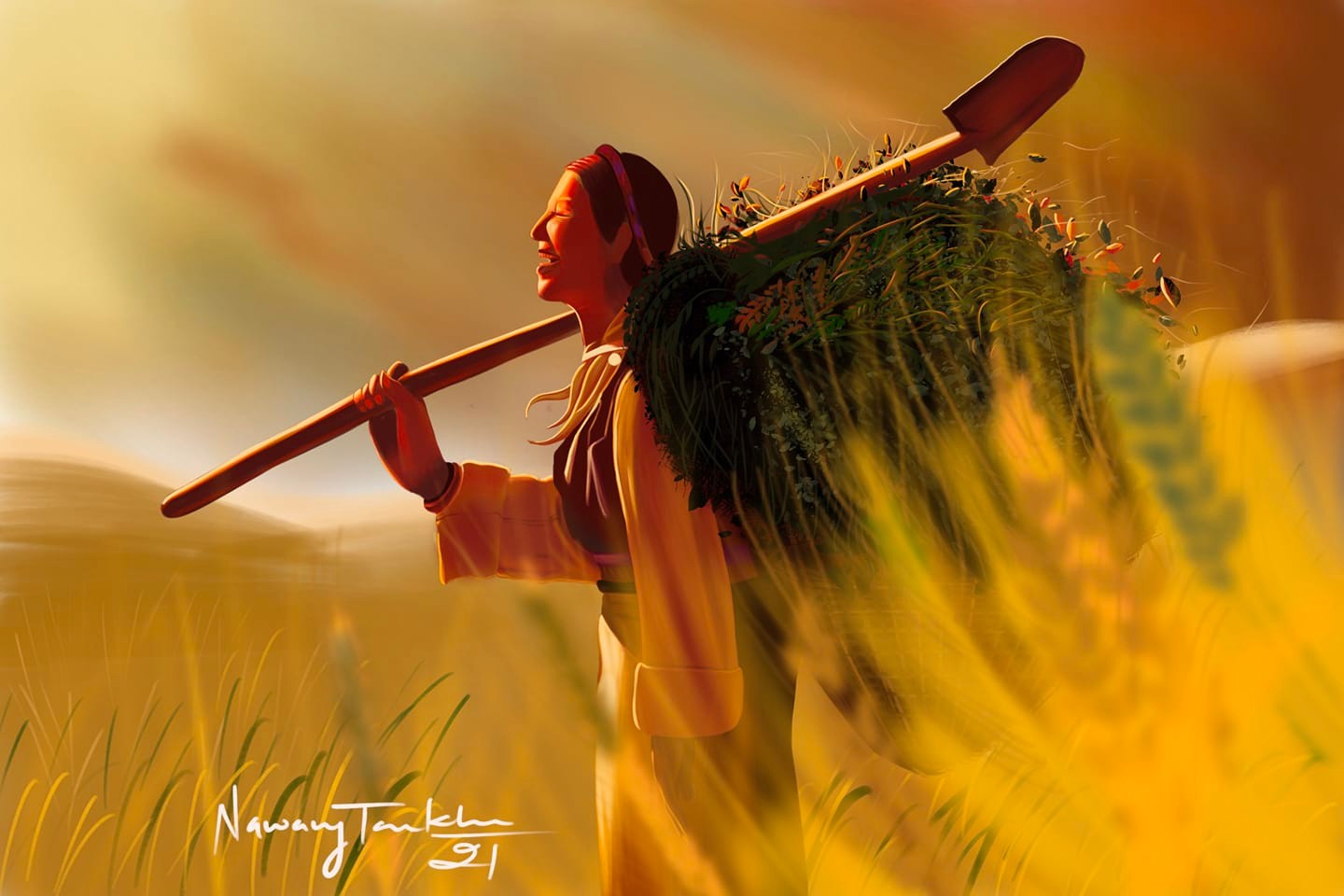
Illustration: Nawang Tankhe

Changes in Agriculture (Ladakh)

The rapid shift away from agriculture to other economic activities is a common trend in many agrarian economies globally, often driven by factors such as urbanization, changing lifestyles, and economic opportunities outside the agricultural sector. Agriculture in Ladakh is no exception.

In the traditional Ladakhi farming and food system, the sun provided the primary energy, enabling plant growth, muscle-based labour power and fast-flowing water for milling and irrigating. The fertility of the soil and crops came from recycling of manure and compost (lut, chulut, and the like) into the fields and from minerals in the glacial melt-water. ‘Packaging’ – if any – was in the form of hand-made woolen sacks, wooden and clay vessels, willow baskets, and masonry granaries, all of which could be safely returned to the soil after they wore out. Transportation of the crops was done with muscle power, and cooking done with local renewable fuels like dung cakes or wood sticks. Care was taken to conserve pasturelands through rotational grazing, and farmers tried to minimise harm done even to insects in the fields. The ecological footprint – meaning total ecological impacts including energy and water consumption, waste generation, etc. – was very low. In current terms, we could say that the traditional Ladakhi farming and food system was solar-powered, zero-external input, zero-waste, regenerative, closed-loop, and sustainable!

Today, while much of the traditional farming and food system continues to exist, it is steadily being eroded by a number of profound socio-economic changes. The environmental impacts of these changes are increasing year by year.

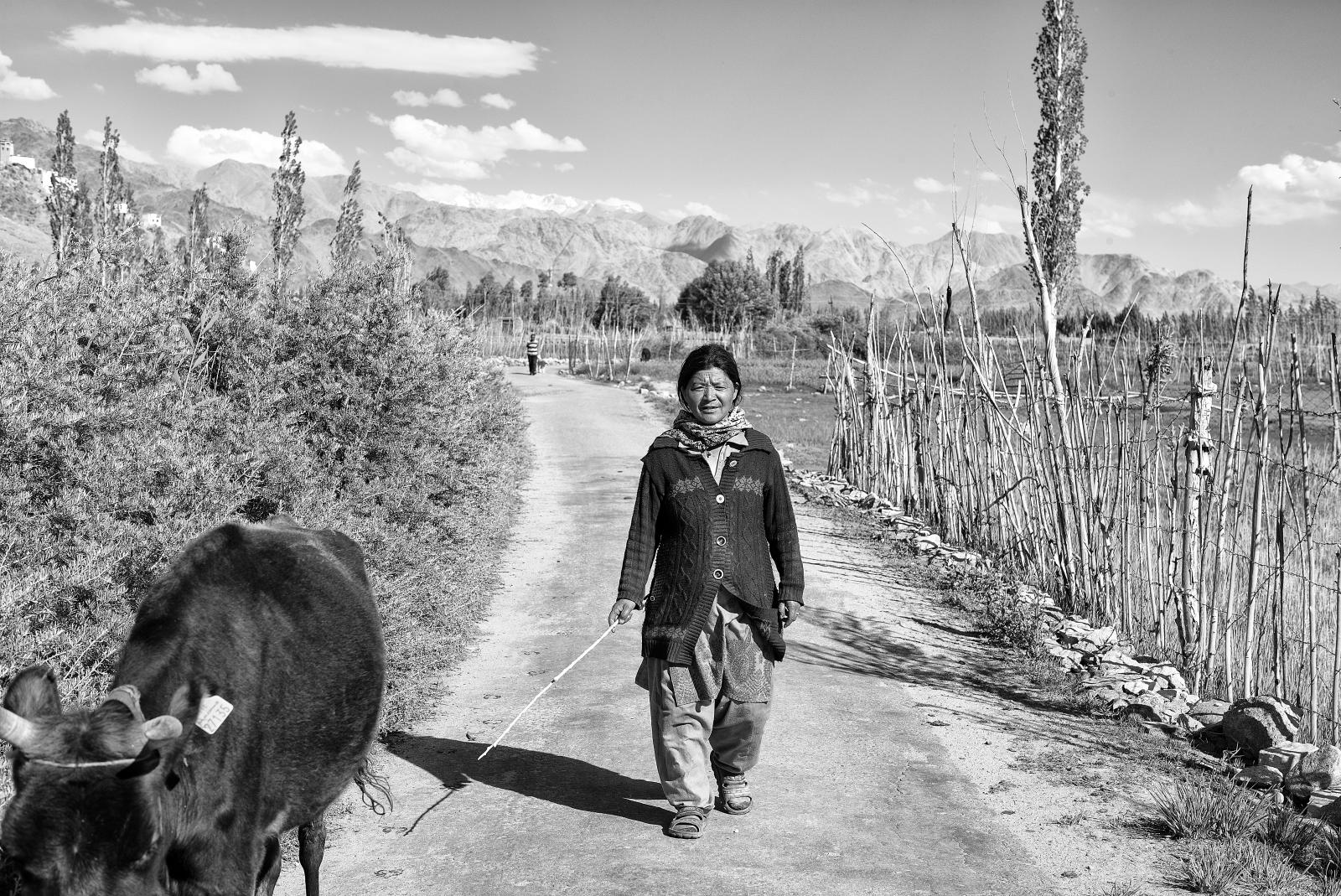
One of the important changes has been the decline of villages due to various reasons and the decline in farming-pastoralism systems that sustained them for centuries. The growth of tourism, the army, and competitive education have combined to drain young people, and young men in particular, out of the villages and into Leh, or even further away. As a result, there is less total labour available, and more farming work has fallen on village women and paid labour. Many fields that were once lush and green in the summers today lie fallow for lack of people to work them. With fewer people, livestock herds have decreased significantly, and in the case of goats and sheep nearly disappeared from many villages. While this change may have benefitted wild herbivores to some extent by reducing competition for forage, it has also reduced the amount of rich, organic local manure available for soil and crop nutrition. To make up for this, many farmers turn to the use of synthetic fertilisers which pollute both water and air, and are very energy-intensive to manufacture from fossil fuels.

Crops & Water

The decline of agriculture is also seen in the reduction of diversity in crops including pulses, cereals and pseudo cereals like buckwheat (although efforts are slowly being made to bring back buckwheat). Fewer local pulses like the traditional black bean in Ladakhi fields and kitchens diminishes the health of the local diet as well as local soils. Pulses naturally fix atmospheric nitrogen into the soil, so when they are planted there is no need for nitrogen fertilisers. Without them, however, an important source of natural fertility is lost. In terms of oilseeds, whereas Ladakhis formerly cultivated local mustard more extensively and produced much of their own edible oil, today mustard farming is also declining. Commercial edible oils, packaged in plastic bottles and trucked in from the Indian plains are now widely used in Ladakhi kitchens.

In the 14,000-foot village of Gya, farmers used to cultivate different varieties of barley because the area’s climate was conducive to their growth. Because of the region’s low temperatures, wheat is rarely grown in Ladakh’s eastern region. The people in that same region are currently cultivating over thirty-six to thirty-seven different kinds of grains and vegetables. Acho Urgain, from Gya village, says that this may be because he has access to a wider range of plants these days. He is cultivating new crops like quinoa, and Tse Tse (Foxtail millet), which are native Ladakh millets that are rarely grown these days. Since 2014, green peas have been grown extensively throughout Ladakh because of factors including climate change that favours such crops, but more importantly because of increasing commercialisation of agriculture, as green peas have high market demand inside and outside Ladakh. A variety of relatively novel vegetables are today grown, such as cauliflower, cabbage, beetroot, and various turnip varieties.

One of the many changes in agriculture that people in the mountains are facing is a lack of water, especially during times of great need.  It is imperative that water be given to the fields by the end of March or the start of April. Variable weather patterns cause glaciers to hold onto water by not melting during the seeding season. June 21st marks the change of the days, so in July there will still be a water shortage. Another impact of climate change on agriculture is from increasing likelihood and severity of glacial lake outburst floods, which have had catastrophic impacts on downstream villages, such as in Gya village in 2007, 2009, and 2014.

Land use

The perspective of agri-entrepreneur Rinchen Yutol from Reetsot in Ladakh highlights the rapid changes in the past decade, which may present both challenges and opportunities.

The conversion of agricultural lands into concrete structures poses a significant challenge, and reversing this process is often impractical. This irreplaceable loss reduces self-reliance in food and increases dependency on imported foods. Such dependency increases vulnerability in the case of any disruptions (like fuel shortages, or road closures) in the transportation network across the Himalaya. Additionally, the fragmentation of agricultural lands due to nuclear families can further reduce the overall agricultural land use.

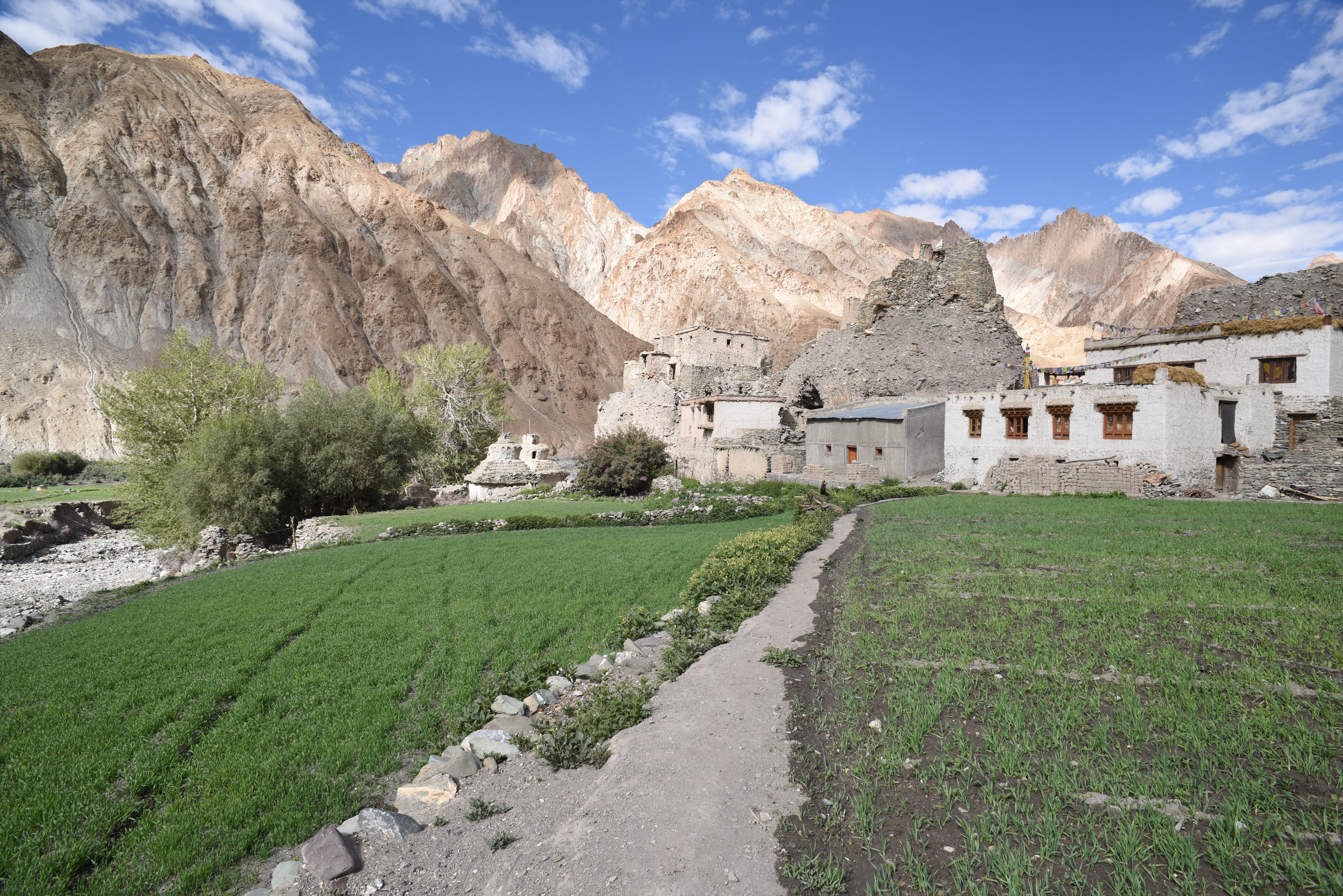
Chortens and fields of Markha | Photo: Wikimedia Commons

Fertilisers

Synthetic fertilisers have been used in Ladakh since about the late 1970s, supplied by the government at highly subsidised rates. Three main synthetic fertilisers are used: urea, DAP (diammonium phosphate), and MOP (Muriate of Potash/potassium chloride). Data from the Agriculture Department and Mission Organic Development Initiative of Ladakh show that in general, quantities of synthetic fertiliser use are decreasing in Ladakh. This trend is reflective of the Hill Council’s new vision to make Leh District fully organic within 10 years. This is very encouraging, since the more fertilisers are used, the more they disrupt the availability of natural nitrogen in the soil, which requires more fertilisers – a chemical addiction!

Besides the loss of livestock manure, the shift to flush toilets and septic tanks accompanying tourism – especially but not only in Leh – is also depriving the soil of rich human manure from traditional compost toilets.

To supplement local supplies, there are new initiatives to bring animal manure from Changthang for use in villages in the farming districts of Ladakh, and the government is also importing organic manure from Punjab. While this is certainly a welcome change from chemical fertilisers, transporting manure and compost also carries an environmental cost in terms of fuel consumption and diesel smoke exhaust. A future challenge will therefore be to generate organic manure and compost closer to where it is to be used, to reduce transport costs and pollution, and to keep valuable local nutrients recycling through local soils. Aggressive promotion of compost toilets, restaurant and residential food scrap collection and composting, and other initiatives could play a role in regenerating the local compost economy.

Seeds

One of the most crucial factors to consider when examining the changes in any region’s agriculture is the seed. The availability of native or local seeds is impacted by the decline in production of native or older crops. The majority of seeds for vegetables that are currently offered by the government or in the market are or hybrid seeds, which have the potential to alter the agricultural landscape of Ladakh, and have implications for the food sovereignty of the region and the economic independence of its farmers.

Traditional threshing of harvest in Lamayuru | Photo:Wikimedia Commons

Mechanisation

Dependence on fossil fuel energy has also been increasing in agriculture and pastoralism, as traditional tools, draught animals and techniques are replaced by mechanical, gas-powered threshing machines, mills, ploughs, tractors, etc. In Changthang, pick-up trucks and jeeps are steadily replacing draught animals, which impact the topsoil of the rangelands. This transition also increases dependency on the money economy and outside jobs to pay for hiring or buying the machines and the fuel to power them.

Conclusion

The shift away from the traditional farming and food system in Ladakh, combined with forces like tourism, is clearly having very undesirable environmental impacts. If both public health and the environment are being degraded by this shift, then maybe it is time to rethink, change direction and regenerate the local food economy. How could this happen? The Hill Council’s commitment to making Ladakh an organic farming region is a very encouraging first step. Additionally, the optimism and enthusiasm shown by individuals like Acho Urgain and Rinchen Youtol are encouraging. Their deep understanding of the importance of agriculture in the current era, both economically and beyond, suggests a potential for positive change. Initiatives that focus on sustainable and innovative agricultural practices, coupled with educational programs to raise awareness about the significance of agriculture, can contribute to the revival and retention of this essential sector. In what other ways can the government and local people support such a change, discouraging packaged junk food while encouraging a return to traditional crops, restoration of livestock herds, village renewal, and so on? How can arable land be protected in perpetuity for farming? Can modern farm machines be powered by local, renewable energy? How can young people addicted to junk food rediscover and revalue healthy local foods? What role can tourists play in supporting local, organic food and farming? These and many other questions will need to be urgently answered.

1440 960 Alex Jensen
Navigating the challenges of climate change in the Himalaya
Illustration: Nawang Tankhe

Navigating the challenges of climate change in the Himalaya

The heart of the mighty Himalaya is witnessing a profound transformation shaped by the relentless force of climate change. With Himalaya playing a crucial role in shaping the weather patterns across India, climate change is disrupting these patterns. And the Western Himalaya Region comprising of Jammu & Kashmir, Ladakh, Himachal Pradesh and Uttarakhand characterised by complex geography with various local warm and cold zones is affected differently from one location to another.

Climate change refers to long-term shifts in weather patterns that affect local, regional, and global climates on earth. Most of us are familiar with greenhouses that are commonly used to grow vegetables in winter, because the temperature inside these enclosures stays warmer than outside. A greenhouse keeps the enclosure warm by letting in as much light as possible and then trapping it as thermal energy. Now imagine what might happen if our planet acted similarly? In fact, it is because the earth works like a large greenhouse, that our planet can support such a wide variety of life. This phenomenon is called the greenhouse effect. However, a rapid rise in burning of fossil fuels over the last 150 years has significantly increased the level of carbon dioxide in our atmosphere leading to increased warming and a rise in unforeseen weather events.

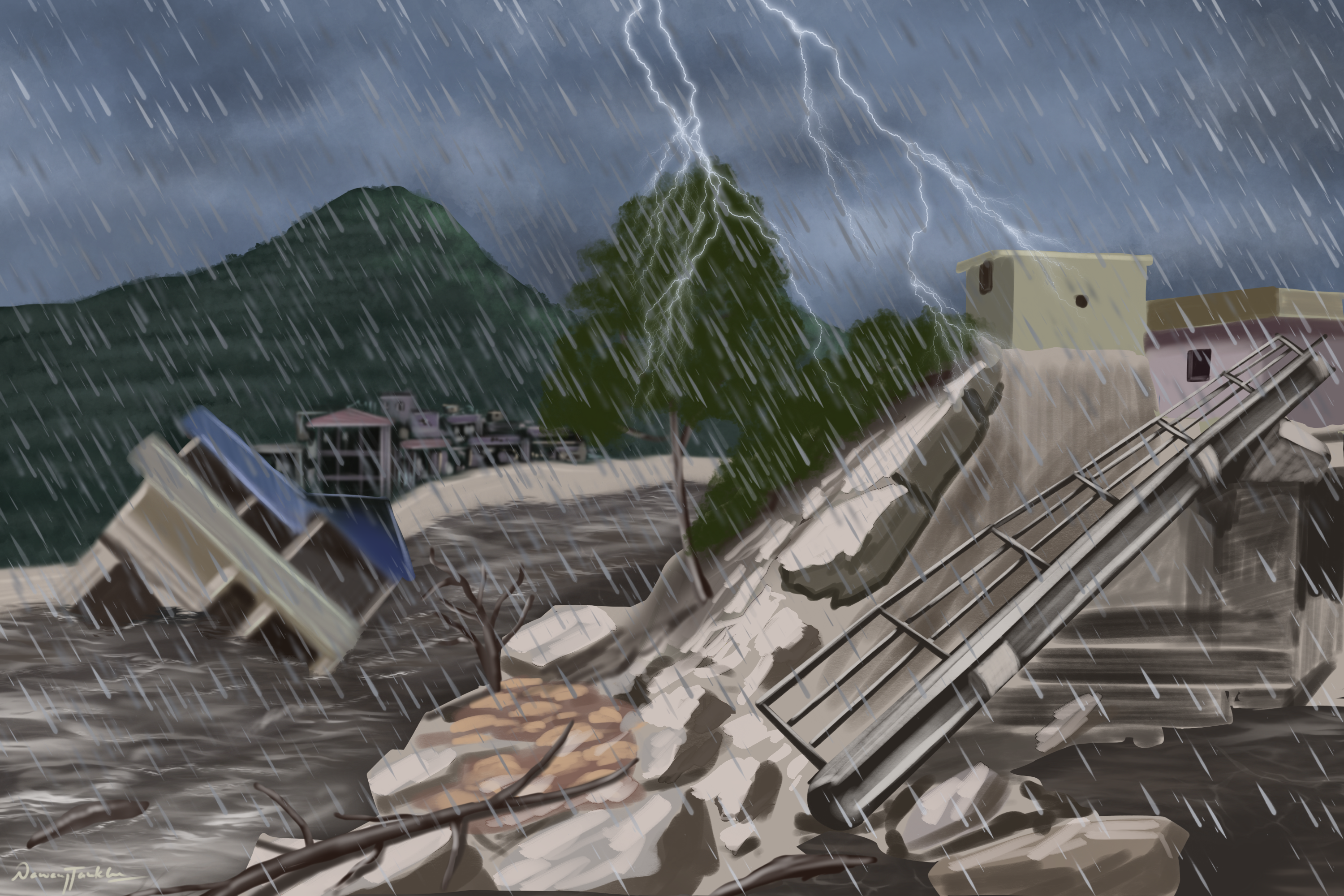
Research findings paint a stark picture of the Himalaya’s changing climate. Over the years the region has witnessed a noticeable rise in both seasonal maximum and minimum temperatures. The difference between daytime and night-time temperatures is also getting larger, indicating a warming trend. Snowfall events have shown variability in terms of intensity and timing. Scientists note a decrease in early snowfall during December and January, accompanied by an extension into February and March. While rainfall intensity remains relatively unchanged, there is a notable shift in its timings. Monsoon rains, once confined up to mid-August, now linger beyond their traditional timeframe, accompanied by a rise in cloudburst events. This shift, intertwined with delayed snowfall, alters the distribution of rainfall and cloud cover across the region.

The impact of this climatic transformation is not an abstract concept but a harsh reality affecting various sectors. Agriculture, the lifeline of many in the region, is particularly vulnerable. In the Kullu valley of Himachal Pradesh, delayed snowfall has cast its icy shadow on apple orchards. The blossoming, bearing, and overall yield of apples have suffered due to altered chilling conditions. Orchards, once thriving in lower elevations, now seek refuge in higher altitudes, affecting not just the geographical landscape but the very quality of the produce.

In Ladakh’s western regions, horticulture crops like apricots and walnuts are facing severe challenges. Spring seasons are turning cooler, delaying the fruiting process and impacting the quality of the produce. Barley, a locally grown crop, is witnessing a substantial reduction in yield, echoing the broader struggle against a changing climate.

Villagers in Spiti tell a poignant tale of declining green pea production, a crucial revenue-generating crop. This decline, attributed to persistent water scarcity, reached its peak in 2022 when Langza village faced complete crop loss due to the unavailability of water. The transformation is not confined to the fields; it seeps into the very identity of these regions.

Agriculture in Uttarakhand, highly vulnerable to climate change, experiences shift in production dynamics, causing changes in crop yield, reduced diversity, and a surge in pest invasions. In districts like Pithoragarh, Chamoli, and Uttarkashi, climate change is altering the traditional collection period of non-timber forest products, impacting livelihoods.

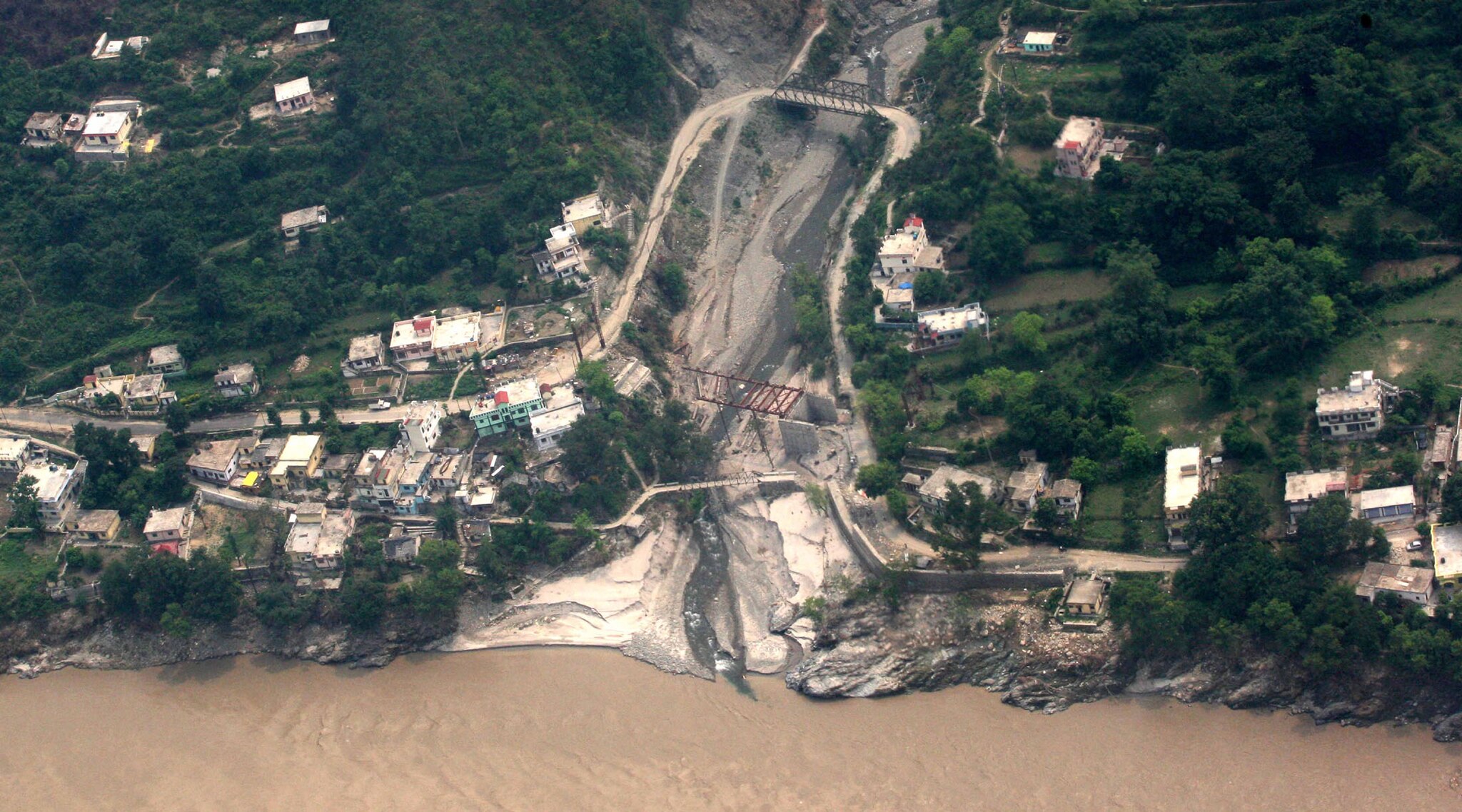
An aerial view of flood-ravaged Rudraprayag, in Uttarakhand | Photo: Wikimedia Commons

The farmers, the custodians of the land, echo this change.

Earlier, we could not see stars in the sky for the whole of July and August. Continuous rains for days during the monsoon season in old times was good for the soil and the crops. But now, sudden and untimely torrential rains are spoiling the soil as well as the crops. The rains have completely disappointed us.

by a farmer from Uttarakhand

Summers are more intense and drier now because of which the crops ripen at an early stage without proper grain development.

by an elderly farmer from Uttarakhand

Earlier the snow was about a foot high and it used to stay for weeks but now if ever there is snowfall it is less than 5 inches and melts within a day.

by a farmer from Himachal Pradesh

Every year, we travelled from Zanskar to Kishtwar by crossing the glacier. Over the years, this glacier has been reducing. The new snowfall is not sufficient for settling, posing challenges to our traditional migration routes.

by a pastoralist from Ladakh

This replacement about 50-60 years ago, which turned agri-culture on its head did not come with the Green Revolution (more appropriately called Greed Revolution) then but was the consequence of what had emerged as the industrial revolution two-three hundred years ago. And it started with de-legitimising traditional society’s existence, identity and knowledge by naming it ‘backward’ and following it up by seeking to shame people’s knowledge systems and their seeds. It was crucial and strategic that this society begin to have an inferiority complex about oneself. This was the first essential stage of the conspiracy. Once this was achieved, it was followed by a systematic replacement of the principles, methods, seeds with the means that it had created. As a result, a creative, productive and self-reliant society has today become a dependent slave farmer society.

3000 2000 Ajay Bijoor