Narrative

Balu Thukangbu

Balu Thukangbu

Balu Thukangbu is a little man who lives in the Himalayas. In the Spiti region, you will hear stories of him from Kaza to Kibber, from Chicham to Tashigang, from Kee to Bur, from Demul to Sagnam.​

No-one is quite sure where Balu lives. In Pin Valley, they say that Balu comes from biyul, a hidden land that only holy people can enter. In Kibber Valley, they say that Balu comes from a place just above Gete village, but no-one has seen him for a long time.

Balu is said to be one foot tall. He wears a one-foot-tall hat and carries a one-foot-tall stick. He can grant wishes, but first you must overpower him and take his stick and his hat.

This, however, is no easy task, because Balu has the strength of a bear.

He is also very hard to see. Some people say they once glimpsed something from the corner of their eye and wondered if it could have been Balu. Others say that only holy people or those with a fearful spirit can see him.

This does not stop people from trying, though. People love the idea of having their wishes granted. Some people even try to catch Balu and keep him as a servant.

Balu dislikes such treatment. If he is caught, Balu will try to escape and punish those who held him captive.​

In early times, Balu used to play in Key pond, but some of the villagers tried to catch him. After that, he was afraid and did not want to come back.

This did not stop people from trying, all over Spiti. People love wishes.

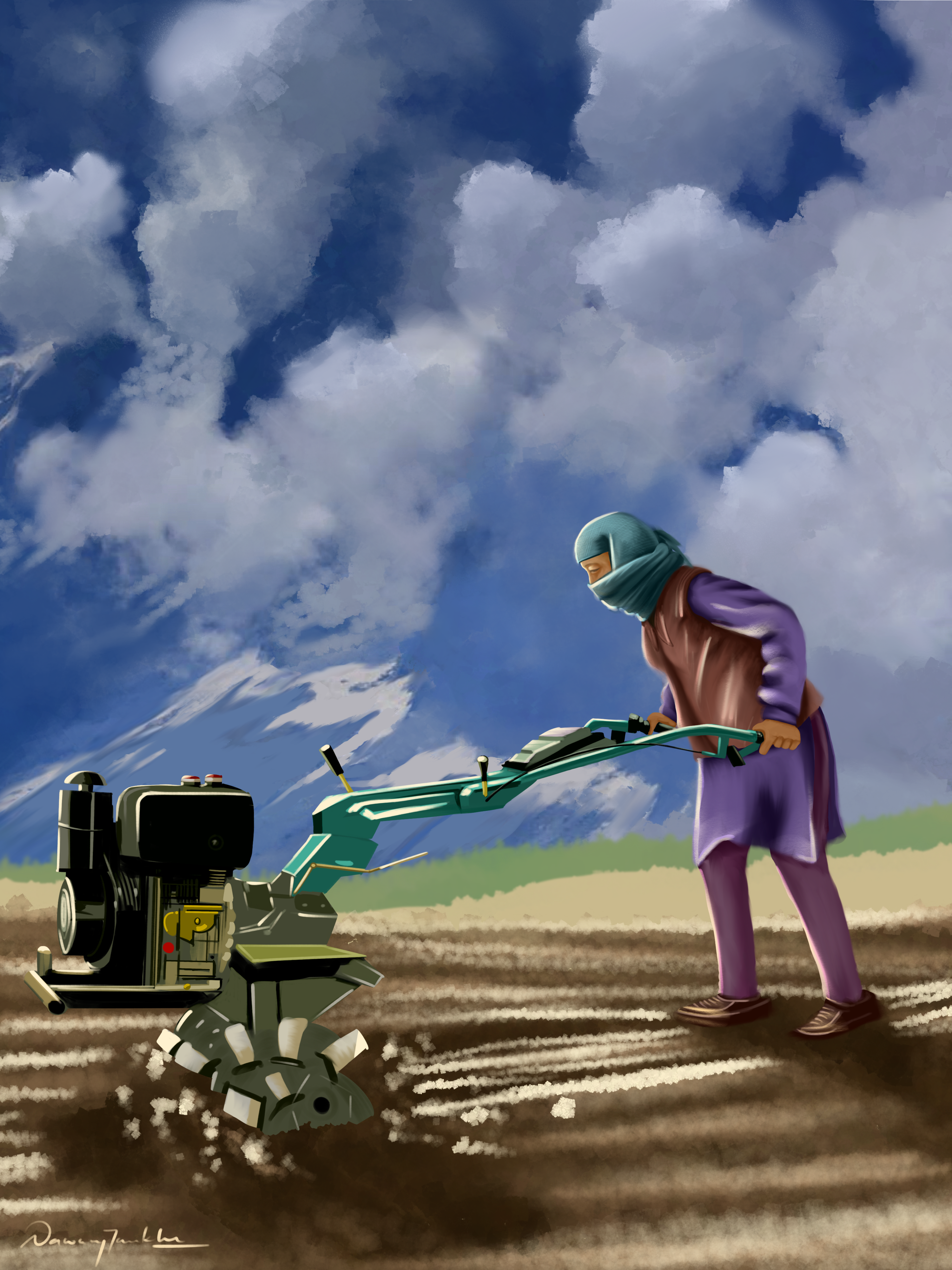
One of the villagers did manage to get hold of him one day and put the stick and the hat in a place too high for him to reach. They made Balu live in the kitchen as a servant. At ploughing time, Balu was sent to help in the fields.

Ploughing is hard work and requires help from everyone. The villagers made sure that Balu was always on hand. He was charged with the task of maintaining the equipment and mending anything that got broken.

One day, the stick from the plough was broken, so a boy was sent back to the village to get a new stick. The boy was in a rush. He saw a stick on one of the high shelves in the kitchen and grabbed it. He ran back to the field and gave it to Balu so he could mend the plough.

As you have probably guessed, the boy had taken Balu’s stick by mistake. He handed the stick to the little man. With his stick returned to him, Balu was able to escape.

Balu was still angry at the way he was treated and cursed the village. From Kaza to Kibber, from Chicham to Tashigang, from Kee to Bur, from Demul to Sagnam, people talk about the fate of the village cursed by Balu. They agree that Balu is very formidable, despite his size.​

Of course, that doesn’t put people off trying to catch him. People love wishes. Some people still try to catch a glimpse of him, and discuss whether they would try to catch him themselves if they saw him. What would you do?​

  • Chicham, Tashigang, Kee, Demul and Gete are villages in the Spiti valley and fall on the left bank of the Spiti river.
  • Pin valley is a small valley inside Spiti which is known for its scenic beauty and very hospitable people, much like the rest of Spiti.
  • Bur and Sagnam are villages in Pin valley.
  • Key pond is a lovely pond near the Kee village.
472 625 Dr. Jane Orton
People and their land
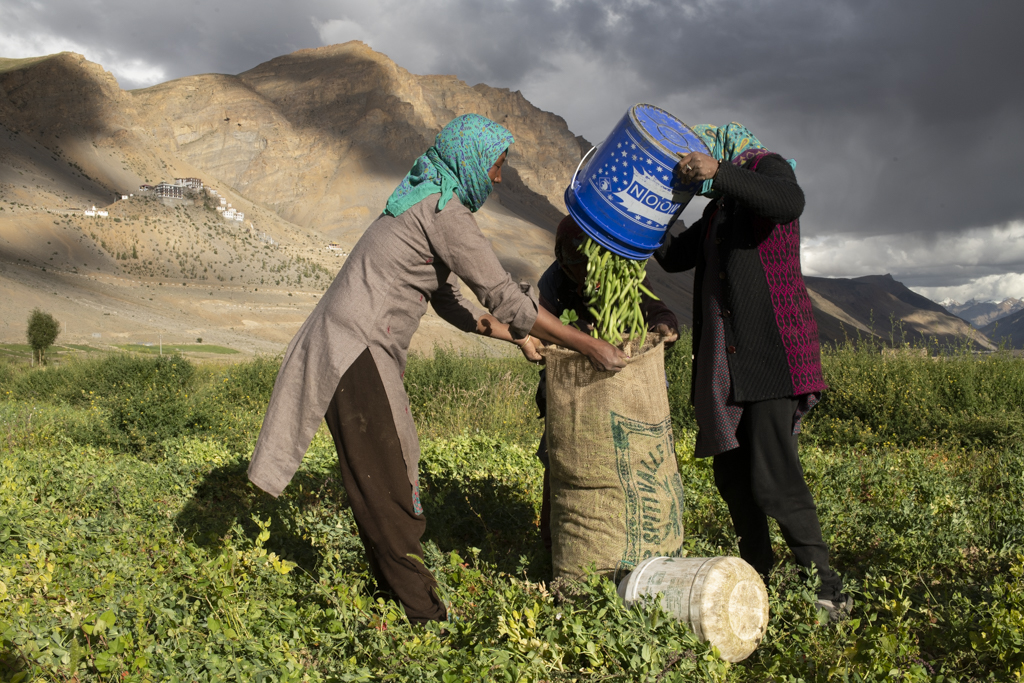
Pea harvest in Kee village | Photo: Prasenjeet Yadav

People and their land

Parts of Lahaul-Spiti and Kinnaur that fall above an elevation of 2500m are home to traditionally agro-pastoral societies. People who have combined farming and horticulture with rearing livestock as a dual source of living. Success at growing barley, a crop that can tolerate cold temperatures, allowed people to farm and hence inhabit high-altitude areas about 3,600 years ago. Agricultural land was historically held through semi-feudal arrangements – by the appointment officials who were given powers to collect taxes. Over centuries the traditional crops ranged from varieties of barley (at least four varieties that were locally known as kneu, soa, nenak, and eumo), to buckwheat (known locally as ogla and phafda or kaathu), and black peas. Horticultural produce included varieties of apricots and apples, especially in Kinnaur. In addition to helping plough farms, livestock were a source of many essentials: protein, dairy, wool and manure. The region’s remoteness and sparse population made cooperation in farming essential. Clear rules to manage water, pastures and other essential village common resources have been practiced for centuries. Farming enabled subsistence with surpluses being traded.  Such trade involved barter that was largely regional. Annual trade fairs held at Ladarcha (Spiti), Kullu and Lavi (Rampur-Bushahr) provided occasions for such exchange.

Agriculture began to transform soon after India’s independence in 1947. Himachal Pradesh witnessed land reforms in the form of four separate acts that were enacted between 1953 and 1968. In addition to a ceiling on the amount of land that could be owned individually, ownership rights of land were granted to those who had traditionally cultivated them under old semi-feudal arrangements. Land for farming was allotted to landless individuals, a landmark reform referred to as nautor. Even though there were discrepancies in land holdings and allotments, the laws ensured that almost every household owned land for agriculture. Another key factor that went on to influence farming was the setting up of cooperative societies with the aim of preventing outsiders exploiting local people because of their isolation.

Illustration: Nawang Tankhe

Lahaul

Set to the north-east of Manali across Rohtang La, Lahaul was the most remote part of this region remaining cut-off during winter. Enterprising Lahaulis set up an informal Muleteers  society in Manali in the 1950s, where they used to come in the winters to rent mules or to work as labour. This arrangement let them fix rates they would charge and prevent any exploitation. This ran successfully without any formal support or intervention until the road over the Rohtang La was built in 1967. A Kuth Cooperative Marketing Society, established in 1959, was the first registered cooperative set up by Lahaulis in Manali in order to stabilise kuth prices and explore new markets. The roots of the kuth plant, introduced in Lahaul around 1925 from Jammu and Kashmir, has medicinal values and is a non-perishable item. Kuth cultivation was a success and probably brought local Lahauli farmers their first substantial financial gain by planting 10–15% of their fields with kuth. Though kuth prices started to decline in the 1960s, this success marked the start of the region’s experiments with commercial crops which continues to this day.

Potato was first introduced into Lahaul in 1860 by Moravian missionaries. Local climatic conditions offered an advantage as it enabled Lahualis to produce off-season vegetables. In 1965, as kuth prices began to fall, a meeting was held in Keylong where a few leading farmers of Lahaul held discussions with scientists and potato growers of Punjab. Some potato growers from Jallandhar assured the purchase of their entire first crop at rates that would give farmers higher returns than kuth. All preparation for potato cultivation were completed months before the closing of the Rohtang pass in winter. In 1966 the first batch of disease-free seed potato was exported from Lahaul. This led to the formation of the Lahaul Potato Cooperative Marketing Society (or simply, Lahaul Potato Society) in 1966 with just 20 farmers. Farmers had soon realised that potato cultivation would not be financially viable without collective action to influence the market to which all the farmers were vulnerable. The Lahaul Potato Society thus set out to procure, store and market agricultural and horticultural produce of the region. It worked closely with the Central Potato Research Institute that had come up in Shimla in 1956.  These collaborations brought in knowledge of contemporary farming techniques and access to fertilisers. By the mid-1970s potato became the most prominent produce of Lahaul, with very small portions remaining under barley and buckwheat. Seed potatoes were being marketed to Gujarat, West Bengal and Maharashtra with small amounts going as far as Pakistan, Bangladesh and Sri Lanka. By 1975 the Society was not only financially viable but it also started gathering assets and venturing into other services. At its peak, the Lahaul Potato Society was India’s second largest cooperative after Amul.

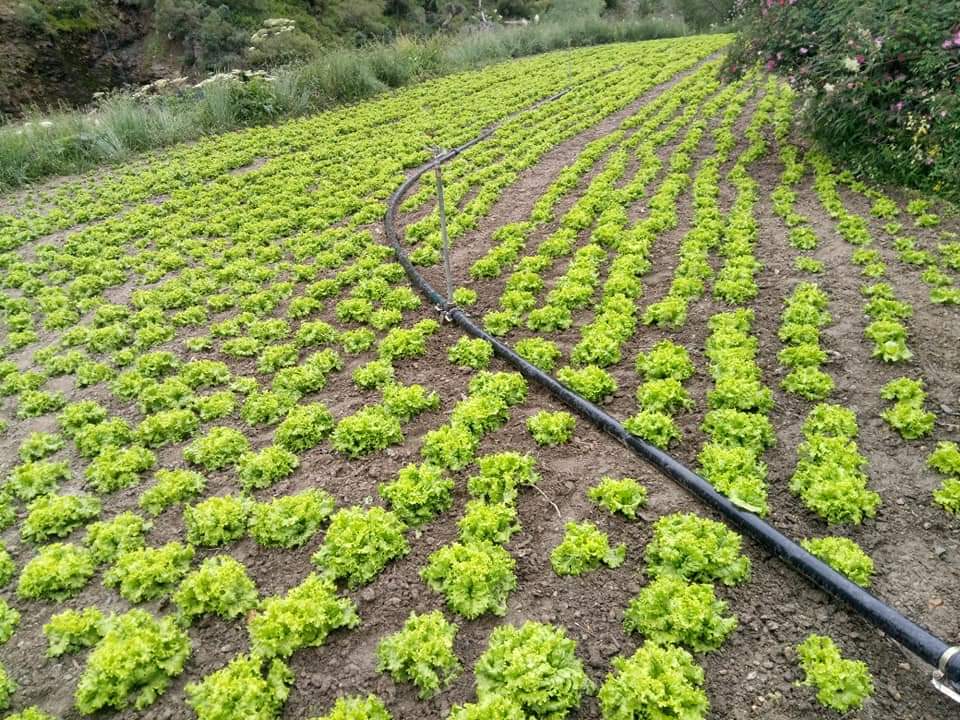
When prices of potatoes fell in 1979-80 and again in 1984-85, the Society lobbied with the State government to ensure a support price for their produce. The Society supported diversification through the promotion of hops cultivation in 1973-74, and later with the introduction of green peas in 1984. Cultivation of green peas picked up in the following decade, with farmers switching from potato to peas. Since green peas was perishable, the Society’s role in its marketing remained limited to offering a support price in the case of a crisis. Farmers initially sold their produce in markets directly by taking heavy risks. In time, private buyers emerged who bought green peas directly from the farms at attractive prices. This led to the expansion of green peas cultivation across Lahaul, and to surrounding areas. Currently, Lahaulis grow newer off-season vegetables like cauliflower, purple cabbage and iceberg (lettuce) which are more profitable than green peas and are also procured by private buyers. Potatoes are still cultivated, but its acreage remains marginal. The Lahaul Potato Society remains active in the region and continues to work on the principle of pooling prices, costs and risks. In its nearly 60 years of running, the Society managed to prevent political influence in its administration with its management focusing on the broader collective benefit of Lahaulis. Over the years, farming in Lahaul transformed from being a subsistence-based livelihood to a lucrative cash-crop based occupation.

Organically grown iceberg lettuce in Lahaul | Photo: Tashi Angroop

Kinnaur

Within Kinnaur we especially focus on the Hangrang valley that falls in upper Kinnaur at elevations above 2500 m. Set around the confluence of the Spiti river and Sutlej, farming in this region faced multiple challenges due to its remoteness even though it remained accessible in winter. Subsistence based farming and livestock rearing were the mainstay in the region, alongside active trade with Tibet via the Shipki La. The Indo-China war of 1962 led to the development of infrastructure along the border, but affected trade ties that the locals traditionally had with Tibet.

Apple was first introduced in Himachal Pradesh around 1916 and soon these parts were identified for horticultural development. Kinnauras were encouraged to grow temperate fruits such as apples, cherries, apricots, pears, almonds and walnuts. Kinnaur did grow potatoes, also registering a Society in 1962 and one in 1981 for upper Kinnaur, but its cultivation almost always remained marginal. Upper Kinnaur switched to green peas as a cash crop and by the late 1980s, its production was picking up. Kinnaur’s economic switch to a cash-crop based economy, thus began to take shape from the late 1980s.

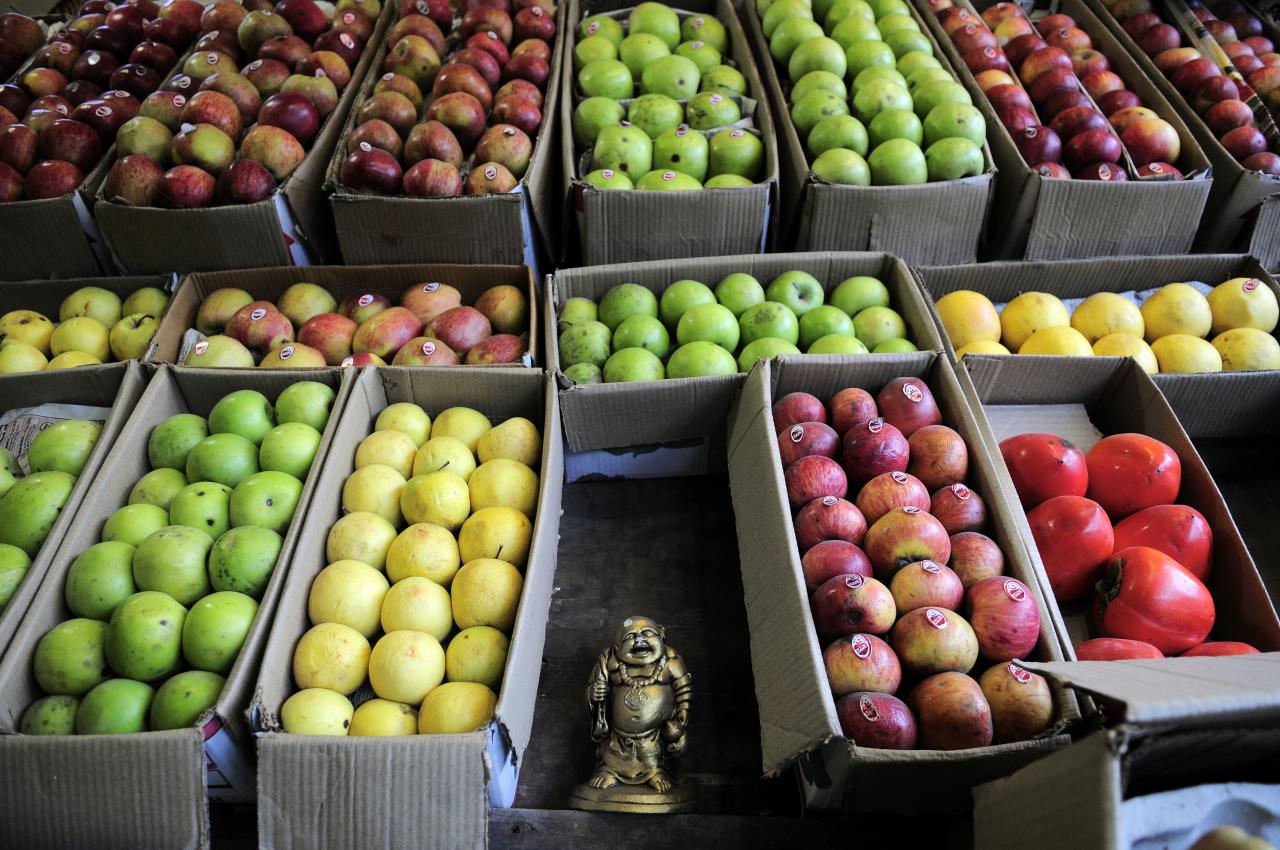
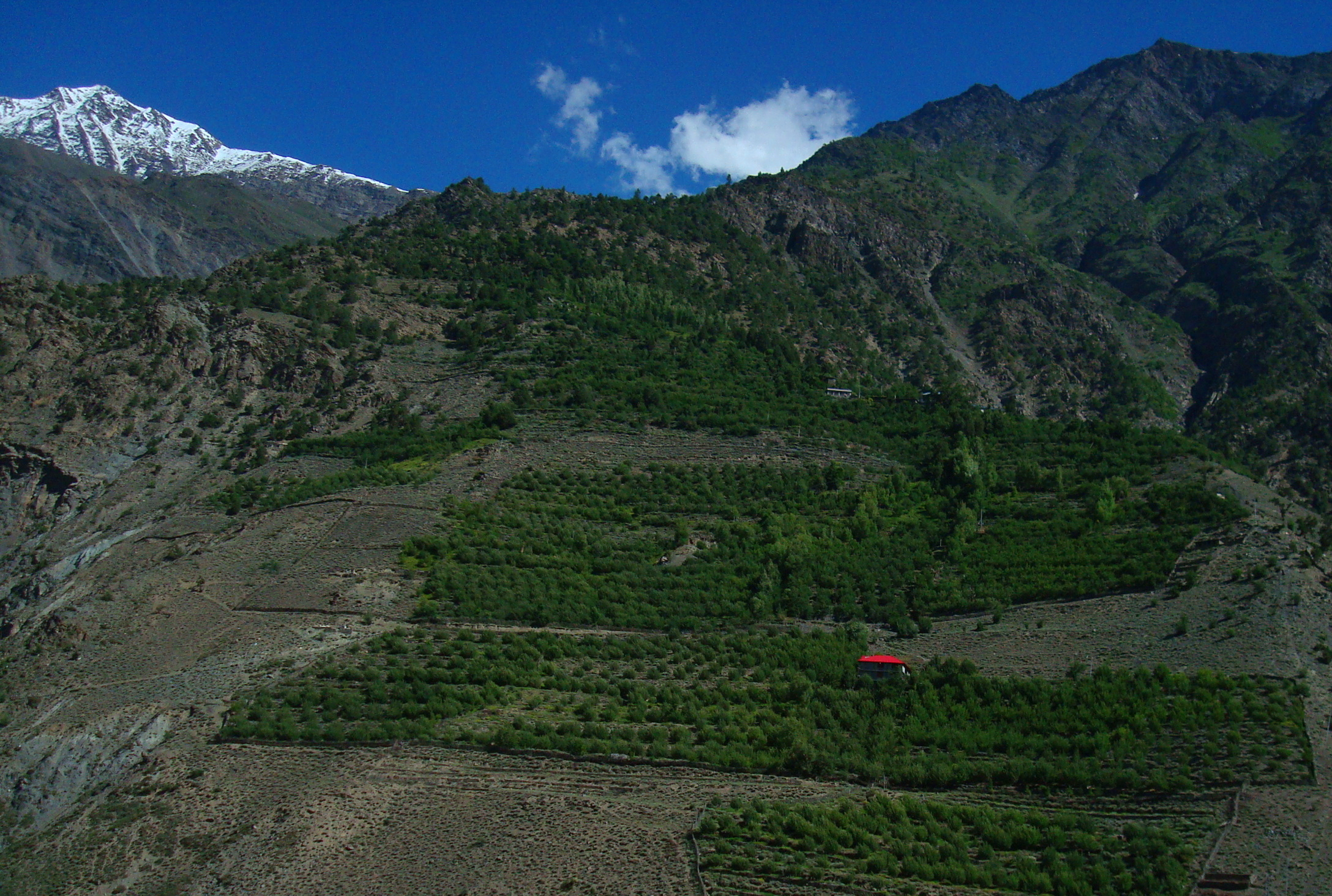
In 1988, about 70% of cultivable land in Kinnaur was still under traditional crops such as buckwheat and barley, with green peas providing cash. Hill slopes had begun to be occupied by apple, which took up to 15 years to bear marketable fruits. By the mid-1990s, apple became a prominent source of livelihood. With the adoption of apple, came newer techniques of orchard management and the introduction of synthetic fertilisers and pesticides. Today, green peas cultivation remains restricted in pockets as apple plantations are fast replacing them. Farming in upper Kinnaur has almost completely switched to horticultural produce, with a rising demand for land that can be brought under apple production. This boom in apple production has become possible because of the warming of temperatures due to which the apple belt appears to have migrated higher to this cold and dry mountain zone. It is a rare example of how changing climate may have created opportunities for the community, while also creating several vulnerabilities.

Apples of Himachal Pradesh | Photo: Wikimedia Commons

Spiti

Set between Lahaul to one side and Kinnaur to the other, Spiti is probably the highest and coldest part of this region. Though technically Spiti remains accessible in winter, it was the region farthest from any large town of prominence. This reflects in the fact that while Spiti too is moving from subsistence crops to cash crops, its transition is the most gradual.

The two prominent crops of this valley were barley and black peas. Spiti too experimented with potato and set up a Society in 1977, but potato production did not pick up as did in Lahaul. Many Spitian farmers felt that this was likely because the harvest of potatoes overlapped with that of barley, which was a more essential crop for subsistence. Spiti eventually began to experiment with green peas, and in the 1990s Spitian farmers traveled to Delhi for the sale of their produce. The production of green peas picked up significantly from the 2000s, when private buyers started to purchase their produce from their farms. Around 1990, barley was sown on 55% of the arable land, while peas occupied around 30%. By 2009 barley had fallen to 43% while green peas had risen to 51%, mainly by reducing cultivation of other marginal crops like black peas, wheat, masur dal, rajma and mustard that were cultivated for personal consumption. Today green peas are being cultivated in more than 75% of the fields, and most locals’ cultivating barley occasionally in a few years to fulfil household demand. The success of apple in the villages closer to Kinnaur has excited farmers to also start experimenting with apple plantation in the hope that apple orchards may eventually move even higher than Kinnaur. In 2023, a few farmers from Kee village succeeded in growing sample apples at an elevation of nearly 4000m, which has further increased hopes.

While Spiti is following a similar trajectory to Lahaul and Kinnaur in switching to cash crops, there is one aspect in which it still remains traditional. While Lahaul and Kinnaur have adopted the use of synthetic fertilisers and pesticides, Spiti has largely resisted this switch. While a decreasing interest in livestock rearing may have led farmers of Lahaul and Kinnaur with little choice, livestock rearing persists in Spiti and most farmers are skeptical of introducing synthetic supplements. Farmers buy organic livestock manure from as far as Changthang in Ladakh and are also buying poultry manure from the plains.

Apple orchards on the hill slopes of Kinnaur | Photo: Wikimedia Commons

Agriculture – a story of constant change

Agriculture in the high mountains of Himachal Pradesh has evolved continuously. Improving access and connectivity made it possible for farmers to take their produce to markets. With connectivity improving over the years, farmers have taken risks with growing perishable cash crops. Sometimes these risks also bring major losses, as they did in 2023 when unforeseen weather events caused widescale damage to infrastructure affecting transportation. However, in regular years the financial returns can be attractive. The advent of technology has further led to the adoption of locally relevant technical solutions. Farmers have diversified cropping and have been open to experiments, which have brought them financial rewards. They have balanced between selling their produce to cooperatives and private buyers. Rising incomes have let them broaden their aspirations, with younger generation getting opportunities for better education and greater exposure. Access to cash has also allowed farmers to hire labour, which was previously not possible. Many parts of Lahaul are now experimenting with various forms of contract farming where the profits are shared between the landowners and the labour who manage them. Remoteness may have brought out the dynamism of the farmers of Lahaul-Spiti and Kinnaur. The success of early experiments with cash crops by a handful of farmers paved the way for the entire region. Locals were aware of the risks they were exposed to on account of their remoteness, and they countered this challenge by setting up institutions and arrangements that distributed both the risks and rewards. In the process, cultivation of traditional crops has declined and is now limited to very small pockets.

Unlike several other Himalayan regions where farming is in severe decline, farming retains its significance in the region. With nearly all households of the region involved in agriculture, it forms a key source of income. And with almost all households owning land parcels on account of land reforms, almost every family has benefited financially, even though the benefits may vary with the size of land holding. This reflects in the fact that the districts of Kinnaur and Lahaul-Spiti rank second and third in terms of per capita incomes among the districts of Himachal Pradesh, and are well above the average per capita income of the country. There is a continuous demand for land to be brought under cultivation through the extension of nautor rules. A lot of this commercial success has also been possible because of the local climate, which has allowed these regions to supply off-season produce that fetch a premium. But with rising uncertainty in weather patterns, farmers and farming stand increasingly exposed to greater risks even as people’s relation with their land remains strong.

1024 683 Multiple Authors
Unveiling an Enigmatic Jewel: Sea Buckthorn

Unveiling an Enigmatic Jewel: Sea Buckthorn

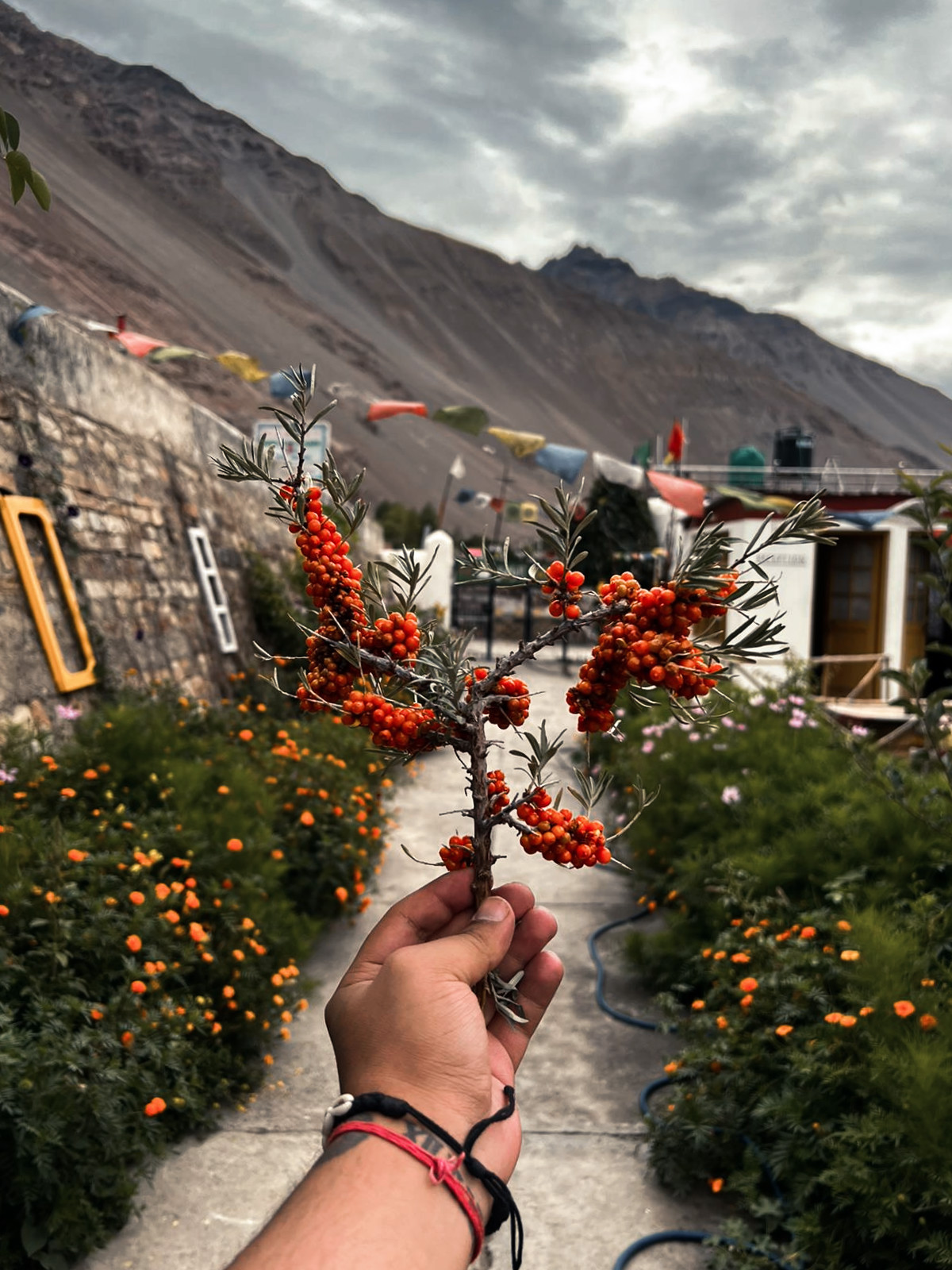
Nestled high amidst the majestic peaks of the Himalayas lies a hidden treasure, a rare and mystical berry known as sea buckthorn. Revered for its extraordinary nutritional profile and therapeutic properties, this vibrant orange jewel has captivated the hearts and taste buds of travellers and locals alike. Join me on a journey of discovery as we delve into the intriguing world of sea buckthorn, unearthing its rich history, cultural significance, and the myriad ways in which it contributes to sustainable living and a holistic lifestyle.

I came across the sea buckthorn berry around three years ago, when my friend and I were searching for a picnic spot in the hidden valleys of Spiti, Himachal Pradesh. We had heard about a beautiful flowing freshwater stream where we could bathe and cook food on woodfire. Our plan was to find this spot. My friend, Yangzom, and I ended up hiking for about 1.5-2 hours and on the way stumbled across thorny shrubs that kept pricking our legs and lower body. We got extremely annoyed and cursed the shrubs since they were growing along the entire stretch. When we looked closely, we saw that they had small orange-yellow berries. At first, we were hesitant to try them, but when we did, they tasted tangy (a citrusy burst of flavour). We plucked many for our way back home. It was very difficult to even try plucking them due to the thorny branches. We managed to bring some back and when we inquired about them with a local, we learnt that these were sea buckthorn berries and they had superfood properties. This was the same berry being sold at the Himalayan cafes and homestays in the form of teas, juices and jams.

Illustration: Nawang Tankhe

The human consumption of sea buckthorn (Hippophae rhamnoides) dates back thousands of years. Revered in traditional Tibetan and ayurvedic medicine, it has been treasured for its remarkable healing properties. Growing abundantly in the Himalayan region, sea buckthorn is an integral part of the local culture, where it is known by various names such as tirhuk and lehtar. The berry is known to be a nutritional powerhouse.  They are a potent source of vitamins, including vitamin C, E, and beta-carotene, which support a robust immune system and promote healthy skin. Rich in essential fatty acids, such as omega-3, -6, -7, and -9, sea buckthorn nourishes the body from within, benefiting cardiovascular health and aiding in the management of cholesterol levels.

In traditional medicine, sea buckthorn has been revered as a natural remedy for various ailments. Its oil, extracted from the berries, is highly sought-after for its potent antioxidant and anti-inflammatory properties. This golden elixir is used topically to heal wounds, soothe sunburns, and combat the signs of aging. When ingested, sea buckthorn oil aids in digestion, reduces inflammation, and promotes healthy liver function.

Beyond its remarkable health benefits, sea buckthorn plays a crucial role in sustainable travel and environmental conservation. This hardy shrub thrives in high altitudes, growing in the harsh and barren landscape, and helping to prevent soil erosion. Its roots anchor the soil, while its branches create natural windbreaks, protecting delicate ecosystems. Harvesting sea buckthorn berries provides a supplementary income to local communities, encouraging the preservation of traditional Himalayan farming practices.

The tangy and slightly astringent flavour of sea buckthorn has found its way into the culinary world, captivating chefs and food enthusiasts alike. The berries are used to create delightful jams, syrups, and sauces, lending a burst of vibrant colour and a refreshing acidity to dishes. Sea buckthorn tea is cherished for its invigorating taste, while innovative mixologists are crafting enticing cocktails featuring this Himalayan gem.

Immerse yourself in the awe-inspiring beauty of the Himalayas as you embark on a journey to discover sea buckthorn in its natural habitat. Trek through breath-taking landscapes, where the shimmering orange berries cling to branches, contrasting against the snowy peaks. Engage with local communities and witness their time-honoured techniques of harvesting and processing sea buckthorn, gaining a deeper appreciation for their sustainable way of life. You don’t have to travel to the Himalayas to incorporate the benefits of sea buckthorn into your everyday life. Seek out products infused with sea buckthorn oil, such as skincare items and supplements, to harness its rejuvenating and immune-boosting properties. Experiment with sea buckthorn-infused recipes and drinks to add a nutritious twist to your culinary repertoire.

The enigmatic sea buckthorn, with its vibrant colour, remarkable health benefits, and deep cultural roots, is a true embodiment of sustainable travel and holistic lifestyle. Its presence in the Himalayas enriches the local communities and provides an opportunity for travellers to experience the wonders of this ancient berry. Let the allure of sea buckthorn ignite your curiosity and inspire you to explore the world, one sustainable and wellness-infused adventure at a time.

1545 2000 Sheetansh
Narkasang: Kinnaur’s Sacred Blooms
Illustration: Nawang Tankhe

Narkasang: Kinnaur’s Sacred Blooms

Illustration: Nawang Tankhe

Kinnaur, a district in Himachal Pradesh, is a paradise characterized by its lofty mountains and lush valleys where flowers of all kind bloom. It’s unique climate, with moderate summers and cold winters, creates an ideal habitat for a plethora of floral wonders. Spring is marked by captivating blooms that grace its landscapes, flowers that are a part of local culture and ecosystem.

Narkasang (Narcissus tazetta or daffodils), a sacred flower, holds a special place in my heart. During my early years, I vividly remember the first time I saw the Narkasang flower in our Chokesten, our place of worship. I found it to be very beautiful and I asked my grandmother from where she got them. She showed me the wild flowers growing on our farm, saying that they grew on their own. She used to collect these flowers from the wild and keep them in the Chokesten. In Kinnaur, where people follow a mix of Buddhism and Shu culture, Narkasang flowers are offered to the local deity during festive celebrations.

Narkasang has always caught my attention because of its aesthetic appeal, with its simple colour combination of white and yellow. During festivals we often found them in the hands of the Kinnaura people. They also wore them on their traditional Kinnauri caps during festive celebrations, which clearly showed the significance of Narkasang for the community.

For years, Narkasang flowers have been an integral part of Kinnaura culture. Its medicinal properties, where the roots are crushed and used as an antiseptic lotion, have always fascinated me. Applying the extracted paste on boils or pimples on the body helps in their recovery. The discovery of this medicinal use might be lost in history, but this knowledge has been actively passed down through generations.

Kinnauri Topi (hat) with Narkasang Flowers | Illustration: Nawang Tankhe

Narkasang not only holds its value as a flower or medicine but is also mentioned in local songs:

Ladakhi

Seela Chu Nathpa nagas santango
Kinnauri-Nagasu santangcho thang kochang khyama.
Thang kochang khyalima oo bagicho kumo’
oo bagicho kulimo nish dalang Fula.
Nish dalang Fulula narkasang Fula

English

Behind the temple,
there is a garden full of flowers
In that garden full of flowers,
there are two branches of flowers
And the two branches of flowers are that of Narkasang flowers

With time, will our traditional knowledge fade away, presenting a challenge to keep such knowledge alive? Narkasang flowers are hardly seen growing on their own in the wild nowadays.

Documentation and conservation of such knowledge is crucial in Kinnaur. We are working with schools to run programs that provide basic information to students about the importance of nature conservation.

1545 2000 Mahesh Negi
The beautiful Siyah mentok
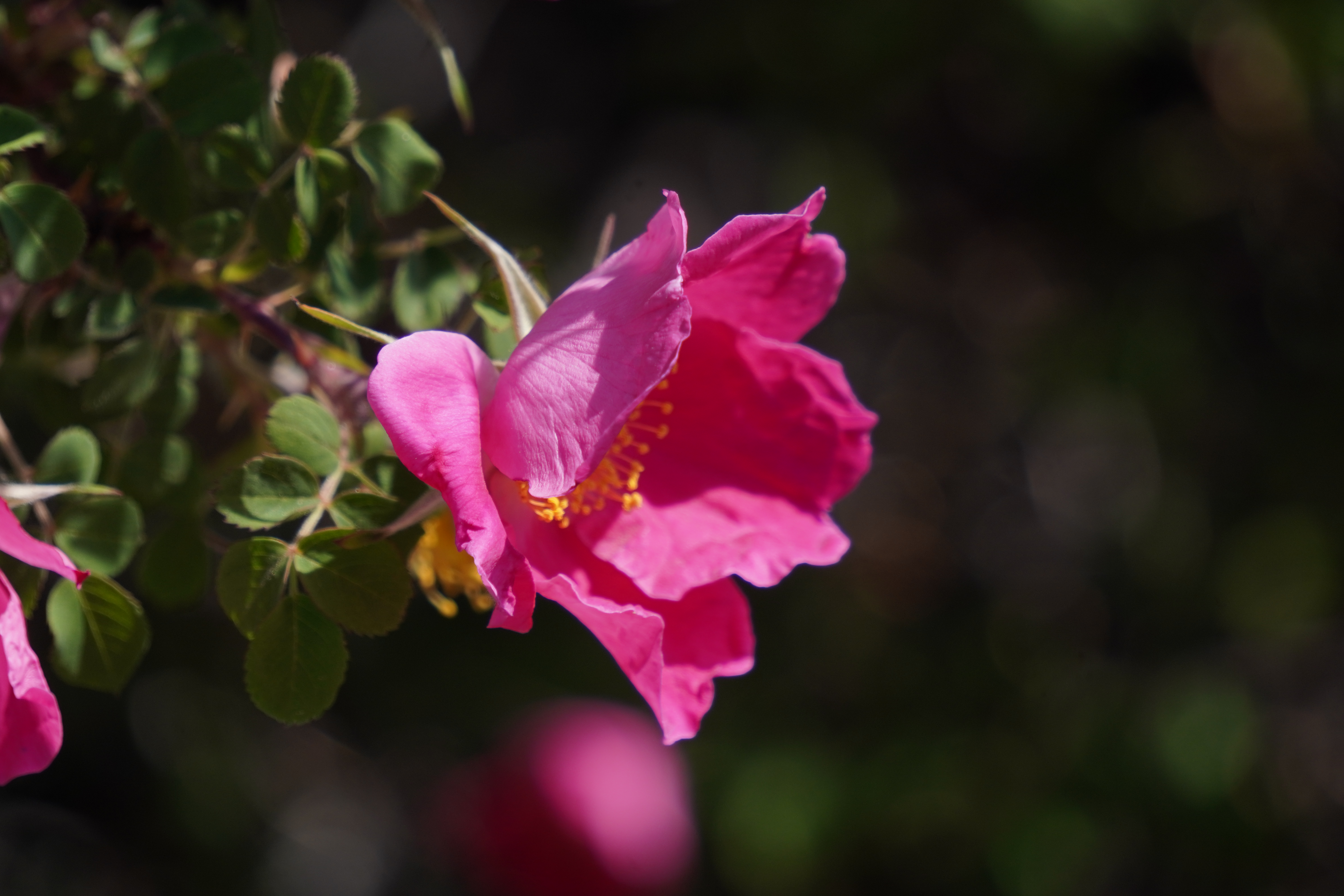
Flower of Rosa Webbiana | Photo: Deepshikha Sharma

The beautiful Siyah mentok

What is home, what is belongingness? For me, it is the uninhibiting mountains, the barren landscape, the deep gorges, and the high peaks of my homeland Spiti Valley in Himachal Pradesh. Also, it is the vast grazing ground, the piercing cold thin air, the green summer meadows, the ripe barley field, the meandering water canal and the delicate pink bloom of Siyah mentok.

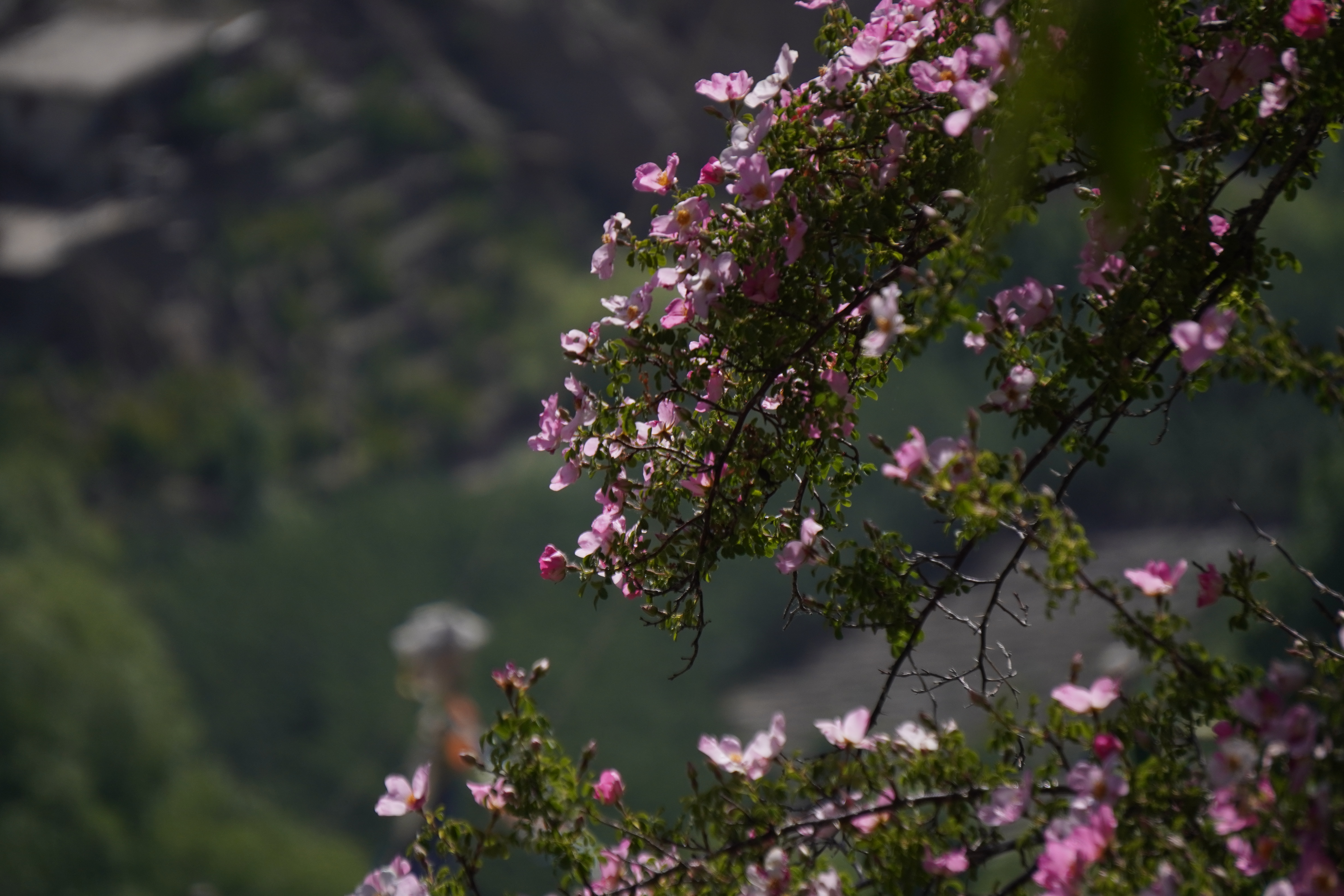
Rosa Webbiana | Photo: Deepshikha Sharma

While growing up, I used to visit my grandmother and stay with her for months. She lived in a small hamlet in Spiti called Gowang which was home to just 5 households and had less than forty residents. My grandmother spent most of her day working in the barley field. Later in the evenings, before darkness of the night seeped in, we would both go out into the pastures to gather wild firewood. During one such visit to the pastures, right at the foothills of giant snow-capped mountains, I first witnessed the beauty of vibrant wildflowers and wild shrubs in an otherwise dry cold desert.

Spiti is a high-elevated region with an extremely arid landscape; characterized by equally sparse vegetation mainly comprising annual perennial herbs, shrubs, and very few varieties of trees (willow, poplars). Despite harsh ecological conditions, the landscape nurtures an incredible diversity of plant species – each unique and resilient in their own way. Pastures and hills are full of wildflowers and have rich repositories of aromatic, medicinal, and edible plants. There is the sour-tasting tirhuk (sea buckthorn) and lichu, the deep ruddy khamet (Ratan jot, Lal jari), the hardy thama (caragana), the healing chukku-gongma (rheum), the delicious kotsey, gyaman (wild herbs, seasonings) and the auspicious shukpa (juniper).

My grandmother would patiently show me how to pluck wild thorns, wild shrubs for firewood without pricking myself. I learnt how to gather tserma (dry caragana) and bursey (white dry woodchips) by observing her. At home, she would skilfully light a fire in our traditional heater (chak-thap) using dry twigs and cow dung and tenderly kindle the firewood to get a good hold before placing more wood logs on top of it. Having lived in a remote mountain village and spent so much time with my grandmother, I learnt to appreciate the wild plants around my home.

Siyah mentok truly deepens my connection to my homeland. Siyah (Rosa Webbiana/Webb’s Rose) is a beautiful variety of wild roses that grows in many Himalayan regions in extremely dry and harsh conditions. It is pink in colour with a mild sweet scent and tender petals that fall in your hands when you touch it. What I like about Siyah is that it is an extremely resilient plant that grows in the harshest conditions and can thrive without water for a long time. Siyah typically starts blooming in late spring or early summer, flowering for a short period of time. But during its brief blooming period, it illuminates the entire surrounding with its striking colour and radiant beauty. It is commonly found at lower elevations of Spiti and all the way up to above 4000m. It can be seen growing on the riverside, rocky slopes, mountainside, in the garden, and in the fields.

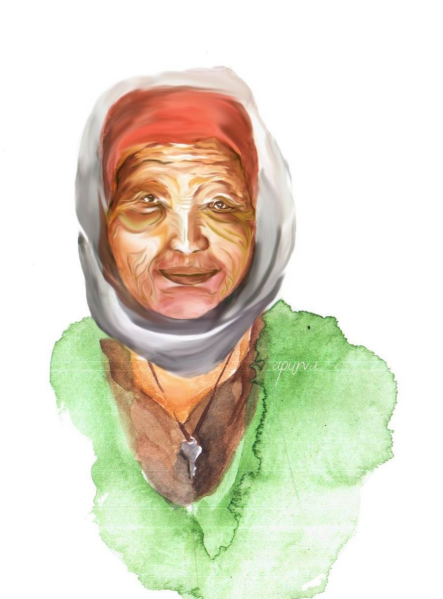
My grandmother’s illustration made by a close friend Apurva Pandhi

The blooming of Siyah is seen as the arrival of summer in Spiti. It is the epitome of beauty and serenity. It is particularly dear to me as under the bushy, dense canopy of this wild rose plant, my grandmother used to rest and take naps during hot summer days of the peak agricultural season. It is the same flower that she alludes to while describing the beauty of Tibetan queens in ancient folk stories and it is the sweetness of Siyah mentok and Serchen mentok (Himalayan golden flower) that she refers to while telling me about sweet melodies sung by nomads herding in the high mountains. It is difficult not to think about my childhood and my grandmother when I think about Siyah.

In many Himalayan communities, Siyah is highly valued for its ornamental qualities and it also features in old traditional songs, stories, proverbs, wise sayings, and other forms of oral cultural expressions. It is often associated with themes of love, romance, and beauty and is also referred to as a symbol of sacred devotion. I remember my grandmother telling me that during her early years in Spiti, if a man likens a women’s beauty to Siyah mentok or Serchen mentok through songs, it is considered a subtle declaration of love and the girl is to immediately discuss the matter with her family! The usage of Siyah in daily household has become quite popular especially, Siyah-cha (Siyah-tea) in higher, more remote villages like Hull, Hansa, Kibber, Demul and Lalung.  It is used ubiquitously by Spitian Amchis (traditional doctors) for its antibacterial, anti-inflammatory, and antiseptic properties. Medicinal plants are used by traditional doctors and healers for ages, particularly for curing skin ailments like boils, blisters, itching, and skin eruptions. For me, Siyah mentok is a symbol of beauty and resilience, reminding me that even in the harshest conditions, beauty and life can flourish.

6000 4000 Chemi Lhamo
Pearls of wisdom from a master artisan
Grand monastic architecture of Spiti | Photo: Kesang Chunnit

Pearls of wisdom from a master artisan

Building with an earthen material is a craft, a philosophy where nature is at the center of the entire life cycle of a building. From its conception, sourcing, material usage, and construction till the inevitable end when the material returns to earth as compost, there’s a balance, harmonious unison with nature. The renewable nature of the natural material renders it environmentally more sensitive and less disruptive to the land and ecosystems around it. Lobzang Choephel also known as Lama Thamo ji the master artisan known throughout the Spiti valley for his expertise in rammed earth building and understanding of natural material feels that the journey of the natural building is rooted in the ethics of care. Being a skillful craftsman, he opines that care frames your relation with the land you are building on, the material used, the people/community you are building for, and their relation with nature.

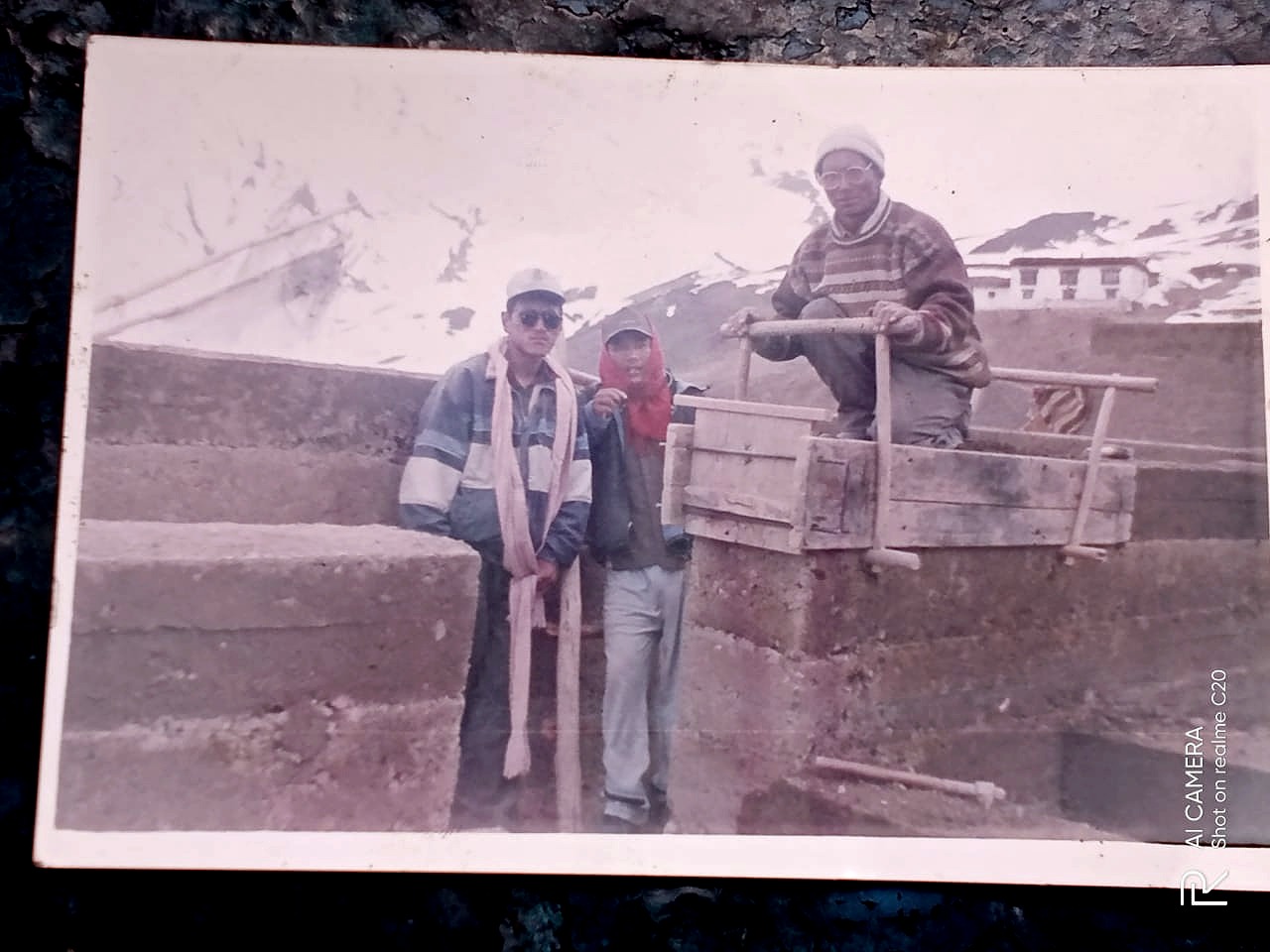
Lama Thamo La in his younger days – an old photo from family album | Photo: Shared by Chhering Phuntsok

We rarely talk about intention and mindset when it comes to the trade of building but he thinks this is critical and is inevitably tied to the entire process of building. In Buddhism, there’s a huge emphasis on “kun-long sangpo”– having a righteous mind and kind motivation that dictates one’s action. Reflecting on the same, he quietly utters “When it comes to natural building, at the most primal level it means creating a human habitat that reflects brilliant functionality of natural material, inherently sustainable design, and one where care for the nature is there from which we draw so much”. In the daily experience of building, this reflects on being mindful, being responsible in places you excavate stones, dig soil, paying attention to the character of the material whether it is harmful or good for nature, and the overall approach you take in construction. With all the heavy lifting of stones, digging the ground, and building with mud, construction is physically very strenuous, and while construction, a lot of microorganisms get killed in the process. Therefore in ancient Spitian tradition, much like a farmer would recite prayers before plowing, the local artisans offer prayers before construction and express their remorse, their guilt for engaging in what is considered a sinful activity that harms other sentient being including microorganisms which are barely visible through our naked eyes. Tashi Monlam – prayers for the auspicious building process and fewer obstacles for the artisans, the laborers, and the host family are also recited. Another prayer earnestly seeks the blessings of local deities for a productive building experience and appeals to them for strength and diligence to undertake construction works. It can be aptly summarized as “May give us the strength to build this house as if built by god himself, May construction work be easy and fruitful”.

Grand monastic architecture of Spiti | Photo: Kesang Chunnit

Many indigenous building approaches and such unique cultural practices are rapidly getting substituted with more modern, industrial building techniques which are devoid of ethical essence and are proving more unsustainable. The natural environment sustains the life of all living beings and it is crucial to acknowledge the basic inter-connectedness and relation between humans and nature. In an age where haphazard development and construction activities are surging up, it is all the more important to evoke traditional wisdom and reflect on the significance of traditional materials, techniques, their implementation, and their relevance in contemporary building practice. Being a skillful natural builder for over 55 years and having spent a lifetime devoted to this trade, mindfulness is the guiding philosophy, and his learnings in Buddhist scriptures and meditation often drive his groundwork as an artisan, a builder, and a seasoned mason.

Traditional sacred religious designs Chorten | Photo: Deepshikha Sharma

There are so many ways to handcraft with natural material but one thing common across different geographies and contexts is the use of soil – the earth beneath our feet. No two sites have the exact composition of soil and as a builder, it is important to immerse oneself in these materials to gain experience, understand how to work with available soil in a given site, and be aware of the particular qualities, and limitations of soil that gives us scope for experimentation. For instance, deep yellow, orange, and red soil found in villages like Kaza is good for construction, especially for foundations whereas black and clayey soil found in higher villages like Demul, Chicham, and Komic is not good for foundations as it can cause dampness in the foundation. Hence understanding material adaptation is important otherwise it will be risky to build a structure without sufficient attention to detail.

“When I began construction, I worked closely with elder Spitian artisans to build and renovate many monastic structures – especially Dha-shak (monk’s residence), there was hardly any material available apart from the ones you get in your village sites. Even wood materials like willow, poplar, and timber were scarce so it was used judiciously for roofing structures, and most roof structures were made of smaller woods of shorter length which was mostly gathered from the village pastures”.

With accessibility, the struggle has lessened a lot but it has changed the architectural integrity of a place. The use of natural materials, responsible building methods, and the shared ethos of love and care for natural surroundings is fast disappearing and the preservation of traditional wisdom has become an urgent responsibility.

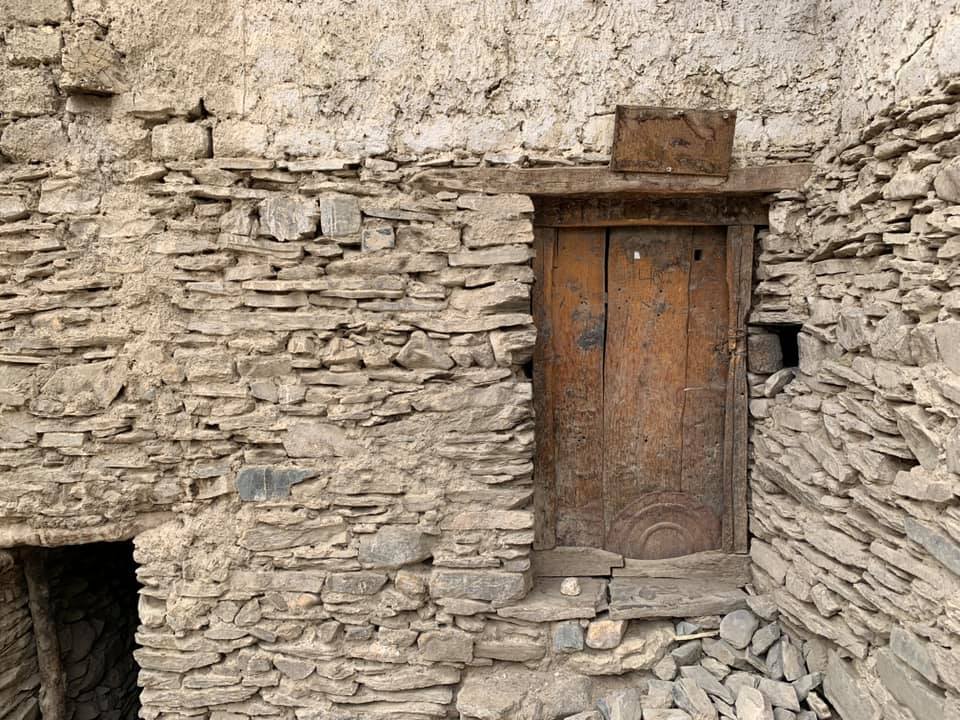
Traditional mud house | Photo: Kesang Chunnit
3000 2250 Lobsang Choephel and Chhering Phunchok
Memories, Nostalgia, and a Forgotten Practice
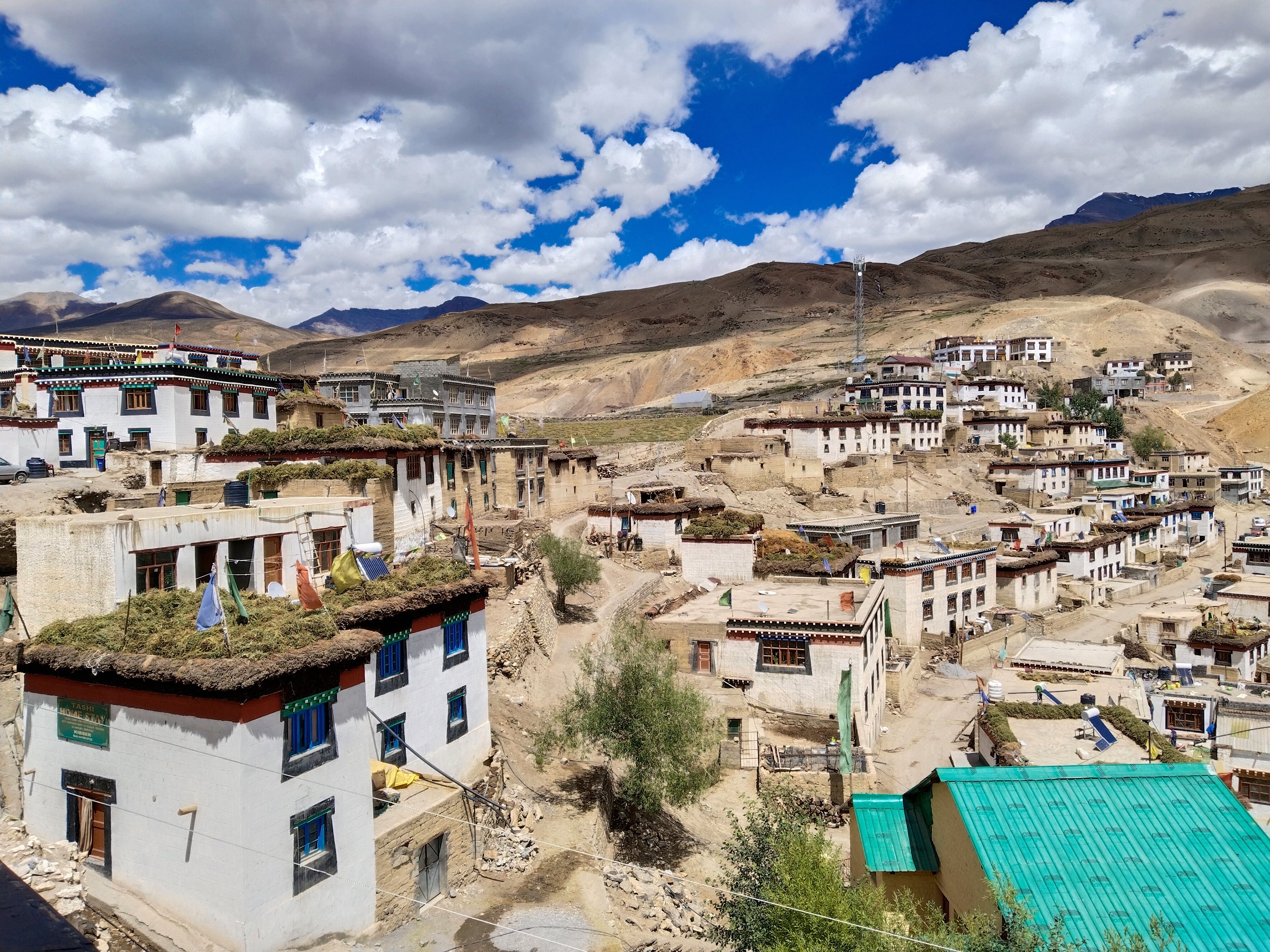
Kibber Village, Spiti | Photo: Nonie Rawat

Memories, Nostalgia, and a Forgotten Practice

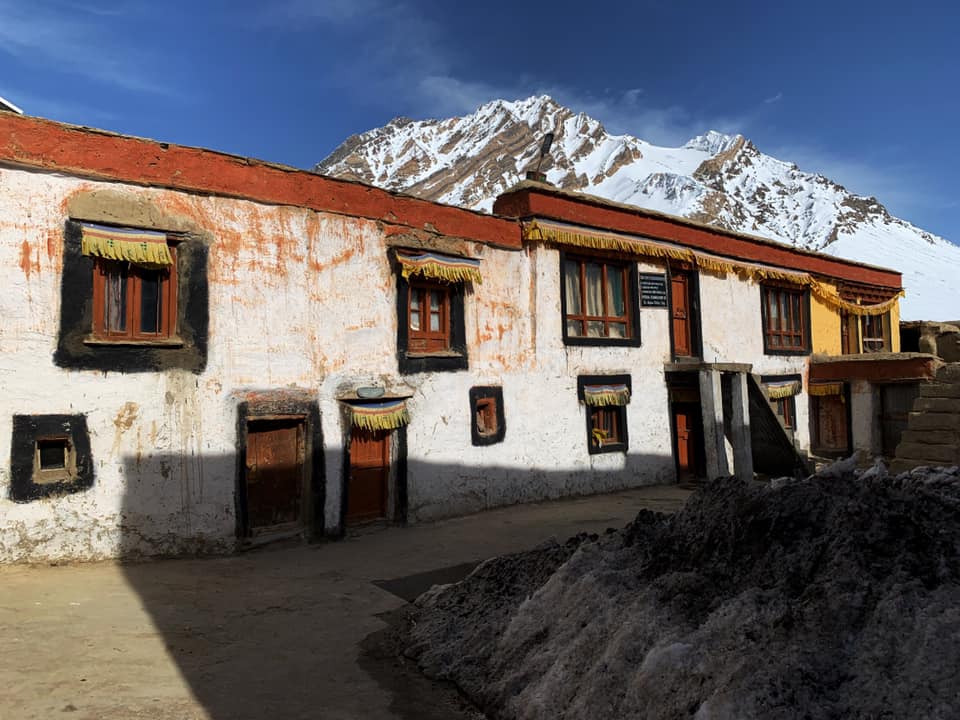
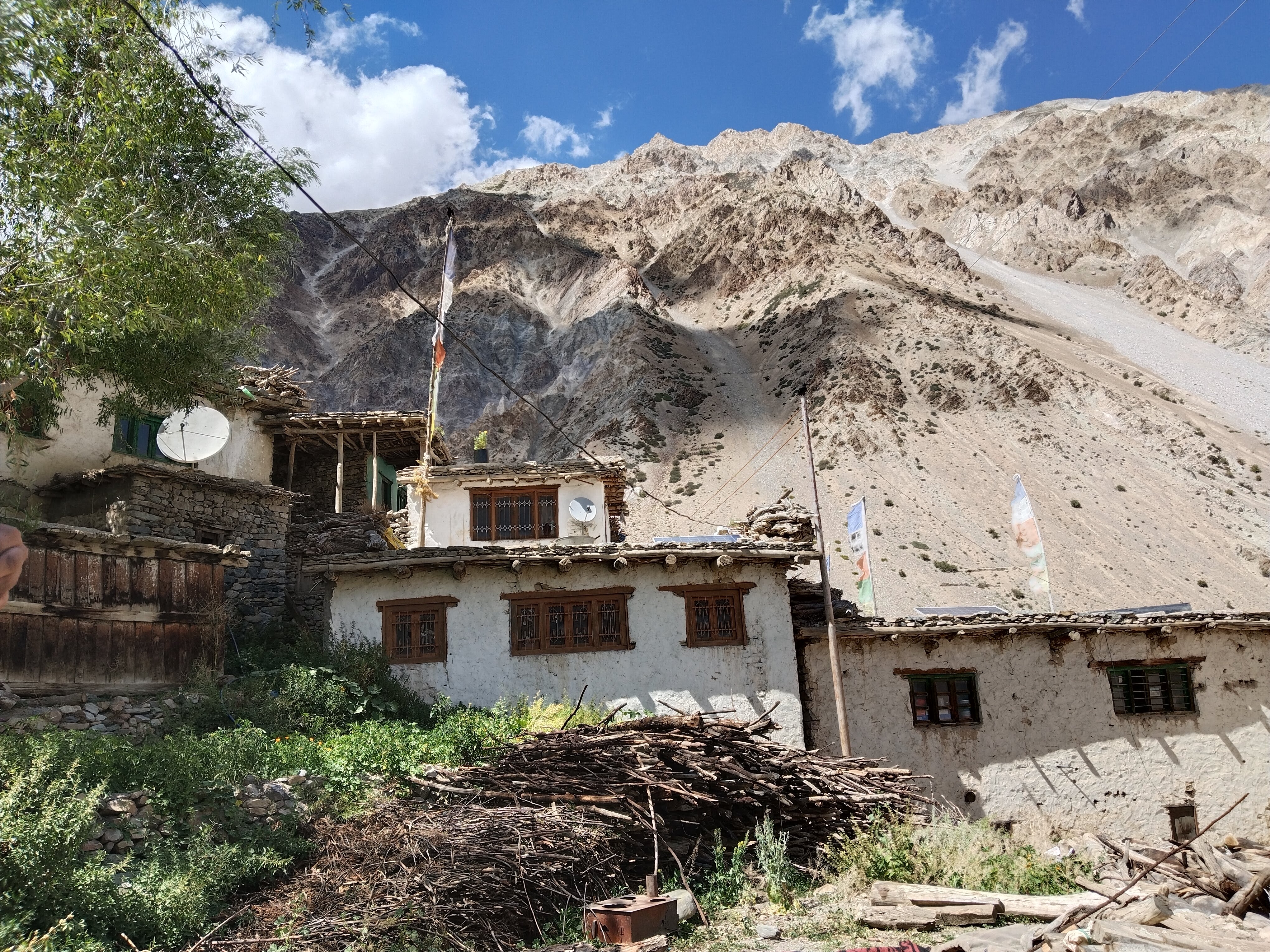
Growing up in Spiti, a place so beautiful and serene was a heavenly experience with valleys and rivers that enchants anyone witnessing its beauty. It attracts visitors from all over the world, some first-timers, and some seasonal regulars, and leaves them with the same impressions. When one tries to capture its beauty – the mountain villages clustered with white-washed mud houses in the serrated landscape appear like a flock of sheep grazing on the fields.

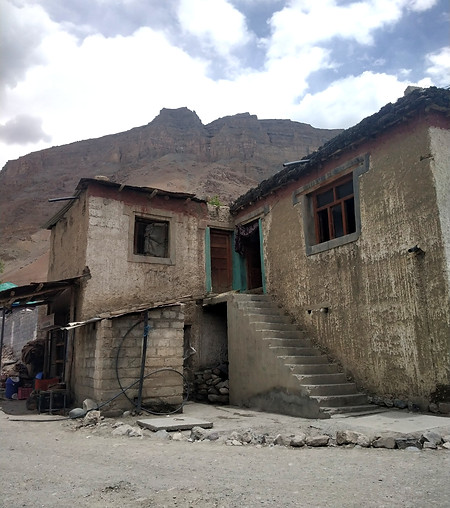
A mud house in middle of Kaza market, Spiti | Photo: Nonie Rawat

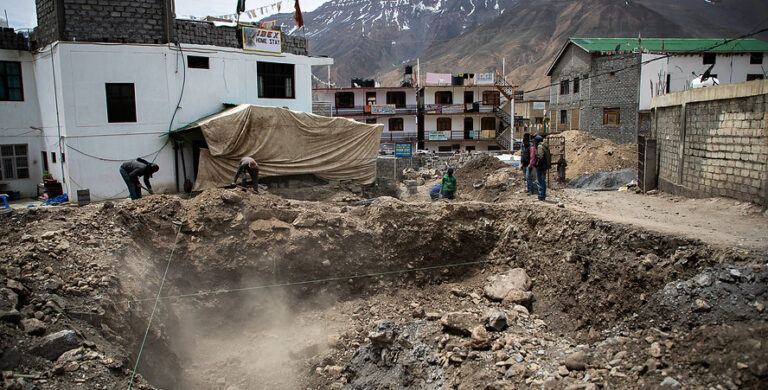
The traditional architecture and the socio-cultural practices are the outcomes of the prevailing topography and climatic conditions giving Spiti its unique persona & originality. In the past couple of years, the wave of RCC-based structures has dominated several villages and have taken its malicious grip. It is due to the recent abrupt rise of tourism in the region and considering these changes, the place is likely to lose its essence and everything that’s worth treasuring. The massive plague of concrete structures has devastated the vernacular house designs with the built, form, size, and material totally devoid of its regional context.

The picturesque villages dotted with traditional mudhouses are slowly turning into a jungle of massive concrete structures. It’s mostly hotels, guesthouses, and other commercial buildings. One of the reasons for this shift is to accommodate the heavy-flowing tourists with modern facilities in a cold desert. Spiti being a rural area doesn’t have the preparation required to handle this heavy flux of tourism and the burden is too sudden and heavy for the locals  to administer. The unregulated flow of heavy tourists can have many adverse effects on the local ecology and architecture. It will influence changes in the land use, will cause urbanization, large-scale construction of tourist facilities, illegal constructions, changes in the vernacular design orientation, increased waste pollution, and degradation of local aesthetics which are attuned to its natural surroundings. We need to realize collectively that it’s the architectural authenticity and unique cultural practices of the place that leaves mark on people visiting the place.

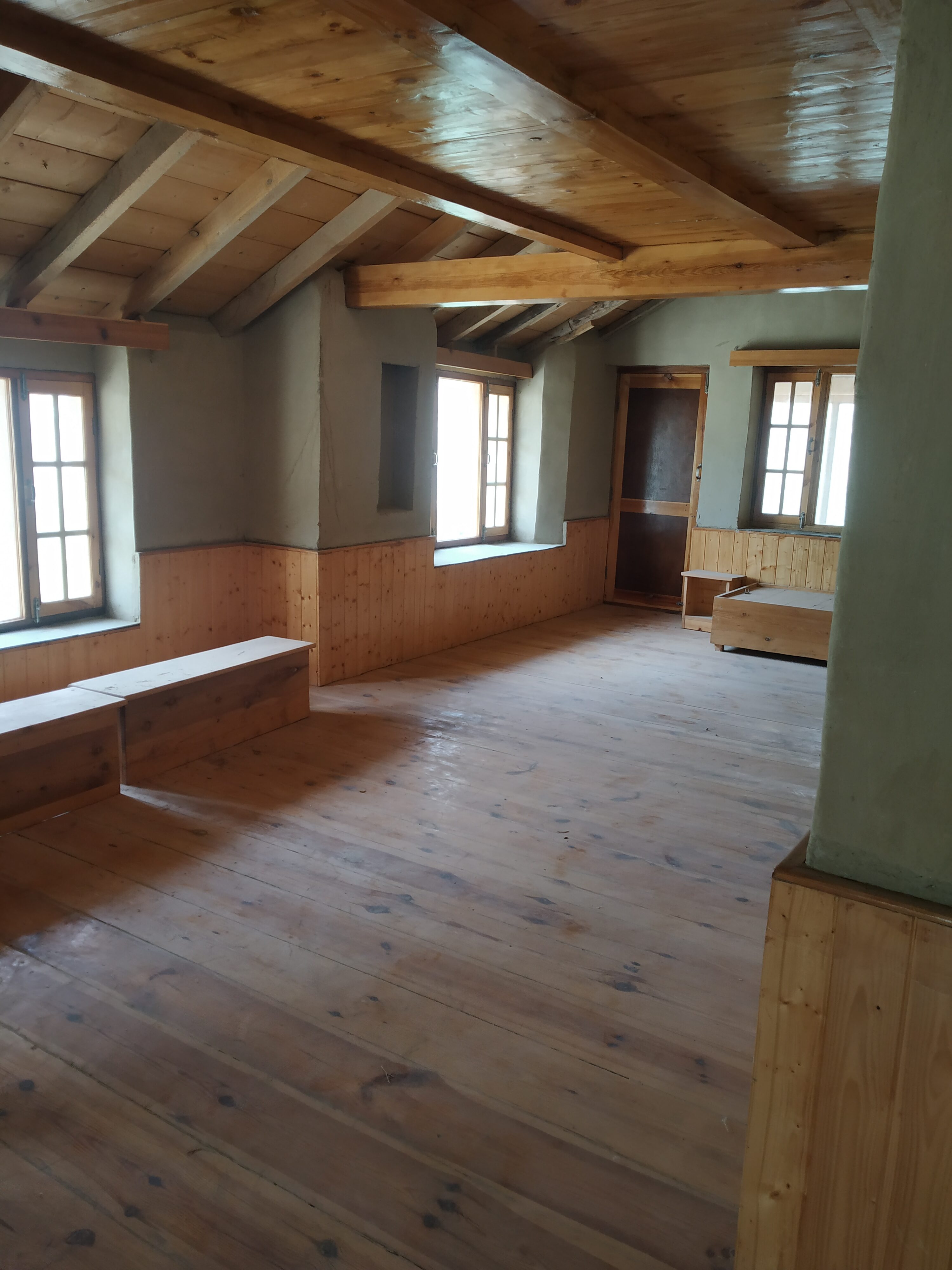
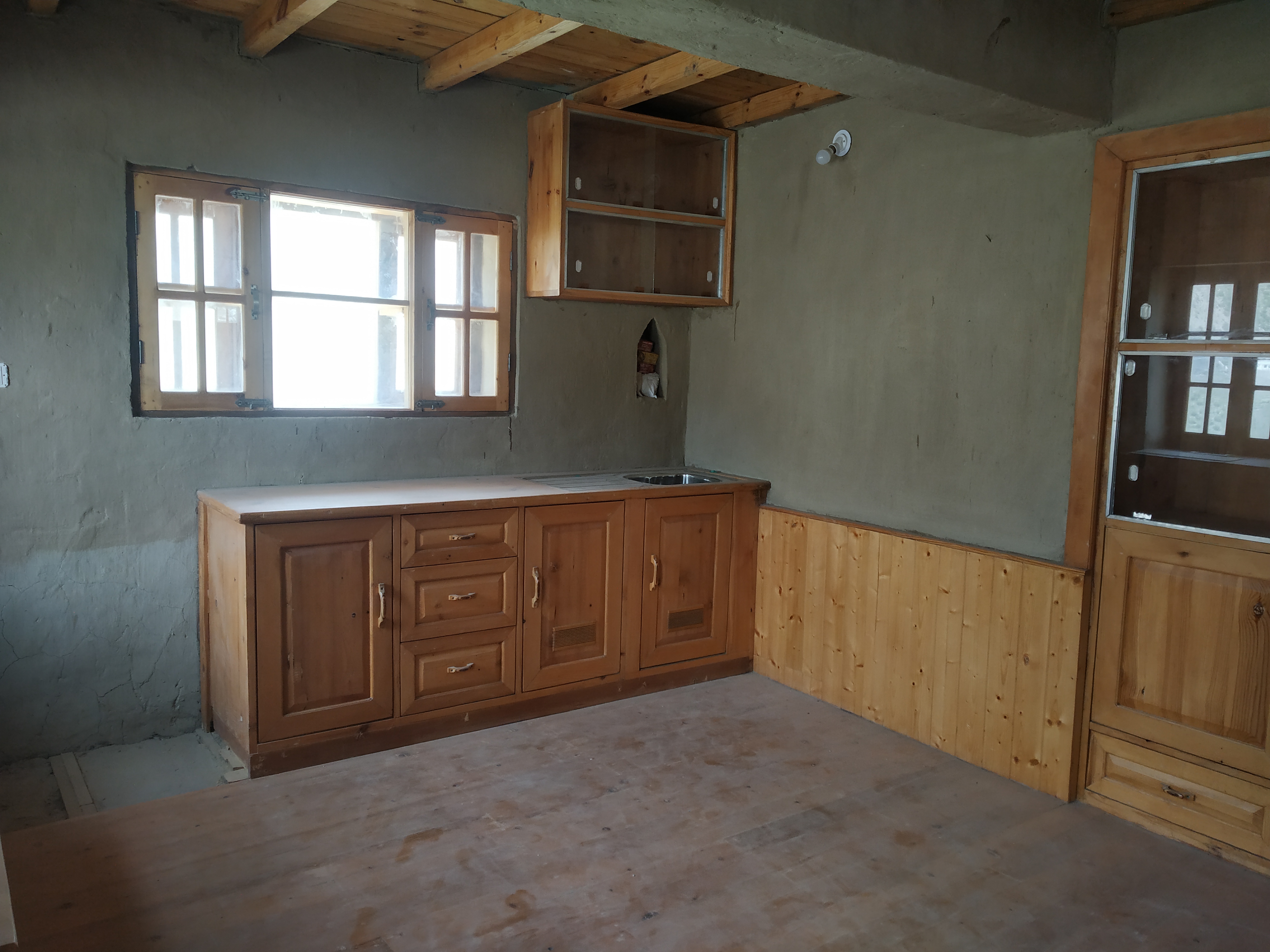
Many aspects of modernization are creeping up in the valley – some truly meaningful like building bridges that connect remote villages but others monstrous like encroachment of animal habitat and village pastureland. The abandonment of dry toilets (chaksa) to adopt

modern flush toilets in a water-scarce place like Spiti.  The dry toilet not only saves water but also produces manure for the crops. Whereas the western toilet system is not the most conducive design intervention in the valley as it remains out of order for about 6 months, and the water pipes freeze during winter. In this wave of development, Spiti is losing its authenticity. The constructions are now spreading to agricultural lands as more families find it easier to earn a livelihood from tourism than farming. The old houses have thoughtful architectural designs like having low ceilings of about 100mm, which helps conserve heat. The ground floor and the first floor both have rooms for seasonal activities. The ground floor is specifically built keeping the freezing winters in mind. The floor is divided into spaces for both livestock and the family. There are additional rooms to store grains, fodders, and a Chingbuk – a celler for storing Chang and Aarak (barley based alcoholic beverages).  There’s also a tiny opening for ventilation and heat obtained from the animals, and the grain and grass storing places work as insulators that keep the house warm and cozy during winters. During summer the first floor is preferable due to proper lighting and ventilation. This floor is breezier and has more room to attend to the summer guests. These rooms will be properly ventilated and have big wide windows, with the peripheral frames painted black, absorbing and allowing maximum sun.

New constructions in Kaza | Photo: Tanvi Dutt

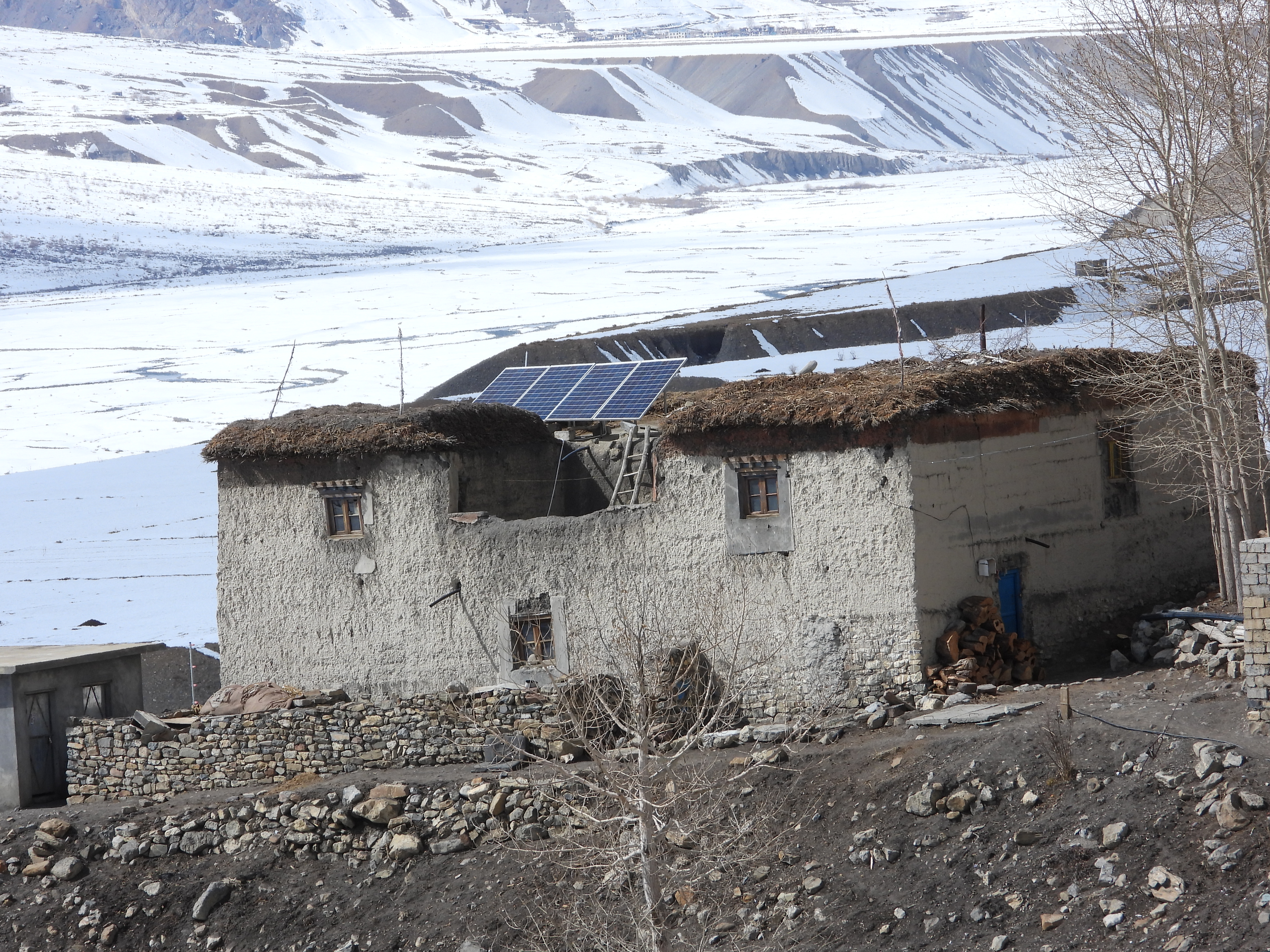
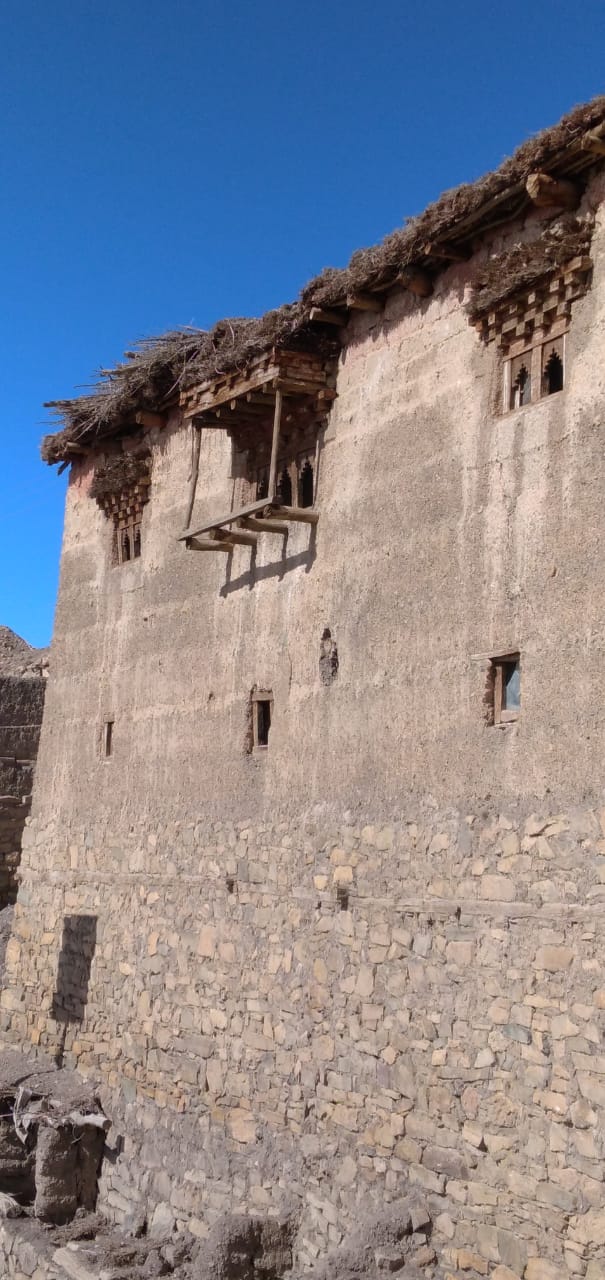
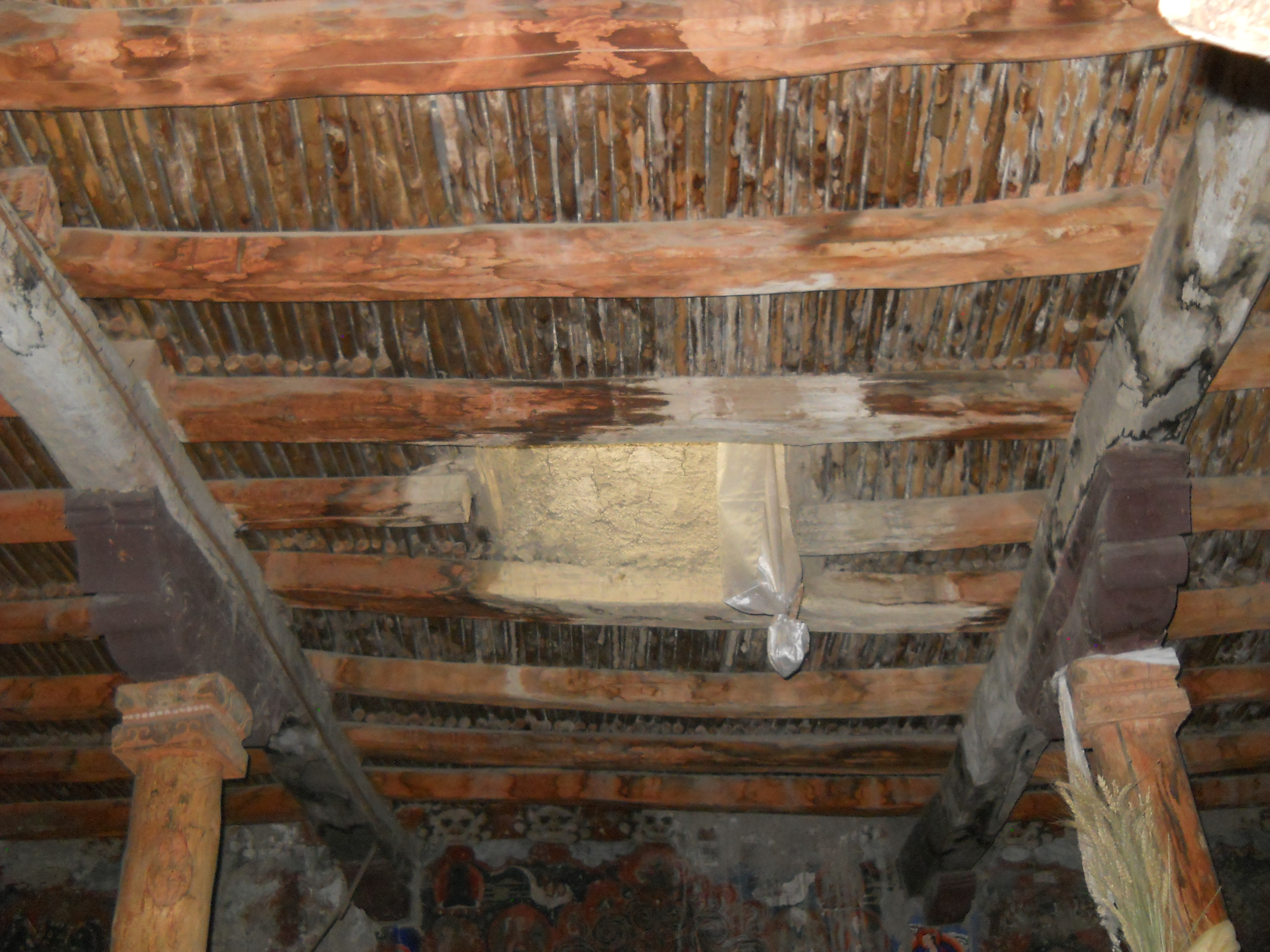
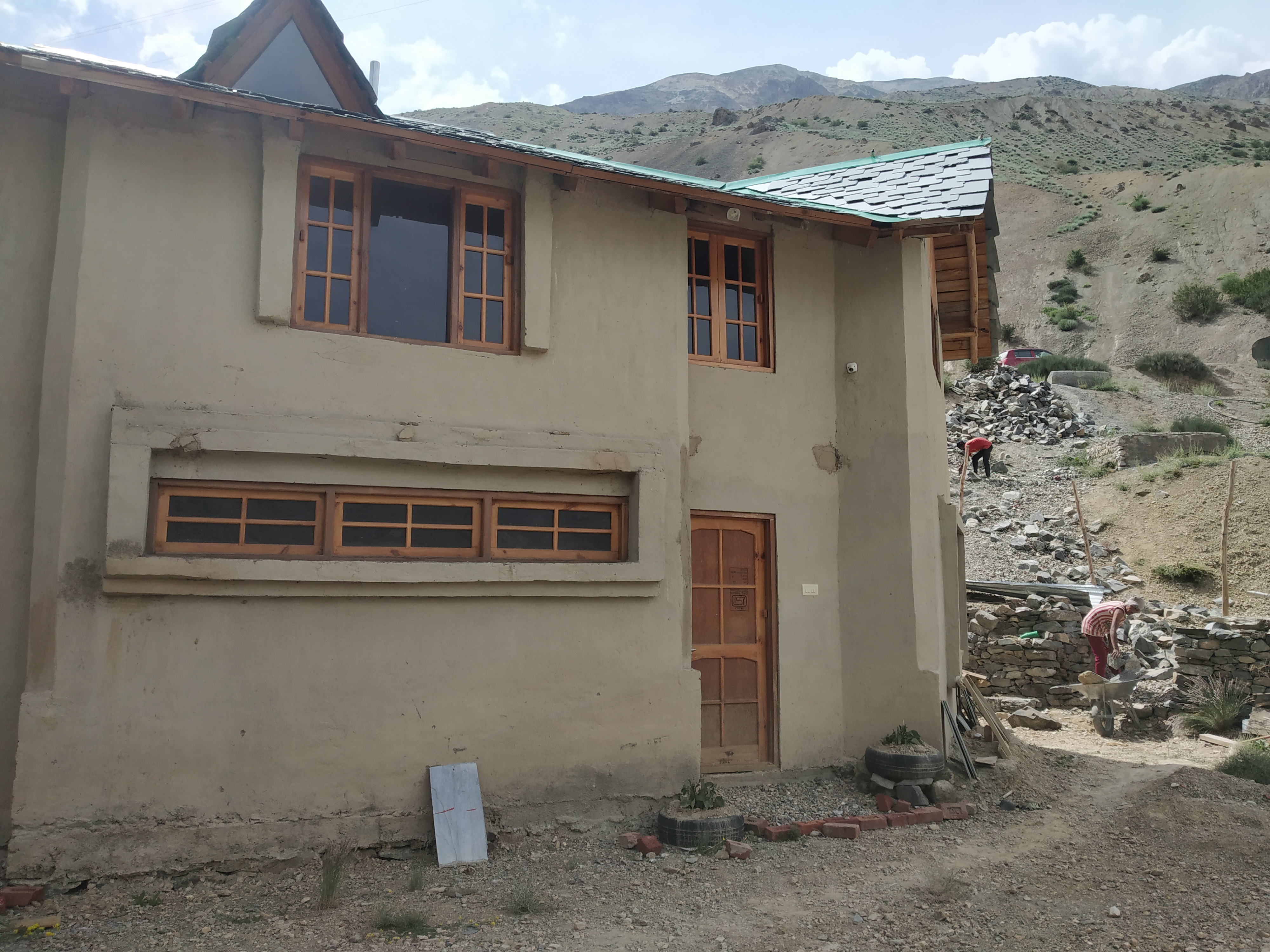
A typical traditional mud house in Spiti has a basic stone foundation running all along with the boundary wall. The locals use wooden planks as mould which supports the foot and a mixture of hay and mud to make the walls. The process is continued and the wall is built layer by layer at a time, leaving voids as per the requirements. The insulated roof starts with placing the main girder mugdungh, which is often supported using a wooden column kaa, this column, in the center of the room, also serves as the aesthetic feature of the room. Then the secondary girder, phurdungh, is placed on top of which, tightly knitted willow sticks, dhilu, are laid. The flat roof is finished with laying a thick layer of mud. To protect the edges of the mud structure from rain and snow some houses have bundled-up bushes stacked at the periphery of the roof along thorny bushes, dhama. The natives used to build with what was available to them and best suited the regional climate. This is what shelter means, building something suitable for you according to the climate and availability of the resource, hence the vernacular architecture of a place merges with the context, the landscape.

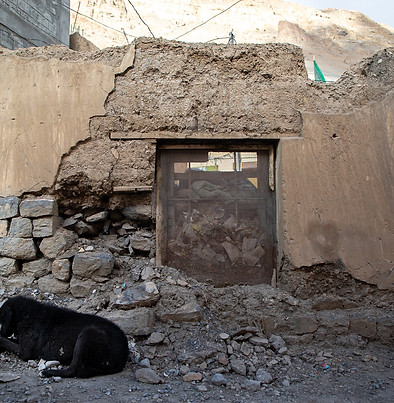
A dilapidated building in Kaza | Photo: Tanvi Dutt

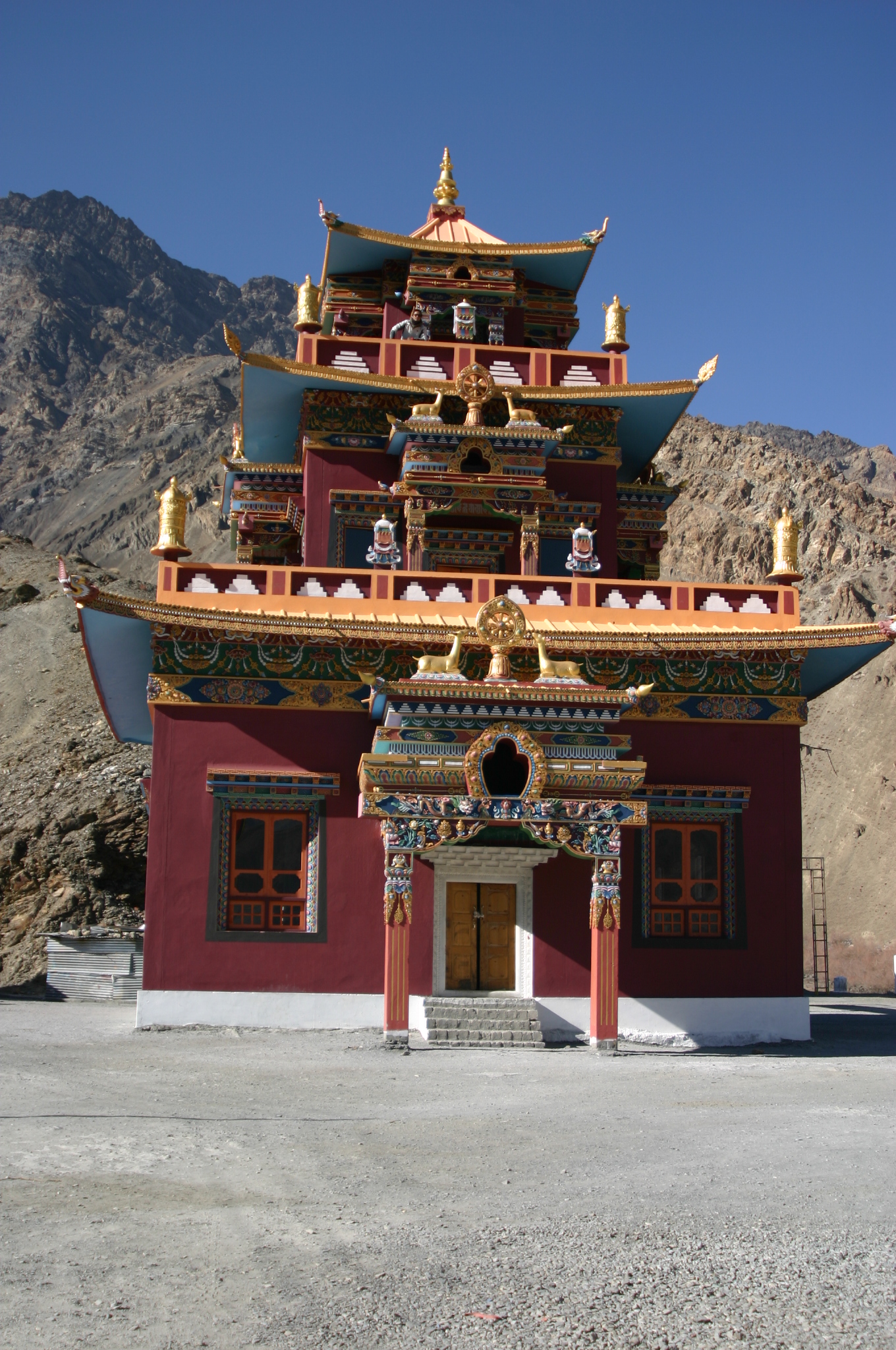
The traditional method of construction is not practiced these days therefore the skill is endangered. The thousand years old monasteries in the villages of Spiti were made of mud block-forming walls up to a meter thick. All these monasteries are still surviving and functional, they are likely to survive another 10-20 decades, even more, if maintained professionally. The maintenance of historical monuments like our monasteries for cultural preservation, further building a repository of local knowledge, and sustaining the innate quality of the historic buildings is necessary. The neglect in restoration work in these historic monasteries is washing down the structure. The walls are likely to survive the next few decades but might lose the other characteristic it holds now. The negligence may not feel like a massive part of this problem right now because it’s at a stage where it goes unnoticed, and is invisible but eventually, over years it will start showing up. We should evolve and use the modern facilities, resources, and knowledge we now have access to.

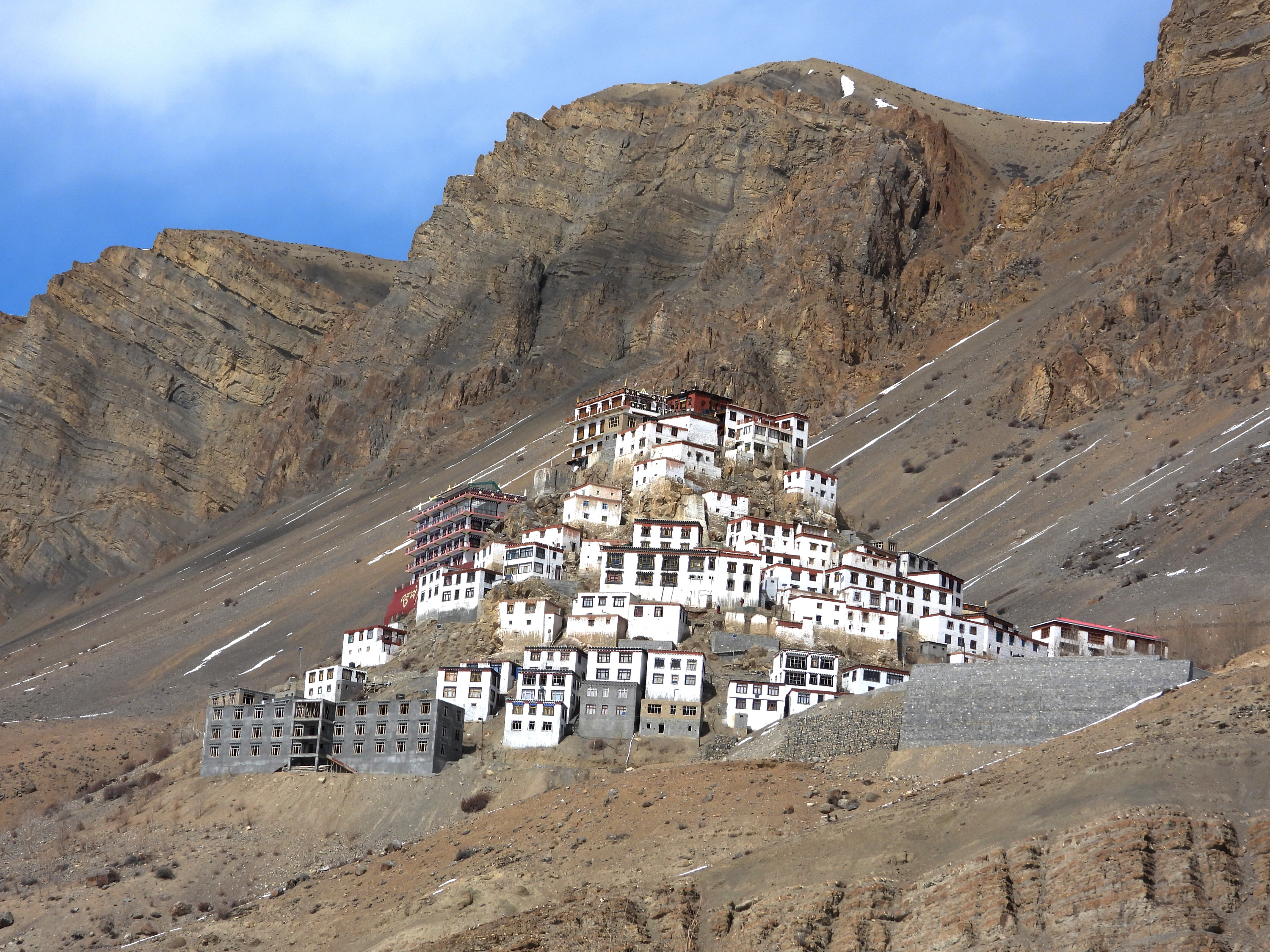
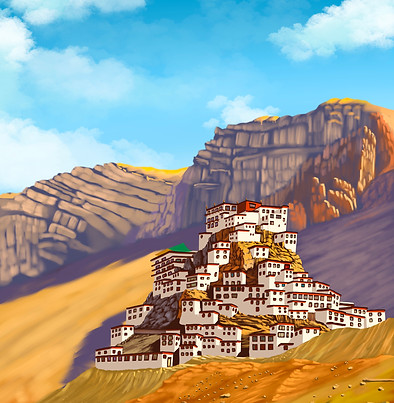
Iconic structure of Kee Gonpa, Spiti | Illustration: Nawang Tankhe

The state of development and accessibility has made us avail many new resources. The traditional houses in Spiti evolved from shutting the tiny window using a good-sized rock to wooden windows to big windows with glass which allows maximum sunlight to enter and keep the house warm. This is one example of how to use the resources available to enhance the traditional structure. But now we are evolving in the wrong direction. Adapting materials that do not comply with the context and then we spend time and energy to fix the problem we created. In a cold desert like Spiti during winter mud houses work as insulated buildings. For the piercing cold winters, people don’t need RCC houses which do not retain heat, freeze everything inside them, and cause a lot of health problems after prolonged usage. Humans have always started with natural resources and mud is the oldest of all the natural resources used in construction. It is found in abundance, and unlike cement, it goes back to nature without polluting the landscape. From the earth to the earth. It’s high time for Spitians to bring back its forgotten practice.
885 389 Nonie Rawat
An Insight into Traditional Spitian Architecture
A typical village in Spiti | Photo: Chemi Lhamo

An Insight into Traditional Spitian Architecture

Spiti is a cold, dry desert with a vast expanse of land that has a limited scope of vegetation and productivity. Nevertheless, there’s an oasis of human settlement, small but scattered along the river valley depending upon it for sustenance. Some of these remote ancient villages have existed in this harsh terrain for at least a thousand years and the local houses, architecture, building techniques, materials, and design sensibilities reflect conscious choices that take into consideration the unique topography and natural environment around them. Most traditional houses in Spiti are double-storeyed with flat roofs, and thick walls, with multiple rooms and structures that beautifully suit our agro-pastoral way of life.

I remember my father nostalgically recounting how in the olden times when winters were long and harsh, snow piles high, and seasonal migration to warmer places wasn’t as convenient as these days, they found ingenious ways to accommodate their daily needs within the house. “Snowstorm or drought, we had our granaries filled to last at least two years and hardly had to move out of the house!”  Spitians – despite being people of slender means, were quite inventive and it is tactfully reflected in the vernacular design systems of the houses.

Material & traditional tools used for construction:

Upon entering any Spitian village, the most striking aspect is the cluster of white mud houses dotted beautifully against the blue sky and gigantic barren mountains. The design, aesthetics, and material composition of the houses are uniquely Spitian – evolved and adapted to suit the cold mountain desert. Primarily natural materials are used for construction; with stones as the foundation, mud for walls, and various kinds of wood for ceilings, door & window frames and support structures like Kawa (pillars). Some of the common materials used are listed below:

  • Thalwa/Dambak (Mud): For the construction of walls and boundaries. A particular type of soil colloquially called Dambak with the right proportion of clay is preferred over black soil and others.
  • Duwa (Stone): Big natural stones chiseled to uniform sizes are preferred for building foundations and structures on the ground floor like Lukra (sheep pen) and Chaksa (dry toilet), as mud tends to lose its structural integrity over time due to excessive dampness from the snowfall.
  • Dhuwa (Clay): Clayey soil is used for waterproofing the roof and plastering the outer walls.
  • Changma (Willow): Willow sticks of two varieties: Gyalchang, used for doors and window frames as it is hard and durable, and Chulshing, a leaner variety of willow used mostly for Dri-lu which is used for the internal structure of a roof.
  • Mal (Poplar): Poplar wood for two giant support structures called Makdung and Burdung for roofing, support beam, window, and door panels.
  • Shukpa (Juniper): For Dri-lu, door, and window panels
  • Kirsi (Lime): For whitewashing and plastering outer walls. Mostly sourced from Losar and other upper valley sides while for lower Spiti valley, it is brought from Gue and Hurling villages.
  • Kova (Leather): Leather, when braided, is called Dangbha and is used for door handles, locks, and door bolts called Korchok.
  • Pema (Wild shrub): Primarily used as a protective structure for wood panels of the window and to prevent mud walls and outer paint from rain and snow.
Traditional ceiling | Photo: Tsering Lhundup
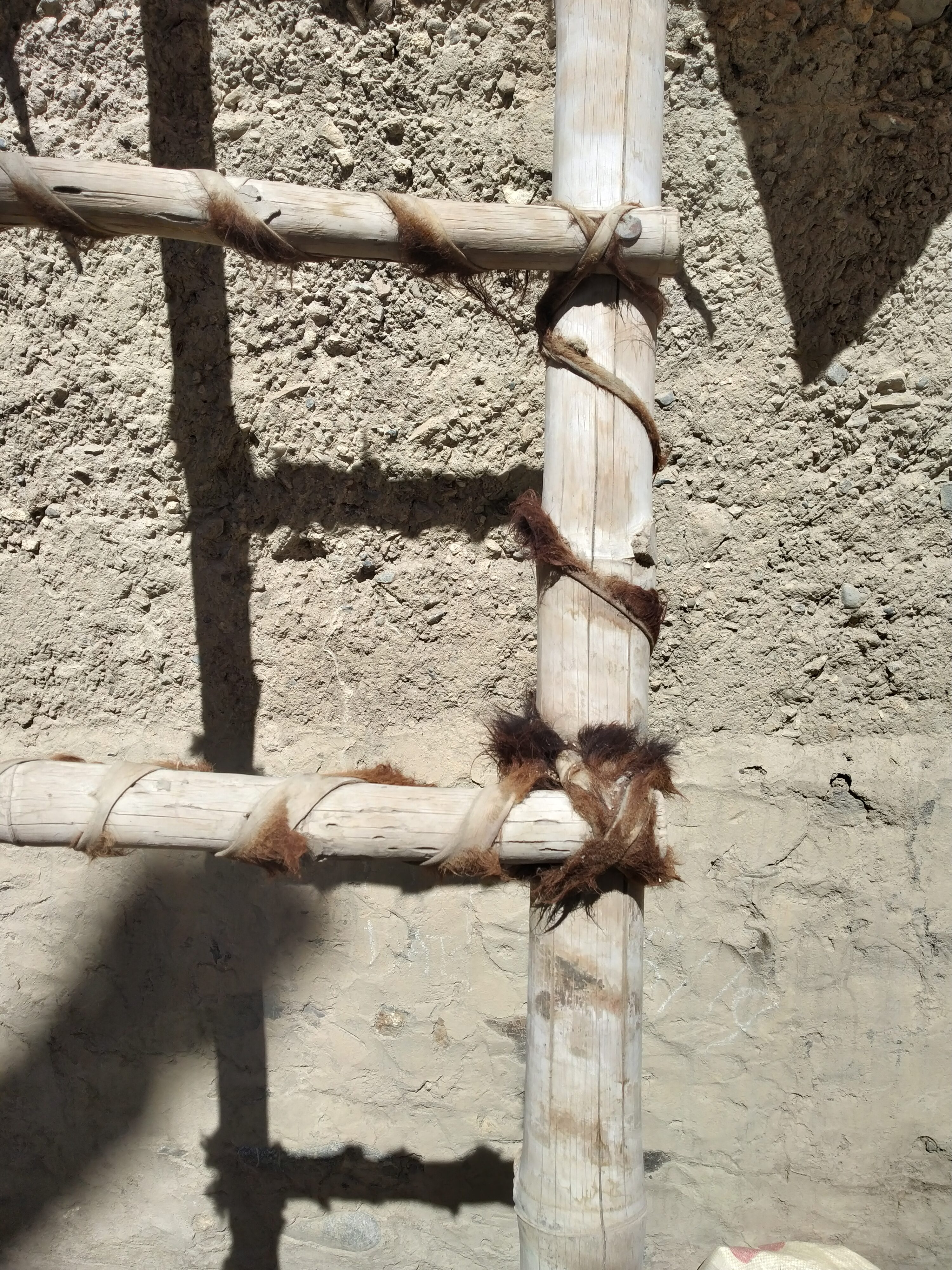
Sitpa  (yak hair rope) | Photo: Deepshikha Sharma

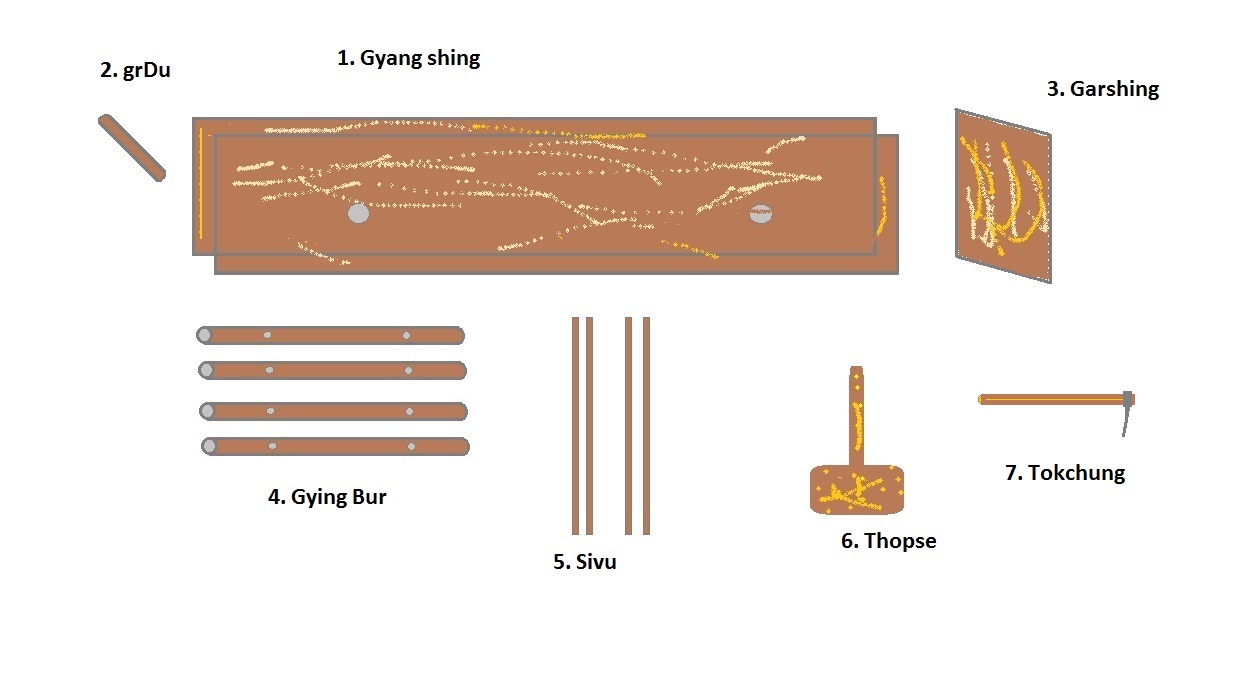
Natural building techniques like rammed earth building are used for construction which is suitable due to its durability, low maintenance, and thermally optimal characteristics which protect the houses from extreme climate and help retain stable temperatures inside the building. Since most of the houses are hand-built, there are specific traditional tools used for constructing particular aspects of a house. It is startling how even for building seemingly simple structures like a wall, multiple tools are used as listed below:

  1. Gyang Shing: Gyang means a wall, and Shing means wood, thus Gyang-Shing is a wooden plank, used to encase the mud to help build the structure of the wall.
  2. grDu: It is used to support the Gyanshing from the inside, and is placed in between the planks to prevent it from collapsing.
  3. Garshing: Garshing is used to enclose either side of the Gyang-Shing to mark the beginning and the end of a wall being built.
  4. Gyingbur: It consists of two pairs of wooden sticks, with two holes in each stick, used to provide support to the Gyang-Shing from the outside.
  5. Sivu: it also consists of two pairs of sticks, used with Gyingbur to support the wooden plank.
  6. Thopse: It is a wooden hammer used to thump the mud placed in between the plank to make it structurally more solid and to rid of air spaces and bubbles in the mud.
  7. Tokchung: It is a construction hoe with a short wooden handle, used to scratch out uneven surfaces, and small stones from the walls before it gets solidifies.
Traditional tools for contruction in Spiti. Illustrative representation: Tsering Lhundup

Dynamic design & traditional practices:

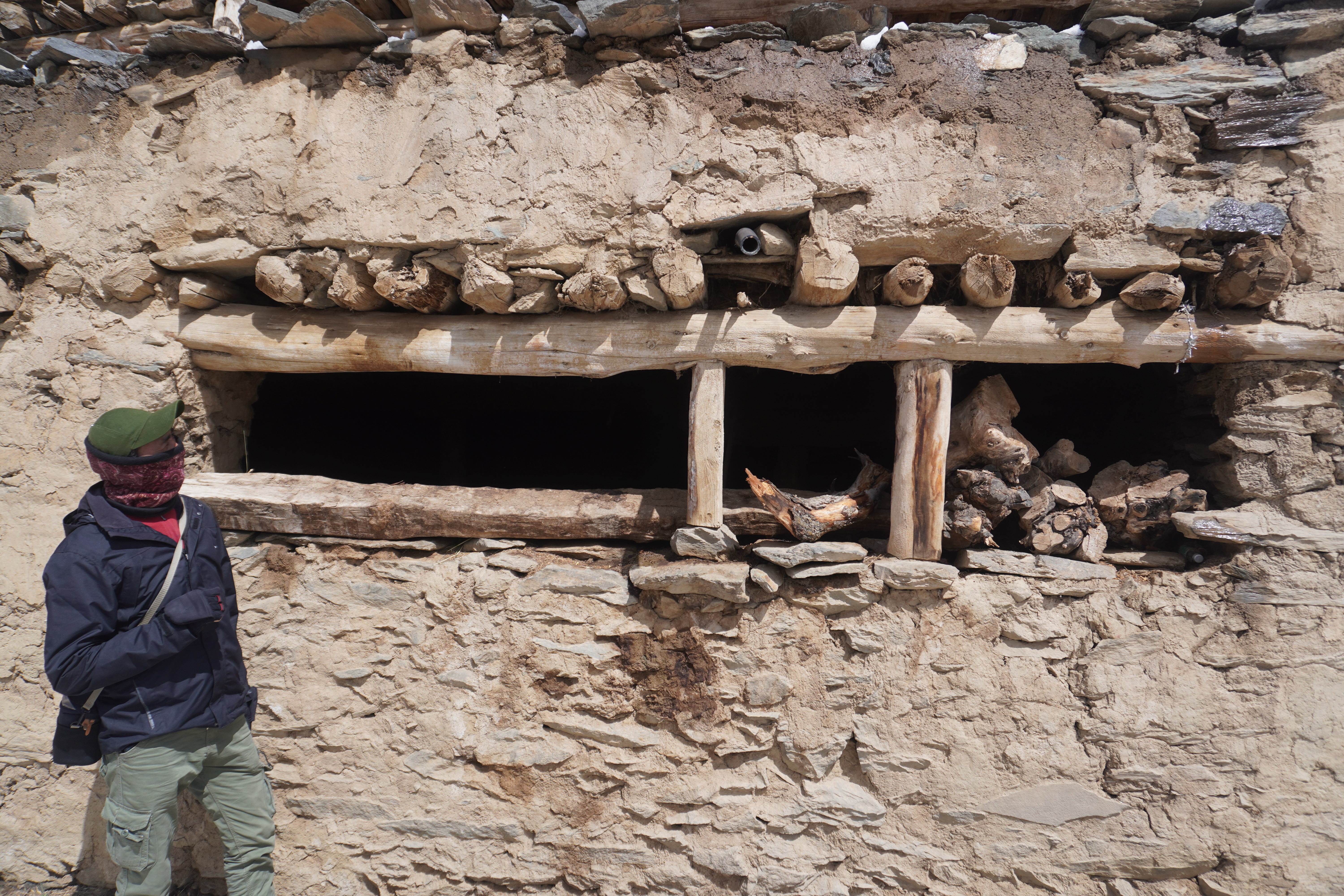
Agriculture and livestock rearing used to be the primary sources of livelihood for people in Spiti and our old houses are constructed to incorporate those needs in the vernacular design. Each house comprises at-least 8-10 rooms with unique functions and features. Elaborate storehouses can be seen in older houses like “Zot” colloquially means storeroom and there are different types of Zot used for different purposes: dry meats are stored in “sham-zot”, agricultural tools are stored in “lak-zot” whereas, alcoholic beverages like chaang and aarak are kept in “chang-zot”. Apart from that, some families have an additional room called “Tiwang” where foodgrains and other edible items are stored, the room is divided into multiple subsections used to keep various items. Within Tiwang, there’s a small compartmentalized room called bhaang where the family’s essential items are stored and access to it is only from a narrow window from the upper floor. Dhaa is a granary on the ground floor where fungma (hay) for livestock is stocked for winter and it has a small window-like aperture to stack grasses.

Photo: Mr. Janhwij Sharma, Additional DG, ASI

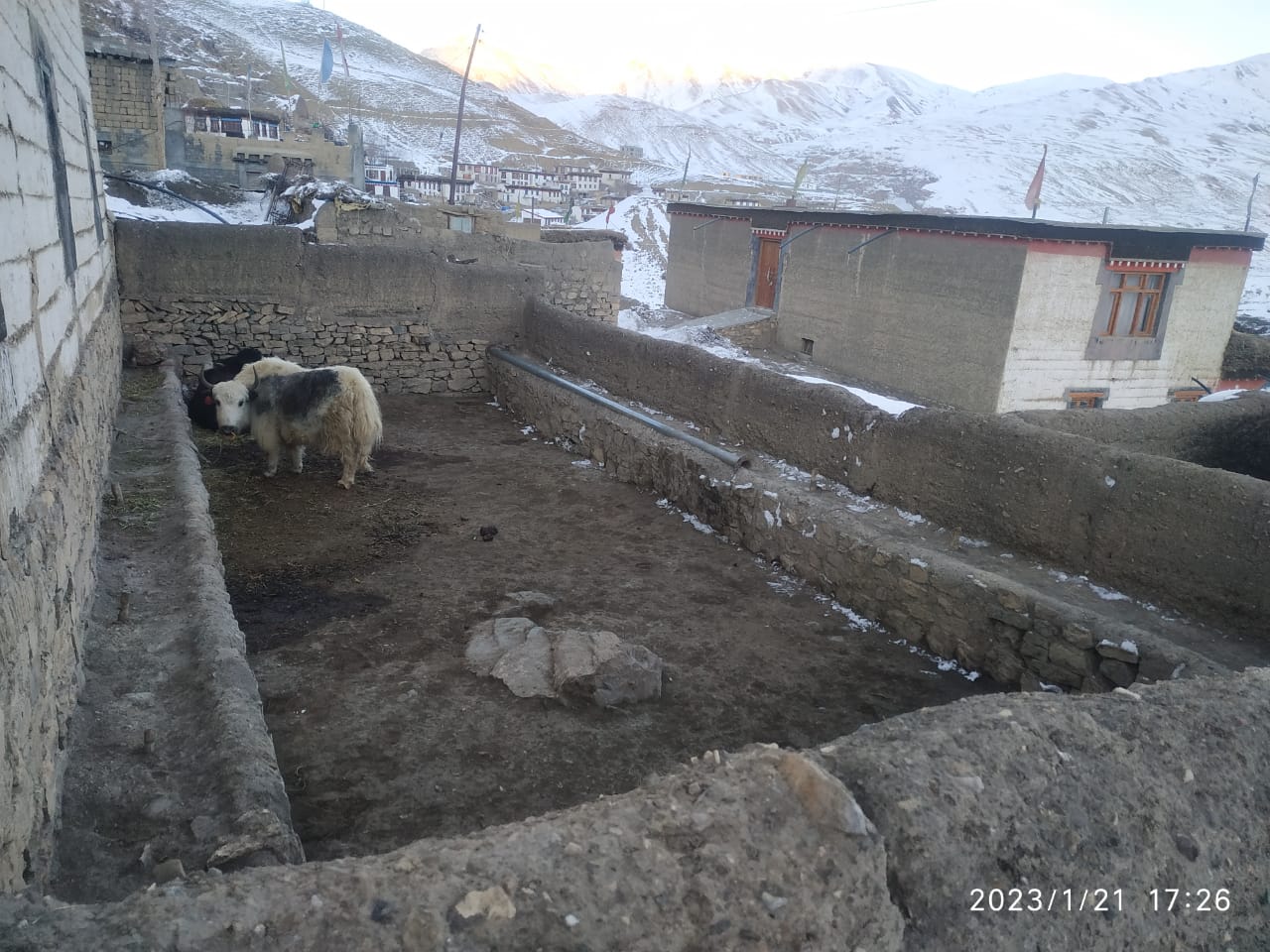
As for the livestock enclosures, most Spitian households have at least two kinds of livestock pen; Luk-raa/Raa is a cattle house placed inside the house on the ground floor while Dhang-raa is an open corral placed outside of the house right at the main entry gate. Apart from that, the family’s winter room Yok-Khang is structurally always in close quarters with the Luk-raah as the room draws insulation from Luk-raah making it warmer and easier to tend livestock during heavy snowfall in case of livestock sickness or during birthing cases. On the upper floor, the key rooms are Ma-khang (main living room), Shal-khang (solar room). Chot-khang (prayer room), Don-Khang (guest room), and Dhang-zey an open courtyard on the upper floor that serves as a functional space for many community activities and which also has a small window-like access point for all the ground storerooms.

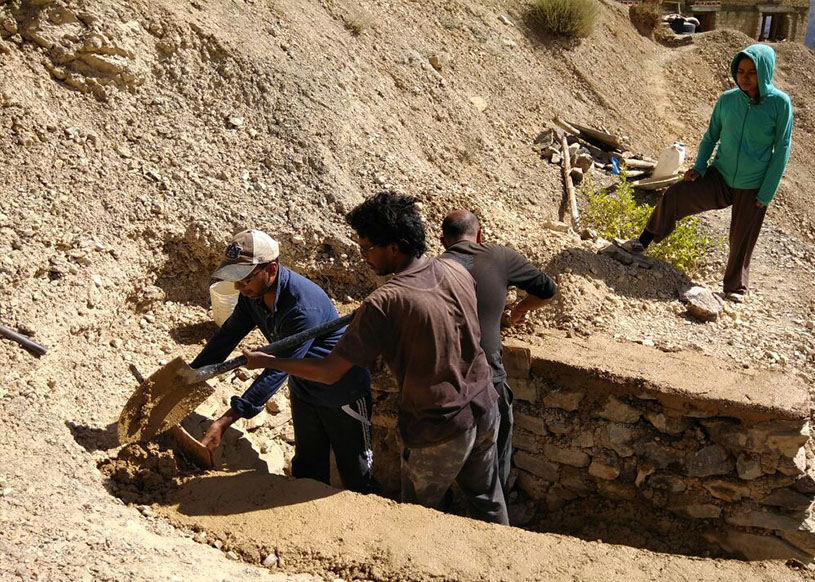
The most unique aspect of natural building techniques prevalent in high-altitude regions like Spiti is the communal nature of the work. An individual seeks support from the community in terms of resources as well as labor so it is not unusual to have members of your family, relatives, friends, and other community members involved in building a house. The use of local resources, awareness about the material composition, familiarity with the natural building techniques, and use of local intelligence renders them capable to build a house locally without seeking any help from outsiders. Apart from master artisans like stone masons, mud builders, and carpenters under whose guidance the whole construction takes place, there’s a huge contribution from community members.

Elaborate rituals are performed to seek blessings and forgiveness for causing a disturbance in the surroundings during construction. The one in particular I remember is an offering of Sichu Bhumpa to the local land deity Sa-dak – It involves placing a pot full of precious, semi-precious stones, coins, and scriptures in the foundation to invoke their auspicious blessings. During particularly laborious aspects like roofing works, the entire village gathers to help finish it on time and after finishing all the construction works, villagers take turns to visit the family, offer gifts (like barley, butter, grains, and other delicacies ) and congratulate the owner. In certain cases, a close friend or a relative even hosts meals for the entire family including the chief mason and his men. Similarly, when a newlywed couple build their first house, villagers help by pooling important resources like wood logs. These cultural practices help ease the logistical burden on the host family where the community becomes one’s greatest support system.

In the olden times when importing materials for constrcution was not possible, people often exchanged raw materials or traded labor for raw materials. I remember many such instances where milking animals like cows, Dzomo, sheep, goats, or draught animals like horses, yak, and donkeys are exchanged for important construction materials like dungma (willow log) and timbers.

Gue monastery architecture, Spiti Valley | Photo: Tsering Lhundup

Other commonly traded materials are butter, iron, honey, sitpa (yak thread rope) from which one can buy construction materials of equal monetary value. Iron and honey are not easily found in Spiti and hence were a coveted commodity, sitpa also fetched equal importance but gradually with the emergence of nylon ropes in the local shops and improved accessibility, there was a huge impact on overall trading practices around it. There was a time when it was also possible to pay for construction labor works through local resources. One popular example of this unique labor v/s resource exchange is the payment of one goat to a master artisan for helping build a house. With development, these practices have undergone massive changes and are no longer practiced but it was fascinating to recount such stories and ponder upon various means of material procurement for construction works.

4080 3060 Namgial Lundup
Blending Traditional Values with Contemporary Design
Traditional mud houses in Hangrang valley, Kinnaur  | Photo: Chemi Lhamo

Blending Traditional Values with Contemporary Design

Houses are intrinsically tied to the cultural landscape of the region and in the olden times in Kinnaur, great value is placed on the following traditional uniformity in house designs. A stark resemblance between houses built in the valley and the overall architectural homogeneity creates a strong sense of belonging among community members. Kinnaur district in Himachal is known for its woodworking heritage and detailed ornamentation of traditional homes. Usage of Himalayan cedar tree is popular for building homes due to its termite resistant properties and it’s ability to accept meticulous carvings on the surface but very few of these structures exist today. In the lower Kinnaur villages like Kalpa, Sanghla, Pooh, and Baba Nagar, the Kath-Kuni technique that uses a combination of wood and stone is traditionally practiced while in the upper Kinnaur side covering Hangrang valley, building with mud – adobe, and rammed earth is more prominent.

Construction Phase | Photo: Gopal Negi

Many changes are taking place in Kinnaur and growing access to the market, connectivity is certainly impacting how we build houses these days and RCC-based buildings are becoming more wide-spread. When I decided to build my house in Hango a few years back, I was very conscious of building it in a way that amalgamates traditional wisdom, and vernacular designing techniques with a modern sensibility. The traditional construction methods are easy, economical, ecologically sensitive, provides cultural utility and thermal functionality and I was determined to preserve that essence. Any changes in these designs should aim for aesthetic needs, comfort, and suitability to modern-day needs at the lowest possible ecological cost.

The primary material used for the construction was stone, adobe bricks, and wood, and special focus was placed on the building structure given the hilly terrain of the village to ensure it takes into consideration the geographical peculiarities and is climate-responsive. Building with adobe is an ancient, low-cost technique that mixes clay, and sand with organic materials like husk, and sawdust. Adobe bricks are mud bricks that are sun-dried and take about a month to dry and are more durable than kiln-fired mud bricks. The advantages of these bricks are that they are fireproof, biodegradable, and also are great at insulation, which is an important factor when building in a place like Hango. These bricks are allowed to shrink beforehand which also ensures a strong structure. Building with adobe is easier and faster than the rammed earth technique, once sufficient stock of adobe bricks is made, wall construction progresses quickly.

Gopal ji's mud house | Photo: Deepshikha Sharma

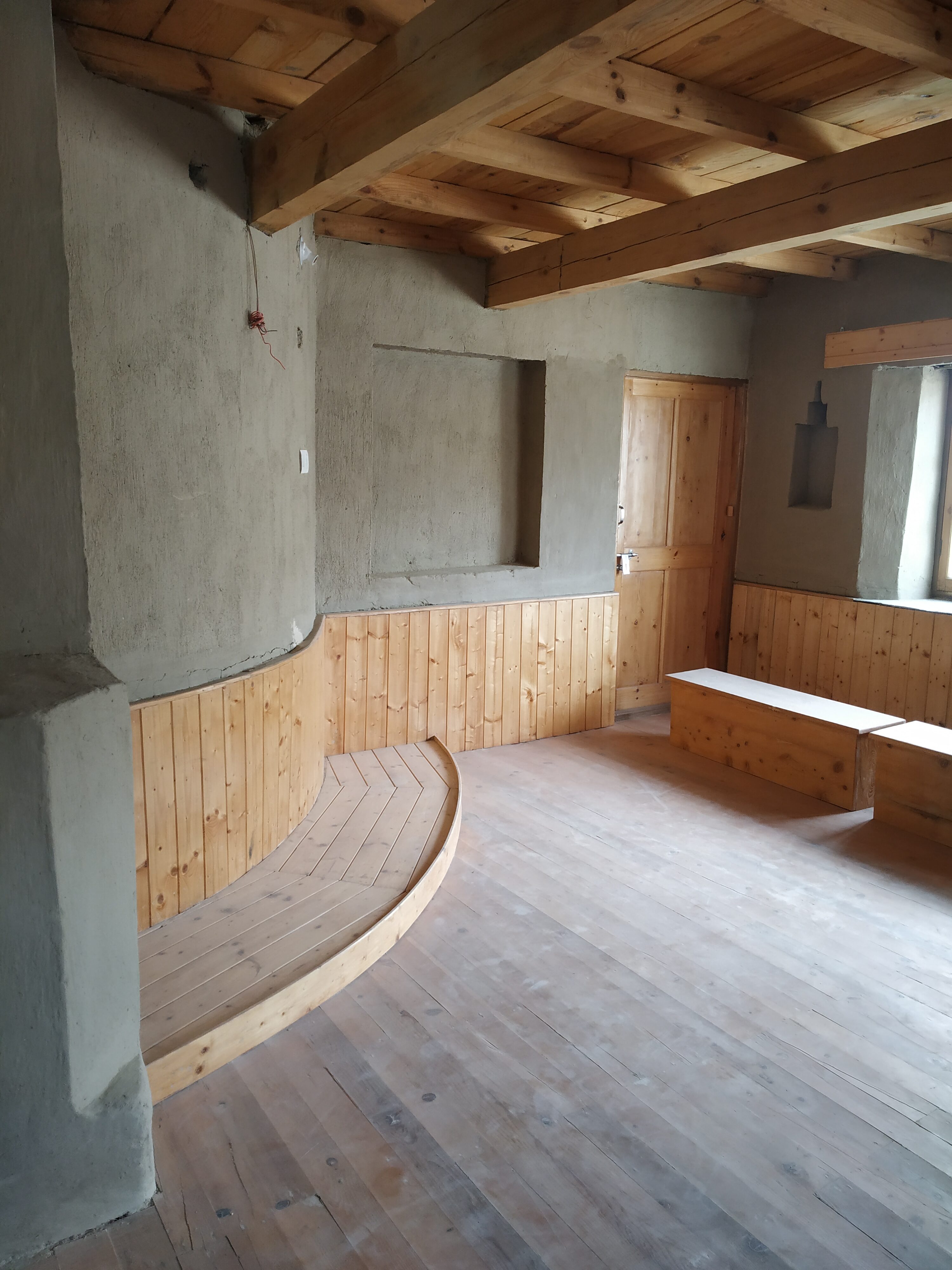
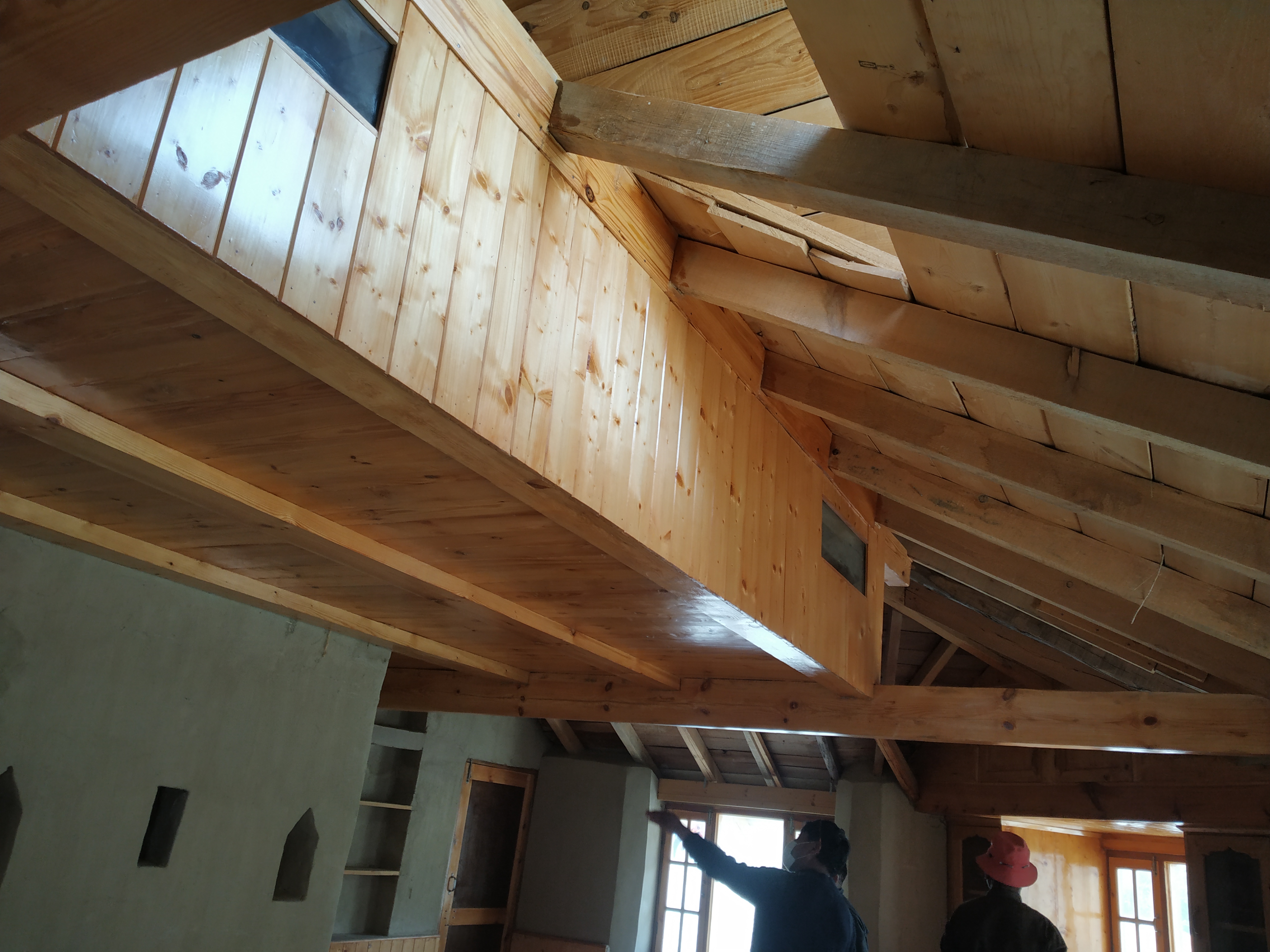
Stone layering is done for the foundation as it is moisture-resistant and helps preserve the structure from deteriorating over time. Adobe walls are load-bearing and thick hence there was no need for load-bearing beams. For the flooring, pine woods were brought from Solan and Chandigarh as the availability of local woods has shrunk and pine was a more cost-friendly option as compared to deodar. I was determined to ensure maximum usage of natural materials and hence the use of cement, iron, plywood, or other popular industrial materials was avoided. The house is built in the traditional Kinnauri style with multiple spaces to store fodder and firewood. Big, well-framed windows are installed to allow maximum sunlight, and double doors to retain the heat inside. The kitchen and living room are on the ground floor and are structurally joined like the traditional mud houses in Kinnaur.

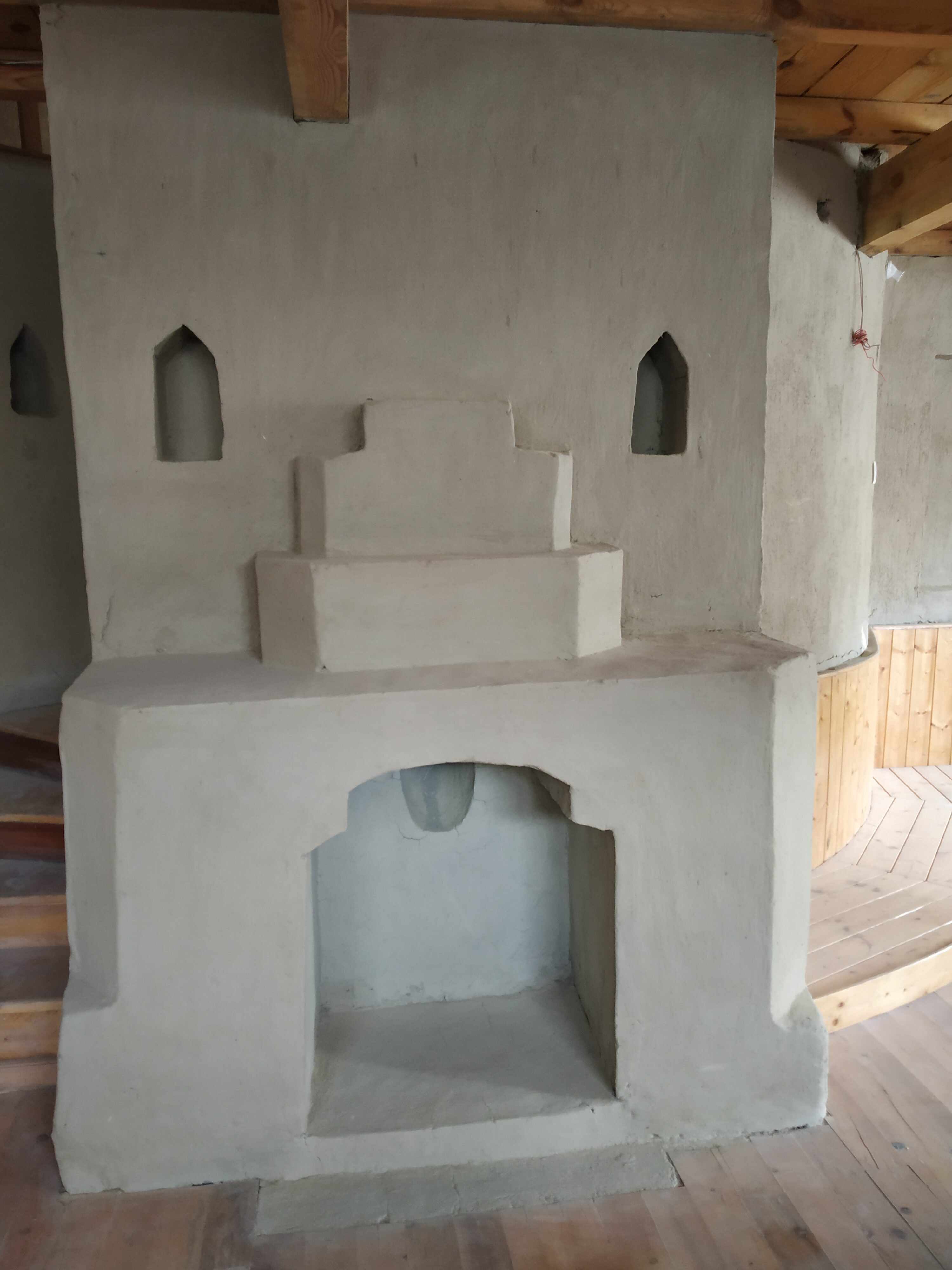
Co-designing spaces like this is a popular practice in most high Himalayan villages as it is warmer and I have given a slight tweak to the traditional heating system to make it aesthetically pleasing and more energy efficient. Hand-built mud fireplace with mud chimneys was made to suit the structure of the house and the walls draw heat from the mud-burning structure. The overall living room layout is in such a way that the family can have the space for cooking as well as a common space to sit, and have conversations and everyone can comfortably utilize the space. Unlike the traditional mud house designs in Kinnaur, the roof has a slanted design with stone slate layering which eases the burden of shoveling snow from the roof during winter as the slanting helps glide snow. A smaller structure of a dry toilet is also made outside the house which doesn’t require water.

It took about one and a half years to complete the double-story mud building and once it was completed, I was happy to receive many inquiries regarding the earthen building – the process, techniques, materials, and many other aspects that garnered curiosity from both locals and outsiders alike. I wanted to demonstrate that durable, aesthetic, eco-friendly houses can be built from natural materials and create a dialogue around a sustainable buildings practices. With every keen look and every curious engagement, I feel I am one step closer to my goal.

4080 3060 Gopal Negi
Tepang – the Pride of Kinnaur
Kinnauri Tepang | Photo: Anuradha Miyan

Tepang – the Pride of Kinnaur

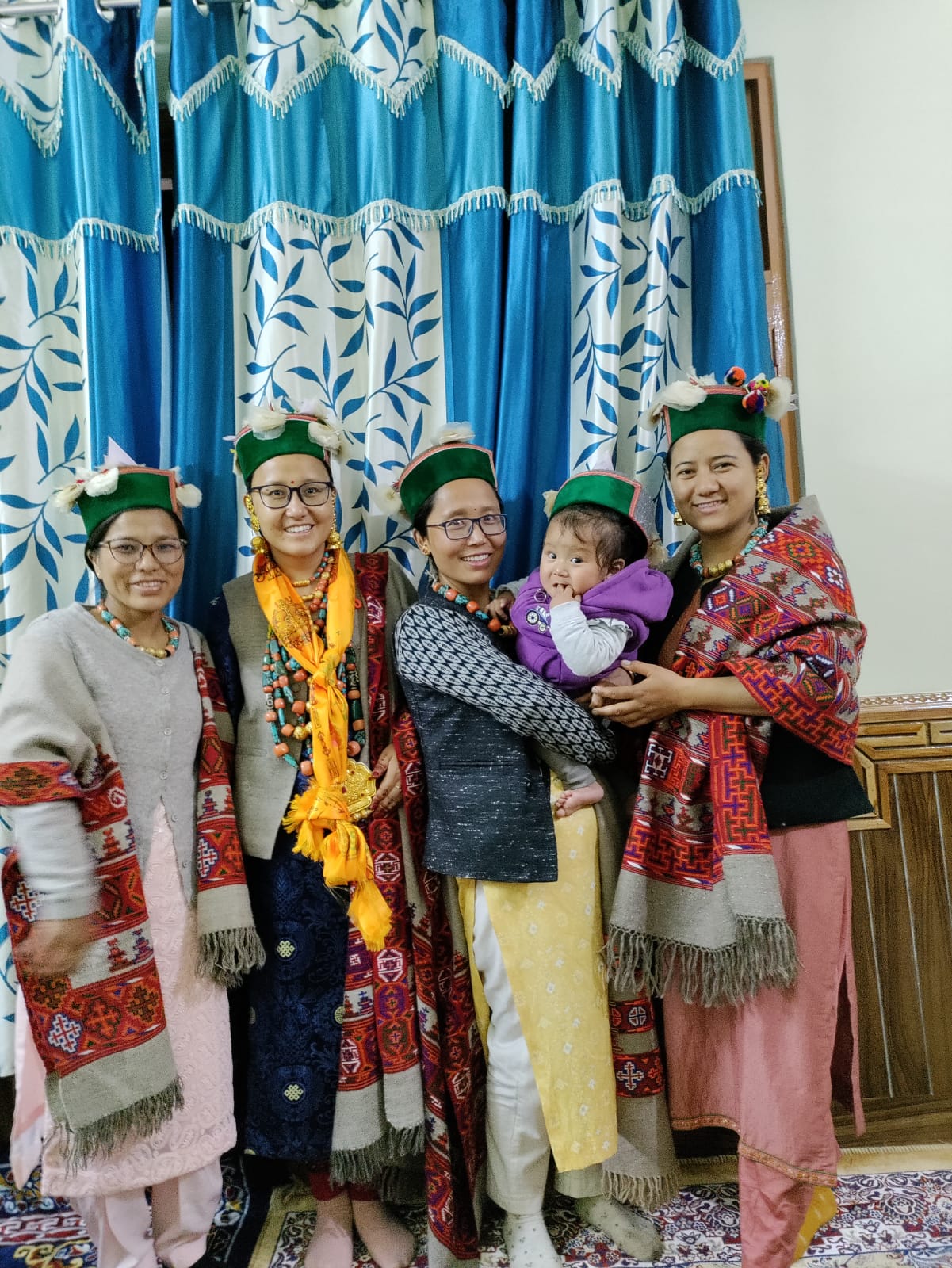
Nestled amid beautiful gigantic mountain ranges, Kinnaur is one of the most picturesque districts of Himachal Pradesh. Owing to its geographical proximity to Spiti and having been historically part of Rampur Bushahr, Kinnaur inhibits the unique cultural amalgamation of Buddhists and Hindus. One of the defining features of people living in Kinnaur is their vibrant traditional dress and the unmistakable headwear Kinnauri Topi which forms an integral part of the whole attire. The headwear is colloquially called “Tepang” or “Khunnu Tiwi” and is different from the Himachali Topis of Shimla, Kangra, Kullu, and Chamba. The design variations and the aesthetics of this headwear represent different parts of Himachal where it is worn. The Bushehri (Rampur region) cap is plain maroon in color with the same design as the Kinnauri topi, the Kulluvi (Kullu-Manali) topis have vibrant multicolored stripes, and the Kinnauri Topi has unique green velvet color and the ones worn in Kangra is a deep saffron color.

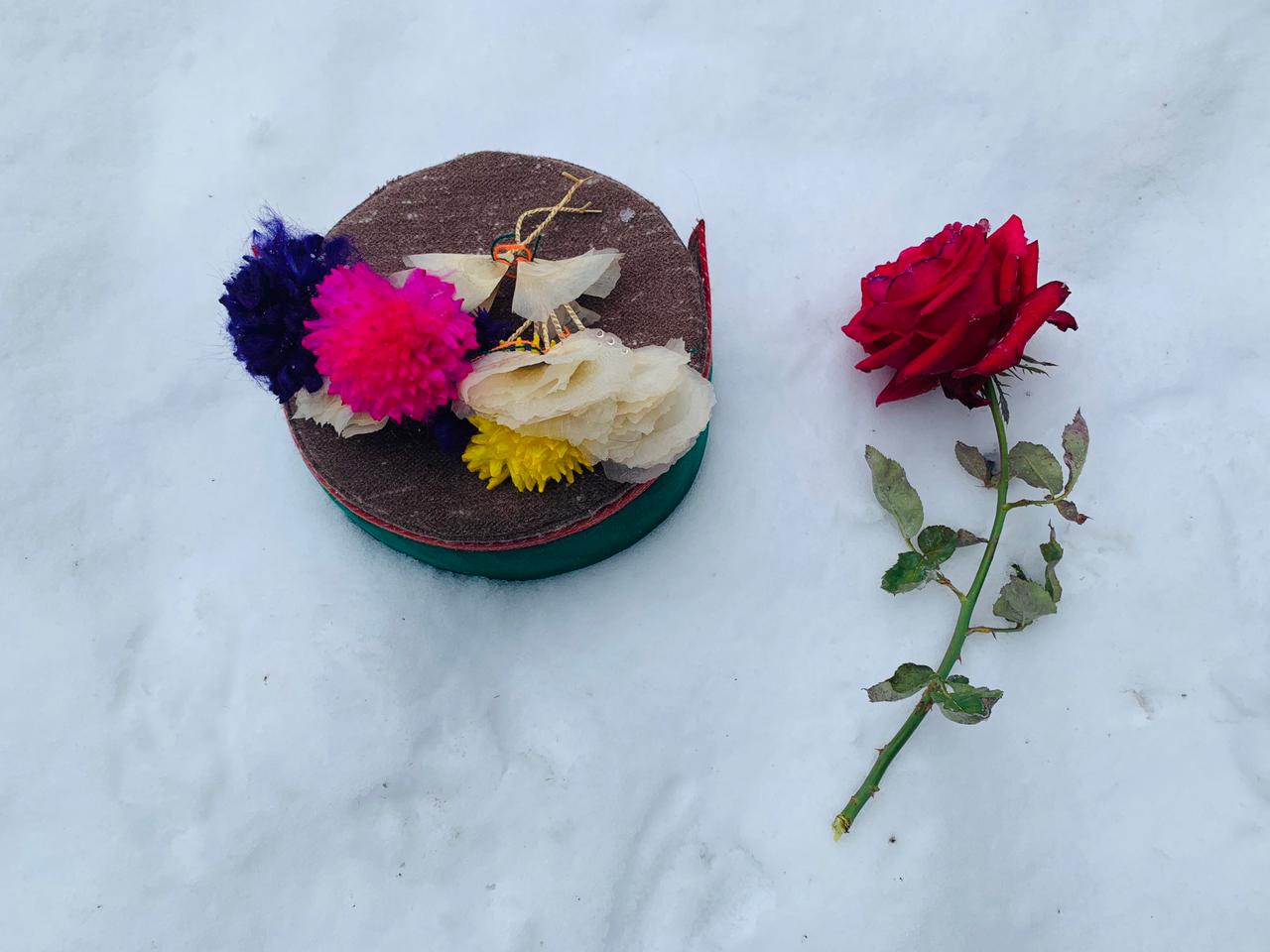
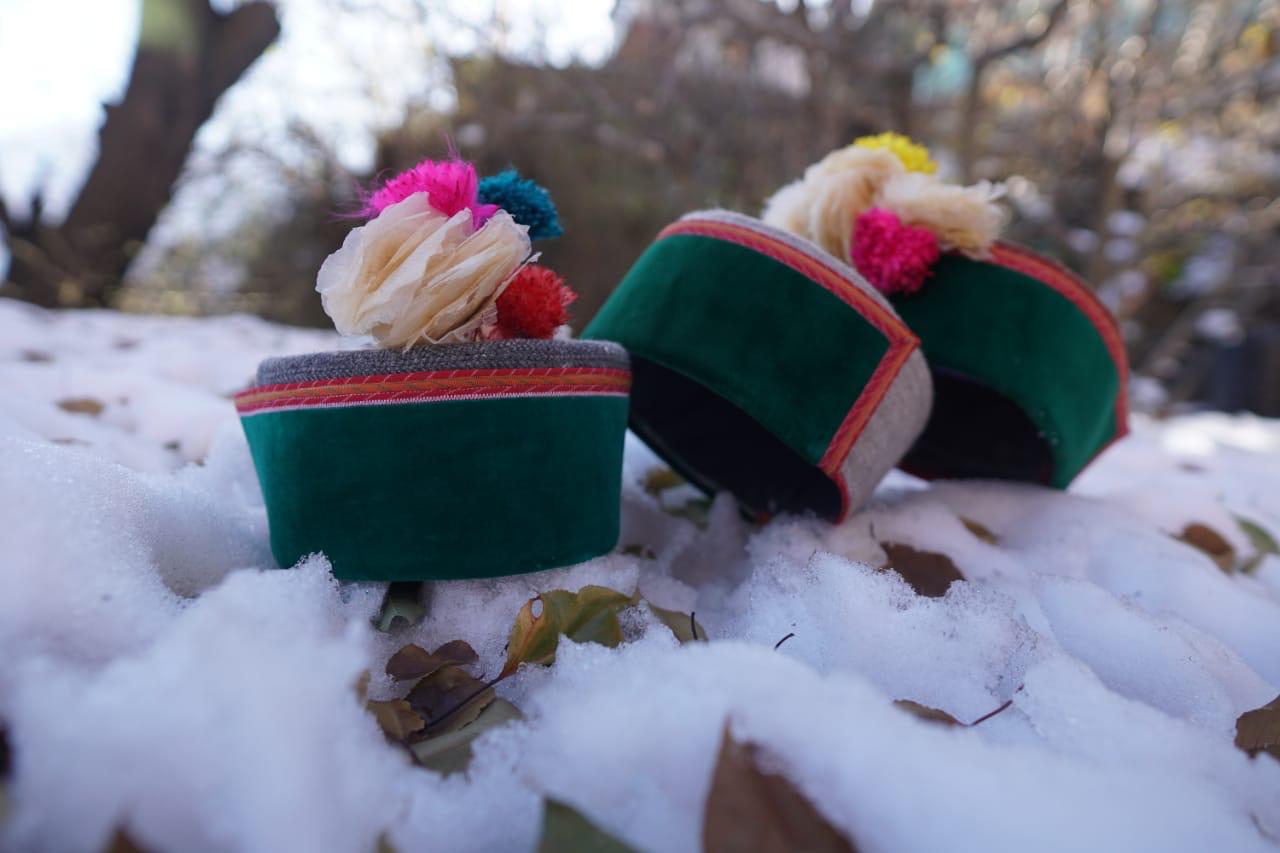
Made up of local wool yarn with velvet green stripe, it is adorned with beautiful wildflowers among which the bright white colored flower seed called “Chamakha” ( oroxyllum Indicum) is preferred among locals. The flower is not indigenous to the region and is mostly found in the lower Himachal region like Mandi, Palampur, Bilaspur, Nalagarh, etc. The usage of Chamakha flower seeds became popular in Kinnaur because of the flower’s resilient qualities – once plucked from its pod, the flower seeds don’t get spoiled and can last for years without getting dried.

Kinnauri Tepang

The Chamakha seeds are split open from their’s pod and a bundle of seeds called “Dalang” is strung together on a green, and red thread and is fixed on the Tepang. Apart from that, the cap is also accessorized with peacock feathers, marigold flowers, or the dried petals of the rare Himalayan Brahma Kamal (Lotus). However, the use of Chamakha flower seeds as well as the Brahma Kamal is decreasing as these flowers are endangered.

Kinnauri Tepang forms an integral part of their identity |  Photo: Tanzin Palkit

In the olden days, the Tepangs were domestically made at home by all households but the weaving tradition has become less popular nowadays and it is woven only in a few cluster villages like Leo, other parts of Hangrang valley, Pooh and Reckong Peo. Unlike Kinnauri Shawl and other traditional dresses, the handweaving tradition of Tephang disappeared among general people and is now kept alive among a handful of skilled artisans and weavers. In recent years, machine-made Topis are also getting more popular in Looms and handicraft centers in Lower Himachal. However, the difference between handwoven and machine-made topis is so stark.

There’s a huge difference in terms of material, quality, technique, appeal,  garment feel, and usability. The handwoven Topis, although takes a long time to make and is more labor intensive, the overall usage and desirability isare higher due to warmth and durability. A topi once woven can last for years till its natural wear and tear, while the usage of machine-made topis is more popular among non-locals and tourists for it is also treated as a souvenir. The native Kinnauri people always prefer the handwoven ones for it has far more value than their materiality.

The use of Tepang is ubiquitous across all villages of Kinnaur and locals people take great pride in wearing it. The local communities lovingly refer to it as their crown, symbolizing communal pride and prestige, and they believe it upholds their indigenous cultural values. It is worn both by men and women on a daily basis and during festivals, ceremonies and occasions, people heap it with all kinds of floral adornments. There’s also a tradition of gifting Tepangs to one’s special guest and during weddings as ceremonial gifts. The use of Tepang has percolated so deeply in the collective consciousness of Kinnauris that it not only holds significant cultural value but is also seen as a defining part of their identity.

“One of the defining features of people living in Kinnaur is their vibrant traditional dress and the unmistakable headwear Kinnauri Topi which forms an integral part of the whole attire.”

1280 960 Tanzin Palkit Negi