Traditional Dress

Tepang – the Pride of Kinnaur
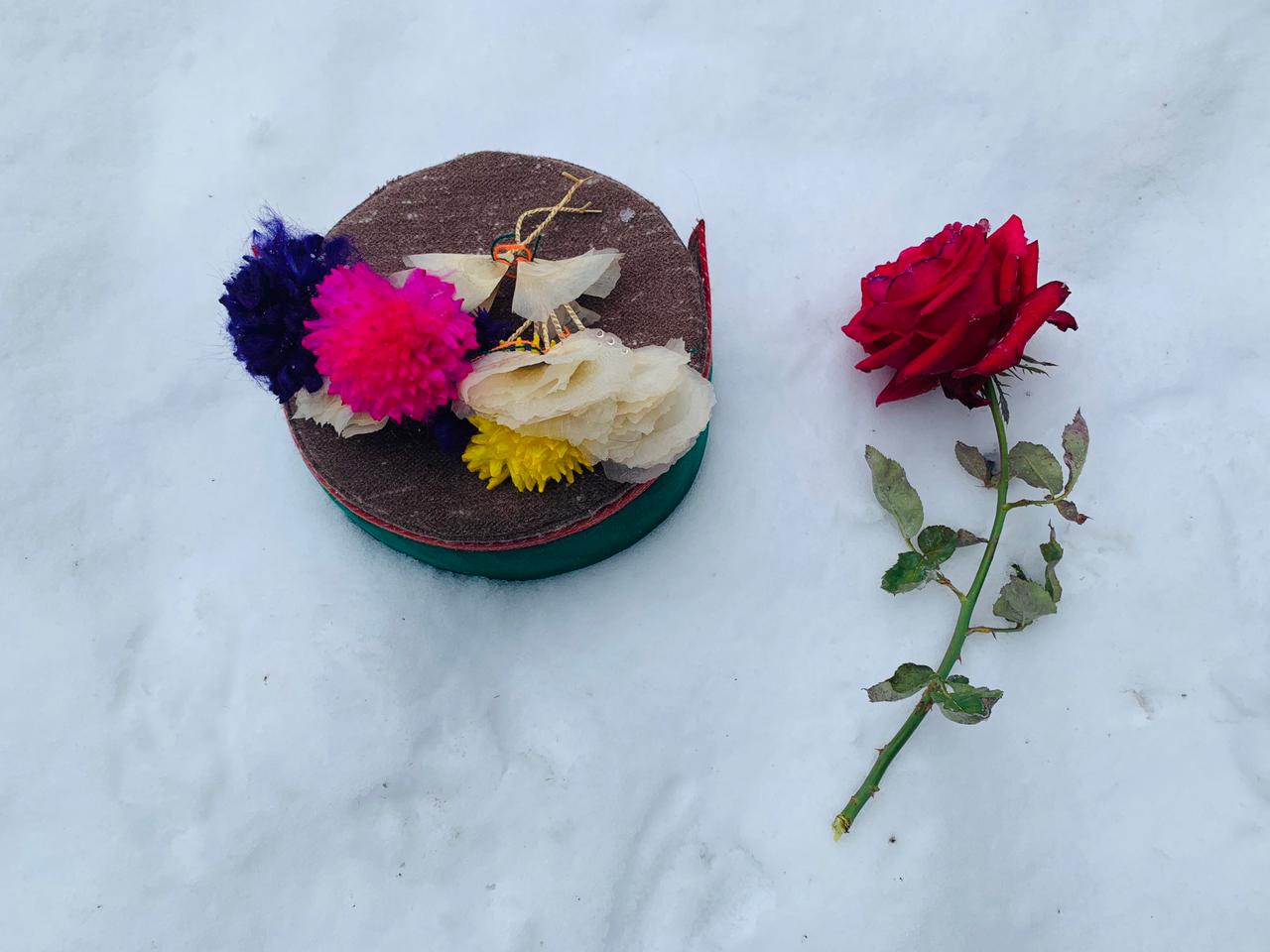
Kinnauri Tepang | Photo: Anuradha Miyan

Tepang – the Pride of Kinnaur

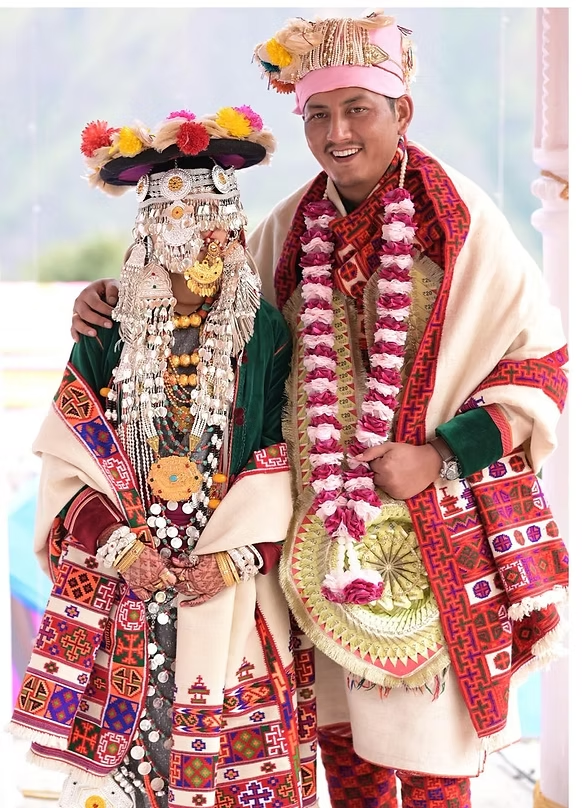
Nestled amid beautiful gigantic mountain ranges, Kinnaur is one of the most picturesque districts of Himachal Pradesh. Owing to its geographical proximity to Spiti and having been historically part of Rampur Bushahr, Kinnaur inhibits the unique cultural amalgamation of Buddhists and Hindus. One of the defining features of people living in Kinnaur is their vibrant traditional dress and the unmistakable headwear Kinnauri Topi which forms an integral part of the whole attire. The headwear is colloquially called “Tepang” or “Khunnu Tiwi” and is different from the Himachali Topis of Shimla, Kangra, Kullu, and Chamba. The design variations and the aesthetics of this headwear represent different parts of Himachal where it is worn. The Bushehri (Rampur region) cap is plain maroon in color with the same design as the Kinnauri topi, the Kulluvi (Kullu-Manali) topis have vibrant multicolored stripes, and the Kinnauri Topi has unique green velvet color and the ones worn in Kangra is a deep saffron color.

Made up of local wool yarn with velvet green stripe, it is adorned with beautiful wildflowers among which the bright white colored flower seed called “Chamakha” ( oroxyllum Indicum) is preferred among locals. The flower is not indigenous to the region and is mostly found in the lower Himachal region like Mandi, Palampur, Bilaspur, Nalagarh, etc. The usage of Chamakha flower seeds became popular in Kinnaur because of the flower’s resilient qualities – once plucked from its pod, the flower seeds don’t get spoiled and can last for years without getting dried.
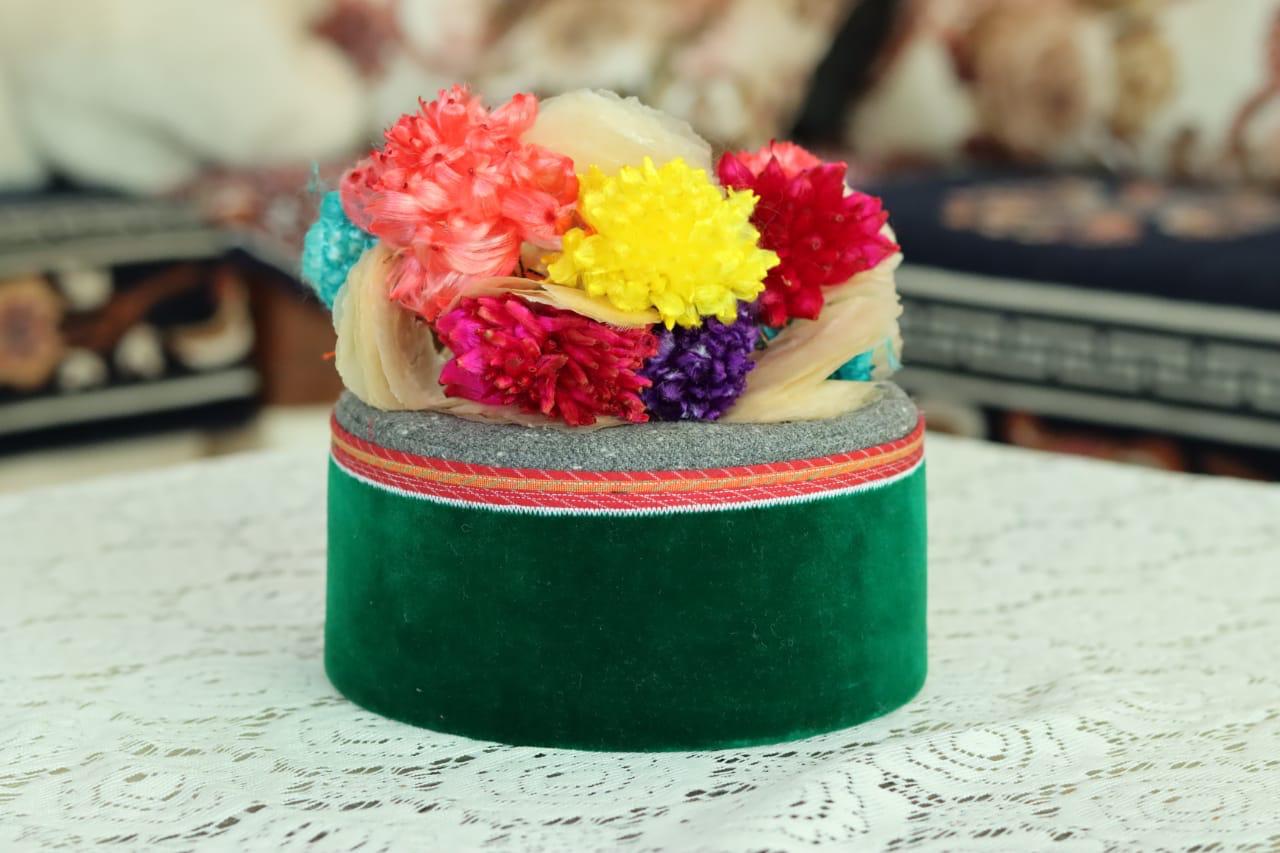
Kinnauri Tepang

The Chamakha seeds are split open from their’s pod and a bundle of seeds called “Dalang” is strung together on a green, and red thread and is fixed on the Tepang. Apart from that, the cap is also accessorized with peacock feathers, marigold flowers, or the dried petals of the rare Himalayan Brahma Kamal (Lotus). However, the use of Chamakha flower seeds as well as the Brahma Kamal is decreasing as these flowers are endangered.
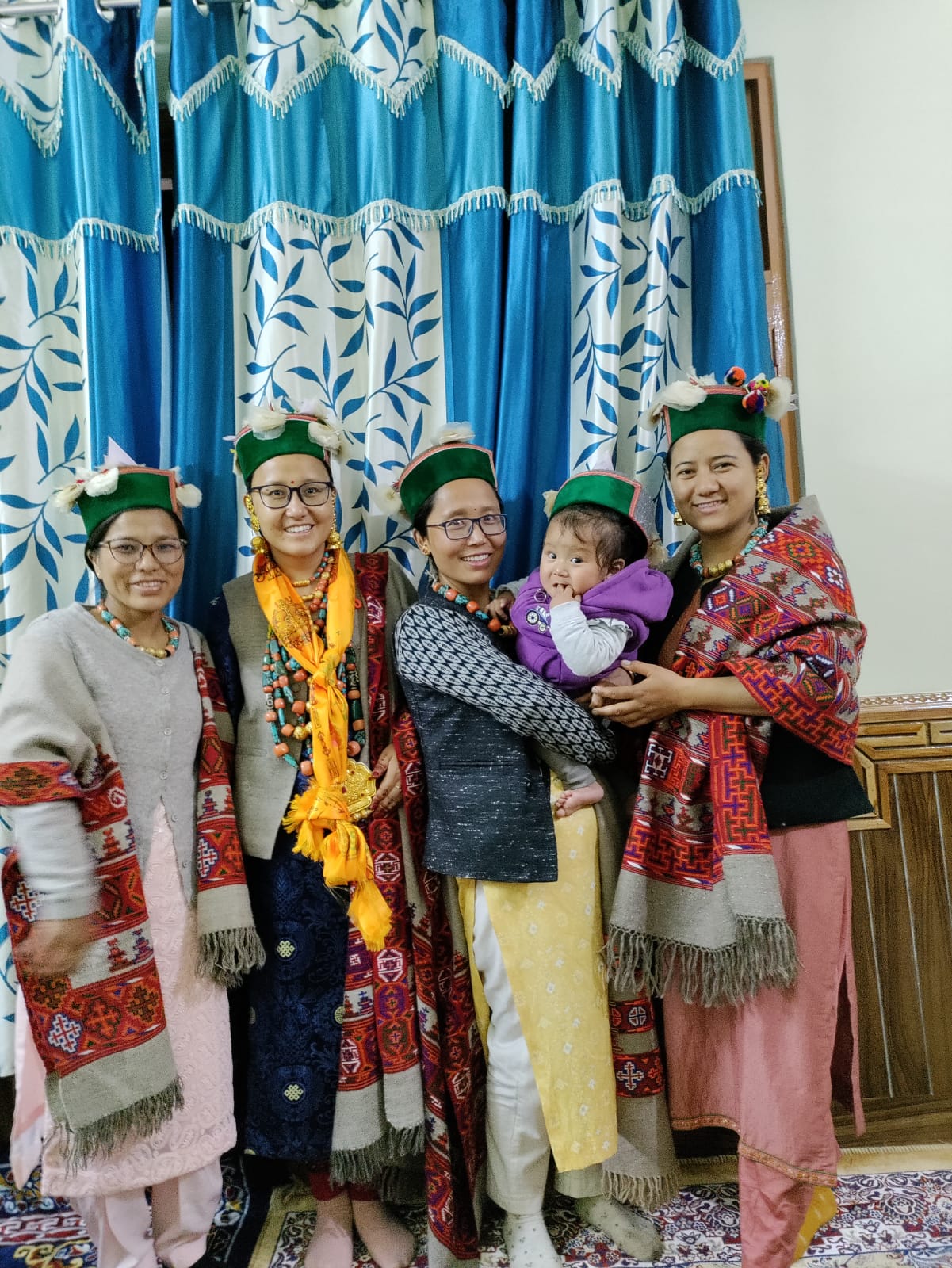
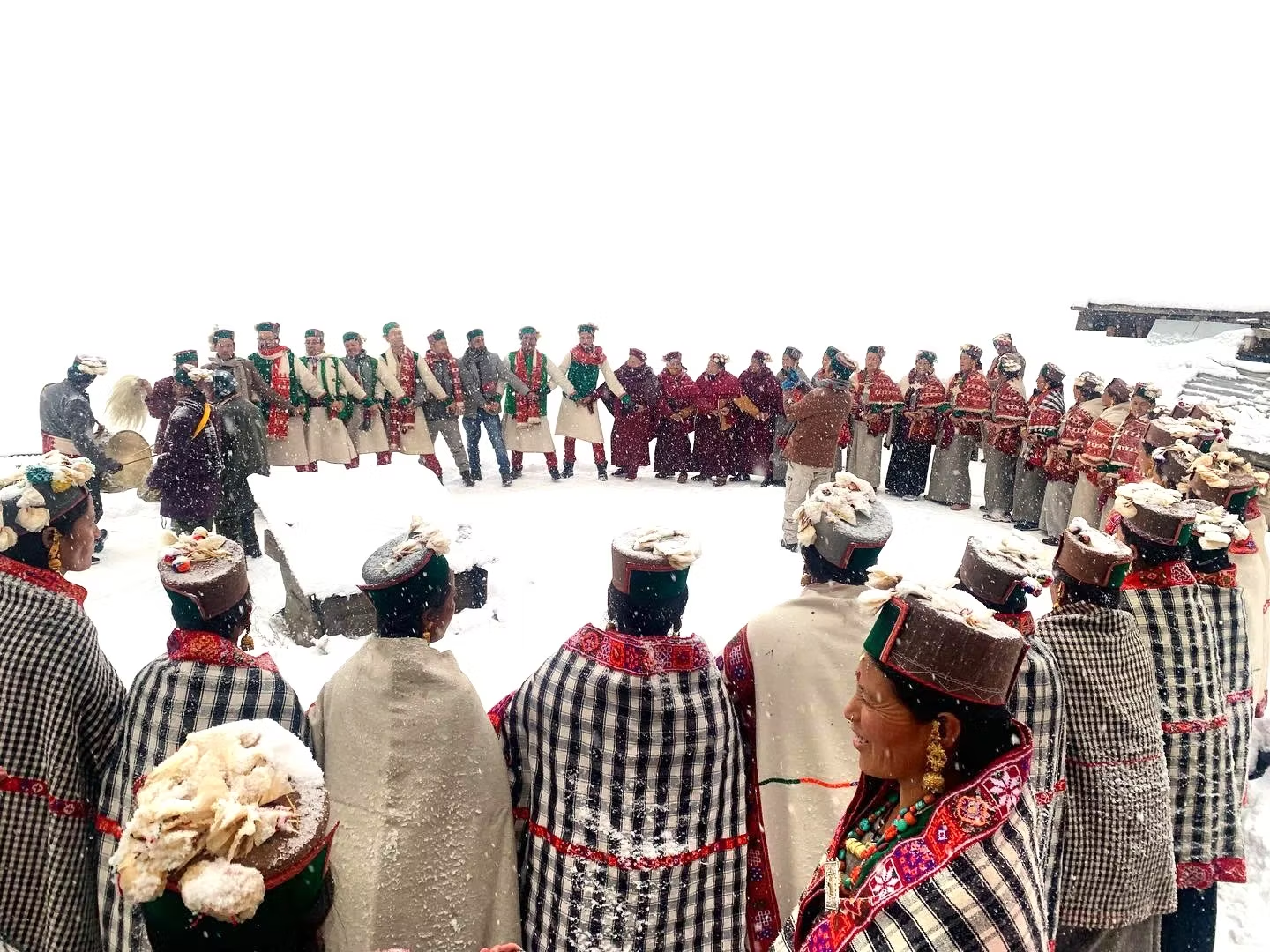
Kinnauri Tepang forms an integral part of their identity |  Photo: Tanzin Palkit

In the olden days, the Tepangs were domestically made at home by all households but the weaving tradition has become less popular nowadays and it is woven only in a few cluster villages like Leo, other parts of Hangrang valley, Pooh and Reckong Peo. Unlike Kinnauri Shawl and other traditional dresses, the handweaving tradition of Tephang disappeared among general people and is now kept alive among a handful of skilled artisans and weavers. In recent years, machine-made Topis are also getting more popular in Looms and handicraft centers in Lower Himachal. However, the difference between handwoven and machine-made topis is so stark.
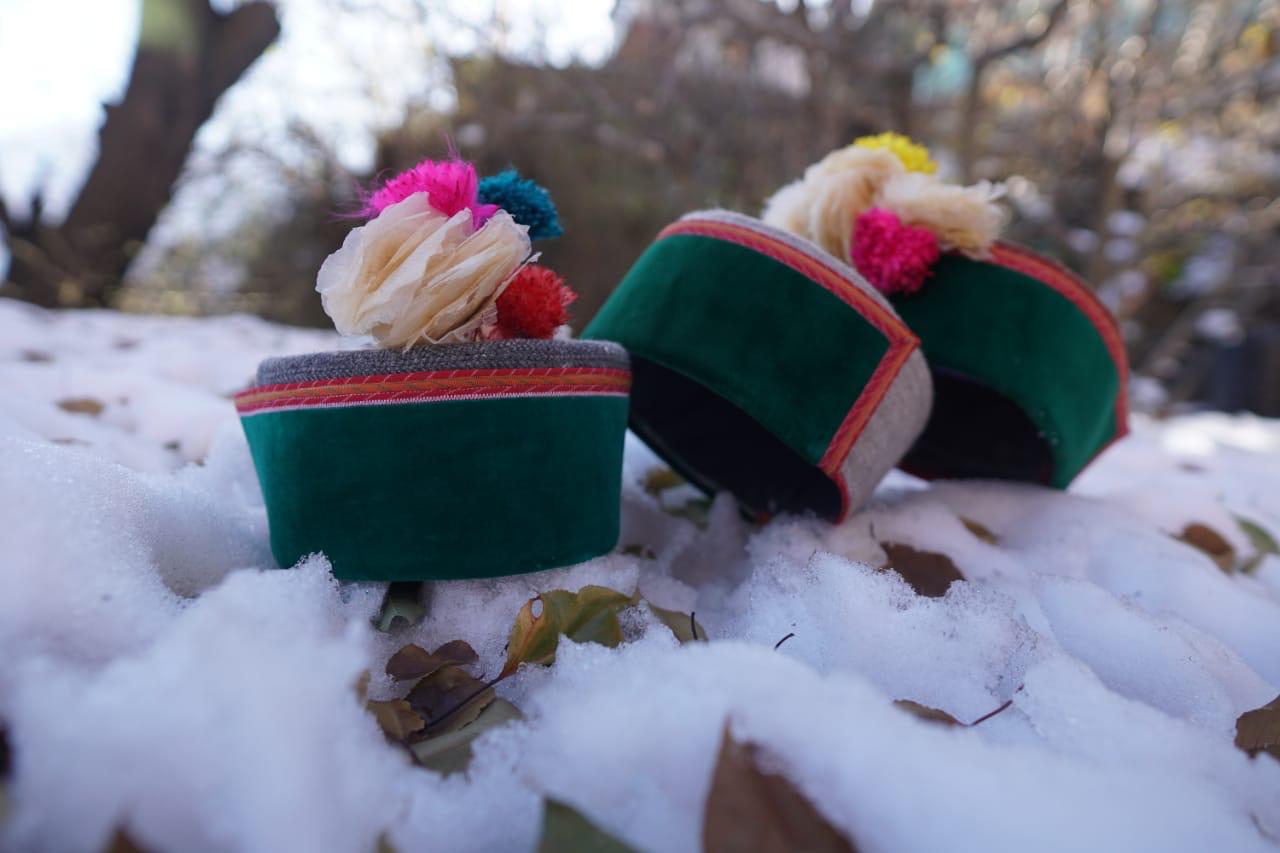
There’s a huge difference in terms of material, quality, technique, appeal,  garment feel, and usability. The handwoven Topis, although takes a long time to make and is more labor intensive, the overall usage and desirability isare higher due to warmth and durability. A topi once woven can last for years till its natural wear and tear, while the usage of machine-made topis is more popular among non-locals and tourists for it is also treated as a souvenir. The native Kinnauri people always prefer the handwoven ones for it has far more value than their materiality.

The use of Tepang is ubiquitous across all villages of Kinnaur and locals people take great pride in wearing it. The local communities lovingly refer to it as their crown, symbolizing communal pride and prestige, and they believe it upholds their indigenous cultural values. It is worn both by men and women on a daily basis and during festivals, ceremonies and occasions, people heap it with all kinds of floral adornments. There’s also a tradition of gifting Tepangs to one’s special guest and during weddings as ceremonial gifts. The use of Tepang has percolated so deeply in the collective consciousness of Kinnauris that it not only holds significant cultural value but is also seen as a defining part of their identity.

“One of the defining features of people living in Kinnaur is their vibrant traditional dress and the unmistakable headwear Kinnauri Topi which forms an integral part of the whole attire.”
1280 960 Tanzin Palkit Negi
The Sheep of Himalaya
Photo: Anuradha Miyan

The Sheep of Himalaya

Handloom and handicraft are an age-old tradition in Kinnaur (H.P) and have their roots in the ancient trade routes. The intricate designs and colorful patterns differentiate Kinnauri handcrafted shawls- making them a much-coveted textile product in India. However, the bulk of its history, symbolism, and contemporary relevance remains obscure. A history of textile production reveals interesting facts about the local environment, different modes of living, and cultural exchange. The Silk Road is the most famous trade route dating back five thousand years. Another lesser-known trade route connecting India, Tibet, China, and Central Asia is called the “wool road” which passes through Kinnaur and Kullu in Himachal Pradesh. The strategic location of Kinnauri weaving communities settled along the trade route inspired many weaving traditions across different states as well as took cultural inspiration from their trading affairs. Some of the most famous motifs and designs on the Kinnauri shawl bear a resemblance to Central Asian designs. The journey of wool trade and weaving traditions was truly iconic and drastically changed the destiny of the Himachali textile trade. Today, Himachali handloom stands amongst the foremost contributors of state revenue along with tourism and agriculture.

Traditional Kinnauri shawl and Topi worn by the bride and the groom

Growing up in Kinnaur, I saw my elders weave, knit, spin, and make yarn. Most women and young girls in my village knew how to weave and they owned the traditional weaving machine called “Khaddi”. Wool weaving and handicraft became indigenous to the region because of the cold weather conditions and women picked up the skill and nurtured it passionately. Most of the weaving, yarn-making, spinning, and knitting work happens during winter and the process is more collaborative. Since women made garments for self-consumption, it is common for one or two artisanal families to work together especially if it is a large-sized product like a carpet or a woolen quilt. I have always been passionate about handicrafts and after finishing my higher studies (MBA), the zeal was renewed all over again. I observed that although the women of my village – Labrang in Pooh tehsil of Kinnaur are skilled artisans, their products were used only locally within different villages of Kinnaur. There was no handicraft center in our village and given the difficult terrain, the market remains inaccessible to us.

I took a leap of faith and started “Sheep Of Himalaya” in 2019 with just two artisans from my village. The prime motive was to bring some visibility to Kinnauri handcraft on an international level and showcase regional craftsmanship.

Agriculture and cultivation of apples in our village orchards are primary vocations for most people but many women still rely on handicrafts as a secondary occupation to earn for themselves. When I broached the idea of building a clothing brand showcasing our traditional attire, there was a bit of reluctance from many artisans for they feared uncertainties. I took a leap of faith and started “Sheep Of Himalaya” in 2019 with just two artisans from my village. The prime motive was to bring some visibility to Kinnauri handcraft on an international level and showcase regional craftsmanship. While the artisans would weave mufflers, stoles, and shawls with vibrant Kinnauri designs and knit sweaters and socks, I would find market avenues for us. For me, the process proved a bit challenging as there were no established Kinnauri brands and our products were often mistaken for Kulluvi products which have better brand visibility. I took to social media to build a unique handicraft brand for Kinnaur and to connect with people who appreciate the labor of love.

Photo: Anuradha Miyan

Over the years, the enterprise found its feet as more artisans joined us in our journey from neighboring villages like Spillow and Kanam. We are now a proud all-women’s team with twenty-five artisans who are involved in the handcrafted and handloom business during our spare time. Kinnauri handicrafts and handwoven attire require dexterity that can be perfected only through patience and meticulous care while weaving.

To make a shawl, each thread is carefully pulled through the reed (part of the weaving loom that resembles a comb) and installed on a loom that forms the base for an entire textile to be woven. It is one of the most complex and laborious processes that an artisan undertakes. Given the complexity of designs, it can take up to three months to finish a shawl and it can cost around twenty-five thousand rupees for a single shawl. Widely known for their intricacy and finesse, Kinnauri shawls are unique and reflect indigenous designs. We use five key colors to design our attires – red, white, yellow, green, and blue which symbolize five elements of nature- earth, water, fire, air, and space. The elaborate geometrical and floral designs have strong symbolism and many of the motifs woven have religious significance like the representation of stupas in the border design of a shawl. Since many families are into livestock rearing, raw wools are sheared locally from goats and sheep for making yarn and weaving but in recent times, we have also started procuring Angora and Merino wool from Ludhiana.

Photo: Anuradha Miyan

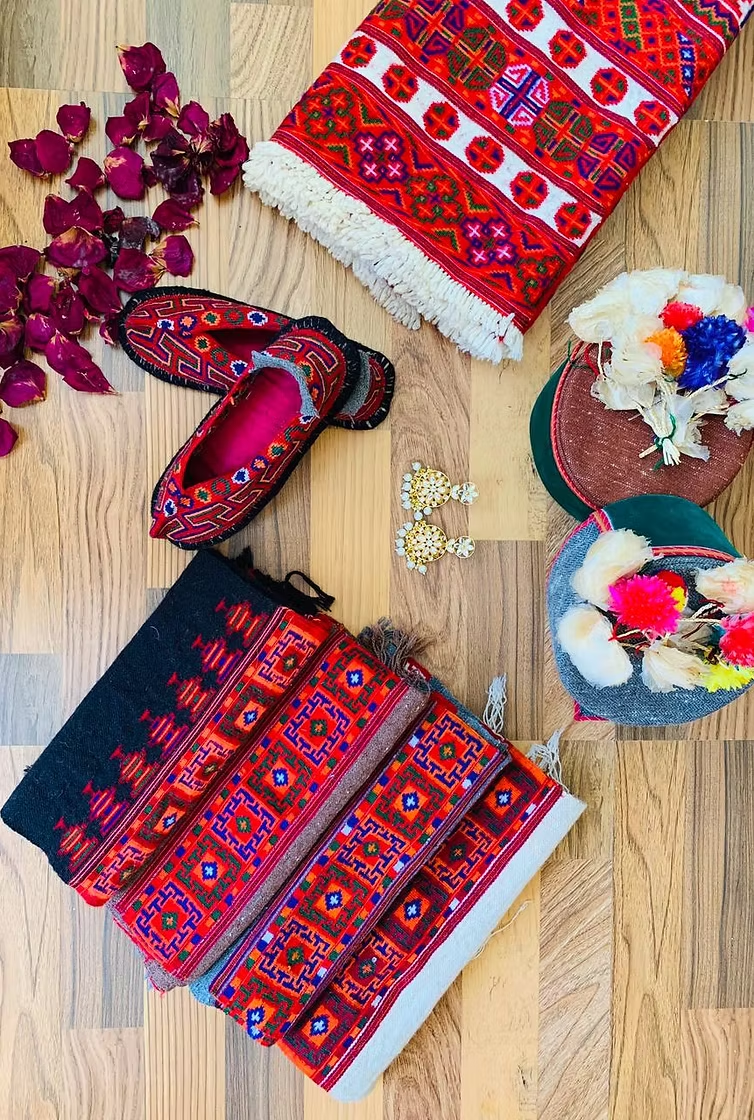
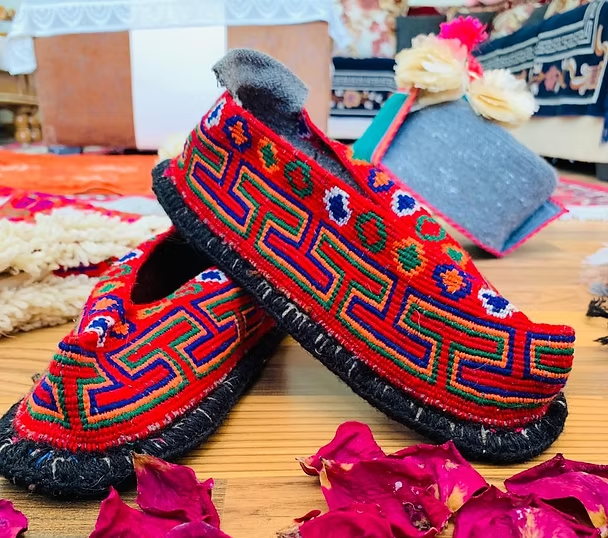
Balzanu Pona or Pullans (grass slippers) is another traditional wear that is slowly disappearing from daily use and in fact, there’s only one artisan left in my village who can skillfully make it from scratch! The footwear is made out of fibers procured from the bark of wild bushes. The upper portion of the Pullan is handknitted with goat wool and is adorned with colorful patterns while the lower portion is made of hemp or Bhang fiber (Cannabis). We make all kinds of traditional wear including Kinnauri shawls, stoles, mufflers, sweaters, Pulla (socks), and Kinnauri topi (hats). It didn’t take us long to sell products online via Instagram/Facebook and soon we were getting international orders! We further expanded our product range and started making children’s wear, cushion covers, diary covers, and pouches – all while retaining our unique Kinnauri designs.

All the women artisans who are associated with us rely primarily on their traditional looms and work from their homes which at times, proves a bit challenging as they have to juggle agricultural work, and domestic works at home and are able to undertake handicraft works only during their spare time. I have been pleading with the H.P handicraft and handloom department in Shimla to open a handcraft center in Kinnaur so that it is easier for weavers and other artisans to organize for a mutually exclusive vision, gain training, exposure, procure raw materials, and boost the entire value chain. We have capable and hardworking artisans who are passionate about their work and with the right market opportunity and assistance from the government, they will soar high.

1440 633 Anuradha Miyan