Spiti

Microbial intervention in Himalayan Dry Toilets
Distribution of Compost Booster in Lahaul

Microbial intervention in Himalayan Dry Toilets

As we meandered through the narrow streets of Ribling, Tandi, Sumnam and Ghoshal villages in Himachal Pradesh’s Lahaul district, we saw the indelible change of modernisation that had reached even the remotest corners of India. The cemented pavement had replaced the old mountain roads and the concrete houses were replacing the traditional wood and mud houses. In this new emerging transformation, small two-storey mud-houses outside people’s houses stood as a mysterious testament to the old ways.

In 2017, we stayed at the Center for High Altitude Biology (CeHAB)’s research centre at Ribling in Lahaul and it was during those field expeditions to the cold deserts in the Western Himalayas that I first came across the concept of ‘dry toilets’.  Just as we were getting increasingly inquisitive about these small mud structures, we ran into Mr. Jagdeep Katoch, one of the residents and a former school principal in the village. He patiently explained to us that these structures are called ‘ghop’ – traditional dry toilets used  by communities in the cold arid zones like Lahaul, Spiti and Ladakh  to uniquely manage human waste in the region.
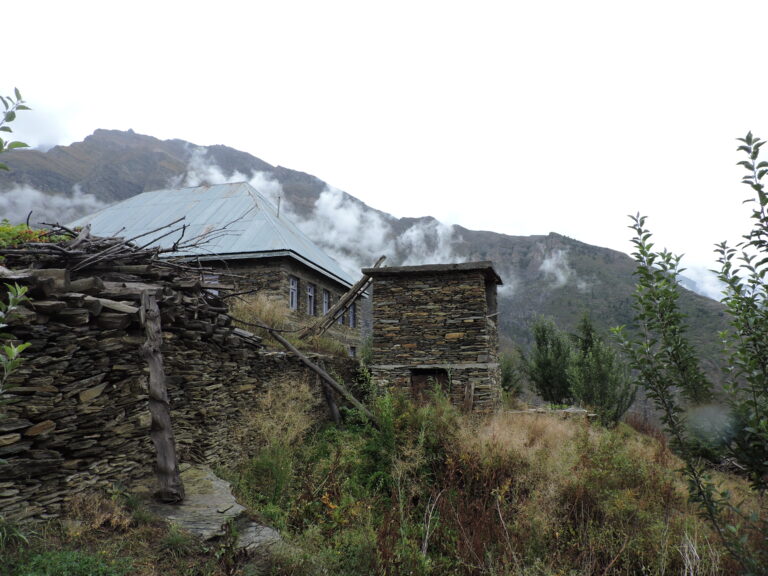
Traditional Ghop in Lahaul

These two-tiered structures have an upper section, which is attached to the living room of the house; and the lower section where night soils are collected. After every use, a dry mixture of wood chips and ash locally called ‘fot’ is used to cover the faeces. The heap of the night soil is manually taken out every 6 months and left in the fields to mature. Thus, the compost is rich in nutrients and is a very useful input for agriculture in the region.

These regions also receive very less precipitation throughout the year making water availability extremely difficult and that’s why it was intriguing to observe how people in these remote villages sustainably manage human-waste that’s beneficial for their agro-ecosystem. In the Himalayan cold desert, these dry toilets (ghop) help conserve water during freezing winter and sustain organic farming with manure supply. When winter sets in, people increasingly depend on dry toilets, and later in the year, this decomposed night soil is used as manure for farms.

For generations, locals have relied on naturally-occurring bacteria to degrade the wastes. However, the practice comes with several disadvantages as due to extreme cold weather conditions, there are very few microbes that can function at such low temperatures.  As a result, the quality of the compost is not as good as one would expect.

Additionally, the influx of tourism and introduction of modern septic systems has brought change in the regional sanitation practices with more people resorting to pour-flush toilets. This has not only brought tremendous change in age-old practice of using dry toilets, night soil composting, but has also put the availability of water under severe stress in already resource strained places. Dr. Sanjay Kumar,  (Director, CSIR-IHBT, Palampur ) Chief Scientist and an ardent advocate of bio resource has always inspired us to ground our work, research around social issues and due to his guidance and support , we found the best opportunity to address the issue of solid waste management in high Himalayan regions by scientifically intervening and facilitating faster degradation of the night soil through Compost Booster- a microbial formulation for rapid degradation of night soil to manage human waste in cold desert areas.
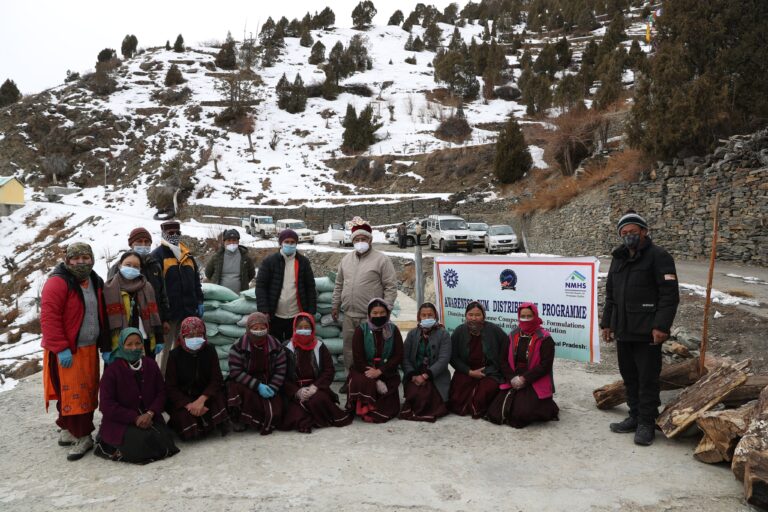
Distribution of Compost Booster in Lahaul

The decomposition of any organic biomass is dependent on its microbial population.In Lahaul-Spiti, due to prolonged winters with sub-zero temperatures the decomposition of night soil is often slow as the first phase of composting- the mesophilic bacteria phase- crucial for decaying the organic material are inactive in this temperature range. At CSIR-IHBT, Palampur, our team at High Altitude Microbiology lab, Department of Biotechnology, formulated an indigenous bacterial consortium from the night soil compost’s different maturity phases. These cold- tolerant bacterial populations remain active even at such low temperatures up to four degree Celsius and produce enzymes that speed up the process of biomass degradation. The bacteria used for this purpose also have plant growth promoting attributes so that the end product is enriched compost high in nutrients and possess plant growth promoting bacteria.The financial aid from National Mission on Himalayan Studies (NMHS) by the Ministry of Environment, Forest & Climate Change (MoEF&CC) were crucial to enable key research on ground.

The sample of compost boosters were distributed among a few households in Lahaul for trial in 2018. We asked the villagers to use a handful of the sample in place of fot and the feedback was quite motivating. They observed that the mixture helped degrade the night soil better and reduces the odour as well. Mr. Devi Singh of Mooling village keenly shares that  earlier he used to collect 20 “Kiltas” (baskets)  to collect the degraded night soil compost but after the using the Compost Booster, the biomass was degraded so well that he collected only 10 Kiltas which is of much better compost quality and there’s reduction in foul smell too.

With increased demand and product popularity, we conducted awareness drives, interaction sessions and training programmes across five gram-panchayats  in Lahaul and Compost boosters were distributed to approximately 160 households in December 2020 and January 2021. In future, we endeavour to reach out to communities across the high himalayan landscape including Spiti and Ladakh for similar intervention.

Contact for queries:
Rakshak Kumar
Scientist & Asst. Professor (AcSIR),
High Altitude Microbiology Laboratory (HAM-LAB), Department of Biotechnology, CSIR-Institute of Himalayan Bioresource Technology, Palampur-176061 (HP)
Tel: +91 1894 233339, ext. 441
Mobile: +91 98829 86355
E mail: rakshak@ihbt.res.in/ rakshakacharya@gmail.com 
2560 1153 Dr. Rakshak Kumar
Spiti Valley Architecture
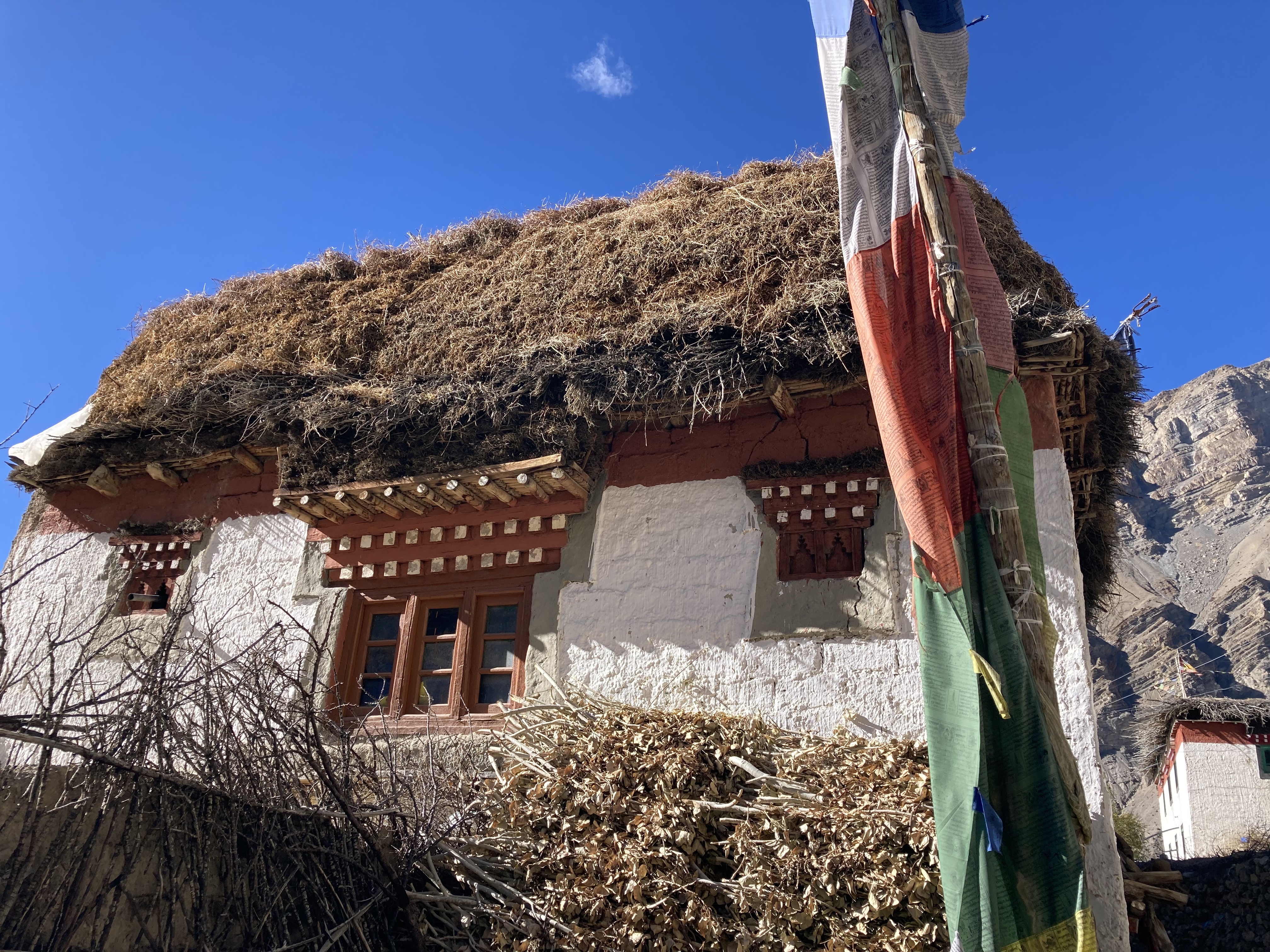
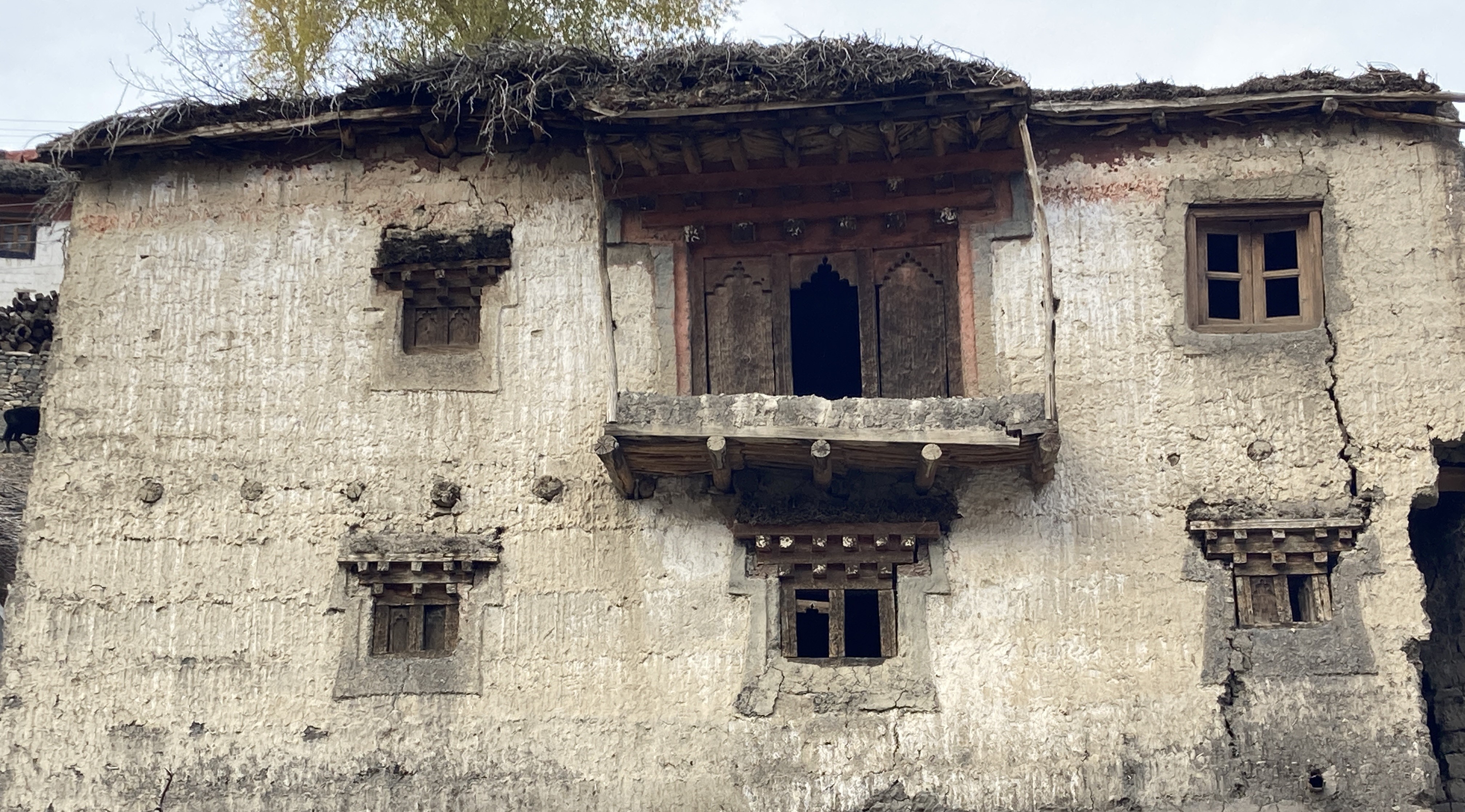
Antique home in Mane village, Spiti | Photo: Kimberly Moyle

Spiti Valley Architecture

Spiti valley’s villages are home to a relatively intact vernacular architectural tradition. Rammed earth Tibetan-style architecture dots the awe-inspiring landscape through a series of scattered settlements. The intelligent bio-climatic design has enabled the local people to inhabit this harsh landscape for thousands of years. Surrounded by snow capped peaks on all sides with the Spiti river meandering along the wide river valley, the region has gained a reputation for stunning scenery and is now a popular tourist destination. The influx of tourism however is bringing rapid changes both economically and culturally. Economic development is welcomed, however, the loss of precious cultural heritage through the destruction of traditional architecture is of concern.

The traditional architecture of the region evolved to make use of abundantly available resources for construction along with an in-depth understanding of their thermal properties. Materials were combined with intelligent design to ensure the creation of living spaces that provided optimum thermal comfort to residents throughout the changing seasons. All of which required a thorough understanding of the natural world around them. The shift towards modern industrial systems of construction can be seen as a rupturing of that direct connection with nature. Construction materials are now purchased from stores and sourced from distant lands. The knowledge on how to use them is sought from architects and engineers. The traditional wisdom of elder Master Artisans is on the brink of being lost as people transition to the industrial system. Now is the time to reflect and consider whether it is the right path.
Architecture is an expression of culture and in Spiti Valley, it reflects Spitian culture whilst identifying their inclusion in a much larger Tibetan ethnic community scattered across the Trans Himalayas in the region now known as India and Tibet. Historically, however, for almost 900 years they were connected as part of the great Tibetan Kingdom of Guge.

Materials & Construction Methods

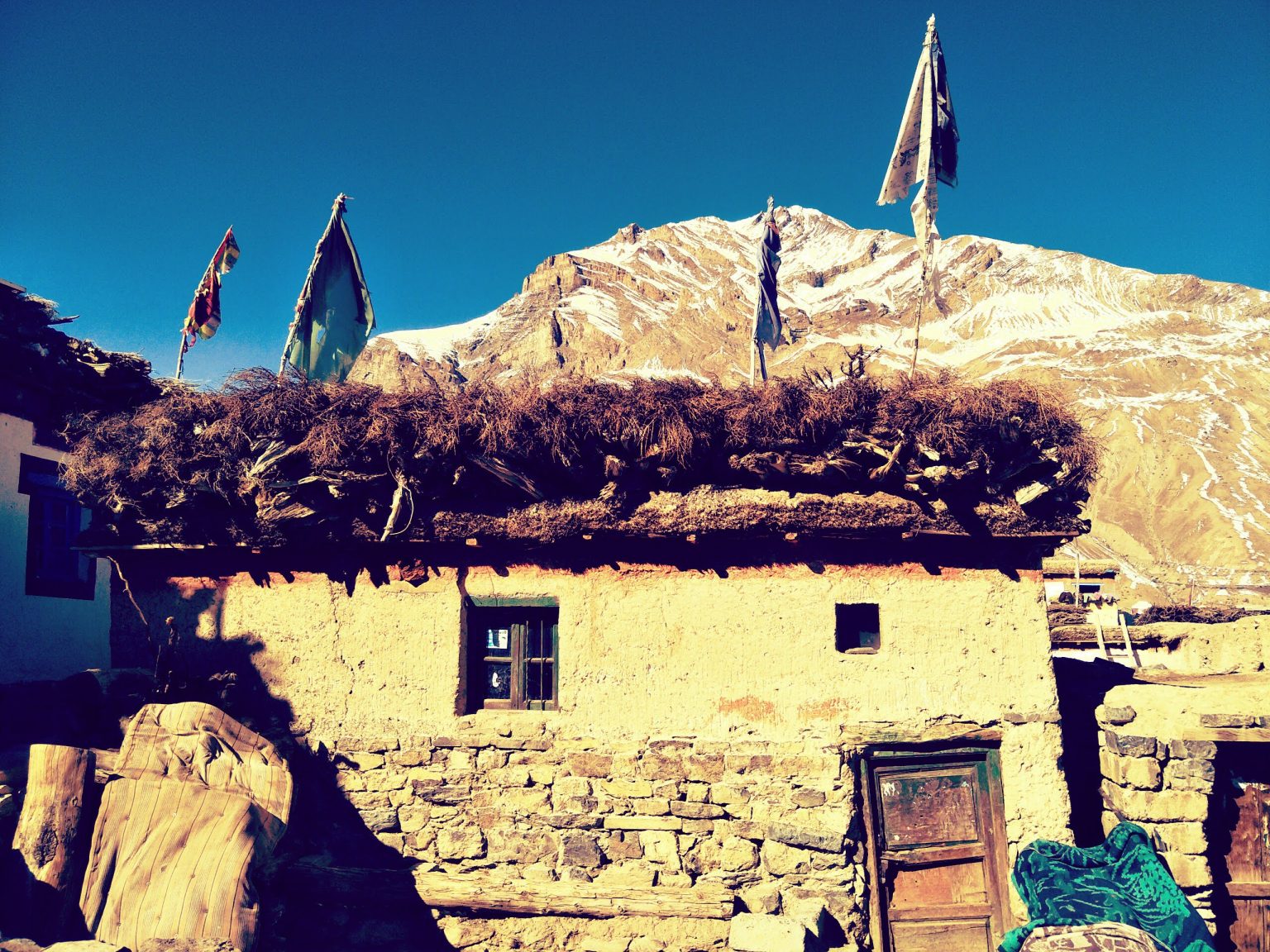
Spiti Valley is classified as a hyper-arid desert wherein precipitation is predominantly received as snowfall in the winter. Trees are scarce and as a consequence timber is used sparingly in construction. Stone and soil are found in varying abundance and are employed using different construction techniques according to their prevalence in a specific location. In the lower Spiti Valley, in Nako village, stones are prolific, and timber is more accessible from the forests of nearby Kinnaur. Here homes are typically made of stone masonry with mud mortar and often incorporate ornate timber balconies or sunrooms. In the villages of the upper regions of the valley such as those in and around Kaza rammed earth is dominant and the use of timber is much more frugal. Pin Valley experiences higher levels of snowfall and as such their homes feature dry stone masonry on the ground level. To prevent damage to the home from snow melt. The arid desert climate in combination with scarce timber availability has resulted in the use of flat mud roofs across the entire region. Rammed earth as a construction method requires very little water compared to other earthen construction techniques such as adobe or cob, It is no coincidence that this is the favored technique in this desert region. The use of adobe for the building fabric can also be seen, though infrequent as it is recognized as being more labor-intensive.

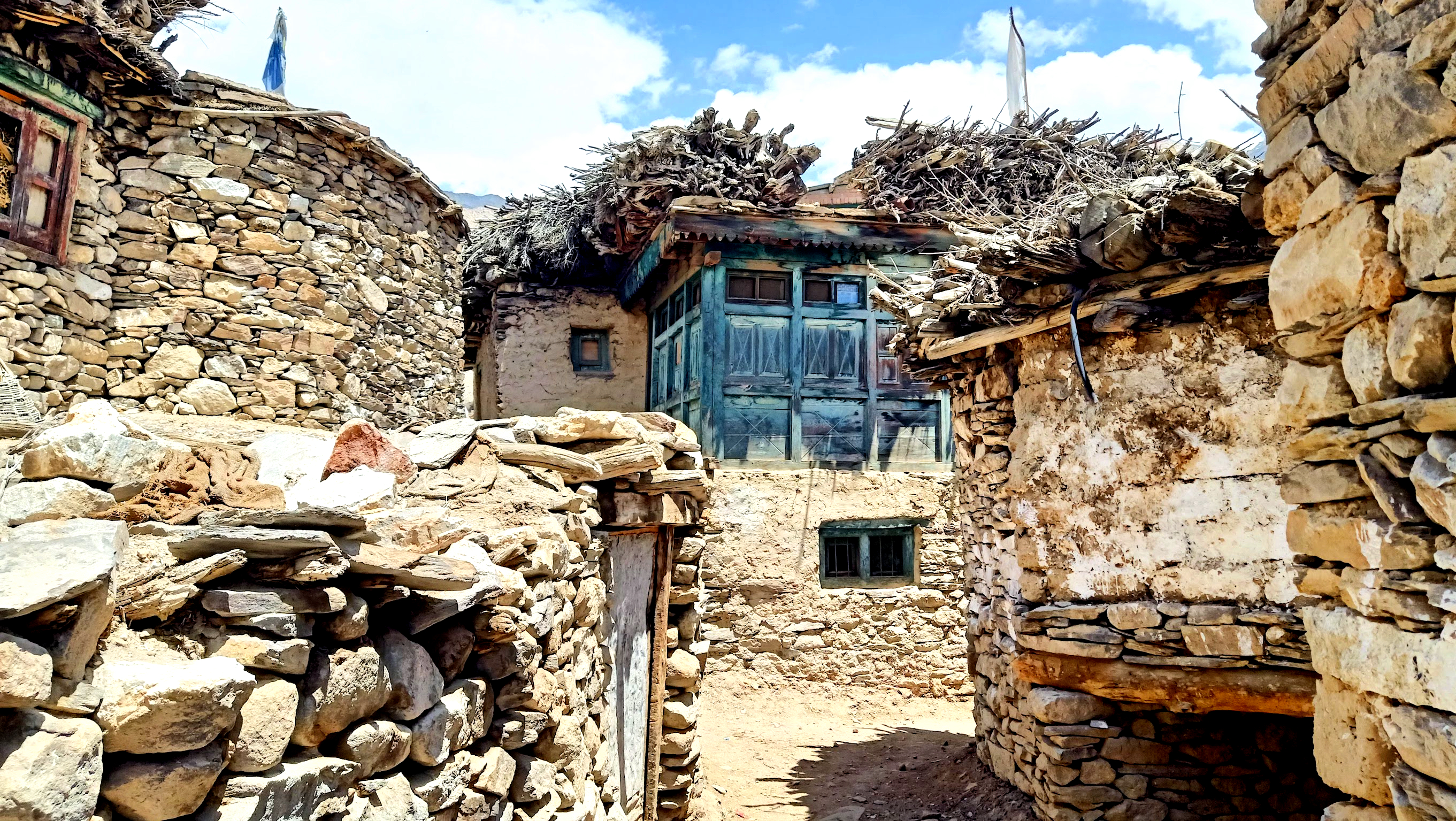
View of a narrow alley in Nako, Kinnaur | Photo by Kimberly Moyle

Seasonal Migration Indoors

Typically homes are large and spread over multiple levels. Seasonal migration within the home occurs as an adaptation to the extreme climatic variation experienced between summer (+30°C) and winter (-30°C). In the summer months, families inhabit the upstairs portion of their homes. Larger windows on this level allow for the penetration of the bright summer sun and views of the fields outside. A large room known as a Makang (summer room) is the summer socializing space where cooking and entertaining take place side by side.  Ceilings are typically higher and families may have separate rooms for sleeping.

In the winter the entire family migrates downstairs to one room known as the Yokang (winter room). For the entire winter period, the family will sleep, socialize, cook, and eat together in this one room. Cooking and heating occur simultaneously on a Tandoor that takes center place in the room.  Efficient use of scarce timber resources for heating is essential and this practice has evolved in response. Cohousing with animals in adjacent rooms is another design aspect that takes advantage of the natural warmth produced by the animals, generating warmth inside the house whilst at the same time providing shelter and protection for the animals from the extreme climate outdoors.

Bio-Climatic Design

The need to survive the harsh winters in this remote location has seen the evolution of a highly intelligent system of bio-climatic design. Traditional homes have been constructed with a deep understanding of the regional climate as well as the specific site conditions. Certain design elements can be seen replicated in homes throughout the entire valley. Where possible homes are located on hillsides with a south-to-southwest facing orientation in order to take advantage of passive solar gains. Winter rooms have lower ceilings to ensure the precious heat generated remains close to the inhabitants. In the oldest of homes, winter rooms do not have any windows, instead, they would have a single ventilation point in the ceiling through which both light and smoke would enter and exit respectively. In more modern homes small windows are common. The northern aspect generally receives cold winds, as such openings on this wall are avoided. Wall thickness is generally between 18 and 24 inches. The thick thermal mass provides a thermal lag preventing the extreme cold from being transmitted inside the home.

Case Study of a 150-year-old Home in Kwang Village, Spiti

Located in Kwang village on the southern bank of the Spiti river directly opposite the main town of Kaza Sonam Tashi’s ancestral home provides an excellent example of intelligent bio-climatic design. The following case study will be used to demonstrate key elements incorporated to ensure the highest level of thermal comfort for the occupants.

The Yokang is located in the center of the ground floor and is insulated from the extreme cold outdoors on all four sides by a series of rooms. On the northern side is the Thaah, a cavity of a few meters occupying the full height of the home. This is utilized as storage for fodder such as dry grass and crop residue. Serving the dual purpose of feeding the livestock through the winter whilst also providing excellent insulation to the Yokang. The western side of the house was used for housing livestock during the winter. Strategically chosen according to the westerly sun trajectory, providing warmth for the animals, in turn, the warmth generated by the animals provides yet another layer of insulation to the inner Yokang.

The main entrance and stairwell to the first floor are housed on the southern side as is the Chak-sa the traditional dry toilet system, with the catchment on the ground floor in a sealed room accessible only from the exterior of the house. The eastern side incorporates a small room for making aarak – the local alcohol made from barley, next to which is a granary room accessed only from a hole in the first floor above, it is utilized for storing barley grains. To the south of that lies another small room used as a nursery for young livestock. Being surrounded on all sides the central Yokang does not have any windows to the outside. The only ventilation comes from a single hole in the center of the

ceiling used for both daylighting and ventilation for the tandoor. Before the introduction of modern time keeping devices, the beam of light projected through the ventilation shaft was also used to tell the time. Limited ventilation to the exterior ensures the least amount of heat loss.

The first floor is home to the Makang and the Zot (store room).  Both of these rooms are located on the western side. The zot on the northwestern corner is traditionally used for storage and the Makang on the southwestern side as a summer living room and kitchen. The area directly outside the southwest room was also used as a kitchen with a cavity for storing dried animal manure, a precious fuel source for cooking and heating along with timber. The dry toilet room is located on the southeast corner of the house. On the eastern side running between the fodder storage and the Chak- sa (dry toilet) is the Kanmo, a covered sitting area with the western side fully open to the uncovered central courtyard. This space was often used for recreation, to enjoy the warm summer sun, for drying grains, and for sleeping outdoors on warm summer nights.

Development & Change

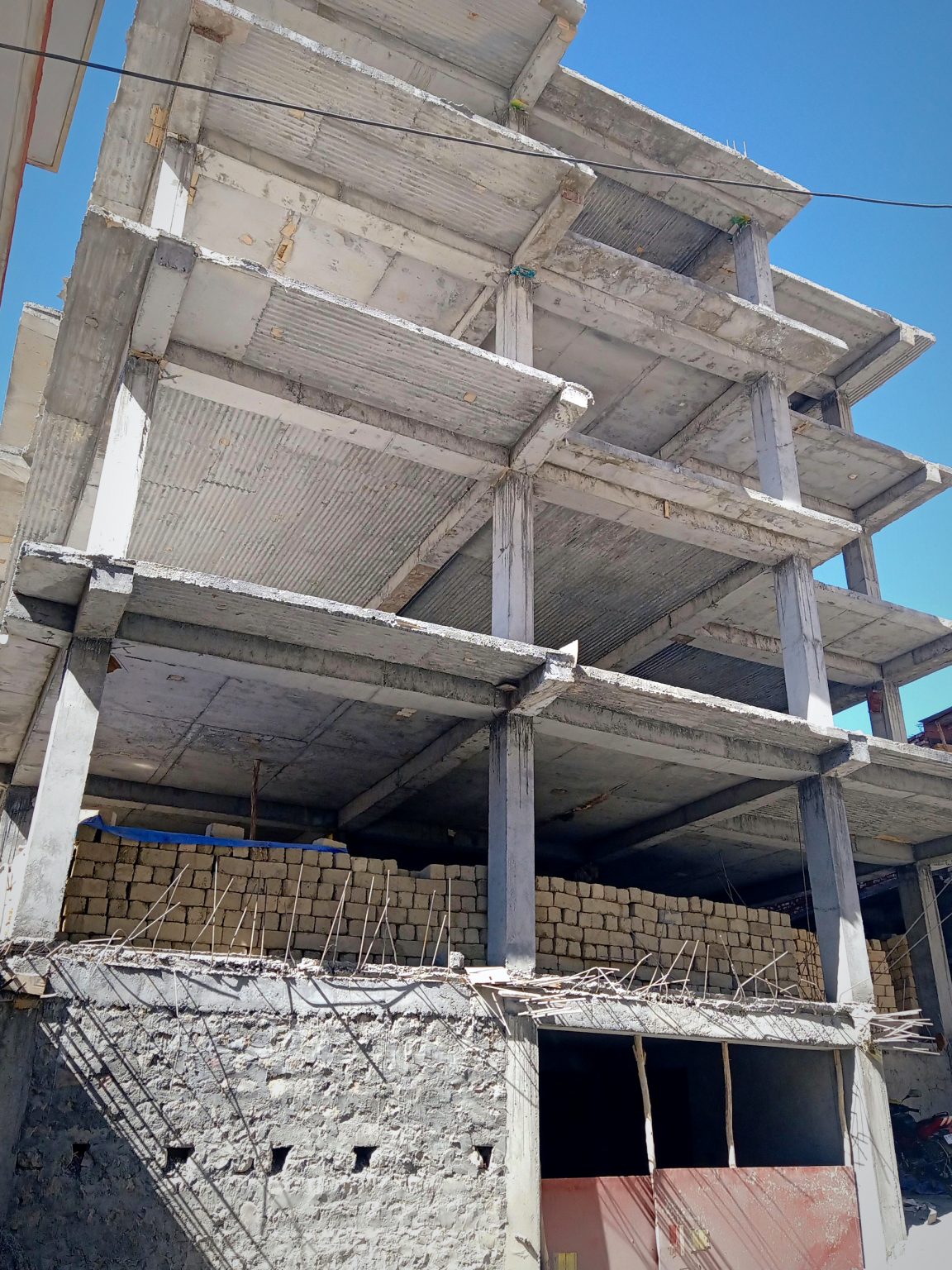
Despite having such a sophisticated and rich architectural heritage there is currently a mad rush for modernity that is taking place in Kaza the main town in Spiti. A reinforced cement concrete (RCC) home is viewed as a sign of social mobility, and cement plasters are a fashion trend. The last five years have seen significant change throughout the valley. The tourism sector is booming. So is the construction industry as people race to take advantage of the short but hectic summer season that at its peak struggles to cater to all of the tourists passing through. In Kaza the main town, traditional earthen homes are being torn down and replaced with multistoried RCC buildings. Pride in traditional architecture is being lost as some desire to show their success and social mobility through their capacity to build a modern ‘Pukka’ Ghar or Hotel just like those in the cities.

Most people are all too aware of the unsuitability of RCC structures to the extreme cold. This has led many to a hybrid system with an RCC frame and mud block infill. However, the durability of RCC under extreme climate is questionable. Already cracking and powdering of cement are visible on areas exposed to freeze and thaw cycles of snowmelt. This leads to the question: what if this grand experiment with cement fails? Where will all of that waste material go in this pristine, yet fragile mountain landscape? One of the most astounding aspects of traditional architecture in Spiti is its recyclable and biodegradable nature. It is normal for an old house to be torn down only for all of the materials to be reused once again in the new house. Rammed earth is considered to be even stronger the second time around. In the dry climate of Spiti even Tillu  (timber beams ) and Thap, the shrubs used in the flat mud roofs remain in good condition even after 60+ years of use, and may be reused in the new build. Even if they can’t be they offer a good source of fuel for the fire. Nothing is wasted.

Sustainable construction with a low ecological footprint was mastered by the people of Spiti centuries ago. The world has a lot to learn from them. Sadly, as the younger generation moves towards industrial materials and hybrid systems the traditional wisdom honed over centuries and handed down over generations is at risk of being lost. Now is the time to learn from the experienced elders and ensure this precious intangible cultural heritage remains alive and not just a pretty picture captured in vintage photos of a time long ago.

RCC based construction in Spiti | Photo by Kimberly Moyle

References
Auer, C.E., 2017. Measure for measure: Researching and documenting early Buddhist architecture in Spiti. Revue d’Etudes Tibétaines, 41, pp.181-201.
Joshi, P., Phartiyal, B., & Joshi, M. (2021). Hydro-climatic variability during last five thousand years and its impact on human colonization and cultural transition in Ladakh sector, India. Quaternary International, 599, 45–54. https://doi.org/10.1016/j.quaint.2020.09.053.
Sharief, A. et al. (2022) “Landscape use and co-occurrence pattern of snow leopard (Pantherauncia) and its prey species in the fragile ecosystem of Spiti Valley, Himachal Pradesh,” PLOS ONE, 17(7). Available at: https://doi.org/10.1371/journal.pone.027155

4032 2235 Kimberly Moyle
Kinzin Racho

Kinzin Racho

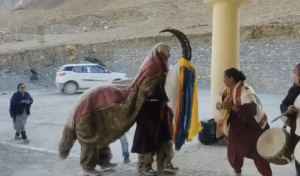
Watch a 200-year old ritual performed in Rangrik village on the third day of Spiti Losar (Spitian New Year) remembering the village deity who appeared as a magnificent ibex. Kinzin Racho Halema meaning, the splendid horns of the ibex, is the song sung across Spiti valley in the first week of the Spitian New Year.

स्पीति लोसर (स्पिटियन नव वर्ष) के तीसरे दिन रंग्रिक गांव में एक शानदार आइबेक्स के रूप में प्रकट हुए गांव के देवता की याद में मनाया जाने वाला 200 साल पुराना उत्सव देखें। किंज़िन राचो हलेमा जिसका अर्थ है, आइबेक्स के शानदार सींग, स्पिटियन लोसर के पहले सप्ताह में गाया जाने वाला गीत है।

Singer: Yangchen Dolma
Additional footage: Tanzin Thinley and Kesang Chunit
गायक: यांगचेन डोल्मा
अतिरिक्त फ़ुटेज: तंज़िन थिनले और केसांग चुनिट

1200 702 Himkatha
Spiti’s Handwoven Traditional Clothes

Spiti’s Handwoven Traditional Clothes

Clothes and identity are closely related: traditional clothes of a region reveal a lot about its geography, physical environment, climatic conditions, and cultural practices. The high altitude and cold weather conditions in Spiti have led to distinct clothing attributes of its people. Since most of the families are agro-pastoralists, the livestock people breed gives different kinds of wool like yak wool, sheep wool, and goat and that forms the natural source for most of the attire worn by the people. In the olden times, people wove handcrafted attires and ornaments from scratch but with increasing access to market and trade, wide varieties of fabrics and garments are available and the clothes designs are adapted with time. Let us share about some of the traditional clothes of the region:


Spitian Ghoey | Photo: Rabhi Kunga

1. Reygoi or Ghoey
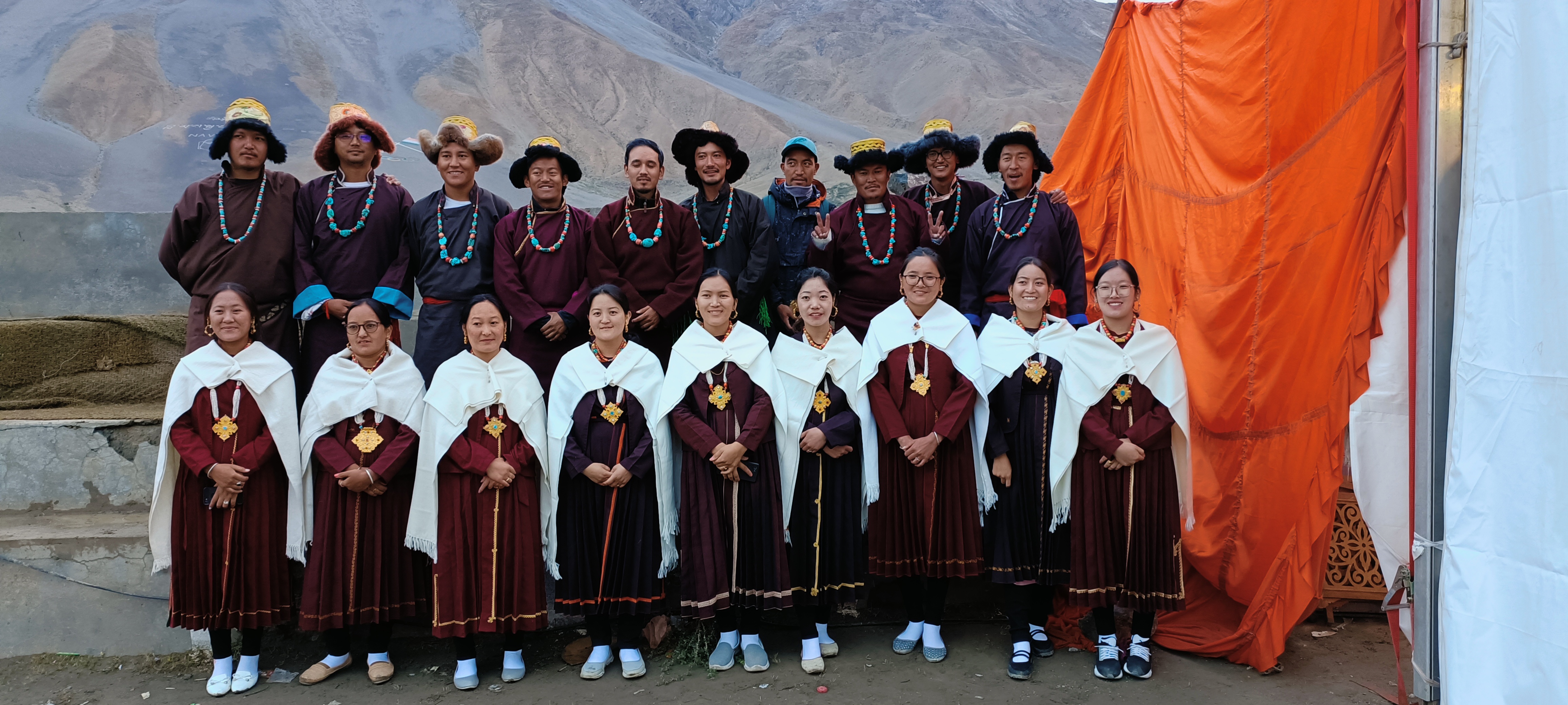
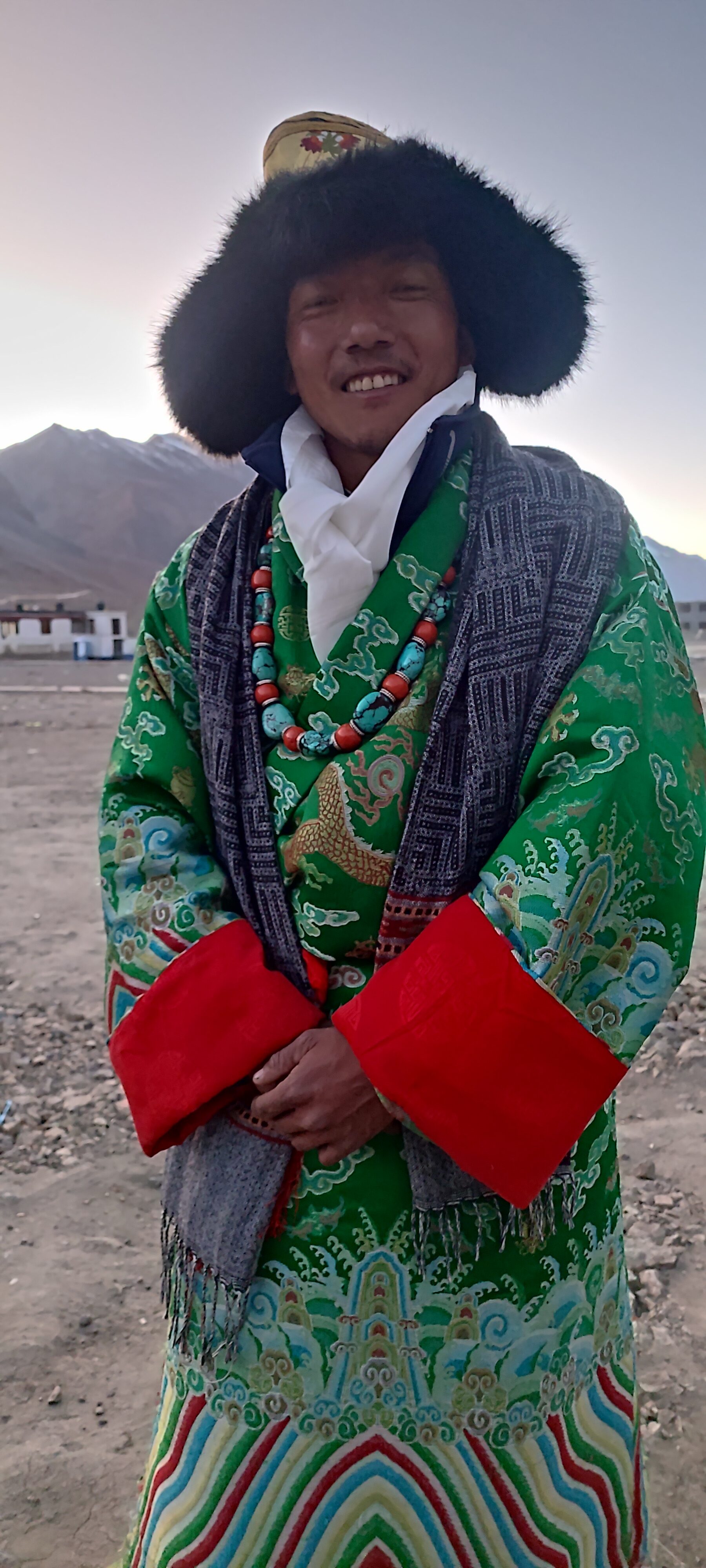
Ghoey is a thick full-length robe worn by Spitian men. In the olden days, men would wear Ghoey made up of woolen material but with time, robes of thin fabric like cotton also became popular which is called Rey (thin cloth) ghoey (to be worn). The style of the robe resembles the Mongolian robe which overlaps on the right side and is buttoned from the left shoulder. Men usually wear a thin shirt or plain trousers to pair with it and the robe is finally secured by a wide belt around the waist made up of woven threads called Keera. These robes come in neutral shades of brown, maroon, dark blue, and black. With changing times, access to fabrics like silk and velvet has increased so a Ghoey can also be made up of silk, velvet, and other multicolored synthetic fabrics.

Spitian traditional dress: Sulma, Tsadar and Reygoi | Photo: Radbhi Kunga

2. Sulma
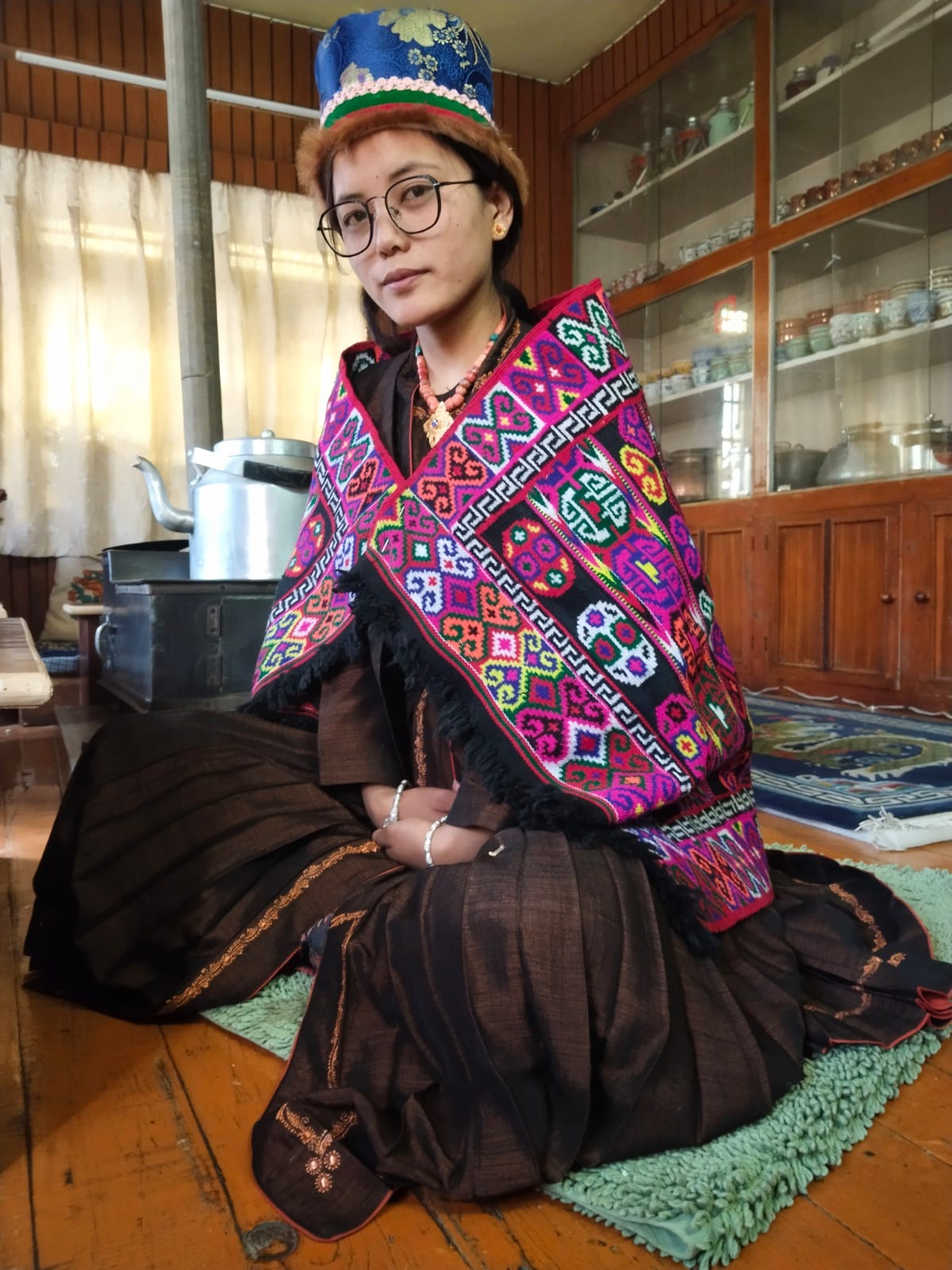
Sulma is a long voluminous traditional gown worn by Spitian women. It has a round neck and long sleeves. The dress flares downwards with multiple pleats which is why it is called Sulma which means; to gather, to fold, to fold into pleats. A thin undershirt is worn underneath and the Sulma is tied with a waist belt called Keera. The dress is fairly wide around the leg, making it comfortable for walking or working in the fields.

Spitian men wearing Reygoi. Photo: Rabhi Kunga

3. Bhal Sutan
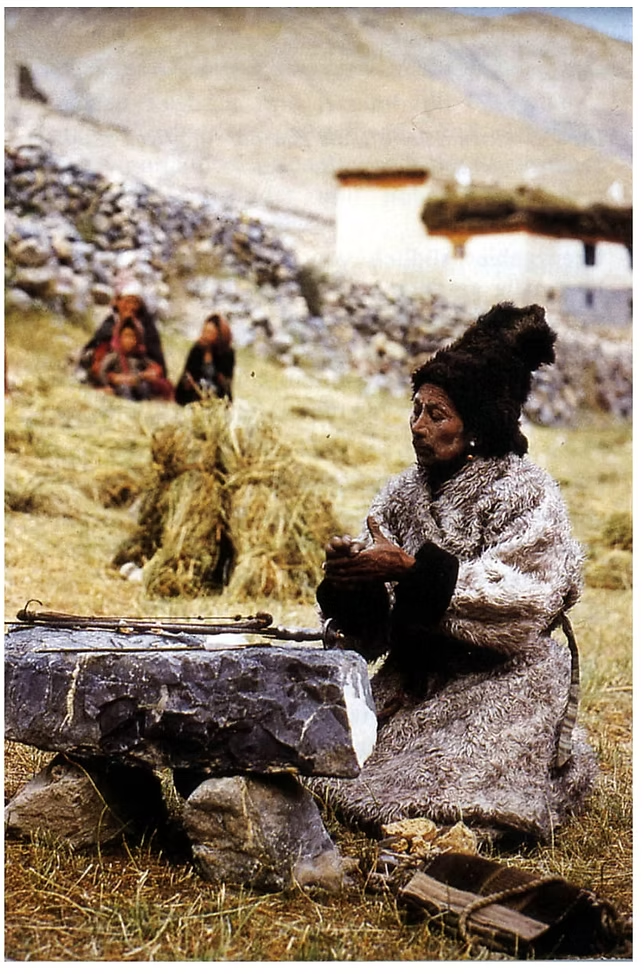
Sutan is woolen or cotton trousers worn both by men and women in Spiti. It is made up of thick woolen fabric called “Nimpu” procured from the local sheep hair. The fabric is woven on a backstrap loom or foot loom, which can then be stitched into trousers of the desired style. Nimpu Sutan or bhal Sutan (woolen pants) is primarily worn under Sulma by women and under Reygoi by men. With changing times, Spitian women popularly wear it with a matching Salwaar or Suit.

4. Lokpa
Lokpa is a thick cloak-like garment worn by women. It is hand-strewn with sheep skin turned upside down with elaborate woven designs on the front. The local name Lokpa (meaning: to turn over) is reflective of the intricate process with which a seamstress makes it. It is extremely warm and is perfect for harsh weather conditions. The thickness of the garment also cushions the wearer’s back while carrying a heavy load on the back like firewood or fodder for livestock. Sometimes, newborn babies or even lamb kids are wrapped in the garment to provide warmth and comfort.

5. Lingzey
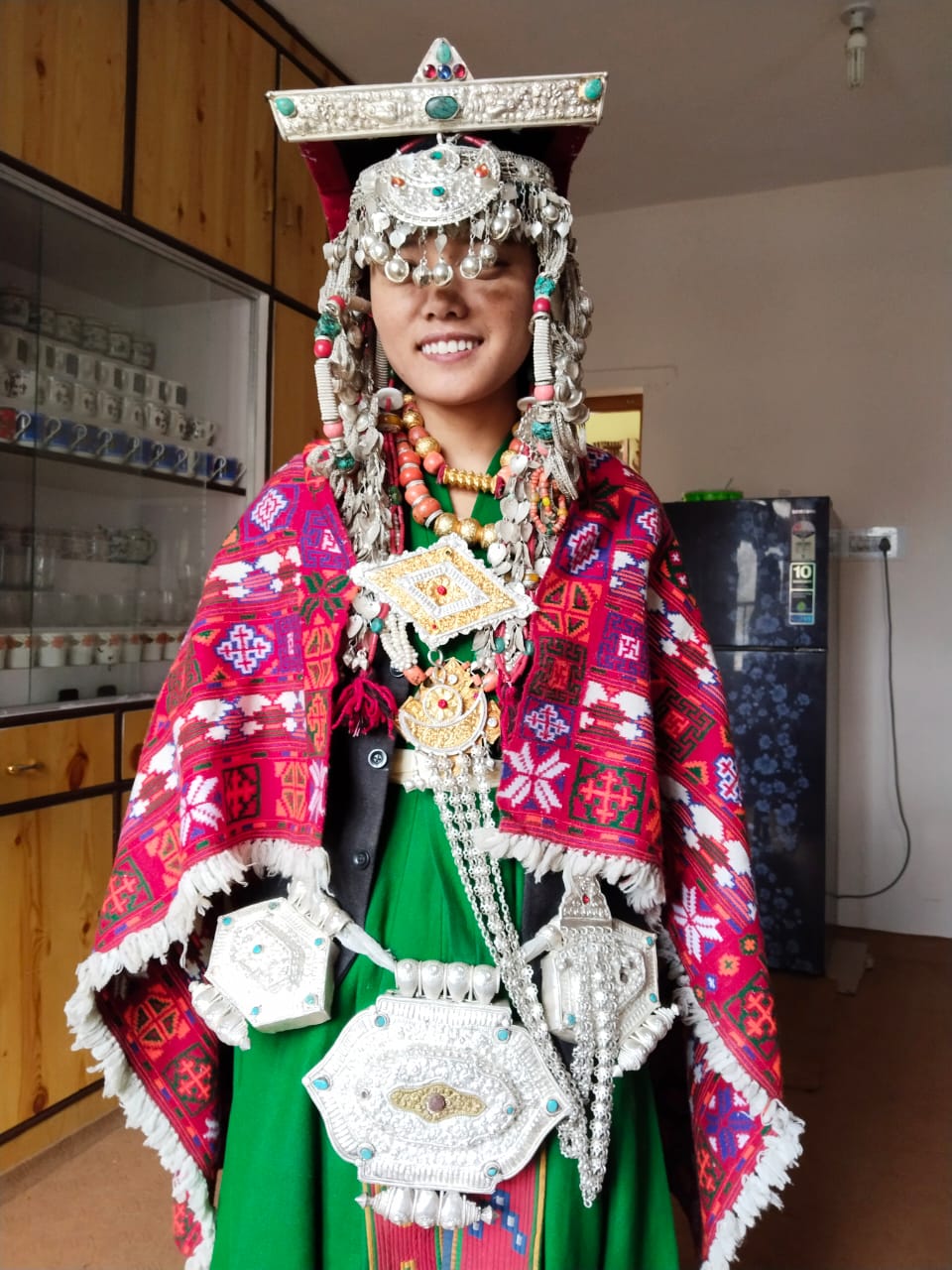
Lingzey is a traditional handwoven shawl worn by women on the back. It is one of the most vibrant and elegantly designed shawls woven by women on the loom and comes in a wide variety of colors and patterns. The base color can be red, white, or black where elaborate symbolic geometrical designs are handwoven. Motifs inspired by nature are common like local flora or fauna or religious motifs like stupa and swastika (to protect the wearer from evil spirits) or motifs of precious stones. Lingzey is worn during special occasions like marriage, ceremonies, festivals, rituals, or while visiting Rinpoches.

6. Tsadar
Tsadar is a plain woolen shawl worn by women on a daily basis. It is thin, light weighted compared to Lokpa, and is woven on a handloom called Khaddi. It is made up of goat or sheep wool and is usually found in toned neutral colors like beige, grey, off -white and black. It is the most functional piece of clothing and can be worn over Sulma or even drape babies in it. In the olden days, it was said that women were not allowed to go out bareback, wearing a Tsadar symbolizes one’s respect for the person you are visiting.

Lingzey - the multicolored shawl with traditional designs

“Since most of the families are agro-pastoralists, the livestock people breed gives different kinds of wool like yak wool, sheep wool, and goat and that forms the natural source for most of the attire worn by the people.”

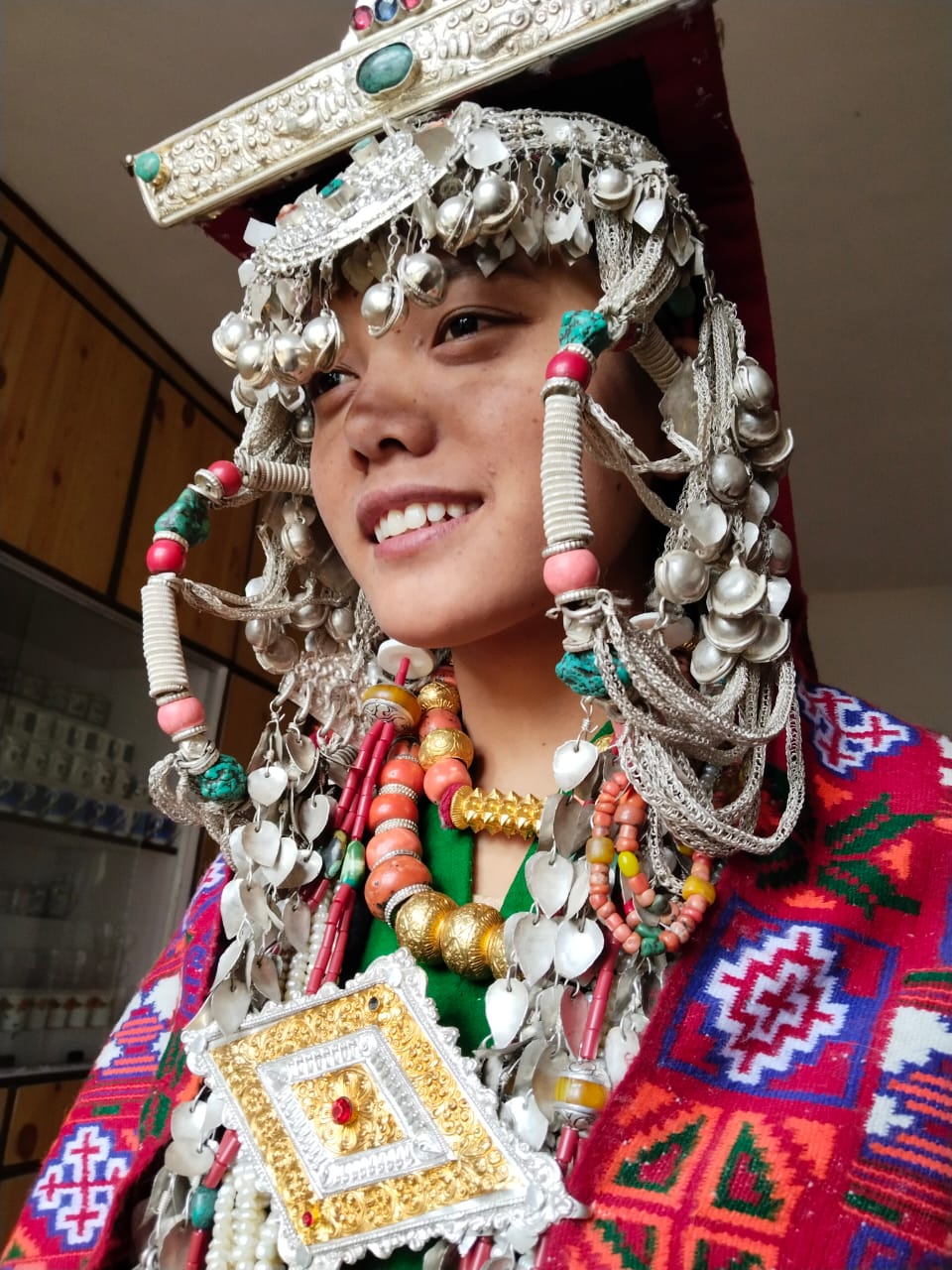
Spitian bride wearing Lingzey (multi colored shawl) Lokpa (thick hand strewn green cloak) Sulma (brown gown ) and Tiwi (hat)

7. Tiwi
Tiwi is worn both by men and women. Traditionally, Nambu (yak wool) is the base fabric with which it is made and has goat or sheep skin lined underneath. Cotton or wool fabric is sewn inside for warmth with matching silk brocade. Golden or silver zari designs or threadwork can be supplemented depending on the need.

8. Lham
Lham refers to footwear worn by people in the high Himalayan region or more suitably to the boots worn in the nomadic region. Originally it was made up of yak hides but with time, it is adapted to canvas, jute, or cloth material. Lhams are decorated with rich embroidery and exquisite designs of dragons or snakeheads. The material, color, and fabrics used to make Lham showcase the craftsmanship of the creator. Men’s Lham is knee length and comes in handy while treading snowy mountains. It is worn with Ghoey-shan (Silk robe) by men and women wear a slightly smaller frame with Sulma. The usage of Lham has gone out of daily use and is now worn only during festivals or special occasions.

The garment and material used to make the traditional attire of Spiti symbolize the optimum use of local resources and fibers available regionally. During festivals and special occasions, this is adorned with elaborate pieces of jewelry like the vibrant turquoise Perak, the pearl-made Uldik, the Silver Docha, Dhikra (brooch), Khinyur, and Pitsup. Our traditional dress represents close cultural affinity with the Western part of Tibet and forms a big part of our cultural heritage.

960 1280 Dolma Zangmo, Chhering Zangmo and Tanzin Ankit
Agricultural Practices in Spiti Valley
Photo: Prasenjeet Yadav

Agricultural Practices in Spiti Valley

“Ney yotna chukpo sam, nor yotna mak”
“Those who have barley are rich, not the ones with money”
Spitian Proverb, Anonymous

Ever since my childhood days, I was very curious to know about the agricultural practices of Spiti valley – traditional crops we grow and how farming happens in a cold Himalayan desert. Like any Spitian youngster growing up I used to help my family with agricultural works whenever I am at home for holidays or during the peak harvesting season but I never got the opportunity to help them for the whole season. But last year, due to an ongoing pandemic, when I came home, I realized it was a good opportunity for me to understand agricultural practices first hand. I helped my family through whole process right from scattering ashes in the snow covered fields to prepare the field for ploughing to cleaning dried-up water canals before harvest season to helping during peak season of ploughing and harvesting. I also wanted to learn about the history of agriculture in Spiti valley and the elders in my family shared some interesting insights with me.

Photo: Lobzang Tandup

Traditionally, the people living in this valley grew barley and black peas for sustenance. They used barley grains to make Sampa (flour) or Arak (traditional alcohol). They also used barley and black peas to barter it with traders from Changthang who in turn would give Lena (Pashmina) and Khullu (Yak wool) in the 1960s however, things started to change in the valley. People started growing cash crops like green peas and potatoes as access to outside markets improved due to development of key roadways. Now, barley and black peas are grown only for self-consumption and are only a small share of the total agricultural production.

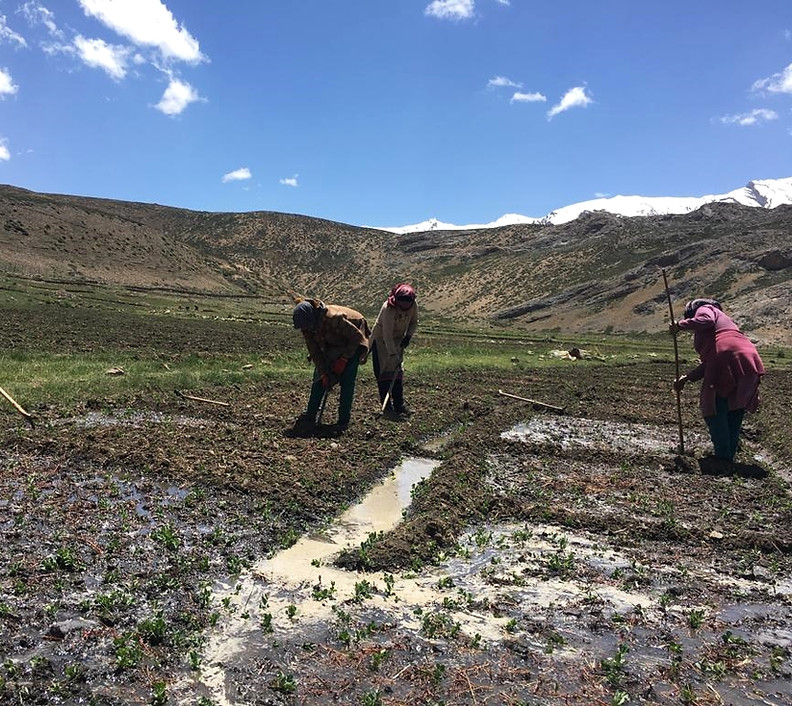
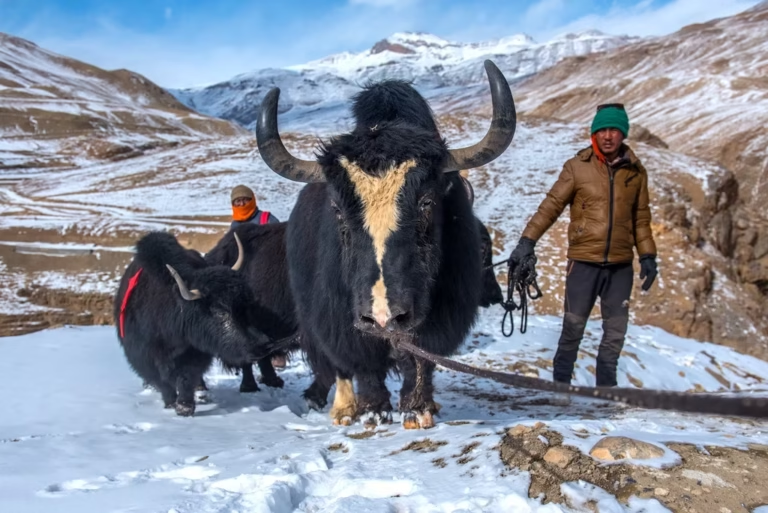
Agriculture in Spiti lasts only for six months. It’s the most crucial time for all the farmers. Although the sowing season starts only in April, the preparations start months before. The seeds are either procured or developed and stored safely during the winters. When the snow first melts around mid-April, the farmers plough their fields with the best resource they have – Yak or a pair of Dzo and seeds are scattered by hand, but these days people use tractors, ploughing machines and even tillers are used. Ploughing the field is a two person job, but sometimes the whole family can be seen in the fields helping out the parents. In Spiti, one’s family, relatives and friends are one’s greatest resources. Farming is very communal in nature. Everyone helps each other and sometimes even 3-4 families work collectively.

The system of communal farming helps ease the burden of marginal farmers who do not own Yak – they collaborate with Khangchen households (Zamindar family), borrow Yak for ploughing the field and in turn repay through their labour. Yaks are an effective but an expensive farming asset and not everyone can afford to buy and maintain them. The system works because it is based on a reciprocal relationship between Khang-chen (Big Zamindar) and Khang-chung (Small farmers) households and resource and labour are shared communally. Sometimes, the members of the Khang-chen household lend a piece of land for a few years to the Khang-chung household for farming. They do not have to necessarily repay through capital but the Khang-chung family can repay the benevolence through their labour works in the Khang-chen family – for instance, they can help the Khang-chen family during ploughing and harvesting season. This system is called “Shey” in Spitian.

The relationship between people, wildlife and nature go beyond utilitarian aspects. It is heavily influenced by cultural values and local practices around it. For instance, many Spitian households have unique names for their agricultural land which is a helpful marker of identification of one’s land and also carries meaningful ecological symbolism: “Chup- ja” (water-bird) is named for agricultural lands that resemble the shape of long-necked water cranes. “Ti-rik” is named for lands that resembles local barley-flour delicacy, “Dorgya-ma” is named for agricultural lands which is full of stones or pebbles owing to its hilly terrain, “Yur-yok” is referred to lands located beneath a water canal and “Phe-kak” (meaning half in Spitian) is often given to agricultural lands of “Khang-chung” families (small farmers) who gain their land after ancestral subdivision from Khang-chen family (big zamindari household).

There are a lot of farming songs and prayers that people hum while toiling in their fields. Farmers sing particular songs at every step. The songs have rich meanings related to farm works, weather conditions and comprises of odes and incantations towards local deities pleading for bountiful harvest. “Om Mani Padme Hung” – the holy Buddhist mantra is chanted while ploughing which symbolises farmer’s gratitude and compassion for Yaks and Dzos who toil so hard in our fields. “Laso- ho” is chanted in merriment to ease the stress and fatigue of animals when they plough in harsh weather.

As soon as the ploughing is done, the farmers wait for the first crop or sapling to grow a little before the cycle of irrigation begins (Yurma). This period is usually after 40 days from the day of sowing. Water is a scarce resource and there are local systems of water distribution and management called “Chu-rey” (water turns) entirely handled by women of the village. A group of women is appointed to take charge for the season to ensure timely, equitable distribution of water to each household. The Khang-chen (big zamindar) households have more access to water resources – they have frequent water-turns (chu-rey) and more water is allotted in their canals for irrigation. They also have more authority in decision-making as they are the original tax-payers of the land and have earned that right historically. Owing to scanty precipitation, irrigation becomes a daunting task – women get busy with watering works (Yurma) for over 2 months till the crops are fully ripe.

Photo: Lobzang Tandup

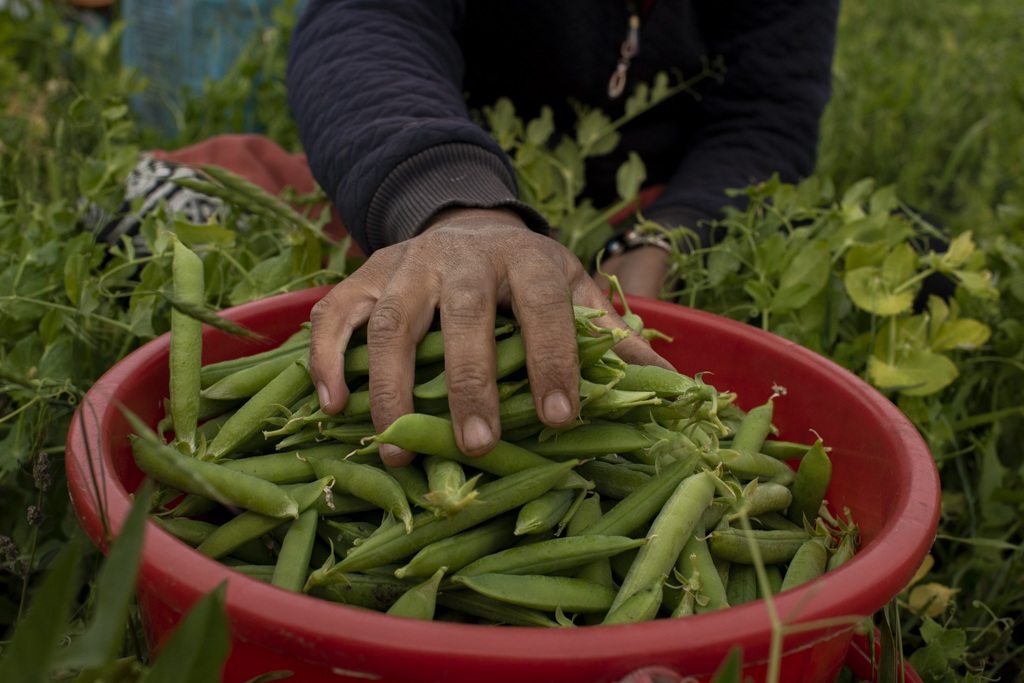
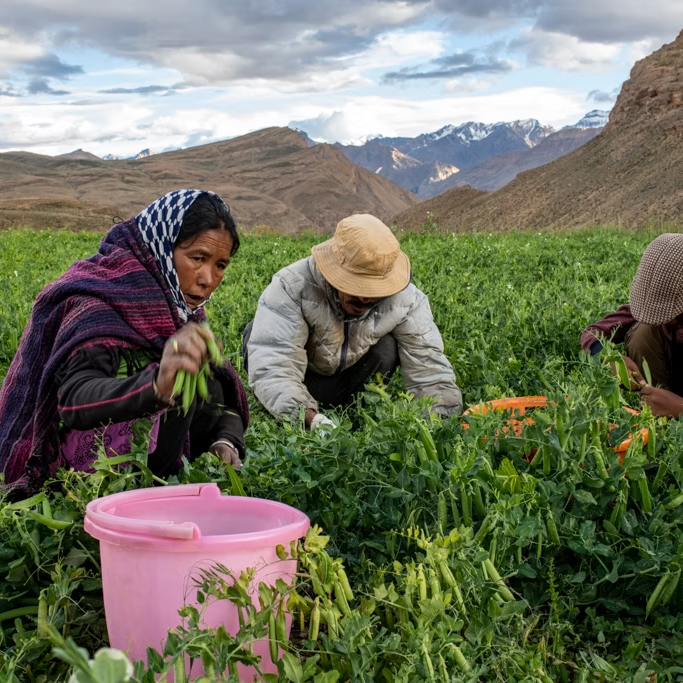
The green pea crop gets ready around June in low-lying villages (Kaza, Tabo, Rangrik, Pin) and August in villages in elevated regions (Demul, Komic, Langza, Hikkim, Kibber and Chicham) . These crops are then transported and sold in Delhi and other nearby states. The produce from Spiti is considered of highest quality as the farmers do not use any insecticide, pesticide or weedicide in their fields. Instead they only rely on animal and human waste as manure. The sweet taste of green peas from Spiti valley is the result of unique farming techniques and hard-work of the people who do not give up despite harsh conditions and scarce resources.

The cropping patterns of green peas and barley are different. Green pea, although is the primary source of livelihood for the farmers, requires much more work and tends to consume more water. Barley is a traditional crop of Spiti that is favoured more by farmers due to its low input requirements, better adaptability to harsh conditions and is considered drought/disease resilient. Barley crops and black peas (kala matar) can be harvested later around August-September when the work around green-peas is done. The remaining grass residues are collected to use for fodder or as a livestock feed for animals during winter.

Most Spitian households own a flat ground near their agricultural field called “Ul-tak” where separation of straw and barley (Khu-yuk) are done, cut grasses are brought and flours are grinded. The grains are finally stored in village. A group of women is appointed to take charge for the season to ensure timely, equitable distribution of water to each household. The Khang-chen households have more access to water resources – they have frequent water-turns (chu-rey) and more water is allotted in their canals for irrigation. They also have more authority in decision-making as they are the original tax-payers of the land and have traditional go-downs/storage called “Bhang” for better preservation.

Agriculture is the lifeline of Spitians and it is not just a livelihood means for us, but a way of life. Our tradition, cultural values and regional ethos revolve around agrarian practices. Many local Spitian proverbs (pera) are reflective of that knowledge. I am sharing few as recounted by elders:

Nyima dot la mata, Dotpa chung la mata
Do not rely on the sun’s warmth nor your appetite. This proverb talks about the importance of being alert, active and prepared when one is undertaking any agricultural work. When one leaves home in the morning for the field, a farmer has to be ready for any unpredictability – nor the pleasant heat of sun or one’s appetite at that point can be relied on.

Soye me phung, nyal phung
There will be agricultural loss not when you eat but when you sleep/laze around.

Ley betna, sey nyong
If you work hard, there will be a bountiful harvest.

Ney yotna chukpo sam, nor yotna mak

Those who have barley are rich, not the ones with money.

I am not an expert in farming or possess rich knowledge but I would like to share some suggestions, the ecosystem in the trans-Himalayan region is very fragile. Excessive focus on cash crops like green peas won’t be sustainable for the long run. We need to incorporate traditional crops like barley as well as black peas which are more suitable to local conditions. We should think about long term ecological sustenance and food security for the entire community. Cooperative societies, local management should work in a collaborative manner to fetch fair prices to our farmers. Youngsters should realize that although modern farming and technology are easier and more convenient, nothing beats natural farming technique and indigenous knowledge of the people.

1024 683 Lobzang Tandup
My farming memories
Photo: Vikram Katoch

My farming memories

I spent my whole childhood in a small hamlet called Garang in Lahaul. In the summers my sister and I would help our grandmother with the household chores and in in the fields. She would cultivate green peas, potatoes and wheat. In Lahaul, the sowing season starts from mid-March. Villagers would first clear the snow from the fields and then start sowing various seeds. Green peas and cauliflower seeds are sown first followed by potatoes. Farming is the sole livelihood of many villagers and before ploughing, people pray to their fields, the tools and the baang (oxen) in hope of a good harvest. After ploughing, the farmers use pickaxe to create small water channels in the fields. Our grandmother would let me and my sister do this task. She would instruct us on how to do this carefully and correctly. She would then add seeds of green peas after us. After covering the field with seeds, she would level it using long dry twigs.

We used to eagerly wait for the seedlings to grow. It would take around 30 to 45 days for the first seedlings to emerge. This was the time when the weeds would be removed and the field would be watered through Kuls. Unlike traditional crops, most of the fields like green peas and cauliflower, require frequent watering – once in every 15-20 days. Around June flowers will start blooming in green peas fields and by August, the crops are ready. Harvesting season is the most important and everyone in the family will help collect the ripe peas. Since there is no farmers market/cooperative for peas in Lahaul, we are often forced to sell their produce to private dealers at meagre sum.

Similarly potatoes are also grown in our village. Each household prepares their own seed by keeping sacks of potatoes in a pit during the winters. When spring arrives, the seeds are unearthed and prepared. The beds laid for potatoes are deeper than that of green peas and are placed 5 to 6 inches apart from each other. The seeds are buried deep in the soil to ensure high and good production of potatoes. When the seedlings emerge, the fields are watered and by September the harvest is almost ready. The leaves from the plant are removed a few days before uprooting the plants. This helps to thicken the potato skin, thus making them more long-lasting. The potato harvest is ready by early October and the whole valley is suddenly humming with trucks collecting produce and taking it to the market. There are times when it’s even difficult to find trucks in Lahaul and the farmers have to arrange trucks from the nearest town. Farming has changed a lot since my grandmother’s days – increasing mechanization has certainly filled the gap of labour shortage but many households still struggle to find good market exposure.

729 410 Vikram Singh Katoch
Mushroom Cultivation in Spiti
Photo: Kalzang Ladey

Mushroom Cultivation in Spiti

Majority of Indians stay in rural areas with agriculture as their primary source of livelihood making India, largely, an agricultural country. Farming varies greatly across different regions given its geographical conditions and access to resources. It is increasingly becoming difficult due to growing effects of climate change across the country. Melting of glaciers, extreme weather patterns and excessive drought and rain have further increased our vulnerability. Farmers who are completely dependent on agriculture for their livelihood will face the brunt of changing phenomena and it is important to diversify our cultivation patterns. To aptly complement existing agricultural patterns, these alternatives need to be time-saving, less laborious and should also offer decent economic returns for the cultivator.

Photo: Kalzang Ladey

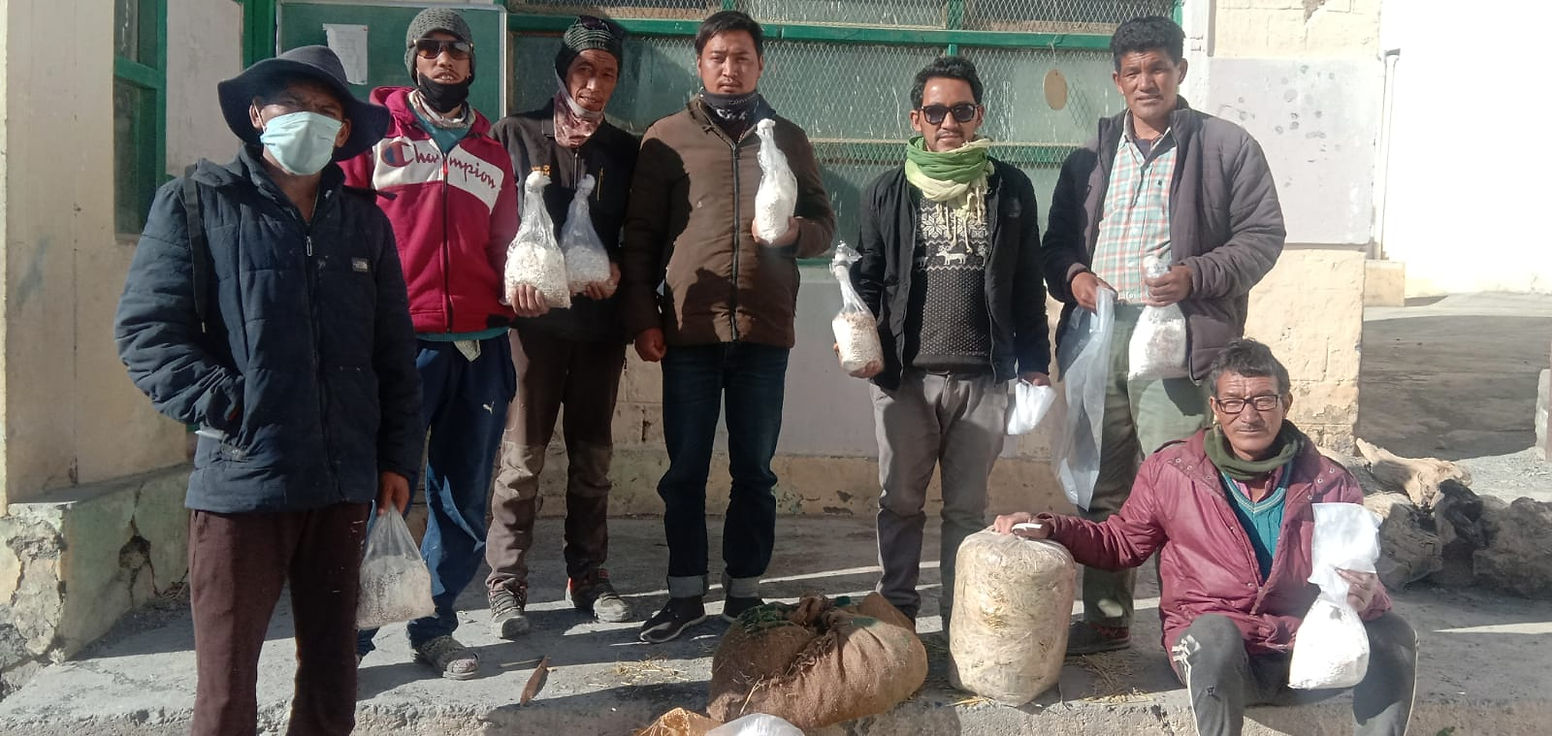
Given Spiti’s mono cultural practises, I realised that mushroom cultivation in Spiti will provide a viable option for the locals. Growing mushrooms is fairly easy and anyone can replicate the process once they are a bit familiar with it. One can easily cultivate mushrooms 2-3 times a year without any mechanical equipment. Moreover, there are no constraints on the scale of cultivation. It can be considered as a viable option by both small and big farmers alike. All they need is a small space in their houses. It roughly takes one month to cultivate mushrooms from scratch. In addition to usual agricultural crops, mushrooms can be added delicacy to your meals. Mushrooms are one the cheapest crops to cultivate if done with proper care -thus, with limited space and time, one can obtain a good yield. Mushrooms are extremely delicious and nutritious. It is a great way to build a diet full of protein, fibre and minerals. It contains a lot of vitamins, especially vitamin D. The nutrients available in mushrooms are helpful for people suffering from diabetes and other ailments. It is not surprising, then, that its presence in global as well as Indian diets is increasing. This is all the more reason for farmers to take up mushroom cultivation.

Photo: Kalzang Ladey

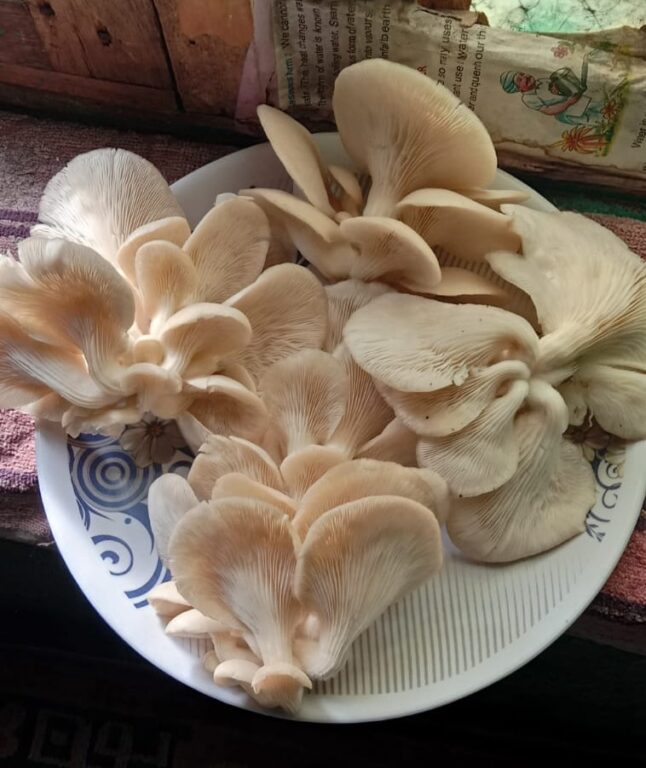
Many types of mushrooms are in demand, but specifically in Spiti, we cultivate oyster mushrooms. Both fresh and dry varieties of these mushrooms are sold in the market. The mushroom soup you get is made from these oyster mushrooms. We have experimented with the cultivation of White oyster mushrooms (Pleurotus florida), Pink Oyster mushroom (Pleurotus Djamor), King Oyster mushroom (Pleurotus Eryngii/Kabuli Dhingri), Gray oyster mushroom (Pleurotus Sajor Caju) and Tree Oyster mushroom (Pleurotus Ostreatus). Oyster mushrooms are the best varieties to cultivate if you are trying it for the first time. These are very nutritious and require much less space and environmental conditions for a beginner. Mushrooms can be grown either through spawns or substrate. Spawns are referred to any carrier material which has mycelial growth to propagate mushroom. It can be considered like a seed in mushroom farming and comes in various forms like sawdust spawn, grain spawn (most popular for home grown mushroom cultivation process), woodchip spawn and straw spawn. Substrate is a soil-like material that provides mushrooms with the nutrients, moisture and energy. It is high in organic matter making it desirable for cultivation. Different species of mushroom have different preferences of substrate hence it is important to match those requirements. A good substrate is dense woody fibrous material full of carbon.

I will briefly explain the cultivation process for those who are interested. There are two methods of mushroom cultivation:

  1. Organic sterilisation method
  2. Chemical sterilisation method but I will recommend people to follow the organic cultivation method.

In the organic sterilisation method, fill a large sized utensil with ⅓ of water and keep it to boil. When the water starts boiling, add straw which will play the role of substrate. In Spiti, we add dry grass chips called Phungma. Keep the mixture on boil for about 2 hours (depending upon the quantity). Drain the excess water, lay the straw on a clean mat to dry it (overnight). When it is completely dry, you will need strong poly bags (14X18 or 16X24 inches) to transfer the material. As for spawning, for 80 Kgs of straw, we require 1 Kg of spawn (mushroom seeds). The spawn can be sprinkled on the straw and can be mixed. Then comes layering where first we put some spawn in the polybag, then apply the first layer (2 inch straw), followed by another layer of spawn and finally topping it with the final layer of straw till we fill the poly bags to the brim. When this is done, close the bags in a way that it’s air-tight and there’s no room for moisture to enter. Once the bag is closed, make around 10-15 holes in each bag. Place these bags in a dark empty room or closet at 25 degrees Celsius for 15-20 days until the entire bag turns white. If there is any other colour formation, you’ll have to dispose of the bag and start over.

It is important to keep the bags in a clean room with good humidity. Keep checking the mushroom bags every other day and start sprinkling the floor with water to increase the humidity in the room. Once it starts sprouting, softly twist individual mushrooms and pluck them for consumption. For the chemical sterilisation process, add 125ml of formalin and 10 gm of bovesteen (fungicide) in 100 litres of water. Washed and damp straw is then soaked in this water for 12 hours. Following that, the excess water is drained and straw is dried out and then transferred to polybags. The polybags are then tightly closed with a string and left for cultivation. Once the bags start becoming white, you can make a few more holes in it. Roughly, at every 3 inches, there should be one hole in the bag. This will help you get a better yield. These holes should be made by only those cultivators who are unable to maintain 90% humidity in the room.If the room temperature is between 20-22 degree celsius, then it is considered to be the most ideal for incubation.

Once it sprouts, same bag of mushrooms should be harvested together otherwise, it would take longer to prepare for the second flash. Second flash can be carried out roughly 7-8 days after the previous harvest. In this way, each bag can take 3-4 flashes easily. After 3-4 flashes of harvesting, remove the poly bags and prepare for the second batch using different bags. If this is done with proper care, the mushrooms will be ready in 25-30 days. If you are planning to cultivate pink oysters (Pleurotus Djamor), then a slightly higher temperature is required in the room. Thus, you can cultivate these mushrooms in the month of June or July in Spiti. Other mushrooms can be cultivated between the months of April to September.

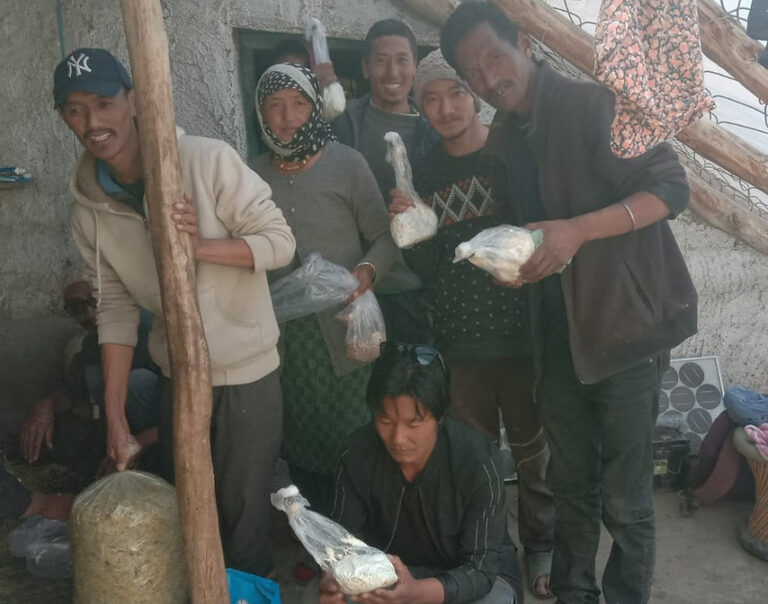
The Department of Horticulture in Spiti and honourable Agricultural Minister Shri. Ramlal Markanda helped me immensely in my journey of cultivating mushrooms. They helped me procure seeds, gain training and greater awareness about mushroom cultivation and subsequently helped me popularise it among local farmers. Along with the Department of Horticulture in Spiti, I have visited multiple villages to spread awareness and conduct training about spawn. We visited Losar Panchayat, Pangmo, Kibber Panchayat, Pin Valley, Kewling, Langza, Komic and trained about 500 people on mushroom cultivation. Men, women, young and elders all showed great interest and several of them started cultivating at household level. Along with awareness, we would also distribute free Spawns to encourage them.

We have been cultivating Oyster mushrooms till now, we can certainly try button mushrooms if we get the seeds. Institutions like ICR-DMR (Directorate of Mushroom Research), Centre for Mushroom Research and Training in Palampur and Dr. Y. S. Parmar University of Horticulture and Forestry, in Nauni (Solan) has been carrying out extensive research and training for mushroom cultivation. We should gain firsthand insights and attend their workshop. Their hands-on training is extremely beneficial. I am very thankful to the department and its officials. I will continue to work for mushroom development in Spiti and I hope that we are able to bear the fruits of this venture in future. My request to all farmers is to adopt mushroom cultivation actively and in case of any hurdles, please do not hesitate to reach out to me for any queries.

1036 492 Kalzang Ladey
The sun returns home for the mother bird
Photo: Stanzin Dorjai (Gya)

The sun returns home for the mother bird

Spiti Valley has a remarkable ancient agricultural heritage that has sustained several thousand people in the remotest corner of high and arid Western Himalayas—one of the most inhospitable and climate-sensitive regions in the world—for more than a thousand years. The enduring sustainability of agriculture in Spiti Valley rests with its farming calendar.  The calendar uses stories, evocative names for months, and traditional knowledge to guide the timing of local farming activities according to the unique natural rhythms of “Spiti, the Valley of Gods” (Piti Lhayi Lungpa).

The natural rhythms of Spiti Valley are captured in Spiti’s calendar with unique timing and names of months, which are different even from neighbouring Tibetan Buddhist regions of Ladakh and Kinnaur.  In addition to local timing and names of months explained below, the calendar is used with other local and Indigenous practices of telling time. For example, Spiti farmers mark sunrise and sunset over stone cairn markers atop high mountains and note shadow lines on mountainsides to identify important days and times, such as the solstices and equinoxes. Farmers also use their observations of colours, sounds, and rhythms of local plants and animals to tell time, such as observations of brightness and colour of the sky when birds sing at dawn.

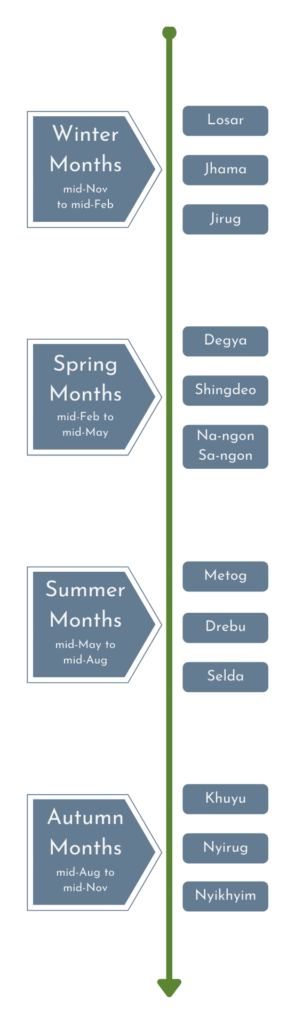
Winter Months 

For Spiti farmers, the year begins early in winter with rest and celebration after a hard year of work in the field.  The first month is called Losar or “New Year” and is celebrated three months before the Tibetan new year.  Losar is celebrated early in Spiti, usually around mid-November of the Gregorian calendar, because the valley, including the villages and pathways, will soon get covered under layers of snow for months.  The timing is ideal for Spiti farmers who have customarily completed all essential seasonal livelihood activities, and are now ready to turn their attention to the important family, communal, and religious gatherings of the Losar month.

Photo: Prasenjeet Yadav

The second month is called Jhama or “Mother Bird.” The bird here is Gharog or raven.  Raven is a bird of augury and protection in ancient Spiti and Tibetan beliefs, like in many cultures around the world.  It is said that once upon a time the divine bird, Gharog (raven), was unable to hatch chicks from eggs despite its many attempts because its body was excessively warm for incubation.

Devastated by this failure, the raven prayed that it would be able to hatch chicks from golden eggs during the coldest winter months. That is the reason ravens prepare their nest on a mountain cliff during the second winter month and the month is named Jhama. There is a local saying that describes Spiti’s coldest winter months: “Jhama Jhama zerna Jirug a-chu-chu.”  This saying suggests one shouldn’t complain about Jhama’s cold weather because Jirug, the following month, is even colder.

The coldest winter month is called Jirug or “Baby Bird” because it is the time when ravens lay eggs and hatch their baby birds. References to divine birds are common in Tibetan calendars. For example, the 2008-09 farming almanac of the nearby region of Kinnaur notes the following during Spiti’s Jirug month: “the divine bird has completed 30 days, if this is followed by snowfall, the divine bird will lay golden eggs, and there will be bountiful agro-pastoralism in Tibet.” It is also important to note that Jhama and Jirug are named not only for mythological reasons but also, and more importantly, to categorize seasonal times based on timely behaviour of natural environment. Researchers, for example, have found that common raven egg-laying and brooding behaviour begins in February, which comes during Jirug month.

Spring Months

The first spring month is called Degya (‘de rgya), which means to “soak in the Sun’s energy” as days become warmer and longer with the spring equinox. As snow cover begins to melt and days become brighter, blue sheep and ibex nibble on dormant plants on distant mountains, often under the lurking eyes of hungry snow leopards.  The month is named after the Sun’s warming energy during this month because it is crucial for melting the snow from the fields so that farmers can start Spiti’s short growing season early next month.

Photo: Dr. Tashi Tsering

The second spring month is Shingdeo (zhing ‘debs) or “cultivate the fields.” On the chosen auspicious day of the month, the farmers gather a few loose rocks on their fields, between which they burn juniper leaves to make smoke offerings. This is followed by offerings of libation drink carefully wrapped in a white scarf and marked symbolically with a dab of butter called yar. Yar-butter is marked on the foreheads of people, on horns of the yaks, and on the ploughs. And all through the ploughing period, the ploughman sings songs and prayers which may guide the yaks to turn, stop, or continue ploughing, or pray for absolution of sins that may come from harming insects and bugs in the process of ploughing.

Photo: Deepshikha Sharma

Spiti comes alive in bright colours during the final spring month of Na-ngon Sa-ngon, which means “blue skies blue earth.” This name invokes the beauty of lush green fields under bright blue skies.  Yaks graze freely on the mountains for the rest of the year until winter snowfall to produce the main source of energy for the village economy: dung for fuel and manure.  During this month, farmers count and wait forty days from seeding to first watering, guided by traditional knowledge, to ensure ideal conditions for seed germination in local soil, water, and weather conditions. Then expert women farmers do the first “mother watering” or Yurma, with Tirping, an irrigation tool made of blue sheep horns that ensures greener crops.

Summer Months

The young, irrigated crops begin to flower in early summer which is why the first summer month is called Metog or “flower”. Metog is indeed a flowering month as all kinds of flowers bloom throughout the valley during this time. The second watering called Rhakti or “watering the sun-burned” plants happens during this month. Farmers allow ten days to pass between the first and the second watering, making young crops dry and sun-burned. This practice teaches the young crops the value of the nourishing powers of scarce water, making them absorb more water in the future. These farming practices follow stringent customs based on the calendar, such as the yearly “ban on the use of sickle” or ban on cutting plants from summer solstice (June 21) until harvest season to ensure maximum plant biomass growth on Spiti’s arid landscape.

Photo: Prasenjeet Yadav

By mid-summer, the farmers’ labor bear fruit as grains begin to grow on the barley ears. This is the reason the mid-summer month is called Drebu or fruition of one’s labor. Farmers wait for the grains to become ripe for harvest next month. As tufts of bristles grow on barley ears, farmers irrigate the fields with a special technique called Kirchuyi. Now watering is done after carefully preparing irrigation channels and sluices in such a way that water will flow to all parts of the field by itself after it is released from the main sluice of the field. Another name for this convenient method is Minchu or seed-ripening water.

The last summer month is called Selda or “harvest month.” Unlike new commercial crops, traditional crops like barley are harvested methodically according to ancient customs. After the crops are cut, the sheaves are laid out in the field in neat rectangle-shaped patches to cover the barley ears from drying under direct sunlight. It is only when the crop sheaves are brought to the threshing ground that the ears are exposed to the sun for drying. The importance of observing this practice is told in the story of Jhojho Druguma.

Photo: Prasenjeet Yadav

Jhojho Druguma was a rich woman who did not bother to dry her barley sheaves in the proper manner. As a result, the ears and grains became too dry, and they fell off when the sheaves were carried from the field to the threshing ground. That is why, to Spiti farmers, the stars of the Milky Way are spread out the way they are so spectacularly over Spiti’s night skies. The stars of the Milky Way are Jhojho Druguma’s grains that fell on her way to the threshing ground.

Autumn Months

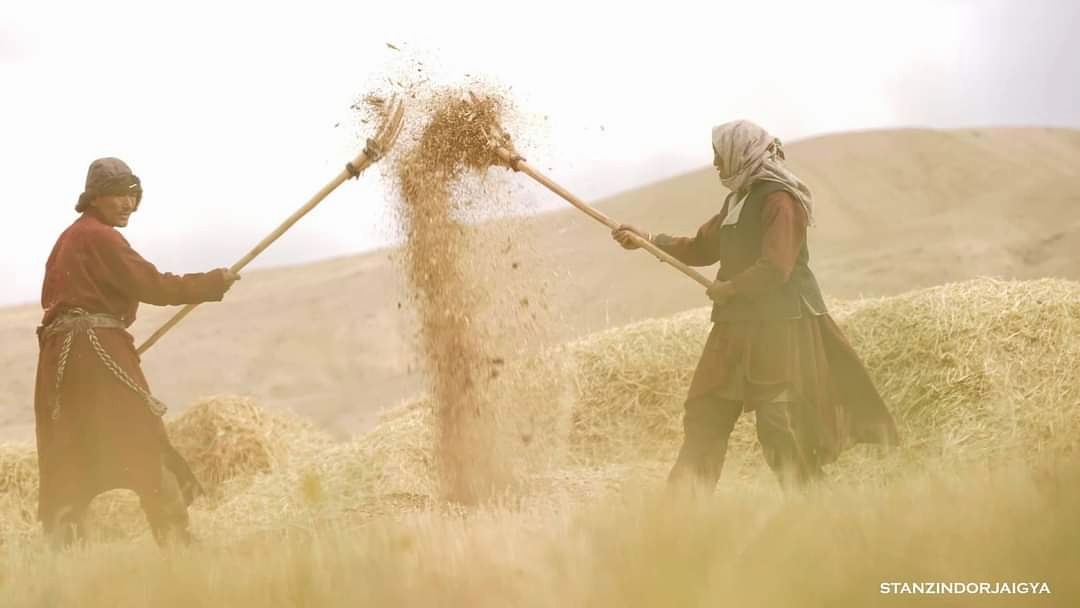
The first autumn month is named Khuyu. Khuyu is the Spiti word for circular threshing that is done to separate the grains from the husks. The process involves tethering yaks and other animals to a sturdy central pole and making the animals trample over harvested crops in a circular fashion. When the animals go round and round, tromping the husks and the grains, farmers use wooden pitchforks (zar) to mix, push or spread the husks so that the grains are properly separated. The whole process is blessed with Khuyu songs that can be heard from distant corners of villages.

The penultimate month is called Nyirug. “Nyi” is a short for Nyima or the Sun. “Rug” means to gather, specifically to gather animals back home before sunset. As such, Nyirug is the month when sun sets early, and days become shorter when farmers gather their horses and yaks back from the mountains in preparation of the oncoming long and cold winters. Farmers also follow stringent customs to ensure that there is enough winter stock of barley flour, dung, and fodder in their households during this month.

The last month is called Nyikhyim, which refers to the twelve zodiac houses of the sun in Tibetan astrology. “Nyi” means sun and “khyim” means house or home. Nyikhyim here refers to the Sun’s return home after completion of its annual cycle. For Spiti farmers, however, the Sun returns home to fulfil the mother bird’s prayers. This is expressed in the local proverb, “nyima garlog, jhama yin”. The Sun returns home so it becomes cold enough for the mother bird to arrive and hatch chicks. As such, the story of mother bird comes to a full circle at the end of the year along with the sun’s annual return home, while in anticipation of “Spiti’s deep cold winters when even yak-horns crack into pieces.”

In sum, the farmers of Spiti Valley practice a calendar that integrates local economy and ecology into a cosmic unity filled with wonderful stories and ancient wisdom that is perhaps more relevant today than it ever was.

1080 608 Dr. Tashi Tsering
Stone breaking ceremony and Buchen of Spiti
Picture taken in 1998 | Photo: Buchen Tsetan Dorjee

Stone breaking ceremony and Buchen of Spiti

Buchen “the great disciples”

The first time I witnessed a Buchen performance, I remember feeling eerily awed. I do not remember much details about the performance but their ghastly white face smeared with flour and the cheek piercing ritual has stayed distinctly with me. My mother used to scare me that if I ever behaved badly, I would be taken away by meme buchen at night. 

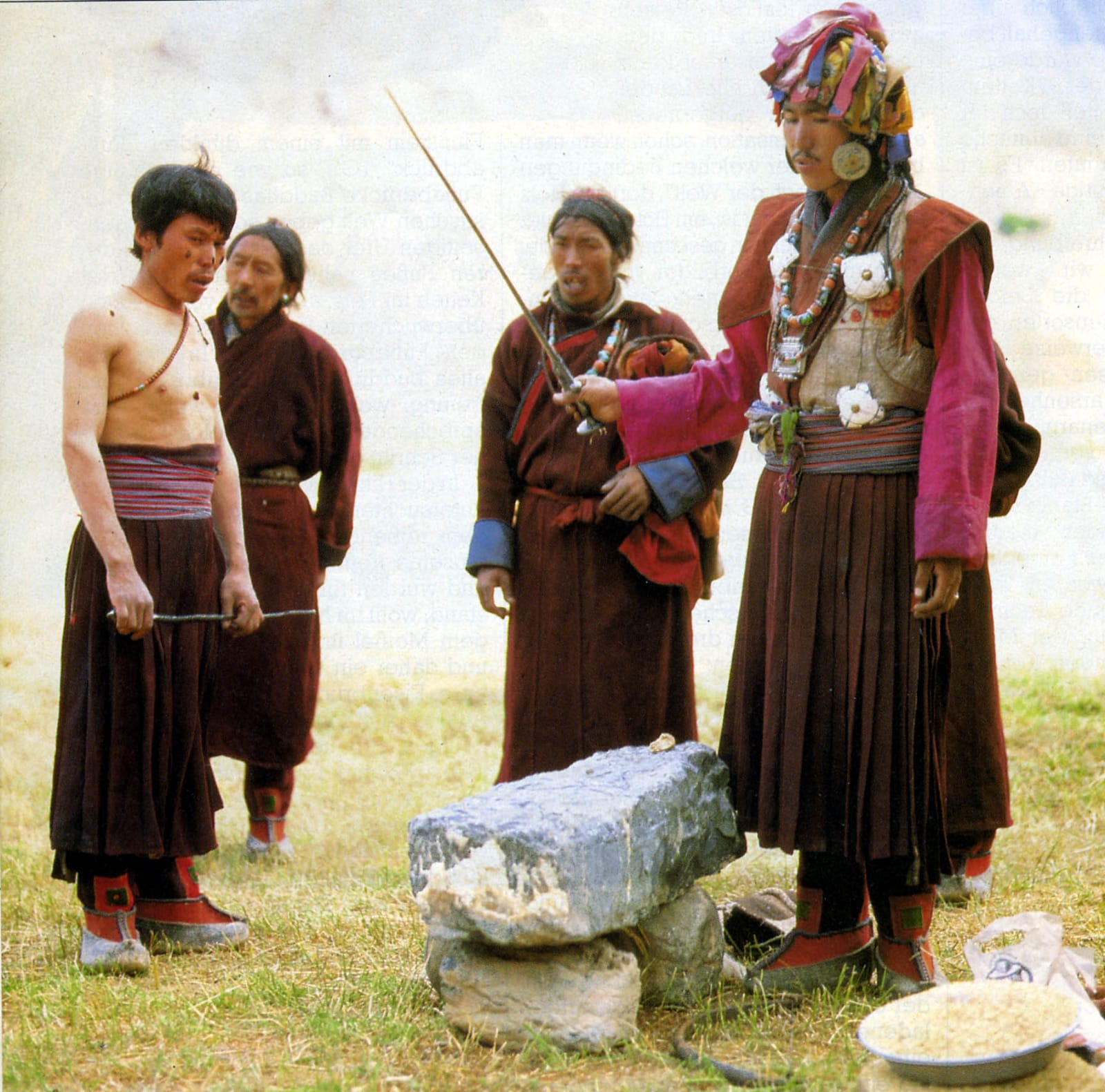
Buchen are a group of religious performers in Spiti who enact elaborate rituals and ceremonies to ward off evil spirits that bring misfortunes. They entrap the spirit in a stone and demolish it through a sacred stone breaking ceremony. The ritual is also associated with curing diseases and healing an ailing heart. Nowadays, it is most commonly commissioned to prevent agricultural mishaps, disease outbreak, disaster and water scarcity in a region. Buchen are well-known for performing folk lore, enacting stories of Buddhist saints, Lhamo (opera) and Namthar (biographies). Given their dynamic role in Spitian society, they are viewed differently as ritualistic performers, opera performers, healers, storytellers and messengers of Buddha’s teachings.

Photo: Pitt Rivers Museum, UK

The Buchen of Spiti trace their lineage to Thangtong Gyalpo, a 14th C religious practitioner in Tibet who was famously known as “Chak zampa” for making iron bridges and stupa in Tibet. It is said that the stone breaking ceremony was first performed by him to curb an epidemic in Tibet; the capital city Lhasa was plagued with 360 different types of deadly diseases – massively ravaging the lives of ordinary citizens. A demonic force is believed to have caused the disease outbreak and it was then Thangtong Gyalpo first performed the sacred stone breaking ceremony to tame the evil spirit. It is believed that he entrapped the demon in a stone, performed the ritual by breaking the stone, and successfully managed to stop the disease from spreading.

He performed it the second time when a demonic spirit was obstructing the monastery he was building. Whatever was made during the daytime was demolished by demons at night. He then performed the stone breaking ceremony where he subdued the evil spirit in a stone and annihilated it by performing the ritual. The monastery eventually came to completion after the demons were tamed. The practice then became widespread in other Himalayan regions and became an important tradition.

Photo: Tenzin Sonam

Thangtong Gyalpo was a versatile figure. He was a highly revered Buddhist tantric master, skilled in monument making, and nurtured a strong penchant for performative art forms like opera, theater, folk songs and writing. He was also the first priest to spread religious teachings through physical enactments of morality plays, allegorical folklore, song & dance and narratorial acting. He strongly felt that the core teachings on compassion, kindness, peace and impermanence should be taught in a way people can understand and implement in their real lives rather than just instructing from scriptures. He then founded the first theatre group in Tibet which goes to every village and performs religious teachings through morality plays and songs. Buchens of Pin valley in Spiti are disciples of this great master and they consider themselves as his sons “Bu-chen = great sons” who will follow the legacy of their master. Paying tribute to Thangtong Gyalpo is a huge part of Buchen’s performance; they put his statue on the altar, pray to him, sing odes and his teachings are orally passed through many generations.

Buchen as healers – relevance of the ceremony

I have seen several Buchen ceremonies during my growing up years and their performances are always invariably very striking. They are bold and impressionistic – one can remember the visuals long after the performance is over. Their repertoire, the enactments, narration and audience engagement are hugely appealing. It is like when they are performing – you are part of the stage, the play and the world they created for you. You might be a silent audience observing them from a distance but they will break the barrier by suddenly putting you in the spotlight – asking you questions, mimicking you and making you part of the play. As such, the distance between the performer and the audience is fluid. You are part of their stage, their world and they derive inspiration, anecdotes from you, your life and the larger community.

The Buchen’s performances are highly centered on religious precepts but with time, it has evolved to incorporate social realities of local communities. The practice is no longer restricted to impart religious teachings but it’s also done to avert serious social and ecological crises like drought, disasters, plague, agricultural loss and to bring harmony among communities. Locals appeal Buchens to perform ceremonies before agricultural season, during particularly low snowfall year, for recovery of physical ailments, while building houses, before starting any new venture in life or to bless a pregnant woman for health and happiness. Meme Buchens play a critical role as healers in Buddhist societies in Himalayan region and their blessings are sought during times of insurmountable distress as well as to bring peace and prosperity. Last year, when the world was gripped with novel coronavirus and there was panic everywhere, remote communities from Spiti sought solace in the healing powers of Buchen, to protect and safeguard them.

Photo: Buchen Gatuk Sonam

Stone breaking ceremonies were performed in many villages like Kaza, Demul, Khurik, Ki and Pin valley. They were also invited to many parts of Ladakh, Zanskar, Lahaul and Kinnaur to help communities deal with crop failure and drought. They were once invited to Patlikuhl, a small village near Kullu/Manali where an annual flood was causing huge devastation. Similarly, in 2018 when His Holiness the 14th Dalai Lama fell gravely ill after an eye surgery, meme Buchen of Pin performed a stone breaking ceremony in his “sim-chung” (private residence) for quick recovery. Individuals, villagers, institutions and monasteries consult them for healing, to dispel hindrances and for an auspicious beginning deed.

Sword dance and the stone breaking ceremony

Buchen form groups of 4 or 5 people. The troupe is led by the head Buchen (Lo chen), an actor who plays the role of Lukzi (shepherd) or Onpa (hunter) followed by two other actors who assist them in various tasks. The Lo-chen performs all key ceremonies and religious narratives while Lukzi grips the audience through his skillful narration, storytelling and repertoire. He is the most captivating character – his deliveries are a blend of social commentaries, mimicries, moral teachings and comic interludes.

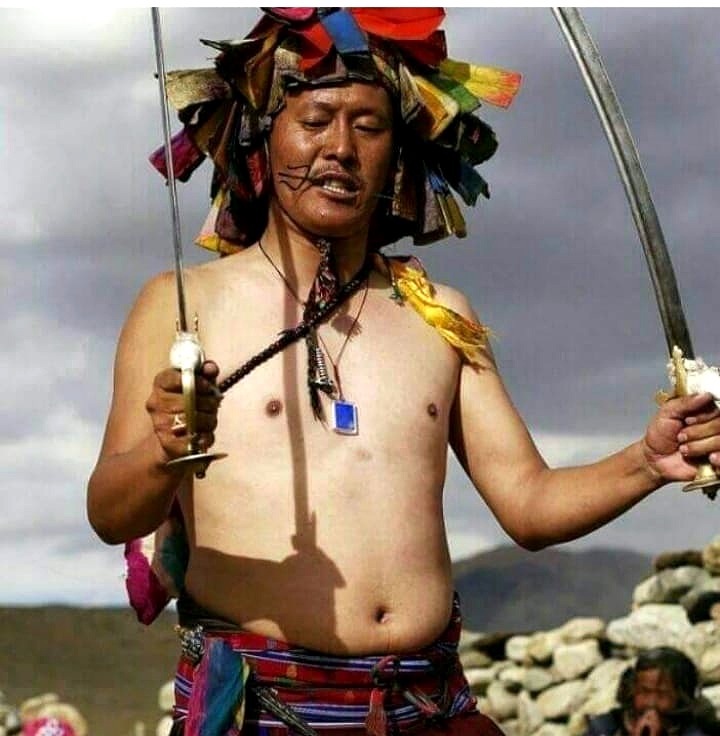
The Buchen head opens the ceremony with prayers, places the statue of Thangtong Gyalpo on the altar, pays him homage and narrates Namthar (biographies). The other team prepares the stage by placing a large boulder near the altar, drawing a human figure on it symbolizing the evil spirit/ demon that is to be demolished and burning incense. There will be brief prayer in between and after that, followed by a dance led by the head Lama rhythmically swinging the sword in slow dance movements.

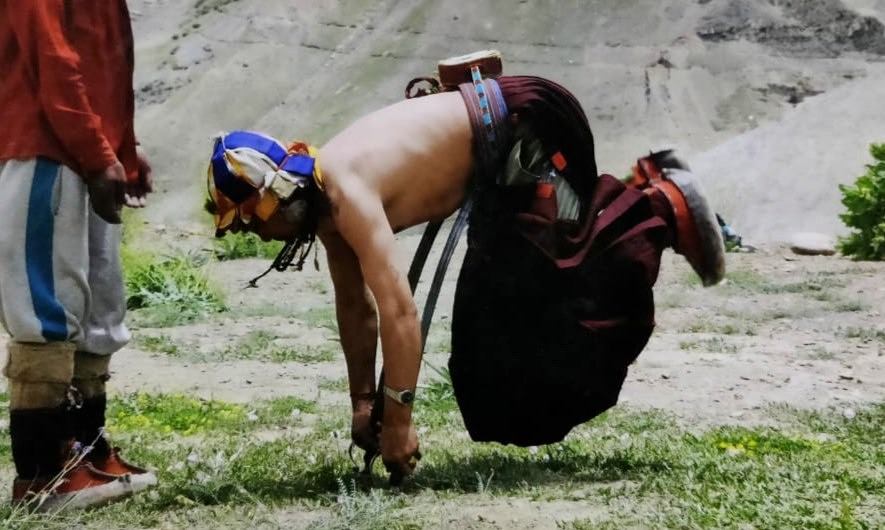
Then comes Lukzi’s turn, who enters the stage wearing a sheep skin and face smeared with white barley flour. He takes over the performance, engaging with the audience – making them crack into loud laughter and burst into tears while the head Buchen prepares for sword dance. He strips the upper part of his body naked, then slowly pierces his cheeks with a large pin and there’s considerable excitement, fear and thrill among the audience who watch him do this. It is a slow careful action and is done to dispel ill omens – the piercing of cheeks symbolizes purity of speech. He then proceeds to point the tip of the sword on his belly and slowly jumps to put all his body weight on it – repeating the act by drawing a sword in his armpits. The whole ritual of body piercing symbolizes the mutual existence of the mortal human body and lha (spiritual deity) that resides in each one of us. The sword dancing and body piercing symbolizes purity of body, mind and speech.

At the culminating act, while Lochen prepares himself for the sacred stone breaking ceremony, the dancer on whose body the stone is to be broken, lies down. A thin cloth and a heavy stone is placed on his body while the other actors look for a second stone. Lo-chen enters the scene, lifts the second boulder and smashes it on the stone placed on the dancer’s belly. The stone breaks with loud thudding noise signaling annihilation of the demon whose spirit was entrapped in the stone. Meme Buchens undergo intense tantric training, yoga, meditation and scripture learning in retreat to acquire such high feat. They acquire immunity towards fatal injuries and mishaps while performing ceremonies after decades of stringent training and disciplining of body and mind. They acquire mastery over their being before they perform healing treatments on others.

Photo: Buchen Tsetan Dorjee

They travel extensively within Spiti and outside to perform stone breaking ceremonies among various communities in Himalayan region like Ladakh, Kinnaur, Kullu/Manali, Riwalsar (Tso Pema), Sikkim and Nepal.  Every year they make a journey in small groups carrying the traveling altar, a trunk comprising their costumes, props and other material used for performance and leave from Pin for months at stretch. Sometimes they are out of their homes for as long as six months and come back only during harvest season for the farm work. They recite Namthars, folksongs and perform ceremonies in settlements where they reside and also make trade deals with the locals. They also sell horses and in turn receive Khullu (Yak wool), hand spun blankets,  Lena (Pashmina) and apricots. The Buchen tradition has seen huge decline in Ladakh and the meme Buchens of Pin valley often get invited to perform ceremonies to revive crop failure, crop damage and to appease local deities for abundant snowfall. They travel all over Ladakh; Demchok, Korrzok, Tsokar in Changthang to Choglamsar, Parang valley and even in Zanskar. Alternatively, in Kinnaur they visit Chango, Nako, Malling, Leo, Hangrang and even go as far as Rampur where the biggest trade fair in Himachal happens. Wherever they go, they are treated with utmost respect and their sword dancing and stone breaking ceremonies are considered equivalent to the Jintsak ceremony performed by highly incarnated Rinpoches (religious leader) to dispel ill omen and bring prosperity in the region.

Buchen tradition has undergone a tremendous change over the years. It used to be a widespread practice in many Himalayan communities but now it is actively pursued only in Spiti and that too minimally – there are only 10 remaining Buchen households in the region. “.. people no longer value our skills” laments Meme Buchen Tsetan (76) who is one of the oldest Buchen in Spiti. “Earlier people would bow down in front of Buchen to show their reverence but there’s considerable change in people’s attitude.” They also confide that with the influx of tourists, photographers and filmmakers, the practice has been reduced to a bare minimum where they are generally not interested in listening to prayers and Namthar (biographies) and rush them to perform sword dance and stone breaking which has more element of spectacle.

1600 1581 Chemi Lhamo
Dartse: The Archery Festival
Illustration: Nawang Tankhe

Dartse: The Archery Festival

Archery has been a vibrant part of Ladakhi culture for generations. It has its origin in traditional hunting. In the prehistoric times, it was practiced during warfare and for livelihood but gradually with change in socio-cultural positions, use of archery in people’s daily practice have dwindled. It, however, continues to hold an important part in Ladakhi culture and local customs. Playing archery using traditional bows and arrows is perhaps one of the very few visible cultural remnants of the past and symbolizes rich socio-cultural heritage.

Many Ladakhi folklore, proverbs, literature and rock-art have references to archery, unraveling fascinating insights into traditional way of living. The oral folklore – The Epic of King Gesar (Kesar-e-zGrums) narrates heroic stories of the warrior king Ling Gesar who was a skilled archer and horse rider. The epic saga also has a detailed account of the art of weapon and armor making.

Archery festival in Gya | Photo: Abhijit Dutta

The Epic of King Gesar is the most celebrated oral narrative of the central Asian region and has a particularly huge influence in highland pastoral areas of Tibetan plateau and Ladakh. Phrases like “fast like Ling” – evoking magnanimous strength and speed of Ling Gesar Gyalpo is a common part of local speech. The allusion to natural elements and imagery of nature is also quite frequent. The oral narrative explores the theme of harmony in nature, balance between human and nature, battle between good and evil (deities v/s demons) and disruption of natural order in great depth. In today’s times, much of these oral traditions and cultures are going out of practice and what remains is a watered down version of the rich cultural heritage our ancestors have passed on.

Photo: Karma Sonam

Archery, one of the few remaining traditions, is the most celebrated local festival in Ladakh and is very popular in my village Gya too. Gya, one of the oldest settlements in Ladakh, was historically the abode of chieftain ruler Gya-pa Chow. Today, there are around 150 households in the village dependent on agro-pastoralism. Dah- Fang or Dartse (Archery) is celebrated for good harvest, harmony and happiness in the village. Traditional song and dance, feasts, archery competitions, rituals- all are part of the festivity and prayers.

Dartse is celebrated twice in a year; sPitda is celebrated in early spring after dormancy of winter days and Yarda is a mid-summer celebration. The Spring archery festival marks the beginning of harvesting season and is celebrated right before watering the fields when farmers are getting ready for the cultivation. The Goba (village heads) of all neighboring hamlets collectively consult Rongtsen (oracle) for an auspicious date for cultivation and subsequently coordination for archery celebration is carried out. Once the date for ploughing is finalized, the Goba will announce the date of festival and gather barley, grains and ra-luk (sheep-goat) for the feast.

Women and young girls participate in preparing food for the whole village while men and adolescent boys take part in archery competitions. Drinking traditional wine is a huge part of the celebration and a group of women known as Changma (wine incharge) are solely responsible for brewing Chaang (barley wine) and Aarak (local alcohol) and serving it to archers during the festival.

Gya has 3 main hamlets and Dartse is celebrated collectively in all these villages. It goes on, uninterrupted for 6 days and each village takes turns hosting it in their village. In Hemya (my mother’s village) religious ceremonies for good harvest and prayers for peace and harmony among villagers are done by holy lamas (monks) and the grain sheaf called “Phut”(first offering to god) is offered in monasteries as a gesture of gratitude.

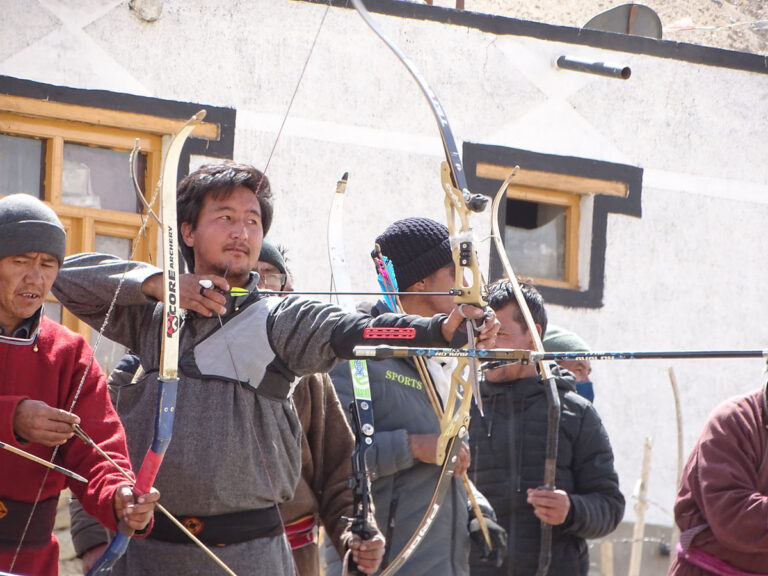
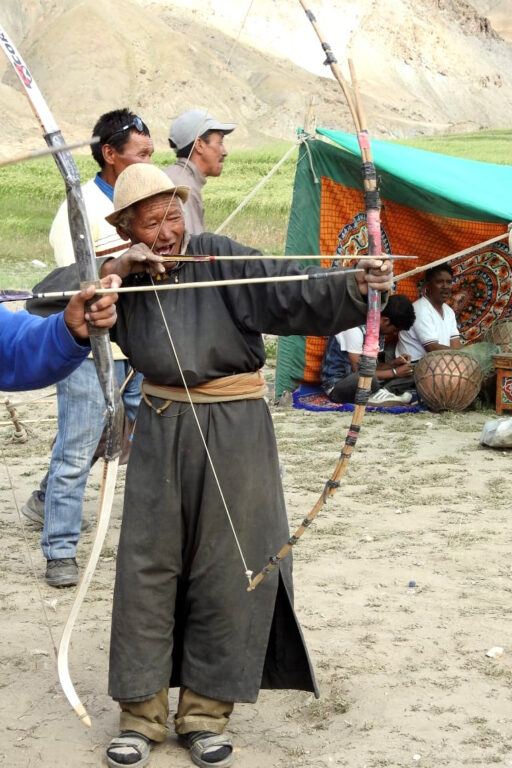
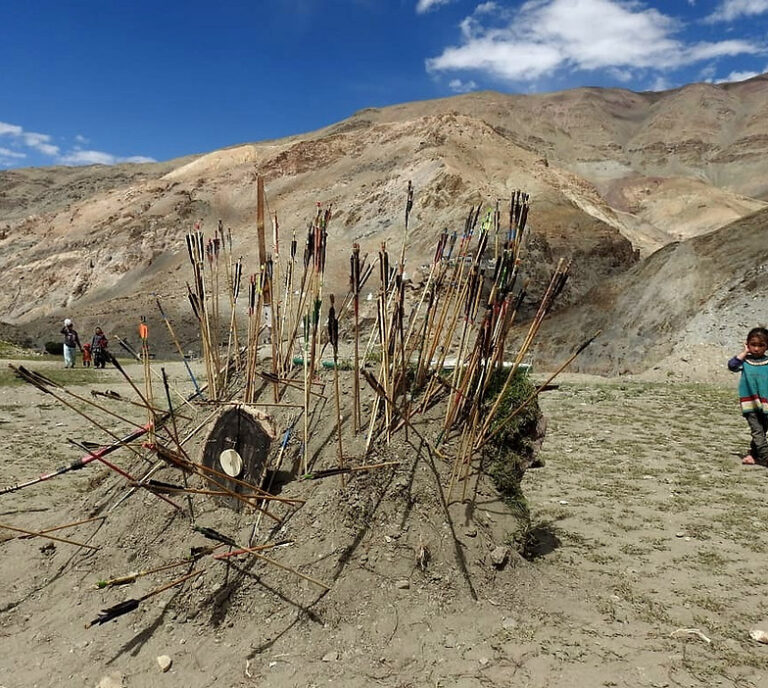
The archery competition is one of the most awaited events of the festivals and a lot of men and young boys take part in the competition. The archers are divided in two teams known as Ma-Bhu (Ma – mother, bhu-son) with one team headed byGoba (village leader) and another team led by Nyerpa (a monk representative). Earlier, bows and arrows were made of ibex horns by skilled artisans but these days we use the ones made of willow and bamboo. The target area is made on a heap of mud to ensure the arrows don’t break, and the target (bull’s eye) known as Tsage is either made of zama (earthen clay) or a wooden plank. The archery competition starts with rdaman pa (traditional musicians) playing songs and when an archer hits Tsege (bull’s eye target) people breakout in loud songs and dance cheering the team. Whichever team hits the target maximum number of times, wins the competition. The winning team has to pay some amount to Rdaman pa as a gesture of gratitude for their services and circumambulate Tsege (target area) in loud celebratory cry Rzang solo!!

Photo: Karma Sonam

Archery is not merely a sports tournament but is an integral part of our communal identity and cultural ethos. It is a reflection of the rich Ladakhi cultural heritage and carries strong socio-cultural sentiments of the people. The festival brings together communities and is important for maintaining cohesion and peace within society. Ladakh being primarily an agro-pastoralist society, the festival is in a way also a celebration of crops that are grown on land and cherish the efforts of the farmers.

But such traditional practices are slowly fading away and many aspects of the festival and traditional customs are altered to suit modernity. Wearing traditional clothes like Goncha (woolen robe), eating paba (barley delicacy) and using bows and arrows handmade by local artisans were significant aspects of the archery festival but are slowly eroding. These days, modern sports gear are used for archery and the spirit of harmony between people, between communities is slowly being replaced by competitiveness of the game. I have personally witnessed these traditional practices (whether farming or archery) undergo drastic change in the past few years and I feel an overwhelming sense of loss. Our land and our practices make up for who we are and I feel it is important to preserve these traditional practices.

1724 588 Karma Sonam