Automated Ice Reservoirs: A new technique to combat climate change
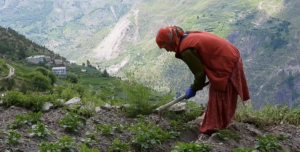
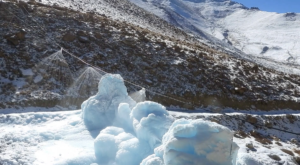
The first-ever World Day for Glaciers, coinciding with World Water Day, is being celebrated on March 21, 2025. Glaciers are vital to the health of rivers that emerge from the high Himalayan range. These rivers account for close to a fifth of the Earth’s fresh water stock. However, there have been concerns over the shrinking of glaciers attributed largely to human-induced climate change. The impact of shrinking glaciers is felt most acutely by farmers in the Himalaya as water from glacial melts needed for their first irrigation arrives late. This pushes the farming window further away, risking damage to their standing crop which has to be harvested on time. People of Ladakh have been carrying out novel experiments to build ice structures that can counter this challenge. Such initiatives began in the 1990s in the form of artificial glaciers designed by Chewang Norphel, and later in 2013 with the construction of vertical ice stupas was conceived by Sonam Wangchuk.
Acres of Ice (AoI), a newly set up Ladakhi company, is now trying to couple the design philosophy of both these ideas while also introducing automation, to build larger ice reservoirs while easing the process of building such structures. In this story, we speak with Dr. Surya, the co-founder of AoI, and Karuna Sah of AoI about their work.
Credits: We thank Dr. Surya and Karuna Sah from Acres of Ice for speaking with us and taking us to one of their sites in Igoo.
Image credits: Leh Nutrition Project, The Ice Stupa Project, Sonam Wangchuk/Rolex Awards and Acres of Ice.
Cover image: Nawang Tankhe
Background music: Glaciers by Roie Shpigler from Artlist via. Canva Teams
Kya Baat by Guy Buttery from Artlist via. Canva Teams
Stock Footage from Pixabay (https://pixabay.com/)
विश्व जल दिवस के साथ ही पहला विश्व ग्लेशियर दिवस 21 मार्च, 2025 को मनाया जा रहा है। ग्लेशियर उच्च हिमालयी श्रृंखला से निकलने वाली नदियों के स्वास्थ्य के लिए महत्वपूर्ण हैं। ये नदियाँ पृथ्वी के ताजे पानी के भंडार का लगभग पाँचवाँ हिस्सा हैं। हालाँकि, ग्लेशियरों के सिकुड़ने को लेकर चिंताएँ हैं, जिसका मुख्य कारण मानव-प्रेरित जलवायु परिवर्तन है। ग्लेशियरों के सिकुड़ने का प्रभाव हिमालय के किसानों पर सबसे ज़्यादा पड़ता है, क्योंकि पहली सिंचाई के लिए ज़रूरी ग्लेशियरों के पिघलने से पानी देर से आता है। इससे खेती के लिए समय कम हो जाता है, जिससे उनकी खड़ी फसल को नुकसान पहुँचने का जोखिम रहता है, जिसे समय पर काटा जाना चाहिए। लद्दाख के लोग बर्फ की संरचनाएँ बनाने के लिए नए प्रयोग कर रहे हैं, जो इस चुनौती का सामना करने में मदद कर सकते हैं, जैसे कि चेवांग नोरफेल द्वारा डिज़ाइन किए गए कृत्रिम ग्लेशियर और सोनम वांगचुक द्वारा पेश किए गए ऊर्ध्वाधर बर्फ स्तूप। लद्दाख की एक नई कंपनी एकर्स ऑफ आइस (एओआई) इन दोनों विचारों के डिजाइन दर्शन को स्वचालन के साथ जोड़ने की कोशिश कर रही है, ताकि ग्लेशियर निर्माण की प्रक्रिया को आसान बनाते हुए बड़े ग्लेशियर बनाए जा सकें। इस कहानी में, हम एओआई के सह-संस्थापक डॉ. सूर्या और एओआई की करुणा साह से उनके काम के बारे में बात करते हैं।