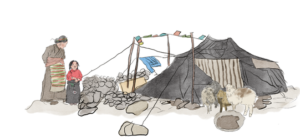
Herders

What the Land Teaches Us

What the Land Teaches Us

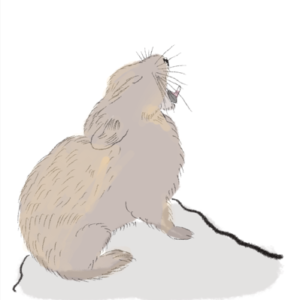
Some of my earliest childhood memories are of running across the grasslands, chasing pikas, and catching Rufous-necked Snow Finches in Tibet. Growing up, we were told that the two were companions: the pika offered shelter within its burrows, while the snow finch warned of danger and helped keep the burrow clean. Whether this was science or folklore mattered little to us. What mattered was the lesson it carried. On the plateau, life endured through relationships. Animals, like people, survived not in isolation but through connection, dependence, and coexistence.

The pika became my lifelong companion. It is woven into my earliest memories of home. Later, the curiosity I felt as a child watching pikas disappear into their burrows followed me into adulthood, through science, research, and a lifelong desire to understand the natural world. In many ways, the questions that shaped my career grew from the wonder I first felt as a child back home in Tibet. But more than a scientific curiosity, the pika remains a memory of home, carrying a sense of belonging that distance and time cannot erase.
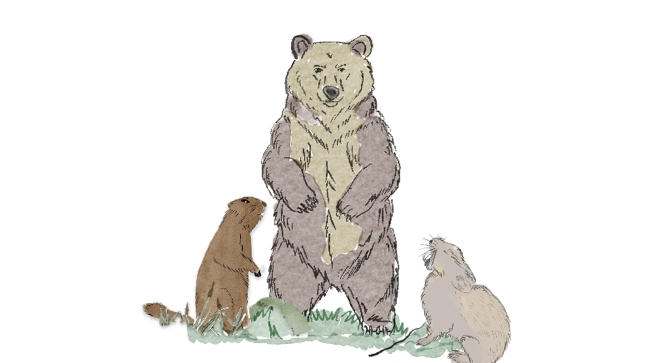
Some of my most cherished memories are of winter. Outside, the land lay silent beneath deep snow and bitter cold. Inside, our home glowed with warmth, laughter, and the comforting scent of butter tea. We gathered around my grandmother as she shared stories passed down through generations. Among them, my favourite was the story of the Tibetan brown bear, the marmot, and the pika. All three animals promised to sleep through the long winter without eating until spring arrived. The bear and the marmot kept their promise. The pika did not. It quietly nibbled from the food it had carefully stored during summer. As punishment, the pika was condemned to spend every short summer working tirelessly, gathering food while the other animals enjoyed spring’s fresh buffet. On the Tibetan Plateau, ecology was woven into stories, memory, and everyday life. Through such tales, people explained animal behaviour, seasonal change, and the realities of survival in a landscape shaped by long winters and brief summers.
As the western extension of the Tibetan Plateau, Changthang shares its distinctive geography and interconnected social-ecological systems, where ecological knowledge remains deeply woven into everyday pastoral life. Time is not abstract but relational. They are experienced through events: Spring began with the first melodious call of the Pied Wheatear, known locally as the “little shepherd bird.” A sign that says, winter was loosening its grip. The long, harsh season was coming to an end, and soon the pastures would begin to green. As the snow retreated and the soil slowly warmed, marmots emerged from their burrows, and the frozen lakes began to thaw. Migratory birds returned to the wetlands, following the same seasonal rhythms that had brought them here for generations. As the Hoopoe arrives, the milking season begins. In Changthang, people call the Hoopoe a tax collector. Its return in spring is believed to bring its service in the form of abundance, the birth of yearlings and the return of milk to the herds. Carrying families through the lean days of early spring.
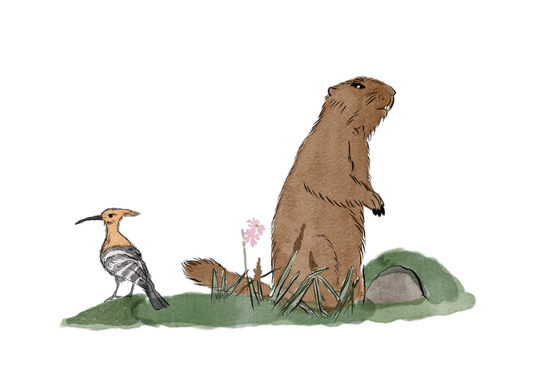
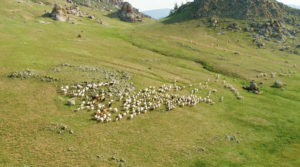
After the hasty spring, summer returns, the most vibrant season of life on the plateau. The earth has regained its biological pulse. The valleys glow green, and every living thing moves with urgency. Summer is brief here, but it is full of life and labour. Where to move livestock, when to leave a pasture, where water will be available, and how long a pasture can support grazing are all decisions embedded in ecological knowledge. Movement is therefore not simply a way of making a living. It is a way of living with the landscape. The boundaries between “nature” and “human life” become difficult to draw. Birds return to their nests, searching for mates; the black-necked crane remains the most unforgettable. A bird that pairs for life, it performs its elegant dances and echoing calls across the open marshes. Together, the pair build their nest and raise their young; marmots and bears, those who once promised to sleep through the long winter, greet the brief abundance and feast on the generosity of the land, as if teaching us that sometimes the greatest wisdom is simply to live fully in the moment given. Others prepare more carefully. The pika, tireless and watchful, begins its labour. Day after day it gathers forage, laying grass in careful layers beneath the sun, drying it patiently so it may last through the winter months. Tunnel by tunnel, it strengthens its home now that the earth has loosened itself. For the pika lives under constant watch, a small creature always on the menu of the plateau’s many predators. Predators too follow the rhythm of abundance. They move across the open land where prey is plentiful, and life is most concentrated. Summer offers choices, and with those choices come movement, hunger, and survival. Summer is generous, but fleeting, and all life on the plateau moves with the same unspoken wisdom: to gather strength from the moment before the cold returns again.
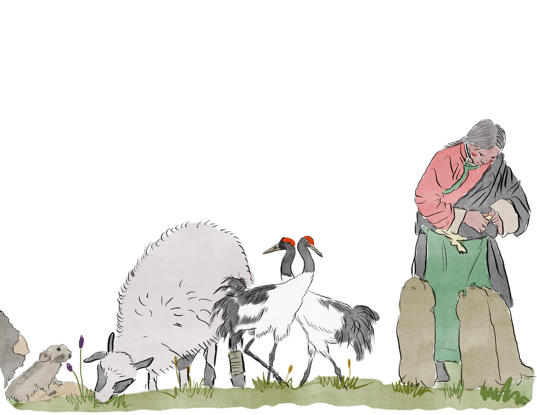
Slowly and steadily, autumn arrives, with shrubs and sedges that linger longer before senescence claims them. As the growing season closes, the landscape slowly shifts from abundance to endurance, reminding every creature that winter is near. The animals taste what remains of the season. Sometimes they graze on locoweed and wander back unsteadily and get drunk and confused. At other times they feast on wild chives, and when they return their breath carries the sharp scent of the chives, an aroma that lingers in the wool of goats and sheep. By now the delicate flavours of summer are gone. What remains is eaten not for delight, but for survival. The sedges are coarse and not as sweet, but they fill the belly, and that is enough.

The air sharpens day by day. Frost begins to settle on the meadow, and the rhythm of migration unfolds across the sky. Birds follow ecological pathways, leaving the high plateau for warmer valleys and distant wetlands. The brief alpine summer passes, and when the season turns, they return along the same timeless route. Slowly the pasture grows quieter. The grasses fade from green to gold, the winds grow colder, and the land settles into stillness. Life withdraws into burrows, nests, and human homes alike. And when the first snow begins to fall across the valley, we gather once more around the fire, carrying forward what the land has taught us through stories, metaphors, and songs. People often speak about strength as an individuality, to be strong enough to withstand hardship alone. But in Changthang, Survival is deeply relational. People depend on livestock; livestock depend on pasture and water; wildlife depends on the same landscape; and the health of the landscape depends on the timing and intensity of use.
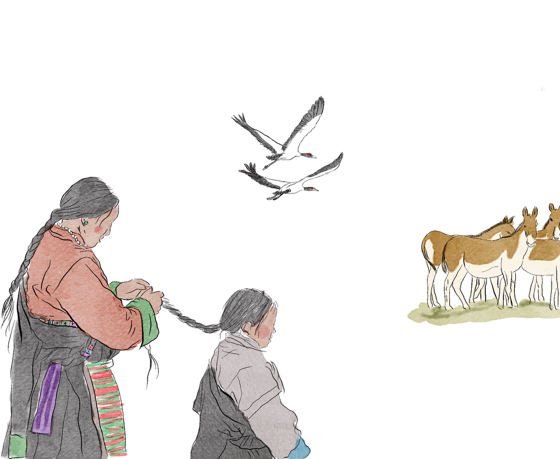
But Changthang is changing faster than we can measure. The most visible transformations are climatic. Temperatures are rising, snowfall patterns are shifting, rainfall has become more unpredictable, and the timing of seasons no longer follows familiar rhythms. These changes are evident across the landscape. But the most profound change is a change in the relationship between people and the land. For generations, survival in Changthang depended on an intimate understanding of the natural world. Water, pasture, snowfall, animal health, and seasonal cycles were not separate environmental concerns. They were part of a single living system that governed movement, livelihoods, and everyday life. Today, the ideas of progress, comfort, and a “better life” are increasingly shaped by urban lifestyles, markets, technology, and modern patterns of consumption. Comfort is often understood as freedom from cold, physical labour, uncertainty, and dependence on natural cycles. Yet these aspirations are not emerging in isolation. They are part of a broader worldview that increasingly portrays dependence on nature as a limitation to be overcome rather than a relationship to be maintained.
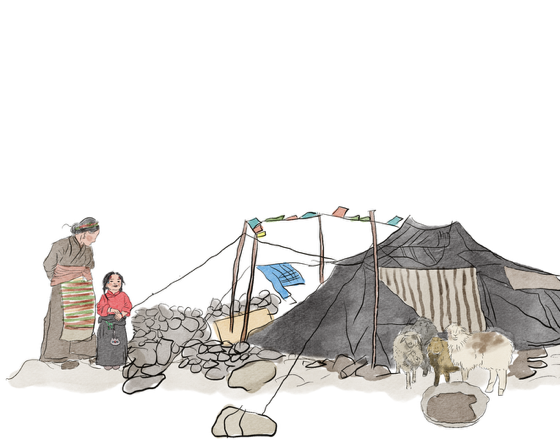
The life of a pastoralist is frequently reduced to uncertainty, livestock ownership, physical labour, or the slaughter of animals. Such interpretations overlook the far deeper relationships that sustain pastoral societies. Livestock is not simply a commodity or a source of meat. It forms part of an intimate web built through care, responsibility, and mutual dependence. Animals provide milk, fibre, wool, transport, income, nutrition, and security. Herders protect them during harsh winters, move with them across space and time, care for them through illness, defend them from predators, and organise their lives around their well-being. When pastoralism is viewed only through narrow external moral frameworks, much of what matters most becomes invisible. The care, knowledge, labour, reciprocity, and ecological understanding embedded within pastoral life disappear from view. What is at stake in Changthang is not merely the loss of a livelihood or a collection of ecological observations. What may be disappearing is an entire way of understanding the natural world. A way of life in which survival depended on attentiveness rather than extraction, adaptation rather than control, relationship rather than separation.

For the people of Changthang, living with the land has historically required limits. You cannot make grass grow faster simply because you need more. You cannot force winter to end. You cannot ask a frozen lake to provide water before it thaws. You move when the pasture changes. You store when abundance allows. You endure when the landscape becomes harsh. This creates a form of ecological intelligence that is easy to overlook because it is not always written down. It lives in memory. It lives in stories about pikas storing hay. It lives in knowing which bird signals the beginning of spring. It lives in recognising when the grass has dried enough to indicate that winter is approaching. It lives in knowing where animals will find shelter, when to move livestock, when milk will return, and when it will disappear again. This knowledge is not static. It changes with the landscape because the people who hold it are constantly observing and responding to change.

Perhaps this is what the land had been teaching me all along. As a child, that species, habitats, and people are bound together through relationships that sustain life on the plateau. The snow finch and the pika, livestock and pasture, people and animals are not isolated parts of a landscape, but participants in an interconnected ecological system. Survival here has never been simply about controlling nature, but about understanding its variability and learning to live within its rhythms. Yet development and conservation often reduce landscapes to resources, ecosystems to services, and ecological complexity to problems to be managed. In Changthang, the land is more than a resource; it is livelihood, memory, and home. The arrival of migratory birds, the condition of pastures, and the timing of snowfall are interconnected signals through which pastoralists interpret environmental change and guide their decisions. This knowledge emerges not from observing the land at a distance, but from generations of living within it.

For Changthang’s social–ecological systems to endure, local and pastoral knowledge must be recognized as more than cultural heritage. It is a dynamic knowledge system, grounded in long-term observation, collective memory, and adaptation to environmental variability. Bringing it into dialogue with scientific approaches is essential to understanding ecological change beyond what can be captured through measurements alone. Our schools, universities, and conservation institutions must teach not only how to study ecosystems, but also how to recognize the knowledge cultivated by those who live within them. As climate and social change reshape the natural world, what is at stake is not only the future of pastoralism, but also a way of understanding our place in the living world. The land continues to speak through returning birds, shifting seasons, animal behaviour, and stories passed between generations. The question is whether we will continue to listen. Perhaps the most enduring lesson of Changthang is that resilience is built through relationships, and that we cannot truly care for a landscape without recognizing that we are part of the ecological processes that sustain it.


Illustrations by Sonam Palmo
659 301 Sonam Palmo
Is pastoralism economically viable?
To add caption add it to "Alt Text"

Is pastoralism economically viable?

Pastoralism is a way of life for a very large section of society in India. But is pastoralism receding? We look at an example of the Changpa pastoral herders of eastern Ladakh, famous for producing pashmina, and see if their practice is economically viable.
This exploration is based on a study led by Chamba Tsetan from the Centre for Pastoralism and was carried out with the support of the World Wildlife Fund for Nature (WWF), India as part of a project funded by the Darwin Initiative.
The study makes an interesting distinction to show how pastoralism as a social activity may be undergoing a transformation, even while pastoralism as an economic activity remains lucrative. So, while the nature of pastoralism is changing, this practice is likely to remain active.

Acknowledgement:
We thank Chamba Tsetan for giving us time to explain this work.

Photo credits:
Pashmina: Aaditya Kitroo via. Wikimedia Commons
Bakarwal: Muzamil Bhat for PARI: https://ruralindiaonline.org/en/artic…
Changpa: Prasenjeet Yadav for Nature Conservation Foundation.
Gaddi: Ajay Bijoor for Nature Conservation Foundation.
Van Gujjar: Traditional Cultures Project, https://www.himalayanmigration.com/start

Map of eastern Ladakh is used for representational purposes only and is credited to UNDP Secure Himalaya (https://securehimalaya.org/ladakh/).

Map of pastoralists in Himalaya is credited to Singh, Bhati and Kerven (2023), https://pastres.org/2023/08/25/pastor…

News articles:
BBC https://www.bbc.com/news/world-asia-i…
Frontline: https://frontline.thehindu.com/enviro…
Mint: https://www.livemint.com/news/india/c…
The Asian Age: https://www.asianage.com/india/all-in…
The Economist: https://www.economist.com/asia/2021/1…

Cover image: Nawang Tankhe

Additional footage via. Pixabay (https://pixabay.com/) and Open Planet (https://openplanet.org/)
Music: Nomads by Edward Earl Hanson from Epidemic Sound via. Canva.

Location: Greenland Guest House, Leh

1200 667 Ajay Bijoor
How to care for livestock in harsh Himalayan winters

How to care for livestock in harsh Himalayan winters

Recent research highlights that viral loads in livestock rise in summer and affect animal health just before the onset of winter. Winters being the harshest season in the high Himalaya, a weak start to the season may mean a higher risk of losing weak animals. We explain some findings from this latest research which was led by Dr. Munib Khanyari and list some easy steps that could help reduce livestock damages from poor health in winter.

You can read the full research here: https://www.frontiersin.org/journals/…
Stock Footage from Pixabay (https://pixabay.com/)


हाल के शोध से पता चला है कि गर्मियों में पशुओं में वायरल लोड बढ़ जाता है और सर्दियों की शुरुआत से ठीक पहले पशु स्वास्थ्य को प्रभावित करता है। उच्च हिमालय में सर्दियाँ सबसे कठोर मौसम होती हैं, मौसम की कमजोर शुरुआत का मतलब कमजोर जानवरों के खोने का अधिक जोखिम हो सकता है। हम इस नवीनतम शोध से कुछ निष्कर्षों की व्याख्या करते हैं जिसका नेतृत्व डॉ. मुनीब खन्यारी ने किया था और कुछ आसान कदम सूचीबद्ध किए हैं जो सर्दियों में खराब स्वास्थ्य से पशुधन के नुकसान को कम करने में मदद कर सकते हैं।

आप पूरा शोध यहां पढ़ सकते हैं: https://www.frontiersin.org/journals/…
पिक्साबे से स्टॉक फुटेज (https://pixabay.com/)

1200 680 Ajay Bijoor
Food of the mountains: Stinging nettle (Zatsod)

Food of the mountains: Stinging nettle (Zatsod)

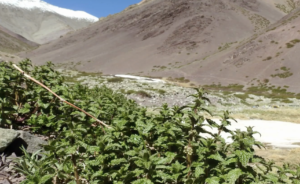
People of the high mountains have traditionally gathered plants and herbs from the wild, which would then be carefully stored and consumed in winter. Most of this collection is for personal use and never for commercial purposes. In this story, Karma Sonam of Gya village of Ladakh tells us about the traditional technique for collection and storage of zatsod or stinging nettle. He also shares a recipe of zatsod thukpa.

ऊंचे पहाड़ों के समुदाय पारंपरिक रूप से जंगली पौधों और जड़ी-बूटियों की तलाश करते हैं, जिन्हें बाद में सावधानीपूर्वक संग्रहीत किया जाता है और सर्दियों में खाया जाता है। इस संग्रह का अधिकांश भाग व्यक्तिगत उपयोग के लिए था, न कि व्यावसायिक उद्देश्यों के लिए। इस कहानी में, लद्दाख के ग्या गाँव से कर्मा सोनम हमें बिच्छू बूटी के संग्रह की तकनीक के बारे में बताते हैं। वह स्थानीय सामग्रियों का उपयोग करके बनाई गई थुकपा की एक पारंपरिक रेसिपी भी साझा करते हैं।

This story was narrated, shot and edited by Karma Sonam.

यह कहानी कर्मा सोनम द्वारा सुनाई, शूट और संपादित की गई है।

1718 1052 Karma Sonam
भारत में पहली बार हिम तेंदुए की जनगणना कैसे की गई?

भारत में पहली बार हिम तेंदुए की जनगणना कैसे की गई?

अंतर्राष्ट्रीय हिम तेंदुआ दिवस 23 अक्टूबर को मनाया जाता है। भारत इस साल अपनी पहली हिम तेंदुए की जनगणना के नतीजे घोषित करेगा। यह परिणाम देश के हिमालयी क्षेत्रों में किए गए 4 साल के व्यापक अभ्यास पर आधारित है। यह विशाल अभ्यास देश के सुदूर ऊंचाई वाले क्षेत्रों में रहने वाले स्थानीय लोगों के समर्थन और भागीदारी के बिना पूरा नहीं किया जा सकता था।

वीडियो: समर्थ ज्योति
कथन: अक्षिता अशोकन
अनुवाद: सीमा बजाज
कैमरा ट्रैप छवियां: हिमाचल प्रदेश वन विभाग, नेचर कंजर्वेशन फाउंडेशन और स्नो लेपर्ड ट्रस्ट
फुटेज: तेंज़िन थुक्तान, मुनीब खन्यारी और अजय बिजूर
छवियाँ: हाई एल्टीट्यूड प्रोग्राम और प्रसेनजीत यादव
अतिरिक्त फ़ुटेज: ओपन प्लैनेट

2444 1360 Akash Jyoti
Ladakh Pashmina

Ladakh Pashmina

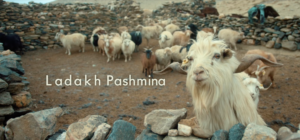
The story of Ladakh Pashmina: The authentic, sustainable cashmere. A film by Munmun Dhalaria. (Language: English and Ladakhi with English subtitles)

2292 1072 Munmun Dhalaria
The Lonely Tree
Illustration: Peeyush S

The Lonely Tree

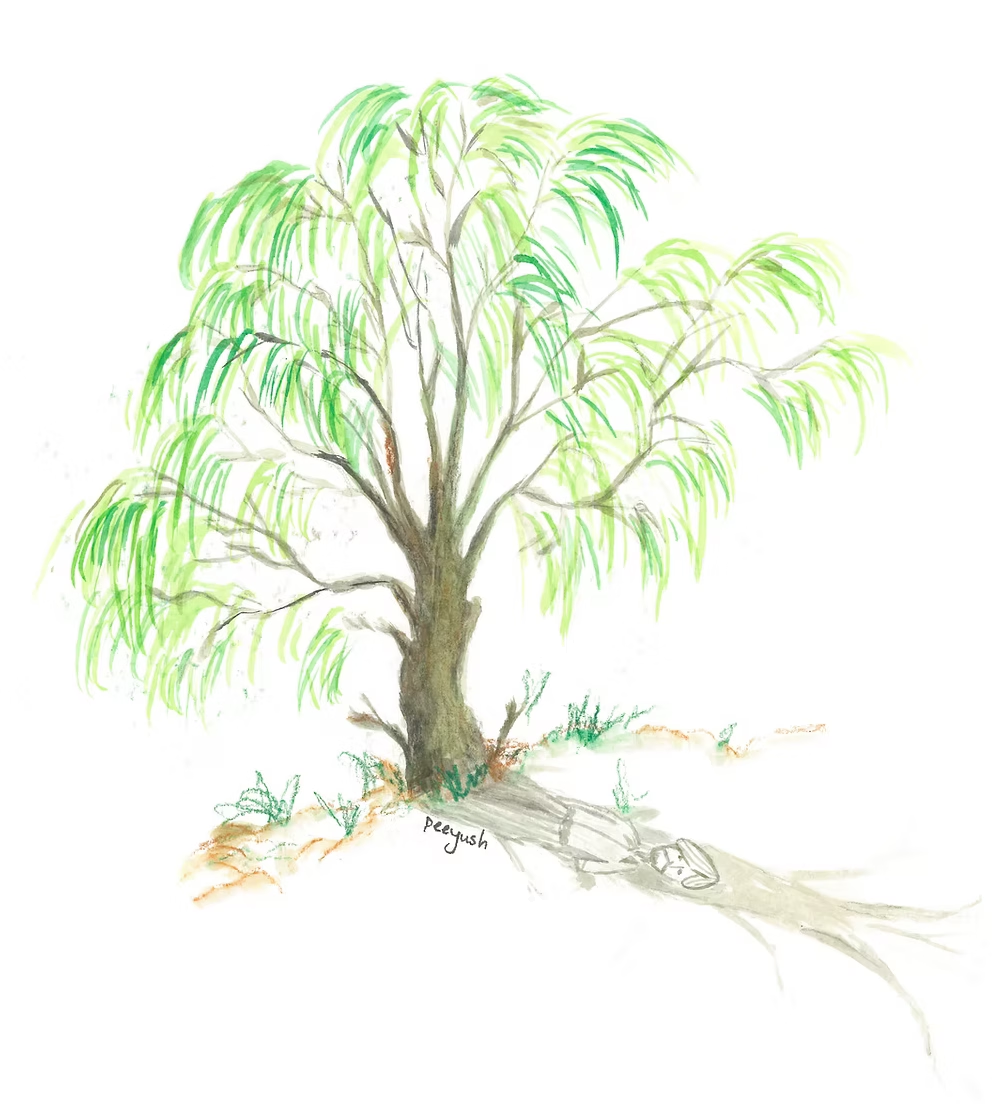
Young Bishen Singh’s dreams were finally coming true. He had just passed his college exams and landed a government job as a school teacher. He had always wished for it. There was only one challenge though, his first posting was in Kaza. Spiti was still part of the State of Punjab then, and Kaza only found an occasional mention in government reports. There were a lot of myths surrounding Spiti mostly because so few people had heard of the place, let alone visit it. In those days the bus only went up to Manali after which one had to walk across the Rohtang La, then walk the long stretch from Gramphu to Batal and finally cross the Kunzum La. A very, very long walk of over 100 km.  And after all this walking, you only reached Losar. Kaza was another 60 km away. The travel took over a week.

Bishen was partly sad about leaving his family back in Punjab. But he was also terribly excited for the new adventure he was about to set out on. He had always wanted to explore the mountains and this was his chance. He had packed all his stuff, including a lot of woolens, in a single sturdy cloth bag. He also had one bag just for food that could see him through his long walk to Spiti. Bishen left 10 days before his joining date hoping to reach Kaza a few days before his first day at school.

The walk from Gramphu was a pleasant one. He crossed a patch of birch forest at Dorney nalla. He couldn’t recollect seeing so many birch trees in a single place before. There were so many waterfalls to admire that one hardly noticed the distance. His pace dropped every few kilometers as he was in awe of the landscape. It was also early summer and Gaddi herders were setting up camp. Gaddis are always glad to receive an unexpected guest who brings them news from new places. The first few evenings were spent at different Gaddi camps, where the routine was somewhat fixed. Bishen would be welcomed with a piping hot cup of tea followed by rotis drowned in ghee and roti-khadi – all made from goat milk. Bishen had enjoyed his walk from Gramphu to Batal. But the walk from here on was going to be a lonely one since Gaddis only camped up to this point and did not enter Spiti. It took Bishen two full days to summit Kunzum La and then climb down to Losar, the first village in Spiti.

The first thing Bishen noticed when he started descending Kunzum La was how bare the landscape was. The waterfalls were all gone and even the trees began to disappear. By the time he reached Losar, he was struggling to spot a single tree. Bishen suddenly felt as if he had set foot on a different planet. His pace dropped again, but this time in shock. He was struggling to wrap his head around why these massive mountains were without any greenery. Had someone robbed them of it? He couldn’t imagine living in a place like this, that too so far from home. He suddenly felt like he was stuck without anywhere to escape. As he reached the village of Sumling just 15 km from his final destination Kaza, his eyes fell on a lonely willow tree.

Illustration: Peeyush S

This full-grown tree stood in all its majesty almost in defiance with the otherwise treeless landscape. Bishen felt like he had met a long-lost friend. His eyes welled up and he couldn’t hold himself back. He dropped all his luggage and ran towards the tree. He hugged the tree tightly and sobbed loudly, ‘My friend I have been forced to come this far just so I can keep the hearth burning back home, but what ill luck has fallen upon you? Who cursed you to come to this place?’

Hearing Bishen’s loud sobs, several curious villagers gathered around to see what was happening. But none had the heart to disturb the conversation between two long-lost friends.

  • Kaza is the main town of Spiti and the headquarters of Spiti sub-division.
  • Gramphu and Batal are locations on the road from Manali to Kaza.
  • Birch is a thin-leaved deciduous hardwood tree. The bark usually peels horizontally in thin sheets, especially on young trees. These sheets were traditionally used as paper in many high mountain regions. Several holy scriptures have been preserved by writing on such sheets.
  • Dorney nalla is a patch where one can still find a lot of birch trees on the way from Manali to Kaza.
  • Sumling is a beautiful village on the right bank of the Spiti river.
  • Willow is a tree with long thin branches and often grows near water.
994 1118 Ajay Bijoor
Birth of the Chandra river

Birth of the Chandra river

It is fairly well known that Gaddi herders from Kangra spend summer in the rich pastures of Lahaul. This is an annual migratory route that the Gaddi community have accessed for generations. They camp in the high mountain pastures. From a distance their life may seem idyllic – spending the day in the shadow of snow-clad peaks, breathing the crisp mountain air, basking in the soft summer sun. Unfortunately, the Gaddi’s dammed flock does not harbor such taste for a serene life in the mountains. All they care for is food! Each morning they bleat to be taken to a new slope where they can get their fill of fresh summer grass. And the poor Gaddi herder has to run behind them to make sure the flock remains safe, for a pesky wolf waiting to feast on the flock is almost never very far. Summer days are very long. But as dusk sets in, the Gaddi gets some rest.

It had only been a few years since Noopalal started accompanying his aged uncle and their flock. Their settlement was at the farthest end of Lahaul valley. It was so far that most herders had only heard of it. It was famous for a beautiful lake that had turquoise-blue water.

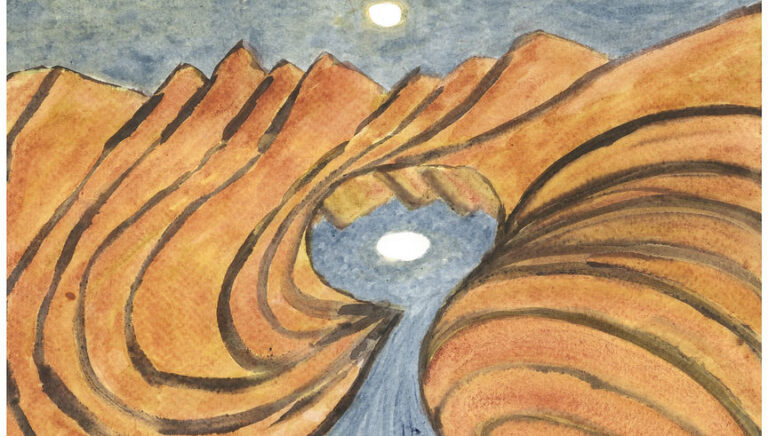
Noopalal was in-charge of the flock, while his old uncle stayed back and cooked for them. Every evening Noopalal would herd the flock and sit outside their thaach, which overlooked the lake. He would slowly pull out his flute and play it softly while his uncle smoked a pipe. Even though there was no one but his animals to listen, he played the flute because it gave him joy. On most days it would get dark by the time he finished. He would then crawl into the thaach, eat his meal, and retire for the day. This was the ritual he followed on most days until it all changed one night. The moon was full and when Noopalal finished playing his flute he looked mesmerized. As if he were possessed, as if someone had cast a spell on him. When he looked at the lake he saw a reflection of the full moon in its turquoise-blue water. He stood up in shock. “The moon has fallen in the lake”, he whispered. “The moon is drowning. Help!” He yelled as he ran towards the lake. His old uncle barely registered anything, and by the time he did Noopalal had jumped into the icy cold water. His poor uncle ran behind him. But he could only watch helplessly. He remembered Noopalal shouting frantically that the moon is cracking, looking at the ripples on the surface of the water. By morning, both Noopalal and the moon were gone.

Did Noopalal sink with the moon that night? Maybe not. But many believe that the moon did, indeed, drown that night and the water that spilled over gave birth to the Chandra river. And the lake, Chandra tal, remains beautiful as ever. Especially on full moon nights. If you ever have the good fortune of spending a full moon’s night by Chandra tal, you might even hear Noopalal’s flute.

  • Gaddi herders are a semi-pastoral tribe that rear sheep and goat. Some of the sturdiest men and women, the Gaddis travel for 10-11 months with their livestock covering a vast distance across the Himalaya and her lower plains.
  • Kangra is a Himalayan region from where the Gaddi herders hail. It is also a district in the State of Himachal Pradesh.
  • Lahaul is another remote Himalayan valley that can be reached after crossing the Rohtang pass. Lahaul valley is adjacent to Spiti valley and together Lahaul-Spiti forms the biggest district of Himachal Pradesh.
  • Thaach is a stone hut that gaddi herders live inside in places where they camp. These stone huts are old and beautifully built by stacking stones. They protect the herders from rough weather.
  • Chandra river rises from the snow lying at the base of the main Himalayan range in the Lahaul and Spiti district. The beautiful Chandra Tal has formed at its source.
  • Chandra tal is a beautiful high-altitude lake known for its beauty. It is also a very beautiful site to watch water birds. It is a mythologically important site.
864 491 Ajay Bijoor
Navigating the challenges of climate change in the Himalaya
Illustration: Nawang Tankhe

Navigating the challenges of climate change in the Himalaya

The heart of the mighty Himalaya is witnessing a profound transformation shaped by the relentless force of climate change. With Himalaya playing a crucial role in shaping the weather patterns across India, climate change is disrupting these patterns. And the Western Himalaya Region comprising of Jammu & Kashmir, Ladakh, Himachal Pradesh and Uttarakhand characterised by complex geography with various local warm and cold zones is affected differently from one location to another.

Climate change refers to long-term shifts in weather patterns that affect local, regional, and global climates on earth. Most of us are familiar with greenhouses that are commonly used to grow vegetables in winter, because the temperature inside these enclosures stays warmer than outside. A greenhouse keeps the enclosure warm by letting in as much light as possible and then trapping it as thermal energy. Now imagine what might happen if our planet acted similarly? In fact, it is because the earth works like a large greenhouse, that our planet can support such a wide variety of life. This phenomenon is called the greenhouse effect. However, a rapid rise in burning of fossil fuels over the last 150 years has significantly increased the level of carbon dioxide in our atmosphere leading to increased warming and a rise in unforeseen weather events.

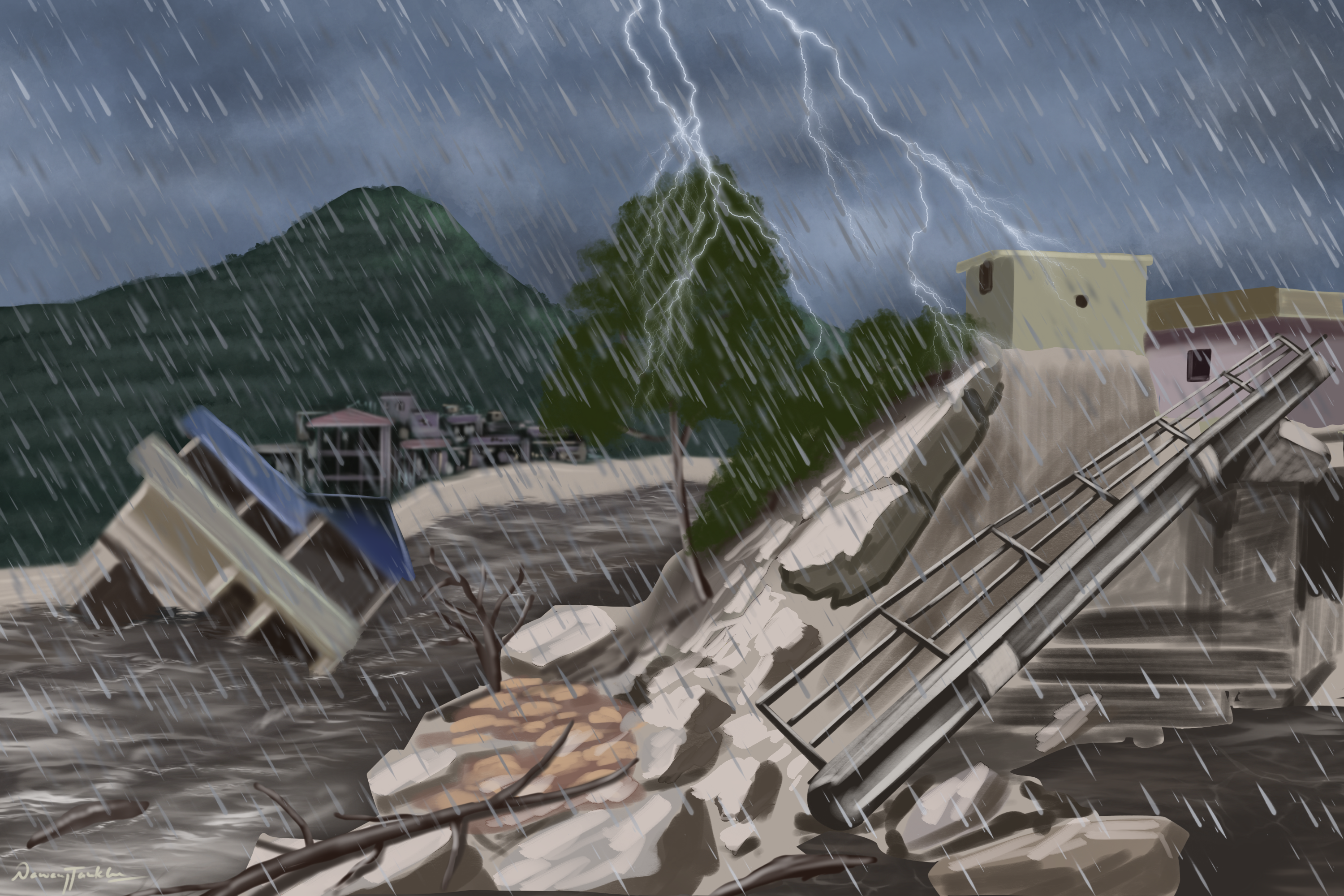
Research findings paint a stark picture of the Himalaya’s changing climate. Over the years the region has witnessed a noticeable rise in both seasonal maximum and minimum temperatures. The difference between daytime and night-time temperatures is also getting larger, indicating a warming trend. Snowfall events have shown variability in terms of intensity and timing. Scientists note a decrease in early snowfall during December and January, accompanied by an extension into February and March. While rainfall intensity remains relatively unchanged, there is a notable shift in its timings. Monsoon rains, once confined up to mid-August, now linger beyond their traditional timeframe, accompanied by a rise in cloudburst events. This shift, intertwined with delayed snowfall, alters the distribution of rainfall and cloud cover across the region.

The impact of this climatic transformation is not an abstract concept but a harsh reality affecting various sectors. Agriculture, the lifeline of many in the region, is particularly vulnerable. In the Kullu valley of Himachal Pradesh, delayed snowfall has cast its icy shadow on apple orchards. The blossoming, bearing, and overall yield of apples have suffered due to altered chilling conditions. Orchards, once thriving in lower elevations, now seek refuge in higher altitudes, affecting not just the geographical landscape but the very quality of the produce.

In Ladakh’s western regions, horticulture crops like apricots and walnuts are facing severe challenges. Spring seasons are turning cooler, delaying the fruiting process and impacting the quality of the produce. Barley, a locally grown crop, is witnessing a substantial reduction in yield, echoing the broader struggle against a changing climate.

Villagers in Spiti tell a poignant tale of declining green pea production, a crucial revenue-generating crop. This decline, attributed to persistent water scarcity, reached its peak in 2022 when Langza village faced complete crop loss due to the unavailability of water. The transformation is not confined to the fields; it seeps into the very identity of these regions.

Agriculture in Uttarakhand, highly vulnerable to climate change, experiences shift in production dynamics, causing changes in crop yield, reduced diversity, and a surge in pest invasions. In districts like Pithoragarh, Chamoli, and Uttarkashi, climate change is altering the traditional collection period of non-timber forest products, impacting livelihoods.

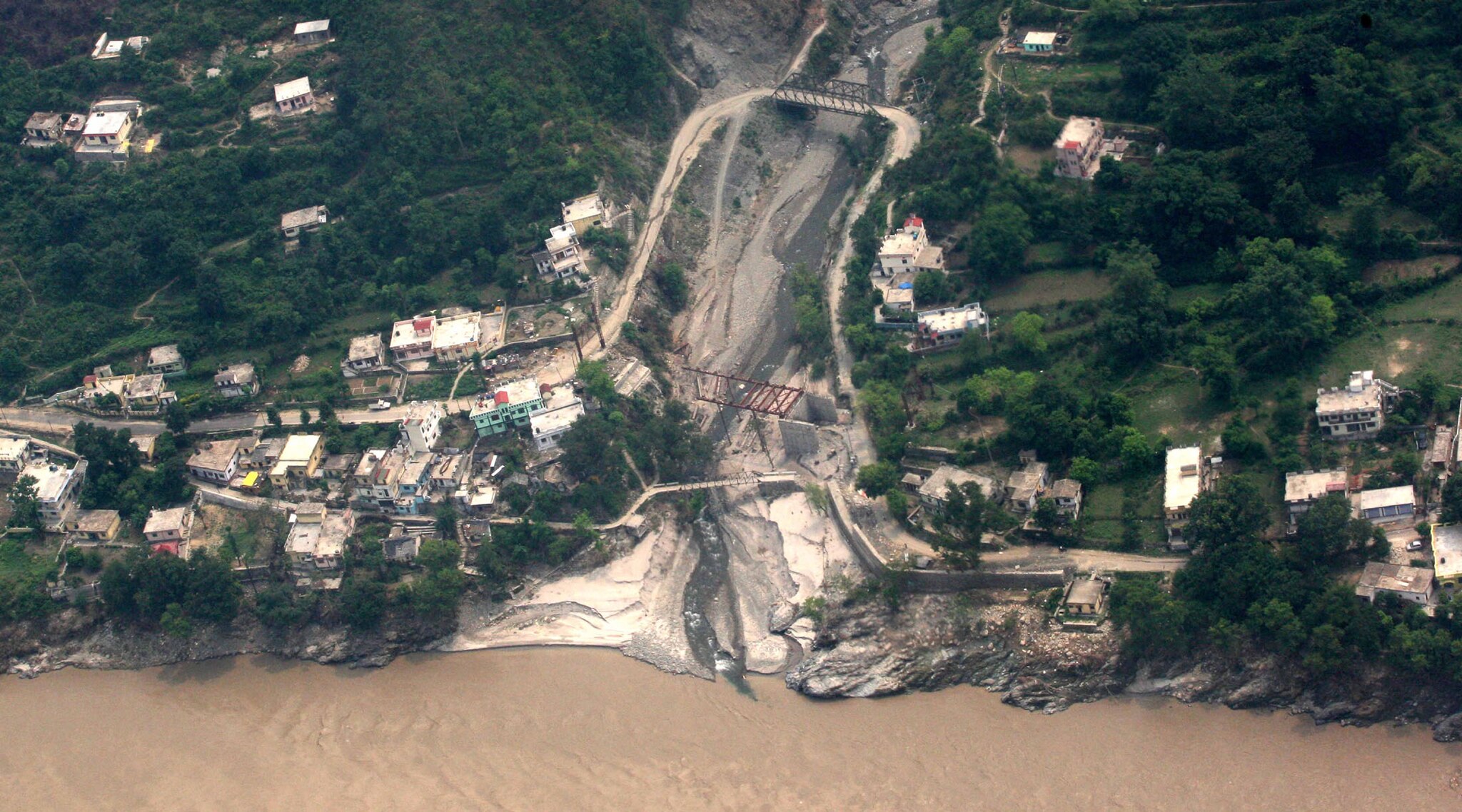
An aerial view of flood-ravaged Rudraprayag, in Uttarakhand | Photo: Wikimedia Commons

The farmers, the custodians of the land, echo this change.

Earlier, we could not see stars in the sky for the whole of July and August. Continuous rains for days during the monsoon season in old times was good for the soil and the crops. But now, sudden and untimely torrential rains are spoiling the soil as well as the crops. The rains have completely disappointed us.

by a farmer from Uttarakhand

Summers are more intense and drier now because of which the crops ripen at an early stage without proper grain development.

by an elderly farmer from Uttarakhand

Earlier the snow was about a foot high and it used to stay for weeks but now if ever there is snowfall it is less than 5 inches and melts within a day.

by a farmer from Himachal Pradesh

Every year, we travelled from Zanskar to Kishtwar by crossing the glacier. Over the years, this glacier has been reducing. The new snowfall is not sufficient for settling, posing challenges to our traditional migration routes.

by a pastoralist from Ladakh

This replacement about 50-60 years ago, which turned agri-culture on its head did not come with the Green Revolution (more appropriately called Greed Revolution) then but was the consequence of what had emerged as the industrial revolution two-three hundred years ago. And it started with de-legitimising traditional society’s existence, identity and knowledge by naming it ‘backward’ and following it up by seeking to shame people’s knowledge systems and their seeds. It was crucial and strategic that this society begin to have an inferiority complex about oneself. This was the first essential stage of the conspiracy. Once this was achieved, it was followed by a systematic replacement of the principles, methods, seeds with the means that it had created. As a result, a creative, productive and self-reliant society has today become a dependent slave farmer society.

3000 2000 Ajay Bijoor
Counting Spots in the Snow

Counting Spots in the Snow

International Snow Leopard Day is celebrated on 23 Oct. India is expected to announce the results of it’s first snow leopard census based on an extensive 4-year exercise undertaken in the Himalayan regions of the country. This mammoth exercise could not have been accomplished without the support and participation of local people living in the remote high altitude regions of the country.

1200 670 Akash Jyoti