What the Land Teaches Us
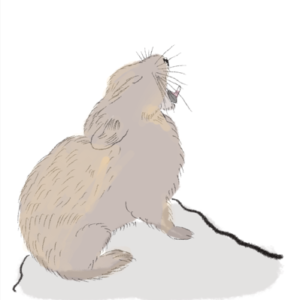
Some of my earliest childhood memories are of running across the grasslands, chasing pikas, and catching Rufous-necked Snow Finches in Tibet. Growing up, we were told that the two were companions: the pika offered shelter within its burrows, while the snow finch warned of danger and helped keep the burrow clean. Whether this was science or folklore mattered little to us. What mattered was the lesson it carried. On the plateau, life endured through relationships. Animals, like people, survived not in isolation but through connection, dependence, and coexistence.
The pika became my lifelong companion. It is woven into my earliest memories of home. Later, the curiosity I felt as a child watching pikas disappear into their burrows followed me into adulthood, through science, research, and a lifelong desire to understand the natural world. In many ways, the questions that shaped my career grew from the wonder I first felt as a child back home in Tibet. But more than a scientific curiosity, the pika remains a memory of home, carrying a sense of belonging that distance and time cannot erase.
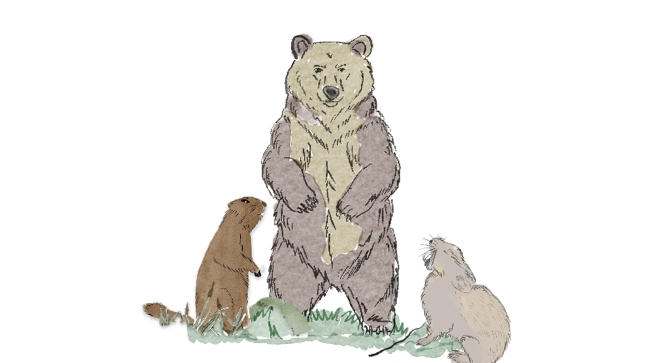
Some of my most cherished memories are of winter. Outside, the land lay silent beneath deep snow and bitter cold. Inside, our home glowed with warmth, laughter, and the comforting scent of butter tea. We gathered around my grandmother as she shared stories passed down through generations. Among them, my favourite was the story of the Tibetan brown bear, the marmot, and the pika. All three animals promised to sleep through the long winter without eating until spring arrived. The bear and the marmot kept their promise. The pika did not. It quietly nibbled from the food it had carefully stored during summer. As punishment, the pika was condemned to spend every short summer working tirelessly, gathering food while the other animals enjoyed spring’s fresh buffet. On the Tibetan Plateau, ecology was woven into stories, memory, and everyday life. Through such tales, people explained animal behaviour, seasonal change, and the realities of survival in a landscape shaped by long winters and brief summers.
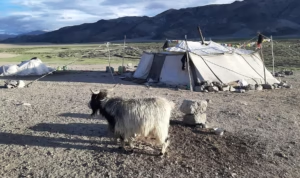
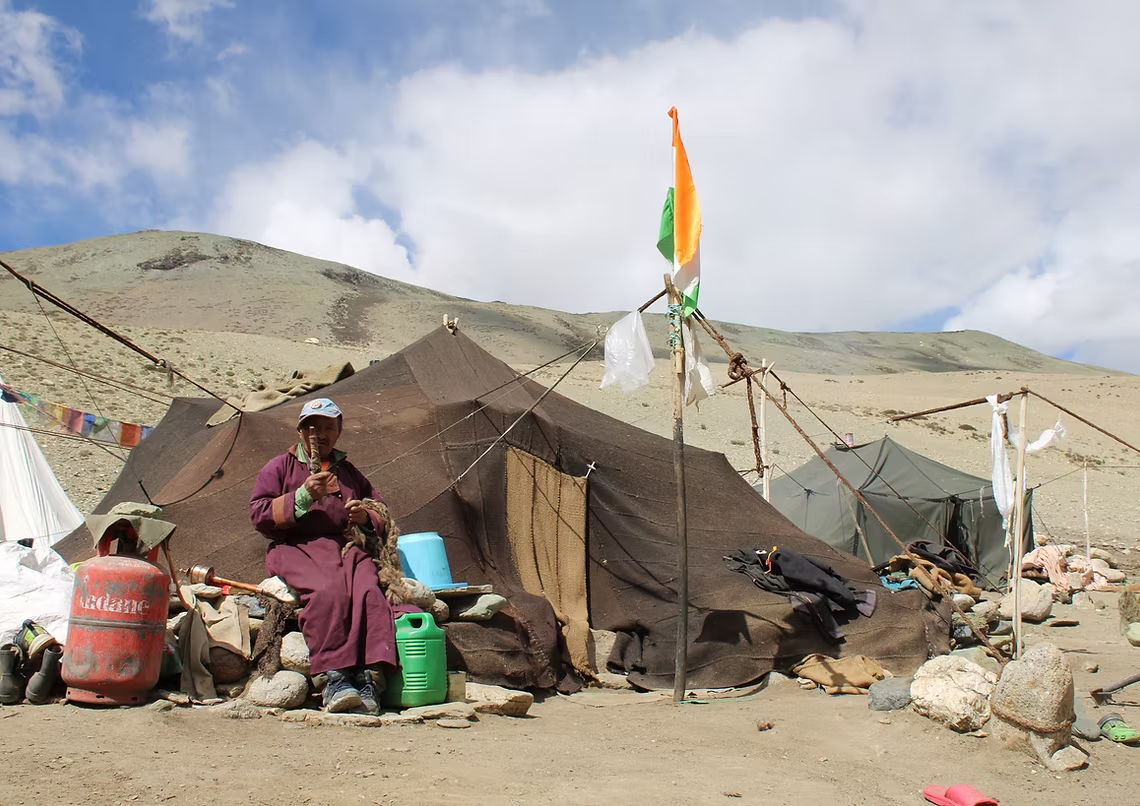
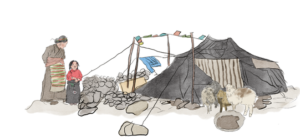
As the western extension of the Tibetan Plateau, Changthang shares its distinctive geography and interconnected social-ecological systems, where ecological knowledge remains deeply woven into everyday pastoral life. Time is not abstract but relational. They are experienced through events: Spring began with the first melodious call of the Pied Wheatear, known locally as the “little shepherd bird.” A sign that says, winter was loosening its grip. The long, harsh season was coming to an end, and soon the pastures would begin to green. As the snow retreated and the soil slowly warmed, marmots emerged from their burrows, and the frozen lakes began to thaw. Migratory birds returned to the wetlands, following the same seasonal rhythms that had brought them here for generations. As the Hoopoe arrives, the milking season begins. In Changthang, people call the Hoopoe a tax collector. Its return in spring is believed to bring its service in the form of abundance, the birth of yearlings and the return of milk to the herds. Carrying families through the lean days of early spring.
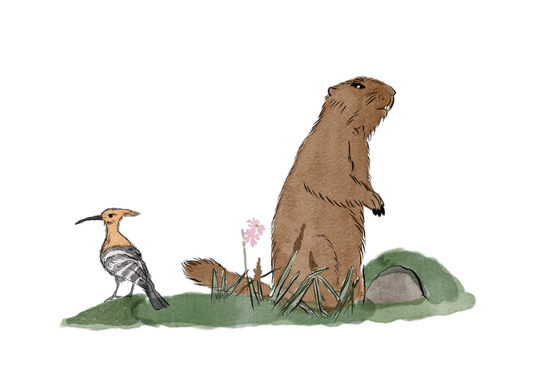
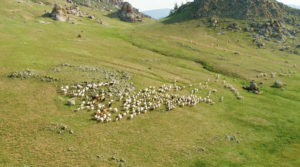
After the hasty spring, summer returns, the most vibrant season of life on the plateau. The earth has regained its biological pulse. The valleys glow green, and every living thing moves with urgency. Summer is brief here, but it is full of life and labour. Where to move livestock, when to leave a pasture, where water will be available, and how long a pasture can support grazing are all decisions embedded in ecological knowledge. Movement is therefore not simply a way of making a living. It is a way of living with the landscape. The boundaries between “nature” and “human life” become difficult to draw. Birds return to their nests, searching for mates; the black-necked crane remains the most unforgettable. A bird that pairs for life, it performs its elegant dances and echoing calls across the open marshes. Together, the pair build their nest and raise their young; marmots and bears, those who once promised to sleep through the long winter, greet the brief abundance and feast on the generosity of the land, as if teaching us that sometimes the greatest wisdom is simply to live fully in the moment given. Others prepare more carefully. The pika, tireless and watchful, begins its labour. Day after day it gathers forage, laying grass in careful layers beneath the sun, drying it patiently so it may last through the winter months. Tunnel by tunnel, it strengthens its home now that the earth has loosened itself. For the pika lives under constant watch, a small creature always on the menu of the plateau’s many predators. Predators too follow the rhythm of abundance. They move across the open land where prey is plentiful, and life is most concentrated. Summer offers choices, and with those choices come movement, hunger, and survival. Summer is generous, but fleeting, and all life on the plateau moves with the same unspoken wisdom: to gather strength from the moment before the cold returns again.
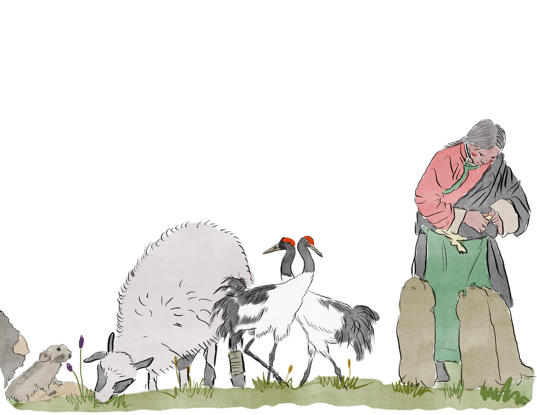
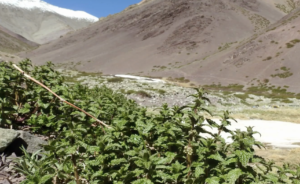
Slowly and steadily, autumn arrives, with shrubs and sedges that linger longer before senescence claims them. As the growing season closes, the landscape slowly shifts from abundance to endurance, reminding every creature that winter is near. The animals taste what remains of the season. Sometimes they graze on locoweed and wander back unsteadily and get drunk and confused. At other times they feast on wild chives, and when they return their breath carries the sharp scent of the chives, an aroma that lingers in the wool of goats and sheep. By now the delicate flavours of summer are gone. What remains is eaten not for delight, but for survival. The sedges are coarse and not as sweet, but they fill the belly, and that is enough.
The air sharpens day by day. Frost begins to settle on the meadow, and the rhythm of migration unfolds across the sky. Birds follow ecological pathways, leaving the high plateau for warmer valleys and distant wetlands. The brief alpine summer passes, and when the season turns, they return along the same timeless route. Slowly the pasture grows quieter. The grasses fade from green to gold, the winds grow colder, and the land settles into stillness. Life withdraws into burrows, nests, and human homes alike. And when the first snow begins to fall across the valley, we gather once more around the fire, carrying forward what the land has taught us through stories, metaphors, and songs. People often speak about strength as an individuality, to be strong enough to withstand hardship alone. But in Changthang, Survival is deeply relational. People depend on livestock; livestock depend on pasture and water; wildlife depends on the same landscape; and the health of the landscape depends on the timing and intensity of use.
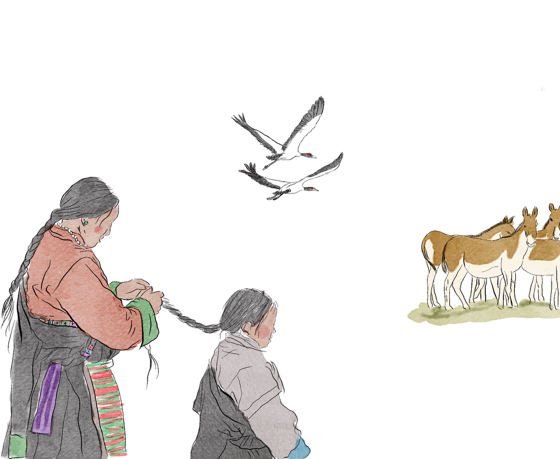
But Changthang is changing faster than we can measure. The most visible transformations are climatic. Temperatures are rising, snowfall patterns are shifting, rainfall has become more unpredictable, and the timing of seasons no longer follows familiar rhythms. These changes are evident across the landscape. But the most profound change is a change in the relationship between people and the land. For generations, survival in Changthang depended on an intimate understanding of the natural world. Water, pasture, snowfall, animal health, and seasonal cycles were not separate environmental concerns. They were part of a single living system that governed movement, livelihoods, and everyday life. Today, the ideas of progress, comfort, and a “better life” are increasingly shaped by urban lifestyles, markets, technology, and modern patterns of consumption. Comfort is often understood as freedom from cold, physical labour, uncertainty, and dependence on natural cycles. Yet these aspirations are not emerging in isolation. They are part of a broader worldview that increasingly portrays dependence on nature as a limitation to be overcome rather than a relationship to be maintained.
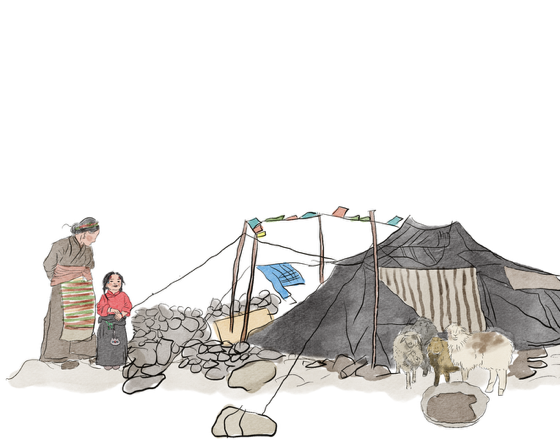
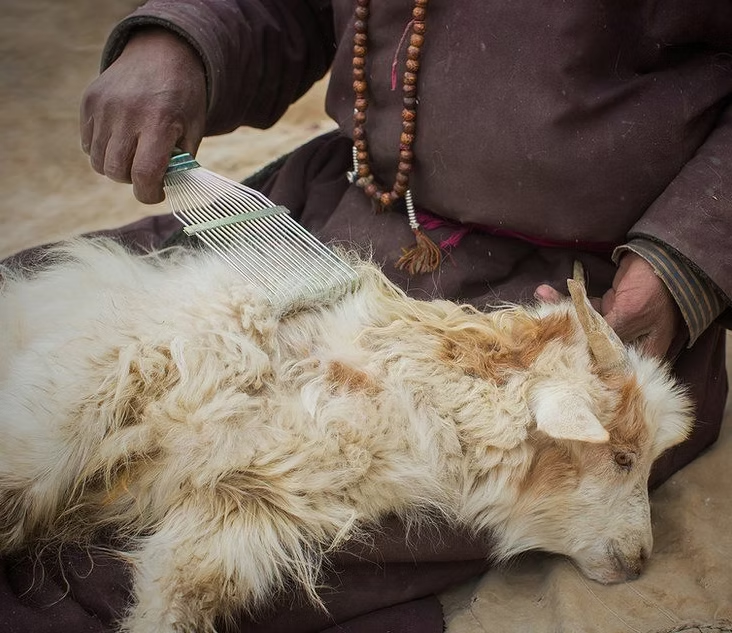
The life of a pastoralist is frequently reduced to uncertainty, livestock ownership, physical labour, or the slaughter of animals. Such interpretations overlook the far deeper relationships that sustain pastoral societies. Livestock is not simply a commodity or a source of meat. It forms part of an intimate web built through care, responsibility, and mutual dependence. Animals provide milk, fibre, wool, transport, income, nutrition, and security. Herders protect them during harsh winters, move with them across space and time, care for them through illness, defend them from predators, and organise their lives around their well-being. When pastoralism is viewed only through narrow external moral frameworks, much of what matters most becomes invisible. The care, knowledge, labour, reciprocity, and ecological understanding embedded within pastoral life disappear from view. What is at stake in Changthang is not merely the loss of a livelihood or a collection of ecological observations. What may be disappearing is an entire way of understanding the natural world. A way of life in which survival depended on attentiveness rather than extraction, adaptation rather than control, relationship rather than separation.
For the people of Changthang, living with the land has historically required limits. You cannot make grass grow faster simply because you need more. You cannot force winter to end. You cannot ask a frozen lake to provide water before it thaws. You move when the pasture changes. You store when abundance allows. You endure when the landscape becomes harsh. This creates a form of ecological intelligence that is easy to overlook because it is not always written down. It lives in memory. It lives in stories about pikas storing hay. It lives in knowing which bird signals the beginning of spring. It lives in recognising when the grass has dried enough to indicate that winter is approaching. It lives in knowing where animals will find shelter, when to move livestock, when milk will return, and when it will disappear again. This knowledge is not static. It changes with the landscape because the people who hold it are constantly observing and responding to change.
Perhaps this is what the land had been teaching me all along. As a child, that species, habitats, and people are bound together through relationships that sustain life on the plateau. The snow finch and the pika, livestock and pasture, people and animals are not isolated parts of a landscape, but participants in an interconnected ecological system. Survival here has never been simply about controlling nature, but about understanding its variability and learning to live within its rhythms. Yet development and conservation often reduce landscapes to resources, ecosystems to services, and ecological complexity to problems to be managed. In Changthang, the land is more than a resource; it is livelihood, memory, and home. The arrival of migratory birds, the condition of pastures, and the timing of snowfall are interconnected signals through which pastoralists interpret environmental change and guide their decisions. This knowledge emerges not from observing the land at a distance, but from generations of living within it.
For Changthang’s social–ecological systems to endure, local and pastoral knowledge must be recognized as more than cultural heritage. It is a dynamic knowledge system, grounded in long-term observation, collective memory, and adaptation to environmental variability. Bringing it into dialogue with scientific approaches is essential to understanding ecological change beyond what can be captured through measurements alone. Our schools, universities, and conservation institutions must teach not only how to study ecosystems, but also how to recognize the knowledge cultivated by those who live within them. As climate and social change reshape the natural world, what is at stake is not only the future of pastoralism, but also a way of understanding our place in the living world. The land continues to speak through returning birds, shifting seasons, animal behaviour, and stories passed between generations. The question is whether we will continue to listen. Perhaps the most enduring lesson of Changthang is that resilience is built through relationships, and that we cannot truly care for a landscape without recognizing that we are part of the ecological processes that sustain it.
Illustrations by Sonam Palmo