
Barley

Spirits of the mountains: Barley Beer (Chaang)

Spirits of the mountains: Barley Beer (Chaang)

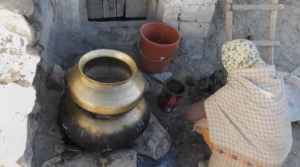
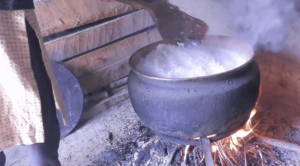
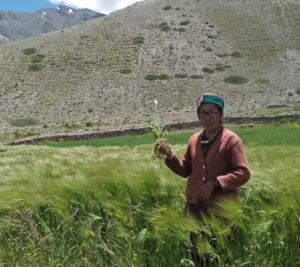
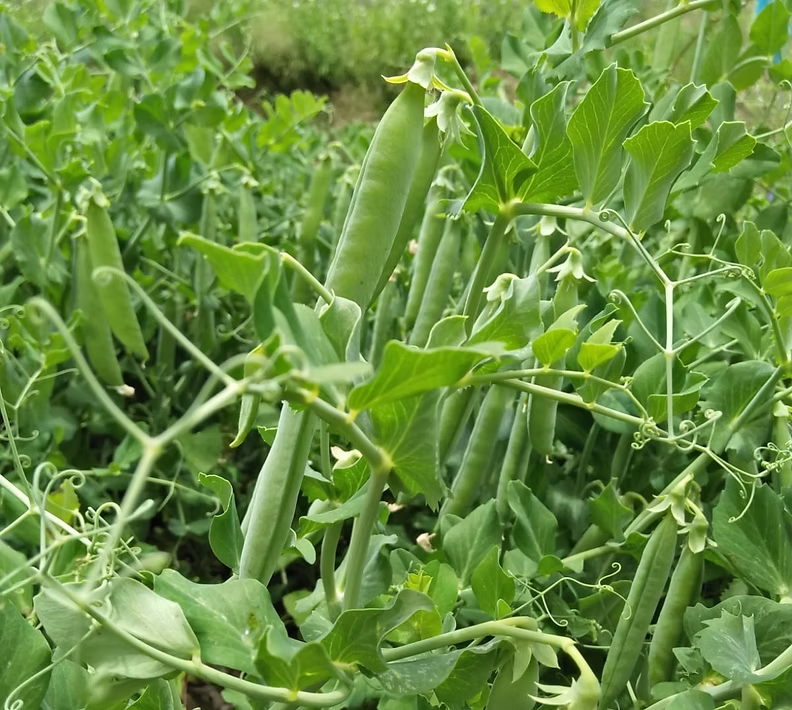
Often referred to as the beer of the high mountains, Chaang is a fermented, alcoholic beverage. In Spiti and Ladakh, it is primarily made using locally-grown, organic barley. More recently, people have started using rice and wheat to make Chaang. Barley, once a staple in the high mountains, is slowly losing out to cash crops despite cash crops being more vulnerable to the risks presented by changing weather patterns. The lack of a market for locally grown barley is leading to its decline.

With special thanks to Tanzin Kunzang


छांग एक किण्वित पेय है जो आमतौर पर ऊंचे पहाड़ों में बनाया जाता है। स्पीति और लद्दाख में, यह मुख्य रूप से स्थानीय रूप से उगाए गए, जैविक जौ का उपयोग करके बनाया जाता है। हाल ही में, लोग छांग बनाने के लिए चावल और गेहूं का भी उपयोग करते हैं। जौ, जो कभी इन भागों का प्रमुख भोजन था, धीरे-धीरे नकदी फसलों की तुलना में कम होता जा रहा है, बावजूद इसके कि नकदी फसलें मौसम के बदलते मिजाज के कारण पैदा होने वाले जोखिमों के प्रति अधिक संवेदनशील हैं।

तंजिन कुंजांग को विशेष धन्यवाद 
1200 663 Ajay Bijoor
The uncertain future of Himalayan Barley

The uncertain future of Himalayan Barley

Barley grown organically has been a staple produce in the high altitude regions of Spiti, Lahaul and Ladakh. In the 1980s, the cold summer weather allowed farmers to move towards growing more lucrative cash crops. However, the same weather is now becoming the biggest risk. In this story, Tanzin Thinley, a farmer from Kibber in Spiti talks about this change and the challenges facing farmers like him.

Credits:
Thanks to Tanzin Thinley
Also, thanks to Dikit Lamo of Chicham
Additional footage: Lama Tanzin Chhewang
Stock Footage from Pixabay (https://pixabay.com/)
Music: The Old Farmer by Dream-Protocol via. Pixabay


जैविक तरीके से उगाई गई जौ स्पीति, लाहौल और लद्दाख के क्षेत्रों में एक प्रमुख उपज रही है। 1980 के दशक में, ठंडी गर्मी के मौसम के कारण, किसानों को अधिक लाभदायक नकदी फसलें उगाने की ओर बढ़ने का मौका मिला। हालांकि, यही मौसम अब सबसे बड़ा खतरा भी बनता जा रहा है। इस कहानी में, स्पीति के किब्बर के एक किसान तंजिन थिनले इस बदलाव और उनके जैसे किसानों के सामने आने वाली चुनौतियों के बारे में बात करते हैं।

फिल्मांकन क्रेडिट:
तंजिन थिनले को धन्यवाद
इसके अलावा, चिचम के डिकिट लामो को भी धन्यवाद
अतिरिक्त फुटेज: लामा तंजिन छेवांग
पिक्साबे से स्टॉक फुटेज (https://pixabay.com/)

1200 650 Ajay Bijoor
Spirits of the mountains: Barley liquor (Arrack)

Spirits of the mountains: Barley liquor (Arrack)

Preparation of barley wine involves a delicate process that is usually mastered over many years. Watch how a blend of barley wine is made traditionally.

Special thanks to Tanzin Kunzang


जौ की वाइन तैयार करना एक नाजुक प्रक्रिया है जिसमें महारत हासिल करने में कई साल लग जाते हैं। देखें कि पारंपरिक रूप से जौ वाइन का मिश्रण कैसे बनाया जाता है।

तंजिन कुंजांग को विशेष धन्यवाद

1200 666 Ajay Bijoor
Spirits of the mountains: How is Rice Beer (chaang) made in Lahaul

Spirits of the mountains: How is Rice Beer (chaang) made in Lahaul

Chaang is a fermented, alcoholic beverage traditionally made from barley in the Himalayan belts. Thanks to an effective Public Distribution System, locals now have access to rice and wheat, which was previously rare. Both are rice and wheat are also used to brew chaang now. The key to a great brew though is the fermenting agent, phaav. Phaav is essentially a way to trap and use the atmospheric yeast as a starter, making it specific to each location. The phaav is what distinguishes a great brew from a good one.


छांग एक मादक पेय है जो पारंपरिक रूप से हिमालयी क्षेत्रों में जौ से बनाया जाता है। प्रभावी सार्वजनिक वितरण प्रणाली की बदौलत, स्थानीय लोगों को अब चावल और गेहूं तक पहुंच प्राप्त हो गई है, जो पहले दुर्लभ था। दोनों चावल और गेहूं का उपयोग अब छांग बनाने के लिए किया जाता है। हालाँकि, एक बेहतरीन शराब की कुंजी किण्वन एजेंट, फाव है। फाव मूल रूप से वायुमंडलीय खमीर को स्टार्टर के रूप में फंसाने और उपयोग करने का एक तरीका है, जो इसे प्रत्येक स्थान के लिए विशिष्ट बनाता है। फाव ही एक बढ़िया ब्रू को अच्छे से अलग करता है।

Special thanks to Angmo Gaaji and Chhering Gaaji.
Cover illustration by Nawang Tankhe.
Supporting cast: Shri. Kesang Chunit.

अंग्मो गाजी और छेरिंग गाजी को विशेष धन्यवाद।
नवांग तन्खे द्वारा कवर चित्रण।
सहायक कलाकार: श्री. केसांग चुनित।

1200 665 Ajay Bijoor
Reflections on farming life
Photo: Panma Gyatso

Reflections on farming life

I was born in Hango (11,500 ft) which is a remote village in the Hangrang valley of Kinnaur. I am 72 years old and have spent my life in this village as an agro-pastoral farmer. Agriculture is very important to us. When I look back, I now realise that some of my most treasured memories of my village are related to agriculture and food. One of my favourite and most vivid childhood memories is from the time chulli (apricot) season arrived. Our village did not have any chulli trees, so our elders would go to the nearby village of Leo and get chulli for us. When they arrived, all the children of the village would run to the common ground to grab as much as possible in our little hands. Women would also find time during the day to enjoy chulli with each other under the winter sun. Relishing chulli was a communal affair. The seeds were saved to make prized chulli oil (750 ml for INR 2000/ USD 27).

Photo: Panma Gyatso

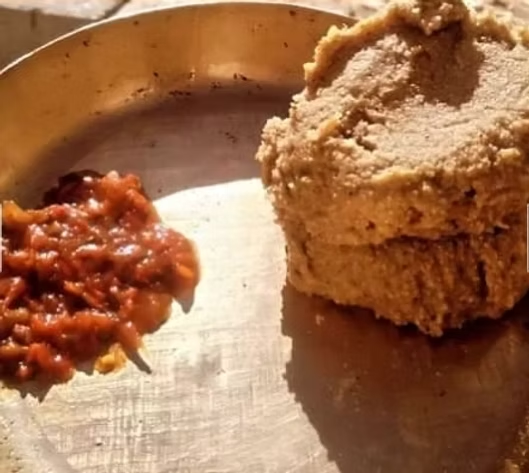
My other happiest memories are of the festivities and celebrations we had after the harvest. Until a few years back, we had an isolated winter in Hango. So we had to work really hard during the summers to ensure we had enough grains to survive the harsh winters. After gruelling work in the short summer season, the celebrations were especially sweet. Our harvest back then was of barley, potatoes, black peas and cheena/chize (local name). Cheena & barley were used to make flour for thukpa (soups) and salma (local bread). During the festivities we would make various dishes like tolopa, chulipanting (sweet apricot). Communally preparing and eating added exponentially to the taste of these dishes.

Barley was and continues to be used for making local alcohol like chhang and arak. No one, now, grows cheena. The seeds are also very hard to come by. It has completely vanished. Black peas & barley cultivation has also reduced and mainly taken over by the cash crops like green peas, apple, cauliflower etc. Due to increase in connectivity with the outside world, wheat and rice which were only heard of back in my days, have now become staple food. Salma, tolopa, chulipanting etc which were favorites of all age groups are now hardly prepared.

With our generation most of the traditional dishes are also fading away. I am hoping that we can slowly shift back to our traditional crops, as they grow best in our landscape, with focus on apricots for better economic gains. This way we will be able to ensure sustainable growth from agriculture.

792 706 Prithvi Singh