Artisans

The Art of Weaving in Lahaul’s Upper Valleys
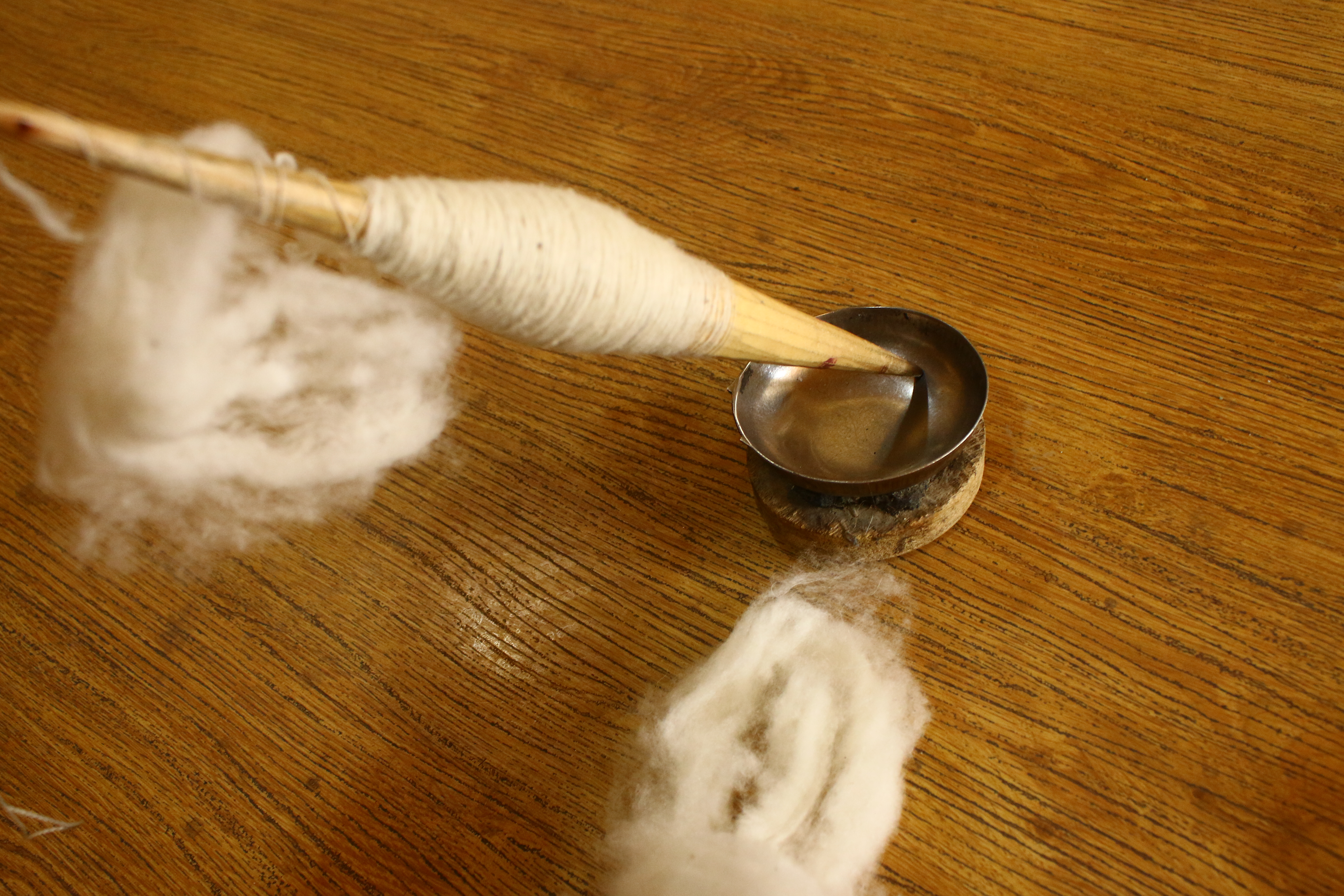
"Phang" - Traditional spindle | Photo: Rigzin Dorjee

The Art of Weaving in Lahaul’s Upper Valleys

In the higher Himalayan region, weaving is an ancient craft and forms an integral part of people’s lives. In Lahaul, weaving signifies a retreat into slower, simpler times amid icy cold weather when the farming works are at its lowest. There’s a saying in local folklore attributing weaving as visual art that reflects stories about people, their communities, and their place in the universe. It symbolizes the value of creation, interconnectedness, and rejuvenation. Weaving requires profound discipline and dexterity to untie complexities; it involves crossing two threads the warp and the weft, one vertical, and one horizontal, one stretched tight, the other intertwining the first. To produce a textile, the two threads need to be bound together otherwise, the weaving work will remain fragile. Hence in ancient Buddhist belief, a weaver is akin to a problem solver, someone who is adept at bridging silos and bringing greater connectedness.

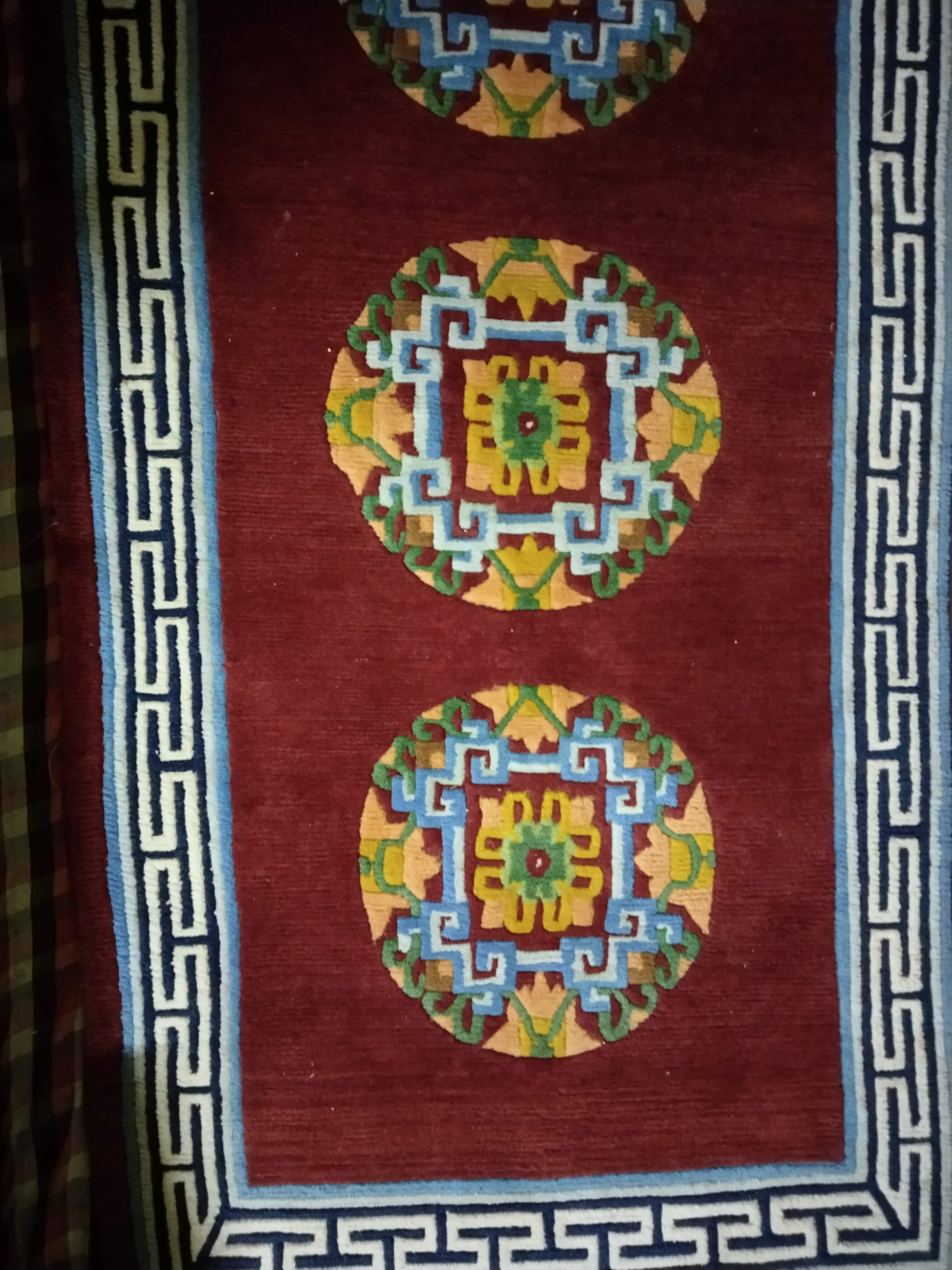
Weaving is a traditional skill that’s passed down through generations and is practiced with great vigor in our village. Of the many products that are woven, Tsug-den (Tibetan rug) weaving remains the most popular with its elegant design and high pile, plush feel. In our village, the handwoven woollen carpets are called Tsug-thu or Tuk-tuk in villages around the Darcha side in Lahaul. Tsug-dens are unique handwoven carpets, that are woven on a backstrap loom called “Khaddi”. It is an extremely slow, time-consuming process, that involves a lot of hard work as each bit of the work is done manually – from livestock herding to wool shearing to cleaning, carding, spinning, and yarn making and finally weaving, the process can stretch up to a year.
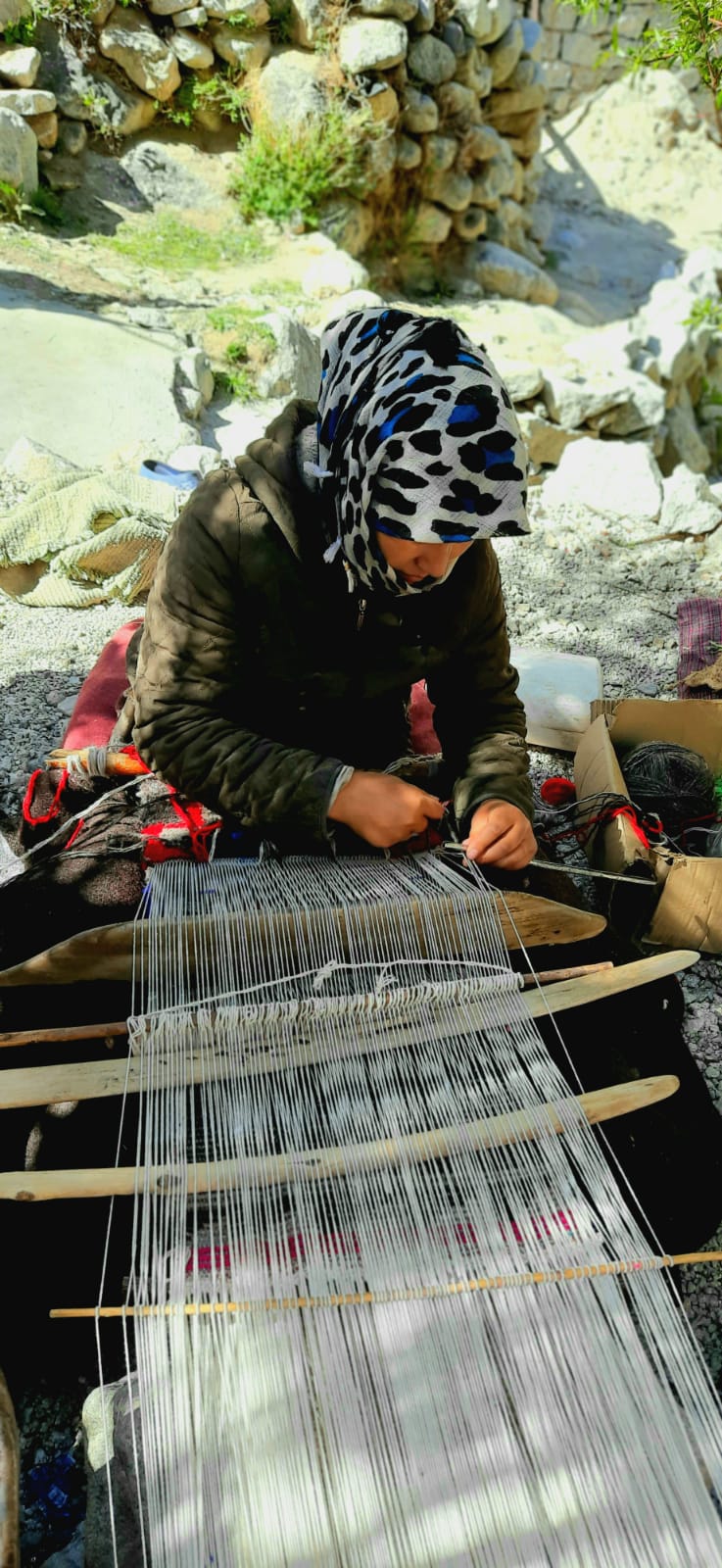
Photo: Sherab Lobzang

Most families still keep livestock and the wool is shorn around March or April month. Wool from a single sheep is sufficient to make one pair of Tsug-den. It is then sorted and cleaned to remove any impurities, and further processing of wool is done in Shamshi in Kullu valley in Himachal. We take wool gunny bags in bulk and get them carded and de-haired before we bring them back for spinning and yarn making.

Spinning is done mostly during winter and much like agriculture, it is collaborative work involving a group of women. Wood-made traditional spindles called “Phang’‘ are used for spinning and great care is taken to get consistent, smooth yarn. The base of the weaving is done with cotton threads on a metallic or wooden loom Khaddi. The handspun woollen yarns are weaved in a knotting system where one thread is interwoven with the other on a loom. Once a row of knots is complete, a rod is hammered against it to tighten the row below. A weaver uses the blueprint of a woven carpet to weave complex designs and to ensure accurate shape, size, and alignment of the carpet. Black, white and beige sheep wool is used for tsug-den while the rare white yak hair is used for Challi (woolen quilt).
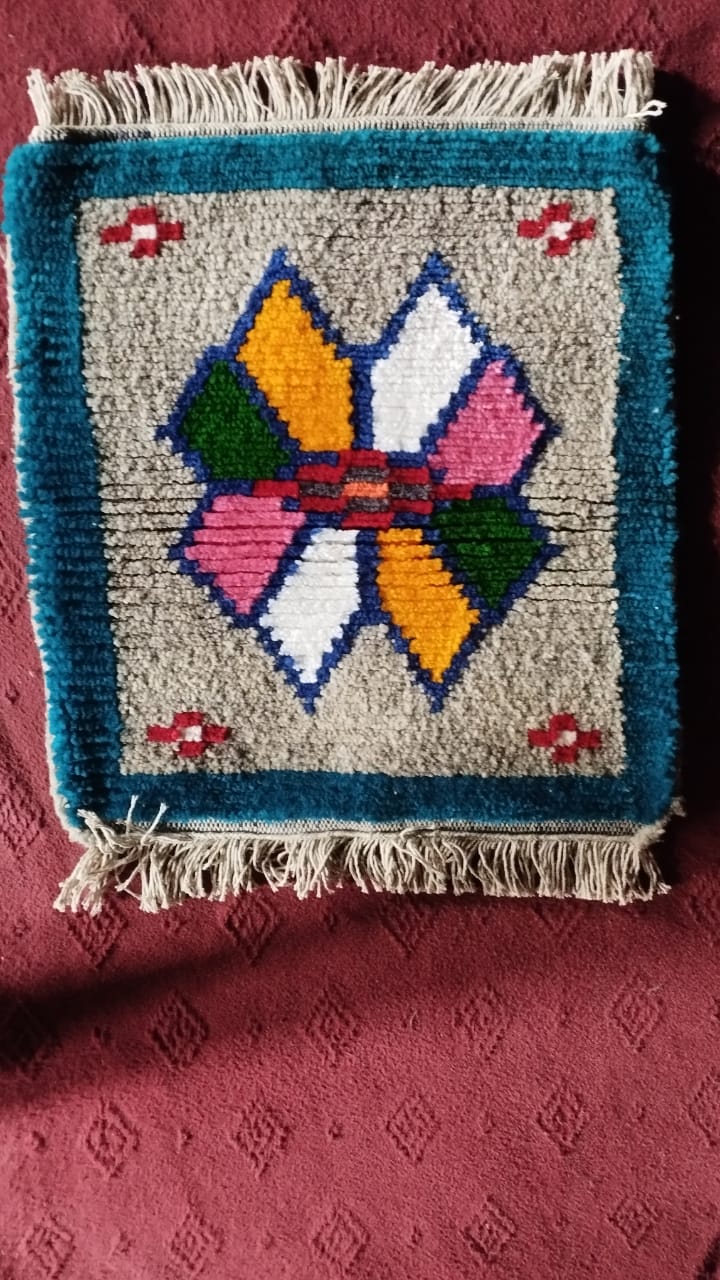
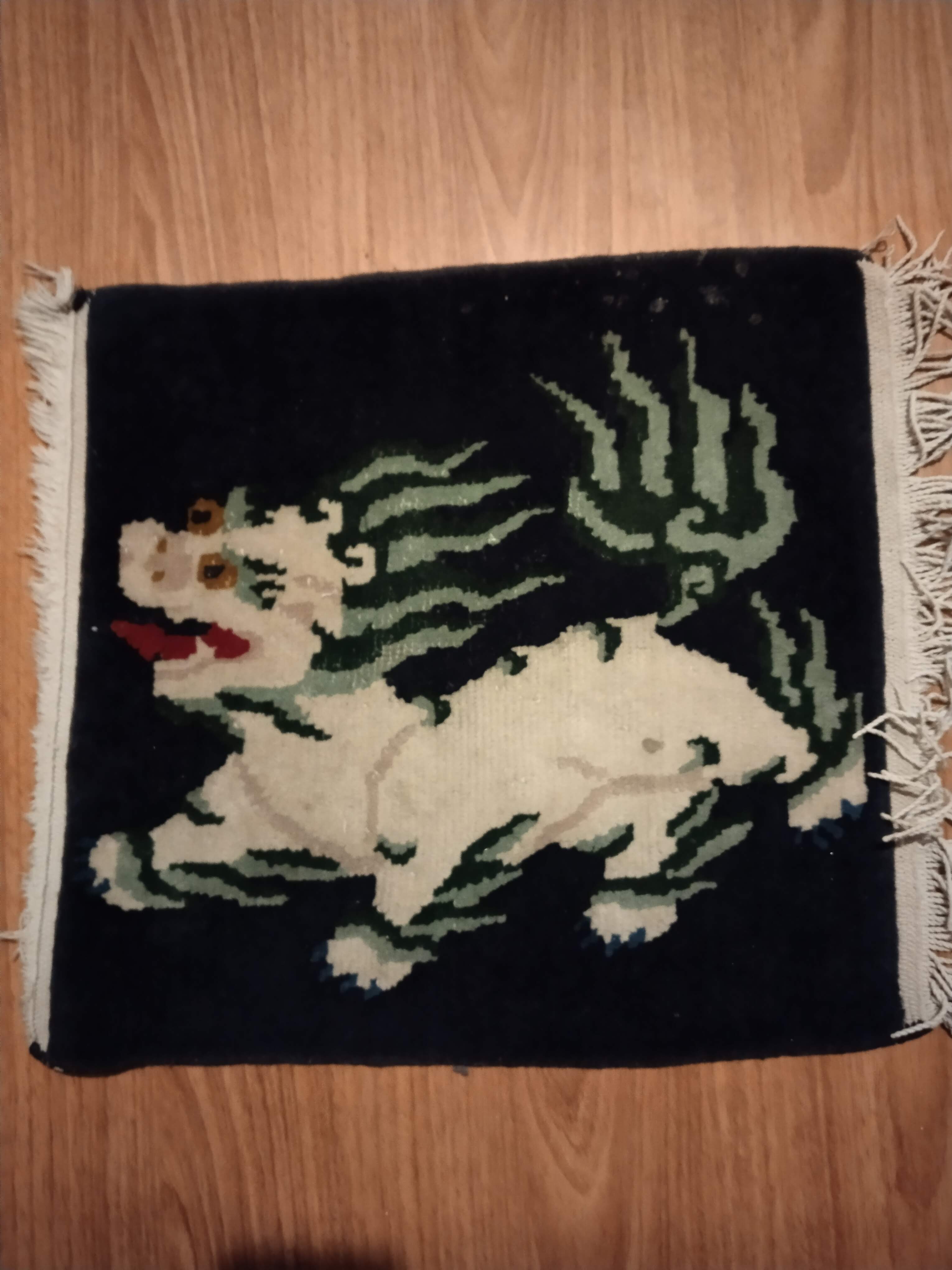
The elaborate designs and motifs on the carpet are inspired by lives in the higher mountains of Tibet and often nostalgically evoke themes of nature and the environment. Motifs of birds, flowers, and mythical animals are quite common- dandelions, native birds, Druk (sky dragon), tiger, ibex, leopards, snow lions, and yaks can be seen beautifully woven on the carpets along with motifs that have special religious, cultural significance like the mandala, four elements of nature (earth, fire, water, space), the Buddha’s vajra, Swastika and depiction of the precious stones Dzi and Gau (amulet). The motifs on the carpet are not mere designs but have larger symbolic meanings to it for eg: the depiction of the crane motif on Tsug-den symbolizes good luck, Yak motifs are reminiscent of nomadic life, dandelions, birds, and clouds depict one’s closeness to nature, the vajra is symbolic of Buddha’s enlightenment, tiger stripes symbolizes one’s prestige and wealth, while snow lion and sky dragons represent mythical creature from traditional folklore and phoenix is a sign of auspiciousness.

 “There’s a saying in local folklore attributing weaving as visual art that reflects stories about people, their communities, and their place in the universe. It symbolizes the value of creation, interconnectedness, and rejuvenation.”

Most families in Lahaul and other higher Himalayan regions own simple domestically produced Tsug-dens and it remains one of the most functional pieces of the item which comes in really handy during harsh winters. The usage of natural fiber and natural vegetable dyes also enhances the overall aesthetics of Tsug-den and it is one of the practical pieces of a garment whose luster, and sheen increases over the years with usage. One of the most appealing characteristics of the Tsug-den-making process is that it is the result of resource utilization in the most natural way. The entire carpet is handspun, hand-carded, naturally dyed, and handwoven where nothing goes waste and the final product lasts for decades, some even passed down to generations. One of the greatest wealth a woman can inherit from her parents is the traditional handwoven carpets, rugs, and quilts along with handwoven shawls. Weaving is not just a craft, it holds ample of material, and cultural value and the artwork on woven Tsug-den is symbolic of values, beliefs, and mysticism beyond our comprehension.
5472 3648 Rinchen Angmo and Chhering Gaaji
The Sheep of Himalaya
Photo: Anuradha Miyan

The Sheep of Himalaya

Handloom and handicraft are an age-old tradition in Kinnaur (H.P) and have their roots in the ancient trade routes. The intricate designs and colorful patterns differentiate Kinnauri handcrafted shawls- making them a much-coveted textile product in India. However, the bulk of its history, symbolism, and contemporary relevance remains obscure. A history of textile production reveals interesting facts about the local environment, different modes of living, and cultural exchange. The Silk Road is the most famous trade route dating back five thousand years. Another lesser-known trade route connecting India, Tibet, China, and Central Asia is called the “wool road” which passes through Kinnaur and Kullu in Himachal Pradesh. The strategic location of Kinnauri weaving communities settled along the trade route inspired many weaving traditions across different states as well as took cultural inspiration from their trading affairs. Some of the most famous motifs and designs on the Kinnauri shawl bear a resemblance to Central Asian designs. The journey of wool trade and weaving traditions was truly iconic and drastically changed the destiny of the Himachali textile trade. Today, Himachali handloom stands amongst the foremost contributors of state revenue along with tourism and agriculture.

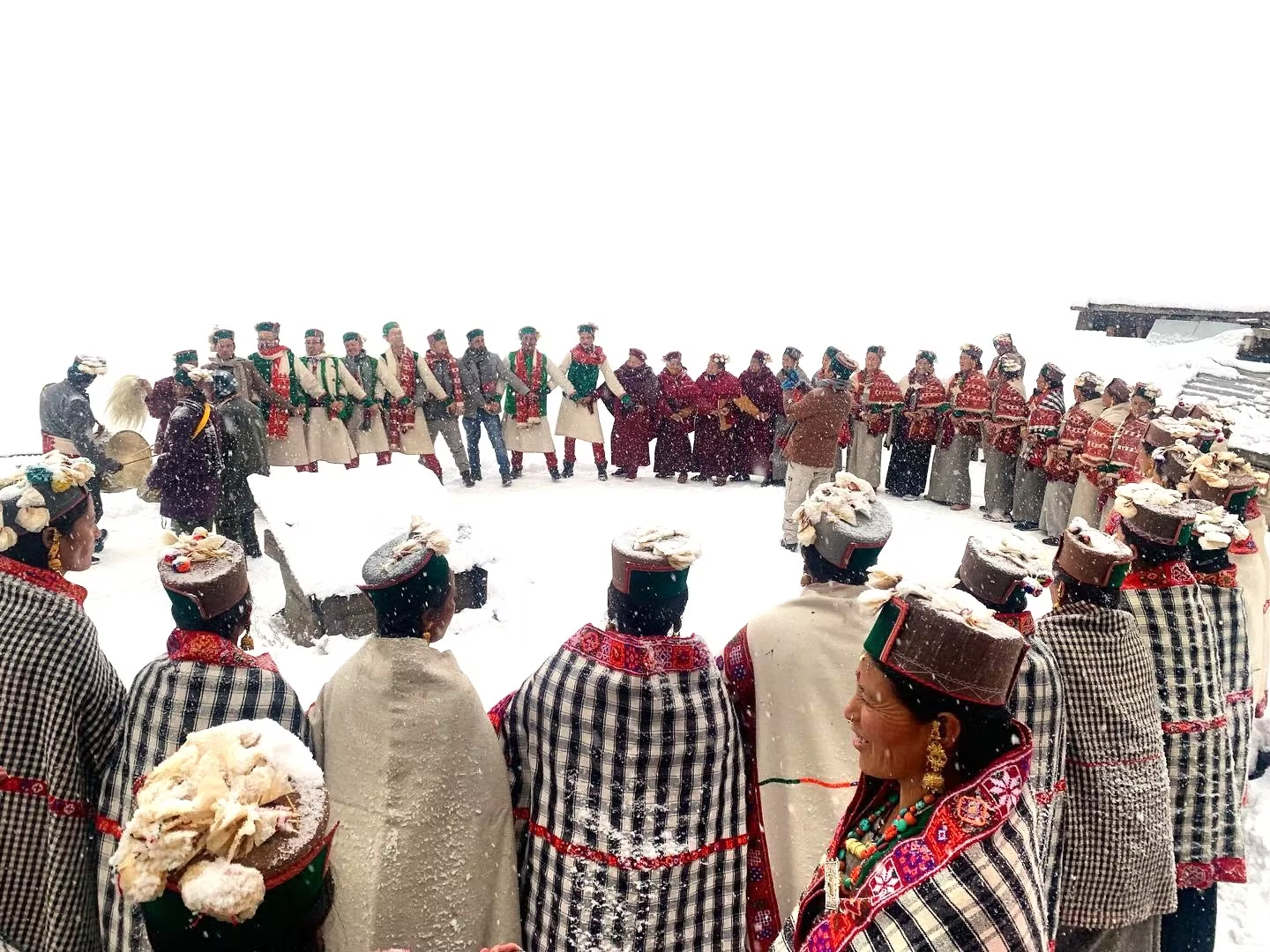
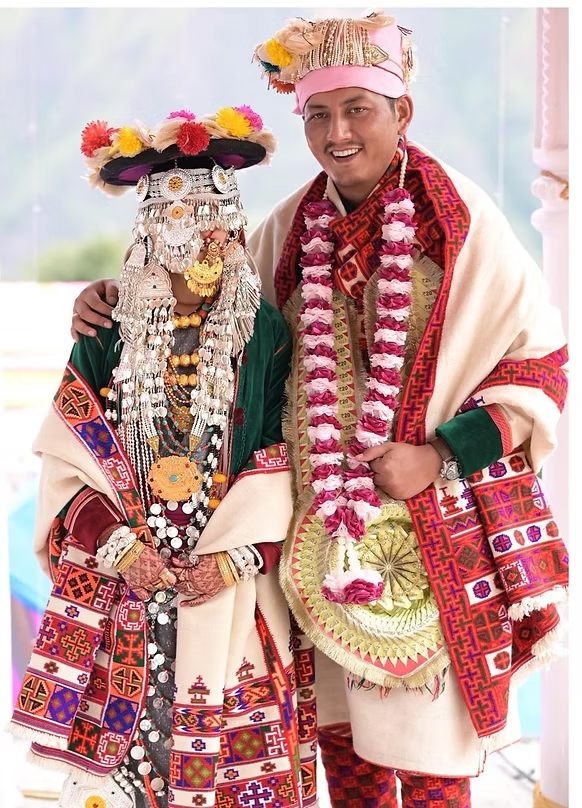
Traditional Kinnauri shawl and Topi worn by the bride and the groom

Growing up in Kinnaur, I saw my elders weave, knit, spin, and make yarn. Most women and young girls in my village knew how to weave and they owned the traditional weaving machine called “Khaddi”. Wool weaving and handicraft became indigenous to the region because of the cold weather conditions and women picked up the skill and nurtured it passionately. Most of the weaving, yarn-making, spinning, and knitting work happens during winter and the process is more collaborative. Since women made garments for self-consumption, it is common for one or two artisanal families to work together especially if it is a large-sized product like a carpet or a woolen quilt. I have always been passionate about handicrafts and after finishing my higher studies (MBA), the zeal was renewed all over again. I observed that although the women of my village – Labrang in Pooh tehsil of Kinnaur are skilled artisans, their products were used only locally within different villages of Kinnaur. There was no handicraft center in our village and given the difficult terrain, the market remains inaccessible to us.

I took a leap of faith and started “Sheep Of Himalaya” in 2019 with just two artisans from my village. The prime motive was to bring some visibility to Kinnauri handcraft on an international level and showcase regional craftsmanship.

Agriculture and cultivation of apples in our village orchards are primary vocations for most people but many women still rely on handicrafts as a secondary occupation to earn for themselves. When I broached the idea of building a clothing brand showcasing our traditional attire, there was a bit of reluctance from many artisans for they feared uncertainties. I took a leap of faith and started “Sheep Of Himalaya” in 2019 with just two artisans from my village. The prime motive was to bring some visibility to Kinnauri handcraft on an international level and showcase regional craftsmanship. While the artisans would weave mufflers, stoles, and shawls with vibrant Kinnauri designs and knit sweaters and socks, I would find market avenues for us. For me, the process proved a bit challenging as there were no established Kinnauri brands and our products were often mistaken for Kulluvi products which have better brand visibility. I took to social media to build a unique handicraft brand for Kinnaur and to connect with people who appreciate the labor of love.

Photo: Anuradha Miyan

Over the years, the enterprise found its feet as more artisans joined us in our journey from neighboring villages like Spillow and Kanam. We are now a proud all-women’s team with twenty-five artisans who are involved in the handcrafted and handloom business during our spare time. Kinnauri handicrafts and handwoven attire require dexterity that can be perfected only through patience and meticulous care while weaving.

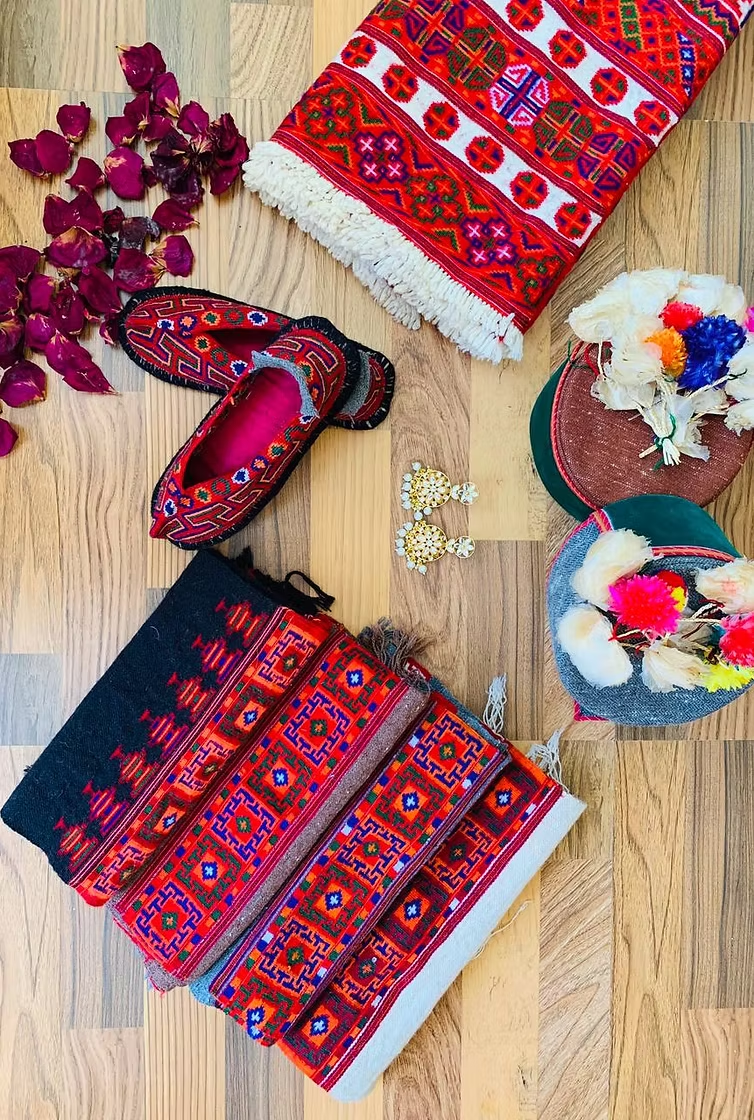
To make a shawl, each thread is carefully pulled through the reed (part of the weaving loom that resembles a comb) and installed on a loom that forms the base for an entire textile to be woven. It is one of the most complex and laborious processes that an artisan undertakes. Given the complexity of designs, it can take up to three months to finish a shawl and it can cost around twenty-five thousand rupees for a single shawl. Widely known for their intricacy and finesse, Kinnauri shawls are unique and reflect indigenous designs. We use five key colors to design our attires – red, white, yellow, green, and blue which symbolize five elements of nature- earth, water, fire, air, and space. The elaborate geometrical and floral designs have strong symbolism and many of the motifs woven have religious significance like the representation of stupas in the border design of a shawl. Since many families are into livestock rearing, raw wools are sheared locally from goats and sheep for making yarn and weaving but in recent times, we have also started procuring Angora and Merino wool from Ludhiana.

Photo: Anuradha Miyan

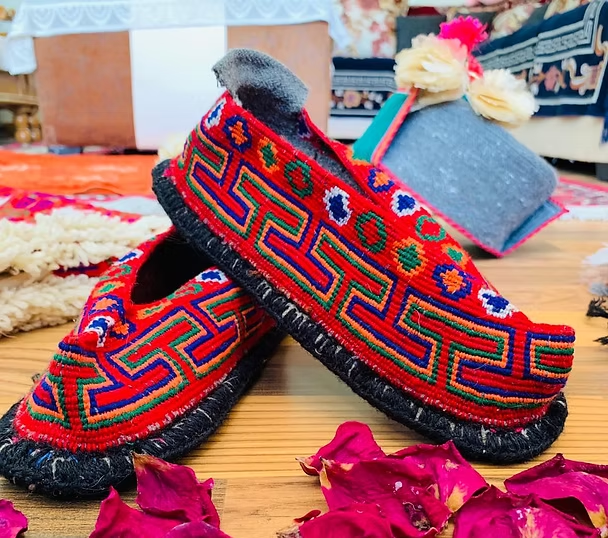
Balzanu Pona or Pullans (grass slippers) is another traditional wear that is slowly disappearing from daily use and in fact, there’s only one artisan left in my village who can skillfully make it from scratch! The footwear is made out of fibers procured from the bark of wild bushes. The upper portion of the Pullan is handknitted with goat wool and is adorned with colorful patterns while the lower portion is made of hemp or Bhang fiber (Cannabis). We make all kinds of traditional wear including Kinnauri shawls, stoles, mufflers, sweaters, Pulla (socks), and Kinnauri topi (hats). It didn’t take us long to sell products online via Instagram/Facebook and soon we were getting international orders! We further expanded our product range and started making children’s wear, cushion covers, diary covers, and pouches – all while retaining our unique Kinnauri designs.

All the women artisans who are associated with us rely primarily on their traditional looms and work from their homes which at times, proves a bit challenging as they have to juggle agricultural work, and domestic works at home and are able to undertake handicraft works only during their spare time. I have been pleading with the H.P handicraft and handloom department in Shimla to open a handcraft center in Kinnaur so that it is easier for weavers and other artisans to organize for a mutually exclusive vision, gain training, exposure, procure raw materials, and boost the entire value chain. We have capable and hardworking artisans who are passionate about their work and with the right market opportunity and assistance from the government, they will soar high.

1440 633 Anuradha Miyan
Reyun Tache
Remu Painting | Jugmat Norboo (Urgos)

Reyun Tache

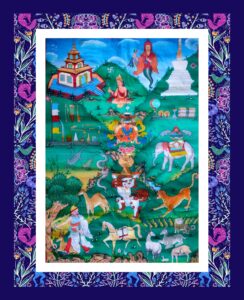
Reyun Tache is a festival celebrated two days before Losar in many parts of Lahaul. In my village-Urgos, the festival is marked by each household painting Remu paintings on their walls for inviting good omen and warding off evil. Paintings are made with almost a competitive spirit, with each house trying to do better than others. All the members of the house take part in this celebratory moment and contribute to the painting. Each element of the painting signifies a deeper religious sentiment, and connectedness and harmony of indigenous communities with nature. Thus, it is important for each house to ensure all elements are present on their painting.

The next day is when the fun begins. Everyone visits the homes of the others to appreciate their efforts and ensure that they have included all the necessary elements in their painting. If not, then they have to pay a fine to the village committee and carry shukpa (incense sticks) throughout the day as a penalty.

1471 1811 Jigmat Nurboo