Interview

The Sowa-Rigpa medical tradition
Illustration: Peeyush Sekhsaria

The Sowa-Rigpa medical tradition

Sowa-Rigpa, also known as the Amchi system of medicine, is practiced in the high Himalayan region. It is also referred to as the Tibetan medicine system and is among the oldest existing knowledge systems in the world that relies on knowledge of ecology, especially plants. In an hour-long conversation with 71-year-old Amchi Chhering Tashi of Hansa village in Spiti we speak about the Sowa-Rigpa tradition. Here is a short excerpt of this interview.

Can you speak about the origins of the Sowa-Rigpa medical tradition?

Contrary to popular belief, Sowa-Rigpa is an ancient Indian knowledge system, not Tibetan. It is believed that when the Buddha gave his sermon on ending suffering at Vaishali in present day Bihar, there were many in attendance. The audience included many learned people including spiritual and celestial beings from different realms. Buddha delivered the discourse in Pali, but all those in attendance heard his message in their respective languages. Since everyone heard it differently, it got recorded and disseminated in different ways – as Ayurveda across the Indian subcontinent, Sowa-Rigpa across the Himalayas and Tibet, and Yunani in Central Asia. That is how this knowledge spread across different cultures. It was later translated into Sanskrit at Nalanda. A part of this knowledge system was at risk of being lost due to the predominance of Ayurveda, but was preserved by the Tibetans. So, while Sowa-Rigpa originated in India, it was preserved and nurtured in Tibet. Lotsawa Rinchen Zangpo – the Great Translator of Buddhism – translated these works to the local Bhoti dialect in his sixth incarnation.

Since when has this system been practiced in your family? 

Every village in Spiti – from Losar to Lari – has at least one family that practices this system. Villagers help with the collection of medicinal plants and in preparing medicines. Historically, each village had an Amchi because connectivity between villages was poor and this was an essential service that all villagers needed. No fees are charged by the Amchi; it is offered as a public service to anyone seeking medical attention.

About our family, my father was a very learned man. He knew exactly what treatment is described on which page in the handbook (pointing to the old medical scriptures placed before him). I never met my grandfather, but he might have passed on this knowledge to my father. While I don’t know how and when my forefathers began practicing, I have with me several old scribbled notes that belonged to them. My grandfather, in the 1930s, also received a letter from the then Governor of Punjab which I preserve to this day. Our family has been in this practice for at least a few hundred years.
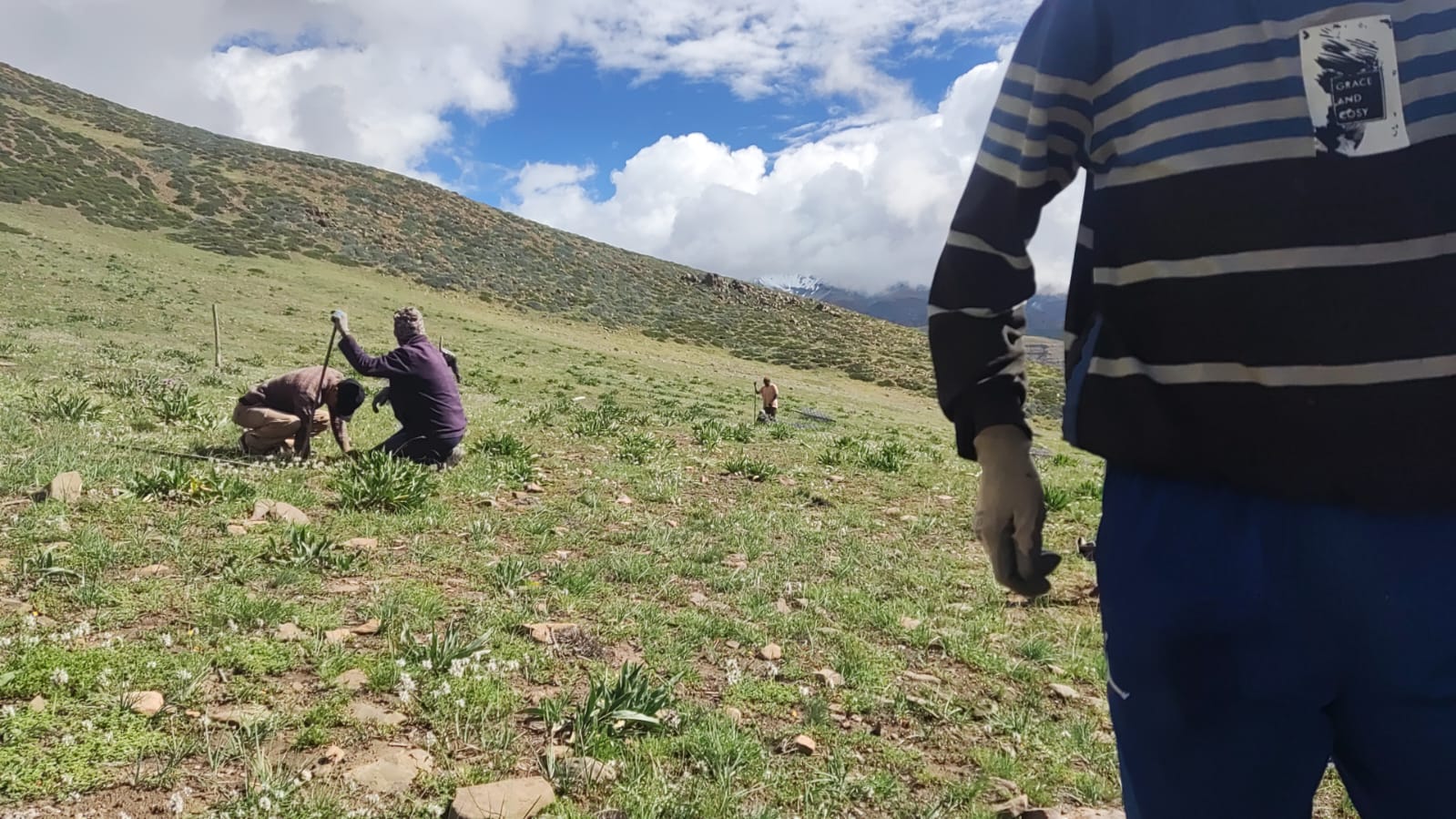
Amchi's collecting parts of plant for medicinal purpose | Photo: Mayank Kohli

How did you get inducted into becoming an Amchi?

My father started training me since I was in sixth grade. I had to attend school, manage a lot of the house work and focus on this too. I was the only male child and my sisters were already married by then. I had little interest

in learning about plants and reading the handbook. But my father was very persistent. He taught me patiently. Maybe that is how I learnt whatever little I did. Had I taken interest from the beginning, I might have become a better Amchi.

One can learn everything about the practice in six years. But my father taught me daily and he inculcated in me a habit of reading these scriptures every day, even if it is only for just five minutes. These scriptures that I possess, are nearly 600-years old. Reading them daily has been very helpful.

What is the process of diagnosis and prescribing medication?

There are four fundamental books that form the basis of this practice, which need to be learnt by heart by any Amchi. Further there are four books explaining these fundamental principles in detail. Lastly, there are these scriptures (pointing to the old medical scripts placed before him) which are like a handbook. They explain the symptoms of every illness and contain details of its treatment and medication. We match the symptoms of every patient with the explanations in this handbook and follow its recommendation for prescribing treatment.

When a patient approaches me, I first check their pulse and sometimes their urine. I then match the description of the symptoms with those in the handbook. The handbook gives details of all the local plants and their medicinal values. It also suggests the proportion in which they should be mixed for a particular treatment. I always make all the medicines and test them on myself before I distribute them.

Any illness has two causes: first from accumulation of bad karma earned in one’s past lives, and second from an imbalance in what we consume (food, water, air etc.) from our general surroundings. An Amchi can cure illnesses caused by the latter; the former cannot be cured by medicine. While modern medicine addresses the symptoms of an illness, Sowa-Rigpa tries to address the root cause of it.
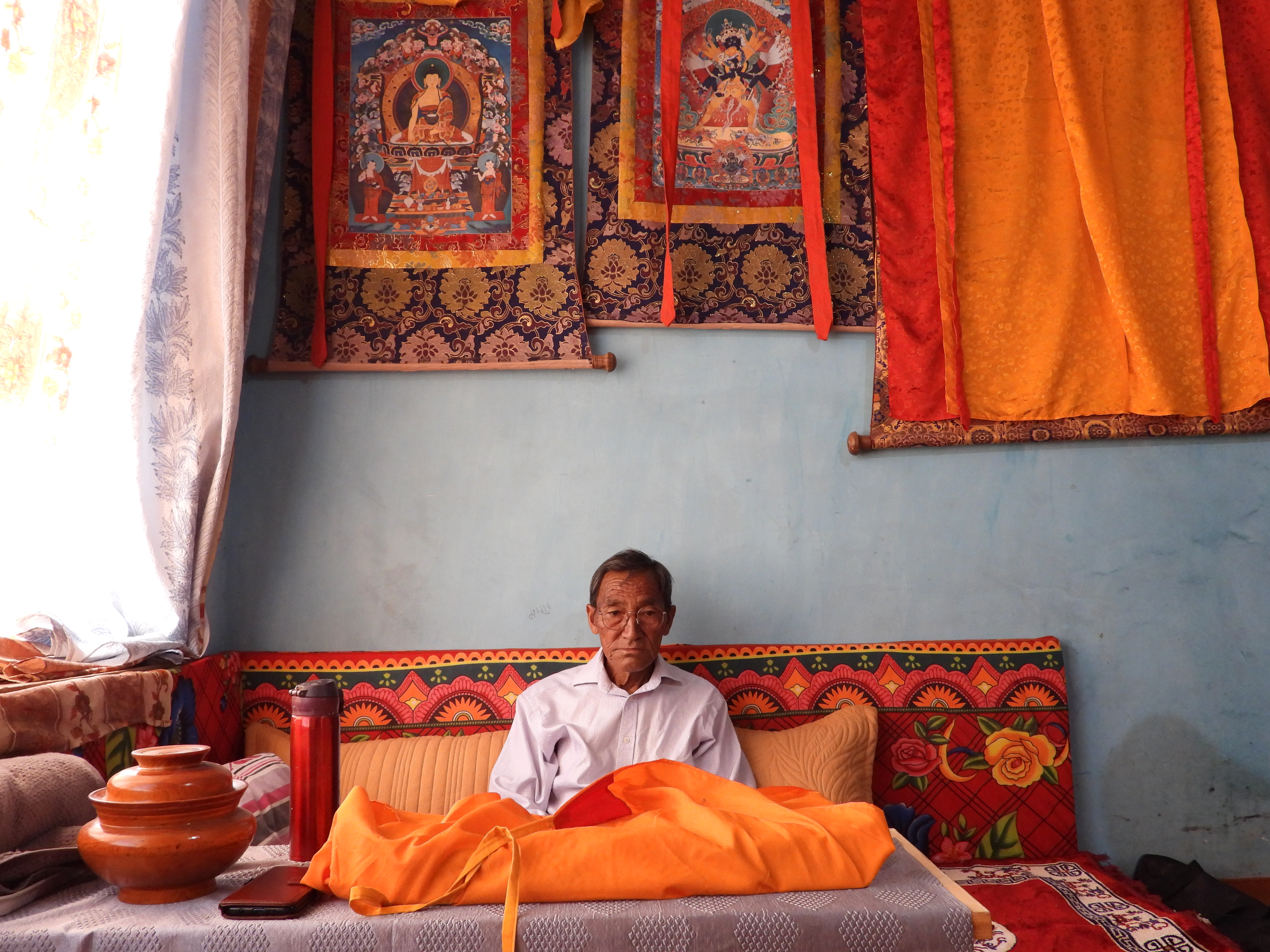
Amchi Chhering Tashi from Hansa village in Spiti | Photo: Tanzin Thinley

How and when are plants collected?

There is no fixed time for collection. We use different parts of a plant for treatment, and hence collection happens across seasons. We use the flowers of some plants, while we need seeds of some and roots of others. Generally, roots of a plant grow deep into the soil before autumn and that is when we collect roots, we will not collect them in any other season. Flowers will only be collected in spring once they have blossomed. There are clear rules on when and how different parts can be collected. A separate book describes locations of where plants can be found. For example, Aconitum spp. (Bhoan karpo) are mostly found on north-facing slopes and that is where we scout for them. Delphinium spp. (Lader mentok) is another invaluable plant that grows commonly in our landscape. Rhodiola spp. (Shrolo) is also found on north-facing slopes – there are three varieties found in Spiti: one with white flowers, one with red flowers, and one that grows tall. These details help us in collection.

The handbook also carries details of the medicinal values of these plants. For example, Rhodiola spp. cure lung infections while Aconitum spp. cure multiple ailments: flowers improve eyesight, their roots help our bones, the branches are good for our hands and legs while the stem of the plant is good for our skin. Meconopsis spp. (Landre mentok), Saussurea spp. (Kasturi kamal or Yuliang) and Trillium spp. (Nag chhatri) are mixed to make a very effective painkiller, even better than diclofenac sodium that is administered commonly. We are aware of all the medicinal qualities of many local plant species and we make use of them judiciously.

Is a change in climate patterns affecting the availability of medicinal plants? 

There was a time when collection of wild plants for commercial use was common. We had then spoken with the local administration to limit irresponsible collection. They acted swiftly and we are glad that the situation was handled effectively. We believe that Spiti produces sufficient plants to fulfil local needs. No matter how much medicine the people of Spiti consume, this land will produce plants and they will never exhaust. However, if we start exporting plants outside Spiti for commercial use, then we invite the risk of depleting this valuable resource. There is a finely balanced cycle of production and consumption, which we should not disturb. Variations in snowfall may marginally affect plant growth, but not so much as to disrupt this system.

What do you think about the sustenance of this practice in future?  

The practice is offered as a public service by the Amchi in each village. There is no financial benefit in the practice. In fact, we often incur expenses in the collection of plants and preparation of medicines. Our homes are always open to any patient seeking medical help.
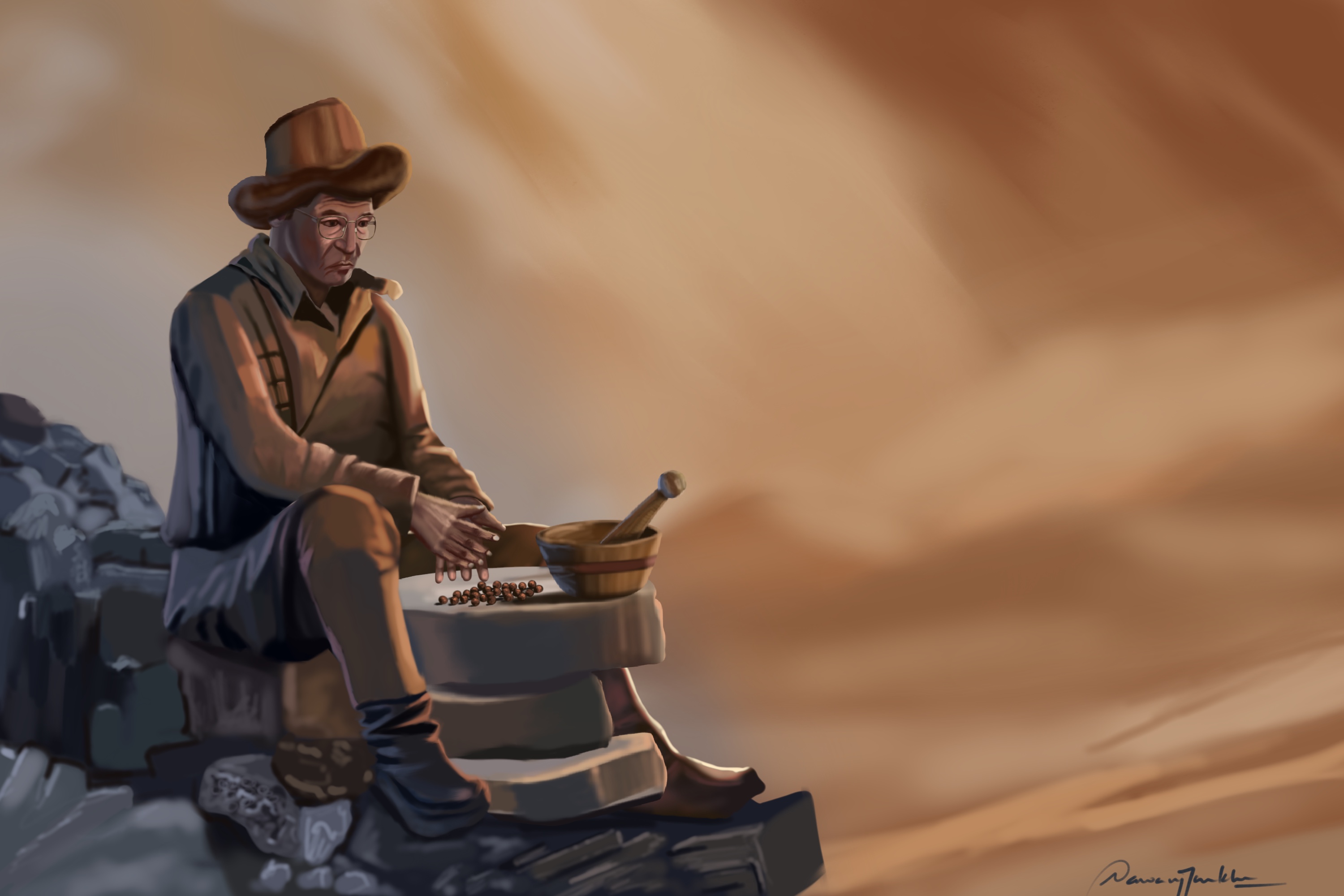
Illustration: Nawang Tankhe

Sometimes I wonder that one must be stupid to offer such a service free-of-cost at a time when everyone runs after money. But then, I also remember that when I die, I will leave everything behind: land, family, even my own body. I will only be remembered for my integrity. That is what keeps me going. However, the local administration should consider providing basic financial support to practitioners so that they continue practicing this tradition.

This is a short excerpt and you can watch the full interview on our YouTube channel.
2241 1524 Dr. Mayank Kohli
Conversation with a Shing-zowa
Photo: Tanvi Dutt

Conversation with a Shing-zowa

RT: Julley Angdui Phuntsok ji, When it comes to building houses and wood crafting, a lot of the people from Kibber village consult you and rely on you to undertake the work. Can you please tell us more about yourself?
​
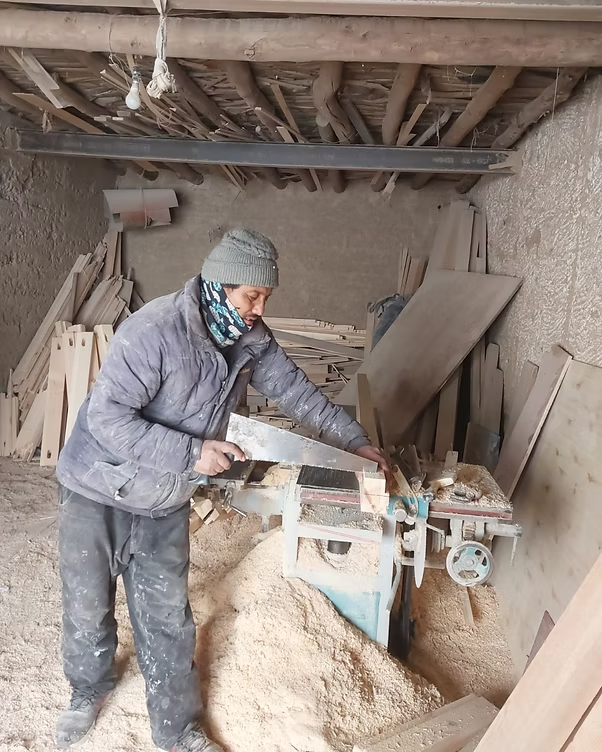
AP: Julley, Namaste, and Tashi Delek to all HimKatha readers. My name is Angdui Phuntsok, I am from Spiti’s Kibber village and I am 46 years old. I grew up helping my family herd livestock (sheep, goat, cow, yak, Dzomo) in our village pastures and plough in our barely fields. I took up carpentry work when I was 20 years old and I learned to make windows, door frames, and Kawa (wooden pillars) for traditional mud houses. I worked closely with Spitian mud-house builders and artisans who were skilled in stone masonry. I eventually self-taught and picked up the skills and started implementing them in my work as a house mistri (chief artisan). I have been building traditional houses and doing carpentry work in Spiti for about 27 years now. I spend my summers building mud houses, consulting, and helping locals undertake various renovation works, and devote my time to carpentry during winters.

RT: How do you undertake building works in Spiti and how is it different regionally?
​
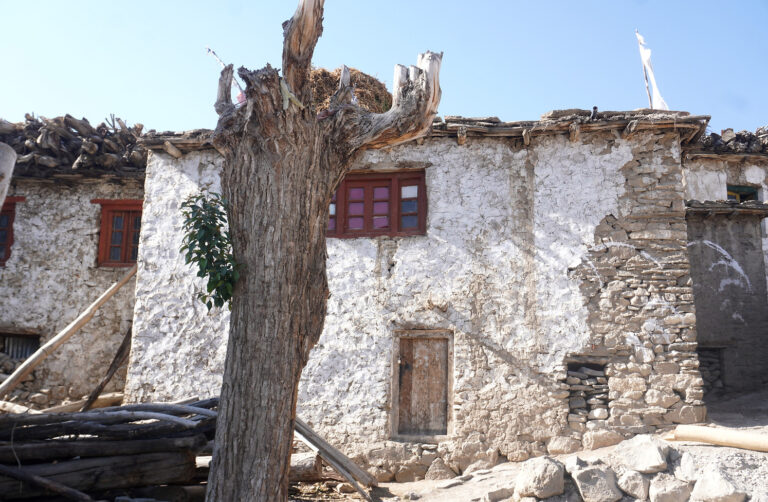
AP: It mostly depends on the host family, and individuals commissioning the work. Earlier traditional mud houses are preferred but these days cement houses are becoming popular and people even go for mixed structures where the walls, the foundation, roof, and the internal structures of a house are of earthen material and mud while the outer plastering of the house is done with RCC. The choice of material is also dependent on local conditions and regional variations. In the Todh valley side (upper Spiti side), the raw materials are scarce whether it is wood, good quality soil, mud, stones, or iron, hence the design and structure of a house are mostly just mud based with minimal use of resources that isn’t available locally. As you move to the Sham valley side (lower Spiti villages) access and availability of raw materials becomes easier hence earth is used extensively from walls to roofs and stone is used widely in lower portions of a building for stability. When you reach the neighboring villages in Kinnaur like Nako, Malling, and Chango, stone-dominated structures and dry stone houses will be visible.

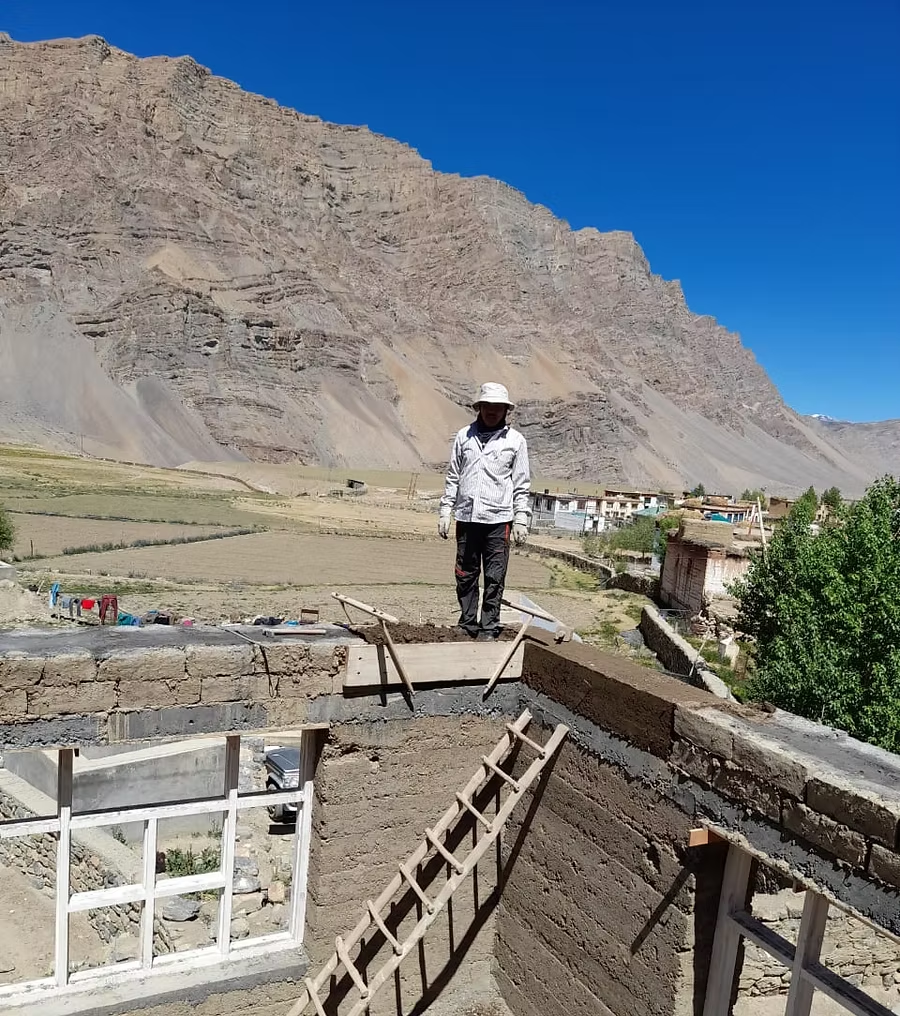
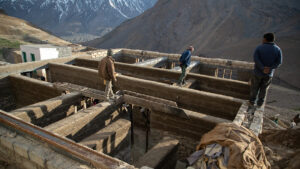
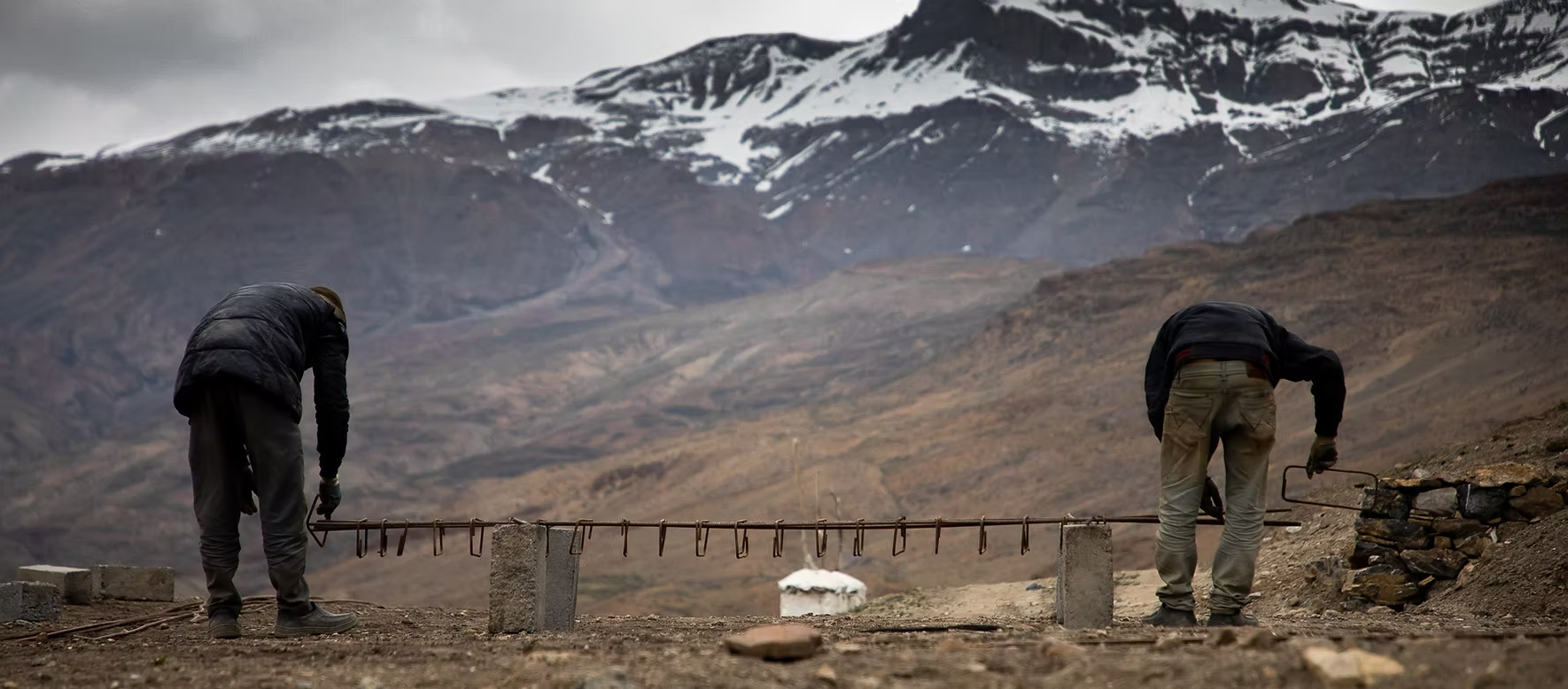
Construction in Kibber | Photo: Rinchen Tobgye

RT: From your experience how have people’s livelihoods, and developmental changes in the region impacted local architecture in Spiti?
​
AP: There is a deep connection between people’s livelihood, their way of life, development changes that happen in the region, and how it shapes the local architecture. Spiti’s architectural changes have certainly undertaken an interesting trajectory and as a local artisan, I am still grappling to find balance and navigate the changes. Earlier Spitians are primarily dependent on agriculture and livestock rearing and the local houses, the architectural designs are built to accommodate the agro-pastoral needs of the household and the community/ suit agropastoral needs. Incorporating separate structures for cattle like corrals, livestock pens, and storage rooms for grains, tools, dry toilets, Dhangtsey (open courtyard), and flat-roofs are all an integral part of the local architecture and function beautifully to fulfill the unique needs of an agricultural family. With accessibility, better connectivity, tourism, and development changes, alternate livelihood opportunities are arising for locals and that utter dependency on agriculture-based livelihood is changing.

Many people are employed in government services, and tourism-based livelihoods are increasingly becoming easier options for people. This is all dynamically changing people’s relationship with their land, their resources, and the local architecture. Vernacular house designs, traditional structures, spaces used for agropastoral-based livelihood, and local materials are losing their relevance. Many households own a lesser number of cattle nowadays and rearing large-bodied livestock like yaks have also shrunk a lot. Only in Todh valley (upper Spiti) it is practiced and hence erstwhile spaces, and structures dedicated to these needs are falling out of use. Modern, cement-based hotels, guesthouses, and giant commercial buildings completely contrast with the local architecture are cropping up. The changes were more prominent in lower Spiti villages like Kaza, Rangrik, and Tabo earlier but in the past 3-4 years, such structures are also becoming more prominent in remote villages like Hansa, Hull, Pangmo too and many of these hotels remain nonfunctional during winters. Like many fragile places, development changes in Spiti are at the cost of the environment, and resource stress, and are slowly changing the architectural integrity of the place.

Photo: Deepshikha Sharma

RT: How is it impacting local artisans and local knowledge around indigenous architecture in Spiti?

AP: The traditional building technique using natural materials found locally is an easy, affordable, locally suited, and eco-friendly way of building. People are familiar with the local resources, materials used for construction and leverage traditional knowledge, and intelligence to design houses. It doesn’t involve unnecessarily complex methods and tools to implement it. It’s very intuitive, immersive, and experiment-based and most people have a working knowledge of the same. The shift to non-traditional, industrial raw materials like cement, steel, glass, and other concrete materials has alienated locals from their own land, own resources, and indigenous knowledge about building systems as it requires specialized masons, and craftspeople to build cement structures.
​
The dependency on non-local craftsmanship is increasing which in turn triggers the migration of workers, artisans, and laborers from lower Himachal districts like Mandi, Kangra, Shimla and some even come from as far as Rajasthan, Bihar, Odisha, Jharkhand and Maharashtra. More and more locals from lower Spitian villages like Kaza, Tabo, Rangrik, Losar, Khurik, Shego, Lara which are hot spots for tourism are outsourcing the construction works to migrant workers from other parts of the country who have no knowledge of the local context and are probably themselves struggling to work in such harsh climatic conditions. Earlier local artisans like Gyangon-da (rammed earth mud builder), Piti Dor-si (Stonemason), Piti Shingzo-wa (wood crafter/carpenters) play an integral role among community members, and their skills, their knowledge, their experiences about the landscape shapes the local architecture. The large-scale tourism and development-based constructions are creating a new social order which is posing multiple threats to the environment, local ecology, wildlife, and architectural heritage. Natural heritage.

RT: As a local mud house builder, and an artisan, what are some of the challenges you experience daily?

AP: Ghawo minang yokak! (… there are many challenges!) Construction is essentially labor intensive and physically strenuous work. As an artisan whether you are involved in stone masonry rammed earth building, or are undertaking other works like carrying stones, mud, bricks, breaking stones, or digging earth, it takes a heavy toll physically. Knee, back, and joint pains are very common, and injuries due to construction work is a common experience. But all that pain goes away if your host, and the individuals commissioning the work are kind and generous, and there’s a sense of solidarity, and camaraderie among workers, villagers, and community members. We all work together, help each other, eat meals together, enjoy the process of building, sing songs, drink copious amounts of tea, tell stories, and within no time, work gets done!

RT: Thank you for patiently sharing your experiences with us.

AP: Thank you.

1770 778 Angdui Phuntsok and Rinchen Tobge
Conversation with a Gyangon-da
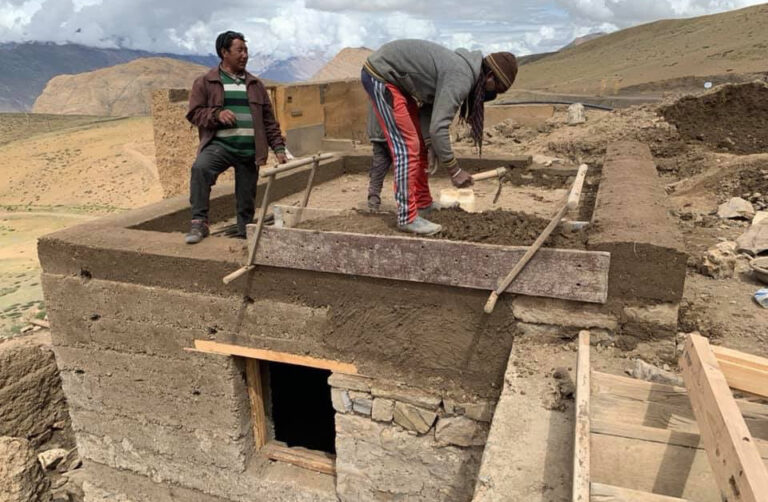
Glimpse of mud house construction in Spiti  | Photo: Tanvi Dutta

Conversation with a Gyangon-da

Demul is a remote high-altitude village in Spiti known for its beautiful meadows and pastures. The villagers are agro-pastoralists and still actively practice their traditional ways of agriculture, livestock rearing, and herding. This village is also home to many Spitian artisans skilled in building traditional mud houses, Dor-si (stone mason), Shingso-wa (carpenter), and Gyanghon-da (earthen wall builder). We spoke to Mr. Chhuldim Pempa from Demul who has been in the trade for decades and is a master craftsman skilled in stone masonry and rammed earth building.

HimKatha: Julley and Tashi Delek. Chhuldim ji, we heard you have spent many years building traditional mud houses in Spiti and are an expert Dor-si (stone mason). Can you tell us more about yourself and how you started?

Chhuldim Pempa: Yes. I have been working in traditional construction for over 30 years in Spiti and my primary work is building houses using mud and stones. I started in the early 90s when I was around 18-20 years old. I stumbled upon it quite unexpectedly – I grew up herding and working in my family field but once there was an opportunity to work as a construction helper to a house mistri (chief mason) in my village. The work seemed pretty doable, it included working under a master craftsman and helping him in manual works like carrying stones, digging works, making mud mixtures, and doing all the preparatory works before the chief mason started laying the stone foundation for a house. It was paying a minimal amount for the labor work, so I took it up along with a few friends. Back then, there wasn’t much to do, so I continued as a labor helper in traditional constructions for a few years before I began focusing exclusively on stone masonry and rammed earth-building techniques. Looking back, I realize, my apprenticeship days were difficult but it’s there amid the mud, stones, and under the guidance of a skilled mason that I learned the most and picked up the skills of the trade before I started practicing it independently in my village.

HK: What changes have you seen in natural building techniques over the years?

CP: In Spiti, rammed earth building has traditionally been practiced for centuries, it is used for building residential houses and monasteries – most of the old mud buildings in Spiti like Tabo Gonpa (built-in 10th C) and the old Tengyud Gonpa are built in that form. To a large extent, it is still preferred in higher Spitian villages like Demul, Komic, Chicham, and Kibber for its durability and inherent thermal capabilities. Architectural changes are definitely taking place in Spiti and with that, there is a stark shift in natural building techniques, resource usage, and general treatment of vernacular design systems.

There’s an increased usage of industrial materials like cement, metals, ready-mix concretes, glass, plywood, plastics, and artificial stones which were not accessible in earlier times. Earlier houses were built with a lot of care and even the smallest details were incorporated with a lot of structural integrity. For eg, all mud houses have “Kyorma” on the upper roof which is a protective boundary made of wild shrubs, it looks aesthetic as well as does a great job of protecting the mud walls from sun and rain. The use of such designs is declining.

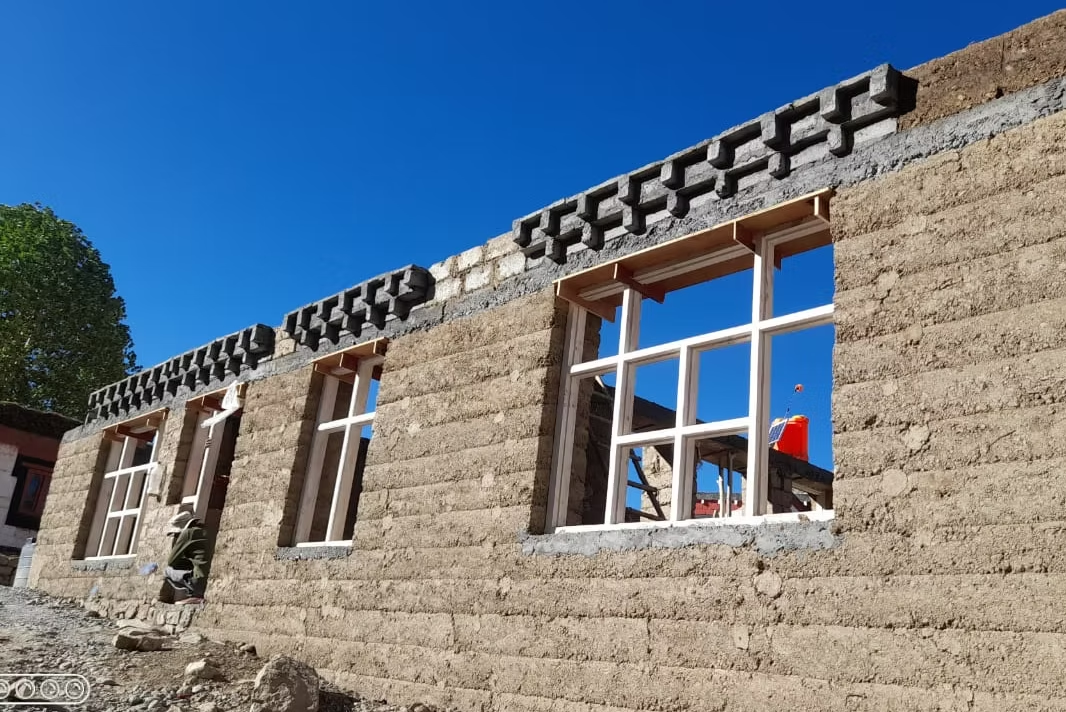
Walls are built with Gyang-sa – a specific soil type carefully selected by the master mason, it is mixed with grass chaffs, straw, or small wood chips, and the mixture is then kneaded with water two days before building a wall. It is done to allow better water absorption in the mixture and adding grass chaffs provides warmth once it is built. Thick double walls of about 18 inches are built using a cross-joint technique where one wall is built from right to left and another from left to right.

The structure is then plastered with the same mud mix or tied on the two sides with wooden planks (ghing-shing) on the two sides of the walls and the mud mix is filled in. Once filled, it is slowly pushed in by walking on it which makes the wall structures more cohesive. Such designs are crack resistant and have better resilience towards earthquakes as compared to straight cement pillars that are adopted in new houses these days. Thoughtful building methods like this are slowly fading and I am afraid soon people won’t require artisans like us.

 Mudhouse construction in Kaza | Photo: Mr. Janhwij Sharma, Additional DG, ASI

HK: What tools are used to build houses in the olden days?

CP: We used very minimal tools as there was no access to any resources. Most tools were handmade by Spitian blacksmith artisans from the Dzo community who were experts in making agricultural and field tools used for construction. We used only 2-3 tools like Tokse, Teo, and basal used for digging mud, pulling stones, handling mortar, and other wooden tools for building walls. Since houses were built communally among villagers, tools were also shared locally among people. For measurements, we relied heavily on the ancient technique of using the body as a tool – fingers, elbows, and arms were used liberally to measure walls and base construction. For eg: “Thu” is a measuring length from the middle finger to the elbow while “Dhompa” is the length from one’s right hand to the left once we spread it widely and apparently one Dhompa equals five feet. Such measurements are used for building smaller structures in the house like Chaksa (dry toilets) and Raah (Sheep house).

HK: Are there any community practices and traditional rituals around building houses?

CP: Yes. In Spiti, building houses is a community activity. Everyone pools in the resources and volunteers to help during various phases of construction. It is quite common for 3-4 households to get together and help each other and it is colloquially called the “Bhey” system where the community forms an internal support structure and relies on each other for resources and labor. In a place like Spiti where resources are scarce and sustenance difficult, it proves more feasible and affordable. Many auspicious rituals are performed to bring good luck and prosperity to the host family. The one, in particular, I remember is called “Saney-Doney” where the host family consults Rinpoche (venerable lamas) and he places a pot containing soil and pebbles from Buddhist pilgrimage sites like Varanasi and Nepal in the four directions of the foundation

to ward off evil energies on the land and to bring prosperity for the host family. Another ritual is called Jinshak ceremony which is done on empty barren land to check the suitability of the land for construction. Apart from that, there are local belief systems that imbibe respect for human-nature relations and value natural surroundings. For e.g. stones are never excavated from Chumik – the spring water areas for construction as it causes ecological disturbance in the area.

HK: Thank you for sharing your experience with us.

CP: Zang-song! (Thank you)

Traditional house contructed by Gyangon-da Pempa in Demul village
1770 1000 Chhuldim Pempa
In Conversation with Women of Chicham
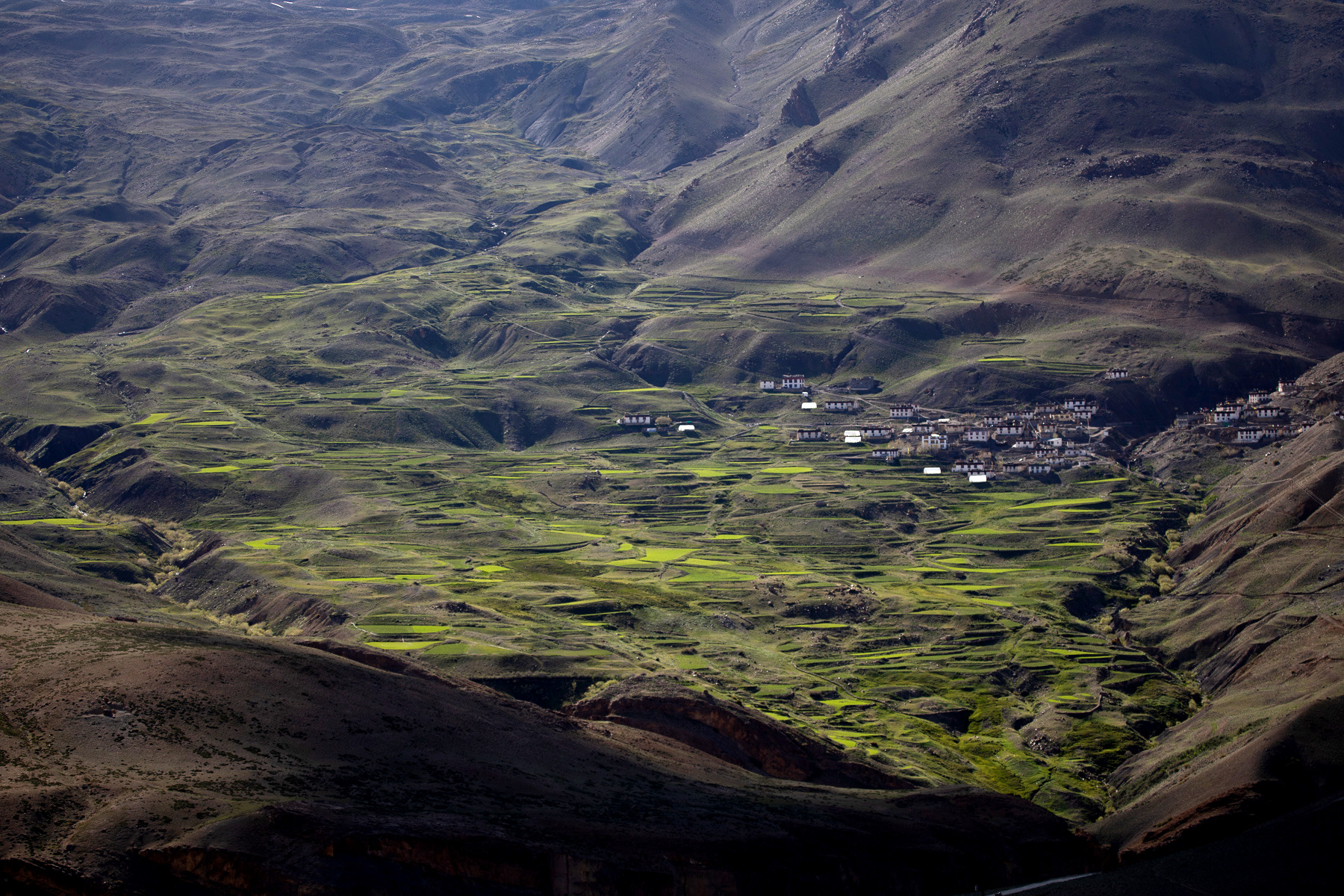
Chicham Village | Photo: Tanvi Dutta

In Conversation with Women of Chicham

Tanzin Dawa: How has it changed?

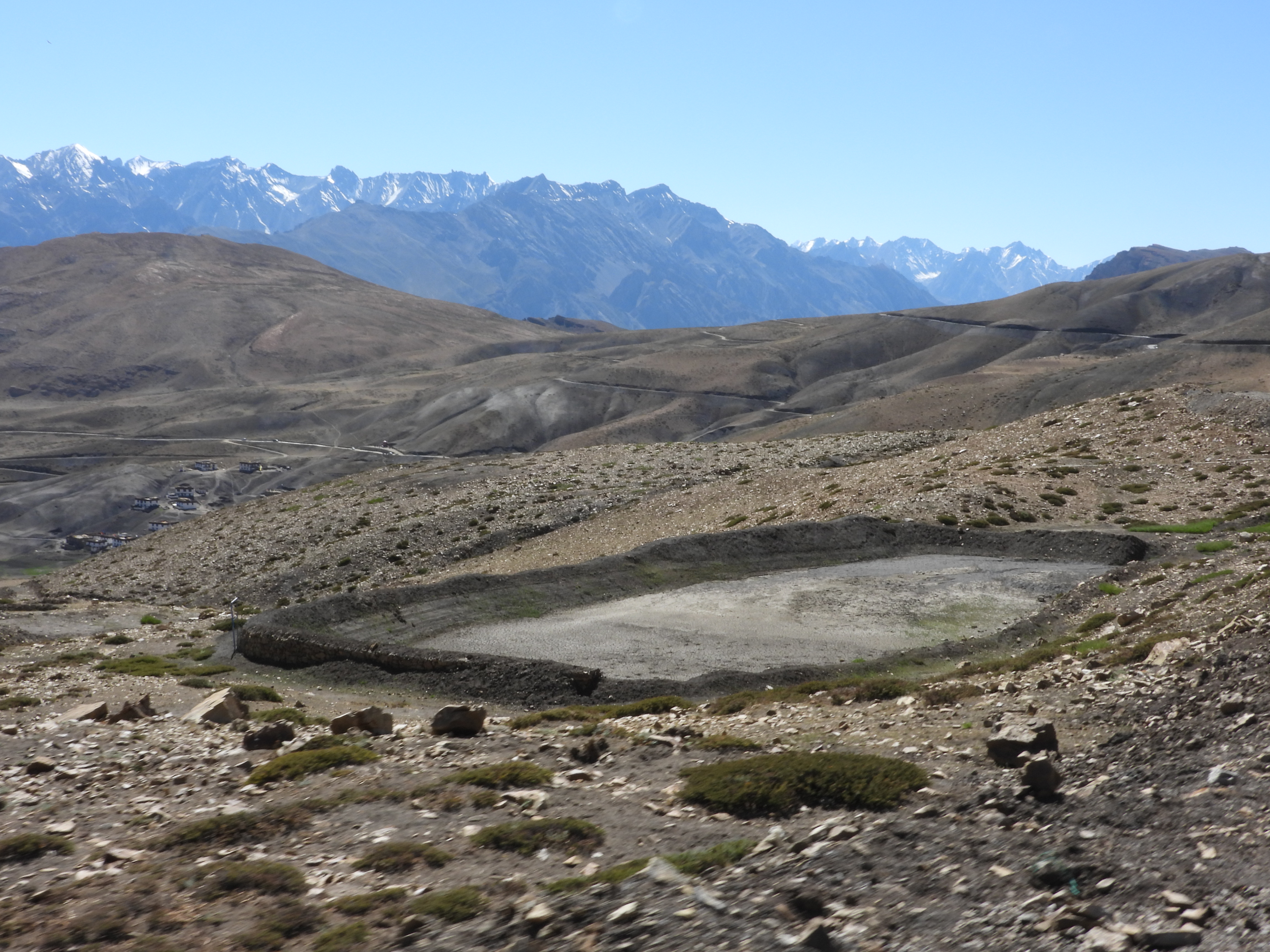
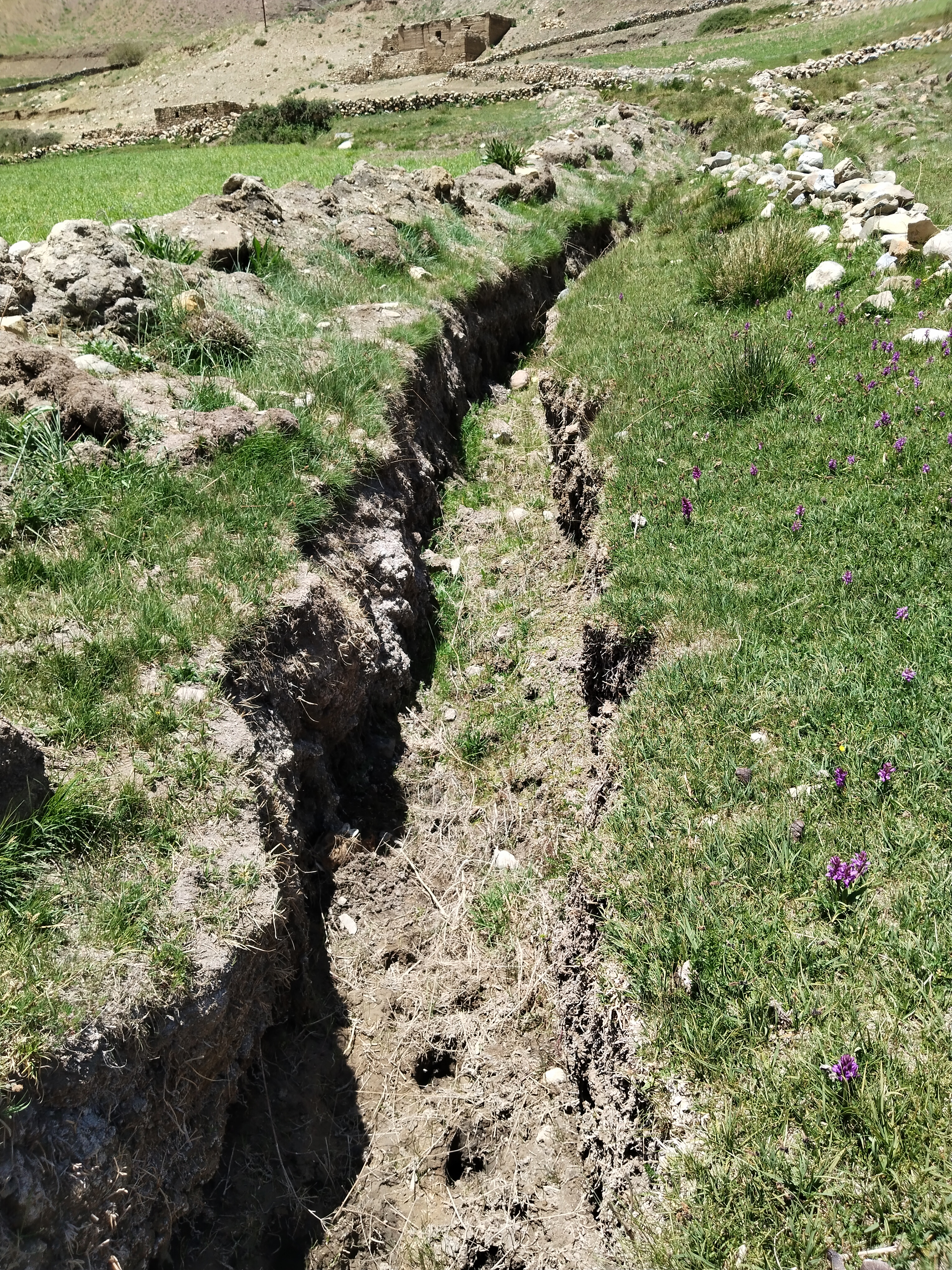
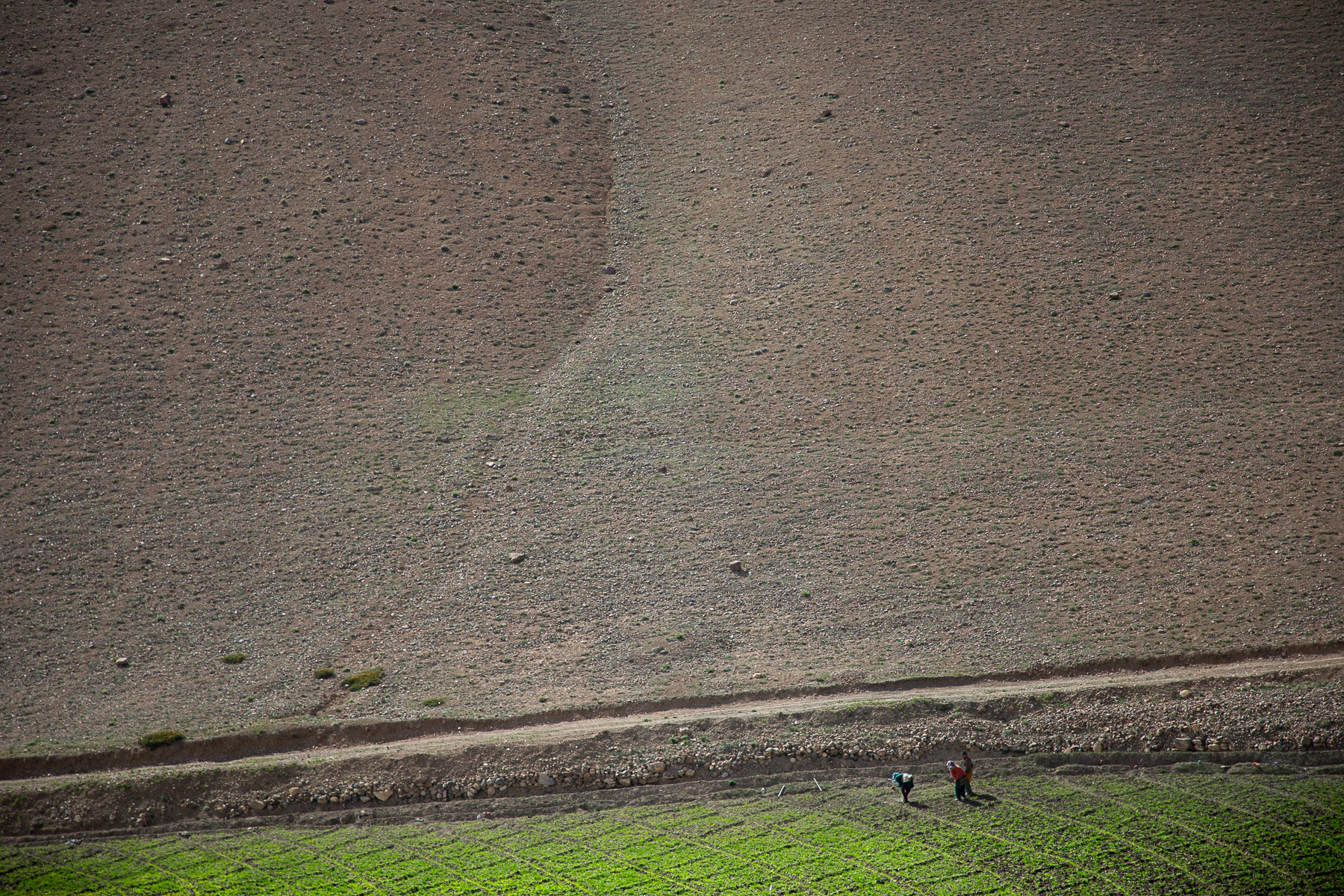
Dikit Lamo: We have been experiencing extremely erratic weather conditions these days. I am 40 now and from my experience, I think it is due to changing weather patterns. We used to have snowfall that levelled our houses and had to clear it with the help of our neighbours! Such was time. There’s lushful greenery in our barley fields and our harvests were abundant. In our village, Chu-mik (spring water) gushed with fresh water – we got to choose from myriad streams flowing around – cold, sweet water to drink while farming. From the past 10 years, there’s been a considerable decrease in precipitation. We used to look up at the sky in hope for rain but to no avail. This year was particularly unexpected. There was very little snowfall during winter and we were even unsure whether we would even get to till our land when summer arrives. We, somehow, adjusted to the difficult situation by either carrying a water tanker to our fields and initiating the seeding work. It worsened as months passed by, we had to leave many of our fields half irrigated or completely fallow. There’s no hope for crops this year.

Barren fields and dried reservoir | Photo: Chhunit Kesang
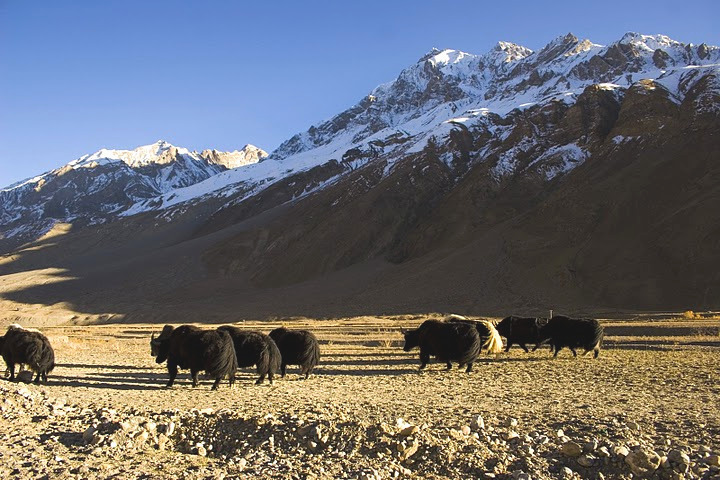
Domesticated Yaks

TD: What do you think is the cause for such changes?

DL: I think it is due to changing weather patterns. They say it is called global warming in English and has to do with plastic usage. I am not sure how it is interrelated and how it impacts our fields here in Spiti but I do believe it. I think about it a lot and think of avoiding plastic usage on my level. But will it make a difference on a larger level? I think collective action is needed. To ensure timely snowfall, we have to revive our traditional ways of living. Rituals are performed according to an astrologically and agriculturally influenced calendar and we have to bring back those traditions and belief systems. We also think about our children’s generation and preserve our natural resources. Tourism has also impacted the way we channel our resources. It is getting extremely rampant nowadays. We have to devise an internal resource and waste management system to reduce impact on nature. I think plantations will be beneficial in desert areas like ours. I hope that will reduce the effect of global warming and our fields begin to blossom again and our kuls brimming fresh snow water.

Padma Norzom: Water situation? It is scarce everywhere this year. In Chicham, even drinking water is getting difficult for us. Our barley and green peas field are all drying up before harvest season due to receding water in our kuls. There was just no water for irrigation and we are forced to abandon our fields. Because of declining water sources, our land, soil, pasture is all drying up and forage availability and grazing system is also impacted.

TD: Was it the same last year?

PN: It used to be enough to sustain our farm work and to feed our cattle but this year has been unfortunate. There was no snowfall during winter and all our spring waters dried up. My jersey cow also looks very weak and without adequate water to drink, milk production has become very less. I stopped selling milk this year. Livestock feeding and water intake behaviours are also negatively impacted and when sent out in the wild for grazing, they gallop towards greener pastures!

TD: How do we resolve this? Is there a way we can utilise water from the Spiti river?

PN: Yes, river water can certainly be channelled but it will be a bit strenuous and resource intensive as it is located far from the village area. If the government can help us, it will be a huge blessing. Some farmers have tried irrigating their green pea fields with generators. But the diesel operated generators turned out very expensive and it was simply not feasible for small farmers like us who also spent a lot of money buying green pea seeds. The cost will come in lakhs – all for nothing without water.

1800 1200 Tanzin Dawa
Environment & Women
Photo: Wikimedia Commons

Environment & Women

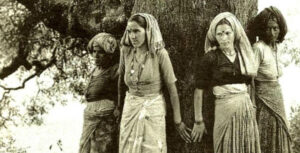
In the year 1730, the king of Jodhpur, Rajasthan sent out a band of soldiers to cut few Khejri trees for the construction of his palace. Khejri is one of the few trees that grow in deserts and are of a high cultural and religious value to many communities across India. So, to Amrita Devi of Khejrali village (named after the Khejri tree), to cut down Khejri was an act of disrespect to the Bishnois, a community to which she belonged. When the soldiers arrived, she along with her three daughters stood between them and the trees. When the negotiations to save the trees failed, the soldiers killed all four of them. The news of the sacrifice traveled fast and people from neighboring villages also joined to support Khejrali. However, the soldiers did not show any mercy and killed as many as 363 people. About 240 years later, in 1970, women of Reni village, Uttarakhand (then Uttar Pradesh), inspired by Amrita Devi, came together to save their forests from being cut down by government contractors. Twenty-seven women hugged the trees and did not allow a single tree to be cut down. Later, other villagers joined and the stand-off which lasted four days with contractors finally withdrawing from the village. This story of resilience gained the world’s attention and came to be known as the ‘Chipko Movement’.

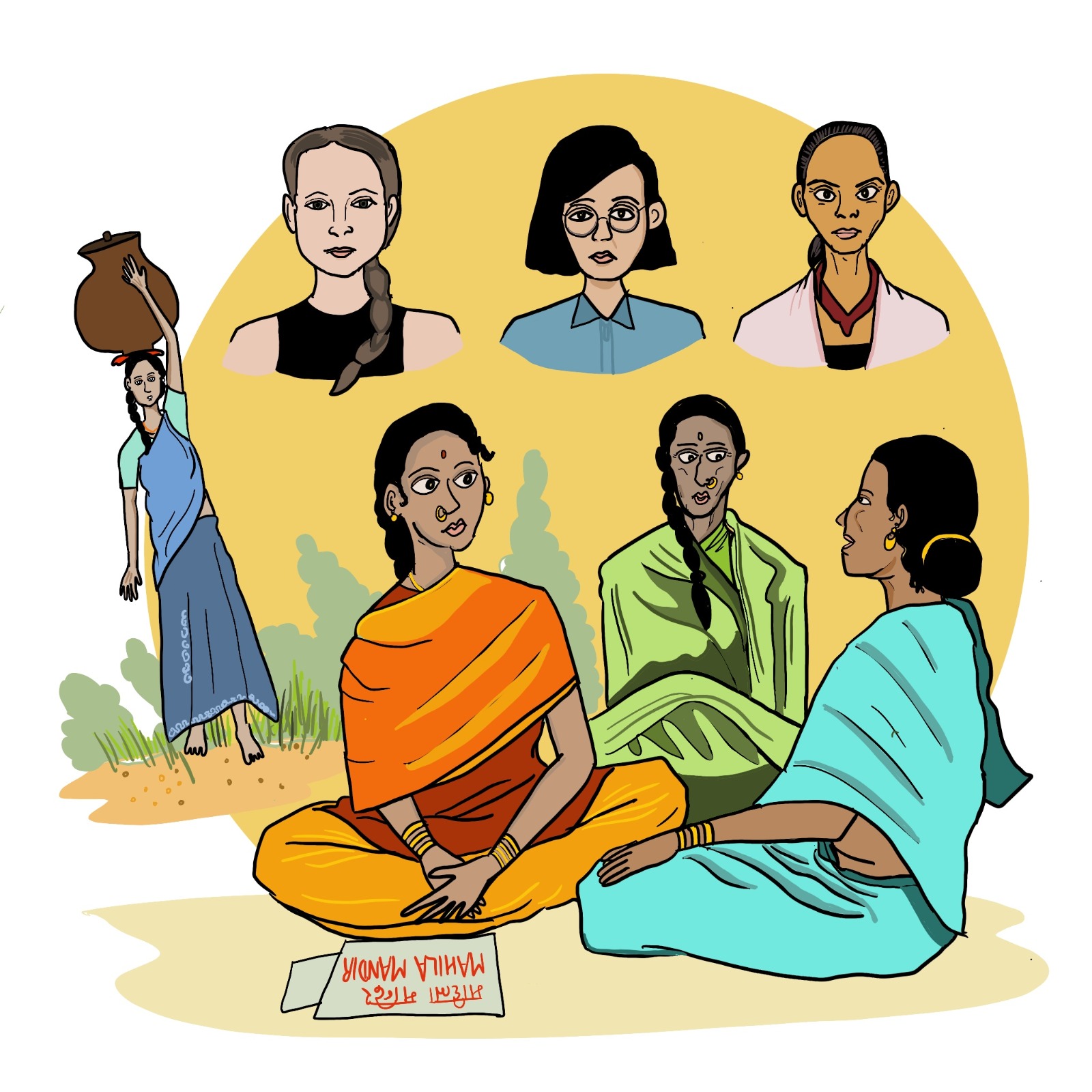
Women for centuries have shared an innate connection with the environment. Nature is embedded in the work women engage with and thus, for generations, they have worked hard to conserve it for themselves and the future generations. Forests and rivers preserved for thousands of years are now threatened across the planet. Unregulated development, extraction, deforestation, carbon emissions have led to serious environmental, health, and social justice implications. Studies show that these implications are not equally borne by all. The perpetrators of environmental and social injustice are the ones least impacted by it. People, especially women, belonging to disadvantaged caste and class suffer the most from these atrocities. Joan Davidson, a writer talks about how, in Rajasthan, over the last few decades, the water table has been declining due to the introduction of sugarcane, a water-intensive cash crop. Many water sources have also been polluted due to the use of pesticides in farms and industries. Because of this and growing pressures of climate change, women, of low-income households, are spending more time each year fetching water from far away sources. She also says the same for deforestation. When forests are cleared from around the village, the burden of procuring herbal medicine, fuel, and fodder from other distant forests lies in the women in most parts of the country. Unfortunately, these hardships are rarely accounted for while planning for any development policy or project. However, women have now started to take an active part in the conservation of the resources they heavily depend upon. Apart from these reasons to fight for the environment, many women activists around the world are leading environmental movements against powerful lobbyists to alter the course of our otherwise predicted future. Women, as young as twelve years old Ridhima Pandey of India who is fighting the climate injustice through a legal battle, Greta Thunberg, a Swedish activist, who has inspired millions of youngsters to protest all over the world or Marina Silva an activist who took to politics to save the Brazilian rainforests, have taken upon themselves to bring a greater consciousness to these matters. And there are many names to this list of women champions fighting the battle to ensure environmental and social justice to all. Women have been playing a very powerful role in positively shaping our environment all across the globe. The stories of these women may now seem big, but they all have had humble beginnings, many of them starting individually as the world slowly joined in.

In the contemporary Indian context, women have been using the platform of Mahila Mandals to raise awareness about many environmental issues pertaining to them and the community at large. Last year, on a short trip to Lahaul, I learned more about the Mahila mandals of Lahaul from a good friend, Shivkumar, in Udaipur.

Illustration: Rohit Rao

He told me about how the women of Lahaul were very active leaders of their villages and also helped in protecting the forests across the district. This year, I was able to speak with Ms. Sarita Devi, the president, and Ms. Pingla Devi, one of the senior members of the Mahila Mandal of Udaipur, to understand their reasoning for this conservation initiative. The interview was conducted over a telephone call and is transcribed from Hindi.

Tell me a little bit about the Udaipur’s Mahila Mandal.

Sarita Devi ji: We are around 25 women from Udaipur who are part of the Mandal. We meet every month to discuss key issues faced or any work that needs to be done like raising funds for a struggling family, or cleanliness drives, or just ensuring lockdown rules are followed properly. We also frequently collaborate with government agencies like the Forest Department for tree plantation drives.

Why do you want to save the forests?

SD: We depend on forests for a lot of things. For wild fruits, herbs, medicines, etc. They bring us rain as well as protect the banks of the river from flooding. They also help in reducing pollution. It is our natural wealth and we need to protect it for our future generations.

Why did you decide to ban the cutting of forests around Udaipur?

Pingla Devi: We noticed that the forests had been reducing. People from within the village as well as outside have been involved in logging. And if we continued at that rate, all the forest would be exhaust soon. So, we decided to take action and bring a village-wide regulation on cutting trees. Now, we just pick up fallen branches for smaller use and buy firewood for winter from government supply which costs us around Rs 600-750 per quintal.

Did you face any backlash from the community?

PD: No, we did not face any backlash. In fact, when we discussed this idea, everyone welcomed it, and until today everyone respects and follows this decision to save the forests.

Photo: Shivkumar (Lahaul)

What do you do if you see someone cutting trees?

PD: People of Udaipur do not do that anymore. However, once in a while we do have people from outside in our forests. Whoever sees such a person, they immediately let us know about it. We go and enquire about their purpose of visit to the forest and report it to the Forest department if we suspect that they might be here to cut down trees.

Because of the forests the animals also wander close to the village. What do you think of that?

SD: Yes, brown bears especially come out of the forest during the spring. They eat our apples and destroy our vegetables. Sometimes we do get angry at them, but the truth is that even they struggle to live in such harsh conditions. We have to live with them because without them our forests will also not survive.

How has the lockdown impacted your conservation initiative?

PD: Because of the lockdown, we are not able to visit the forests as frequently as before. However, once in a while we do make visits. Till now we haven’t received any information about trees being cut.

Your story is really inspiring. Himachal is one of the few states in India with rich forests. How can we continue to save these forests?

SD: We have good forest cover across the state because of the joint efforts of our communities and the Forest Department. We rely on the forests for everything. We should work towards making them richer and diverse. Everyone in their own village should plant more trees and take measures to prevent excess cutting of trees. Only this way we can ensure that our future generations will have more than what we got from our parents.

The women of Lahaul have taken that extra step to protect what is theirs’s. The belongingness with forests is a common temperament shared among most Himachali people. However, there is definitely more work that needs to be done. Himachal has been under the constant pressure of unwarranted development. Tourism, for example, has although brought a lot of economic development to parts of Himachal, but due to poor management, it has also created many related problems like garbage dumps, deforestation, water depletion, and pollution. This has impacted the quality of life. Women have been at the forefront of deteriorating lifestyles. We can still rectify some of the damages that have been done and take action to ensure the environmental and social integrity of our landscape. For generations, we have protected our forests, rivers, and mountains and together we should continue to be their guardians for a better future.

1480 756 Deepshikha Sharma