Essay

Dartse: The Archery Festival
Illustration: Nawang Tankhe

Dartse: The Archery Festival

Archery has been a vibrant part of Ladakhi culture for generations. It has its origin in traditional hunting. In the prehistoric times, it was practiced during warfare and for livelihood but gradually with change in socio-cultural positions, use of archery in people’s daily practice have dwindled. It, however, continues to hold an important part in Ladakhi culture and local customs. Playing archery using traditional bows and arrows is perhaps one of the very few visible cultural remnants of the past and symbolizes rich socio-cultural heritage.

Many Ladakhi folklore, proverbs, literature and rock-art have references to archery, unraveling fascinating insights into traditional way of living. The oral folklore – The Epic of King Gesar (Kesar-e-zGrums) narrates heroic stories of the warrior king Ling Gesar who was a skilled archer and horse rider. The epic saga also has a detailed account of the art of weapon and armor making.
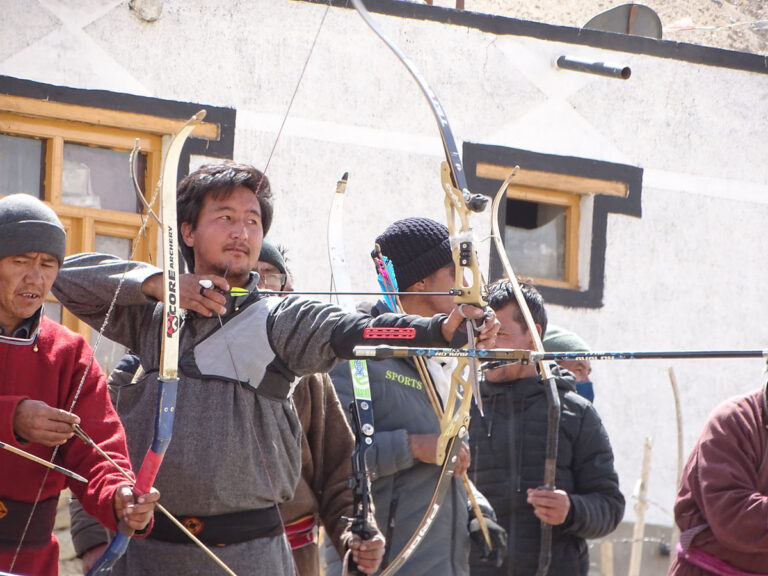
Archery festival in Gya | Photo: Abhijit Dutta

The Epic of King Gesar is the most celebrated oral narrative of the central Asian region and has a particularly huge influence in highland pastoral areas of Tibetan plateau and Ladakh. Phrases like “fast like Ling” – evoking magnanimous strength and speed of Ling Gesar Gyalpo is a common part of local speech. The allusion to natural elements and imagery of nature is also quite frequent. The oral narrative explores the theme of harmony in nature, balance between human and nature, battle between good and evil (deities v/s demons) and disruption of natural order in great depth. In today’s times, much of these oral traditions and cultures are going out of practice and what remains is a watered down version of the rich cultural heritage our ancestors have passed on.
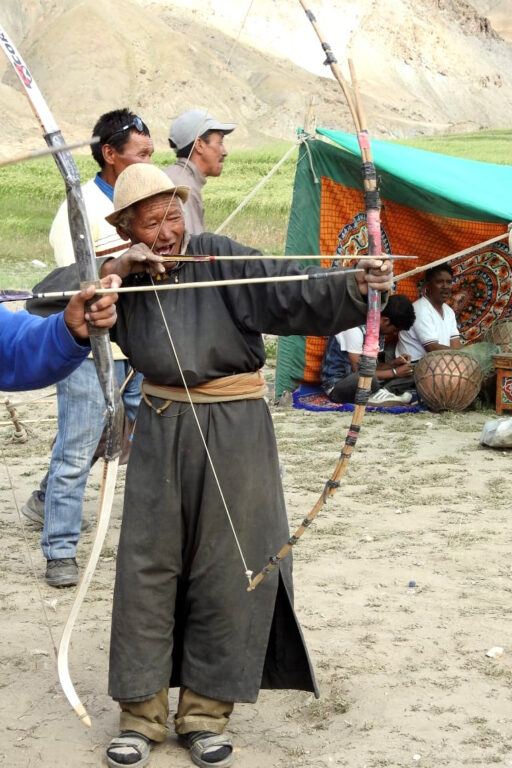
Photo: Karma Sonam

Archery, one of the few remaining traditions, is the most celebrated local festival in Ladakh and is very popular in my village Gya too. Gya, one of the oldest settlements in Ladakh, was historically the abode of chieftain ruler Gya-pa Chow. Today, there are around 150 households in the village dependent on agro-pastoralism. Dah- Fang or Dartse (Archery) is celebrated for good harvest, harmony and happiness in the village. Traditional song and dance, feasts, archery competitions, rituals- all are part of the festivity and prayers.

Dartse is celebrated twice in a year; sPitda is celebrated in early spring after dormancy of winter days and Yarda is a mid-summer celebration. The Spring archery festival marks the beginning of harvesting season and is celebrated right before watering the fields when farmers are getting ready for the cultivation. The Goba (village heads) of all neighboring hamlets collectively consult Rongtsen (oracle) for an auspicious date for cultivation and subsequently coordination for archery celebration is carried out. Once the date for ploughing is finalized, the Goba will announce the date of festival and gather barley, grains and ra-luk (sheep-goat) for the feast.

Women and young girls participate in preparing food for the whole village while men and adolescent boys take part in archery competitions. Drinking traditional wine is a huge part of the celebration and a group of women known as Changma (wine incharge) are solely responsible for brewing Chaang (barley wine) and Aarak (local alcohol) and serving it to archers during the festival.

Gya has 3 main hamlets and Dartse is celebrated collectively in all these villages. It goes on, uninterrupted for 6 days and each village takes turns hosting it in their village. In Hemya (my mother’s village) religious ceremonies for good harvest and prayers for peace and harmony among villagers are done by holy lamas (monks) and the grain sheaf called “Phut”(first offering to god) is offered in monasteries as a gesture of gratitude.

The archery competition is one of the most awaited events of the festivals and a lot of men and young boys take part in the competition. The archers are divided in two teams known as Ma-Bhu (Ma – mother, bhu-son) with one team headed byGoba (village leader) and another team led by Nyerpa (a monk representative). Earlier, bows and arrows were made of ibex horns by skilled artisans but these days we use the ones made of willow and bamboo. The target area is made on a heap of mud to ensure the arrows don’t break, and the target (bull’s eye) known as Tsage is either made of zama (earthen clay) or a wooden plank. The archery competition starts with rdaman pa (traditional musicians) playing songs and when an archer hits Tsege (bull’s eye target) people breakout in loud songs and dance cheering the team. Whichever team hits the target maximum number of times, wins the competition. The winning team has to pay some amount to Rdaman pa as a gesture of gratitude for their services and circumambulate Tsege (target area) in loud celebratory cry Rzang solo!!
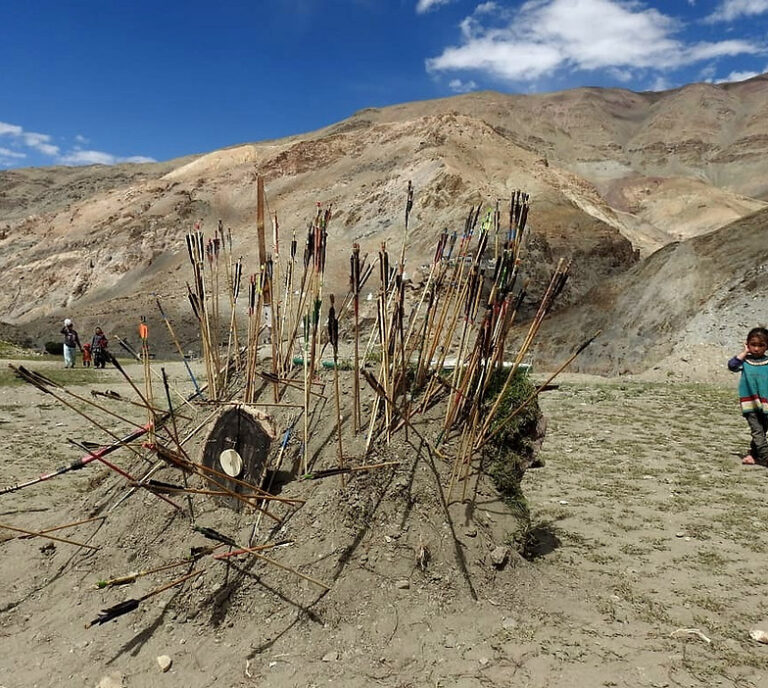
Photo: Karma Sonam

Archery is not merely a sports tournament but is an integral part of our communal identity and cultural ethos. It is a reflection of the rich Ladakhi cultural heritage and carries strong socio-cultural sentiments of the people. The festival brings together communities and is important for maintaining cohesion and peace within society. Ladakh being primarily an agro-pastoralist society, the festival is in a way also a celebration of crops that are grown on land and cherish the efforts of the farmers.

But such traditional practices are slowly fading away and many aspects of the festival and traditional customs are altered to suit modernity. Wearing traditional clothes like Goncha (woolen robe), eating paba (barley delicacy) and using bows and arrows handmade by local artisans were significant aspects of the archery festival but are slowly eroding. These days, modern sports gear are used for archery and the spirit of harmony between people, between communities is slowly being replaced by competitiveness of the game. I have personally witnessed these traditional practices (whether farming or archery) undergo drastic change in the past few years and I feel an overwhelming sense of loss. Our land and our practices make up for who we are and I feel it is important to preserve these traditional practices.
1724 588 Karma Sonam
Himalayan Agriculture
Photo: Thapasu

Himalayan Agriculture

At 14,200 ft above sea-level, surrounded by the trans Himalayan range, I was looking forward to seeing the yak, for which I had travelled from Mysore to Kibber village in Spiti during the summer of 2016. The walk from the village to the pasture was an arduous one, but I had two girls from the village Lobzang & Tenzin who were accompanying me on my quest. On our way, we crossed many agricultural fields where the villagers were growing green peas. It was unusual to see a cash-crop in such a harsh and remote region. They explained how agriculture had taken shape in the last few decades and opening up of roads and tourism brought many possibilities to these remote places. “For our own consumption, we still grow barley. Green peas are only for the outside market” they exclaimed. Barley, a cereal grain, which has been a staple in upper Himachal has been the source of nutrition especially during the long winter months when supply of any food produce is infrequent and unpredictable. However, due to lack of marketing opportunities, there is hardly any demand for it outside of Spiti. Discussion with these young girls led me to develop the idea of ‘Thapasu’.

Photo: Thapasu

Thapasu is a for-profit impact company that closely works with farmers and other collaborations at multiple levels to make agriculture nutrition-rich and accessible to all. We hope to do this by working at ground level in protecting and preserving the agriculture knowledge and the biodiversity surrounding it. Our work began in early 2016 when, with the help of a few researchers and the Government of India, we were able to start this initiative alongside two farmers – Deepak and Poonam from Kullu valley. We began by cultivating and marketing Jattoo variety of red rice. It was a huge success. Since then, Thapasu has been working with tribal farmers to produce, add-value and market various native, heirloom and wild products promoting natural and organic form of agriculture. Some of these include Barley, Seabuckthorn – a wild berry, Black-peas, Rhododendron, Rose Hips and Tartary Buckwheat. Today, approximately 3200 farmers have joined us from three districts in Himachal Pradesh (Lahaul & Spiti, Kullu, Mandi) and two districts in Karnataka (Mandya & Hassan) along with few regions in Leh, Ladakh.

Thapasu works with a ‘Farm to Store’ Model by marketing these heirloom species with the help of institutional partnerships and Government schemes. Through institutional collaboration, Thapasu also engages in building newer technologies which are then transferred to the farmers and self-help groups in converting the produce to the final product. 10% of our profit goes back into the community through various agricultural services we provide for farmers such as soil testing, land mapping, semi processing subsidies from government, skill training and new technology introductions. We are a team of eight resourceful people who bring various skills to enable this work in the Himalayas.

Photo: Thapasu

Food habits have changed drastically over the last 5-6 decades, however, the importance of saving local food systems is only becoming apparent to us in the recent past. Biodiversity is the key indicator of the health of an ecosystem. But the extinction of wild, native and heirloom food grain species may have unforeseen impacts, sometimes snowballing into the destruction of entire ecosystems. Ancient products still continue to grow in certain parts of the country specifically where climatic conditions are harsh and rough because they are able to withstand drought, fix nitrogen and survive in the harsh climatic condition. Introduced crop needs external inputs to do the same. But we are experiencing this shift where traditional crop patterns are being replaced by newer varieties of produce even in the remotest regions of the country. The best way to save the little that remains is by unlearning modern agricultural practices, re-adopting the traditional practices and building a circular system that benefits the farmer, consumer and the environment.

Why Thapasu?
Farmers growing ancient heirloom products do so mostly for self-consumption. For livelihood, however, they have to depend on introduced crops for which they may be using chemical based fertilizers and pesticides. This is harmful to the soil quality and health of the community in the long run. Thapasu ensures a market for the organically grown heirloom products and fills gaps which are prevalent in the conventional agro-marketing infrastructure.

How Thapasu works?
Any farmer/s who grows ancient heirloom products, organically, can reach out to us to help them sell their produce to the outside market. Once the quality and nutritional value of produce is assessed, we begin marketing and selling the produce as a Thapasu product. We buy a set quantity from the farmer which is mostly stored with the farmer and when we receive an order from our website (www.thapasu.com) we request the farmer to send the package to the address via India post. Bigger orders are managed by us directly.

How are farmers paid?
Farmers are paid when we buy the product from them. All the transfers are made directly to the bank account of the farmer. If the farmer does not have a bank account then the payments are made through our local champion who pays them in cash.

How much share does a farmer earn?
Of the total profits earned, up to 50% goes to the farmer as part of direct income and/or services provided by us.

Are there any other services provided by Thapasu?
Organic farmers or farmers looking to change to organic agriculture, can reach out to us for any grievances or consultation with regards to their fields or produce. In collaboration with other institutions, we also conduct regular workshops for farmers for transitioning to organic farming and skill building. We also do soil-testing, land mapping and support farmers to avail government subsidies.

How can farmers reach out to you?
You can give a call or leave a message with your name on +91 973 140 8844. You can also send an email at amshu@thapasu.com or visit our office in Manali: THAPASU Centre, #83/7, Siyal Village, Post Office Manali 175131, Kullu Dist., H.P, India.

427 320 Amshu CR
Ecological Importance of Dry Toilets
Photo taken from an online source

Ecological Importance of Dry Toilets

Spiti Valley is a rural and dry mountain region located in the Indian Himalayas in Himachal Pradesh. Being a cold desert valley, it receives very less rainfall in the summers which is not enough for the crops to thrive. Dependence on water is therefore exclusively centered around glaciers whose water collect in streams traditionally called ‘tokpos’ and rivulets called ‘yuras.’ Local communities thrive next to the tokpos from where water is diverted into the fields through yuras. The unfortunate dual existence of agriculture and scanty rainfall compels the farmers to engage in a tedious task of irrigating the fields using glacial water. Additionally, Spiti also faces water shortage in winters, due to which people depend on pipelines (most of the villages lack it) and hand pumps to extract water for daily use. The hand pumps also have predictable chances of freezing and becoming unusable due to sub-zero temperatures. The problem of water-scarcity is however eased by the existence of dry toilets which do not need input of water like modern pour flush toilets, also producing natural manure for the fields

Photo taken from an online source

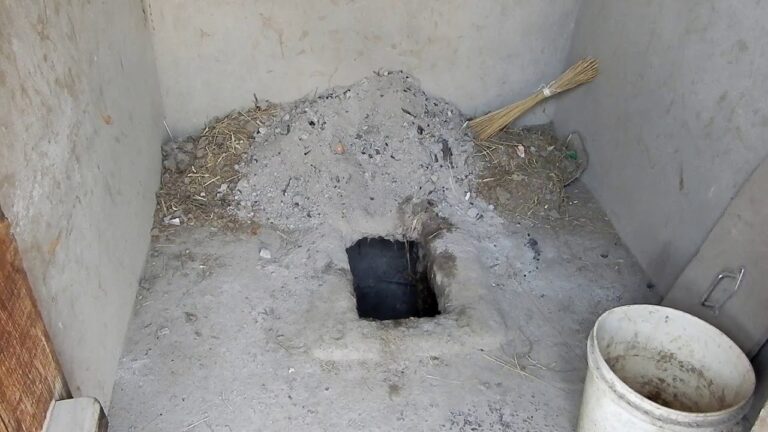
A deeper look into the traditional agricultural practices of Spiti shows how the local knowledge pertaining personal sphere of sanitation holds symbolic power to question not only the design of modern sanitation systems but also the paradox of development and modernity that cities are clothed with. What is progress if whatever new infrastructural advancements we are coming up with are detached from the ecology of the area it is being used in? Is it even progress if it’s happening at the cost of the deterioration of nature’s resources? We have been using dry toilets for generations in these cold Himalayas. It is also called composting toilets and are the ancient versions of modern eco-san toilets. It has two levels, a toilet on the top and a composting unit underneath. After using the toilet, we shovel a bit of dirt (mostly ashes, hay or dry dung) into the composting unit, through a hole to facilitate decomposition by microorganisms. The dirt also covers the waste and blocks the foul smell. Furthermore, these toilets do not need water.

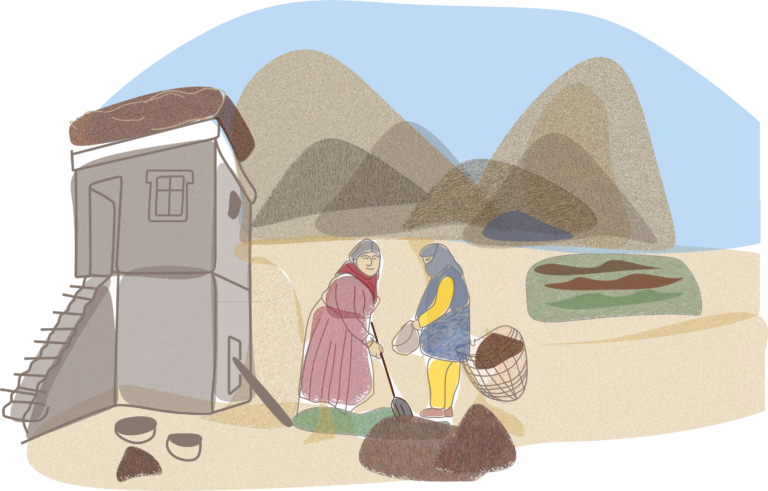
At the end of every year, we clean the composting unit of every household with the help of our neighbours, friends and relatives. It is a communal affair and the waste that has decomposed is usually dry. The naturally formed manure is put to use in the fields before the ploughing season. In Spiti, therefore, there is no concept of ‘waste.’ The symbiotic relationship between the toilet design systems in Spiti and the fragile ecosystem facilitates growth of healthy crops and reduces the brunt of water crisis in the region. The use of dry toilets is therefore an eco-sensitive wisdom born out of the geographical realities of this cold desert and is especially useful in the winters when water freezes. However, an influx of tourists and the effect of modernity is not only hierarchizing sanitation design systems but is also disrupting indigenous knowledge and the temporal existence of infrastructure when it comes to construction of toilets.

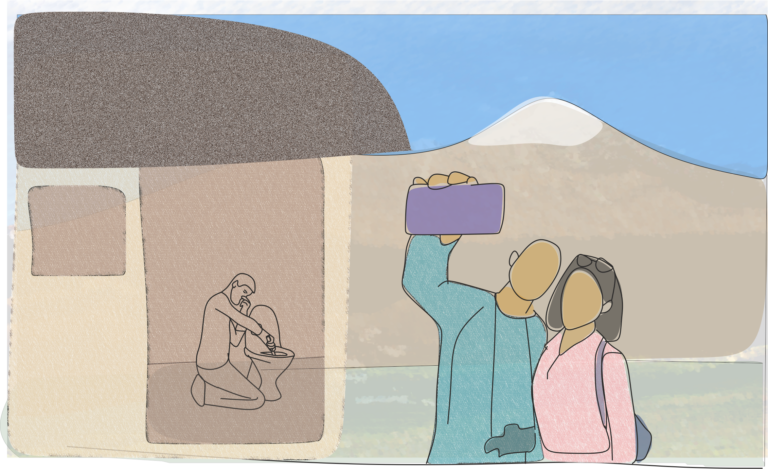
Modern toilets invisibilise waste | Illustration: Malvika

Symbolism of Toilet Design

Sanitation, although a very personal matter, is also very political. It is impacted by class, caste and geographical privileges that one is born with. Living in a society marked by caste, class and gender differences, our everyday objects and infrastructures are filled with symbolic meanings which have political connotations. Most of the semiotics revolving around these infrastructures are shaped by the overarching burden of development that we’re all expected to carry.

User & cleaner is the same person | Illustration: Malvika

The brunt of modernity is borne heavily by the marginalized communities who are socially, intellectually and financially less privileged. In the dry toilets of Spiti, there is an understanding of where one’s waste is going; one sees the waste and later when decomposed to form manure, materially engages with it. The ‘user’ and the ‘cleaner’ is the same person here. With modernity however, progress of sanitation design systems is measured by how well you can invisibilize the waste. There is no awareness of what trajectory one’s waste takes. In pour flush toilets, waste is flushed, it goes into sewers and ceases to exist visibly for those using it. The waste is left in the sewers and septic tanks to be manually engaged by those who are forced by their caste status to do so. Intentionally or unintentionally, modern toilets and sanitation design systems work efficiently only to strengthen the existing inequalities in society and stigmatize dirt, caste status and sanitation work. For the outsiders, these dry toilets are symbolic of the ‘backwardness’ of the region.

These toilets are looked down upon and therefore become an indicator of the scale of development one has afforded to reach. When I took one of my friends to visit Spiti to meet my family, the first thing my parents said on the phone was, “We don’t have a good toilet. Will she be able to manage with our traditional toilet”? With the oppressive discourse of so-called ‘development’ and the hierarchization of toilet design systems, the traditional toilets immediately become instruments that trigger shame and remind Spitians of their class and their ‘backwardness.’ It compels Spitians to be apologetic that they cannot keep pace with the race of modernity.

Tourism and Its Impact On Toilet Design

In recent years, Spiti has become a famous tourist hotspot. To service the influx of tourists, towns like Kaza have built many restaurants and hotels that are attached with modern pour-flush toilets and bathrooms. To cater to the preference of modernity and of the tourists, owners have constructed borewells to extract groundwater. With scarce rainfall, recharging the groundwater seems like a phenomenon that will take forever. Exhaustion of groundwater worsens the problem of water scarcity during the winters when tourists cease to visit. With tourists visiting and the influence of modern infrastructures, Spitians in the towns have moved away from their eco-sensitive traditional knowledge regarding construction of toilets. The indigenous knowledge is losing value in the face of the larger discourse around development and a drive to ‘modernize.’

In this era where development is seen as a linear phenomenon, rather than context-dependent, the dry toilets of Spiti symbolize how ‘backward’ or ‘developed’ one is. The toilets, therefore, become symbolic of one’s class and the scale of development one has reached in terms of sanitation. The visibility of the waste through the hole of the dry toilet is considered unclean. Dry toilets of Spiti are therefore, not only symbolic of how the ‘personal’ is linked to and influenced by the larger political discourse around development but also how infrastructures or sanitation design systems come to acquire and be trapped within social values of power, shame and backwardness.

1000 404 Sonam Yangzom
A Quiet Desperation
Photo: Chunnit Chhering

A Quiet Desperation

Nestled at the foothills of gigantic mountains, my village Gue is located south – east of Spiti near the Indo-China border. Away from the hustle-bustle of urban plains, we have always lived a quiet life. Our lives revolve around what we primarily derive from nature. Our days are spent tending to our barley farm and grazing livestock in the high pastures of my village. Growing up, I never fathomed this could change or imagined any alternative. Whether it is our elders, women, younger children, almost everyone is tied to some form of agrarian work and everyone did their bit.
​
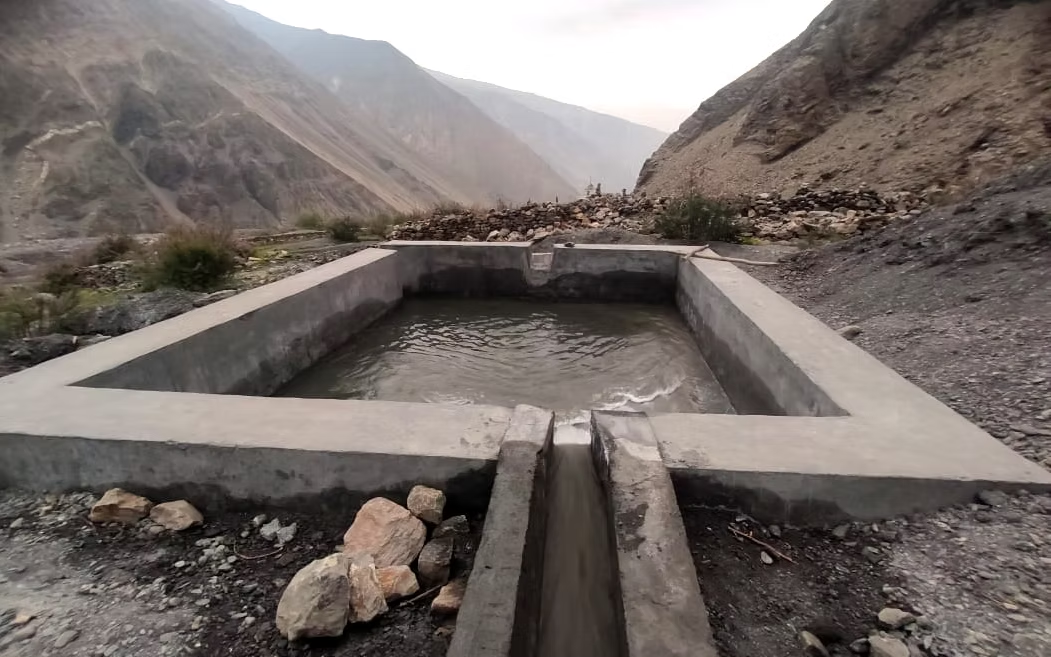
In the recent few years, we are gradually experiencing an insidious shift – the weakening of the agricultural foundation upon which everything else is built. Water which forms a crucial base for our sustenance is slowly becoming unreliable. Uneven rainfall, drying up of water sources and flash floods are new normal to my village. As far as climate change is concerned, it cannot be more real. Spiti is a high altitude cold desert. We experience cold weather throughout the year with a short period for agriculture. But it feels like a lot has changed since my childhood. The weather feels much warmer and our glaciers appear thinner. Gue is Spiti’s highland settlement and therefore we depend on glaciers and spring water for both domestic use and irrigation. In our village we have a total of 4 sources of water channeled to different households and each of them is facing a threat.

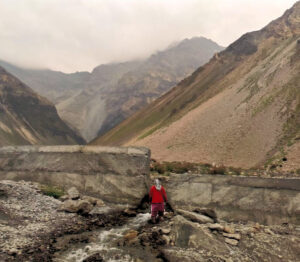
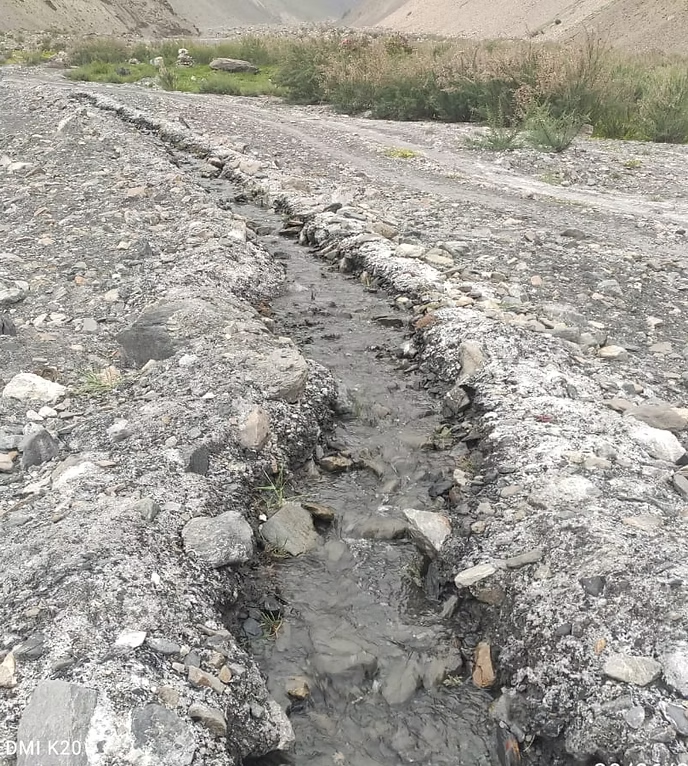
Kirki Phak: A northern side mountain range which possesses a huge reserve of scattered spring waters. All the spring water flowing in this mountain combines at the mountain foot and becomes a rivulet. This used to be the prime source of water for villagers whose fields are located in Gang (north side) but now this blessing has turned into a river of sorrow. During unseasonal rainfall, this river swells up and gives birth to flash floods. A dreadful flash flood in 2010 wrecked havoc and many farmers lost their fertile land. The debris, huge boulders, unwanted sand has made the land unfit for agriculture or anything else. What once was a vast stretch of green has turned into a flat track of barrenness. A lot changed after that, floods, soil erosion became quite normal and now it is even difficult for us to maintain a water canal as when it rains, everything gets washed away.

Photo: Chunnit Chhering

Ringi Buk: This glacial water is located behind ITBP camp (Indo Tibet Border Police). It serves as a source of water for agricultural fields located at Tho (central zone) as well as Chumik Pharma (fields located at the other side of a spring water). Untill last year, this was the most constant and reliable source of water but this year, we struggled even to irrigate our fields. There’s hardly any water flowing in our Kuls! Villagers are now forced to find measures – the only viable way to draw water is to link this source with the Kirki Phak and irrigate our fields.
​
Chhumik: This spring water is a source of water to Matka – fields located at the lower side of the village. The supply of water hardly gets disturbed but it requires extremely sensitive management to cater the needs of all farmers. This is the only source of water during winter as the other sources freezes up but this too is getting disturbed due to change in climate.
​
Phuk: This glacial source is at the Tibet border side. This is an unchanneled source but most voluminous in nature.

Photo: Chunnit Chhering

I do not know much but our lived experiences and relations with nature are changing. We revere nature for its life-giving qualities; our lands, our water, our pastures, our glaciers and other components of our surroundings are precious and there’s a deep sense to protect it, preserve it and coexist amid harsh conditions. The Buddhist values of living harmoniously in our environment with all lifeforms is what makes us unique but that deep veneration, that love is slowly getting replaced with fear. Many people are fearful of fiery elements of nature. Rainfall is very less in our region. But it has become quite frequent and untimely in the recent few years causing a lot of damage to our farm and our crops. Timely snowfall is good for us but hailstorm and torrential rainfall is causing huge devastation. It has disturbed the whole ecosystem and we always live in fear of floods and falling rocks.

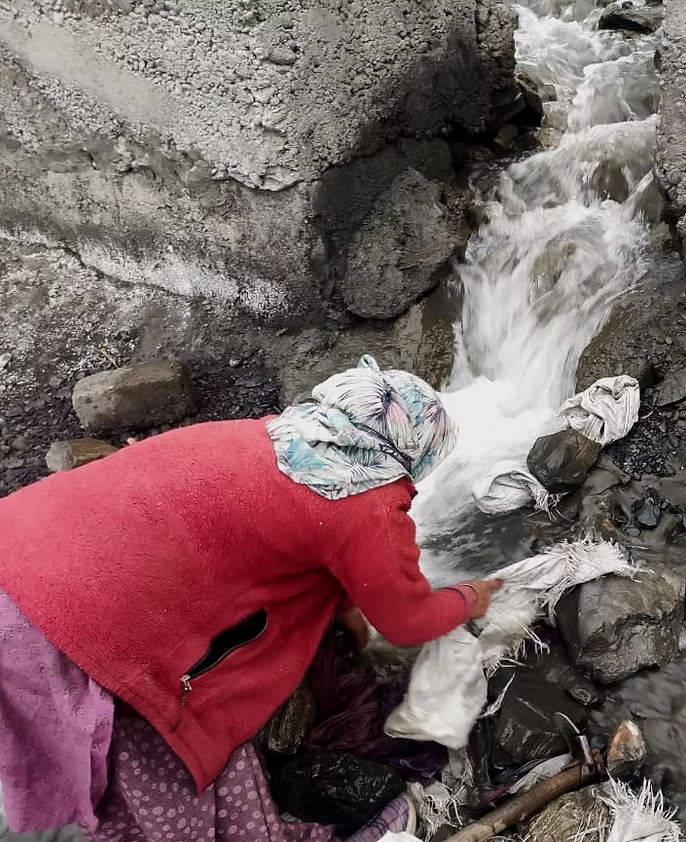
Throughout the mountain region, springs are reported to be drying and mountain agriculture is suffering from drought. The shortage of water has placed an increasing burden on mountain communities particularly villages like us where springs provide access to 90 percent of freshwater. In the whole climate change scenario, agro-pastoralists like us are the most vulnerable. Our village experiences both drought-like situations as well as the brunt of flash floods. Geographically, Gue is slowly turning into a barren land. Our village already lost half of our agricultural land and that cannot be revived. Many people lost huge bighas of land in the process, including mine. Since the flood, there has been a lot of erosion and we also face difficulty maintaining our water canals which is key to the water distribution system. The woman in the picture is my mother with whom I go upto Kirki Phak to bring down water to our fields during our Chu-rey (watering turn). It is not easy as we have to wake up at 4 am in the morning and the canal frequently loses its shape due to excessive siltation which creates hard labor for us. Maintaining water canals is a huge issue and women bear the brunt. With the help of the local Panchayat, there has been some solution to reinforce the canals but if it floods, we are back at ground zero – where we started.

Photo: Chunnit Chhering

Elders in my village believe that if there’s any magic in the world, it is contained in water. Peace, healthy social relations and communal harmony has its strong roots in water availability. The flood has a direct impact on our livelihood. The backbreaking work of agriculture is becoming more precarious and people are gradually shifting from it. Some leaving their fields uncultivated, some finding resort in tourism and odd labor works. It has also marred social prospects for many youngsters as people are reluctant to marry their daughters in our village. I feel all these are climate induced changes – uneven rainfall, retreating glaciers, drying up of water sources, water scarcity, flash floods and its devastating impact on mountain people. Tourism has escalated the situation and placed additional burden. At one point, the number of vehicles entering my village exceeded 400 on a daily basis!

Gue is a popular travel destination and is often listed among off-beat travel itineraries. Our village monastery preserving the mummified body of a great Buddhist yogi draws special attention. Travellers across the world visit the village to witness it but their relation to the place doesn’t go beyond consumerist approach. With more people getting to know about it, there’s huge love pouring to the beautiful picturesque mountains but no one is bothered how locals are eking out. No one is bothered how we are quietly bearing the enormous burden. Away from the limelight – an unspoken desperation. I feel only through collective action we can mitigate some of the climate induced devastations and I hope everyone takes care.

981 857 Chunnit Chhering
Traversing Climate Change
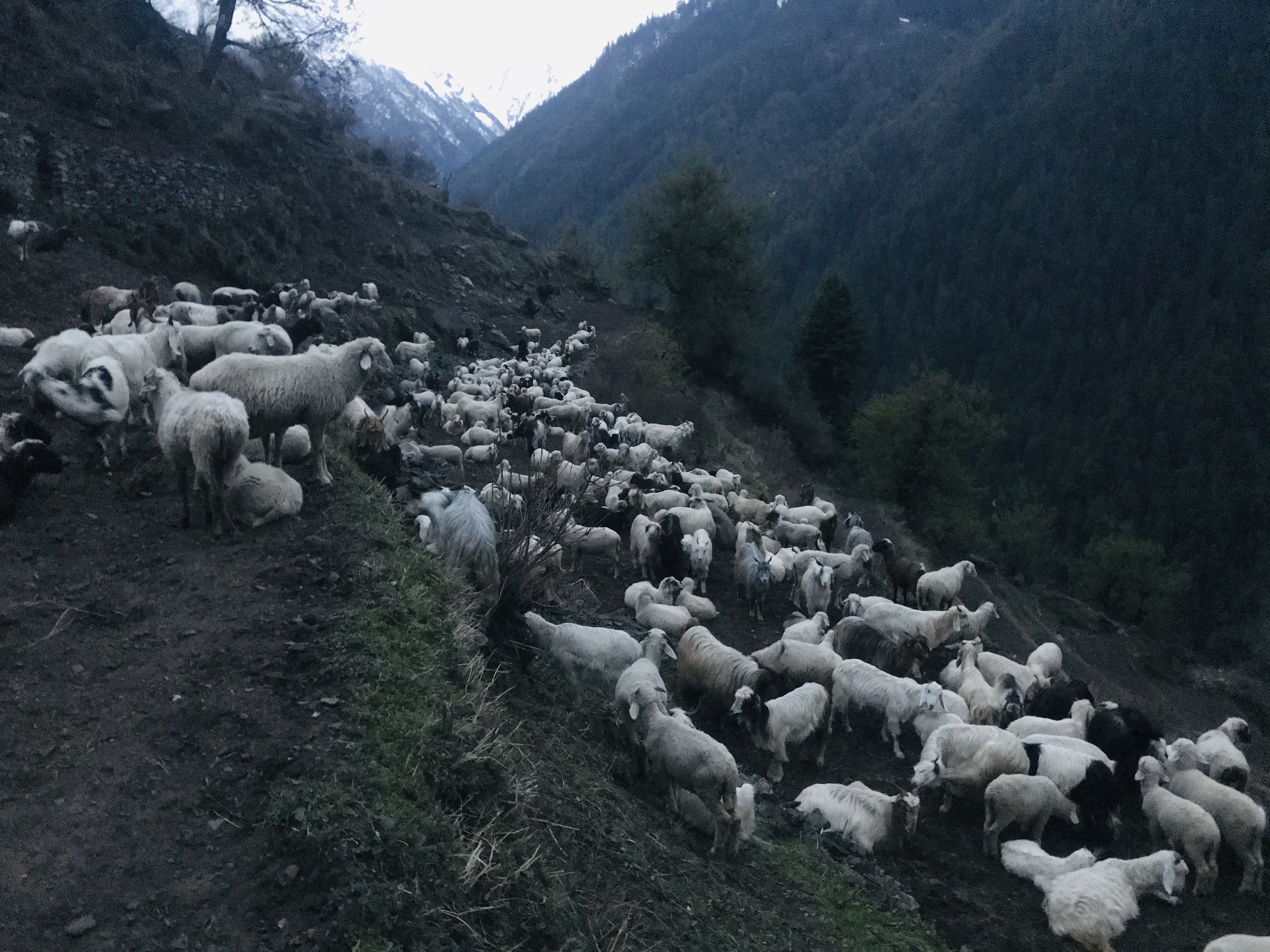
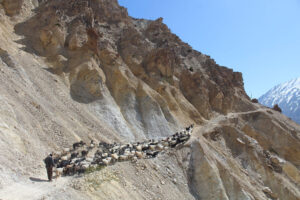
Herds of sheeps and goats return after grazing in the Dhar on the North-east of Kungti village | Photo: Virendra Mathur

Traversing Climate Change

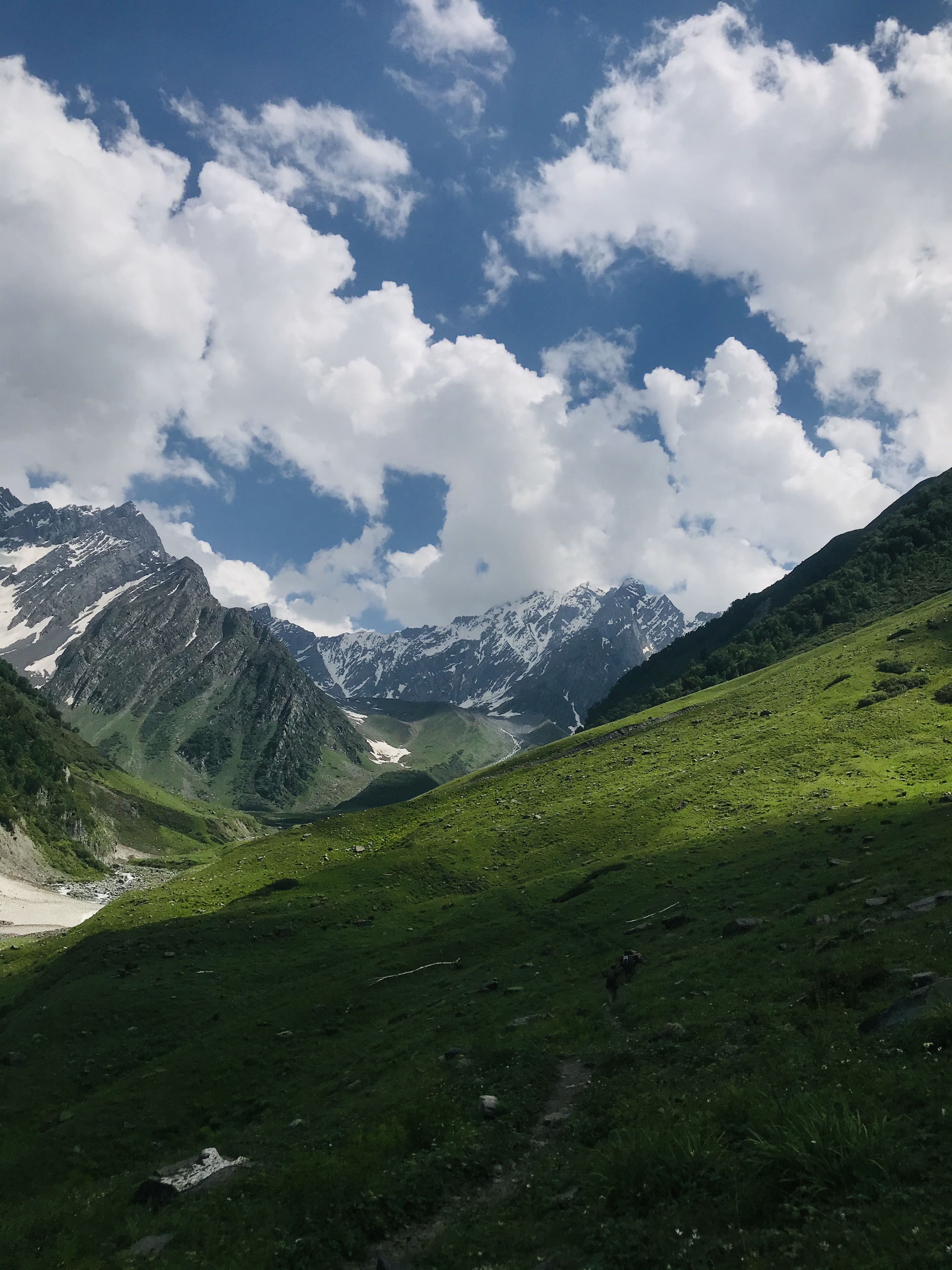
In the mystical lands of Bharmour and Lahaul, located in the north-western part of Himachal Pradesh, India, a seasonal event takes place every year that is an elegant harmony between local culture and nature. Here in the traditional seat of Gaddi shepherds, the community is described variably as semi-nomadic, transhumant pastoralists, or agro-pastoralists. The Gaddis, usually men of the family, start on a migratory event in early April, gathering their goat and sheep herd and taking them to the high-altitude summer foraging grounds. These unbridled pastures, known as alpine meadows are called dhars. This seasonal movement is ingenious at various levels – it sustains the economy of a Gaddi household without being too reliant on agriculture. Further, Gaddi herds provide rich manure to the tilled lands across various agricultural landscapes they pass through and in return receive food and a place to camp; a barter system still in place. And this practice helps avoid low productivity foraging grounds without putting undue pressure on alpine pastures.

The shepherds pass through various towns and villages, as they start their journey from the low-lying areas of Kangra valley and plains of Pathankot, crossing the Dhauladhar mountain range towards Chamba district and travelling north towards the alpine pastures in the inner Himalaya. With them, on this arduous journey, are of course the livestock that they address as “Dhan” which also translates to money and wealth in Hindi. The sheep and goat herd constitute a flexible and continuous source of economic return for this community, especially when small land holdings do not allow for huge returns from agriculture. The flocks serve as a source of meat, milk, fleece and wool. The wool produced by Gaddi sheep is primarily used to make warm clothes, and is considered to be fine quality wool in a market where the quality dictates the price of the wool.

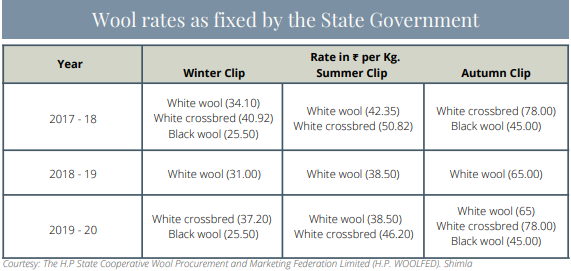
Himachal Pradesh State Wool Federation website displays the minimum support price (MSP) offered by the government for the sheared wool. Based on per kilogram price, the prices are lowest for the wool sheared in winter in the month of January-February, whereas the highest price is set for the wool that is sheared in autumn (in September or October), after the flocks have come down from the alpine pastures. The Gaddi shepherds I interviewed called this an ‘A’ grade wool. In their opinion, the nutritional forage available in the alpine pastures, which consists of medicinal herbs, shrubs, and vital grasses, contributes towards development of such fine and gregarious Gaddi wool.

Even more difficult than the journey to these pastures is living there. When I asked a Gaddi about the most important skill to survive in the alpine pastures, he simply stated that “You have to become an animal to live with an animal.” indicating the laborious life in alpine pastures. The arrival of Gaddi in the alpine pastures is met by receding snow, and below it lays the abundant grass to forage for the livestock/goat and sheep herd. These alpine pastures stretch till the horizon, vast carpets slowly turning green. Guiding herds in these alpine pastures is the least of their worry, the real challenge is to protect the herd from the harsh surroundings. The relationship of herd and the shepherd arises from mutual dependency, and for Gaddi men who remain away from their families, their herd is their family. The relationship of care is intertwined around wool – it transcends the material value and takes up emotional significance. It is the wool that earns shepherds the money, and it is this wool that comes back on the journey – laden on the back of a shepherd in the form of a blanket or a shawl.

They keep a portion of the sheared wool for themselves, and use it to manufacture clothing – their traditional attire, shawls and blankets, which keeps them warm and protected. When a lamb is born, it is wrapped around in this blanket and kept inside their camp, and on the long treks in alpine pastures, lambs and goat kids are carried wrapped inside the blankets. Each head counts in this family, and shepherds sometimes risk their lives for their flock. On two separate instances, a group of shepherds, at night, rescued their stranded goats from potential attack of a black bear, and on another day, Thaapu, a young apprentice jumped into a glacial stream, shattering the thick sheet of ice to rescue a sheep and a goat kid that fell while crossing the glacier. He said that a shepherd has to protect every head he is responsible for, as this proves his credibility to his employer. While the shepherds have adapted to the vagaries of nature, will their resilience fare them through impacts of climate change in the inner Himalaya?

In many ways, the life of a Gaddi shepherd and that of their flocks is interlaced with the seasonal changes in Himalayan pasture lands. Without knowing the term, the shepherds understand that their summer home is undergoing changes. Rainfall patterns have become erratic and it can impact the livelihood of Gaddi communities negatively. Abundant rain could lead to livestock mortality as the sheep contract various diseases in wet environments while less rainfall can delay the growth of grass and herbs in alpine pasture, as was the case this year. This is further worsened by foraging competition from large mountain ungulates; they informed me that a lot of problems has been caused by chur, commonly known as dZo across Himalaya (a magnificent cross between a yak and a cow). These large herbivores are domesticated by the villagers in high-altitude Himalayan communities for agriculture. These massive animals also graze in the alpine pastures, along with other ungulates like Himalayan Ibex and Himalayan Tahr, mules and horses. Large herbivores consume hefty amounts of fresh grown grass leaving only small patches for the sheep and goat herds, creating scarcity for Gaddi livestock. Similarly, the duration of grazing in the alpine pastures can also be cut short by erratic weather patterns, affecting growth of fresh grass and the productivity of alpine pastures in the long-term. A decrease in nutritional quality will in turn impact the quality of the wool produced by the sheep.

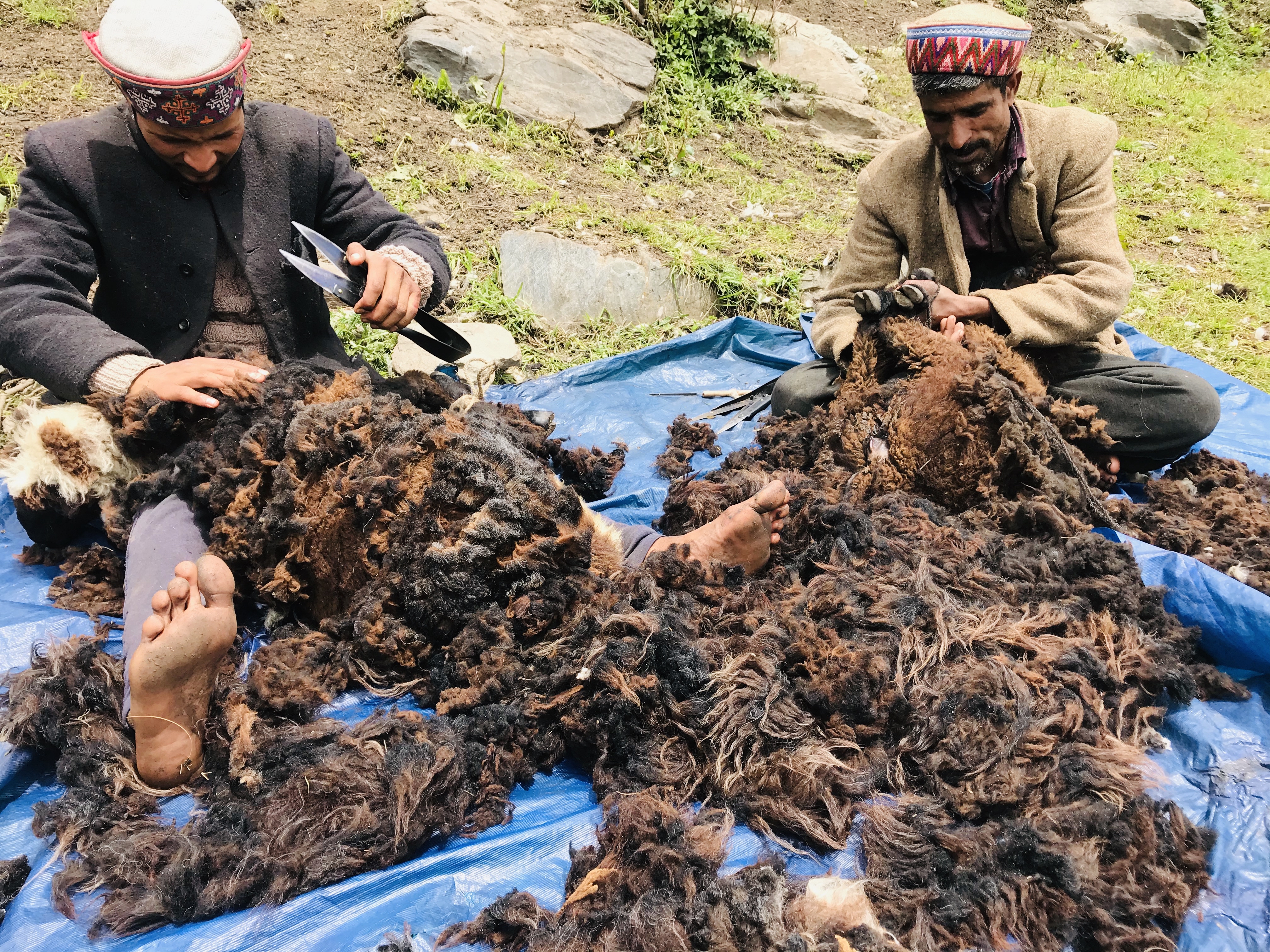
Subhash Bhai and Sonu Bhai shear wool from the sheeps in their herd. Shearing happens thrice in a one- year season, and while some herders use scissors , others use wool-trimmers for shearing the wool | Photo: Virendra Mathur

Today, the market for natural wool is facing increased competition from synthetic wool supplies which has made market accessibility difficult for these shepherds. While the traditional usage of wool is facing a decline, partly due to absence of knowledge transfer across generation, partly due to the lucrative nature of cosmopolitan living, traders and craftsmen now tend to prefer using imported wool. In the face of emerging changes, proper management mechanisms can help survive traditional agro-pastoralism in high Himalaya. Gaddi shepherds who are in this vocation constitute a dynamic medium of cultural exchange and fulfill economic needs of various farming communities through their resource exchange. Thus, the gradual loss of transhumance in Himalaya interacts with the loss of natural cycles of nutrient cycling in high-altitude communities and might possibly have downstream effects.

Acknowledgments:
Virendra would like to thank Wildlife Conservation Trust for funding this fieldwork at Kugti as a part of their Small Grants program. He owes all his gratitude to the humble and loving Gaddi community who make him feel at home through their generous, helping, and cheerful nature.

4032 3024 Virendra Mathur
The Predicament of a Herder

The Predicament of a Herder

Winters in Spiti valley are filled with celebrations of a fruitful year and prayers for a bountiful year ahead. Most of the time is spent within the villages as travel is usually difficult especially when heavy snowfall causes roadblocks. The year 2018 was also not much different. In the month of November, as we were readying ourselves for the coming winter months in Kibber, I received an urgent message from a colleague in Mysore in Karnataka.

“A herder has lost much livestock in Chango, possibly killed by a wild animal” the message said.

These were the only details along with a WhatsApp video that was being circulated. Understanding that the matter could be grave and the weather was still permitting travel, I decided to leave immediately for Chango which is in Kinnaur. I requested Tanzin Thuktan, my colleague, to join me. Chango is about 110 km away from Kibber.

We did not have any details about the owner or where exactly the incident had happened. Upon reaching Chango we were clueless, but the good thing about small towns and villages is that everyone knows each other very well. So, when we enquired about the case with local shopkeepers, they were well aware of it and they told us that Thuktan Tender was the owner of the livestock and showed us the way to his house. Thuktanji is an apple farmer in Chango and has a settlement at Liti Dogri. When we arrived at his house, he was confused about why we had traveled from so far to talk about his loss. With a little hesitation, he narrated the whole incidence to us.

On 16th November 2018, Raju, the caretaker of the corral, had returned to the village to gather supplies for the Dogri. He decided to stay back in the village for the night. The next day when he went back and opened the door of the corral, the animals rushed out in panic. Usually, he would have had to take a lot of effort into getting the animals out of the corral. He knew  something was wrong. It was  strange behavior.

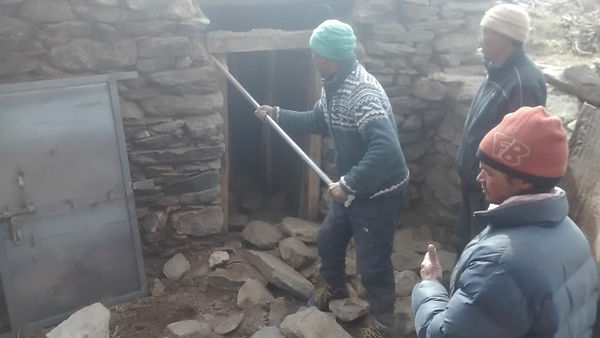
Broken Door | Photo: Mikey Dabro

Standing by the door he carefully scanned the inside of the corral and to his surprise, he saw a set of shining eyes staring back at him in the dark. He immediately knew what it was and slammed the door shut. He called Thuktan and narrated the incident. Within a few hours, the news had reached every household in Chango and nearby villages.

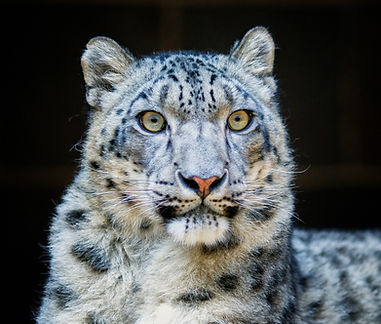
Snow Leopard | Photo: Adriaan Greyling

A snow leopard, which had entered the corral in the dark of the night, had somehow got trapped inside. It garnered a lot of attention from local leaders and the forest department to school teachers. Everyone had reached the Dogri to enquire about the incident and see the snow leopard. Upon many assurances of receiving relief for the loss, Thuktan released the snow leopard. He also made a video of the release as a record that the animal had been released unharmed. When they inspected the corral from inside, they saw 19 animals that had been killed and 11 critically injured. Within 2-3 days even they succumbed to their injuries. However, after the release, all the hype around the case vanished. So, when I met with Thuktanji, a few weeks later, he was understandably angry and had lost hope of receiving any financial help. I asked him if I could visit the Dogri, to which he agreed.

Liti Dogri is about 15 km away from Chango. It has three big corrals which houses small-bodied animals like goats and sheep of several livestock owners of the village. Thuktan ji’s corral at any time has 200-250 animals. Upon inspection of the corral, we noticed that the door of the corral was old and did not shut completely. We gathered that the snow leopard must have entered through the door and had gotten trapped inside. To prevent further loss, we decided that we would replace the door with a new sturdy one. The next few days were filled with hurdles. The closest material shop and welder was 130 km away in Reckong Peo. Getting the material on time was crucial to avoid further losses. The three of us drove to Peo in Thuktan ji’s car and bought doors for the corral. The villagers came to help us fix the door. The compensation process as well as the relief amount was also not very clear.

Repairing broken door of Thuktanji | Photo: Nature Conservation Foundation

We decided to speak to the local Forest Guards and Range Officers. They informed us that the compensation file had been sent to the DFO’s office in Reckong Peo. We then met with the DFO who was very sympathetic and assured us that Thuktanji would receive the claim as per the new notification rates. Within few weeks Thuktanji received the claim from the department. Compared to the actual loss suffered and other collateral costs incurred, the financial relief offered by the Forest Department was often considered too little. Fortunately, the department has revised these rates since August 2018 to ensure that the herders can cope with these situations better than before.

As a herder myself, I believe that we must try to ensure that such events are avoided in the first place. Wild animals have always lived around us and will continue to do so. We have always taken precautions to keep our livestock safe from them, and we have to continue doing so. With access to better resources in our remote areas, we may be able to plan this more effectively and upgrade our corrals to make them predator-proof. This way we may be able to prevent any future losses that might occur.

1014 676 Tanzin Thinley