Environment & Women
In the year 1730, the king of Jodhpur, Rajasthan sent out a band of soldiers to cut few Khejri trees for the construction of his palace. Khejri is one of the few trees that grow in deserts and are of a high cultural and religious value to many communities across India. So, to Amrita Devi of Khejrali village (named after the Khejri tree), to cut down Khejri was an act of disrespect to the Bishnois, a community to which she belonged. When the soldiers arrived, she along with her three daughters stood between them and the trees. When the negotiations to save the trees failed, the soldiers killed all four of them. The news of the sacrifice traveled fast and people from neighboring villages also joined to support Khejrali. However, the soldiers did not show any mercy and killed as many as 363 people. About 240 years later, in 1970, women of Reni village, Uttarakhand (then Uttar Pradesh), inspired by Amrita Devi, came together to save their forests from being cut down by government contractors. Twenty-seven women hugged the trees and did not allow a single tree to be cut down. Later, other villagers joined and the stand-off which lasted four days with contractors finally withdrawing from the village. This story of resilience gained the world’s attention and came to be known as the ‘Chipko Movement’.
Women for centuries have shared an innate connection with the environment. Nature is embedded in the work women engage with and thus, for generations, they have worked hard to conserve it for themselves and the future generations. Forests and rivers preserved for thousands of years are now threatened across the planet. Unregulated development, extraction, deforestation, carbon emissions have led to serious environmental, health, and social justice implications. Studies show that these implications are not equally borne by all. The perpetrators of environmental and social injustice are the ones least impacted by it. People, especially women, belonging to disadvantaged caste and class suffer the most from these atrocities. Joan Davidson, a writer talks about how, in Rajasthan, over the last few decades, the water table has been declining due to the introduction of sugarcane, a water-intensive cash crop. Many water sources have also been polluted due to the use of pesticides in farms and industries. Because of this and growing pressures of climate change, women, of low-income households, are spending more time each year fetching water from far away sources. She also says the same for deforestation. When forests are cleared from around the village, the burden of procuring herbal medicine, fuel, and fodder from other distant forests lies in the women in most parts of the country. Unfortunately, these hardships are rarely accounted for while planning for any development policy or project. However, women have now started to take an active part in the conservation of the resources they heavily depend upon. Apart from these reasons to fight for the environment, many women activists around the world are leading environmental movements against powerful lobbyists to alter the course of our otherwise predicted future. Women, as young as twelve years old Ridhima Pandey of India who is fighting the climate injustice through a legal battle, Greta Thunberg, a Swedish activist, who has inspired millions of youngsters to protest all over the world or Marina Silva an activist who took to politics to save the Brazilian rainforests, have taken upon themselves to bring a greater consciousness to these matters. And there are many names to this list of women champions fighting the battle to ensure environmental and social justice to all. Women have been playing a very powerful role in positively shaping our environment all across the globe. The stories of these women may now seem big, but they all have had humble beginnings, many of them starting individually as the world slowly joined in.
In the contemporary Indian context, women have been using the platform of Mahila Mandals to raise awareness about many environmental issues pertaining to them and the community at large. Last year, on a short trip to Lahaul, I learned more about the Mahila mandals of Lahaul from a good friend, Shivkumar, in Udaipur.
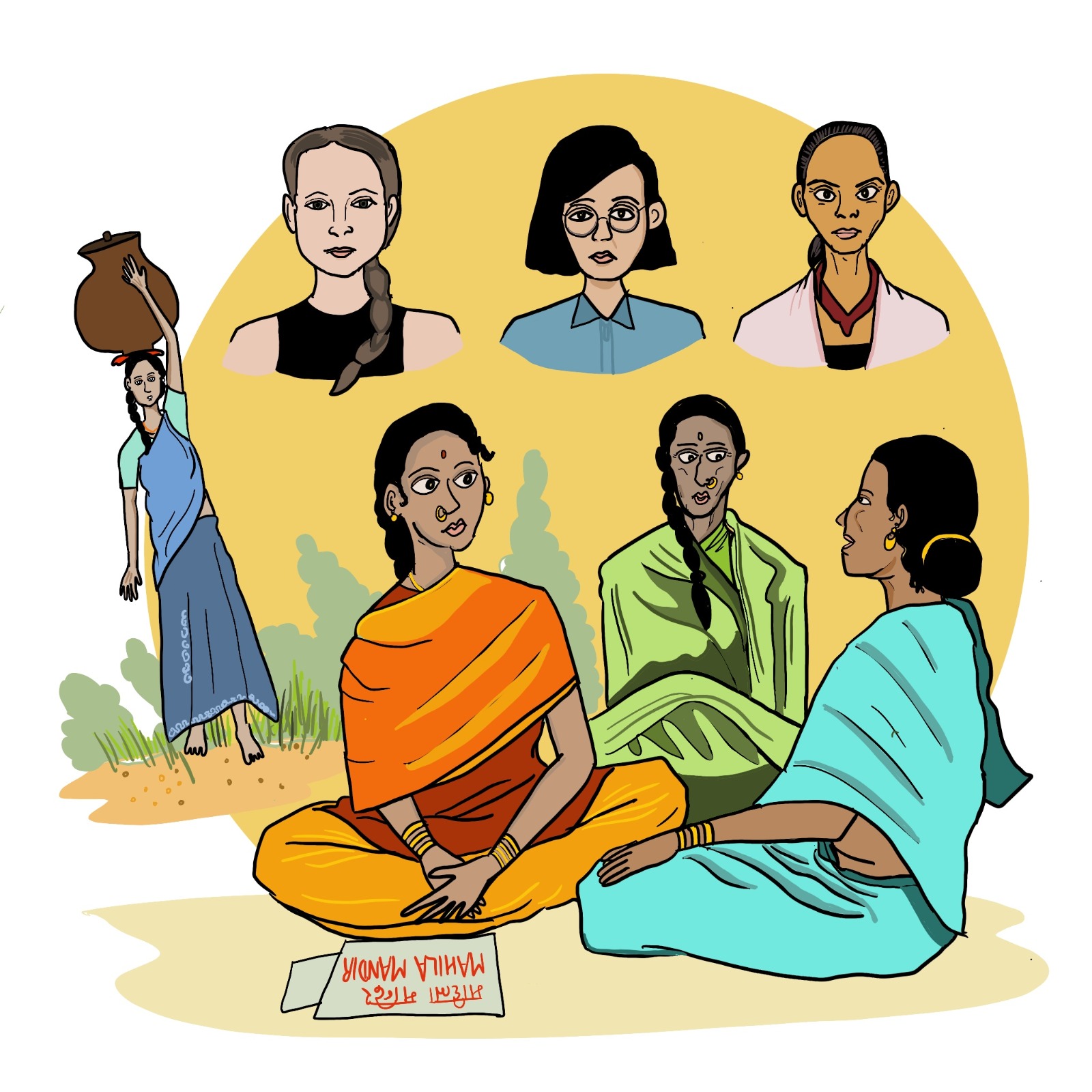
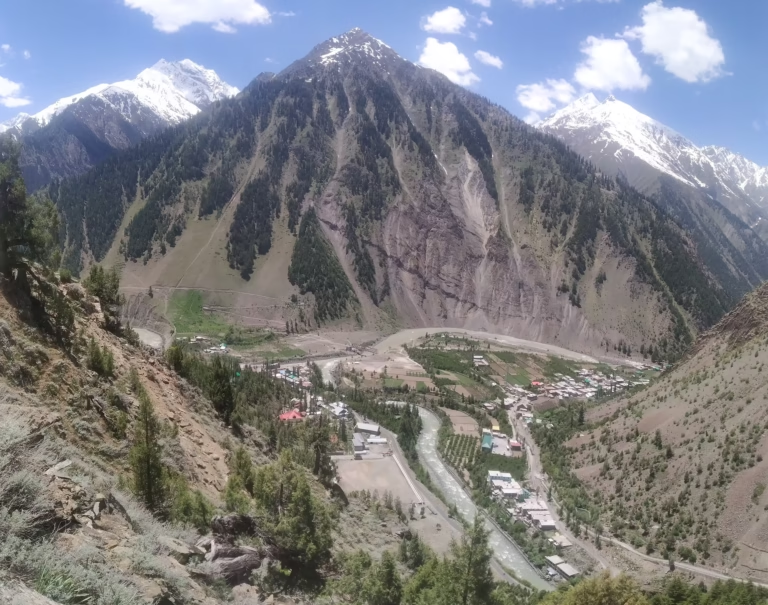
He told me about how the women of Lahaul were very active leaders of their villages and also helped in protecting the forests across the district. This year, I was able to speak with Ms. Sarita Devi, the president, and Ms. Pingla Devi, one of the senior members of the Mahila Mandal of Udaipur, to understand their reasoning for this conservation initiative. The interview was conducted over a telephone call and is transcribed from Hindi.
Tell me a little bit about the Udaipur’s Mahila Mandal.
Sarita Devi ji: We are around 25 women from Udaipur who are part of the Mandal. We meet every month to discuss key issues faced or any work that needs to be done like raising funds for a struggling family, or cleanliness drives, or just ensuring lockdown rules are followed properly. We also frequently collaborate with government agencies like the Forest Department for tree plantation drives.
Why do you want to save the forests?
SD: We depend on forests for a lot of things. For wild fruits, herbs, medicines, etc. They bring us rain as well as protect the banks of the river from flooding. They also help in reducing pollution. It is our natural wealth and we need to protect it for our future generations.
Why did you decide to ban the cutting of forests around Udaipur?
Pingla Devi: We noticed that the forests had been reducing. People from within the village as well as outside have been involved in logging. And if we continued at that rate, all the forest would be exhaust soon. So, we decided to take action and bring a village-wide regulation on cutting trees. Now, we just pick up fallen branches for smaller use and buy firewood for winter from government supply which costs us around Rs 600-750 per quintal.
Did you face any backlash from the community?
PD: No, we did not face any backlash. In fact, when we discussed this idea, everyone welcomed it, and until today everyone respects and follows this decision to save the forests.
What do you do if you see someone cutting trees?
PD: People of Udaipur do not do that anymore. However, once in a while we do have people from outside in our forests. Whoever sees such a person, they immediately let us know about it. We go and enquire about their purpose of visit to the forest and report it to the Forest department if we suspect that they might be here to cut down trees.
Because of the forests the animals also wander close to the village. What do you think of that?
SD: Yes, brown bears especially come out of the forest during the spring. They eat our apples and destroy our vegetables. Sometimes we do get angry at them, but the truth is that even they struggle to live in such harsh conditions. We have to live with them because without them our forests will also not survive.
How has the lockdown impacted your conservation initiative?
PD: Because of the lockdown, we are not able to visit the forests as frequently as before. However, once in a while we do make visits. Till now we haven’t received any information about trees being cut.
Your story is really inspiring. Himachal is one of the few states in India with rich forests. How can we continue to save these forests?
SD: We have good forest cover across the state because of the joint efforts of our communities and the Forest Department. We rely on the forests for everything. We should work towards making them richer and diverse. Everyone in their own village should plant more trees and take measures to prevent excess cutting of trees. Only this way we can ensure that our future generations will have more than what we got from our parents.
The women of Lahaul have taken that extra step to protect what is theirs’s. The belongingness with forests is a common temperament shared among most Himachali people. However, there is definitely more work that needs to be done. Himachal has been under the constant pressure of unwarranted development. Tourism, for example, has although brought a lot of economic development to parts of Himachal, but due to poor management, it has also created many related problems like garbage dumps, deforestation, water depletion, and pollution. This has impacted the quality of life. Women have been at the forefront of deteriorating lifestyles. We can still rectify some of the damages that have been done and take action to ensure the environmental and social integrity of our landscape. For generations, we have protected our forests, rivers, and mountains and together we should continue to be their guardians for a better future.