Herders

Food of the mountains: Stinging nettle (Zatsod)

Food of the mountains: Stinging nettle (Zatsod)

People of the high mountains have traditionally gathered plants and herbs from the wild, which would then be carefully stored and consumed in winter. Most of this collection is for personal use and never for commercial purposes. In this story, Karma Sonam of Gya village of Ladakh tells us about the traditional technique for collection and storage of zatsod or stinging nettle. He also shares a recipe of zatsod thukpa.

ऊंचे पहाड़ों के समुदाय पारंपरिक रूप से जंगली पौधों और जड़ी-बूटियों की तलाश करते हैं, जिन्हें बाद में सावधानीपूर्वक संग्रहीत किया जाता है और सर्दियों में खाया जाता है। इस संग्रह का अधिकांश भाग व्यक्तिगत उपयोग के लिए था, न कि व्यावसायिक उद्देश्यों के लिए। इस कहानी में, लद्दाख के ग्या गाँव से कर्मा सोनम हमें बिच्छू बूटी के संग्रह की तकनीक के बारे में बताते हैं। वह स्थानीय सामग्रियों का उपयोग करके बनाई गई थुकपा की एक पारंपरिक रेसिपी भी साझा करते हैं।

This story was narrated, shot and edited by Karma Sonam.

यह कहानी कर्मा सोनम द्वारा सुनाई, शूट और संपादित की गई है।
1718 1052 Himkatha
भारत में पहली बार हिम तेंदुए की जनगणना कैसे की गई?

भारत में पहली बार हिम तेंदुए की जनगणना कैसे की गई?

अंतर्राष्ट्रीय हिम तेंदुआ दिवस 23 अक्टूबर को मनाया जाता है। भारत इस साल अपनी पहली हिम तेंदुए की जनगणना के नतीजे घोषित करेगा। यह परिणाम देश के हिमालयी क्षेत्रों में किए गए 4 साल के व्यापक अभ्यास पर आधारित है। यह विशाल अभ्यास देश के सुदूर ऊंचाई वाले क्षेत्रों में रहने वाले स्थानीय लोगों के समर्थन और भागीदारी के बिना पूरा नहीं किया जा सकता था।

वीडियो: समर्थ ज्योति
कथन: अक्षिता अशोकन
अनुवाद: सीमा बजाज
कैमरा ट्रैप छवियां: हिमाचल प्रदेश वन विभाग, नेचर कंजर्वेशन फाउंडेशन और स्नो लेपर्ड ट्रस्ट
फुटेज: तेंज़िन थुक्तान, मुनीब खन्यारी और अजय बिजूर
छवियाँ: हाई एल्टीट्यूड प्रोग्राम और प्रसेनजीत यादव
अतिरिक्त फ़ुटेज: ओपन प्लैनेट

2444 1360 Himkatha
Ladakh Pashmina

Ladakh Pashmina

The story of Ladakh Pashmina: The authentic, sustainable cashmere. A film by Munmun Dhalaria. (Language: English and Ladakhi with English subtitles)

2292 1072 Munmun Dhalaria
The Lonely Tree
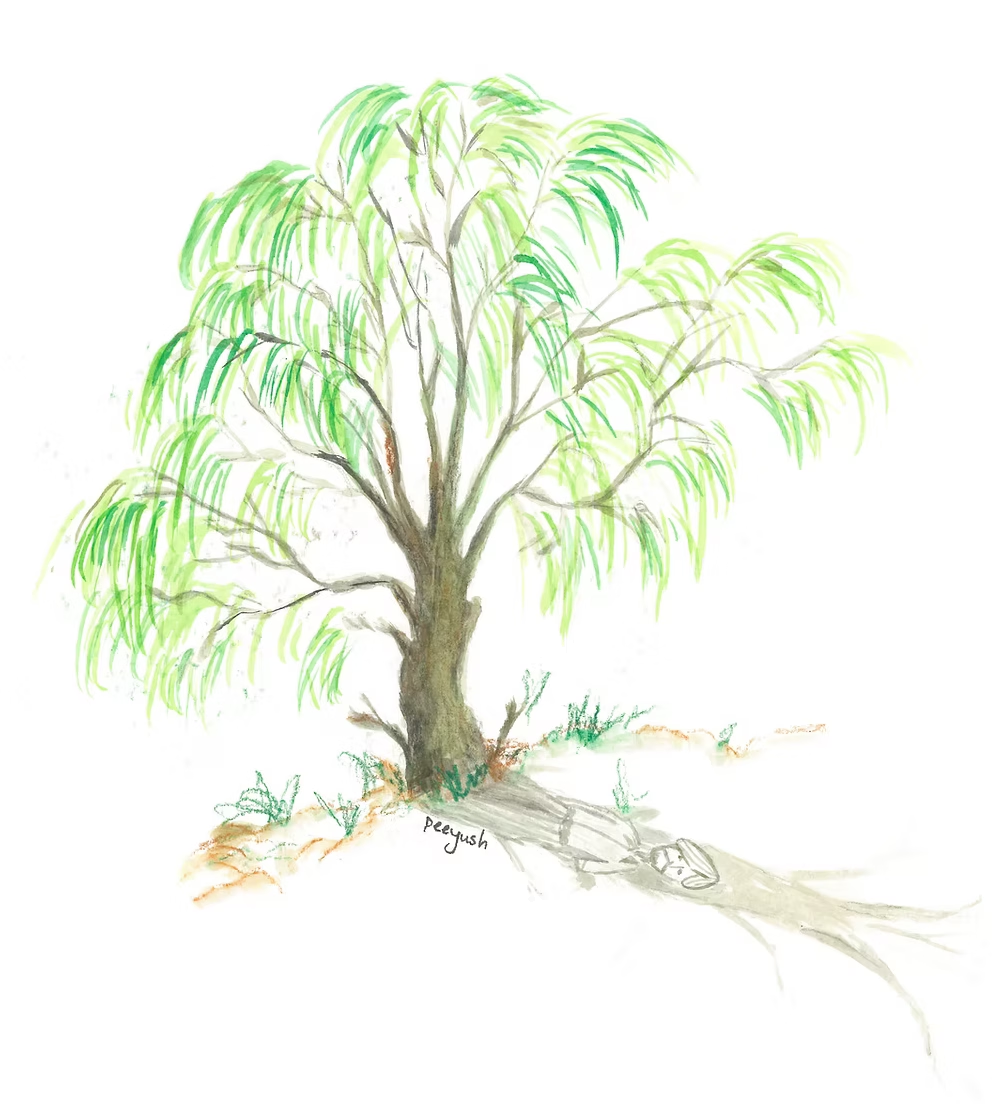
Illustration: Peeyush S

The Lonely Tree

Young Bishen Singh’s dreams were finally coming true. He had just passed his college exams and landed a government job as a school teacher. He had always wished for it. There was only one challenge though, his first posting was in Kaza. Spiti was still part of the State of Punjab then, and Kaza only found an occasional mention in government reports. There were a lot of myths surrounding Spiti mostly because so few people had heard of the place, let alone visit it. In those days the bus only went up to Manali after which one had to walk across the Rohtang La, then walk the long stretch from Gramphu to Batal and finally cross the Kunzum La. A very, very long walk of over 100 km.  And after all this walking, you only reached Losar. Kaza was another 60 km away. The travel took over a week.

Bishen was partly sad about leaving his family back in Punjab. But he was also terribly excited for the new adventure he was about to set out on. He had always wanted to explore the mountains and this was his chance. He had packed all his stuff, including a lot of woolens, in a single sturdy cloth bag. He also had one bag just for food that could see him through his long walk to Spiti. Bishen left 10 days before his joining date hoping to reach Kaza a few days before his first day at school.

The walk from Gramphu was a pleasant one. He crossed a patch of birch forest at Dorney nalla. He couldn’t recollect seeing so many birch trees in a single place before. There were so many waterfalls to admire that one hardly noticed the distance. His pace dropped every few kilometers as he was in awe of the landscape. It was also early summer and Gaddi herders were setting up camp. Gaddis are always glad to receive an unexpected guest who brings them news from new places. The first few evenings were spent at different Gaddi camps, where the routine was somewhat fixed. Bishen would be welcomed with a piping hot cup of tea followed by rotis drowned in ghee and roti-khadi – all made from goat milk. Bishen had enjoyed his walk from Gramphu to Batal. But the walk from here on was going to be a lonely one since Gaddis only camped up to this point and did not enter Spiti. It took Bishen two full days to summit Kunzum La and then climb down to Losar, the first village in Spiti.

The first thing Bishen noticed when he started descending Kunzum La was how bare the landscape was. The waterfalls were all gone and even the trees began to disappear. By the time he reached Losar, he was struggling to spot a single tree. Bishen suddenly felt as if he had set foot on a different planet. His pace dropped again, but this time in shock. He was struggling to wrap his head around why these massive mountains were without any greenery. Had someone robbed them of it? He couldn’t imagine living in a place like this, that too so far from home. He suddenly felt like he was stuck without anywhere to escape. As he reached the village of Sumling just 15 km from his final destination Kaza, his eyes fell on a lonely willow tree.

Illustration: Peeyush S

This full-grown tree stood in all its majesty almost in defiance with the otherwise treeless landscape. Bishen felt like he had met a long-lost friend. His eyes welled up and he couldn’t hold himself back. He dropped all his luggage and ran towards the tree. He hugged the tree tightly and sobbed loudly, ‘My friend I have been forced to come this far just so I can keep the hearth burning back home, but what ill luck has fallen upon you? Who cursed you to come to this place?’

Hearing Bishen’s loud sobs, several curious villagers gathered around to see what was happening. But none had the heart to disturb the conversation between two long-lost friends.

  • Kaza is the main town of Spiti and the headquarters of Spiti sub-division.
  • Gramphu and Batal are locations on the road from Manali to Kaza.
  • Birch is a thin-leaved deciduous hardwood tree. The bark usually peels horizontally in thin sheets, especially on young trees. These sheets were traditionally used as paper in many high mountain regions. Several holy scriptures have been preserved by writing on such sheets.
  • Dorney nalla is a patch where one can still find a lot of birch trees on the way from Manali to Kaza.
  • Sumling is a beautiful village on the right bank of the Spiti river.
  • Willow is a tree with long thin branches and often grows near water.
994 1118 Ajay Bijoor
Birth of the Chandra river

Birth of the Chandra river

It is fairly well known that Gaddi herders from Kangra spend summer in the rich pastures of Lahaul. This is an annual migratory route that the Gaddi community have accessed for generations. They camp in the high mountain pastures. From a distance their life may seem idyllic – spending the day in the shadow of snow-clad peaks, breathing the crisp mountain air, basking in the soft summer sun. Unfortunately, the Gaddi’s dammed flock does not harbor such taste for a serene life in the mountains. All they care for is food! Each morning they bleat to be taken to a new slope where they can get their fill of fresh summer grass. And the poor Gaddi herder has to run behind them to make sure the flock remains safe, for a pesky wolf waiting to feast on the flock is almost never very far. Summer days are very long. But as dusk sets in, the Gaddi gets some rest.

It had only been a few years since Noopalal started accompanying his aged uncle and their flock. Their settlement was at the farthest end of Lahaul valley. It was so far that most herders had only heard of it. It was famous for a beautiful lake that had turquoise-blue water.

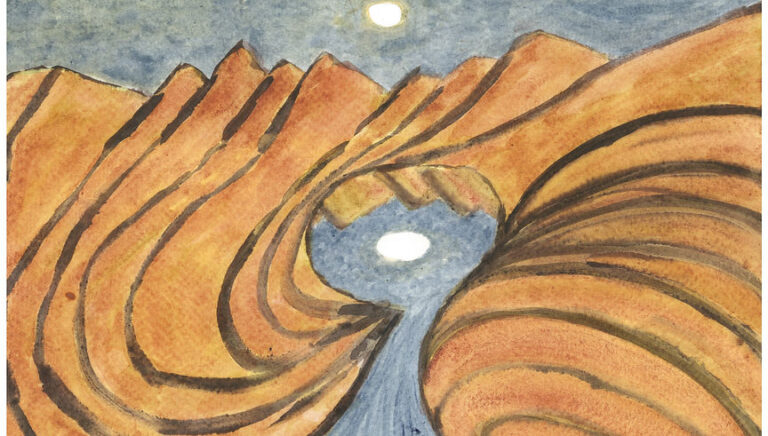
Noopalal was in-charge of the flock, while his old uncle stayed back and cooked for them. Every evening Noopalal would herd the flock and sit outside their thaach, which overlooked the lake. He would slowly pull out his flute and play it softly while his uncle smoked a pipe. Even though there was no one but his animals to listen, he played the flute because it gave him joy. On most days it would get dark by the time he finished. He would then crawl into the thaach, eat his meal, and retire for the day. This was the ritual he followed on most days until it all changed one night. The moon was full and when Noopalal finished playing his flute he looked mesmerized. As if he were possessed, as if someone had cast a spell on him. When he looked at the lake he saw a reflection of the full moon in its turquoise-blue water. He stood up in shock. “The moon has fallen in the lake”, he whispered. “The moon is drowning. Help!” He yelled as he ran towards the lake. His old uncle barely registered anything, and by the time he did Noopalal had jumped into the icy cold water. His poor uncle ran behind him. But he could only watch helplessly. He remembered Noopalal shouting frantically that the moon is cracking, looking at the ripples on the surface of the water. By morning, both Noopalal and the moon were gone.

Did Noopalal sink with the moon that night? Maybe not. But many believe that the moon did, indeed, drown that night and the water that spilled over gave birth to the Chandra river. And the lake, Chandra tal, remains beautiful as ever. Especially on full moon nights. If you ever have the good fortune of spending a full moon’s night by Chandra tal, you might even hear Noopalal’s flute.

  • Gaddi herders are a semi-pastoral tribe that rear sheep and goat. Some of the sturdiest men and women, the Gaddis travel for 10-11 months with their livestock covering a vast distance across the Himalaya and her lower plains.
  • Kangra is a Himalayan region from where the Gaddi herders hail. It is also a district in the State of Himachal Pradesh.
  • Lahaul is another remote Himalayan valley that can be reached after crossing the Rohtang pass. Lahaul valley is adjacent to Spiti valley and together Lahaul-Spiti forms the biggest district of Himachal Pradesh.
  • Thaach is a stone hut that gaddi herders live inside in places where they camp. These stone huts are old and beautifully built by stacking stones. They protect the herders from rough weather.
  • Chandra river rises from the snow lying at the base of the main Himalayan range in the Lahaul and Spiti district. The beautiful Chandra Tal has formed at its source.
  • Chandra tal is a beautiful high-altitude lake known for its beauty. It is also a very beautiful site to watch water birds. It is a mythologically important site.
864 491 Ajay Bijoor
Navigating the challenges of climate change in the Himalaya
Illustration: Nawang Tankhe

Navigating the challenges of climate change in the Himalaya

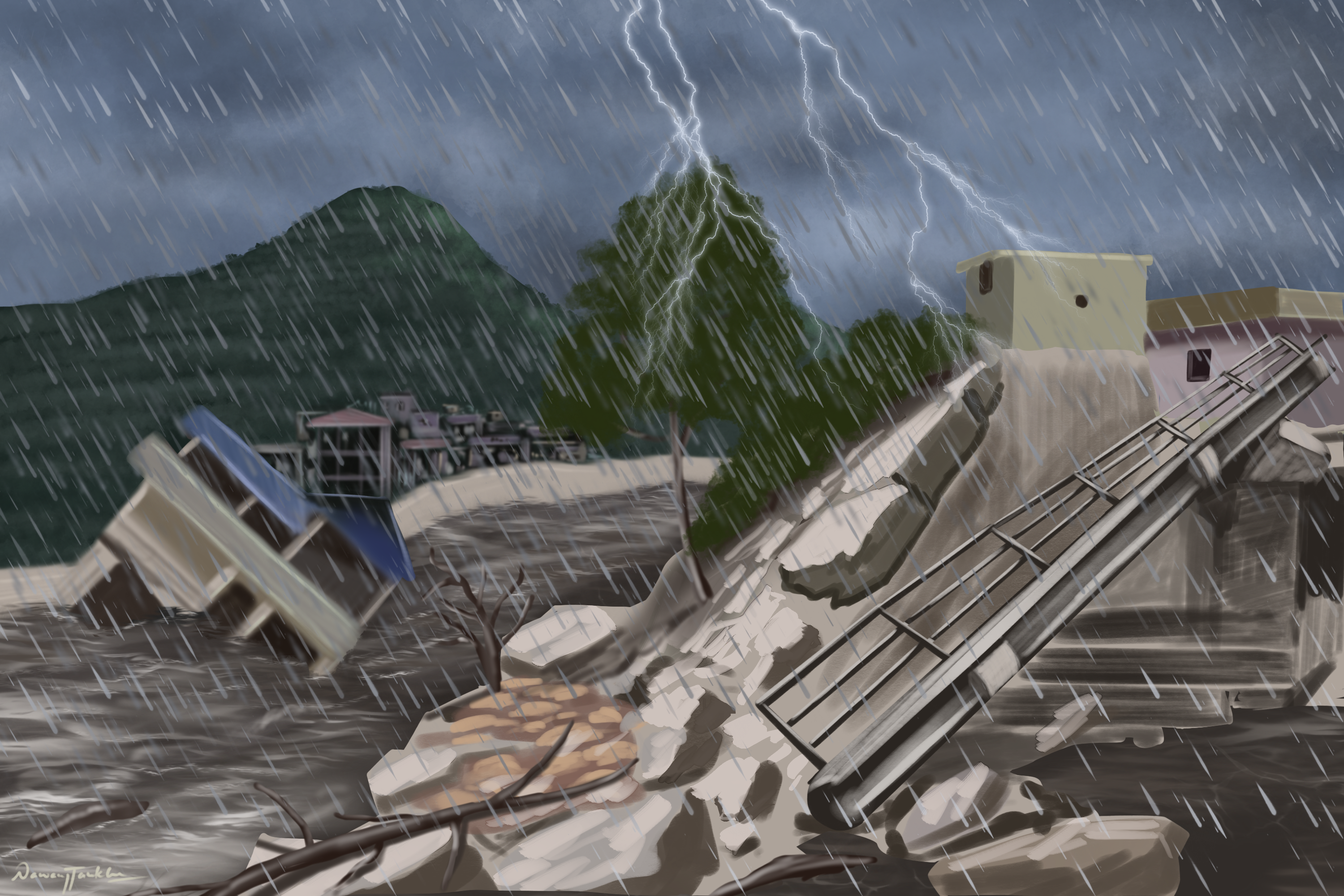
The heart of the mighty Himalaya is witnessing a profound transformation shaped by the relentless force of climate change. With Himalaya playing a crucial role in shaping the weather patterns across India, climate change is disrupting these patterns. And the Western Himalaya Region comprising of Jammu & Kashmir, Ladakh, Himachal Pradesh and Uttarakhand characterised by complex geography with various local warm and cold zones is affected differently from one location to another.

Climate change refers to long-term shifts in weather patterns that affect local, regional, and global climates on earth. Most of us are familiar with greenhouses that are commonly used to grow vegetables in winter, because the temperature inside these enclosures stays warmer than outside. A greenhouse keeps the enclosure warm by letting in as much light as possible and then trapping it as thermal energy. Now imagine what might happen if our planet acted similarly? In fact, it is because the earth works like a large greenhouse, that our planet can support such a wide variety of life. This phenomenon is called the greenhouse effect. However, a rapid rise in burning of fossil fuels over the last 150 years has significantly increased the level of carbon dioxide in our atmosphere leading to increased warming and a rise in unforeseen weather events.

Research findings paint a stark picture of the Himalaya’s changing climate. Over the years the region has witnessed a noticeable rise in both seasonal maximum and minimum temperatures. The difference between daytime and night-time temperatures is also getting larger, indicating a warming trend. Snowfall events have shown variability in terms of intensity and timing. Scientists note a decrease in early snowfall during December and January, accompanied by an extension into February and March. While rainfall intensity remains relatively unchanged, there is a notable shift in its timings. Monsoon rains, once confined up to mid-August, now linger beyond their traditional timeframe, accompanied by a rise in cloudburst events. This shift, intertwined with delayed snowfall, alters the distribution of rainfall and cloud cover across the region.

The impact of this climatic transformation is not an abstract concept but a harsh reality affecting various sectors. Agriculture, the lifeline of many in the region, is particularly vulnerable. In the Kullu valley of Himachal Pradesh, delayed snowfall has cast its icy shadow on apple orchards. The blossoming, bearing, and overall yield of apples have suffered due to altered chilling conditions. Orchards, once thriving in lower elevations, now seek refuge in higher altitudes, affecting not just the geographical landscape but the very quality of the produce.

In Ladakh’s western regions, horticulture crops like apricots and walnuts are facing severe challenges. Spring seasons are turning cooler, delaying the fruiting process and impacting the quality of the produce. Barley, a locally grown crop, is witnessing a substantial reduction in yield, echoing the broader struggle against a changing climate.

Villagers in Spiti tell a poignant tale of declining green pea production, a crucial revenue-generating crop. This decline, attributed to persistent water scarcity, reached its peak in 2022 when Langza village faced complete crop loss due to the unavailability of water. The transformation is not confined to the fields; it seeps into the very identity of these regions.

Agriculture in Uttarakhand, highly vulnerable to climate change, experiences shift in production dynamics, causing changes in crop yield, reduced diversity, and a surge in pest invasions. In districts like Pithoragarh, Chamoli, and Uttarkashi, climate change is altering the traditional collection period of non-timber forest products, impacting livelihoods.

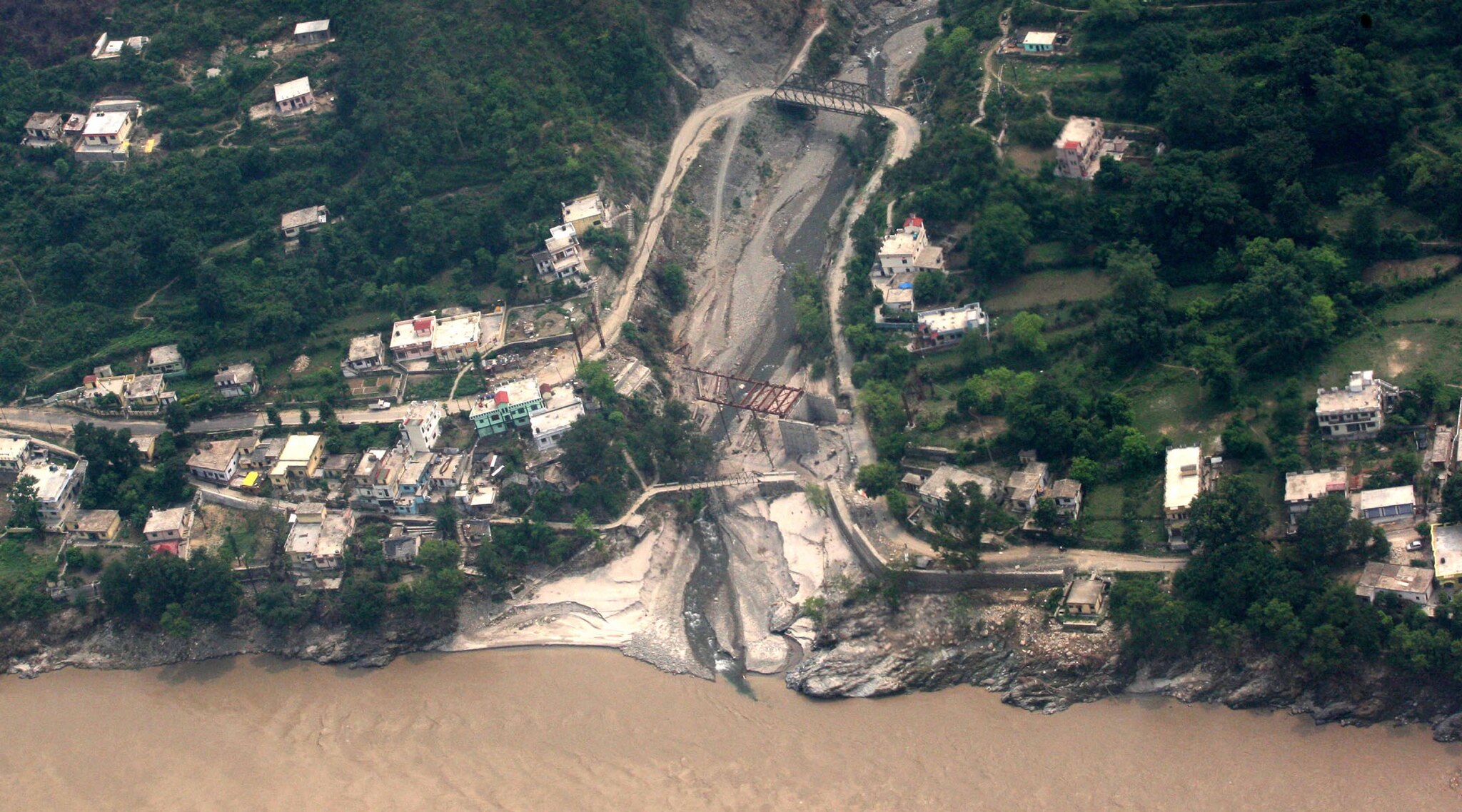
An aerial view of flood-ravaged Rudraprayag, in Uttarakhand | Photo: Wikimedia Commons

The farmers, the custodians of the land, echo this change.

Earlier, we could not see stars in the sky for the whole of July and August. Continuous rains for days during the monsoon season in old times was good for the soil and the crops. But now, sudden and untimely torrential rains are spoiling the soil as well as the crops. The rains have completely disappointed us.

by a farmer from Uttarakhand

Summers are more intense and drier now because of which the crops ripen at an early stage without proper grain development.

by an elderly farmer from Uttarakhand

Earlier the snow was about a foot high and it used to stay for weeks but now if ever there is snowfall it is less than 5 inches and melts within a day.

by a farmer from Himachal Pradesh

Every year, we travelled from Zanskar to Kishtwar by crossing the glacier. Over the years, this glacier has been reducing. The new snowfall is not sufficient for settling, posing challenges to our traditional migration routes.

by a pastoralist from Ladakh

This replacement about 50-60 years ago, which turned agri-culture on its head did not come with the Green Revolution (more appropriately called Greed Revolution) then but was the consequence of what had emerged as the industrial revolution two-three hundred years ago. And it started with de-legitimising traditional society’s existence, identity and knowledge by naming it ‘backward’ and following it up by seeking to shame people’s knowledge systems and their seeds. It was crucial and strategic that this society begin to have an inferiority complex about oneself. This was the first essential stage of the conspiracy. Once this was achieved, it was followed by a systematic replacement of the principles, methods, seeds with the means that it had created. As a result, a creative, productive and self-reliant society has today become a dependent slave farmer society.

3000 2000 Ajay Bijoor
Counting Spots in the Snow

Counting Spots in the Snow

International Snow Leopard Day is celebrated on 23 Oct. India is expected to announce the results of it’s first snow leopard census based on an extensive 4-year exercise undertaken in the Himalayan regions of the country. This mammoth exercise could not have been accomplished without the support and participation of local people living in the remote high altitude regions of the country.

1200 670 Himkatha
Changthang – An Oasis of Himalayan Fiber
Photo: Sherab Lobzang

Changthang – An Oasis of Himalayan Fiber

Nestled amid the lofty Trans-himalayan mountains, Changthang is a unique terrain where climate and topography play a crucial role in the sustenance of local communities. The region consists of wide wetlands and giant mountains which offer indispensable ecosystem services and safeguard our water and food security. Many wetlands in Changthang are located at a higher altitude and are fed by glaciers and snow from the surrounding mountains. The high-altitude wetlands in my region contribute significantly to the downstream landscape productivity and form a unique ecosystem for floral and faunal diversity.

The nomadic pastoral communities composed of distinct groups located at Rupsho, Kharnak and Korzokh rear a variety of livestock such as goat (rama), sheep (luk), horses (ta), yaks, and donkeys (bhungpa) which supports them in all aspects of their lives. The Changpa shepherds are skillful in tending their herds; navigating steppe grasslands, accessing fertile pastures, breeding resilient animals, caring for livestock, and preventing diseases. When there’s less grass in the pastures or the livestock are not able to graze due to excessive snowfall, they provide the cattle with fodder they have stocked months before to avoid weakness and starvation. It is precisely the efforts of the local herders and the nutritious resources in the cold arid land that the livestock we breed gives the finest fiber.

Pashmina Combing | Photo: Andrew Newey (cnn.com)

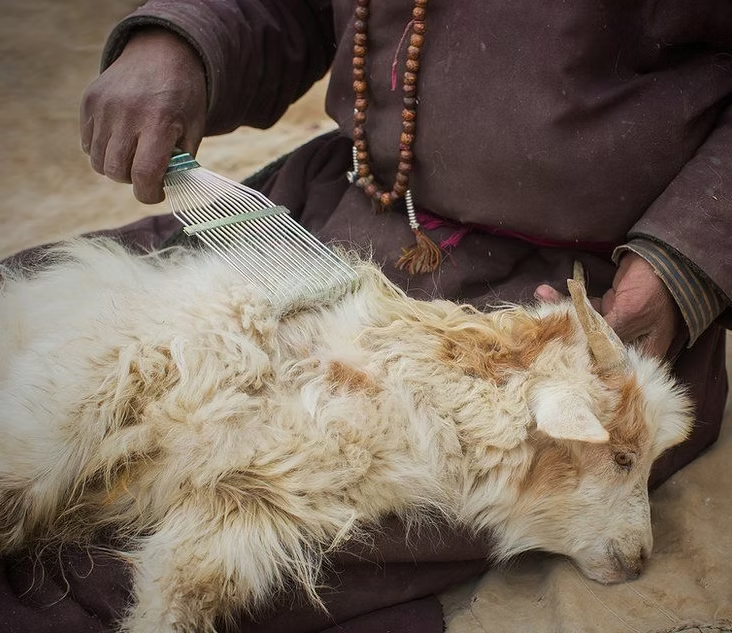
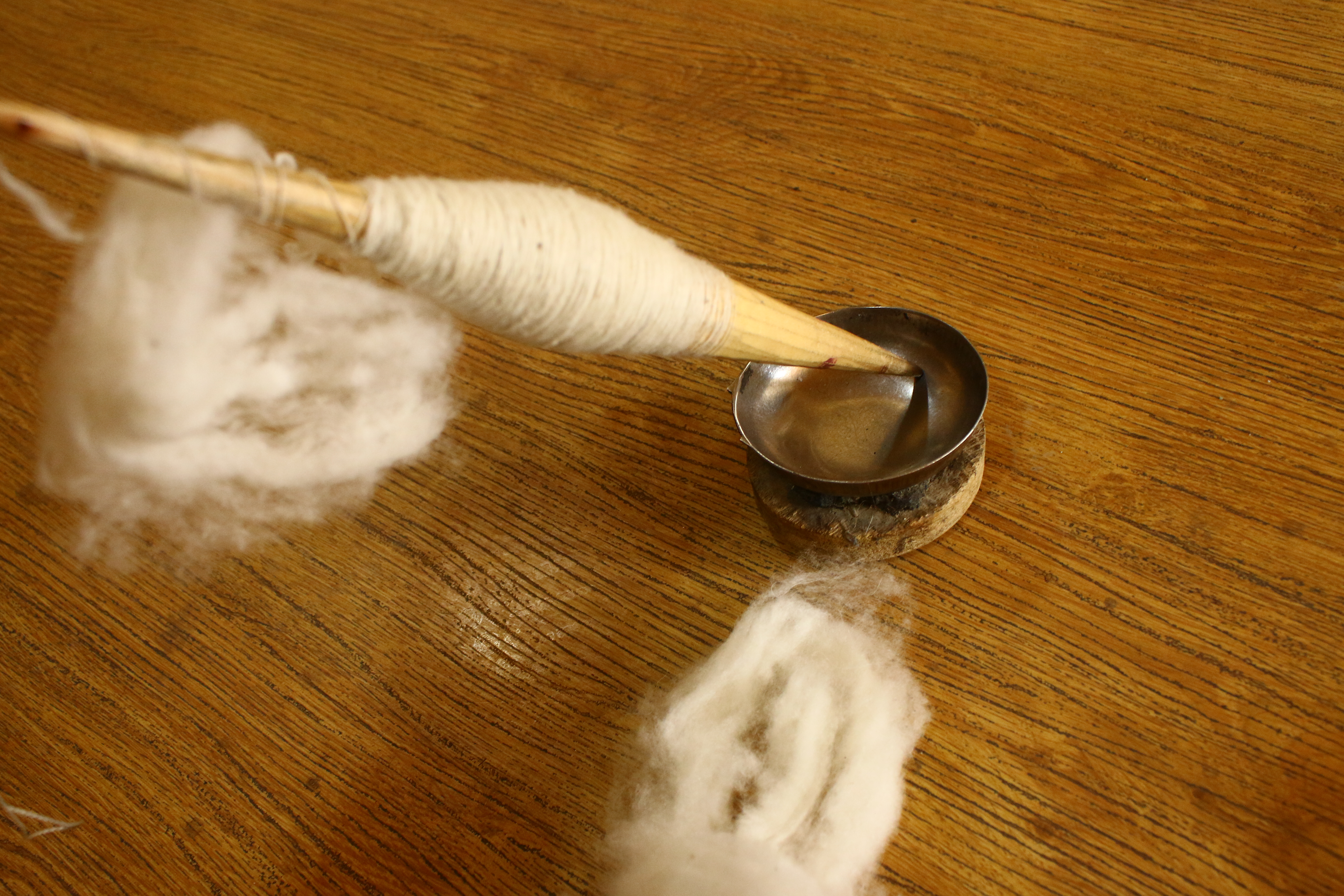
Ladakh has a highly diverse textile tradition that reflects its physical, socio-cultural, and environmental features. The herd provides different kinds of fiber: Khullu or Sitpa from Yak wool, Ral from Goat hair or Sheep wool, and Lena (Pashmina) from the underbelly of Changthangi goat. The wool is sheared from the livestock around early Spring or before lambing season using a wooden/metallic comb. It takes about 2-3 hours to shear wool from a single sheep and since it requires physical strength to hold a sheep, goat or yak to shear, it is usually men who do the work while women clean and sort the wool to remove any impurities. Once the wool is collected, it is laid on the sheet and beaten with a wooden stick to remove dust, dry grasses, and other impurities. It is then washed, dried, and then hand spun with a traditional spindle called “Phang” – thin yarns are made for weaving while slightly thicker and knottier yarns can be used for knitting. From elaborately patterned garments for the nobility to simple home-spun garments from local fibers, a range of garments are processed and procured in Changthang. The local fibers found in Changthang are used for various purposes; Yak wool and goat/sheep wool are primarily used for self-consumption while Pashmina (Lena) is often traded. The high altitude and the intense cold of Changthang serve a good purpose for the growth of the fine luxury fiber Pashmina. Due to its softness, elegance, and warmth, it is one of the most coveted fibers and fetches the highest price.

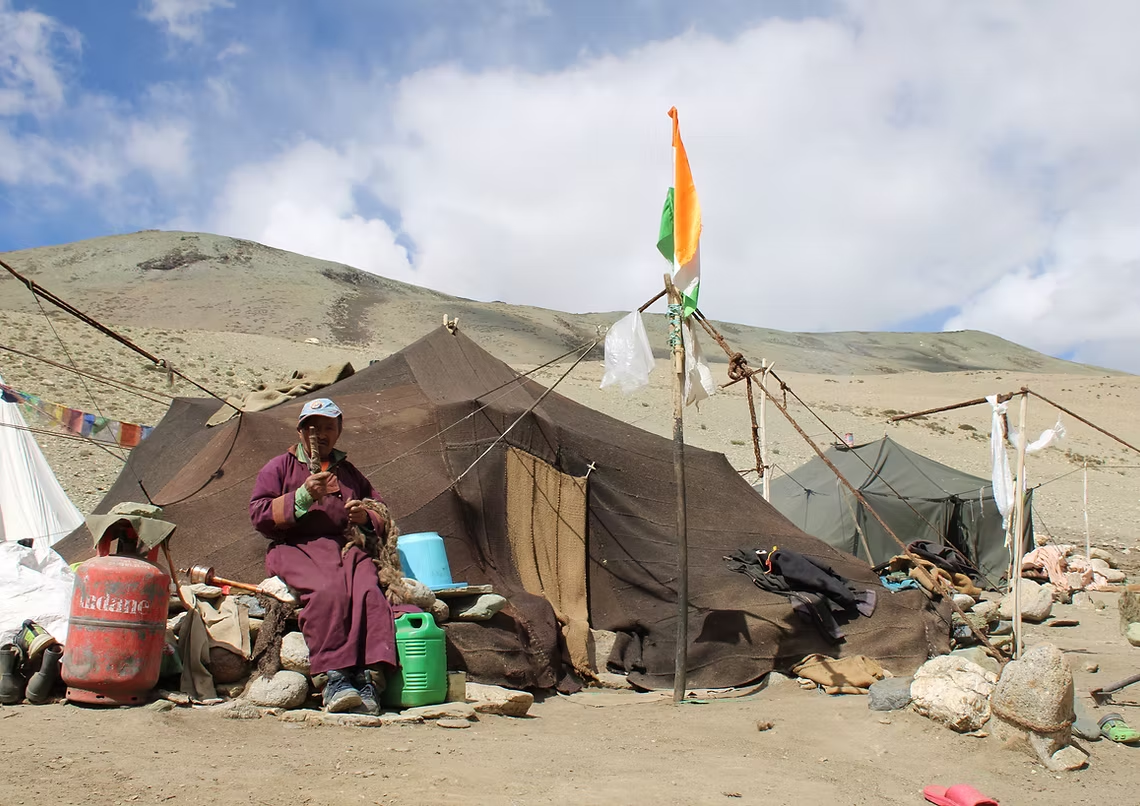
Rebo and landscape of Changthang

Weaving is an ancient craft and Changpas are reminiscent of the time when our ancestors wore clothes made up of animal skin. Due to freezing weather, animal skins are still used for various garments, quilts, and mattresses. The rich tradition of textiles came into being when our ancestors learned how to spin, make yarn, and weave. Wool and fiber are an integral part of the nomadic culture as Changpas reside in the traditional tents called Rebo made of Sitpa (Yak wool). Rebos are very functional and aptly suited for the nomadic lifestyle – as the nomads migrate in search of better pastures for their herd, the use of Rebo comes in handy for them.

“Rebos are very functional and aptly suited for the nomadic lifestyle – as the nomads migrate in search of better pastures for their herd, the use of Rebo comes in handy for them.”

Making Rebos are extremely labor-intensive as it is handspun and handwoven and a group of nomads makes it collectively. Rebos are also precious family assets and are passed down from one generation to another but these days the use of canvas tents is also becoming popular. Handcrafting has great significance in Changpa tradition, it is a skill that everyone inherits and proves useful in resource-starved land like ours. Weaving and knitting are so economical and wholly self-sufficient – we knit sweaters, socks, hats, and mufflers, and weave mattresses, quilts, saddles, and even containers for foodstuffs. Imagine having to buy all these!

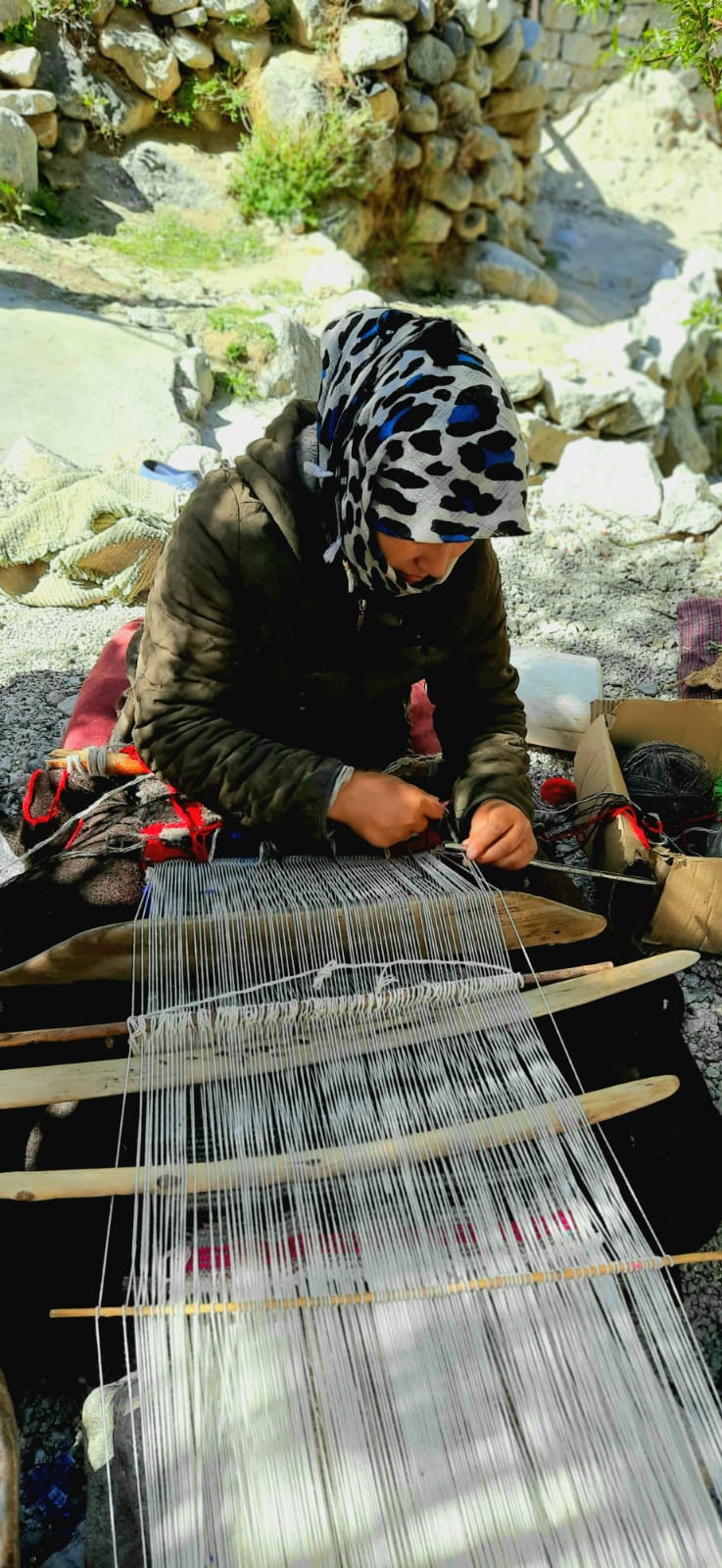
Traditional weaving in Changthang

Even the traditional clothes we wear Gos made up of fabric called Snambus. All of which are handwoven from scratch! When I think about the olden tradition of Changpas – whether it is sustainable grazing of the livestock, food habits, lifestyle, or the practices of spinning, and weaving I realize how self-sufficient and environment-friendly the whole system is. However, the practices around local fiber and cloth making are undergoing changes. Machine-made fabrics and ready-made clothes are easily procurable from the markets and one doesn’t necessarily have to make everything from scratch like in olden times. Although a great variety of wool and fibers are found in Changthang, there’s relatively little expertise when it comes to processing these fibers and adding value to them. Kashmiri artisans are way more known for their skills in handicrafts and if this gap can be fulfilled locally, the fiber value chain will be complete in Changthang itself.

1770 1048 Padma Dolker
The Art of Weaving in Lahaul’s Upper Valleys
"Phang" - Traditional spindle | Photo: Rigzin Dorjee

The Art of Weaving in Lahaul’s Upper Valleys

In the higher Himalayan region, weaving is an ancient craft and forms an integral part of people’s lives. In Lahaul, weaving signifies a retreat into slower, simpler times amid icy cold weather when the farming works are at its lowest. There’s a saying in local folklore attributing weaving as visual art that reflects stories about people, their communities, and their place in the universe. It symbolizes the value of creation, interconnectedness, and rejuvenation. Weaving requires profound discipline and dexterity to untie complexities; it involves crossing two threads the warp and the weft, one vertical, and one horizontal, one stretched tight, the other intertwining the first. To produce a textile, the two threads need to be bound together otherwise, the weaving work will remain fragile. Hence in ancient Buddhist belief, a weaver is akin to a problem solver, someone who is adept at bridging silos and bringing greater connectedness.

Weaving is a traditional skill that’s passed down through generations and is practiced with great vigor in our village. Of the many products that are woven, Tsug-den (Tibetan rug) weaving remains the most popular with its elegant design and high pile, plush feel. In our village, the handwoven woollen carpets are called Tsug-thu or Tuk-tuk in villages around the Darcha side in Lahaul. Tsug-dens are unique handwoven carpets, that are woven on a backstrap loom called “Khaddi”. It is an extremely slow, time-consuming process, that involves a lot of hard work as each bit of the work is done manually – from livestock herding to wool shearing to cleaning, carding, spinning, and yarn making and finally weaving, the process can stretch up to a year.

Photo: Sherab Lobzang

Most families still keep livestock and the wool is shorn around March or April month. Wool from a single sheep is sufficient to make one pair of Tsug-den. It is then sorted and cleaned to remove any impurities, and further processing of wool is done in Shamshi in Kullu valley in Himachal. We take wool gunny bags in bulk and get them carded and de-haired before we bring them back for spinning and yarn making.

Spinning is done mostly during winter and much like agriculture, it is collaborative work involving a group of women. Wood-made traditional spindles called “Phang’‘ are used for spinning and great care is taken to get consistent, smooth yarn. The base of the weaving is done with cotton threads on a metallic or wooden loom Khaddi. The handspun woollen yarns are weaved in a knotting system where one thread is interwoven with the other on a loom. Once a row of knots is complete, a rod is hammered against it to tighten the row below. A weaver uses the blueprint of a woven carpet to weave complex designs and to ensure accurate shape, size, and alignment of the carpet. Black, white and beige sheep wool is used for tsug-den while the rare white yak hair is used for Challi (woolen quilt).

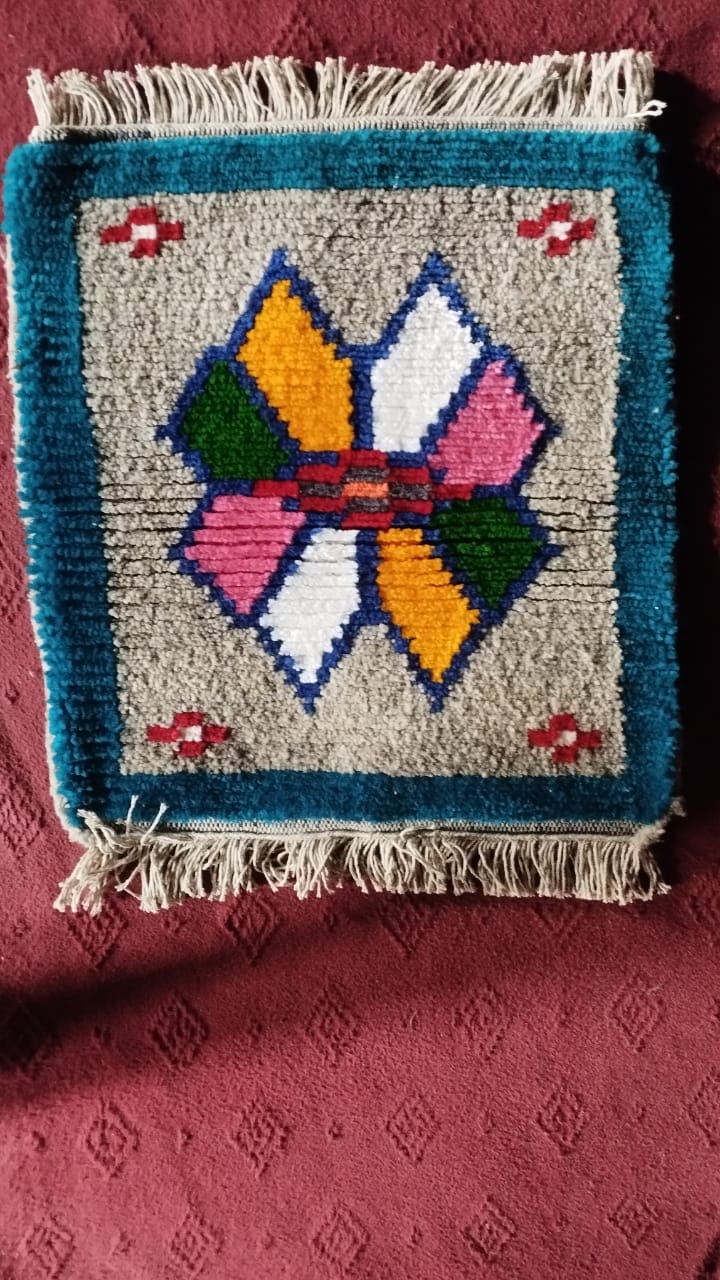
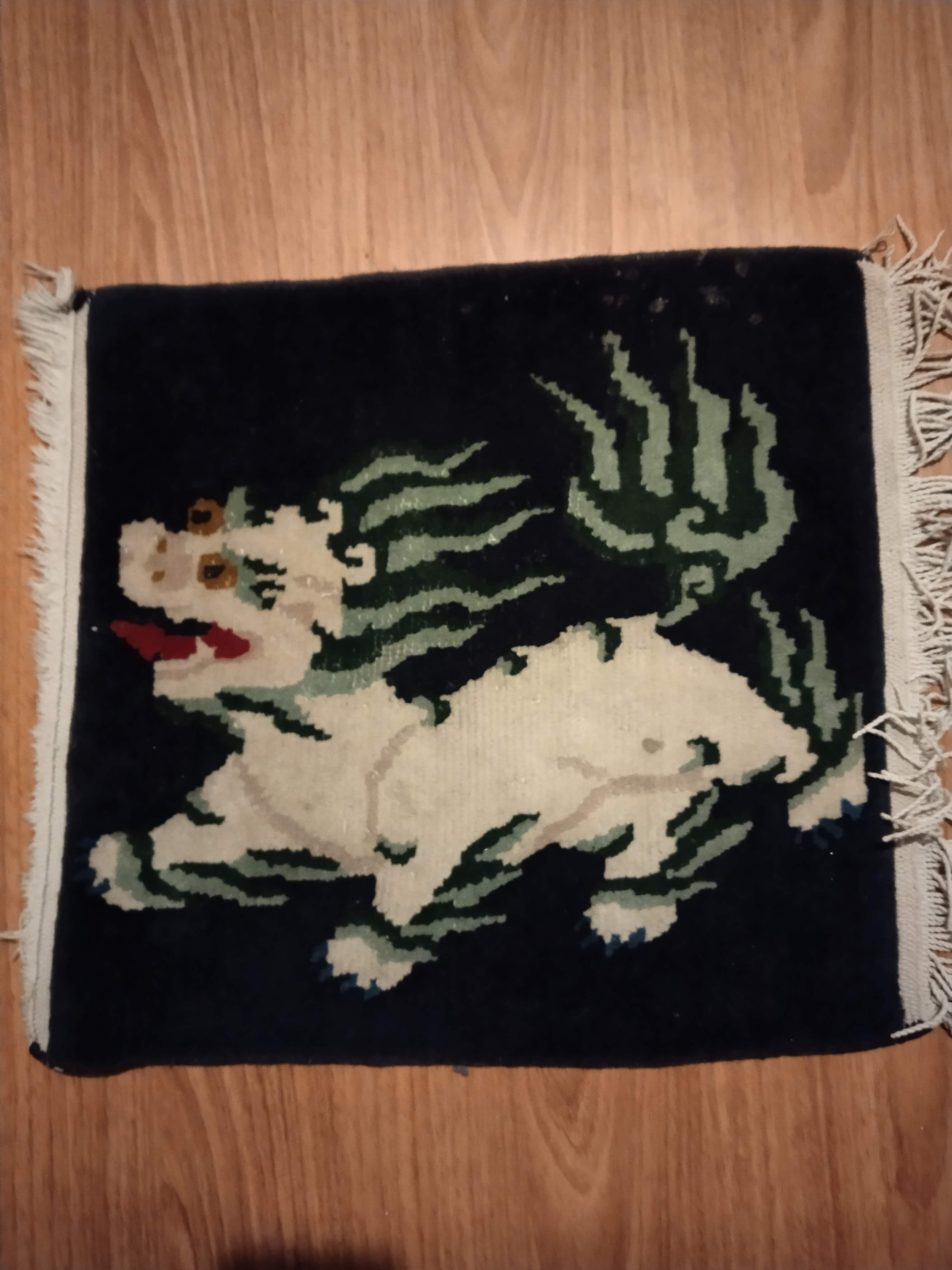
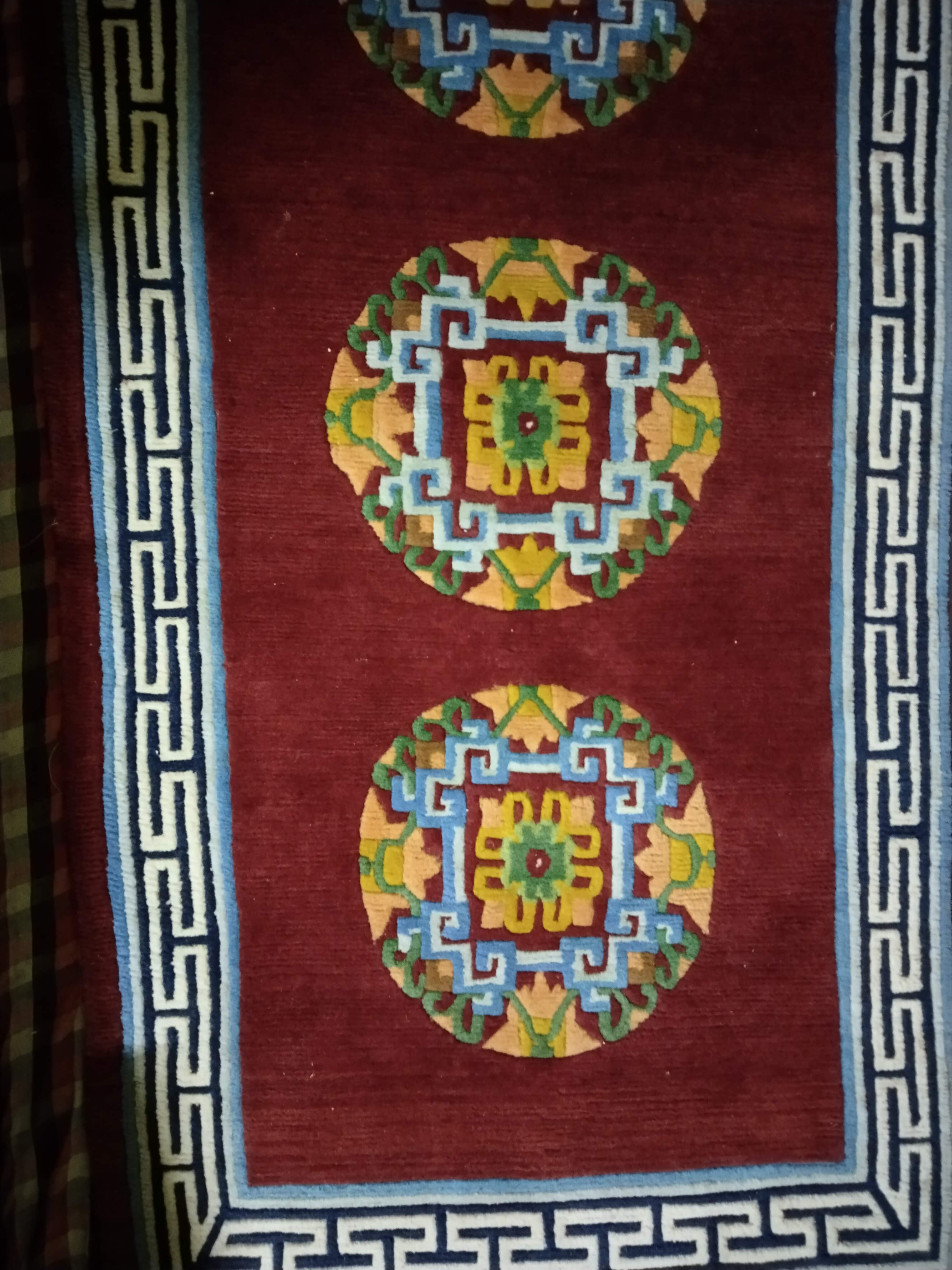
The elaborate designs and motifs on the carpet are inspired by lives in the higher mountains of Tibet and often nostalgically evoke themes of nature and the environment. Motifs of birds, flowers, and mythical animals are quite common- dandelions, native birds, Druk (sky dragon), tiger, ibex, leopards, snow lions, and yaks can be seen beautifully woven on the carpets along with motifs that have special religious, cultural significance like the mandala, four elements of nature (earth, fire, water, space), the Buddha’s vajra, Swastika and depiction of the precious stones Dzi and Gau (amulet). The motifs on the carpet are not mere designs but have larger symbolic meanings to it for eg: the depiction of the crane motif on Tsug-den symbolizes good luck, Yak motifs are reminiscent of nomadic life, dandelions, birds, and clouds depict one’s closeness to nature, the vajra is symbolic of Buddha’s enlightenment, tiger stripes symbolizes one’s prestige and wealth, while snow lion and sky dragons represent mythical creature from traditional folklore and phoenix is a sign of auspiciousness.

 “There’s a saying in local folklore attributing weaving as visual art that reflects stories about people, their communities, and their place in the universe. It symbolizes the value of creation, interconnectedness, and rejuvenation.”

Most families in Lahaul and other higher Himalayan regions own simple domestically produced Tsug-dens and it remains one of the most functional pieces of the item which comes in really handy during harsh winters. The usage of natural fiber and natural vegetable dyes also enhances the overall aesthetics of Tsug-den and it is one of the practical pieces of a garment whose luster, and sheen increases over the years with usage. One of the most appealing characteristics of the Tsug-den-making process is that it is the result of resource utilization in the most natural way. The entire carpet is handspun, hand-carded, naturally dyed, and handwoven where nothing goes waste and the final product lasts for decades, some even passed down to generations. One of the greatest wealth a woman can inherit from her parents is the traditional handwoven carpets, rugs, and quilts along with handwoven shawls. Weaving is not just a craft, it holds ample of material, and cultural value and the artwork on woven Tsug-den is symbolic of values, beliefs, and mysticism beyond our comprehension.

5472 3648 Rinchen Angmo and Chhering Gaaji
Losar : Animal’s Day

Losar : Animal’s Day

I think I am in fact the least excited and most boring person at any form of festival. Much of it could be due to my introverted genes that wouldn’t fancy gatherings, dancing, fireworks or any other things which involve interacting with strangers, but part of it must be because of my upbringing. I am not sure of both though. But my heart just cannot seem to invite festivity as much as my friends and family do.

I hail from a small nomadic village in Ladakh where the livelihood of everyone is dependent on livestock. Almost every household owns some goats, sheep, horses and yak. These animals aren’t merely our source of income, but are used for obtaining food, fetching water, traveling, and most importantly seeking comforts and friendship. Since our life revolves around rearing these animals and more importantly enduring the harsh reality of having no access to electricity, water and worse not even a single shop in the vicinity throughout the year, we have little time for festivity. Or, many of us are even oblivious of its existence, except for Losar– the Tibetan new year and Thrungkar Duechen – His Holiness The Dalai Lama’s birthday. Hence, every single person in the village looks forward to these two days like a child, although for different reasons.

Photo: Namgyal Lhamo

My fondest memories of Losar and Thrungkar were significantly boring compared to my cousins. But these days, no matter how many festivals I witness as I travel through urban life, there is nothing more meaningful and beautiful than this idea of celebration I got to see early in my life. It was on one of the third days of Losar. My father came to me, patted my head gently and said with a smile “Life of your polled lamb will be set free”. I was elated beyond words and this memory has remained in my heart so vividly. In my village, on the third day of Losar or Thrungkar, fathers of the households are the busiest. They get up early in the morning to appease the Land God and other deities who are believed to be the true owners of our land according to their ancestors. This is followed by their brief journey to the animal shed where they would choose some animals randomly and set their life free. By that, we are not allowed to send them to slaughter houses, milk them and are expected to watch them with unconditional love and care which every animal receives anyway, until they die. It was my most awaited moment of the festival. My siblings and I would always hug our father with utter joy after he would come out of the shed. This act is mostly done to honor and thank the sacrifices of animals for our livelihoods while it is also performed for the health and long life of His Holiness and carry his message of love, kindness and compassion towards animals.

We eventually shifted to a town nearby, leaving the whole nomadic life behind due to the inability of my family to see the animals suffer for our survival. But, as I look back, I realised that it was this place where I gave birth to my love for animals. Today, even if we live a totally different life, my parents make sure to celebrate these two days by setting at least one animal’s life free. There is nothing more rewarding at a festival for me than this act of genuine kindness. Somehow I think of these two days as a festival of animals and I hope to carry this tradition forward in my own life too.

792 706 Namgyal Lhamo