Food

Food of the mountains: Stinging nettle (Zatsod)

Food of the mountains: Stinging nettle (Zatsod)

People of the high mountains have traditionally gathered plants and herbs from the wild, which would then be carefully stored and consumed in winter. Most of this collection is for personal use and never for commercial purposes. In this story, Karma Sonam of Gya village of Ladakh tells us about the traditional technique for collection and storage of zatsod or stinging nettle. He also shares a recipe of zatsod thukpa.

ऊंचे पहाड़ों के समुदाय पारंपरिक रूप से जंगली पौधों और जड़ी-बूटियों की तलाश करते हैं, जिन्हें बाद में सावधानीपूर्वक संग्रहीत किया जाता है और सर्दियों में खाया जाता है। इस संग्रह का अधिकांश भाग व्यक्तिगत उपयोग के लिए था, न कि व्यावसायिक उद्देश्यों के लिए। इस कहानी में, लद्दाख के ग्या गाँव से कर्मा सोनम हमें बिच्छू बूटी के संग्रह की तकनीक के बारे में बताते हैं। वह स्थानीय सामग्रियों का उपयोग करके बनाई गई थुकपा की एक पारंपरिक रेसिपी भी साझा करते हैं।

This story was narrated, shot and edited by Karma Sonam.

यह कहानी कर्मा सोनम द्वारा सुनाई, शूट और संपादित की गई है।
1718 1052 Himkatha
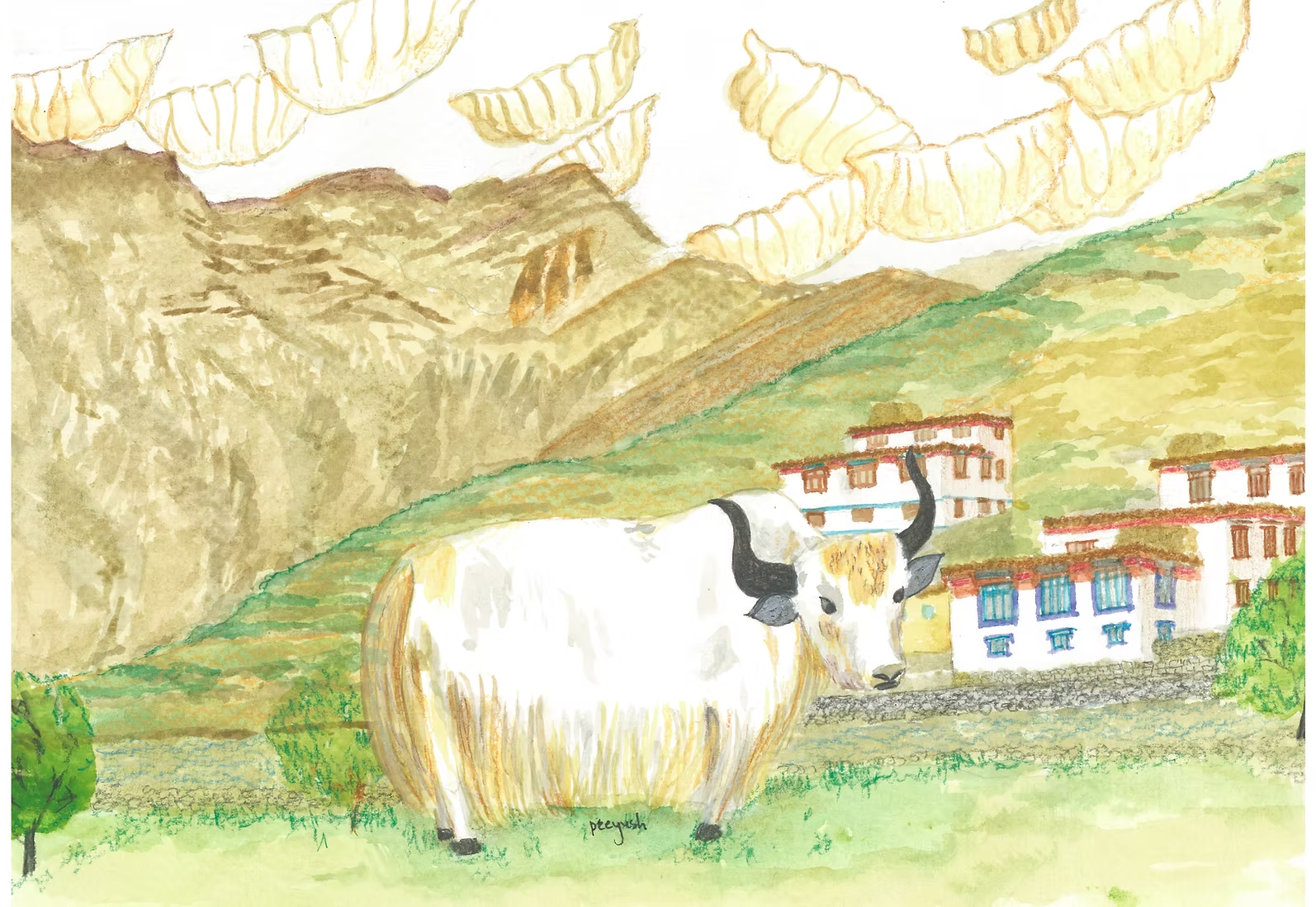
Meat momos for everyone
Illustration: Peeyush S

Meat momos for everyone

Illustration: Peeyush S

Unlike most days, folks in Lalung were jostling around with a sense of great urgency that morning. Life in this little village, high up in the Himalaya, is generally slow. But not today. It was hard to tell what the cause of this commotion was. I asked Sonam Chhering, my neighbor, what was going on.

‘The villagers are going to herd the yak from the pasture. The herd was last seen at Kibri, a large pasture at some distance from the village, by the ‘yakzi’, the yak herder. He came home running last evening and reported that one of the yaks had gone crazy!’, said Sonam as he rolled in laughter. People in these villages reared sheep, goat, donkeys, horses, and cows. But the most important animal was the yak, and that for several reasons. The sturdy yak is an excellent assistant in the fields, during farming. Yak wool and yak dung was a precious source of warmth in the extreme winter months. And a yak’s tail can fetch over ten thousand rupees in the local market, if it is spotless white! Takpa—another of our neighbors—had recently purchased a yak from a trader in Manali. This old yak had spent all his life posing for photographs with tourists. He was used to a life of being fed by his master; a far cry from a yak’s life in Spiti. Here, yaks are left free to wander the pastures for most of the year. This means that they roam in a herd searching for green grasses to feast on. Not used to such a hard life, this old fellow spent most days basking in the sun, even if he had to go hungry. He soon developed a nasty temper and would chase down any soul who dared cross his path. Yesterday, it was the yakzi’s turn: he literally had to make a run for his life. So, the men from the village were preparing to catch this old yak. It took the men of the village an entire day to catch the old yak. This old fellow was brought back to the village and tied inside a corral so that he doesn’t play any more mischief. From that day on, I could see this old fellow from my window. He would stare back at me and grind his teeth, as if in warning. In some days I grew used to hearing that ominous sound at practically any hour of the day or night.

One evening, as I reached the village I found everyone beaming with joy. ‘There’s a party today. Meat momos!’, exclaimed Sonam Chhering. Momos—steamed dumplings—are the most favorite dish in Spiti and are prepared only on special occasions. That evening the entire village gathered to feast on meat momos eaten along with spicy tomato chutney. Full to our hearts’ content we walked back to our homes, that moonlit night. As we reached our respective homes, I realised something was missing. ‘Where’s the old yak?’ I asked. ‘He was the meat in our momos!’ Sonam had a wicked smile. My stomach gave a little lurch. It felt as if the old fellow was grinding his teeth inside my belly.

  • ​Lalung is a village inside the Lingti valley in Spiti and falls on the left bank of the Spiti river.
  • Kibri is a tiny hamlet deep inside Lingti valley and can only be accessed by foot.
  • Corral is a small enclosure made to keep domestic animals. Usually a corral is built just outside one’s house.
  • Momos are a type of steamed, stuffed dumplings. This is a very popular dish in the Himalayan region and usually made on special occasions.

​

1594 1098 Ajay Bijoor
Wild Edible Plants of Ladakh
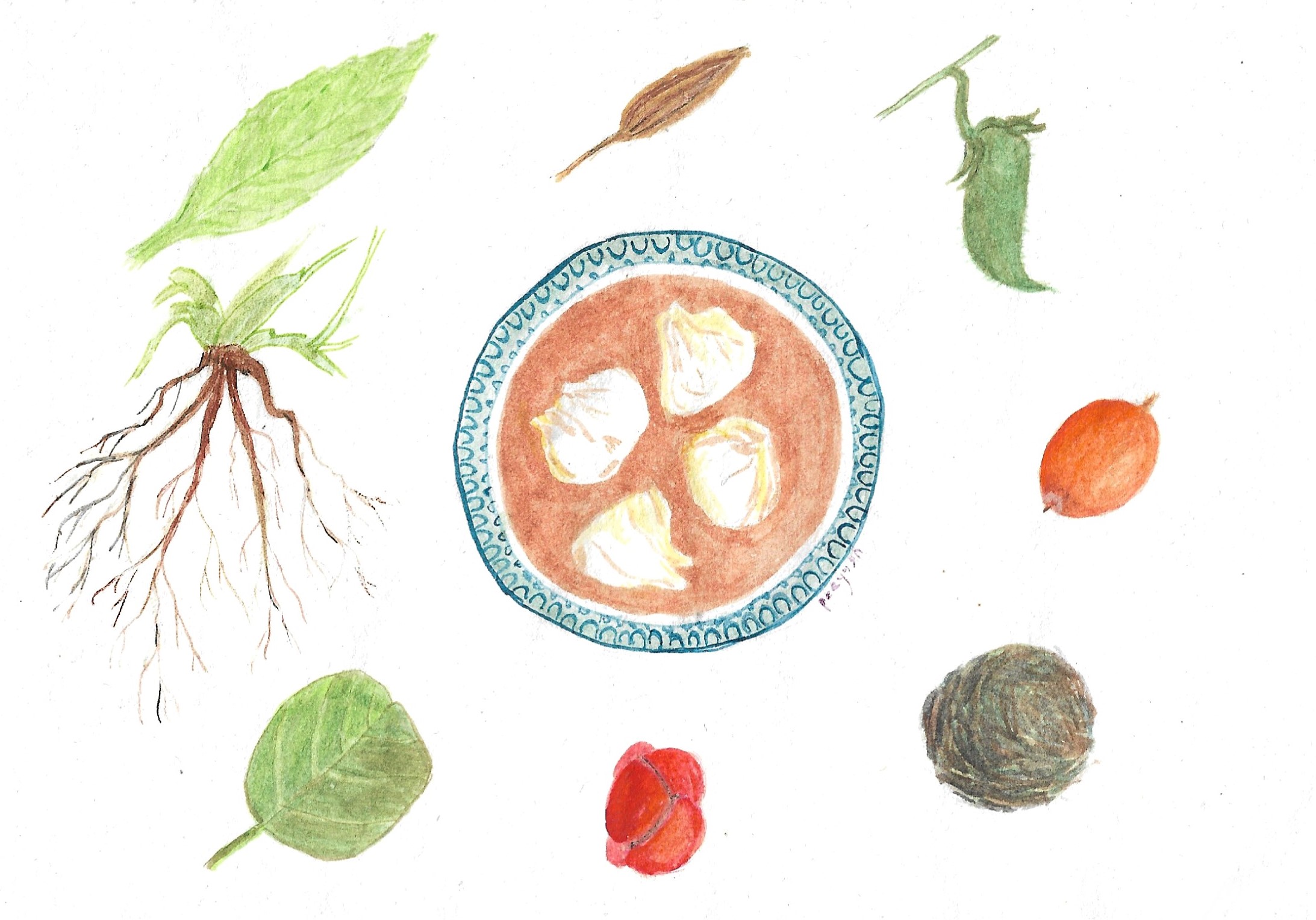
Illustration: Peeyush Sheksaria

Wild Edible Plants of Ladakh

Geographically, Ladakh is in the rain shadow region of the mighty Himalayas. A high-altitude area with an extreme climatic cycle, the trans-Himalayan region of Ladakh is a unique cold desert. It is home to diverse lifeforms.

Over millennia, the region has also been home to a relatively isolated and self-reliant human society with its own distinctive culture and agro-pastoral way of living. Local people have rich knowledge of plants, especially of wild edible varieties, that have been consumed since time immemorial. These plants display unique adaptations to survive in the high elevations of Ladakh and its extreme climate. They have played a crucial role in shaping people’s lives and the traditional strategies adopted by them in overcoming challenges to living in Ladakh.

It is not surprising then that Ladakh is home to various traditional made using wild plants. In the past, communities prepared dishes on auspicious occasions. Various different wild plants are used in these traditional preparations. Some of the most commonly consumed wild edible plants include zatsot (Urtica hyperborea), kabra (Capparis spinosa), shalmasgok (Nepeta floccosa), Hans/Khi-khol-ma (Taraxacum officinalis), shangsho (Lepidium latifolium), snue (Chenopodium album), Azhangkabra (Christolea crassifolia), tsotse (Allium carolinianum), lachu (Rheum spiciforme), shrolo-marpo (Rhodiola tibetica), shrolo-serpo (Rhodiola imbricate), kumbuk/kosnyot (Carum carvi), zera-nakpo (Buniumper sicum), phololing (Mentha longifolia), toma (Potentilla anserine), sari (Cicermicro phyllum), demok (Arnibiaeu chroma), tsepad (Ephedra gerardiana), tsestalulu (Hippophae rhamnoides), siyahmarpo (Rosa webbiana), chuli (Prunus armeniaca) and starga (Juglans regia).

The consumption of wild edible plants has immense health and economic benefits. Firstly, unlike their cultivated cousins, wild plants are natural and self-nurtured without any harmful chemical fertiliser, pesticides and weedicides. Secondly, wild plants adapted to high-altitude cold desert conditions are known to have developed diverse secondary metabolites to protect themselves from extreme conditions, insects and microorganisms. These secondary metabolites are of immense medicinal value and provide health benefits.

There is considerable variation in the way these plants are used for cooking. Skotse, rasgokpa and luksgokpa (Allium carolinianum, A. prezewalskinam) and kosnyot are prominent aromatic species used as a spice condiment in different dishes. Tender shoots of Allium species are collected, ground into a paste, dried and used as a flavouring agent in local dishes like tangthur, tsonkitig, bagthuk and in local pickles. Similarly, seeds of kosnyot and zera-nakpo are used as a condiment in a traditional recipe called ten-ten. Leaves of shangsho form an important constituent of tsonkitig, a local preparation made using mixed vegetable and sattu (roasted barley flour). The young leaves and tender shoots of kabra are consumed after frying them, called kabra-tsotma in Sham region in western Ladakh. The leaves of phololing are used to prepare chutneys and occasionally mixed with curd as a flavouring component, while the leaves of shalmasgok are mixed with curd or lassi to prepare tangthur.

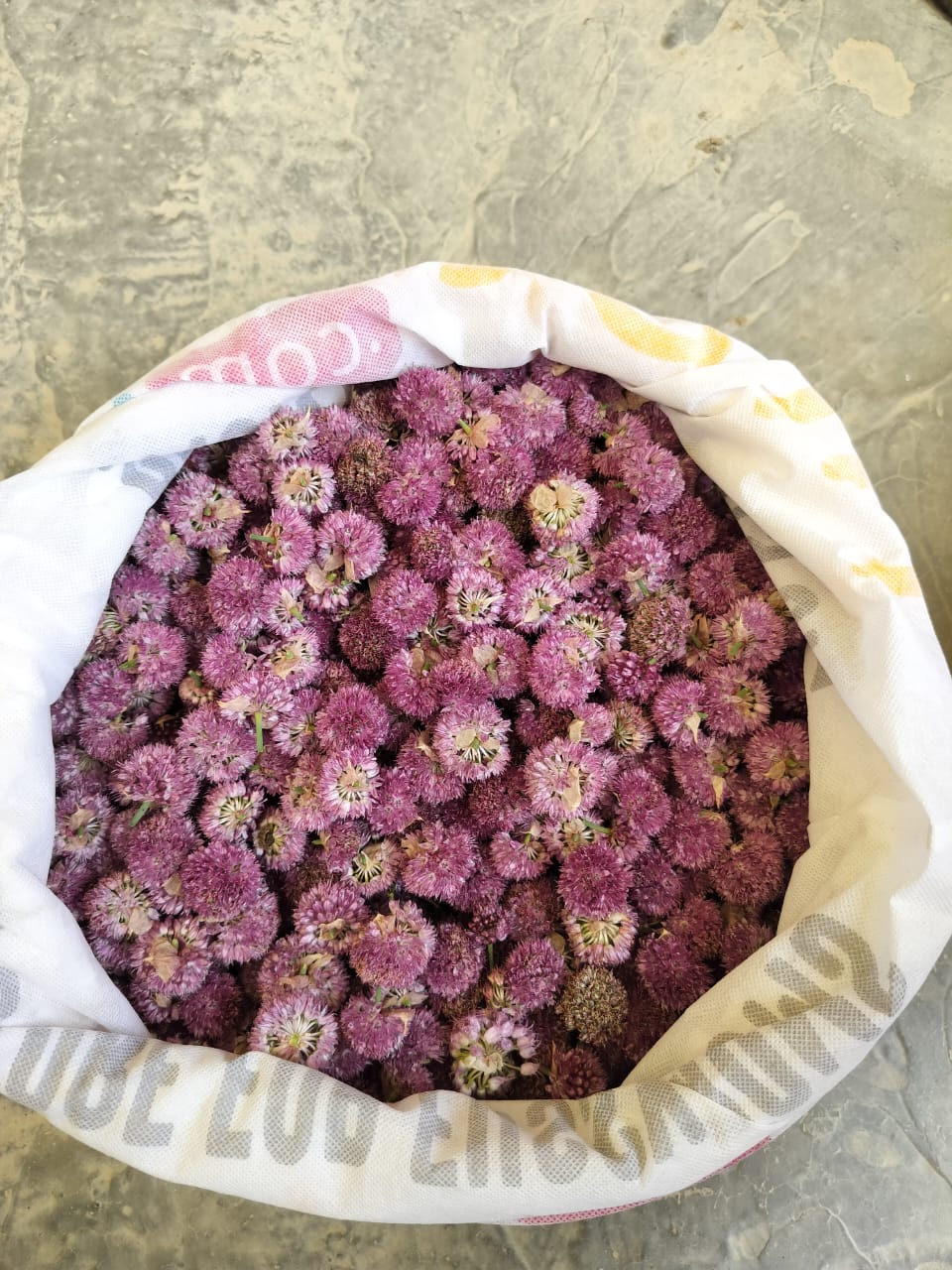
Freshly harvested Gyaman - flowers of Alluim sp | Photo: Chemi Lhamo

The tender shoots of shrolo-marpo and shrolo-serpo can be rinsed in running water and mixed with curd to prepare shrolo-tangthur. The green leaves of zatsot (stinging nettle) are collected and used to prepare zatsot-thukpa, while the young leaves of khi-khol-ma are used in thukpa. In the past, the edible berries of tsestalulu were collected, dried and powdered. It was then mixed with sattu and consumed. Similarly, seeds of sari were dried and ground into flour. The ripe berries of tsepad, roots of toma and green shoots of lachu are edible and can be eaten raw.

Declining use of edible plants

Ladakh has witnessed dramatic changes over the last few decades. There was a time when Ladakhi people were heavily dependent on wild plants to fulfil their dietary requirements. People would eagerly await spring-summer seasons when the collection of wild edible plants would peak. However, this collection was always for personal consumption and never for commercial purposes. There was a common practice of children going into the mountains or the fields after school to collect wild edible plants like kabra, shalmasgok, shrolo, zatsot, khi-khol-ma, kumbuk, shangsho etc. Nowadays, very few people know the art of collecting these wild resources. It is an aspect of our traditional knowledge that is eroding fast and will soon be lost forever.

There are multiple reasons for this unfamiliarity, and aversion to ethnic plant-based foods. The growth of the tourism industry in Ladakh and the introduction of horticulture-based vegetables are two major factors. In the last decade, Ladakh has witnessed a dramatic rise in horticulture, forestry and agriculture with the introduction of numerous cultivated plants. In addition to this, the influx of tourists has facilitated the introduction of western cuisine, which has devalued the cultural and economic importance of wild edible plants. This has also eroded Ladakh’s traditional knowledge

and use of wild plants as locals now favour western recipes over local ones. It is unfortunate that our younger generation is not troubled by this rapid loss of knowledge of edible wild plants and their ethnic preparations. Instead, most of them are eager to learn more about non-local cuisines and ingredients.

The need to preserve ethnic knowledge

There is an urgent need to preserve indigenous knowledge of wild plants and their preparation. Plant folklore, wild plant resources, and the usage of plants including cultural and religious taboos constitute an important aspect of our traditional knowledge. Reviving these traditions and the conventional use of plants will provide insight into Ladakh’s unique folklore and heritage. Furthermore, consumption of indigenous wild edible plants is healthier than cultivated vegetables. In comparison to cultivated varieties, wild plants are more nutritious, naturally resistant to pests, and most significantly, least contaminated and thus purely organic. In contrast, cultivated vegetables tend to be contaminated with toxic chemicals from fertilizers and insecticides that are known to cause deadly diseases such as cancer.

If we are to preserve local knowledge of wild plant consumption, community members and elders in each household must encourage youth to consume such plants and explore this knowledge system. At the same time, local households, hotels, restaurants, and retailers must also offer traditional preparations and dishes. Our local government must encourage people to explore this facet of our heritage and organise awareness programmes to conserve this knowledge. Wild edible plant consumption and preservation of this unique heritage may provide an alternative food resource for Ladakh’s nutrient deficiency. Plant collection and the consumption of traditional plant-based organic foods can also generate entrepreneurial opportunities for youth, while also enhancing the income of local farmers. However, we also need to make serious efforts to conserve wild biological diversity by ensuring that collection is sustainable and managed responsibly.

2185 1528 Phuntsog Dolma
Reflections on farming life
Photo: Panma Gyatso

Reflections on farming life

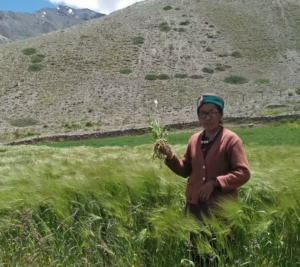
I was born in Hango (11,500 ft) which is a remote village in the Hangrang valley of Kinnaur. I am 72 years old and have spent my life in this village as an agro-pastoral farmer. Agriculture is very important to us. When I look back, I now realise that some of my most treasured memories of my village are related to agriculture and food. One of my favourite and most vivid childhood memories is from the time chulli (apricot) season arrived. Our village did not have any chulli trees, so our elders would go to the nearby village of Leo and get chulli for us. When they arrived, all the children of the village would run to the common ground to grab as much as possible in our little hands. Women would also find time during the day to enjoy chulli with each other under the winter sun. Relishing chulli was a communal affair. The seeds were saved to make prized chulli oil (750 ml for INR 2000/ USD 27).

Photo: Panma Gyatso

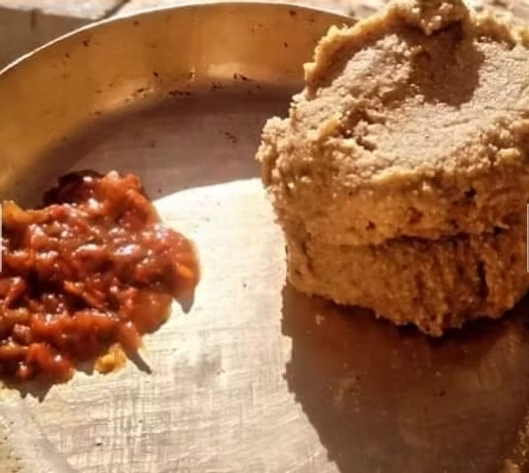
My other happiest memories are of the festivities and celebrations we had after the harvest. Until a few years back, we had an isolated winter in Hango. So we had to work really hard during the summers to ensure we had enough grains to survive the harsh winters. After gruelling work in the short summer season, the celebrations were especially sweet. Our harvest back then was of barley, potatoes, black peas and cheena/chize (local name). Cheena & barley were used to make flour for thukpa (soups) and salma (local bread). During the festivities we would make various dishes like tolopa, chulipanting (sweet apricot). Communally preparing and eating added exponentially to the taste of these dishes.

Barley was and continues to be used for making local alcohol like chhang and arak. No one, now, grows cheena. The seeds are also very hard to come by. It has completely vanished. Black peas & barley cultivation has also reduced and mainly taken over by the cash crops like green peas, apple, cauliflower etc. Due to increase in connectivity with the outside world, wheat and rice which were only heard of back in my days, have now become staple food. Salma, tolopa, chulipanting etc which were favorites of all age groups are now hardly prepared.

With our generation most of the traditional dishes are also fading away. I am hoping that we can slowly shift back to our traditional crops, as they grow best in our landscape, with focus on apricots for better economic gains. This way we will be able to ensure sustainable growth from agriculture.

792 706 Prithvi Singh