Festivals

Kinzin Racho

Kinzin Racho

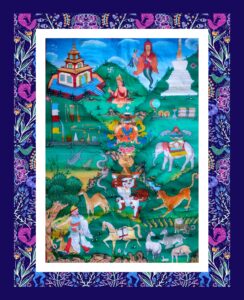
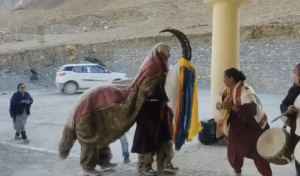
Watch a 200-year old ritual performed in Rangrik village on the third day of Spiti Losar (Spitian New Year) remembering the village deity who appeared as a magnificent ibex. Kinzin Racho Halema meaning, the splendid horns of the ibex, is the song sung across Spiti valley in the first week of the Spitian New Year.

स्पीति लोसर (स्पिटियन नव वर्ष) के तीसरे दिन रंग्रिक गांव में एक शानदार आइबेक्स के रूप में प्रकट हुए गांव के देवता की याद में मनाया जाने वाला 200 साल पुराना उत्सव देखें। किंज़िन राचो हलेमा जिसका अर्थ है, आइबेक्स के शानदार सींग, स्पिटियन लोसर के पहले सप्ताह में गाया जाने वाला गीत है।

Singer: Yangchen Dolma
Additional footage: Tanzin Thinley and Kesang Chunit
गायक: यांगचेन डोल्मा
अतिरिक्त फ़ुटेज: तंज़िन थिनले और केसांग चुनिट
1200 702 Himkatha
Losar : Animal’s Day

Losar : Animal’s Day

I think I am in fact the least excited and most boring person at any form of festival. Much of it could be due to my introverted genes that wouldn’t fancy gatherings, dancing, fireworks or any other things which involve interacting with strangers, but part of it must be because of my upbringing. I am not sure of both though. But my heart just cannot seem to invite festivity as much as my friends and family do.

I hail from a small nomadic village in Ladakh where the livelihood of everyone is dependent on livestock. Almost every household owns some goats, sheep, horses and yak. These animals aren’t merely our source of income, but are used for obtaining food, fetching water, traveling, and most importantly seeking comforts and friendship. Since our life revolves around rearing these animals and more importantly enduring the harsh reality of having no access to electricity, water and worse not even a single shop in the vicinity throughout the year, we have little time for festivity. Or, many of us are even oblivious of its existence, except for Losar– the Tibetan new year and Thrungkar Duechen – His Holiness The Dalai Lama’s birthday. Hence, every single person in the village looks forward to these two days like a child, although for different reasons.

Photo: Namgyal Lhamo

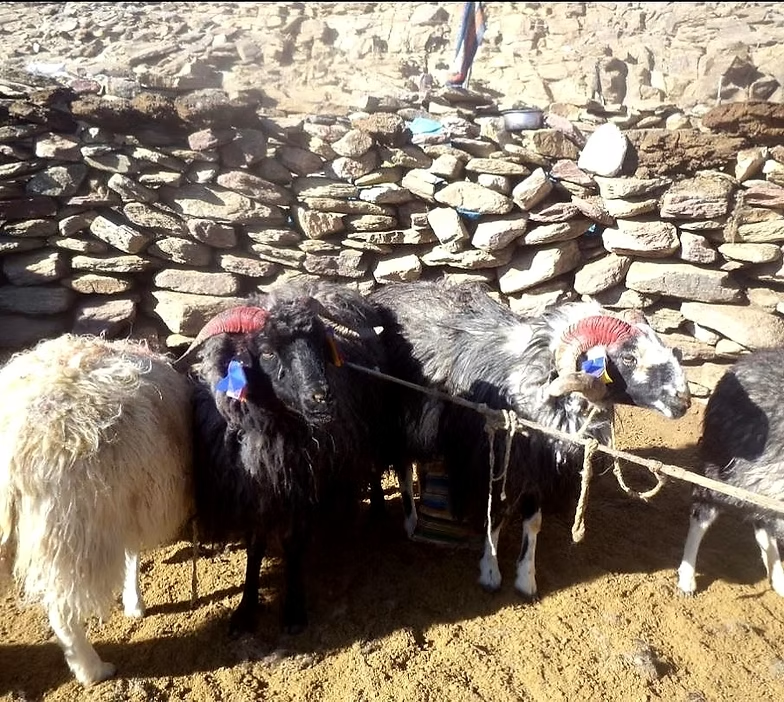
My fondest memories of Losar and Thrungkar were significantly boring compared to my cousins. But these days, no matter how many festivals I witness as I travel through urban life, there is nothing more meaningful and beautiful than this idea of celebration I got to see early in my life. It was on one of the third days of Losar. My father came to me, patted my head gently and said with a smile “Life of your polled lamb will be set free”. I was elated beyond words and this memory has remained in my heart so vividly. In my village, on the third day of Losar or Thrungkar, fathers of the households are the busiest. They get up early in the morning to appease the Land God and other deities who are believed to be the true owners of our land according to their ancestors. This is followed by their brief journey to the animal shed where they would choose some animals randomly and set their life free. By that, we are not allowed to send them to slaughter houses, milk them and are expected to watch them with unconditional love and care which every animal receives anyway, until they die. It was my most awaited moment of the festival. My siblings and I would always hug our father with utter joy after he would come out of the shed. This act is mostly done to honor and thank the sacrifices of animals for our livelihoods while it is also performed for the health and long life of His Holiness and carry his message of love, kindness and compassion towards animals.

We eventually shifted to a town nearby, leaving the whole nomadic life behind due to the inability of my family to see the animals suffer for our survival. But, as I look back, I realised that it was this place where I gave birth to my love for animals. Today, even if we live a totally different life, my parents make sure to celebrate these two days by setting at least one animal’s life free. There is nothing more rewarding at a festival for me than this act of genuine kindness. Somehow I think of these two days as a festival of animals and I hope to carry this tradition forward in my own life too.

792 706 Namgyal Lhamo
Reyun Tache
Remu Painting | Jugmat Norboo (Urgos)

Reyun Tache

Reyun Tache is a festival celebrated two days before Losar in many parts of Lahaul. In my village-Urgos, the festival is marked by each household painting Remu paintings on their walls for inviting good omen and warding off evil. Paintings are made with almost a competitive spirit, with each house trying to do better than others. All the members of the house take part in this celebratory moment and contribute to the painting. Each element of the painting signifies a deeper religious sentiment, and connectedness and harmony of indigenous communities with nature. Thus, it is important for each house to ensure all elements are present on their painting.

The next day is when the fun begins. Everyone visits the homes of the others to appreciate their efforts and ensure that they have included all the necessary elements in their painting. If not, then they have to pay a fine to the village committee and carry shukpa (incense sticks) throughout the day as a penalty.

1471 1811 Jigmat Nurboo
Dartse: The Archery Festival
Illustration: Nawang Tankhe

Dartse: The Archery Festival

Archery has been a vibrant part of Ladakhi culture for generations. It has its origin in traditional hunting. In the prehistoric times, it was practiced during warfare and for livelihood but gradually with change in socio-cultural positions, use of archery in people’s daily practice have dwindled. It, however, continues to hold an important part in Ladakhi culture and local customs. Playing archery using traditional bows and arrows is perhaps one of the very few visible cultural remnants of the past and symbolizes rich socio-cultural heritage.

Many Ladakhi folklore, proverbs, literature and rock-art have references to archery, unraveling fascinating insights into traditional way of living. The oral folklore – The Epic of King Gesar (Kesar-e-zGrums) narrates heroic stories of the warrior king Ling Gesar who was a skilled archer and horse rider. The epic saga also has a detailed account of the art of weapon and armor making.

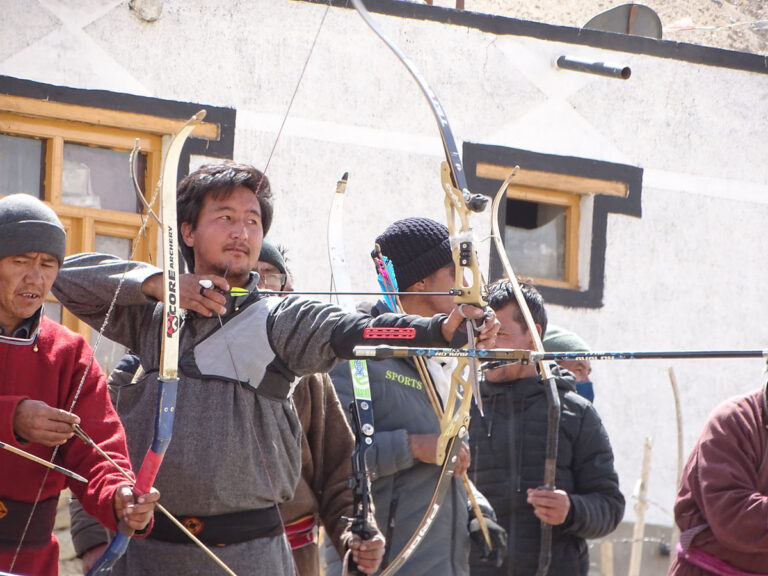
Archery festival in Gya | Photo: Abhijit Dutta

The Epic of King Gesar is the most celebrated oral narrative of the central Asian region and has a particularly huge influence in highland pastoral areas of Tibetan plateau and Ladakh. Phrases like “fast like Ling” – evoking magnanimous strength and speed of Ling Gesar Gyalpo is a common part of local speech. The allusion to natural elements and imagery of nature is also quite frequent. The oral narrative explores the theme of harmony in nature, balance between human and nature, battle between good and evil (deities v/s demons) and disruption of natural order in great depth. In today’s times, much of these oral traditions and cultures are going out of practice and what remains is a watered down version of the rich cultural heritage our ancestors have passed on.

Photo: Karma Sonam

Archery, one of the few remaining traditions, is the most celebrated local festival in Ladakh and is very popular in my village Gya too. Gya, one of the oldest settlements in Ladakh, was historically the abode of chieftain ruler Gya-pa Chow. Today, there are around 150 households in the village dependent on agro-pastoralism. Dah- Fang or Dartse (Archery) is celebrated for good harvest, harmony and happiness in the village. Traditional song and dance, feasts, archery competitions, rituals- all are part of the festivity and prayers.

Dartse is celebrated twice in a year; sPitda is celebrated in early spring after dormancy of winter days and Yarda is a mid-summer celebration. The Spring archery festival marks the beginning of harvesting season and is celebrated right before watering the fields when farmers are getting ready for the cultivation. The Goba (village heads) of all neighboring hamlets collectively consult Rongtsen (oracle) for an auspicious date for cultivation and subsequently coordination for archery celebration is carried out. Once the date for ploughing is finalized, the Goba will announce the date of festival and gather barley, grains and ra-luk (sheep-goat) for the feast.

Women and young girls participate in preparing food for the whole village while men and adolescent boys take part in archery competitions. Drinking traditional wine is a huge part of the celebration and a group of women known as Changma (wine incharge) are solely responsible for brewing Chaang (barley wine) and Aarak (local alcohol) and serving it to archers during the festival.

Gya has 3 main hamlets and Dartse is celebrated collectively in all these villages. It goes on, uninterrupted for 6 days and each village takes turns hosting it in their village. In Hemya (my mother’s village) religious ceremonies for good harvest and prayers for peace and harmony among villagers are done by holy lamas (monks) and the grain sheaf called “Phut”(first offering to god) is offered in monasteries as a gesture of gratitude.

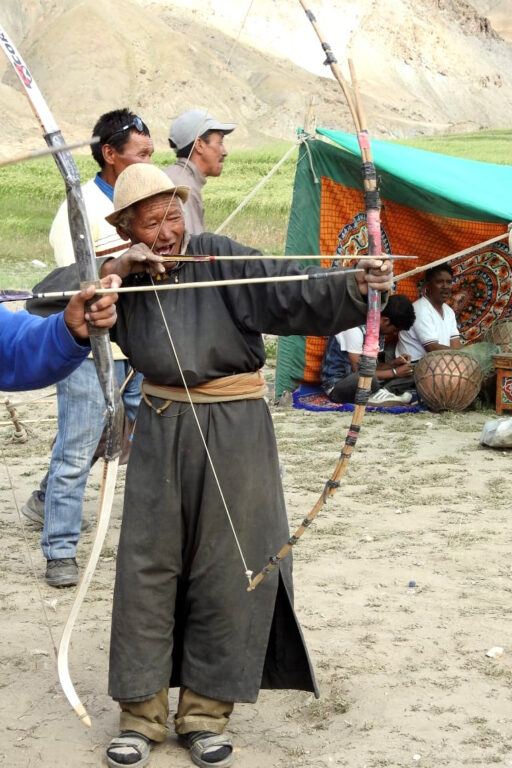
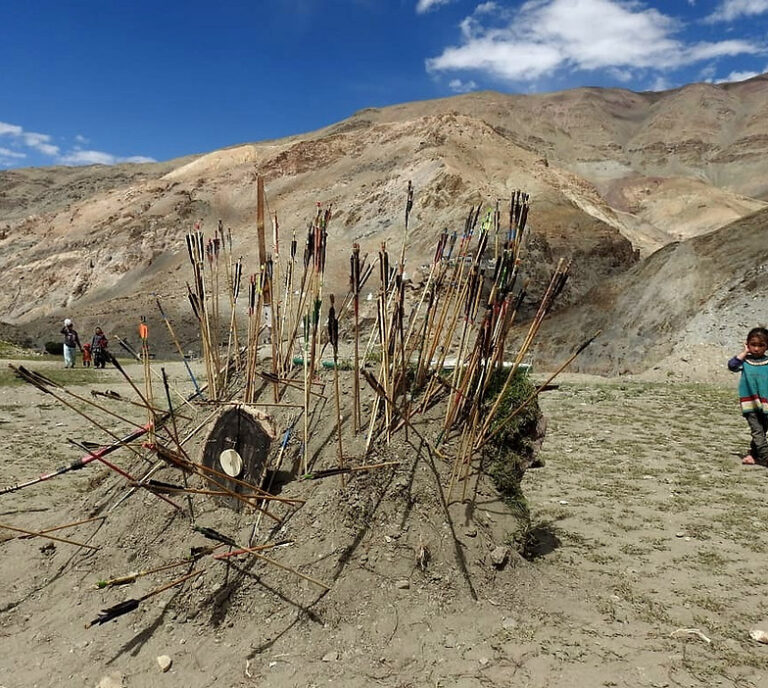
The archery competition is one of the most awaited events of the festivals and a lot of men and young boys take part in the competition. The archers are divided in two teams known as Ma-Bhu (Ma – mother, bhu-son) with one team headed byGoba (village leader) and another team led by Nyerpa (a monk representative). Earlier, bows and arrows were made of ibex horns by skilled artisans but these days we use the ones made of willow and bamboo. The target area is made on a heap of mud to ensure the arrows don’t break, and the target (bull’s eye) known as Tsage is either made of zama (earthen clay) or a wooden plank. The archery competition starts with rdaman pa (traditional musicians) playing songs and when an archer hits Tsege (bull’s eye target) people breakout in loud songs and dance cheering the team. Whichever team hits the target maximum number of times, wins the competition. The winning team has to pay some amount to Rdaman pa as a gesture of gratitude for their services and circumambulate Tsege (target area) in loud celebratory cry Rzang solo!!

Photo: Karma Sonam

Archery is not merely a sports tournament but is an integral part of our communal identity and cultural ethos. It is a reflection of the rich Ladakhi cultural heritage and carries strong socio-cultural sentiments of the people. The festival brings together communities and is important for maintaining cohesion and peace within society. Ladakh being primarily an agro-pastoralist society, the festival is in a way also a celebration of crops that are grown on land and cherish the efforts of the farmers.

But such traditional practices are slowly fading away and many aspects of the festival and traditional customs are altered to suit modernity. Wearing traditional clothes like Goncha (woolen robe), eating paba (barley delicacy) and using bows and arrows handmade by local artisans were significant aspects of the archery festival but are slowly eroding. These days, modern sports gear are used for archery and the spirit of harmony between people, between communities is slowly being replaced by competitiveness of the game. I have personally witnessed these traditional practices (whether farming or archery) undergo drastic change in the past few years and I feel an overwhelming sense of loss. Our land and our practices make up for who we are and I feel it is important to preserve these traditional practices.

1724 588 Karma Sonam